Showing posts with label Gallup. Show all posts

Monday, December 4, 2017

America"s Military-Industrial Addiction

Authored by JP Sottile via ConsortiumNews.com,


Polls show that Americans are tired of endless wars in faraway lands, but many cheer President Trump’s showering money on the Pentagon and its contractors, a paradox that President Eisenhower foresaw...
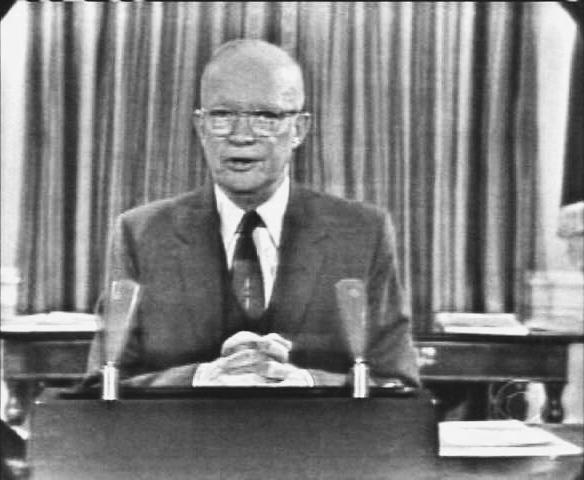


The Military-Industrial Complex has loomed over America ever since President Dwight D. Eisenhower warned of its growing influence during his prescient farewell address on Jan. 17, 1961. The Vietnam War followed shortly thereafter, and its bloody consequences cemented the image of the Military-Industrial Complex (MIC) as a faceless cadre of profit-seeking warmongers who’ve wrested control of the foreign policy. That was certainly borne out by the war’s utter senselessness … and by tales of profiteering by well-connected contractors like Brown & Root.


Over five decades, four major wars and a dozen-odd interventions later, we often talk about the Military-Industrial Complex as if we’re referring to a nefarious, flag-draped Death Star floating just beyond the reach of helpless Americans who’d generally prefer that war was not, as the great Gen. Smedley Darlington Butler aptly put it, little more than a money-making “racket.”


The feeling of powerlessness that the MIC engenders in “average Americans” makes a lot of sense if you just follow the money coming out of Capitol Hill. The Project on Government Oversight (POGO) tabulated all “defense-related spending” for both 2017 and 2018, and it hit nearly $1.1 trillion for each of the two years. The “defense-related” part is important because the annual National Defense Authorization Act, a.k.a. the defense budget, doesn’t fully account for all the various forms of national security spending that gets peppered around a half-dozen agencies.


It’s a phenomenon that noted Pentagon watchdog William Hartung has tracked for years. He recently dissected it into “no less than 10 categories of national security spending.” Amazingly only one of those is the actual Pentagon budget. The others include spending on wars, on homeland security, on military aid, on intelligence, on nukes, on recruitment, on veterans, on interest payments and on “other defense” — which includes “a number of flows of defense-related funding that go to agencies other than the Pentagon.”


Perhaps most amazingly, Hartung noted in TomDisptach that the inflation-adjusted “base” defense budgets of the last couple years is “higher than at the height of President Ronald Reagan’s massive buildup of the 1980s and is now nearing the post-World War II funding peak.” And that’s just the “base” budget, meaning the roughly $600 billion “defense-only” portion of the overall package. Like POGO, Hartung puts an annual price tag of nearly $1.1 trillion on the whole enchilada of military-related spending.


The MIC’s ‘Swamp Creatures’


To secure their share of this grandiloquent banquet, the defense industry’s lobbyists stampede Capitol Hill like well-heeled wildebeest, each jockeying for a plum position at the trough. This year, a robust collection of 208 defense companies spent $93,937,493 to deploy 728 “reported” lobbyists (apparently some go unreported) to feed this year’s trumped-up, $700 billion defense-only budget, according to OpenSecrets.org. Last year they spent $128,845,198 to secure their profitable pieces of the government pie.



The Pentagon, headquarters of the U.S. Defense Department, as viewed with the Potomac River and Washington, D.C., in the background. (Defense Department photo)


And this reliable yearly harvest, along with the revolving doors connecting defense contractors with Capitol Hill, K Street and the Pentagon, is why so many critics blame the masters of war behind the MIC for turning war into a cash machine.


But the cash machine is not confined to the Beltway. There are ATM branches around the country. Much in the way it lavishes Congress with lobbying largesse, the defense industry works hand-in-glove with the Pentagon to spread the appropriations around the nation. This “spread the wealth” strategy may be equally as important as the “inside the Beltway” lobbying that garners so much of our attention and disdain.


Just go to U.S. Department of Defense’s contract announcement webpage on any weekday to get a good sense of the “contracts valued at $7 million or more” that are “announced each business day at 5 p.m.” A recent survey of these “awards” found the usual suspects like Raytheon, Lockheed Martin and General Dynamics. The MIC was well-represented. But many millions of dollars were also “won” by companies most Americans have never heard of … like this sampling from one day at the end of October:


  • Longbow LLC, Orlando Florida, got $183,474,414 for radar electronic units with the stipulation that work will be performed in Orlando, Florida.

  • Gradkell Systems Inc., Huntsville, Alabama, got $75,000,000 for systems operations and maintenance at Fort Belvoir, Virginia

  • Dawson Federal Inc., San Antonio, Texas; and A&H-Ambica JV LLC, Livonia, Michigan; and Frontier Services Inc., Kansas City, Missouri, will share a $45,000,000 for repair and alternations for land ports of entry in North Dakota and Minnesota.

  • TRAX International Corp., Las Vegas, Nevada, got a $9,203,652 contract modification for non-personal test support services that will be performed in Yuma, Arizona, and Fort Greely, Alaska,

  • Railroad Construction Co. Inc., Paterson, New Jersey, got a $9,344,963 contract modification for base operations support services to be performed in Colts Neck, New Jersey.

  • Belleville Shoe Co., Belleville, Illinois, got $63,973,889 for hot-weather combat boots that will be made in Illinois.

  • American Apparel Inc., Selma, Alabama, got $48,411,186 for combat utility uniforms that will be made in Alabama.

  • National Industries for the Blind, Alexandria, Virginia, got a $12,884,595 contract modification to make and advanced combat helmet pad suspension system. The “locations of performance” are Virginia, Pennsylvania and North Carolina.

Sharing the Largesse


Clearly, the DoD is large enough, and smart enough, to award contracts to companies throughout the 50 states. Yes, it is a function of the sheer size or, more forebodingly, the utter “pervasiveness” of the military in American life. But it is also a strategy. And it’s a tactic readily apparent in a contract recently awarded to Raytheon.


On Oct. 31, 2017, they got a $29,455,672 contract modification for missions systems equipment; computing environment hardware; and software research, test and development. The modification stipulates that the work will spread around the country to “Portsmouth, Rhode Island (46 percent); Tewksbury, Massachusetts (36 percent); Marlboro, Massachusetts (6 percent); Port Hueneme, California (5 percent); San Diego, California (4 percent); and Bath, Maine (3 percent).”


Frankly, it’s a brilliant move that began in the Cold War. The more Congressional districts that got defense dollars, the more votes the defense budget was likely to receive on Capitol Hill. Over time, it evolved into its own underlying rationale for the budget.


As veteran journalist William Greider wrote in the Aug. 16, 1984 issue of Rolling Stone, “The entire political system, including liberals as well as conservatives, is held hostage by the politics of defense spending. Even the most well intentioned are captive to it. And this is a fundamental reason why the Pentagon budget is irrationally bloated and why America is mobilizing for war in a time of peace.”


The peace-time mobilization Greider referred to was the Reagan build-up that, as William Hartung noted, is currently being surpassed by America’s “War on Terror” binge. Then, as now … the US was at peace at home, meddling around the world and running up a huge bill in the process. And then, as now … the spending seems unstoppable.


And as an unnamed “arms-control lobbyist” told Grieder, “It’s a fact of life. I don’t see how you can ask members of Congress to vote against their own districts. If I were a member of Congress, I might vote that way, too.”


Essentially, members of Congress act as secondary lobbyists for the defense industry by making sure their constituents have a vested interest in seeing the defense budget is both robust and untouchable. But they are not alone. Because the states also reap what the Pentagon sows … and, in the wake of the massive post-9/11 splurge, they’ve begun quantifying the impact of defense spending on their economies. It helps them make their specific case for keeping the spigot open.


Enter the National Conference of State Legislatures (NCSL), which notes, or touts, that the Department of Defense (DoD) “operates more than 420 military installations in the 50 states, the District of Columbia, Guam and Puerto Rico.” Additionally, the NCSL is understandably impressed by a DoD analysis that found the department’s “$408 billion on payroll and contracts in Fiscal Year 2015” translated into “approximately 2.3 percent of U.S. gross domestic product (GDP).”


And they’ve become a clearinghouse for state governments’ economic impact studies of defense spending. Here’s a sampling of recent data compiled on the NSCL website:


  • In 2015, for example, military installations in North Carolinasupported 578,000 jobs, $34 billion in personal income and $66 billion in gross state product. This amounts to roughly 10 percent of the state’s overall economy.

  • In 2014, Coloradolawmakers appropriated $300,000 in state funds to examine the comprehensive value of military activities across the state’s seven major installations. The state Department of Military and Veterans Affairs released its study in May 2015, reporting a total economic impact of $27 billion.

  • Kentuckyhas also taken steps to measure military activity, releasing its fifth study in June 2016. The military spent approximately $12 billion in Kentucky during 2014-15. With 38,700 active duty and civilian employees, military employment exceeds the next largest state employer by more than 21,000 jobs.

  • In Michigan, for example, defense spending in Fiscal Year 2014 supported 105,000 jobs, added more than $9 billion in gross state product and created nearly $10 billion in personal income. A 2016 study sponsored by the Michigan Defense Center presents a statewide strategy to preserve Army and Air National Guard facilities following a future Base Realignment and Closure (BRAC) round as well as to attract new missions. 

Electoral Impact


But that’s not all. According to the DoD study cited above, the biggest recipients of DoD dollars are (in order): Virginia, California, Texas, Maryland and Florida. And among the top 18 host states for military bases, electorally important states like California, Florida and Texas lead the nation.
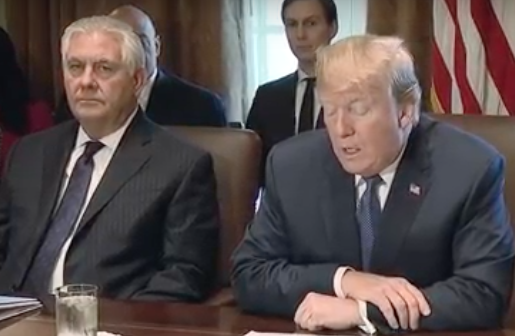


President Trump speaking at a Cabinet meeting on Nov. 1, 2017, with Secretary of State Rex Tillerson to Trump’s right and son-in-law Jared Kushner seated in the background. (Screen shot from whitehouse.gov)


And that’s the real rub … this has an electoral impact. Because the constituency for defense spending isn’t just the 1 percent percent of Americans who actively serve in the military or 7 percent of Americans who’ve served sometime in their lives, but it is also the millions of Americans who directly or indirectly make a living off of the “defense-related” largesse that passes through the Pentagon like grass through a goose.


It’s a dirty little secret that Donald Trump exploited throughout the 2016 presidential campaign. Somehow, he was able to criticize wasting money on foreign wars and the neoconservative interventionism of the Bushes, the neoliberal interventionism of Hillary Clinton, and, at the same time, moan endlessly about the “depleted” military despite “years of record-high spending.” He went on to promise a massive increase in the defense budget, a massive increase in naval construction and a huge nuclear arsenal.


And, much to the approval of many Americans, he’s delivered. A Morning Consult/Politico poll showed increased defense spending was the most popular among a variety of spending priorities presented to voters … even as voters express trepidation about the coming of another war. A pair of NBC News/Survey Monkey polls found that 76 percent of Americans are “worried” the United States “will become engaged in a major war in the next four years” and only 25 percent want America to become “more active” in world affairs.


More to the point, only 20 percent of Americans wanted to increase the troop level in Afghanistan after Trump’s stay-the-course speech in August, but Gallup’s three decade-long tracking poll found that the belief the U.S. spends “too little” on defense is at its highest point (37 percent) since it spiked after 9/11 (41 percent). The previous highpoint was 51 percent in 1981 when Ronald Reagan was elected in no small part on the promise of a major build-up.


So, if Americans generally don’t support wars or engagement in the world, why do they seem to reflexively support massive military budgets?


Frankly, look no further than Trump’s mantra of “jobs, jobs, jobs.” He says it when he lords over the sale of weapon systems to foreign powers or he visits a naval shipyard or goes to one of his post-election rallies to proclaim to “We’re building up our military like never before.” Frankly, he’s giving the people what they want. Although they may be war-weary, they’ve not tired of the dispersal system that Greider wrote about during Reagan’s big spree.


Ultimately, it means that the dreaded Military-Industrial Complex isn’t just a shadowy cabal manipulating policies against the will of the American people. Nor is the “racket” exclusive to an elite group of Deep State swamp things. Instead, the military and the vast economic network it feeds presents a far more “complex” issue that involves millions of self-interested Americans in much the way Eisenhower predicted, but few are willing to truly forsake.


Saturday, December 2, 2017

Expect Desperate, Insane Behavior From Government In 2018 – Part 1

Authored by Mike Krieger via Liberty Blitzkrieg blog,


I heartily accept the motto, “That government is best which governs least”; and I should like to see it acted up to more rapidly and systematically. Carried out, it finally amounts to this, which also I believe — “That government is best which governs not at all”; and when men are prepared for it, that will be the kind of government which they will have.


– Henry David Thoreau, Civil Disobedience


As we head into 2018, I believe governments around the world will become increasingly insecure about their positions of power and control, which will result in increased paranoia about whether or not they have the consent of the governed.


Being a global empire in decline, the U.S. power structure has the most to lose, making it particularly vulnerable to such panic. I suspect forces within the U.S. government are likely to engage in various attempts to reestablish authority via desperate and authoritarian moves as 2018 unfolds. I don’t say this to spread fear; rather, I think such moves will result in considerable pushback from the population at large, particularly from younger generations who are intimately aware of how spectacularity the status quo has failed them. Panic and desperation from those in control shouldn’t be feared, it should be expected and contemplated ahead of time. That’s why I’m writing this series. I want as many people as possible to start thinking about this now so we aren’t caught off guard.


The areas I’ll be diving into with these pieces consist of cannabis, Bitcoin, and war against Iran. I’m sure there are plenty of other areas government will target in its last ditch effort to exert control over a populace sick and tired of these busybody, corrupt authoritarians, but these are issues I follow closely and have a certain degree of familiarity with. As such, they’ll be the focus of this series.


Today’s topic is cannabis. This seems the least likely area for government action, specifically because it would be such a monumentally stupid move. That said, just because something’s idiotic doesn’t mean we should simply discount it, particularly with human fossil Jeff Sessions continuing to chirp on the issue every chance he gets.


Although Sessions has been threatening to stomp on states’ rights and freedom of choice when it comes to cannabis ever since he became Attorney General, he hasn’t done anything yet. Nevertheless, he continues to issue threats.


As Axios reported yesterday:


Attorney General Jeff Sessions suggested in a press conference on Wedenesday that the Department of Justice is looking at changing Obama-era policies that allowed states to decide what to do about marijuana despite the drug remaining illegal under federal law, according to McClatchy DC.


Why it matters: This could have a huge impact on the 6 states and D.C. which will have legalized marijuana by January, 2018. Places that have already legalized marijuana and have seen the marijuana industry boom in their states could face particularly tricky legal situations.


Key quote: “In fact, we’re looking at that very hard right now, we had a meeting yesterday and talked about it at some length. It’s my view that the use of marijuana is detrimental, and we should not give encouragement in any way to it, and it represents a federal violation, which is in the law and is subject to being enforced.”


Meanwhile, bipartisan groups of Senators and House members have been pushing for criminal justice reform bills, which would lower minimum mandatory sentences for non-violent drug crimes. A crackdown on drug crimes is not what they’re looking for from Sessions. 


If Sessions decides to do something, I predict he’ll have his ass handed to him in spectacular fashion. First of all, I can’t think of a single issue that unites Americans at this time more than the belief cannabis should be legalized. A recent Gallup poll proved this in spades. We learned:


WASHINGTON, D.C. — Americans continue to warm to legalizing marijuana, with 64% now saying its use should be made legal. This is the highest level of public support Gallup has found for the proposal in nearly a half-century of measurement.


Gallup first asked national adults about their views on the topic in 1969, when 12% supported legalization. Support had more than doubled by the end of the next decade but changed little throughout the 1980s and 1990s. By 2001, however, about a third of Americans favored legalizing marijuana, and support has steadily increased since. A majority of Americans have consistently supported legalizing marijuana since 2013.


That looks like the chart of Bitcoin.


More significantly, we live in an era in which basically no issue issue successfully crosses partisan political lines. Except cannabis. Also from Gallup:


Democrats and independents have historically been much more likely than Republicans to say marijuana should be legalized. In 2009, Democrats were the first partisan group to see majority support for legalization, followed by independents in 2010.


This year for the first time, a majority of Republicans express support for legalizing marijuana; the current 51% is up nine percentage points from last year.


Moreover, many of those against legal cannabis in their particular state still accept the right of people in other states to decide for themselves. The idea of the federal government going into states and denying the will of the citizens who voted to legalize it would be extraordinarily unpopular across the board. It’ll be completely obvious to everyone that if the feds think they can tell people their votes don’t matter on that issue, there’s zero freedom of choice for anything in this country. It’s the ultimate canary in the coal mine.


In fact, I’ll take this one step further and say if Sessions dares to make this move, it’ll accelerate secessionist movements across the country and delegitimize government credibility more than any other single act in the forty years since I’ve been alive.


If the Trump administration actually moves on this issue, we’ll know for sure how completely inept and desperate it is. Part of me almost wants to see them try, because the resulting monumental fail will demonstrate the power of the people and give a gigantic black eye to authoritarians in government.


Stuff like this is all part of the process we’ll be going through over the next few years, and we need to be mentally prepared for it. We the people will increasingly move to take sovereignty back in a variety of ways, and government will respond with panic. The good news is they’ll be reacting from a position of weakness, not strength.


Which brings us to the topic of Bitcoin. As the price crossed $10,000 recently, I noticed increased squeamishness and fear on behalf of various banksters, economists and other assorted statists.


Monday’s post will dig into what all of that means.


*  *  *


If you liked this article and enjoy my work, consider becoming a monthly Patron, or visit our Support Page to show your appreciation for independent content creators.


Thursday, November 16, 2017

49% Favor Mandatory Military Service For US Youth

Nearly half of Americans favor mandatory military service for the country’s youthaccording to a recent poll from Gallup.


As TheAntiMedia"s Carey Wedler details, the polling organization surveyed 1,006 Americans over the age of 18 between November 3 and November 4, and 49% of those questioned expressed support for compulsory service.


Further, “a majority of Republicans, including independents who lean Republican, favor it (57%), as do men (57%) and those 65 or older (66%),” Gallup summarized.


Gallup noted that efforts to actually impose such a policy - such House Rep. Charles Rangel’s repeated attempts between 2003 and 2015 to mandate it through legislation - have fallen flat.


Americans’ preferences for a traditional draft have fluctuated over the decades. Gallup explained:


A majority of Americans (54%) in 1977 favored sticking to a volunteer force, but two 1980 surveys showed a majority wanting to return to a military draft. Eventually, most Americans endorsed the all-volunteer concept, with five polls conducted between 1998 and 2007 showing majorities from 69% to 85% rejecting a return to the draft.”


The draft was a powerful point of contention during the divisive Vietnam War, prompting many of those selected to fight to burn their draft cards in protest.


In Gallup’s poll idea of forcing young people to serve a mandatory year in the armed forces - as opposed to a draft - was unsurprisingly least popular among young people.


Four in ten favored the proposition, however, marking a significant portion of those who would potentially be affected but still wanted to see it enacted.


While Americans today are not overwhelmingly in favor of it, neither are they overwhelmingly opposed,Gallup observed.


Militarism has long been a core element of American identity, as evidenced by millions of Americans’ stalwart devotion to and respect for soldiers. Though it currently remains unlikely that mandatory service will be implemented, that half the country would support it reflects this value system.


Countries that require mandatory service include Israel, North Korea, China, Russia, Denmark, Norway, Switzerland, Egypt, Turkey, and the United Arab Emirates.


Monday, November 13, 2017

The Crimes Americans Worry About Most

Even though 2017 is already the worst year for mass shootings in modern U.S. history, Americans are more worried about cybercrime than violent crime.


That"s according to a new Gallup poll which found that 67 percent of U.S. adults frequently or occasionally fret about having personal, credit card or financial information stolen by hackers. 66 percent also worry about the threat presented by identity theft.


In comparison with cybercrime, Statista"s Niall McCarthy notes that anxiety about conventional crime forms is less prevalent with a large gap to the third-biggest worry - having a car stolen or broken into. That"s a frequent concern for 38 percent of people while 36 percent tend to worry about burglary when they are away from home.


Infographic: The Crimes Americans Worry About Most | Statista


You will find more statistics at Statista


More serious crimes such as muggings, murders and sexual assault are much further down the list, but why?


The reason cybercrime comes first is more than likely due to far higher levels of victimization, along with substantial coverage in the media. Gallup also found that a quarter of households have experienced hackers stealing their personal information while a mere three percent have experienced a burglary.


Saturday, November 11, 2017

Buchanan Fears A GOP Bloodbath - The Lesson For 2018

Authored by Patrick Buchanan via Buchanan.org,


The day after his “Silent Majority” speech on Nov. 3, 1969, calling on Americans to stand with him for peace with honor in Vietnam, Richard Nixon’s GOP captured the governorships of Virginia and New Jersey.


By December, Nixon had reached 68 percent approval in the Gallup Poll, though, a year earlier, he had won but 43 percent of the vote.


Contrast Nixon’s numbers with President Trump’s.


Where Trump won 46 percent of the vote against Hillary Clinton, his approval rating is now nearly 10 points below that. He has less support today than on the day he was elected, or inaugurated.


Tens of millions of Americans are passionately for Trump, and tens of millions are passionately against him.


The GOP problem: The latter cohort is equal in intensity but larger in number, and this is especially true in purple and blue states like the commonwealth of Virginia.


There is no way to spin Tuesday as other than a Little Bighorn, and possible harbinger of what is to come.


In George Washington’s hometown of Alexandria and Arlington County, Democratic candidate Ralph Northam won 4-1. In Fairfax and Loudoun counties, the most populous D.C. suburbs, Northam won 2-1.


In the rural counties, however, Republican Ed Gillespie rolled up the landslides.


As there are two Americas, there are two Virginias.


Consider. Of all the delegate seats in the Virginia assembly allocated to Alexandria, Arlington, Fairfax, Loudoun and Prince William counties, the GOP can today claim only one.


Northern Virginia is taking on the political and socioeconomic profile of San Francisco.


Another and perhaps insoluble problem for the GOP, not only in the Old Dominion, is demography.


Democrats rolled up their largest margins among African-Americans, Hispanics, single women, immigrants and the young. And these voting blocs are growing.


Gillespie ran up his largest margins among white males near and past retirement age and married white women. These Middle Americans are in inexorable demographic decline.


The Greatest Generation is passing on, and baby boomers born between 1946 and 1951 are now on Medicare and Social Security.


Yet reports of the GOP’s demise are grossly exaggerated.


Though Gillespie lost by nine points, Jill Vogel, who ran for lieutenant governor on Trumpian issues, lost by six.


By 2-1, Virginians do not want their Confederate monuments torn down. Northam, sensing this, moved toward Gillespie’s position as the campaign went on. Also, among the 27 percent of Virginians who regarded taxes and immigration as the top issues, Gillespie won by nearly 4-1.


It was health care concerns, the No. 1 issue, that buried the GOP.


As for mainstream media rage and revulsion at the “racism” of Gillespie ads suggesting Northam supported sanctuary cities and was soft on the MS-13 gang, this reflects an abiding establishment fear of the Trumpian issues of illegal immigration and crime.


Then there was the Republican messenger.


A former chairman of the RNC, Washington lobbyist and White House aide, Gillespie is an establishment Republican unconvincing in the role of a fighting populist conservative. His speeches recalled not Trump’s run, but that of the Republicans Trump trounced.


Ed Gillespie was Virginia’s version of Jeb Bush.


Message from the Old Dominion: A purple state, trending blue, with its economy recession-proof as long as Uncle Sam across the river consumes 20 percent of GDP, is a steepening climb for the GOP. You must have a superior candidate, comfortable with cutting issues, to win it now.


Republicans are being admonished to drop the monuments-and-memorials issue and respect why NFL players might want to “take a knee” during the national anthem.


But if to win in Northern Virginia the GOP must move closer to the Democratic Party, why would the rest of the state want to vote for the Republican Party?


During the campaign, both candidates moved rightward.


Northam rejected sanctuary cities and accepted Lee and Jackson on Richmond’s Monument Avenue, and Gillespie ran Trumpian ads, even if they seemed to clash with the mild-mannered candidate himself.


The lesson for 2018:


While the solid support of Trumpians is indispensable for GOP victory, it is insufficient for GOP victory. Republican candidates will have to decide how close they wish to get to President Trump, or how far away they can risk going and survive.


Facing this choice, Sens. Jeff Flake and Bob Corker decided to pack it in. Other Republicans may follow. But a house divided will not stand.


Republicans should recall that off-year elections are often problematic for incumbent parties. In 1954, President Eisenhower lost both houses of Congress. After pardoning Nixon in 1974, Gerald Ford lost 49 seats. In 1982, Ronald Reagan sustained a 27-seat loss.


In 1994, Bill Clinton lost 53 seats and control of the House. In 2010, Barack Obama lost 63 seats and control of the House.


If the nation chooses to turn Congress over to Nancy Pelosi and Chuck Schumer in 2018, will that be all Trump’s fault? Or should perhaps some credit go to Paul Ryan, Mitch McConnell and venerable political tradition?


Wednesday, October 4, 2017

Despite Opposition, Scotland Announces Fracking Ban - Calls For US To Do The Same

Authored by Julia Conley via TheAntiMedia.org,


“We have so much wind and wave power that it is retrograde in the extreme to lend any support to the fracking industry.”


Environmental groups from around the world applauded Scotland on Tuesday for its decision to ban fracking, following an overwhelming public outcry against the practice - and called for the United States and the rest of the United Kingdom to follow suit.


The Scottish government held a public comment period in recent months on fracking, attracting about 65,000 responses - the majority of which came from people in communities where the natural gas extraction would take place. An overwhelming 99 percent of Scots who participated were opposed to the practice.


"Fracking will lead to an increase in pollution and the decimation of parts of the Scottish landscape and environment,” wrote one respondent.


“People will feel even more devalued as a result of having been ignored, communities wll be damaged by fracking wells and health will suffer as a result of noise, ground water contamination and probably indirect air pollution. Scotland can’t afford to damage the health of its residents any more.”


In addition to environmental concerns, many Scots said they weren’t convinced of the potential economic benefits of fracking; the auditing firm KPMG found that it was likely to only increase the GDP by 0.1 percent. Others said relying on the risky method of energy production would signify a lack of innovation in the country.


“We should be moving to renewables. This is a backwards step,” said a commenter.


In a four-month public comment period, 99 percent of the 65,000 Scots who responded expressed opposition to fracking. (Photo: Friends of the Earth Scotland/Flickr/cc)


Another added that the practice was “likely to be entirely detrimental as Scotland’s international reputation as an innovator in design and engineering projects is undermined by our agreement to proceed with fracking…We have so much wind and wave power that it is retrograde in the extreme to lend any support to the fracking industry.”


Food and Water Watch gave credit to the Scottish people for standing up to corporate entities that supported fracking. “Giant energy company Ineos, which invested heavily in its Scottish facility at Grangemouth, fought hard against this ban, even threatening to explore legal action against the government if it passed,” said executive director Wenonah Hauter in a statement. “But people power prevailed, and it will continue to prevail. We can’t let companies like ExxonMobil and Ineos stop the inevitable march towards clean energy. Bold and swift policy change is our only hope for addressing our climate goals. We applaud the Scottish government for doing what’s right for people and the planet.”


Scotland’s decision leaves its neighbors, England and Wales, alone in their embrace of fracking.


“With all our nearest neighbours having banned or halted fracking, our government is increasingly out on a limb in pursuing it in England,” said Rose Dickinson of Friends of the Earth.


Hauter also called on the U.K. as well as the U.S. to follow in Scotland’s footsteps.


“Banning fracking is a necessary step towards beating the worst effects of climate chaos, and the U.K. and the U.S. should follow Scotland’s example,” she said.


“In the U.S., we already have the means to start moving off of fracking swiftly - the Off Fossil Fuels For a Better Future Act, which would mandate a just transition to 100 percent clean renewable energy by 2035, starting with 80 percent within the next 10 years.”


As in Scotland, public opinion in the UK and the US is not in fracking’s favor, despite officials’ insistence that the practice creates jobs and revenue. A poll by England’s Business and Energy Department this summer found that only 16 percent of citizens support fracking, down from 21 percent last year.


In the U.S., opinions are more evenly split, but a 2016 Gallup poll found that 51 percent of Americans oppose fracking, while 36 percent support it.

Tuesday, September 12, 2017

How Do You Spell 'Relief'?

Authored by Lance Roberts via RealInvestmentAdvice.com,


In this past weekend’s newsletter. I discussed the potential for the market to hit new highs. To wit:


“The good news this week is that the market maintained last week’s advance despite the one-day tantrum earlier. Interestingly, since the election, the market has ratcheted higher in slightly more than 3% increments with each move higher followed by a drawn-out consolidation process that runs primarily along the 50-75 dma. The last sell-off tested, and held, the 100-dma but stayed within the confines of the consolidation process. The 2400 level on the S&P 500 remains the clear ‘warning level’ for investors currently.”


Chart updated through Monday’s open.


“But this short-term bullish backdrop is offset by intermediate-term bearish underpinnings as shown by the next two charts. With an intermediate-term momentum sell-signal in place, combined with overbought conditions, continues to suggest further gains from this point will likely remain limited and more volatile to obtain. That statement DOES NOT preclude the markets reaching new highs, it just suggests that downside corrective risks outweigh the potential currently for further gains.”


That “gap up” opening occurred Monday morning as “relief” spread through global markets due to the reduction of geopolitical stress as the U.S. once again “caved” to the threats of North Korea.


Over a month ago on the “Lance Roberts Show,” I discussed North Korea’s real positioning behind their nuclear tests and ICBM launches.


“While Kim Jung Un may ‘appear’ to be ‘crazy,’ and he is, he does understand the consequences of starting an actual war with the U.S. However, as a dictator, he can not afford to show weakness. Therefore, he needs the U.S. to acquiesce to some degree to allow him to claim victory over the ‘evil empire’ of the west.”


Over the weekend, as per Reuters, that is exactly what happened.


“A U.S.-drafted resolution originally calling for an oil embargo on the North, a halt to its key exports of textiles and subjecting leader Kim Jong Un to a financial and travel ban have been weakened, apparently to placate Russia and China which both have veto powers, diplomats said.”


And, as I stated would be the case, the spokesman for the Democratic People Republic of Korea quickly claimed:


“The world will witness how the DPRK tames the U.S. gangsters by taking a series of actions tougher than they have ever envisaged.”


With that, the world breathed a sigh of relief and the previous “risk off” trade rushed to pile back into “risk.”


“How do you spell relief?


“C-E-N-T-R-A-L B-A-N-K-S” 


According to BofA’s Michael Hartnett, in 2017 Central Banks have increased purchases of financial assets by roughly $2 Trillion. In turn, this has now pushed global balance sheets from $4.34 Trillion in 2008 (pre-Lehman,) to $15.6 Trillion currently.


At the same time, this has pushed yields to record lows, and equities to record highs. The problem is that markets have now been “priced to perfection” for future earnings growth and economic expectations. Yet, at the same time stock prices are rising, earnings estimates continue to decline. Via Factset:


“During the first two months of the quarter, analysts lowered earnings estimates for companies in the S&P 500 for the third quarter. The Q3 bottom-up EPS estimate (which is an aggregation of the EPS estimates for all the companies in the index) dropped by 1.7% (to $33.26 from $33.84) during this period.”


But while FactSet puts a positive spin on the decline, the decline in earnings estimates can be more clearly seen in the chart below. It compares REPORTED EPS from January, July and September 2017, to where estimates were in 2016 for the end of this year.


Here is the problem. While the financial markets have risen to “all-time” highs, estimates for 2017 are more than $10 lower than they were in 2016. Furthermore, Q4-2018 estimates are being consistently ratcheted lower and are now only $1.22 higher than where the Q4-2017 originally stood.


The bigger issue is that the largest driver of earnings per share growth has NOT come from the increase of sales and revenue, but rather through the reduction of shares outstanding. It is worth noting the previous collapse in EPS came not as share buybacks were falling, but when they stopped.


But that is a story yet to play out.


For now, stocks are pricing in forward estimates, and as stated above, have likely “priced in” all of the expected growth going forward.


Of course, as it has always been, it will be when expectations fail to become a reality the real problems will begin. It is the same problem that has triggered every “repricing” of assets throughout history.


But this too will be a story for another day.


For now, it remains a market driven by a simple belief that Central Banks can control outcomes. The flood of liquidity into the financial systems are finding their way either indirectly, or directly, into assets driving prices higher. That in turn has fueled investor optimism which has now hit the highest level in 17-years according to the latest Wells Fargo/Gallup poll.


“The latest boost in optimism pushes the index almost 100 points higher than the +40 score measured in February 2016. The 98-point hike over the past 18 months is the largest increase in the 20-year history of the index that is not a rebound immediately after a major drop in optimism.”


After more than 8-years of a surging bull market, often declared the “most hated in history,”


  • Sixty-eight percent now say they are optimistic about the stock market’s performance during the next year, matching the record high for the question from December 1999 and January 2000.

  • At least 61% have expressed optimism about the stock market in each of the three surveys this year, a percentage matched or exceeded only four other times in the 132 times the question has been asked since April 2000.

  • Twenty-five percent say they are “very optimistic,” topping the previous record high of 24% from the first quarter of this year. Only 11% were very optimistic a year ago.

  • Sixty-one percent of investors now say it is a good time to invest in the stock market, up from 53% two years ago. Among those saying it’s a good time to invest, the main reason is their belief that the market will continue to increase, mentioned by 47%.

See, what is there to worry about?


Everyone agrees this is the greatest “bull market” in history.


Of course, that brings me to this little note from Social Capital recently defining a bubble:


“But in a bubble, everyone stops worrying about that. Fear of losing capital becomes superseded by a different kind of fear: FOMO. Bubbles give everybody involved a credible reason to believe that follow-on financing will continue to be available, and at more and more attractive rates to boot. Which means, if you’re an investor, hey, we’ve gotta get started now! Hurry, before the price goes up! And if you’re an entrepreneur, Hey, we’ve gotta get started now, before the competition does! That’s what we need to break the coordination failure. Under bubble conditions, we willingly and enthusiastically embark on speculative projects that have no line of sight to positive free cash flow and must continue raising more and more money.”


Are we in a bubble? Probably. There are plenty of signs which suggest that is the case.


The next chart shows every major bubble and bust in the U.S. financial markets since 1871 (Source: Robert Shiller)


At the peak of each one of these markets, there was no one claiming that a crash was imminent. It was always the contrary with market pundits waging war against those nagging naysayers of the bullish mantra that “stocks have reached a permanently high plateau” or “this is a new secular bull market.”  (Here is why it isn’t.)


Yet, in the end, it was something that was unexpected, unknown or simply dismissed that yanked the proverbial rug from beneath investors.


What will spark the next mean reverting event? No one knows for sure, but the catalysts are present from:


  • Excess leverage (Margin debt at new record levels)

  • IPO’s of negligible companies (Blue Apron, Snap Chat)

  • Companies using cheap debt to complete stock buybacks and pay dividends, and;

  • High levels of investor complacency.

Either individually, or in combination, these issues are all inert. Much like pouring gasoline on a pile of wood, the fire will not start without a proper catalyst. What we do know is that an event WILL occur, it is only a function of “when.” 


The discussion of why “this time is not like the last time” is largely irrelevant. Whatever gains that investors garner in the between now and the next correction by chasing the “bullish thesis” will be wiped away in a swift and brutal downdraft. Of course, this is the sad history of individual investors in the financial markets as they are always “told to buy” but never “when to sell.”


For now, the “bullish case” remains alive and well. The media will go on berating those heretics who dare to point out the risks that prevail. However, the one simple truth is “this time is indeed different.”  When the crash ultimately comes the reasons will be different than they were in the past – only the outcome will remain same.

Tuesday, August 29, 2017

Trump's Presidential Approval Rating In Context

Presidential job approval is a simple, yet powerful, measure of the public"s view of the president"s job performance at a particular time. Approval ratings for Presidents Obama and Trump shown in the Presidential Job Approval Center are based on weekly Gallup Daily tracking averages.


From Truman to Trump...


On day 212 in office, President Trump has a 37% approval rating.


President Truman holds the record for lowest approval rating (for now) at 22% on day 2499 in office.


President George "W" Bush holds the record for the highest approval rating at 89% on day 267 in office

Monday, August 28, 2017

Macron Approval Rating Crashes Twice As Fast As Trump's

It appears that Trump is no longer the president with the fastest plunge in his approval rating: that honor has now fallen to France"s Emanuel Macron, who since his dramatic victory in the May 7 presidential election, has seen his popularity plummet, and according to a a new poll conducted by Ifop for Le Journal du Dimanche, most French voters are now dissatisfied with Emmanuel Macron’s performance, a dramatic decline for the president who basked in a landslide election victory less than four months ago.


The poll showed Macron’s “dissatisfaction rating” soaring to 57%, from 43% in July. At the same time, those satisfied with Macron tumbled from 54% in July (and 62% at election) to just 40% in August, a stunning 22% drop over three months...  which is twice as fast as Donald Trump"s fall from grace. According to Gallup, on Inauguration Day, 45% of Americans said they approved of Trump and since then, the number has declined by 11% to 34%, which again is only half as bad as Macron popularity plunge. The Ifop poll also showed the cumulative drop in Macron’s popularity ratings since May was far bigger than that of previous Socialist president Francois Hollande over the same period, who is best known for achieving the lowest approval record of any recent French president on record. As such, one wonders how Macron"s approval rating in a few short years can even be positive.


Quoted by Reuters, French government spokesman Christophe Castaner said the ruling party was going through a "tricky time", but added that displeasing some people was a price worth paying if the government wanted to push through reforms. The only problem is the government will most likely not be able to push through reforms, even as Macron"s approval continues its sharp descent. Cartaner also told BFM TV that “yes, we are encountering difficulties, but you cannot just spend your time only looking at polls when you’re in government. We are there to transform the country. Our country needs us to take risks, and we are taking risks." Spoken like a true megalomaniac.


As for Macron -  who is currently midway through a schedule of official visits to various European capitals and who most recently got into a violent feud with Poland when he criticized the Warsaw government for its "non-European ideals" to which Polish PM Beata Syzdlo slammed "arrogant" Macron saying "you won"t rule Europe" - has suffered a number of setbacks since being elected, including tough debates in parliament over labor reform, a standoff with the military and cuts to housing assistance. Then, just last week, Macron became the target of social media scorn and humor, while political opponents criticized the president when it emerged he spent €26,000 ($31,000) on makeup during his first 100 days in office and his office also backed down on plans to give his wife a formal, paid role after a public backlash.


In any case, the latest polling is terrible news for the young new president who was expected to inspire his country with hope and confidence yet appears to be doing just the opposite: Bernard Sananes, head of French polling company Elabe, said the latest survey could encourage Macron’s political opponents, after his party won a commanding majority in parliament.


“It could mean, for the government, that the opposition mobilizes itself again,” Sananes told BFM TV.


It wasn"t just Macron: the poll also showed a steep drop in approval for Prime Minister Edouard Philippe, with 47% expressing satisfaction with him - down 9% from last month.


As Reuters adds, Macron - France"s youngest leader since Napoleon - faces a big test next month when the far-left CGT trade union leads a rally to protest against plans to deregulate the jobs market. "Now is the key time, with the labor executive orders to be presented," said Francois Savary, chief investment officer at Geneva-based investment firm Prime Partners, who has an "underweight" position on French equities.

Thursday, August 24, 2017

Visualizing The Countries Most And Least Accepting Of Migrants

According to new research from Gallup, many countries on the frontlines of Europe"s migration crisis are among the least-accepting countries worldwide for migrants.


Statista"s Nial McCarthy notes that the research found that Macedonia, Montenegro, Hungary, Serbia, Slovakia and Croatia which are all along the Balkan route for asylum seekers recorded the lowest scores for accepting migrants.


Infographic: The Countries Most And Least Accepting Of Migrants | Statista


You will find more statistics at Statista


Iceland was at the opposite end of the scale, scoring 8.26 out of 9.0. It was followed by New Zealand and Rwanda.


Germany which has taken in huge numbers of refugees in recent years came 23rd overall with 7.09. The United States came 18th with 7.27. The United Kingdom came a distant 38th for migrant acceptance, scoring only 6.61 out of 9.0.

Tuesday, August 8, 2017

US Is "The Greatest Threat To Peace In The World Today," New Poll Finds

Authored by Eric Zuesse via The Strategic Culture Foundation,


It has happened again: yet another international poll finds that the US is viewed by peoples around the world to be the biggest threat to world peace.


But, to start, let’s summarize the first-ever poll that had been done on this, back in 2013, which was the only prior poll on this entire issue, and it was the best-performed such poll: «An end-of-the-year WIN/Gallup International survey found that people in 65 countries believe the United States is the greatest threat to world peace», as the N.Y. Post reported on 5 January 2014. 


On 30 December 2013, the BBC had reported of that poll: «This year, first [meaning here, ‘for’] the first time, Win/Gallup agreed to include three questions submitted by listeners to [BBC’s] Radio 4"s Today programme». And, one of those three listener-asked questions was phrased there by the BBC, as having been «Which country is the biggest threat to peace?» The way that WIN/Gallup International itself had actually asked this open-ended question, to 67,806 respondents from 65 countries, was: «Which country do you think is the greatest threat to peace in the world today?» #1, 24% of respondents, worldwide, volunteered that the US was «the greatest threat». #2 (the second-most-frequently volunteered ‘greatest threat’) was Pakistan, volunteered by 8%. #3 was China, with 6%. #s 4-7 were a four-way tie, at 5% each, for: Afghanistan, Iran, Israel, and North Korea. #s 8-10 were a three-way tie, at 4% each, for: India, Iraq, and Japan. #11 was Syria, with 3%. #12 was Russia, with 2%. #s 13-20 were a seven-way tie, at 1% each, for: Australia, Germany, Palestine, Saudi Arabia, Somalia, South Korea, and UK.


The way that W/G itself had phrased this matter, in their highly uninformative press release for their year-end survey (which included but barely mentioned this finding, in it — as though this particular finding in their annual year-end poll, hardly even deserved to be mentioned), was: «The US was the overwhelming choice (24% of respondents) for the country that represents the greatest threat to peace in the world today. This was followed by Pakistan (8%), China (6%), North Korea, Israel and Iran (5%). Respondents in Russia (54%), China (49%) and Bosnia (49%) were the most fearful of the US as a threat». That’s all there was of it — W/G never devoted a press-release to the stunning subject of this particular finding, and they even buried this finding when mentioning it in their year-end press-release.


I had hoped that they would repeat this excellent global survey question every year (so that a trendline could be shown, in the global answers over time), but the question was unfortunately never repeated.


However, now, on August 1st of 2017, Pew Research Center has issued results of their polling of 30 nations in which they had surveyed, first in 2013, and then again in 2017, posing a less-clear but similar question (vague perhaps because they were fearing a similar type of finding — embarrassing to their own country, the US), in which respondents had been asked «Do you think that the United States’ power and influence is a major threat, a minor threat, or not a threat to (survey country)?» and which also asked this same question but regarding «China,» and then again but regarding «Russia,» as a possible threat instead of «United States». (This wasn’t an open-ended question; only those three nations were named as possible responses.)


On page 3 of their 32-page pdf is shown that the «major threat» category was selected by 35% of respondents worldwide for «US power and influence», 31% worldwide selected that for «Russia’s power and influence,» and also 31% worldwide said it for «China’s power and influence». However, on pages 23 and 24 of the pdf is shown the 30 countries that had been surveyed in this poll, in both 2013 and 2017, and most of these 30 nations were US allies; only Venezuela clearly was not. None of the 30 countries was an ally of either Russia or China (the other two countries offered as possibly being «a major threat»). And, yet, nonetheless, more respondents among the 30 sampled countries saw the US as «a major threat», than saw either Russia or China that way.


Furthermore, the trend, in those 30 countries, throughout that four-year period, was generally in the direction of an increase in fear of the US — increase in fear of the country that had been overwhelmingly cited in 2013 by people in 65 countries in WIN/Gallup’s poll, as constituting, in 2013, «the greatest threat to peace in the world today».


Consequently: though WIN/Gallup never repeated its question, the evidence in this newly released poll, from Pew, clearly suggests that the percentage of people in the 65 nations that WIN/Gallup had polled in 2013 who saw the US as being «the greatest threat to peace in the world today» would be even higher today than it was in 2013, when 24% of respondents worldwide volunteered the US as being the world’s most frightening country.


Perhaps people around the world are noticing that, at least since 2001, the US is wrecking one country after another: Iraq, Afghanistan, Libya, Syria, and Ukraine. Which is next? Maybe Iran? Maybe Russia? Maybe Venezuela? Who knows?


And this country has just increased its ‘defense’ spending, which already is three times China’s, and nine times higher than Russia’s. Do the owners of America’s military-industrial complex own the US government, and own the US ‘news’media, to permit this rabid military to control the government’s budget, in a ‘democracy’?

Thursday, August 3, 2017

And The Least Safe Country In The World Is...

A global survey conducted in 135 countries has revealed that crisis-hit Venezuela has by far the lowest share of inhabitants that feel safe walking alone at night.


Infographic: Where People Feel Least Safe | Statista


You will find more statistics at Statista


As Statista"s Martin Armstrong notes, a mere 12 percent of Venezuelan respondents said that they would feel comfortable at alone at night on the streets of their city or area, a whole 16 points lower than the next worst country, El Salvador with 28 percent.


On the other end of the scale, an impressive 97 percent of Singaporeans said that they feel safe.


Due to security conditions, Gallup were unable to conduct the survey in Syria.

Why Obamacare Repeal Failed

Authored by Taylor Lewis via Mises Canada blog,


"Farewell the plumed troop and the big wars


That make ambition virtue! O, farewell!” – Othello


Republicans lost, big league. On the one solid promise they’ve repeated ad nauseam for seven years and running, the party of Reagan came up short.


The Affordable Care Act, otherwise known as Obamacare, is here to stay. Congressional Republicans, despite a million vows to the contrary, failed to repeal it. Disagreement within the ranks proved too much; members couldn’t find a way to reconcile their rhetoric with practice.


Ironically enough, the man who gave a brief flicker of hope to Obamacare opponents was the same who snuffed it out: Senator John McCain.


Recently diagnosed with glioblastoma, McCain returned to Washington in time to vote for the motion to proceed with debate on a possible repeal package. In the wee hours of Friday morning, he cast the deciding “nay” vote on what was marketed as “skinny repeal,” an amendment to abolish some of the worst parts of Obamacare, including the individual mandate.


Just like that, McCain went from Senate savior to Judas Iscariot. In a press statement, the Arizona senator expressed concern that, despite Speaker of the House Paul Ryan’s assurances, the amendment would be immediately passed by the House and sent to President Trump’s desk. McCain was far from the only senator to voice reserve over this prospect.


McCain’s objection gets to the absurdity of the whole repeal effort: Republicans, failing to pass out an outright Obamacare repeal, were willing to pass a bill they openly hoped would not become law, but would only go to conference with the House and emerge as new legislation entirely.


The McCain gambit demonstrated just how out of sync the Republican strategy on reforming health care is. It was so bad that Politico copy-editors wrote the headline “Senate Republicans hope their own Obamacare repeal won’t become law” and weren’t inaccurate. The desperation to pass something, anything, is lawmaking at its most juvenile.


As one Twitter observer put it, “McCain voted NO so other GOP Sens who shared his view could vote YES last night to let them save face w/conservative base voters.” I can’t think of a more apt description.


The Republicans’ failure of vision and action leaves Obamacare the little law that could. Through multiple court challenges, numerous elections, and a totally united opposition government threatening to extirpate it for good, President Obama’s crowning achievement remains.


Now, every American who cast a GOP ballot in the hopes of de-socializing health care is shaking their head at this shameful acquiescence. Republicans deserve their scorn, but those casting blame are not entirely innocent. Culpability rests on both sides of the aisle: Voters should have never expected a clean and easy slicing away at an entitlement program. And, more so, GOP candidates should have never portrayed the effort as a cinch.


But even while entitlements may be a dependency-causing drug, Republicans still managed to squander what was a stars-aligned opportunity. Coming away from November with full control of Congress and the White House created an imperative to act. Premiums have steadily increased under Obamacare since its inception. The government-run exchanges are a mess, with insurers abandoning them faster than the Titanic. Iowa only has one insurer, Medica, operating on the state exchange. States like Arizona (McCain’s home state!) only have a few insurers. An analysis from the Kaiser Family Foundation finds that by the end of 2017, one third of U.S. counties will have only one insurer.


Price and availability statistics provide ample reason for reform. But Republicans were helped by something more: A prime example of the dangers of government-administered health care. The heart-wrenching case of little Charlie Gard made world headlines by putting the cruelty of Britain’s National Health Service on full display. Charlie was diagnosed with encephalomyopathic mitochondrial DNA depletion syndrome, which left him unable to breathe on his own while slowly destroying his organs. Gard’s parents wanted to seek experimental treatment in America, but the hospital refused to release their child.


Charlie was taken off life support the day of the failed Obamacare repeal vote, drawing his last breath shortly after. At the end, the hospital even denied the parents’ request to take Charlie home so he could live his last few moments away from the sterile ward walls.


While propriety says children shouldn’t be political props, the Gard story was impossible to escape. And even with its sad ending as a backdrop, Republicans still couldn’t muster the will to undo America’s largest entitlement program since Medicare.


Conservative commentators are at a loss to explain how Republicans could bungle such a huge opportunity. The answer, though, is easy, but it’s not an easy one to face for those who derive an income from drafting talking points.


Many of Obamacare’s main aspects were Republican-devised and first implemented by a Republican governor. As Matthew Walther writes, Obamacare is, at its heart, a “plan devised by the Heritage Foundation in the ’90s that is messy but not ipso facto unacceptable. The only problem is that it was passed by a guy with a D behind his name.”


Republicans were never going to repeal a Republican health care plan. For all their talk of free-markets, the last thing any GOP politicians will do is support an entirely unfettered marketplace in any service. Like it or not, Obamacare is a midway point between wholly private enterprise and a single-payer, government-run health care system.


Does this failure mean the Republican Party is finished? Surely, seven years of a failed promise will spell doom at the ballot box, right?


Hardly. A new Gallup poll shows that, for the first time ever, Obamacare has majority support from Americans. In a revealing New York Times dispatch from Doylestown, Pennsylvania, rural Trump-backers have come to terms with Obamacare. “As much as I was against it,” said one fiscally conservative voter, “at this point I’m against the repeal.” One restaurant owner commented, “I can’t even remember why I opposed it.”


Come 2018, it’s hard to see amnesia’s muddying effect dissipating.

Wednesday, August 2, 2017

Venezuela Bolivar Loses A Third Of Its Value In The Past Week

With events in Venezuela now well into the endgame, following US sanctions that named "dictator" Maduro personally and a likely subsequent sanction that will cripple Venezuela"s oil industry promptly resulting in the nation"s insolvency as it loses its last remaining source of revenue, things are moving fast. So fast, in fact, that according to Reuters, Venezuela"s money supply surged 10% in just one week earlier this month, its largest single-week rise in a quarter of a century.


Meanwhile, in addition to now daily protests and strikes, Venezuela is undergoing a major economic crisis, with millions suffering food shortages, monthly wages worth only the tens of U.S. dollars, and soaring inflation - although no official data is available.  The central bank said late on Friday the total amount of local currency in circulation, or M2 as of July 21, was 27.3 trillion bolivars, up 9.66% from the previous week.


Obviously, the exponential rise in M2, the sum of cash, together with checking, savings, and other deposits, also means an exponential rise in the amount of currency circulating. As a result, Venezuela"s money supply is up 384% in the last year. In contrast, the United States" money supply is up 5.5% in the same period.


This means that Venezuelans are forced to carry huge bundles of cash to make basic purchases, if they can afford to do so given weekly price rises on many goods of course.


This means hyperinflation.


Today, the Dolar Today website reported that Venezuela"s black market exchange rate surged past 14,000 bolivars per dollar.


When President Nicolas Maduro came to power in April 2013, it was at 24 per dollar.


Putting the country"s bitter economic end in context, the bolivar has lost a third of its value in the past week.


That takes care of the economy, as for how how socialism ends in a social context, in a poll released today Gallup found the Venezuela is now the least safe country in the world.


Venezuela"s score on Gallup"s Law and Order Index -- its annual global gauge of how secure people feel -- continued to follow the country"s descent into chaos in 2016. The country"s index score of 42 out of 100 was the lowest in the world last year. This number is likely even worse now as the country"s economic and political crisis deepens, including the election on Sunday that critics, including the U.S. and a growing list of nations, are denouncing as a "sham."


Across 135 countries, Law and Order Index scores in 2016 ranged from a high of 97 in Singapore to the low of 42 in Venezuela. The index is based on people"s reported confidence in their local police, their feelings of personal safety, the incidence of theft in the past year and -- for the first time in 2016 -- the incidence of assault and mugging in the past year.


Venezuela"s scores on all of the individual questions that make up the current index were worse last year than at any point in the past decade. Just 12% of Venezuelans in 2016 said they felt safe walking alone at night where they live, and 14% expressed confidence in their police. These are not only the worst on record for Venezuela, but the worst for any country last year -- and for the past 10 years.


To put Venezuela"s 12% who feel safe walking alone at night into perspective, the next-lowest figure in 2016 was more than twice as high as Venezuela: 28% in El Salvador. Among the 12 countries in which residents are least likely to say they feel safe walking alone at night, five are in Latin America. Another six are in sub-Saharan Africa -- including two of that region"s more economically developed countries, South Africa (37%) and Botswana (38%).


At the same time, 38% of Venezuelans said they had had property or money stolen in the past year. This is up more than 10 percentage points from the previous year and a new record high for the country. Only five countries -- all in sub-Saharan Africa -- had higher percentages than Venezuela in 2016. 


Wednesday, July 19, 2017

Why People Love And Hate Trump

Washington Post/ABC News poll released Sunday put President Trump"s six-month approval rating at a historic 70-year low amid controversy over connections between the White House and Russia. Interestingly, as Statista"s Niall McCarthy notes, most of Trump"s detractors actually dislike him due to his personality and character, rather than specific issues and policy, according to a Gallup poll published late last week.


Infographic: Why People Love And Hate Trump | Statista


You will find more statistics at Statista


When the same research was conducted in 2009, it found that Obama"s disapprovers primarily lacked faith in the president"s policy and stance on specific issues. Gallup found that people who approve of Trump generally give him the thumbs up on a range of broad issues including the president"s general performance, as well as policies and personality.


Broken down, the polling found that 29 percent of disapprovers said that Trump is either not presidential, has a bad temperament, is arrogant or obnoxious, Inexperience was cited by 10 percent while 7 percent of those polled said he is doing a poor job.


When it comes to approval, 12 percent of respondents said Trump is doing a good job or the best he can under difficult circumstances. 11 percent said that the president is keeping his promises and 10 percent think he is doing what"s best for the United States.


Trump"s low approval ratings are being driven by his unconventional style and non-normative pattern of White House behaviour rather than his actual policies and views. According to Gallup, the president is highly unlikely to alter his behavior and style, meaning his detractors are unlikely to change their minds about him. However, this could be influenced if Trump enjoys some major international and domestic successes that overshadow his behaviour.