Showing posts with label japan. Show all posts

Monday, April 9, 2018

WW3: Japan Activates Marines For First Time Since WWII On Chinese Border


Fears of a third world war spiked over the weekend as Japan activated their marines for the first time since World War 2. About 2,100 members of the Amphibious Rapid Deployment Brigade (ARDB) were activated in a ceremony in which the troops wore camouflage.


ARDB also completed a 20-minute mock drill for the public in which the “retook” an island from an invading force. According to Reuters, the formation of the Japanese marine brigade is controversial because amphibious units can project military force and could, critics warn, be used to threaten Japan’s neighbors. In its post-WW2 constitution, Japan renounced the right to wage war.


The newly activated unit is highly trained to counter invaders occupying Japanese islands along the edge of the East China Sea that Tokyo fears are vulnerable to attack by China. “Given the increasingly difficult defense and security situation surrounding Japan, defense of our islands has become a critical mandate,” Tomohiro Yamamoto, vice defense minister, said in a speech.


The brigade is the latest component of a growing marine force that includes helicopter carriers, amphibious ships, Osprey tilt-rotor troop carriers, and amphibious assault vehicles. All of these marine measures are meant to deter China as it pushes for easier access to the Western Pacific.


The activation of the 2,100 strong ARDB takes Japan a step closer to creating a force similar to a U.S. Marine Expeditionary Unit (MEU) able to plan and execute operations at sea far from its home base. “They’ve already demonstrated the ability to put together an ad hoc MEU. But to have a solid, standing MEU capability requires a concerted effort,” Grant Newsham, a research fellow at the Japan Forum for Strategic Studies. “If Japan put its mind to it, within a year or year and a half it could have a reasonable capability.”


Coincidentally, the United States last month deployed its F-35Bs for their first at-sea operations aboard the USS Wasp amphibious assault ship, which is based in Sasebo. The Kyushu port is also home to Japan’s Ise and close to the ARDB’s base.


All of these military decisions seem to coalesce and reignite fears of a war. The amphibious marine force of Japan has been advancing over the past few years with the help of the United States Marines. 

Monday, March 26, 2018

Red alert: Alexa maintains bombing of Hiroshima, Japan, will occur on “May 25, 2018”

(INTELLIHUB) — While tensions with North Korea remain at an all-time high, Alexa, of all things, was captured on video last Monday saying that the bombing of Hiroshima would occur in less than 70-days.


“How many days has it been since the bombing of Hiroshima?,” the user of the all-knowing Internet-connected device asked aloud before garnering an ominous answer from the outspoken circular-shaped machine.


“This might answer your question,” Alexa said. “The bombing is in 69-days, May 25th, 2018.”


Dovetailing with Alexa’s astonishingly grim prediction, former U.S. President Barack Obama visited Japan Sunday, where he warned that North Korea poses a “real threat.”


‘North Korea is a real threat and poses a significant threat not just to the region but to the whole world’, Obama said during his speech in Tokyo.


H/T: @Tabertronic on Twitter


Related video:


©2018. INTELLIHUB.COM. All Rights Reserved.


Shepard Ambellas is an opinion journalist, analyst, and the founder and editor-in-chief of Intellihub News & Politics (Intellihub.com). Shepard is also known for producing Shade: The Motion Picture (2013) and appearing on Travel Channel’s America Declassified (2013). Shepard is a regular contributor to Infowars. Shepard is the leading journalist covering the Las Vegas Massacre, logging over 1100+ hours, 160+ reports, during his ongoing investigation. Read more from Shep’s World. Follow Shep on Facebook. Subscribe to Shep’s YouTube channel.


The post Red alert: Alexa maintains bombing of Hiroshima, Japan, will occur on “May 25, 2018” appeared first on Intellihub.

Thursday, March 22, 2018

Air Force General Admits The US Can’t Stop Chinese Or Russian Hypersonic Missiles


A top United States Air Force general has admitted that the US is powerless against hypersonic missiles capable of killing millions of people. Air Force General John Hyten testified before the Senate Armed Services Committee on March 20 and admitted the horrifying reality.


When asked about the effectiveness of US defenses, General Hyten revealed the country would be powerless against some state-of-the-art weapons, such as the hypersonic missiles currently in the hands of the Chinese and Russians. According to The Daily Star, hypersonic missiles can deploy warheads that travel at 20 times the speed of sound and can dodge air defenses as they loop through the skies.


“We have a very difficult – well, our defense is our deterrent capability,” said Hyten. “We don’t have any defense that could deny the employment of such a weapon against us, so our response would be our deterrent force, which would be the triad and the nuclear capabilities that we have to respond to such a threat.” Hyten eluded that should the US be attacked with one such missile, that the military could respond with a nuclear attack.


These comments come as fears of a third world war continue to heighten and among the major advancements in the Russian and Chinese weapons technology. Both of these countries would be a force to be reckoned with should another world war break out.


The Russians have been accomplishing a great deal in stealth technology, especially with Kilo-class boats converted into stealth subs. Dubbed “the black holes of the Russian Navy,” these quiet refitted diesel subs with the stealth technology are starting to roll steadily off of the assembly lines.


The Chinese are also upgrading their submarine fleet from a technological perspective (the boat) and also making improvements in their missile systems.  Such actions come on the heels of American positioning in the Pacific. –SHTFPlan


Zhou Chenming, a Beijing-based military observer, previously warned of the dangers posed by the sophisticated technology. “Compared to conventional ballistic missiles, HGVs are more complex and difficult to intercept,” Zhou said. “The US, Japan, and India should be worried about China’s developments in HGV technology because it can reach targets quicker and more accurately, with military bases in Japan and even nuclear reactors in India being targeted.”

Wednesday, March 7, 2018

ALERT: Shinmoedake Volcano Erupts In Japan


Powerful eruptions at a volcano in southern Japan spewed ash thousands of feet into the air on Wednesday as authorities warned locals not to approach the mountain. Shinmoedake volcano has erupted several times in violent explosions recently.


The Shinmoedake volcano, located on Japan’s southernmost main island, Kyushu, has been bubbling and rumbling since last weekThe entrance to the volcano was closed and monitoring increased last week before it finally began shooting ash and smoke into the sky on Tuesday.


According to Channel News Asia, “The plume reached the height of 3,000 meters (9,800 feet) for the first time since Apr 3, 2011,” following a total of 29 eruptions at Mount Shinmoedake, Japan’s weather agency said in a statement.  People have also been ordered to stay away from the volcano as major ash deposits spread from the crater, the agency said.


The volcano, which featured in the 1967 James Bond film “You Only Live Twice,” has been grumbling since last Thursday. Footage captured by the Meteorological Agency showed lava and thick grey smoke rising from the mountain around midnight on Wednesday.


The volcano also produced so-called “explosive” eruptions, which also featured air blasts. This volcanoes eruption doesn’t appear to be triggering fear in the masses of a more violent “Ring of Fire,” but it’s nonetheless significant geologically.  Japan, has scores of active volcanoes and sits on the so-called Pacific “Ring of Fire” where a large proportion of the world’s earthquakes and volcanic eruptions are recorded.


There were no reports of injuries or property damage, but Newsweek reported that eruptions were expected to continue and the risk of flying rocks and pyroclastic flows were possible.

Monday, February 19, 2018

Volcanic Activity And Earthquakes In The Ring Of Fire Spark Fears Of ‘The BIG ONE’


The Ring of Fire appears to be awakening in the past few weeks.  As deaths, injuries, and evacuations occur around the volatile area, new fears have arisen that the “big one” could occur any day now.


Many have warned that the Ring of Fire’s activity could produce a large enough earthquake to completely destroy the entire California coast. So far, nothing of the sort has happened, but new and violent volcanic activity is forcing the fear back to the forefront of people’s minds.


According to The Sun, scientists are now sounding the alarm as well.  Scientists have warned that the frequent seismic activity, which has already claimed lives, could mean a huge quake is on the way.  A new study out of California says that the cluster of tremors around the planet’s so-called Ring of Fire (the horseshoe-shaped geological disaster zone) could indicate the “big one” is due to hit, TheDaily Mail Online reports.


The research, published in the journal Science Advances, involved analysis of 101 major earthquakes around the Pacific Ring of Fire between 1990 and 2016. Thorne Lay, a professor of Earth and planetary sciences at UC Santa Cruz, said, “Based on the clustering of earthquakes in space and time, the area that has just slipped is actually more likely to have another failure.” He added that despite the stress on the fault being lowered to below failure level, “the surrounding areas have been pushed towards failure in many cases, giving rise to aftershocks and the possibility of an adjacent large rupture sooner rather than later.”


“Taiwan, Guam, and Japan are far apart relative to the static stress interactions, but one could examine the seismic shaking from an earlier event in the region of a later event to see if small earthquakes were triggered as the seismic waves went by which could have led to a cascade of failures culminating in a larger event,” said Lay.  “Until that type of analysis is done, causal connection between the events is very speculative. Earthquakes are happening frequently in the Ring of Fire, and some apparent space-time clustering could arise from purely random (non-interacting) activity.”


More than 180 people were injured and 17 people killed when a 6.4 magnitude quake struck Taiwan’s east coast on February 6.


On Tuesday a series of tremors reaching magnitudes as high as 5.7 shook the US island territory of Guam.


Since February 11, three earthquakes have hit Japan, the largest measured at 4.8 on the Richter scale and was 103 kilometers from Hachijo.


But scientists have reassured the public, saying such activity is normal for the Ring of Fire and dismissed speculation of a “domino effect” triggering a bigger quake.The Sun


While some scientists look to discover the possibility of an unexpected “big one,” many others are urging the public to remain calm and not be concerned.


Toshiyasu Nagao, head of Tokyo-based Tokai UNiversity’s Earthquake Prediction Research Centre, told Japan Times, “The Pacific Rim is in a period of activity. In terms of volcanic history, however, the current activity is still regarded as normal.”

Wednesday, February 14, 2018

Mike Pence Is a F*cking A$*hole

Mike Pence North Korea(ANTIMEDIA Op-ed) U.S. Vice President Mike Pence is a fucking asshole — for more than one reason. Most Americans who aren’t also assholes have known about Mike Pence for while. He thinks you can “cure” gay people with therapy — as if being gay is a condition in need of a remedy. He thinks gayness can be “prayed away,” […]

Tuesday, January 30, 2018

Japan Aims at Taking Center Stage in Modern Geopolitics

f0ccefd2


NEO has repeatedly drawn the attention of its readers to one of the most noteworthy trends of modern geopolitics that manifests itself in the return of Germany and Japan to the ranks of world’s leading players. That’s true, the two states that suffered the crashing defeat back in the days of the Second World War are now back, but they don’t make a big fuss out of this fact in the media space, as if they didn’t want anybody to recognize the role they’re playing in world affairs today. The reasoning behind this approach is pretty obvious.


Any transitional period is accompanied by an abrupt increase in the level of uncertainty experienced by those that are undergoing it. Who would have thought in the 1920s and early 1930s that there would be no war between Britain and the US, as nobody could believe that those would have joined forces in another against with Germany, which was back in that a pitiful shadow of its former self.


It’s equally pointless to try to establish what shape today’s alliances are going to take in the future, yet it’s pretty clear that all of the surviving relics of the Cold War are going to collapse, such as the military and political alliances that have been preserved for decades.


As for the region of the Indian and Pacific Oceans (RITO), Japan’s taking of the forefront in all of the regional processes without exception is pretty much an undeniable fact, and the string of events we’ve witnessed so far in the year 2018 illustrates this notion perfectly well.


First of all, all of Japan’s economic indicators are on the rise, the trend that manifests itself in Japan’s becoming world’s third-largest economy, Moreover, it has become the principal tool of promoting Japan’s national interests in the post-WWII world. The strengthening of the positive balance in foreign trade in 2017, which is of exceptional importance for such a “trade oriented” state as Japan, has only made this trend stronger. Judging by the speech made by Prime Minister Shinzo Abe at the end of last year, in which he summed up the results of his five-year stay in office, the government he leads will continue to pay special attention to the strengthening of the country’s principal geopolitical tool.


The powerful economy allows Japan to occupy leading positions in global games around various international integration projects, along with voicing its obvious dissatisfaction with the protectionist tendencies in the economic policy of the new US administration.


In this respect, the summit of the 11 member countries of the Trans-Pacific Partnership, which took place on January 23, that took place in Tokyo was pretty indicative. The principal decision of this summit was the exact date when the next summit that will launch the TPP into action with certain amendments. This act bears extreme significance both for the political and economic situation both in the Southwestern Asia region and the world in general.


It should noted that during the previous summit in Da Nang that was held last November, the TPP project received a new official name – Comprehensive Progressive Trans-Pacific Partnership (CPTPP). However, to these day journalist prefer to describe it as the TPP without the United States.


Both of these terms reflect the fundamental change in the new situation around the emerging economic force that was triggered by Trump’s decision to withdraw from it that was made almost immediately after his inauguration. Before that Washington was the largest player in the future TPP deal and the most active promoter of this project.


It seems that there’s certain symbolism in the decision to host this latest summit in Tokyo since Japan has been the main driving force between the revival of Comprehensive Progressive Trans-Pacific Partnership. It seems that all of the states taking part in this project can cheer: “The promoter has died, long live the new promoter.”


Indeed, Shinzo Abe has managed to do the impossible – to revive the patient that was in deep coma for almost six months straight. The creation of the actual working CPTPP will be a major event not only in the global economy, but also in global politics.


It’s enough to quote the comment made by the Mainichi Shimbun newspaper on the outcome of the Tokyo summit that noted that its participants have “come united in their desire to overcome the pressure of the Trump administration and its trade policies.” If such an assessment is correct, and it seems that’s the case, then we are witnessing the beginning of tectonic shifts in the region.


It’s curious that the “TTP without the US” encompasses such American allies as Canada, Australia, New Zealand, as well as the US partner in the North American Free Trade Agreement (NAFTA) Mexico. In the Asian-Pacific region we’re witnessing a situation similar to the events the Euro-Atlantic, where the refusal of the new American administration to advance integrational project with the Europeans deprived NATO from any economic reasoning behind its existence.


By the way, about Canada, Mexico and NAFTA. It’s noteworthy that the Canadian Prime Minister Justin Trudeau, who was in Da Nang, in the very last minute refused to sign the already agreed papers on the creation of the CPTPP, explaining this step with the need for additional assessments of the benefits that Canada could get from this project. But the main reasoning behind this act of Canadian “sabotage” in Da Nang is due to the fact that Ottawa is now in a state of complicated negotiations with Washington for modernization (or even the conservation) of the NAFTA. Therefore, Canada can not act without keeping an eye on Washington. However, Japan seems fully aware of those concerns, as it’s been holding bilateral meeting with both of NAFTA’s member states – Canada and Mexico in a bid to clarify their standing.


Whatever effort it took Tokyo to get to this point, but by January 23 the draft of the CPTPP founding agreement was fully agreed on and is going to be signed by all the parties involved in March at a summit in Chile.


It’s curious that Australia’s Prime Minister Malcmolm Turnbull has recently visited Japan to clarify his standing on a number of issues. Judging by the final joint statement made with Shinzo Abe at the end of his visit, both Japan and Australia are firm in their desire to strengthen the bilateral “Special Strategic Partnership”, while paying a special attention to raising the level of cooperation in the field of defense and security. They have also mentioned the “fundamental importance” of their economic and political ties with the United States of Japan and Australia, but those it would seem to have been made just for show.


Finally, the appearance in the Japanese press of information about the fact that Shinzo Abe will still go South Korea for the opening of the Winter Olympics that would be followed by a meeting with the South Korean president deserves a special attention. Although a month ago the media was convinced that such a development was impossible. Perhaps the decisive role in the adoption of such a decision was played by a fundamentally new situation emerging in the region after the resumption of the inter-Korean dialogue.


For the claimant to the leadership position in the region, it would be strange for Japan to stay away from the processes unfolding on the extremely important Korean peninsula.


It is still difficult to describe the attitude of the US and China to the growing political and economic ambitions of Japan due to the above mentioned uncertainty that accompanies any transitional state. By this by no means should be taken as the absence of any need to evaluate those attitudes.


Vladimir Terekhov, expert on the issues of the Asia-Pacific region, exclusively for the online magazine “New Eastern Outlook.” 

Monday, January 29, 2018

Ring Of Fire ON ALERT As Earthquake Rocks Japan

ring-of-fire


The ring of fire is on alert after Japan was rocked by an earthquake. The 5.1 magnitude quake is just one more in the past week that’s made the area increasingly geologically unstable.


The Japan earthquake struck 46 miles from the town of Miyako, which is home to more than 50,000 people.  Morioka-shi, home to nearly 300,000 people, is 73 miles from the epicenter. It comes after a week of chaos in the region, with a volcanic eruption sparking a fatal avalanche in Japan earlier this week.  And still one other fairly major earthquake which measured at a 6.2 magnitude struck off the coast of Honshu at a depth of 24 miles.  Luckily, no damages or injuries were reported because of that earthquake.


However, a volcanic eruption in the Philippines forced mass evacuations just recently, while another in Japan kills one person. Across the Pacific, a 7.9 magnitude earthquake hits off Alaska. The spate of activity around the so-called Ring of Fire has raised concerns that a major and potentially deadly volcanic eruption or earthquake could be on the way.


According to Japan Todayearthquakes occur around the Ring of Fire on a daily basis, but the recent string of quakes and eruptions sparked talk of an uptick, with the U.N.’s Office for Disaster Risk Reduction tweeting that the Ring of Fire was active. “The Pacific Rim is in a period of activity,” acknowledged Toshiyasu Nagao, head of Tokai University’s Earthquake Prediction Research Center.  “In terms of volcanic history, however, the current activity is still regarded as normal,” he told AFP. “It’s not referred to as the ‘ring of fire’ because it sits there doing nothing… it is normal to have so much activity,” tweeted volcanologist Janine Krippner.


The experts do not appear overly concerned about the activity on the Ring of Fire.  “Volcanic activity at each volcano is not correlated,” said Yosuki Aoki, assistant professor of physical volcanology at the University of Tokyo. He also said volcanos “cycle through active and inactive periods, and this is part of it. I don’t think something abnormal is taking place.”


“This is pretty normal activity for Earth, the media is just reporting on more of them right now,” Krippner added on her Twitter account.  Which makes one wonder why the media can’t report on the massive corruption and major scandals in the FBI but have time to scare the public over some volcanic activity.


Nagao said the volcanic activity seen in Japan could continue, but that the region was experiencing a relatively quiet period for earthquakes. “In terms of earthquakes, the region is not that active now. There was an earthquake in Alaska the other day, but quakes with such strength have occurred regularly in the region.”

Friday, January 26, 2018

“Biggest Theft In Crypto History”: Over $400MM Stolen From Japanese Crypto Exchange

This article was originally published by Tyler Durden at Zero Hedge


hack


Earlier today we reported that cryptocurrencies tumbled overnight after one of the most popular – if unlicensed – Japanese exchanges, Coincheck, halted withdrawals of funds and cryptos amid broad confusion as to what prompted the halt. Additionally, Coincheck said it had stopped deposits into NEM coins, a hint that something was very wrong with what until last night was the 10th-largest cryptocurrency by market value, and which tumbled nearly 20% overnight, dragging the rest of the sector lower as news of the Coincheck fiasco spread.


Speculation was rife: “Coincheck is a very well-known exchange in Japan,” said Hiroyuki Komiya, Chief Executive Officer of Tokyo-based Blockchain Technology Consulting. “We’ve seen several outages at various crypto exchanges recently, so the extent and seriousness of Coincheck’s halt isn’t yet clear. We’re all very eagerly awaiting to hear more detail on what’s happening.”


We didn’t have long to wait: shortly after the halt, theories started to emerge as to what may have happened, with some speculating that the exchange may have been hacked after noticing that a massive ($110 million) transfer from Coincheck’s Ripple wallet:


And then, the worst case scenario was confirmed by Coincheck itself told financial authorities that it had lost 500 million NEM cryptocurrency coins in today’s cyberheist, which at the current exchange rate amounts to roughly $400 millionaccording to Nikkei.


NEM Foundation president Lon Wong also confirmed Coincheck was hacked, calling the stolen funds “the biggest theft in the history of the world”, as quoted by CryptoNews. According to Wong, the hack had nothing to do with NEM and the blame lies exclusively with Coincheck:


“As far as NEM is concerned, tech is intact. We are not forking. Also, we would advise all exchanges to make use of our multi-signature smart contract which is among the best in the landscape. Coincheck didn’t use them and that’s why they could have been hacked. They were very relaxed with their security measures,” Wong said.


“This is the biggest theft in the history of the world,” he added.


The hack, at recent NEMUSD exchange rates, would make it even bigger than Mt. Gox – which lost a total of $350 million in 2 hacks, one in 2011 and 2014 – by $50 million.


As noted above, Coincheck was one of the few crypto exchanges not registered with Japan’s Financial Services Authority – a regulator responsible for overseeing exchanges in the country – unlike the other prominent cryptocurrency exchanges, such as bitFlyer and Quoine. Furthermore, according to MineCC, CoinCheck used hot wallets not cold wallets, which are not secure.


Which may explain why local regulators are only now looking into what happened:


  • JAPAN FSA SAYS LOOKING INTO FACTS OF COINCHECK CASE


While little additional information was available as of this moment, Coincheck added that the hacked NEM was sent illicitly outside exchange, at which point the trail was lost however “no other issues found with other currencies on exchange.” Of course, the historic, nearly half a billion dollar hack is a big enough “issue.”


The Japanese exchange also said that it was “working hard to secure client assets”, and that it doesn’t know how many total coins were lost, adding that it was not clear if NEM losses were internal or external.


And while memories of the historic Mt.Gox hack suddenly rush front and center, Coincheck said that it plans to start trading of unaffected currencies. In retrospect that may not be a good idea.


Paradoxically, cryptocurrencies have risen as the Coincheck hack news spread amid expectations the thieves will convert their stolen NEM coins into another cryptocurrency.

Wednesday, January 24, 2018

North Korean Testing Anthrax-Loaded Missiles; Tokyo Holding Drills

North Korean Testing Anthrax-Loaded Missiles; Tokyo Holding Drills


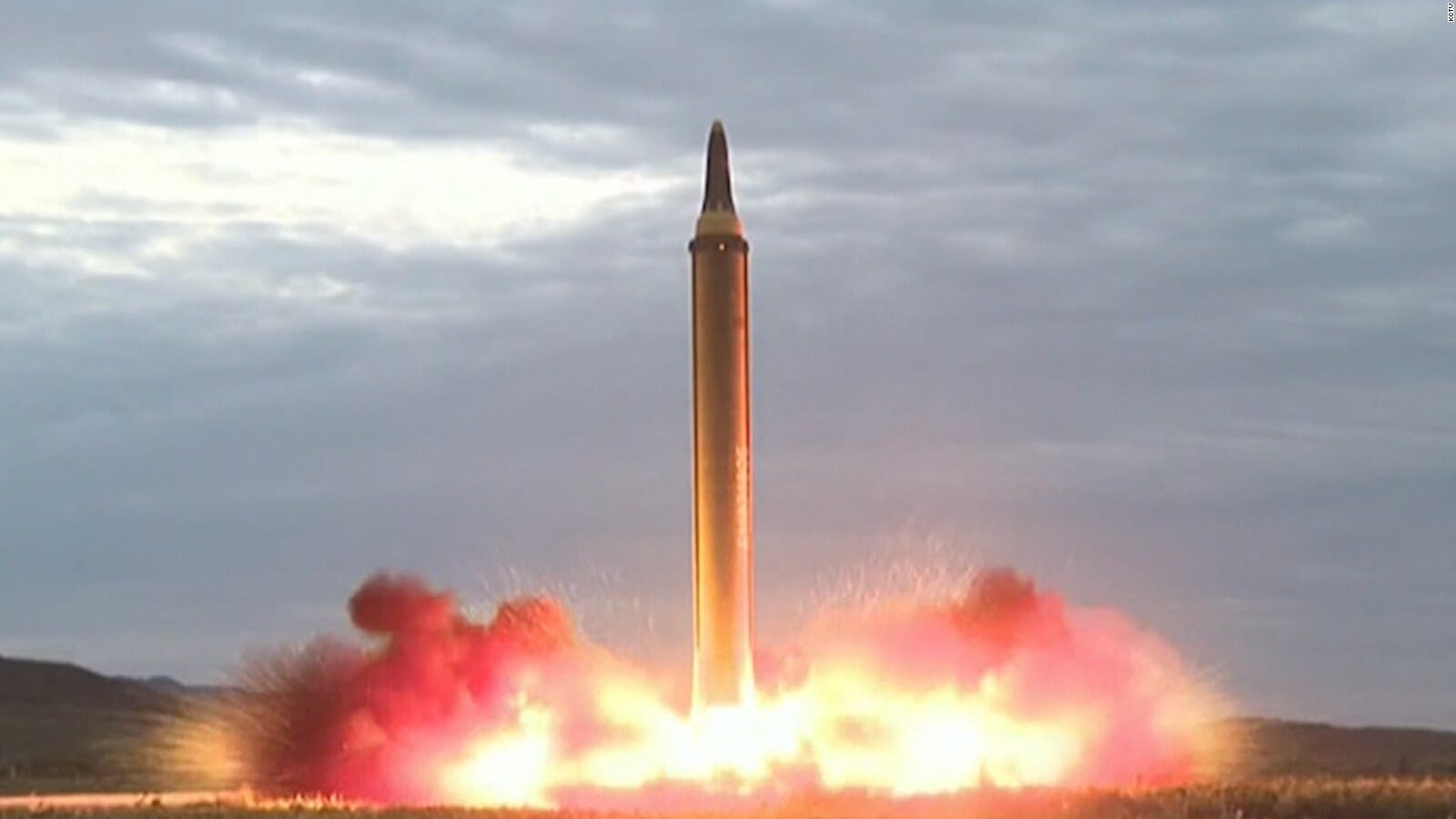
Nuclear weapons are not the only threat from North Korea. That nation’s government has begun testing the possibility of loading the deadly biological warfare agent anthrax on intercontinental ballistic missiles (ICBMs) capable of hitting the United States.


The Northern Koreans are testing the anthrax bacteria to see if it can survive temperatures of 7,000 degrees or higher, The Asahi Shimbun reported. An ICBM warhead heats up to temperatures of 7,000 degrees when it re-enters the atmosphere. The Shimbun report was based on sources identified as South Korean intelligence officials.


Anthrax antibodies were reportedly detected in a North Korean soldier who defected last year, an intelligence officer told South Korean TV station Channel A. The antibodies likely came from an anthrax vaccine given to military personnel working with bioweapons, Fox News reported.


Are You Prepared For A Downed Grid? Get Backup Electricity Today!


Anthrax is one of the most popular biological weapons because it can survive for a long time under extreme conditions. Anthrax spores dropped on Gruinard Island off the coast of Scotland during a 1942 biological weapons test were so dangerous that the island was kept off limits to the public until 1986.


Anthrax makes a good weapon because it can be released quietly and without anyone knowing,” says the Centers for Disease Control and Prevention (CDC). “The microscopic spores could be put into powders, sprays, food, and water. Because they are so small, you may not be able to see, smell, or taste them.”


Powdered anthrax is so deadly that it can kill by simply touching a person’s skin.


Tokyo Conducts Missile Attack Drill


Meanwhile, Tokyo, Japan on Monday conducted a missile-attack drill to prepare for a possible North Korea attack.


“An advisory about a missile launch was just issued,” the public address system at the Tokyo Dome amusement park warned visitors. “Everyone, please stay calm and seek shelter in the basement.


Around 20 other Japanese cities have held similar drills in recent weeks, NPR reported.


Residents would have only around 10 minutes to seek shelter in the case of an actual attack.


Strangely enough, demonstrators came out to protest the missile-attack drill.


“I think these missile drills only fan missile scare among the Japanese people and their animosity toward North Korea,” protestor Mari Chihara said.


What is your reaction? Share it in the section below:

Monday, January 22, 2018

True Lies: The Financial Press Just Admitted The Markets Are A Sham

By James Corbett


Sometimes the truest of hard truths are to be found smack dab in the middle of the fakest of fake news. You just have to read between the lines.


Take a recent story that bubbled up amid all the hype about the all-time record highs in the “What Could Possibly Go Wrong?” manipulated stock markets. You might have seen it. It was reported all over the usual MSM dinosaur fake news financial press outlets.


Here’s the headline that the mother ship of the banksters’ fake news press, the Financial Times, ran with:


“Nervous investors put the Bank of Japan in the spotlight”


And here’s the NY Times formulation:


“Investors Spooked at Specter of Central Banks Halting Bond-Buying Spree”


And, perhaps most telling of all, this hot take from perennial market pimp CNBC:


“Investors fear after Japan move the last of the global market ‘punch bowls’ are being taken away”


The global market “punch bowls?” That sounds like a Corbett Report headline, not something from CNBC. So what’s going on here?


For full access to the subscriber newsletter, and to support this website, please become a member.


For free access to this editorial, please CLICK HERE.

Thursday, January 18, 2018

On Japanese-South Korea Relations

JS4646234234


From the world media reports dedicated to the situation on the Korean Peninsula, the wrong impression might be given, that the source of the “world evil”, which is presented as the DPRK, is opposed by the military-political alliance composed of the United States, Japan, and the Republic of Korea.


In recent times, in point of fact, Japanese Self-Defense Forces have been associated with large US-South Korean military exercises. However, this does not mean that the 20-year old American dream of forging the above mentioned alliance has finally come true, despite the fact that the USA is in an allied relationship with Japan and the ROK.


Furthermore, it can be confidently confirmed, that said alliance will not emerge in the future, even in the face of the dreadful ‘North Korean threat’. It is useful to recall the little known fact that for almost the whole of 2014, in spite of public anti-North Korea rhetoric, Japan (without unnecessary “noise and dust” and at first fairly successfully) updated the path of relations with the DPRK, laid ten years earlier by the then Prime Minister Junichiro Koizumi. In the course of negotiations in neutral countries (mainly in Mongolia), which were held under the guise of solving the notorious problem of the “abductions”, the diplomats of both countries advanced so far that in late 2014 the USA had to bang its fist on the table of the MFA in Tokyo: “Behind the back of the head ally, you are conducting separate negotiations with Pyongyang!?”


As for relations between Japan and the ROK, here the reason for Washington’s headache is of the exact opposite nature: it’s tried but so far failed to turn these relations into if not alliance then at least something good neighborhood-like. Periodically, the Japanese ambassador is “temporarily” recalled from Seoul. And even when he is in the capital of the ROK, the official faces of the country do not communicate with him for many months.


The main reason for the difficulties in the political sphere of relations between Japan and the ROK can be defined by the elastic word ‘history’, which today is represented by two relatively fresh fragments. The discourse is over the ownership of two uninhabited islands of Dokdo (total area less than 0.2 sq km), located approximately in the middle of the Sea of Japan and the so-called problem of ‘comfort women’, discussed more than once in NEO.


The origin date of the first fragment is considered to be 1905 (when before landing in Korea, Japan captured these islands), the second was formed in the late 20’s and early 30’s of the last century, that is, during the Japanese occupation of the Korean peninsula.


However, in the author’s view, the fundamental reason for the difficulties in Japan-South Korea relations (and mutual animosity between the Japanese and Koreans) is ‘buried’ much deeper in time.


The islands of Dokdo (which in Japan are called Takeshima) today de facto belong to the ROK, apparently, by the power of the 1946 decree by the commander of the occupying forces in the territory of Japan, General D. MacArthur. In turn, Japan can refer to the fact that these islands are not in the list of the territories whose possession it renounced under the San Francisco Peace Treaty.


Be that as it may, but every demonstrative act of the ROK, designed to emphasize its ownership of the Dokdo Islands, uniformly provokes an official protest from Tokyo. It was in 2012, when the then President of the ROK landed on the islands (which was the reason for the ‘temporary’ recall of the Japanese ambassador). It happened at the end of December 2017, when the ROK held two-day naval exercises in the region of the same islands.


At the same time, the second fragment once again made itself known in recent history. On November 24, the South Korean parliament legalized the commemoration day (August 14) for ‘comfort women’, which caused the expectedly negative reaction from the head of the government of Japan, Yoshihide Suga, who stated that this act is contradictory to the December 2015 bilateral agreement. Japan associates the ‘final and irreversible’ solution to the problem of ‘comfort women’ with this document.


In order to find some compromise on this issue, the Minister of Foreign Affairs of the ROK, Kang Kyung-wha, on December 19 held a meeting in Tokyo with his Japanese counterpart, Taro Kono. Apparently, without any results, as T. Kono insisted on the ‘implementation’ of the provisions of the agreement with South Korea.


The response of the ROK was boiled down to the statement of the representative of the Ministry of Foreign Affairs of the country on December 26 about the existence of a ‘secret appendix’ to said Agreement, where the ‘finality and irreversibility’ of the solution to the problem of ‘comfort women’ is stated (allegedly) in writing. However, it was clear even back then, two years ago, that such document existed: it sufficed to listen to the rhetoric of Fumio Kishida, Foreign Minister of Japan at that time.


Therefore, the statement of the MFA of the ROK and comments to it look today rather as an act of self-disclosure (in the style of Russia’s ‘independent’ neighbor): “It’s not us, but she (that is, former President Park Geun-hye) who signed the 2015 Agreement. We are now judging her for it.”


Whatever it was, but at the end of 2017 both fragments of recent history of Japan-South Korea relations have worked in resonance mode. At the time of writing this article, its consequences include the (allegedly already taken) decisions to ignore Prime Minister of Japan Shinzo Abe at the opening ceremony of the Winter Olympic Games in the ROK and the next ‘temporary’ recall of the Japanese ambassador. Let us remind you that the last time the ambassador of Japan was recalled from Seoul (and also ‘temporarily’) only a year ago.


Difficulties in the political sphere of Japan-South Korea relations cannot affect the economic sphere, which at first glance, looks good. With the total volume of bilateral trade in 2016 at $70 billion dollars, Japan is the third largest trading partner of the ROK. This, of course, is not the $200 billion dollars of China-South Korea trade, but it is quite similar to the trade turnover between the ROK and the USA (around $100 billion).


The negative influence of political turmoil in Japan-South Korea relations is manifested, first of all, in the long stall in the process of negotiations on the conclusion of the agreement on free trade (Free Trade Agreement, FTA) in bilateral and tripartite (with the participation of the PRC) formats, which, considering that the number of FTA partners of the ROK is already estimated at several dozens, is quite telling. So far, even the extremely serious motive for regional economic cooperation, conditioned by the tendency towards protectionism in economic sphere of the new American administration, is not helping.


Finally, it should be noted that the situation forming on the Korean peninsula as a whole, and in Japan-South Korea relations in particular, develops according to the scenario of a good crime movie: what is happening in reality is not what can be observed in the picture formed by the world propaganda machine.


Vladimir Terekhov, expert on the issues of the Asia-Pacific region, exclusively for the online magazine “New Eastern Outlook.” 

Wednesday, January 17, 2018

Japan’s Warning: North Korea Is ‘Playing For Time’ As Talks With South Korea Proceed

icbm-nuclear


The Japanese are warning the world that Pyongyang may be using the newest talks with South Korea to buy time to pursue its weapons program. United States Secretary of State Rex Tillerson also warned of complacency at a Tuesday summit in Vancouver, Canada.


South Korea pressed ahead with talks to include its northern neighbor in next month’s Winter Olympics Wednesday, but not without allies expressing concern that North Korea is continuing its nuclear weapons program.  According to CNN,  Japanese Foreign Minister Taro Kono called on the international community to be clear-eyed about North Korea’s motivations for participating in the talks, which have been hailed by some as the most significant thaw in ties in years. “I believe that North Korea wants to buy some time to continue their nuclear and missile programs,” Kono said at the meeting. “It’s not the time to ease pressure towards North Korea,” he said.


China, a nation which was not invited to the talks in Vancouver, denounced the meeting, and the United Nations Command, under whose framework they are being held as demonstrating “Cold War mentality.” [Such thinking] “will only lead to split in the international community and harm the joint efforts that could properly solve the nuclear issue on Korea peninsula,” Foreign Ministry spokesman Lu Kang said Wednesday.


Officials from both sides of the Korean Peninsula met Wednesday for the third round of talks to discuss North Korea’s participation in the Pyeongchang, South Korea Winter Games next month. The International Olympic Committee is expected to discuss the proposals on Friday.


Discussed in Vancouver, were topics such as the US Air Force’s deployment of six nuclear-capable B-52 bombers to Guam, and a Japanese national broadcaster who apologized for sending an alert that incorrectly stated North Korea had launched a ballistic missile, just days after Hawaii had a similar scare. North Korea test-fired two missiles last year that overflew northern Japan.


Also while in Vancouver, Tillerson declined an opportunity to clarify whether President Donald Trump has spoken with Kim Jong Un.


There’s been a growing hope that these face-to-face talks could signal the beginning of a broader de-escalation of the global nuclear crisis, but there now appears to be a concern among Seoul’s allies and partners that North Korea might be just playing them for the time needed to make advancements in their nuclear weaponry.

Tuesday, January 16, 2018

Japanese Public Broadcaster NHK Issues False Alarm Over North Korean Missile Launch

This report was originally published by Tyler Durden at Zero Hedge


emp-northkorea


It’s deja vu, all over again.


Just four days after residents of Hawaii lived through 38 minutes of doomsday hell, after a false public broadcast alarm announced that a ballistic missile launch was headed for the island, only to reverse and announce later it was a mistake, moments ago Japan’s National broadcaster NHK’s app issued a false J-Alert to phones over a North Korean missile launch at 6:55 p.m. Tuesday evening local time.


The message, received by phone users with the NHK app installed on their devices, read: “NHK news alert. North Korea likely to have launched missile. The government J alert: evacuate inside the building or underground. “


It then promptly corrected the error just 5 minutes later, at around 7 p.m.


After the false alert, NHK issued an on-air apology on Tuesday evening local time, saying “the news alert sent earlier about NK missile was a mistake. No government J alert was issued.”


“Around 6:55pm earlier we reported on the NHK’s news site and NHK’s news disaster prevention application ‘Pattern of North Korean missile launch’ but this was incorrectly issued. J alert has not appeared. I must sincerely apologize,” the news outlet wrote.


The bizarre coincidence of two false alarms announcing the start of nuclear war is certainly suspicious.


The false alert came on the same day as the US and Canada planned to host talks in Vancouver over the crisis on the Korean Peninsula after a year of missile tests and threats from the North.


As a reminder, on Saturday, an emergency alert notification sent out to residents of Hawaii warning of an incoming “ballistic missile threat” turned out to be a false alarm. The error was blamed on an employee who “pushed the wrong button.” “BALLISTIC MISSILE THREAT INBOUND TO HAWAII. SEEK IMMEDIATE SHELTER. THIS IS NOT A DRILL,” the emergency alert read.


The warning went out on television and radio as well as cell phones, according to Hawaii Gov. David Ige, sparking panic amongst some residents. A second emergency alert was sent to phones in Hawaii 38 minutes after the initial message confirming the false alarm.

Russian and Japan are Building Up the Economic Co-operation

J5645234324


As is well known, both the geographical position of Japan and its need for the import of hydrocarbon fuels have facilitated the development of relations of that country with Russia. Only the long-standing Kuril Islands dispute stopped Japan from becoming one of the main Russian economic partners even several decades ago.


Not having their own hydrocarbon resources, the ‘Land of the Rising Sun’, nevertheless, established one of the most powerful industries in the world, by importing fuel from various countries. Whereby Russia, traditionally rich in oil and gas, although a neighbor of Japan, is not included into the list of its main suppliers, all due to somewhat clouded relationship that formed between the two countries after the Second World War.


Now, the main supplier of hydrocarbons to Japan is the Middle East region. The maritime delivery of the large shipments of energy carriers along the whole of the southern coast of Eurasia has always been difficult and costly. In the recent years, several factors emerged that make it even less convenient. One can refer to the instability and the terrorist threat in the Middle East, as well as the Chinese One Belt One Road Initiative (OBOR). Japan, discomforted by the strengthening of China’s positions across the whole of Asia, is not particularly enthusiastic about OBOR and its subproject ‘The 21st-century Maritime Silk Road’, which is aiming at uniting all the maritime routes along the coast of Eurasia into a single system, including the routes by which Japan is getting the hydrocarbons from the Middle East. China brings under control the key ports on this route, and Japan has started to be concerned over its energy security. All this is happening against the background of weakening the positions of the USA in the Indo-Pacific region, who is considered the traditional Japanese ally and partner. Obviously, all these processes in their integrity make Japan take a fresh look at its relations with Russia. Now, the cooperation between Russia and the ‘Land of the Rising Sun’ is actively being promoted, in the spheres of energy, finances and transportation.


The end of 2017 was remarkable by much news on the Russian-Japanese co-operation. This is related to the regular meeting of the head of the Ministry of Foreign Affairs of the Russian Federation, Sergey Lavrov and TarōKōno from the Ministry of Foreign Affairs of Japan, that took place on 24th November in Moscow. The two ministers discussed in detail the array of issues on the bilateral interaction, including the prospects of the joint economic activity on the Kuril Islands.


On the same day, the 13th meeting of the Russian-Japanese Intergovernmental Commission on Trade and Economic Issues took place, where the First Deputy Prime Minister of Russia, Igor Shuvalov and Minister for Foreign Affairs of Japan, Tarō Kōno were present. The issues of Russian-Japanese co-operation in the sphere of transport, energy and high technologies were discussed. The following topics were touched upon: participation of Japan in the development of Arctic gas fields and in the development of the Russian Far East, joint investment projects and many other issues. Upon conclusion of the meeting, Tarō Kōno announced that the Russian-Japanese relations have a huge potential, and that it is necessary to do everything possible for its implementation.


Soon after the meeting by both the heads of the Russian Ministry of Foreign Affairs, Ministry of Foreign Affairs of Japan and the meeting of the Intergovernmental Commission, one news after another started to emerge in the mass media, regarding the co-operation of the major Russian and Japanese companies.


In early December 2017, in Moscow, the Chairman of the Management Committee of Gazprom, Alexey Miller met Nobuhide Hayashi, Chairman at Mizuho Bank Ltd. Mizuho Bank Ltd. is one of the largest financial organizations in Japan, with which Gazprom has been successfully co-operating since 1999. The topic for negotiations was the possibility for capital participation of Mizuho Bank in the strategic projects of Gazprom, whereby the Russian corporation is going to start working on these projects in 2018. Mizuho Bank can invest its facilities into such projects as gas pipeline ‘Power of Siberia-1’, TurkStream, Nord Stream 2, Amur Gaz Processing Plant and others.


At the same time, the mass media informed us of the commencement of liquefied natural gas (LNG) production on the first processing train of the new Russian plant built on the Yamal Peninsula within the framework of the project ‘Yamal LNG’. This plant is being built with the participation of Russian and foreign companies, using the South Tambey Field as a resource base in the Yamalo-Nenets Autonomous District of the Russian Federation. As soon as on 8th December 2017, the first loading of LNG was launched onto the tanker in Sabetta – the Russian Arctic port in the center of the Northern Sea Route. The launch of the second and third parts of the projects, known as processing trains, is scheduled for 2018-19, however the operational capacity is already sufficient to produce 5.5 million tons of LNG per year. The joint-venture parties – the Japanese construction companies JGC Corporation and Chiyoda Corporation, who have completed numerous projects in the gas industry, participated in the development of the Yamal LNG Project.


As is well known, Japan is included into the list of the major global importers of LNG, whereby it is much closer to the Northern Sea Route than China and South Korea. Possibly, it will be the ‘Land of the Rising Sun’ that will become the main consumer of Yamal LNG.


The Yamal project (ОАО ‘Yamal LNG’) is majority owned by the private Russian gas company Novatek, which is the second largest gas producer in the Russian Federation. It actively participated in the development of gas fields of the Far North of Russia and in the development of the Northern Sea Route. Novatek pursues strategic co-operation with the Japanese partners: in late November 2017, it had signed a memorandum of understanding with Japan’s Marubeni Corporation and Mitsui O.S.K. Lines, Ltd. The three companies are intending to explore options for a liquefied natural gas complex in Russia’s Kamchatka Region, envisaging both transshipping and marketing. According to the plan, LNG brought by ice-breaking tankers along the Northern Sea Route, will be reloaded onto the conventional tankers to reduce the carrier cost. From this point, LNG will be delivered to all the interested countries of Asia-Pacific Region, first to Japan, territorially close to Kamchatka Region. It is expected that the Japanese companies will make major investments into the project. Also, it is reported that the project received support of the Kamchatka Region government, as part of the gas will be used for the needs of this region of the Russian Federation.


Transport is one more important sphere of the Russian-Japanese co-operation. As it was mentioned above, China and its ‘The 21st-century Maritime Silk Road’ play an increasingly significant role in the maritime cargo traffic along the southern coast of Eurasia, in which Japan does not wish to participate as the junior partner. It is not impossible that the ‘Land of the Rising Sun’ will need alternative routes of communication with the countries of the Eurasian continent, free from the Chinese influence. Regarding this, Japan shows interest for the Russian Trans-Siberian Railway, as well as for the Northern Sea Route going along the northern coast of Eurasia. In early December 2017, the Holding ‘Russian Railways’ announced the creation of ‘one stop shop’ for Japanese companies intending to deliver cargos to Russia and Europe via the ports of the Russian Far East along the Trans-Siberian Railway. Representatives of Japanese companies can receive any necessary information on transport management via the territory of the Russian Federation, within a short time.


In mid-December 2017, it became known that the major Japanese trading companies SBI Holdings and Hokkaido Corporation decided to unite their efforts to provide assistance to small Japanese companies wishing to do business in Russia. The firms wishing to open their facilities and conduct business on the territory of the Russian Federation, will be given financial and informational support.


Thus, one can draw a conclusion that Russian-Japanese relations are likely to experience a prosperity phase. It is to be hoped that the parties will be able to consolidate the achieved success, and the co-operation of Russian and Japan will be developing steadily towards the mutual benefit and for the good of the whole Asia-Pacific Region.


Dmitry Bokarev, political observer, exclusively for the online magazine “New Eastern Outlook.

Monday, January 8, 2018

Concerning the Rivalry Between China and Japan

562342342


South-East Asia has now entered into a new phase of its development: the influence of the US administration is waning in the region, and instead, increasingly, the main area of confrontation in the region is the relationship between China and Japan. In an attempt to limit the expansion of China in South-East Asia Japan has begun to show that it has considerable power to both preserve the status quo and also to find new forms of political and economic integration in the wider East Asian region.


We are talking about the quite revolutionary policy -by Japan’s standards, which are always cautious- proposed by Shinzō Abe at the APEC summit in Da Nang. Mr. Abe proposed the creation of a new body- a Comprehensive and Progressive Trans-Pacific Partnership (CPTPP), instead of the Trans-Pacific Partnership (TPP), from which America, on President Trump’s initiative- has withdrawn. The leaders of the 11 Pacific Rim countries then immediately expressed their willingness to prepare a new trans-Pacific partnership and co-operation agreement. It appears from their declarations that the new partnership will only be different from the old TPP in that the USA will not be a member, and as a result the member countries’ combined GDP will be reduced by about two thirds.


That raises the question of why Japan has decided to continue with that project and whether it is able to build that major international market, particularly in the light of China’s competing plan for the creation of a no less ambitious Regional Comprehensive Economic Partnership (RCEP), which poses a real danger to the future of the proposed CPTPP.


On the one hand it is understandable that Shinzō Abe has his own political ambitions, and in addition to ‘building a well-ordered country’ he also wants to significantly extend Japan’s role, position and importance in both the Pacific Rim region and in South-East Asia. Equally understandable is his evident wish to restrict Chinese expansion in the region, and, in the absence of the USA, to reassure the ASEAN countries that Japan will make every effort to preserve the balance of powers in the region. But it is clear that these intentions are not enough to guarantee the proposed project’s success.


There is no doubt that Shinzō Abe has worked everything out properly. According to an annual survey among public opinion leaders in the Trans-Pacific Partnership countries, the growth of protectionism is considered to pose a greater risk to their development and prosperity than anything else. Unlike in the USA, where Donald Trump is moving away from globalism towards nationalism and is seeking to protect the national market and giving priority to the development of American industry, in the Asia-Pacific Region the idea of integrated markets as a guarantee of peace, prosperity and sustainable development is still popular. And that is entirely natural, as it is international organizations that played a decisive role in promoting these goals, particularly APEC- especially in the 1990s-, the EAC in the 2000s, and ACFTA since 2010.


In addition, the Japanese leaders first started talking about the creation of the СPТPP before Trump came to power. Following the unsuccessful attempt to sign a final agreement on the Trans-Pacific Partnership in Singapore in February 2014, in November that year, in the last meeting of APEC in Indonesia, they put up for discussion the idea of creating a free trade zone in the Pacific Rim region that would be even wider in scope than the TPP. This would be a mega-market which would account for 80% of Japan’s exports, 60% of its imports and 70% of its direct investments. One of the most influential Japanese newspapers, Asahi Shimbun pointed out at the time that Japan does not see any dangers in the existence of several parallel routes towards integration. What is more, the paper added, ‘the TTP may become the core of the СРТРР.’


It may be said that the Japanese were prepared for America’s departure from the TPP and so immediately proposed a real alternative to the Asian countries in the TPP which, so it seems, will incorporate all the best features that have resulted from the many years of negotiations on the creation of the TPP. This will include CPTPP members giving up state control over enterprises, high labor-protection and ecological standards, the prohibition of human trafficking and child labor, and support for trade unions. It is not yet clear whether the new integrated body will wish to include clauses on the protection of intellectual property. Such clauses were prepared and adopted on the insistence of the USA and after its withdrawal their purpose is unclear. It is also unclear whether there would be any clauses on the rights of transnational corporations. A paragraph stating that their rights are practically equivalent to those of national governments and parliaments and that they can appeal to a special TPP court against decisions of such bodies was also included to protect the interests of the USA- the home of 80% of the world’s transnational corporations.


To judge by the enthusiasm with which the ASEAN countries met Japan’s proposals concerning the СPТPP, and considering the fact that the TPP’s foundation documents are already at a late stage of development, it is likely that it will not take long to prepare the new documents, and the new integrated body, headed by Japan, will probably appear either at the end of next year or in 2019.


It is likely that the CPTPP will include more of the ASEAN countries than the TPP would have done: in addition to Singapore, Malaysia, Brunei and Vietnam, -all of which would have been in the TPP- Indonesia, Thailand and the Philippines may join the CPTPP.


The СPТPP may thus become rather more of a South-East Asian organization that the TPP would have been, as, out of the 10 ASEAN countries, only Cambodia, Laos and Myanmar are likely to be excluded. It is unlikely, however, that the creation of the СPТPP will materially undermine the unity of the ASEAN, as these countries are the weakest and most underdeveloped in the region and it would not make much difference whether they were included or not. However in theory there is still a risk that they might be drawn into Chinese’s powerful sphere of influence either through the RCEP or through the One Belt and One Road Initiative, although the future of these Chinese proposals is still unclear and vague.


This is particularly relevant to the much-talked-about RCEP, which, according to the plan, should have ‘taken off’ after the American departure from the TPP, but so far has failed to do so. The problem is that the RCEP negotiations are taking a long time to get off the ground. Apparently, these will involve China, Japan, South Korea, India, maybe Russia, plus Australia and New Zealand, as well as a number of other countries. The area of cooperation would thus seem very wide, and full of potential. But it appears that the large number of participants, all with different interests, constantly prevent the RCEB from making any progress.


As the well-known journalist Ravi Veloor comments in the Straits Times, ‘progress towards that agreement has been less than satisfactory despite 20 rounds of talks. The bulk of the agreement, including fixing the levels of market access, has yet to be firmed up.’ He also notes that, ‘one of the trickiest issues is India’s demand that any “comprehensive” pact should also include liberalization of trade in services, the area in which it feels its economy has a competitive edge.’ Other RCEP members are not ready to accept such a radical proposal from India. Another ‘stumbling block’ for the RCEP is the question of liberalizing trade in agricultural products. By the way, the CPTPP nations managed to resolve that issue.


There is one more issue which is clearly slowing down negotiations on the RCEP. That is the clear lack of any trust between the parties. China suspects that India, Indonesia and Japan are somehow working against the integrated economic organization that it is proposing.


As we have seen, the rivalry between China and Japan in both the Asia-Pacific Region and South-East Asia is now taking on a new character, and this is particularly evident in their struggle for leadership in integrated projects. It appears that in this way the Japanese hope once more recover their pre-eminence among the ASEAN countries –a pre-eminence that they still enjoyed at the end of the 20th Century, when Japan had the leading economy in the Asia-Pacific Region. Later, by the end of the first decade in the 21st Century, China had taken over that role and become the ASEAN countries’ main regional partner, creditor and investor. By creating a free trade area between China and the ASEAN countries in 2010, Beijing appeared to have cemented its position as the dominant economic influence in the region. But it seems that despite all China’s success and power, Japan is not ready to give up the struggle for economic leadership in the region, and is attempting to position itself as a leading economic center. And what is more (and this is very important) it is ready to act without the USA’s direct support.


That is why, in the scenario which we can see developing, we can detect the blueprints of a new political architecture in Asia.


Dmitry Mosyakov, Professor, Doctor of Historical Sciences, Director of the Centre for Southeast Asia, Australia and Oceania and the Institute of Oriental Studies of the Russian Academy of Sciences, exclusively for the online magazine “New Eastern Outlook.

Thursday, December 28, 2017

In An Unexpected Outcome, Trump Tax Reform Blew Up The Treasury Market

Over the past week we have shown on several occasions that there once again appears to be a sharp, sudden dollar-funding liquidity strain in global markets, manifesting itself in a dramatic widening in FX basis swaps, which - in this particular case - has flowed through in the forward discount for USDJPY spiking from around 0.04 yen to around 0.23 yen overnight. As Bloomberg speculated, this discount for buying yen at future dates widened sharply as non-U.S. banks, which typically buy dollars now with sell-back contracts at a future date, scrambled to procure greenbacks for the year-end.


However, as Deutsche Bank"s Masao Muraki explains, this particular dollar funding shortage is more than just the traditional year-end window dressing or some secret bank funding panic.


Instead, the DB strategist observes that the USD funding costs for Japanese insurers and banks to invest in US Treasuries - which have surged reaching a post-financial-crisis high of 2.35% on 15 Dec - are determined by three things, namely (1) the difference in US and Japanese risk-free rates (OIS), (2) the difference in US and Japanese interbank risk premiums (Libor-OIS), and (3) basis swaps, which illustrate the imbalance in currency-hedged US and Japanese investments.


In this particular case, widening of (1) as a result of Fed rate hikes and tightening of dollar funding conditions inside the US (2) and outside the US (3) have occurred simultaneously. This is shown in the chart below.


What is causing this? Unlike on previous occasions when dollar funding costs blew out due to concerns over the credit and viability of the Japanese and European banks, this time the Fed"s rate hikes could be spurring outflows from the US, European, and Japanese banks’ deposits inside the US. Absent indicators to the contrary, this appears to be the correct explanation since it"s not just Yen funding costs that are soaring. In fact, at present EUR/USD basis swaps are widening more than USD/JPY basis swaps.


According to Deutsche, it is possible that an increase in hedged US investments by Europeans could be indirectly affecting Japan, and that market participants could also be conscious of the risk that the repatriation tax system could spur a massive flow-back into the US, of funds held overseas by US companies


In fact, one can draw one particularly troubling conclusion: the sharp basis swap moves appear to have been catalyzed by the recently passed Trump tax reform.


  • Corporate tax reform in the US

The United States House of Representatives and Senate recently passed a tax reform bill that lowers the corporate tax rate from 35% to 21% starting 2018. Lowering corporate taxes would likely accelerate the pace of Fed rate hikes, which could trigger a shift from dollar deposits to Government MMFs. Revisions to interest tax deductions would encourage companies to repay corporate bonds and could spur a decrease in dollar deposits (however, demand to bank loan could also weaken).


  • Repatriation tax system

The tax bill also includes the abolishment of taxation (currently 35%) on dividend payments from overseas subsidiaries. However, overseas subsidiaries" retained earnings would be subject to a one-time tax. It is expected that this repatriation tax system would result in reserves held overseas by US companies (we estimate 90% are USD-denominated) flowing back into the US. This could create tighter conditions for USD financing outside the US.


Which leads to a bizarre outcome, that while the GOP tax reform may benefit corporate America, it appears set to punish America itself as buyers of US Treasurys suddenly require far greater yields to offset the surge in funding costs!


* * *


Whatever the cause behind these sharp funding shortages, one thing is clear - dollar funding costs (FX hedging costs) for both Japanese and European insurers and banks to invest in US Treasuries are surging (with Japanese buyers and reached a post-financial-crisis high of 2.35% on 15 Dec. And in terms of practical implications for the treasury market this means that, all else equal, marginal demand for US paper is about to plunge for one simple reason: the FX-hedged yields on US Treasurys have plunged to (negative) levels never seen before (unless of course foreign investors buy US Treasurys unhedged).


To demonstrate this point, the chart below from Deutsche Bank shows the yields on currency-hedged US Treasuries from the perspective of Japanese investors. Japanese financial institutions tend to use 3-month FX forwards when they invest in hedged foreign bonds. Annualized hedge costs have recently risen to 2.33%, which means that investments in 10y US Treasuries result in virtually no yield. Furthermore, yields from investment in shorter than 10y US Treasuries would be less than JGBs and result in negative spreads. This means that unless funding costs slide, Japanese buyers will simple pick JGBs over TSYs, eliminating one of the biggest sources of Treasury demand in receng years.


There is another consideration: as Deutsche Bank notes, whenever it is time to roll over a hedge, financial institutions need to decide whether to (A) sell US Treasuries or (B) hold them as unhedged foreign bonds. Engaging in (B) on a large scale would be difficult unless the institution"s outlook calls for yen depreciation. After implementing (A), institutions should then choose to invest in high-yielding US MBS (high interest rate risk), medium- to low-rated corporate bonds (high credit risk), European and other sovereign bonds, or to reinvest in JGBs.


Moving away from Japan, and looking at Europe one finds an even more dramatic slide in hedged TSY yields, which net of hedge costs have plunged to -0.6%, by far the lowest - and most negative - on record, something we highlighted yesterday in "There"s Never Been A Worse Time For A European Investor To Buy US Treasuries" .


The conclusion is that as a result of the recent surge in funding costs, seemingly in response to the nuances of Trump tax reform as explained above, suddenly buying US Treasurys is no longer an economic option for virtually all foreign buyers! Needless to say, something will need to change because if funding costs stay where they are, yields across the curve will have to jump for US Treasurys to once again be an attractive purchase for foreign buyers, which as a reminder comprise the majority of TSY buyers in recent years.


What is the outlook? Some parting thoughts from Deutsche, which writes that according to the chart below, fundings costs will likely continue widening as the Fed raises interest rates.


DB then also warns that the repatriation tax system that was just passed into law, coupled with ongoing Fed rate hikes, will indirectly result in the widening of dollar funding conditions in and outside of the US. And the punchline: if these indeed continue to widen, and US long-term interest rates stay at a low level, "this would restrict investments in US Treasuries by Japanese financial institutions relying on short-term dollar funding." This could then lead to a sharp move higher in US yields - and rates- as the US finds it needs an aggressive increase in foreign demand to finance the widest US budget deficit in years. 


In other words, by pounding the table on - and recently passing - tax reform, Donald Trump appears to have sown the seeds of the equity market"s own destruction, because remember that the one thing that can bring the house of manipulated cards down faster than you can say covfefe, not to mention burst the equity bubble, is a sharp move higher in long-term yields, rates, and ultimately - inflation.


Monday, December 25, 2017

Chinese Stocks Spooked By Apple iPhone X Forecast Cut, Nikkei Boosted By BOJ Hopes

With most global markets closed for Christmas, the only overnight action was in Asia, which saw Chinese equities fall with tech stocks and names linked to Apple the worst performers after a report that Apple cut forecast iPhone X sales forecasts, while property firms surged on speculation of coming consolidation. As a result, after opening higher, the Shanghai Composite Index closed 0.5% lower on the day, the blue-chip CSI 300 Index fell 0.3%, the Shenzhen Composite Index retreated 0.9%, while the ChiNext small-cap and tech Index dropped 1.3%. The PBOC"s refusal to conduct a reverse repo for the second day did not boost the market mood.


The biggest Asian losers were Apple suppliers after the Taipei-based Economic Daily News reported that Apple has cut its sales forecast for the iPhone X by 40% from 50 million in Q1 to only 30 million. The report also noted that Foxconn’s Zhengzhou plant stopped recruiting workers. Following the news, Apple supplier Lens Technology Co. dropped 8.4% to be among worst performers on the ChiNext measure; Shenzhen Sunway Communication Co. -2.2%, Luxshare Precision Industry and GoerTek both dropped at least 4%. As the table below shows, it was a sea of red for Apple suppliers.


Offsetting the drop in tech names was strength among property firms: Gemdale rose 6.3% as the best performer on CSI 300 measure after Citic Securities analysts said that the planned strict implementation of property curbs in 2018 would boost industry consolidation and benefit big companies. Unless, of course, it ends up crippling the business for everyone in which case today"s spike will promptly turn into a selloff.


Elsewhere in open Asian markets, Japan"s Nikkei erased early losses and scraped out gains on Monday as expectations that the Bank of Japan would buy more exchange-traded funds (ETFs) offset drops by financial stocks, Reuters reported. Movements in Japanese equities were confined to a narrow range with foreign investor presence lacking due to Monday"s closure of other major markets for Christmas; as a result, the Nikkei finished 0.16% higher at 22,939.18.


Of Tokyo"s 33 subsectors, 10 were in the red, led by securities T and banking after their U.S. financial peers lost steam on Friday following their recent strong performance. Denim clothing store operator Jeans Mate 7448.T soared 20.2 percent after reporting that December existing store sales increased 13.2 percent from a year earlier.  Furniture and interior goods seller Nitori Holdings 9843.T sank 6.4 percent after the company saw its operating profit for the nine months through to Nov. 20 rise a modest 0.3 percent to 70.4 billion yen ($621.58 million).


Cryptocurrency related shares slipped following recent wild swings in bitcoin. Internet provider GMO Internet which is engaged in the "mining" of bitcoin, fell 4.8%.  Remixpoint, an operator of virtual currency trading post services, dropped 4%.


In FX, it was a quiet session, with the only major mover once again out of China, where the yuan surged over 240bp to hit 6.5514 per USD at one point, the strongest since mid-September. Earlier in the day, the PBOC raised the yuan’s fixing by 138bp to 6.5683 per USD, the highest since Sept. 20. The dollar was little changed against other major currencies on Monday in holiday-thinned trading while the cost of swapping the yen for the dollar jumped as banks scrambled to raise dollars for the year-end period.


With most currency trading centers except for Tokyo shut on Monday for Christmas, trading volume was less than 20 percent of the average for major currency pairs including the euro/dollar and the dollar/yen. 


According to Reuters, the discount for buying the yen at future dates widened sharply as non-U.S. banks, which typically buy dollars now with sell-back contract at a future date, scrambled to procure greenbacks for the year-end.  The one-week forward discount starting from Wednesday jumped to 0.23 yen from around 0.04 yen in the middle of last week.


“Because foreign banks are away and few market players are eager to offer dollars, the forward market is very thin,” said a currency trader at a major Japanese bank. “The market is very volatile and there are hardly any trades beyond one week."