Showing posts with label None. Show all posts

Thursday, December 28, 2017

China Beige Book Warns Economic Slowdown Has Begun

When it comes to the global economy, few things matter as much as China, the trajectory of its economy and especially the pace and impulse of its credit creation, which is ironic because virtually all data coming out of China is fabricated and manipulated, and thoroughly untrustworthy, either on purpose or "by accident."


The latest example of the former was highlighted over the weekend, when we discussed that a nationwide Chinese audit found some local governments inflated revenue levels and raised debt illegally, once again making a mockery of China"s credibility on the global stage. As Bloomberg reported ten cities, counties or districts in the Yunnan, Hunan and Jilin provinces, as well as the southwestern city of Chongqing, inflated fiscal revenues by 1.55 billion yuan, the National Audit Office said in a statement on its website dated Dec. 8.


An even more blatant example of the former was highlighted in October ahead of China"s Communist Party Congress, when the local securities watchdog literally "advised" some loss-making companies to avoid publishing quarterly results ahead of the Congress as authorities sought to ensure stock-market stability during the critical gathering of China"s political elite.  As a result, at least 17 Shenzhen-listed companies announced delays to their earnings reports from Oct. 20 to Oct. 24, up from three during the same period last year.


However, now that the Party Congress is long over, China"s recent economic data offer a "warning for 2018" now that Beijing"s leaders are less motivated to prop up fake "growth" for purely optical purposes. That is the opinion of China Beige Book, and its president Leland Miller who said that "Incentives to ensure the economy was growing smartly at the time of the Communist Party Congress do not apply as next year wears on," CBB president Leland Miller and chief economist Derek Scissors said in a report released on Wednesday.


According to a private survey by CBB International, which collects anecdotal accounts similar to those in the Federal Reserve’s Beige Book, Q4 results already show some signs of a transition to slower growth,  The most recent sampling of 3,300 Chinese businesses showed:


  • Hiring stopped accelerating due to a strong base of comparison

  • Manufacturing orders also stopped accelerating 

  • Inventory accumulation "is too fast for comfort"

  • Sales-price inflation is weaker than in the second quarter

  • Wage gains have stopped accelerating

Come to think of it, the CBB data is not that different from the official Chinese data which showed continued slowdown across most economic verticals:


"None of these is genuinely alarming yet, and none would be out of place in a typical quarter," the CBB"s Miller wrote. "But the first results after a CPC are not a typical quarter. If you expect a noticeable slowdown in 2018, the first post-Congress returns support those expectations."


To be sure, even here there is confusion: while at the 19th Party Congress, which marked the start of President Xi Jinping’s second five-year term, top leaders signaled less emphasis on pursuing economic growth at all costs, and greater dedication to deleveraging, during the main economic planning conclave in December which set priorities for 2018, they pledged to focus on "critical battles" against financial risk, pollution and poverty in coming years. Meanwhile, deleveraging - Xi Jinping"s endless crusade - was strangely forgotten. Indeed, as Goldman observed last week, "there was no explicit mention of deleveraging" as "recent policy statements increasingly use the phrase "control of leverage", in our view likely a reflection of increasing realism in policy making." This significant policy reversal prompted the WSJ last week to report that Beijing has effectively given up on its deleveraging pledge.


Leverage or not, the table below - courtesy of Bloomberg - shows CBB’s breakdown of how support for the expansion may erode:


Furthermore, evidence from the retail sector doesn’t support the government’s claims of a consumption boom, CBB said. While some large firms have strong sales and profitability improved this quarter, retail revenue growth finished last among major sectors, Miller and Scissors wrote.


"Retail’s performance is decidedly uninspiring. Revenue, capex, and hiring are inferior to manufacturing, while inventory growth is much higher."


The good news: overall hiring has held up and was generally in line with the prior quarter, with 48% of firms staffing up and 3% cutting workers. "Job growth remained stronger at state firms than private, regardless of company size," CBB’s survey found, although as we will show in a subsequent post, while hiring may remain strong, wages are tumbling in a troubling indication that China"s middle class is set for imminent disappointment and anger.


Meanwhile, inflation in wages, prices, and input costs were also roughly the same as in the prior quarter, and were moderately faster than last year, the report said. Profit growth improved.


That said, despite predictions of gloom as we enter 2018, the world’s second-largest economy proved bears fully wrong this year, exceeding analyst estimates in the first and second quarters, and is now on pace for the first full-year acceleration in growth since 2010, with GDP seen growing at 6.8% this year and 6.5% in 2018. There is a problem: this growth was on the back of a near record credit impulse since the February 2016 Shanghai accord, an impulse which is now over.


Which means that all else equal, and absent another gargantuan credit injection in the coming months, China"s bears are about to have their day in the sun all over again.


North Korean Defectors Show Signs Of Radiation Exposure

South Korean scientists and doctors who have been examining North Korean defectors have stumbled upon yet another horrifying discovery: At least four of the defectors have shown signs of radiation exposure, the South Korean government said on Wednesday - although researchers could not confirm if the radiation was related to Pyongyang’s nuclear weapons program.


Earlier today, we noted that one of the defectors had also tested positive for Anthrax antibodies, suggesting that North Korean leader Kim Jong Un has continued his chemical weapons program despite signing an international chemical weapons treaty. Of course, the North Korean government has denied that chemical weapons are being used.


All four men are former residents of Kilju county, an area in North Korea that includes the nuclear test site Punggye-ri. According to Reuters, they were likely exposed to radiation between May 2009 and January 2013. All of the men defected to the South before the most recent test, according to a researcher at the Korea Atomic Energy Research Institute.


The researcher cautioned that people can be exposed to radiation in many ways, and that none of the defectors who had lived in Punggye-ri itself showed specific symptoms.


Fears that North Korea could unintentionally trigger a nuclear disaster via its nuclear tests have escalated since the North’s Sept. 3 nuclear test, prompting China to increase monitoring of radioactive activity along its border with its restive neighbor. Seismic activity detected in the aftermath of the test suggests the test site is suffering from "Tired Mountain Syndrome" – a condition detected at former Soviet nuclear testing sites. The destabilizing impact of the tests was made evident when a tunnel at Punggye-ri collapsed, killing 200 North Korean workers.


Still, the North has pushed ahead with building new tunnels at the test site, suggesting that – instead of abandoning Punggye-ri altogether, as their Chinese peers have advised, they intend to move the tests to a different part of the mountain.


Ultimately, scientists worry that the mountain could implode, releasing a plume of toxic radioactive dust into the atmosphere that could wreak untold havoc on the health of people across the region.


Wednesday, December 27, 2017

The Endlessness Of A Temporary Tax

Authored by Jeff Thomas via InternationalMan.com,


Governments regularly claim that they favour tax reform. When this claim has been repeated so many times that virtually no one believes them anymore, they announce a tax reform, to show that they really mean it. They then reshuffle the existing taxes to give the appearance that taxation will actually be lowered.


When it becomes apparent that the reform is a sham, they often pull a rabbit out of a hat in the form of a “temporary” tax, that’s pre-legislated to end sometime in the future.


Sounds promising.


So, let’s have a look at one such temporary tax and see how things worked out.


The US government introduced the War Revenue Act of 1898—a tax on telephone use—under the claim that it was necessary to pay for the Spanish American War.


In what way does telephone use pertain to a government invading another country? Well, actually, one has nothing to do with the other. But, let’s leave that discussion for another day and see how this temporary tax played out.


The Act was repealed in 1902 but was reinstated, this time as the Emergency Internal Revenue Tax Act of 1914. The justification then given was that another war was on the way and increased taxation to pay for it couldn’t begin too soon. Telephone users needed to cough up.


It was decided by both parties to increase the tax on telephones and the War Revenue Act of 1917 was created. It hadn’t passed the debate stage until the war was over, but they decided that they’d implement it anyway, as the work had already been done. In the bargain, they introduced not only increased rates, but graduated rates.


This act was also repealed, in 1924, but was reinstated with the Revenue Act of 1932. Since that date, it has been reauthorised 29 times.


In 1941, an increase was put in place to pay for (you guessed it) another war—World War II. This was increased again in 1943, but people complained and the new law contained a provision that the increased rates would end six months after “the date of termination of hostilities in the present war.” However, the Excise Tax Act of 1947 was passed to assure that the tax would continue indefinitely.


Over the subsequent years, periodic changes were made. Although the rates went up and down like a bride’s nightie, most, not surprisingly, were upward.


As further (undeclared) wars came and went, taxation on telephone calls repeatedly needed to be increased and, regardless of the party in power, increases continued.


At long last, on 14 September, 2000, the House of Representatives took up legislation which included the repeal of the telephone excise tax. This measure passed both houses, but the fix was in. President Clinton vetoed the repeal. (The legislative branch and the executive branch have to take turns playing the bad cop, but the outcome is the same: increased taxation.)


Then, in 2006, a case was made (in the words of the Treasury Secretary), to amend the Internal Revenue Code “of an outdated, antiquated tax that has survived a century beyond its original purpose, and by now should have been ancient history.”


Finally, American citizens could wash their hands of a one-hundred-year theft of their earnings that, even at the start, was based upon a ludicrous concept.


Unfortunately… it didn’t happen.


The repeal was never enacted and Americans continue to pay for the Spanish American War today.


So, what’s the takeaway here?


Well, first off, this little history serves as a reminder that there’s nothing so permanent as a temporary government measure.


Second, although not a month goes by without one politician or another, from one party or the other, rising up in righteous indignation that a new tax or an expanded tax is absolutely necessary to continue the welfare of the American people, there is, in truth, no sincerity in their claim. They simply want more money.


Third, no amount of money is ever enough. Even if Washington, D.C., is the only part of the US that is enjoying prosperity, even if no congressman leaves office without more zeroes behind his net worth than when he went in, virtually every legislator will vote for increases in taxation.


And, fourth, there’s no such thing as tax reform. From time to time, legislators will need to trot out the idea of tax reform, and be seen to be arguing over the details, but will ultimately always do the same: the deck will be reshuffled, but somehow, taxes will rise once again.


But the overall lesson to be learned is that Government is, and has always been, a shell game. Its purpose is not to serve the electorate; it is to separate them from the fruits of their labours.


Full stop.


As former US Chief Justice John Marshall stated,


The power to tax involves the power to destroy.


More recently, Ron Holland offered the following:


Since the beginning of recorded history, the business of government has been wealth confiscation.


However, both these individuals were conservatives, and it would only be fair to ask for commentary from the liberal side. One such liberal political leader is none other than Vladimir Lenin, who stated,


The way to crush the bourgeoisie is to grind them between the millstones of taxation and inflation.


Of course, the reader may wish to consider relocating to a jurisdiction where the taxation is far lower, but if he chooses to remain in the US, EU, Canada, or other jurisdiction where the tax level is already oppressive, his plans should include temporary taxes that are unlikely to end in his lifetime.


*  *  *


Few people realize this, but it is possible to escape the US government’s “power to destroy.” Find out how in The American Expatriation Guide: How to Divorce the US Government. Click here to download your free PDF copy now.


Monday, December 25, 2017

Charles Hugh Smith Explains "Why I"m Hopeful"

Authored by Charles Hugh Smith via OfTwoMinds blog,


A more human world lies just beyond the edge of the Status Quo.


Readers often ask me to post something hopeful, and I understand why: doom-and-gloom gets tiresome. Human beings need hope just as they need oxygen, and the destruction of the Status Quo via over-reach and internal contradictions doesn"t leave much to be happy about.


The most hopeful thing in my mind is that the Status Quo is devolving from its internal contradictions and excesses. It is a perverse, intensely destructive system with horrific incentives for predation, exploitation, fraud and complicity and few disincentives.


A more human world lies just beyond the edge of the Status Quo.


I know many smart, well-informed people expect the worst once the Status Quo (the Savior State and its corporatocracy partners) devolves, and there is abundant evidence of the ugliness of human nature under duress.


But we should temper this Id ugliness with the stronger impulses of community and compassion. If greed and rapaciousness were the dominant forces within human nature, then the species would have either died out at its own hand or been limited to small savage populations kept in check by the predation of neighboring groups, none of which could expand much because inner conflict would limit their ability to grow.


The remarkable success of humanity as a species is not simply the result of a big brain, opposable thumbs, year-round sex, innovation or even language; it is also the result of social and cultural associations that act as a "network" for storing knowledge and good will--what we call technical and social capital.


I have devoted significant portions of my books--


Survival+


An Unconventional Guide to Investing in Troubled Times


Resistance, Revolution, Liberation


Why Our Status Quo Failed and Is Beyond Reform


A Radically Beneficial World: Automation, Technology & Creating Jobs for All


Money and Work Unchained


to an explanation of how community and self-reliance have atrophied under the relentless expansion of the dominant Savior State.


The social capital and "return on investment" earned from investing time and energy in community and other social networks has been replaced by a check from the Savior State--a transfer payment that surely beats the troublesome work of investing in community in terms of risk and return.


The net result of the Savior State dominating society and the economy is the rise of a pathological mindset of entitlement and resentment--the two are simply two sides of the same coin. You cannot separate them.


Once self-reliance has been lost, so too has self-confidence been lost, and the Savior State dependent--individual and corporation alike--soon distrusts their ability to function in an open market.


This is a truly sad, self-destructive state of affairs, and deeply, tragically ironic. The calls for "help" quickly lead to dependence on the Savior State, and that dependence quickly breeds complicity and silence in the face of repression and predation by the State and its corporate partners.


In a very real sense, citizens relinquish their citizenship along with their self-reliance and self-worth once they accept dependence on the State.


I often mention that the U.S. has much to learn from so-called Third World countries that are poorer in resources and credit. In many of these countries, the government is the police, the school and the infrastructure of roadways and energy. Many of these countries are systemically corrupt, and the State is the engine of enforcing that corruption.


Rather than something to be embraced and lobbied, involvement with the State is something to be avoided as a risk. In everyday life, people rarely encounter the government except in law enforcement or schooling.


As a result, people depend on their social capital and community for sustenance, support, work and connections.


This is not altruism, it is mutually beneficial.


Once a community dissolves into atomized individuals who each get a payment from the Central State, then they no longer need each other. Rather, other dependents on the State are viewed as competitors for the State"s resources.


These atomized, isolated individuals have a perverse relationship with the State and what remains of the community around them: lacking the self-worth earned from work or engagement/investment in a community, then their only outlet for self-identity is consumption: what they wear, eat, drink, etc. as consumers.


This dependence on the State also serves the State"s goal, which is a passive, compliant populace of dependents, and distracted, passive workers who pay their taxes. Thus dependence on the State and a hollow consumerism are ontologically bound: one feeds the other.


The era of debt-based consumption as the engine of "growth" and "prosperity" is coming to an end. Adding debt via credit no longer creates growth; it actually takes away from the economy by expanding debt service (interest payments).


The vast majority of developed-world people have had the basics of life since the late 1960s -- transport, food, shelter and utilities. The "growth" since then depended on cheap, abundant oil and a consumerist mentality in which one constantly re-defines and renews one"s identity not from social investments in others or the shared community but from consumption.


Not coincidentally, this dominance of consumption as the only metric for "growth" (as opposed to, say, productive activity) has been paralleled by the dominance of the Central State.


The end of credit-based consumption will be a very positive development, as will the devolution of the Savior State. The Savior State is like oil--both are at their peaks and are starting their inevitable slide down the S-curve. The world they created was not as positive for human fulfillment and happiness as we have been told.


Indeed, study after study has found that people with the basics for life, a higher purpose that requires sacrifice and a tight-knit community are far and away happier than isolated, atomized, insecure consumers, regardless of their wealth and consumption.


This potential to re-humanize our economy is why I am hopeful.


*  *  *


I"m offering my new book Money and Work Unchained at a 10% discount ($8.95 for the Kindle ebook and $18 for the print edition) through December, after which the price goes up to retail ($9.95 and $20). Read the first section for free in PDF format. If you found value in this content, please join me in seeking solutions by becoming a $1/month patron of my work via patreon.com.


Sunday, December 24, 2017

China"s Raging Against Dying Of The Light (Or Why Peak Employment Is Imminent)

Authored by Chris Hamilton via Econimica blog,


China"s working age population is clearly defined as those aged 16 to 50 years old for females (55 for "white collar" females) and 16 to 60 years old for males.  China mandates retirement at these outer age limits.  Perhaps of some interest should be that this working age population peaked in 2011 and has been declining since.  This decline will continue indefinitely as China has a collapsing childbearing population (detailed HERE), net emigration (outflow), and a still decidedly negative birthrate.


There is no evidence to believe the working age declines will abate any decade soon.  As the chart below shows, China"s potential workforce will be shrinking indefinitely... and by 2030 China"s potential workforce will be over 100 million fewer than the 2011 peak (an 11% decline)...and only further down from there.


China has one of the youngest average retirement ages in the developed world.  On average, according to a recent study (HERE), Chinese leave the work force by age 55 compared to age 63 in the US (Norway has the latest average departure at age 67).  So, perhaps China will be raising the retirement age to curb the ballooning 60+yr/old population entering retirement (chart below)?  More on that later.


Comparing the working age population versus the 60+yr/old population (chart below).  A shrinking potential workforce since peaking in 2011 and a rapidly growing elderly population.


Below, that elderly growth versus the working age depopulation as a % of all adults (chart below)...think hockey stick.  After nearly six decades of maintaining a consistent 60+yr/old % of the adult population...the elderly explosion is just beginning.


If we take the now declining total potential working age population vs. China"s still rising total number of employed individuals (according to Statista)...the chart below shows that if China adds just a mere million employees a year (about a third of the annual average employment growth seen from "06 through "16)...that by 2030 China"s employment will exceed 100% of the potential workforce.  Wait...what?!?  Or perhaps working from the premise that people who don"t exist can"t be employed...it"s time to start considering China"s employed population is set to begin falling.


This idea that there are "millions upon millions of Chinese just waiting to be incorporated into the workforce"...not so much.  While a continuing shift from rural to urban is likely, China has already or will soon experience peak employment. Simply put, there will be fewer consumers of everything (homes, cars, appliances, etc.) every year than the year before. 


Whatever overcapacity exists now will be joined by massive increases in excess housing, excess production, excess shopping malls as this depopulation plays out over the coming years and decades.


Five big points here:


1) China ends one child policy, with little to no impact...


  • Although China implemented its one child policy in 1979 and officially phased it out in 2015, China"s birthrate was actually consistently higher than most of the other major economies in East Asia (Japan, S. Korea, Taiwan, Singapore...chart below) and only N. Korea"s fertility rate is currently higher.


  • None of these other East Asia nations ever implemented birth restrictions.  Instead, their populaces chose not to replace themselves responding to the availability of birth control, surging costs of child rearing, and inclusion of females into the workforce, etc.  Simply put, the one child policy was inevitable and has now organically gone global.  The phase out of this policy will have little to no impact of China"s fertility rates.


2) China to raise retirement age, but no time soon...


  • In early 2015, China suggested it would detail in 2017 (which I still have not seen) a gradual, multiyear process to raise the retirement age (China"s version of political suicide).  Suggestions focused on slowly, incrementally, raising female retirement ages to match males and likewise, pushing retirements out by a month or two per year.  However, none of this was even suggested to start within the next five years and like most things, almost surely be back-end loaded so any real impacts are overstated.  Regardless Communist or "Capitalist" politicians, the game is the same.  A little "razzle-dazzle" that ensures any negative policy impacts never occurs on your watch.


3) China to institute Universal Pension Plan...


  • In late 2015, China said "We will achieve a basic pension for all employees nationally".  Currently, about 800 million of China"s 1.3 billion are eligible for state pensions.  According to Sinosphere, pensions for non-state employees vary widely, as high as 3000 RMB ($480) month in Beijing to as little as 80 RMB for rural farmers.  Civil Servants pensions are generally higher than those of non-state employees.  The party statement said, China would be;


    • “Building a fairer and more sustainable social welfare system.


      Implementing plans for every person to take part in social insurance.


      Diverting capital from state-owned enterprises to social security funds.


      Offering all urban and rural residents insurance for serious illness.”


4) Chinese wages & average per capita disposable income rising but gains are hugely variable...


  • While Chinese factory wages in tier 1 urban areas are now inline with Portugal or S. Africa, this terrific rise has created it"s own problems.  The rise in wages has been met with inflationary spikes in rents, fuel, food, etc. etc.  Average disposable income has risen in the urban areas but flat at best across rural China.  However, the response of employers to the spectacular rising wages has been automation, a shift away from labor intensive production, and outsourcing to lower cost countries.  This is at odds with the generally low skill/low education rural population looking for opportunity in the urban areas.  The breadth and size of further gains in disposable income is likely to be limited.  Economically, a declining total number of workers making marginally more money will not provide the desired growth.


5) China cannot export its way out of this...


  • The annual change to the 0-64yr/old combined populations of the 35 OECD nations (US, Canada, Europe, Japan, S. Korea, Australia/NZ) plus China, Brazil, and Russia begin declining in 2018 (chart below).  The core populations of the nations responsible for consuming 80%+ of all Chinese exports have peaked and begin shrinking.  Fewer consumers every year than the year before, indefinitely.  As for the nations that are doing all the growing, India and Africa, they consume about 4% of all Chinese exports.  BTW, the chart below shows when each nation/region 0-64yr/old population began declining.


Simply put, China is offering to increase and broaden it"s pension system to a ballooning population of elderly but will have a decreasing potential number of employees from which to pay for that increase?!? 


How will China achieve this?  Well, as the chart below shows, as Chinese core population growth has been decelerating, Chinese debt growth has been accelerating. 


While China"s GDP and energy consumption have led the world, they have not responded in kind to China"s debt explosion and exponentially more will be necessary to continue to show "growth".  Over a third and perhaps half of all the debt has been mal-invested in a housing bubble for a population that is never coming. 


What comes next isn"t going to be good for China nor the rest of the world as China looks to flood a depopulating nation with new debt only creating more housing overcapacity... China will look to beat the Japanese at the debt game.


For instance, the Chinese public-pension system as of 2014, took in 2.33 trillion yuan in revenue and paid out almost 2 trillion...with 3 trillion in net funds.  The net outflows and drawdown of those net funds is imminent.


But not to worry, the Communist Party explained that..."We will look at some opportunities with higher yields but will contain risk".  Again, no details were offered.  However, one asset it is clear the Chinese will not be buying...US Treasury"s (chart below, showing the net purchases since the debt ceiling debate of July 2011 according to TIC).  Since that date, China has been a net seller of US Treasury debt despite running record US dollar surplus" (BLICS = Belgium, Luxembourg, Ireland, Cayman Island, Switzerland).


From 2000 "til July 2011, China recycled 50% of its dollar trade surplus into US Treasury debt accumulating over $1.3 trillion.  Since July 2011, China has net sold over $100 billion and as of October, held about $1.2 trillion (chart below).


But I"m pretty sure those dollars aren"t sitting fallow and are finding their way into some asset, probably one in particular that is selling on the cheap about right now.


Saturday, December 23, 2017

"The World Is Criminally Corrupt & Broken" - A Surprising Dinner Conversation With The Younger Generation

Authored by Mike Krieger via Liberty Blitzkrieg blog,


Dressed in red velvet, she trampled under her reckless feet the stray flowers fallen from other heads, and held out a salver to the two friends, with careless hands. The white arms stood out in bold relief against the velvet. Proud of her beauty; proud (who knows?) of her corruption, she stood like a queen of pleasure, like an incarnation of enjoyment; the enjoyment that comes of squandering the accumulations of three generations; that scoffs at its progenitors, and makes merry over a corpse; that will dissolve pearls and wreck thrones, turn old men into boys, and make young men prematurely old; enjoyment only possible to giants weary of their power, tormented by reflection, or for whom strife has become a plaything.


– Honore De Balzac, The Magic Skin


I don’t get out all that much these days, but last evening I had a really engaging and illuminating dinner conversation. In attendance was a 47-year old commercial real estate investor and fellow Boulder resident who I’ve become friends with, a 32-year old professional poker player looking to move here, and 28-year old tech startup founder. Although I hadn’t met the younger attendees before, it became immediately apparent that everyone in attendance was highly intelligent and very engaged with the world around them.


We discussed religion, philosophy, crypto assets, the importance of nature to humans, travel and more. That said, the reason I’m writing this post is due to some of the generational observations I came upon. It confirmed the overall thesis I discussed in detail within last month’s post, The Generational Wheels Are Turning.


Here are a couple of passages from that piece to refresh your memory:


The Baby Boomer generation, which has dominated so many aspects of our country for so many decades — including the overall narrative of everything — is finally heading off into the sunset.


It’s not so much that they’re physically expiring, but their influence is beginning to wane significantly. It’s not completely obvious just yet since our world continues to be defined by the institutions and ideals they championed, but in the hearts and minds of so many, particularly the younger generations, the world they left us is hopelessly corrupt, archaic and can’t be displaced quickly enough.


While at dinner last night, I tried to listen as closely as possible to how the younger guys saw the world and where it was headed.


I wouldn’t say their views of the future were wildly optimistic, but there wasn’t a sense of dread or pessimism either. There was a vibe of, yeah our generation was screwed, the government sucks and so do all these corrupt institutions, but we’re gonna get out there and do our best. I’ve noticed this worldview consistently over the years from people roughly tens years younger than me, i.e., the heart of millennial generation. Not only is my wife in that age group, but so are many of my close friends at this point, and this ethos has been pretty consistent from my experience.


They don’t trust government, corporations or anyone with power to do the right thing. This is why they didn’t enthusiastically buy the Hillary Clinton kool-aid, despite not liking Donald Trump either.


It seems being thrust into adulthood with terrible employment and wage prospects resulted in a very healthy dose of cynicism about how things work. There’s a very clear appreciation that the world as is functions today is criminally corrupt and broken.


When I go out and chat with people my age and older, I notice a completely different tone compared to when I engage with younger generations. One thing is crystal clear. Older friends of mine not only think the status quo will strike back against extremely disruptive forces like Bitcoin and crypto assets, they also think the status quo will win. They expect a return to the gold standard, or some IMF-globalist one world digital currency to provide a framework for the post-dollar reserve currency system. Generally speaking, the biggest difference between the two groups is that one expects the current power structure to cunningly survive this current period, while younger people think the world can, and will, be fundamentally changed for the better. You know which camp I’m in.


Generally speaking, older people tend to be strongly anchored to the world paradigm as it exists, while those who are younger are naturally more open to massive disruption and upheaval. I’d argue that the current younger generation is even more willing to flip the table over and build entirely new structures than most people realize. The popularity of crypto assets amongst this generation is just one manifestation of this desire. That’s not to say us optimists are naive and expect this to be a smooth transition without a fight, but it’s to say we believe paradigm level, positive change is not only possible, but likely. Which is precisely the attitude you must have if you want to win. If you go into a battle expecting to lose, the result is obvious.


Most interesting to me was how the youngest member at the table responded when the subject of gold came up. He said something like, “I get the investment thesis, I get the concept of it, but it’s just not something I’m interested in.” He went on to describe why.


He likened it to buying an asset, holding it tight, and then waiting for the world to burn around him to profit. This blew my mind because I’ve heard this exact same sentiment, virtually word for word, from other people his age previously. They get gold and they understand the investment thesis, but they simply aren’t interested in it for very specific and interesting reasons. Many older people think millennials are just acting stupid and naive with their interest in crypto assets. They think these kids don’t know anything about gold or monetary history, which is why they’re attracted to these new digital forms of value, but if you actually talk to them, you’ll see that’s not the case. I’ve had too many experiences like the one described above with intelligent and aware millennials to be increasingly confident of this conclusion.


It reminded me of what I wrote last month:


This is where many older people who understand how fraudulent and terminal the current system is seem to get sidetracked. To them, the next logical step as we enter a new financial system has to be to go through gold. Far more ridiculously, some people even push the spectacularly idiotic idea that an SDR will become the accepted global currency of the future. While I don’t profess to know exactly how things will play out, I try to keep an open mind as others arrogantly dismiss Bitcoin completely.


It’s no coincidence that many of those who are particularly condescending toward Bitcoin are from older generations. They’re doing what humans tend to do, which is take their own understanding of the world and life experiences and extrapolate them into the future. Someone who lived 30 years or more before the internet came to dominate everything will naturally possess a radically different perspective of the world and where it’s headed than someone who never knew life without it. This is precisely why a younger person will inherently understand the value and utility proposition of something like Bitcoin far more easily than someone much older.


The only person at the table who owned no crypto assets was the oldest one in attendance (although he’s totally supportive of the space). This pattern is repeated over and over again in my experience. When I go out with friends my age or older they’re almost never involved, but when I go out with younger generations they almost always are. Some people will write the whole thing off as a fad, but my observations point me in an entirely different direction. The evolution and success of Bitcoin and crypto assets is not just a function of revolutionary technology being introduced into the world. Its blistering adoption rate is a reflection of a global consciousness developing amongst younger generations. It’s reflection of a burning desire for a more dynamic, trustless and decentralized world, and it will be up to them to ensure that it happens.


None of us know exactly how the future will unfold, but I’m going to take my cues from younger generations. Their values and desires will be what shapes the world as older generations retire and die off. If you aren’t talking to them and studying the way they see things, you’re going to be completely blindsided by the next 10-20 years.


*  *  *


If you liked this article and enjoy my work, consider becoming a monthly Patron, or visit our Support Page to show your appreciation for independent content creators.


Thursday, December 21, 2017

Who Feels the Tax Sting

Now that the massive new tax bill has passed, I thought I"d do a little experiment with a spreadsheet to see how a hypothetical Silicon Valley, California earner might be affected. I was sure his tax bill would be higher, but I am surprised at how much higher.I wouldn"t be surprised if some people decided not to stay in their homes since their tax bite is so substantial.


I will preface this by saying I"m not a tax expert, but I"ve got a pretty good understanding of taxes, and I put together a deliberately simplistic spreadsheet for this experiment. And while it may be simplistic, it still makes a powerful point, and the tiny amount of rounding error for an actual tax form won"t change the conclusion.


In this examination, I make the following assumptions:


  • The individual earns a very handsome salary of $500,000

  • He bought a $3 million house in Palo Alto (which is going to be a pretty decent but not opulent home). He has a $1 million mortgage at an interest rate of 4%.

  • He pays property tax of 1.2%

  • His state income tax rate comes in at 10% (California is actually 13.3%, but I"m making it a little lower to take into account lower income levels aren"t taxed as highly)

  • His blended federal income tax rate is 30% (again, the actual highest rate is 37%, which is the new rate, reduced from 39.6%, but for this experiment, I"m moving it down quite a bit)

So here is the spreadsheet. I want to stress this is extremely simplified (hey, almost a tax return on a postcard!) but here we go:


newsheet


In the left column, which is "pre-reform", this person has state income tax and property tax totaling $98,000, which he can used to offset income for the purposes of calculating federal income tax. In the right column, he is limited to $10,000. So suddenly he"s got an extra $88,000 in income which is taxed that wasn"t taxed before.


He"s already limited to deducting only the first $1 million of his mortgage, but even that drops down to $750,000 (we"re assuming his home purchase was after 12/15/2017, when the law changes).


So, in the end, his federal tax bill is $29,400 higher than it was. That isn"t small. That"s a nice new car. Or a year"s tuition at a private school. And it sure as hell isn"t tax "relief."


Now some of you who live in places with lower (or no) state income taxes or inexpensive real estate may be thinking, "Awww, fuck "em, those rich Californians." But this isn"t some scumbug Goldman Sachs managing director who is making tens of millions of dollars.


I also don"t have a personal ax to grind here. I bought my house so long ago, so cheaply, and I owe so little on it, that none of this applies to me personally. However, I think hardly any of those affected have any CLUE what is about to hit them. There is an enormous tidal wave heading toward huge masses of professionals in states like California, Washington, and New York that are about to have the rug pulled out from under their feet.


But, hey, what am I complaining about, with reassurances like this coming from the White House:


paycheck


Oh, and since I"m in the Silicon Valley.......


Our poor hypothetical taxpayer has one more indignity to suffer: between (1) rising interest rates (2) the loss of deductibility in state income taxes (3) the reduction of deductibility in mortgage interest (4) the loss of deductibility in property taxes..............his house is going to sink in value as it dawns on people how badly they"ve been screwed. So on top of massively higher expenditures to pay federal taxes (after all, SOMEONE has to pay for Bob Corker"s tax cuts!), he"s making payments on a diminishing asset.


Congratulations, America. You"re not even sure what"s hit you yet.

Wednesday, December 20, 2017

North Korea Amassing Bitcoin To Fund Cyberattacks According To Crowdstrike CEO


Content originally published at iBankCoin.com


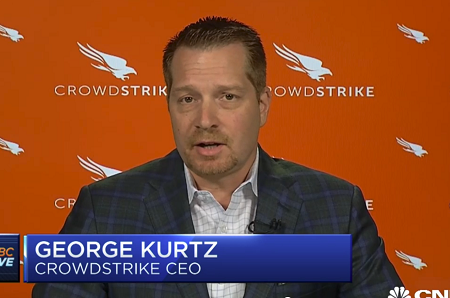
The CEO of cybersecurity firm Crowdstrike, George Kurtz, says North Korea is "absolutely" accumulating a giant pile of bitcoin to fund cyberattacks.

"They"re building a cache of bitcoin, if you think about it. It"s an anonymous currency, it can easily bypass any sort of sanctions because there are none on bitcoin, and the value has increased dramatically," Kurtz told CNBC"s "Squawk Alley." "It"s the perfect currency for North Korea to be hoarding." -CNBC


Can someone say "prohibited country" regulations?


The opinion comes on the heels of an op-ed in the WSJ by Homeland Security advisor Tom Bossert, who says North Korea was behind the WannaCry ransomware hack earlier this year, which demanded ransom in bitcoin.


The U.S. government has assessed with a "very high level of confidence" that a hacking entity known as Lazarus Group, which works on behalf of the North Korean government, carried out the WannaCry attack, said the official, who spoke on condition of anonymity to discuss details of the government"s investigation. -CNBC


The WannaCry hack is said to have cost billions, crippling hospitals, banks and companies around the world - and "highlights the capabilities that North Korea has in cyber," according to Kurtz.


Crowdstrike CEO on 2018 cyber threat outlook from CNBC.


Crowdstrike is the firm which analyzed the DNC servers and determined that Russia hacked them - however the Irvine, CA company came under fire in late 2016 when they had to retract a botched report on Russian hacking of Ukrainian artillery using the same "fancy bear" malware they also say the Kremlin used on the DNC servers.


The government of Ukraine issued a statement after the artillery report came out, calling it Fake News:


In connection with the emergence in some media reports which stated that the alleged “80% howitzer D-30 Armed Forces of Ukraine removed through scrapping Russian Ukrainian hackers software gunners,” Land Forces Command of the Armed Forces of Ukraine informs that the said information is incorrect.


Ministry of Defence of Ukraine asks journalists to publish only verified information received from the competent official sources. Spreading false information leads to increased social tension in society and undermines public confidence in the Armed Forces of Ukraine. –mil.gov.ua (translated) (1.6.2017)


So DHS"s Tom Bossert drops an op-ed on a North Korean hacking operation which only takes Bitcoin, and the CEO of Crowdstrike follows up with a stark warning on Bitcoin hoarding by Pyongyang. 


Follow on Twitter @ZeroPointNow § Subscribe to our YouTube channel


Monday, December 18, 2017

Vince McMahon Considers XFL Relaunch As NFL Fans Evaporate

WWE owner Vince McMahon is considering bringing back his ill-fated football league, the XFL, amid sagging NFL viewership and a racially charged kneeling epidemic of players who won"t stand for the National Anthem which began during the summer 2016 pre-season. In a recent "30 for 30" documentary about the XFL, McMahon and his partner in the 2001 endeavor - former NBC Sports chairman Dick Ebersol, pondered the possibility of relaunching the league once promoted as having fewer rules and rougher play than other leagues.


Vince McMahon


“I don’t know what it would be,” McMahon told Ebersol, adding “I don’t know if it’s gonna be another XFL or what it may be or how different I would make it. It seems like in some way it would tie in either with the NFL itself or the owners.”


Then, on Friday, journalist and pro wrestling fan Brad Shepard tweeted "EXCLUSIVE: Vince McMahon is looking to bring back the XFL and may announce it on January 25th, 2018." Then on Saturday, Shepard said that McMahon pointed to the "30 for 30" interview 


Without much else to go on, Deadspin"s David Bixenspan approached the WWE - which neither confirmed nor denied the rumor, but did state that McMahon is "personally funding a separate entity from WWE, Alpha Entertainment, to explore investment opportunities across the sports and entertainment landscapes, including professional football," followed by another tweet stating that WWE has filed for two new XFL trademarks this year.  


And while the NFL has recently instituted a concussion protocol to address the league"s growing brain injury epidemic, perhaps a rougher, more violent version of the NFL is exactly what America needs right now.


As Mike Florio of PFT writes, 


Arguably, the time may be right for the XFL or something like it. A November 2016 Sports Illustrated article regarding the current state of football in America created the distinct impression that fans want old-school football, with all the big hits and none of the obsessions over safety.


Those attitudes from fans coupled with the messages that invariably will be sent by the incoming Commander-in-Chief,” we wrote on November 16, 2016, “suggest that the time may be right for someone to roll the dice with $250 million or so in the hopes of launching a football league that would essentially operate like a modern-day XFL — loud, proud, violent, brutal, bloody, and everything that the NFL was before political, legal, and social sensitivities forced the league to change.”


Is Vince McMahon going to make football great again? 


Sunday, December 17, 2017

Trump Attorney Quashes Rumors Of Impending Mueller Firing

An Attorney for President Trump has vehemently denied rumors that special counsel Robert Mueller will be fired over revelations of politically motivated malfeasance by the FBI towards Hillary Clinton and against Donald Trump, including disturbing text messages which were sent between top FBI investigators implying the Trump-Russia investigation may have been launched as an "insurance" policy in the event Trump won the 2016 election. Furthermore, GOP lawmakers have asserted that FBI top brass relied on a salacious and unverified "dossier" to launch the Trump-Russia investigation. Also noted by critics is the fact that Robert Mueller"s "right hand man," Aaron Zebley represented Clinton IT staffer Justin Cooper - a Bill Clinton aide who "jerry-rigged" Hillary Clinton"s "private, illegal" server in her Chappaqua home. 


Peter Strzok, Robert Mueller, Ty Cobb


Despite all of that, Trump attorney Ty Cobb told Politico, "As the White House has repeatedly and emphatically said for months, there is no consideration at the White House of terminating the special counsel.” 


Earlier in the day we reported that Trump transition team attorney Kory Langhofer sent a seven-page complaint to House and Senate oversight committees investigating the 2016 election to lodge a complaint that the special counsel improperly obtained "many tens of thousands" of emails from the Trump transition team from the General Services Administration - the government agency responsible for setting up and administering the transition email system which uses a "ptt.gov" address. Kanghofer says these emails were obtained through "unlawful conduct," and that the Trump team had been segregating emails with "Executive Privilege" in anticipation of giving the rest to Mueller"s team. 


On Friday, Rep. Jackie Speier (D-CA), a member of the House Intelligence Committee, said there was a rumor floating around DC that President Trump will fire Mueller before Christmas, but after congress leaves for winter recess


“The rumor on the Hill when I left yesterday was that the president was going to make a significant speech at the end of next week. And on Dec. 22, when we are out of D.C., he was going to fire Robert Mueller," Speier told California"s KQED News.


"We can read between the lines I think," Speier told KQED, adding "I believe this president wants all of this shut down. He wants to shut down these investigations, and he wants to fire special counsel Mueller."


Speier joined Rep. Adam Schiff (D-CA) over concerns that the House Intelligence Committee"s Russia investigation would be shut down by the end of the year. 


Reps Jackie Speier (D-CA) and Adam Schiff (D-CA)


Schiff shot off a series of nine tweets explaining why he"s "increasingly worried Republicans will shut down the House Intelligence Committee investigation," pointing to the fact that "Republicans have scheduled no witnesses after next Friday and none in 2017. We have dozens of outstanding witnesses on key aspects of our investigation that they refuse to contact and many document requests they continue to sit on." 


Read the rest by clicking on Schiff"s tweet and scrolling down. 


White House press secretary Sarah Sanders denied rumors that President Trump was considering firing Mueller in October, stating "There is no intention or plan to make any changes in regards to the special counsel," adding "I think we should let the process play through before we start looking at that."


Perhaps GOP lawmakers would be more comfortable with Mueller"s special counsel if Attorney General Jeff Sessions would appoint a second special counsel to investigate the FBI? Alas, it looks like that may be nothing more than wishful thinking for the time being. 


Congresswoman Says Rumor Is That Trump Will Fire Mueller Before Christmas

Republican lawmakers have been increasingly frustrated by revelations that one of the FBI agents who had a pivotal role in both the early stages of what became the Mueller investigation and the bureau’s decision to excuse Hillary Clinton shared anti-Trump sentiments with his mistress, also an FBI employee.


Earlier this week, Senate Judiciary Committee Chairman Chuck Grassley fired off a letter to the DOJ asking Deputy AG Rod Rosenstein to explain this and other disturbing revelations indicating bias toward Trump from within both the DOJ and the Mueller probe specifically. To wit, nearly every Mueller team member donated to at least one of Hillary Clinton’s campaigns. Furthermore, Mueller’s right-hand man Aaron Zebley represented the IT staffer who installed Clinton’s illegal server.


These frustrations came to a head earlier this week when Trey Gowdy (R-SC) and Rosenstein engaged in a testy exchange during the latter’s public testimony before the House Judiciary Committee.


Given the mounting pressure on Mueller, it’s perhaps unsurprising that Rep. Jackie Speier (D-Calif.) said Friday that the rumor on Capitol Hill is that President Donald Trump is planning to fire Mueller before Christmas, but after Congress leaves Washington for the winter recess.


“The rumor on the Hill when I left yesterday was that the president was going to make a significant speech at the end of next week. And on Dec. 22, when we are out of D.C., he was going to fire Robert Mueller," Speier told California"s KQED News.


According to the Hill, Speier, a member of the House Intelligence Committee, said that Trump was trying to shut down the committee"s investigation into Russian interference in the 2016 election. As evidence, she pointed to the lack of interviews scheduled for the new year.


The New York Times reported Friday that the committee is scheduling its final witnesses of the year to testify in New York despite important votes coming up in Washington, DC, and confirmed no additional witnesses are scheduled yet in 2018.


"We can read between the lines I think," Speier said. "I believe this president wants all of this shut down. He wants to shut down these investigations, and he wants to fire special counsel Mueller."


The ranking Democrat on the committee, Rep. Adam Schiff (Calif.), also said Friday that he is worried that Republicans leading the committee are seeking to shut down the committee"s investigation by the end of the year.


"Republicans have scheduled no witnesses after next Friday and none in 2017 [sic]. We have dozens of outstanding witnesses on key aspects of our investigation that they refuse to contact and many document requests they continue to sit on," he tweeted Friday.


Of course, there’s also reason to take Speier’s comments with a grain of salt: Rumors that Trump might fire Mueller have been circulating since May.


"There is no intention or plan to make any changes in regards to the special counsel," White House press secretary Sarah Huckabee Sanders said in October.


Saturday, December 16, 2017

Scheme To Pay Off Trump Accusers Emerges, One Woman Was Offered $750,000

California woman"s rights Attorney Lisa Bloom operated behind a scheme to compensate Trump accusers and potential accusers using money from donors and tabloid media outlets during the final months of the 2016 presidential race, in an effort which intensified as the election neared, report John Solomon and Alison Spann of The Hill


Lisa Bloom’s efforts included offering to sell alleged victims’ stories to TV outlets in return for a commission for herself, arranging a donor to pay off one Trump accuser’s mortgage and attempting to secure a six-figure payment for another woman who ultimately declined to come forward after being offered as much as $750,000, the clients told The Hill. -The Hill


The various accounts of Bloom"s scheme were detailed in documents, emails and text messages reviewed by The Hill, and come on the heels of Bill O"Reilly"s claim that there is a secret tape of a women who was offered $200,000 to file sexual harassment charges against Trump. It is unknown whether or not O"Reilly"s claim is related to Bloom"s activities. 


Lisa Bloom with mother Gloria Allred


Bloom, the daughter of activist Attorney Gloria Allred who initially defended Harvey Weinstein against sexual assault allegations earlier this year and was publicly shamed by anti-Trump comedian Kathy Griffin, represented four women considering launching allegations against Trump last year. Two of the women went public, while the other two declined. 


Bloom says that the goal of her accusation mill was to simply raise funds to help women "relocate or arrange security if they felt unsafe during the waning days of a vitriolic election." With a commission to Bloom as high as 33 percent, if she was able to sell their stories to media outlets


“Our standard pro bono agreement for legal services provides that if a media entity offers to compensate a client for sharing his or her story we receive a percentage of those fees. This rarely happens. But, on occasion, a case generates media interest and sometimes (not always) a client may receive an appearance fee,” said Bloom.


Jill Harth


One client of Bloom"s who received money was Trump accuser Jill Harth, who filed a sexual harassment lawsuit against trump in 1997, but withdrew it after Trump settled a separate lawsuit from Harth and her boyfriend for alleged breach of contract when trump backed out of a business deal. After Bloom began representing Harth, she arranged for a donor to help Harth pay off her Queens, NY mortgage, which was recorded as extinguished on Dec. 19, 2016. Bloom also "arranged a small payment from the licensing of some photos to the news media, then set up a GoFundMe page for Harth"s benefit which raised a little over $2,300.


Harth maintains Bloom"s financial incentives had nothing to do with her decision to reignite her claims:


“Nothing that you’ve said to me about my mortgage or the Go Fund Me that was created to help me out financially affects the facts or the veracity of my 1997 federal complaint against Donald J. Trump for sexual harassment and assault,” Harth told The Hill.


One woman who spoke with The Hill under the condition of anonymity said that she was friends with Bloom and Harth, and said that Bloom never encouraged them to make false statements - however their texts and emails "indicate Bloom held a strong dislike of Trump," telling the potential Trump accuser in one email that her story was "further evidence of what a sick predator this man is." 


Other documents reveal that Bloom"s efforts to peddle accusers intensified as the 2016 election neared. 


When Harth, for instance, informed Bloom she had just made a Facebook post urging other women to come forward about Trump in October 2016, the lawyer texted back: “Wow Jill that would be amazing. 27 days until the election.”


And when a potential client abruptly backed out of a pre-election news conference in which she was supposed to allege she was sexually assaulted at age 13, Bloom turned her attention to another woman.


That woman, Harth’s friend, went back and forth for weeks with Bloom in 2016 about going public with an allegation of an unsolicited advance by Trump on the 1990s beauty contest circuit.


Give us a clear sense of what you need and we will see if it we can get it,” Bloom texted the woman a week before Election Day.


I’m scared Lisa. I can’t relocate. I don’t like taking other people’s money,” the woman wrote to Bloom.


Ok let’s not do this then,” Bloom responded. “We are just about out of time anyway.”


This angered the potential Trump accuser, who texted Bloom back about the deadline: “What does time have to do with this? Time to bury Trump??? You want my story to bury trump for what? Personal gain? See that "s why I have trust issues!!”


Another exchange of text messages between Bloom and a potential client reveal a negotiation which started out at $50,000. When the woman demanded more, Bloom came back with an offer of $100,000 from a donor, which the woman balked at.


Hey after thinking about all this, I need more than $100,000.00. College money would be nice” for her daughter. “Plus relocation fees, as we discussed.”


After their discussion, the figure jumped to $200,000 after a series of phone calls. The support was promised to be tax-free, and included relocation complete with a new identity


Bloom told The Hill that the woman eventually demanded as much a $2 million, which eventually became a low six-figure offer: 


“She asked to be compensated, citing concerns for her safety and security and over time, increased her request for financial compensation to $2 million, which we told her was a non-starter,” Bloom told The Hill. “We did relay her security concerns to donors, but none were willing to offer more than a number in the low six figures, which they felt was more appropriate to address her security and relocation expenses.”


When the woman fell ill and ended up in the hospital days before the election, Bloom scrambled to reach her, sending repeated texts to a friend of the potential accuser, who replied with a picture of the client in a hospital bed. Bloom did not give up, warning the woman"s friend that if she did not go through with the accusation, it could have "a significant impact on her life," and a "big impact on her daughter."


"She is in no condition for visitors," the friend responded, adding "If you care about her you need to leave her be until she is feeling better." 


Bloom then flew out from California to visit the woman, who then decided she would not move forward with her allegations against Trump. Via The Hill: 


“I am confused because you sent me so many nice texts Wednesday night after my other client wasted so much of my time and canceled the press conference,” Bloom texted on Nov. 5, 2016. “That meant a lot to me. Thursday you said you wanted to do this if you could be protected/relocated. I begged you not to jerk me around after what I had just gone through.”


Bloom then browbeat the woman, texting "You have treated me very poorly. I have treated you with great respect as much as humanly possible. I have not made a dime off your case and I have devoted a great deal of time. It doesn’t matter. I could have done so much for you. But you can’t stick to your word even when you swear you will.


The woman eventually agreed to meet Bloom after she got out of the hospital, two days before the election - where she told The Hill that Bloom had upped her offer to $750,000, which was declined. 


Another woman who declined to come forward with accusations says that Bloom made it very clear that she would be paid fees from arranging compensated media appearances. 


“Outlets with which I have good relationships that may pay for your first on camera interview, revealing your name and face: Inside Edition, Dr. Phil, LawNewz.com,” Bloom texted the woman just weeks before Election Day. “My best estimate of what I could get for you would be $10-15,000 (less our 1/3 attorney fee)."


After Bloom found out that one of her clients had already spoken with CBS News right before the election about a paid interview, she told the accuser "You and your friends should not be shopping the story it will come back to bite you," adding "And this whole thing we have worked so hard to make happen will go away."