Showing posts with label Alaska. Show all posts

Monday, March 19, 2018

Retired, Happy, & 100 Percent Off Grid In Alaska — ‘We’re Staying’

Retired, Happy, & 100 Percent Off Grid In Alaska -- ‘We’re Staying’

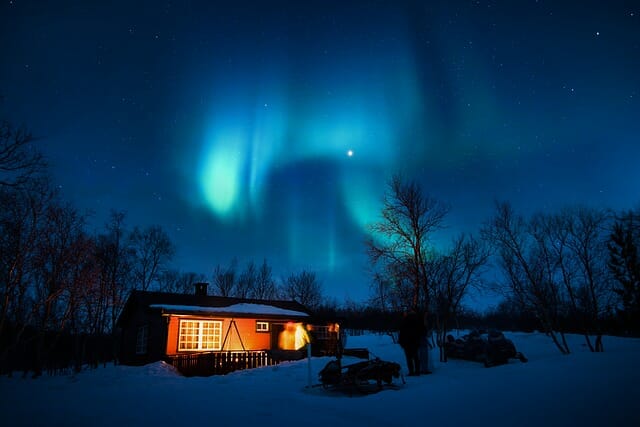
Image source: Pixabay.com


Doug Rudolph, 63, and his wife, Cathy, 57, left family, friends and a comfortable lifestyle in West Chester Pennsylvania to live off-grid in Anchor Point, Alaska. In a recent video tour of their home and property, the couple seems to be thriving.


“Probably what inspired me the most was the movie ‘Alone in the Wilderness,’” says Doug, referring to the 2004 documentary about Dick Proenneke, who in the 1960s built his own cabin in what is now Alaska’s Lake Clark National Park.


After visiting a cousin in Alaska and making the breathtaking drive from Anchorage to Anchor Point several times, Doug says he “fell in love with the place. It truly is an amazing, beautiful place.”


He and Cathy decided to purchase property in Anchor Point and to live off-grid there because, as Doug puts it, “you don’t get the true wilderness feel if you have all the necessities.”


Story continues below video


The retired couple built their 1,300-square-foot two-level home from a kit from an Alaska builder, but they have modified it, according to their own needs and preferences. For example, Doug incorporated logs that were on the property into structural beams, and he moved a staircase’s location and angle to offer more floor space on the main level. He had to construct three sets of scaffolding to complete the 19-foot tongue-in-groove wood ceiling.


“After seven and a half years, we are still building,” says Doug, referring to some of the siding and framing that still remains unfinished. The home, which features a welcoming and open floor plan and features south-facing five-foot windows, is powered by three 250-watt solar panels. In the video, Cathy demonstrates how she moves the direction of the solar panels — usually twice a day — to capture as much of the northern sun’s rays as she can.


They use an outdoor wood boiler and a woodstove that burn about eight cords of firewood a year. In the summer, when they are not using the wood boiler, they have a three-tank propane system to heat water and the stove. In addition, they have a back-up gasoline-powered generator that can be started remotely if needed. It is housed in an insulated shed near the home.


Although Cathy admits she has tried to talk Doug into using an indoor compost toilet, the couple has an outhouse. Doug admits it can get difficult to have to “shovel your way” to the outhouse in the winter.


The couple raises chickens for meat and for eggs, and their coop is situated close to their large fenced garden to make for easy composting and feeding. Cathy says moose are the main unwanted visitors to keep out of their vegetable garden. “They can jump, but they haven’t gotten in yet,” she says.


Between what extra produce Cathy obtains through her job at a local greenhouse and what they grow in their own garden, Doug and Cathy are largely self-sufficient when it comes to food.


When asked for advice for people considering a similar lifestyle, Doug says, “It really helps if you want to live off grid in Alaska if you’re a handyman.” He adds that he has five different battery-operated hand drills. He also lists a shovel, a rake, a sander, a circular saw and a chainsaw as some of his most important tools.


“It’s hard for me to explain,” says Doug when asked how he feels about his off-grid lifestyle. “As much as we miss family, since I first set foot here, (I have felt) this is where I am supposed to be…We’re here. We’re staying.”


Would you want to live in Alaska? Share your thoughts in the section below:

Monday, January 29, 2018

The Importance Of Prepping: Alaskans Turn To Government For Food Amid Recession

foodstamps


Tens of thousands of people have turned to the government for healthcare and food amid Alaska’s recession, prompting questions from state lawmakers about the sustainability of those “safety-net” programs. Simple state-wide recessions such as Alaska’s highlight the importance of being prepared.


According to Alaskan Governor Bill Walker’s administration, the estimates are 240,000 people will be enrolled in the Medicaid health-care program next year, up from 163,000 in 2015. And 101,000 Alaskans were receiving food stamps in September, up from 72,000 a year earlier, according to preliminary federal data. Although the federal government covers most of the cost of Alaska’s food stamp program, Medicaid is supported by both the state and federal governments and is one of the biggest line-items in Alaska’s budget, at about $700 million. And some conservative lawmakers say they’re worried about the growth in enrollment.


Anti-hunger advocates want to see adequate budgets for their government programs rather than rely on the free market. They also oppose making it more difficult for people to qualify for assistance programs given how many Alaskans are struggling, said Sarra Khlifi, program manager at the Alaska Food Coalition.


Khlifi said her members — social service organizations focused on fighting hunger and its causes — have been noticing more consistent demand, instead of in the past when clients arrived at the end of the month after using up their food stamps.


But higher taxes to fund government programs only force those living paycheck to paycheck to also enter into these very programs, which were supposed to be designed to eliminate hunger. It’s the vicious cycle of a government attempt to fix a problem they started. But simply storing canned foods can be a good start to prepare for a recession.


Due to the overwhelming nature of preparedness, it can be difficult to simply begin the journey. But as we all know, anything can happen, and when it does, we could benefit from having extra food on hand.


preppers-blueprint


Recessions, such as the one Alaskans are experiencing, dictate the importance of a backup plan. Being prepared to the best of your ability rather than relying on the dwindling funds from government programs will give someone the best chance at survival without putting yourself at the mercy of the state. Great references exist to help anyone prepare for any situation.

Ring Of Fire ON ALERT As Earthquake Rocks Japan

ring-of-fire


The ring of fire is on alert after Japan was rocked by an earthquake. The 5.1 magnitude quake is just one more in the past week that’s made the area increasingly geologically unstable.


The Japan earthquake struck 46 miles from the town of Miyako, which is home to more than 50,000 people.  Morioka-shi, home to nearly 300,000 people, is 73 miles from the epicenter. It comes after a week of chaos in the region, with a volcanic eruption sparking a fatal avalanche in Japan earlier this week.  And still one other fairly major earthquake which measured at a 6.2 magnitude struck off the coast of Honshu at a depth of 24 miles.  Luckily, no damages or injuries were reported because of that earthquake.


However, a volcanic eruption in the Philippines forced mass evacuations just recently, while another in Japan kills one person. Across the Pacific, a 7.9 magnitude earthquake hits off Alaska. The spate of activity around the so-called Ring of Fire has raised concerns that a major and potentially deadly volcanic eruption or earthquake could be on the way.


According to Japan Todayearthquakes occur around the Ring of Fire on a daily basis, but the recent string of quakes and eruptions sparked talk of an uptick, with the U.N.’s Office for Disaster Risk Reduction tweeting that the Ring of Fire was active. “The Pacific Rim is in a period of activity,” acknowledged Toshiyasu Nagao, head of Tokai University’s Earthquake Prediction Research Center.  “In terms of volcanic history, however, the current activity is still regarded as normal,” he told AFP. “It’s not referred to as the ‘ring of fire’ because it sits there doing nothing… it is normal to have so much activity,” tweeted volcanologist Janine Krippner.


The experts do not appear overly concerned about the activity on the Ring of Fire.  “Volcanic activity at each volcano is not correlated,” said Yosuki Aoki, assistant professor of physical volcanology at the University of Tokyo. He also said volcanos “cycle through active and inactive periods, and this is part of it. I don’t think something abnormal is taking place.”


“This is pretty normal activity for Earth, the media is just reporting on more of them right now,” Krippner added on her Twitter account.  Which makes one wonder why the media can’t report on the massive corruption and major scandals in the FBI but have time to scare the public over some volcanic activity.


Nagao said the volcanic activity seen in Japan could continue, but that the region was experiencing a relatively quiet period for earthquakes. “In terms of earthquakes, the region is not that active now. There was an earthquake in Alaska the other day, but quakes with such strength have occurred regularly in the region.”

Thursday, January 11, 2018

Surviving Winter In Alaska At -50


Living off-grid during winter is never easy, but when you’re in the Alaskan bush and facing temperatures of -50 degrees Fahrenheit, it can get downright dangerous.


That’s the life of Danny Whittle and SueJean Heinz, a married couple who live in Alaska and who have stories of survival many of us only see on television. They are this week’s guests on Off The Grid Radio, as they tell us what it’s like to battle Old Man Winter during a season when they get only about four hours of sunshine.


Danny and SueJean also tell us:


  • How they survived when their water pipes froze.

  • How they use snow to keep their house warm.

  • How they cook when it’s too cold to use propane.

  • How they use a pellet stove to complement their wood stove.

Danny and SueJean also share stories of Alaska wildlife, including what they did when a bear showed up on their doorstep one day. Finally, they give advice to anyone who has dreams of moving to Alaska!

Friday, December 22, 2017

WATCH: Man Exposes Gov’t ‘Conspiracy’ In Court and Is Swarmed by Cops, Tasered, Arrested

courtAs he was presenting evidence of widespread corruption and conspiracy in an Alaskan court, a 51-year-old man was tackled, tasered, and arrested.

Friday, November 17, 2017

Alaskans Urged To Prep For North Korean Attack; Would Have 20 Minutes To React

Alaskans Urged To Prep For North Korean Attack; Would Have 20 Minutes To React


The state of Alaska has no plans to evacuate citizens in the event of a North Korean nuclear attack. Instead, residents are being told to stay in place and stockpile food, water, flashlights and radios.


“Really the recommendation for people during a nuclear attack is to shelter in place and find some type of secure location that will protect them from that blast,” state official Jeremy Zidek said, according to Britain’s Daily Mirror. “What we’re recommending people do is the same thing that they would do for any other type of disaster preparedness.


It’s Backup Electrical Power In A Convenient, Portable Briefcase!


“That is: Have a family emergency plan so that they can get in touch with their families quickly, and have an emergency supply of food, water and first aid.


“So with a mass evacuation – if people leave their homes, schools and businesses to try to get out of the area, we may be putting more people at risk,” he added.


Anchorage is 1,000 miles closer to North Korea than Honolulu, and both are within range of the ICBMs tested this year by the rogue nation. Zidek estimated that it would take about 20 minutes for a North Korean missile to reach his state.


“Perhaps there would be some type of attack on those military facilities to try to hinder our ability to react to any missile launches,” Zidek said.


Alaska is home to a number of military installations including Fort Greeley, Fort Wainwright, and Nelson Air Force Base.


What is your reaction? Share it in the section below:

Thursday, November 16, 2017

Alaska Prepares For War With North Korea: Missiles Will Take Only 20 Minutes To Reach The State

kimjongunmissile


The state of Alaska is preparing for a potential war with North Korea.  The Alaskans are being urged not to evacuate though since should Kim Jong-Un launch a missile toward Alaska, it would only take 20 minutes to get there.


Emergency planners in Alaska have warned it will not attempt evacuations if a warhead is fired because time would not be on their side. Jeremy Zidek, from the state’s disaster planning team, will urge locals to find shelter rather than risk being caught in the open. He also urged families to have an emergency stash of food and water, flashlights and radios, and medical supplies including the anti-radiation pill Prussian Blue – medication that lessens the radiological impacts on your body.


Tensions have escalated lately on the Korean peninsula after a series of missile tests in the hermit kingdom and propagandized media threats were made sentencing president Donald Trump to death.  Tyrant Kim Jong-un has since threatened a “nuclear holocaust” and there are fears the regime will soon have a missile capable of reaching the US mainland.


Zidek admitted that the state’s defensive facilities could be picked for an attack. Alaska is home to Fort Greely, where the US has interceptor rockets designed to destroy incoming intercontinental ballistic missiles (ICBMs). The state also has missile defenses at the Pacific Spaceport Complex as well as radar warning systems at Clear Air Force Station.


“We have the missile defense system here. We have missiles and radars in a number of different locations,” Zidek said. “Perhaps there would be some type of attack on those military facilities to try to hinder our ability to react to any missile launches.” But Zidek’s warnings for Alaska get even more terrifying.


He also warned that Alaska no longer has any bomb shelters and there would be no new measures to deal specifically with a North Korean nuclear threat. “There could be evacuation notices put in place but are we going to be able to get that amount of lead time to instruct people to actually evacuate an area?” he said.  Remember, once a missile is launched toward Alaska, it would take less than 20 minutes to make an impact.


“Really the recommendation for people during a nuclear attack is to shelter in place and find some type of secure location that will protect them from that blast,” said Zidek. “So with a mass evacuation – if people leave their homes, schools, and businesses to try to get out of the area, we may be putting more people at risk.”


Emergency planners in Hawaii have already confirmed that their state is within 20 minutes of Kim Jong-un’s missiles – and Alaska is even closer. Guam is closer still, and Kim has already threatened that island territory too.


Zidek said Alaska had reviewed its radiological threat plans and prepared social media warnings to be published at short notice. Otherwise, he said Alaska would respond to a nuclear attack using the same plans already devised for disasters like earthquakes and volcanic eruptions.


“The thing with disasters is – while disasters may vary a great deal – the consequences of the disasters don’t really change very much. With something like a nuclear attack, of course you’re going to have mass casualties, a hazmat event, and you’re gonna have the need to transport a large number of people,” said Zidek. “When we look at these problems, the consequences of the attack, they may be the same as if we had another large earthquake or we have a massive chemical spill. On a state level, when we look at our all-hazards plan, we say to ourselves ‘we are preparing for the consequences of any type of disaster’.  And that’s exactly what we want our residents here in Alaska to do. Prepare for the consequences of any type of disaster.”

Monday, November 13, 2017

Scientists Shocked As Fisheries Collapse On West Coast: ‘It’s The Worst We’ve Seen”

pacific-cod


Photo Credit: Alaska Outdoors Supersite


The Gulf of Alaska cod populations appears to have taken a nose-dive. Scientists are shocked at the collapse and starving fish, making this  the “worst they’ve ever seen.”


“They [Alaskan cod] get weak and die or get eaten by something else,” said NOAA’s Steve Barbeaux. The 2017 trawl net survey found the lowest numbers of cod on record forcing scientists to try to unravel what happened. A lot of the cod hatched in 2012 appeared to survive, but by 2017, those fish were largely gone for the surveys, which also found scant evidence of fish born in subsequent years. Many of the cod that have come on board trawlers are “long skinny fish” according to Brent Paine, executive director of United Catcher Boats.


“This is a big deal,” Paine said. “We just don’t see these (cod) year classes disappear from one year to the next.” The decline is expected to substantially reduce the gulf cod harvests that in recent years have been worth — before processing — more than $50 million to Northwest and Alaska fishermen who catch them with nets, pot traps, and baited hooks set along the sea bottom.


Barbeaux says the warm water, which has spread to depths of more than 1,000 feet, hit the cod like a kind of a double-whammy. Higher temperatures sped up the rate at which young cod burned calories while reducing the food available for the cod to consume. And many are blaming “climate change” for the effects on the fish, although scientists aren’t directly correlating the two events. “They get weak and die or get eaten by something else,” said Barbeaux, who in October presented preliminary survey findings to scientists and industry officials at an Anchorage meeting of the North Pacific Fishery Management Council.


The 2017 trawl net survey found the lowest numbers of cod on record, more than 70 percent lower than the survey found two years earlier.


Barbeaux said the cod decline likely resulted from the blob, a huge influx of warm Pacific Ocean water that stretched — during its 2015 peak — from the Gulf of Alaska to California’s offshore waters.


Biologists tracked increases in bird die-offs, whale strandings, and other events such as toxic algae blooms. Even today, its effects appear to linger, such as in the dismal survey results for salmon last summer off Washington and Oregon. – The Olympian


The blob began to take hold in 2014, and within a year had raised temperatures as much as 7 degrees Fahrenheit in some surface waters of the Gulf of Alaska. In deeper waters, where cod feed, the temperature rose by more than 1 degree Fahrenheit. The surface temperatures recorded during the blob’s peak could be close to the average at century’s end, according to a recent report on climate change by the U.S. Global Change Research Program. Thus, future blobs could push temperatures much higher than the most recent event.


“They may not necessarily be more frequent, but they will be more intense,” said Nicholas Bond, a University of Washington climate scientist who assisted in the Gulf of Alaska cod research. “This is really going to be uncharted territory.”

Thursday, September 21, 2017

Off-Grid Life In Alaska, With No Roads


For homesteaders Bryan and Laura Emerson, a trip to town doesn’t involve a quick drive in the family car. In fact, in their neck of the woods, nothing is quick. And they’re perfectly fine with that.


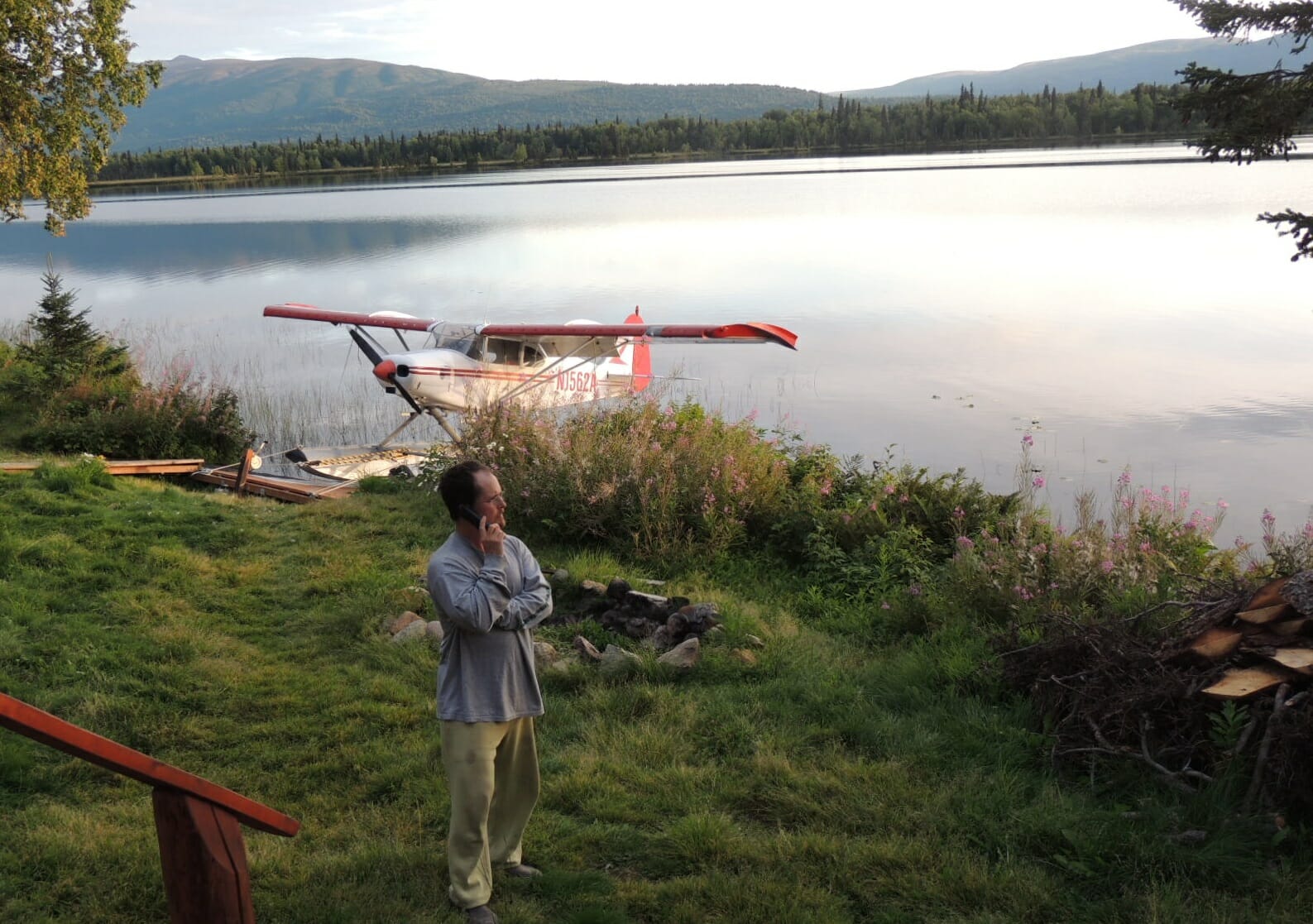
Bryan and Laura live on a lake in the bush of Alaska, where they are a 20-minute float plane trip to the nearest road. They’re also this week’s guests on Off The Grid Radio, and they tell us what it’s like to live 100 percent off-grid in the heart of America’s “Last Frontier” – in a location that gets 20 hours of sunlight.

They also share with us:


  • How they generate electricity and obtain water.

  • What they grow, store and eat in such a unique climate.

  • How they make money by telecommuting.

  • Why they don’t have indoor plumbing.

  • How Laura survived a frightening encounter with a bear … on their property.

  • Why they ditched the city life for the bush.

Finally, Bryan and Laura provide tips for people who are considering moving off-grid, even to Alaska. We were inspired by their story, and you will be, too!


Friday, July 21, 2017

Chinese Spy Ship Spotted Just Off Coast Of Alaska

Chinese Spy Ship Spotted Just Off Coast Of AlaskaA Chinese spy ship was spotted off the coast of Alaska July 14 after the test of a U.S. antimissile defense system, CNBC reported.


The presence of an “intelligence” or “communications” vessel was confirmed by U.S. Navy Captain Scott Miller, a spokesman for the North American Aerospace Defense Command (NORAD).


Military officials aren’t sure what the spy ship was doing, although it was spotted four days after a test of the Terminal High Altitude Area Defense (THAAD) antimissile system in Alaska.


Goofy Gadget Can Recharge Your Laptop — And Jump-Start Your Car!


The ship was 100 miles off the coast but in international waters.


One official told CNN that it was rare for the Chinese to conduct surveillance in the region.


The ship might have been a surveillance ship known as a Tianlangxing, The Diplomat reported. A Tianlangxing passed through the Tsugaru Straight, which links the Sea of Japan and the Pacific, on July 2, The Diplomat reported. Such ships are designed to collect electronic intelligence and track ballistic missiles.


The sighting came just as the U.S., India and Japan were conducting a joint naval exercise in the Indian Ocean. A Chinese spy ship is reportedly monitoring those exercises, too.


What is your reaction? Share your thoughts in the section below:

Thursday, July 6, 2017

‘Self-Restraint’ Is The Only Thing Between Armistice And Nuclear War With North Korea


kimjongunwar


It’s finally happened, Kim Jong-Un has had a successful ICBM (Intercontinental ballistic missile) test. Now that he’s actually improved his battle might, and has the capability to strike Alaska, he’s taunting the US president with nuclear war.


A top military official has warned “self-restraint” is the only thing stopping the US from going to war with North Korea. Soon after his successful missile test on the 4th of July, a defiant Kim Jong-Un seemingly taunted “American bas**rds” in the wake of said successful intercontinental ballistic missile test. Pyongyang claims its newly developed rocket can carry “large-sized and heavy nuclear warheads.”


The North Korean leader made the haughty statement, in which he said “the American bas**rds would not be very happy with this gift sent on the July 4 anniversary,” not long after the ICBM was launched Tuesday, the Korean Central News Agency reported.


The successful ICBM, which state media said had reached an altitude of 2,802 kilometers (1,741 miles), was its highest ever missile test, and most successful. State media in Pyongyang said North Korea now had the power to now strike the American mainland with a nuclear warhead.  Experts agree, and say that if the missile had been fired on a normal trajectory instead of at a high altitude, it would have reached about 6,000 kilometers, which is enough to put Alaska within range.


In a joint press statement issued by Russia and China, the two countries reiterated their call for North Korea to stop its missile and nuclear tests in exchange for the US and South Korea holding off on future large joint military drills.

However, within hours of the statement, the US and South Korea announced they indeed, had held a new ballistic missile drill to counter “North Korea’s destabilizing and unlawful actions.” “(The drills) showcased precision targeting of the enemy’s leadership in case of an emergency,” a South Korean Defense Ministry statement said.

Speaking out against Pyongyang on Wednesday, the top American general in South Korea issued an ominous warning of his own to Kim and his ilk north of the border.Self-restraint, which is a choice, is all that separates armistice and war,” General Vincent Brooks said in a joint statement.  But this missile test is leaving the United States with few options, and the nation is split on how they intend to deal with the rogue nation’s new capabilities.


With a seemingly unavoidable war with North Korea on the horizon, joint drills only inch up tensions between the nations choosing to involve themselves.   Analysts told CNN there are very few good options for President Trump to deal with the North Korean threat. “A really difficult question will be whether Donald Trump feels like he’s (been) backed into a corner and doesn’t have options short of war,” Adam Mount, senior fellow at the Center for American Progress, told CNN.


Click here to subscribe: Join over one million monthly readers and receive breaking news, strategies, ideas and commentary.

Advanced Tactical Gas Mask

Please Spread The Word And Share This Post


Author: Mac Slavo
Views: Read by 1 people
Date: July 6th, 2017
Website: www.SHTFplan.com


Copyright Information: Copyright SHTFplan and Mac Slavo. This content may be freely reproduced in full or in part in digital form with full attribution to the author and a link to www.shtfplan.com. Please contact us for permission to reproduce this content in other media formats.


Tuesday, June 27, 2017

Trump's ANWR Move Could Spawn Epic Oil, Natural Gas Battle

Authored by Bob Williams via Platts "The Barrel" blog,


Oil majors thirsty for reserves likely to line up for any lease sale


President Trump has uncorked yet another controversy over energy vs the environment and it promises to be a heavyweight battle.


The White House budget proposal includes a revenue line of almost $2 billion from selling oil and gas leases in the richly oil-prospective northeastern coastal plain of the Arctic National Wildlife Refuge (ANWR) in Alaska.


Until the climate change debate came along, leasing and drilling in the ANWR (pronounced an-war) Coastal Plain was arguably the most ferociously contested item on the oil and gas industry’s wish list at the national level.


First, a little background:


In 1960, less than one year after Alaska became a state, Congress created the Arctic National Wildlife Range.


Twenty years later, the Alaska National Interest Lands Conservation Act (ANILCA) expanded the Arctic Range to 18 million acres, renamed it the Arctic National Wildlife Refuge, designated 8 million acres as National Wilderness, designated three rivers as National Wild Rivers, and called for wildlife studies and an oil and gas assessment of 1.5 million acres of the ANWR Coastal Plain (the 1002 area).


There is not enough space here to track the tortuous history of legal and regulatory battles and failed legislation that has marked efforts to either develop oil and gas in the ANWR Coastal Plain or to lock it up against development permanently.


Suffice to say that ANILCA granted surface and subsurface rights to the Inupiat Native Americans living near the North Slope village of Kaktovik on the ANWR Coastal Plain, seismic studies were conducted on Inupiat land, and what has been called the “the tightest hole of all time” (KIC-1) was drilled and plugged on that acreage by a group led by Chevron.


Only a handful of people have ever known the well results—and no one has spilled the beans yet.


Battles over ANWR waxed and waned over the ensuing years, and while the refuge’s 1002 area has not yet seen another drillbit, neither has that option been entirely foreclosed.


Trump’s budget cites $2 billion in potential revenues from leasing the Coastal Plain, but given the dearth of onshore elephant-scale prospects worldwide and their dwindling oil and gas reserves bases, it’s likely that major oil companies would be scrambling to throw even more money than that at ANWR leases.


Since the majors thrive on megaprojects like Kashagan, Prudhoe Bay and deepwater Gulf of Mexico, ANWR could be a perfect fit for them.


It would also be an expensive venture and that likely will keep the smaller players from making much of an impact in ANWR.


Massive oil, natural gas potential


There is little doubt of the potential for oil on the ANWR Coastal Plain. The region lies between and is geologically analogous with two of the world’s most prolific oil and gas provinces, Alaska’s North Slope and Canada’s Mackenzie Delta.


The US Geological Survey, in a 1998 estimate, reckoned that the Coastal Plain contains 4.3 billion to 11.8 billion barrels of technically recoverable oil and as much as 11 Tcf of natural gas, with a mean estimate of 7.7 billion barrels and 3.5 Tcf.


Industry contends these are very conservative estimates. As much as 32 billion barrels of oil is in place.


One recent study suggested that a commercial find on the ANWR Coastal Plain could yield more daily oil production than the volume of oil the US imports from Saudi Arabia today.


Aside from making major oil companies happy—not exactly a top priority for most Americans—billions of dollars in infrastructure are at stake in developing oil and gas on the ANWR Coastal Plain.


The hundreds of billions of dollars that the oil and gas industry has invested in North Slope production, processing, and pipeline facilities could be for naught in the future if North Slope oil production drops below a certain level.


The Trans-Alaska Pipeline System (TAPS) transports a bit more than 400,000 b/d of North Slope oil.


A 2011 study by pipeline operator Alyeska concluded that a host of problems affecting TAPS operations could develop with throughput between 300,000 b/d and 600,000 b/d.


Alyeska has already addressed some of those problems, but as the throughput continues to drop, those problems become even more challenging—even posing hazards to operation.


A nonviable TAPS could strand massive US oil and gas resources in Alaska.


Of course, Trump can’t authorize ANWR development. Only Congress can do that.


Alaska’s Senator Lisa Murkowski has already said she will take up the issue, but there is nothing concrete in the works from Congress.


However, Interior Secretary Zinke has issued a Secretarial Order calling for an update of federal resource assessments of the ANWR 1002 area and National Petroleum Reserve-Alaska.


It also is intended to review the currently blocked access to half the surface acreage in the NPR-A, a ban instituted under the Obama administration.


Whatever one’s stance happens to be, if you thought the battle over Keystone was big, this battle will truly be epic.

Saturday, June 17, 2017

Police Pushing 2 Bills to Allow Cops to Have Sex With Prostitutes They Arrest

police


Alaskan police are still fighting twin bills winding their way through state legislature — because the proposed legislation would make sexual contact with sex workers illegal.


Anchorage Police Deputy Chief Sean Case traveled to Juneau earlier this year to plead the need for officers to be able to touch sex workers during an investigation, or their cover — and, thus, the case — would be blown.


House Bill 112 and Senate Bill 73, Case claims, ‘are offensive to law enforcement officers and unnecessary because myriad laws and regulations already govern such conduct.’


HB 112 states, in part, “An offender commits the crime of sexual assault in the third degree if the offender … while acting as a peace officer in the state, engages in sexual penetration with a person with reckless disregard that the person is … the victim, witness, or perpetrator of a crime under investigation by the offender.”


“If we make that act (of touching) a misdemeanor we have absolutely no way of getting involved in that type of arrest,” Case told the Alaska Dispatch News.


Under the premise officers have only limited physical contact with prostitutes — such as touching a woman’s breast upon request when posing as a john — Case and his ilk around the nation feel stripping cops of that ability would be detrimental.


In actuality, however, an epidemic of police violence extends tragically into the world of sex work — officer rapes of prostitutes are far from uncommon. Indeed, sex workers will ‘cop-check’ a potential john — requesting contact they know to be illegal in order to determine if the person is an undercover officer, who would at least theoretically not break the law.


But officers frequently do have extensive sexual contact — up to, and including, sexual intercourse — with targets of prostitution investigations.


Maggie McNeill writes for Reason,


“The Alaska bills were introduced through the efforts of sex worker activists, who well know that in every place where sex work is criminalized or even semi-criminalized (and that includes all 50 American states) police and/or their paid informants routinely take sexual liberties ranging from groping to full intercourse with women they’re ‘investigating.’ Sometimes they claim this is necessary for ‘gathering evidence’ or (as in the Anchorage excuse above) part of the process of arresting the sex workers. Other times the activity somehow doesn’t make it into police reports at all. (Imagine that!) This is exactly why Alaskan activists want the contact prohibited.”


In short, the pompous, self-serving claim police must have what amounts to lascivious contact represents an abuse of power under the color of law — particularly when Case’s argument against the criminalizing legislation can be handily picked apart upon examination.


In the same interview with Alaska Dispatch News, Case asserted, “We are not out there to go out and find that street prostitute. What we’re interested in now is the trafficking.”


McNeill rightly notes the dangerous portent in that statement, as Case literally argues the need to be able to further assault victims of trafficking in the interest of solving sex and human trafficking crimes — and the deputy chief isn’t alone in that thinking, on both trafficking and low-level prostitution.


Across the United States, myriad police departments stridently contend the necessity of sexual contact during investigations.


In fact, the Michigan Senate only recently passed legislation backtracking a law in place since 1931 — which grants cops immunity for physical, sexual contact with sex workers in the course of performing an investigation — amending it to assign criminal charges to officers found guilty of that contact.


Michigan State Police, unlike their peers in Alaska, have not publicly supported or denounced the state’s Senate Bill 275, rather, as spokesperson Shannon Banner stated in an email to Vice,


“There’s not much to say about this legislation, as it does not impact us. This was not a tactic used by our troopers.”


But sex workers in Michigan beg to differ.


“Although publicly the state police have repeatedly said, ‘We never use that tactic,’ in the sex worker community, we know that’s false,” opined Crysta, a sex worker who runs the Michigan chapter of Sex Workers Outreach Program. “Officers have often had sex with sex workers in Michigan, but they just don’t report it.”


Worse, the proposed amendment does not clearly delineate officer behavior which should be deemed criminal — allowing for charges of “prostitution-related offenses” against cops whom sex workers allege “engaged in sexual penetration while in the course of his or her duties.”


Penetration in no way represents the gamut of ways in which a person can be sexually assaulted — meaning, the Michigan legislation lacks both the teeth to revoke officer immunity in such cases, as well as the spirit of protection for sex workers in which such a law should be enacted.


McNeill continues,


“In this respect, Michigan’s status quo closely resembles one in Hawaii which scandalized reporters and readers three years ago. The legislature tried to repeal a 1970s-era immunity clause for cops engage in prostitution investigations. The police union argued vociferously against the reform, just as they are doing now in Alaska, before eventually dropping their opposition in the face of a tide of popular condemnation. Yet despite that resemblance, most treatments of the Alaskan law don’t bother to mention the Hawaiian one.”


Broadly reported on the apparent epidemic of officers having coercive, investigative, and even forced sex with prostitutes, noting,


“A research study that [Dr. Alexandra Lutnick] conducted in San Francisco found that over 14 percent of sex workers said that they had been threatened with arrest unless they had sex with a police officer, and two percent had been arrested after having sex with an officer anyway.


“Astonishingly, it’s not specifically illegal for police officers in many states to have sex with sex workers during the course of sting operations.”


Lutnick lamented, “The reality of some police having sex with sex workers during the course of undercover operations has been in existence as long as selling sex has been a criminal offense.”


Sex worker activists and their supporters condemn the lack of protections and the dearth of accurate reporting on the issue — particularly as the corporate press largely repeats bloviating from police departments on the putative need for officer sexual contact.


Whether or not Alaska and Michigan, or any other state, will make strides to protect sex workers — who, after all, are citizens deserving of the same protections as ordinary citizens — remains to be seen.


In the interim, sex workers will be doubly victimized by a system protecting the authority of officers over their right not to be groped, assaulted, or raped.


“For police officers to go so far as to have sexual contact with people as a means to gather evidence and arrest them and charge them — it’s just not necessary,” argues Maxine Doogan, an advocate with Community United for Safety and Protection, an Alaska sex-worker advocacy group.


“It’s state-sponsored sexual assault.”

Saturday, April 22, 2017

4 Times In 4 Days: Russian Warplanes Buzz U.S. Coast Again

4 Times In 4 Days: Russian Warplanes Buzz U.S. Coast Again

IL-38


WASHINGTON — Russian warplanes were detected flying near the U.S. coast for four straight days this week in what one American defense official called a “strategic messaging.”


Three of the incidents off Alaska’s coast involved TU-95s, which are strategic bombers and missile platforms capable of carrying nuclear weapons.


“This kind of cat-and-mouse stuff has been going on for a while now,” former State Department official Howard Stoffer told CNN.


Stoffer said he thinks Russian President Vladimir Putin “is trying to put the U.S. on notice that the Russians are everywhere and are back to expanding the limits of expanding their military power.”


Crazy Gadget Can Jump-Start Your Car — And Charge Your Smartphone!


On April 17, U.S. F-22 fighter jets intercepted two TU-95s 100 miles from Kodiak Island.


On April 18, a U.S. E-3 surveillance plane was scrambled because of another sighting of TU-95s 41 miles off the Alaskan coast.


On April 19, two IL-38 maritime patrol planes were seen.


On April 20, another flight by two TU-95s was reported. It was escorted by U.S. F-22s and Canadian CF-18s


The Russian planes never entered U.S. airspace, but the situation is dangerous because of the possibility of shots or missiles being accidentally fired.


“No one wants to go to war with the Russians, but let me double down on another concept: The Russians really don’t want to go to war with us,” retired Air Force General and former CIA and NSA Director Michael Hayden told CNN. “They are by far the weaker power.”


The Russian Defense Ministry released a statement saying that “all such missions are carried out in strict compliance with international regulations and with respect to national borders.”


What is your reaction? Share it in the section below:

Wednesday, April 19, 2017

Russian Bombers Buzzed The U.S. Coast TWICE This Week (Once Within 41 Miles)

Russian Bombers Buzzed The U.S. Coast Twice This Week (Once Within 41 Miles)


ANCHORAGE, Alaska — Two Russian heavy bombers capable of carrying nuclear weapons and cruise missiles flew close to the Alaskan coast not once but twice this week, and a U.S. congressman says it’s part of a message.


The TU-95 “Bear” bombers were intercepted on each occasion – the first time Monday and the second time Tuesday — by U.S. aircraft off the coast of Kodiak Island, Alaska, the Pentagon confirmed. Two U.S. Air Force F-22 fighters intercepted the bombers on Monday, and on Tuesday it was an E-3 surveillance aircraft.


The first intercept was about 100 miles off the coast, the second one about 41 miles away.


“This was a show of force by the Russians to show us that they are still here,” U.S. Rep Adam Kinzinger (R.-Illinois) told CNN’s Wolf Blitzer.


Are You Prepared For A Long-Term Blackout? Get Backup Electricity Today!


Kinzinger described the flights as “an attempt to come up as close as they could to our international borders to see what our reaction would be.” The Russians, he said, are “trying to show their teeth.”


Strategic Bomber and Missile Platform


The TU-95 is a four-engine strategic bomber and missile platform. It is the oldest aircraft in the Russian Air Force and has been in service since 1956.


A TU-95 can carry nuclear bombs or nuclear-tipped cruise missiles, the latter of which are capable of evading radar and antimissile defenses.


A modified TU-95 dropped the largest nuclear bomb ever tested, in 1961 — the so-called Tsar Bomb. During the Cold War, TU-95s often flew patrols with nuclear weapons, much like their American counterpart, the B-52.


There was no radio traffic contact between the bombers and U.S. fighters this week. Instead, the Russians merely flew off.


Russian military forces have been getting more aggressive with their American counterparts lately. The armed spy ship Viktor Leonov was spotted 30 miles off of Groton, Conn., in February.


What is your reaction? Share it in the section below:

Monday, March 20, 2017

Pipeline Spewing 310K Cubic Feet of Gas a Day into Ocean & Govt’s Been Allowing it for Months

Alaska — An eight-inch pipeline in Alaska’s Cook Inlet has been belching up to 310,000 cubic feet of methane into the ocean each day, for more than three months — but it could be May before anyone can shut it down.


In December, Hilcorp Alaska’s pipeline ruptured and began spewing an enormous quantity of methane into the ocean — but the leak went unreported to the U.S. Pipeline and Hazardous Materials Safety Administration until a helicopter pilot spotted frothing and bubbling at the surface on February 7.


“PHMSA said that the natural gas discharge could pose a risk to public safety, the environment and marine mammals and has given Hilcorp until May 1 to permanently repair the line or shut it down,” EcoWatch reports.


By May, another 16 million gallons of the environmentally-deleterious gas could empty into the sea, conservation groups admonished — several of which submitted a letter exhorting the Trump administration for an immediate shutdown.


“This dangerous leak could stop immediately if regulators did their job and shut down this rickety old pipeline,” asserted Miyoko Sakashita, oceans program director for the Center for Biological Diversity, on the crippled 52-year-old structure. “We’re disgusted with the Trump administration’s lack of concern about this ongoing disaster. Every day the leak continues, this pipeline spews more pollution into Cook Inlet and threatens endangered belugas and other wildlife.”


CBD and the other groups warned a leak of methane this voluminous could create a hypoxic, or low-oxygen, zone, among other dangers — likely posing an “imminent threat” to endangered beluga whales, wildlife, and the delicate ecosystem.


As methane shoots upward from 80 feet below the surface, the primary plume remains potent while some gas diffuses into the water. Bacteria metabolize this diffuse methane using oxygen — resulting in a low oxygen content area — and produce carbon dioxide, which then also raises the acidity level of the sea.


“Those high concentrations of methane can have direct impacts on any organisms that might come in contact with water that’s supersaturated with methane,” explained Chris Sabine, a chemical oceanographer with the National Oceanic and Atmospheric Administration, cited by InsideClimate News.


A Russian toxicologist wrote in a 1999 book on the environmental impact of the offshore oil and gas industry that methane quickly penetrates ocean organisms and can “disturb” critical life functions — meaning the inlet’s creatures could be in serious trouble.


But no one knows for sure.


“It’s a question of how quickly the concentrations are being diluted, and at what levels will they still impact the marine ecosystems,” Sabine said. “That’s where we don’t know enough yet.”


Indeed, a dearth of critical information — from where, precisely, the leak is emanating and its impact on the ecosystem — remains obscured due to the heavy ice cover and rough seas also preventing crews from remedying the issue. Scientists worry this could be the making of yet another oil and gas industry catastrophe.


“It’s like a perfect storm of conditions that would encourage or enhance the diffusion of the methane into the waters,” Sabine noted. “And that’s a bad thing for the water and for the organisms that live in it.”


InsideClimate News reports Hilcorp Alaska maintains the pipeline cannot be shut off “without risking further environmental damage, and it won’t be able to begin to fix it until the ice melts in late March or April. Ice in the inlet isn’t a solid sheet, but is in large, floating chunks that are constantly moving and changing, in part due to the tides in Cook Inlet, which are among the highest in the world. The tides can be as high as 35 feet, making it too risky to send divers into the water. The delay raises concerns about long-term repercussions.”


Sea ice might also be trapping the methane below the surface, concentrating the gas with untold ramifications for the ocean and wildlife.


Notably, this pipeline — which transports gas from land to power four platforms situated in Cook Inlet — has been a thorn in Hilcorp Alaska’s side before.


“This is the third time this pipeline has sprung a leak in recent years,” the Center for Biological Diversity penned, “and the two other leaks were reported in 2014. The pipeline was built in 1965, and there are serious questions about the pipeline’s integrity given its age and Cook Inlet’s strong tides and cold waters.”


Both CBD and Cook Inletkeeper, frustrated and fearful of the ice delay, have sent Hilcorp Alaska notices of intent to sue over the presently-unstoppable leak.


“If Hilcorp cannot or will not stop polluting our public resources, then it should have no right to operate in our waters in the first place,” Cook Inletkeeper executive director Bob Shavelson stressed earlier this month. “Hilcorp has put forth various excuses why it cannot shut down the leaking pipeline in Cook Inlet’s icy conditions — including that water would infiltrate the gas line and other reasons — but the fact remains Hilcorp simply wants to maintain production and profits without interruption.”


Until Hilcorp Alaska moves to shut down the pipeline or fix the raging leak, methane will continue erupting from beneath the sea unhindered — marking another reckless disaster courtesy of Big Oil’s shameless profiteering and toothless government regulatory agencies siding most often with corporations guilty of grievous errors.

Thursday, January 26, 2017

Homesteading In Alaska’s Wilderness, With No Cell Phones

Homesteading In Alaska’s Wilderness, With No Cell Phones


Alaska is often called the “Last Frontier,” with an untamed wilderness that is the envy of off-gridders everywhere.


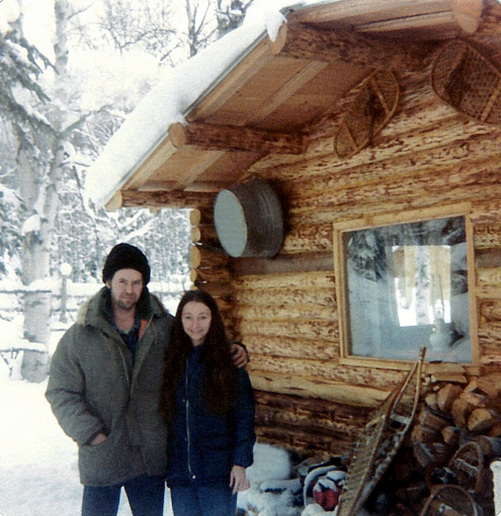
And while most homesteaders only dream of moving to Alaska and “roughing it,” one couple actually did something about it – and they accomplished it prior to cell phones and the Internet.  Back in the early 1980s Bonnie Rose Ward and her husband Samuel moved to a remote location in Alaska where they built a cabin, temporarily lived off of a huge bag of dried beans, and even drank unfiltered lake water.


She wrote a book about her experience, Winds of Skilak, and is this week’s guest on Off The Grid Radio.


Bonnie tells us:


  • How they found a large piece of land in a state where the government owns most of the property.

  • How she used library books to teach herself essential off-grid skills.

  • How they battled isolation in a location where they didn’t see other people for months.

  • How they learned to survive off of the land despite facing total darkness for much of the year.

Finally, Bonnie tells us all about a harrowing run-in with a huge bear that could have killed both of them.


Don’t miss this amazing show if you’ve ever wondered what it would be like to try and tame Alaska’s rugged landscape!


Saturday, January 7, 2017

Airport Shooter Said He Was "Mind Controlled" By A U.S. Intelligence Agency

Submitted by Shepard Ambellas of Intellihub


Airport shooter admits he was ‘mind controlled’ by intelligence agency, eyewitness claims there were at least three other “sleepers,” shooters, with high-powered rifles shooting into crowd


Eyewitness: “There was like at least three people in there still shooting” after the first guy was caught


Demoted and discharged Alaska National Guard private first class and alleged killer of 5 people at the Fort Lauderdale-Hollywood International Airport, Esteban Santiago, 26, may have been mind controlled or mentally ill, according to FBI officials.


Santiago, who was arrested in January and waiting to stand trial in March on criminal charges, recently showed up to an F.B.I. office in Anchorage unannounced seeking help.


Santiago told the F.B.I. he thought he was being mind controlled, possibly by the U.S. government or the C.I.A. and admitted hearing voices, which Santiago said told him to study “extremist materials on the Internet,” the New York Times reports.


Despite the fact that Santiago himself, his girlfriend, and even co-workers warned authorities of his experiences the F.B.I. failed to detain him before his travels to Florida.


“Records show Santiago had three driver’s licenses from Alaska, New York and Puerto Rico,” along with his military I.D., which were all on his person during Friday’s shooting, as reported by a local ABC news affiliate.


Just like a Manchurian candidate, Santiago “walked to the baggage claim area, where witnesses said he pulled the trigger and appeared to be aiming at victims’ heads. Witnesses said Santiago didn’t say a word. He shot his weapon until he ran out of ammunition. He threw the gun down and laid spread-eagle on the ground until a Broward Sheriffs’ Office deputy came up to him.”


USA Today reports:


Yet the troubling episode is now part of an emerging profile of a deeply disturbed man described by his aunt Friday as someone who had “lost his mind.”


Maria Luisa Ruiz of Union City, N.J., said her nephew, who had moved to Alaska for work as a security guard, only recently began to show signs of instability.


“Like a month ago, it was like he lost his mind,” she said “He said he saw things.”


Additionally, it is also important to point out that Former White House Press Secretary Ari Fleischer was present at the airport during the shooting and was live-tweeting details about the situation.


Moreover, an eyewitness to the actual event maintains that after they caught the first guy “there had to be three sleepers [three other shooters].”


“[…] we could see inside literally where the windows — you could see the fire coming from the barrels. There was like at least three people in there still shooting. Like it was like a high-powered rifle, like an AR or something […]. They was non-stop shooting. Like they just started hitting different people inside the crowd. We had to leave. We had to get on the roof.”


* * *


Meanwhile, Reuters reports that attention now turns to the shooter"s motive: Federal investigators will on Saturday pursue all angles in determining the motives behind a mass shooting in which an attacker opened fire in a crowded baggage claim area at Fort Lauderdale"s airport, killing five people. Piro said FBI investigators had not ruled out terrorism as a reason for the attack and were reviewing the suspect"s recent movements. "We will be pursuing every angle to try to determine the motive behind this attack."

Saturday, October 15, 2016

Reporter Says “F**k It” and Promotes Marijuana Legalization, Faces 54 Years in Prison

It was the epic “I quit” seen and heard around the world. The year was 2014 when Charlo Greene, a reporter with KTVA in Alaska, took to the airwaves to tell viewers she was ditching her day job to promote pot legalization with a well-timed “f**k it.” But now Greene is now facing 54 years in prison. Here’s the video, but if you haven’t figured it out yet, it contains an F-bomb. [1]

Greene is facing 14 offenses, including “misconduct involving a controlled substance,” for running the Alaska Cannabis Club. The state legalized the manufacture, sale, and possession of marijuana in 2015, but Greene reportedly failed to get the proper certifications for the club to run retail operations.


Ten of the offenses stem from either the supply or possession of cannabis over 1 ounce on several different dates when detectives visited the club. Each offense carries a maximum sentence of 5 years in prison. [2]


The other 4 offenses resulted from the supply or possession of smaller amounts, which carry the threat of 1 year in prison, each.


The club allowed people to purchase memberships which allowed individuals to make “donations” in exchange for pot. Greene was charged after authorities carried out several raids on her club. [1]


Said Greene:


“It’s almost dizzying when you try to make sense of it. It could literally cost me the rest of my adult life.”


Court records show Greene wasn’t involved in the undercover transactions, but law enforcement said “f**k it” and charged her anyway because the business was registered in her name. The Alaska Cannabis Club and 2 others are facing the penalties because they started operations before regulations were in place.


Cynthia Franklin, director of the state’s alcohol and marijuana control office, explained:


“These people got ahead and said, ‘We’re not going to wait."”


Greene quit her job on September 22, 2014 as she was ending a report on the Alaska Cannabis Club by telling viewers she was the actual owner of the business.


Before walking off-camera, to the shock of viewers and the in-studio news anchor, she said the following words into the camera:


“Now, everything you’ve heard is why I, the actual owner of the Alaska Cannabis Club, will be dedicating all of my energy toward fighting for freedom and fairness, which begins with legalizing marijuana here in Alaska. And as for this job, well—not that I have a choice—but [f–k] it, I quit.” [2]


The dramatic departure made Greene an immediate viral video star. (Who hasn’t wanted to quit a job like that?)


charlogreenefacebook800x430


From that point on, Greene positioned herself as a marijuana advocate, helping to make cannabis accessible in Alaska after it became the 3rd state in the U.S. to legalize recreational marijuana. [3]


Greene has described her case as a “modern-day lynching,” raising questions about the ongoing – and failed – war on drugs, and the impact her case could have on law-enforcement implications in other states where legalization is being considered.


Jennifer Egbe, Greene’s sister, who helped out at the club, said:


“The fact that they were watching us for so long, I kind of felt violated. I was really just heartbroken. I never assumed it would go this far.”


Charlo Greene – legal name Charlene Egbe – has pleaded not guilty. A trial is expected to be held in the following months.


Sources:


[1] Fox News


[2] The Independent


[3] The Root


SFGate


Storable Food


About Julie Fidler:


Author Image
Julie Fidler is a freelance writer, legal blogger, and the author of Adventures in Holy Matrimony: For Better or the Absolute Worst. She lives in Pennsylvania with her husband and two ridiculously spoiled cats. She occasionally pontificates on her blog.