Showing posts with label Missile. Show all posts

Tuesday, January 23, 2018

North Korea Mocks The US: ‘Americans Are Trembling With Fear’

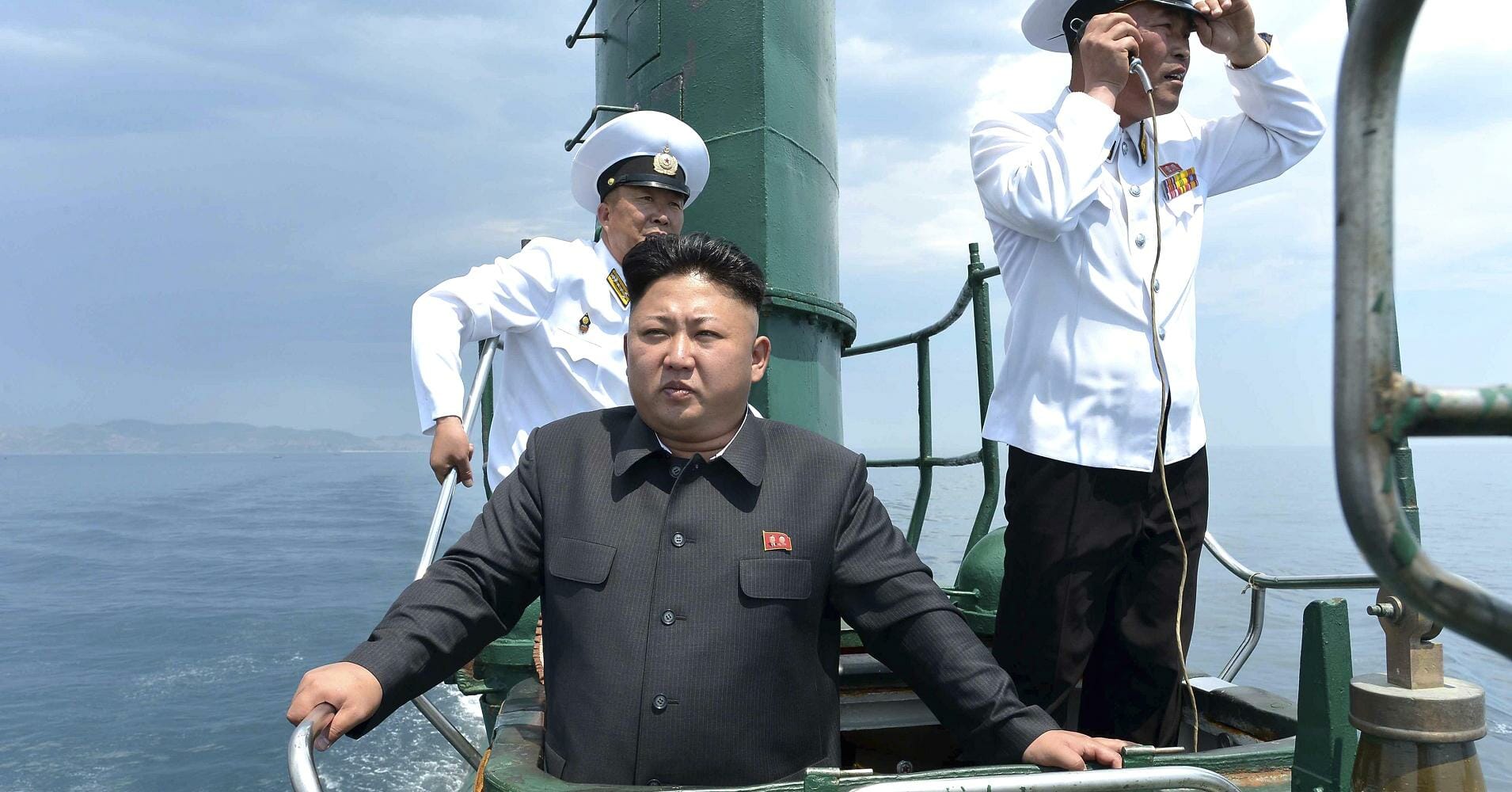
kim-jong-un


North Korea has pushed tensions to a new high in their recent mocking of the United States over the false missile alert accidentally issued by Hawaii. The tyrannical regime claims that Americans are “trembling with fear” in the wake of Hawaii’s mistake.


In case you haven’t heard by now, the state of Hawaii accidentally sent out an emergency alert which stated there was an incoming missile. Hawaiians were seen shoving their children in storm drains and in a state of panic until they were assured that the warning was a mistake. And now, North Korea is mocking the state of fear experienced by those living in the island state.


According to Fox News, in one of its typically bombastic statements, the state-run Korean Central News Agency scoffed at the U.S. for the January 13 alert Hawaii’s Emergency Management Agency accidentally sent out to residents stating a ballistic missile was heading to the island.


The U.S.…is now on jitters, being seized by ‘fear of the north’s missiles.’ A ballistic missile threat warning was released throughout Hawaii, U.S. by a mistake recently,” Tuesday’s statement said. “It is none other than the U.S. which is trembling with fear, stricken by extreme horror and pressure even by a single message and by a flash in the sky.” 


The mindset of the panic-stricken Americans is that the higher the level of confrontation with the DPRK [Democratic People’s Republic of Korea], the world-level nuclear power and a rocket power, the higher the level of disaster to be inflicted upon them,” the statement said.


The statement from North Korea also warned about a “higher level of disaster” that would be inflicted on Americans if officials within the United States engaged in any further confrontation with Kim Jong Un’s dictatorial regime.


North Korea is known for their outlandish statements.  They have once said that Donald Trump is sentenced to death for hurting the dignity of the supreme leadership of the DPRK. 


Tuesday, January 16, 2018

Japanese Public Broadcaster NHK Issues False Alarm Over North Korean Missile Launch

This report was originally published by Tyler Durden at Zero Hedge


emp-northkorea


It’s deja vu, all over again.


Just four days after residents of Hawaii lived through 38 minutes of doomsday hell, after a false public broadcast alarm announced that a ballistic missile launch was headed for the island, only to reverse and announce later it was a mistake, moments ago Japan’s National broadcaster NHK’s app issued a false J-Alert to phones over a North Korean missile launch at 6:55 p.m. Tuesday evening local time.


The message, received by phone users with the NHK app installed on their devices, read: “NHK news alert. North Korea likely to have launched missile. The government J alert: evacuate inside the building or underground. “


It then promptly corrected the error just 5 minutes later, at around 7 p.m.


After the false alert, NHK issued an on-air apology on Tuesday evening local time, saying “the news alert sent earlier about NK missile was a mistake. No government J alert was issued.”


“Around 6:55pm earlier we reported on the NHK’s news site and NHK’s news disaster prevention application ‘Pattern of North Korean missile launch’ but this was incorrectly issued. J alert has not appeared. I must sincerely apologize,” the news outlet wrote.


The bizarre coincidence of two false alarms announcing the start of nuclear war is certainly suspicious.


The false alert came on the same day as the US and Canada planned to host talks in Vancouver over the crisis on the Korean Peninsula after a year of missile tests and threats from the North.


As a reminder, on Saturday, an emergency alert notification sent out to residents of Hawaii warning of an incoming “ballistic missile threat” turned out to be a false alarm. The error was blamed on an employee who “pushed the wrong button.” “BALLISTIC MISSILE THREAT INBOUND TO HAWAII. SEEK IMMEDIATE SHELTER. THIS IS NOT A DRILL,” the emergency alert read.


The warning went out on television and radio as well as cell phones, according to Hawaii Gov. David Ige, sparking panic amongst some residents. A second emergency alert was sent to phones in Hawaii 38 minutes after the initial message confirming the false alarm.

Wednesday, January 3, 2018

Psychic Makes 2018 Predictions: ‘North Korea Will Succeed In Sending A Missile’

rowlen


Self-described psychic Susan Rowlen released a video detailing her predictions for the coming year. One of her most alarming predictions is that she says North Korea will succeed in sending a missile to the US at some point in the coming year.


But don’t fret just yet. Within the first 30 seconds of Rowlen’s video, she admits that she was wrong about some of her 2017 predictions. She says that about 80% of her predictions for last year did come true though.


So what exactly does psychic Rowlen see occurring during the remainder of this year? “Interesting enough, I wanna start off by talking about the tax reform,” she begins. “There’s a lot of hype and there’s a lot of communication of this and that, people going back and forth, yay or nay, some people love the tax form some people don’t. I am here not to take sides, OK? But I am gonna just tell you what I think,” she says.


“The tax reform with the tax rate going for corporations to 21%, that versus what they’ve been paying at the 35%. Now, what is it gonna do to the economy? I actually think it’s really going to help the economy. The reason I see this is because it is going to leave room for job growth. When the corporations can save money on taxes, they can actually spend more time on the employment and growing their business,” Rowlen says.  At least we have a psychic who understands the basic fundamentals of economics.


Rowlen has some bad news for the retailers, however. They will do OK, but they won’t flourish. The in-store purchases will dwindle. Of course, this has been going on for years, as more use the internet to do their shopping. Then she moves onto talking about the stock market and how she predicted 2017 to be a year of unhindered growth. “Second to third quarter is where I see little tumbles, little peaks,” Rowlen said of 2018’s stock market forecast. But she gets more ominous soon after:


The stock market’s gone as high as it can go. So, it’s going to kind of fade back and forth, second to third quarter. So I do want to say that. So, but do I see anything drastic? Well, if anything ever happened to Donald Trump, that’s where you would see a real dive to the stock market.”


Rowlen then briefly talks about the real estate market suffering. Before she moves onto the allegations of sexual harassment that have been plaguing politicians and celebrities. She sees a male figure come forward to admit he was sexually harassed setting off a chain of events which will allow men to also be more comfortable with coming forward also. She rambles off a few other predictions and says to recycle before she speaks about 2017 and Donald Trump.


“And I’m gonna be really honest with you. I said this in 2017 and I’m gonna say it again. More people that are gonna be dropping from his cabinet and as like I go through underwear…he’s gonna have a lot of people, and let’s face it, he’s had so many that I’ve even done my homework and let’s see…I’ve got pages and pages of all the people in his cabinet that have left or been fired or both. So, the point is, 2018, is it finally ceasing does he finally have the caninet of his dreams? The answer is a big fat ‘no’.”


“Should we worry about North Korea? Absolutley, yes! This man is very unstable and yes, he’s out to get the US…North Korea, I think, is going to actually succeed in sending some sort of missile.”


“Everyone has asked me, do I see president Trump impeached? My answer is no.  I don’t see it. I try to get a vision that I see him leaving the White House and I do not see this man leaving the White House. So for those of you that love him, you’ll be very happy with that and for those of you that don’t like him, you won’t be very happy with that answer.”


So, there are a psychic’s 2018 predictions in a nutshell.

Tuesday, November 28, 2017

Is Poland"s Patriot Missile Purchase A Paid Bribe To America?

Authored by Andrew Korybko via Oriental Review,


Poland announced that it will purchase $10.5 billion worth of anti-air Patriot missiles from the US.


Technically, the official news event is that the State Department approved the possible sale and that Congress has 30 days to block it, but for all intents and purposes it’s widely considered that the deal will go through as planned. This means that the Central European country will strengthen its frontline position as NATO’s anti-Russian vanguard, crucially functioning as an indispensable component of the missile defense shield that the US is constructing around Russia’s borders. In and of itself, the Patriot system is presently incapable of neutralizing Russia’s nuclear strike capabilities, especially given the hypersonic missile advancements that Moscow has undertaken over the past couple of years in invalidating this strategy, but it worryingly sets the precedent that further missile-related infrastructure could one day be deployed on Russia’s borders.


The latent threat that this represents could also see Poland acquiring cruise missiles in violation of the Intermediate-Range Nuclear Forces Treaty, or INF, whether to augment its ground-based systems or its planned submarine ones in the future. Per the former, cruise missiles could be deployed to Poland under the guise of being Patriot anti-missile munitions, with Moscow being unable to adequately ascertain whether Warsaw is building up its defensive or offensive strike capabilities. This will likely contribute to the spiraling security dilemma between Russia and NATO, and Russia and Poland in particular, though with the inadvertent consequence being that Poland is essentially paying billions of dollars to improve its anti-Russian “soft power” credentials among its own population and the West at large.


This is very important for the ruling Law and Justice Party, popularly known by its Polish abbreviation PiS, because party leader and de-facto “grey cardinal” Jaroslaw Kaczynski has staked his reputation on being the West’s most vociferous Russophobe, partly in a bid to provoke more nationalist sentiment among his base and therefore distract from some domestic shortcomings. In addition, Warsaw shrewdly believes that its anti-Russian crusade is necessary in order to retain Washington’s support amidst Brussels and Berlin’s “EuroLiberal” opposition to the ruling authorities’ revolutionary “EuroRealism”, believing whether rightly or wrongly that a strong stand against Moscow can help PiS remain in favor with the EU’s American overlord and thereby preserve its hold on power in the face of Color Revolutionary threats.


As such, the costly $10.5 billion Patriot anti-missile system deal acquires self-interested strategic value for Poland because it allows the conservative government to “buy off” American support for its “EuroRealist” agenda, which also aligns with Trump’s ideological vision, but it dangerously risks provoking an uncontrollable orgy of nationalism at home that could easily spiral into its own set of problems.


Furthermore, Poland is reducing any realistic chance at normalizing ties with Russia after purchasing this weapons system, suggesting that the American-provoked “Cold War” between these two civilizationally similar Slavic neighbors will continue into the foreseeable future and remain a mainstay of continental geopolitics to the detriment of both states’ genuine national interests and the overall dynamics of the emerging Multipolar World Order.


Monday, November 27, 2017

Nasdaq Slammed As Japanese Media Signals North Korea "Preparing Toward Ballistic Missile Launch"

Update: While the initial reaction to the headlinews were muted, once the story hit Bloomberg wires, USDJPY snapped lower and gold jumped...


And as USDJPY fades, so stocks drop (S&P and Nasdaq now red)...


*  *  *


Earlier today, Russia"s deputy foreign minister Igor Morgulov warned that while there is a latent danger of an "apocalyptic scenario of developments" on the Korean Peninsula, he brought attention to the apparent "denuclearization" of the Kim regime, pointing out that North Korea’s last provocation was on Sept. 15, when it fired its second missile over Japan in as many months. The 73-day pause is the longest since a 116-day break between October 2016 and February.


That may soon be changing because according to a tweet from Michiyo Ishida, the Tokyo Bureau Chief for Channel News Asia, the Japanese government has deteced a "signal from #NorthKorea on preparation towards a ballistic missile launch according to local media"


The news has yet to be caught by the major newswires, and as a result there has been no response in either the KRW or JPY crosses, however keep an eye on this story should there be confirmation over the course of the trading day. There is also the possibility that this is merely a trial balloon by Japan"s press meant to incite a nationalist mood and push through Abe"s militant agenda.


Tuesday, November 21, 2017

North Korea’s ‘Unpredictability’ Scares Winter Olympics Visitors

winterolympics


North Korea’s antics are having an effect on the Olympics.  With less than three months before the Winter Olympics open in Pyeongchang, South Korea, the Games are struggling to draw visitors from home and abroad, largely because of fears about the secretive and unpredictable neighbor to the North just 50 miles away.


As of November 16, organizers say they’ve hit just 41% of their sales target of 1.06 million tickets, with sales in South Korea even weaker than those by international tourists, according to USA Today.  Anbritt Stengele, the founder of Sports Traveler, a Chicago-based travel agency, said she’s never seen such a sluggish market.


“The interest level is very low for this Olympics,” said Stengele. “We had Sochi (Russia) in 2014, and that interest level was lower than Vancouver (in 2010). But this one is even lower than Sochi. I would just classify it as extremely light interest. Sales have been stagnant.” She and other travel agents say there are a few factors that are affecting interest in the Winter Games, and a good many are from fears about North Korea aggression.


Stengele said North Korea is a big factor, as global tensions are running high over threats exchanged by President Trump and North Korean leader Kim Jong Un. Kim has conducted a record number of ballistic missile tests this year, as well as a test of its most powerful nuclear weapon to date. Both leaders have threatened to annihilate the others’ country if they order a first strike.


North Korea also has a massive artillery aimed directly at South Korea, and that’s unsettling to travelers who wish to see the games.  Stengele also said she’s heard concerns about whether travel insurance will cover cancellations in the event of a “disruption” by North Korea and the lack of accommodation options such as name-brand international hotel chains at the venue locations.


It isn’t just American tourists who are cutting their travels to South Korea because of fears that the chubby dictator in North Korea could start launching missiles anytime. South Korea has been suffering from a massive drop in visitors from China, in large part because of  the deployment of a U.S. anti-missile defense system last May that has angered the communist government in Beijing

Friday, October 27, 2017

Putin Personally Launches 4 ICBMs During Russian Strategic Nuclear Force Drills

While North Korea hasn"t fired a ballistic missile since mid-September over alleged concerns of further retaliation from China, Russia has no such qualms, and on Thursday night, Russian President Vladimir Putin took part in strategic nuclear forces command and control drills, presidential spokesman Dmitry Peskov said on Friday. "The exercise practiced interaction of the Strategic Missile Force, nuclear-powered submarines of the Northern and Pacific Fleets and long-range aviation of Russia’s."


According to Tass, Putin then personally launched four ballistic missiles: "The supreme commander-in-chief made launches of four ballistic missiles," Peskov said.


Russia’s Defense Ministry reported on Thursday that a planned training exercise was held on that day to practice command and control of the Russian Strategic Nuclear Forces.


During the exercise, three intercontinental ballistic missiles were launched from the nuclear-powered submarines while one missile was test-fired from the Plesetsk cosmodrome in north Russia.


All the practice targets were successfully destroyed.


In addition to the ICBM test launches, the Russian Defense Ministry reported that the exercise involved strategic Tupolev Tu-160, Tu-95MS and Tu-22M3 bombers, which took off from their airbases Ukrainka, Engels and Shaikovka, and launched airborne cruise missiles against ground targets at the practice ranges Kura (Kamchatka), Pemboi (the Republic of Komi) and Terekta (Kazakhstan).


"The training assignments were accomplished in full and all the practice targets were successfully destroyed," the Defense Ministry said.


The exercise was held in accordance with the training plan of the Russian Armed Forces, the ministry said.


Friday, September 22, 2017

Are We Really Capable Of Shooting Down North Korean Missiles?

Authored by Daisy Luther via The Organic Prepper blog,


According to some analysts, Americans may be overly confident in our military’s ability to shoot down North Korean missiles if the country were to attempt to strike.


Maybe the reason we haven’t shot down North Korea’s test missiles is that we can’t. While we all certainly hope that our military would be able to successfully defend the country against incoming missiles, we need to be prepared for any possibility.


According to an article by Joe Cirincione of Defense One, the reason we don’t shoot down North Korea’s missiles when they fire them over Japan is because…


We don’t have the capability.


Joe Cirincione is the president of Ploughshares Fund and the author of several books about nuclear weapons, including Nuclear Nightmares: Securing the World Before It Is Too Late.


According to Cirincione, when Japanese Chief Cabinet Secretary Yoshihide Suga said, “We didn’t intercept it because no damage to Japanese territory was expected,” this was only partially true. It wasn’t a threat, but they didn’t have the capability to shoot it down due to the altitude.


Neither Japan nor the United States could have intercepted the missile. None of the theater ballistic missile defense weapons in existence can reach that high. It is hundreds of kilometers too high for the Aegis interceptors deployed on Navy ships off Japan. Even higher for the THAAD systems in South Korea and Guam. Way too high for the Patriot systems in Japan, which engage largely within the atmosphere.


All of these are basically designed to hit a missile in the post-mid-course or terminal phase, when it is on its way down, coming more or less straight at the defending system. Patriot is meant to protect relatively small areas such as ports or air bases; THAADdefends a larger area; the advanced Aegis system theoretically could defend thousands of square kilometers. (source)


Well, that’s unsettling. So, what if we engaged the missile before it reached that high?


Cirincione says that too is unlikely to be successful.


There is almost no chance of hitting a North Korean missile on its way up unless an Aegis ship was deployed very close to the launch point, perhaps in North Korean waters.


Even then, it would have to chase the missile, a race it is unlikely to win. In the only one or two minutes of warning time any system would have, the probability of a successful engagement drops close to zero. (source)


But don’t take Cirincione’s word for it. In his article, he cited other experts who echo his sentiments.  Jonathon McDowell, an astronomer at the Harvard-Smithsonian Center for Astrophysics, tweeted in response to someone questioning why we didn’t shoot down NK’s missiles:


As well, he quoted Jerry Doyle, deputy business editor for Asia at The New York Times:


“It’s actually virtually impossible to shoot down a missile on the way up. Midcourse or terminal are the only places you have a shot.” (source)


While I’m not sure how a business editor has special knowledge of our nuclear defense system, all of these sentiments certainly raise the question:


IF WE HAVE THE ABILITY TO SHOOT DOWN NORTH KOREAN MISSILES, WHY HAVEN’T WE DONE SO?


If we attempted to shoot down a North Korean missile and missed, it would be a major propaganda coup for Kim Jong Un.


When our military practiced this, they managed to shoot down 2 out of 3 missiles.


A lot of people are putting a great deal of hope in American missile defense systems, but it’s important to note that a couple of weeks ago in a test over the Pacific, our defense system failed. This was subsequent to a previous success.


A medium-range ballistic missile was launched from a test range in Hawaii at 7:20 pm local time, but the interceptor missile fired at sea from USS John Paul Jones, a guided-missile destroyer, missed the target.


“A planned intercept was not achieved,” the statement said. (source)


That’s disconcerting. After the failed test, there was a third test which was successful, but it’s very important to realize that our military isn’t infallible. If our rate is 2 out of 3 missiles shot down, that means that 1 out of 3 still gets through and wreaks destruction.


So, could we actually shoot down a missile “gift package” as Kim Jong Un creepily calls it?


The unsettling answer is, maybe.


Maybe, if we were expecting it, if the conditions were right, if we were close enough, if it was low enough, if we were in a perfect position.


There are way too many “ifs” in there for me to feel fully confident in our ability to shoot down North Korean missiles before they strike the mainland, which experts now believe they have the ability to reach. We also know that North Korea also possesses the ability to create hydrogen bombs. And as I’ve written before, if you believe this is all a big set up for a false flag event, that would hardly matter to those nearby if such a thing were to happen.


If you aren’t prepped for the potential of a nuclear strike, it’s time to start learning what you need to do. (This article and this class can help you.)

Tuesday, September 5, 2017

Putting North Korea's "Bomb Test" In Context

On Sunday, North Korea tested its most powerful nuclear bomb yet, detonating a device that caused a 6.3 magnitude tremor.


The weapon"s sheer power has caused alarm but the fact that Pyongyang is claiming it can be fitted inside an intercontinental ballistic missile is sending shockwaves through Asia and beyond.


Using data from the Center for Strategic and International Studies, Statista"s Niall McCarthy presents the following infographic provides an overview of the strength of all North Korean nuclear tests since 2006.


Infographic: North Korea Tests Its Most Powerful Bomb Yet | Statista


You will find more statistics at Statista


Sunday"s detonation was estimated to have been 100 kilotons or more, far more powerful than previous tests and the atomic bombs dropped on Hiroshima and Nagasaki. How does it compare with the warheads inside current U.S. and Russian intercontinental ballistic missiles?


According to the Economist, the U.S. Trident and Russian SS ballistic missiles have a yield of 455 and 800 kilotons respectively.

Wednesday, August 30, 2017

North Korea Fires Missile Over Japan; China Warns Situation ‘Approaching A Crisis’

North Korea Fires Missile Over Japan; China Warns Situation ‘Approaching A Crisis’


The North Korean government deliberately fired a missile over Japan Monday to wreak havoc and create divisions between America and its allies, experts say.


The ballistic missile flew over Japan and landed in the Pacific.


“If North Korea had launched the missile to the south, the U.S. might have viewed it as a considerable provocation and responded accordingly,” Japanese foreign minister Taro Kono told reporters in Tokyo.


Instead, the North Koreans took an action that likely would not provoke a confrontation. The missile was identified as an intermediate-range Hwasong-12, which would be capable of hitting the U.S. territory of Guam.


Are Your Prepared For A Downed Grid? Get Backup Electricity Today!


China foreign ministry spokeswoman Hua Chunying said the situation was “at a tipping point, approaching a crisis.”


The missile test was “perfectly calibrated to create political mischief,” Stephen Haggard, a Korea Expert at the University of California at San Diego, told The Washington Post.


“The launch shows how Kim Jong Un is weirdly conservative, calibrating tests so that they are difficult to counter, flying just beneath the radar of a required kinetic response,” Haggard said.


Others agreed.


“This is not the action of a country that is interested in showing restraint or in creating a glide-path to dialogue, at least not on our terms,” said James Schoff of the Carnegie Endowment for International Peace.


The North Koreans fired missiles over Japan in 1998 and 2009, although those were satellite launches that were announced beforehand.


“In a way, it’s kind of a trial balloon,” Michael Elleman, a missile expert at the International Institute for Strategic Studies, told The Post. “If we overfly Japan, what happens? If the blowback isn’t too significant, they will feel more comfortable with launching a Hwasong-14 to a good distance to validate its performance on a normal trajectory.”


The Hwasong-14 is a larger missile capable of hitting U.S. soil.


“A missile launch across Japan is an outrageous act that poses an unprecedented, grave and serious threat, and significantly undermines the peace and security of the region,” said Japanese Prime Minister Shinzo Abe.


What do you think the Trump administration should do? Share your thoughts in the section below:

Sunday, August 20, 2017

Discounting North Korea’s ICBM Capability

Discounting North Korea’s ICBM Capability | north-korea-missile-test-1024x683 | Military Military Weapons Sleuth Journal Special Interests World News [image: Reuters/KCNA]Based on its ballistic missile tests so far, including its most recent ones last month, Russia believes the DPRK hasn’t yet achieved ICBM capability.


Noted ballistic missile/rocket expert Theodore Postol partly agrees, along with German rocket experts Markus Schiller and Robert Schmucker.


In an analysis for the Bulletin of the Atomic Scientists, they called Pyongyang’s Hwasong-14 ballistic missile, tested twice in July “a ‘sub-level’ ICBM that will not be able to deliver nuclear warheads to the continental United States.”


“Our analysis shows that the current variant of the Hwasong-14 may not even be capable of delivering a first-generation nuclear warhead to Anchorage, Alaska, although such a possibility cannot be categorically ruled out.”


“But even if North Korea is now capable of fabricating a relatively light-weight, ‘miniaturized’ atomic bomb that can survive the extreme reentry environments of long-range rocket delivery, it will, with certainty, not be able to deliver such an atomic bomb to the lower 48 states of the United States with the rocket tested on July 3 and July 28.”


Postal, Schiller and Schmucker called the DPRK’s July tests “a carefully choreographed deception…to create a false impression that the Hwasong-14 is a near-ICBM that poses a nuclear threat to the continental US.”


While it’s unable to manufacture sophisticated rocket components so far, the skill and ingenuity of its scientists in using Soviet Russia-era rocket motor components “has grown very substantially,” they said.


The July tests carried reduced payloads – able to reach a much higher altitude than possible if carrying a nuclear warhead and protective heat shield.


Pyongyang achieved its objective, creating the false impression of being able to strike US territory – what it’s unable to do based on the authors’ analysis.


Yet technological progress it’s made indicates it’s heading toward eventually achieving what it can’t now accomplish.


The authors cautioned that no one outside North Korea has reliable information on the characteristics of its nuclear weapons designs – including whether miniaturization was achieved to permit their mounting on a ballistic missile, despite suggestions otherwise.


According to the authors, we’re “left to speculate (on Pyongyang’s nuclear expertise) based on intelligence information that we have from other sources and on an understanding of the very significant technical problems of design and implementation that must be solved to be able to build and deliver atomic bombs by ICBM.”


Based on available information, they estimate Pyongyang could only deliver a nuclear warhead as far as Anchorage, Alaska weighing 500 – 550 kg.


To reach Seattle, it could weigh no more than 300 kg. They believe “an advanced North Korean weaponized atomic bomb would be unlikely to weigh less than 500 to 600 kilograms.”


“So it is entirely possible that this variant of the Hwasong-14 (tested in July) will not be able to deliver an atomic bomb to Anchorage, Alaska,” they said.


If the Hwasong-14 upper stage was “fitted with the more capable vernier motors from the SS-N-6 submarine launched ballistic missile (known in Russia as the R-27), it could potentially deliver an atomic bomb to Anchorage, if the bomb weighed less than between 650 and 750 kg,” according to the authors.


“The same upgraded variant of the Hwasong-14 could only deliver an atomic bomb to Seattle if the bomb weighed less than between 400 and 450 kg,” they added.


Regardless of current or likely more advanced DPRK capability later on, the nation’s history shows it threatens no other nations.


Its nuclear and ballistic missile weapons are solely for defense – deterrents against feared US aggression.


The real menace lies in Washington, not Pyongyang.

Tuesday, August 1, 2017

North Korea Quietly Testing Submarine Nuclear Missile System In ‘Highly Unusual’ Activity

North Korea Quietly Testing Submarine Nuclear Missile System In ‘Highly Unusual’ Activity


North Korea is testing a submarine missile system in what one defense official called “highly unusual and unprecedented levels” of activity.


Four tests of a cold-ejection launch system for submarine-based ballistic missiles have been carried out at the Sinpo Naval Shipyard this year, with the latest one taking place in recent days, officials told CNN.


A cold-launch system prevents the missile’s engine from burning the submarine. With such a system, the missile is propelled away from the submarine before the engine starts.


Are Your Prepared For A Downed Grid? Get Backup Electricity Today!


“Achieving a successful cold-launch ejection test, even from land-based tubes, is a critical step forward in making an operational missile,” defense analyst Michael Gatling told The Telegraph. “The whole point of putting missiles into a stealthy platform like a submarine is to achieve tactical surprise, and this moves closer to that.”


Just last week, North Korea tested an intercontinental ballistic missile (ICBM) that experts say likely could have reached Denver or Chicago if it had been fired in that direction.


Strangely enough, North Korea has the world’s largest submarine fleet with 76 ships, according to Global Firepower. Most of those vessels are small diesel-powered submarines not capable of hauling missiles, but all it would take is one nuclear submarine to cross the Pacific to kill several million Americans.


Meanwhile, a North Korean submarine equipped with 14 torpedoes and up to 20 mines conducted tests for a week in July off the coast of the Korean peninsula. Officials with the US-Korea Institute at Johns Hopkins University told The Telegraph that the latest cold-launch test “most likely is preparations for a test in the near future of an updated Pukguksong-1 submarine-launched ballistic missile or a potentially newer system.”


North Korean launched its first submarine-launched ballistic missile (SLBM) in August 2016.


What do you think the Trump administration should do? Share your thoughts in the section below:

Saturday, July 29, 2017

How Much of a Nuclear Threat is North Korea Really?

How Much of a Nuclear Threat is North Korea Really? | How-much-of-a-nuclear-threat-is-North-Korea | Military Weapons Special Interests US News War Propaganda


We all like to scoff at that crazy little dictator, Kim Jong Un, who is a walking caricature, putting himself on the cover of a magazine as the sexiest man alive and talking smack like a WWF champ. But, in all seriousness, is North Korea actually a threat?


Unfortunately, it looks like the answer to that question is yes…and they’re turning into a bigger one each year.


Despite the buffoonery of their Dear Leader, the threat of North Korea is growing rapidly, according to the US Intelligence community. When prepping for a nuclear strike becomes the officially recommended course of action, it is time to pay attention.


(What you do in the minutes after a detonation could save your life. Learn what to do in the event of a nuclear strike here.)


They have successfully tested an ICBM that could carry a nuke.


The US military Defense Intelligence Agency says that by sometime in 2018, North Korea could have an intercontinental ballistic missile (ICBM) with the ability to transport a nuclear warhead.


They’re basing this on a recent successful test of such an ICBM.


“This test, and its impact on our assessments, highlight the threat that North Korea’s nuclear and ballistic missile programs pose to the United States, to our allies in the region, and to the whole world,” the DNI’s National Intelligence Manager for East Asia, Scott Bray, told CBS News on Tuesday, adding that the U.S. intelligence community was “closely monitoring the expanding threat from North Korea.” (source)


Currently, Alaska, part of Canada, and Hawaii are within range.


Right now, experts don’t believe that North Korea could transport a nuclear warhead to the US mainland, however, Alaska and Hawaii are at risk. Hawaii would be a particularly valuable target, as it is the home of the US Pacific Command.


This image shows the current reach of different missiles that we know they possess.


How Much of a Nuclear Threat is North Korea Really? | north-korea-missile-threat | Military Weapons Special Interests US News War Propaganda


Image Credit


However, they’re making rapid progress, and experts believe that by sometime in 2018, they’ll have the capability of striking the West Coast, with its large population centers in Seattle, Los Angeles, Portland, and San Francisco.


The US State Department has advised American citizens against visiting North Korea.


In the immortal words of my daughters in their pre-teen years, “Duh.”


Although I personally can’t understand why anyone would want to travel to North Korea, especially after what happened to that poor young man, Otto Warmbier, it appears that thousands of people vacation there every year. 95% of the visitors are from China and about 75% of the visitors are male. About 800 Americans per year make the trip.


Recently, the State Department issued a travel warning:


The Department of State strongly warns U.S. citizens not to travel to North Korea/the Democratic People’s Republic of Korea (DPRK). The Department of State strongly warns U.S. citizens not to travel to North Korea/the Democratic People’s Republic of Korea (DPRK). U.S. citizens in the DPRK are at serious risk of arrest and long-term detention under North Korea’s system of law enforcement. This system imposes unduly harsh sentences for actions that would not be considered crimes in the United States and threatens U.S. citizen detainees with being treated in accordance with “wartime law of the DPRK.” Since the United States does not maintain diplomatic or consular relations with North Korea, the U.S. government has no means to provide normal consular services to U.S. citizens in North Korea. This notice updates the number of U.S. citizens who have been detained in North Korea and replaces the Travel Warning dated February 7, 2017. (source)


Being part of an official tour won’t help Americans if they are found with anything in their possession that is critical of North Korea, and there is no consulate there to rescue you. Some of the things that are illegal in North Korea and punishable by labor camps or death are:


  • Showing disrespect to the country’s former leaders, Kim Il Sung or Kim Jong Il, or for the country’s current leader, Kim Jong Un, including but not limited to tampering with or mishandling materials bearing their names or images;

  • Entering North Korea without proper travel documentation;

  • Possessing material that is in any way critical of the DPRK government;

  • Proselytizing or carrying out religious activities, including activities that may be construed as such, like leaving behind religious materials;

  • Engaging in unsanctioned political activities;

  • Traveling without authorization, even for short distances;

  • Having unauthorized interaction with the local population;

  • Exchanging currency with an unauthorized vendor;

  • Taking unauthorized photographs;

  • Bringing pornography into the country;

  • Shopping at stores not designated for foreigners; and

  • Removing or tampering with political slogans and signs or pictures of political leaders.

(source)


Personally, I’d rather go just about anywhere on the planet than North Korea, but that’s just me.


What preparations are being made for a potential attack?


When prepping becomes official, it’s time to pay attention.


First, the US recently tested defense technology and successfully shot down a simulated, incoming intermediate-range ballistic missile (IRBM) similar to the ones used by North Korea. The simulation took place over the Pacific Ocean in July:


The test was the first-ever of the Terminal High Altitude Area Defense (THAAD) system against an incoming IRBM, which experts say is a faster and more difficult target to hit than shorter-range missiles.


The US Missile Defense Agency said the IRBM was designed to behave similarly to the kinds of missiles that could threaten the US.


“The successful demonstration of THAAD against an IRBM-range missile threat bolsters the country’s defensive capability against developing missile threats in North Korea and other countries,” the Missile Defense Agency said in a statement. (source)


Finding themselves particularly in the crosshairs of North Korea, Hawaii has been openly working to prepare citizens for the potential of an attack. They’ll be testing an attack warning system in November.


A “guidance summary” from the Hawaii Emergency Management Agency says residents will be alerted of nuclear detonation through siren alarms and flashing white lights. An Emergency Alert System will broadcast over television and radio frequencies as well. (source)


The state has released official guidelines on surviving a potential nuclear attack. (This is useful information no matter where you live.)


How Much of a Nuclear Threat is North Korea Really? | HI-EMA-guidance-analysis-nuclear-detonation-JUN-2017-1024x797 | Military Weapons Special Interests US News War Propaganda


Matthew LoPresti, a legislator in Hawaii has been a strong advocate of the preparations.


“People think everybody would perish, but that is not the case. It would be a mass casualty event, but most people would survive. If you don’t take steps, more people will lose their lives.” (source)


A dear friend of mine living in Hawaii recently attended a public meeting informing citizens about getting prepared for the potential of an attack. Citizens were told that an official response could take a while, and to plan to be completely on their own for up to a month. (Gosh, sounds familiar, right?) These meetings have been taking place all over the state as the local government urges residents to be prepared for a disaster, a shut-down of services, and a complete halt to any merchandise of food being shipped into the islands.


They aren’t the only ones preparing. Los Angeles California is also making preparations for the potential of an attack, even though the technology is not expected to be advanced enough to reach them right now.


Fleets of big black trucks, harbor boats and aircraft, equipped with radiation sensors and operated by specially trained law enforcement teams, are ready to swing into action in Los Angeles for a catastrophe that nobody even wants to think about: a North Korean nuclear attack…


“We monitor events all over the world and assess whether there is something that could impact us here,” said Capt. Leonard McCray, commander of the emergency operations bureau at the Los Angeles County Sheriff’s Department. “North Korea is clearly one of them.”


As tension rises, the inevitable question is: How well prepared are Los Angeles and other U.S. cities for a nuclear strike? The answer is somewhat unexpected. After two decades of fighting terrorism, law enforcement agencies and the federal government today are better equipped and trained to handle the aftermath of a limited nuclear attack than they ever were during the Cold War. Yet generations of Americans have grown up without learning how to protect themselves in the aftermath of a detonation. (source)


Unsurprisingly, some people object to preparing citizens for a nuclear attack.


There are several reasons that some squeaky wheels object to these wise preparations.


David Wright, a weapons expert at the Union of Concerned Scientists, says that civil defense preparations are sending the wrong message to Kim Jong Un. And Jeffrey Lewis, a nuclear weapons analyst with the James Martin Center for Nonproliferation Studies in Monterey, Calif., thinks that the Venture County Sheriff’s Department may be overreacting.


“He’s ruthless, but he’s not crazy. There’s reason to be cautious. But it’s not a reason to start digging bomb shelters.” (source)


Hawaii’s Tourism Authority is likewise unimpressed. Charlene Chan, their spokeswoman, said in a statement:


“Everyone’s safety in Hawaii is always our top priority. However, we also know from speaking to our tourism industry partners that if reports are misinterpreted about the state’s need to prepare for an attack, this could lead to travelers and groups staying away from Hawaii. The effect of such a downturn would ultimately be felt by residents who rely on tourism’s success for their livelihood.” (source)


According to Chan, they shouldn’t be worried because an attack by North Korea “is a very remote possibility at this time.”


Finally, prepping becomes official.


I applaud the preparations being made. While the reason behind it is terrible, it’s always a positive sign when people realize that they can’t always depend on the government to save them.


This article explains what to do in the event of a nuclear strike. As stressed above, if you aren’t at Ground Zero, it’s entirely survivable and it isn’t going to turn into some nuclear winter in which your surviving neighbors decide which family to cook for dinner, ala The Road.


We can scoff at North Korea as much as we want, but the fact remains that their technology is advancing extremely rapidly. Their tests are becoming more successful. And this article doesn’t even touch on the potential of an EMP, which, if detonated over the middle of the US would have a potentially devastating effect for a long period of time.


While North Korea has to know that they’ll lose in the event of a war, the vibe I get from Kim Jong Un is that he would be delighted to cause as much damage as possible on his way out.


Think about the psychology of someone who knows he is going to die anyway. When they’ve got nothing left to lose, people become dangerous indeed.


The threat is real.

Wednesday, July 5, 2017

N. Korea Fires Its First ICBM; Can Reach Alaska; U.S. & S. Korea Respond With Missile Tests; China Warns

N. Korea Fires Its First ICBM; Can Reach Alaska; U.S. & S. Korea Respond With Missile Tests; China Warns


North Korea test fired its first intercontinental ballistic missile (ICBM) Tuesday and claimed it was now able to “strike any place in the world” in what could be a major turning point in the back-and-forth between it and the United States.


Experts in the U.S. conceded that the rogue nation likely had fired its first ICBM but downplayed the missile’s abilities, although they also suspected it could reach the entire state of Alaska, The Washington Post reported. It likely was a two-stage rocket, they said.


“Testing an ICBM represents a new escalation of the threat to the United States, our allies and partners, the region, and the world,” US Secretary of State Rex Tillerson said in a statement.


The U.S. and South Korea responded by jointly conducting missile tests into South Korean waters.


Are Your Prepared For A Downed Grid? Get Backup Electricity Today!


North Korean TV described the missile as “a very powerful ICBM that can strike any place in the world,” The Guardian reported. The same report said the missile traveled for 1,741 miles and flew 580 miles high. If true, the missile test would be the longest and highest conducted by the country.


North Korean leader Kim Jong-un personally oversaw the test of the Hwasong-14 missile, North Korean TV reported. It was the country’s 11th missile test this year.


The Hwasong-14 might have a maximum range of 4,160 miles, David Wright, the co-director of the Global Security Program at the Union of Concerned Scientists, wrote in a blog post.


“That range would not be enough to reach the lower 48 states or the large islands of Hawaii, but would allow it to reach all of Alaska,” Wright wrote.


Observers think the missile test is designed to coincide with the Fourth of July holiday and the upcoming G20 summit meeting in Hamburg.


“If tension only goes up … then sooner or later it will get out of control and the consequences would be disastrous,” said Liu Jieyi, China’s ambassador to the United States.


President Trump responded to the launch on Twitter by urging China to act and “end this nonsense once and for all.”


What do you think the Trump administration should do? Share your thoughts in the section below:

Tuesday, May 30, 2017

North Korea Tests 9th Missile Of Year; Pledges ‘Gift Package’ To U.S.; Mattis Warns Of ‘Catastrophic’ War

North Korea Tests 9th Missile Of Year; Pledges ‘Gift Package’ To U.S.; Mattis Warns Of ‘Catastrophic’ War


A war with North Korea would be “catastrophic,” Defense Secretary and retired General James “Mad Dog” Mattis told CBS, as the reclusive country tested yet another missile.


“A conflict in North Korea, John, would be probably the worst kind of fighting in most people’s lifetimes,” Mattis told host John Dickerson on CBS’s Face the Nation. “Why do I say this? The North Korean regime has hundreds of artillery cannons and rocket launchers within range of one of the most densely populated cities on earth, which is the capital of South Korea.”


Still, Mattis regards North Korea as a menace to America. Mattis called North Korea a threat to its neighbors, including close U.S. allies Japan and South Korea.


“It is a direct threat to the United States,” Mattis said of North Korea. “They have been very clear in their rhetoric — we don’t have to wait until they have an intercontinental ballistic missile with a nuclear weapon on it to say that now it’s manifested completely.”


Are Your Prepared For A Downed Grid? Get Backup Electricity Today!


Mattis continued, “This regime is a threat to the region, to Japan, to South Korea. And in the event of war, they would bring danger to China and to Russia, as well. But the bottom line is it would be a catastrophic war if this turns into a combat if we’re not able to resolve this situation through diplomatic means.”


North Koreans on Monday tested its ninth missile of the year. The SCUD or R-11, is a short-range ballistic missile developed in Russia during the Cold War. North Korea has around four variations of the SCUD.


The country’s official news service, KCNA, reported that after the test, North Korea leader Kim Jong Un said the missile tests would continue, with the goal of destroying the U.S.


“He expressed the conviction that it would make a greater leap forward in this spirit to send a bigger ‘gift package’ to the Yankees,” the KCNA story said.


The missile tested Monday traveled for around 280 miles before falling into the ocean.


What do you think the Trump administration should do? Share your thoughts in the section below:

Monday, May 29, 2017

BREAKING: Japan to Take ‘Specific Action’ After N. Korea Missile Hits Japanese Economic Zone


Tokyo, Japan — (RT) Tokyo will take “specific action” and join forces with the US to deter Pyongyang, Japanese Prime Minister Shinzo Abe said after a North Korean missile flew about 450km before landing inside Japan’s economic zone.


“As we agreed at the recent G7, the issue of North Korea is a top priority for the international community,” Prime Minister Abe told reporters in a televised comment, as cited by Reuters.


“Working with the United States, we will take specific action to deter North Korea,” Abe said, adding that Japan will also maintain close contact with neighboring South Korea and other countries.


The strident statement came in response to the latest missile launch by North Korea. On Monday morning, a short-range ballistic missile traveled around 450km and landed in the Sea of Japan, 300km off the Japanese coast.


The missile, said to be a Scud-type projectile, was launched from an airfield near Wonsan, a city on North Korea’s east coast, according to the US Pacific Command and South Korea’s Joint Chiefs of Staff (JCS).


Roh Jae-cheon, the spokesman for the JCS, said the missile flew at an altitude of 120km (75 miles). “So far, the assessment is there was at least one missile but we are analyzing the number of missiles,” he said earlier in the day.


Yoshihide Suga, Japan’s chief cabinet secretary, said the North Korean missile launches pose risks to air traffic in the area as well as to maritime lanes in the Sea of Japan, according to Reuters.


“This ballistic missile launch by North Korea is highly problematic from the perspective of the safety of shipping and air traffic and is a clear violation of United Nations Security Council resolutions,” Suga told reporters.


READ MORE:  Terror Attacks are Great for US Arms Makers, ISIS Literally Just Sent the Bomb Business BOOMING


Moscow urged the international community to be cautious in taking further action after North Korea’s missile launches. “We are indeed concerned over the situation,” Deputy Foreign Minister Vladimir Titov told journalists on Monday. “In the meantime, we call upon our partners to show restraint, including when it comes to military activity in the region.”


Beijing issued a similar statement, urging all parties to come to the table and seek a diplomatic solution.


“At present the situation on the Korean Peninsula is complex and sensitive, and we hope all relevant sides maintain calm and exercise restraint,” China’s Foreign Ministry said in an emailed statement, according to Reuters.


Earlier in May, North Korea tested the Pukguksong-2 intermediate range ballistic missile. A reportedly nuclear-capable missile was launched just a week after North Korea launched its Hwasong-12 rocket.


The series of launches has raised the stakes on the Korean Peninsula, though while Pyongyang’s neighbors condemn the launches, they also maintain that any coercive action would lead to dire consequences.


On Sunday, US Defense Secretary James Mattis warned that a conflict with North Korea would be “catastrophic.” He also said Pyongyang “has hundreds of artillery cannons and rocket launchers within range of one of the most densely populated cities on earth, which is the capital of South Korea.”


Thursday, May 25, 2017

Top General Warns: ‘Inevitable’ That North Korea Will Be Able To Nuke U.S.

Top General Warns: ‘Inevitable’ That North Korea Will Be Able To Nuke U.S.


One of America’s top generals says he has no doubts that North Korea will develop the ability to hit the U.S. mainland with a nuclear weapon if not stopped.


“If left on its current trajectory, the regime will ultimately succeed in fielding a nuclear-armed missile capable of threatening the United States homeland,” Lieutenant General Vincent Stewart, the director of the Defense Intelligence Agency (DIA), told the U.S. Senate’s Armed Service Committee this week.


Are Your Prepared For A Downed Grid? Get Backup Electricity Today!


Stewart’s statement was based on a new intelligence assessment, CNN reported.


“While nearly impossible to predict when this capability will be operational, the North Korean regime is committed and is on a pathway where this capability is inevitable,” Stewart said.


It is only a matter of time, Stewart believes, before North Korea develops a working intercontinental ballistic missile (ICBM).


“They understand the physics, so it’s just a matter of design,” Stewart said.


An ICBM is a rocket that exits the Earth’s atmosphere and comes down at another point on the globe.


“They’ve certainly demonstrated a range of missiles, a range of fuel types, a range of boosters,” Stewart said.


The North Koreans were able to fire a medium-range missile and have it reenter the atmosphere without burning up earlier this month, U.S. intelligence analysts believe. That missile could hit Guam, a U.S. territory.


What is your reaction? Share it in the section below:

Tuesday, May 23, 2017

Kim Jong Un Orders Nuclear-Capable Missile ‘Rapidly Mass-Produced’

Kim Jong Un Orders Nuclear-Capable Missile ‘Rapidly Mass-Produced’


North Korean leader Kim Jong Un has ordered the mass production of a new medium-range ballistic missile following another apparent successful test over the weekend.


The Pukguksong-2 is capable of hitting major Japanese, Chinese and South Korean cities, as well as U.S. military bases in Japan, the Associated Press reported.


North Korea leader Kim Jong Un approved deployment and manufacturing of the missile after watching a test of it over the week, a state news agency reported. The Korea Central News Agency (KCNA) claimed the Pukguksong-2 is adaptable under various battlefield conditions.


Are Your Prepared For An EMP Attack? Get Backup Electricity Today!


The missile is solid fueled, which means it can be based on a submarine.


“Saying with pride that the missile’s rate of hits is very accurate and Pukguksong-2 is a successful strategic weapon, he [Kim] approved the deployment of this weapon system for action,” KCNA reported. “Now that its tactical and technical data met the requirements of the Party, this type of missile should be rapidly mass-produced in a serial way … he said.”


North Korean media say that the Pukguksong-2 can carry nuclear weapons, the Associated Press reported. It isn’t known how many nuclear weapons North Korea has, but estimates range from 10 to 20.


“Many more [North Korean] weapons capable of striking the U.S. will be launched,” an editorial in the Sunday edition of the North Korean Minju Joson newspaper stated. “This is the [nation’s] answer to the Trump administration."”


What do you think the Trump administration should do? Share your thoughts in the section below:

Tuesday, May 16, 2017

Kim Jong-Un Fires Missile that Lands 60 Miles from Russia’s Vladivostok

Kim Jong-Un Fires Missile that Lands 60 Miles from Russia’s Vladivostok | kim-jong-un | Sleuth Journal War Propaganda World News (image: dailymail.co.uk)

By: Alex Christoforou, The Duran |


After months of threatening the US with nuclear war, and just days after a new president took office in South Korea, Kim Jong-Un fired (or misfired) a ballistic missile that landed too close for comfort to Russian territory.


Here is what we know (courtesy of the Daily Mail UK)


  • Kim Jong-Un fired a ballistic missile 500 miles into the Sea of Japan on Sunday

  • Launch took place in Kusong region located northwest of the capital, Pyongyang

  • US official said it landed in water 60 miles south of Russia’s Vladivostok region

  • President Donald Trump said he ‘cannot imagine that Russia is pleased’

  • Japan’s defense minister said it could have been a new type of ballistic missile

  • The launch is the first in two weeks since the last attempt ended in a failure

South Korea’s Joint Chief of Staff reports that the missile was launched at around 5.30 a.m.


The launch took place in the Kusong region located northwest of the capital, Pyongyang, where the North previously test-launched an intermediate-range missile it is believed to be developing.


The missile landed in waters 60 miles south of Russia’s Vladivostok region, home of the Russian Pacific Fleet (see map below).


Kim Jong-Un Fires Missile that Lands 60 Miles from Russia’s Vladivostok | korea-russia | Sleuth Journal War Propaganda World News


Via Daily Mail UK


US Pacific Command says the flight was not consistent with an intercontinental ballistic missile.


Japan’s defense minister Tomomi Inada told reporters there is a possibility that it was a new type of ballistic missile, saying it flew Sunday for about 30 minutes and at an altitude exceeding 1,240 miles. She says more analysis was needed.


Japanese officials said the missile landed in the Sea of Japan but outside the country’s exclusive economic zone.


Kim Dong-yub, an expert at Kyungnam University’s Institute of Far Eastern Studies in Seoul, said he estimated a standard trajectory firing would give it a range of 3,700 miles, meaning it would be capable of reaching Hawaii.


The launch is the first in two weeks since the last attempt ended in a failure just minutes into flight.


South Korean President Moon Jae-In strongly condemned rival North Korea’s missile test-launch as a ‘clear’ violation of U.N. Security Council resolutions and a ‘serious challenge’ to international peace and security.


According to senior presidential secretary Yoon Young-chan, Moon expressed ‘deep regret’ over the fact this ‘provocation’ occurred just days after a new government was sworn in in South Korea.


Yoon quoted Moon as saying South Korea is ‘leaving open the possibility of dialogue with North Korea, but we should sternly deal with a provocation to prevent North Korea from miscalculating’.


Japanese Prime Minister Shinzo Abe slammed the missile launch as ‘totally unacceptable’ and a ‘grave threat’ to Tokyo.


‘We strongly protest against North Korea,’ he said.


The White House issued a statement Saturday night saying President Donald Trump has been briefed on the latest missile test.


‘With the missile impacting so close to Russian soil – in fact, closer to Russia than to Japan – the President cannot imagine that Russia is pleased.


‘North Korea has been a flagrant menace for far too long. South Korea and Japan have been watching this situation closely with us.


‘The United States maintains our ironclad commitment to stand with our allies in the face of the serious threat posed by North Korea. Let this latest provocation serve as a call for all nations to implement far stronger sanctions against North Korea.’


Russian President Vladimir Putin is currently in Beijing, China, on a two-day visit.


What do you think?

Sunday, May 14, 2017

North Korea launches ballistic missile despite warning from international community


Missile test draws heat


KUSONG (INTELLIHUB) — North Korea launched a ballistic missile Sunday despite warnings from the international community, according to the South Korean military.


The missile was fired from North Korea’s west coast just two weeks after the country’s last unsuccessful test launch which resulted in an embarrassing explosion.


The Trump Administration has reached out to the communist leader Kim Jong-un in an effort to set up a meeting.


The missile may have been a KN-17 medium-range ballistic missile, according to a report by CBS News.


Featured Image: (stephan)/Flickr

©2017. INTELLIHUB.COM. All Rights Reserved.