Showing posts with label Philippines. Show all posts

Monday, January 29, 2018

Ring Of Fire ON ALERT As Earthquake Rocks Japan

ring-of-fire


The ring of fire is on alert after Japan was rocked by an earthquake. The 5.1 magnitude quake is just one more in the past week that’s made the area increasingly geologically unstable.


The Japan earthquake struck 46 miles from the town of Miyako, which is home to more than 50,000 people.  Morioka-shi, home to nearly 300,000 people, is 73 miles from the epicenter. It comes after a week of chaos in the region, with a volcanic eruption sparking a fatal avalanche in Japan earlier this week.  And still one other fairly major earthquake which measured at a 6.2 magnitude struck off the coast of Honshu at a depth of 24 miles.  Luckily, no damages or injuries were reported because of that earthquake.


However, a volcanic eruption in the Philippines forced mass evacuations just recently, while another in Japan kills one person. Across the Pacific, a 7.9 magnitude earthquake hits off Alaska. The spate of activity around the so-called Ring of Fire has raised concerns that a major and potentially deadly volcanic eruption or earthquake could be on the way.


According to Japan Todayearthquakes occur around the Ring of Fire on a daily basis, but the recent string of quakes and eruptions sparked talk of an uptick, with the U.N.’s Office for Disaster Risk Reduction tweeting that the Ring of Fire was active. “The Pacific Rim is in a period of activity,” acknowledged Toshiyasu Nagao, head of Tokai University’s Earthquake Prediction Research Center.  “In terms of volcanic history, however, the current activity is still regarded as normal,” he told AFP. “It’s not referred to as the ‘ring of fire’ because it sits there doing nothing… it is normal to have so much activity,” tweeted volcanologist Janine Krippner.


The experts do not appear overly concerned about the activity on the Ring of Fire.  “Volcanic activity at each volcano is not correlated,” said Yosuki Aoki, assistant professor of physical volcanology at the University of Tokyo. He also said volcanos “cycle through active and inactive periods, and this is part of it. I don’t think something abnormal is taking place.”


“This is pretty normal activity for Earth, the media is just reporting on more of them right now,” Krippner added on her Twitter account.  Which makes one wonder why the media can’t report on the massive corruption and major scandals in the FBI but have time to scare the public over some volcanic activity.


Nagao said the volcanic activity seen in Japan could continue, but that the region was experiencing a relatively quiet period for earthquakes. “In terms of earthquakes, the region is not that active now. There was an earthquake in Alaska the other day, but quakes with such strength have occurred regularly in the region.”

Thursday, January 25, 2018

Mount Mayon Erupts Beautifully But Violently, Spewing Lava, Smoke, And Ash

mountmayon


Warnings that Mount Mayon would soon erupt have caused over 50,000 Philippines residents living in the area to flee their homes.  Well, the volcano has erupted, complete with lava fountains and ash, and it’s eerily beautiful.


Mount Mayon has spewed lava up to 2,000ft high and its ash plumes stretched up to three miles above the crater.  Cedric Daep, a provincial disaster response official, told a news conference that he has recommended electricity and water supplies be cut in the no-go zones to discourage residents from returning. “If pyroclastic flows hit people, there is no chance for life, Daep said. “Let us not violate the natural law, avoid the prohibited zone, because if you violate, the punishment is the death penalty.”


The Philippine Institute of Volcanology and Seismology said the volcano that’s been erupting for almost two weeks, at times very explosively, and still appears to be swelling with magma under the surface.


Mayon’s most destructive eruption, in 1814, killed more than 1,200 people and buried the town of Cagsawa in volcanic mud. The Philippines, which has about 22 active volcanoes, lies in the “Ring of Fire,” a line of seismic faults surrounding the Pacific Ocean where earthquakes and volcanic activity are common.


This is the third time since its eruption that Mayon has generated a lava fountain. Pyroclastic flows, superheated gas and volcanic debris that could incinerate anything in their path, reached 3 miles from the crater in one area, the Philippine Institute of Volcanology and Seismology said. “It’s a logistical nightmare,” Office of Civil Defense regional director Claudio Yucot said of the government’s effort to look after the still-swelling number of evacuees in at least 66 emergency shelters in nine cities and towns in northeastern Albay province, where Mayon lies.


Based on its previous eruptions, Mayon’s restiveness could last from two to four months, prompting Albay and national authorities to take steps to ease the impact on schools, public health and safety, livelihood, and law and order, officials said.  Officials have already had problems keeping people from entering the restricted zones to check on livestock or the condition of their homes.


Should any of these trends continue, Mayon could severely impact not only the global climate but become deadly.


Tuesday, January 23, 2018

Mayon Volcano Alert Level Raised, Explosion Anytime: ‘Just Be READY’

mountmayon


The Philippines most active volcano, Mount Mayon, has been rumbling for days.  Because of the volcano’s ongoing activity, the alert level has been raised to 4 and the danger zone around Mayon is now 5 miles in diameter.


A recent explosion has taken place at the volcano in the Philippines as well, sending a huge plume of ash and steam into the sky. Authorities have since raised the alert level to four out of five, meaning a potentially deadly major eruption is possible within days.  The Philippine Institute of Volcanology and Seismology (Phivolcs) raised its alert on Mayon to level 4, signifying a hazardous eruption is imminent, from level 3, which warns that such an eruption could be “weeks or even days” away. “We strongly advise all people, both residents, and tourists, to avoid the danger zone, and airlines to avoid flying near the volcano summit,” agency chief Renato Solidum said in a public news conference.


PHIVOLCS reported “increased seismic unrest, lava fountaining, and summit explosions” in the area and Solidum warned of two possible scenarios in the press conference on Monday: continuous lava eruptions, or a more dangerous pyroclastic flow.  (A pyroclastic flow is a mix of hot lava blocks, pumice, ash, and volcanic gas that moves at high speed down the slope of a volcano while typically following valleys, according to the United States Geological Survey.)


Solidum said this eruption was a possible “smaller version [of the] 2001 eruption,” which had pyroclastic flow. Solidum said the agency had recorded increased seismic activity and “lava fountaining and a summit explosion” from Sunday night, indicating more explosions could be ahead, including a hazardous eruption. A level 5 would signify that a violent and possible deadly eruption is underway.


Mayon, which at 2,462 meters (8,077 ft) is also one of the tallest mountains in the country. It has been issuing lava and pyroclastic material since it started showing activity and a red-hot glowing core back on January 13. About 40,000 residents living near Mayon have been evacuated. Authorities have also closed schools and encouraged those in the outskirts of Mayon’s danger zone to stay indoors.


Mayon lies in the central province of Albany.  “In some areas…it’s already zero visibility, especially along the foot of the volcano,” governor Al Francis Bichara told CNN Philippines, adding that strong winds could carry ash to distant towns. “The public is reminded to observe the danger zone — not to panic, but in essence just be ready. Prepare either gas masks, handkerchiefs or clothes to prevent inhalation of fine ash,” said Solidum.


This kind of eruption is not over yet. Just like what we experienced a long time ago, it might extend up to a month,” said Bichara. “Maybe tomorrow, there will no eruption, and the following day there will be [one].”

Monday, January 15, 2018

12,000 Flee As Philippines Volcano Crater Glows Red Hot

mayonvolcano


The Philippines’ most active volcano has awoken again. On Sunday, lava pooled to the surface of the volcano’s crater showing a glowing red hot core just below.


By Monday, the crater of a rumbling Philippine volcano was glowing bright red. Coupled with vulcanologists’ warnings it could erupt within days, the glowing crater caused thousands of residents to flee from their homes in search of safety. The volcano lies in the coconut-growing Albay province about 210 miles southeast of Manila.


More than 12,000 people have been ordered to leave a four mile (seven-kilometer) evacuation zone as scientists fear the eruption of the Mayon volcano, and there are warnings of destructive mudflows and toxic clouds. Volcanic earthquakes and rockfalls have also violently shaken the summit of Mayon over the last 24 hours, after a number of steam-driven eruptions, scientists said. Lava flowed just less than half a mile down a gulley from the crater and on Monday morning, ash clouds appeared mid-slope, said Renato Solidum, head of the volcano institute.


“It is dangerous for families to stay in that radius and inhale ash,” Claudio Yucot, head of the region’s office of civil defense, told AFP. “Because of continuous rains in past weeks, debris deposited in the slopes of Mayon could lead to lahar flows. If rain does not stop it could be hazardous.”


Three steam-explosions since Saturday have spewed ash into nearby villages and may have breached solidified lava at the crater and caused lava to start flowing, Solidum said. With its near-perfect cone, Mayon is popular with climbers and tourists but has erupted about 50 times in the last 500 years, sometimes violently.


Experts are concerned about a major eruption which could trigger pyroclastic flows (superheated gas and volcanic debris that race down the slopes of volcanoes at high speeds) that would be capable of incinerating or vaporizing everything in their path. More extensive explosions of ash could drift toward nearby towns and cities, including Legazpi city, the provincial capital, about 9 miles away.

Wednesday, December 6, 2017

ISIS Helps US Keep Military’s Foot in Philippines’ Door

P65456456


Current US ambassador to the Philippines, Sung Kim, recently congratulated the Philippines’ armed forces and the US military for their successful completion of KAMANDAG, a joint military exercise held for the first time this year.


The US embassy in the Philippines on its website noted that:


KAMANDAG, which will run until October 11, is an acronym for the Filipino phrase “Kaagapay Ng Mga Mandirigma Ng Dagat,” or “Cooperation of Warriors of the Sea,” emphasizing the close partnership between the Philippine and United States militaries. KAMANDAG will increase overall U.S. and Philippine readiness, improve bilateral responsiveness to crises in the region, and further reinforce our illustrious decades-long alliance. Leading up to the commencement of KAMANDAG, AFP and U.S. forces completed bilateral humanitarian and civic assistance projects at schools earlier this month in Casiguran, Aurora.


The embassy also made particular note that the exercise would “increase counterterrorism capabilities,” which is particularly convenient considering the current crisis Manila faces on its southern island of Mindanao, where parts of the city of Marawi are still being held by militants linked to the Islamic State.


News outlets including across the United States and Europe, have noted that fighting in Marawi is backed by foreign interests and includes foreign fighters. Reuters in an article titled, “ISIS-Linked Mmilitants Fighting in Marawi City are ‘Paralysed": Philippine Army,” would report:


The battle for Marawi has raised concern that ISIS, on a back foot in Syria and Iraq, is building a regional base on the Philippine island of Mindanao that could pose a threat to neighboring Indonesia, Malaysia and Singapore too. 

Officials have said that, among the several hundred militants who seized the town, there were about 40 foreigners from Indonesia and Malaysia but also fighters from India, Saudi Arabia, Morocco and Chechnya. 

The strike on Marawi City suggested to many that pro-Islamic State factions wanted to establish it as a Southeast Asian “wilayat” – or governorate – for the radical group, a view reinforced by video footage the military found last week showing the fighters plotting to cut the town off completely.


With militants in Syria and Iraq clearly the recipients of extensive state sponsorship, particularly from the United States and its closest regional allies, it stands to reason that their ambitions thousands of miles away in the Philippines are likewise state-sponsored.


As to why the US and its allies would sponsor terrorism in the Philippines, the answer is surprisingly simple and straight forward.


US Seeks to Keep Its Foot in the Door


With the election of Philippine President Rodrigo Duterte, US-Philippine relations became increasingly strained. Beyond the political leadership in Manila, overall pragmatic considerations regarding Washington’s waning influence in Asia Pacific and Beijing’s rise have put increasing distance between the United States and its former colonial holdings in the Philippines.


Manila’s unwillingness to help Washington leverage tensions in the South China Sea against Beijing have become a particular point of contention, hindering Washington’s attempts to use the Philippine armed forces as a proxy to hem in Chinese interests across the region.


Increasing political pressure to end America’s military presence in the Southeast Asian state has left Washington searching for reasons to remain.


In 2014, the Enhanced Defense Cooperation Agreement (EDCA) was signed between the Philippines and the US. Reuters would describe the defence pact in its January 2017 article, “Philippines says U.S. military to upgrade bases, defense deal intact,” which claimed:


EDCA allows the expansion of rotational deployment of U.S. ships, aircraft and troops at five bases in the Philippines as well as the storage of equipment for humanitarian and maritime security operations. 

Lorenzana said Washington had committed to build warehouses, barracks and runways in the five agreed locations and Duterte was aware of projects and had promised to honor all existing agreements with the United States.


The article also made mention of strained relations between Washington and Manila as well as the inroads Beijing was making in terms of defence cooperation with the Philippines.


Barring any crisis, it would have appeared that geopolitical momentum was working in Bejing’s favour, while irreversibly eroding US influence both in the Philippines and across the region.


Then, in May of 2017, Islamic State-linked militants stormed the city of Marawi, tipping off full-scale military operations including airstrikes conducted by Philippine warplanes.


The BBC would quickly summarise the US problem, its reaction and an all-too-convenient solution in its article, “Marawi siege: US special forces aiding Philippine army,” which stated:


US special forces are helping the Philippine military retake the southern city of Marawi from IS-linked militants, the Philippine army says. 

The forces are providing technical help and are not fighting, it said. 

President Rodrigo Duterte had earlier threatened to throw out US troops amid strained relations since taking office.


The US military was threatened with eviction, US-allied state sponsored terrorism appeared suddenly on the Philippines’ shores and now the US finds itself with a new purpose for its otherwise unwelcome, unwarranted military presence within the Southeast Asian archipelago nation state.


Why Might KAMANDAG be Significant?


President Duterte had cancelled other joint US-Philippine military exercises in an overall process of downgrading US-Philippine defence relations, according to The Diplomat in its article, “How Much Will Duterte Wreck the US-Philippines Military Alliance?

The article also seems to suggest that while the US military may not be able to enjoy wider access and use of the Philippines to forward-deploy vis-à-vis Beijing during President Duterte’s term in office, in the future this might change.


And while this would have seemed unlikely as Beijing moved closer regarding economic and military cooperation with Manila, with the sudden and overwhelming presence of the Islamic State in the Philippines, the US finds itself already in position to “assist” and with a new justification to propose an expanded military presence there, including reinstating or implementing new joint-military exercises like KAMANDAG.


It is unlikely that this has gone completely unnoticed by policymakers in Manila, and whatever short-term achievements Washington may have gained by this disturbing and intentional use of terrorism as a tool of geopolitical coercion, it will likely lose in the long-term not only in regards to Manila, but regarding Washington’s relations with other capitals across Southeast Asia.


Attempts to use terrorism sponsored by Washington’s closest Persian Gulf allies in Myanmar also appear to be a means of introducing a US military presence there, a nation that borders China directly. Just as in the Philippines, the US will propose a military presence predicated on counterterrorism. It has also tried to utilise this pretext in neighbouring Thailand, but with little success.


And while the Islamic State claims it intends to build a global caliphate built on a foundation of Saudi-centred Wahhabism, it appears to be doing more in helping the United States build a global order built on a foundation of perpetually “fighting terrorism” its own allies are underwriting with impunity. How long this rouse can sustain US influence globally and within Southeast Asia regionally versus the more constructive alternatives offered by Beijing, including infrastructure and economic opportunities remains to be seen.


Joseph Thomas is chief editor of Thailand-based geopolitical journal, The New Atlas and contributor to the online magazine “New Eastern Outlook”.

Wednesday, November 8, 2017

Philippines: 100% GMO-Free?

Philippines: 100% GMO-Free? | philippines-little-boy | Environment GMOs Special Interests World News


A coalition of 100 mayors in the Philippines have joined forces to rid their cities of GMOs and pesticides—and they mean business!


While in Manila for the AgriLink Agri-Business Conference, Regeneration International’s Oliver Gardiner filmed the mayors signing on to the League of Organic Agriculture Municipalities and Cities (LOAMC). LOAMC is an initiative of the Organic Trade Producer Association and Ecoveritas.


Watch as Mayor Rommel Arnado and others talk about how their newly formed coalition plans to get toxic pesticides and GMOs out of more than 100 cities.


Could organic consumers and concerned citizens convince mayors in cities around the U.S. to follow the lead of these forward-thinking Filipino mayors?


Watch the video


Show your support for Mayor Arnado on Facebook


Start a Regeneration Movement in your own community


Support Regeneration International, an independent 501(c)(3) nonprofit partially funded by OCA


h/t: Organic Consumers Organization


The post Philippines: 100% GMO-Free? appeared first on The Sleuth Journal.

Monday, October 23, 2017

Russian Ships Deliver Military Equipment To The Philippines

In the latest confirmation that President Rodrigo Duterte"s threat to diversify the country"s military ties away from the United States and toward China and Russia was not hollow, AP reports that three Russian navy ships arrived in the Philippines on Friday and two others are coming, to deliver donated military equipment in the country"s third naval visit under Duterte, who as discussed previously, has launched a historic pivot in the country"s geopolitical posture away from the US and toward regional Superpowers.


Admiral Panteleyev, a Russian anti-sub ship, prepares to dock in Manila


Three Russian antisubmarine ships docked in Manila on October 20 in time for Russian Defense Minister Sergei Shoigu"s upcoming visit to the country, said Rear Admiral E. Mikhailov, the task force commander.


Russian Navy crew member cleans the guns of the Admiral Vinogradov,

a Russian anti-submarine ship, in Manila, Philippines, on Friday, Oct. 20, 2017


Two other vessels arrived on October 21 at the port of Subic Bay, northwest of Manila to unload donated military equipment, the Philippine Navy said in a statement.


Next week, Shoigu will be attending a meeting of 10 Southeast Asian defense ministers with counterparts from other countries, including the United States and China.


"I am assuring you that we will do our best to make this port call a significant contribution to the strengthening of friendly ties and cooperation between our two nations in the interest of security and stability in the region," Mikhailov said.


Rear Admiral Eduard MIkhailov receives a garland of flowers from a member of the Philippine Navy


Russian news agency TASS reported that the Russian Navy will allow local residents of Manila to take tours of the large antisubmarine vessel Admiral Panteleyev during its stay in Manila.


Wednesday, October 11, 2017

Volunteers Make ‘Kill Lists’ In Dystopian Philippines For Murder Hungry Leader


duterte


Rodrigo Duterte’s drug war has just been given a violent and deadly shove into overdrive. Local volunteers are now going door-to-door and marking homes of suspected drug dealers with red X’s.


The tyrannical leader of the Philippines has already slaughtered 10,000 people in his quest to crack down on drugs.  Local administrative districts were given the orders to collect the data this spring and to provide lists of suspected drug offenders to the Philippine National Police. But these records are spreading new fear throughout poor communities already plagued by vigilantes and extrajudicial police killings in President Rodrigo Duterte’s bloody war on drugs.


VICE News followed along as community volunteers in Payatas, on the outskirts of Metro Manila, spent their Sunday morning rounding up neighbors on the watch list to deliver them to local authorities. There’s been no word on whether the lists are accurate or not.  Yet fears that this could lead to vengeful people simply adding their neighbors they dislike in an attempt to “get rid of them” have surfaced.


On Wednesday, lawyers in the Philippines filed an injunction with the Supreme Court to try to stop President Rodrigo Duterte’s bloody war on drugs. The injunction called the drug war an illegal campaign that lets police kill indiscriminately and circumvent legal procedures. The government’s directive for the fierce 15-month-old crackdown permits police to “negate” and “neutralize” targets, effectively granting them a license to kill suspected users and dealers, without gathering evidence or building a case, the lawyers said.


A practice of compiling lists of “drug personalities” and encouraging citizens to anonymously provide names was tantamount to drawing up a hit list, the petition said. It called for judicial intervention in thousands of cases where Filipinos were killed by police.


“The present war on drugs being waged by the government is not going to stop illegal drugs, crime and corruption,” Jose Manuel Diokno, chairman of the Free Legal Assistance Group (FLAG), told a news conference.


“(It) will only result in the killing of more and more people especially the poor.” -Business Insider


The latest petition seeks to compel the Philippine National Police and the interior ministry to halt the campaign and wants killings to be examined by the National Bureau of Investigation (NBI), which would take charge of evidence, including guns that police say were used by victims.


It said house-to-house visits by anti-drugs police are often “unverified tip-offs from unknown informants” and were not ever based on any actual evidence. It also argues that police had no intent to persuade suspects to surrender and would kill anyone who refused to cooperate or denied involvement.


“The government’s war on drugs is short-cutting the justice system by dispensing justice from the barrels of guns,” the petition said.


Click here to subscribe: Join over one million monthly readers and receive breaking news, strategies, ideas and commentary.

Gas Masks, Filters, Body Suits, Anti Radiation Pills

Please Spread The Word And Share This Post


Author: Mac Slavo
Views: Read by 84 people
Date: October 11th, 2017
Website: www.SHTFplan.com


Copyright Information: Copyright SHTFplan and Mac Slavo. This content may be freely reproduced in full or in part in digital form with full attribution to the author and a link to www.shtfplan.com. Please contact us for permission to reproduce this content in other media formats.


Friday, September 8, 2017

Son of World’s Most Anti-Drug President Accused of Smuggling $125M in Meth

drug

Philippines President Rodrigo Duterte has made a name for himself carrying out a most brutal war on drugs, publicly urging police and civilians to summarily execute drug users and dealers. This campaign of mass murder has so far claimed thousands of lives.


President Trump even called Duterte in April to praise him personally, saying, “I just wanted to congratulate you because I am hearing of the unbelievable job on the drug problem.”


What would the bloodthirsty president say if his own son, Paolo Duterte, was involved in drug dealing?


Advertisment


That question might be answered pending the result of a Filipino Senate investigation. While his father is hell-bent on a drug war crusade, Paolo is accused of being involved in a $125 million shipment of crystal meth from China into the port in Manila.


“Senator Antonio Trillanes, a staunch critic of the president, displayed to the Senate panel photographs of Paolo Duterte beside a businessman who was behind the shipment in which the alleged drugs were found.


The president’s son-in-law, Manases Carpio, who has also been accused of links to the May drug shipment from China, told the hearing he had no involvement…


Mr Trillanes said he had intelligence information from an undisclosed foreign country that Paolo Duterte was a member of a criminal syndicate, citing as proof a “dragon-like” tattoo with secret digits on his back.”


Paolo, who is the vice mayor of the city of Davao, denied the accusations and refused to answer questions, adding that his bank accounts were “irrelevant” to the inquiry. Trillanes said both Paolo Duterte and Manases Carpio have a hundred million pesos in bank accounts that are not reported as required.


READ MORE:  It"s a (Revenue Collection) Trap! Cops Take In $30K in One Day Dressed as Donald Duck


We can compel the opening of these accounts by having cases filed against Paolo for ill-gotten wealth because he is a public official and this is not reported in his SALN,” said Trillanes.


Paolo also refused to show the tattoo, which Trillanes says has secret digits that can be decoded by the U.S. DEA. Trillanes suggested that only someone with influence like Paolo would be able to smuggle drugs into Davao, where Paolo serves as vice mayor.


Whether Paolo is innocent or not, he gets the luxury of a formal inquiry where he can invoke a constitutional right to remain silent. Ordinary Filipinos don’t have these privileges under Rodrigo Duterte, and instead, are murdered on the spot for the suspicion of dealing drugs.


While low-level street dealers and users die by the scores in Duterte’s brutal drug war, the bigger players—such as those involved in shipping $125 million quantities of crystal meth into the country—can buy themselves protection.


The black market always fosters relationships between top drug dealers, law enforcement, and dirty politicians, as we see in the U.S., especially with Border Patrol and the Mexican drug trade. In the Philippines, it would be most profitable for someone in Paolo’s position to fill the voids being left in the drug trade as State forces wreak terror and havoc.


Power corrupts, and too often it turns out that those leaders carrying out crusades against a “moral blight” are neck deep in the target of their false outrage. Drug crusaders turn out to be enabling and profiting from the drug trade, such as the cargo ship owned by Mitch McConnell’s family that was found carrying 90 pounds of cocaine.


READ MORE:  Nixon"s Chief Advisor Confesses-- Real Reason for Drug War was to Criminalize Blacks and Hippies


Rodrigo Duterte represents the dystopian culmination of the War on Drugs. What’s happening in the Philippines can happen anywhere obsessive leaders, with the backing of the majority population, use absolute power to wage war against the behavior of ingesting substances deemed illegal by the State.


And, if Paolo Duterte is found to be involved in massive drug dealing, the Duterte government will be a poignant reminder that the State’s drug war crusade serves to wipe out the competition so corrupt politicians can reap the profits of drug dealing.

Monday, August 28, 2017

Embracing A Multipolar World Order: How Rodrigo Duterte Is Revolutionizing The Philippines

Authored by Federico Pieraccini via The Stratgaic Culture Foundation,


In a new global environment, centered on a multipolar world order, the Philippines offers a unique perspective for understanding the changes occurring in international relations.


With the victory of Rodrigo Duterte in May 2016, many anticipated a major change in Manila"s relations with such countries as the United States and China. The Philippines has always enjoyed a privileged role in the containment strategy directed by Washington against the People"s Republic of China. Since the very beginning of Duterte’s presidency, and especially during Obama"s final months in office, Duterte displayed his disappointment with the United States’ use of the Philippines as a bulwark against Chinese expansion in the region. Such a role is something that a pragmatic leader like Duterte, with the interests of his nation at heart, would never accept to adopt.


Duterte’s first diplomatic visits and statements confirmed this direction, with blunt words confirming his intentions to widen cooperation and alliances with the major countries of China and Russia, as demonstrated during Duterte"s visit to Beijing and Moscow.


In the months that followed, with Trump as the new occupant of the White House, Duterte greatly softened his rhetoric and moves against the United States, sensing some sort of natural affinity with Trump. Although Duterte has repeatedly shown an aversion to the imperialist policies of the American colonial masters, he seems to have a high regard for strongmen like Putin, Xi and, of course, Donald Trump, among whose company he includes himself.


Trump"s victory in the 2016 election has created a common ground with Duterte: both oppose their internal establishment and have a tough way of getting along with their political enemies. Besides this, Trump is much less interested in pursuing Obama"s "Asian Pivot", a policy based on the containment of China through economic and military pressure from US allies in the region like the Philippines. Trumps looks more interested in using existing trade between the US and China as a means of harassing Beijing.


One of the main events that appears to have shaken the Duterte presidency, in addition to the internal political struggles and pressure from opposing political parties, is the terrorist attacks and clashes with Daesh in the city of Marawi on the island of Mindanao. What was meant to be a rapid operation to liberate the city from Daesh is turning out to be an urban counter-guerrilla operation with an unknown end date.


With internal pressure building up against Duterte, both from within his party and from the opposition, stemming from the difficult relationship with Washington, the North Korean crisis seems like the perfect opportunity to ease relations with Washington and seize the opportunity to silence his domestic critics.


Manila, being marginally involved in this crisis, has allowed Duterte, showing brilliant intuition, to seize this opportunity to criticize Kim Jong-un (without risking a worsening of the overall situation with the DPRK), openly supporting Donald Trump"s policy as well as Beijing"s diplomatic efforts. It is a win-win situation for Duterte, at once placating internal critics, following Beijing"s lead, and giving credit to Trump.


Duterte seems to have realized that rather than a firm stance against Washington, a disinterested dialogue may be the best option for alleviating internal criticism by US-influenced lobbies within the Philippine establishment.


The good news for Trump"s strategic planners ends here.


In addition to purchases of arms from Russia, still unclear in terms of quantity but certainly imminent, Manila and Beijing have begun a slow but inexorable rapprochement. In recent months, the discussions surrounding the Scarborough Shoal have progressed from rhetoric involving threats to cooperation and dialogue. The situation has shifted from a possible war to a major agreement summed up by the Foreign Minister of Manila, Delfin Lorenzana, thusly: «The Chinese will not occupy new features in the South China Sea nor will they build structures in Scarborough Shoal».


This statement, agreed on with Beijing, is the basis of a new conception of the multipolar world order that heavily relies on a respect for international relations. Fair negotiations grounded on common interests shared by all parties involved are what unite different countries. It represents a striking difference to the old unipolar world order where military force and power is imposed by Washington on practically every other state. Manila has every interest in developing a new and fruitful dialogue with Beijing, hoping to solve all controversies related to contested areas. The impetus for such talks seems to be economic.


The areas disputed by China and the Philippines in the South China Sea, besides being important for geostrategic reasons, contain considerable reserves of natural resources. What appears to be on the cards is an agreement between Manila and the Philippines to jointly explore territories that are undisputed by the Philippine oil and gas firm PXP Energy Corp and the China National Offshore Oil Corp. Revenues are to be divided to the effect of «60% to Manila and 40% to Beijing in any areas under the control of the Philippines authorities.”


This clarification from Alan Peter Cayetano, Secretary of Foreign Affairs, seems to have every intention of preventing internal criticism coming from politicians and entrepreneurs opposed to any collaboration or de-escalation with Beijing. Critics are using harsh rhetoric, as seen with minority lawmakers Gary Alejano and Edcel Lagman, who are opposed to the energy plan, saying it would be illegal: «This is contrary to our Constitution because these areas should be exclusively for the Filipinos,» Lagman said.


Despite the misgivings of Duterte"s opponents, joint explorations are a starting point for re-establishing relations between the two countries, and seem to be a sensible choice with potential economic benefits for both countries. As explained by an administration official who prefers to remain anonymous: «What we are looking at is a deal that will first cover exploration activities in uncontested areas, areas closer to the Philippines, including Recto Bank».


Manila does not possess the technological capacity to carry out such explorations on its own, and for Beijing this strengthens its position in the South China Sea vis-a-vis other disputing countries in the region. Joint explorations highlight the benefits that arise from mutually beneficial economic cooperation with China. Overcoming tensions and conflict while making money looks like an offer too good for any country in the region to refuse. It is easy to deduce that this an asymmetrical response from Beijing in response to the American attempt to increase tensions in the region, such as with the recent appearance of Daesh on the Philippine peninsula, or with the DPRK issue.


The scope of projects between Manila and Beijing seem to indicate a clear path ahead. Using the joint exploration of important energy resources, and creating new investment projects, it looks like a clever way to create economic and political conditions for tackling more pressing issues like disputed territorial areas. Normally these diplomatic negotiations are unsuccessful and often inconclusive, since both factions are unable to make concessions to their opponents, having nothing to gain and everything to lose.


Manila and Beijing are using a common approach to reach an agreement over disputed territories, with economic plans to jointly exploit the many resources in the area being an incentive to pursue negotiations. With the alternative to cooperation, prosperity and dialogue being hostility, with the possibility of war, there is no other choice other than to cooperate to smooth out their differences.


In observing mandarin diplomacy, one will see that this is Beijing"s primary strategic approach to all sorts of matters. The Belt and Road Initiative is the ultimate expression of this approach, complemented by a series of infrastructure investments in countries involved in the project that will significantly improve living conditions of their citizens.


Besides joint explorations, Beijing"s infrastructure projects in the Philippines also seem to be heading in this direction. Without being naive, Manila also understands that the more China becomes important to the Philippine economy, the more leverage Beijing has over its strategic decisions. These projects all look good for their economic revenues, but China also has a broader objective, namely safeguarding its interests in what it defines as its own “backyard», referring to the South China Sea.


Duterte seems to have understood, probably better than any other leader of the multipolar international order, the opportunity to counterbalance American influence in the region through Chinese investments. In addition, asking Moscow for some help in tackling the Mindanao terror crisis could be crucial in the future. All these factors seem to have greatly strengthened Duterte’s position and that of Manila on the Asian chessboard, granting a degree of independence that has not been enjoyed over the past decade in the Philippines.

Sunday, August 13, 2017

US to Terror-Bomb the Philippines?

 US to Terror-Bomb the Philippines? | usa_flag_bombs-1979px | Military Sleuth Journal Special Interests US News War Propaganda


ISIS terrorists operate wherever America deploys them, most recently in the Philippines.


In response, President Duterte declared martial law in Mindanao, imposed military rule, and threatened to extend it nationwide.


Earlier he called Obama an SOB, “announced (his) separation from the United States,” said he ended joint military exercises with America, indicating he’s open to holding them with China and Russia.


Meeting with Rex Tillerson during the Asean Regional Forum, his tone markedly changed, calling himself Washington’s “humble friend in Southeast Asia,” saying:


“I am happy to see you…and you have come at a time when the world is not so good, especially in the Korean peninsula, and of course, the ever-nagging problem of the South China Sea.”


He praised Trump in contrast to bashing Obama. Perhaps he was instructed about the hazards of antagonizing Washington.


ISIS terrorists deployed to the Philippines is a matter of great concern, more serious if he authorizes US military action on the pretext of combating them.


According to NBC News, “(t)he Pentagon is considering a plan that allows the US military to conduct airstrikes on ISIS in the Philippines,” citing two unnamed Defense Department officials.


Supposedly they’ll be conducted by drones, maybe US warplanes to follow. According to NBC:


“If approved, the US military would be able to conduct strikes against ISIS targets in the Philippines that could be a threat to allies in the region, which would include the Philippine forces battling ISIS on the ground in the country’s southern islands.”


Currently, a so-called Pentagon Joint Special Operations Task Force Trident operates in the Philippines, small numbers of US forces involved, certain to grow larger if aerial operations begin.


Wherever US forces show up, mass slaughter and destruction follow. That’s what Duterte potentially faces if he allows Pentagon aerial attacks.


US terror-bombing in Afghanistan, Libya, Iraq and Syria killed thousands of defenseless civilians, maybe tens of thousands, injuring many more, displacing hundreds of thousands, causing the most severe refugee crisis since WW II.


If Duterte authorizes terror-bombing on the phony pretext of America combating ISIS, parts of the Philippines could be devastated like what happened in other US war theaters.


Instead of allying with Washington – supporting, not combating ISIS – he’d be wise to seek help from Russia and China, reliable allies, unlike America, exploiting other countries, not helping them.


It’s a lesson the Philippines learned long ago in the 19th century. Has Duterte forgotten his country’s history?


During America’s 1899 – 1902 war, Mark Twain wrote:


“…I have seen that we do not intend to free, but to subjugate the people of the Philippines. We have gone there to conquer, not to redeem…And so I am an anti-imperialist.”


“I am opposed to having the eagle put its talons on any other land…We have pacified some thousands of the islanders and buried them; destroyed their fields, burned their villages, turned their widows and orphans out-of-doors, (and) subjugated the remaining ten million by Benevolent Assimilation…”


If he gets in bed with America militarily, Duterte will have far greater problem to handle than ISIS – Philippine sovereignty at stake.


A Final Comment


According to the Philippines National Democratic Front, the CIA and nation’s military intend ousting Duterte, fearing he may favor alliances with China and Russia over America.


Toppling foreign leaders is a CIA specialty, a rogue agency well-known for virtually every dirty trick imaginable.

Saturday, July 22, 2017

Cold Arm of ‘Jihad’ Sponsored by the West is Reaching Rebellious Philippines

7823234234A month ago I wrote an essay exposing the complex network of Western-sponsored terrorism in Asia (“Washington Jihad Express: Indonesia, Afghanistan, Syria and Philippines”). I argued that in the 1980’s, Indonesian and Malaysian jihadists, indoctrinated by the Southeast Asian brand of extreme anti-Communism, went to fight in Afghanistan against the socialist governments of Karmal, and then Mohammad Najibullah, with the ultimate goal of destroying the Soviet Union. Hardened and further brainwashed, they returned home to Southeast Asia, participated in several ethnic strifes and pogroms (including those in Ambon and Poso), and then, in order to ‘bridge the generational gap’, embarked on the coaching of young generation of terrorists, who eventually ended up fighting in Syria and recently in the Philippines.


My essay was full of facts, and I put into it various testimonies of Southeast Asian academics, thinkers, and even of one active and prominent ‘jihadi cadre’ who is now living in Jakarta.


In the Indonesian city of Bandung, Mr. Iman Soleh, a professor at the Faculty of Social and Political Science (University of Padjadjaran- UNPAD) offered his take on why the West is now so obsessed with destabilizing and smearing the Philippines and its current rebellious administration:


“Since World War Two, the U.S. was afraid of so-called ‘domino effects’. Among other things that are now happening in the Philippines under president Duterte, the government is curbing activities of the multi-national mining conglomerates, and the West cannot accept that. Philippines are putting its environmental concerns above the short-term profits! For the millions of left-wing activists here in Indonesia and all over Southeast Asia, President Duterte is a role model.” 


It is no secret that the West punishes such ‘bad paradigms’ brutally and decisively.


Prof. Soleh continued:


“I think all that is happening is not just to ‘destabilize’ the Philippines, but also because the country has conflict areas that could be ‘nurtured’. The best example is the predominantly Muslim island of Mindanao, vs. the rest of the Philippines, which is predominantly a Catholic country…” 


Jihadi cadres dreaming about establishing caliphate, ‘color revolutions’ type politicians, several ‘perpetual conflicts’, as well as ‘vibrant civil society’ and NGOs that are clearly on the pay list of the West: you name it and the Philippines (for decades an obedient colony of the West) has them all. Their sole purpose is to destabilize the country and to overthrow the current administration in Palacio de Malacañán in Manila.


*


After a prolonged saga, I finally received a permit to visit Marawi City, which until now is torn by the war.


Before being given an army convoy and then expedited to the front, I was detained in Saguiaran town, at the army base, for almost 12 hours, and interrogated by the pro-US/anti-Duterte faction of the military. Using text messages I was immediately informed by my contacts in Manila: it was obvious that someone high up in the military command didn’t want me to witness what was really happening in the besieged city.


When I finally reached Marawi, I clearly understood why some anti-Duterte people wanted to stop me: almost everything on the ground was exactly the opposite of what the Western and the servile local media wanted to show the public.


Things were actually better, much better than I expected.


The Martial Law imposed on the area was ‘mild’ and rational. There was hardly any administrative interference from the military top brass. Relief operations to help tens of thousands of IDP’s were well organized and, given the difficult circumstances, extremely effective.


The army was busy fighting the terrorists who were holed up in about one square kilometer of the center of the city. The rest of Marawi was liberated and almost intact. My estimate was that around 20-30 percent of the houses were either destroyed or damaged, while the countless mass media reports have been speaking about the “entire city” or “most of the city” having been reduced to ruins.


I can testify to all this, as I was there, even facing the very core of the fighting, and I’m in possession of the photo evidence to illustrate what I’m claiming here.


I spoke to several internally displaced people (IDP) and I spoke to the civilians who are still living in Marawi and in the surrounding area. I met the highest commanding officers, including Brigadier General Ramiro Rey (head of the Joint Task Force Group, Ranao) and Lt. Colonel Jo-Ar Herrera, and grilled them with my questions, about the situation on the battlefield. I travelled with ordinary soldiers and I visited hospitals and relief centers.


General Rey explained during our meeting in the Municipality of Marawi City (now also serving as the headquarters of the war theatre):


“The ISIS wants to establish their state on the island of Mindanao – an Islamic caliphate – right here in the Province of Lanao del Sur.”


”On the 23th May there was a report about existence of a safe house of the terrorists. Our forces attacked and when this resulted in a firefight, we were surprised, realizing that the terrorists have already occupied almost the entire area. Later, after studying evidence and seeing videos, we found out that the terrorists were actually planning to take over the entire Marawi by May 26th, which was the start of Ramadan. The fighting continued for the entire day of the 23rd. If we would have failed that day, the situation would have been much worse. But our forces liberated most of Marawi and the terrorist forces had to withdraw east of the Agus River.”


The war has been brutal. There have been killings by the terrorists. Internally displaced people told me that ISIS set up checkpoints and divided people into Muslims and infidels. Non-Muslims were immediately killed, or taken as hostages and used until now, as human shields.


“The corpses of victims were all around Marawi, decomposing under the burning sun,” recalled Ms. Ima Mimbalawag. “Some were being eaten by dogs.”


After May 23rd, things deteriorated rapidly, and tens of thousands of local people were forced to hit the road, searching for safe havens all over the island and the country.


“The terrorists began using captured women as sex slaves,” explained Major Malvin Ligutan, standing in front of a temporary military base in Saguiaran, from which the deafening Howitzer salvos have been fired over the hills and towards the terrorist positions inside Marawi City.


Despite all the horrors of the Marawi war, the army refused to use brutaltactics, even after it found out that various local citizens clearly miscalculated and before the conflict began, offered substantial support to the ISIS-related terrorists.


Captain John Mark Silva Onipig clarified:


“These people belonging to the ISIS are not only terrorists, but they are also criminals. They were dealing in drugs… And some local people knew that… Actually, locals knew quite a lot; they knew about the presence of the terrorists in the area long before all this started, but they never reported it to the authorities.”


“How did they get hold of so many weapons?” I wanted to know.


“In the Philippines, those who have money can buy as many weapons as they want on the black market.”


*


Several high-ranking army officials confirmed on and off the record, that there has been the involvement of foreign fighters in the battle of Marawi.


“In one of the safe houses, we found passports issued in Indonesia, Malaysia and several Arab countries.”


Ms. Drei Toledo, an educator, renowned social media journalist and pro-Duterte activist, originally from Mindanao, pointed a finger at both Malaysia and the United States:


“For Malaysia: it is aiming at serving its own interest by expanding/restoring the Caliphate across Mindanao. Malaysia has been directly funding destabilization in order to put Mindanao in perpetual chaos, since 1968. Malaysia benefits from Mindanao being in a perpetual state of chaos and conflict because this means we can never reclaim oil-rich Sabah.”


“As for the United States: they are primarily interested is retaining control over Philippines and our seas, because China’s ‘One Belt One Road’ (OBOR) system will be finally completed soon. Philippines is the last and the most critical trans-shipment point.”


For the US: it is retaining control, by all means and at any cost. For some individuals in Malaysia: the establishment of a caliphate in Mindanao. For countless Indonesian anti-Communist jihadists: perpetual battle against anything left-wing in this part of the world.


The result: tremendous suffering of people in Marawi, in fact all over the entire Mindanao Island. Hundreds of thousands of men, women and children displaced, hundreds of people killed, as well as brutal, continuous poverty.


President Duterte who took office only a little over one year ago, has managed to implement great changes, siding with the poor. But he is now under tremendous pressure.


From the beginning, he tried to reach peace agreements with the Marxist guerillas, with the Muslims seeking further autonomy in Mindanao, and of course with China.


This war is putting his goodwill through a great test. However, there is no doubt that he is passing it with flying colors, no matter what the Western and local anti-government propagandists are declaring.


I drove at the back of military trucks and I saw adults and children waving and saluting, with no fear in their eyes. I spoke confidentially with the locals and they were all hoping for victory by the troops, over the jihadists.


General Rey who is de-facto in charge of the military operations, explained to me:


“The difference between this Martial Law and those that were imposed during the reign of Ferdinand Marcos, is that now the military is mainly doing real fighting, while providing assistance to the civilians. I absolutely don’t interfere in the work of local elected government officials. I’m actually encouraging them to do their job as before, asking them to contact me only when my assistance is needed. I never took, and I don’t intend to take, control of the area.”


I checked with the local officials and they confirmed his words.


I also checked with several relief volunteers, and was told that Manila does all it can to help, and in those cases when it fails, it is simply due to the scarcity of resources, not because of the lack of goodwill.


I witnessed both outgoing and incoming fire of Howitzers, as well as the bombing of jihadi positions by the air force, and it was clearly targeted.


It is real war, and wars are never a hundred percent “clean”. However, this one is as clean as it gets, and I can say it with authority, after witnessing and covering dozens of them, in all corners of the world.


To claim the contrary would mean spreading outright anti-government propaganda, or showing ignorance, or both. But propaganda is exactly what the Western and pro-Western local mass media and NGOs are disseminating all over the Philippines and the world.


*


I happened to be one of the extremely few foreigners who have managed to enter Marawi City, and to see first-hand the impact of the fighting. However, hundreds of Western reporters who have never even come near the city are constantly speaking and writing about the situation as if it was first-hand reporting. Their hostile intentions are clear and obvious.


Local jihadi cadres and foreigners have already done great damage to the city and the country. Some analysts are now comparing the situation in Marawi and the Philippines to the early stages of the foreign-ignited conflict in Syria.


But Marawi is not Aleppo. Here the military acted decisively, and the extremists were quickly contained in just one small neighborhood.


Near the front line I was told by one of the top army officers:


“We could take the city in just one day, but there would be great civilian casualties, as civilians are used as human shields by the terrorists. The houses in this area are very sturdy; they are 2-3 stories high and fortified, as there are constant and brutal family feuds, called’ rido’, raging here, and have been for centuries.”


If the army attacks frontally, thousands of civilians would lose their lives. There is no appetite for such carnage, in Manila or on the ground in Marawi. And so the war drags on. The positions of the terrorists are bombed; hostages that manage to escape and cross the river are quickly brought to safety. The area controlled by the terrorists is hermetically sealed. Hope is that the ISIS-related extremists will soon run out of ammunition, of food, or both.


Marawi is just one new chapter in the already long book of horrors of brutal religious terrorist acts, most of them directly or indirectly triggered by Western imperialism. In the first wave of its fight again the secular socialist Muslim governments, the West destabilized Iran, Egypt and Indonesia. Then came the Afghanistan ‘gambit’, followed by the arch-brutal destruction of Iraq and Libya. Then it was Syria’s turn.


‘Jihad’ is consistently used against Russia, China as well as the former Central Asian Soviet republics.


All this I described in my 840-page book: “Exposing Lies Of The Empire”, but one can never write fast enough and fully catch up with the crimes committed by the West.


It is often easy to pinpoint Western involvement in the religious conflicts, particularly in such places as Afghanistan and Syria. In the Philippines, the link is still indirect, well concealed, but it certainly exists.


To rebel against the Western Empire is always a costly and bloody affair. It often leads to coups sponsored by Washington, London or Paris, and even to direct military conflicts, interventions and full-scale wars.


But by now, the people of the Philippines have had it ‘up to here’. They had enough of being submissive; enough of being plundered while remaining silent. They are assembling behind their president. Duterte’s popularity is still around 75%. The army is clearly winning the war against the hardened local and foreign jihadists. Relief operations are effective and well organized. Things are just fine.


In only one year, the country has diametrically changed. For the first time in decades, there is great hope. To break the spirit of the liberated masses, to force people back onto their knees would be difficult, perhaps almost impossible, even if jihadi terror is unleashed brutally.


Andre Vltchek is philosopher, novelist, filmmaker and investigative journalist. He’s a creator of Vltchek’s World in Word and Images, a writer of revolutionary novel Aurora and several other books. He writes especially for the online magazine “New Eastern Outlook.” 

Wednesday, July 19, 2017

How Digital Nomads Improve Cities

Via The Daily Bell


Where are you from?


Seems like a simple question. As I have been traveling recently outside of the U.S. it has come up a lot.


When someone asks me where I’m from, I want to rattle off some stats. Where I was born, where I moved to; I name the broader regions and the closest cities.


I am from Massachusetts, outside of Boston, but I moved to Florida. No, nowhere near Miami or Orlando. On the Panhandle, basically lower Alabama.


My answer was never the U.S.A. because that is too broad. It doesn’t give much information. Most people asking where I was from assumed I was from the U.S.A. and were curious to know from which region I hailed.


Los Angelos is 2,700 miles from New York City. It would take you two full sleepless days of constant driving to reach Miami from Seattle. America is a large country with vast cultural, geographical, and economic differences. The regions, cities, and people are unique.


And it is not just America where people refer to the region or city instead of the country. Everyone I met who has traveled Asia referred to city names and not the country. They visit Ho Chi Minh City, Manilla, and Shang Mai, not Vietnam, Philippines, and Thailand.


The natural way to describe a region does not necessarily have to do with the country"s borders. Cities all have their own government anyway. Any authority from above only causes barriers to attracting residents.


Cities free to govern independently can better compete to attract business and visitors.


Digital nomads work remotely and travel. They are a great example of people who vote with their feet. Digital nomads choose a city where they like the culture, technology, and government.


Digital nomads earn money online, and then spend it wherever they are staying. This means an influx of cash flow for the cities. The best cities attract the lengthiest stays and most outside money. Eventually, many digital nomads find a place to settle down permanently.


Digital nomads could be considered curators of good cities. Moving from city to city, they share what they learn, and influence the policies of places which look to attract more visitors and residents.


Cities Compete for Residents


Two young men I met who own online businesses were discussing their travels in Asia. I am embarrassed to admit, I didn’t know in what country many of the cities were located. They choose where to travel based on what the city offers, not what the country offers.


I sat down and talked to one of these fine gentlemen to gain a bit of insight on how he chooses the cities to inhabit. He is a recovering digital nomad; he is ready to move beyond the traveling work life and settle down. As he considers where to more permanently settle, he told me the criteria for deciding where to visit.


Most important to him are access to fast and reliable internet and easy transportation around a city.


He said he had stayed in Ho Chi Minh city for seven months because of how easy it was to get around, and because it had good internetBut if a protest broke out, as happened several times over his stay, the government would shut down access to Facebook. This was disconcerting and sometimes inconvenient. Facebook ads are an important way to drive traffic for an online business.


Singapore is great because he can drop in for a few days with the ease of transport into and around the city. It is relatively inexpensive for such a high tech city, clean, and convenient.


In contrast, there is a large region of Asia to which he never even considered going. It doesn’t matter how good the public transportation is, or how friendly a mayor is to entrepreneurs. Cities in China are completely off limits.


Why? Because China doesn’t play well with Google, and his business depends on Google ads. Sure, he could use a VPN (virtual private network) if he wanted to work around the strict limitations China places on the internet. But there is even talk of the country outlawing that loophole. China is simply too restrictive of the internet freedom required to run his business.


Manila only kept his patronage for two and a half months. The city is a nightmare to get around. The public transportation is dirt cheap, but unreliable and packed with people. The internet is spotty, and that cannot be tolerated for a man who runs a remote online business.


But there is one exception. In metro Manila within the city of Taguig is a private sector of the city. It is a model experiment in governance.


Bonifacio Global City


Bonifacio Global City (BGC) is a section of Taguig which was developed and is now run, by private companies. Of course, it is not entirely independent of the state. But it does have its own security, traffic, and ambulance services. Regulations and tax rates are the same as the rest of the Philippines. Instead, the city decided to focus on providing a healthy lifestyle for their corporate residents.


This is in stark contrast to the rest of the Manila metro region plagued by traffic and pollution. Company headquarters, embassies, and even the Philippines stock market exchange have been relocated to BGC. The infrastructure and environment they created promote mental and psychical health.


The Bonifacio Land Development Corporation bought and developed the land which used to be an American military baseThey started by building an easy to navigate layout, parks, and offices to make it the most beautiful and desirable section of the city.


Once you get inside BGC, transportation is efficient and seamless. Non-motorized transportation is encouraged with beautiful “greenways,” parks, and paths. Walking and biking is a breeze. Once BGC created the perfect climate for business to flourish, they began selling the surrounding landPrivate companies built condos, hotels, high tech businesses, and top of the line restaurants and shops.


It is truly a global city, having attracted international companies, as well as schools and embassies from all over the globe. Culture, art, and museums flourish in the enclave.


Bonifacio Global City is a prime example of how to attract business and residents by designing a desirable climate.


The attraction takes on different forms. BGC focuses on creating a healthy and stress-free work life, while still being in a central urban location. This fulfills both main criteria for my digital nomad friend. He cares most about internet access and easy transportation.


For city-states like Singapore, the focus is on a friendly regulatory and business environment. Some small countries like Liechtenstein focus on individual freedom and decentralized government. And decentralized countries like Chile are ideal for setting up a countryside farm or estate.


Independent city-states and autonomous regions will help lead to experimentation in government. Individuals will choose the type of mini-society that works best for them. Many people are already doing so.


Digital Nomading is Not for Me


I could never be a digital nomad. I have been traveling for over a month at this point and feel tired, unproductive, and anxious.


But digital nomads are important players who drive innovation. They force cities to compete for their business. They end up curating proper living environments for people who don’t want to be a digital nomad but still want to permanently relocate to a better place.


Monday, July 17, 2017

I’m Living Under Martial Law. Here’s What It’s Like.

I’m Living Under Martial Law. Here’s What It’s Like.


If you lived through Hurricane Katrina, you probably know what martial law is like. Curfews. Tight security. Gun confiscation. Martial law plays out differently in different places, but it usually involves some common denominators: civil restrictions, police surveillance, economic instability. Just to name a few.


I know, because I’m living in it right now.


In the Philippines, martial law was declared over a month ago in our southern island of Mindanao. The president, Rodrigo Duterte, issued the proclamation hours after Islamist militants attacked the city of Marawi, about 3 to 4 hours from where I live. A group called “Maute”, inspired by ISIS, stormed into town and torched buildings, took hostages, freed jailed rebels and attacked a police station, seizing vehicles and weapons. They went on a rampage following a failed attempt by our military to capture one of their leaders (on whose head, by the way, is a $5-million bounty by the FBI) who was hiding in the city.


The government responded with ground assaults and air raids. Urban warfare has dragged on for 7 weeks now, but security forces have managed to regain 15 of the 19 villages besieged by the rebels. Hundreds have died, including soldiers, police, civilians and the terrorists themselves.


While most of the residents fled, dozens got trapped inside their homes, succumbing to starvation and death. Others were taken as prisoners and used as human shields by the terrorists who held strategic sniper positions in mosques and tall buildings. Many of the city’s structures have been reduced to rubble.


Get Backup Electrical Power In A Convenient, Portable Briefcase!


President Duterte’s decision to impose martial law wasn’t received without criticism. Marawi, located in the predominantly Muslim province of Lanao del Sur, is a tiny city of 87 kilometers — a mere thousandth of the 97,530-kilometer expanse of Mindanao. Many have questioned why the entire island, with a population of 20 million and the second biggest island in the country, was placed under martial rule. Insurgency and terrorism are problems our government has had to deal with for decades, especially in this region. Various groups have waged all kinds of rebellion in an attempt to gain power, supremacy or autonomy from the national government: communist rebels, Muslim extremists, clan and political warlords. Attacks like this are, at best, isolated — and really aren’t new. A state of emergency probably would’ve sufficed. But the president fears that the militants, reportedly seeking to establish a Southeast Asian caliphate in Marawi, could spread and “contaminate” surrounding areas.


Under Philippine Constitution, military rule can only last for 60 days. The Defense department issued guidelines saying government institutions remain in function and the rights and liberties of citizens would remain. Mr. Duterte announced the writ of habeas corpus suspended, but the Defense officials assured the public it isn’t. However, there are the usual curfews, military checkpoints, and increased police presence in public areas. The military also said it reserves the right to censure the press and social media, warning to arrest those spreading false or “aggravating” information.


In the southern city of Davao, where the president was mayor for 20 years, protest rallies are prohibited.


I’m Living Under Martial Law. Here’s What It’s Like.

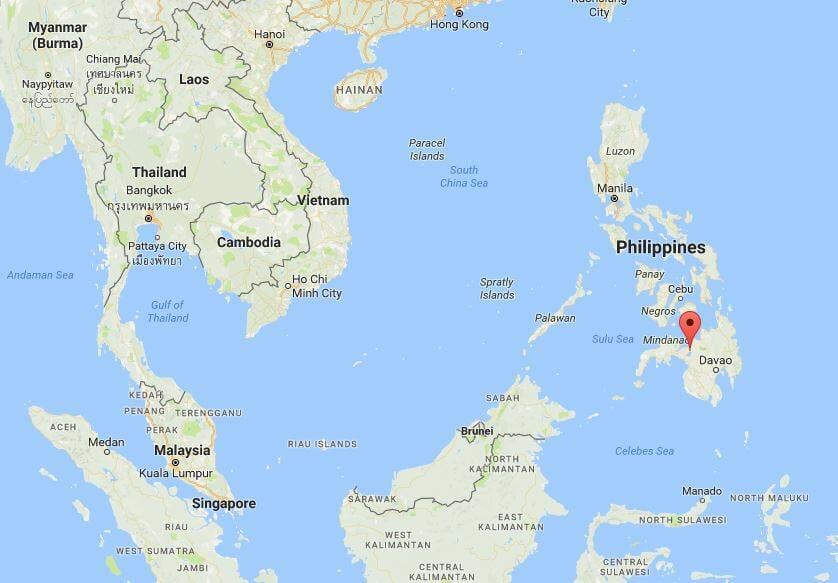
Marawi City, highlighted in the Philippines.


Many in the Philippines are wary of military rule. In 1972 the country fell under it during the dictatorship of late-President Ferdinand Marcos, widely believed to have ordered the killings, detention, torture and disappearances of tens of thousands of his critics.


Duterte said his version of martial law would be no different, and threatened he would be harsh. Whether his words are mere rhetoric or a soon-to-be reality remains to be seen. But with his administration already under fire for its murderous “war on drugs,” in which more than 7,000 have been killed, human rights activists are getting angry and all the more anxious. Military rule could open the way for more government abuses.


Mr. Duterte would hear none of it. He has actually floated the idea of extending martial law indefinitely, or expanding its coverage to the entire country. He has even threatened to jail those who oppose it.


Of course, few Filipinos are surprised. Duterte had already warned that his presidency would be dictatorial even while he was campaigning for the post last year.


Two days after his martial law declaration, about 250 “persons of interest” were rounded up in his hometown of Davao for failure to show proof of identification. In other Muslim-dominated provinces, citizens are expected to show at least 3 valid IDs. This poses a problem for native or indigenous groups and the very poor, most of whom live off-the-grid and are unregistered.


In the Philippines, differences among social groups — and the resulting prejudices — continue to thrive, especially here in Mindanao. For example, if you’re from a tribe, town or religious sect suspected or even remotely associated with militancy, you can expect to be held up for questioning, more closely, by the police.


Already, security checks have been the norm in Lanao and neighboring areas, especially during the first few weeks of the siege. From Marawi to the adjacent city of Iligan, a mere 1 hour’s drive away, public vehicles pass through 3 security checks — extending travel time by an hour or more. From Iligan to the next and bigger city of Cagayan de Oro, 2 hours away, another 5 checkpoints can be expected. In 2 of the cities, police climb on buses to look over passengers. In the 3 others, passengers are asked to come down for bag inspection and ID checks. Travelers on private vehicles must also show IDs.


Prices of goods have reportedly have gone up in far-flung areas. Food supplies may not be reaching stores on time, or perishing quickly during transport due to the long queues and extensive searches at checkpoints.


Curfew across Mindanao is at 10 p.m. and lasts until 4 a.m.


Thousands of tourists have cancelled their bookings, not just in our island but also in the central region of Visayas. The U.S. Embassy in Manila cautioned Americans about the situation and temporarily suspended travel by Mission personnel to Mindanao. Canada advised against all travel in the island except Davao, while Israel’s Counter-terrorism Bureau urged Israelis to immediately leave the region. Other countries, like Australia and Singapore, advised their citizens to remain vigilant and exercise caution when traveling in these parts.


The Philippine peso has weakened ever since the martial law imposition. It is now, as of this writing, P50.85 to US$1 — down by 2.07 percent from the previous P49.82. According to reports, it’s actually down to an 11-year low.


The overall, far-reaching effects of martial rule are incalculable at this point. The social stigma and apprehension alone are immeasurable, as is the opportunity it gives for military and police to abuse their powers. In a recent speech to soldiers, the president said he would take responsibility for any crime they commit while implementing martial rule. He even joked they could rape women with impunity. This, of course, elicited widespread criticism. Since then, women in safer, unaffected areas of Marawi have chosen to leave their homes and stay instead at refugee centers for fear of just that – being raped by security forces.


I don’t know many Filipinos who are 100 percent happy with martial law. I certainly am not, neither are those averse to authoritarianism. Which is exactly the type of government Mr. Duterte seems to favor.


Do you think martial law is possible in America? Share your thoughts in the section below: