Showing posts with label emergency. Show all posts

Tuesday, May 1, 2018

Items That Might Be Missing From Your Family First-Aid Kit


You never know when a family member might get injured. Accidents, by their very nature, are unpredictable. While we might be able to say that some activities are statistically more likely to produce accidents, that doesn’t help us predict when they will come or who will receive them.


This can be even worse in a survival situation, where family members will be called on to do activities and use tools which they aren’t accustomed to.  What makes that even worse is that medical services tend to become overrun during such times, making it harder to get your loved ones the help that they need. If you happen to be in an outlying area, where you have to go a distance to get to help, that makes the situation worse.


In such a situation, your ability to provide adequate first-aid could make the difference between life or death. Few of us have training in first-aid techniques more complicated than applying a self-adhesive band-aid. Fortunately, a few supplies and a little knowledge can make all the difference in the world.


At this point, I’m going to make an assumption, as dangerous as that is. I assume that you already have a good first-aid kit. I’m not talking about a $19.95 drugstore special here, but an actual trauma kit, which allows you to treat more extensive wounds. Even then, you might be missing some crucial things.


Tourniquet


Tourniquets are used to stop excessive bleeding from the extremities. How do you know when one is needed? Whenever you see spurting blood coming out of a wound on one of the patient’s limbs. In that case, there is a risk of them bleeding out before they get to medical care.


There are many types of tourniquets on the market, made in some different ways. But there are three important things you want to keep in mind when choosing one:


  • You want something that can be used one-handed, in case you have to use it on yourself.

  • The idea of the tourniquet is to crush the veins against the bone, blocking blood flow. To do that, the ones with a windlass for tightening the tourniquet work best.

  • Buy quality. The last thing you need is a tourniquet breaking when you’re trying to use it.


Many people say that the tourniquet should be applied two inches above the wound. The problem with this is that not all wounds are nice neat round holes. Wounded veins often tear longitudinally, so if you only put the tourniquet two inches above the injury, the wound might still bleed internally. Go higher; as high as you reasonably can.


Clotting Agent


Clotting agents work by cauterizing the wound, stopping blood flow. They are ideal in situations where a tourniquet might not be usable, such as a shoulder wound. But for it to work, it needs to be pressed into the wound and held in place while it heats and cauterizes the wound.   It will be excruciating as you can imagine, so you may need some help in holding the patient down.


Steri-Strips


Open wounds, where the skin does not meet are dangerous from an infection point of view. They are also less likely to heal properly. In that case, you want something to hold the skin together. Typically, doctors use stitches for this, but you and I are not trained in suturing. Steri-strips allow you to keep that wound closed so that it can heal.


Irrigation Syringe


All wounds should be cleaned before they are bandaged. A large syringe, with a plastic (non-penetrating) needle, makes this much easier to accomplish. Any water which is clean enough to drink is sufficient for use in the syringe.


Lidocaine


This is a topical anesthetic, available in a cream, which numbs the skin. Most often used before giving an injection, it is also ideal for use around a wound, when needing to clean it.


Benzoine


Any adhesive bandage and most medical tapes need a clean surface to stick to. This can be difficult to accomplish in the field. Benzoine is a liquid product for cleansing the skin around a wound, allowing those bandages to stick.


Chest Seal


Used for sealing a chest wound, specifically for a patient which has been shot in the chest, causing what is known as a “sucking chest wound.” Without a chest seal in place, it is possible for the person to draw air in through the wound, on every breath. This will take up the space the lungs need to have to inflate, making it impossible for the person to catch a good breath.


While it is possible to make a chest seal out of any thin plastic material, such as a plastic bag and some tape, it is best to use a premade medical chest seal because it is sterile and already has the adhesive applied.


Needle Chest Decompression


The state where there is air in the lung cavity which prevents the lungs from inflating properly is called a “tension pneumothorax.” The sign that a patient is suffering this is that the veins in their neck are distended, and they can’t inhale. In such a case, the air needs to be allowed a means of escape, so that they can breathe again.


A special needle is used for this, which can be bought in a needle chest decompression kit. This kit also includes chest seals. To use the needle, find the top of the sternum and move down 1½ inches. That’s where the second rib is. There will be a bump on the sternum there. The needle needs to be inserted between the second and third rib, above the nipple.


The needle needs to be pushed in as far as it will go. There is a plastic part of the needle, which will stop it from going any further. Once inserted, remove the metal needle, leaving only the thin plastic sleeve in place. This is flexible, so will move out of the way as the lung inflates. Do not worry about hitting the lung, as if you do, it will heal.


Saran Wrap


Believe it or not, everyday plastic wrap for food is a useful first-aid supply to have on hand. Specifically, it is helpful for multiple wounds, such as those caused by a shotgun or shrapnel from a grenade. In such a case, it will be virtually impossible to bandage all the wounds properly. Wrapping the patient in Saran Wrap will at least protect the wounds from dirt and bacteria, while you are transporting them for medical care.


Nasal Pharyngeal Airway


In cases where the patient is unable to control their breathing, it is not uncommon for the tongue to fall across the airway, blocking it. Obviously, something needs to be done in these cases, to retain the airway open. There are several types of airways on the market, designed for this purpose.


The advantage of the nasal airway is that it is less uncomfortable for the patient. Inserted in the nose, they are unable to bite down on it, blocking off the airflow. Made of soft rubber, these come in different sizes. You’ll want to pick one that is the size of the patient’s pinkie. Cut it to length, from the tip of the patient’s nose to the angle of their jaw. Then push straight into the nose, not angling it up.


This type of airway should not be used in cases where there is bruising behind the ear, or the patient has blood coming out of their ear.


The post Items That Might Be Missing From Your Family First-Aid Kit appeared first on Off The Grid News.

Sunday, November 26, 2017

Monday, October 9, 2017

4 Quick Ways To Store A 3-Day Emergency Supply Of Water

4 Quick Ways To Store A 3-Day Emergency Supply Of Water


What are your first steps when you hear that a storm is coming? Whether it’s a hurricane or a blizzard, do you have a supply of water available in the event that a storm knocks out the power or flooding contaminates your water source?


Even if you are fortunate enough to have your own water source, such as a well, it’s likely to run on an electric pump rather than gravity or a non-electric power source. Municipal water supplies also depend on power and supplies that may be affected by severe weather.


Each person needs a minimum of a gallon of water per day. Half, or two quarts of that gallon, are for drinking and the other half for cooking and personal hygiene. If you are active, working hard, or the weather is hot, you most likely need another two quarts of drinking water per person, for a total of one gallon just for drinking.


Get Free Backup Electricity — That Works Even During Blackouts!


However, this amount of water doesn’t really allow for additional basic water needs, like washing dishes or flushing the toilet. Realistically, you are very likely to want a bit more water to effectively clean, to supply water to your pets, or to be able to use a bucket of water to flush a toilet, for example. Realistically, you need to store as much water as you can, and you need to be able to quickly do so before a storm or event knocks out or contaminates your water supply.


The Checklist


First, fill your mop pail with water to flush toilets. Total time: 2 minutes. Estimated gallons depends on the size of your pail: 2-5 gallons.


Second, fill your bathtub with water. We’d tell you to fill this first, but that makes filling any mop pail more difficult. Bathtub water can also be used to flush toilets and wash hands, and for cooking of drinking IF boiled for three minutes. (We do hope you keep your tub pretty clean, and if you don’t this is a good reason to start, right?). Total time: 5 minutes. Estimated gallons stored: 25 gallons for a standard size tub and up to 100 for larger tubs.


Third, move to the kitchen and fill your largest clean and lidded pots with water. Kitchen pots provide a safe way of temporarily storing drinking water, as well as water you can use for cooking. Go for your largest pots, the stock pots and stew pots. Do you preserve by canning food? Haul out the hot water bath canning kettle, which should be big enough to hold four or five gallons. Total time: 3 minutes. Estimated gallons stored: 5 gallons.


Fourth, while still in the kitchen, fill one-gallon plastic storage or freezer bags with water and close them securely. Place them one at a time lined up vertically into a lasagna or baking pan (as if they were lined up like books on a shelf) and place them in your freezer, if possible. These plastic storage bags filled with water will freeze if given enough time. Frozen water will keep your freezer colder longer, and when thawed supply drinking water. Once frozen, they can be moved to the fridge to keep it cooler longer if needed, as well. Total time: 5 minutes. Estimated gallons stored: 10 gallons.


Total time: 15 minutes


Total gallons stored: 42-45 gallons (and even more if your tub is larger than standard size).


If each person uses a bare minimum of 1.5 gallons a day, your stored water of 42 gallons might actually supply enough water to survive for three days for up to nine people. That sounds like very little water for too many people, doesn’t it? While one or one and a half gallons a day per person may allow you to survive, you’re going to want to use more water per person in an emergency, even if that cuts the length your water supply will last.


Realistically, 42 gallons should be enough water to last three days for an average American family for drinking, personal hygiene, cooking, pets and flushing toilets. Also, you always want a portable water filter that will allow you to drink lake or river water (or even your bathtub water if it’s dirty).


Have a bit more time? Here are four more ways to store water:


Look for 5-gallon pails around the house and clean and fill those. It would be smart to have a clean stack of lidded 5-gallon buckets in the pantry, garage or cellar available to fill with water if you are planning ahead. Look for food-grade buckets, or ask the local bakery for their used frosting and baking mix pails.


If you have more than one bathroom, take another five minutes to fill tubs in other bathrooms.


Scrub out a kitchen sink and fill the sink with water, but think twice if you only have a one-bowl sink, since you may need that sink to prepare food or wash items.


Fill your ice cube trays. You may need ice, not necessarily for cold drinks, but ice cubes or even a pack of frozen peas may come in handy for minor injuries. If your house is anything like mine, the ice cube trays are never entirely full.


Fill a top-loading washer for an extra supply of water to flush toilets or cook with. You may need a short length of hose as a siphon or a cup to measure out water into a pail.


What advice would you add? Share your tips in the section below:

Sunday, September 3, 2017

The Utah Nurse is Not Alone — Police Have a History of Abusing Professionals Rendering Aid


The Body Cam footage of a nurse being violently arrested by a police officer in Salt Lake City while other officers on the scene watched and aided the arrest went viral on Friday. The internet watched in horror as a nurse followed the orders from her supervisors and refused to break the law—and a police officer responded by throwing a temper tantrum because he was told “No.”


However, while this incident was caught on video and spread like wildfire when it was released, it is not uncommon, and it does not apply solely to medical professionals. Police officers also have a history of targeting and abusing first responders rendering aid to citizens in life-threatening situations.


Firefighters


When Capt. David Wilson, a veteran firefighter with 27 years of experience, arrived at the scene of a nasty car accident in Hazelwood, Missouri, in May 2003, he parked his truck and went to work. As he was attending to the victim, he was approached by a police officer who seemed to care more about the position of the truck, than about the survivors of the crash.


When Wilson ignored orders from Officer Todd Greeves to move his vehicle, Greeves became agitated, and decided to take matters into his own hands. Greeves arrested the firefighter, and kept him detained by a patrol car for 23 minutes until a supervisor told him to let Wilson go. Wilson filed a civil rights lawsuit, and received $17,500 in damages.


A similar instance occurred in March 2014 when a volunteer fireman in New Roads, Louisiana, was rendering aid to a woman who passed out in her home. He was the first one on the scene, and when police arrived, instead of asking about the state of the patient, they demanded that the fireman move his truck. When he did not comply, the officer arrested and detained him for nearly 15 minutes.


Advertisment


READ MORE:  Because of People Taking Action, the Rate of Cops Being Charged for Murder Has Increased 5-Fold


In February 2014, when Jacob Gregoire, a veteran firefighter with 12 years of experience, was responding to the scene of an accident in Chula Vista, California, he was also ordered to move his truck. Gregoire ignored the commands from a California Highway Patrolman, and he was arrested and detained on the side of the highway for 30 minutes.


In response to the incident, Chula Vista Fire Chief Dave Hanneman called CHP’s behavior “ridiculous” and the firefighters’ union president John Hess praised Gregoire’s actions. He made all firefighters look good. He was there to protect the citizens and he was willing to take a stand to do that,” Hess said.


EMTs and Paramedics


In the same way that power-hungry police officers have gone after firefighters rendering aid to the victims of car accidents, they have also gone after paramedics and emergency medical technicians who did not follow their orders.


In 2009, Oklahoma State Patrolman Daniel Martin pulled over an ambulance for failing to yield to his patrol car. The ambulance was in the midst of rushing to a hospital with a sick woman in its care.


When the driver of the ambulance, Maurice White, stood up to Martin, the patrolman responding by assaulting, choking and then arresting White, while a sick patient waited in the back of the ambulance, in need of emergency medical care.


Another police officer used the chokehold method when he got into a confrontation with an EMT in Portsmouth, Ohio, in February 2017. While the emergency medical technicians were preparing to move a man into an ambulance, after he was knocked unconscious during a fight outside of a bar, he suddenly regained consciousness.


READ MORE:  Cop Who Beat Man in Viral Video, Caught on Video AGAIN—Attacking Handcuffed Teen Girl


Police on the scene responded by intervening and deploying a taser on the startled man, and when one of the EMTs stood up the police sergeant, he assaulted the technician, putting him in a chokehold.


A sheriff’s deputy also decided to interfere with an ambulance rushing a patient to a hospital Jackson, Kentucky, in June 2016. The ambulance driver claimed the deputy gave no reason for the stop, and the only reason the driver could come up with as to why the deputy would interfere was because he was the owner of a competing ambulance company.


When a police officer in San Diego, California, decided to go after an EMT and a paramedic at a 7-11 convenience store in April 2014, the surveillance tape was their saving grace.


Officer Anibal Solis claimed he heard EMT Derek Shubin call him a “F—king Nazi,” and he naturally grabbed Shubin and punched him. Paramedic Steve Cogle then intervened and put Solis in a chokehold. After Cogle let Solis out of the chokehold and tried to diffuse the situation, the officer proceeded to attack him.


A former paramedic in St. Paul, Minnesota, found herself on the receiving end of similar treatment in April 2017, when she stopped to render aid to a man who was bleeding on the street. As soon as an officer arrived, the paramedic cautioned him not to touch a portion of the man’s shirt that was soaked with blood. The officer responded by punching and later arresting the paramedic for attempting to help.


One of the most commonly used arguments for supporting police officers is that they risk their lives daily in order to save the lives of others. This same description can be used for firefighters, doctors, nurses, paramedics and emergency medical technicians.


READ MORE:  Innocent Deaf Man Imprisoned for 6 Weeks Because the Jail Never Provided Him with Interpreter


However, when police officers adopt an “It’s my way of the highway” mentality, and they abuse medical professionals and first responders who do not listen to their commands, they not only take away from their own credibility, they also risk the lives of individuals who are already in an emergency situation.

Friday, August 11, 2017

BREAKING: Trump Declares ‘National Emergency’ Over Opioid Crisis


(RT) President Donald Trump has declared the opioid epidemic a national emergency and said his administration was drafting paperwork to make it official.


“The opioid crisis is an emergency, and I’m saying officially right now it is an emergency. It’s a national emergency,” President Trump told reporters before a security briefing on Thursday at his golf course in Bedminster, New Jersey.
“We’re going to spend a lot of time, a lot of effort and a lot of money on the opioid crisis.”


Trump told reporters the drug crisis afflicting the US is a “serious problem the likes of which we have never had” and said he’s drawing up documents “to so attest.”


Advertisment


By declaring it a national emergency it removes some barriers and waives some federal rules such as one that restricts Medicaid recipients from receiving addiction treatment. It would also put pressure on Congress to provide more funding.


In early August, Trump’s commission on the opioid crisis issued a preliminary report that described the overdose death toll as “September 11th every three weeks,” and urged the president to immediately “declare a national emergency under either the Public Health Service Act or the Stafford Act.”


The report said 142 Americans died every day from a drug overdose, according to the most recent data from the Centers for Disease Control and Prevention (CDC). It added that 27 million people reported in 2015 they currently used illegal drugs or abuse prescription drugs, but only 21 million receive any type of treatment.


READ MORE:  US Govt: Arresting WikiLeaks Founder Julian Assange Now a Top "Priority"


The report also found that 40 percent of people with a substance abuse issue also suffered from mental health problems and less than half received treatment for either issue, and often it was lack of access to care, fear or shame and discrimination and lack of motivation.


Health and Human Services Secretary Tom Price suggested earlier this week the president was leaning against the recommendation when he said the administration could deploy the necessary resources and attention without declaring a national emergency.


Still, Price stressed that “all things” were “on the table for the president.”


On August 2, Attorney General Jeff Sessions announced a dozen federal prosecutors will be sent to cities ravaged by the opioid epidemic to investigate health care fraud and opioid scams fueling the drug abuse epidemic.


Prosecutors, who will be funded by the Justice Department for three years, and tasking with rooting out pill mills and tracking down doctors and other health care providers who illegal prescribe or distribute narcotics such as fentanyl and other powerful painkillers, according to Sessions.


“You don’t collect a drug debt in a court of law, you collect it with a barrel of a gun,” he said.


Tuesday, August 1, 2017

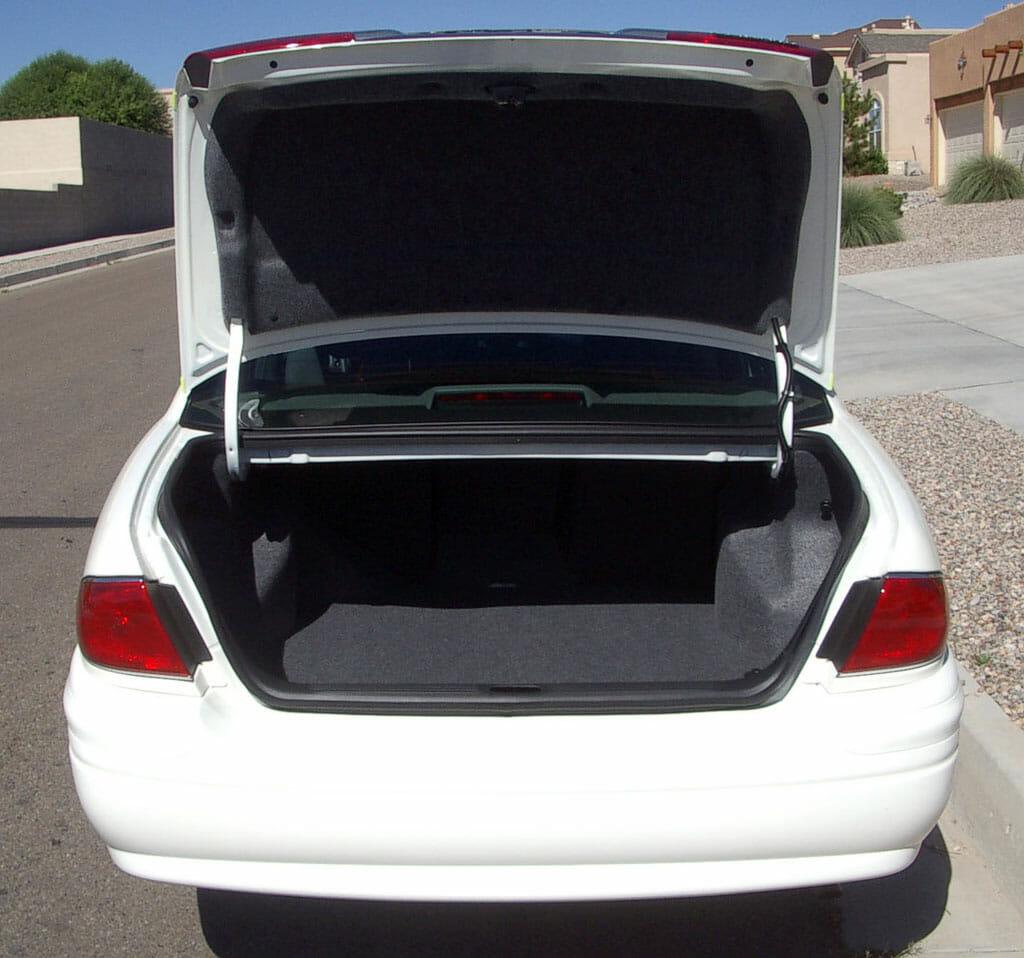
20 Roadside Emergency Items You Better Store Your Car’s Trunk  

20 Essential Emergency Items You Better Store Your Car’s Trunk  The trunk of my car is an amazing place. In it, you can find tools and equipment to deal with a variety of situations.


Most of what is there can and has helped me out in an emergency; but pretty much all of it has helped someone else, too, when they were facing problems of their own. I have found that helping others in a time of need is a great opportunity to share the message of preparedness and convert them to our way of looking at things.


I need to mention here that this is different than just being prepared to be caught in a blizzard, which I’ve written about previously. While many of the items overlap, there are things in my trunk which have nothing to do with surviving a blizzard. Besides, where I live, a blizzard could only happen if God gave us one by His miraculous power.


Goofy Gadget Can Recharge Your Laptop — And Jump-Start Your Car!


So, what sorts of things can be found in my trunk?


  1. Tools – While not huge, I have a fairly complete mechanics tool kit in the car. There are always situations where your car or the car of another needs to be repaired.

  2. Hose repair kit – While not the best repair kit in the world, this splicing kit will get you back on the road again if you have a hose that pops.

  3. Emergency belt kit – Once again, this isn’t the best repair going, but there’s a kit you can buy which allows you to put links together and make a belt of any length. While originally intended for V-belts, it works for multi-V, as well.

  4. Water (2 gallons) – Both for drinking and for overheated cars.

  5. Radiator seal – For the obvious reason.

  6. Oil, brake fluid and power steering fluid – Again, for the obvious reasons.

  7. Toilet paper – A life essential. It’s amazing how many times someone is caught in the middle of nowhere, without a bathroom in miles.

  8. Paper towels – Not quite as useful as TP, but a close second.

  9. Emergency food – High-energy bars, nuts and even some canned goods for emergency meals. If you find someone who is stranded, they’ll be hungry, as well.

  10. Blanket – For keeping them warm and dealing with shock. I have an old wool army blanket I use. Being wool, it still retains some insulating value, even when wet.

  11. Firstaid trauma kit – I carry a rather extensive first-aid kit, with enough in it to take care of fairly serious wounds. Car accidents, as well as accidents in the woods, generally require more than just an adhesive bandage. I have a tourniquet, large bandages and even butterfly closures as part of this kit. The water I carry is pure enough for irrigating a wound.

  12. Personal survival kit – My personal (large) EDC kit, which doubles as both a survival kit and a get-home bag, is always in the car. It also contains a number of useful items for everyday needs, ranging from a spork, through a rain poncho to a phone charger.

  13. Jumper cables – No matter how sophisticated cars get, these are still needed.

  14. Tow strap – For towing a vehicle off the highway or to the nearest service station.

  15. Flares and an emergency triangle – It’s always safer to let people know that there’s a reason why you’re pulled over to the side of the road.

  16. Rope and bungee cords – For my own use or the use of others.

  17. Duct tape – What emergency kit is complete without duct tape?

  18. Tire inflator and compressor – Few people’s spare tires actually have enough air in them.

  19. A good hydraulic jack – I don’t know about you, but I don’t trust those scissors jacks, and if you’ve never greased them, they’re hard to work with.

  20. Fire extinguisher – I haven’t needed this often, but when you need one, you need one.

As you can see, this list is rather extensive. Some of those items are actually kits that are sizeable in and of themselves, containing a number of items. All told, the contents of my trunk give me the capability of dealing with a variety of situations, as well as taking care of myself and my car, should the need arise.


I’d like to reiterate that just about everything in my trunk has been used multiple times. Life just seems to hand us a lot of situations which go beyond what would be considered “normal.” As we all know, being ready for these situations requires going beyond what others do. Carrying along some emergency equipment in my car is a small price to pay, for the security it gives me.


Oh, and, all that equipment fits in the space under the back shelf, leaving the majority of my trunk open for carrying food home from the supermarket or materials home from the hardware store. I can even fold the backseat down and carry lumber home, just by moving one box to the side. So, I’m really not losing anything by carrying all that along with me.


What items would you add to our list? Share your tips in the section below:

Friday, July 14, 2017

City Fires Their Entire Police Department, Chaos Does NOT Ensue

police


Varnell, GA — The entire Varnell Police Department was fired this week and they will not be replaced with new cops. The police department was dissolved by the city council with a 3-1 vote and–contrary to popular fear mongering–the town has not descended into chaos.


On Tuesday, police officers returning from their patrols were told to hand in all their equipment and they were no longer employed.


As the Times Free Press reports, Lieut. Greg Fowler said he was told to spend the day collecting all of the police department’s materials and locking them up in city hall.


The controversial decision by the city council to disband the department was sparked after the police chief, Lyle Grant, was suspended for arresting a city councilman in June.


As the Times reports:


Advertisment


Elected officials wanted to know if he properly handled the case.


Grant and Fowler went to the home of Councilman Shane Fowler, who is not related to the city’s lieutenant. Shane Fowler’s wife had complained that he was drunk and loud inside the house.


According to a police report, Shane Fowler yelled at the officers and poked them in the chest. About nine days later, an officer took out a warrant for his arrest.


Grant said the long delay occurred for a couple reasons. First, he wanted an independent investigator to review the evidence — which really was just the officers’ statements.


Second, Grant said he brought the evidence to the mayor and other council members before deciding whether to charge Shane Fowler.


Councilman David Owens felt this was an odd way to handle an investigation.


This insanely unprofessional fiasco came to a head in an executive session meeting this week as the council reinstated Grant. However, moments later Councilman Jan Pourquoi made a motion to disband the police department immediately.


READ MORE:  Restaurant Owner Tells 9-1-1 to Send Anyone But Police, "We Don"t Allow Police"


Just like that, the police department was no more.


The Times spoke with a detective who came to turn in his equipment Tuesday morning, who said, “for a city to get rid of his police department is absolutely crazy.”


However, as the Free Thought Project has reported numerous times, the idea of a city firing all of its cops is not isolated and has never resulted in out breaks of criminal behavior.


The idea that police protect you is a misconception, as they will seldom prevent violence. They normally show up after the violence or crime has been committed and then try and find a culprit, or not.


The average response time to a 9-1-1 call is 10 minutes nationwide; for poor areas, that time quadruples. In some cases, the dispatchers do not even take the caller seriously and the victim ends up dead when a crime could have actually been prevented.


The reality is that police act as revenue collectors for the state and solely exist to enforce the law only.


In a perfect world, police would show up prior to a crime and stop it, or at least during a crime, but this is simply not a reality.


Police in America also do not “protect and serve.” If you doubt this claim simply refer to Warren v. District of Columbia, in which the Supreme Court ruled that the police do not have a constitutional duty to protect a person from harm.


Sure, Varnell, Georgia is a small town and the likelihood of a crime wave bursting on to the scenes is rare regardless of police presence. However, we’ve seen similar situations involving millions. At the end of 2014, for example, the NYPD stopped doing its job after the murder of officers Rafael Ramos and Wenjian Liu and something amazing happened — crime went down.


READ MORE:  Saudi Press Just Accused US Govt of Blowing Up World Trade Centers as Pretext to Perpetual War


The Post reported that arrests were down 66% in the week following the deaths of officers Rafael Ramos and Wenjian Liu, compared to the same period in 2013.


For certain offenses, the arrest levels are staggeringly low, according to the numbers put out by the Post.


Citations for traffic violations fell by 94 percent, from 10,069 to 587, during that time frame.


Summonses for low-level offenses like public drinking and urination also plunged 94 percent — from 4,831 to 300.


Even parking violations are way down, dropping by 92 percent, from 14,699 to 1,241.


Drug arrests by cops assigned to the NYPD’s Organized Crime Control Bureau — which are part of the overall number — dropped by 84 percent, from 382 to 63.


It wasn’t a slowdown — it was a virtual work stoppage. And, in spite of police not writing tickets for jaywalking, arresting people for marijuana possession, and failing to wear their seatbelts, the city of New York did not descend into chaos either.


UPDATE: The town’s mayor has vetoed the decision to disband the police department. However, it is still worth mentioning that without police forces for several days, the town remained just fine. There was no looting, mass robberies, or crime sprees of any sort.

Tuesday, May 9, 2017

“Emergency” Declared at WA Nuclear Waste Facility — “Take Cover” Orders Issued


Hanford, WA — (RT) The US Department of Energy has declared an emergency at the Hanford, Washington nuclear waste storage site, after a tunnel used to store contaminated materials caved in.


About 3,000 workers have taken cover at the 200 East Area of the sprawling complex, local media reported. By 10:30 am local time, the “take cover” orders have been expanded to the entire site, which is about half the size of Rhode Island.


A portion of a tunnel near the plutonium-uranium extraction plant (PUREX) collapsed early Tuesday morning local time, most likely from vibrations produced by nearby road work, KING-TV reported.


Initial reports spoke of a 4-foot (1.2 meter) hole, which was later expanded to 20 feet (6 meters) across.


The tunnel was used to store highly radioactive materials and equipment, such as trains used to transport nuclear fuel rods.


The PUREX facility was built in the 1950s and used until 1988 to extract plutonium from around 70,000 fuel rods in total. The building has been vacant for nearly twenty years and “remains highly contaminated,”according to the Hanford website. Rail cars used to transport the fuel rods from the nuclear reactors to the processing facility are buried inside the nearby tunnels.


No workers were injured in the collapse, and officials have detected no release of radiation, Washington state Department of Ecology spokesman Randy Bradbury told AP.


READ MORE:  4th U.S. Nuclear Disaster in Recent Months Exposed -- Corporate Media Still Silent


Workers at the complex have been ordered to stay indoors and refrain from eating and drinking, according to text alerts seen by local media. Emergency crews are organizing the evacuation.


Emergency measures were put in place due to “concerns about subsidence in the soil covering railroad tunnels,” says a statement posted on the Hanford facility website.


Residents of the nearby Benton and Franklin counties do not need to take any action, the facility said.


Hanford is located on the Columbia River in eastern Washington, near the border with Oregon. Built during World War Two as part of the Manhattan Project to develop the nuclear bomb, it still contains roughly 53 million gallons – over 2,600 rail cars – worth of high-level nuclear waste, left from the production of plutonium for the US nuclear weapons program.


A number of current and former Hanford workers suffer from serious medical conditions as a result of exposure to toxic waste leaks and “burps” of radiation at the complex, RT America reported in April 2016.


Saturday, May 6, 2017

How To Find Fresh Water When There’s Seemingly None Around

How To Find Fresh Water When There’s Seemingly None Around

Image source: Pixabay.com


All living creatures require water in order to survive. In fact, scientists who search for extraterrestrial life beyond our solar system consider the presence of liquid water to be an essential criterion for the possible presence of life on other planets.


Humans can survive weeks without food, but they only can survive about three days without water! Although many parts of the U.S. are blessed with an abundance of fresh, drinkable, surface water, there are many arid regions where this essential element of life is far more difficult to find. Thus, the ability to find fresh, drinkable water while adventuring in the wilderness is an essential skill.


The step to finding fresh water in the wilderness is to obtain, carry and learn how to read a topographic map; this handy tool will not only display the details of the terrain you are traveling in, but is also will reveal any sources of fresh water in the area. Thus, leaning to determine your approximate position on the map by using the surrounding terrain features is of paramount importance, because doing so will enable you to decide which direction you need to travel to reach water sources on your map.


How To Find Fresh Water When There’s Seemingly None Around

Image source: Pixabay.com


Of course, water always flows downhill, so you should always look for creeks, rivers, ponds and lakes in the valleys between mountains and in the lowest-lying areas in flatter terrain. Another trick for obtaining water in wooded terrain is either to dig up the roots or cut the branches from trees; then, cut them into short sections and stand them up vertically in some sort of pan or trough to allow the water to seep from them. In fact, some trees and vines contain a considerable amount of fresh water. Using this method can be very productive if the right plants are chosen.


The Life-Saving Water Filter That Purifies River Water!


But in more arid regions, surface water is often difficult or even impossible to find. If in such a location, you should look for the presence of water-loving plants and trees such as birches, alders, cottonwoods and willows, since these are good indications of subsurface water sources. Also, another good place to look for subsurface water sources in arid regions is in the outside of a bend in a dry creek bed. Thus, by digging a hole or ditch in these areas and allowing the water to seep into them from below ground, you often can obtain drinkable water in areas where there are no sources of surface water.


Yet another method for obtaining fresh water in arid terrain is to build a “solar still” by first digging a hole in the ground deep enough to encounter moist soil and then placing a catch basin such as a cup in the bottom of the hole before covering it with a sheet of plastic, such as a garbage bag; then, secure the sheet with rocks to hold it in place. After that, place a small rock on top of the plastic sheet, directly above the catch basin, so that as the water condenses on the underside of the plastic sheet, it will then run downhill and drip into the catch basin.


Story continues below video


If this isn’t possible and you’re traveling in barren, rocky terrain, then the best place to look for water is in depressions, caves or crevices in the rock, where water can accumulate. Last but not least, you can sometimes use animals to find sources of fresh drinking water. For instance, some animal species, such as grazing animals and especially feral or wild pigs, never stray far from a source of fresh drinking water since they require large amounts of this precious resource to digest their food. In addition, many species of birds, such as pigeons and mourning doves, always visit fresh water sources after leaving their roosts in the morning and before returning to their roosts in the evening. By noting their direction of flight during these times of day and following them, you can find fresh water.


It should be noted that even the clearest mountain streams often contain harmful bacteria, and you should always carry some means of purifying any fresh water source. However, if such tools are unavailable, you can construct a crude water filter by pouring it through charcoal from a fire and then purifying it by boiling it.


What advice would you add on finding drinking water? Share your thoughts in the section below:

Friday, April 7, 2017

Be Ready And Prepped Before the Next Crisis “Or Wind Up Begging The Government”

global-unrest


This article was written by J.D. Heyes and originally published at NaturalNews.com.


Editor’s Comment: Society has lost its way, and there are a million reasons for things to go south at a moment’s notice. Preppers know that with survival skills and supplies ready, there is a better chance that they will be able to survive almost anything that comes their way, and be able to keep a healthy distance from unruly and dangerously dependent urban populations.


If a truly widespread disaster were to set in, martial law, FEMA camps and violence civil unrest could quickly follow. Those who aren’t ready will be left fending for remaining supplies from empty shelves, and ultimately have no other alternative but to submit, and ride out the crisis begging from the government. Only those with a clear headed approach and a prepared mindset can avoid such degradation… will you be among the ready few?


Master these 7 basic skills before SHTF… or you’ll wind up begging the government for basic supplies


by J.D. Heyes


No one can predict the future and it’s not likely most of us will know when the next ‘stuff hit the fan’ scenario will occur, but we can make some educated guesses based upon experience and common sense.


For example, for much of the country – especially the Midwest – we are approaching tornado season, when spring and early summer weather can often turn violent. The same is true for the Atlantic coast and the Gulf of Mexico, which could see hurricanes in a few months.


Out West, especially in California, there is always the threat of a major earthquake, though the New Madrid fault, the epicenter of which is located in southeastern Missouri/northwestern Kentucky, is also a threat.


Then there are world events which could erupt at any moment, such as a nuclear attack, or a cyber attack on our financial infrastructure. Or maybe political violence stemming from the insanity the political Left still harbors over the election of Donald J. Trump to the White House. (RELATED: How To Construct A “Bugout” Home For $250)


There are any number of things that could disrupt our world. We simply don’t know when something will happen. But before SHTF, there are some basic skills you should learn no matter what the triggering event happens to be, because they will come in handy regardless of the situation.


“If you want to become more prepared for a survival situation, the information available can be overwhelming. Some sites are trying to teach you how to start a fire with a block of ice, while celebrities on television are telling you to drink your own urine. What? Thankfully there are a few simple skills that you can learn to make a huge impact on a survival situation,” writes “Ryan” from Modern Survival Online.


Making a fire


This will be one of the most important survival skills you need to learn because fire can accomplish a number of important things – cooking, sanitizing water, and heat are just a few of those things.


Any preparedness bugout bag you put together should have at least two and maybe even three methods for starting a fire. This can be a disposable lighter, flint and steel, 9V battery and steel, etc. You can build a fire in any number of ways – gathering paper, small pieces of wood, sticks – but the ability to actually light the fire is the most important part of the skill.


Sanitizing water


In an SHTF scenario, potable (clean, drinkable) water is going to become pretty scarce pretty quickly. You should make sure you have an emergency supply of it on hand, but eventually you’re going to need to find some ‘in the wild,’ and it’ll have to be sanitized or you’ll get sick, then dehydrated, then you’ll die. Boiling water for just a few minutes works best, but you can also buy emergency water filters and filter straws.


Food on the fly


Food will also become a scarce commodity, so it would behoove you to learn about what kinds of plants grow in the wild where you live that are edible. You may not think much about that now, but when you’re getting hungry, living off the land will become necessary. Check with your local conservation department for starters; their experts can tell you what grows wild that you can eat in a pinch.


Communications


You’re going to want to pick up any information you can about the situation, so having some kind of radio that doesn’t require batteries (solar, wind-up) will work best. AM-FM and CB combination if you can find it. (RELATED: Best Ways To Escape Disaster When A Crisis Strikes)


Self-defense


How you personally want to handle this is, of course, something you have to decide. Most people think of a firearm as being best for self-defense, but others choose bows/crossbows, knives, a baseball bat, etc. Whatever you decide, take time – a lot of time – now to learn how to use your self-defense weapon of choice. This is particularly true if you choose a gun.


First aid


You don’t need to become a certified emergency medical technician or go to nursing school, but learning basic first aid is vital. You’ll want to know how to clean and dress wounds, treat burns, flush chemicals from your eyes, and basic splinting for fractures or sprains, at a minimum. Learn about nutrition and hydration, too, and what to do if you get diarrhea, which can kill.


Know your area


If you have to leave your home and “bug out” to a safer environment, it will help if you have paper topographical and road maps of your area. Even if you’ve lived there for a long time, you likely don’t know every bend, dirt road, creek and hill. Having paper maps at the ready will help you navigate your way to safety.


This article was written by J.D. Heyes and originally published at NaturalNews.com.


J.D. Heyes is a senior writer for NaturalNews.com and NewsTarget.com, as well as editor of The National Sentinel.

Wednesday, April 5, 2017

Silicon Valley Survivalist Builds DIY “Extreme Weather TsunamiBall” To Ride Out Disaster

tsunami1


Whenever seismic activity kicks up on the planet, earthquakes, volcanoes and tsunamis are triggered.


Just how big, and how devastating, depends upon chance, and the build-up of pressures within the earth.


But anyway you slice it, places like Southern California, and globally, the Ring of Fire, are in the danger zone. Many say that it’s just a matter of time.


With that in mind, survival-minded individuals and disaster preppers have been trying to get ready, and help others get ready, too.


That’s sort of what happened when Chris Robinson and his Silicon Valley friends and associates got into ‘sketching ideas for tsunami-proof shelters.’


He says his boss drove home the idea, and brought it up over and over, until he came up with any idea…


… And started building his own tsunami-proof shelter that he hoped could survive a storm of any size, and keep he and his family safe even if the vessel tumbled, or got knocked.


As a one-man crew, Robinson went to town with simple plywood, and a lot of patience, until he came up with this fantastic DIY survival vessel, dubbed the ‘Tsunamiball’, featured on one of the best off-grid sites on the web.


via Kirsten Dirksen:


A couple years ago Chris Robinson was a former Facebook and PayPal art director with no boat-building (nor sailing) experience. Then the Tsunami hit Japan (a place where he’d lived and met his wife). He happened to be working in a startup incubator at the time with some “very smart people”, including an astronaut, and everyone was sketching ideas for tsunami-proof shelters.


To be sure, Robinson’s house boat isn’t done, and frankly, wouldn’t survive a disaster of any magnitude in its current condition. It hasn’t even been tested on the water.


But he hopes to use his pet project to inspire others into thinking of better designs, and improving his along the way.


As Wired Magazine reported:


The former Facebook and PayPal art director used Adobe Illustrator to sketch his tsunamiball plan (he asked some engineers for help calculating whether it would float). “Very early in the project it became about building this interesting object,” Robinson says. “I’m not a survivalist. I don’t even have life jackets.” He does, however, have an emotional connection to Fukushima—he met his wife there in 1991, when he lived in Japan. “Half the places we went on dates are gone,” he says. Robinson plans to finish the outer shell by May, then ocean-test the vessel if he can find a crane and truck big enough to haul it over to the Pacific. And if the sphere doesn’t sink, he’ll use Airbnb to rent the tsunamiball for tidal wave-safe overnights in Palo Alto.


Whether it helps out in a disaster or not, the project is fascinating and breathtaking.


In principle, it is very similar to the ‘Survival Capsule’ that SHTF reported on a little while back:


In the wake of an extreme threat – such as a tsunami or earthquake – this capsule could be the best place to withstand the impact, no matter what.


It is water-tight. It is extremely durable. It floats, and it can withstand against the impact of super-strong winds, crashes, heat and many other factors.


As the London Guardian reports:


This capsule, which features two small porthole windows so the occupants can see what is going on around them, was created to give individual groups and families more control of their survival in emergency situation than traditional ‘safe houses.’


It is designed to float so it will never be inundated by water levels rising too high, as they do in tsunami situations.


[…]


The sphere is designed to withstand the initial impact of a natural disaster, as well as sharp object penetration, heat exposure, blunt object impact, and rapid deceleration.


How’s your plan for survival? It’s time to think one through if you don’t have one.


Read more:


This Survival Capsule Could Insulate You Against Any Disaster: “More Control Than Safe Houses”


The Prepper’s Blueprint: Your Step-by-Step Guide to Survive Any Disaster


The Ultimate Prepper Bug Out Home


Elite Bunker Down in “Secure, Safe Rooms Hidden in Plain Sight”… And You Can, Too


Are Devastating Tsunamis Headed for American Cities? “There’s Enough of a Chance”


Russia’s New ‘Nuclear Torpedo’ Can Create Giant Tsunamis And Wipe Out Entire Coastal Cities

Tuesday, February 21, 2017

Man Destroys Corrupt City In Bulldozer Rampage: “What Happens When You Have Too Much Government Interference”

screen-shot-2017-02-21-at-2-30-08-am


Sometimes, when you push people too far, they push back.


And that has never been more true than when a man from Granby, Colorado decided to build a homemade tank, reinforced against armaments of all kinds, and take out the institutions he saw as corrupt.


OK, sure, this happened back in 2004 – so it isn’t a recent event.


But what it does show is the level that many Americans can and will reach when they’ve had enough.


This is not a question of whether what he did was legal, or justified. No one can condone this. Instead, this is simply a matter of a man who was fed up – rightly or wrongly, he was no longer going to be pushed by his government, he was going to push back.


A news helicopter filmed much of the rampage.


Here’s the story of what happened.


via Link Beef:


Marvin John Heemeyer, an American welder and an automobile muffler repair shop owner most known for his rampage with a modified bulldozer. Outraged over the outcome of a zoning dispute, he armored a Komatsu D355A bulldozer with layers of steel and concrete and used it to demolish the town hall, the former mayor’s house, and other buildings in Granby, Colorado. The rampage ended when the bulldozer got stuck in the basement of a Gambles store he was in the process of destroying. Heemeyer then killed himself with a handgun.


The machine used in the incident was a Komatsu D355A bulldozer fitted with makeshift armor plating covering the cabin, engine and parts of the tracks. In places this armor was over 1 foot (30 cm) thick, consisting of 5000-psi Quikrete concrete mix sandwiched between sheets of tool steel, to make ad-hoc composite armor.


This made the machine impervious to small arms fire and resistant to explosives: indeed three external explosions and more than 200 rounds of ammunition fired at the bulldozer had no effect on it.


For visibility the bulldozer was fitted with several video cameras linked to two monitors mounted on the vehicle’s dashboard; the cameras were protected on the outside by 3-inch (76 mm) shields of bullet-resistant plastic. Onboard fans and an air conditioner were used to keep Heemeyer cool while driving, and compressed-air nozzles were fitted to blow dust away from the video cameras. He had made three gun-ports, fitted for a .50 caliber sniper rifle, a .308 semi-automatic, and a .22 long rifle, all fitted with a half-inch-thick steel plate.


Clearly, Heemeyer was on a suicide mission to make an unforgettable statement about a condition of government which he found to be egregious and tyrannical. To date, it remains the most famous incident in the small town’s history.


As things continue to break down, as Americans struggle, and injustice sweeps the land, there will be more individuals pushed over the edge. Some Americans just won’t take it anymore. Remember when a man named Joe Stack decided to go kamikaze on an IRS building in Austin, TX? He listed his reasons, right or wrong, and was heard much loudly and clearly that the individual in the voting booth, or the one holding the protest sign that no one payed attention to.


He sent a message that government officials surely took note of – a maximum is approaching were where people are prepared to react with anger, violence, unrest, and, sometimes, a dogged fight to the bitter end.


Moreover, as assassinated president John F. Kennedy pointed out, when the powers that be make peaceful revolution impossible, violent revolution becomes inevitable. Clearly, things can only go so far before a resistance natural crops up, whether it takes the right or wrong form is a another matter.


As George Olivier commented regarding the homemade tank bulldozer rampage:


“This is what happens when you have too much government interference. Not saying it’s right, just saying some people will flip out. Government has way too much power”


This can and will happen again.


What will happen to millions of Americans when they lose their homes, their pensions, their jobs or their children to corrupt policies put in place for crony corporate gain? Or when a major crisis hits, perhaps taking out the grid, or leaving store shelves empty for days on end?


There is an amazing propensity for people to lose it, and go AWOL inside their own minds. Some are on a mission to correct perceived ills; others turn to greed and debased sub-human behavior out of desperation and loss of direction and order in society.


This isn’t a matter of heroes and villains, it is a matter of a time when the final restraints that are keeping people polite, and relatively under control are undone. There is a point at which all barriers to abnormal and completely extreme behaviors are removed.


Woe is the man or woman who isn’t prepared for that eventuality, for the breaking point in any given individual, or the shattering of an entire society.


Just try to push them any further, and you may find out what they are made of…


Read more:


Watch: This Lady Completely Loses Control After Her EBT Food Stamps Card Is Declined


Watch: They Will Clear The Shelves Within Hours: “Like a Tornado”


Strategic Relocation Guide: How To Position Yourself To Survive A Major TEOTWAWKI Event


Continuity Preppers: FEMA, DHS In “Secret Orgy of Preparedness” at Secret Underground Mountain Bunker


The Election Is A Ticking Time Bomb: “Chaos Will Erupt In Less Than 100 Days”

Wednesday, January 11, 2017

DASH CAM FOOTAGE: How This Driver Escaped “The Moment He Was Caught In A Flash Flood”

screen-shot-2017-01-11-at-11-43-48-am


Severe flooding hit the West Coast, and drivers everywhere were caught in life-threatening flash floods. The loss of life and property damage are already significant.


What would you do if caught driving in flash flood conditions, and rising water was headed for your vehicle?


According to the Daily Mail:


Mark Chagaris uploaded video to YouTube of the terrifying flash flood – and while it’s unclear if he was the driver who captured the chilling scene on the dashboard cam – what is clear is that the surge of water was definitely dangerous.


The canny driver manages to reverse course and back quickly away from the muddy surge, which flush wave after wave of water over the road as his windshield wipers go full blast.


‘Mother Nature Speaks Loudly’ Chagaris captioned the video, which has so far received almost 250,000 views. This year’s California El Niño is so intense that it’s been nicknamed ‘Darth Niño.’


This man got away without incident after facing an epic force of nature. And thanks to his dash cam, he captured video of it while driving north of Los Angeles.


After waters rushed over the highway, he man backed up, reversing course down the road as the flood threatened to subsume his vehicle, before turning around and heading for higher ground…


Evacuations and orders to move to higher ground are driving the temporary relocation of thousands of people, and the episodes of flooding could take place in other places as well. As


Some 3,000 people in Sonoma County are under evacuation orders, and at least seven homes are seriously damaged.


“Our biggest concern is possible trees coming down, power outages,” said John Gulserian of the Nevada County Office of Emergency Services.


In the town of San Anselmo, police ordered people out of the downtown area because of rising flood waters, telling them to either evacuate or move to higher floors. A mudslide pushed a tree into a house in the town of Fairfax, California, trapping four people including two children. (source)


Unfortunately, an uptick of extreme weather has put millions of people, particularly in coastal urban areas at risk of encounter with flooded waterways or property damage in homes and buildings.


If you are caught in flooding, or compelled to evacuate in your vehicle during an emergency and must pass through or near flooded roads, keep in mind the overwhelming force that this water holds when up against any vehicle. Crossings that appear safe enough could end up sweeping a driver away to his death. Hundreds of people die this way in the average year.


As Tess Pennington notes, you must keep these factors remember during a flash flood:


Driving Flood Facts


The following are important points to remember when driving in flood conditions:


Six inches of water will reach the bottom of most passenger cars causing loss of control and possible stalling.
A foot of water will float many vehicles.
Two feet of rushing water can carry away most vehicles including sport utility vehicles (SUV’s) and pick-ups.


In the event that you end up stranded, unable to cross over a necessary roadway, or you crash into an embankment without knowing when help will arrive, it would be prudent to keep some basic supplies in a 72-hour kit, etc. to help keep you sustained if conditions put you in a bad spot.


Additionally, supplies to deal with getting out of your car – busting windows, cutting seatbelt straps, flares and radios to signal for help and other items could be invaluable if you are trapped in a car during a flodo, or disabled by a crash.


As Daisy Luther explains:


Your car kit should see you through at least 48 hours.  Do you have enough water and food that doesn’t require cooking to get your family through an event like this? Do you have a way to keep small children entertained? Go here to see what I keep in my car kit. Yes, it’s extensive, but in a situation like this one, we could last for days without waiting for a helicopter to drop supplies to us.


Whenever possible, evacuate before things get this bad.  Timing is everything when it comes to an evacuation. If you get out early, you won’t get stuck in traffic and are less likely to encounter insurmountable hazards. Of course, you can’t always make it out ahead of the crowd, especially in a situation with conditions that strike suddenly, like wildfire (check out the videos here to see how fast it can happen) or flash floods.


Keep your gas tank above 3/4 full.  If you get stranded, you may need to run your vehicle for warmth, to keep the cell phone battery charged, and to listen to news updates. You’ll be glad you kept the tank topped up.


If you were stranded in your car, would you have to wait for supplies to be dropped?


Other videos from California show the high water levels and dangerous flooding conditions:


Read more:


Floods? Watch This Prepper Save His Home From Encroaching Water


Could You Escape Your Vehicle In a Disaster? “The Potential Is All Too Real”


Louisiana Officials Demand That Self-Reliant Locals Stop Surviving the Flood Without Permission


Are You “Ready to Be Stranded” On the Road?


Massive West Coast Atmospheric River Storm “Inevitable”; Emergency Response Would Be Lacking

Friday, December 16, 2016

Surviving ObamaCare’s Crippling Costs: “Become Your Own Primary Healthcare Provider”

Obamacare-Line-300x265


Are you prepared to survive… the age of socialized medicine? Health care coverage shouldn’t be life threatening, but…


Unfortunately, the skyrocketing cost of health care coverage under Obamacare is forcing millions of middle class families to do without coverage, while being forced to pay the tax penalty. To do anything else is simply unaffordable.


This is a nightmare, and incredibly unfair to American families – and yet, it is now the state of the nation. This is the crushing status quo.


Prepare for the dark times ahead – and empower yourself to keep you and yours healthy and thriving. This is something your doctor, your E.R. and your government can’t and won’t do for you.


As time goes on, health care will continue to deteriorate, yet become increasingly more expensive, less available, and with more red tape than ever. This is just not a tenable situation.


If inadequate hospital and doctor visits can cost thousands, and perhaps fail to even address the problem, hard hit and struggling Americans are going to have to turn towards each other in order to maintain good health.


According to the Patriot Nurse, in this difficult situation:


“You will have to invest in yourself, and become, de facto, your own frontline healthcare provider.”


“You are going to have to know how to assess someone who is sick among your friends and family… the burden of healthcare will be put on you, asymmetrially”


That means paying to take courses and training in first aid, CPR and basic medical – or advance your skills beyond that.


It may be wise to designate one person in your family or group to take on this role, if there are no doctors, nurses or paramedics among you.


In addition to 101 medical techniques, it would be very valuable to become learned in herbal remedies, folk medicine and other old fashioned remedies that have worked for thousands of years. If these relatively inexpensive treatments work, then you can avoid costly trips to the doctor. Eating right, exercising and maintaining good health can prevent diseases and delay problems for many years, and is well worth any effort put in.


via the PatriotNurse.com:


How has healthcare changed and what is it going to look like over the next few years? What can you do to protect yourself and your family from rising costs and declining quality of care?


Besides the outright theft and fraud inherent in the socialist system, this medical scheme is setting up the nation’s population to be chronically sick, heavily medicated, vaccinated, sedated and pumped full of chemicals and government propaganda.


As already chronically ill and obese people, many of whom are in the lower economic bracket, sign up for Obamacare – subsidized by taxpayers in many cases – the cost of providing health care soars, and treatment quality declines.


This is a downward spiral.


As frightening as it is, it is best to see it from a sober perspective, and prepare your sphere to take care of most of its own problems – medical and healthcare wise, and in many other respects.


Whatever it might cost will come back to you many fold when you need care that you can’t otherwise afford. With the right training and preparations, you might be able to alleviate minor problems or even save the life of a loved one.


Of course, it is still important to know where to go if you need a hospital, an ambulance or a specialist doctor.


As SHTF reported:


In SHTF Survival: First Response Packs for Medical Emergencies, Tess Pennington of Ready Nutrition outlines some essential tools for your medical preparedness supplies, including books, supply lists and where you can acquire them:


When there is a  medical emergency, time is of the essence. Typically, medical rescue workers who respond to accidents work swiftly by having their supplies organized and at times, pre-assembled (wound care, trauma packs) to treat patients more efficiently.  Having these items pre-packaged cuts down on response time, and gives the responders more of an advantage in properly caring for the wounded. That efficiency can easily be replicated for your medical supplies or added to your SHTF sick room.


Medical first response packs can be made ahead of time using most of the medical products that you have on hand. In fact, these first response packs are not limited to medical emergencies, they can also be used for dental emergencies as well. To prepare for a SHTF scenario, it would be beneficial to take into account the most likely medical situations you may come in contact with and plan accordingly.


Pennington provides detailed supply lists for a number of scenarios including:


  • Response packs for superficial wounds


  • Response packs for hikers


  • Response Kits for wounds that require sutures


  • Suture Removal Kits


  • Response packs for advanced wound care: bleeding wounds, gunshot wounds, stab wounds


  • Response packs for advanced wound treatment: open or bleeding wounds fractures, falls


  • Response packs for 72-Hour Kits: Intended for the treatment of open or bleeding wounds caused by gunshots, knife cuts or punctures


Self-reliance and a revolutionary spirit of wellness are what is going to separate the survivors from the growing weakness and disease of the collectivized masses. Sad but true.


Just know where your knowledge limits are, and when it is time to call for professional help (and when doing so would just be a waste of precious money).


Learn more about medical prepping, emergency supplies and health care training:


The Prepper’s Blueprint: Medical, Emergency and Life Saving Readiness


Hard Core Medical Supplies – This Ain’t Your Basic First Aid Kit


30 Most Popular Herbs for Natural Medicine


Herbal Survival Kit: Remedies for the Most Common Survival Ailments


The Four Prescription Drugs You Must Have in a Crisis… And How to Get Them


Not Wealthy Enough To Meet Skyrocketing Rates, “Middle Class Is Being Crushed By Obamacare”