Showing posts with label car. Show all posts

Monday, November 27, 2017

Self-Driving Cars And Deciding Who Lives And Dies - Sacrificing Your Family For The "Greater Good"

Authored by Alex Thomas via SHTFplan.com,


As the establishment continues to declare that the era of “self-driving” cars is upon us, many Americans have been left wondering what the privacy implications for such a tremendous change in society will end up being.


Now, with the very real possibility that, in the event of an accident, these cars would literally make the decision between who dies and who lives, Americans have even more to worry about when it comes to handing over control of their vehicle to a supercomputer.


According to multiple reports, the cars themselves are being designed to make so-called “moral” decisions which, in other words, means that the programming would essentially allow say a car full of people to crash rather than a school bus.


USA Today reports:


Consider this hypothetical:


It’s a bright, sunny day and you’re alone in your spanking new self-driving vehicle, sprinting along the two-lane Tunnel of Trees on M-119 high above Lake Michigan north of Harbor Springs. You’re sitting back, enjoying the view. You’re looking out through the trees, trying to get a glimpse of the crystal blue water below you, moving along at the 45-mile-an-hour speed limit.


As you approach a rise in the road, heading south, a school bus appears, driving north, one driven by a human, and it veers sharply toward you. There is no time to stop safely, and no time for you to take control of the car.


Does the car:


A. Swerve sharply into the trees, possibly killing you but possibly saving the bus and its occupants?


B. Perform a sharp evasive maneuver around the bus and into the oncoming lane, possibly saving you, but sending the bus and its driver swerving into the trees, killing her and some of the children on board?


C. Hit the bus, possibly killing you as well as the driver and kids on the bus?


The article goes on to say that the above question is one that is no longer theoretical as upwards of $80 billion have been invested in the sector with companies such as Google, Uber, and Tesla all racing to get their self-driving cars onto a road near you.


Interestingly, the USA Today report, as well as those quoted within it, seems to outwardly worry that the questions surrounding self-driving cars will cause Americans to shun them and continue to drive cars operated by actual humans who can choose whether or not they wish to save their own family or someone else’s if an accident were to take place. Clearly there is an agenda at play here.


The article continued:


Whether the technology in self-driving cars is superhuman or not, there is evidence that people are worried about the choices self-driving cars will be programmed to take.


[…]


Last month, Sebastian Thrun, who founded Google’s self-driving car initiative, told Bloomberg that the cars will be designed to avoid accidents, but that “If it happens where there is a situation where a car couldn’t escape, it’ll go for the smaller thing.”


But what if the smaller thing is a child?


How that question gets answered may be important to the development and acceptance of self-driving cars.


Azim Shariff, an assistant professor of psychology and social behavior at the University of California, Irvine, co-authored a study last year that found that while respondents generally agreed that a car should, in the case of an inevitable crash, kill the fewest number of people possible regardless of whether they were passengers or people outside of the car, they were less likely to buy any car “in which they and their family member would be sacrificed for the greater good.”


All in all the entire report is a must-read, especially when you consider that we are now directly talking about allowing either private companies or the government to decide whether or not ourselves or our families are worthy of being saved in a car accident.


This truly is a scary situation.


Tuesday, November 21, 2017

Cash-Hemorrhaging Uber Announces Plans To Drop $1 Billion On Driverless Volvos

Earlier this summer we noted Uber"s staggering 2Q cash burn of $600 million which equates to roughly $7 million in net cash outflows every single day.  The staggering, and consistently growing, cash burn figures resulted in several mutual funds announcing they would slash their valuations of the struggling rideshare company by up to 15%. 


Of course, if cash burn was a concern before for Uber investors before then they should probably take note of the company"s newly announced decision to drop roughly $1 billion on driverless Volvos.  According to Bloomberg, Uber has just penned a deal to pick up 24,000 brand new Volvo XC90"s in their push to flood the U.S. market with self-driving taxis.


Uber Technologies Inc. agreed to buy 24,000 sport utility vehicles from Sweden’s Volvo Cars to form a fleet of driverless autos, Bloomberg News reports.


The XC90s, priced from $46,900 at U.S. dealers, will be delivered between 2019 and 2021 in the first commercial purchase by a ride-hailing provider, Volvo said in a statement Monday. San Francisco-based Uber will add its own sensors and software to permit pilot-less driving.


“This new agreement puts us on a path toward mass-produced, self-driving vehicles at scale,” Jeff Miller, Uber’s head of auto alliances, told Bloomberg News. “The more people working on the problem, we’ll get there faster and with better, safer, more reliable systems.”


“The automotive industry is being disrupted by technology and Volvo Cars chooses to be an active part of that disruption,” Chief Executive Officer Hakan Samuelsson said. “It’s a new market that’s emerging and we’re the first to be delivering into that segment.”


Volvo


Of course, as we"ve pointed out multiple times before, to the extent the technology works consistently, avoiding the nasty consequences of death and mayhem in the event of failure, autonomous vehicles are worth big money to Uber and consumers...though not so much for the automotive OEMs (see "Ford Announces Plans To Self-Destruct Starting In 2021").  As we"ve pointed out, the cost of paying drivers is a substantial portion of the roughly $1.00 per mile charge paid by Uber riders.  To the extent that cost can be removed from the equation then fares charged by companies like Uber will decline materially.


Unfortunately, for the auto OEMs the story is the exact opposite.  In theory, truly autonomous cars could result in substantial increases in passenger car utilization rates and, therefore, declines in annual car sales.  But apparently, Volvo CEO Hakan Samuelsson isn"t worried (yes, we can sense the pure optimism in the quote below):


“That could be seen as a threat,” says Volvo Cars CEO Hakan Samuelsson. “We see it as an opportunity.”


But still, even if the technology works, the question remains how quickly consumers will adopt it, if at all. Certainly there certainly has been no shortage of videos hitting Youtube lately of driverless cars plowing through red lights and getting into accidents...which seems less than ideal.


Tuesday, September 12, 2017

Brits Have Suddenly Stopped Buying Cars

 Unless the press or Robert Mueller come up with a smoking gun, a dead body, and a cache of rubles, we can assume Donald Trump will be our president for a full four-year term. But Trump as President continues to sabotage himself. He risks becoming irrelevant because no one will take him seriously. Which might be a good thing.

Tuesday, August 15, 2017

Used Car Prices Crash To Lowest Level Since 2009 Amid Glut Of Off-Lease Supply

The U.S. auto market is at an interesting crossroads with used car prices crashing to new lows every month while new car prices continue to defy gravity courtesy of a somewhat "frothy", if not suicidal, lending market that has seemingly decided that anyone with a pulse is financially qualified for a $0 down, 0% interest, 80 month loan on a brand new $40,000 luxury vehicle of their choice. 


As the Labor Department’s consumer-price index data showed last Friday, used car prices once again dropped in July to the lowest level since the "great recession" of 2009.  In fact, since the end of 2015, the cost of used vehicles has dropped in all but three months and are now roughly 10% off their 2013 high.


Unfortunately, the outlook for the used market is only expected to get worse with the volume of lease returns expected to soar to nearly 4mm units by 2018.


Auto Leases


Meanwhile, despite modest weakness over the past two months, new car prices have held up fairly well...


...even as the domestic auto OEM"s continue to flood dealer lots with new inventory that isn"t moving.


Of course, logic would dictate that some level of substitution would have to take over at some point as the financial benefits of buying a used car eventually outweigh the social indignity of cruising around town in a 3-year old clunker. 


That said, those innovative "Low Credit Score" discounts do make new car buying very attractive...


Truck

Wednesday, August 2, 2017

Why the Government Hates Your Car

Via The Daily Bell


How could The Daily Bell be so clueless and naive about autonomous vehicles? A lot of you pointed out in the comments of a recent article called 5 Huge Benefits of Self Driving Cars, that the government and their media are in favor of anything that takes control away from the individual.


You raised a lot of good points. Among them was a strong theme that since we know the government spies on us, self-driving cars will just add to their knowledge of our whereabouts.


Sure, police won’t be able to pull us over, but they could have the car drive us directly to jail, as one commenter put it.


You are right. The government is engaged in a war on cars. Autonomous vehicles are a piece of that puzzle.


The War on Cars


PragerU points out what car ownership means to Americans culturally. Cars are synonymous with freedom for many Americans, allowing them to spontaneously go wherever they please.


On the other hand, buses, trains, and airlines have pre-planned routes. Somebody controls where public transportation takes you, and it is not always the consumer. The government sees it as their job to shape the citizen to their standards. Getting people to use public transportation validates the need for government services, and increases dependence on government institutions.


There is an inherent freedom on the open road, in being able to pick up and go. The government sees it as their job to crush this freedom. And to them, it doesn’t actually matter how free cars really make you. What matters is destroying the idea of freedom. Don’t encourage them! They seem to think. The battleground is in the mind.


To increase their control and relevance in transportation, the government and media take a multifaceted approach. They start by crushing the pride car owners have felt since the Ford Model T. They replace that pride with guilt, fear, and anxiety.


The meme is that cars are dangerous and dirty. You must not care about the safety of yourself and others if you drive a car. You must hate the environment if you drive a car, and the bigger the car, the worse you are.


So if you want to be environmentally conscious, you need to get a car with better fuel economy, which means it is lighter weight, and less safe. Driving an unsafe car increases the anxiety of dying or being seriously injured in a car accident; stats the government and media are happy to hammer home.


But government standards, and environmentalists pressure, to drive more fuel efficient cars also significantly raises the costs of those vehicles–another source of anxiety. At some point consumers are supposed to just throw their hands in the air, give up, and use public transportation.


You should also be ashamed if you peel a banana while stopped at a red light. A British woman was given a citation and fine for doing so. But the worst part of the story is how the police, her peers, and even she herself responded to the situation.


Anna Mellors added: ‘I think it needs to be a blanket rule so debates like this don’t need to take place, just don’t eat or drink behind the wheel.’


…


[The motorist said] ‘Understandably, it is illegal to take both hands off the wheel but I didn’t think I was a danger to anybody.’


Really, is that understandable? You can’t turn the lights, windshield wipers, or turn signal on without taking your hand off the wheel. Are you really supposed to keep two hands glued to the wheel the entire time you are driving or is that an unrealistic and unnecessary standard which increases the stress of driving?


The police said:


‘The driver slipped up when they declined the offer of a course and elected to challenge the case in court. However the driver entered a guilty plea and received three penalty points and fines totaling £145 [instead of £100].’


A driving course for eating a banana.


The clear message the government wants to get across is to not fight their authority, and you will not be punished further.


Washington state has introduced a similar law, which doesn’t outright ban things like eating burgers and drinking lattes while driving. Instead, it outlaws distracted driving, so police can make a case out of just about anything, even fixing your hair in the mirror.


Seattle even admitted to reducing parking spaces in a concerted effort to drive citizens crazy enough to abandon their vehicles in favor of public transport.


The fear and anxiety of driving around are mostly caused by the government. Your commute driving to work may be cheaper than the train if you don’t get pulled over. This will be a fun road trip if you don’t get pulled over.


A natural anxiety while driving would be worrying about the safety of yourself and others. But when I come up to the crosswalk on the bike path down the street from me, I find myself not looking for bikers approaching from the left and right, but watching to see if there is a cop lurking in the parking lot beyond.


But don’t let the government and media bully you into abandoning your freedom to drive a car, even a big old truck if you want to. Certain things you can’t avoid, like the possibility of being pulled over. But the mental fortitude to not let the government stress you out is still in your control.


That, and if all roads were private then the government wouldn’t even have a say…


But that is a topic for another day.

Tuesday, August 1, 2017

20 Roadside Emergency Items You Better Store Your Car’s Trunk  

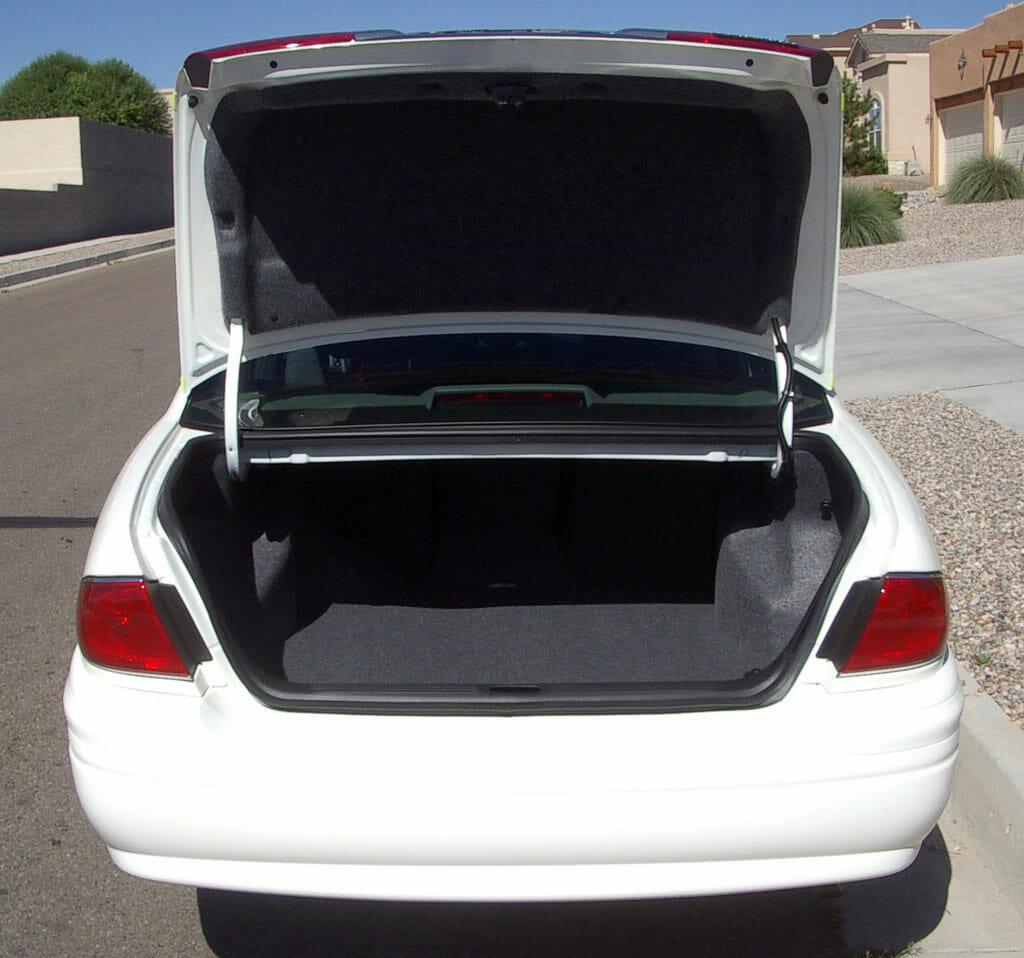
20 Essential Emergency Items You Better Store Your Car’s Trunk  The trunk of my car is an amazing place. In it, you can find tools and equipment to deal with a variety of situations.


Most of what is there can and has helped me out in an emergency; but pretty much all of it has helped someone else, too, when they were facing problems of their own. I have found that helping others in a time of need is a great opportunity to share the message of preparedness and convert them to our way of looking at things.


I need to mention here that this is different than just being prepared to be caught in a blizzard, which I’ve written about previously. While many of the items overlap, there are things in my trunk which have nothing to do with surviving a blizzard. Besides, where I live, a blizzard could only happen if God gave us one by His miraculous power.


Goofy Gadget Can Recharge Your Laptop — And Jump-Start Your Car!


So, what sorts of things can be found in my trunk?


  1. Tools – While not huge, I have a fairly complete mechanics tool kit in the car. There are always situations where your car or the car of another needs to be repaired.

  2. Hose repair kit – While not the best repair kit in the world, this splicing kit will get you back on the road again if you have a hose that pops.

  3. Emergency belt kit – Once again, this isn’t the best repair going, but there’s a kit you can buy which allows you to put links together and make a belt of any length. While originally intended for V-belts, it works for multi-V, as well.

  4. Water (2 gallons) – Both for drinking and for overheated cars.

  5. Radiator seal – For the obvious reason.

  6. Oil, brake fluid and power steering fluid – Again, for the obvious reasons.

  7. Toilet paper – A life essential. It’s amazing how many times someone is caught in the middle of nowhere, without a bathroom in miles.

  8. Paper towels – Not quite as useful as TP, but a close second.

  9. Emergency food – High-energy bars, nuts and even some canned goods for emergency meals. If you find someone who is stranded, they’ll be hungry, as well.

  10. Blanket – For keeping them warm and dealing with shock. I have an old wool army blanket I use. Being wool, it still retains some insulating value, even when wet.

  11. First–aid trauma kit – I carry a rather extensive first-aid kit, with enough in it to take care of fairly serious wounds. Car accidents, as well as accidents in the woods, generally require more than just an adhesive bandage. I have a tourniquet, large bandages and even butterfly closures as part of this kit. The water I carry is pure enough for irrigating a wound.

  12. Personal survival kit – My personal (large) EDC kit, which doubles as both a survival kit and a get-home bag, is always in the car. It also contains a number of useful items for everyday needs, ranging from a spork, through a rain poncho to a phone charger.

  13. Jumper cables – No matter how sophisticated cars get, these are still needed.

  14. Tow strap – For towing a vehicle off the highway or to the nearest service station.

  15. Flares and an emergency triangle – It’s always safer to let people know that there’s a reason why you’re pulled over to the side of the road.

  16. Rope and bungee cords – For my own use or the use of others.

  17. Duct tape – What emergency kit is complete without duct tape?

  18. Tire inflator and compressor – Few people’s spare tires actually have enough air in them.

  19. A good hydraulic jack – I don’t know about you, but I don’t trust those scissors jacks, and if you’ve never greased them, they’re hard to work with.

  20. Fire extinguisher – I haven’t needed this often, but when you need one, you need one.

As you can see, this list is rather extensive. Some of those items are actually kits that are sizeable in and of themselves, containing a number of items. All told, the contents of my trunk give me the capability of dealing with a variety of situations, as well as taking care of myself and my car, should the need arise.


I’d like to reiterate that just about everything in my trunk has been used multiple times. Life just seems to hand us a lot of situations which go beyond what would be considered “normal.” As we all know, being ready for these situations requires going beyond what others do. Carrying along some emergency equipment in my car is a small price to pay, for the security it gives me.


Oh, and, all that equipment fits in the space under the back shelf, leaving the majority of my trunk open for carrying food home from the supermarket or materials home from the hardware store. I can even fold the backseat down and carry lumber home, just by moving one box to the side. So, I’m really not losing anything by carrying all that along with me.


What items would you add to our list? Share your tips in the section below:

Wednesday, July 5, 2017

Carmageddon: Record Incentives And Financing Terms Fail To Stem The Auto Bleeding In June

Yesterday we noted that auto investors celebrated the fact that, while auto sales were down massively year-over-year (to the tune of nearly 6% for the Detroit 3), June figures were "less bad" than expected, so "good".  All of which sparked even more "irrational exuberance" among OEM equity owners and sent Ford/GM shares soaring. 


But, rather than focus on the headline numbers, perhaps those equity owners should spend a little more time analyzing the record incentives and deteriorating underwriting standards that have been required to generate those "less bad" results.


Take, for example, incentive spending for the month of June.  As Automotive News points out, overall industry incentive spending soared nearly 10% YoY with brands like Hyundai and Honda slashing 42% and 20%, respectively, to move their bloated dealer inventories.


ALG reports automakers spent an average of $3,550 per new vehicle sold in June, up 9.7 percent from a year ago. The average discount is expected to account for 10.8 percent of the average transaction price of vehicles sold last month -- marking the 11th time in the past year that incentive spending has accounted for 10 percent or more of the sale price, according to industry forecasters.


Autodata Corp. says average incentive spending heading into June was up 15 percent to $3,516 per vehicle sold. Despite weakening demand for cars, incentive spending for light-duty truck increased 16 percent compared to 13 percent for light-duty passenger cars during the first five months of the year.


American automakers, which continue to offer the most cash on the hood, matched the industry average for incentive spending, up 14 percent through May, while average discounts at Asian brands increased 19 percent and deals at European automakers rose only 3.9 percent.


ALG reported Subaru, Hyundai and Kia experienced the largest increases in incentive spending in June compared with a year ago. Average discounts at Subaru -- the lowest spender in the industry -- increased 63 percent to $1,032; followed by Hyundai, rising 42 percent to $3,259; and Kia, with an increase of 25 percent to $3,384.


auto


Meanwhile, Edmunds notes that auto loan terms continue to get stretched out to record new highs each month all in an effort to continually lower monthly payments so that entitled Americans can buy cars they really can"t afford.


Edmunds analysts found that the average loan term for new vehicles soared to a record high of 69.3 months in June, an increase of 1 percent from June 2016 and up 6.8 percent from five years ago. In addition, the average amount financed by new-car buyers jumped to $30,945, which is a 2.6 percent increase from this time last year and 17.2 percent more than five years ago. And the average monthly car payment is now $517: That"s 2.1 percent more than in June 2016 and an 11.3 percent increase over five years.


"Stretching out loan terms to secure a monthly payment they"re comfortable with is becoming buyers" go-to way to get the cars they want, equipped the way they want them," said Jessica Caldwell, executive director of industry analysis for Edmunds. "It"s financially risky, leaving borrowers exposed to being upside down on their vehicles for a large chunk of their loans, but it"s also a sign that consumers are still confident enough in the economy to spend more on their vehicles and commit to paying for them longer."


And it"s not just new car loans as used car terms are getting stretched out as well...a fact that we"re sure will serve consumers well if Morgan Stanley"s downside case for used car prices ever actually plays out (see "Morgan Stanley: Used Car Prices May Crash 50%").


Consumers in the market for a used vehicle are also willing to stretch their payments. An Edmunds analysis found that the average loan length for a used car is now 66.9 months, up 0.1 percent from June 2016 and up 6 percent than five years ago. The average amount financed has risen to $21,142, a 0.4 percent jump from last year and an increase of 9.9 percent over five years. And the average used-car payment in June was $383, which is 0.8 percent more than a year ago and up 3.5 percent from five years ago.


And don"t even get us started on the record level of "channel stuffing" going on the industry...


...with GM being the biggest culprit with inventory days up a modest 46% YoY to an all new record high of 105 days.


Finally, as Stone McCarthy Research points out, Americans, flush with their $0 down, 0% interest for 84 month auto loans, continued to shun cars for much more expensive, and profitable, trucks and SUV"s.  Another "positive" for the industry...if you manage to ignore those record incentives we mentioned above which are eroding away all that extra profit.


General Motors domestic car sales came in much lower than we expected, and declined nearly 34% from June 2016. Their domestic light truck sales were much stronger than we expected, and were up over 7% from last year.


Domestic car sales were weaker than expected for Ford as well, and fell 23% from last year. Ford domestic light truck sales also came in below our expectations, though were not weak as ford domestic car sales, and were only up about 6% from June 2016.


Chrysler domestic light car sales came in right where we expected, down 19% from last year. Domestic light truck sales for Chrysler were below our expectations though, and fell around 3% from last year.


Car sales:


Truck sales:


Of course, things like math and critical thought are way more complicated than quickly reacting to "less bad" headlines.  That said, in the long run, math and logic tend to prevail.


Friday, May 19, 2017

Mexico's Crime Wave Spirals Out Of Control As Auto Thefts Surge

For a country that generates roughly 10% of its GDP from tourism, mostly from Americans, Mexico"s surging violent crime rates, courtesy of its notoriously brutal drug cartels, is quickly becoming a "yuge" economic issue.  As we recently noted, more Americans have been killed while traveling abroad in Mexico than any other country, by a staggering margin, no less.  


Source: data.world


And while Mexico would love to shake it"s bad rap when it comes to violence, the negative datapoints just continue to pile up.  The latest such data comes courtesy of Mexico"s car insurance association Amis, which found that auto thefts spiked in March 2017 by over 20% and current stand at multi-year highs.  Per Bloomberg:


In March, the number of auto thefts rose 21 percent from the same month a year earlier, according to numbers from the car insurance association known as Amis. Meanwhile, the recovery rate -- the percentage of stolen cars that police were able to recover -- dropped to its lowest since at least 2005.


The car-theft trend “will continue throughout the second quarter which will, in turn, have an impact on first-half returns," Francisco Uriostegui, an analyst at Moody’s who helped write the report, said in an interview. “In the end, it’s the customer that will have to pay more, for a higher premium and it’ll be due to a drop in the recovery rate for these vehicles."


Mexico


And while auto thefts may not seem all that threatening, it is just another datapoint that suggests an alarming trend in overall violence in a country that already leads the U.S. State Department"s ranking for most travel warnings.


Source: data.world


Oddly enough, no amount of State Department warnings have yet caused Americans to curb their appetite for those cheap Cabo vacations...


Source: data.world


Though we suspect it"s only a matter of time.

Thursday, April 13, 2017

Remember the Housing Bubble of 2008? Meet the the Car Loan Bubble of 2017

(ANTIMEDIA) After nearly a decade of being able to borrow money for next to nothing, interest rates are finally beginning to creep higher. Even the relatively small increases seen so far have caused problems in the previously booming automobile industry. The size of the auto loan market has ballooned to a historic 1.1 trillion dollars, and subprime lending has once again become the norm. Teaser offers that allow people to get cars with zero money down and 84-month financing have fueled a wave of irresponsible spending. Americans’ tendency to associate success with having nice things has driven many people who can’t afford to buy a house to get the next best thing — a brand new car.


The data released so far in 2017, however, has started to raise questions about how much longer these spending habits can last. There has been a significant drop in new car sales and a sharp increase in the delinquency rates of subprime borrowers. Inventories across the country have started to build up, and if things don’t turn around soon, the excess cars sitting on lots will eventually force prices lower. According to analysts at Morgan Stanley, price declines will also impact the used car market, and some predictions are calling for up to a  50% decline by 2021.


We"re revolutionizing the news industry, but we need your help! Click here to get started.


Millions of borrowers who bought cars on credit could see the value of their vehicles plummet yet still have to pay off their full loan amount. It’s similar to 2008 when the mortgage market collapsed and plunged home prices across the country dramatically lower. Property values fell so much that people suddenly owed more on their homes than they were worth. Those homeowners then had to make the decision of whether to wait it out and keep paying their inflated mortgage rates or cut their losses and sell. Cars, on the other hand, have never been an investment, and this kind of situation in the auto industry would likely trigger an avalanche of private sales as people try to get out from under their debts.


Fitch Ratings Inc. talked about these recent developments in their latest report:


“Fitch expects that deteriorating credit performance will be more acute in the subprime segment, driven to some extent by the expansion of less-tenured independent auto finance companies that have demonstrated higher-risk appetites and less underwriting discipline…NADA’s Used Vehicle Price Index, which measures wholesale prices of used vehicles up to eight years old, declined over 6% in 2016 and was down 8% year over year through February 2017, marking the eighth consecutive monthly decline. Used vehicle prices were down 1.6% sequentially in February, reflecting the sharpest monthly decline for the index since November 2008 and a seasonal anomaly for February.”


Wells Fargo is one of the largest holders of subprime auto debt and recently took steps to limit their exposure when investors started to recognize the possible downside. It has even been reported that many of these loans were given out to buyers who had no credit score at all.


The risks aren’t limited to just lenders and borrowers but also extend to institutional investors. Thousands of these high-risk car loans have been bundled together into products similar to the mortgage-backed securities that undermined financial stability in 2008. Investment fund managers have bought billions of dollars worth of this securitized debt while trying to maximize returns in this low-interest rate environment.  Even though this bubble, on its own, isn’t enough to destabilize the economy, the additional problems with student loans and record high rental costs have had a devastating impact on the net worth of most working Americans.


The real reason these loose lending standards have reemerged in the auto sector is to prop up the system through consumerism. The trade-off has been a lack of any substantial savings by the average person. Instead of planning for their futures, people have financed overpriced cars for six or seven years while still having to make monthly payments on a student loan. This next generation isn’t going to have the extra money needed to afford a home, build an investment portfolio, or start a business. Instead, they’re setting themselves up to work for years trying to get out from under the stress that comes from accepting debt enslavement.


As time goes on, more and more weaknesses in the economy will reveal themselves. Whether it’s the collapse of the retail market, uncertainty in the Eurozone, or the automation of low-skilled workers, something will eventually cause public confidence to break. The auto loan market is a microcosm of the systemic imbalances that have become normal since the Federal Reserve and U.S. government bailed out the system in 2008. Despite this clear manipulation, individuals who accumulated massive debts are still responsible for their actions, but the rampant lack of economic knowledge has led millions of people into a life in quicksand.


Creative Commons / Anti-Media / Report a typo

Saturday, February 25, 2017

5 Winter Survival Items EVERYONE Should Store In Their Vehicle

5 Winter Survival Items EVERYONE Should Store In Their Vehicle

Image source: Pixabay.com


In an earlier post this winter, I wrote about three survival gadgets that everyone should store in their vehicles during the coldest months of the year. Let’s now turn to the basics.


Here are five often-forgotten items that everyone should store in their car, truck or SUV during winter:


5. Light sources.


Basically, the nightmare scenario that we’re preparing for is the most commonly experienced during the winter.


The cold has a way of freezing the life out of our car batteries (jumper cables being a given addition to this list). The cold also tends to result in the loss of friction – that is, the force of physics that cars depend on to keep the wheels on the road. Hence is why I recommend adding a work lantern with an attached magnet. That way, you won’t be fumbling in the long winter’s night while trying to get your car back on the road again.


And in the event that there’s no possible way of driving out of that snow bank, I’d also recommend a tactical flashlight with SOS signaling capabilities.


4. First aid.


Simply put, one sheet of ice can put us in the ER on a normal day. Besides, in the event that you find yourself in a survival situation, the events leading up to such a scenario are often the same ones that make a first-aid kit necessary in the first place (such as a black-ice-caused car accident).


3. Emergency communication.


Let’s play out a particular scenario for a moment…


Goofy Tiny Gadget Can Jump-Start Your Car — And Charge Your Smartphone!


Pretend your vehicle has slid into a ditch, but you also happen to be on a road that tends not to see much traffic — especially in this weather. And so, you sit in your (now stationary) metal shelter with wheels, wondering what to do next. Of course, you’d phone for help, but you’ve got a grand total of zero bars to work with, so that’s out of the question. Should you walk for help? How low will temps reach tonight? Will this lull in snowfall hold until you make it to assistance?


These gaps in weather intelligence info can be alleviated with a simple pocket weather radio, since you’d be able to hear real-time weather broadcasts as the storm unfolds.


5 Winter Survival Items EVERYONE Should Store In Their Vehicle

Image source: Pixabay.com


I’d also recommend keeping at least a mini CB radio on hand, which can run on the adapter to a cigarette lighter power supply. Not only could you tune in to CH9 (emergency channel), but you’d even be able to communicate to nearby CB operators … who might just be kind enough to alert emergency personnel to your present predicament. At which point, set your flashlight to SOS-mode and await the cavalry.


2. Chains, n’ such.


Perhaps one of THE most obvious additions to your winter emergency vehicle stash would be the appropriately sized cables/chains for your tires. At least in my own experience, I’ve seen a Saturn SL2 rip through two feet of road powder with chains, while the 4×4 Jeep I was in remained stuck. A humbling experience, I do admit.


I’d also recommend adding other tire-traction items, such as traction mats. You also might want to purchase a traction “boot,” which are these ingenious tabs that clamp to the wheel and dig into the snow like a cleat.


1. Things that make you warm.


Last (and certainly not least), make sure you’ve got a change of the warmest possible clothing you own (that you don’t mind storing in your vehicle indefinitely and you use only for emergencies). In this instance, you might not necessarily have to concern yourself with moisture and water resistance, since you’ll be staying inside the vehicle. However, I would still NOT consider cotton materials an option. Cotton is just horrible for winter apparel, since even the slightest amount of sweating can result in chills … and chills are a precursor to hypothermia. I’d recommend wool materials. Quite frankly, I will always recommend wool (or smart fleece.)


And while we’re at it, you might as well do your due diligence and equip your ride with a polar fleece thermal blanket. If you’re going to be stuck inside a cold metal box, this will at least keep your body heat to yourself.


What would you add to our list? Share your tips in the section below:


Learn How To ‘Live Off The Land’ With Just Your Gun. Read More Here.

Sunday, January 15, 2017

Driverless Shuttles Hit Las Vegas: No Steering Wheels, No Brake Pedals

Submitted by Mike Shedlock via MishTalk.com,


Electric, driverless shuttles with no steering wheel and no brake pedal are now operating in Las Vegas.


navya-lv


There’s a new thrill on the streets of downtown Las Vegas, where high- and low-rollers alike are climbing aboard what officials call the first driverless electric shuttle operating on a public U.S. street.


The oval-shaped shuttle began running Tuesday as part of a 10-day pilot program, carrying up to 12 passengers for free along a short stretch of the Fremont Street East entertainment district.


The vehicle has a human attendant and computer monitor, but no steering wheel and no brake pedals. Passengers push a button at a marked stop to board it.


The shuttle uses GPS, electronic curb sensors and other technology, and doesn’t require lane lines to make its way.


“The ride was smooth. It’s clean and quiet and seats comfortably,” said Mayor Carolyn Goodman, who was among the first public officials to hop a ride on the vehicle developed by the French company Navya and dubbed Arma.


“I see a huge future for it once they get the technology synchronized,” the mayor said Friday.


The top speed of the shuttle is 25 mph, but it’s running about 15 mph during the trial, Navya spokesman Martin Higgins said.


Higgins called it “100 percent autonomous on a programmed route.”


“If a person or a dog were to run in front of it, it would stop,” he said.


Higgins said it’s the company’s first test of the shuttle on a public street in the U.S. A similar shuttle began testing in December at a simulated city environment at a University of Michigan research center.


The vehicle being used in public was shown earlier at the giant CES gadget show just off the Las Vegas Strip.


Las Vegas city community development chief Jorge Cervantes said plans call for installing transmitters at the Fremont Street intersections to communicate red-light and green-light status to the shuttle.


He said the city hopes to deploy several autonomous shuttle vehicles — by Navya or another company — later this year for a downtown loop with stops at shopping spots, restaurants, performance venues, museums, a hospital and City Hall.


At a cost estimated at $10,000 a month, Cervantes said the vehicle could be cost-efficient compared with a single bus and driver costing perhaps $1 million a year.


The company said it has shuttles in use in France, Australia, Switzerland and other countries that have carried more than 100,000 passengers in more than a year of service.


Don’t Worry Tax Drivers


Don’t worry taxi drivers because some of my readers say …


  1. This will never work

  2. There is no demand

  3. Technology cost will be too high

  4. Insurance cost will be too high

  5. The unions will not allow it

  6. It will not be reliable

  7. Vehicles will be stolen

  8. It cannot handle snow, ice, or any adverse weather.

  9. It cannot handle dogs, kids, or 80-year old men on roller skates who will suddenly veer into traffic causing a clusterfack that will last days.

  10. This is just a test, and testing will never stop.

Real World Analysis


Those in the real world expect millions of long haul truck driving jobs will vanish by 2020-2022 and massive numbers of taxi job losses will happen simultaneously or soon thereafter.


Yes, I bumped up my timeline by two years (from 2022-2024 to 2020-2022) for this sequence of events.


My new timeline is not all tremendously optimistic given the rapid changes we have seen.

Monday, January 9, 2017

Man Furious After Cops Issue Him Ticket for Warming Up His Car in His Own Driveway

Roseville, MI — In Police State USA, warming up your car in your own driveway can land you in jail, or worse. Residents across the land of the free are quickly learning how unfree they actually are as they are issued citations for everyday activities such as allowing your engine to warm up on a cold morning.


Nick Taylor, of Roseville, Michigan, has taken to social media to express his anger over police issuing him a notice of extortion (citation) for doing what millions of people every morning do across the country.


“Every person warms up their car,” Taylor said. “We live in Michigan!”


If you don’t think a citation for warming up your car will land you in jail — try not paying it. If you don’t think a citation for warming up your car can lead to your death — try resisting your captors when they come after you for nonpayment.


All tickets are enforced with the threat of violence. To deny it is to deny reality. So, when government officials begin issuing threats of violence for everyday activities such as warming up your car, it’s time to start paying attention.


“Vehicle parked in drive with keys in ignition, motor running — no one around,” the Roseville officer wrote on the ticket in a sorry attempt to justify the extortion.


The officer never attempted to knock on Taylor’s door to inform him of the asinine law, and instead issued a demand for money.


“That would have been respectful,” Taylor said. “I had no clue that this was a law, an ordinance.”


When asked by WDIV 4 why cops were stealing money from people for warming up their cars, police said the key component of the case is whether the key is in the car. Using a remote starter is OK because the key isn’t in the car. If the key is in the car, it’s a state and local violation, because somebody could take off in the car.


“You’re putting the public at risk,” Roseville police Chief James Berlin said. “This is purely a public safety issue.”


However, if the public were truly at risk by a car running in a driveway, this cop should have notified Taylor of it — in the interest of public safety. But that did not happen.


Instead, this officer showed that revenue collection and revenue collection alone was his mission by doing nothing to stop the supposed risk.


Taylor quickly went to Facebook after receiving the citation and let his feelings be known. The idea of being extorted for warming up one’s car apparently resonated with people as it has shared more than 13,500 times as of Monday.


After seeing the post on Facebook, Chief Berlin had no problem publicly noting that he wished ill-will on Taylor.


“You see the disparaging comments he made about my officer?” Berlin said. “Drop dead.”


Taylor said he didn’t mean to call the officer a name, but noted how ridiculous the ticket was.


“Unattended car?” Taylor said. “I’ve done this every day for seven years. Every person warms up their car. We live in Michigan.”


Matt Agorist is an honorably discharged veteran of the USMC and former intelligence operator directly tasked by the NSA. This prior experience gives him unique insight into the world of government corruption and the American police state. Agorist has been an independent journalist for over a decade and has been featured on mainstream networks around the world. and now on Steemit

Google's Self-Driving Minivans Arrive This Month

Submitted by Mike Shedlock via MishTalk.com,


It’s been such a hoot reading comments from people telling me that self-driving vehicles are decades away if ever.


The nay-sayers have been proven laughably wrong given Google’s New Self-Driving Minivans Will Hit the Road by the End of January 2017.


waymo


Waymo, the self-driving car startup spun-off from Google late last year, will be deploying its fleet of self-driving Chrysler Pacifica minivans onto public roads for the first time later this month, the company announced at the North American International Auto Show today.


The minivans will be hitting the roads in Mountain View, California and Phoenix, Arizona, where the company’s self-driving Lexus SUVs have already driven thousands of miles over the past few years. Also today, Waymo gave the public its first look at the self-driving Pacificas, which have been under wraps since the deal between Google and Fiat Chrysler was first announced back in May 2016.


Waymo says that for the first time, its producing all the technology that enables its cars to completely drive themselves in-house.


This allows the company to exert more control over its self-driving hardware, as well as bring the cost down to ridiculously cheap levels. In a speech in Detroit, Waymo CEO Jeff Krafcik said that by building its own LIDAR sensors, for example, the company was shaving 90 percent off its costs. That means sensors that Google purchased for $75,000 back in 2009 now only cost $7,500 for Waymo to build itself.


Velodyne, a top supplier of LIDAR, retails its sensors for $7,999. But by building its own (or contracting out the manufacturing), Waymo is able to get LIDAR sensors to its exact specifications.


When it spun off Waymo in early December, Google essentially conceded that it was dropping its plan to build its own car, instead refocusing its efforts on making the hardware and software needed to power self-driving. It may be too soon to say that Google is abandoning its plans to build a fleet of driverless cars without steering wheels and pedals. Previously, Krafcik made it clear that Waymo “is not a car company, there’s been some confusion on that point. We’re not in business of making better cars, we’re in the business of making better drivers.”


Waymo Minivan Arrives


Mom Have the Car Pick Me Up


Think about that headline for a second. Also consider seniors who do not like to drive at night and millennials who prefer not to own a car.


All the talk of no need, no desire, etc. gets thrown out the window.


Yes, we still need national regulation. But I expect legislation will be here by 2020-2021 at the latest.


Goodbye Trucking, Taxi, Limo Services as Known Today


I now update my timeline from 2022-2024 to 2020-2022 for millions of long-haul truck jobs to vanish. And that’s a very conservative date.


Taxi service will follow soon after trucking, if not simultaneously.


If you are a long-haul truck driver or airport transport driver, your days are numbered.


Related Articles


  1. January 5, 2017: 3,000 Ride-Sharing Cars Could Replace 13,000 New York City Taxis

  2. August 24, 2016: New Lidar Chips for Self-Driving Vehicles are Smaller Than a Dime, Cost $10 to Manufacture

  3. August 18: 2016: Uber Offers Driverless Rides This Month! What About Snow, Rain, Pigeons, 80-Year-Olds on Roller Skates?

Those who said sensors would drive the cost to $80,000 were more than a bit off. Also see point 2 above.


Those who say cars can’t handle snow, old men on roller skates, or kids veering into traffic need consider point 3 above.


Those who say theft will be easier are not thinking at all.


Those who said such technology was decades away were dead wrong.


Hugely Deflationary


This technology is extremely disruptive and hugely deflationary.

Monday, October 17, 2016

Could Air Pollution Be Causing More Traffic Accidents?

Poor weather, cell phones, radios, alcohol, and jerks: we think of these as some of the most common causes of car accidents. However, scientists at the London School of Economics say that air pollution, of all things, should be added to that list.

Researchers say they looked at 5 years’ worth of data and found that when levels of nitrogen dioxide (NO2) rose just a microgram per cubic meter, the number of car crashes increased by 2%. [1]


You might be tempted to look at the information and think, well, that proves nothing. There might have just been more traffic, and therefore more crashes and more pollution. But the researchers found that the increase remained even when adjusting for the extra traffic.


Sager and his colleagues used data from NASA satellites and other sources to isolate the precise effects of pollution alone rather than other factors. [2]


Their theory: air pollution impairs drivers’ fitness, and causes distracting physical symptoms like watery eyes and an itchy nose. [1]


A previous study backs up this theory. In that study, scientists discovered that air pollution inside a car can be more than double that on the outside because the NO2 builds up in a small space.


Furthermore, lead researcher Lutz Sager of the Grantham Research Institute on Climate Change and the Environment at the London School of Economics and Political Science (LSE), said:


“There is research that shows that students do worse on tests when there are higher amounts of air pollution in the rooms where they have their test sites.” [2]


This study is the first of its kind to examine how toxins in the air affect a person’s ability to operate a vehicle. Sager explained:


“Although it has already been shown that air pollution adversely affects human health and the ability to carry out mental tasks, this is the first published study that assesses the impact on road safety.


The analysis identifies a causal effect of air pollution on road accidents, but I can only speculate about the cause of the link.


My main theory is that air pollution impairs drivers’ fitness. However, other explanations are possible such as air pollution causing physical distractions, perhaps an itching nose, or limiting visibility.”


Read: Toxic Nanoparticle Air Pollution Found in Human Brain Tissue


Air pollution can contain many other toxins besides than NO2, among them carbon monoxide, sulphur dioxide, ozone, and small particulate matter. Nitrogen dioxide, however, seems to have the biggest impact. [1]


Translating the Data


For the study, Sager divided the U.K. into a grid of 32 areas, each covering about 4,784 square miles, and mapped accidents to the level of air pollution between 2009 and 2014 as stated by the Department for the Environment, Food & Rural Affairs (Defra). [2]


Just one microgram of NO2 per cubic meter above the daily average proved to be enough to increase the number of accidents by 2%. Unsurprisingly, cities felt the biggest effect of this.


Based on Sager’s calculations, in the area containing west London, which is home to some of the highest levels of air pollution, a cut of approximately 30% in the concentration of NO2could cut the number of car accidents by nearly 5% per day.


Read: Thousands of American Lives Could Be Saved by Stricter U.S. Air Pollution Standards


The most polluted areas of the city sometimes have levels of NO2 higher than 97 micrograms per cubic meter on average. And with 150,000 crashes involving injuries each year, preventing just 2% of collisions would protect thousands of people from harm. [1]


Source: Kings Cross Environment

Sager went on:


“Whatever the exact mechanisms responsible, the robust finding of a significant effect of air quality on road safety is important given the high cost of road traffic accidents through damage to vehicles and deaths and injuries to people every day.


Although this analysis has used data for the United Kingdom, I think my findings are relevant to other parts of the world. These additional costs from traffic accidents strengthen the case for reducing air pollution, particularly in congested cities.


My analysis suggests that the causal effect of air pollution on road traffic accidents measured in this study more likely stems from nitrogen dioxide or other pollutant gases rather than particulate matter.”


All Talk, No Action


The ClientEarth environmental law firm has been fighting to secure U.K. compliance with the E.U. air quality standards for the past six years, and will return to court this month to continue the battle. [2]


The U.K. Supreme Court had ordered the government (which had already missed a 2010 deadline) to develop plans to bring U.K. air pollution within legal levels as soon as possible. However, the government’s proposals didn’t visualize compliance in the worst affected areas until 2025.


Sources:


[1] The Telegraph


[2] Financial Times


Image Sources:


Kings Cross Environment


Storable Food


About Julie Fidler:


Author Image
Julie Fidler is a freelance writer, legal blogger, and the author of Adventures in Holy Matrimony: For Better or the Absolute Worst. She lives in Pennsylvania with her husband and two ridiculously spoiled cats. She occasionally pontificates on her blog.