Showing posts with label Extreme Survival. Show all posts

Tuesday, May 8, 2018

How To Turn Old Meat Into Survival Jerky That Lasts MONTHS AND MONTHS

How To Turn Old Meat Into Survival Jerky That Lasts MONTHS AND MONTHS

jerky — wikipedia


Have you ever found yourself looking for something in the freezer, and then stumbled upon a couple of packages of venison that somehow lost their way? This happened to me several months ago and I couldn’t have been happier. Why did the notion of being reunited with some venison make me happy? One word: jerky.


Making jerky is one of those time-honored traditions that my family just loves. It is an extremely lean and healthy snack for everyone. I love it because instead of eating processed garbage, my kids are eating a snack high in protein and not simply refined sugar. I love jerky because it is the perfect reason for me to sharpen my favorite knife and fire up the smoker.


Restore Your Old Blades To A Razor’s Edge In Just Seconds!


I have a very simple recipe for making jerky, and it works for both venison and beef. I have never tried it with other meats, although I cannot imagine the process would be dramatically different. What follows is a very basic process for making jerky using an electric smoker. I prefer to use mesquite when smoking meats like venison and beef, but the choice is totally yours.


Ingredients


  • 2 pounds venison

  • ½ cup soy sauce

  • 1/4 cup Worchester sauce

  • ½ teaspoon Morton Tender Quick Cure

  • 1 teaspoon chili powder

  • 1 tablespoon garlic powder

  • 1 tablespoon onion powder

  • 2 tablespoons rough cracked pepper


The Process

How To Turn Old Meat Into Survival Jerky That Lasts MONTHS AND MONTHS

Image source: Pixabay.com


You want to begin working with this stuff the night before you intend to fire up the smoker. Make sure your venison is trimmed of any fat or sinew and is sliced thin. The thinner the better here, since it will help it to dry out easier and will provide more surface area for the marinade to adhere. Make your goal for strips around ¼-inch thick or so. It might be helpful when cutting the meat to have it be not quite frozen, but a bit stiff. This will give you a little more control as you are slicing it. Also, take a couple of minutes and sharpen your knife before you get going. A sharp knife will make this job a lot easier.


Once you have the meat sliced, just put it aside and focus on the marinade. Put all of the ingredients except the cracked pepper in a plastic storage bag and make sure it is mixed thoroughly. Once this is done, add the venison and place it in the refrigerator overnight.


The next day, you want to get your smoker going low. Try to hit somewhere between 150-175 degrees Fahrenheit. Next, take the marinated venison out of the fridge and drain the marinade. Spray the racks of your smoker with cooking spray and begin laying out the venison strips. The last thing you want at this step is to have the strips touching each other in any way, so space accordingly. Before you place the jerky in the smoker, liberally sprinkle them with the cracked black pepper.


Once the racks are in the smoker, monitor the temperature for the next several hours. Avoid adding any wood at this time and just let the smoker do its thing. After about three hours, check on the jerky. It should feel almost sticky to the touch. If this is where you are at, then add a handful of woodchips to the smoker to add a smoky flavor to the venison. After this, you are going to want to wait on the smoker for another few hours. It is also helpful to rotate the racks from time to time to ensure that the racks are presented with an even amount of heat and smoke.


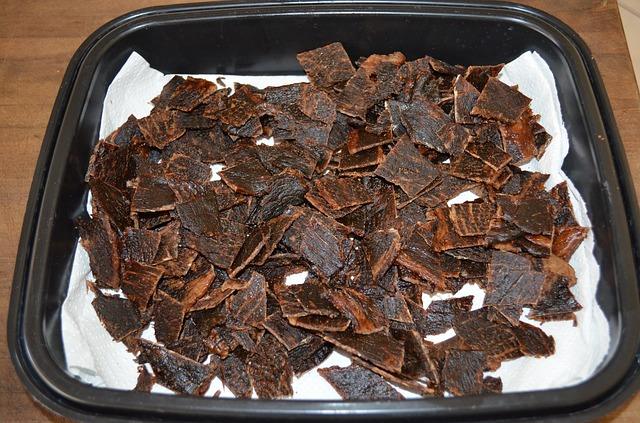
The time it will take your smoker to successfully turn that wonderful venison into tremendous jerky can vary. Expect it to take anywhere from 5-6 hours depending on the size of the slices and the temperature of the smoker. If you are nervous about the jerky after it comes out of the smoker, you can always finish it in the oven at 200 degrees for an additional 10-15 minutes or so. You will know the jerky is done when you can bend a piece and it begins to splinter. If the jerky snaps when you bend it, it is too far gone, although will still be delicious. Once it is done, put the jerky in a glass jar or vacuum seal it for storage.


If you use the cure, it will last you months and months, making it useful out in the wild or just for storage as a survival food. Without the cure, I would recommend refrigeration and prompt eating to avoid any mold growth. However, if your family is like mine, then you will never be able to find out just how long it can truly last, because it will be gone the second you turn your back.


What jerky-making advice would you add? Share your tips in the section below:


Learn How To ‘Live Off The Land’ With Just Your Gun. Read More Here.



The post How To Turn Old Meat Into Survival Jerky That Lasts MONTHS AND MONTHS appeared first on Off The Grid News.

Wednesday, May 2, 2018

Top 8 Most Overlooked Survival Items To Stockpile

Whenever survival comes to mind, there are always specific items that we think of first. Food such as beans and rice, clean drinking water, firearms and ammunition, medical kits, and gasoline probably come to mind.
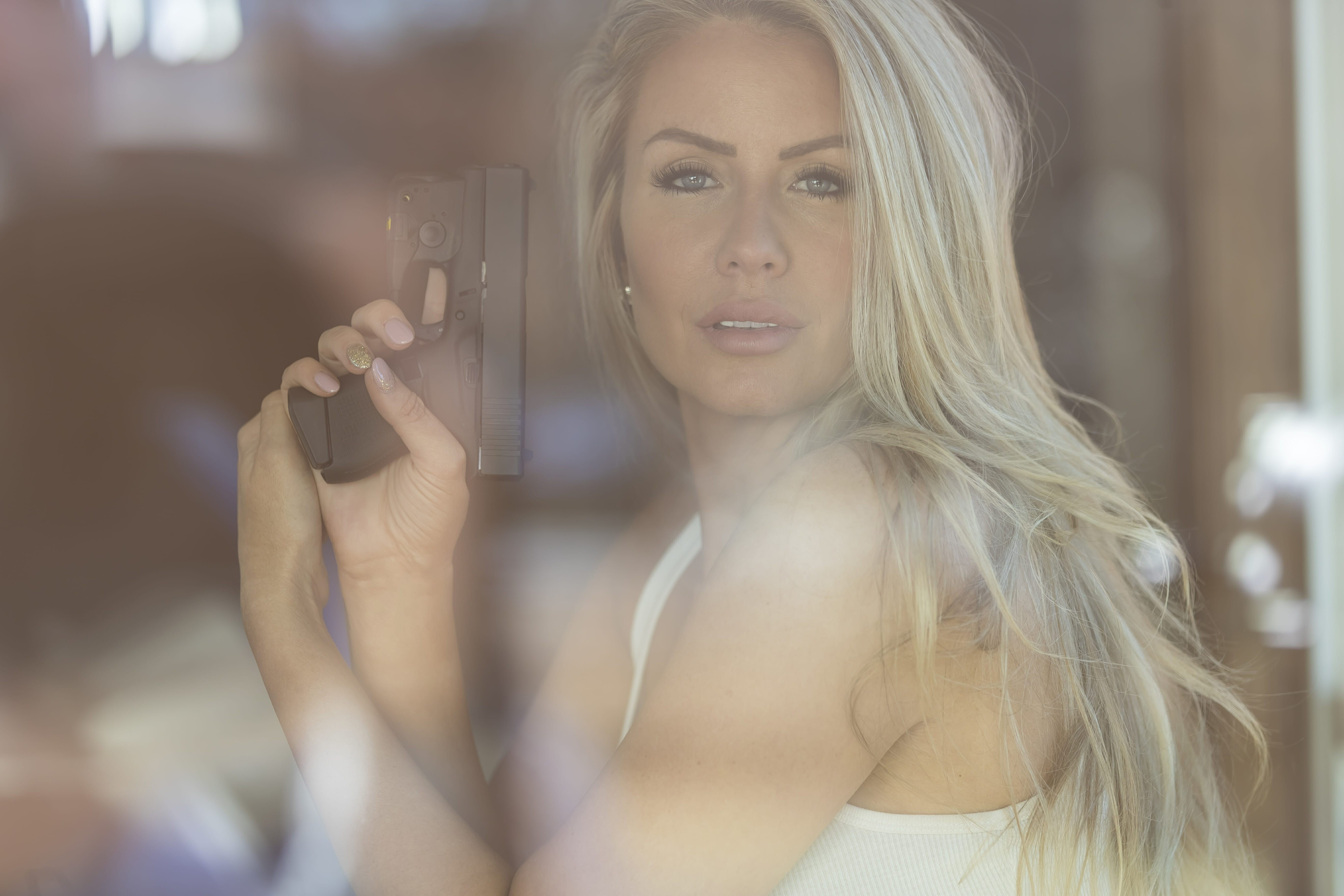
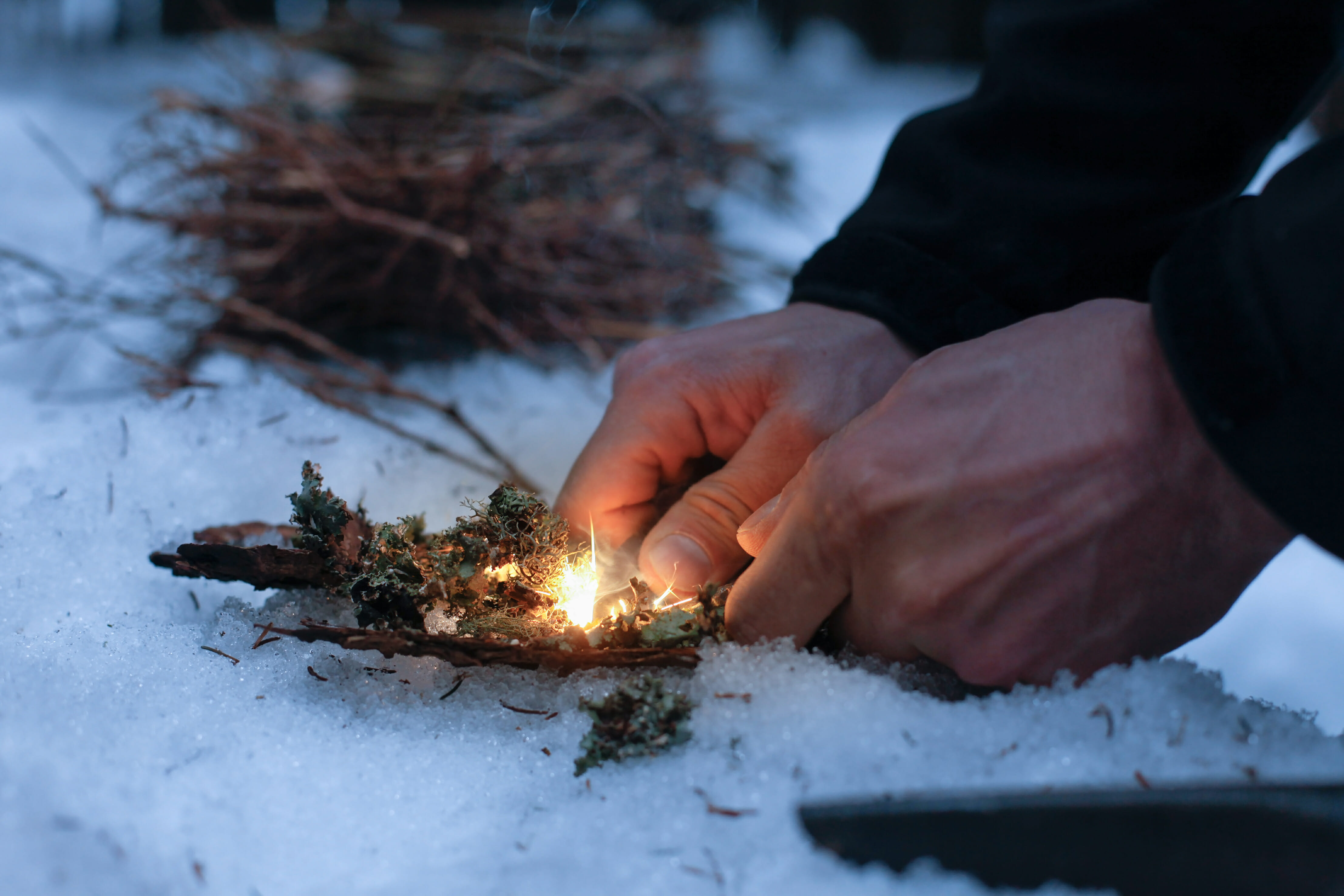
That being said, there are also many more essential items to store as well but that don’t receive nearly as much attention in survival items as they should, or at least not as much attention as the items listed above.


Here are the top eight most overlooked survival items to stockpile:


BAKING SODA


Without a shadow of a doubt, baking soda is easily the most versatile cleaning and personal hygiene agent on the planet. It’s also incredibly cheap and easy to store, and as a result, you would think that it would receive just as much attention as items such as food, water, and ammunition in survival circles. But for whatever reason, it doesn’t.


With baking soda, you can make toothpaste, soap, shampoo, deodorant, dish washing soap, and floor cleaner to name a few. It will prove itself as one of the most useful products you can own not only in a survival situation but your everyday life as well, so be sure not to overlook it as part of your disaster preparedness plans.


CLOTHES


Have you ever thought about what your clothes are going to go through in a survival situation? You’re going to be gardening, foraging, fishing, hunting, making repairs on vehicles, tending to your home or homestead, chopping firewood, completing chores around the house, building fires, sleeping outside, being out in the rain, and so on. And to top things off, your dryer and washing machine may not be working either.


The point is that your clothes are going to be sustaining much more abuse than they usually do, and you’re not going to be able to clean or tend to them like you usually would. Even if you have decent sewing skills, it doesn’t mean that you should be buying and storing more clothes (of varying types) for disaster preparedness.


DENTAL FLOSS


Dental floss is one of those everyday items that can be used for virtually anything. Well, not anything, but you get the point. It can be used for a lot of applications, but despite this, it is rarely recommended as an essential survival item to store.


You can use dental floss for the following purposes: cord (wrap multiple strands together to make it stronger), shelter building, clothesline, fishing line, snares, makeshift shoelaces, clothing repairs, and tripwire to name a few. Never underestimate what dental floss can do for you.


DUCT TAPE


Another everyday item that can be used for a great multitude of purposes in a survival situation is duct tape. We use duct tape a lot in our day-to-day lives anyway, so why wouldn’t you use it equally as much if not more so during a survival or disaster scenario?


The beauty of duct tape is that it can repair virtually anything, ranging from shelters to clothes to vehicles and even to our homes (or parts of our homes). It’s an excellent survival item to have and one that deserves more attention.


ENGINE OIL


Power generators and vehicles of all types (cars, trucks, motorcycles, ATVs, UTVs, etc.) need engine oil to run, right? Since you never know how long a disaster, you’ll be much better off having more than just one or two bottles sitting in your garage.


While many preppers are incredibly conscientious about how much gasoline they store, they seem to pay far less attention to engine oil. But the truth is that you need to have engine oil set aside for each vehicle you use, and you need to give it just as much priority as you would gas or diesel.


GARBAGE BAGS


Let’s put it this way: you’ll never truly realize how useful garbage bags are in a survival situation until you use them. Beyond their intended purposes of storing and throwing away trash, you can also use garbage bags for a makeshift toilet, for a shower, for a bandage, a blanket, a poncho, for catching rain, for a signaling device, for a temporary shelter, for bedding, for patching leaks in a building…the list goes on.


MAPS


Why do you need a map when you have a perfectly good GPS or two in your possession?  A traditional map seems outdated when we have navigational devices such as a GPS or our phone.


Nonetheless, disregarding maps is a huge error. Both a GPS and a phone are dependent on batteries to run (which you could run out of), and in the event of an EMP attack, they won’t even work, to begin with. For this reason alone, you need to have high quality and detailed maps of both the United States and of your general area in your possession.


TOILET PAPER


Finally, many preppers disregard toilet paper as part of their survival stockpile, figuring that they can get creative and use other items instead. But the truth is toilet paper will always be the more convenient and suitable option for its marketed purpose, and you don’t want to overlook it.


Ask anyone who’s been through a survival situation and toilet paper ranks high on the list!  You won’t regret having plenty of toilet paper!


The post Top 8 Most Overlooked Survival Items To Stockpile appeared first on Off The Grid News.

Tuesday, May 1, 2018

Items That Might Be Missing From Your Family First-Aid Kit


You never know when a family member might get injured. Accidents, by their very nature, are unpredictable. While we might be able to say that some activities are statistically more likely to produce accidents, that doesn’t help us predict when they will come or who will receive them.


This can be even worse in a survival situation, where family members will be called on to do activities and use tools which they aren’t accustomed to.  What makes that even worse is that medical services tend to become overrun during such times, making it harder to get your loved ones the help that they need. If you happen to be in an outlying area, where you have to go a distance to get to help, that makes the situation worse.


In such a situation, your ability to provide adequate first-aid could make the difference between life or death. Few of us have training in first-aid techniques more complicated than applying a self-adhesive band-aid. Fortunately, a few supplies and a little knowledge can make all the difference in the world.


At this point, I’m going to make an assumption, as dangerous as that is. I assume that you already have a good first-aid kit. I’m not talking about a $19.95 drugstore special here, but an actual trauma kit, which allows you to treat more extensive wounds. Even then, you might be missing some crucial things.


Tourniquet


Tourniquets are used to stop excessive bleeding from the extremities. How do you know when one is needed? Whenever you see spurting blood coming out of a wound on one of the patient’s limbs. In that case, there is a risk of them bleeding out before they get to medical care.


There are many types of tourniquets on the market, made in some different ways. But there are three important things you want to keep in mind when choosing one:


  • You want something that can be used one-handed, in case you have to use it on yourself.

  • The idea of the tourniquet is to crush the veins against the bone, blocking blood flow. To do that, the ones with a windlass for tightening the tourniquet work best.

  • Buy quality. The last thing you need is a tourniquet breaking when you’re trying to use it.


Many people say that the tourniquet should be applied two inches above the wound. The problem with this is that not all wounds are nice neat round holes. Wounded veins often tear longitudinally, so if you only put the tourniquet two inches above the injury, the wound might still bleed internally. Go higher; as high as you reasonably can.


Clotting Agent


Clotting agents work by cauterizing the wound, stopping blood flow. They are ideal in situations where a tourniquet might not be usable, such as a shoulder wound. But for it to work, it needs to be pressed into the wound and held in place while it heats and cauterizes the wound.   It will be excruciating as you can imagine, so you may need some help in holding the patient down.


Steri-Strips


Open wounds, where the skin does not meet are dangerous from an infection point of view. They are also less likely to heal properly. In that case, you want something to hold the skin together. Typically, doctors use stitches for this, but you and I are not trained in suturing. Steri-strips allow you to keep that wound closed so that it can heal.


Irrigation Syringe


All wounds should be cleaned before they are bandaged. A large syringe, with a plastic (non-penetrating) needle, makes this much easier to accomplish. Any water which is clean enough to drink is sufficient for use in the syringe.


Lidocaine


This is a topical anesthetic, available in a cream, which numbs the skin. Most often used before giving an injection, it is also ideal for use around a wound, when needing to clean it.


Benzoine


Any adhesive bandage and most medical tapes need a clean surface to stick to. This can be difficult to accomplish in the field. Benzoine is a liquid product for cleansing the skin around a wound, allowing those bandages to stick.


Chest Seal


Used for sealing a chest wound, specifically for a patient which has been shot in the chest, causing what is known as a “sucking chest wound.” Without a chest seal in place, it is possible for the person to draw air in through the wound, on every breath. This will take up the space the lungs need to have to inflate, making it impossible for the person to catch a good breath.


While it is possible to make a chest seal out of any thin plastic material, such as a plastic bag and some tape, it is best to use a premade medical chest seal because it is sterile and already has the adhesive applied.


Needle Chest Decompression


The state where there is air in the lung cavity which prevents the lungs from inflating properly is called a “tension pneumothorax.” The sign that a patient is suffering this is that the veins in their neck are distended, and they can’t inhale. In such a case, the air needs to be allowed a means of escape, so that they can breathe again.


A special needle is used for this, which can be bought in a needle chest decompression kit. This kit also includes chest seals. To use the needle, find the top of the sternum and move down 1½ inches. That’s where the second rib is. There will be a bump on the sternum there. The needle needs to be inserted between the second and third rib, above the nipple.


The needle needs to be pushed in as far as it will go. There is a plastic part of the needle, which will stop it from going any further. Once inserted, remove the metal needle, leaving only the thin plastic sleeve in place. This is flexible, so will move out of the way as the lung inflates. Do not worry about hitting the lung, as if you do, it will heal.


Saran Wrap


Believe it or not, everyday plastic wrap for food is a useful first-aid supply to have on hand. Specifically, it is helpful for multiple wounds, such as those caused by a shotgun or shrapnel from a grenade. In such a case, it will be virtually impossible to bandage all the wounds properly. Wrapping the patient in Saran Wrap will at least protect the wounds from dirt and bacteria, while you are transporting them for medical care.


Nasal Pharyngeal Airway


In cases where the patient is unable to control their breathing, it is not uncommon for the tongue to fall across the airway, blocking it. Obviously, something needs to be done in these cases, to retain the airway open. There are several types of airways on the market, designed for this purpose.


The advantage of the nasal airway is that it is less uncomfortable for the patient. Inserted in the nose, they are unable to bite down on it, blocking off the airflow. Made of soft rubber, these come in different sizes. You’ll want to pick one that is the size of the patient’s pinkie. Cut it to length, from the tip of the patient’s nose to the angle of their jaw. Then push straight into the nose, not angling it up.


This type of airway should not be used in cases where there is bruising behind the ear, or the patient has blood coming out of their ear.


The post Items That Might Be Missing From Your Family First-Aid Kit appeared first on Off The Grid News.

Work Less And Live More: Off-The-Grid

Sometimes it’s easier to have more by simply working less.


Living off the grid is so much more than changing how you source your power. It is usually the door to a radical change in lifestyle – one that offers benefits in health and well-being. Here are five interconnected ways that living off-grid inspires you to work less and live more.


Financial freedom– Many people who want to live off-grid begin with a desire to save money on their energy bills and to not be dependent on a public power supply. Taking the next step requires finding a dwelling place that allows you the ability to power it through other means. This step usually involves leaving an urban area for a rural setting. While there can be some pretty substantialexpenses in setting up your off-grid power system, it eventually pays for itself many times over.


Additionally, people who live off-grid tend to buy or to build modest homes and enjoy having the burden of rent and mortgage payments lifted from their shoulders. Other savings come from not having water bills or waste collection fees.


Living in a smaller space encourages other habits that lead to a debt-free lifestyle. To put it simply, with less space, you desire less stuff. You tend to appreciate quality over quantity. You grow to be content with a pared-down wardrobe, less furniture and fewer toys and gadgets.


According to the National Institute of Mental Health,living with debt negatively affects our mental health. A recent research study published in the Clinical Psychology Review revealed that mental health problems — including depression, anxiety, andpsychotic disorders — are three times more likely to occur among people who have debt.


Healthier living– In addition to the mental health benefits of living better within your financial means come the physical rewards of an off-grid lifestyle. Living away from an urban setting encourages you to do more things for yourself, andthat often involves more physical tasks.


Whether it is chopping wood for the woodstove, hauling feed for the chickens or heading to the stream for water, living off-grid involves hard work. This physical labor is a healthyexercise that translates into a stronger body. (And no expensive gym memberships are required to stay in shape!)


Another common outgrowth of living off-grid is growing and raising your food. Not only does gardening add to your financial freedom through lower grocery bills, but it also helps you eat more nutritious and wholesome foods. You control what you feed your chickens, and you control what you put in your garden.


Learning all the time– Many urban dwellers get stuck in a mental rut. Each workday has a sameness to it that allows little room for creativity and education. Not so, for the off-grid dweller. Tolive successfully off-the-grid, you must learn and sharpen skills all the time.


This new knowledge runs the gamut from carpentry and plumbing know-how to gardening expertise to survival tactics. You read and study through books and workshops in some key areas, and you learn more by establishing friendships with people who have more experience living off-grid than you do.


Becoming a lifelong learner has many health benefits. The Harvard Business Review notes that learning new activities helps preserve cognitive function and memory as we age and can even help delay the symptoms of Alzheimer’s Disease.


Smaller ecological footprint— An off-grid lifestyle translates into a less wasteful way of life. You become more aware of what is essential and what isnot. You find that you canget by with less and less. You enjoy the look and feel of natural products and fibers more and seeit tobe both convenient and necessary to reuse and multi-purpose items in your home and on your property.


This new awareness benefits both you and the world around us all.


More time– There are many sayings about what people regret when they are on their deathbeds, but most of them come down to the common theme of lamentingwasted time on unimportant things. Perhaps the best advantage of living off-grid is that you can reclaim some of the time you have lost.


Although it takes work and effort to manage an off-grid home and property, the lifestyle lends itself to you using your time better and more efficiently. Since you don’t care about possessions as much, you need less time looking for them and less money buying them.


You get a natural rhythm to your days that is in better harmony with the daylight and with the seasons. Hard work and fresh air help you sleep better and feel more energized in the morning.


When you are off-grid, you want your power sources to go for the essentials, so that means less time spent on tech-oriented distractions, such as video games and social media. You find that you prefer to spend your time in conversation with your family or in low-tech or no-tech activities such as playing board games, making crafts, repairing and building things or reading together.


Living an off-grid life is not for everybody, but for those who are willing to take the plunge, it can be a joyous and rewarding experience. “We can’t go back,” says Jeff,who lives debt-free and off-grid with his family of seven in rural northern British Columbia. “Gridlessnessis too good.”


Sources


https://www.psychologytoday.com/us/blog/what-mentally-strong-people-dont-do/201507/what-your-financial-health-says-about-your-mental


https://hbr.org/2017/02/lifelong-learning-is-good-for-your-health-your-wallet-and-your-social-life


https://www.offthegridnews.com/how-to-2/5-kids-40-acres-and-a-25000-house/


The post Work Less And Live More: Off-The-Grid appeared first on Off The Grid News.

Friday, April 27, 2018

Work Less, Live More: Off-The-Grid

   Sometimes it’s easier to have more by simply working less.


Living off the grid is so much more than changing how you source your power. It is usually the door to a radical change in lifestyle – one that offers benefits in health and well-being. Here are five interconnected ways that living off-grid inspires you to work less and live more.


Financial freedom– Many people who want to live off-grid begin with a desire to save money on their energy bills and to not be dependent on a public power supply. Taking the next step requires finding a dwelling place that allows you the ability to power it through other means. This step usually involves leaving an urban area for a rural setting. While there can be some pretty substantialexpenses in setting up your off-grid power system, it eventually pays for itself many times over.


Additionally, people who live off-grid tend to buy or to build modest homes and enjoy having the burden of rent and mortgage payments lifted from their shoulders. Other savings come from not having water bills or waste collection fees.


Living in a smaller space encourages other habits that lead to a debt-free lifestyle. To put it simply, with less space, you desire less stuff. You tend to appreciate quality over quantity. You grow to be content with a pared-down wardrobe, less furniture and fewer toys and gadgets.


According to the National Institute of Mental Health,living with debt negatively affects our mental health. A recent research study published in the Clinical Psychology Review revealed that mental health problems — including depression, anxiety, andpsychotic disorders — are three times more likely to occur among people who have debt.


Healthier living– In addition to the mental health benefits of living better within your financial means come the physical rewards of an off-grid lifestyle. Living away from an urban setting encourages you to do more things for yourself, andthat often involves more physical tasks.


Whether it is chopping wood for the woodstove, hauling feed for the chickens or heading to the stream for water, living off-grid involves hard work. This physical labor is a healthyexercise that translates into a stronger body. (And no expensive gym memberships are required to stay in shape!)


Another common outgrowth of living off-grid is growing and raising your food. Not only does gardening add to your financial freedom through lower grocery bills, but it also helps you eat more nutritious and wholesome foods. You control what you feed your chickens, and you control what you put in your garden.


Learning all the time– Many urban dwellers get stuck in a mental rut. Each workday has a sameness to it that allows little room for creativity and education. Not so, for the off-grid dweller. Tolive successfully off-the-grid, you must learn and sharpen skills all the time.


This new knowledge runs the gamut from carpentry and plumbing know-how to gardening expertise to survival tactics. You read and study through books and workshops in some key areas, and you learn more by establishing friendships with people who have more experience living off-grid than you do.


Becoming a lifelong learner has many health benefits. The Harvard Business Review notes that learning new activities helps preserve cognitive function and memory as we age and can even help delay the symptoms of Alzheimer’s Disease.


Smaller ecological footprint— An off-grid lifestyle translates into a less wasteful way of life. You become more aware of what is essential and what isnot. You find that you canget by with less and less. You enjoy the look and feel of natural products and fibers more and seeit tobe both convenient and necessary to reuse and multi-purpose items in your home and on your property.


This new awareness benefits both you and the world around us all.


More time– There are many sayings about what people regret when they are on their deathbeds, but most of them come down to the common theme of lamentingwasted time on unimportant things. Perhaps the best advantage of living off-grid is that you can reclaim some of the time you have lost.


Although it takes work and effort to manage an off-grid home and property, the lifestyle lends itself to you using your time better and more efficiently. Since you don’t care about possessions as much, you need less time looking for them and less money buying them.


You get a natural rhythm to your days that is in better harmony with the daylight and with the seasons. Hard work and fresh air help you sleep better and feel more energized in the morning.


When you are off-grid, you want your power sources to go for the essentials, so that means less time spent on tech-oriented distractions, such as video games and social media. You find that you prefer to spend your time in conversation with your family or in low-tech or no-tech activities such as playing board games, making crafts, repairing and building things or reading together.


Living an off-grid life is not for everybody, but for those who are willing to take the plunge, it can be a joyous and rewarding experience. “We can’t go back,” says Jeff,who lives debt-free and off-grid with his family of seven in rural northern British Columbia. “Gridlessnessis too good.”


Sources


https://www.psychologytoday.com/us/blog/what-mentally-strong-people-dont-do/201507/what-your-financial-health-says-about-your-mental


https://hbr.org/2017/02/lifelong-learning-is-good-for-your-health-your-wallet-and-your-social-life


https://www.offthegridnews.com/how-to-2/5-kids-40-acres-and-a-25000-house/

Tuesday, April 24, 2018

Best Secondary Carry Weapons


Carrying a backup gun isn’t exactly common practice. I don’t do it as much as I probably should, but I do takea backup weapon occasionally. My threat analysis usually drives my decision making. When I’m going to a place, I’ll think about the layout of the building, the surrounding area, crime trends in the area, and so on. From there, I’ll decide what I’m carrying.


Some people will disagree with me and say that you should always be prepared for the absolute worst-case scenario no matter what, and I can see where they’re coming from. However, for me, I decide based on my threat analysis.


More often than not, I don’t carry a backup weapon. However, I’ve realized more recentlythat I should do this more. If nothing else, it gives you some additional ammunition and a second weapon in case your primary malfunctions.


I’ve come to realize that my backup weapon is so easy to conceal, there’s no reason not just to grab it. Plus, some will argue it’s easier to draw your backup weapon than to reload your primary.


While the discussion about whether or not you should carry a backup weapon could go on for days, we will focus this article on potential choices for you to bringas your backup.


My general idea of a backup weapon is a subcompact weapon. For me, I carry my backup firearm in a pants pocket. If you want to pack two bigger guns, you’re going to have to think about some different approaches. This article’s primaryfocus centers on subcompacts.


Here’s a couple of my favorites, in no particular order.


Ruger LCP II


Starting this list off is the Ruger LCP II. This tiny .380 is available in a few different colors, and you can get it with a built-inCrimson Trace laser sight. I like the version that has included Hogue grips, but any of them will do.


It measures 5.17 inches long and 3.71 inches tall. It’s less than an inch wideand weighs barely over 10 ounces. As you can see, this is an ideal candidate for pocket carry. In fact, it comes with a pocket holster.


The pistol is decent quality overall, especially when considering how small it is. It is durableand offers a solid grip. It has an attachable finger grip extension, which can improve the ergonomics of the weapon.


The sights are easy to use, and the weapon offers some decent safety features. The trigger is decent overall, and the gunshoots reliably.


Regarding cons, there isn’t much to mention that you wouldn’t expect. All of these weapons are very small, so shooting them is less than enjoyable. However, other than that, the Ruger is a great option.


I also like the Ruger LCR, if you’re interested in revolvers.


Taurus TCP


The Taurus TCP is another pocket .380. The weapon is nearly identical in size to the Ruger LCP II. They are close enough in size that you won’t be able to notice it. The firearmis tinyand lightweight.


Many people will see a Taurus on a list and immediately question it. In most circumstances, I would entirely agree with them. However, do a little research, and you’ll see how durable and reliable this weapon is. Between the incrediblyinexpensive price and the excellent durability, this is the secondary weapon that I currently carry the most.


The price of this weapon is extremely affordable. I picked mine up for about half of the MSRP. Look around, and you can find these at a very reasonable cost. However, this one doesn’t come with a holster asthe Ruger does, so you will have to buy yourself a pocket holster.


One of the cons of this weapon is that it doesn’t have any safeties. It mainly has a hex key to act asa child safety precaution, but you won’t be able to turn this on and off comfortably. Make sure you’re storing this weapon properly if you’ve got any kids.


Unrelated to the TCP, I also recommend checking out the Taurus Curve. It’s a unique gun that you can realistically carry without a holster, due to the shape of the weapon. However, I don’t know much about the durability of this weapon, so I’m not sure how I would like it compared to the TCP.


Walther PPK


Now this one is an absolute classic. You can’t help but feel like James Bond when you pick this weapon up. However, the firearm is more than just a cool looking classic gun. It assuredly is an excellent weapon.


The gun measures 6.1 inches long and 3.8 inches tall. As you can see, it’s slightly larger than the previous two weapons, so it’s a little more enjoyable to shoot. It’s as easy to conceal and carryand may bea better choice for some people.


The weapon shoots .380, just like the last two. Concerning ergonomics, the grip is pretty decent, and the optional extended magazine can also help to improve your grip. The built-insights are easy to use, and I found that I can shoot decently with this one.


Compared to the other two weapons, the Walther is very different. The previous two guns are both striker-fired semiautomatic pistols. The Walther is hammer-fired, which is not very common in smaller weapons. I prefer hammer-fired though, because it’s more reliable and safer.


Speaking of safety, this one also has an external thumb safety. Some people will love this, especially considering that the weapon will be sitting in your pocket.


There are a few things I don’t love about the Walther. It has a lot more steel than the Ruger or the Taurus, so it’s nearly twice as heavy. It’s also quite a bit more expensive.


Glock 42


No weapon list is complete without a Glock. Glocks have become some of the most common weapons out there, and for a good reason.


The Glock 42 measures 5.94 inches long and 4.13 inches tall. Similar to the Ruger and the Taurus, it is incredibly light, because it’s made of mostly polymer.


Because it’s a Glock, this weapon is very durable and reliable. That goes without saying. The sights are easy to use, and the trigger is decent, especially compared to some of the other triggers on other pocket weapons.


The Glock 42 is also extremely easy to use, maintain, and modify. There are few internal parts, so there’s next to nothing that can go wrong with it. If you’re not a Glock fan, you should really check one out. They are excellent quality weapons.


Compared to some of the other weapons mentioned, the Glock is a little expensive. However, it is not nearly as expensive as the Walther. Other Glock cons include the fact that they aren’t exactly the nicest looking weapons. But I’m not sure that matters in a serious


Having the right backup weapon could be a lifesaver.


confrontation.


Keeping Survival Strategies Simple

Keeping your emergency plans simple could be the single most important thing you do.


I’ve been a survivalist for a long time. Things were different when I started, back in the 1970s. More than anything, there wasn’t the survival industry that we have today. Those of us who thought in those terms had to figure out how to do things ourselves or how to adapt existing tools and equipment (mostly camping equipment) for survival.


There have been many changes since then. Much of that has been due to people coming up with new equipment and new ideas. It is much easier to find the gear to build a survival kit or bug out bag today than it was 40 years ago. There’s also a much more comprehensive range of equipment to choose from, much of it excellent and some of it noticeably superficial.


But one thing has happened in all this which works against our survival. In the desire to keep coming up with new gear and techniques, not everyone has thought through the practicality of their ideas in an actual survival setting. More than anything, this has been manifested in the complexity of some of these survival gadgets. While I have nothing against a sophisticated piece of equipment, I have a lot against it being complicated to use.


As a former engineer, I am fully aware that the more complex a piece of equipment is, the more chance there is of something going wrong with it, especially when you really need it.. Take a look at cars for example.. There are thousands of parts that have to work correctly for a vehicle to run. Then there are several hundred more that have to run for all the accessories and conveniences to run as well.This fact makes the chances of that car running flawlessly for 100 miles considerably slim.


Keeping Fire Starting Simple


For that matter, I have some major issues in using techniques that are difficult to employ. These concerns are especially valid when there are easier things that will do the job. Take fire starting as a case in point. Survival instructors seem to collect fire starting techniques, each trying to outdo the next in the variety and complexity of the methods they know. I suppose that some of the more esoteric and difficult practices of fire starting might be useful in a real emergency where one doesn’t have a survival kit. Nevertheless, I think it makes much more sense to ensure that you have a survival kit with a simple, reliable fire starter in it.


Today, the fire starter that seems to be the most widely promoted is the Ferro Rod. You can find many giveaways where someone is trying to send you one of these. You’ll also see them included as an “extra” with survival knives, survival shovels and just about any other piece of survival gear you can think of.


As far as I’m concerned,the only thing worse than a Ferro Rod for starting a fire is using friction (bow drills, fire plow, pump fire drill, etc.). The Ferro Rod is nothing more than a commercialized version of a flint and steel. While you can start a fire with it, you’d better have some extremely dry, really flammable tinder and you’d better not be suffering from hypothermia, or in a real crisis you could lose your life.


If you need a fire in a survival situation, you usually need one instantly and not in half an hour. That’s why I believe in fire starters that are fast, easy and reliable. Forget about “secondary fire starters” unless they truly fit that description. Make sure you have enough adequate primary fire starters to take care of your needs.


What do I mean by that? I mean fire starters that will work no matter what. Storm proof matches are one of the best fire starters on the market, for that very reason. It doesn’t matter if you’re in the midst of a hurricane and the storm has soaked the matches in water. They work.


Another fire starter as good as Storm proof matches is a Storm proof lighter. This product combines a butane lighter with a piezoelectric igniter. As long as the gas valve is depressed, the piezoelectric igniter is operating. So, even if the wind blows it out, it will reignite immediately. If you’ve ever tried starting a fire in the wind with a disposable butane lighter, you’ll quickly see the value of this lighter.

Keeping Emergency Shelter Simple


Setting up camp consists typically of building a shelter and starting a fire. However, I hear more people talking about building a debris shelter than I hear talking about how to make sure you have a shelter that you can set up in ten minutes or less. The last time I built a debris shelter, it took me a whole lot longer than 10 minutes.


On the other hand, if you have alight weight tarp and some paracord, you can set up roughly the same size and shape shelter in less than 10 minutes, especially if you have some tent stakes to use with it. But even if you don’t, cutting tent stakes from sticks is easy. If you need insulation, you can still pile leaves on the sides of the tarp, just like you would on the framework you make for the debris hut.


If you want to go even more accessible than this, then make a backpacking tent part of your bug out bag. Good backpacking tents weigh less than a lot of other things that we include in our kits, but for some reason,we don’t carry them along. If we want to keep things simple, this only makes sense.

Bottom Line:


Keeping your emergency plans simple could very well be the single most important thing you do.


I could keep going on with example after example. The point is that we should take a look at everything we’re doing for survival with the idea of ensuring that it is the most effortless possible way of doing things. When an actual survival situation presents itself, you’re going to have enough to do without making things harder. The time you save on these routine tasks could be the time you need to accomplish some other critical survival task.


Even more important than the time you save is the ease of accomplishing the task. I wasn’t being facetious before when I was talking about someone with hypothermia dying while trying to start a fire. If you ever get to that point, you won’t be able to accomplish complex tasks; you’ll have to keep things as simple as you possibly can. Your mind won’t be clear, and your agility could very well be out the window.


That’s why I believe in making the “KISS” principle a central part of my own survival strategy. If you’ve never heard that acronym before, it stands for “Keep It Simple Stupid.” No, I’m not insulting you. When you’re cold, and you need to survive, I can guarantee that you’ll feel stupid. So, you’ll need to keep things as simple as possible.

Friday, April 20, 2018

6 Amazing Home Security Plants


If you’ve ever tangled with a berry patch or accidentally backed into a Spanish Dagger, then you know how painful they can be. When strategically placed, plants can act as an efficientform of home security defense without having to invest a lot of money.


When creating a fortress of solitude, most people think about building a fence to keep unwanted visitors out. However, plants make a much better defense for home security. Fences tend to draw curiosity, while plants seem to go unnoticed. That is until someone tries to walk through them! Here are six plants you need to plant for a natural home security system.


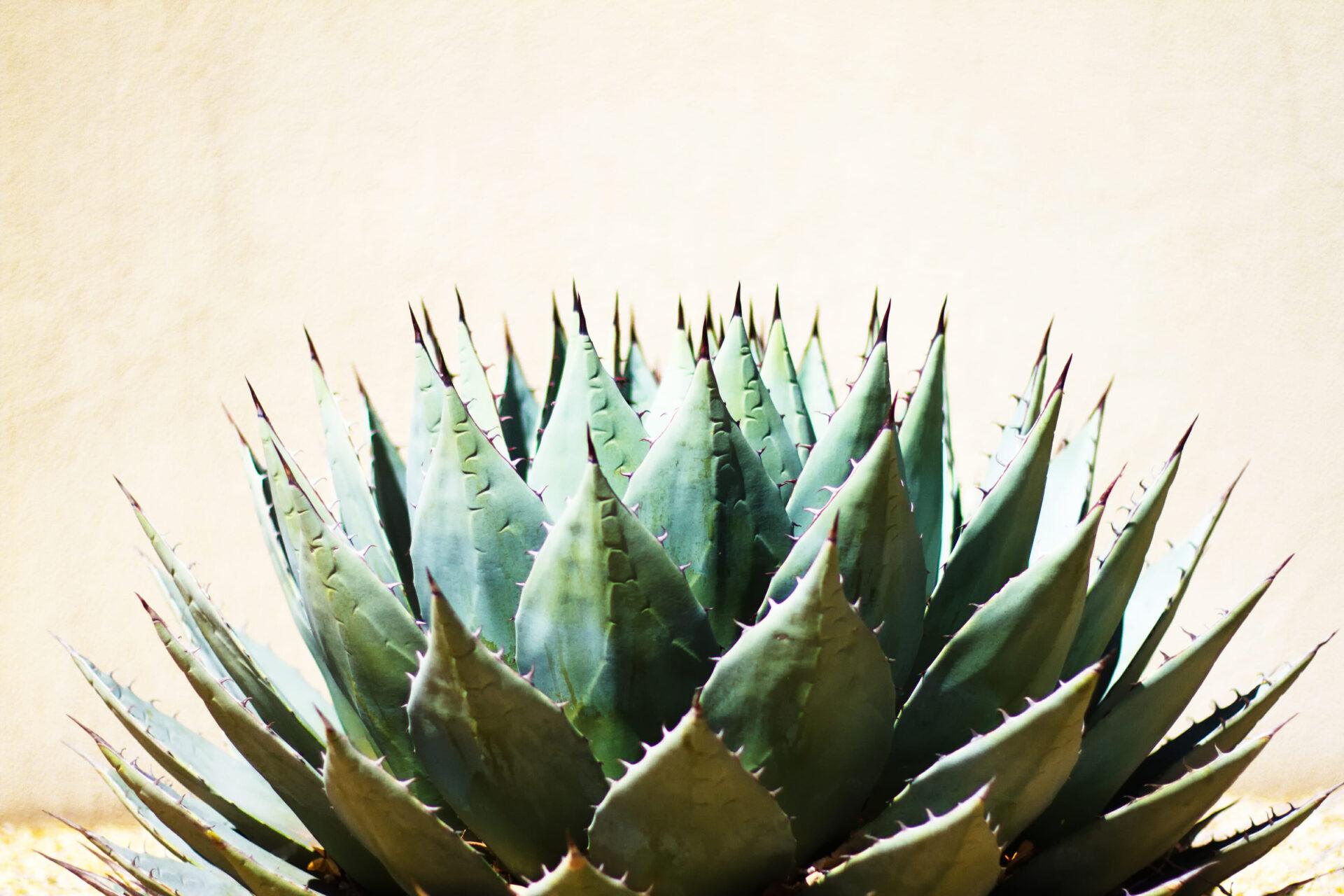
#1- Century Plants (Agave Americana


Some plants can provide an extra “layer” for extreme home security.


Commonly called a Century Plant or Sentry Plant, unlike its name suggest, it typically only lives 10-30 years. This home security plant has firm green leaves that grow 3-5 ft long with massivespikes and a tip that can easily pierce the skin.


The Century Plant thrives in drought conditions and spreads freely. The leaves are pale green and look beautiful in landscaping. Virtually disease free, this plant is easy to grow and maintain.


#2- Spanish Dagger (Yucca Gloriosa)


The Spanish Dagger is another evergreen that is easy to grow in warm climates. The long, stiff pointy leaves make this the perfect plant for home security.


When we were planning our home security garden, a friend recommended the Spanish Dagger. All we did was took a machete to the stalk of the plant, pulled back a couple of the leaves and we stuck it in the ground. Within no time, wehad a realhome security defense garden. As they grow tall, their weight will make them fall over, andthen they will root and spread.


Often a focal point in tropical gardens, the Spanish Dagger is visually pleasing and a deterrent to trespassers.


#3- Osage Orange Tree (Maclura Pomifera)


When I asked my fellow homesteading friends about plant security, many of them recommended the Osage Orange Tree. Osage Orange is a fast-growing tree that was used in place of barbed wire during the early 19th century.


The Osage Orange Tree produces a strong timber that resists rot and outlasts most lumber. Outside of its ability to grow fast, this unique tree produces many sharp, steel strong thorns that make it the perfect tree for home security.


#4- Rose Bushes


“A rose is a rose” indeed, but every rose has a thorn, anda rose bush is an excellent plant for home security when placed in the right location. The woody, thorny branches offer a painful sting which can spread disease and infection.


From miniature to climbing, roses grow in almost any climate which makesthem the ideal plant for home security.


#5- Berry Bushes


How about a home security system that feeds you? Now you won’t see ADT making that claim! Many berry plants like gooseberries, blackberries, and raspberries all produce delicious fruit that are high in antioxidants, but more importantly– thorns. Berries are fast growing and hardy to zone 3. From trellising to hedgerow, berries can be incorporated into any landscape and may be used for both home security and food.


#6- Citrus Trees


Another home security tree that has the added benefit of food are citrus trees. Several lemon, lime, orange, and grapefruit trees produce thorns along their trunks, branches, and twigs.


We have several citrus trees on our property, andthe thorns are like no other. We have them planted below our bedroom windows with plenty of room to grow. We chose this placefor two reasons. One, for security. Anyone not knowing about the 3″ long, piercing thorns are in for a treat if they try to enter through our windows. Two, our house provides our citrus trees with radiant heat which helps them thrive.


Where To Plant Your Home Security Plants


As I mentioned above, placement is imperative when planting for home security.


The Osage Orange Tree makes an excellent perimeter tree. Creating a fast-growing hedgerow, the Osage Orange will be your first line of defense.


Plant your home security plants below every window (making sure the residents still have a safe escape in case of emergency) and byevery point of entry.


The climbing roses and berry bushes will do an excellent job of protecting you when planted below upper-levelwindows.


And finally, Spanish Daggers mixed with Century Plants make the perfect home security hedge closer to the home.


Add aesthetics and security to your home with the protection that only nature can provide. No one will ever know you have a secret fortress.


Monday, April 2, 2018

Is This Man’s Weird Breathing Technique The Key To Extreme Survival?

Is This Man’s Breathing Technique The Key To Extreme Survival?

Image source: Flickr / Creative Commons


Breath in deep. Now let the breath fall out. Again.


Complete this exercise 30 times and a growing number of people will tell you to expect everything from changing the chemistry of your body to being able to survive insanely dangerous temperatures. This trend was kicked off by an eccentric Dutchman named Wim Hof who has dazzled the world with an array of stunts. Hof has successfully survived extreme cold while setting world records for swimming under polar ice, staying submerged up to his neck in a tub of ice, and running a marathon above the Arctic circle wearing only gym shorts and sandals. Not only that, but Hof has summited Mt. Kilimanjaro in the same scant attire, and even attempted to summit Mt. Everest as well. What’s more, he claims that by practicing his special breathing technique, you and I can achieve the same results.


The startling thing about Wim Hof is that he not only completes his cold weather challenges with ease, but he has been scientifically monitored in order to see just what is going on in his body. After being monitored in 2008 at the University of Minnesota Duluth by scientists who specialize in the effects of cold, they explained the results like this: “What you’re seeing basically is a situation in which the usual response to a shock or a cold was completely obliterated.”


Story continues below video


Other scientists who have measured Wim have recorded the same basic results. In fact, several recent studies have concluded the possibility he may be able to control his autonomic nervous system and the innate immune response. To the common person, this basically means he can regulate systems in the body generally believed to be out of our control. Not only that, but his method was tested on a group of people trained by him with similar results. He also claims to be able to consciously ward off illness by changing the chemistry of his body. All in all, Wim Hof may be easily scoffed at, but his track record while being observed by scientists cannot.


One other factor that plays a role in Wim Hof’s ability to withstand extreme cold may be increased levels of brown adipose tissue (BAT), otherwise known as brown fat. Brown fat is a fat found mostly in babies, and its purpose is to burn white fat in order to stay warm. Essentially, it generates heat in the body by burning white fat. Scientists once believed that once you grew past a certain age, you would lose your brown fat. However, now scientists realize that brown fat is found in adults, and adults with a lower body mass index (BMI) have more of it. What’s more is that Wim Hof has higher levels of brown fat than people half his age. Again, he credits this to breathing, meditation and the ability to control his mind.


What does all this mean? First off, you might be a little skeptical about Wim and his achievements. After all, there have been more than a few people in history who earned a reputation doing similar feats. However, this situation seems different because Hof is teaching people his method and they are completing similar feats. Also, it is being scientifically proven that his body is changing in order to better protect against the cold. Finally, this is unique in that it doesn’t cost any money to try.


Contrary to popular opinion, your biggest threats when out in the wilderness are not grizzly bears and mountain lions. In reality, you are most likely to perish from falling, drowning and hypothermia. If the Wim Hof method has validity, you may be able to better safeguard yourself against the latter while out in the woods. Adding an extra insurance policy against cold temperatures might be something worth looking into. Like anything, Wim Hof’s method may not work for you. Anyone interested in experimenting with this method would be wise to proceed in baby steps and test their body a little at a time. In the long run, it may be something that helps you stay better prepared for the outdoors.


What do you think? Share your thoughts in the section below:

Monday, March 26, 2018

It’s The Vehicle You’ll Need When Society Collapses. And It Doesn’t Need Gas.

It’s The Vehicle You’ll Need When Society Collapses. And It Doesn’t Need Gas.

Image source: Pixabay.com


I am constantly thinking through and rethinking survival scenarios. Of all of these, the loss of our electric grid, either due to a solar event or an EMP attack, is probably the most challenging, as well as being the most likely TEOTWAWKI event we might see. As such, it is one that deserves close study.


The big problem with losing the grid, especially to an EMP, is that it is not the type of event we can recover from easily. Social unrest due to food shortages can be solved by putting the military on the streets. Recovery from a financial collapse typically takes no more than a few years, as seen in Argentina. But recovering from an EMP would take a decade or more, if we managed to recover.


Survival during those years would require complete self-sufficiency, as the entire infrastructure we depend on would be non-functional without electricity. Anyone who has spent any time thinking about it can see that just about everything in our lives would have to change.


One thing that would change almost instantly would be transportation. We are a mobile society, highly dependent on our cars and trucks. Even if those passed through the EMP unscathed, there would be no way to get fuel for them. Whatever government survived would immediately impound all gasoline and diesel supplies, hoarding them for their own use. When those ran out, there would be no resupply.


This means that your and my transportation will be limited to our feet and perhaps a bicycle. I’ve got a great bug out vehicle, but it would be useless to me in such a time. Not only would it be all but impossible to bug out, but I wouldn’t be any better off anywhere else, than I am here at home.


Enter the Horse


But people had to get around before the invention of the automobile too. Without the use of the internal combustion engine, they were stuck with what we would call more primitive means of transportation. In this country, most of that movement was accomplished through horse power.


The horse is the ultimate off-grid survival vehicle. As long as plants keep growing, there will always be a sufficiency of fuel for them. You won’t even have to go to a gas station to find fuel, as it grows pretty much anywhere. The horse’s natural “filter” selects only the fuel that it can burn properly, avoiding all other “counterfeit” fuels.


Horses may not be fast, as compared to our cars and trucks, but they are reliable. Not only that, but they couldn’t care less about an EMP, the loss of the grid or any of the other things that would be causing us problems. People who own horses will be the wealthy in that time, for they will have a means to get where they want, when they want, how they want.


Horses are also excellent off-road vehicles, as their hooves really aren’t made for walking on pavement anyway. They don’t care about traffic laws, don’t need traffic signals at intersections and will make their own way, if there isn’t one readily at hand.


While most people today think of horses as something to be ridden (or just to be looked at), horses can also be harnessed to carts and wagons, making them the old-fashioned version of the pickup truck or the family sedan. Since neither of these will be readily available in a post-EMP world, horses will become the best means of transportation available. Draft horses can also be readily trained for saddle, making them multi-purpose vehicles.


Industrializing the Horse


But the horse will be able to be more than a means of transportation. Before internal combustion engines took over, horses and oxen were the main motive power behind many kinds of industry. Machine shops, which are powered by electric motors today, were powered by horses or oxen before those electric motors became available. Likewise, in places where it was impractical to build waterwheels, animal power was used for gristmills (grinding grain) and sawmills.


There will be an even greater industrial need for the horse in that day, that’s for farming. Without tractors to plow and reap, farming will be reduced to what can be done with human power and animal power. Forget the massive corporate farms of today; we will have to go back to the old-fashioned family farm, if we are to survive as a society.


According to the report of the EMP Commission, the vast majority of the people who will die in a post-EMP world will die of starvation. So farming will be a key to not only personal survival, but the survival of society. The problem is, there aren’t enough horses around right now to make that possible.


Adding Horses to Your Preps


While owning horses could increase your family’s ability to survive, making that move is not without problems of its own. Horses are expensive to start with and the costs only start with the purchase. Caring for and feeding a horse is much more expensive than caring for other family pets.


Then there’s the problem of where to keep the horse. You can’t exactly park it in your garage and most municipalities have ordinances against keeping horses in your backyard. So, unless you happen to live out in the country, it would be virtually impossible to keep a horse at your home. That means boarding it at a stable somewhere, which in turn means visiting the horse daily to feed and care for it.


Of course, if a major disaster does strike, you can probably get away with picking your horse up from the stable and taking it home. While the neighbors might complain a bit about the smell, they’ll be happy when that horse is able to plow their back yard up to turn it into a garden.


This brings up another important point. The horse alone isn’t enough. If you’re going to have a horse or horses, you’ll need the implements to use that horse as well, or all they will be is an additional burden. That means saddles, wagons, plows or whatever else you can think of, which will help you accomplish what you need to with your horse.


Saddle horses must be ridden regularly to keep them accustomed to accepting the weight of the saddle and rider. Likewise, it is necessary to work draft horses as well. Just like you and I, horses need exercise to stay in shape. Standing around in a barn or corral doesn’t provide that. You have to get them out and spend time with them, making them work. So horses are not just a financial investment; they are a time investment as well.


Nevertheless, if you can manage to add horse to your preps, you’ll be the envy of the whole town, when and if the grid ever goes down. In the mean time, you can enjoy your relationship with your four-legged friend, riding it or taking the family for a ride in the wagon.

Monday, March 19, 2018

Is Prepping Dead With Trump In Office?

Is Prepping Dead With Trump In Office?


As strange as it may sound, at times I almost look back nostalgically towards the years President Obama was in office. Back then it was easy to convince conservatives of the need to prepare for a disaster. We could always point at the government being out of control, citing that as a reason to prep. Now with Donald Trump in office, it seems like some have taken a sigh of relief and gone on vacation from their prepping.


Don’t get me wrong: I took just as big a sign of relief as anyone when Trump won the presidential election. The last thing I wanted to see was Hillary Clinton continuing with Obama’s initiatives, hurting businesses and destroying the middle class, while handing out more freebies and incurring more debt.


But that didn’t mean that I took a vacation from my prepping. As best I know, the only thing that is less dangerous today, than it was two years ago, is that we don’t really have to wonder if the rumors about Homeland Security preparing to start rounding up conservatives and others who were listed as “potential terrorists” under Obama’s Administration are true.


Strangely enough, it is the liberals who are now concerned about this, under Trump’s administration. Although, I have to say, there has been nothing coming out of official Washington to give them any reason to believe this. But then again, there has been a lot of lies coming out of the media, driving conspiracy theories on the left, about how Trump is going to round up one group or another and either deport them or eliminate them.


What this has done is to drive more liberals into the ranks of prepping. Regardless of how misguided their motives might be, this is a good thing. It means that there are less people in the country who are dependent on Big Brother taking care of them, and more who are learning how to take care of themselves. Who knows? If they stick with that long enough, they might just become conservatives.


The Risks We Face


Prepping isn’t supposed to be centered around the danger posed to us by our own government, although we should be aware of that potential for danger. Rather, prepping is about all potential dangers we face, which the government can’t help us survive. The government itself, while having the potential to cause us danger, is really only a very small part of that. As such, whether or not we prep shouldn’t have a thing to do with who is seated in the Oval Office.


Let me ask you this: Is the world any safer today than it was before the 2017 presidential elections? It doesn’t look to me like it is. If anything, there are risks that have gotten greater than they were before. That’s not to say they didn’t exist before, just that they have grown larger.


I’m particularly talking about North Korea and Iran here. As we all know, North Korea has had a number of technological breakthroughs in both their nuclear and ballistic missile programs, bringing them closer than ever to becoming a true nuclear power. Iran has been working along those lines, as well, with a huge thanks to Obama for removing many of the restrictions which had made that more difficult before.


But North Korea and Iran aren’t the only nuclear threats we face. Several times now, Vladimir Putin has made noises about his nuclear arsenal. The most recent of those comments was about how he now has missiles that can’t be intercepted by our defenses. While I don’t know if he is just trying to prove that he’s the big kid on the block or whether there is an implied threat behind his words, I recognize that they can’t be ignored. When countries include nuclear weapons in their discourse, there is a clear threat implied in their speech.


Terrorism and mass shootings don’t seem to have gone away with Donald Trump in office, although it is clear that his administration’s approach towards ISIS has been much more effective than that of his predecessor. Nevertheless, the danger of radicalized Islam isn’t going to go away due to American politics, nor do I think the danger of mass shootings will.


There are things that were started during Obama’s presidency that didn’t go away when Donald Trump was sworn into office. Specifically, I’m referring to the racial division that he caused. The mainstream media is fueling the racial divide constantly, with their constant accusations of Trump being racist.


As for natural disasters, I’m quite sure that nature doesn’t pay any attention to politics, so there is no less likelihood of a disaster – such as a grid-crippling solar storm — occurring today than there was a year ago. So, there is no less reason for us to prepare to survive disaster than before.


Natural disasters are still the most likely survival threat that any of are likely to face. Statistically speaking, every one of us will end up caught in some sort of natural disaster sometime in our lives, perhaps even more than once. While this might not be as “sexy” or life-changing as some of the things we prepare for, it is also one of the most important.


Some would argue that the likelihood of a financial collapse is reduced with Trump in office, but I’m not so sure. Granted, Donald Trump is a businessman, and as such he has been good for the economy in general. But that doesn’t totally eliminate the risk of financial collapse, as that risk is based upon many things that are beyond control of even the president.


There are even those who have predicted that the powers behind our economy will use Trump’s presidency to force a financial collapse, just so that they can blame it on him. If that particular theory is true, then the next few years could be the most dangerous ones we’ll ever face.


My Conclusion


Based upon these potential risks, I’d have to say that the very idea of putting prepping on the backburner, just because we’ve had a change of presidents, is a bit short-sighted. Those who prep based on only one single disaster scenario are not seeing the fullness of the risks that face us today. True prepping is about being prepared for any disaster that might strike.


So, while some may think that they can breathe a sigh of relief because of a change in our political landscape, I don’t see it that way. I have been prepping for over 40 years now, and I’m not about to stop. My children or grandchildren may end up eating the food I have stored away, but I know it won’t go to waste.


Do you agree or disagree? Share your thoughts in the section below:


Monday, March 12, 2018

Why Mexico May Be The Best ‘Bug-Out Location’ You’ve Never Considered

Why Mexico May Be The Best ‘Bug-Out Location’ You’ve Never Considered

Image source: Pixabay.com


A bug-out plan is something that every seasoned prepper has, but developing a good bug-out plan is another thing entirely. For most of us, the hardest part of that is coming up with a place to go, in the case of an emergency. If you don’t have enough money to build a cabin in the woods, you might have some trouble coming up with a good destination.


This is right where many of us are. We know we need a place to bug out to, but we don’t have the money to “do it right” (however you may define that). So, unless we have family living in the country, we are either left with the idea of bugging out to the woods or having to just move down the road and hope we can find a place good to stop. Neither of those solutions are very good, as they don’t guarantee us a safe refuge where we can wait out the disaster.


What we all need is a place affordable that we can go to, in the event that circumstances demand that we leave our homes. At the same time, it would be nice if that were a place where the government wasn’t likely to be able to find us, just in case that’s an issue. While it won’t work for everyone, Mexico is a good potential destination for many to bug out to.


During the Vietnam War, many draft dodgers headed north to Canada, where they sat out the war. If they could do that, we can head south just as well. While Mexico may not be as much like the United States as Canada is, it is also a considerably cheaper place to live. Besides, who doesn’t like Mexican food?


I’ve spent a fair amount of time in Mexico through the years, including a trip that I just got back from. While Mexico isn’t my only potential bug-out destination, it has been part of our planning for years. For us, it is ideal for a number of reasons, especially considering how close we live to the border.


What’s so Good About Mexico?


Situated directly south of our border, Mexico is a close location to bug out to, for at least part of the country. It is also cheaper to live in Mexico, than it is in the United States. Depending on what level of comfort you want, you can actually live extremely inexpensively in Mexico (like $400 per month), if you are willing to forgo a lot of the comforts and technology that we are accustomed to.


That’s not to say that those aren’t available in Mexico — they are. But unlike things here at home, that level of comfort is not a requirement for life. You can find people living in Mexico in homemade shacks which look much like some of the survival shelters that people talk about making out of pallet wood in a post-apocalyptic world. You also can find the highest forms of luxury, if you can afford it.


What’s Wrong with Bugging Out to Mexico?


On the flip side of the coin, if you’re going to bug out to Mexico, you’d better start learning Spanish now. While Mexican schools teach English as part of their curriculum, most people won’t admit to understanding it, even if they do. That’s not to insult us, but rather to avoid being insulted by us, if they say something wrong. They don’t want to speak English, unless they are sure they can do it right.


Mexico is not perfect. There is a fair amount of drug-related violence and crime in the country. So you need to be cautious about where you choose to go. You’re actually better off going deeper into Mexico than staying near the border. Most of the violence is in the northern part of the country.


The other problem of going to Mexico is the difficulty of buying property. Foreigners are only allowed to buy property that is more than 25 miles from any border, as well as 25 miles from any body of water. You can get around this, by the simple expedient of hiring a Mexican lawyer to establish a trust and have the trust buy the land or buildings. That trust can exist for 99 years, holding that property longer than you’re going to need it.


The other important thing you need to be aware of in Mexico is that it is illegal to import firearms. While people do it all the time, if you get caught, it’s a 20-year jail sentence. So you may want to limit yourself to other weapons, rather than guns.


How to Make Bugging Out to Mexico Practical


Before seriously considering Mexico as a bug-out destination, I’d recommend traveling to Mexico at least once, to see what it is like. Don’t go to the tourist destinations, as that’s not where you’re going to want to bug out to, unless you have a lot of money. Pick a city and visit it, looking around to see where the cheaper places to live are.


You’ll want to establish yourself in Mexico, either buying or renting property there to be used as a bug-out retreat. Just like anywhere you would want to use, you need to establish a location, build a cache and make sure that you have the right equipment and supplies in place.


Make several trips down there, getting to know the people, the area and what resources are available. If you move down to the southern part of the country, you’ll find a lot of fruit trees growing, which can be a source of food. It’s not unusual for people to have avocado, coconut and mango trees growing on their property.


Things left alone and unsecured in Mexico tend to get stolen. So, you’ll need to have someone watching your property down there. This can easily be accomplished by building a relationship with neighbors, who are used to looking out for each other. The Mexican people are warm and friendly and once you know them, ready to do what they can to help.


What advice would you add? Share it in the section below:

Monday, February 12, 2018

Off-Grid Tricks That Will Make Your House Warmer (And Lower Your Heating Costs, Too)

Off-Grid Tricks That Will Make Your House Warmer (And Lower Your Heating Costs, Too)

Image source: Pixabay.com


No matter where you live, staying warm in the winter takes much more work than being comfortable the rest of the year. But it can be done — no matter your heating source.


Be Creative When Insulating


Keeping the warm air in and the cold air out is priority No. 1 when it comes to home heating. If replacing old doors and windows or adding to existing insulation is an option, consider one of these other insulating methods:


  • Use heavy drapes or even blankets over older windows to protect from cold.

  • Seal around door jambs and window casing with expandable foam to prevent drafts.

  • Replace weather stripping around leaky doors and windows.

  • Add window film or bubble wrap over windows to increase their insulating values.

  • Keep unused rooms closed and use draft stoppers along the floor to keep cold air from leaking into occupied rooms.

  • Install outlet and switchplate gaskets to stop cold air in exterior walls from seeping into living spaces.


Heat the Person, Not the Room


Turn the thermostat down a notch and still stay warm by focusing on the person and not heating an entire home. Throw blankets, lap quilts, and afghans are all good ways to keep a person warm and lower your heating costs. Extra blankets or even heated blankets provide a comfortable place to sleep if the air in your bedroom is cold.


Take Advantage of the Sun


Some of the coldest days of the year are usually the sunniest! Take advantage of solar heating by opening drapes and curtains on windows that get the most direct sunlight during the day. You also can build or buy solar window boxes which harvest the heat of the sun and allow it to pass into your home via open windows.


Kill two birds with one stone and consider putting in a lean-to style greenhouse attached to your home where the excess heat can be let into the house by opening a window, or enclose a porch with polycarbonate panels for the same effect. Not only can you help heat the house, but you can grow or start your garden veggies, as well!


Become a Fan of Fans


It may seem counter-productive, but using fans to push air around in the winter can save you big bucks on your heating bills. Use ceiling fans to bring warm air down from the ceiling, small corner fans to push air down hallways or into small rooms, and box fans or woodstove fans to move air from one room to another.


Waste Not, Want Not


Using the oven? Leave the door open when you are done cooking to let the heat escape into the room. The same can be done with the clothes dryer. Just keep in mind that if you have lights in either of these appliances that can’t be turned off, you’ll want to be diligent about getting them closed when they aren’t providing heat to the room.


Think Outside the Box – Recycle and Upcycle


If you’ve got a wood stove, consider making your own firebricks and firelogs out of old junk mail and newspapers. You also can use catalogs, food packaging boxes, wood scraps (no pressure treated, plywoods or chipboards which contain glues, chemicals or resins) and even pinecones in place of firewood.


For radiators or wall-mounted propane heaters without fans, use a wall shelf mounted above to steer heat into the room instead of straight up towards the ceiling. Just be sure to check with the manufacturer to determine safe clearances.


You also can use leftover greenhouse building materials to build solar heating boxes as mentioned above.


Use More Than One Heating Source


Don’t be afraid to diversify and use more than one heating source for your home. If you have electric heat but live in a wooded area or have access to inexpensive firewood, consider adding a wood stove, or wood furnace as well to save money. If you already have propane for cooking, look into adding a propane fireplace or heater if propane in your area is cost effective. By using more than one heating source you have options if there is suddenly a spike in propane or oil costs, or if your usual firewood cutting area gets closed due to fire.


What advice would you add? Share it in the section below:

Monday, February 5, 2018

Stuff You’ll Need To Survive A Winter Power Outage

Stuff You Need To Stockpile To Survive A Winter Power Outage

Image source: Pixabay.com


It’s a simple fact. Power outages happen. Any outage always presents challenges, but an outage in winter presents a whole new set of challenges.


Some outages affect a city block, others a whole neighborhood or region. The cause is typically an ice storm, and the outages can be far-reaching. In Quebec, Canada, an ice storm left millions without power for up to six months in the cold of the Canadian winter. The result was a desperate lack of resources and support to any who needed any kind of assistance.


Preparing for a Winter Power Outage


A gas-powered generator with an ample supply of gas can make a lot of things easier. If you’re really ambitious, you could have a gas-powered, whole house generator installed. If you’re lacking both, you’ll have to get resourceful


Heat


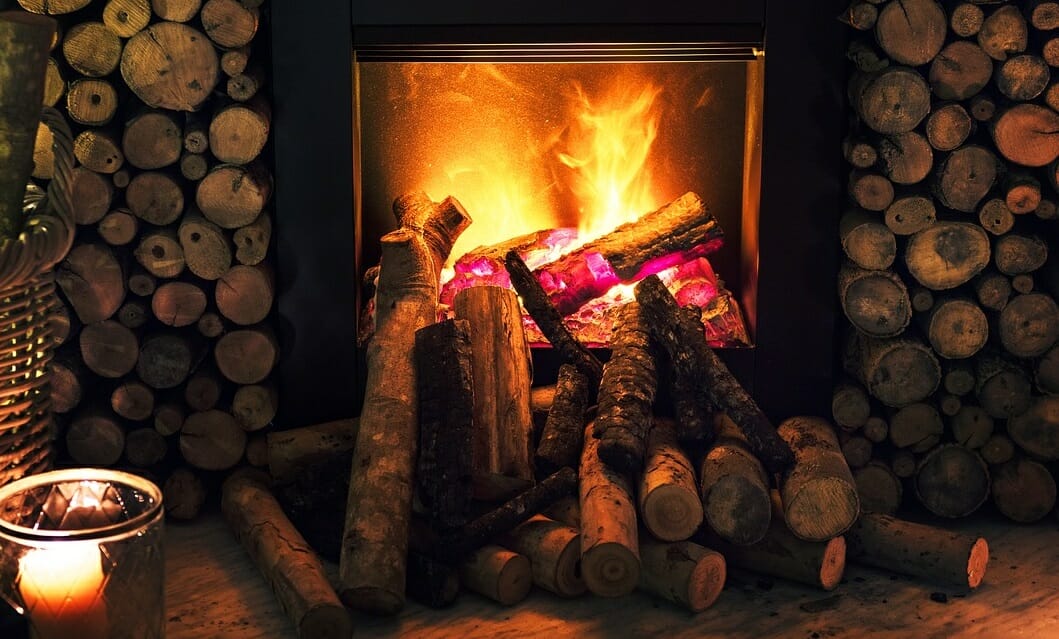
Fireplace. This is probably the most common heating alterative that people have in their homes. It’s not as efficient as a wood-burning stove, but when there’s no heat, it’s a welcome resource. The ability of a fireplace to provide heat to one room is significant, but you may find that other rooms don’t receive as much heat depending on the size of your house. However, it will keep the rest of the house relatively above freezing, but I would hunker down with family next to the fireplace on couches and sleeping bags. You’ll also want to open cabinets under sinks and make sure bathroom doors are open to prevent pipes from freezing.


Wood burning stove. Perhaps the best alternative heat source and capable of spreading heat beyond one room.


Black blankets in the sun. A curious suggesting from the Emergency Management Agency suggests putting black blankets on the floor where sunlight comes through the windows. The black color absorbs heat and will provide a bit of extra heat to the house.


Dangerous sources of heat include kerosene heaters, gas stoves or charcoal grills. They produce carbon monoxide over time. A gas range can be used occasionally for cooking, but should not be used as a heat source for a long duration.


Lighting


Flashlights with plenty of backup batteries and candles are the lighting options of choice. LED flashlights are a good choice because of the amount of light they cast with a minimal power drain on batteries.


Water


If your water is from a municipal water source, there’s a good chance you’ll still have water in an outage. Municipal water is gravity-fed from tall water tanks, but they need to be refilled from time to time. If you have a well dependent on an electric pump, you’ll have to find alternatives.


  • Stored and filled 5-gallon water bottles.

  • Melt snow and ice in a 5-gallon bucket set in the sun indoors.

  • If you hear a weather report that portends the possibility of an outage, fill your bathtub with water but use it only for flushing the toilet. A bucket in the toilet will give it a good flush.

  • Avoid frozen pipes by letting the faucets slowly drip if you are on municipal water. If the heat in your house is a problem and you have a well, you’re wise to drain the pipes to prevent them from freezing.


Food


  • Refrigerator and freezer. Food will last in a refrigerator for 24 hours and in a freezer for 48 hours if you open the doors minimally. You also can place ice into plastic bags and turn your fridge/freezer into a large cooler.

  • Stock up on foods that don’t require refrigeration or freezing. It’s easy to do. If it’s on the shelf in a store, it will survive a power outage.

  • You have some options here:

    • Outdoor on a grill

    • On a gas range

    • On top of the wood-burning stove

    • Next to the fire in the fireplace in a Dutch oven


  • Refrigerator realities

    • Set to coldest settings if you suspect an outage is possible

    • Coolers in the garage filled with plastic bags of snow and ice

    • Outside in a snowdrift but beware the animals. Use a 5-gallon bucket with a locking lid


Communication


  • Cell phones and the charging challenge. It’s hard to charge a cell phone without electricity, but you could use a car charger in the car, a solar charger about the size of a notebook, a generator or a cell charger power pack.


Bailing out


If you determine the situation is unbearable for you and your family, you’ll need to bail out. This assumes you have somewhere to go that’s at least comfortable like a neighbor, friend or family member who has better resources, or a local shelter housing people and families who are ill-equipped to handle the outage. But before you bail, there are some steps you should take:


  • Drain the water pipes

  • Turn all of your circuit breakers to the off position. This will prevent a power surge when the power come back on. In fact, some people take this step the minute a power outage occurs at any time of year except for a room with a few lamps to signal that the power is back on.

  • Pour anti-freeze into your toilets and drains for every sink, bathtub and shower

  • Make sure all doors and windows are locked, and drapes and curtains drawn

  • Take or dispose of any food in fridge or freezer or other perishables like bread


Preparation is the key


Any power outage presents problems. It’s a good idea to think ahead to what alternative resources you will need during a power outage and make sure you have them in place.


What tips would you add? Share your advice in the section below:

Monday, January 29, 2018

Forgotten Foods The Pioneers Ate Midwinter

Forgotten Foods The Pioneers Ate Midwinter


In our modern kitchens, we hardly feel the passing of the seasons. We have the luxury of New Zealand apples, Chilean grapes and Hawaiian pineapple, all cheap and plentiful even in January.


For our ancestors, winter meals were a very different thing. They were limited to whatever they could store, hunt or harvest. Those same food traditions survive in our modern cooking, in wintertime “comfort foods.” Foods heavy with flour, fat and salt.


Salted Meat


Even with modern refrigeration, salt-preserved meats still make their way onto our modern tables. That’s because they’re more than just practical, they’re delicious.


“The Big Book Of Off The Grid Secrets” — Every Homesteader Needs A Copy!


Some people will tell you that all you need is salt to preserve a whole pig without refrigeration. While that is technically true, there’s an art to preserving it well. Each cut has its own flavors, brought out by time-honored preservation techniques.


The pioneers would have known how to make the best use of each and every part because it was knowledge passed down through every family.


Beyond charcuterie, there are plenty of other ways to preserve meat without refrigeration.


Grains & Dry Goods


If left whole and not ground, wheat berries will last for decades, and have the added bonus that they can either be planted in a pinch or ground into flour at home.


Other dry goods, like dried beans, oats and rice, are great staple winter foods used by the pioneers, as well. Though you might not be happy about it, you can survive the winter on beans and rice alone.


The pioneers would have had dried beans and grains on hand to get them through not only this winter, but possibly the next winter, too. Crop failures are not uncommon, and if next summer’s grain crop never comes in, keeping two years worth on hand may just save your life.


Root Cellar Fruit & Vegetables


Modern fruit and vegetable varieties are a bit different than their heirloom counterparts. The pioneers had specific storage varieties of just about every fruit and vegetable. True, some kept longer than others. The best storage grapes will keep about on month, while the very best storage apple variety, Newton Pippin, will keep for over a year.


Many other apple varieties will keep for five-plus months, more than enough to get you through the winter.


Lacto-Fermented Vegetables


Now that people know about the benefits of probiotics in your diet, fermented foods are making a comeback. Historically, lacto-fermentation was a practical way of keeping vegetables fresh for six months or more. A crock of sauerkraut bubbling away in the basement or root cellar would have kept until springtime, adding much-needed nutrition and variety to heavy winter meals.


Just about any vegetable can be lacto-fermented at home with just a bit of salt and patience.


Nuts


If left in their shells and kept in a cool, dry place, most nuts will keep through the winter and into the following spring. The pioneers didn’t just keep the nuts we know and love today.


The Little House on the Prairie books record that the pioneers foraged beechnuts in the fall in great number, and processed them using the same thresher that they used for oats, beans and grain. With three times the protein in acorns, and none of the tannin, beech nuts were a smart choice for winter.


Even today, most of the wild nut varieties foraged by our ancestors are still available and plentiful.


Hard Cheese & Eggs


While we think of cheese and eggs as highly perishable today, the pioneers managed to keep them for extended periods. Unwashed eggs keep at room temperature for weeks, and they’ll keep longer if waxed or stored in ashes.


Hard cheeses were once waxed to keep them shelf stable in a root cellar all winter long.


Lard


Cows don’t produce nearly as much cream in the winter. Hay isn’t as rich as summer forage, and the composition and flavor of the milk changes. True, you can still make some butter, but wintertime is by and large the time for making use of lard from fall processed pigs.


Properly rendered lard doesn’t taste like pork. It has a clean, neutral flavor and snow white color. It’s perfect for making pie crusts and biscuits, and for frying homemade doughnuts.


Even more importantly, it’s a source of much-needed calories and comfort. While lard may not be as appealing in July, it’s a welcome friend in January.


Liquor


Like it or not, liquor is a practical way of preserving food and calories. Cider (fresh sweet cider) as we know it today was almost unheard of. In as little as 24 hours, sweet cider begins to ferment into hard cider. Once fully fermented, it’s only about half as strong as wine.


Beyond direct fermentation, settlers would make something known as “gentleman’s jam” in a crock in the root cellar. Layering in fruit, covering with sugar and then submerging in spirits, summer fruits were preserved all winter long.


A single large crock would begin with the early summer fruits like strawberries, and then layer in summer and fall fruits  A few months to condition, and by midwinter the flavors had combined into a sweet, albeit highly alcoholic, treat.


What foods would you add to our story? Share your thoughts in the section below: