Showing posts with label dangerous. Show all posts

Tuesday, March 20, 2018

5 of the Most Violent Cities in the WORLD Are Right Here in America

5 of the Most Violent Cities in the WORLD Are Right Here in America | violence | Sleuth Journal Society US News


When you think of the most dangerous, violent cities in the world, do you picture slums in Third World countries with vicious drug cartels or arrogant warlords? Maybe the kind of violence where enemies are decapitated and whole families are murdered seem like things that happen far away in some terrifying, exotic locale.


Some of this is true – but FIVE of the world’s most violent cities are right here on the American mainland and another is in an American territory. The list was created by researchers of anti-violence think-tank Seguridad, Justicia Y Paz (Security, Justice, and Peace), who made their rankings based on statistics of homicides per 100,000 residents.


The vast majority of the cities on the list were in Central and South America. Interestingly, the violence in Venezuela appears to have dropped in violence this year, but not because it’s suddenly become a mecca of safety. The official situation there has devolved so much that they simply can’t track all the homicides.


But back to America


We pride ourselves on our first world status and civilized societies, and yet four of our cities ended up on the list of the most dangerous and violent locales on the planet.


They are:


  • #13 St. Louis

  • #21 Baltimore

  • #32 San Juan

  • #41 New Orleans

  • #42 Detroit


How did these cities make the list?


  • St. Louis, Missouri: Since the Ferguson riots, the entire state of Missouri has seen a sharp increase in violence. This has culminated in the city of St. Louis, which had a 2017 murder rate of 65.83 per hundred thousand people. There are thousands of violent crimes each year in the city, which only has a population of about 320,000 people.

  • Baltimore, Maryland: The city of Baltimore has an astounding murder rate of 55.48 people per hundred thousand. Last year’s murder rate was nearly as high as the year that the riots erupted over the killing of Freddie Gray by city police officers.  There’s a murder nearly every day of the year in Baltimore and the police force there is widely considered to be one of the most corrupt – if not the most corrupt – in the nation.

  • San Juan, Puerto Rico:  Many will think that San Juan earned its place on the list due to the devastation wrought by two back to back hurricanes, but it was already bad for years before. DHS ties this to drug trafficking. The island territory had begun to see signs of improvement in 2015 after a massive spike in 2011 that brought murders to an all-time high. The homicide numbers didn’t immediately escalate after Hurricane Maria, but as the unrelenting darkness continued, violent crime began to increase until it reached 48.70 murders per hundred thousand residents.

  • New Orleans, Louisiana: Murders in New Orleans, Louisiana fell last year but armed robberies and non-fatal shootings have risen by a whopping 30% since 2010. The city is renowned for its food, music, and festivals, making it a popular destination for tourists. Yet, the 40.10 murders per hundred thousand people rank The Big Easy as more dangerous than some of the most notorious cities in Brazil and Columbia.

  • Detroit, Michigan: Detroit is the fourth American city to be featured on the list of places you’re most likely to be murdered. With a homicide rate of 39.69 per one hundred thousand people, Detroit was the 42 most dangerous city in the world according to these statistics. The city used to be an American hub of industry, but when the automotive manufacturers left, it fell into disrepair and poverty. Residents have a whopping unemployment rate of almost 11%, the population has plummeted, and since it is one of the poorest cities in the nation, perhaps the residents who remain simply can’t afford to get out.


For those who are interested in preparedness, the collapse of these cities is something to watch. Note how the increase of violence in many cases ties in with a lack of confidence in local law enforcement officers. A failing economy is another factor, as increased desperation leads to increased crime.


What other cities made the list?


Here’s the list of the 50 most violent cities in the world in its entirety:


  1. Los Cabos, Mexico

  2. Caracas, Venezuela

  3. Acapulco, Mexico

  4. Natal, Brasil

  5. Tijuana, Mexico

  6. La Paz, Mexico

  7. Fortaleza, Brazil

  8. Victoria, Mexico

  9. Guayana, Mexico

  10. Belem, Brazil

  11. Vitória da Conquista, Brazil

  12. Culicacan, Mexico

  13. St. Louis, Missouri, USA

  14. Maceio, Brazil

  15. Cape Town, South Africa

  16. Kingston, Jamaica

  17. San Salvador, El Salvador

  18. Aracaju, Brazil

  19. Feira de Santana, Brazil

  20. Juarez, Mexico

  21. Baltimore, Maryland, USA

  22. Recife, Brazil

  23. Maturin, Venezuela

  24. Guatemala City, Guatemala

  25. Salvador, Brazil

  26. San Pedro Sula, Honduras

  27. Valencia, Venezuela

  28. Cali, Colombia

  29. Chihuahua, Mexico

  30.  João Pessoa, Brazil

  31. Obregon, Mexico

  32. San Juan, Puerto Rico

  33. Barquisimeto, Venezuela

  34. Manaus, Brazil

  35. Distrito Central, Honduras

  36. Tepic, Mexico

  37. Palmira, Colombia

  38. Reynosa, Mexico

  39. Porto Alegre. Brazil

  40. Macapa, Brazil

  41. New Orleans, Louisiana, USA

  42. Detroit, Michican, USA

  43. Mazatlán, Mexico

  44. Durban, South Africa

  45. Campos dos Goytacazes, Brazil

  46. Nelson Mandela Bay, South Africa

  47. Campina Grande, Brazil

  48. Teresina, Brazil

  49. Vitoria, Brazil

  50. Cúcuta, Colombia


Seguridad, Justicia Y Paz blames much of the violence on drug cartel turf wars, economic crises, and violence perpetrated by gangs like MS-13.


Do you have any doubt that violence will be abundant when the SHTF?


All you need to do is look at this list and study these cities to see how violence escalates when the rule of law collapses, when economies crash and people starve, when police officers go dirty, and when criminal gangs turn into the ruling class.


This is just further evidence to support my belief that preppers must be armed. If you are prepping to survive a long-term event, make sure that you plan to survive the escalation of violence, too.


The post 5 of the Most Violent Cities in the WORLD Are Right Here in America appeared first on The Sleuth Journal.

Thursday, August 31, 2017

Texans Lose Water Supply Indefinitely Now In Crisis Mode


People begin lining up at a closed Wal-Mart store in Beaumont, TX at around 2:30 Thursday morning after hearing the water supply for the city had failed.

People begin lining up at a closed Wal-Mart store in Beaumont, TX at around 2:30 Thursday morning after hearing the water supply for the city had failed.


The city of Beaumont, Texas is now in crisis mode after losing their water supply indefinitely.  Residents in desperate need of clean water lined up outside of a Wal-Mart in hopes of buying bottled water, now worth its weight in gold.


Residents in an Eastern Texas city are now hoping that they can buy the water they need. The main municipal water pumps have now failed due to flooding, and there is no estimated time for repairs. Beaumont received 26 inches of rain on Tuesday, which is a city record for the most rainfall in a single day, according to the National Weather Service.


Beaumont, which boasts a population of over 100,000 people, lost both its main and secondary water supplies on Wednesday. Hurricane Harvey‘s excessive rainfall caused the Neches River to overflow, which damaged the city’s water pumps, according to city officials. The city’s secondary water source, which is located at the Loeb wells in Hardin County, is also offline.


City government officials say that the outage is indefinite as they must inspect the damaged pumps first before repairs can even begin.  There’s no way to inspect the damages either until the water resides. Government officials did give city residents a little warning that they would lose access to clean water. Residents were urged to fill up their bathtubs with water, as the city water system was expected to lose pressure early Thursday. But some residents still ran out of clean water and many were lined up outside local stores overnight hoping to buy bottles of water.


A young mother even said that the city’s inability to supply residents with water was putting her young baby at risk. Jennifer England said, “I stopped to get water because I have a baby who is sick and I need to flush his tube,” she said. “I just needed to get some water and leave, because we are in a hurry. We want to get out before the water rises again. The police officer came here and stopped everyone. I desperately need water for my baby, but they would not give me any.”


Around 2:30 a.m., a crowd of people outside the Speedy Stop convenience store attempted to pick up some of the water bottle cases left outside the closed shop. A policeman intervened, telling HuffPost, “I’m not going to let people just take water. I know we’re in a scary situation, but I had to tell them to stop.”


“Several cars pulled off with water and that’s fine, but we can’t just let everyone load up what they want,” said the officer, who identified himself as Joe Marlboro. “We’re not going to arrest anyone as we’re in a dire situation, but at the end of the day we have to have order and we can’t let them take the water.”  –Huffington Post


Sixty-seven-year-old Norris (who didn’t want to give his last name), argued that he wasn’t trying to steal the water. “We’re not trying to take advantage, but when the news tells you to get out of the city because they don’t know when the water will be fixed, what are people to do? I plan to pay the store for the water. I wasn’t just going to take it,” he said. “We’re isolated here. We may not be able to get water anytime soon, so that’s the situation here.”


The Speedy Stop convenience store’s manager, Ronnie Miller, told HuffPost that he hasn’t been able to open the shop because there’s no running water in the bathroom, a health code [governmental bureaucratic] requirement. He also said, “We don’t really have much water to give.”


The Huffington Post assures readers that government officials and FEMA are working to resolve these issues.


Click here to subscribe: Join over one million monthly readers and receive breaking news, strategies, ideas and commentary.

Gas Masks, Filters, Body Suits, Anti Radiation Pills

Please Spread The Word And Share This Post


Author: Mac Slavo
Views: Read by 1 people
Date: August 31st, 2017
Website: www.SHTFplan.com


Copyright Information: Copyright SHTFplan and Mac Slavo. This content may be freely reproduced in full or in part in digital form with full attribution to the author and a link to www.shtfplan.com. Please contact us for permission to reproduce this content in other media formats.


Friday, July 14, 2017

Chemicals Banned in Kids’ Toys Found in Mac and Cheese

Boxed macaroni and cheese is often a favorite food among youngsters, but a recent study suggests the packaged food contains dangerous, endocrine-disrupting chemicals that have been banned in toys: phthalates. [1]


Phthalates are a group of toxic additives in plastics. They’re used to make plastics soft and flexible, and are commonly found in artificial fragrances, inks, coatings, adhesives, and other consumer and industrial products, the National Resources Defense Council (NRDC) explains.


These chemicals are approved by the U.S. Food and Drug Administration (FDA) for use in equipment and materials for food handling, processing, and packaging. Because of this, phthalates often wind up in high-fat, highly-processed foods.


The Coalition for Safer Food Processing & Packaging – which includes the NRDC – recently sent a small sample of mac and cheese and other popular cheese-food items for laboratory testing, and received some unsettling results.


Phthalates were found in 10 varieties of macaroni and cheese, including 8 out of 9 Kraft products. [2]


It’s Time to Remove Phthalates from Food Products


The coalition believes the federal government should step in to regulate and ultimately ban phthalates, but since that is unlikely to happen anytime soon, the onus is on Kraft Heinz to remove phthalates from its food products.


Kraft not only has the largest market for powdered cheese in the industry, but the company has taken action in the past to remove unsafe ingredients from its products (largely due to increasing consumer pressure). For example, in 2016, the company quietly removed artificial dyes from its Mac & Cheese recipe and replaced them with paprika, annatto, and turmeric.


In total, the coalition tested 30 samples – 10 cheese powder, 5 sliced cheese, and 15 natural cheese samples – and 29 of them were found to contain phthalates. Some of the products tested were labeled organic. The highest levels of phthalates were found in the powdered macaroni and cheese samples.


Mike Belliveau, the executive director of the Environmental Health Strategy Center, said:


“The phthalates concentrations in powder from mac and cheese mixes were more than 4 times higher than in block cheese and other natural cheeses like shredded cheese, string cheese, and cottage cheese.” [3]


These chemicals are accidentally making their way into the food system, via processing and packaging. It’s not that Kraft workers are standing over giant vats of powdered cheese, dumping phthalates into them. The key to keeping dangerous substances out of the bellies of hungry kiddos is to ensure safer food processing and packaging methods are in place. [2]


The European Union (EU) has already taken the crucial step of banning phthalates in food contact materials.


Coalition member Peter Lehner said in a statement:


“Parents and their children should not have to wait longer to know that their food does not contain toxic chemicals. We are asking manufacturers to act now.”


No word from Kraft Heinz just yet.


Tom Neltner, the chemicals policy director for the Environmental Defense Fund, said:


“A chemical is not allowed in food unless there is a reasonable certainty it will cause no harm. We don’t think the FDA can say there is a reasonable certainty of no harm.” [3]


Phthalate Dangers


Once you consume phthalates, they can travel through your bloodstream to your organs. Prenatal phthalate exposure is especially concerning, since the chemicals can easily cross from the mother’s body into the placenta. Phthalates can also wind up in breast milk. [1]


Researchers have linked prenatal phthalate exposure to impaired neurological development in children, lower IQ, learning and memory impairment, and antisocial behavior. Boys that are exposed to phthalates in-utero run the risk of genital defects.


In 2008, Congress prohibited the use of DEHP, a chemical known to negatively affect the development of the testicles and the production of normal sperm in young animals, in toys and childcare products. It is considered a “gender-bending” chemical because it can cause males of all species to adopt more female traits.


In 2015, the Consumer Product Safety Commission (CPSC) proposed a ban on several additional phthalates used in toys and other children’s products, but the proposal has yet to be finalized.


A report released in late 2015 showed that more than 81% of 164 dollar-store products tested contained concerning levels of at least 1 toxic chemical. Everything from toys to jewelry, to personal care products contained chemicals that were carcinogenic, or otherwise hazardous.


Sources:


[1] Natural Resources Defense Council


[2] New York Daily News


[3] Popsugar


Storable Food


About Julie Fidler:


Author Image
Julie Fidler is a freelance writer, legal blogger, and the author of Adventures in Holy Matrimony: For Better or the Absolute Worst. She lives in Pennsylvania with her husband and two ridiculously spoiled cats. She occasionally pontificates on her blog.

Is Glyphosate Making These Australian Toads more Deadly?

Scientists in Hungary say toad tadpoles that have been exposed to the herbicide glyphosate (also known as Glyphogan in Australia) may produce considerably more of the toxic chemicals the toads use to ward off predators. The findings are especially relevant to Australia’s cane toad population. [1]


The fear is that feral cane toads in Australia could become even more toxic due to a combination of environment and the amount of pollutants and chemicals the amphibians come into contact with.


Study author Veronika Bokony said:


“Our results indicate that pesticide pollution might exacerbate the problem of invasive toxic species. For example, in Australia, the survival of native tadpoles is reduced by poisoning from ingestion of toxic cane toad eggs, and predators suffer drastic mortality due to ingesting or mouthing cane toads.”


Read: More Wildlife Fish are Experiencing “Intersex” – What Could be Causing This?


The tadpoles the researchers studied were found to have higher levels of the toxic chemical bufadienolide as adults. Bufadienolide is stored in glands in the toads’ shoulders, and it is delivered to predators via poisonous blasts. [2]


The increased toxicity makes the cane toads a threat to the native ecosystem and other organisms. Bokony said:


“Pesticide pollution might exacerbate the problem of invasive toxic species.”


The toxins are also dangerous for pets. Large doses of cane toad toxin can be deadly for dogs and cats. Symptoms of poisoning include vomiting, difficulty breathing, foaming at the mouth, or dilated pupils.


Read: Even Legal Levels of Glyphosate Herbicide May Harm Freshwater Fish Ecosystems


Frog Safe Inc coordinator Deborah Pergolotti, who is outspoken about the risks posed by RoundUp, said the study only confirms that glyphosate is a dangerous weedkiller. [3]


“There are many reasons not to use RoundUp, which not only does damage to frogs, it does damage to the human gut. It’s a systemic chemical, which means that it will get around to a lot of things.


This chemical is taken up the whole plant, so any pollen, nectar, flowers, or fruit will have the chemical in those things.”


The findings are published in The Royal Society.


Sources:


[1] Sustainable Pulse


[2] The Courier Mail


[3] The Cairns Post


Tenplay


Storable Food


About Julie Fidler:


Author Image
Julie Fidler is a freelance writer, legal blogger, and the author of Adventures in Holy Matrimony: For Better or the Absolute Worst. She lives in Pennsylvania with her husband and two ridiculously spoiled cats. She occasionally pontificates on her blog.

Wednesday, June 28, 2017

The FDA Wants this Highly Addictive Opioid Taken off the Market

On June 8, 2017, the FDA requested that the drug-maker Endo Pharmaceuticals stop selling Opana ER – the extended-release version of Opana – because of “public health consequences of abuse.” It is the first time the agency has made efforts to pull an opioid from the market due to its highly addictive nature. [1]


According to the FBI, Opana ER is becoming a popular drug to crush, dissolve, and inject. An outbreak of HIV, Hepatitis C, and a serious blood disorder have been fueled by drug users sharing needles.


In March 2017, an FDA advisory committee voted that Opana ER’s benefits no longer outweighed its risks. [2]


FDA Commissioner Dr. Scott Gottlieb says:


“We are facing an opioid epidemic – a public health crisis, and we must take all necessary steps to reduce the scope of opioid misuse and abuse.


We will continue to take regulatory steps when we see situations where an opioid product’s risks outweigh its benefits, not only for its intended patient population but also in regard to its potential for misuse and abuse.” [1]


Endo said in a statement that the company is “reviewing the request and is evaluating the full range of potential options as we determine the appropriate path forward.”


But the company defended Opana ER for its ability to do what it is intended. It said:


“As a pharmaceutical company with a demonstrated commitment to the improvement of pain management, Endo feels a strong sense of responsibility to improve the care of pain for patients, while at the same time taking comprehensive steps to minimize the potential misuse of its products.”


Read: FDA Takes Major Steps to Address Growing Opioid Crisis


This is Endo’s one and only chance to cooperate, though. If the company refuses to voluntarily recall Opana ER, the FDA will revoke the painkiller’s market approval.


The FDA says:


“In the interim, the FDA is making health care professionals and others aware of the particularly serious risks associated with the abuse of this product.”


Opana ER won FDA approval in 2006. It was designed to be swallowed and to slowly release the medication into the bloodstream over several hours. But when it is snorted or inject, it gives the user a powerful high.


As the brain becomes acclimated to the euphoric feelings, more and more of the drug is required to produce the same levels of pain relief and well-being, leading to dependence, and eventually addiction. [2]


The drug is twice as powerful as OxyContin, another potent opioid that has led many drug abusers down the path to heroin addiction.


Source: U.S. Centers for Disease Control

Read: Washington City Sues OxyContin Maker Over Opioid Epidemic


Endo reformulated Opana ER in 2012 by adding a coating with the stated purpose of making the pills harder to snort or inject. Other opioid manufacturers have taken similar steps in recent years as the opioid epidemic ballooned into a full-blown crisis. [1]


The FDA said it decided to ask Endo to take Opana ER off the market after the agency reviewed all post-market data on the drug and found that when Endo reformulated the drug, people were injecting it more than they were snorting it. [2]


But the move seems to have backfired, as outbreaks of HIV, Hepatitis C, and other diseases sparked by people injecting Opana ER continued to spiral out of control.


Opana ER was the drug of choice for many addicts at the center of an HIV outbreak in Indiana in 2015.


Read: Even the “Safest” of RX Opioids Highly Addictive, Says Experts


Dr. Janet Woodcock, director of the FDA’s Center for Drug Evaluation and Research, says:


“When we determined that the product had dangerous unintended consequences, we made a decision to request its withdrawal from the market.


This action will protect the public from further potential for misuse and abuse of this product.” [1]


In 2015, opioid overdose killed more than 33,000 people in the U.S., more than any year on record. Close to half of those deaths involved some type of prescription drug. [2]


Sources:


[1] NPR


[2] CNN


U.S. Centers for Disease Control


Storable Food


About Julie Fidler:


Author Image
Julie Fidler is a freelance writer, legal blogger, and the author of Adventures in Holy Matrimony: For Better or the Absolute Worst. She lives in Pennsylvania with her husband and two ridiculously spoiled cats. She occasionally pontificates on her blog.

Sunday, May 21, 2017

Cotton Swabs Send 3 Dozen Children to the ER Each Day

Doctors say you should never clean your ears with cotton swabs, but people reach for them anyway to scoop out the wax. According to the authors of a study in the Journal of Pediatrics, using cotton swabs to clean your ears can be dangerous, especially for children. In fact, use of these cotton swabs sends approximately 3 dozen children to the ER every day. [1]


Approximately 12,500 children under the age of 18 are treated in U.S. emergency departments for ear injuries each year, which amounts to about 34 visits per day.


Lead author Dr. Kris Jatana, assistant professor of otolaryngology-head and neck surgery at the Ohio State University, says:


“This is not like brushing your teeth every day. Children and adults do not need to clean out the ear canal of wax as part of a routine hygiene practice.”


For the study, Jatana and her colleagues looked at hospital visits between 1990 and 2010 and found that an estimated 260,000 children wound up in the emergency room with ear injuries.


The most common injuries included tears in the tissue that separates the ear canal from the middle ear, known as the tympanic membrane, a.k.a the eardrum. The majority of the injuries were the result of children using cotton swabs to clean their ears.


Source: The Independent

The younger the child, the more prone they were to ear injuries. Two-thirds of the young patients were younger than 8, and 40% were age 3 or younger. [2]


Cotton swabs can slice the ear canals, perforate our eardrums, and dislocate our hearing bones. This can lead to injuries as minor as dizziness and ringing, to more significant problems like hearing loss. [1]


Should Anyone Really Use Q-Tips to Clean Their Ears?


As cleaning goes, our ears don’t really need our help. They’re self-cleaning, and there’s no reason to go digging around in them.


Jatana says:


“The two biggest misconceptions I hear as an otolaryngologist are that the ear canals need to be cleaned in the home setting, and that cotton tip applicators should be used to clean them; both of those are incorrect.” [2]


She adds:


“It’s concerning that while these products have been around for almost 100 years and many of the manufacturers put warning labels on the products stating to not use them in the ear canal, we are still seeing a significant number of injuries in children using them for the purpose of cleaning their ear canal.” [3]


Source: The Washington Post

Ear wax actually has protective, lubricating, and antibacterial properties, and its presence is perfectly normal. If you find wax on the outside of your ear, simply wipe it away with a wet cloth.


If you absolutely can’t resist cleaning out your ears, you should opt for drops, or at least reduce how often and how deep you go with those cotton tools.


Sources:


[1] CNN


[2] Newser


[3] Live Science


The Independent


The Washington Post


Storable Food


About Julie Fidler:


Author Image
Julie Fidler is a freelance writer, legal blogger, and the author of Adventures in Holy Matrimony: For Better or the Absolute Worst. She lives in Pennsylvania with her husband and two ridiculously spoiled cats. She occasionally pontificates on her blog.

Friday, May 19, 2017

Deadly Fungus Spreads Through U.S. Healthcare Facilities

The number of cases of Candida auris (C. auris), a dangerous multidrug-resistant fungus, in the U.S. has grown from 7 to 122 over the past 9 months, the CDC says in its Morbidity and Mortality Weekly Report[1]


C. auris can cause severe illness and high mortality (60%), especially among patients who are in intensive-care units, those with a central venous catheter, and people who have received antibiotics or antifungal medications. [1] [2]


Sharon Tsay, lead author and an Epidemic Intelligence Service officer at the CDC, says:


“It seems to affect the sickest of the sick patients, particularly those in hospitals and nursing homes with other medical problems.” [1]


There have been 77 confirmed cases of C. auris in U.S. hospitals. Upon examining the patients’ close contacts, another 45 cases were identified, for a total of 122 U.S. patients with the fungal infection as of May 12. Among the original 77 patients, the patients’ average age was 70, and 55% were men.


Read: First Cases of Drug-Resistant Candida Auris Spreading in U.S. Hospitals


Of the 122 total cases, the majority were reported in healthcare facilities in New York, New Jersey, and Illinois. Most of the patients were chronically ill and spent long stretches at high-acuity skilled nursing facilities. [2]


According to the CDC:


“In Illinois, 3 cases were associated with the same long-term care facility. In New York and New Jersey, cases were identified in multiple acute care hospitals, but further investigation found most had overlapping stays at interconnected long-term care facilities and acute care hospitals within a limited geographic area. The case in Massachusetts was linked to the Illinois cases.”


The good news: none of the infections reported in the U.S. were resistant to all available antifungal drugs. However, according to Paige Armstrong, an Epidemic Intelligence Service officer for the CDC, the fungus is “acting a lot like some super bacteria that we’ve seen previously.” [1]


CDC analysis of the first 35 clinical isolates showed that 86% were resistant to fluconazole, 43% were resistant to amphotericin B, and 3% were resistant to echinocandins. [2]


Invasive candidiasis – when the yeast gets into the bloodstream – is the most dangerous type of fungal infection. But C. auris can also make its way into respiratory tract, urine, bile fluid and even bone, leaving doctors scratching their heads as to why the fungus seems to linger, and what other infections it might cause. [3]


Read: Deadly Fungal Infection a Growing Concern in U.S. Hospitals


Says Tsay:


“The fact that it has been found in other sites may also reflect its ability to persist on a patient’s body and be spread in the environment around them – one of (the) reasons that C. auris is causing outbreaks.”


The CDC is monitoring the situation. New York State Health Commissioner Howard Zucker said during a recent press conference:


“It is important for New Yorkers to understand C. auris poses no risk to the general public. We’re taking aggressive actions to contain its spread in hospitals and nursing homes.”


Sources:


[1] CNN


[2] Medscape


[3] Science Alert


CNN


Storable Food


About Julie Fidler:


Author Image
Julie Fidler is a freelance writer, legal blogger, and the author of Adventures in Holy Matrimony: For Better or the Absolute Worst. She lives in Pennsylvania with her husband and two ridiculously spoiled cats. She occasionally pontificates on her blog.

Tuesday, May 16, 2017

Caffeine Kills Teen Boy? A Cautionary Tale About Teens and Energy Drinks

A 16-year-old South Carolina boy consumed a large Diet Mountain Dew, a cafe latte from McDonald’s, and an energy drink within the course of 2 hours, and it evidently cost him his life. [1]


Davis Allen Cripe’s caffeine splurge likely caused deadly a heart arrhythmia, according to Richland County coroner Gary Watts.


“It was too much caffeine at the time of his death that it caused his arrhythmia.”


The Mayo Clinic explains heart arrhythmias this way:


“Heart rhythm problems (heart arrhythmias) occur when the electrical impulses that coordinate your heartbeats don’t work properly, causing your heart to beat too fast, too slow or irregularly.


Heart arrhythmias (uh-RITH-me-uhs) may feel like a fluttering or racing heart and may be harmless. However, some heart arrhythmias may cause bothersome — sometimes even life-threatening — signs and symptoms.”


It was around 12:30 p.m. on April 26 when Davis purchased the latte at McDonald’s. The Diet Mountain Dew was consumed “a little time after that.” Then, the young man consumed the energy drink, which officials declined to identify. [2]


Read: Buyer Beware – The Negative Effects of Energy Drinks


EMT’s were called at 2:28 p.m., when Davis collapsed. He was pronounced dead at 3:40 p.m., at Palmetto Health Baptist Parkridge Hospital.


In April 2017, a study was published in the Journal of the American Heart Association linking energy drinks to heart problems. Caffeine isn’t the only potentially hazardous ingredient in energy drinks, however; the beverages contain numerous ingredients which, on their own, may not be hazardous, but create a potent cocktail when mixed with caffeine.


In the study, participants who drank a regular caffeinated beverage showed no signs of abnormal heart rhythms. But after they consumed an energy drink, some of the individuals’ ECGs showed a change called QTc prolongation that is sometimes associated with life-threatening irregularities.


Said Watts:


“These drinks can be very dangerous. I’m telling my friends and family don’t drink them.” [1]


Source: Daily Health Post

In the case of Davis Allen Cripe, though, it appears that caffeine was the main culprit. The official cause of death was a “caffeine-induced cardiac event causing a probable arrhythmia.” Still, Watt stopped short of calling the boy’s death a caffeine overdose. [2]


The coroner said Davis was a healthy teenager, with no family history of a medical problem the caffeine would have exacerbated. The teen’s friends said he was staunchly against drug and alcohol use.

Watts explained:


“Davis, like so many other kids and so many other people out there today, was doing something (he) thought was totally harmless, and that was ingesting lots of caffeine. We lost Davis from a totally legal substance.”


Dr. Amy Durso, deputy chief medical examiner for Richland County, said:


“A cup of coffee, a can of soda isn’t going to cause this thing. It’s the amount and also the time frame in which these caffeinated beverages are consumed that can put you at risk.”


Plus, caffeine and energy drinks affect people differently. Your buddy might be able to knock back 2 energy drinks and a cup of coffee in the morning with no ill effects, but you shouldn’t assume it’s safe for you, Watts said.


“You can have five people line up right here and all of them do the exact same thing that happened with him that day – drink more – and it may not have any kind of effect on them at all.”


Sean Cripe said of his son’s death:


“Like all parents, we worry about our kids as they grow up. We worry about their safety, their health, especially once they start driving. But it wasn’t a car crash that took his life. Instead, it was an energy drink.” [3]


He added:


“Parents, please talk to your kids about these energy drinks. And teenagers and students: please stop buying them.” [2]


Source: Miami Herald

Sources:


[1] NBC News


[2] Miami Herald


[3] CNN


Miami Herald


Daily Health Post


Storable Food


About Julie Fidler:


Author Image
Julie Fidler is a freelance writer, legal blogger, and the author of Adventures in Holy Matrimony: For Better or the Absolute Worst. She lives in Pennsylvania with her husband and two ridiculously spoiled cats. She occasionally pontificates on her blog.

Wednesday, May 10, 2017

Volcanoes Around the World are Springing to Life

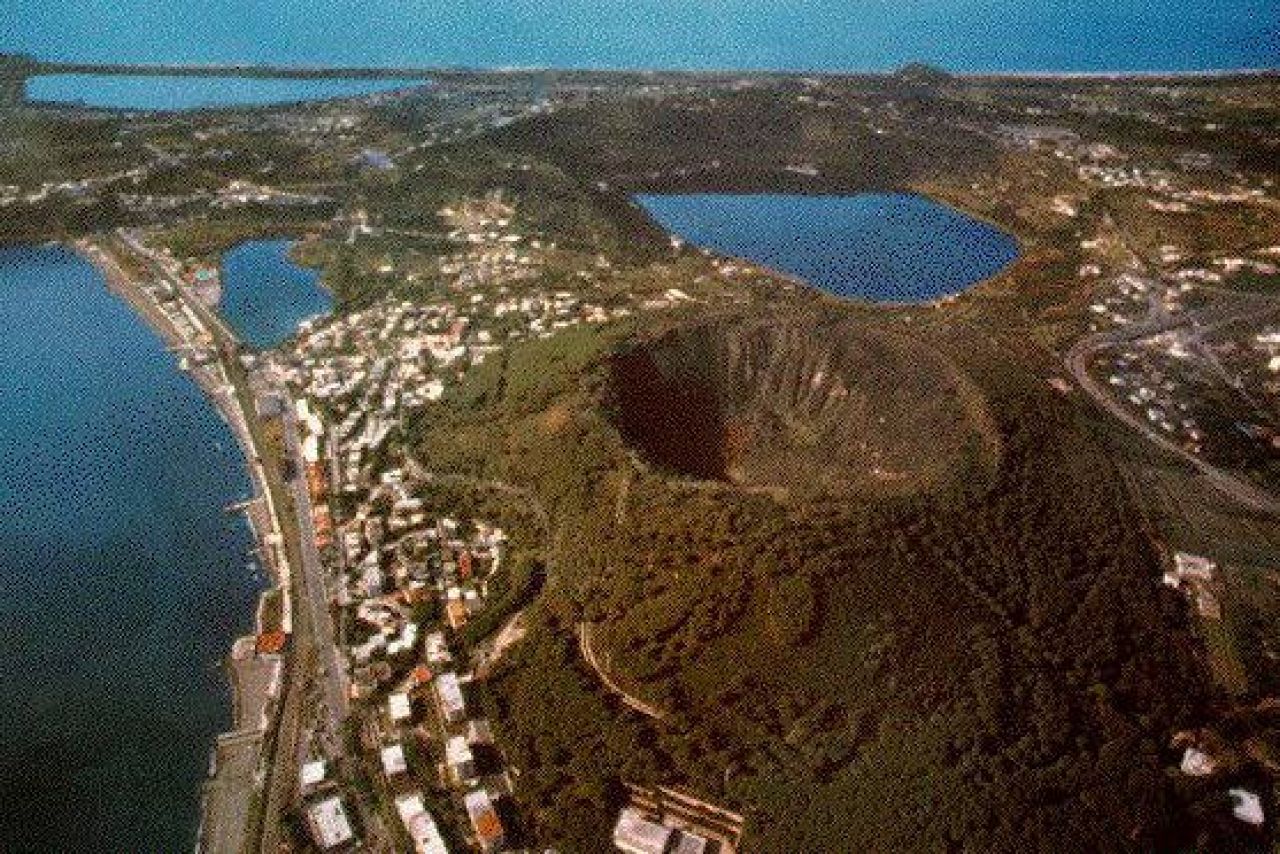
There are few things in nature as fascinating as volcanoes. There are also few things that are as deadly. There are regular old volcanoes, and there are super-volcanoes. Super-volcanoes have the capacity to wipe out civilization, and one such super-volcano in Italy appears to be waking from a 500-year slumber. [1]


Monte Nuovo (year 1538). Click for larger version.

Rumored to have caused the extinction of the Neanderthals, the nearly 5-mile wide Campi Flegrei super-volcano sits on the Italian coast. Researchers are concerned that it is approaching a critical pressure point that could lead to an eruption. There are close to 500,000 people living around it.


When you picture a volcano, you picture smoke and lava erupting from its peak. But super-volcanoes are quite different. Imagine Yellowstone National Park. Super-volcanoes are formed when a volcano ejects so much magma from its center that it actually collapses on itself, leaving behind extensive fields of volcanic activity, a vast crater, as well as numerous geysers, hydrothermal activity, and sulphuric acid.


Read: Yellowstone Super-Volcano  – 10% Chance of Erupting Within 80 Years


The Campi Flegrei super-volcano is made up of 24 craters and large volcanic edifices, many of which are submerged beneath the Mediterranean Sea. It formed 39,000 years ago, as part of the largest eruption Europe has experienced in the last 200,000 years.


Since its formation, Campi Flegrei has experienced 2 major eruptions – 35,000 years ago, and 12,000 years ago. A smaller eruption occurred in 1538. That “smaller” eruption, however, lasted for 8 days and spewed so much material into the surrounding area, it formed a new mountain, Monte Nuovo.


You get the point – even a “small” eruption is a huge event, so a major eruption could be catastrophic.


The eruption that occurred 200,000 years ago is believed to have triggered a “volcanic winter” that wiped out the Neanderthals. That’s pure speculation, but scientists say the eruption spewed some 1 trillion gallons of molten rock onto the surface and just as much sulphur into the atmosphere.


Source: CNN

The Critical Pressure Point


A team of researchers from the Italian National Institute for Geophysics and Volcanology are watching Campi Flegrei very closely because the super-volcano appears to be approaching a critical pressure point that could trigger a 3rd major eruption.


ScienceAlert explains:


“This critical pressure point – referred to as critical degassing pressure (CDP) – could drive volcanic unrest towards a critical state, the team reports, by releasing jets of super-hot gas into the atmosphere, heating the surrounding hydrothermal fluids and rocks, and causing rock failure and possibly an eruption.”


Volcanologist Giovanni Chiodini says:


“Hydrothermal rocks, if heated, can ultimately lose their mechanical resistance, causing an acceleration towards critical conditions.”


Campi Flegrei has been experiencing an “uplift” for the past decade, which suggests that the volatile gases beneath it are rising to the surface at an accelerating rate. This has prompted Italian authorities to raise the super-volcano’s alert level from green (“quiet”) to yellow (“requires scientific monitoring.”)


Uplift has signaled volcanic eruptions in the past, most notably with Rabaul in Papua New Guinea and Sierra Negra in the Galapagos.


No one is telling local residents to run for their lives just yet, because it is impossible to predict what, if anything, Campi Negrei might do. Chiodini says:


“We have many uncertainties and long-term previsions are at the moment not possible! For example, the process that we describe could evolve in both directions: toward pre-eruptive conditions or to the finish of the volcanic unrest.”


Chiodini and his team hope that their latest observations will spur other researchers to monitor Campi Flegrei in the coming years, so people have some idea of just how catastrophic another major eruption could be.


Problems in Peru


Two volcanoes in Peru have roared to life, leading to widespread fear and mass evacuations. [2]

On December 26, at 8:24 a.m., the Sabancaya volcano, which sits just 40 miles from Peru’s second most populous city, Arequipa, began spitting smoke and ash some 11,500 feet into the air just over a week after it became active.


Local authorities have warned the local inhabitants that they are likely to be affected by the ash from the 20,000-foot volcano, whose name translates to “tongue of fire” in the local dialect of Quechua.


Sabancaya had been dormant for 200 years until it began erupting in the 1980’s.


Just 60 miles away, the Ubinas volcano is also in the midst of spewing smoke and ash 2 miles into the atmosphere. It is Peru’s most active volcano, and was last active in April 2014. Ubinas had been dormant for about 40 years before rumbling back to life in 2006.


Authorities began evacuating the surrounding area earlier this week.


Peruvian Geophysical Institute (IGP) investigator Orlando Macedo said:


“All this activity is part of an expected process. Before the eruption, tremors were occurring closer and closer to the volcano and the crater. However, the process is taking longer than that which we saw at the Ubinas Volcano, when everything happened in a matter of days. In the case of Sabancaya, this could go on for several months.”


Other Areas of Concern


There was a lot of moving and shaking in December 2016.


Mount St. Helens in Washington State experienced an earthquake “swarm” of some 120 shallow temblors over the course of several days. It is considered active, but an eruption could be years away. [3]


Source: Oregon Live – Mount St. Helens

On the Kamchatka Peninsula in the Russian Far East, the Shiveluch volcano blew its top, destroying the small lava dome/plug in its crater and generating a 36,000-foot ash plume. Fortunately, the ash drifted to an uninhabited area, but an orange aviation alert was issued to warn airlines of the ash plume.


In Costa Rica, antennas on Irazu will have to be moved because of cracking on the volcano. It is unknown whether the cracking is related to any potential changes in the Irazu volcano, or if the surface blocks are just faulting.


The infamous Hawaiian volcano Kilauea experienced a small explosion, sending huge chunks of debris flying, including old wall rock and lava from the lava lake. This is a fairly common occurrence.


Lastly, scientists have noticed an increase in seismicity at Cayambe in Ecuador. An earthquake swarm that occurred there over several days in December indicate that Cayambe, like Mount St. Helens, is recharging, but no eruption appears to be imminent.


Sources:


[1] ScienceAlert


[2] Express


[3] Wired


Wired


CNN


Oregon Live


Storable Food


About Julie Fidler:


Author Image
Julie Fidler is a freelance writer, legal blogger, and the author of Adventures in Holy Matrimony: For Better or the Absolute Worst. She lives in Pennsylvania with her husband and two ridiculously spoiled cats. She occasionally pontificates on her blog.

Tuesday, February 21, 2017

Milo Yiannopoulos' Book Deal Canceled By Simon & Schuster

Publishing giant Simon & Schuster has canceled the publication of "Dangerous" by Milo Yiannopoulos. Publishers Weekly tweeted Monday that the company was canceling the book"s publication "after careful consideration."


Shortly after the tweet, Yiannopoulos confirmed in a Facebook post that "They canceled my book." Simon & Schuster inked the book deal with Yiannopoulos - which spurred controversy as writers threatened to boycott the company - at the end of December.


The decision to cancel the book came amid controversy over a video in which Yiannopoulos was said to defend pedophilia, although the outspoken commentator has denied that to be case. The video clip gained traction on social media after a conservative blog shared it Sunday. In the video, Yiannopoulos said relationships between older men and young boys can be beneficial.


In a Facebook post Monday, Yiannopoulos denounced the claims that he was advocating for pedophilia. "I am a gay man, and a child abuse victim,” Yiannopoulos wrote. 


"I would like to restate my utter disgust at adults who sexually abuse minors. I am horrified by pedophilia and I have devoted large portions of my career as a journalist to exposing child abusers. I"ve outed three of them, in fact -- three more than most of my critics. And I"ve repeatedly expressed disgust at pedophilia in my feature and opinion writing. My professional record is very clear.”


"But I do understand that these videos, even though some of them are edited deceptively, paint a different picture.”


It was the second Facebook post from Yiannopoulos after the tapes resurfaced.


"I"m partly to blame. My own experiences as a victim led me to believe I could say anything I wanted to on this subject, no matter how outrageous,” he continued in the Monday post. "But I understand that my usual blend of British sarcasm, provocation and gallows humor might have come across as flippancy, a lack of care for other victims or, worse, "advocacy." I deeply regret that."


The excuse however failed to stem public blowback: earlier in the day, the Conservative Political Action Conference rescinded its invitation Monday for Yiannopoulos to speak at its event.  ACU Chairman Matt Schlapp said Yiannopoulos" attempts to address the tapes have fallen short, calling the remarks "disturbing." "We realize that Mr. Yiannopoulos has responded on Facebook, but it is insufficient," Schlapp said in a statement. "It is up to him to answer the tough questions and we urge him to immediately further address these disturbing comments."


Meanwhile, according The Hill, the blowback against Milo"s statements has even threatened his job at Breibart where employees are reportedly prepared to leave the company if controversial senior editor Milo Yiannopoulos is not fired.


Another senior editor at the publication told Washingtonian Monday that "at least a half dozen" employees are prepared to leave to organization because of remarks  Yiannopoulos made about pedophilia that gained attention this weekend.


“The fact of the matter is that there’s been so many things that have been objectionable about Milo over the last couple of years, quite frankly. This is something far more sinister,” the senior editor said. “If the company isn’t willing to act, there are at least half a dozen people who are willing to walk out over it.”


Sunday, February 12, 2017

Those Who Serve Are Not Protected

Justin King
January 14, 2015


(ANTIMEDIA) He has one of the most dangerous jobs in the country. Before going on duty, he straightens his uniform, checks the lights on top of his car, and prepares for a long night of driving around the city and into some of the worst neighborhoods it has to offer. Every stop could be his last. Just wearing the uniform in some parts of the city makes him the target of armed robbers and gang members. He could get dragged out of his car and beat or shot while sitting at a traffic light. He’s there to serve you, the ungrateful public. In spite of the danger, if you call, he’s on his way… He’ll probably be there in 30 minutes of less.


No, you haven’t stumbled on to some pro-police state propaganda. He’s your favorite pizza delivery guy, and his job is more dangerous than being a police officer according the Bureau of Labor Statistics (being a cop isn’t even in the top ten). He gets paid less than the cop you thought we were talking about. He goes into the same neighborhoods as the cops, but most companies don’t allow him to be armed. Unlike the enhanced penalties for assaulting an officer, an attacker will probably face minimal charges. The driver doesn’t have anyone to call for back up. He doesn’t have a Kevlar vest. He doesn’t have a camera in his car to help identify his attacker. He has none of the protections a cop has, and his job is more dangerous.


If he kills someone because he was driving like an idiot, he goes to prison. If he defends himself with a firearm, he gets fired. If he kills a bystander when defending himself, he’ll go to prison. I can’t link an article for this because apparently Pizza delivery guys are better marksmen than cops, and I couldn’t find an example of this happening. Incidentally, I couldn’t find an example of a delivery driver killing someone that was unarmed either.


Why don’t Pizza delivery drivers get the same immunities cops have? After all, they’re just doing their jobs.


The answer is simple: propaganda. The American public is saturated by a constant barrage of propaganda that paints cops as America’s best and brightest, even though some departments intentionally hire or promote dumb cops. The propaganda serves to push the idea that American law enforcement is constantly a target, and because of past actions they are quickly becoming just that. Currently, they aren’t constant targets, not to the degree they will be if some form of accountability isn’t introduced.


The common defense is “all cops aren’t bad.” This might be true to some degree, however if a person watches injustice and says nothing because of a code of silence, they are a bad person. If a department terminates whistleblowers who report the crimes of other officers, the department is too corrupt to save and needs to be completely disbanded and the community needs to start over from scratch. With the direct targeting of law enforcement officers becoming something that actually happens outside of the movies, it is time for serious reform. The country is on the precipice of a truly violent upheaval. The American people have decided they will not take police brutality anymore. It’s time for serious reform, or we can expect to see more and more cops ambushed.


When someone who is “just doing their job” can rape and kill with total immunity, something is terribly wrong. The American people wouldn’t accept that a pizza delivery driver killed a kid speeding because he was just doing his job. Why should they accept that excuse from those who are paid to protect and serve?


On a side note, all that was said about the people that bring you your pizza is true. Tip well.


This article is free and open source. You have permission to republish this article under a Creative Commons license with attribution to the author and TheAntiMedia.org. Tune-in to the Anti-Media Radio Show Monday-Friday @ 11pm EST, 8pm PST.