Showing posts with label extinction. Show all posts

Wednesday, December 6, 2017

“20 Million Could Starve To Death In Coming Months” As Bio-systems Of Earth Are Imploding: ‘

climateengineering


Geoengineering expert Dane Wigington is suing to get NOAA (National Oceanic and Atmosphere Administration) to give up its climate engineering information. But he’s hit a brick wall, and it’s all because the powers that be seek to hide this information from the public for a long as possible.


Wigington contends, “There is no hiding from what’s coming. . . . NOAA is not returning our FOIA’s, Freedom of Information Act requests.”  He also says that this has been going on for 70 years, and was ramped up about 20 years ago. “This is the Orwellian world we live in,” said Wigington.  A team of attorneys working with GeoengineeringWatch.org and Stop Geoengineering Minnesota is suing to get NOAA to release the information requested.


“They are legally required to give those to our attorneys, and they are not doing that.  In fact, NOAA, in essence, flipped us the middle finger by sending back FOIA’s saying they know nothing about any sort of weather modification anywhere ever.  Think how absurd this is when there are 300 regional weather modification programs that NOAA is required to sign off on every single year (in the contiguous 48 states).  They are denying all of it.  This is the biggest cover-up in human history, with the largest most extensive operation in history, with the cooperation of governments around the globe.  That is not speculation.  You have to look and understand the gravity of the situation that is unfolding.  Countries around the globe, whatever you are focused on, if it’s not saving the life support systems of the planet, everything else amounts to arranging deck chairs on the Titanic. . . . This is the single most destructive endeavor ever launched by the human race.  Mathematically, it’s the greatest threat we face short of nuclear catastrophe.” –Dane Wigington


According to USA Watch Dog, Wigington contends that the situation is much worse than most yet understand and climate engineering (not to be confused with the propagated and manufactured climate change which was invented in 1998 to cover this up as a “solution” to climate change) is a primary causal factor. Wigington explains, “Our situation is far more dire and immediate than anyone yet comprehends, and climate engineering is making it worse, not better.  Official statistics say 20 million people could starve in the coming months, and that number will increase exponentially.  The biosystems of the planet are imploding.”


“They (many disinformation sources) have to control the message, they almost exclusively use the term ‘chemtrails’ because that term leads to a dead end (conspiracy theory and hoax definitions).  It’s not a scientific term, and they want us to use that term.  You don’t see them using the geoengineering, climate engineering, solar radiation management and aerosol injection term because they (mainstream media and disinformation sources) don’t want people to understand the legitimacy of this issue.  Why the Senate hearings?  Because the elephant in the room is now all but impossible to hide, and they are trying to pacify populations until the last possible moment.  They want to tell the population what they want to hear–that this is only a proposal… We have massive toxic aerosol, heavy metal spraying in our atmosphere that could not be more visible.  It’s blotting out the sun. . . . These programs are completely out of control. . . .We are on the road to planetary omnicide. Climate engineering is the greatest and most immediate assault we face.  Climate engineering, look at it like this, like the pharmaceutical approach to planet earth.  Hide the symptoms even if you are making the overall situation exponentially worse.  That’s what they are doing.  We have had these radical whiplash weather scenarios where it goes from 80 to 90 degrees to snow in a day or two.  This weather whiplash is not natural in any way, shape or form.”


It’s time to prepare for what’s coming. Learn to grow your own food and be self-sufficient. It could make all the difference.

Wednesday, October 18, 2017

New Study: ‘Powerful Superflares Can Serve As Plausible Drivers of Extinction Events’


Magnificent CME Erupts on the Sun - August 31


According to a new paper, there’s a solid chance that a massive super flare storm could impact Earth within 100 years. And the consequences of this magnitude of a solar storm could include extinction.


In The Astrophysical Journal, a new paper was published detailing the outcome of a super flare. Avi Loeb and Manasvi Lingham, two renowned astrophysicists at Harvard University, have been concerned with the prospect of a so-called “superflare” for some time now. Unlike most, they’re far more worried about superflares than asteroid impacts or volcanic super-eruptions.  They also warn that “powerful superflares can serve as plausible drivers of extinction events.”


The two scientists also point out that “the risk posed by superflares has not been sufficiently appreciated.”  Not only would a superflare annihilate electrical circuits in a world covered in them, but it would also generate $10 trillion worth of damage.


Back in 1859, a powerful storm on the Sun launched colossal solar flares towards Earth, and the subsequent electrical surge triggered the shutdown of telegraph systems all over the planet.  Should a storm of that magnitude occur again, global power grids will go down and the consequences would be far greater.  Just one superflare generates enough energy to satiate the electricity demands of the entire planet for 14,700 years.


Using the geological record, along with data from other Sun-like stars, the pair worked out the frequency of various types of superflares impacting the Earth. They found that extreme, atmosphere-eroding, extinction-level superflares occur on the Sun once every 20 million years. Additionally, they found that the chances of one being able to cause major ecological and technological damage occurring within the next century is around one-in-1,000. A weaker superflare that just causes damage to electrical systems is even more likely. Those chances are about one-in-eight.


By comparison, the chance of witnessing a supervolcanic blast in your lifetime is around 90,000 times less likely than that of experiencing a type of superflare. But the good news is that these two researchers have also penned a study detailing how an Earth-sized magnetic shield could be used to defend ourselves from such an event. Although prohibitively expensive, many think that it’s something that humanity should consider if the chances of a superflare event are this high. Considering most humans lack basic survival skills, a superflare storm could be a catastrophe and an extinction level event.


If a superflare is extremely energetic, the planet’s magnetic field will experience a huge increase in its electric current. This can trigger a geomagnetic storm, which if powerful enough, has the potential to knock out satellites and electrical grids, and even partly strip away the ozone layer. There was actually a near-miss in 2012 when an explosion on the Sun produced not only plenty of flare-based electromagnetic radiation but a coronal mass ejection (CME) – a fountain of highly-magnetized solar plasma particles.


Click here to subscribe: Join over one million monthly readers and receive breaking news, strategies, ideas and commentary.

Gas Masks, Filters, Body Suits, Anti Radiation Pills

Please Spread The Word And Share This Post


Author: Mac Slavo
Views: Read by 0 people
Date: October 18th, 2017
Website: www.SHTFplan.com


Copyright Information: Copyright SHTFplan and Mac Slavo. This content may be freely reproduced in full or in part in digital form with full attribution to the author and a link to www.shtfplan.com. Please contact us for permission to reproduce this content in other media formats.


Saturday, July 15, 2017

Scientists Say Sixth Extinction Level Event Underway (VIDEO)

Scientists Say Sixth Extinction Level Event Underway (VIDEO) | drought-dead-animals | Environment Global Warming Fraud Multimedia Science & Technology Sleuth Journal Special Interests


By: Joe Joseph, The Daily Sheeple


In this News Shot, Joe discusses a new study that claims “biological annihilation” of wildlife in recent decades means a sixth mass extinction in Earth’s history is underway and is more severe than previously feared.


Watch on YouTube


Contributed by Joe Joseph of www.TheDailySheeple.com.


Create your own review


Average rating:  

 0 reviews


Wednesday, May 10, 2017

Volcanoes Around the World are Springing to Life

There are few things in nature as fascinating as volcanoes. There are also few things that are as deadly. There are regular old volcanoes, and there are super-volcanoes. Super-volcanoes have the capacity to wipe out civilization, and one such super-volcano in Italy appears to be waking from a 500-year slumber. [1]


Monte Nuovo (year 1538). Click for larger version.

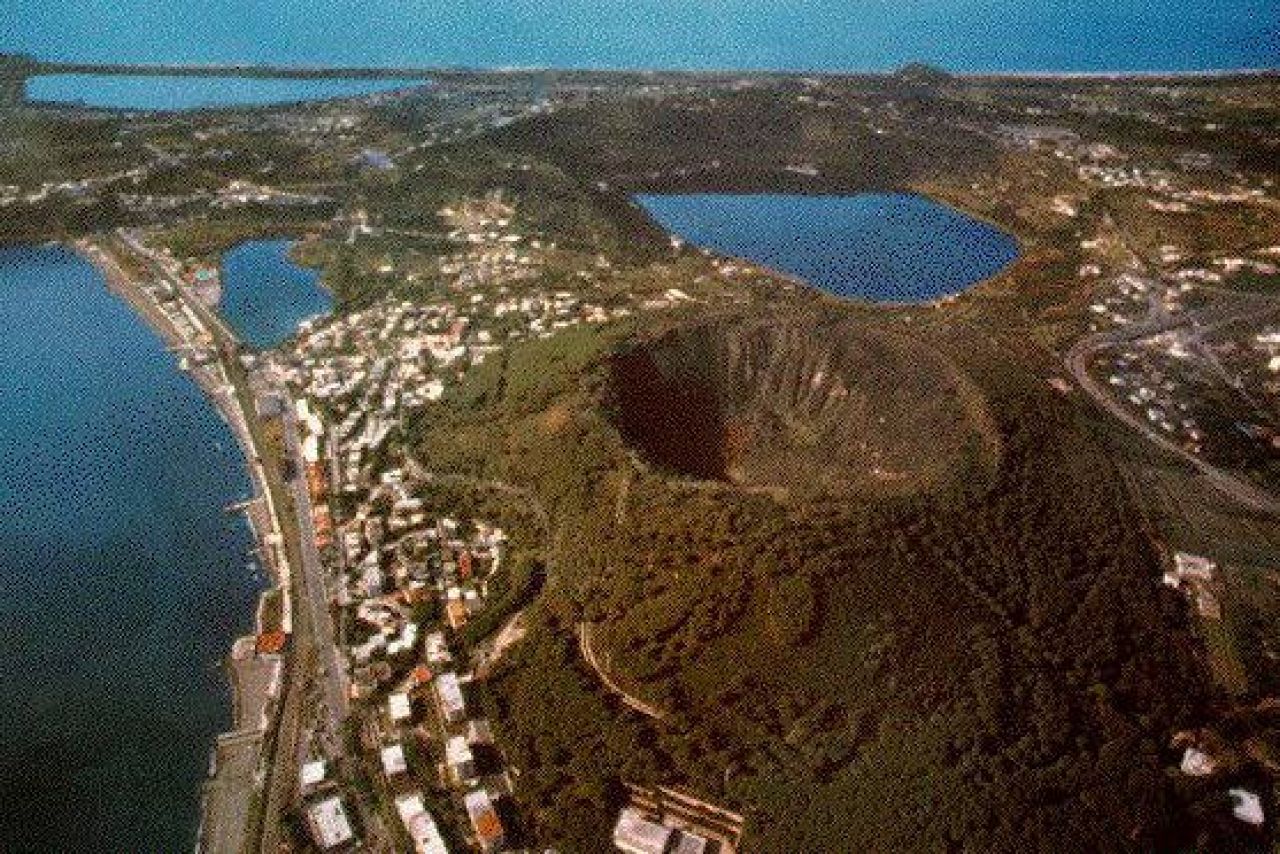
Rumored to have caused the extinction of the Neanderthals, the nearly 5-mile wide Campi Flegrei super-volcano sits on the Italian coast. Researchers are concerned that it is approaching a critical pressure point that could lead to an eruption. There are close to 500,000 people living around it.


When you picture a volcano, you picture smoke and lava erupting from its peak. But super-volcanoes are quite different. Imagine Yellowstone National Park. Super-volcanoes are formed when a volcano ejects so much magma from its center that it actually collapses on itself, leaving behind extensive fields of volcanic activity, a vast crater, as well as numerous geysers, hydrothermal activity, and sulphuric acid.


Read: Yellowstone Super-Volcano  – 10% Chance of Erupting Within 80 Years


The Campi Flegrei super-volcano is made up of 24 craters and large volcanic edifices, many of which are submerged beneath the Mediterranean Sea. It formed 39,000 years ago, as part of the largest eruption Europe has experienced in the last 200,000 years.


Since its formation, Campi Flegrei has experienced 2 major eruptions – 35,000 years ago, and 12,000 years ago. A smaller eruption occurred in 1538. That “smaller” eruption, however, lasted for 8 days and spewed so much material into the surrounding area, it formed a new mountain, Monte Nuovo.


You get the point – even a “small” eruption is a huge event, so a major eruption could be catastrophic.


The eruption that occurred 200,000 years ago is believed to have triggered a “volcanic winter” that wiped out the Neanderthals. That’s pure speculation, but scientists say the eruption spewed some 1 trillion gallons of molten rock onto the surface and just as much sulphur into the atmosphere.


Source: CNN

The Critical Pressure Point


A team of researchers from the Italian National Institute for Geophysics and Volcanology are watching Campi Flegrei very closely because the super-volcano appears to be approaching a critical pressure point that could trigger a 3rd major eruption.


ScienceAlert explains:


“This critical pressure point – referred to as critical degassing pressure (CDP) – could drive volcanic unrest towards a critical state, the team reports, by releasing jets of super-hot gas into the atmosphere, heating the surrounding hydrothermal fluids and rocks, and causing rock failure and possibly an eruption.”


Volcanologist Giovanni Chiodini says:


“Hydrothermal rocks, if heated, can ultimately lose their mechanical resistance, causing an acceleration towards critical conditions.”


Campi Flegrei has been experiencing an “uplift” for the past decade, which suggests that the volatile gases beneath it are rising to the surface at an accelerating rate. This has prompted Italian authorities to raise the super-volcano’s alert level from green (“quiet”) to yellow (“requires scientific monitoring.”)


Uplift has signaled volcanic eruptions in the past, most notably with Rabaul in Papua New Guinea and Sierra Negra in the Galapagos.


No one is telling local residents to run for their lives just yet, because it is impossible to predict what, if anything, Campi Negrei might do. Chiodini says:


“We have many uncertainties and long-term previsions are at the moment not possible! For example, the process that we describe could evolve in both directions: toward pre-eruptive conditions or to the finish of the volcanic unrest.”


Chiodini and his team hope that their latest observations will spur other researchers to monitor Campi Flegrei in the coming years, so people have some idea of just how catastrophic another major eruption could be.


Problems in Peru


Two volcanoes in Peru have roared to life, leading to widespread fear and mass evacuations. [2]

On December 26, at 8:24 a.m., the Sabancaya volcano, which sits just 40 miles from Peru’s second most populous city, Arequipa, began spitting smoke and ash some 11,500 feet into the air just over a week after it became active.


Local authorities have warned the local inhabitants that they are likely to be affected by the ash from the 20,000-foot volcano, whose name translates to “tongue of fire” in the local dialect of Quechua.


Sabancaya had been dormant for 200 years until it began erupting in the 1980’s.


Just 60 miles away, the Ubinas volcano is also in the midst of spewing smoke and ash 2 miles into the atmosphere. It is Peru’s most active volcano, and was last active in April 2014. Ubinas had been dormant for about 40 years before rumbling back to life in 2006.


Authorities began evacuating the surrounding area earlier this week.


Peruvian Geophysical Institute (IGP) investigator Orlando Macedo said:


“All this activity is part of an expected process. Before the eruption, tremors were occurring closer and closer to the volcano and the crater. However, the process is taking longer than that which we saw at the Ubinas Volcano, when everything happened in a matter of days. In the case of Sabancaya, this could go on for several months.”


Other Areas of Concern


There was a lot of moving and shaking in December 2016.


Mount St. Helens in Washington State experienced an earthquake “swarm” of some 120 shallow temblors over the course of several days. It is considered active, but an eruption could be years away. [3]


Source: Oregon Live – Mount St. Helens

On the Kamchatka Peninsula in the Russian Far East, the Shiveluch volcano blew its top, destroying the small lava dome/plug in its crater and generating a 36,000-foot ash plume. Fortunately, the ash drifted to an uninhabited area, but an orange aviation alert was issued to warn airlines of the ash plume.


In Costa Rica, antennas on Irazu will have to be moved because of cracking on the volcano. It is unknown whether the cracking is related to any potential changes in the Irazu volcano, or if the surface blocks are just faulting.


The infamous Hawaiian volcano Kilauea experienced a small explosion, sending huge chunks of debris flying, including old wall rock and lava from the lava lake. This is a fairly common occurrence.


Lastly, scientists have noticed an increase in seismicity at Cayambe in Ecuador. An earthquake swarm that occurred there over several days in December indicate that Cayambe, like Mount St. Helens, is recharging, but no eruption appears to be imminent.


Sources:


[1] ScienceAlert


[2] Express


[3] Wired


Wired


CNN


Oregon Live


Storable Food


About Julie Fidler:


Author Image
Julie Fidler is a freelance writer, legal blogger, and the author of Adventures in Holy Matrimony: For Better or the Absolute Worst. She lives in Pennsylvania with her husband and two ridiculously spoiled cats. She occasionally pontificates on her blog.

Sunday, April 2, 2017

Key Report: Hundreds of Native Bee Species Buzzing Toward Extinction

The Center for Biological Diversity has published a first-of-its-kind comprehensive review of more than 4,000 native bee species in North America. The report indicates that more than half the species with sufficient data are declining. Nearly 1 in 4 is racing towards extinction due to increased pesticide and other factors. [1]


Of the 1,437 species with sufficient data, the nonprofit found that 749 were declining. An additional 347 (24%) of the species are imperiled and at risk of extinction. The center presumes that the species lacking sufficient data are presumed to be at risk of extinction as well.


The author of the report, Kelsey Kopec, said in a statement:


“It’s a quiet but staggering crisis unfolding right under our noses that illuminates the unacceptably high cost of our careless addiction to pesticides and monoculture farming.”


All of the bee species are threatened by habitat loss, heavy pesticide use, climate change, and increasing urban sprawl. Let’s take a look at the case studies highlighted in the group’s report.


Yellow Carpet Solitary Bee


Yellow- Carpet Solitary Bee (Andrena Blennospematis).


The Yellow Carpet Solitary Bee depends entirely on the flower that shares its namesake, the yellow carpet, or Blennosperma nanum. The biggest threat to the species is habitat loss and modification “because the vernal pool and upland habitats essential to its life cycle are being destroyed at alarming rates.”


These bees were once found in 11 counties in Central California and the Bay Area, but have been confirmed in only 1 county in the last decade.


Sunflower Leaf Cutting Bee


Sunflower leafcutting bee (Megachile fortis)


This exceptionally large bee uses sunflowers as its primary source of pollen. It was once seen buzzing sunflower stands in the Great Plains, but is now in steep decline and rarely seen.


The pesticides used on commercial sunflower crops have been shown to harm and even kill solitary bees like the Sunflower Leaf Cutting Bee. The chemicals can cause decreased fitness, reduced brood bearing, and reduced female production, all leading to smaller populations that can eventually cause local to large-scale extinctions.


Wild Sweet Potato Bee


Wild sweet potato bee (Cemolobus<br /> ipomoeae).


The Wild Sweet Potato Bee’s turf is east of the Great Plains, from Missouri to Pennsylvania, and at forest edges along the eastern U.S. Logging and land conversion has largely driven the species out of forests. Agricultural intensification (including pesticide use) and urban sprawl are also significant threats to Wild Sweet Potato Bees.


Once commonly observed in the state of Illinois, no bees have been collected there since the late 1970s. Like the Sunflower Leaf Cutting Bee, the Wild Sweet Potato Bee is rarely seen anymore.


Gulf Coast Solitary Bee


Gulf Coast solitary bee (Hesperapis oraria)


According to the report, the Gulf Coast Solitary Bee “is one of 34 bee species within the family Melittidae native to North America [3] and is the only bee within its genus to be found east of the Mississippi.” It forages for pollen on the coastal plain honeycombhead (Balduina angustifolia), and no others.


This species is no longer found in 1 of 3 counties where it was known to exist, and it is disappearing in other portions of its small range, including Choctawhatchee Bay, Pensacola Bay and Perdito Bay. The Center for Biological Diversity warns that without swift action, the Gulf Coast Solitary Bee will likely disappear.


Macropis Cuckoo Bee


Macropis cuckoo bee (Epeoloides pilosula)


This particular species is the only one of the cleptoparasitic tribe Osirini present in the United States and Canada, and is one of only two species of Epeoloides worldwide, according to the report.


Scientists have been working to locate the Macropis Cuckoo Bee in its previous range in the United States, but have unfortunately come away empty-handed.


The Center for Biological Diversity writes:


“The story of the macropis cuckoo provides an important lesson that a species should not have to decline to the point of being presumed extinct before receiving protection. Additional protections are still needed to ensure that this unique bee survives and recovers from the brink of extinction.”


Source: SaveThePollinators.com

Last fall, 7 species of yellow-faced bees native to Hawaii were granted protection under the U.S. Endangered Species Act. It marked the first time a bee species had ever been given such protection.


The Rusty Patched Bumble Bee was scheduled to receive federal protection in February, but the action got pushed back until at least mid-March, due to the regulatory freeze enacted by the Trump Administration on President Trump’s first day in office. [2]


Sources:


[1] Center for Biological Diversity


[2] The Washington Post


SaveThePollinators.com


Storable Food


About Julie Fidler:


Author Image
Julie Fidler is a freelance writer, legal blogger, and the author of Adventures in Holy Matrimony: For Better or the Absolute Worst. She lives in Pennsylvania with her husband and two ridiculously spoiled cats. She occasionally pontificates on her blog.