Showing posts with label Northern California. Show all posts

Thursday, April 12, 2018

Splitting California Into 3 States Just Reached An Important Milestone


An initiative to split the state of California into three different states has gathered enough support via signatures to qualify as a ballot measure in November.  This is one important milestone for those who want to break away from the harsh Communist policies of much of the Golden State.


Venture capitalist Tim Draper said backers of what he has dubbed “CAL 3” would submit petitions with more than 600,000 signatures to election officials next week. The initiative needs signatures from 365,880 registered voters – five percent of the total votes cast for governor in the 2014 election – to qualify for the ballot. And according to 10 News, Draper said there’s a lot of support for this.


Breaking the state into three separate states would still require congressional approval. But Draper is hopeful. “This is an unprecedented show of support on behalf of every corner of California to create three state governments that emphasize representation, responsiveness, reliability, and regional identity,” Draper said.


One proposed state would be called California or a name to be chosen by its residents after a split. It would consist of Los Angeles, Ventura, Santa Barbara, San Luis Obispo, Monterey and San Benito counties. The second state, Southern California or a name to be chosen by its residents, would consist of Orange, Riverside, San Bernardino, San Diego, Imperial, Kern, Kings, Fresno, Tulare, Inyo, Madera and Mono counties.    The remaining 40 counties would be part of the state of Northern California or a name chosen by its residents.  Northern California and parts of southern Oregon have often referred to some of the areas as the State of Jefferson – the “51st state” named after the third president of The United States. 


But without congressional approval, no state will be allowed to succeed and gain sovereignty. That hasn’t stopped Draper, however. He said he conceived the initiative out of a belief that “the citizens of the whole state would be better served by three smaller state governments while preserving the historical boundaries of the various counties, cities, and towns.”  And many in the more rural northern counties of California have been disenfranchised for quite some time now.  Their votes are overwhelmingly irrelevant due to the large Communist populations in the big cities such as Los Angeles and San Francisco.


Steven Maviglio, a longtime Democratic Party political consultant who was a co-chair of the effort to oppose Draper’s 2014 initiative to split California into six states, told City News Service, “Splitting California into three and creating three new governments does nothing to solve our state’s challenges other than tripling them.” What Maviglio is saying, is that by splitting California, the state will have to split their 55 electoral votes and it’s highly likely half would go to a Republican president, rather than a Democrat in upcoming presidential elections.  For that reason alone, don’t look for the California government to willingly allow this split regardless of the votes.


Politicians care only about power and most people give it to them. Breaking up the state will have some big political losers.  Never be under the assumption that the rich will allow you to vote away their money or that a politician will allow you to vote away their power.

Monday, December 11, 2017

California Is Running Out Of Prisoners To Fight Its Deadly Wildfires

While many on the left have celebrated California’s push to legalize marijuana as a victory for a progressive, harm-reduction approach to combating addiction and crime, the pullback in the number of low-level prisoners entering the state’s penal system is leaving the California Department of Forestry and Fire Protection.


Court mandates to reduce overcrowding in the state’s prisons – combined with the legalization of marijuana, the most commonly used drug in America (aside from alcohol, of course) – have led to a sharp drop in the number of prisoners housed at state facilities in recent years. Interestingly, one byproduct of this trend is it’s creating headaches for the state officials who are responsible for coordinating the emergency wildfire response just as California Gov. Jerry Brown is warning that the severe fires witnessed this year – the most destructive in the state’s history – could become the new status quo.


To wit, since 2008, the number of prisoner-firemen has fallen 13%.


As the Atlantic reports, California has relied on inmates to help combat its annual wildfires since World War II, when a paucity of able-bodied men due to the war effort forced the state to turn to the penal system for help. More than 1,700 convicted felons fought on the front lines of the destructive wildfires that raged across Northern California in October.


While communities from Sonoma to Mendocino evacuated in the firestorm’s path, these inmates worked shifts of up to 72 straight hours to contain the blaze and protect the property residents left behind, clearing brush and other potential fuel and digging containment lines often just feet away from the flames. Hundreds more are on the fire line now, combatting the inferno spreading across Southern California.


But over the course of the last decade, their ranks have begun to thin. As drought and heat have fueled some of the worst fires in California’s history, the state has faced a court mandate to reduce overcrowding in its prisons. State officials, caught between an increasing risk of wildfires and a decreasing number of prisoners eligible to fight them, have striven to safeguard the valuable labor inmates provide by scrambling to recruit more of them to join the force. Still, these efforts have been limited by the courts, public opinion, and how far corrections officials and elected leaders have been willing to go...


With dry conditions expected to persist for the foreseeable future, California will need to adjust to this new reality. Meanwhile, the fate of the inmate-firefighting program lies in the balance between two trends: the increasing need for cheap labor, and the pending decline in incarceration.


The push to reduce overcrowding is a reaction to the rising incarceration rates of the 1990s, when President Bill Clinton declared gangsters and criminals “superpredators” and authorized stiff penalties for relatively minor drug offenses.


For inmates, the reduction in state prison populations that first nudged that balance was long overdue. In the 1990s and 2000s, increasingly severe overcrowding in California prisons compromised medical services for prisoners and led to roughly one preventable death each week. A federal court ruled in 2009 that the inadequate health care violated the Eighth Amendment’s embargo against cruel and unusual punishment, and ordered the state to reduce its prison population by just shy of 27 percent - a cut of nearly 40,000 prisoners at the time of the ruling. California appealed the decision, but the Supreme Court upheld it in May 2011.


As one might expect, the push to reduce overcrowding has had the greatest impact on the population of inmates in minimum security prisons. Typically, state officials prefer to recruit minimum security inmates who are already serving relatively light sentences and thus have the most incentive to cooperate and not cause problems (like disappearing into the wilderness).


Also, state guidelines prohibit the recruitment of certain violent criminals and, of course, sex offenders.


The pool of potential recruits was limited long before the courts’ mandate. It comprises only inmates who earn a minimum-custody status through good behavior behind bars and excludes arsonists, kidnappers, sex offenders, gang affiliates, and those serving life sentences. To join the squad, inmates must meet high physical standards and complete a demanding course of training. They also have to volunteer.


“But,” cautioned David Fathi, the director of the ACLU’s National Prison Project, “you have to understand the uniquely coercive prison environment, where few things are clearly voluntary.” In the eyes of criminal-justice reformers, corrections officials recruit inmates under duress. “In light of the vast power inequality between prisoners and those who employ them,” Fathi continued, “there is a real potential for exploitation and abuse."


Aside from the shrinking inmate population, a handful of inmate deaths this year while battling the NorCal wildfires is causing some low-level offenders to reconsider whether the incentives being offered by the state – credit toward parole, and a generous wage (at least by prison standards) – are really worth the risks.


Many inmates join the force to escape unpalatable prison conditions. In doing so they take on great personal risk, performing tasks that put them in greater danger than most of their civilian counterparts, who work farther from the flames driving water trucks and flying helicopters, among other activities. By contrast, inmates are often the first line of defense against fires’ spread, as they’re trained specifically to cut firebreaks—trenches or other spaces cleared of combustible material—to stop or redirect advancing flames. The work can be fatal: So far this year, two inmates have died in the line of duty, along with one civilian wildland-firefighter. The first, 26-year-old Matthew Beck, was crushed by a falling tree; the second, 22-year-old Frank Anaya, was fatally wounded by a chainsaw.


“Obviously this is not something that everyone is willing to volunteer for,” said Bill Sessa, a CDCR spokesman. “We’ve always been limited by the number of inmates who were willing to volunteer for the project.” Even when state prisons were at their most crowded, the camps where inmate firefighters live weren’t filled to capacity. And as the pool of qualified prisoners has contracted, he said, corrections officials have had to “work harder now than we did before to bring the camp to the inmates’ attention."


In an effort to entice more recruits to join up, state officials are trying to emphasize the benefits of volunteering to fight the blazes: Volunteer firefighters can receive visits from family out in the open, instead of behind a thick pane of glass. It also allows them to escape the confines of the prison – for a brief time at least.


But with legal marijuana rapidly draining the ranks of low level offenders, a sizable shortfall will likely to persist in the years to come.


And after the death and devastation wrought by this year’s fires, many inmates have good reason to reconsider.


After all, you can’t enjoy visits with family and friends when you’re dead.


Thursday, November 30, 2017

About That Sensationalist Bitcoin Electrical Consumption Story

Authored by Charles Hugh Smith via OfTwoMinds blog,


Check the context before uncritically accepting sensationalist conclusions.


Let"s start with a primer on how to write a sensationalist story that can be passed off as "journalism:"


1. Locate credible-sounding data that can be de-contextualized, i.e. sensationalized.


2. Present the data as "fact" rather than data that requires verification by disinterested researchers.


3. Exaggerate the data as much as possible and set the tone and context with emotionally laden words: "shocking," etc.


4. Select a context that sensationalizes the conclusion.


Now let"s take a look at a story that has been swallowed whole, with little to no fact-checking or disinterested inquiry: bitcoin"s electrical consumption, i.e. the electricity consumed by mining/maintaining bitcoin"s blockchain.


One Bitcoin Transaction Now Uses as Much Energy as Your House in a Week


Let"s start by stipulating that energy consumption is a consequential matter worthy of serious inquiry. It"s important to measure the energy consumption of all the systems that operate within the current status quo, and compare the consumption levels of these systems.


With that in mind, let"s take a look at the story.


Right off the bat, the context we"re offered to grasp the enormity of bitcoin"s mining consumption is the electrical consumption of Nigeria, a nation, we"re breathlessly informed, with 186 million residents. Wow! That"s a crazy amount of electrical consumption, right?


Let"s do some very basic fact-checking before we accept sensationalist conclusions, shall we?


Nigeria consumes about 24 billion kWh annually, while the U.S. consumes 3,913 billion kWh annually.


So Nigeria uses 3/5th of 1% (0.6%) of the electricity the U.S. consumes.


Now let"s compare that electrical consumption with the amount of electricity consumed in the U.S. by residential devices and chargers on stand-by, i.e. appliances, devices, chargers, gizmos, etc. that aren"t in use and doing no work but that are still consuming electricity.


About a quarter of all residential energy consumption is used on devices in idle power mode, according to a study of Northern California by the Natural Resources Defense Council. That means that devices that are “off” or in standby or sleep mode can use up to the equivalent of 50 large power plants’ worth of electricity and cost more than $19 billion in electricity bills every year.


source: Just How Much Power Do Your Electronics Use When They Are ‘Off’? (May 7, 2016, New York Times)


(Please read the article to find out just how much power the 50+ gadgets in your home consume doing absolutely zero work.)


According to the U.S. Energy Information Administration, annual residential electrical consumption totals 1,410 billion kWh.


So 25% (the amount of household electricity consumed by stand-by devices) of 1,410 billion equals 352 billion kWh consumed annually by residential appliances and devices on stand-by in the U.S.


Now let"s compare the annual electrical consumption of Nigeria (24 B kWh) with the annual residential electrical consumption of devices on stand-by in the U.S.


The annual electrical consumption of Nigeria (24 B kWh) is 6.8% of the annual electrical consumed by household devices on stand-by in the U.S. That means the supposed consumption of bitcoin mining is 1/14th of the power lost to residential devices on stand-by in the U.S., devices doing essentially nothing.


Now let"s add in all the appliances and devices in government and private-sector offices on stand-by. Let"s conservatively estimate another 150 B kWh lost to all this stuff on stand-by.


Now let"s multiply the total of electricity lost to stuff on stand-by mode (doing no work whatsoever) in the U.S., 500 B kWh annually, by five, since the U.S. consumes roughly 20% of all electricity globally.


Electricity production 2016 (Enerdata)


The United States’ share of world energy consumption (EIA)


This gives us an estimate of all the electrical power lost to electrical appliances and devices on stand-by globally every year: 2,500 billion kHh. 1% of that wasted electricity is 25 billion kHh. If you reckon this seems high, let"s shave these totals to 1,500 billion kHh and 15 billion kHh.


Let"s go back to the story about bitcoin"s consumption of electricity which tells us "a shocking 215 kilowatt-hours (KWh) of juice (is) used by miners for each Bitcoin transaction."


But then a few paragraphs down, we discover the electricity per transaction might only be 77 kWh-- nobody really knows for sure. Hmm. 77 is 36% of 215, so the "shocking" consumption might overstate actual consumption by a factor of three?


Let"s choose a number between 77 and the "shocking" 215, since nobody really knows what the real number is: shall we guesstimate 135, or 2/3 of the high guesstimate? That would drop the annual consumption of bitcoin mining from 24 B kWh annually to 15 B kWh, less than 1% of the electricity wasted annually on stand-by devices doing no work whatsoever.


And so, um, bitcoin mining is a threat to the planet because it consumes less than 1% of all the electricity squandered by appliances and devices on stand-by? If we want to stop wasting so much energy, perhaps we should start by mandating near-zero stand-by power consumption for the hundreds of millions of devices which are not in use that are nonetheless sucking up electricity every second of every day.


Here"s another thought: check the context before uncritically accepting sensationalist conclusions.


*  *  *


If you found value in this content, please join me in seeking solutions by becoming a $1/month patron of my work via patreon.com. Check out both of my new books, Inequality and the Collapse of Privilege ($3.95 Kindle, $8.95 print) and Why Our Status Quo Failed and Is Beyond Reform ($3.95 Kindle, $8.95 print, $5.95 audiobook) For more, please visit the OTM essentials website.


Thursday, November 16, 2017

Doug Casey On Why Race Will Break The US Apart, Part I

Via CaseyResearch.com,


“America is a marvelous idea, a unique idea, fantastic idea. I’m extremely pro-American. But America has ceased to exist.”


Longtime readers will recognize this. It’s one of Doug Casey’s more memorable quotes.


I’m sharing it with you today because Doug said something last week that touched on this radical idea. He said the United States could break apart due to racial tensions.


Most people haven’t considered this possibility. After all, the U.S. is supposedly a “melting pot” where different races can coexist peacefully.


So, a few days ago, I called Doug to learn why he thinks this. Below is the first part of our discussion.


*  *  *


Justin: Doug, the last time we spoke, you said the United States could break apart because of racial tensions. Why do you think that?


Doug: Well, I used to know a guy by the name of Michael Hart. He would come to our Eris Society meetings in Aspen. Eris was a private annual event I ran for 30 years, for authors, scientists, and people who were well-known for something. It enabled people who might not otherwise meet to get to know each other and exchange ideas. Michael was a university prof, best known for his book The 100: A Ranking of the Most Influential People in History.


One year, he gave a speech about how the U.S. was going to break up into smaller countries, and part of it would be on racial lines.


I thought that unlikely at the time; it was about 1990. Now, I think Michael may have been right.


I’ll explain why in a minute. But we should first discuss the origins of democracy.


Democracy originated in 6th-century BC Greece. It was a unique and workable method of governance for city-states of a few thousand people. And in the case of Athens, as many as 40,000 people.


But these people all shared a common language. They worshipped the same gods. They were the same ethnicity. They had the same customs and beliefs.


They were like an extended clan with many similarities. Differences were among individuals, not groups.


When the U.S. democracy was started, it was much like that. It was very much like a Greek city-state, an extended one. Everybody shared culture, ethnicity, language, habits, and so forth, with just minor regional differences. People saw themselves first as New Yorkers, Virginians, or whatever, just as the Greeks saw themselves first as Athenians, Thebans, Corinthians, or many scores of other polities.


As you know I don’t believe in democracy, I believe in personal freedom. Democracy is workable enough in something like a cohesive city-state. But absolutely not once voters get involved in economic issues—the poor will always vote themselves a free lunch, and the rich will buy votes to give themselves more. Democracy always devolves into class warfare.


In ancient Greece, if you weren’t a landowner you weren’t respected. In the U.S., voting rules were determined by the States, and originally, everywhere, you had to be a landowner. That meant you had something to lose. But that’s not the case anymore.


Justin: What’s changed?


Doug: For one thing, anybody can vote. People who are penniless. Eighteen-year-olds who have no knowledge or experience and are fresh out of the indoctrination of high school. Lots of non-citizens, probably millions, manage to vote. Voting has become, as H.L. Mencken said, just an advance auction on stolen goods.


For another thing, today, the United States is multicultural. America used to have its own distinct culture; the U.S. no longer stands for anything.


Race is just the most obvious thing that divides people. You can see that somebody’s of a different race just by looking at them. The old saying about birds of a feather flocking together is basically true. It’s very politically incorrect to make that observation, of course. Certainly if you’re white. But it’s factually accurate. Most things that are PC fly in the face of reality.


If people are of a different race, it increases the chances that they’re not going to share other things. The key, for a rational person, is to judge people as individuals. Race, sex, religion, and cultural background are quick indicators of who a person might be. As are dress, accent, attitude, and what they say among many other indicators. You need as much data as you can get to help you judge what the other person will do, and who he is. It’s actually quite stupid to not discriminate among people you encounter. But then the whole PC movement is quite stupid by its very nature.


But, back to the subject, you can’t have a multicultural democracy. And you especially can’t have one where the government is making laws that have to do with economics…where it allocates wealth from one group to another group.


So, sure. The U.S. is going to break apart, and you can certainly see it happening along racial lines. The active racism among many blacks isn’t an anomaly.


Justin: I agree that racial tensions are rising in this country. But that’s clearly not the only source of tension. What else might cause the U.S. to break apart?


Doug: Cultural differences.


The Pacific Northwest draws people who like the idea of ecotopia. Southern California draws a very different type of person than Northern California does. People that live in Las Vegas are quite different from the people that live in Omaha, and very different again from people that live in New York.


The U.S. has turned into a domestic empire. It’s no longer the country that it was when it was founded.


And the constitution itself has changed at least as much. It’s a dead letter. Mainly window dressing. It’s been interpreted out of existence.


Sure, the U.S. is going to break up; throughout history the colors of the map on the wall have always been running. I don’t think the racial situation in the near term is going to get better. And the breakdown of the culture is definitely getting worse.


On the other hand, there’s more racial intermingling and marriage now than there’s ever been in the past. If we look down the road 1,000 years or so, racial distinctions will probably disappear. The average person will probably look like most Brazilians. Brazil, incidentally, is theoretically an integrated country—but there’s still a huge amount of racism. Go farther into the future, when homo sapiens has conquered the planets and hopefully the stars, and we’ll likely transform not only into new races, but new species. But I don’t think any of us are looking that far ahead.


*  *  *


Stay tuned for Part II of our discussion tomorrow. In it, Doug explains why the U.S. is “no longer a country”… And gets into all the problems that are bubbling to the surface…


Tuesday, October 17, 2017

15 Shocking Videos Expose The Reality Of Surviving The California Wildfires

Authored by Daisy Luther via The Organic Prepper blog,


The Northern California wildfires are fast-moving, unpredictable, and for some, unsurvivable.


The videos below will show you what it’s really like, trying to survive an ever-changing inferno…and why you shouldn’t wait for the official evacuation order.


A lot of folks have been critical, saying blithely, “They knew there was a fire. They should have evacuated.” It’s important to understand that it doesn’t always work like that with wildfires. Armchair quarterbacking is easy. Fleeing when the car your driving literally catches on fire and the smoke is blinding you is not.


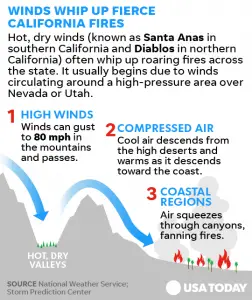
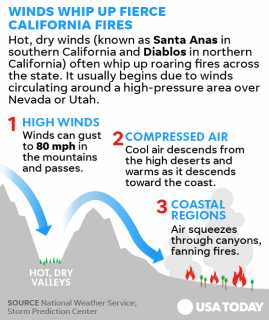
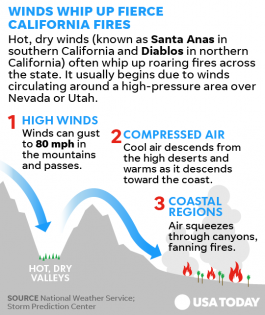
First of all, fires move rapidly. You can be in no danger whatsoever and just see a fire on the distant horizon, and then minutes later, it’s at your back door. Secondly, they change courses. Many times, the fire gets ahold of some new fuel – like a home, tall grass, or trees, and the course veers in that direction. Finally, high winds have propelled these fires rapidly and fanned them to new heights. Every fall, California has something called the “Diablo Winds.” These are seasonal gusts that can reach as high as 80 mph and cause extremely high fire danger. When coupled with existing fires, it’s nothing less than the perfect storm.


http://www.theorganicprepper.ca/wp-content/uploads/2017/10/6364332809325... 126w, http://www.theorganicprepper.ca/wp-content/uploads/2017/10/6364332809325... 252w, http://www.theorganicprepper.ca/wp-content/uploads/2017/10/6364332809325... 55w, http://www.theorganicprepper.ca/wp-content/uploads/2017/10/6364332809325... 269w, http://www.theorganicprepper.ca/wp-content/uploads/2017/10/6364332809325... 84w, http://www.theorganicprepper.ca/wp-content/uploads/2017/10/6364332809325... 101w, http://www.theorganicprepper.ca/wp-content/uploads/2017/10/6364332809325... 265w, http://www.theorganicprepper.ca/wp-content/uploads/2017/10/6364332809325... 143w, http://www.theorganicprepper.ca/wp-content/uploads/2017/10/6364332809325... 336w" style="width: 560px; height: 667px;" />


October is often the worst month of the year for wildfires in California. Not only is it the time when the Diablo winds (or Santa Ana winds in Southern California) kick up, but it’s also the driest month. California has a long dry season. It isn’t unusual to go without a single drop of rain from May through the end of October. Because of this, all the lush grass that grows during the spring rainy season is dried, crisp, and tragically perfect fuel.


In situations like this, there is often little to no warning before the fire is roaring through your property. The fire may be miles away and heading in the opposite direction one minute, then turn on a dime. Then suddenly, you find yourself directly in the path of an inferno. If you’re lucky, you escape unscathed with your life but lose all your worldly possessions. Many people have not been lucky.


15 large wildfires are blazing through Northern California’s wine country. 40 people are confirmed dead, hundreds are missing, more than a 100,000 have evacuated, and nearly 6000 homes and businesses have been completely burned to the ground. Thus far, the damage estimate is more than 3 billion dollars.


The following videos and stories show you what the Northern California wildfires are really like.


This video is shot from a fire engine from Berkeley, California on the day Santa Rosa burned. It gives you the firefighters’ firsthand view of the destruction and the speed with which it was wrought.


This video shows the utter devastation from the wildfires and includes clips of people escaping with only their lives.


These two roommates left with their dogs as the fire jumped the hill behind their home, narrowly escaping death. (Strong language)


This police officer’s body camera shows the terrifying scene when he was helping people evacuate.


This couple described their escape as being like “driving through hell.”


This video shows multiple clips of people fleeing the blaze as embers rain down and the billowing smoke gets closer. They are trappd on the freeway in slow-moving traffic.


In one tragic story, a family tried to evacuate by car. Their car caught on fire and they had to take off on foot to try and outrun the blaze. They got separated in the smoke. A 14-year-old boy burned to death and the other members of the family are burned over more than half their bodies. The mother and daughter were found by a neighbor and the father was found by paramedics. (source)


In a story with a happier ending, a farmer tried to evacuate his dogs but one refused to go. Odin, a Great Pyrenees, stayed with his herd of goats. The owners were positive they’d never see their beloved dog again, but when they returned to the farm, they discovered a slightly singed Odin with every member of his herd unharmed. This very good boy had even picked up a few baby deer. (source)


Haunting drone footage shows what Santa Rosa looks like after the fire.


While I strongly recommend evacuating in a situation like this, one man stayed behind and managed to save his home and his neighbor’s home from the wildfire.


Along the Napa/Sonoma border, these residents scrambled for safety and barely escaped with their lives. There were fires in all directions, blocking escape routes. People had to choose whether to drive through blinding smoke or flames.


This couple survived a wildfire they couldn’t escape by taking refuge in a neighbor’s swimming pool for SIX hours as the fire blazed all around them.


Another couple who tried to take refuge in a pool was not so fortunate. The woman died in her husband’s arms after 60 years of marriage.


This family’s dog ran away in a panic and they had no option but to leave. They returned home, certain their beloved pup had perished, but then they found this:


These interviews tell the stories of more narrow escapes.


This aerial footage gives you a better idea of what firefighters are dealing with during these widespread blazes.


More than eleven thousand firefighters are pushing themselves to the limits of their endurance to contain these fires, but they aren’t able to directly respond and save people. As the mayor of Calistoga said in a press conference to the few who opted to ignore evacuation orders, “You will NOT be given life safety support at this point. You are on your own.” Exhausted firefighters are grabbing moments of rest when they can.


In some areas, civilians, farmers, and construction crews have taken a stand to protect their homes from the infernos.


The story of the Capell Valley community is one that was repeated in neighborhoods and valleys across Northern California’s wine country this week, as dry conditions and high winds fueled multiple fires in Sonoma, Napa, Yuba and Mendocino counties.


It was not only firefighters who stood in the path of the blazes, but civilians too. Contractors, skilled construction workers and even former wildland firefighters came out of the woodwork to run bulldozers and drive multi-thousand gallon water tenders on twisty and damaged back roads.


They picked up what tools and equipment they could and tried to save their neighborhoods….


This wasn’t the first time Gil Pridmore had fought a fire in those hills. He spent years as the boss of a California Department of Forestry and Fire Protection bulldozer crew and fought the 1981 Atlas Peak Fire.


He used this experience to help lead a team of 30 people to cut multiple layers of firelines on the rim of the valley.


When flames would breach their lines and encroach on houses, the goal was to get the house “in the black,” or completely surrounded by burned areas so there was no fuel left to catch fire. (source)


They managed to save all but one home in the valley.


A few things to learn from the California wildfires


There are lessons to be learned from these videos (and 5 years of living in fire-prone California.) Wildfires happen in other parts of the United States as well, and it’s important to be prepared before the first spark.


You need a fire kit in your vehicle at all times. Things to include:


  • Swimming goggles: This will protect your eyes and help keep you from being blinded by smoke

  • Respirator masks: This doesn’t mean you will be able to breathe if the fire sucks all the oxygen from your environment, but it will help to filter out some of the smoke so you aren’t disabled by a coughing fit.

  • Fire extinguisher: In a worst case scenario if your vehicle catches on fire, you may be able to put it out if you attack while the blaze is small.

  • Welding gloves: Remember the guy who burned his hands opening a gate? Welding gloves will offer some protection from hot surfaces.

And here are some tips.


  • Do not wait for the official order: In some parts of Sonoma County, people are questioning why an evacuation alert never came. While officials do their best, YOU are the person who is responsible for your family’s safety. (source)

  • Have more than one escape route: In situations like this, you will often find your escape route blocked. Have more than one way out. Figure these out ahead of time and now when you are fleeing for your life and blinded by smoke.

  • Evacuate large animals ahead of time. If possible, evacuate your livestock before the emergency becomes a crisis. In a situation like this, animals can be fearful and uncooperative. Get your livestock to safety first, because if you have to rush out like many of these families did, you’ll have to leave them behind, helpless. I shared good news stories above, but a friend of mine in California went to help out with veterinary rescue. There are far more bad news stories.

  • Leash or crate pets early on: They will be affected by the same kind of panic. A normally well-behaved pet could rush off into danger, leaving you to make the choice to leave them behind or risk your family’s lives trying to save them.

  • Grab your dirty clothes hampers: If you have time to grab a few things unless you have just done laundry, grab dirty clothes hampers. They’re likely to have several days of clothing from the skin out, PJs, and socks, saving you time from searching for all those things individually.

  • Keep precious items and documents in one area: Make sure irreplaceable things are kept together. We have a decorative trunk near the door into which we can sweep precious mementos. Important documents are backed up in the Cloud, which means we don’t have to spend time packing those.

The fires are beginning to be contained, and firefighters say they are gaining an edge. Two out of three of the most destructive fires are more than 50% contained. Some people in Sonoma will be allowed to return to their homes today – or what’s left of them. Winds have lightened, but the weather will still be hot and dry until Thursday when there is a small chance of blessed rain. (source)


I wish those in the affected areas the very best.

Friday, October 13, 2017

Helicopter Footage Shows Devastating Aftermath Of "California's Deadliest Wildfire Disaster"

With at least 29 dead, and over 3500 houses destroyed, the devastating series of fires that has ravaged Northern California"s Wine Country has to be seen to be believed. As smoke clogs the air up to 100 miles away and with schools and sports programs shut down across the entire NorCal region, this disaster is already being called states deadliest wildfire in history.


“These fires are a long way from being contained, so we’re doing the best we can for people that have been displaced and help them to hopefully rebuild their lives” said Barry Dugan, a Sonoma County spokesman.


Have already burned more than 191,000 acres - an area nearly the size of New York City.


Entire neighborhoods have been lost...


But the park survived...


But Kmart was not so lucky...


As the following shocking aerial footage shows, there is nothing left of some of the states (and country"s) most beautiful places to live...


But, as Michael Snyder notes, the true extent of the devastation will not be known until the crisis is over, and it looks like the worst chapters may still be ahead. USA Today is reporting that no rain is in the forecast, and strong winds are going to continue to push wildfires very rapidly across the region…


“No rainfall is forecast for ongoing fires in California,” the weather service said.


“Strong winds behind the front will bring elevated-to-critical fire weather threats to active fires across northern California today.”


Normally, it is one of the most beautiful areas on the entire planet, but now it is literally being transformed into a complete and total nightmare.

Wednesday, October 11, 2017

California's "Wine Country" Could Take Years To Recover From Deadly Wildfires

Wildfires that have been raging across Northern California’s “wine country” since Sunday have destroyed at least four wineries and seriously damaged at least nine more just as the season’s harvest came to an end. The damage could leave one of the state’s signature industry’s hobbled for years, according to NBC.


Of course, assessing the scope of the damage will be impossible until the fires subside. The Napa Valley Vintners trade association has not heard from all members, especially those in the most vulnerable parts of the valley.  By the time the fires started on Sunday – accelerated by dry conditions and strong winds -about 90% grapes had been picked. And most of the remaining crop of thick-skinned cabernet sauvignon grapes not expected to be affected by the smoke.


Most wineries remain closed from power outages and mandatory evacuation orders.


What remains of the Signorello Estate winery...


At the Gundlach Bundschu - the oldest family-run winery in California, started in 1858 - in Sonoma County, workers were not sure whether the grapes above the winery survived the fires, Fox reported.  


Katie Bundschu, a sixth-generation vintner, recounted a scary Monday night in which the flames licked at the perimeter of the winery but were beaten back by firefighters. A century-old redwood barn and her grandmother"s 1919 home were spared.


"The winery was in the path of the fire but escaped being engulfed by the flames. We have some damage to fix. The wine is secure in our cellars. We are cleaning up and hoping to have the power back on this week," Bundschu said.


However, Bundschu said that her winery, while damaged, will soldier on, and was seeking to dispel rumors that the business had been utterly destroyed. With information from the affected areas trickling out, a few other wineries have sought to inform customers that their facilities can be quickly repaired and expect to be back in business soon.


Burned out wine bottles at Signorello Estates


Millions of locals and out-of-staters flock to Napa and Sonoma counties every year to sample wine, sit in mud baths and soak in the region"s natural beauty.


Even one of the four wineries that was reportedly destroyed by the fires, the Signorello Estate winery in Napa, may recover. According to Fox, its vineyard appeared to be untouched by the flames.


Signorello Spokeswoman Charlotte Milan could only confirm damage to the winery and a residence. Fortunately, the estate"s 2015 reds and 2016 whites were stored off-site.


Burned out wine bottles at Signorello Estates


Not every winery was so lucky. The Paradise Ridge Winery in Sonoma County posted that it was "heartbroken" to announce that the facility had burned.


About 12% of grapes grown in California are in Sonoma, Napa and surrounding counties, said Anita Oberholster, a cooperative extension specialist in enology at the University of California, Davis. However, the grapes grown in those counties are of the highest quality and are used in the most state’s most expensive wines.


Since the year’s harvest had already been mostly completed by the time the fires broke out, the fire did little damage to crops, though it would’ve presumably destroyed stocks of harvested grapes and wines that have already been bottles.


What"s left of the Signorello Estate winery is seen through a window


Also, since the soil was unaffected by the fires, next year’s crop should be unharmed, Oberholster said.


Sara Brooks, chairwoman of the Visit Napa Valley Board of Directors and general manager of the historic Napa River Inn, said she has had some cancellations, but expects tourism to bounce back as it did after the 2014 Napa earthquake.


"It"s heartbreaking," she said, "It"s tough to see these places you"ve seen your whole life on fire."


However, for some vineyards, the process of rebuilding could be painfully slow. At least 15 people have died from the fires, while 150 more remain missing. More than 1,500 buildings have been destroyed.

Friday, September 22, 2017

If The Majority Votes To Secede - What About The Minority?

In recent years, left-wing groups have often been the driving force behind secession movements. This has been the case in Scotland, in Catalonia, and in California. 


In each case, the secession movements have been initiated in part to forward left-wing goals, such as the creation of a larger welfare state or to escape limitations imposed by political interest groups and institutions deemed to be too right-wing. 


Within the American context, the loudest calls for secession right now are coming from California where leftists are eager to assert their independence from the Trump administration in Washington.


Generally speaking, these California secessionists want single-payer health care, an even larger welfare state, confiscation of private firearms, and an ever larger environmental "protection" bureaucracy. That is, they want a European-style welfare state. 


California as Case Study 


This case presents Americans - and especially libertarian-minded Americans - with a question that continues to come up in recent years on secession matters: should they support a left-wing secession movement? 


Is it right or moral to support a secession movement that, in the short- and medium- terms is almost guaranteed to adopt policies that are counter to the cause of freedom and free markets? 


The answer must first and foremost be compared against the reality of forcing political union on a separatist region. That is, the cost of allowing a region to separate must be compared to the cost of keeping it in — i.e., military invasion, occupation, mass arrests, government surveillance, martial law, and worse.


Not surprisingly, we"re forced to conclude the answer is the same whether we"re talking about secession in Scotland, in California, or in Catalonia: the answer is yes.


What About the Minority Interests? 


Often, the immediate retort to this position is to point to those groups in the minority who are left stuck in the seceding territories. 


The argument goes something like this: "Now that you"ve cut California loose, what about those poor conservatives, gun owners, and business owners who will now be negatively impacted by a newly empowered California government? Before, California was at least somewhat restrained by its membership in the United States. Now the California government is even more free to inflict misery on the hapless taxpayers and productive people who are stuck there." 


To this criticism, there are at least two responses.


One: California Independence Means More Freedom for the Rest of the Country 


Those who wish to focus on merely what happens to those who are in California take a parochial and far-too-limited view. Yes, it"s true that business owners, religious Christians, and gun owners in California (to name just three groups) would likely be negatively impacted by California independence. The California government has long illustrated an open hostility to these minority groups. 


The other side of the coin, however, is that California secession would lead to a significant expansion of freedom for the "rump" United States left behind. Freed of the influence of California on American politics, the remainder of the United States would likely move significantly in the direction of more freedom in markets. Federal regulations would likely be scaled back, and presidential candidates would no longer need to cater to interest groups with sizable memberships in California. 


California"s 53-member delegation in Congress (39 of them Democrats) would be gone, and voting patterns in Congress would likely shift in a direction more hospitable to freedom and free markets. 


In other words, the nation would be freed from a great weight tied around its neck. One might even say the situation is analagous to the removal of an infected appendage. It wouldn"t be the first time such a thing had happened. In 1861, when Southern States began seceding from the Union, New Yorker George Templeton Strong welcomed the prospect of being freed from the political influence of the slave drivers down south. He concluded "the self-amputated members were diseased beyond immediate cure, and their virus will infect our system no longer."


But, unlike Strong who might have been induced by conscience to think of the slaves left behind in the seceding territories, we face no similar scruples. Obviously, comparing modern California to a slave state of old is laughably inappropriate, and unlike the slaves, Californians are free to move away. Nor is it the moral obligation of Texans, or Floridians, or Coloradans to protect the Californians from the excesses of their own government.


Thus, when we think of post-secession California subject to the whims of a hard-left government there, we must also think of the 285 million remaining Americans who would benefit from the separation. 


Note also that this situation even has advantages for the taxpayers and business owners in California who wish to escape the California regime. 


Now that the rump United States has been improved by California"s absence, those in California who seek a more business-friendly legal environment can dramatically change their fortunes for the better by moving across the new national boundary to Arizona or Nevada. For these migrants, the net gain achieved by leaving California has grown larger thanks to California"s departure. 


Two: More States are Preferable to Fewer States 


The second response to the objection lies in the fact that secession already brings with it a solution to the problem. That is, the problems caused by one secession are solved by more secession. 


As I"ve explained here, here, and here, a larger number of states is preferable to a smaller number. A larger number of small states provides more practical choices to taxpayers and citizens in choosing a place to live under a governments that more closely match their personal values. 


Thus, in considering the problems of an independent California, we find that the primary problem faced by taxpayers and productive residents in California is that the state is simply too large and contains too diverse a population within its boundaries. 


As noted by numerous commentators over the years — including supporters of the Six Californias initiative — California"s population is quite politically and culturally diverse, although it has been dominated for decades by a hard-left coalition of voters based around the Bay Area. Compared to these voters, Southern California residents appear downright centrist, but one would not know this by looking at statewide politics because Northern California is so adept at throwing its weight around. 


The solution to this problem lies in breaking up California into still smaller pieces. We can see many of these political lines ripe for decentralization in the voting patterns revealed by statewide votes such as those for Propsition 187 and Proposition 8. We can see it in the map of legislative districts. Nor is this just a matter of metropolitan areas versus rural areas. Many suburban areas within the metroplexes of California are quite right-of-center in their own rights, and would surely benefit from further political decentralization. 


Urban core cities ought to be their own self-governing territories, with suburan and rural areas kept separate and self-governing in their own ways. 


The net result of all of this would be to offer a multitude of choices among taxpayers, entrepreneurs, gun owners, and moral traditionalists as to where they might live and enjoy the benefits of self-determination within their own communities. 


But before any of this can happen, we must first establish and extend the moral and legal legitimacy of self-determination through secession and decentralization. Clinging to the status quo of existing regional and national boundaries is reactionary in the extreme. Insisting that no community ought to be allowed self government unless its leaders are hard-core libertarians is impractical, irresponsible, and doomed to failure. 


Nevertheless, when confronted with new attempts at decentralization and secession, even some of those who claim to be for freedom and self-determination cling to ideas of imposing nationalistic control over others. They invent emotion-laden fictional slogans claiming "we are one nation" or "secession is treason" or other sayings designed to justify using the power of the state to impose political unity.  Ultimately, this is an ideology of monopoly and coercion, and tramples the very ideals of freedom that the nationalists claim they hold dear.

Thursday, August 24, 2017

So You Wanted To Be "Long Electricity" Into The Eclipse?

Energy traders who had hoped to make an easy profit by betting that spot electricity prices would climb around midday on Monday – an idea they may have found on this website - were bitterly disappointed when, instead of spiking, prices tumbled because of an unexpectedly large drop in demand.


Utilities and grid operators had contingency plans ready to compensate for the expected drop in solar. But even with utilities’ backup grids humming, supplies were still widely expected to drop. Instead, energy providers encountered something that they hadn’t anticipated – what one trader called “an irregular human behavior pattern.”


Basically, more Americans than anticipated were outdoors during the middle of the day Monday, around the time when electricity demand typically peaks, than grid operators had expected. Therefore, while supplies took a slight dip, it was amplified by a dramatic pullback in demand, which exhibited a weird U-shaped dip over a two-hour period across the country,” according to Bloomberg. Ironically, if traders hadn’t been so distracted by the eclipse, maybe they would’ve realized that millions of Americans standing outside together staring up at the sun for an hour would have a marked impact on demand, and adjusted their positions accordingly.


“This was a bummer for traders who’d bet prices would jump as a whole load of solar-produced megawatts faded to black. “If anything, it was bearish from a trading perspective because people were more busy looking at the eclipse and talking about the eclipse,” said Tom Hahn, vice president of U.S. power derivatives at brokerage ICAP Energy LLC in Durham, North Carolina.


Spot power in California fell to negative levels as the eclipse wiped out and restarted thousands of megawatts of solar power, and they also dipped from Texas to New York. While natural gas demand rose to a one-month high on Monday, spot prices at several hubs weakened versus the U.S. benchmark.”


The dip in Northern California was particularly vicious.


“Spot electricity at Northern California’s NP15 hub averaged $21.50 a megawatt-hour at 10 a.m. to 11 a.m., less than half the price for supply secured in advance for the hour in the day-ahead market, according to grid data compiled by Bloomberg. Then at 11:50 a.m. local time - as the sun started to reappear from behind the moon -- the ramp-up in solar power sent prices to a low of minus $15.97.”


Tech firms like Alphabet Inc. helped conserve energy usage during the eclipse, part of a partnership with the state utility commission that helped it cut consumption by about 1,500 megawatts.


“Alphabet Inc.’s Nest Labs unit, which deploys thermostats and other smart home technologies, drew more than 750,000 customers into its Solar Eclipse Rush Hour experiment to cut consumption. They reduced power use by about 700 megawatts nationwide, helping to offset a 10,000-megawatt drop in solar power. In California, Nest and other partners worked with the state utility commission to cut consumption by about 1,500 megawatts.


In hubs from Texas to New Jersey, spot electricity prices slumped. Though in several cases, unexpected cloud cover helped mitigate the drop.


“While that was the most dramatic case of a power-price retreat, there were noticeable dips elsewhere. Cloud coverage in places like North Carolina, Texas and New Jersey had reduced solar output before the eclipse anyway, limiting the magnitude of the loss. The moon’s shadow also reduced temperatures a bit. And then there were all those people playing hooky from work and school.”


There were also “very evident” dips in New England, New York and the nearby 13-state grid managed by PJM Interconnection LLC, said Tom DiCapua, managing director at Con Edison Energy in Valhalla, New York, according to Bloomberg. Con Edison, which manages the largest grid in the US with 65 million people, said demand fell by 5,000 megawatts, or as much as 3.8%, during the event.


“People drove up the day-ahead price thinking that prices would settle higher in real time,” DiCapua said. That was the wrong way to go. “The people who tended to be short tended to make money. You wanted to be short.”


Luckily for traders on the east coast, they will get another shot to clinch the eclipse trade in seven years, when the eclipse"s path of totality is expected to stretch from Texas to Maine.


Sunday, July 30, 2017

With The Drought Over, "Gold Fever" Grips California

The heavy rains that pummeled California this year ended the state’s historic drought in spectacular fashion, saving the state’s farming and tourism industries from an uncertain future. But the return of rainfall has had other less obvious economic ramifications, including, as the Los Angeles Times reports, the revival of an activity that’s been associated with the state for more than 150 years: Prospecting for gold.


Thanks to the rain, the yellow metal is once again being found in the state’s riverbeds for the first time since a judge’s controversial ruling prohibited the use of pumps and other equipment that were once required to extract gold from the state’s rivers.


Russ Tait


And now that word has spread, the possibility of discovering immense riches underfoot is inspiring entrepreneurial Californians of a variety of ages and backgrounds to venture to the state’s rivers and creeks in search of the shiny yellow metal, sometimes equipped with little more than a pan, as they hope to collect gold fragments buried in the muck under the water, according to the LAT.


Many have also taken to prospecting to suppliment their incomes, as wages in the US have stagnated and more than 90 million Americans aren"t working.


Russ Tait, an elderly man who spoke with the LAT, insists om venturing down to Eagle Creek in Central California – not far from where the Detwiler fire broke out in Northern Mariposa County.


“Tait has bone cancer, so getting down to the creek isn’t easy. But even if his days are numbered, he isn’t above dreaming. He peers into the murky solution, hoping to glimpse something shiny.


“I guess you call it gold fever,” he says. “You get out there, and there’s times where you get tired and you don’t want to quit.”


Even in the middle of the drought, Tait, a longtime prospector, and several friends would venture down to the river looking for gold, only to return empty handed. The reason? Back in 2009, a state judge temporarily blocked prospectors from using motorized equipment near the state’s rivers after environmental groups complained that they could damage fish habitats. The ruling was meant to be temporary pending a study, but to this day, no final ruling has been made.


"The equipment was once necessary to separate gold from the slowing rivers. But now with water gushing forth from the state’s mountains, the motorized equipment isn’t needed.  


Now prospectors hunt for “irregularities” in rivers that could create “a backward eddy” that would allow the gold to drop to the water’s floor.


Excessive ria severe flooding, and very nearly the failure of the Oroville dam in Northern California, has changed that.


Geological gumshoes, they search for ancient rivers, for rounded boulders tumbled together, for orange soil tainted by rusted iron and veins of quartz hiding gold.


They read streambeds, imagining how the current flowed during floods, hunting for any irregularity — a riffle, a ledge, a waterfall — that could create a backward eddy for the gold to escape the water’s momentum and drop to the floor."


One prospector named Robert Guardiola helped organize an outing of nearly 40 miners to the Golden state"s “Mother Lode." Guardiola and company are wearing waders and knee pads and equipped with pans and cradles.


“Late afternoon, after nearly an hour in the water, Guardiola totes two five-gallon buckets up from the creek. One contains trash collected from the shallows: a spark plug, a shotgun shell, a square-headed nail, a spatula and part of a car door.


The other contains his concentrates, less than a cup of dark sand sloshing about in water.


Panning it, he separates the lighter material from the heavier to reveal a few gold specks, each no bigger than a fat flea.”


As the LAT explains, the “Mother Lode,” which runs along the Sierra Nevada mountain range, was the epicenter of the 1848 gold rush, which saw $2 billion in gold extracted from the area in less than five years. For Guardiola, prospecting has become a second career of sorts.


“Guardiola, 52, purchased the right to mine these 20 acres in 2001. When he first walked out on this property, he knew he could be happy here. Ten deer, two bucks and fawns browsed beneath the oaks. A stream — Grizzly Creek — cut through the property, which already had two mines on it, always a good sign.


Seven years later, after losing his equipment rental store in Modesto to a broken plumbing pipe and a slow insurance claim, he began to work the claim more seriously.


Prepped for the cold — insulated waders, booties, wool socks and sneakers — Guardiola wades into a pool of 55-degree water as deep as his thighs.


“We’ll see if Mother Nature was kind and restocked my bank,” he says.


According to the LAT, the stream was dry during the worst days of the drought. Last year it became a trickle. Then this year, the winter brought a torrent of water as well as two feet of new rock and gravel deposits known in the profession as “overburden.”


For the amateur prospectors, the hobby has brought with it a kind of hope.


“As long as I’m not sure what’s in the bucket,” says Tom Mutschelknaus to the LAT, “there’s hope.”


Mutschelknaus prospects near the South Fork of Stanislaus River, a few miles from where one lucky miner pulled nearly 800 ounces out of the ground. Many prospectors have been following gold’s climb this year, excited that an amount that would almost fill a lipstick case is worth more than $1,200.


While the LAT doesn’t touch on the parallels between the gold miners and cryptocurrencies like Bitcoin and Ethereum, often referred to as “digital gold,” Shannon Poe, 55, described prospecting in similar terms to the techno-libertarians who represent bitcoin’s most hardcore users.


“In his company, gold mining seems less a get-rich-quick scheme than a libertarian impulse, an exercise in independence and self-determination as much a part of the American heritage as the rights guaranteed by the Constitution.


Ask him what his political party is, and he’ll say he is neither a Republican nor a Democrat.


“We are more constitutionalists than anything else,” he says.


With this framing in mind, the rush of amateur prospectors is hardly surprising. Since bitcoin first entered the public consciousness in 2013 thanks to stories of hobbyists becoming newly minted millionaires overnight, Americans everywhere are looking for the next easy score. In that respect, similar impulses appear to be behind both trends. But at least with prospecting, the only thing hobbyists are risking is their time.

Thursday, July 27, 2017

"Calexit" Referendum Question Is One Step Closer To Appearing On 2018 Ballot

A group that is trying to organize a vote on whether California should secede from the US has received permission to begin gathering signatures to force an independence referendum that, if successful, would amount to the first serious attempt at secession by a US state since the Civil War.


According to the Sacramento Bee, California Attorney General Xavier Becerra issued an official ballot measure title and summary to the "California Autonomy From Federal Government" initiative, which can now start gathering signatures needed to include the referendum question - known informally as "Calexit" - on the ballot during the 2018 midterm elections.


The group’s proposal has been scaled back from an initially more aggressive version. The initiative wouldn"t necessarily force California to exit the country, but could allow the state to become a “fully functioning sovereign and autonomous nation” within the US, according to the Los Angeles Times.  


If successful, the vote would allow California Gov. Jerry Brown to “form a commission to recommend avenues for California to pursue its independence and delete part of the state constitution that says it is an inseparable part of the U.S. The measure would also instruct the governor and California congressional delegation to negotiate more autonomy for the state,” according to the Bee.


As the Bee notes, an earlier, more aggressive measure that called for a formal break with the US was cancelled less than three months after it received permission to start gathering signatures – presumably because the group had trouble finding voters willing to affix their names to the movement. The new, scaled down effort is the second since President Donald Trump’s upset victory in November to convince the state’s leadership to demand more autonomy from Washington.


Backers of the plan now have 180 days to collect the more than 585,000 valid signatures needed for the initiative to go on the 2018 ballot.


Apparently, liberal, Hillary Clinton-loving Californians were so triggered by Trump’s win that they immediately began fantasizing about breaking away from the US. According to an Ipsos/Reuters poll released back in January found that 1 in every 3 Californians (32%) said they would support a "peaceful withdrawal from the union” - a substantial increase from the 20% who favored such a withdrawal the last time a similar poll was conducted in 2014. Support for secession among Californians was also higher than the national average of 24%, the poll found.


Californians are particularly triggered by Trump"s promises to enforce immigration laws and repeal Obamacare. One Democrat consultant who was interviewed by Reuters in its story reporting the poll’s findings said that "many citizens believe it would be smarter to leave than fight."


While California has a reputation as one of the most liberal states in the country, it does have its conservative pockets. In profile published last month, the New York Times spoke with residents of 13 Northern California counties that went for Trump during the election. Many decried what they called the “tyranny” of the state’s liberal hegemony, which has effectively marginalized their votes for statewide and federal officials, other than their local US representatives.


If California successfully secedes, expect those counties to stage their own effort to break away from the rest of the state.
 

Tuesday, February 21, 2017

National Weather Service Warns Flooded Californians: Pack A Bug-Out Bag

National Weather Service Warns Flooded Californians: Pack A Bug-Out BagSACRAMENTO, Calif. – The majority of Northern California remained under a flood warning Tuesday as record rains continued, and the National Weather Service even urged residents to gather essential items in the equivalent of a bug-out bag.


More than 14 million people are under a flood warning until Thursday, including the area around the Oroville Dam which experienced a mass evacuation just before Valentine’s Day.


Sacramento has received 26 inches of rain since Oct. 1, double what the city normally gets during the same time, The Sacramento Bee reported. San Francisco has seen 24.38 inches of rain.


Are You Prepared For A Lengthy Blackout? Get Backup Electricity Today!


With mudslides and floods threatening the region and reservoirs at capacity, the National Weather Service in Sacramento issued a dire warning:  “Gather important items, documents and medications in a ‘go bag’ in case you need to evacuate quickly. Don’t forget to plan for your pets, too. Make sure your vehicles have a full tank of gas.”


Thousands of residents in the towns of Prunedale and Salinas have been without power since the storms started Friday, forcing schools in the area to close


“We’re on our 56th hour without power now and it’s getting a little brisk inside the house,” Prunedale’s Gary Bolden told KSBW.


The Pocket-Sized Backup Battery That Can Jump-Start Your Car!


On Monday, the levee broke in San Joaquin County near Manteca, which is an hour south of Sacramento. More than 500 people were forced to evacuate. The situation was so severe that local farmers took their own excavators and tractors to the level to help fix it.


Elsewhere, another dam, the Anderson Dam just southeast of San Jose, attracted sightseers as its spillway began releasing water from the Anderson Reservoir for the first time in 11 years in a scene local media were comparing to Niagara Falls. Officials are concerned because the dam was not built to withstand an earthquake when the reservoir is at 68 percent capacity. As of now it is at 100 percent; a 7.25 magnitude earthquake could cause the dam to fail, according to the San Francisco Chronicle.


What is your reaction? Do you think most Americans are prepared to evacuate at a moment’s notice? Share your thoughts in the section below:


Be Prepared For A Downed Grid. Read More Here.