Showing posts with label Greece. Show all posts

Monday, March 26, 2018

Orange Snow Blankets Parts Of Russian And Eastern Europe


Skiers in Sochi, Russia were met with a strange sight this past weekend. The usually beautiful and powdery white snow of Eastern Europe and Russia turned an interesting shade of sunset orange.


“We’re skiing on Mars today,” exclaimed one excited social media user as he skied down the orange tinted slopes. Skiers and snowboarders in Russia, Ukraine, Bulgaria, Moldova, and Romania posted photos of the surreal scenes on social media on both Friday and Saturday. People skiing and living in the region complained of sand in their mouths, the BBC reported.


Instagram Photo


The red dust in the snow, however, caused limited visibility for people as they tried to make their way down the slopes in Sochi, but the orange snow has been explained.


A sandstorm in Africa kicked up so much orange and red dust that it made its way to Russia and parts of Eastern Europe. The sandstorm was so massive that it could be seen by satellite. Then, as the sandstorm was underway, storms in northern Africa picked up sand, dust, and pollen particles from the Sahara and blew them across the Mediterranean and Europe, The Independent reported. It then mixed with snow and rain in eastern Europe and Russia, turning the snow orange.


According to CCN, The Athens Observatory said on Friday that this is one of the largest transfers of desert sand to Greece specifically from the Sahara ever and the strange meteorological event also caused the skies in Crete to go orange.


The African dust covered the entire country and concentrations were the highest in the last 10 years, according to the observatory’s meteorological service.


The snow’s orange tint was both an interesting and strange sight to many.  This is just one example of how powerful the Earth and its everchanging weather can be.

Thursday, March 15, 2018

The Day All The ATMs Ran Out Of Cash

Image source: telegraph.com

Image source: telegraph.com


Money plays such an important role in our lives that most of us could not imagine surviving without it. Yet that is exactly what you need to do if you want to prepare for an economic condition called deflation.


Deflation is the term economists use to describe a “general decline in prices, often caused by a reduction in the supply of money or credit.”[1] A good way to think of deflation is as the opposite of inflation. Inflation occurs when there is too much money in circulation, which destroys its value and raises prices. When deflation occurs, there is too little money available, which often causes prices to collapse and the economy to shut down.


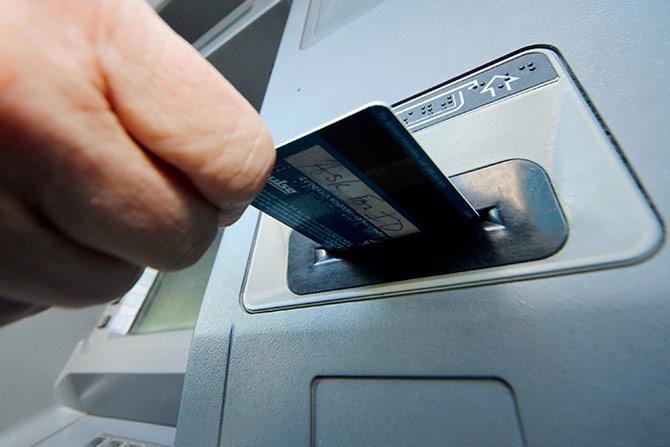
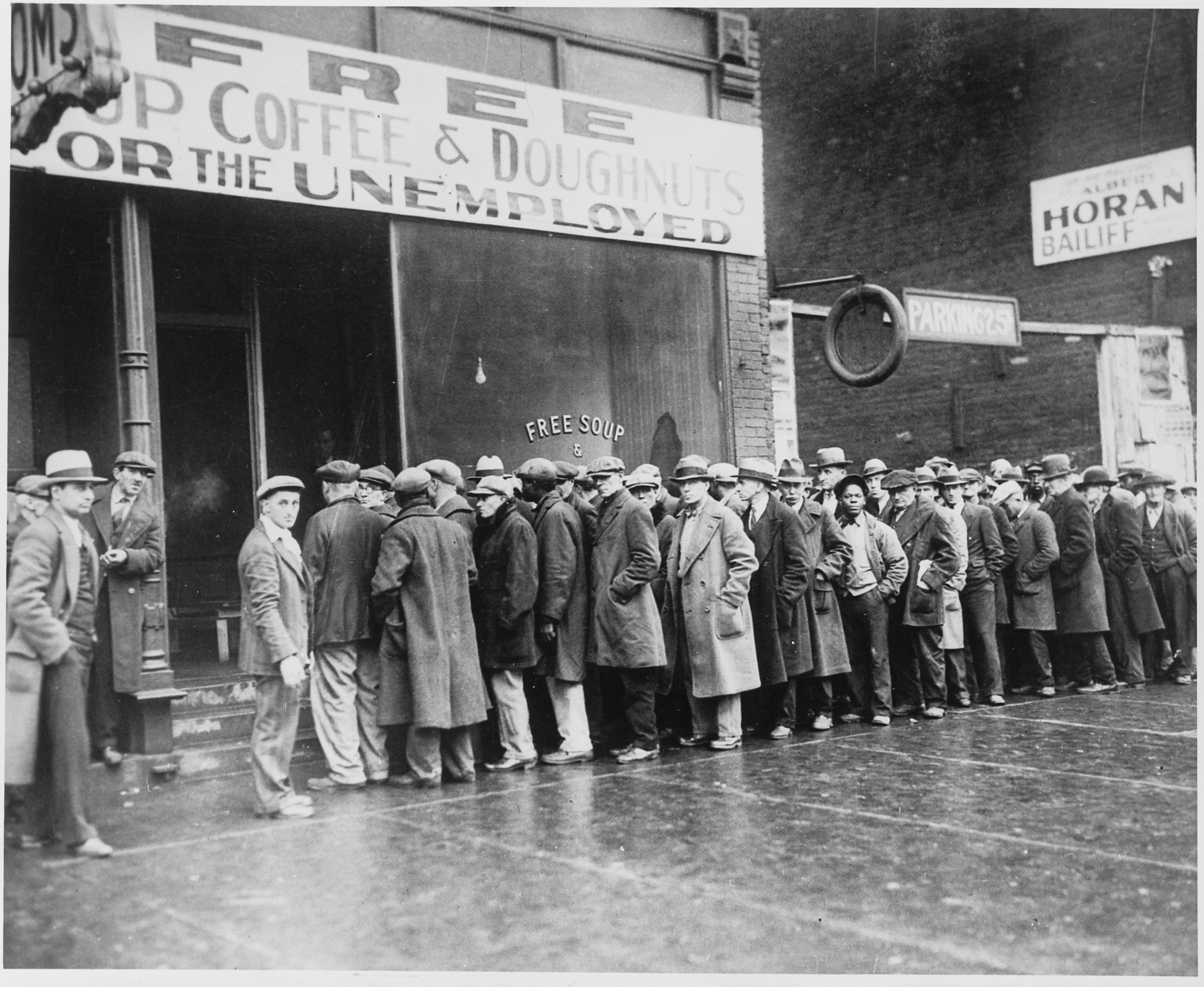
In severe cases of deflation there can be no money available at all not — even at the banks. This nightmare actually occurred during the Great Depression of the 1930s, when there were places in the United States where there was no cash available at all. More recently, it has happened in Greece, where ATMs ran out of cash and where banks placed limits on the amount of money that could be withdrawn.


People had no money to pay bills or buy food for their families. Employers had no money to pay employees, customers had no money to buy goods, and many people were reduced to bartering to survive. During the Great Depression, farmers would pay professionals such as mechanics and doctors with food because they had no money and no credit.


The situation got so bad that in some areas of the country, local governments, chambers of commerce and businesses issued their own currencies — the so-called depression scrip. (See a picture of one here.) The scrip often took the form of pieces of paper that people used as money because there was no government currency available. The scrip was used to pay workers or buy goods.


At one point during the Great Depression, the money shortage got so severe that the US government considered issuing a national scrip as an alternative to the dollar. That plan was eventually dropped and the government solved the crisis by simply printing more dollars.[2]


Many people have known survivors of the Great Depression who liked to keep large amounts of cash on hand. Others would hoard food and other items. Those people developed that habit because they remembered what life without money was like. The fear of the deflation that occurred in the 1930s haunted them all of their lives.


Ready For Deflation? This New Solar Backup Generator Delivers 4 Times More Power Than Other Models


The frightening reality is that the threat of deflation is still real. Some knowledgeable individuals, such as wealth preservation experts Will and Bill Bonner,[3] believe that a sudden deflation leading to a national or international money shortage is still possible today.


The Bonners, who have studied some of the world’s knowledgeable investors such as George Soros, believe that the next financial crisis will begin with a “violent monetary shock” similar to the one that occurred during the Great Depression. They predict that money could suddenly disappear overnight, causing the economy to come to a grinding halt.


What Happens When Money Vanishes


Historical accounts of the Great Depression show us some of the possible effects of such a violent monetary shock. The damage caused by such a violent deflation can include:


The sudden collapse of prices. The Great Depression began with the collapse of stock market prices in 1929. That was preceded by the collapse of agricultural prices in the United States during the 1920s. During that crisis, land prices in rural areas collapsed, causing large numbers of rural banks to fail. When the banks failed, the government liquidated them and their assets, which included lots of foreclosed farmland, an action that further drove prices and made the crisis worse.[4]


soup kitchenEverything you have — your investments, your home and your possessions — could suddenly lose all of its value. We saw this happen during the mortgage bubble of 2007-2008, when many people found themselves “underwater.” That occurs when the amount a home is mortgaged for exceeds the property’s value.


The collapse in prices during the Great Depression particularly hurt farmers who relied on commodity prices. Newsreels from the early 1930s show farmers dumping grain on the ground and pouring out milk because they could not sell them.


Bank runs and the collapse of financial institutions. A bank run or banking panic occurs when all of a bank’s depositors try to take their money out at once. Bank runs often trigger the collapse of financial institutions, which prompts even more bank runs. Between 1930 and 1933 nearly 10,000 banks failed or were suspended.[5] The panic got so bad that President Franklin D. Roosevelt actually suspended all bank transactions in the US between March 6 and March 10, 1933 to prevent further runs in his so-called “bank holiday.”[6]


New Survival Seed Bank™ Lets You Plant A Full Acre Crisis Garden!


During the banking crisis of the 1930s, many Americans lost their life savings simply because they were not able to get to the bank fast enough and withdraw their money. Even some wealthy individuals ended up on the streets and in bread lines because they could not get money from the bank.


Massive unemployment. It is a simple and obvious fact that when there is no money, there are no jobs. At the height of the Great Depression in 1933, 24.75 percent of the nation’s labor force, or one in four workers, were unemployed. Around 12.83 million people were out of work at a time when America’s total population was only around 93 million people. That unemployment persisted for years, with 8.1 million Americans still out of work in 1940 in the 11th year of the Great Depression.[7] The unemployment created by the Depression only ended when World War II created “jobs” in the form of the draft and war production.


Hunger and Starvation. Not surprisingly, hunger and in some cases death from starvation can become a problem after deflation. Historians disagree on the number of people who died during the Great Depression.


depression -- storing food -- pinterestDOTcomMassive expansion of government and its power. In his first 100 days in office in 1933, Roosevelt signed 15 major pieces of legislation, several of which established massive new bureaucracies.[8] During the 1920s there were 553,000 civilian employees of the federal government, but by 1940 the federal government had more than 1 million civilian employees.[9] For the first time in American history, the federal government even tried to set prices for products under the National Recovery Act. The government also told farmers what to grow under the Agricultural Adjustment Act. Those laws were so blatantly unconstitutional that the US Supreme Court struck them down in 1935 and 1936.[10]


Increased taxation. When money disappears government gets desperate and imposes more and taxes in an attempt to squeeze more money out of the economy. During the Depression, the maximum income tax rate was raised from 20 percent to 55 percent, gift taxes were increased from .75 percent to 33.5 percent, and new taxes were levied on automobiles, gasoline, telegrams, telephone calls and even checks. By 1934, the United States had the highest tax rates in the world. In 1935 taxes were raised again. Historian Murray Rothbard estimates that the effective tax rate in the United States increased from 16 percent to 29 percent during the Depression.[11]


Why it Could Be Worse Today


If such an event were to occur in today’s world, it could be far worse than the Great Depression.


People were far more self-sufficient in the 1930s, as large numbers of families lived on farms and grew their own food. Even many Americans who lived in town maintained gardens and chicken coops. In those days people also hunted for meat, canned and preserved their own food and baked their own bread. People also sewed their own clothes and fixed their own cars, which gave them a high level of self-sufficiency.


Today, most Americans rely solely on supermarkets for food, and many families no longer even cook. Few people bother to sew, and most of us do not even change the oil in our cars. If our money were to disappear, we would be as helpless as children.


It’s time that we learn the lessons of the Americans who survived the Great Depression. That lesson was to be as self-sufficient as possible so you can survive, no matter what.


Do you believe that what happened during the Great Depression could take place again? Share your thoughts in the section below:


[1] http://www.investopedia.com/terms/d/deflation.asp


[2] http://www.depressionscrip.com/


[3] http://bonnerandpartners.com/about/


[4] http://www.chicagobooth.edu/capideas/magazine/spring-2014/what-a-1920s-farm-bust-reveals-about-financial-crises


[5] http://econproph.com/2009/10/26/fdic-managing-the-crisis-the-fdic-and-rtc-experience/


[6] http://www.ushistory.org/us/49a.asp


[7] http://www.u-s-history.com/pages/h1528.html


[8] http://dp.la/exhibitions/exhibits/show/new-deal/recovery-programs


[9] http://www.econlib.org/library/Enc/GreatDepression.html


[10] http://www.econlib.org/library/Enc/GreatDepression.html


[11] http://fee.org/freeman/detail/the-great-depression


Are You Ready For Blackouts When A Crisis Arrives? Read More Here.

Thursday, February 15, 2018

Lynette Zang: ‘The CRIMINAL BANKS Know Something Is VERY WRONG’

lynettezang


Lynette Zang from ITM Trading recently joined the SGT Report to discuss the economy, precious metals, and the disastrous storm that’s brewing. According to Zang, the criminal banks have stopped lending to each other because they know something is very wrong with the economy.


The interview jumps straight to the point.  The big banks are not lending to each other.  What is Zang’s take on the drop in interbank lending?


“During the 2008 crisis, it absolutely plummeted but they’ve been trying to keep it a little supported at the levels back in the 80’s and…it’s plunged below where it was when they came out in ’73; and what I find interesting…is that banks don’t trust each other. They know they’re insolvent. They’re not gonna get the money back.”


Zang is then asked about Deutsche Bank.  Since it’s leveraged “to the gills” is it the first bank to go?


“I don’t know whether Deutsche Bank will be the first to go, but their leverage ratio remains at 3.8%, which means if the value of their assets falls 3.9%, they are insolvent. But that can really start anywhere. It doesn’t have to start at Deutsche Bank, but Deutsche touches every single financial product in every bank. I wouldn’t say this is ‘the canary in the coal mine,’ because I’ve really been talking about pattern shifts that I’ve been witnessing since October. The pattern shifts really started in 2017. People think nothing happens until it becomes visible, but you have to look a little below…to see what you’re not seeing…the banks know that they’re not loaning to each other. And the central banks know that they’re attempting to support the mortgage markets and keep everything floating.


We’re inside of a great experiment…this is an accident that’s in the process of unfolding.“


And then the big question comes up. What do rising interest rates mean for a country that is $20 trillion in debt?


“Now, you’ve gotta understand, we’ve once you run really perpetual deficits, which we’ve been doing for a long time, what you’re doing, is you’re not touching any principle but you’re also likely not paying of all of the interest. With interest rising, all of that debt went real short term…you wanna know what it looks like? Look at Greece. Because if most of your income or all of your income goes to paying interest then you have no money for services. You have no money for teachers, you have no money for police, you have no money for retirement plans..what they’ve been doing since 2008, is transferring risk…so it didn’t look like we were in crisis mode.


Pension plans were severely underfunded in the most expensive stock market in history.”


When the crash comes, it’s going to wipe the whole thing out, says STG Report. “They are crime cartels fleecing the people.” What can president Donald Trump do to stop the banks from crashing the market?


“I don’t think there’s anything that anybody can do. They’re a lot more powerful…once we started to transition into thisdebt-based system, the transition is complete.  That’s why everything is so precarious…a reset is inevitable. It has to happen.”


The good news is that if we stand together, those in power, the global elitists won’t be able to get away with a world currency that they are desperately trying to force on us. Zang also suggests accumulating some gold and silver as a way to protect yourself financially during the upcoming crash.

Friday, December 22, 2017

Nigeria, Venezuela, & USA - "We"re Worse Off Today Than 50 Years Ago"

Fifty years ago, the world was a very different place.


PCs and smartphones were the stuff of Sci-Fi and numerous nations found themselves at crucial crossroads in their evolution.


While Russia and US could arguably be back in another Cold War, Pew Research asked 43,000 around the world whether life is better (or worse) now than 50 years ago.


The results may surprise you...


At a country level, some of the most positive assessments of progress over the past 50 years are found in Vietnam (88% say life is better today), India (69%) and South Korea (68%) – all societies that have seen dramatic economic transformations since the late 1960s, not to mention the end of armed conflict in the case of Vietnam. A majority in Turkey (65% better) also share a sense of progress over the past five decades. In some of the more developed countries, publics also report that life is better today, including 65% in Japan and Germany, and 64% in the Netherlands and Sweden.


But not everyone is convinced that life today is an improvement over the past.


Americans are split on this issue: 41% say life is worse while 37% say better. Though the divide is, as with everything else today, extremely partisan...


Meanwhile, half or more in countries ranging from Italy (50%) and Greece (53%) to Nigeria (54%) and Kenya (53%) to Venezuela (72%) and Mexico (68%) say life is worse today.


There are wide variations in the assessment of the last 50 years across the globe...


Latin Americans stand out for their widespread negative assessment of progress over the past half-century. Venezuelans and Mexicans (72% and 68% life is worse) are the most downbeat, but nowhere in the region do more than half say life has improved for people like themselves.


Across the Middle East and North Africa, views of life today compared with 50 years ago vary substantially by country. Turkey reports the most progress in the region, with 65% saying life is better, followed by Israel, where 52% say the same about their country. Tunisians, Jordanians and Lebanese tend to say life has gotten worse for people like them, with Tunisians expressing the most widespread negativity (60%).


In sub-Saharan Africa, comparative assessments of present and past are more evenly divided. A median of 46% say life today is worse than five decades ago, compared with 42% who think life is better. Positive ratings of progress range from 47% “better” in South Africa to 36% in Ghana.


Nigeria and Kenya are the only countries surveyed in the region where more than half say life is worse (54% and 53%, respectively).


Europeans tend to see the past half-century as a period of progress. A regional median of 53% describes life as better today, compared with 30% who take the opposite view. Upbeat assessments are most common in Germany (65% better), the Netherlands (64%), Sweden (64%), Poland (62%) and Spain (60%). Greeks (53% worse) and Italians (50%) are the least convinced that life is better than 50 years ago.


The Asia-Pacific region is home to some of the most favorable assessments of progress. Vietnam (88% better) stands out, but views of life today vs. the past are also quite rosy in India (69%), South Korea (68%) and Japan (65%). Filipinos are the least sanguine about progress, with fewer than half (43%) saying life is better.


In North America, Canadians widely report progress over the past five decades (55%) while fewer Americans (37%) say the same about life in their country.


In the U.S., Republicans are more likely to say life is better today, compared with Democrats – an attitudinal shift in the wake of Donald Trump’s election as president in November 2016.


Thursday, December 21, 2017

UK Foreign Chief Attacks Russia Before Moscow Visit

Authored by Alex Gorka via The Strategic Culture Foundation,


Boris Johnson arrives in Moscow today to hold talks with his Russian counterpart Sergei Lavrov the next day – the first visit to Russia by a British foreign minister in five years. International security issues are to top the agenda, including North Korea, Iran and regional stability in the Middle East as well as security for the 2018 World Cup soccer tournament in Russia. This time the bilateral relationship is at the lowest ebb due to the differences over Ukraine, Syria, and the allegations of Moscow’s meddling in the politics of various European countries. UK Prime Minister Theresa May has dramatically escalated attacks on Russia recently, accusing it of malign influence and hostile intentions.


Mr. Johnson gave an interview to the Sunday Times as he prepares for the trip to Moscow, in which he said that “Russia has not been so hostile to the UK or to Western interests since the end of the Cold War.” According to him, “In the Crimea, capturing a part of sovereign, besides, European territory from someone else’s country and holding it for the first time since 1945.”


But the Crimean War, in which the UK and Russia fought each other, ended in 1856. Crimea was reunited with Russia in 2014. How does this reunification hurt British interests and where are the examples of hostility Mr. Johnson is talking about?


Besides, the minister is off base here. The first territory captured from someone else’s country was Kosovo forcibly taken away from Serbia by NATO in 1999 and declared “independent” in 2008.


He also mentions Montenegro. “We literally have Russian fingerprints on an assassination attempt in Montenegro,” the top British diplomat states. Mr. Johnson says “we” talking about an independent state, not a part of British Empire. And how does this example illustrate Russia’s hostility toward the UK?


Then finally Mr. Johnson addresses something Great Britain has an immediate relation to, saying “Look at what they’re doing with cyber- warfare, with attempted disruption of democratic processes in the UK.” The foreign secretary says he has “seen no evidence” that Russian meddling affected the outcome of the EU referendum but adds: “There’s some evidence that there has been Russian trolling on Facebook.” It begs the question how much did Russian Facebook activity target the Brexit vote? The Russia"s Internet Research Agency operatives placed three adverts on Facebook in the run-up to Britain’s 2016 referendum on EU membership, spending just 97 cents to allegedly raise the issue of immigration. “We have determined that these accounts associated with the IRA spent a small amount of money ($0.97) on advertisements that delivered to UK audiences during that time,” Facebook said. And there is nothing else to confirm the allegation that Russia was involved in any meddling.


So, that’s what all the talks about Russia’s hostility boils down to: Crimea, where not a single shot was fired, Montenegro, a murky story, which has no relation to the UK anyway, and the $0,97 cents allegedly spent to prompt Brexit.


“When I was a kid, Russia was a very scary proposition. The idea of friendship with Russia seemed to be absurd because Russia was threatening us with nuclear warheads,” Mr. Johnson continues.


But it was the US, not Russia, who used a nuclear weapon. And it was nobody else but British PM Winston Churchill who urged to “wipe out” Moscow – the city Mr. Johnson is going to visit - with an A-bomb.


The minister made a historical allusion: “I was reading Thucydides’ history of the Peloponnesian war. It was obvious to me that Athens and its democracy, its openness, its culture and civilisation was the analogue of the United States and the West. Russia for me was closed, nasty, militaristic and antidemocratic — like Sparta. There was an extraordinary moment of hope and change when the [Berlin] wall came down and suddenly everything felt very different. It now feels as if that was a total illusion.” The country he compares with Sparta is not the Russian Federation but the Soviet Union, which does not exist anymore. The territory and political system were different. The times have changed. It should be noted that the wars between Sparta and Athens weakened Classical Greece to make it vulnerable to the conquests of Persia and Macedonia.


Of course, Mr. Johnson could not leave Syria out. “We need to talk to Russia about how they see the endgame in Syria. They have managed to maintain their client Bashar al-Assad in power in Damascus but they have not produced a political solution for Syria,” he says. Is the power of jihadists – the same people who commit terrorist acts in Europe - better that the power of President Assad? No political solution? But the only initiative that has brought tangible results is the Astana peace process with Moscow playing the first fiddle. Are the de-escalation zones, where cease-fire is established, worse than the battlefields, where fierce fighting seemed to last forever? Was it not Russia who organized and is going to host the meeting of “Congress of Syrian National Dialogue” in Sochi? Has the UK ever launched any diplomatic initiative of its own to stop the bloodshed?


Actually, there is nothing new in the views presented by Mr. Johnson in the interview. It’s the same old song and dance - whatever it is, Russia is behind it.


True, the divisions over Ukraine, the expansion of NATO to Russia’s borders and the differences over Syria have greatly deteriorated the relationship between the two countries.


Under the circumstances, it would be naïve to expect a diplomatic breakthrough at the upcoming meeting in Moscow. But as permanent members of the UN Security Council the UK and Russia have a special responsibility for global peace and security. Nothing prevents dialogue on specific issues where there is scope for at least partial alignment of the interests, such as Syria, Afghanistan, counter-terrorism, aviation security, the 2018 World Cup and business ties. As the Russian-British Business Forum 2017 held on 28−29 November 2017 showed, there are lucrative prospects for economic cooperation even despite the sanctions war. The two countries can fruitfully cooperate. Just a few days ago, Sir Alan Duncan, the Minister for Europe and the Americas, visited Moscow. The event showed that responsible dialogue is possible. According to him, it is “vital for the UK & Russia, as permanent members of UN Security Council, to engage. Especially where we disagree on international security issues.”


That’s the kind of approach that should prevail during Boris Johnson’s visit. It’s more beneficial to talk shop than exchange unfounded accusations emphasizing the divisions instead of concentrating on the areas where cooperation is vital for both nations.


Friday, December 15, 2017

Greece Is Fixed? - Bond Yields Crash To Lowest Since 2006

For the first time since 2006, Greek 10Y sovereign bond yields have plunged below 4.00%.


The last few weeks have seen a veritable rush to grab that yield as GGBs plunged from 5.50% on Dec 4th to 3.98% today!!


Of course, this "signal" from the bond market is being heralded as proof that the worst is over and everything is awesome in Greece again - hooray.


It"s Not!


Over 40% of youth (under 25) are still unemployed, suicide rates remains extremely elevated, emigration among the smart and young is prevalent, and of course there is the immigrant crisis that Greece appears to have become the main bearer of.


As The Guardian reports, a study by the DiaNeosis thinktank found that 15% of the population, or 1,647,703 people, in 2015 earned below the extreme poverty threshold. In 2009 that number did not exceed 2.2%. The net wealth of Greek households fell by a precipitous 40% in the same period, according to the Bank of Greece. Unemployment, austerity’s most pernicious effect, hovers around 22%, by far the highest in the EU, despite a 5% drop in the last two years.


Faith in government claims that the country has turned the corner – based on a massively manipulated bond market – is in short supply.


“Greeks can’t see any light at the end of any tunnel,” said Christodoulaki, shaking her head in disbelief. “They won’t believe anything at this point until they see it for real in front of their eyes.”


For those affected hardest by Greece’s bankruptcy ordeal, the Syriza government has been praised for providing food vouchers and rental subsidies, free school meals and hospital care for some 2.5 million uninsured.


“For the poorest of the poor Syriza has been good,” said Mourtidou.


“But it has not done what the vast majority hoped and that is very dangerous. Tsipras had a calming effect when he came along. There isn’t another Tsipras to promise us the world and now I fear the earth could be trembling under our feet. The next choice could be the far right.”


It is a common concern. Greeks have responded to loss with fortitude and resilience but a mood of uncertainty prevails. Amid the rage and disappointment many worry the power of loss could assume other more menacing forms.


“Uncertainty is the new normality,” psychology professor Fotini Tsalikoglou noted. “It could manifest itself in apathy, violence, more uncertainty, we just don’t know.”


Thursday, December 14, 2017

Germany Owes Greece €185 Billion In WWII Reparations, Say German Researchers

Does Germany owe Greeks billions of euros in World War II reparations for the damages and the enforced loan during the occupation of the country by the Nazis? So far, Berlin has vehemently rejected any Greek claims.


However, as Keep Talking Greece reports, two German researchers, who dug into the documents of the dispute, have discovered and calculated that the German state owes Greece 185 billion euros.


Of this not even a 1% has been paid to Greece.


In their book “Reparation debt. Mortgages of German occupation in Greece and Europe” publishers Karl Heinz Roth, a historian,  and Hartmut Rübner, a researcher, unfold the documents of the dispute and come to the conclusion that the reparations issue was not solved in 1960, as Berlin has been claiming.


According to the book review published in German conservative daily Sueddeutsche Zeitung, Roth and Rübner have researched German documents only and came to the conclusion that:


US allies and “the power elites of West Germany” have systematically ignored Greece’s demands for WWII reparations.


In SZ article “Athens – Berlin: Open Bill, Open Wounds” it is said among others that:


At the Paris Reparations Conference in 1946, the Greek government presented a damage record of $ 7.2 billion – eventually earning a share of $ 25 million.


The leitmotiv of the book is that an alliance between the US and the “West German power elite” has systematically ignored Greek demands for decades.


“Undeniable, however, is the diplomatic arrogance with which the Federal Republic rejected the Greek demands for decades. If you do not believe it, you are welcome to make your own impression in Hartmut Rübner’s carefully edited extensive documentary appendix,” SZ notes.


In the first part of the book, Roth analyzes the decades-long efforts of Athens to receive reparations.  


When the Wehrmacht withdrew from Greece in October 1944 after three and a half years of occupation, it literally left behind “scorched land”: the economy, currency and infrastructure were completely destroyed.


The health of the surviving population was catastrophic – by the end of the war about 140,000 people had died as a result of malnutrition. And finally, the Germans had sown the seed for the civil war between communist and monarchist-conservative groups, which became bloody after the liberation.


However, the selection of the documents Roth/Rübner used is almost exclusively limited to German documents, so that no insight can be gained into the interior of Greek diplomacy and its share in the failed reparations policy. For a long time, the Greek government relied on a special relationship with the Federal Republic, which, however, was based on asymmetric power relations.


On this bilateral route, Athens only achieved failures, except for a total compensation of 115 million marks in 1960, based on London Treaty of 1953. However, the compensation came about through a joint action with other West European former war opponents of Germany.


The authors make a special reference to former Chancellor Helmut Kohl who managed to avoid reparation payments when the two German states were reunified in 1990 and the 2+4 Treaty.


Before the reunification, Kohl was claiming that reparation demands were premature. After the reunification, he claimed they were too late.


Roth and Rübner now plea for the recognition of the German “reparations debt” towards Greece.


So far, Greece has tabled two proposals: one referred to 287billion euros, and one, the official one to 162 billion euros.


Perhaps Germany allowing Greece to write off its TARGET2 net claims would be a good start...


More on Greece-Germany dispute on WWII reparations here.


The Best Tax Incentive In The World

Authored by Simon Black via SovereignMan.com,


In a move almost destined to prove that laws and policies have absolutely zero meaning, the European Union released a list of “tax havens” last week… with a massive, giant, highly conspicuous omission.


The blacklist contains the names of the usual suspects– Panama, United Arab Emirates, etc., along with a few additions like Mongolia and Marshall Islands.


But, again, conspicuously missing from this list is far and away the biggest tax haven in the world– none other than the United States of America.


It’s hard for US taxpayers to imagine the Land of the Free being a tax haven.


Americans are taxed heavily on ALL of their income, no matter where in the world they live.


Americans are taxed when they earn, when they save, when they spend and when they die.


And yet, for non-Americans, the US is a treasure trove of tax-free anonymity.


Non-Americans can register completely anonymous corporations and LLCs in nearly every state in the US, with some of the stronger jurisdictions being Delaware, Nevada, Wyoming, New Mexico and South Dakota.


And their name need never appear, ever, on any of the documents.


They can establish bank accounts and brokerage accounts with those anonymous corporations. They can purchase real estate with those anonymous corporations.


Moreover, non-Americans can easily establish bank and brokerage accounts overseas, and use their anonymous US companies to engage in business all over the world.


And in many cases, non-Americans can generate unlimited capital gains on their stock and bond investments and pay absolutely zero tax to Uncle Sam.


It’s a hell of a deal, far better than what the countries on the EU blacklist offer.


The EU’s list is supposed to call out a handful of nations for refusing to comply with international tax reporting and information sharing agreements– most notably the worldwide “Common Reporting Standards” (CRS) that came into effect last year.


CRS is basically a worldwide information-sharing agreement about taxes, banking transactions, and business activity.


Dozens of countries have signed up for it.


What’s totally bizarre is that a number of jurisdictions on the EU’s blacklist are already reporting, or scheduled to begin reporting, in accordance with CRS.


Panama and Marshall Islands, for example, will begin reporting in 2018. South Korea, which also made the EU blacklist, has already started reporting.


The United States, on the other hand, is not signatory to CRS, and the US government has stated it has zero intention of joining CRS.


And yet South Korea is on the blacklist and the US is not.


These lists are completely meaningless… the whole exercise is a wasteful farce.


Even the premise is deeply flawed. These EU bureaucrats are so terrified that an individual somewhere in the world might actually be able to exercise some financial privacy.


But they can’t handle that. They turn apoplectic at the thought of not being able to know everything you’ve ever done with your money.


They’re also hell bent on taking as much of it for themselves as possible.


Rather than trying to attract talented entrepreneurs, investors, businesses, and workers with low taxes and friendly government regimes, they terrorize everyone with higher taxes and increasingly socialist policies.


It’s not working.


Nearly a decade after the financial crisis, Europe still has appallingly high youth unemployment rates (roughly 40% in Greece, Italy, Spain) and banking systems that teeter on failure.


But a clear track record of failure has never stopped self-aggrandizing politicians from trying the same thing and expecting different results.


The end game of this insanity is that the EU now blames other countries for the failures of its own idiotic policies.


It’s all quite pathetic.


The good news here is that very little will really change.


Some of the countries on the black list may modify their tax codes to appease EU bureaucrats.


But some of the best tax strategies in the world won’t change in the slightest.


Bear in mind, there’s absolutely nothing wrong with taking legal steps to reduce the amount of tax that you owe. On the contrary, it’s just good sense.


US judge and legal philosopher Billings Learned Hand summed it up best when he wrote,


“Any one may so arrange his affairs that his taxes shall be as low as possible; he is not bound to choose that pattern which will best pay the Treasury; there is not even a patriotic duty to increase one’s taxes.”


And regardless of the EU’s temper tantrum, there are still countless ways for businesses in the 21st century to slash their tax bills.


One of them is Puerto Rico’s Export Services Act, also known as Act 20.


I’ve written about this a number of times – it’s an incredibly attractive law that allows all sorts of businesses to domicile in Puerto Rico with a corporate tax rate of just 4%.


This applies to industries ranging from various online businesses to consulting services, financial services, marketing services, and much more.


And ANYONE can realize these benefits, regardless of whether or not you’re a US citizen.


As a US territory, Puerto Rico isn’t on anyone’s blacklist.


And even despite all the misfortune the island has endured over the past year, the government there is doubling down on the tax incentives… and recently expanded a number of programs to make them even more attractive.


Puerto Rico may prove to be a fantastic option for your existing or prospective business; I’ve even structured one of my businesses there, and we’re looking at setting up another one there too.


These tax incentives are real… and could legally save you tens of thousands… hundreds of thousands… even millions per year.


That level of savings can have an enormous impact on your life, and it’s worth considering.


If you’re interested in learning more about it, we’ve created a report that explains the tax incentives in greater detail and tells you how to get started reducing taxes in Puerto Rico.


Wednesday, December 13, 2017

EU Could Scrap "Divisive & Ineffective" Refugee Quota Scheme

The Guardian reports that EU could scrap a divisive scheme that compels member states to accept quotas of refugees, one of the bloc’s most senior leaders will say this week.


The president of the European council, Donald Tusk, will tell EU leaders at a summit on Thursday that mandatory quotas have been divisive and ineffective, in a clear sign that he is ready to abandon the policy that has created bitter splits across the continent.


Jennifer Rankin reports that Tusk will set a six-month deadline for EU leaders to reach unanimous agreement on reforms to the European asylum system, but will propose alternatives if there is no consensus. 


“If there is no solution... including on the issue of mandatory quotas, the president of the European council will present a way forward,” states a draft letter from Tusk to national capitals, seen by the Guardian.


In effect this means scrapping mandatory quotas, because Hungary, Poland and Czech Republic are fiercely opposed to the idea of dispersing refugees around the bloc based on a formula drawn up in Brussels. Tusk is likely to face opposition, however, from other EU bodies, including the European commission.


EU leaders introduced compulsory quotas in 2015 at the height of the migration crisis, as thousands of people arrived daily on Europe’s shores, many of whom were refugees from Syria, Iraq and Eritrea.


Hungary, Slovakia, Romania and the Czech Republic voted against the move, but the policy was forced through by a majority vote.


Hungary and Poland have defied the rest of the EU by not taking a single refugee under the scheme, which aimed to relocate about 120,000 refugees, mainly Syrians. The Czech republic has taken in only 12.


All three countries were referred to the European court of justice last week for failing to implement the policy, the usual procedure for flouting EU rules.


Despite the backlash against the emergency scheme, the European commission proposed making quotas a permanent feature of EU law in 2016. Under its proposal, countries that refuse to take part in a “corrective allocation mechanism” to take the pressure off member states bearing the brunt would have to pay a “solidarity contribution” of €250,000 (£220,000) per asylum seeker.


The idea has been stalled for months, as home affairs ministers who make the law have been unable to agree on it.


Tusk will call on EU governments to take charge, rather than leaving Brussels to set the pace in managing refugee policy.


“Only member states are able to tackle the migration crisis effectively,” Tusk’s letter says. “The EU’s role is to offer its full support in all possible ways to help member states handle the migration crisis. But the EU has neither the capacity nor legal possibilities to replace member states.”


Any move to drop the plan is likely to upset Italy and Greece, countries that have urged the rest of the EU to help them cope with large numbers of refugees and migrants in recent years. Germany and Sweden, backed by the European commission, are also likely to contest any plan deemed to reduce the help offered by other member states.


One EU diplomat said some member states were surprised by Tusk’s letter “because it doesn’t seem to be in sync” with work undertaken by home affairs ministers working on the file.


We suspect we know one other "European" that will not be pleased... George Soros.


Tuesday, December 5, 2017

Will Macedonia Be Removed From The Map In 2018?

Authored by Andrew Korybko via Oriental Review,


The future looks very grim for Macedonia as the newly installed pro-Western coup “government” wastes no time in dismantling the country’s identity and selling out sovereignty to some of its hostile neighbors, both of which could have the cumulative effect of erasing what is constitutionally known as the Republic of Macedonia from the world map by sometime next year and replacing it with a domestically reconstituted “federalized” (internally partitioned) entity internationally recognized by a “politically correct” “compromise” moniker.


Macedonia political map


Backdrop To The Balkans


The tiny South-Central Balkan country of the Republic of Macedonia is in dire straits right now, but most of Europe – let alone the rest of the world – has no idea that this is the case because the Mainstream Media narrative is that the state’s two-year-long political crisis was “resolved” when the patriotic VMRO-DPMNE government of Nikola Gruevski was replaced in a “constitutional/electoral coup” that followed Color Revolution and even Hybrid War provocations. The author wrote about this in a Sputnik piece at the time from May 2017 titled “The Macedonian Crisis Isn’t Over, and a Bigger Balkan One is Just Beginning”, and the reader should review that article and also skim through his Oriental Review & Sputnik archives on the topic if they’re not already familiar with the contextual backdrop of what happened and why.


In a nutshell, the Republic of Macedonia was targeted for Hybrid War destabilization in order to offset Russia and China’s Balkan megaprojects of the Balkan Stream gas pipeline and Balkan Silk Road, respectively, that are expected to transit through the country, though with the former possibly being redirected to Bulgaria instead. In any case, a trumped-up “surveillance” scandal was used as the Color Revolution “trigger event” for attempting to coerce a Regime Tweak (political concessions), the failure of which forced the external conspirators and their internal Soros-backed SDSM “opposition” collaborators to move towards the next step of Regime Change, though eventually the decision was made for a Regime Reboot (constitutional change) to fundamentally cripple the country and forever prevent its key integration in the emerging Multipolar World Order.


The point of this piece isn’t to chronicle all of the author’s previous analyses on the topic, nor to reiterate his explanation about what’s previously been happening and why, but to engage in forward-focused reporting and scenario forecasting in raising awareness about the fraught future that awaits the Republic of Macedonia.


The Great Partition


The newly installed pro-Western coup “government” of Zoran Zaev and his Soros-backed SDSM cohorts has swiftly moved to cut a serious of external and internal deals that are bound to endanger the country’s existence by next year. For starters, despite denying it all throughout the 2016 campaign, his party is now aggressively trying to push through “bilingualism” in setting the institutional precedent for what logically seems to be the country’s inevitable forthcoming “federalization” (internal partition). Concurrently with this, he also signed a “treaty” with neighboring Bulgaria that essentially makes Macedonia a junior-rank partner susceptible to being swallowed up by its civilizationally similar brethren to the east in the event of a serious domestic crisis, such as the one that could be sparked on command by the country’s “federalization” and de-facto partial absorption into the revived Nazi-era geopolitical project of “Greater Albania”.


The formal international partition of the Republic of Macedonia between Albania and Bulgaria is what the author predicted back in May 2015 and which was even indirectly responded to by Russian Foreign Minister Sergei Lavrov at the time during the height of the country’s Color Revolution crisis, but this process has since taken on an unofficial form as well if Macedonia is “federalized” into an Albanian western half simultaneously with its eastern one being socio-economically subsumed by Bulgaria, with this latter scenario being facilitated by the Albanian “bilingualism” push and recent “treaty” with Bulgaria. Some Macedonians have keenly picked up on this plot, but that’s why the ruling authorities have sought to imprison patriotic citizens and political figures in order to intimidate the rest of the population into passively allowing this anti-constitutional and even treasonous process of state dismantlement to continue.


Zaev’s “Dictatorship Of The Proletariat”


At the same time as SDSM is locking up its political opponents, it’s also trying to pass through a controversial “amnesty” proposal for freeing convicted criminals, which might even apply to Daesh terrorists who are returning to the country. Despite the “government’s” heavy American-ordered pressure on civil society, the Republika online information outlet was brave enough to write about this appalling dichotomy in pointing out how imprisoned terrorists and free patriots are poised to switch places if Zaev gets what he wants. This alone speaks to the silent “lustration” process that’s being carried out in the country right now to “cleanse” its permanent military, intelligence, and diplomatic bureaucracies (“deep state”), as well as academic, media, and other institutions, of all opposition to the coup-imposed authorities.


Interestingly, SDSM is establishing a sort of “dictatorship of the proletariat” in Macedonia, seeing as how the party presents itself as a “leftist-socialist” one, and true to the tradition of this ideological camp, it’s using the cover and slogans of the working class (“proletariat”) to set up an actual dictatorship in the country. Just like it’s usually happened in the past, “leftist-socialist” demagogues are distracting the masses with high-sounding platitudes and crafting a media-acceptable narrative for their external backers to hide behind in “justifying” the seizure of power by an elite group of individuals who are far removed from the actual concerns of the working class. History has a curious way of repeating itself, as the EU is the warped ideological successor of the Soviet Union taken to its most dystopian socio-cultural and dictatorial extremes, so there’s a certain “logic” behind why this faux “leftist-socialist” “government” is so fawning towards Brussels.


But unlike during the Soviet period of the Old Cold War when any ideologically aligned country could join the Eastern Bloc, in the “EuroLiberal” era of the New Cold War there are certain bureaucratic obstacles that prevent the free accession of aspirant states to both the EU and NATO, namely – pun intended – the Republic of Macedonia’s constitutional name. The aforementioned post-modern unipolar structures occupying Western Eurasia are set up in such a way that new admissions must be consensually agreed upon by all existing members, and in this case Greece is adamantly opposed to Macedonia joining either of these two. What might have at one time been viewed as a “curse” in the chaotic international uncertainty immediately following the dissolution of Yugoslavia, this “veto right” has actually turned into a “blessing” because it formally kept Macedonia out of both organizations until the present day.


Greek Macedonia map


Name Games


Nevertheless, the US-installed coup “government” of Zaev’s SDSM wants to change that, but the only way that he can do so is if he gets rid of Macedonia’s constitutional name and therefore erases the country from the map. It doesn’t matter if it’s called “New Macedonia”, “Northern Macedonia”, or “The Central Balkan Republic” like has been speculatively reported, or even the author’s own admittedly absurd prediction of the “Federation of Vardar Albania”, but the fact of the matter is that it won’t be the Republic of Macedonia, a name which has taken on a semi-sacred aura as the torchbearer of Macedonian identity across its rich history. The EU Commissioner signaled that he expects Zaev to change Macedonia’s name by next year, which would then allow the country to be fast-tracked into both the EU and NATO and thus formalize its occupation by the Western elite.


All of this should rightly enrage any Macedonian, but Zaev and his fellow underlings are unfazed because they don’t have any patriotic affiliation to their homeland. Just like their Soviet predecessors, their loyalty lies with an ideology, not a nation, which is why they’re literally selling Macedonia out to Albania, Bulgaria, and the EU in order to please Greece and therefore fulfill the US’ grand strategic vision of annexing their country to its hegemonic unipolar institutions in order to more effectively disrupt, control, or influence China’s (and possibly Russia’s) Balkan megaproject(s). The final step is to remove Macedonia’s constitutional name and replace it with a “compromise” one, but the run-up to dealing a deathblow to this ancient country is the destruction of the monuments to Macedonia’s civilizational heritage that were built as the flagships of the former VMRO government’s Skopje 2014 project.


Monument Mockery


To add insult to injury, the “Cultural Marxist” erasure of all visible signs of Macedonia’s historical uniqueness will probably be directly supervised by Hoyt Brian Yee, Victoria Nuland’s successor and expected replacement of current US Ambassador to Macedonia Jess Baily. Yee was just as responsible for Macedonia’s coup as Nuland was for Ukraine’s, yet at least the Eastern European country wasn’t totally humiliated to the point of having her officially oversee the destruction of its monuments to Lenin, the founder of Ukraine’s first-ever statehood no matter how “politically incorrect” it is for its ultra-nationalists to ever acknowledge. In Macedonia’s case, however, the Balkan country is being forced to endure the shame of having the man most directly responsible for their coup placed in charge of seeing out the destruction of monuments representing a much older civilizational heritage than just the past 100 years.


If the Skopje 2014 monuments, especially the horseman in the city center that’s clearly supposed to be Alexander the Macedonian, are destroyed, then it will probably be impossible to prevent Macedonia’s name change and its subsequently swift annexation into the EU and NATO alongside the state-supported suppression of its people’s culture, history, and civilization. The “government’s” plan to make a mockery of Macedonia’s monuments and disown its very identity could function as an emergency “trigger event” for sparking a “reverse-Color Revolution”, which the author previously analyzed as the creative utilization of Color Revolution techniques by patriotic individuals for multipolar and pro-sovereignty purposes, just like what was attempted in May when concerned citizens unsuccessfully tried to prevent their parliament’s takeover by a former Albanian separatist-terrorist who was designed by Zaev as that body’s “speaker”.


A Third Force Is Calling


If Macedonians don’t band together to stop what is being falsely marketed as an “apolitical and anti-corruption municipal decision”, then it might be inevitable that their country will cease to exist in its present name and possibly even state (per an internal and/or external partition) by next year. If the monuments fall, Macedonia falls, once and for all, which is why the last chance to save Macedonia is to save its monuments. VMRO has the greatest potential to organize legal and peaceful demonstrations in support of this pressingly important issue, but some of the party elite are unfortunately partly compromised due to what can only be postulated is American blackmail pressure against them, be it the threat of physical violence or illegal arrest on fake pretexts (“anti-corruption”, “abuse of power”, etc.) by the coup “government”. As such, a Third Force needs to eventually emerge, possibly growing out of VMRO and the various civil society movements aligned with it, in order to counteract the limitations being imposed on the former ruling party and serve as a bridge for attracting “moderate” SDSM supporters who were misled during the last election.


The protection of Macedonia’s monuments – and accordingly its statehood, civilization, and identity – mustn’t be framed as a partisan political issue, which isn’t at all what VMRO is doing but its potentially pivotal role in being the organizational center of such a civil society movement might make it easier for SDSM and its American-Soros backers to manipulate the perception that it is, which is why it’s essential that a Third Force develop in leading the way during this historically crucial moment. Whatever it’s called and however it’s formed, this Third Force will be the vanguard actor protecting Macedonia from dismantlement, with its members understanding that it’s now or never to safeguard their state because its very existence is incompatible with the EU and NATO’s plans expansionist plans. The Republic of Macedonia is slated to be removed from the map so that its people and territory can be formally annexed to these two unipolar structures under Zaev’s “dictatorship of the proletariat”, and all indications point to 2018 being the make-or-break year where Macedonia’s patriots will either prevail or the country itself will perish.


Skopje


Sunday, December 3, 2017

Doug Casey On Why Millennials Favor Communism

Via CaseyResearch.com,


Communism is better than capitalism...At least, that’s what a growing number of young people in the U.S. think.


I wish I were joking. But a recent study from the Victims of Communism Memorial Foundation, a D.C.-based nonprofit, found that half of the millennials it surveyed would rather live in a socialist or communist country than a capitalist society.


And 22% of those surveyed had favorable views of Karl Marx… while 13% viewed Joseph Stalin and Kim Jong-un as “heroes.”


To figure out what’s behind this disturbing trend, I called Doug Casey…


*  *  *


Justin: So Doug, about half of U.S. millennials would rather live in a socialist or communist country… What’s gotten into the youth?


Doug: The youth are being corrupted, and it’s more serious than ever.


I say that a bit tongue-in-cheek, however.


That’s because one of the two charges against Socrates when he was executed in Ancient Greece was corrupting the youth. Older people always think the youth are foolish, ignorant, lazy, crazy, and generally taking the world to hell in a handbasket. And of course many of their charges are, and always have been, true.


But as kids get older, they generally get wiser, more knowledgeable, harder-working, and more prudent. Nothing new here. The world has survived roughly 250 new generations since civilization began in Sumer 5,000 years ago. And it will likely survive this one too.


That’s the bright side. And, as you know, I always look on the bright side. But, on the other hand, the American university system has been totally captured by Cultural Marxists, socialists, statists, collectivists, promoters of identity politics, and people of that ilk. These people hate Western Civilization and its values, and are actively trying to destroy them.


Justin: How’d that happen? Don’t young people go to college to learn how to think critically?


Doug: When the average 18-year-old goes to college, he knows very little about how the world works in general. He’s got vague ideas he picked up mostly from TV, movies, and people who got a job teaching high school. They know roughly nothing about economics, government, or history. Worse, what they think they know is mostly wrong.


That makes them easy prey for professors with totally bent views to indoctrinate them.


It’s not so much that they’re taught inaccurate facts. There are plenty of “factoids” (artificial facts), of course—like the War Between the States (which shouldn’t be called the Civil War) was mainly fought to free the slaves. Or that Keynesian economics is correct. And many, many more. But that’s just part of the problem.


It’s not the factoids they’re taught. It’s the way the schools interpret actual facts. The meaning they infuse into events. The way they twist the “why?” of events, and pervert concepts of good and evil.


The real problem, however, is that, contrary to what you suggested a moment ago, they’re not taught critical thinking. Rather just the opposite—they’re taught blind acceptance of what’s currently considered politically correct.


Instead of questioning authority in a polite and rational manner—which is what Socrates did—the current idea is to prevent any divergent views from even being discussed. The profs are basically all socialists, and the kids tend to believe what they’re taught. Those views are buttressed by the other sources of information available to them—Hollywood, mass media, and government.


These bad ideas usually start with “intellectuals.” Intellectuals typically despise business and production, even though they envy the money the capitalists have. Intellectuals feel they’re not only smarter, but much more moral. That gives them the right, in their own eyes, to dictate to everyone else. That’s one reason why they’re usually socialists, and approve of a “cadre,” like themselves, ordering everyone else. Intellectuals naturally gravitate to the university system, where they’re paid to hang out with each other, be lionized by kids, hatch goofy ideas.


This has always been the case. But it’s becoming a much bigger problem than in the past.


Justin: How come?


Doug: A much, much higher percentage of kids go to college now than have ever gone to college in the past.


In the recent past, maybe five or a max of ten percent of kids went to college. These days, almost everybody goes. So a much higher proportion of the youth are being infected with memes that the leftists have put in there.


So yeah, some kids will grow out of it, and will realize that most of what they’ve paid an exorbitant amount of money to learn is nonsense. But most will reflexively believe and defend what they were taught in the cocoon. And I’m afraid those people now make up a big chunk of the U.S. population.


So yeah, I think the numbers that are quoted in that article, about how many kids think socialism is good, are probably accurate. And if they don’t think it, almost all of them feel it. Few know the difference between thinking and feeling…


Justin: Today’s universities aren’t just teaching bent ideas about politics and economics. They’re also dispelling insane notions on race.


For example, an anonymous student at Tulane University in New Orleans recently posted a sign that read “It’s okay to be white.”


Nothing wrong with that, right? Well, apparently the Tulane administration wasn’t pleased. Here’s an official response from Tulane’s public relations department.


We have no idea who posted these signs, but that person is obviously not speaking for Tulane University.


I got a chuckle reading that. But it’s a disturbing sign of the times. Wouldn’t you agree?


Doug: Yeah, it borders on the unbelievable. The insane, actually.


Most whites have been indoctrinated, both indirectly and directly, subtly and overtly, over the years. They’ve bought the propaganda that being white is bad. They believe Western Civilization is a bad thing…that white people have destroyed the world.


Even if they don’t want to believe it, because the concept is so stupid and so utterly contrafactual, they end up believing it just because they’ve heard it over and over. It’s very bad news across the board.


Justin: The mainstream media seems to be peddling these bad ideas, too. Wouldn’t you agree?


Doug: Absolutely. The memes that originated with intellectuals in universities have thoroughly infiltrated the mass media and the entertainment industry—places “thought leaders” gravitate towards.


And you’re getting no defense at all from so-called capitalists and business leaders. All they’re interested in is making money. And—absolutely if they’re wired with the Deep State—they don’t really care how they do it. They’re happy to work with and for the government. They self-righteously make charitable contributions to universities and NGOs, subsidizing the source of the poison.


So, there’s almost nobody to defend the ideas that have brought us Western Civilization. And—with the exception of a few anomalies like Taoism, yoga, and Oriental cooking—it’s responsible for about everything that’s good in the world. Without it the whole world would resemble Africa, or Cambodia, or Mongolia—not even today, but 200 years ago. Western ideas are things like individualism, freedom of thought, freedom of speech, science, rationality and capitalism. These concepts no longer have any defenders anywhere. They’re under attack everywhere.


Justin: This can’t be good for the economy in the long run.


Doug: No. It’s one of the reasons I’m generally bearish.


I mean, how can the markets be healthy when what’s left of the ruling class in the country actually hate themselves? When the middle class is collapsing? When political entrepreneurship is valued more than making money through production?


In fact, the economy and the markets are the least of our problems. The very foundation of civilization itself is under attack. The acceptance of destructive ideas is getting to be as serious as what we saw in Russia under the Soviets, in Germany under the Nazis, or China under Mao. More serious, since civilization is under serious attack in the U.S., which has been the bulwark for the last century.


So, excuse me for my bearishness, but I think it’s warranted.


Justin: Thanks as always, Doug.


Doug: You’re welcome.


*  *  *


As Doug says, civilization is under attack in the U.S. And this crisis is only getting worse by the day. That’s why Doug and his team recently released an urgent video that explains exactly what’s going on…and why it’s so important that you take action today. You can learn more right here.




Thursday, November 30, 2017

Carpetbagger Paradise - by James McShirley


The term carpetbagger originally referred to post-Civil War Northerners who

moved to the South during reconstruction for either economic gain, political

gain, or both. They frequently arrived with hastily sewn suitcases made of

carpet remnants, hence the moniker “carpetbaggers.” Carpetbagging has

subsequently also become a popular description for non-native politicians who

for expediency and opportunity establish political roots in some newfound

territory. (Think: The Bush family in Texas or Hillary Clinton in New York.)

Carpetbagging has now evolved to describe virtually any unscrupulous, or

opportunistic outsider seeking financial gain. In the context of this last

definition there has never been a time when carpetbagging has experienced such a

renaissance as it has in modern finance. It’s the golden era of carpetbagging.

You could say, in fact,

we are living in a veritable carpetbagger’s paradise.


They Should have called it “Carpetbanking”


Of course, by definition

all

bankers are in the business of carpetbagging. The very nature of owning the

pieces of paper we exchange for real goods and services means there’s a constant

source of outside profiteering, at the expense of local people in useful

society. You can’t buy, sell, lease, or conduct a single transaction without a

carpetbanker somewhere getting his cut. Maybe though in the case of bankers we

need to update the term carpetbagger to “Guccibagger.” Unscrupulous outsiders

plying their trade elsewhere has been a Fed tradition since 1913.

We’re no longer in Bedford Falls, Mr. Bailey. Mr. Potter’s heirs are alive, and

prospering all over the planet.


National Pastime


Carpetbagging has indeed become so fashionable as to be a National pastime.

Fully aided and abetted by the (not) Federal (and not) Reserve, with full

cooperation from the Federal government it has morphed to new dimensions. Things

like ZIRP, stock market bubbles, housing bubbles, and everything bubblelicious

in between are all fully sanctioned events. By “sanctioned” I mean, heavily

subsidized; ultimately by YOU, dear taxpayer. Carpetbaggers thrive on OPM and

implicit guarantees of success. Why reinvent the con when you can merely pack up

your magic carpetbag and climb on the carpetbagging hypersonic loop? All aboard!


The (Dis)information Super Highway


The carpetbagging highway is in fact a 10-lane super interstate stretching all

the way from Silicon Valley to Washington DC. Buy Tesla? Of course, that Musk

chap is working on a hyper-speed of light gismo which will transport you to Mars

in the morning and still have you back by 8 PM to watch

American Idol.

With that in mind how can TSLA stock not hit $5,000? Amazon? It’s a foregone

conclusion that the Bezos machine will eventually sell


everything


to

everybody.

He’s not only going to sell everything to everybody, he’s going to be able to

read your mind and deliver it while you are still thinking of it! Gone are the

days of even having to bother with those pesky keystrokes. Yessirree, in the

land of Amazon there will be no exertion, no jobs, and no profits, yet somehow,

it’s all going to work out. Who cares about social chaos and starvation when you

can load the boat on AMZN

now

and get rich! Living in a carpetbagger’s paradise is like watching perpetual

Brady Bunch reruns. Everything works out, and it always ends with a happy song.


Vegas Hotel, or a Tree in Southern Greece?


Gold and silver owners know full well the carpetbagging nature of derivatives,

and how they are used to suppress and manipulate the underlying product. You in

fact don’t need to know a damn thing about mining, precious metals, or even

what

gold and silver are, to profit handsomely from them. Does gold come from the

ground, or does it grow on trees in southern Greece and Italy? Isn’t a golden

nugget some hotel in Vegas where Elvis hung out? Who cares, why bother, just

know that you will make money playing the cartel game. Short gold on 1% rallies,

NFP Fridays, option expirations, and other key no-no times and you will come out

like a Northern carpetbagger in 1868 Biloxi. The name of the game is take what

they give you, and it’s obvious TPTB are fully quiescent in facilitating paper

profits derived from suppressing precious metals, and in doing so ruin an entire

industry.


Hard Times (At least for Now)


These are no doubt hard times for precious metal investors. The discouragement

is understandable, the unfairness of it all hard to swallow. The Bitcoin, Tesla,

and FAANG carpetbaggers have been partying like it’s 1999, a most recent

investing mania era, in addition to the Prince song. Carpetbaggers rarely see

the violent upper cuts that hit them out of nowhere. Like a few Northerners who

got tossed out on their ear into a muddy street in the South it wouldn’t take

much to turn this carpetbagger’s paradise into a 1-way muddy street to hell.

Tesla, Amazon, and other Uber-bubbly delights can become the latest incarnation

of 1990’s dot.com stocks, which never made money and fell back their intrinsic

values: zero, or near-zero. Pack your (non-carpet) bags, we’re traveling back to

the world of real

money;

which is always gold and silver. It’s been a long journey from 2011. The return

trip should be far more pleasant, even if it isn’t on a Mars hyper-light-speed

gismo.


James McShirley
November 30, 2017