Showing posts with label East Coast. Show all posts

Monday, January 22, 2018

The Public’s Attention is Diverted from What is Really Happening

chess-king-game-elite


The Russian surveillance vessel the Viktor Leonov was reportedly leaving the Caribbean over the weekend bound toward the U.S. East Coast. Florida will be reached by next Friday, and before this, the King’s Bay ballistic missile submarine base in Georgia is also along their projected route. This comes on the heels of what has gone largely unreported by the Mainstream Media. On Friday, 1/19/18, a report from U.S. National News emerged, entitled Submarine off of NJ/DE/MD coasts? US Navy deploys NINE Anti-Submarine Aircraft off East Coast Fearing Sub Missile Launch Against US. Here is an excerpt:


The East Coast of the United States may be subjected to attack by submarine launched missile(s) and the US Navy has scrambled NUMEROUS P-8A POSEIDON anti-submarine aircraft, to repeatedly search coastal waters from New York City to Washington, DC ALL DAY Thursday into Thursday Evening.  According to flight records, at least NINE anti-submarine warfare aircraft were sortied Thursday off the US East Coast, and Flight Records show they were engaged in very active hunting for submarine(s) off the East Coast . . .. well WITHIN the 12-mile territorial limit of the United States.


This article has plenty of photos, and some with the locations of CAP (Civil Air Patrol) enlisted to aid the U.S. Navy with the “shortfall” in radar coverage and area surveillance. The article also gives the disposition of numerous aircraft and shows the locations of monitored Russian submarines. While all of this has been happening, “statesman” Rex Tillerson just came out and declared this at Stanford University on Wed., 1/17/18, as reported by RT News:


The Japanese… have had over a 100 North Korean fishing boats that have drifted into Japanese waters. Two-thirds of the people on those boats have died.”  They [The fishermen] are being sent in the wintertime to fish because there are food shortages. And they are being sent out to fish with inadequate fuel to get back. So, we are getting a lot of evidence that these [sanctions] are really starting to hurt.


Honorable Secretary of State Rex Tillerson. Pure statesmanship, pure diplomacy. No: pure extortion. This coming from a country (the U.S.) that wanted to depose Assad for the “brutal human rights violations” against civilians…but when it involves the civilians of a country we want to crush…what are a few hundred starving North Korean fisherman’s lives worth? Hey, the sanctions work! We oust leaders for human rights violations, but our policies and sanctions are “humane,” and “altruistic.” Let them join the IMF and World Bank, become a vassal, then they can shop at Costco. Then: let them eat cake!


North Korea has the resolve to see through any paper-tiger sanctions initiated by a country that is a dying empire backed up by a “toothless” UN. China and Russia have the resolve to be positioning their assets now…prior to the conflict…the war that is forthcoming. It has been reported that the Chinese have moved troops and radiation detectors along their border with North Korea. Just about a week ago, the RAF had to scramble Typhoons to escort Russian bombers conducting practice runs along the Cold War routes that cover the UK.


A very in-depth article came out that reports Russia and China to be skeptical concerning the U.S.’s gold supply. Economics is another form of warfare: should they prove the U.S. to not have on hand the gold reserves it claims to have, or (as it states) that the gold is of inferior quality to that traded by the rest of the world? This may very well be the final kicker to persuade nations to distrust the falling Petrodollar and remove the dollar as the World Currency exchange. Such would establish the positions of gold-backed Rubles and Yuan that also have oil to trade, to further bolster that worth on a global economy. For those who still watch television, enjoy your football and the upcoming Olympics.


But keep this in mind: the powers that be will not rest in their inexorable march toward global government. It would not be the first time that bread and circuses were used to keep the mob entertained…and distracted from the sinister actions and purposes of their leaders and governments. In the meantime, other nations are preparing and positioning their forces, as well as conducting intelligence and surveillance on us…prior to the war that may come anytime.


If the politicians are any indicator of how we’ll fare…the prognosis doesn’t look good. All of it can be avoided with diplomacy, but war is a money-maker, and a game changer for an incumbent whose ratings are flagging. War is their solution. Why? Because they live off our labors and our tax dollars ensure they’ll be safe and sound in their bunkers. Their world: opulent feasts, riches, maintaining power, with armies and unlimited resources…it will remain intact. Ours will not.


Jeremiah Johnson is the Nom de plume of a retired Green Beret of the United States Army Special Forces (Airborne).  Mr. Johnson is also a Gunsmith, a Certified Master Herbalist, a Montana Master Food Preserver, and a graduate of the U.S. Army’s SERE school (Survival Evasion Resistance Escape).  He lives in a cabin in the mountains of Western Montana with his wife and three cats. You can follow Jeremiah’s regular writings at SHTFplan.com or contact him here.


This article may be republished or excerpted with proper attribution to the author and a link to www.SHTFplan.com.

Wednesday, January 3, 2018

A “Bomb Cyclone” Is Set To Detonate Off The East Coast

This report was originally published by Tyler Durden at Zero Hedge


bombogenesis


“This storm developing off the Southeast coast will meet the meteorological criteria of a ‘bomb’ as it rapidly intensifies. The signal for a storm has been evident since last week, but as the track has been fine-tuned, impacts to the I-95 corridor are now expected. Snow, strong winds, and very cold temperatures are expected particularly the further east one heads,” said Ed Vallee, meteorologist at Vallee Weather Consulting LLC.


Winter Storm Grayson, a very large and powerful winter storm, is threatening the East Coast of the United States with heavy snow, intense winds, and record-setting low temperatures. Winter storm watches and warnings have been issued for many coastal regions in north Florida to Maine from Wednesday into late Thursday.


This week’s storm may end up being worse than your average nor’easter, according to BloombergIt could produce a “bomb cyclone,” otherwise known as a bombogenesis, a phenomenon that occurs when a system’s central pressure drops steeply – 24 millibars or more – in 24 hours. If current computer models hold, that’ll start to happen somewhere off Cape Hatteras, North Carolina, and continue as the storm moves north. Hurricane-force wind warnings have been posted off the coast where ships could encounter winds of 80 miles (130 kilometers) an hour and waves as high as 26 feet on Thursday.


“The real apex, the peak of the storm, will be Cape Cod to Nova Scotia,” said Gregg Gallina, a forecaster at the U.S. Weather Prediction Center in College Park, Maryland.


sdf


Pressure and wind visualization of storm off the coast of New England on Thursday.


This particular storm, which is currently developing off the coast of Florida, will devour enough warm water that it could be considered a winter hurricane by the time it leaves the Mid-Atlantic coast late Wednesday.


The Weather Channel describes how a bombogenesis forms:


To be classified as a weather bomb, or having undergone bombogenesis or “bombing-out”, the central pressure of a low pressure system must drop at least 24 millibars within 24 hours.


Bombogenesis results when there is a large temperature gradient, usually between a cold continental air mass and warm sea-surface temperatures. However, it can also be the product of a cold polar air mass and much warmer air from the south, say, over the Plains states.


Over that temperature contrast, a powerful, intensifying jet-stream disturbance triggers air to rise and kicking off the bombogenesis process.


Frequently, Nor’easters are weather bombs due to cold air surging southward from Canada combined with the warm ocean waters of the Gulf Stream.


“Some computer models are projecting a minimum central air pressure of below 950 millibars at its peak, which would be nearly unheard of for this part of the world outside of a hurricane,” said Mashable’s Andrew Freedman. “For comparison, Hurricane Sandy had a minimum central pressure of about 946 millibars when it made its left hook into New Jersey in 2012.” By Thursday, the European model forecasts the storm to register at 946 millibars off the coast of Long Island, making it a rather intense storm on par with destructive hurricanes.


With the cold air in place ahead of the storm, winter storm watches and warnings have been issued from north Florida to Maine.


On its current track, the storm will scrape the East Coast and dump snow from South Carolina to Maine and into Canada, with Boston and parts of Maine bearing the brunt. Georgia Governor Nathan Deal has already declared a state of emergency for 28 counties. The weather stands to wreak havoc on markets for longer, as electricity prices have already surged to the highest level in years and natural gas demand hit a record high.


wer


The Washington Post details the hazardous weather conditions expected to hit the East Coast:


The responsible storm is forecast to begin taking shape off the coast of Florida Wednesday, unloading hazardous snow and ice in highly unusual locations not accustomed to such weather. The National Weather Service has already posted winter storm watches from Lake City, Fla. to Norfolk


It is then expected to rapidly intensify, buffeting the Mid-Atlantic beaches and eastern New England, where winter storm watches have also been issued.


In Charleston, one to three inches of snow and sleet is forecast Wednesday, where the Weather Service warns to “plan on difficult travel conditions.” From Norfolk to the Maryland and Delaware beaches, including much of the southern half of the Delmarva Peninsula, 3 to 6 inches of heavy snow are predicted from Wednesday evening to Thursday afternoon.


The National Weather Service office serving northeast Florida and southeast Georgia cautions that a nasty mix of light freezing rain, light sleet and light snow is expected to develop Wednesday “with significant icing possible.”


Farther inland in the Mid-Atlantic, near Interstate 95, the storm’s exact track will be highly consequential. Current computer models suggest most, if not all, snowfall will occur east of Washington and Baltimore on Wednesday night into early Thursday. But small shifts to the west could bring some snow to these cities.


To the north, Philadelphia and New York have a better chance for a coating of snow, but — unless the storm edges closer to the coast — the more significant snow should remain to their east from Atlantic City to eastern Long Island, where at least four to six inches could fall late Wednesday to late Thursday.


By the time the storm reaches the ocean waters east of Long Island and eastern New England on Thursday, it will be explosively intensifying. The storm’s central pressure will have fallen 55 millibars in just 24 hours — an astonishing rate of intensification.


In Boston, the Weather Service is predicting not only four to seven inches of snow but also winds strong enough to bring down branches. Throughout eastern Massachusetts and eastern Maine, the combination of wind and snow could create blizzard conditions, especially if the storm wobbles west.


There’s a silver lining: The storm will offer some respite from the bone-rattling cold that triggered wind chill advisories and freeze warnings across the central U.S. and winter storm watches from Massachusetts to Florida on Tuesday.


But the relief will only be temporary as the Arctic chill is set to make a comeback by the end of the week. Temperatures will rise out of the teens and single digits from Philadelphia to Boston before slipping back again by Friday and Saturday.


The Weather Channel outlines the Snow potential:


  • The best chance for significant accumulating snow along the U.S. coast is in eastern New England. This snow may be heavy and accompanied by strong winds.

  • For now, lighter accumulations are expected from the New York City Tri-state area to the Delmarva Peninsula.

  • Again, exact amounts will depend on the track of the low in relation to the East Coast.

  • Heavy snow, possibly changing to rain in some locations, is likely in parts of Atlantic Canada (Nova Scotia, New Brunswick, Newfoundland) Thursday into Friday.

wer


According to a StormHamster.com meteorologist tracking the trajectory the storm, here are the two scenarios:


  • DE/NJ/NYC

  • E-MD/E-PA/SE NY

As a result there is going to be a QPF drop out from around Virginia up towards Connecticut. Of course if we shift further west then we shift everything west but there will still be a dropout in that NW corner if you will. Be it DE/NJ/NYC or be it E-MD/E-PA/SE NY. Regardless of precise location of this storm and it’s heavier precipitation contours there has to be a drop out in north and west sections.


asd


StormHamster.com adds,


This system will become a hurricane force low. It is why you really do not want to see it come west like it has over time. I always felt the chance existed and now unfortunately not only here we are but with the potential to even pull it further west in time. These winds will cause widespread power outages. It has also been a no brainer that Nova Scotia was going to get absolutely smacked by this storm and they are in for it with this one no matter what we get precisely along the eastern US coastline. Unavoidable heavy hit for them.


asd


What happens next could be devastating for the East Coast: “The whole troposphere is coming south and we will not avoid an intense cold snap lasting several days,” said StormHamster.com.


sdf


With the potential for power outages and extremely cold weather continuing in the on the East Coast through the weekend. This could be a storm to remember…


edwr


Finally, while neither Kim nor Trump has the red button to unleash this particular “bomb”, this is what the “bomb cyclone” will look like at is explodes over the East Coast in the coming days.


sdf


“This is only the appetizer – the main meal comes over the weekend,” said Judah Cohen, director of seasonal forecasting for Atmospheric and Environmental Research, a Verisk Analytics Inc. business in Lexington, Massachusetts. “This is about as intense a cold as I can remember.”


Meanwhile, meteorologist Paul Walker at AccuWeather said that the storm will probably cause blizzard conditions in New England and eastern Long Island as high winds accompany the snow. And then it gets worse again: Another round of bitterly cold air is forecast to blast across the U.S. by the middle of next week. The chill could linger through Jan. 16.

Monday, December 25, 2017

Northeast Forecast To Get Big Winter Blast

Three days ago, we asked: Is A Major Winter Blast Coming To The East Coast This Christmas? Despite all the chatter from global warming alarmists this year, there is a chance, some in the Northeast could experience a white Christmas.


Ed Vallee, a private weather forecaster based in Connecticut, reports merging storms will spread snow, rain, and mixed conditions from the central Appalachians to New England. The system will start on Sunday night and continue into Monday. Snow totals are forecasted to bring 2-8″ for parts of the Northeast (shown below). 


Vallee discusses the risks associated with the storm, along with more details into the timing of this system.


AccuWeather Senior Meteorologist Brett Anderson, confirms Vallee’s forecast and said, there will be “enough snow to shovel and plow is likely from western and northern Pennsylvania and southern Ontario to Maine, New Brunswick, and Nova Scotia.”


Here are the highways that could be heavily impacted by the storm include Interstate 70, I-76, I-78, I-80, I-81, I-84, I-86, I-87, I-88, I-89, I-90, I-91, I-93, I-95, and I-390. AccuWeather’s team expects delays at airports in Pittsburgh, New York City, and Boston.


Also, the National Weather Service has issued a deluge of winter weather advisories and warnings for the Northeast (as of 12-24).


The National Oceanic and Atmospheric Administration (NOAA) provides an animated Gif depicting the trajectory of the system with the different types of precipitation probabilities.


Accuweather sheds more color on the storm:


From just north and east of Philadelphia to New York City, Providence, Rhode Island, and New Bedford, Massachusetts, just enough snow may fall to cover the ground, just in time for a White Christmas.


Farther south and west from Atlantic City, New Jersey to Baltimore and Salisbury, Maryland, and Washington, D.C., little or no snow is likely. Little or no rain may fall as well due to a gap in the storm.


Winter weather for the Northeast comes at no surprise considering the La Niña reading on the Oceanic Niño Index (ONI). La Niña conditions formed last month, indicating the Northern Hemisphere could be due for an abundance of winter weather (See: She’s Back! La Niña Is Here For The Second Consecutive Year).


BAMWX.com notes, the pattern is about to change in a huge way and it may begin on Christmas eve! Accumulating snow is on the table between Dec 24th-Jan 5th in a big way.


Obviously, if the winter blast does erupt, it is a perfect excuse for lagging spending, despite consumer sentiment at lofty levels.


Let’s just hope, the weather models above are as bad as Dennis Gartman’s market forecasts.


Wednesday, December 20, 2017

Exodus Starts: Millennials Ditch City Life

The urban revival of America’s core inner cities has been a decades-long failed experiment, as deindustrialization coupled with failed liberal policies have created a growing problem of inequality and violent crime. Middle-class advancement was once localized in the core of America’s cities, but that is not so much the case today, as those areas are labeled a “barbell economy,” divided between highly-paid professionals and low-skill service workers.


Brookings Institution notes as early as the 1970s, middle-class income in the inner cities started to shrink more than anywhere else. Today, in most US inner cities, the cores are more unequal than their surrounding suburbs, noted geographer Daniel Herz.


As the failed American inner city experiment nears the latter stages before a collapsing point, a new report from Time could be the final nail in the coffin for some American inner cities, as the article suggests “cities have already reached ‘Peak Millennial’ as young people begin to leave.” 


According to the latest Census data, after years of growth, the population of millennials in Boston and Los Angeles have declined since 2015, as a mass exodus from city life starts to take shape. Other cities such as Chicago, New York, and Washington, D.C., are experiencing similar issues but not as severe while growth rates of millennials plateau.


Dowell Myers, professor of demography at the University of Southern California, called the peak of the millennial population in major U.S. cities back in 2015, with the largest birth group of the cohort turning 27 this year. To note, Myers could be a far better forecaster than Dennis Gartman, but we’ll leave that for another conversation.


Myers said at the critical age of 27 and above, that is the time when the millennial generation will participate in, what we call, ‘millennial flight’ to the suburbs. Such a trend could be the final nail in the coffin for some American inner cities, who were expecting the millennial generation to lead the charge in the revival process, as what we’ve learned from Myers– that may not be the case.


The Times explains how Myers coined the term— ‘peak millennial’. Interesting, the plateauing of millennial populations are occurring in East Coast cities, while the West Coast is still drawing in young people.


To see which cities have reached “peak millennial” — a term Myers coined —we analyzed a decade of Census data through 2016. We found that while tech hubs like San Francisco and Seattle are still drawing young people, large East Coast cities, like New York and D.C., are fast approaching peak millennial, with plateauing populations of those born between 1980 and 1996.


And then there are cities like Boston, which already appear to have reached their peak. Boston lost roughly 7,000 millennials in 2016, after a record high of 259,000 the previous year.


In the explanation of millennial flight from America’s inner cities, Jim Rooney, president of the Greater Boston Chamber of Commerce said, “they’re doing what every generation does — they get married, start a family and think about having a backyard and looking at school systems” in the suburbs.


While that is definitely true, and what we’ve mentioned above, millennials tend to live in core inner cities, where inequality and violent crime are sometimes out of control. Also, many millennials are becoming priced out of real estate in these areas, as wage stagnation is drowning many millennials into more and more debt, on top of their already ballooning balance sheet of liabilities. Think student loans….


In Boston, the millennial peak was confirmed in 2014 through 2015, as it appears it’s all downside from here. Rooney’s findings conclude millennials in the region are being priced out of homes with the median home in Boston around $561,000, according to Zillow.


In Chicago, the millennial plateau occurred in 2014 through 2015, hitting a high of 814,000 millennials in 2015 and falling by a few hundred in 2016. Jack Lavin, president of the area’s Chamber of Commerce said millennials are moving to the suburbs to start a family— ditching urban areas. Nevertheless, the article does not mention— the out of control homicides adding to the fear of city life.


In Los Angeles, the millennial peak was confirmed in 2015, which saw a decline of about 2,500 millennials in 2016. “It’s hard for millennials to achieve a middle-class lifestyle that they think they deserve”, said Myers. With that being said, millennials are moving out.


Bottomline: The ruling elite and their inner-city playground planners who were expecting the millennial generation to revive their decades-long failed experiment are about to come to harsh terms with the reality of a millennial exodus.


Saturday, November 25, 2017

As America Gave Thanks, Homelessness Set New Records In Major Cities All Over The Nation

Authored by Michael Snyder via The Economic Collapse blog,


If the economy is doing just fine, then why is homelessness at levels not seen “since the Great Depression” in major cities all over the country? 


If the U.S. economy was actually in good shape, we would expect that the number of people that are homeless would be going down or at least stabilizing.  Instead, we have a growing national crisis on our hands.  In fact, within the past two years “at least 10 cities or municipal regions in California, Oregon and Washington” have declared a state of emergency because the number of homeless is growing so rapidly.


Things are particularly bad in southern California, and this year the Midnight Mission will literally be feeding a small army of people that have nowhere to sleep at night…


Thanksgiving meals will be served to thousands of homeless and near-homeless individuals today on Skid Row and in Pasadena and Canoga Park amid calls for donations and volunteers for the rest of the year.


The Midnight Mission will serve Thanksgiving brunch to nearly 2,500 homeless and near-homeless men, women and children, according to Georgia Berkovich, its director of public affairs.


Overall, the Midnight Mission serves more than a million meals a year, and Berkovich says that homelessness hasn’t been this bad in southern California “since the Great Depression”


Berkovich said the group has been serving nearly 1 million meals a year each year since 2013.


“We haven’t seen numbers like this since the Great Depression,” she said.


And of course the official numbers confirm what Berkovich is claiming.  According to an article published earlier this year, the number of homeless people living in Los Angeles County has never been higher…


The number of homeless people in Los Angeles has jumped to a new record, as city officials grapple with a humanitarian crisis of proportions remarkable for a modern American metropolis.


Municipal leaders said that a recent count over several nights found 55,188 homeless people living in a survey region comprising most of Los Angeles County, up more than 25% from last year.


If the California economy is truly doing well, then why is this happening?


We see the same thing happening when we look at the east coast.  Just check out these numbers from New York City


In recent years the number of homeless people has grown. Whereas rents increased by 18% between 2005 and 2015, incomes rose by 5%. When Rudy Giuliani entered City Hall in 1994, 24,000 people lived in shelters. About 31,000 lived in them when Mike Bloomberg became mayor in 2002. When Bill de Blasio entered City Hall in 2014, 51,500 did. The number of homeless people now in shelters is around 63,000.


For New York, this is the highest that the homeless population has been since the Great Depression, and city leaders are trying to come up with a solution.


Meanwhile, things are so bad in Seattle that “400 unauthorized tent camps” have popped up…


Housing prices are soaring here thanks to the tech industry, but the boom comes with a consequence: A surge in homelessness marked by 400 unauthorized tent camps in parks, under bridges, on freeway medians and along busy sidewalks. The liberal city is trying to figure out what to do.


Are you noticing a theme?


Homelessness is at epidemic levels all over the U.S., and this crisis is getting worse with each passing day.  Some communities are trying to care for their growing homeless populations, but others are simply trying to force them to go somewhere else.  They are doing this by essentially making it illegal to be homeless.  In some cities it is now a crime to engage in “public camping”, to “block a walkway” or to create any sort of “temporary structure for human habitation”.  These laws specifically target the homeless, and they are very cruel.


Many of us tend to picture the homeless as mostly lazy older men that don’t want to work and that instead want to drink or do drugs all day.


But the truth is that women and children make up a significant percentage of the homeless.


In fact, the number of homeless children in our country has increased by about 60 percent since the end of the last recession.


And there are thousands upon thousands of military veterans that are homeless.  For example, a 34-year-old man named Johnny that served in the Marine Corps recently used his last 20 dollars to buy fuel for a woman that had run out of gas and was stranded along I-95 in Miami


Pulled over on the side of I-95, McClure, 27, was approached by a homeless man named Johnny. She was apprehensive at first, but Johnny told her to get back into her car and to lock the doors while he walked to get her help. He went to a nearby gas station, used his last $20 fill a can and brought it back to fill up her car.


Grateful, but without a dollar to repay him, McClure promised she would come back with something.


In the weeks since, she’s returned to the spot along I-95 where Johnny stays with cash, snacks and Wawa gift cards. Each time she’s stopped by with her boyfriend, Mark D’Amico, they’ve learned a bit more about Johnny’s story, and become humbled by his gratitude.


Deciding that they wanted to do even more for Johnny, they started a GoFundMe page for him and have since raised approximately $250,000.


So it looks like there is going to be a happy ending to Johnny’s story, but the truth is that more people are falling into homelessness with each passing day.


If things are this bad now, how much worse will they become as the economy really starts slowing down?  Already, we have shattered the all-time yearly record for retail store closings, and we still have more than a month to go.  The following is from a CNN article entitled “Is This The Last Black Friday?”


A record number of store closures - 6,735 - have already been announced this year. That’s more than triple the tally for 2016, according to Fung Global Retail and Technology, a retail think tank.


And there have been 620 bankruptcies in the sector so far this year, according to BankruptcyData.com, up 31% from the same period last year. Prominent names such as Toys R Us, Gymboree, Payless Shoes and RadioShack have all filed this year, and Sears Holdings (SHLD), which owns both the iconic Sears and Kmart chains, has warned there is “substantial doubt” it can remain in business.


Sadly, analysts are projecting that the number of store closings could be as high as 9,000 next year.


Yes, there are some areas of the country that are doing well right now, but there are many others that are not.


Let us always remember to have compassion on those that are struggling, because someday we may be the ones that end up needing some help.


*  *  *


Michael Snyder is a Republican candidate for Congress in Idaho’s First Congressional District, and you can learn how you can get involved in the campaign on his official website. His new book entitled “Living A Life That Really Matters” is available in paperback and for the Kindle on Amazon.com.


Friday, November 3, 2017

Demographic Dysphoria Looms As Scientists Discover Sulfur Dioxide Lowers Sperm Count

Back in June, we explained how a demographic dysphoria looms for Central Bankers as doctors discovered sperm counts in western men have plummeted nearly 60% over the last four decades.


In an era of depopulation, Econimica’s Chris Hamiliton noted, the next business cycle recession will be unending and is very likely to run years into decades and perhaps a century or more.


We also expanded on the idea of a declining population already indebted with record debt levels and zero interest rates is a perfect cocktail for disaster.


The global problem identified in one chart provided to us via Cris Hamiliton shows the annual growth of the 0-64yr/old population of the combined OECD nations (most the EU, US, Canada, Mexico, Chile, Japan, S. Korea, Australia / New Zealand) plus China, Brazil, and Russia.


To sum up the chart, all the population growth responsible for economic expansion in the past half century is coming to an end in 2018.


So, there has to be an explanation why developed and emerging market males are experiencing lower sperm counts...


With that in mind, we think-we found- the answer in China, as a new report links sulfur dioxide to lower sperm count.


According to Yuewei Liu, an environmental epidemiologist at Hubei Provincial Center for Disease Control & Prevention, suggests that poor semen quality accounts for 90% of male infertility. Impaired semen clearly interferes with conception, but it is also often an indicator of other health problems. 


Chemical & Engineering News outlines how Liu’s clinical test demonstrates sulfur dioxide exposure to sperm development could impact sperm quality:


So Liu and his team decided to study semen samples collected from 1,759 men in Wuhan, China. They had all visited Tongji Hospital from 2013 to 2015 seeking help to conceive a child with their partners. The researchers measured sperm concentration, total sperm, and total motile sperm in each sample, controlling for factors that might affect semen quality such as age and smoking. Then the scientists drew on government data from nine air quality monitoring stations in Wuhan—a transportation hub and manufacturing powerhouse—to estimate exposure to air pollutants such as sulfur dioxide, nitrogen dioxide, carbon monoxide, and ozone. Liu employed a model that analyzed the location of the monitoring stations in relationship to each man’s home to predict individual daily pollutant exposures. Because human sperm develops over 90 days, the researchers calculated pollution exposures for the 90 days prior to semen collection so they could look at key periods of sperm development.


When Liu and the team used a statistical test to rate semen quality against increasing air pollution, they found no impact from NO2, CO or O3. However, for each 10 µg/m3 increase in SO2exposure during the first stage of sperm development, sperm concentration dropped by 6.5%, total sperm count by 11.3%, and total motile sperm by 13.2%, Liu says. Levels of SO2 during the later stages of sperm development did not appear to impact sperm quality. The annual mean SO2 concentrations in Wuhan during the study period ranged from a high of 33 µg/m3 in 2013 to 18 µg/m3 in 2015. In the U.S., annual mean SO2 concentration was less than 5 µg/m3 in 2013.


“Our results indicate for the first time that SO2 exposure may lower semen quality by affecting the earliest stage of sperm development, 70 to 90 days before ejaculation,” Liu says. He speculates that SO2 could impair sperm by triggering oxidative stress and damage to DNA. “Given the limited evidence from epidemiological and in vivo studies, further studies are needed to confirm the association of NO2, CO and O3 with semen quality,” Liu adds. He recommends caution in generalizing the findings to other populations since the men were all from one city in China.


Bénédicte Jacquemin, an epidemiologist at the health research institute ISGlobal in Barcelona, says “even though the study was limited to one city, this paper adds evidence to the existing literature showing a downward trend in sperm concentration and count with increasing exposure to air pollution”. 


Explained: Sulfur dioxide (SO2) is one of a group of highly reactive gasses known as oxides of sulfur. It is a colorless gas with a pungent and suffocating odor. It is a common air pollutant found in many parts of the world...


Global Sulfur Dioxide Monitoring map provided by NASA outlines many developed and emerging economies are currently experiencing some form of sulfur dioxide release. Here on the east coast of the United States, we are swamped with power plant expulsion of SO2, so you might want to get checked out...


Bottomline: decades of economic progres in developed and emerging markets have had its advantages, but rarely do we hear of the disadvantages in a scientific way, as what we have just learned: sulfur dioxide is a sperm killer. 


Monday, October 30, 2017

"Did He Wear A Wire?": Former Trump Campaign Aide Pleads Guilty To Lying To FBI

Update: Papadopoulos"s attorney has weighed in...


* * *


In addition to the news that former Trump campaign executive Paul Manafort and his longtime deputy, Rick Gates, have been indicted on 12 counts including tax fraud, money laundering, failing to register as a lobbyist for a foreign country, and conspiring against the US, unsealed court documents have revealed that former Trump campaign adviser George Papadopoulos pleaded guilty on Oct. 5 to making false statements to the FBI.


Noting that the Russian government often uses foreign intermediaries to accomplish its foreign policy goals, the FBI said it investigated Papadopoulos, who served as a foreign adviser for the Trump campaign starting on March 2016 and continuing through most of the campaign, for any such contacts. This investigation included an interview in January 2017. According to the indictment, there is probable cause to believe that on Jan. 27, Papadopoulos made material false statements and omitted material facts to the FBI regarding his interactions during the campaign with foreign contacts, including Russian nationals.


Specifically,  Prosecutors charged Papadopolous with lying to investigators and that he falsely described his interactions with a certain foreign contact, identified as a professor, who discussed "dirt" related to emails concering then-presiential candidate Hillary Clinton, when in fact, he had repeated communications with that contact while serving as an adviser on the campaign. Papadopoulos allegedly told the FBI that those conversations happened before he joined the campaign, statements rebutted by the Justice Department"s timeline.


Papadopoulos also shut down a Facebook account following a second interview in February. The account included communications with foreigners including Russian nationals - thereby obstructing the FBI"s investigation. 


A self-described energy consultant, Papadopoulos was the youngest and least experienced member of the small foreign policy team Trump abruptly formed last March after coming under criticism for his lack of foreign policy expertise. Furthermore, the Washington Post reported that in at least half a dozen email requests sent between March and September 2016, adviser George Papadopoulos urged Trump or senior members of his campaign to meet with Russian officials. Some of those emails were read to the newspaper by a person with access to them.


These newly surfaced emails mark the latest in a long string of examples of the Trump team’s efforts to establish direct communication with Russia during the 2016 race.


In one, Papadopoulos offered to arrange “a meeting between us and the Russian leadership to discuss US-Russia ties under President Trump,” as quoted by the Post.


It is worth recalling, however, that as the WaPo first reported back in August, several Trump officials, including Paul Manafort, who served as Trump’s campaign chairman, expressed concern over the proposed meetings. Other officials who raised concerns over Papadopoulos’s proposals to meet with with Russian officials include the Trump campaign’s co-chairman, Sam Clovis, and Navy Rear Adm. Charles Kubic.


Papadopoulos also passed on an exchange with the Russian International Affairs Council (RIAC), which conveyed that the Russian foreign ministry was receptive to Trump making a trip to Russia. An official with the Council confirmed that a discussion about a U.S.-Russia dialogue “informally” occurred.


“We discussed the idea informally as one of the opportunities for ... dialogue between Russia and the U.S.,” Ivan Timofeev told The Post. “RIAC often hosts meetings with prominent political figures and experts from the US and many other countries.”


Manafort, according to the report, passed on the note to one of his colleagues, saying “We need someone to communicate that DT is not doing these trips.”


“We thought we probably should not go forward with any meeting with the Russians until we have had occasion to sit with our NATO allies,” Clovis said in a March email discussing a potential meeting.


* * *


Then there"s this from the WaPo"s initial account:


Papadopoulos emerges from the sample of emails as a new and puzzling figure in the examination of the Trump campaign’s contacts with Russian officials and their proxies during the 2016 election, now the subject of a special-counsel investigation.


Less than a decade out of college, Papadopoulos appeared to hold little sway within the campaign, and it is unclear whether he was acting as an intermediary for the Russian government, although he told campaign officials he was.


While the emails illustrate his eagerness to strengthen the campaign’s connections to the Russian government, Papadopoulos does not spell out in them why it would be in Trump’s interest to do so. His entreaties appear to have generated more concern than excitement within the campaign, which at the time was looking to seal the Republican nomination and take on a heavily favored Hillary Clinton in the general election.


The Papadopoulos emails are part of 20,000 pages of documents the campaign provided to Congress earlier this month.


* * *


A growing question now is what Papadopoulos may have "given" the government as part of the plea agreement, and whather he has "flipped" on Trump:


Former US Attorney Preet Bharara says the FBI appears to have found a cooperating witnes in Pap - which is significant.


In his plea agreement, the government says it will offer leniency to Pap in exchange for his cooperation, and that sentencing will be delayed before cooperation is completed.


Finally, as The Smoking Gun asks, "did George Papadopoulos agree to wear a wire or make any FBI-monitored calls?"


And at least some, for now, believe the answer is yes:


Finally, with some asking whether the young ex-advisor may have had alterantive motives, the Guardian"s Jon Swaine points out that the former aide sought book publisher recommendations three weeks ago.


“Interested in meeting with a prominent publisher. Recommendations welcome, ” wrote Papadopoulos


* * *


Here"s Pap"s plea agreeement:


....and the criminal complaint


Wednesday, October 11, 2017

The Disaster Myth Narrative: No One Panics, No One Loots, No One Goes Hungry

Authored by Daisy Luther via The Organic Prepper blog,


The most effective way to destroy people is to deny and obliterate their own understanding of their history.  ~ George Orwell


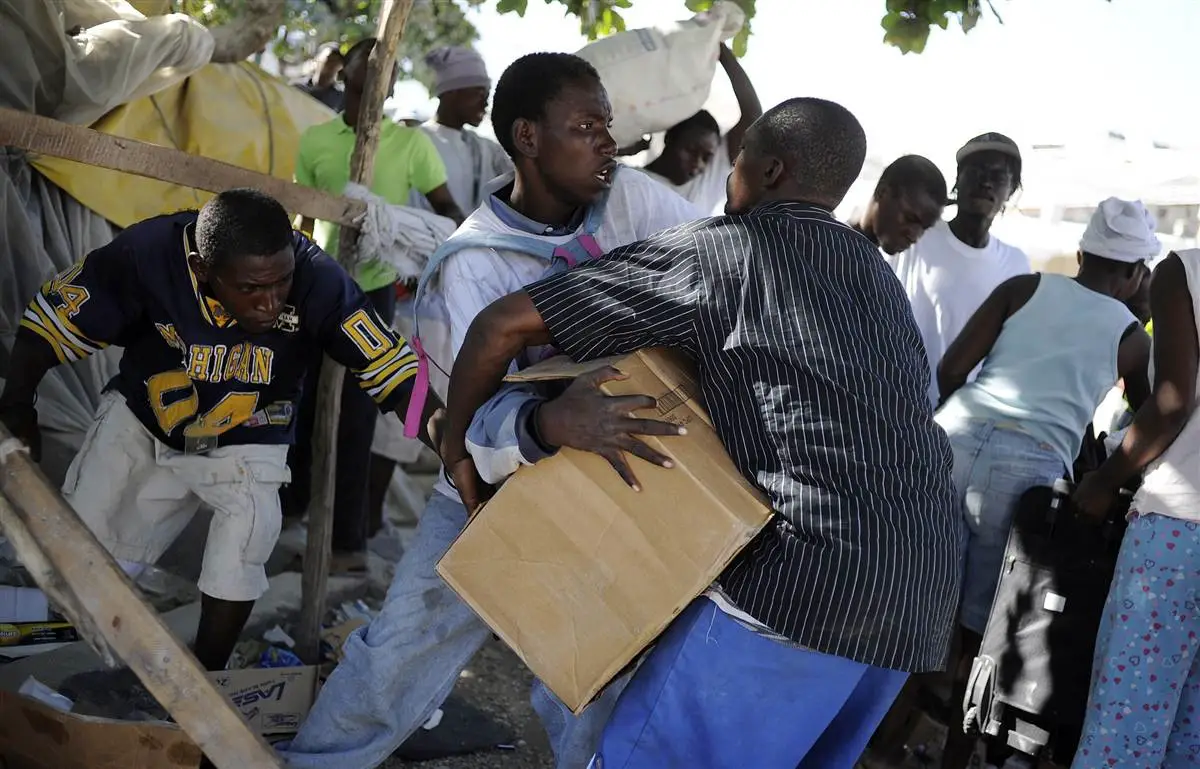
A few years back, I was doing some research about the aftermath of some natural disasters that took place here in America. I was shocked to find that the articles I was looking for – ones that I had read in the past – were pretty hard to find, but articles refuting the sought-for pieces were rampant.  Not just one event, but every single crisis aftermath that I looked up, had articles that were written after the fact stating in no uncertain terms that the hunger, chaos, and unrest never happened.


Apparently we, the preparedness community, are all wrong when it comes to the belief that after a disaster, chaos erupts and civic disorder is the rule of the day. That is only a disaster myth, and the public narrative belies it all.


Listen to the “experts” and they will confirm, it never happens.


looters2


Panic?  What panic?


According to newspaper articles written after Superstorm Sandy devastated the East Coast and after Hurricane Katrina caused countless billions in damage in New Orleans, people were calm, benevolent and peaceful.  Heck, they were all standing around singing Kumbayah around a campfire, sharing their canned goods, calming frightened puppies, and helping the elderly.


Apparently, studies prove that the fear of anarchy, lawlessness, and chaos is nothing but the “disaster myth”.  Reams of examples exist of the goodness and warmth of society as a whole after disaster strikes. All the stories you read at the time were just that – stories, according to the mainstream media:


Yet there are a few examples stubbornly fixed in the popular imagination of people reacting to a natural disaster by becoming primal and vicious. Remember the gangs “marauding” through New Orleans, raping and even cannibalizing people in the Super-Dome after Hurricane Katrina? It turns out they didn’t exist. Years of journalistic investigations showed them to be racist fantasies. They didn’t happen. Yes, there was some “looting” — which consisted of starving people breaking into closed and abandoned shops for food. Of course human beings can behave atrociously – but the aftermath of a disaster seems to be the time when it is least likely. (source)


Looting?  Only hungry people getting food from unmanned stores. Who wouldn’t do that?


Beatings and assaults?  Didn’t happen. Disturbed people made these stories up for attention.


Gang rapes?  No way. You watch too much Law and Order: SVU.


Murder, mayhem, and gangs of youth on the streets?  Silly readers – we just made that up.


loot


The Disaster Myth is a narrative created by the establishment and delivered by their stoolies in the mainstream media.  The Disaster Myth points fingers at many of the things that are commonly believed to be true by the preparedness community.  Included in this narrative:


  1. People do not panic after a disaster – instead, they pull together.

  2. The official government response is always speedy and appropriate – unless you are a person of color, in which case you will be denied assistance based on your race, because racism is the current agenda

  3. You will be taken care of if you simply comply peacefully with authorities.

  4. There is little increase in post-disaster crime.

These statements all stand in direct opposition to the stories we hear from news sources during the crisis.  We heard terrible stories from eyewitnesses who suffered from hunger, thirst, and unsanitary condition in the Superdome after Katrina.  We heard about citizens being robbed of their 2nd Amendment rights by police after the crisis, and we heard about gang rapes, looting, and mayhem.  Fast forward to Sandy where people were defecating in the hallways of their high rise apartments and digging through garbage to find food just a few days after the storm.  As for the official response, who can forget the FEMA shelter that closed because of inclement weather?  Of course, the weather was inclement – it was a freaking weather-related disaster!


Mac Slavo of SHTFplan wrote of the unrest, discomfort, and mayhem after Superstorm Sandy ransacked the East Coast:


For tens of thousands of east coast residents that worst case scenario is now playing out in real-time. No longer are images of starving people waiting for government handouts restricted to just the third-world.


In the midst of crisis, once civilized societies will very rapidly descend into chaos when essential infrastructure systems collapse.


Though the National Guard was deployed before the storm even hit, there is simply no way for the government to coordinate a response requiring millions of servings of food, water and medical supplies


Many east coast residents who failed to evacuate or prepare reserve supplies ahead of the storm are being forced to fend for themselves.


Frustration and anger have taken hold, as residents have no means of acquiring food or gas and thousands of trucks across the region remain stuck in limbo.


Limited electricity has made it possible for some to share their experiences:


Via Twitter:


  • I was in chaos tonite tryin to get groceries…lines for shuttle buses, only to get to the no food left & closing early (link)

  • I’m not sure what has shocked me more, all the communities around me destroyed, or the 5 hour lines for gas and food. (link)

  • Haven’t slept or ate well in a few days. Hope things start getting better around here soon (link)

  • These days a lot of people are impatient because they’re used to fast things. Fast food, fast internet, fast lines and fast shipping etc. (link)

  • Glad Obama is off to Vegas after his 90 minute visit. Gas lines are miles long.. Running out of food and water. Great Job (link)

  • Went to the Grocery store and lines were crazy but nail salon was empty so I’ve got a new gel manicure and some Korean junk food (link)

  • So f*cking devastated right now. Smell burning houses. People fighting for food. Pitch darkness. I may spend the night in rockaway to help (link)


garbage food


At the time of the event, even the mainstream reported on the affluent East Side residents dumpster diving in search of food. Was this NBC report, complete with video, a work of salacious fiction?


dumpster-diving-sandy


As far as civil unrest is concerned, the Twittersphere was jammed with people planning looting sprees in the aftermath of Superstorm Sandy.  Those who were already of criminal leanings saw the disaster as a great opportunity. In the great North American Edit, however, these tweets are said to be part of the myth – apparently, they were just kids playing around.  Some reports pooh-poohed the very idea that looters had run amok.


looters_tweet


This article from Prison Planet refutes all of the refuting and says that the civil unrest DID occur and that it generally does, given evidence from past events.


Legends from the past? Every single extreme weather event in recent years in the United States has been followed by looting.


As MSNBC reported at the time, looting during Hurricane Katrina was so prevalent that it “took place in full view of police and National Guard troops.”


Residents described the scenes as being like “downtown Baghdad” as looters filled garbage cans full of stolen goods and floated them down flooded streets.


As Forbes’ Erik Kain points out, “looting and rioting…occur after most natural disasters,” including after Hurricane Irene as well as Hurricane Isaac.


Looters also targeted victims of the Colorado wildfires earlier this year.


Does this sound familiar?


This revision of inconvenient history will sound quite familiar to anyone who has read George Orwell’s masterpiece 1984 (which was not meant to be an instruction manual, by the way.)  In the novel, the main character, Winston Smith, worked for the Ministry of Truth, which was actually a department of propaganda whose job it was to rewrite any faction of history that did not make the government look omniscient.


In George Orwell’s novel Nineteen Eighty-Four, the Ministry of Truth is Oceania’s propaganda ministry. It is responsible for any necessary falsification of historical events. The word truth in the title Ministry of Truth should warn, by definition, that the “minister” will self-serve its own “truth”; the title implies the willful fooling of posterity using “historical” archives to show “in fact” what “really” happened. As well as administering truth, the ministry spreads a new language amongst the populace called Newspeak, in which, for example, truth is understood to mean statements like 2 + 2 = 5 when the situation warrants.


The Ministry of Truth is involved with news media, entertainment, the fine arts and educational books. Its purpose is to rewrite history to change the facts to fit Party doctrine for propaganda effect. For example, if Big Brother makes a prediction that turns out to be wrong, the employees of the Ministry of Truth go back and rewrite the prediction so that any prediction Big Brother previously made is accurate. This is the “how” of the Ministry of Truth’s existence. Within the novel, Orwell elaborates that the deeper reason for its existence is to maintain the illusion that the Party is absolute. It cannot ever seem to change its mind (if, for instance, they perform one of their constant changes regarding enemies during war) or make a mistake (firing an official or making a grossly misjudged supply prediction), for that would imply weakness and to maintain power the Party must seem eternally right and strong. (source)


We are watching narratives being created in front of our very eyes with the Vegas massacre. Every time something terrible happens, there’s a spin and that spin a) keeps us in the dark. b) encourages us to be dependent, and c) benefits someone.


But….WHY????


So why the vast effort to expunge tales of mayhem and to make it seem like our own national disasters really weren’t that bad? There are a few reasons, like pandering to an audience that wants to be blissfully unaware, but primarily, it’s about control.


Those who live a self-sufficient lifestyle are a threat to the status quo that those in power would like to see.  If you don’t NEED them, then there is no leverage to force you into compliance.  You don’t NEED to go to Camp FEMA in order to have 3 squares a day.  You don’t NEED to give up your guns in order to have a roof over your head and government supplied security.  You don’t NEED to get some kind of chip implanted in your arm to be scanned in order to receive “benefits” like medical care, food, and even money.


Self-sufficiency means freedom.  When you can feed yourself, clothe yourself, shelter yourself, and protect yourself, you are far less likely to need to cede your freedoms in order to stay alive. And in a police state that is frantically trying to withdraw our constitutional rights, this just won’t do.  They need leverage.


So the establishment has created a narrative that tells us what we are doing is silly and unnecessary.  They are rewriting history even though we only lived that history in the past decade.  Even though we know the truth of the matter because we watched it live, they are changing the facts to make us doubt our own perceptions. They are catering to the people who have no interest whatsoever in taking care of themselves.


This narrative was created to make a society of anti-preppers – of people who believe that all will be right with the world, the government is kind and benevolent, potential disasters aren’t really that big of a deal, and those crazy preppers are stark raving lunatics.  They want us to be perceived as extremists so that others are less likely to follow our examples. If they need a crazy bad guy at whom to point the finger, all they have to do is call someone a “Doomsday Prepper”. (Remember how poor Nancy Lanza was vilified after the Sandy Hook shooting?)


But…


If this civil unrest is not occurring, why is the National Guard called to keep the peace?  Why are state police riding around on tanks wearing body armor? Why were the guns of law-abiding citizens taken away in the aftermath of Katrina?


SWAT TEAM


Which version of reality are you going to believe?  The one that you actually witnessed or the perverted rewrite that the mainstream media is trying to push upon you?


Remember the things happening right now.


We have recently been hit with disaster after disaster in the United States. The aftermath of Hurricanes Harvey and Irma hit the mainland amidst stories of looters and people standing armed to protect homes and businesses. In the Carribean, lawlessness was rampant, and after Hurricane Maria devastated Puerto Rico, the danger from armed people robbing those who still had some supplies was constant. As I write this, there are uncontrolled wildfires tearing through California wine country, and looters are striking the homes of evacuees.


Of course, we are seeing reports of this now, but later will these stories be “debunked” by “experts” like the stories from Katrina and Sandy?


It’s entirely likely because most people would prefer to live smug in the belief that the police are only seconds away, their neighborhoods are immune to looters and vandals, and that America is a place of exceptional order and civilization. It comforts them to believe these things.  They use it as ammunition so they can scoff at “doomsday” preppers and call them “conspiracy theorists.”


But we know differently, and today, bloggers and alternative media are also documenting these stories before history is erased. I have watched for years as supplemental links in stories I have written have disappeared. I have witnessed the changing narratives, and if you’re reading this, you probably have too.


So, don’t be discouraged in your efforts when you read all the “good news” stories that inevitably show up after a disaster. To be sure, there are some wonderful people out there helping their neighbors, but there is also a dark side that the media prefers to ignore.


You saw it when it was happening. You know the truth, even if the disaster myth narrative would have you believe otherwise.

Saturday, October 7, 2017

Mapping The Most (And Least) Valuable States In America

Everyone knows location is the most important part of real estate. You can’t change where your house is (all things being equal). You have to consider school districts, crime rates, commute times—the list goes on and on. It can be much simpler when you’re considering buying a home to compare apples to apples so you can see how the real estate market differs according to location.


So HowMuch.net created a new visualization showing land and housing prices at a glance.


Source: HowMuch.net


The blue dots represent the value of an acre of land, and the red circles indicate the median value of a home. The bigger the blue dot and the larger the red circle, the more expensive it is to become a property owner. Small circles and dots likewise indicate a very low cost of purchasing property. The home values are from the U.S. Census Bureau’s 2015 American Consumer Survey, and the numbers behind the land values come from the Bureau of Economic Analysis.


As HowMuch.net notes, several things stand out in our illustration.


An acre of land is much more valuable in the Northeast compared to any other part of the country. This is partly because the Eastern seaboard is a very densely populated area with several large cities, most notably New York. It is also a historical artifact that Europeans settled New England first and then moved west, meaning that New York and Massachusetts have some of the oldest modern structures anywhere in the U.S. In other words, Eastern cities are a lot older than Midwestern cities, so there isn’t a lot of farmland for suburban expansion anymore. We should also mention that in terms of geographic size, these are some of the smallest states in the country. Matter of fact, the three states where the cost of an acre of land is greater than the median price of a house are all located on the East Coast, and they happen to be some of the smallest states in the Union (Rhode Island, Connecticut, and New Jersey).


Median home values (the red circles) are a different and more complicated story. California has the most expensive houses by far ($449,100). Oregon and Washington boast similarly high housing valuations as well ($264,100 and $284,000, respectively). It is also expensive to buy a home on the East Coast with six out of the top ten states with the most expensive median home values.


But there’s a noticeable dip in both housing and land prices in southern and midwestern states. Prices slowly rise the further you move from east to west. This highlights unique economic developments over the last several years, including the boom in oil exploration in North Dakota and the growth of Western cities thanks to young people,like Denver. Snowbirds also tend to move to Florida and Arizona after they retire, which also pushes up housing prices in those places.


Top 5 Most Expensive States to Buy a Home 


  1. California - Value per acre: $39,092; Median Home Value: $449,100

  2. Massachusetts - Value per acre: $102,214;  Median Home Value: $352,100

  3. New Jersey - Value per acre: $196,410; Median Home Value: $322,600

  4. Maryland - Value per acre: $75,429; Median Home Value: $299,800

  5. New York - Value per acre: 41,314; Median Home Value: $293,500

Top 5 Cheapest States to Buy a Home


  1. West Virginia - Value per acre: $10,537; Median Home Value: $112,100

  2. Mississippi - Value per acre: $5,565; Median Home Value: 112,700

  3. Arkansas - Value per acre: $6,739; Median Home Value: $120,700

  4. Oklahoma - Value per acre: $7,364; Median Home Value: $126,800

  5. Kentucky - Value per acre: $7,209; Median Home Value: $130,000

All this shows that the laws of supply and demand are alive and well in the real estate market. You can easily find cheap acres of land where they are plentiful and un-useful (sorry, Nevada), but owning property is a lot more expensive in smaller places crowded with lots of people. As always, location, location, location.

Saturday, September 30, 2017

3 Ways To Help Puerto Rico Right Now

There is a lot to learn from the slow and painful post-hurricane recovery that is going on in Puerto Rico right now.


One of Puerto Rico"s biggest problems is that it is by far, one of poorest areas of the United States. The median household income in Puerto Rico is approximately $18,600. The median household income in the United States, by contrast, is around $57,000.


As we"ve recently discussed here at mises.org (see here and here) it is generally far more difficult for low-income areas to weather storms, than it is for high income areas. The amount of capital at hand for repair and recovery is less in poor areas, as is the wealth available for constructing high-quality infrastructure. 


Repeating this fact to Puerto Ricans, however, does them little good in the short term. So we must explore ways that Puerto Rico could be helped right now in gaining greater access to badly needed goods and services. 


One: Repeal the Jones Act 


Unbeknownst to many Americans, shipping in the United States exists under the shadow of highly protectionist and archaic regulations passed as part of the Jones Act. The Jones Act was originally passed in 1920 as part of an effort to increase the number of merchant marine vessels produced by the United States. It restricts trade between American ports to vessels built and owned by Americans, and to vessels whose crew is at least three-quarters American. Unfortunately, as Gary Galles notes, the Act "works against its stated goals, and does so at a steep cost." 


The Jones Act drives up the cost of goods and services by restricting shipping options for merchants. As Galles explains, this can be especially damaging in times of natural disasters: 


In the aftermath of Hurricanes Katrina and Sandy, Jones Act restrictions were suspended because they hindered emergency responses. In 2014, New Jersey was not allowed to use a foreign ship to bring rock salt from Maine in time to respond to a snowstorm.


A Jones Act-eligible ship required far more time and added $700,000 to the cost. And such problems extend beyond emergencies. Maryland imports rock salt from Chile rather than Louisiana, because shipping it all the way from Chile is three times cheaper than Jones Act domestic transportation.


These issues can be especially damaging to places like Puerto Rico and Hawaii. Galles continues: 


In 2014, shipping a forty-foot container from Los Angeles to Honolulu reportedly cost more than ten times shipping it to Singapore. Dependent on Jones Act shipped petroleum for three-quarters of its electricity generation, Hawaii’s electricity prices are almost double the next most expensive state.


A 2012 report found that sending a container of household goods from the east coast to Puerto Rico cost more than double that to nearby Santo Domingo. A GAO study found that some Puerto Rico companies had shifted sourcing from America to Canada, due to cost savings from escaping Jones Act restrictions.


The Jones Act"s effects on cutting resources for places like Puerto Rico are so undeniable that the Act was suspended early in September to allow for Puerto Rico to stock up on fuel and other necessities in preparation for the storm. The waiver expired after September 22, however, greatly diminishing the supply of fuel coming into the island. 


Even John McCain, rarely quoted as one of the good guys in these pages, has urged the total repeal of the Jones Act, calling it an "archaic and burdensome act." McCain is right. 


Only after substantial pressure did the Trump administration finally relent, and it granted a new waiver on Wednesday


Total repeal should be next on the agenda, as it"s absurd to wait for a highly destructive hurricane before allowing Puerto Ricans to access goods and services at lower cost. 


Two: Declare Puerto Rico a Free Trade Zone 


Why stop with just a repeal of the one protectionist measure that is the Jones Act? 


Puerto Rico is subject to American customs and trade laws, and thus importing goods and services into the island is limited by tariffs, quotas, and other protectionist measures — thus driving up the costs of goods and services. 


Given Puerto Rico"s desperate need for supplies in the wake of Maria, the humane thing to do would be to grant trade autonomy to Puerto Rico allowing it to engage in total unilateral free trade in order to attract merchants from all over the world.


Unilateral free trade, of course, is beneficial always and everywhere. But in the short term, Congress and the administration can begin small and simply declare Puerto Rico to be an open port in which all goods can be imported duty-free. This would end the need to restrict trade and collect tariffs in Puerto Rico to remain in accordance with US law. A look at US customs policies reveal restrictions fall on a variety of highly-useful products in times of emergency including ethyl alcohol, dried milk, and peanuts. 


Other disastrous trade restrictions include the Trump administration"s new tariff slapped on lumber earlier this year. The end effect will be to drive up the cost of construction for everyone, but this will be most felt in hurricane-devastated areas.  


Needless to say, this policy of open trade would be most effective if both national and territorial officials allow merchants and importers to charge prices without fear of any restrictions on so-called price-gouging. Such restrictions would act to reduce the total amount of goods and services being brought to the island. 


Three: Remove Restrictions on Physical Cash


In times of emergency, when the electricity is out, access to physical cash becomes extremely important in facilitating a functional economy. In the wake of Hurricane Maria, ATMs ceased to function and armored car services had difficulty reaching banks. "Demand for cash [in Puerto Rico] is extraordinarily high right now," a Federal Reserve spokesman noted on Wednesday. 


While it is a good thing that the Fed believes it can soon ensure a working amount of cash in the region, the problem would have been largely avoidable were United States banking regulations not so geared toward restricting the use of physical cash. 


Prior to a looming natural disaster, of course, it would be wise to take out a significant amount of cash to make sure one can purchase goods and services even when power is out, and banks are closed. 


In the US, however, removing even a few thousand dollars from one"s accounts is likely to raise eyebrows and trigger greater surveillance from banking regulators. Technically, it is legal to withdraw cash amounts up to $10,000, but doing so can trigger government charges of "structuring" in which it is actually illegal to withdraw cash amounts under $10,000 total. In other words, its unclear as to how much cash one can actually withdraw without asking for trouble from federal banking regulators. Nor is this an especially huge amount, especially when power is expected to be out for months in some areas.


Both banks and their customers, however, are repeatedly discouraged from engaging in sizable cash transactions by federal regulators. 


A more reasonable government would seek to facilitate the use of physical cash in large amounts, especially in the lead up to natural disasters, so as to ensure residents need not resort to barter and other types of highly-inefficient transactions. 


Moreover, in a post-disaster situation, where communities have become more isolated, and access to resources on the mainland becomes limited, residents will become more dependent on short-terms loans, micro loans, and informal loans during the process of rebuilding. In many cases, these loans will be risky. Policymakers could help ensure that cash and capital reaches those who need it most by reducing banking restrictions and regulations on so-called usury, same-day lending, and other types of short-term and emergency loans.


It"s at times like these that the effects of government interventions, intrusions, and regulations come to be felt most. As resources become scarce, and established institutions may not be present or reliable, it becomes all the more important to facilitate a nimble and inventive marketplace in which solutions can be pursued quickly and in an unrestricted manner. 


As with all Americans nationwide, Puerto Ricans are subject to trade restrictions, taxes, and other regulations that cripple markets and impact their standard of living. Much of the time, these effects can be better tolerated because an abundance of goods continues to be available — even if made unnecessarily expensive. In the wake of a natural disaster, however, accessing goods and services becomes much more difficult, and it is at times like these that economic freedom is needed most.