Showing posts with label Federal Emergency Management Agency. Show all posts

Thursday, December 7, 2017

What Life Is Like For A Million People In Puerto Rico Who Still Don"t Have Power

Authored by Daisy Luther via The Organic Prepper blog,


If you ever wondered what it would look like if the grid collapsed here on the mainland, the island of Puerto Rico is a tragic, real-life case study.


These stories show us what life is like for more than a million people who STILL don’t have power and running water nearly 3 months after Hurricanes Irma and Maria devastated their communities.


According to a website showing the status of utilities on the island, four months after two hurricanes wrought havoc, 32% of Puerto Ricans are still without power and nearly 10% are still without running water. However, even those who have running water must boil it.


But statistics don’t tell the real story.


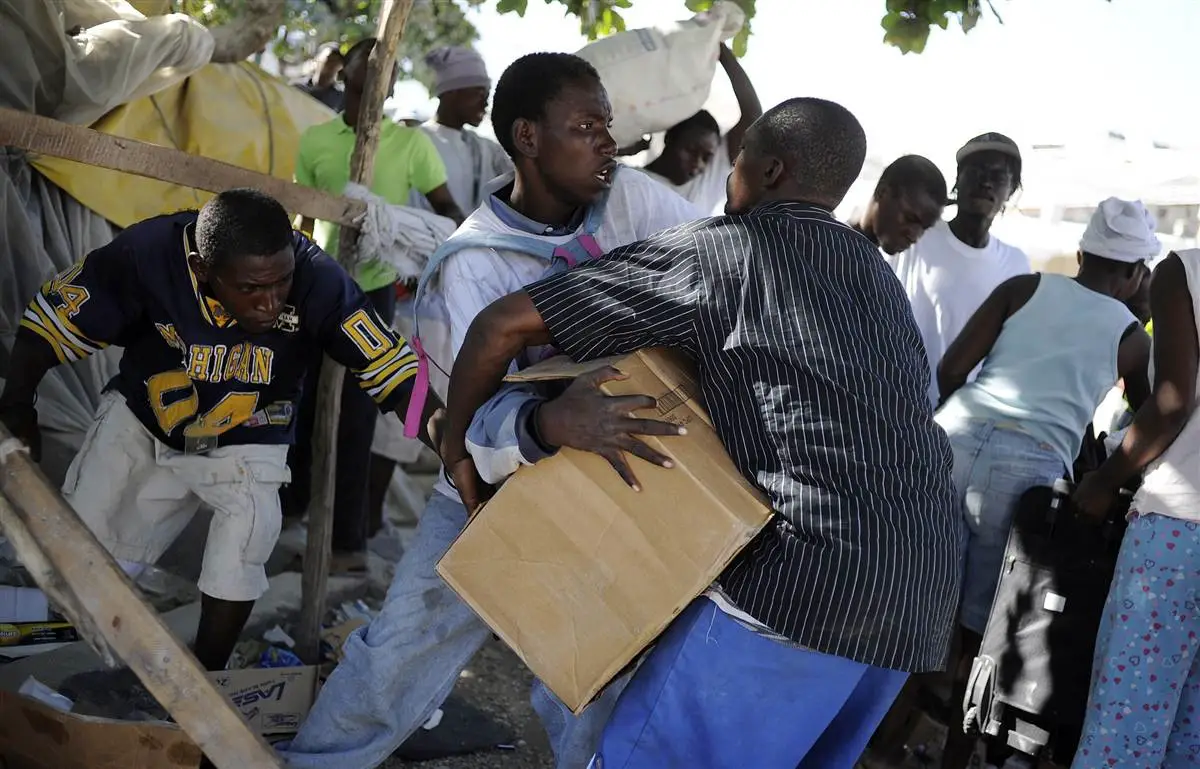
At first, it was a war zone.


In the first days after the grid went down, chaos ruled. I vetted as many of the stories as I could and concluded:


…there is very little food, no fresh water, 97% are still without power, limited cell signals have stymied communications, and hospitals are struggling to keep people alive. There is no 911. Help is not on the way. If you have no cash, you can’t buy anything. As people get more desperate, violence increases. (source)


A friend wrote this post about her family on Puerto Rico:


“My family has lost everything. My uncle with stage 4 cancer is in so much pain and stuck in the hospital. However, conditions in the island are far worse than we imagined and my greatest fear has been made reality. The chaos has begun. The mosquitos have multiplied like the plague. Dead livestock are all over the island including in whatever fresh water supplies they have.


My family has been robbed and have lost whatever little they had left. The gang members are robbing people at gunpoint and the island is in desperation. People are shooting each other at gas stations to get fuel.


They’re telling us to rescue them and get them out of the island because they are scared for their lives. We’re talking about 3.5 million people on an island, with no food, no drinking water, no electricity, homes are gone. Family if you have the means to get your people out, do it. This is just the first week. Imagine the days and weeks to come. These are bad people doing bad things to our most vulnerable.


Imagine a few weeks with no resources and the most vulnerable become desperate. What are you capable of doing if your children are sick and hungry? We have to help.” (source)


Other outlets told the same stories. Jeffrey Holsman wrote a guest post for USA Today, sharing what he was witnessing.


The sounds of automatic weapons firing were audible Tuesday evening in San Juan. We were told the National Guard had arrived, but I hadn’t personally seen a Jeep or uniform in the streets yet.


Total darkness has swallowed Puerto Rico, as it has every night since the 12-hour monster Hurricane Maria roared across the island with more than 20 inches of rain and 155 mph winds. I’ve never experienced anything like it: wind and rain from every direction, pounding continuously.


Now, a war zone best describes what’s left of what was once an emerald green gem in the Caribbean…


…after Maria, we face hours upon hours of waiting in lines for gas that might not be there; hours waiting in bank and ATM lines for money that might not be there; hours waiting in grocery store lines for food that might not be there. (source)


It only took a few days before people began to become ill from the tainted water. There were many injuries related to the storm, as well as the aftermath, and these crises were compounded by the lack of medical assistance.


Only 11 of 69 hospitals on Puerto Rico have power or are running on generators, FEMA reports. That means there’s limited access to X-ray machines and other diagnostic and life-saving equipment. Few operating rooms are open, which is scary, considering an influx of patients with storm-related injuries. (source)


People were unable to acquire essential medications and treatments like dialysis.


And this was only the beginning.


One month after the disaster…


A month after Hurricane Maria, the situation was still very grim. Three million residents were still without electricity and one million were without running water. (source) Officials reported 54 deaths attributed to the hurricane but many said that the number was far higher. The mayor of San Juan said that the number of cremations had doubled and put the actual casualties at closer to 500 people.


She said: “It appears, for whatever reason, that the death toll is much higher than what has been reported. What we do know for sure is that people are being catalogued as dying…natural deaths”.


She explained that some of the deaths relating to the hurricane were being reported as “natural causes” because the storm was the secondary factor in their death.


For example, some people reportedly suffocated after their respirators stopped due to the power cut…


…The bodies were cremated before the medical examiner could determine whether they should have been included in the official death toll.


Accurate information about the figure is particularly important in the US because if a person dies in a natural disaster, their family has the right to claim federal aid. (source)


Evelyn Milagros Rodriguez, a librarian at the University of Puerto Rico wrote a first-person account of the aftermath during the first month post-Maria. She reported that the books, computers, and furniture at the library were mostly ruined and that mold had invaded the building. Here’s an excerpt from her story:


What outsiders are unable to see, perhaps, is that an entire culture has arisen around the catastrophe caused by Hurricane Maria – one with typically catastrophic traits: material scarcity, emotional trauma, economic catastrophe, environmental devastation.


Puerto Ricans are now facing a dramatically different way of life, which means our relatives and friends in the diaspora are, too.


Nothing about life resembles anything close to normal. An estimated 100,000 homes and buildings were demolished in the storm, and 90 percent of the island’s infrastructure is damaged or destroyed. Not only are there shortages of water and electricity but also of food, highways, bridges, security forces and medical facilities.


It’s dangerous to venture outside at night. An island-wide curfew was lifted last week, but without streetlights, stoplights or police, driving and walking are dangerous after dark.


The official tally of missing people varies, with police tallies ranging from 60 to 80 right now. Considering Puerto Rico’s hazardous conditions and limited health care services, that number is sure to rise. We are well aware that epidemic diseases, including leptospirosis and cholera, could come next. Health concerns are further stoked by the delays and disarray of the various federal agencies tasked with handling this emergency. (source)


Leyla Santiago, a CNN journalist who had been born in Puerto Rico and still has family there, echoed the librarian’s story in her own report.


Puerto Rico has also changed forever.


The struggles are everywhere. And where there is help or supplies, there are lines, always lines.


Some days, it would be people lining up for gas. And then for food at the supermarket. The longest lines were now to use the ATM.


I became numb to the lines quickly.


When we passed another long one at the port, I didn’t think anything of it. Until it hit me.


Thousands were lining up to leave Puerto Rico. I watched as an old man dragged an oxygen tank, while pleading with organizers to let him on that massive cruise ship now acting as a refugee transport. Another man lifted his shirt to show the scars from an operation, hoping it would convince the right people that he needed to get off the island. (source)


Although unthinkable, it’s even worse in more remote areas of Puerto Rico. Despite their preparations, Rosana Aviles Marin’s elderly parents’ lives were devastated in their central mountain village.


The winds of up to 155 miles per hour that roared across the island buckled the house’s walls and tore holes in the ceiling, letting in water that destroyed furniture, framed photos of Marin and her siblings, and brightly colored ceramic statues of Jesus.


That wasn’t all it destroyed. The storm also downed power lines throughout the area, and Marin and her parents have been entirely without electricity for weeks. Much of their food went bad, they have no cellphone service, and local markets and restaurants remain closed. Her parents use a small diesel generator to power lights and, for a few hours per day, a small refrigerator. The rest of the time, she tells me during a recent trip to the area, “my parents live in darkness.” (source)


The island’s major source of revenue has been tourism, and that has all but stopped since the hurricane. Considering how badly they were struggling economically before, that is just another blow to a place driven to its knees.


The narrow blue cobblestone streets of Old San Juan are deserted. Cigar shops are boarded up. Boutiques in bright colonial buildings are closed...


...About a third of the hotels in Puerto Rico remain shuttered. Restaurants and shops are still without power. Beaches are closed for swimming because of possible water contamination.


The high season begins in December, and tourism officials are hoping to lure some visitors, but that depends on when power is fully restored and how quickly hotels and attractions can repair the catastrophic damage. (source)


It’s a Catch-22. Until the tourists return, many won’t be able to afford to restore their businesses. But until they restore their businesses, the tourists won’t return.


Two months after…


Two months to the date after Maria struck with a vengeance, only half of the residents of the island had power. The return of infrastructure began in the cities and wealthier areas. Those in poor or remote areas are still waiting. 


Here’s a video of what it looks like in Puerto Rico right now as people struggle to restore electricity.


Billions of dollars were allocated by the government and millions has come in from private donors.


Politicians have been in and out of the island and that has led to a spending law that provides $5 billion for Puerto Rico’s recovery and billions for government agencies providing disaster assistance. Projections are that a lot more will be needed.


On top of that, millions has been raised and contributed by private groups and foundations and individuals.


Cruz (the mayor of San Juan) said people from around the United States have been sending small donations, money orders, $50 or $10 attached to cards or pieces of paper. Some gave as much as $300 to $500.


“We’re going to use it to rebuild homes, to make sure people have good drinking water, because even if it comes out of a faucet it has to be drinkable, to schools for children. Some of the schools have been in really bad shape. Twenty-five percent of what comes into the foundation goes to other towns outside of San Juan,” she said. (source)


At two and a half months post-hurricane, PBS reported the following statistics:


  • 66 percent of power on the island has been restored

  • 93 percent of the island has access to water, but it remains on a boil advisory

  • 73 percent of cell sites are up and running

  • 982 survivors remain in 41 shelters across the island

The island still looks like a war zone.


Trash and debris from the storm remain a rampant problem. The U.S. Army Corps of Engineers reported it has removed more than 639,000 cubic yards of debris. But it is still tasked with removing at least 2.7 million remaining cubic yards. (source)


Residents of the island are without resources and are at the mercy of FEMA…and government funding.


Democratic Sens. Bernie Sanders and Elizabeth Warren unveiled a bill that would provide $114 billion in aid to Puerto Rico and the U.S. Virgin Islands…


[But] the package is unlikely to get a vote, analysts say


Meanwhile, more than 200,000 people from Puerto Rico have arrived in Florida since Maria hit, according to the Florida Division of Emergency Management.


FEMA is now moving from response to recovery mode. FEMA is still providing daily food, fuel, and water to survivors of Maria, the longest such sustained distribution after a disaster in FEMA history. (source)


You can get more details about the proposal here.


And now, the return of electricity has been further delayed.


Previously, Puerto Rican officials estimated that the island would have electricity again by December? It turns out they were wrong. Now it looks like everyone in Puerto Rico won’t have power until February… at the earliest.


PREPA acting Director Justo Gonzalez cited “natural” and hurricane damage to the power grid that was initially unidentified as the reason for the delay of power generation.


Others have said full power and other utilities will not be completely restored until March. (source)


Between Puerto Rico’s economic problems and an aging grid, this isn’t a speedy process.


Before the storm hit, I wrote an article predicting at least a 6-month wait before power was restored, and this was for a variety of reasons. I cited Philipe Schoene Roura, the editor of a San Juan, Puerto Rico-based newspaper, Caribbean Business, who wrote of the many reasons that it would take so long:


“The lifespan of most of Prepa’s equipment has expired. There is a risk that in light of this dismal infrastructure situation, a large atmospheric event hitting Puerto Rico could wreak havoc because we are talking about a very vulnerable and fragile system at the moment,” Ramos added…


…Francisco Guerrero (a fictitious name to protect his identity), a Prepa field worker for 23 years, said it would take months for Prepa to bring up Puerto Rico’s power system should a hurricane like Harvey strike the island.


The lack of linemen and other technical personnel, as well as a lack of equipment—including replacement utility poles for powerlines and replacement parts—are the issues of greatest concern among public corporation employees, who say they risk their lives working with equipment in poor condition that provides them with little safety.


Guerrero said that today only 580 linemen remain out of the 1,300 who were part of the workforce in previous years—and that’s not counting the upcoming retirement of another 90 linemen. Likewise, he said there are only 300 electrical line testers to serve the entire island.


The source also said that much of Prepa’s equipment dates back to the 1950s—and the more “modern” equipment that is still functional dates from the 1990s; in other words, it’s from the past century.


“If a hurricane like this one [Harvey] hits us, the system is not going to come online, I’d say, in over six months. Right now, the warehouses don’t even have materials. I’m talking about utility poles and other stuff,” Guerrero explained. (source)


It turns out that Rora was not exaggerating. But money and a dilapidated system aren’t the only problems. There is an issue of geography as well.


Puerto Rico’s biggest power generators are on the south of the island, but most of its inhabitants live on the north side, primarily in San Juan. There are four high-capacity transmission lines that carry power from the south to the north, and they pass through the center part of the island, the region Marin calls home. The problem is that central Puerto Rico is mountainous, full of huge swaths of thick forest, and mainly reachable only by driving on terrifyingly narrow dirt roads.


That makes it hard to reach those four vital lines even in the best of circumstances. In post-Maria Puerto Rico it’s even harder, because the center of the island was the region hardest hit by the hurricane. Since the government is trying to get power to San Juan first, that means those in the regions devastated most by the hurricane will be waiting the longest for power to be restored. Sánchez, the engineer, says workers would need to be flown in by helicopter to clear debris before repairs could even begin. (source)


Would you be prepared for something like this?


If you think something like this couldn’t happen to us on the mainland, you’re deluding yourself.


Our grid isn’t in fantastic shape either. For years, people in the know have been warning that our electrical infrastructure is aging and unstable. It would cost us a mindboggling 5 trillion dollars to replace the decrepit system, and age isn’t the only threat. The possibility of an EMP strike could take it down permanently (and that threat seems more real every day as tensions with North Korea rise.) If our grid was taken down by such an attack, it could kill 90% of Americans within the first year.


We would lose


  • Power.

  • Refrigeration.

  • Heating and cooling.

  • Our economy.

  • Fresh, running water.

  • Medical care.

The list could go on and on.


Few people would be ready for an event that took out the entire infrastructure for an extended period of time.  I personally lean toward a more low-tech plan for long-term scenarios like this. (For one reason, look how difficult fuel is to come by in Puerto Rico right now.)


Learning from the real-life experience of others give us just a glimpse of what we could expect.


Thursday, November 9, 2017

Wisconsin National Guard Plan Power-Grid Collapse Drill

According to the Wisconsin National Guard Public Affairs Office, a two-day military drill will take place in Columbia County and at Wisconsin’s Emergency Operation Center in Madison simulating a total power grid collapse on November 15-16.


As the press release states “the public should not be alarmed or concerned if they notice an increased law enforcement presence and military personnel, as well as vehicles and equipment, including non-military unmanned aerial vehicles” in the drilling region.


The drill is in conjunction with a national-level exercise, known as GridEx, which is an exercise to simulate a cyber/physical attack on electric and other critical infrastructures across North America. Wisconsin’s drill will involve county and state law enforcements and first responders, including the Wisconsin National Guard.


Maj. Gen. Don Dunbar, Wisconsin’s adjutant general said “GridEx is a great opportunity for our emergency management officials, the National Guard, local first responders and our private industry partners to train together so we are ready to respond if a threat impacted our power grid. While we simply can’t train for every possible scenario, building relationships now makes us all better prepared if we had to respond to a real-world situation.”


The article describes how Wisconsin is preparing for a total grid collapse and warns the preparation has already started. In addition, the report gives timing of the next major ‘full-scale’ drill expected in spring 2018 coined “Dark Sky”.


Over the past several years, Wisconsin has placed an emphasis on the importance of preparing for a long-term power outage and developing capabilities to respond to a cyber incident.


As a result, the state began developing new partnerships, policies and plans as well as a strategy that culminates in a full-scale exercise in spring 2018 called Dark Sky, which will simulate a power outage caused by a combination of cyber and physical threats. GridEx will help all participants continue to build and refine processes to better prepare for the Dark Sky exercise as well as real-world scenarios.  


Here is the list of participants who will be drilling on Nov 15-16 in Wisconsin:


  • State Emergency Operations Center

  • Business Emergency Operations Center

  • Utilities and transmission providers

  • 65 Soldiers from the National Guard Reaction Force

  • FBI

  • FEMA Region V

  • other Federal agencies

In July, we warned about the US government quietly preparing for a total grid collapse with the passage of an Executive Order – “Coordinating Efforts to Prepare the Nation for Space Weather Events”.


Here is snippet of section 1 of the executive order:


Space weather events, in the form of solar flares, solar energetic particles, and geomagnetic disturbances, occur regularly, some with measurable effects on critical infrastructure systems and technologies, such as the Global Positioning System (GPS), satellite operations and communication, aviation, and the electrical power grid.


Extreme space weather events — those that could significantly degrade critical infrastructure — could disable large portions of the electrical power grid, resulting in cascading failures that would affect key services such as water supply, healthcare, and transportation. Space weather has the potential to simultaneously affect and disrupt health and safety across entire continents. Successfully preparing for space weather events is an all-of-nation endeavor that requires partnerships across governments, emergency managers, academia, the media, the insurance industry, non-profits, and the private sector.


Just days ago, the Department of Defense wrapped up a national drill from November 04-06 simulating a total grid collapse across the United States.


The bottom line: The United States government is quietly preparing for a major power grid collapse. At this point there are many conflicting sources of what could cause such of an event, such as aging infrastructure, cyber or physical attack, EMP, and or a geomagnetic storm. As a citizen, you’re not allowed to know this knowledge and frankly you will not be prepared- only the government will be. The writing is on the wall, as the government continues to drill for the big day, coined in the report: “Dark Sky”.


Monday, October 30, 2017

FBI Is Probing Puerto Rico"s $300 Million Power Contract With Whitefish Energy

Just a day after Puerto Rico"s cash-strapped power authority on Sunday canceled its controversial $300 million contract with Whitefish Energy, a small Montana company tasked with rebuilding the island"s power grid after it was completely destroyed by Hurricanes Maria and Irma, the WSJ is reporting that the FBI is looking into the circumstances surrounding the contract.


The contract was canceled on orders from Puerto Rico Gov. Ricardo Rossello, who pointed to the burgeoning controversy surrounding the company - including its relationship with Secretary of the Interior Ryan Zinke, who is from the same small Montana town where Whitefish is based.


Zinke issued a statement last week denying any involvement in the deal. Zinke is reportedly friends with Whitefish CEO Andy Techmanski.


The company has been criticized for moving too slowly in its efforts to restore power to the island. To date, only 30% of power customers on the island have had electricity restored, more than a month after Maria first made landfall along the island"s southeastern coast.


As WSJ explains, the firm had more than 350 workers and 2,500 tons of heavy equipment on the ground for rebuilding electrical lines destroyed in Hurricane Maria. But the firm’s small size and limited track record, as well as the terms of the contract, ignited concerns around Puerto Rico’s management of the flow of federal disaster-relief dollars to the island.


The Federal Emergency Management Agency, multiple congressional committees and local auditors also have raised concerns and begun requesting documents about the deal. Ricardo Ramos, the executive director of Prepa, had defended the selection of Whitefish and said the contracting process was done according to the utility’s regulations for handling emergency situations.


Wednesday, October 11, 2017

The Disaster Myth Narrative: No One Panics, No One Loots, No One Goes Hungry

Authored by Daisy Luther via The Organic Prepper blog,


The most effective way to destroy people is to deny and obliterate their own understanding of their history.  ~ George Orwell


A few years back, I was doing some research about the aftermath of some natural disasters that took place here in America. I was shocked to find that the articles I was looking for – ones that I had read in the past – were pretty hard to find, but articles refuting the sought-for pieces were rampant.  Not just one event, but every single crisis aftermath that I looked up, had articles that were written after the fact stating in no uncertain terms that the hunger, chaos, and unrest never happened.


Apparently we, the preparedness community, are all wrong when it comes to the belief that after a disaster, chaos erupts and civic disorder is the rule of the day. That is only a disaster myth, and the public narrative belies it all.


Listen to the “experts” and they will confirm, it never happens.


looters2


Panic?  What panic?


According to newspaper articles written after Superstorm Sandy devastated the East Coast and after Hurricane Katrina caused countless billions in damage in New Orleans, people were calm, benevolent and peaceful.  Heck, they were all standing around singing Kumbayah around a campfire, sharing their canned goods, calming frightened puppies, and helping the elderly.


Apparently, studies prove that the fear of anarchy, lawlessness, and chaos is nothing but the “disaster myth”.  Reams of examples exist of the goodness and warmth of society as a whole after disaster strikes. All the stories you read at the time were just that – stories, according to the mainstream media:


Yet there are a few examples stubbornly fixed in the popular imagination of people reacting to a natural disaster by becoming primal and vicious. Remember the gangs “marauding” through New Orleans, raping and even cannibalizing people in the Super-Dome after Hurricane Katrina? It turns out they didn’t exist. Years of journalistic investigations showed them to be racist fantasies. They didn’t happen. Yes, there was some “looting” — which consisted of starving people breaking into closed and abandoned shops for food. Of course human beings can behave atrociously – but the aftermath of a disaster seems to be the time when it is least likely. (source)


Looting?  Only hungry people getting food from unmanned stores. Who wouldn’t do that?


Beatings and assaults?  Didn’t happen. Disturbed people made these stories up for attention.


Gang rapes?  No way. You watch too much Law and Order: SVU.


Murder, mayhem, and gangs of youth on the streets?  Silly readers – we just made that up.


loot


The Disaster Myth is a narrative created by the establishment and delivered by their stoolies in the mainstream media.  The Disaster Myth points fingers at many of the things that are commonly believed to be true by the preparedness community.  Included in this narrative:


  1. People do not panic after a disaster – instead, they pull together.

  2. The official government response is always speedy and appropriate – unless you are a person of color, in which case you will be denied assistance based on your race, because racism is the current agenda

  3. You will be taken care of if you simply comply peacefully with authorities.

  4. There is little increase in post-disaster crime.

These statements all stand in direct opposition to the stories we hear from news sources during the crisis.  We heard terrible stories from eyewitnesses who suffered from hunger, thirst, and unsanitary condition in the Superdome after Katrina.  We heard about citizens being robbed of their 2nd Amendment rights by police after the crisis, and we heard about gang rapes, looting, and mayhem.  Fast forward to Sandy where people were defecating in the hallways of their high rise apartments and digging through garbage to find food just a few days after the storm.  As for the official response, who can forget the FEMA shelter that closed because of inclement weather?  Of course, the weather was inclement – it was a freaking weather-related disaster!


Mac Slavo of SHTFplan wrote of the unrest, discomfort, and mayhem after Superstorm Sandy ransacked the East Coast:


For tens of thousands of east coast residents that worst case scenario is now playing out in real-time. No longer are images of starving people waiting for government handouts restricted to just the third-world.


In the midst of crisis, once civilized societies will very rapidly descend into chaos when essential infrastructure systems collapse.


Though the National Guard was deployed before the storm even hit, there is simply no way for the government to coordinate a response requiring millions of servings of food, water and medical supplies


Many east coast residents who failed to evacuate or prepare reserve supplies ahead of the storm are being forced to fend for themselves.


Frustration and anger have taken hold, as residents have no means of acquiring food or gas and thousands of trucks across the region remain stuck in limbo.


Limited electricity has made it possible for some to share their experiences:


Via Twitter:


  • I was in chaos tonite tryin to get groceries…lines for shuttle buses, only to get to the no food left & closing early (link)

  • I’m not sure what has shocked me more, all the communities around me destroyed, or the 5 hour lines for gas and food. (link)

  • Haven’t slept or ate well in a few days. Hope things start getting better around here soon (link)

  • These days a lot of people are impatient because they’re used to fast things. Fast food, fast internet, fast lines and fast shipping etc. (link)

  • Glad Obama is off to Vegas after his 90 minute visit. Gas lines are miles long.. Running out of food and water. Great Job (link)

  • Went to the Grocery store and lines were crazy but nail salon was empty so I’ve got a new gel manicure and some Korean junk food (link)

  • So f*cking devastated right now. Smell burning houses. People fighting for food. Pitch darkness. I may spend the night in rockaway to help (link)


garbage food


At the time of the event, even the mainstream reported on the affluent East Side residents dumpster diving in search of food. Was this NBC report, complete with video, a work of salacious fiction?


dumpster-diving-sandy


As far as civil unrest is concerned, the Twittersphere was jammed with people planning looting sprees in the aftermath of Superstorm Sandy.  Those who were already of criminal leanings saw the disaster as a great opportunity. In the great North American Edit, however, these tweets are said to be part of the myth – apparently, they were just kids playing around.  Some reports pooh-poohed the very idea that looters had run amok.


looters_tweet


This article from Prison Planet refutes all of the refuting and says that the civil unrest DID occur and that it generally does, given evidence from past events.


Legends from the past? Every single extreme weather event in recent years in the United States has been followed by looting.


As MSNBC reported at the time, looting during Hurricane Katrina was so prevalent that it “took place in full view of police and National Guard troops.”


Residents described the scenes as being like “downtown Baghdad” as looters filled garbage cans full of stolen goods and floated them down flooded streets.


As Forbes’ Erik Kain points out, “looting and rioting…occur after most natural disasters,” including after Hurricane Irene as well as Hurricane Isaac.


Looters also targeted victims of the Colorado wildfires earlier this year.


Does this sound familiar?


This revision of inconvenient history will sound quite familiar to anyone who has read George Orwell’s masterpiece 1984 (which was not meant to be an instruction manual, by the way.)  In the novel, the main character, Winston Smith, worked for the Ministry of Truth, which was actually a department of propaganda whose job it was to rewrite any faction of history that did not make the government look omniscient.


In George Orwell’s novel Nineteen Eighty-Four, the Ministry of Truth is Oceania’s propaganda ministry. It is responsible for any necessary falsification of historical events. The word truth in the title Ministry of Truth should warn, by definition, that the “minister” will self-serve its own “truth”; the title implies the willful fooling of posterity using “historical” archives to show “in fact” what “really” happened. As well as administering truth, the ministry spreads a new language amongst the populace called Newspeak, in which, for example, truth is understood to mean statements like 2 + 2 = 5 when the situation warrants.


The Ministry of Truth is involved with news media, entertainment, the fine arts and educational books. Its purpose is to rewrite history to change the facts to fit Party doctrine for propaganda effect. For example, if Big Brother makes a prediction that turns out to be wrong, the employees of the Ministry of Truth go back and rewrite the prediction so that any prediction Big Brother previously made is accurate. This is the “how” of the Ministry of Truth’s existence. Within the novel, Orwell elaborates that the deeper reason for its existence is to maintain the illusion that the Party is absolute. It cannot ever seem to change its mind (if, for instance, they perform one of their constant changes regarding enemies during war) or make a mistake (firing an official or making a grossly misjudged supply prediction), for that would imply weakness and to maintain power the Party must seem eternally right and strong. (source)


We are watching narratives being created in front of our very eyes with the Vegas massacre. Every time something terrible happens, there’s a spin and that spin a) keeps us in the dark. b) encourages us to be dependent, and c) benefits someone.


But….WHY????


So why the vast effort to expunge tales of mayhem and to make it seem like our own national disasters really weren’t that bad? There are a few reasons, like pandering to an audience that wants to be blissfully unaware, but primarily, it’s about control.


Those who live a self-sufficient lifestyle are a threat to the status quo that those in power would like to see.  If you don’t NEED them, then there is no leverage to force you into compliance.  You don’t NEED to go to Camp FEMA in order to have 3 squares a day.  You don’t NEED to give up your guns in order to have a roof over your head and government supplied security.  You don’t NEED to get some kind of chip implanted in your arm to be scanned in order to receive “benefits” like medical care, food, and even money.


Self-sufficiency means freedom.  When you can feed yourself, clothe yourself, shelter yourself, and protect yourself, you are far less likely to need to cede your freedoms in order to stay alive. And in a police state that is frantically trying to withdraw our constitutional rights, this just won’t do.  They need leverage.


So the establishment has created a narrative that tells us what we are doing is silly and unnecessary.  They are rewriting history even though we only lived that history in the past decade.  Even though we know the truth of the matter because we watched it live, they are changing the facts to make us doubt our own perceptions. They are catering to the people who have no interest whatsoever in taking care of themselves.


This narrative was created to make a society of anti-preppers – of people who believe that all will be right with the world, the government is kind and benevolent, potential disasters aren’t really that big of a deal, and those crazy preppers are stark raving lunatics.  They want us to be perceived as extremists so that others are less likely to follow our examples. If they need a crazy bad guy at whom to point the finger, all they have to do is call someone a “Doomsday Prepper”. (Remember how poor Nancy Lanza was vilified after the Sandy Hook shooting?)


But…


If this civil unrest is not occurring, why is the National Guard called to keep the peace?  Why are state police riding around on tanks wearing body armor? Why were the guns of law-abiding citizens taken away in the aftermath of Katrina?


SWAT TEAM


Which version of reality are you going to believe?  The one that you actually witnessed or the perverted rewrite that the mainstream media is trying to push upon you?


Remember the things happening right now.


We have recently been hit with disaster after disaster in the United States. The aftermath of Hurricanes Harvey and Irma hit the mainland amidst stories of looters and people standing armed to protect homes and businesses. In the Carribean, lawlessness was rampant, and after Hurricane Maria devastated Puerto Rico, the danger from armed people robbing those who still had some supplies was constant. As I write this, there are uncontrolled wildfires tearing through California wine country, and looters are striking the homes of evacuees.


Of course, we are seeing reports of this now, but later will these stories be “debunked” by “experts” like the stories from Katrina and Sandy?


It’s entirely likely because most people would prefer to live smug in the belief that the police are only seconds away, their neighborhoods are immune to looters and vandals, and that America is a place of exceptional order and civilization. It comforts them to believe these things.  They use it as ammunition so they can scoff at “doomsday” preppers and call them “conspiracy theorists.”


But we know differently, and today, bloggers and alternative media are also documenting these stories before history is erased. I have watched for years as supplemental links in stories I have written have disappeared. I have witnessed the changing narratives, and if you’re reading this, you probably have too.


So, don’t be discouraged in your efforts when you read all the “good news” stories that inevitably show up after a disaster. To be sure, there are some wonderful people out there helping their neighbors, but there is also a dark side that the media prefers to ignore.


You saw it when it was happening. You know the truth, even if the disaster myth narrative would have you believe otherwise.

Tuesday, October 10, 2017

10 Dead, 1000s Displaced After Wildfires Engulf Napa, Sonoma And 6 Other California Counties

Update (8 pm ET): California state fire authorities are reporting that 10 people have been confirmed dead because of the wildfires that are raging in eight Northern California counties. The Sonoma County Sheriff"s Office reported seven fire-related deaths late Monday. In addition, two died because of the Atlas fire in Napa County and one in Mendocino County, according to a CalFire spokesperson. The fires, which were enabled by dry conditions and a powerful, dry wind blowing west from the desert, spread quickly and reportedly left many area residents scrambling to flee their path.


* * *


Wine country is burning.


Thousands of residents of Napa Valley, Sonoma and six other counties have been forced from their homes – and thousands more are preparing to flee – as 14 wildfires tear through Northern California, resisting fire fighters’ efforts to contain them.


California’s fire chief says at least 1,500 homes and commercial buildings have been destroyed – and officials said that estimate was probably conservative. While no deaths have been confirmed, fire officials say numerous residents have been injured and a number of people are also missing. California Department of Forestry and Fire Protection Director Ken Pimlott say an estimated 20,000 people have been evacuated.


Gov. Jerry Brown has declared a state of emergency for Sonoma, Napa and Yuba counties, revealing that FEMA had approved emergency grants to help the state combat the fires. More than 20,000 people have been forced to evacuate, state officials said.


As the LA Times reported, fire-friendly weather conditions converged prior to the outbreak of fires, which originated primarily in Sonoma and Napa.


The Santa Ana winds - strong, extremely dry down-slope winds that occur mainly in the fall and originate inland in desert regions – were one factor in helping the fires spread. Warm temperatures also create the dry conditions that have helped the blazes spread like…well…wildfire.


“This is really serious, it’s moving fast. The heat, the lack of humidity and the winds are all driving a very dangerous situation and making it worse,” the governor said at a morning press conference. “It’s not under control by any means. But we’re on it in the best way we know how.”


In Santa Rosa, the capital of Sonoma county, whole neighborhoods have been evacuated and 200 patients have been moved from area hospitals, the Associated Press reported.


Smoke plumes from the fires showed up on the NWS radar…


…and were also detected by satellite imaging…


Video taken by journalists shows farms, homes and vineyards engulfed in flames.


Smoke wafted down to the Bay Area, but the Marin County Fire Department confirmed that there were no fires in that part of the state.


Further south in Anaheim Hills, a 25-acre brush fire broke out Monday, forcing some residents to evacuate, NBC reported.


Firefighters said they were concerned about embers drifting on strong winds into nearby neighborhoods. Thick smoke billowed over the freeways and the communities of Yorba Linda and Anaheim Hills.


October is historically one of the most dangerous months of the year when it comes to wildfires in California. Four of the state"s five most-destructive fire occurred in October, including the 1991 Oakland Hill firestorms that resulted in 25 fatalities and burned 2,900 buildings.


The Lake and Mendocino County Sheriffs ordered evacuations. The sheriff in Butte County said there were two fires in the area and ordered mandatory evacuations in several neighborhoods.


Belia Ramos, the chairwoman of the Napa County board of supervisors, said the county was trying to contain three main fires, one of which is threatening more than 10,00 acres in Northern Napa County, another that is threatening between 8,000 to 12,000 acres, and a third that has affected some 2,00 acres.


The fires were moving swiftly and in unpredictable paths through densely populated areas.


California struggled with wildfires during the summer, including a blaze late last month that forced 1,000 people in Southern California to evacuate.


Both AT&T and Verizon confirmed that their customers may be currently experiencing outages.


"A power and connectivity issue is causing a service interruption in parts of Napa, Sonoma and Mendocino Counties," Verizon Wireless Pacific market public relations manager Heidi Flato said.


"Our engineers are aware of this issue and are working with our vendor partners to resolve this issue quickly."


PG&E is also reporting power outages, mostly in the Sonoma area, due to the fire, according to SFGate.
 

Tuesday, October 3, 2017

Trump To Seek Additional $10-$15 Billion In Disaster Funds Amid Puerto Rico Fallout

Following a disagreement with San Juan mayor Carmen Yulin Cruz that seemingly turned into a full-blown political feud over the weekend, Politico is now reporting that the Trump administration will seek an incremental $10-$15 billion in disaster relief funding to help with recovery efforts in Texas, Florida and Puerto Rico.


The Trump administration will ask Congress to approve another between $10 billion and $15 billion for the FEMA disaster relief fund this week, according to sources with knowledge of the request. We hear the magic number will be $13 billion. This is meant to begin to cover the cost of the spate of recent natural disasters, including the storm in Puerto Rico.


For those who may have missed the chaos, Trump"s feud with Cruz escalated on Friday after the mayor took to the airwaves to make an emotional plea for help...a plea that was interpreted by the Trump administration to be nothing more than a cleverly planned political stunt to exploit the ongoing crisis in Puerto Rico.  Per Politico:


It was a direct response to her emotional news conference Friday night, in which she begged the president for more help. “We are dying here,” Cruz said, slamming down two thick binders of documentation that San Juan had provided to the Federal Emergency Management Agency to obtain help.


In another world, Cruz’s frustration with the layers of bureaucracy standing between her wiped-out city and food and water delivery might have been in line with Trump’s own interest in cutting regulations and red tape.


The props she used were similar to charts Trump has wielded at news conferences to demonstrate how obtuse the country’s permitting and regulatory process can be. But Cruz’s plea was interpreted by Trump as a personal insult.


“I am asking the president of the United States to make sure somebody is in charge, that is up to the task of saving lives,” she said. “If anybody out there is listening to us, we are dying, and you are killing us with the inefficiency.”


Meanwhile, and to absolutely no one"s surprise, the Mayor"s comments drew a very quick response from the President in the form of an aggressive tweetstorm in which he attributed the disappointing Puerto Rico relief effort to the "poor leadership ability" of Cruz.   


Of course, regardless of whether Cruz"s intentions were genuine or just an effort to score political points for an upcoming bid for the governor"s seat, Trump"s assault has helped her accomplish both with the mainstream media now fully behind her. 


In fact, as we pointed out just last night, Former Puerto Rico Attorney General Jose Fuentes became the latest victim of CNN"s "technical difficulties" when he went on air to make the point that Cruz"s attacks were politically motivated.


Donald Trump"s feud with San Juan mayor Carmen Yulín Cruz got an unexpected reinforcement today, when Former Puerto Rico Attorney General Jose Fuentes, a Republican, on Sunday took aim at Cruz, accusing her of attacking President Trump and using hurricane relief efforts to lay the groundwork for a gubernatorial bid.


Speaking on CNN"s "New Day", Fuentes accused Cruz of making an about-face, saying she supported Trump just a few days ago, until her political adviser suggested the idea of running for governor.


"The mayor of San Juan is a political hack," Fuentes said. "She was singing the praises of the president until her political adviser, [Rep.] Luis Gutiérrez from Chicago, got there and brought her the t-shirts and said, "Hey you want to run for governor, if she wants to run..." at which point the CNN anchor cut him off, pointing to audio issues, and claiming he could no longer hear Fuentes, handing over the mic  to CNN"s Democratic Political Commentator Maria Cardona, who unleashed a scathing critique before somehow audio returned at which point Fuentes was once again given the platform, when he again repeated that any logistical problems were the result of political posturing by the San Juan mayor at which point both the CNN anchor and and Cardona doubled down their attack, and so on.


Watch CNN"s anchor shut down Fuentes 2 mins 38 seconds into the clip below.


Meanwhile, with President Trump scheduled to travel to Puerto Rico tomorrow, we"re sure this fireworks show is far from over.

Monday, October 2, 2017

“We Can’t Wait for Government.” Pop Star Daddy Yankee Saves Puerto Rican Food Bank and Delivers Aid

Via The Daily Bell


Puerto Rican authorities are blaming the White House for not properly responding to the disaster caused by Hurricane Maria. Trump, in turn, tweeted that about the poor leadership within Puerto Rico and claimed the politicians were just trying to score political points.


There have been unverified reports that officials in Puerto Rico were, in fact, holding back supplies unless there were accompanying photo opportunities.


And among all the pointing fingers and he said she said, the people of Puerto Rico are getting at least some aid.


That is because while governments fight, obstruct, and grandstand to advance their political careers, real people help.


Puerto Rican native and pop star Daddy Yankee delivered what FEMA, and the government of Puerto Rico could not. He gave $100,000 in assistance to feed the people whose homes were destroyed, who were left without power or water after the hurricane struck over a week ago.


The money provided food to roughly 9,000 families in Toa Baja, an impoverished town of 80,000 people near Puerto Rico’s capital, San Juan…


Each family on Saturday received 59 pounds of food, not including rations of water too. The box of food included rice, pasta, tuna, beans, beef and milk. Food Bank officials say it’s enough to feed a family of four for a week.


But the pop-star didn’t stop there. While he was touring the food bank, the director mentioned how she was desperate for diesel fuel to run the generators. She had only enough to provide electricity to the building for two more hours. Without power, 25,000 pounds of food stored in the freezers of food bank would have been at risk of going to waste.


So Daddy Yankee’s entourage made some phone calls and delivered 200 gallons of fuel, enough diesel to run the generators for another week.


“We got the diesel! We got the diesel!” the pop star proclaimed at the Food Bank. “We can’t wait for the government.”


Maybe it was the bureaucracy of government, or maybe it was their political positioning. Maybe it was government’s typical incompetence and lack of preparations. But the government failed to deliver help to the people they claim to keep safe. Disasters like these are government’s time to shine. This is why the government is so vital, they tell us.


And yet reports run rampant of corruption of local officials, and the refusal of local police to protect people from looters and robbers.


The governments of Puerto Rico, San Juan, and the United States all proved ineffective in delivering the most basic necessities to the people affected by the disaster. And time after time we see that people who put their trust in government, people who depend on authorities as their backup plan, are let down.


In this instance, people were simply lucky that someone rich enough cared enough to do something to save them.


But the best advice is still to be prepared yourself for the most likely disasters. Do a little prepping for unfortunate circumstances which might befall you and your family. Cash, protection, and of course food and water should be on hand to last you at least a week, or significantly longer if properly rationed.

Former Puerto Rico AG Cut Off By CNN After Accusing San Juan Mayor Of Being A Political Hack

Donald Trump"s feud with San Juan mayor Carmen Yulín Cruz got an unexpected reinforcement today, when Former Puerto Rico Attorney General Jose Fuentes, a Republican, on Sunday took aim at Cruz, accusing her of attacking President Trump and using hurricane relief efforts to lay the groundwork for a gubernatorial bid.


Speaking on CNN"s "New Day", Fuentes accused Cruz of making an about-face, saying she supported Trump just a few days ago, until her political adviser suggested the idea of running for governor.


"The mayor of San Juan is a political hack," Fuentes said. "She was singing the praises of the president until her political adviser, [Rep.] Luis Gutiérrez from Chicago, got there and brought her the t-shirts and said, "Hey you want to run for governor, if she wants to run..." at which point the CNN anchor cut him off, pointing to audio issues, and claiming he could no longer hear Fuentes, handing over the mic  to CNN"s Democratic Political Commentator Maria Cardona, who unleashed a scathing critique before somehow audio returned at which point Fuentes was once again given the platform, when he again repeated that any logistical problems were the result of political posturing by the San Juan mayor at which point both the CNN anchor and and Cardona doubled down their attack, and so on.


Watch CNN"s anchor shut down Fuentes 2 mins 38 seconds into the clip below.


Also on Sunday, FEMA administrator Brock Long defended the Trump administration"s response to the Puerto Rican humanitarian crisis, warning of a fragmented response if mayors do not take part in the relief effort.  "If mayors decided not to be apart of that [relief effort] then the response is fragmented," Long told Chris Wallace on "Fox News Sunday" in response to criticism from the mayor of San Juan, Carmen Yulin Cruz.


"What I don"t have patience for is the fact that what we"re trying to do and we have successfully done is we"ve established a joint field office in San Juan. And you should go there, you should go see that operation, where we"re having daily conversations with all of the mayors, we"re working with the government and his leadership to create unified objectives," Long said. "We can choose to look at what the mayor spouts off or what other people spout off or we can also choose to see what"s actually being done," he continued.


For those who may have (blissfully) missed it, dominating the weekend newsflow (again), the Trump administration came under fire from critics who said it has failed to help Puerto Rico as it struggles with widespread power outages, collapsed infrastructure and ongoing shortages of water and supplies.


On Saturday, Trump launched a series of tweets attacking Cruz, and accusing the mayor of exhibiting poor leadership in the midst of the recovery efforts and claiming Puerto Rican leaders want the federal government to do everything for them. His tweets came one day after Cruz issued an emotional plea for help, saying people are dying on the American territory and blaming stalled recovery efforts on the federal government"s inefficiency and red tape.


"I will do what I never thought I was going to do. I am begging, begging anyone who can hear us to save us from dying. If anybody out there is listening to us, we are dying, and you are killing us with the inefficiency," Cruz said during a Friday press conference, just days after praising Washington"s response.


The president is scheduled to travel to the Hurricane devastated Puerto Rico on Tuesday.

Catalonia... And Other Disasters

Authored by Raul Ilargi Meijer via The Automatic Earth blog,


I’ve seen a lot of videos and photos of the Catalonia attempt to hold a referendum today (Tyler has a “nice” series of them), and what struck me most of all, apart from the senseless violence police forces were seen to engage in, is the lack of violence on the side of protesters.


So when I see the Interior Ministry claim that 11 policemen were injured, that is hard to take serious. Not that the Catalans had no reason to resist or even fight back. That hundreds of protesters, including scores of grandma’s, are injured is obvious from watching the videos. Since rubber bullets were used in large numbers, fatal injuries are quite possible.


Policemen hitting peaceful older ladies till they bleed is shocking, and we are all shocked. Many of us will be surprised too, but we shouldn’t be. Spain is still the land of Franco, and his followers continue to exert great influence in politics, police and military. And it’s not just them: one video from Madrid showed people singing a fascist theme from the France era.


That’s the shape the EU knowingly accepted Spain as a member in, and that shape has hardly changed since. The total silence from Brussels, and from all its capitals, speaks volumes. Belgian PM Michel said earlier today that he doesn’t want to talk about other countries’ politics, and that’s more than I’ve seen anyone else say. It’s of course a piece of gross cowardly nonsense, both Michel’s statement and the silence from all others.


Because this very much concerns the EU. As Julian Assange tweeted “Dear @JunckerEU. Is this “respect for human dignity, freedom and democracy”? Activate article 7 and suspend Spain from the European Union for its clear violation of Article 2.” (Article 7 of the European Union Treaty: “Suspension of any Member State that uses military force on its own population.”) Sure, technically the Guardia Civil is not military, but are Juncker, Michel and above all Merkel really going to try and hide behind that?


Assange also re-tweeted this: “Claude Taylor Breaking: contact with Ecuadorian Govt says they plan on removing Julian Assange from their Embassy in London. Expect his arrest to follow.” Assange’s reaction: “DC based ex-White House claims I’m to be arrested for reporting on Spain’s censorship & arrests in Catalonia. Dirty.”


But that should not be a surprise either. We know from the example of Greece, and the treatment of refugees, what the morals of Europe’s ‘leaders’ are.


Their morals are bankrupt. In that sense, they fit in seamlessly with those of Mariano Rajoy’s governing PP party in Spain.


Still, this is not why people want to be part of the EU. So unless very strong statements come from the various capitals, and very soon, given that they’re already way too late, the EU as a whole will find itself in such a deep crisis it might as well pack its bags and go home. Wherever home may be for these career politicians.


If you’re void of any and all ethics and morals, which is what that silence shouts out very loudly, you can’t lay any claim at all to the right to make decisions for anyone at all. That is true for Rajoy and his party, and it’s just as true for all other deadly silent European leaders.


And this is by no means over, it hasn’t started yet. Here’s a map of close vs open polling stations in Catalonia, via Assange. ‘Nuff said. What will Rajoy’s next move be? Locking up everyone? The entire Catalan governing party that organized the referendum? Make no mistake: the Spanish military have long threatened they would destroy Catalonia before allowing it independence.


Catalan polling stations. Green=open. Red=closed


Philosopher Anna M. Hennessey, who has lived in both Spain and in Catalonia, put it this way:


Franco was victorious and did not lose his war, as Hitler and Mussolini lost theirs, but this must not mean that we should let the dictator’s toxic ideological infrastructure persist any further into the twenty-first century. Supporting Catalonia is a necessary step in putting an end to fascism in Europe.


When Fascism Won’t Die: Why We Need to Support Catalonia


People in the United States, especially those from the 1980s onward, know little of Spain’s Civil War (1936-1939) and the long dictatorship that followed. This knowledge is helpful in understanding the situation in Spain and Catalonia right now. The judge (Ismael Moreno) who is set to decide on sedition charges against Catalan activists for attempting to hold a democratic referendum on October 1st, for example, has roots that are deeply connected to Francisco Franco (1892-1975), the military leader who initiated the Civil War, won it, and then went on to rule as Head of State and dictator in Spain for almost forty years.


Franco is a major figure of twentieth-century fascism in Europe. A purge of Francoist government officials never took place when the dictatorship ended in the 1970s, and this leadership has had a lasting impact on how Spain’s government makes its decisions about Catalonia, a region traumatized during and after the war due to its resistance to Franco’s regime. The lingering effects of Franco’s legacy are at this point well-documented and need to be a part of the discourse that surrounds what is quickly unraveling in Barcelona.


[..] Like the Spanish government, the Spanish police force was never purged of its Francoist ties following the dictatorship. It is a deeply corrupt institution [..] Manuel Fraga Iribarne, one of Franco’s ministers during the dictatorship, founded Prime Minister Mariano Rajoy’s Popular Party. The party is currently enmeshed in a corruption scandal of its own. Spain’s royal family is similarly linked to Franco and has also been brought to trial for its own set of corruption charges. It is impossible to ignore the fascist bedrock upon which modern Spain is founded, or to ignore the reality that this foundation has to do with the way Spain treats Catalonia.


And so we can see the dream of a united Europe die. At least one that most people will feel comfortable living in. And if you can’t achieve that, why have a union to begin with? Democracy in Europe is dying in Brussels, it’s dying in Greece and the Mediterranean, and it died today in the streets of Barcelona and other Catalan locations.


Are all Europeans simply going to sit back and wait till it dies where they live, too? My bet is they will only do that until they no longer see the EU as economically beneficial to them. And as of today, because of Catalunya, economics will no longer be the only consideration. Because Spain will not be thrown out, not even suspended. There will be lots of empty strong words, but not all Europeans are all that stupid.


Barcelona mayor Ada Colau has called for Rajoy to resign, but she knows as well as anyone that that will not be enough, and it won’t change a thing. Rajoy is merely one representative of a fascist system that is the underbelly of Spain, waiting for its opportunity to raise its ugly head. It’s found that opportunity today, and the whole world is silent. Well, the ‘leaders’ are.


*  *  *


And while we’re talking disaster, I can’t help myself from briefly addressing Puerto Rico.


The anti-Trump echo chamber is louder than ever, and it’s getting absurd. I can’t see what part of it is Trump’s doing, and what is due to other sources, but it simply seems not true that help is not moving forward. In a destruction as complete as Puerto Rico, there are limits to what can be done in a limited amount of time.


All the criticism of Trump at some point becomes criticism of other people involved as well. The mayor of San Juan gets lauded as a hero in certain circles, but is she really? How about the US military, how about FEMA? They look to be doing a good job, and FEMA seems to have learned a lot from Katrina 12 years ago.


Again, I don’t know how much of that is Trump, but if I may be cynical, he’s smart enough to know how his response could or would be used against him, so he would be really thick if he let the situation get worse than it should be. Earlier today Cate Long, an expert on Puerto Rico due to its debt fiasco, and hence with a lot of contacts there, tweeted:


“Federal govt has leapfrogged Puerto Rico govt & made direct connection with 78 municipalities. Central to powerful supply chain & relief.”


While the Huffington Post, not exactly Trump cheerleaders, posted this:


US Military On Puerto Rico: “The Problem Is Distribution”


Speaking today exclusively and live from Puerto Rico, is Puerto Rican born and raised, Colonel Michael A. Valle (”Torch”), Commander, 101st Air and Space Operations Group, and Director of the Joint Air Component Coordination Element, 1st Air Force, responsible for Hurricane Maria relief efforts in the U.S. commonwealth with a population of more than 3 million.


Since the ‘apocalyptic’ Cat 4 storm tore into the spine of Puerto Rico on September 20, Col. Valle has been both duty and blood bound to help. Col. Valle is a firsthand witness of the U.S. Department of Defense (DoD) response supporting FEMA in Puerto Rico, and as a Puerto Rican himself with family members living in the devastation, his passion for the people is second to none. “It’s just not true,” Col. Valle says of the major disconnect today between the perception of a lack of response from Washington verses what is really going on on the ground.


[..] some truck drivers from outside the island have been brought in, and more are coming, however it’s not a fix-all. “We get more and more offers to help, but there is no where to stay, we can’t take any more bodies, there’s no where to put them.” Col. Valle says, adding that their “air mobility” is good, and reiterating that getting more supplies or manpower is not the issue. When asked three times what else Washington can do to help, or anyone for that matter, three times Col. Valle answered, “It’s going to take time.”


Maybe it’s time to exit your echo chamber?

Sunday, October 1, 2017

"We're With You" - Hillary Clinton Backs San Juan Mayor As Trump Trashes "Politically Motivated Ingrates"

President Donald Trump’s Twitter rampage defending the federal disaster-recovery effort in Puerto Rico has entered its second day, with the president accusing his critics of being “Fake News or politically motivated ingrates…” in a series of early-morning tweets.


Underscoring the notion that Trump’s enemies and former rivals are using images from devastated Puerto Rico to score cheap political points, Hillary Clinton took a moment out from her "What Happened" book tour to tweet her “support” to San Juan Mayor Carmen Yulin Cruz, promising “we are with you and Puerto Rico.”


Trump engaged in several widely covered twitter battles in September, from his feud with the NFL, to his tweets labeling North Korean Leader Kim Jong Un “rocket man” and promising that the North “won’t be around much longer” if the country continues to provoke the US.


Meanwhile, as we reported yesterday, the US Navy has been steadily ratcheting up the response effort as details about the situation on the ground grew increasingly dire. Hurricanes Maria and Irma completely devastated the island’s communication system, so it was difficult for military personnel and FEMA to gauge how much help was needed. Furthermore, hundreds of thousands of pounds of food, water and other necessities have piled up in Puerto Rican ports, but devastated roads and a shortage of qualified drivers have made distribution difficult.


If yesterday"s twitter activity is any indication, we imagine we’ll be hearing more from President Trump later in the day...