Showing posts with label Hurricane Sandy. Show all posts

Thursday, January 11, 2018

NY Democrat Stole Hurricane Funds And Tried To Cover It UP

pamela-harris


Another day, another corruption scandal involving a Democrat.  New York Assemblywoman Pamela Harris, who claims to be an advocate for the poor, was charged with stealing Hurricane Sandy relief funds and trying to cover it up.


According to NBC NY, Pamela Harris, a former New York City correction officer, was named in an 11-count indictment charging her with cheating the two storm relief agencies out of thousands of dollars before and after she was elected to the State Assembly in 2017. The indictment also accuses the Coney Island Democrat of stealing from New York City Council coffers while running a nonprofit and lying about her schemes during bankruptcy proceedings in 2013.


As part of the scheme, prosecutors and FBI agents said she claimed the storm forced her out of her home by Sandy and into a rental on Staten Island, only to pocket $24,800 in housing payments from FEMA while living in her Brooklyn home, from 2012 to 2014. She also lied on a NYC Build it Back assistance application about living at the first-floor Staten Island apartment and submitted a forged lease and rental receipts, according to the indictment. -NBC NY


“Ms. Harris has been an invaluable community organizer and a well-regarded legislator. Especially given that background, we are disappointed that Ms. Harris was indicted,” her attorneys Joel Cohen and Jerry Goldfeder said in a statement.  Meaning that since Harris is a politician, she should be above the laws she forces on the rest of us.  Democrats always think they are “more equal” than everyone else.  The attornies added that she has pleaded not guilty and that the indictment does not relate to her conduct in office.


“Both before and during her tenure as a public servant, as alleged, Assemblywoman Pamela Harris went to great lengths to defraud local and federal agencies out of thousands of dollars,” said William Sweeney, the FBI’s assistant director-in-charge. “In fact, at a time when many residents in her district were dealing with the horrific aftermath of Hurricane Sandy, Harris was busy brewing a storm of her own, one that resulted in her receiving significant payouts by the very federal agency charged with helping those truly in need.”


So, in reality, Harris stole already stolen money. Since FEMA is funded by the taxpayer, and taxes by their very definition are, indeed, theft, she’s proven herself to be one of the very reasons many demand a much smaller government.


Harris is also accused of stealing more than $30,000 from New York City council between 2013 and 2015 while serving as the executive director of Coney Island Generation Gap, a nonprofit also known as CIGG that aimed at mentoring low and moderate-income children interested in media arts. According to the indictment, Harris funneled money given to the nonprofit meant to rent a studio space to her own personal bank accounts. And in 2015, she withdrew $22,800 directly from CIGG’s bank account and deposited into her personal checking account. Then, authorities said, she used the money to buy plane and cruise tickets for her and her spouse, pay her mortgage and make online purchases at Kohl’s and Victoria’s Secret.


According to the indictment, when Harris found out she was being investigated, she asked witnesses in the alleged schemes to lie for her.

Wednesday, October 11, 2017

The Disaster Myth Narrative: No One Panics, No One Loots, No One Goes Hungry

Authored by Daisy Luther via The Organic Prepper blog,


“The most effective way to destroy people is to deny and obliterate their own understanding of their history.”  ~ George Orwell


A few years back, I was doing some research about the aftermath of some natural disasters that took place here in America. I was shocked to find that the articles I was looking for – ones that I had read in the past – were pretty hard to find, but articles refuting the sought-for pieces were rampant.  Not just one event, but every single crisis aftermath that I looked up, had articles that were written after the fact stating in no uncertain terms that the hunger, chaos, and unrest never happened.


Apparently we, the preparedness community, are all wrong when it comes to the belief that after a disaster, chaos erupts and civic disorder is the rule of the day. That is only a disaster myth, and the public narrative belies it all.


Listen to the “experts” and they will confirm, it never happens.


looters2


Panic?  What panic?


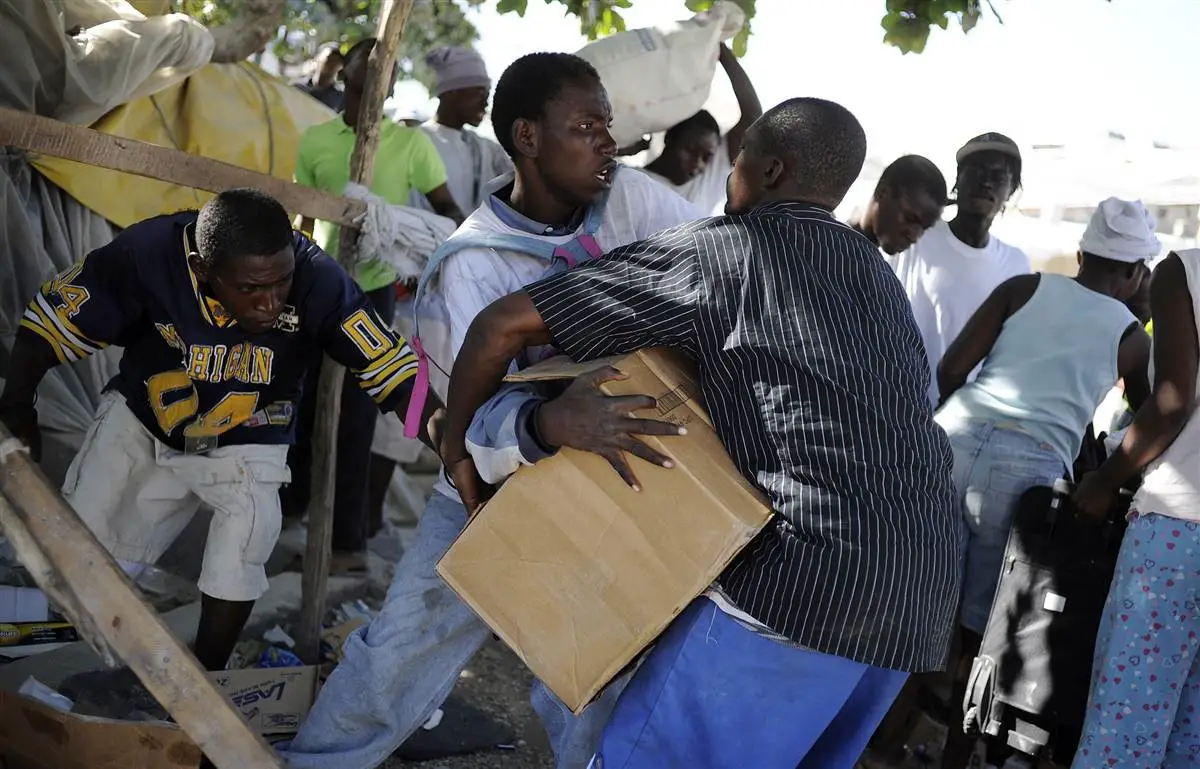
According to newspaper articles written after Superstorm Sandy devastated the East Coast and after Hurricane Katrina caused countless billions in damage in New Orleans, people were calm, benevolent and peaceful.  Heck, they were all standing around singing Kumbayah around a campfire, sharing their canned goods, calming frightened puppies, and helping the elderly.


Apparently, studies prove that the fear of anarchy, lawlessness, and chaos is nothing but the “disaster myth”.  Reams of examples exist of the goodness and warmth of society as a whole after disaster strikes. All the stories you read at the time were just that – stories, according to the mainstream media:


Yet there are a few examples stubbornly fixed in the popular imagination of people reacting to a natural disaster by becoming primal and vicious. Remember the gangs “marauding” through New Orleans, raping and even cannibalizing people in the Super-Dome after Hurricane Katrina? It turns out they didn’t exist. Years of journalistic investigations showed them to be racist fantasies. They didn’t happen. Yes, there was some “looting” — which consisted of starving people breaking into closed and abandoned shops for food. Of course human beings can behave atrociously – but the aftermath of a disaster seems to be the time when it is least likely. (source)


Looting?  Only hungry people getting food from unmanned stores. Who wouldn’t do that?


Beatings and assaults?  Didn’t happen. Disturbed people made these stories up for attention.


Gang rapes?  No way. You watch too much Law and Order: SVU.


Murder, mayhem, and gangs of youth on the streets?  Silly readers – we just made that up.


loot


The Disaster Myth is a narrative created by the establishment and delivered by their stoolies in the mainstream media.  The Disaster Myth points fingers at many of the things that are commonly believed to be true by the preparedness community.  Included in this narrative:


  1. People do not panic after a disaster – instead, they pull together.

  2. The official government response is always speedy and appropriate – unless you are a person of color, in which case you will be denied assistance based on your race, because racism is the current agenda

  3. You will be taken care of if you simply comply peacefully with authorities.

  4. There is little increase in post-disaster crime.

These statements all stand in direct opposition to the stories we hear from news sources during the crisis.  We heard terrible stories from eyewitnesses who suffered from hunger, thirst, and unsanitary condition in the Superdome after Katrina.  We heard about citizens being robbed of their 2nd Amendment rights by police after the crisis, and we heard about gang rapes, looting, and mayhem.  Fast forward to Sandy where people were defecating in the hallways of their high rise apartments and digging through garbage to find food just a few days after the storm.  As for the official response, who can forget the FEMA shelter that closed because of inclement weather?  Of course, the weather was inclement – it was a freaking weather-related disaster!


Mac Slavo of SHTFplan wrote of the unrest, discomfort, and mayhem after Superstorm Sandy ransacked the East Coast:


For tens of thousands of east coast residents that worst case scenario is now playing out in real-time. No longer are images of starving people waiting for government handouts restricted to just the third-world.


In the midst of crisis, once civilized societies will very rapidly descend into chaos when essential infrastructure systems collapse.


Though the National Guard was deployed before the storm even hit, there is simply no way for the government to coordinate a response requiring millions of servings of food, water and medical supplies


Many east coast residents who failed to evacuate or prepare reserve supplies ahead of the storm are being forced to fend for themselves.


Frustration and anger have taken hold, as residents have no means of acquiring food or gas and thousands of trucks across the region remain stuck in limbo.


Limited electricity has made it possible for some to share their experiences:


Via Twitter:


  • I was in chaos tonite tryin to get groceries…lines for shuttle buses, only to get to the no food left & closing early (link)

  • I’m not sure what has shocked me more, all the communities around me destroyed, or the 5 hour lines for gas and food. (link)

  • Haven’t slept or ate well in a few days. Hope things start getting better around here soon (link)

  • These days a lot of people are impatient because they’re used to fast things. Fast food, fast internet, fast lines and fast shipping etc. (link)

  • Glad Obama is off to Vegas after his 90 minute visit. Gas lines are miles long.. Running out of food and water. Great Job (link)

  • Went to the Grocery store and lines were crazy but nail salon was empty so I’ve got a new gel manicure and some Korean junk food (link)

  • So f*cking devastated right now. Smell burning houses. People fighting for food. Pitch darkness. I may spend the night in rockaway to help (link)


garbage food


At the time of the event, even the mainstream reported on the affluent East Side residents dumpster diving in search of food. Was this NBC report, complete with video, a work of salacious fiction?


dumpster-diving-sandy


As far as civil unrest is concerned, the Twittersphere was jammed with people planning looting sprees in the aftermath of Superstorm Sandy.  Those who were already of criminal leanings saw the disaster as a great opportunity. In the great North American Edit, however, these tweets are said to be part of the myth – apparently, they were just kids playing around.  Some reports pooh-poohed the very idea that looters had run amok.


looters_tweet


This article from Prison Planet refutes all of the refuting and says that the civil unrest DID occur and that it generally does, given evidence from past events.


Legends from the past? Every single extreme weather event in recent years in the United States has been followed by looting.


As MSNBC reported at the time, looting during Hurricane Katrina was so prevalent that it “took place in full view of police and National Guard troops.”


Residents described the scenes as being like “downtown Baghdad” as looters filled garbage cans full of stolen goods and floated them down flooded streets.


As Forbes’ Erik Kain points out, “looting and rioting…occur after most natural disasters,” including after Hurricane Irene as well as Hurricane Isaac.


Looters also targeted victims of the Colorado wildfires earlier this year.


Does this sound familiar?


This revision of inconvenient history will sound quite familiar to anyone who has read George Orwell’s masterpiece 1984 (which was not meant to be an instruction manual, by the way.)  In the novel, the main character, Winston Smith, worked for the Ministry of Truth, which was actually a department of propaganda whose job it was to rewrite any faction of history that did not make the government look omniscient.


In George Orwell’s novel Nineteen Eighty-Four, the Ministry of Truth is Oceania’s propaganda ministry. It is responsible for any necessary falsification of historical events. The word truth in the title Ministry of Truth should warn, by definition, that the “minister” will self-serve its own “truth”; the title implies the willful fooling of posterity using “historical” archives to show “in fact” what “really” happened. As well as administering truth, the ministry spreads a new language amongst the populace called Newspeak, in which, for example, truth is understood to mean statements like 2 + 2 = 5 when the situation warrants.


The Ministry of Truth is involved with news media, entertainment, the fine arts and educational books. Its purpose is to rewrite history to change the facts to fit Party doctrine for propaganda effect. For example, if Big Brother makes a prediction that turns out to be wrong, the employees of the Ministry of Truth go back and rewrite the prediction so that any prediction Big Brother previously made is accurate. This is the “how” of the Ministry of Truth’s existence. Within the novel, Orwell elaborates that the deeper reason for its existence is to maintain the illusion that the Party is absolute. It cannot ever seem to change its mind (if, for instance, they perform one of their constant changes regarding enemies during war) or make a mistake (firing an official or making a grossly misjudged supply prediction), for that would imply weakness and to maintain power the Party must seem eternally right and strong. (source)


We are watching narratives being created in front of our very eyes with the Vegas massacre. Every time something terrible happens, there’s a spin and that spin a) keeps us in the dark. b) encourages us to be dependent, and c) benefits someone.


But….WHY????


So why the vast effort to expunge tales of mayhem and to make it seem like our own national disasters really weren’t that bad? There are a few reasons, like pandering to an audience that wants to be blissfully unaware, but primarily, it’s about control.


Those who live a self-sufficient lifestyle are a threat to the status quo that those in power would like to see.  If you don’t NEED them, then there is no leverage to force you into compliance.  You don’t NEED to go to Camp FEMA in order to have 3 squares a day.  You don’t NEED to give up your guns in order to have a roof over your head and government supplied security.  You don’t NEED to get some kind of chip implanted in your arm to be scanned in order to receive “benefits” like medical care, food, and even money.


Self-sufficiency means freedom.  When you can feed yourself, clothe yourself, shelter yourself, and protect yourself, you are far less likely to need to cede your freedoms in order to stay alive. And in a police state that is frantically trying to withdraw our constitutional rights, this just won’t do.  They need leverage.


So the establishment has created a narrative that tells us what we are doing is silly and unnecessary.  They are rewriting history even though we only lived that history in the past decade.  Even though we know the truth of the matter because we watched it live, they are changing the facts to make us doubt our own perceptions. They are catering to the people who have no interest whatsoever in taking care of themselves.


This narrative was created to make a society of anti-preppers – of people who believe that all will be right with the world, the government is kind and benevolent, potential disasters aren’t really that big of a deal, and those crazy preppers are stark raving lunatics.  They want us to be perceived as extremists so that others are less likely to follow our examples. If they need a crazy bad guy at whom to point the finger, all they have to do is call someone a “Doomsday Prepper”. (Remember how poor Nancy Lanza was vilified after the Sandy Hook shooting?)


But…


If this civil unrest is not occurring, why is the National Guard called to keep the peace?  Why are state police riding around on tanks wearing body armor? Why were the guns of law-abiding citizens taken away in the aftermath of Katrina?


SWAT TEAM


Which version of reality are you going to believe?  The one that you actually witnessed or the perverted rewrite that the mainstream media is trying to push upon you?


Remember the things happening right now.


We have recently been hit with disaster after disaster in the United States. The aftermath of Hurricanes Harvey and Irma hit the mainland amidst stories of looters and people standing armed to protect homes and businesses. In the Carribean, lawlessness was rampant, and after Hurricane Maria devastated Puerto Rico, the danger from armed people robbing those who still had some supplies was constant. As I write this, there are uncontrolled wildfires tearing through California wine country, and looters are striking the homes of evacuees.


Of course, we are seeing reports of this now, but later will these stories be “debunked” by “experts” like the stories from Katrina and Sandy?


It’s entirely likely because most people would prefer to live smug in the belief that the police are only seconds away, their neighborhoods are immune to looters and vandals, and that America is a place of exceptional order and civilization. It comforts them to believe these things.  They use it as ammunition so they can scoff at “doomsday” preppers and call them “conspiracy theorists.”


But we know differently, and today, bloggers and alternative media are also documenting these stories before history is erased. I have watched for years as supplemental links in stories I have written have disappeared. I have witnessed the changing narratives, and if you’re reading this, you probably have too.


So, don’t be discouraged in your efforts when you read all the “good news” stories that inevitably show up after a disaster. To be sure, there are some wonderful people out there helping their neighbors, but there is also a dark side that the media prefers to ignore.


You saw it when it was happening. You know the truth, even if the disaster myth narrative would have you believe otherwise.

Saturday, September 16, 2017

New York City Is Within Hurricane Jose's 5-Day "Cone Of Uncertainty"

In what were perhaps the two biggest news stories of the past month, Hurricanes Irma and Harvey devastated the American south, disrupting local industry, destroying homes and critical infrastructure and dumping millions of gallons of raw sewage onto city streets - leading to the most destructive beginning to hurricane season in years. Meanwhile, cosmopolitan Yankees looked on in horror (with perhaps a touch of smugness) as they watched their southern neighbors being paddled out of flooded Texas homes by national guardsmen, or marooned in the seemingly endless lines of traffic snaking out of southern Florida, northeasterners now have their own storm to worry about.


And now, according to the National Weather Service, those same onlookers might be forced to endure similar hardships thanks to Hurricane Jose, already on its way to becoming a category one storm. Meteorologists at the National Hurricane Center say a wide stretch of the eastern and northeastern US, from Maryland up through Cape Cod, is within Jose"s five-day “cone of uncertainty” - meaning that a fully fledged hurricane could make landfall in or around New York City, potentially dealing another crushing blow to the city"s infrastructure after the city"s subway system has not yet finished repairing the damage from Superstorm Sandy, which took place five years ago.


Presently, the storm is headed northwest at 9 mph past North Carolina, and may bring one to two inches of rain to North Carolina’s Outer Banks on Monday, and heavier rains of two to four inches to Eastern Massachusetts beginning on Tuesday. The large waves from the storm could cause high surf and considerable beach erosion along the shores of the mid-Atlantic and New England coasts during this period, according to Weather Underground.


WU added that there’s an 18% chance of tropical storm-force winds in New York City between Tuesday and Wednesday, said Jeff Masters.


But NWS New York has wasted no time issuing a storm advisory for the northeast, urging east-coast residents to monitor the storm – though, while waves might impact coastal North Carolina, the full impact of the storm remains unclear.


The storm, currently about 360 miles (579 kilometers) northeast of the Bahamas, is expected to strengthen to a Category 1 hurricane in the next 48 hours as it moves through the Atlantic Ocean, Bloomberg reports. Jose’s path could put it near New Jersey and New York by Wednesday morning, though it may weaken to a tropical storm again by then, the NHC said.


As Bloomberg notes, the storm may add to an already devastating 2017 Atlantic hurricane season. In 2012, Superstorm Sandy caused $70 billion of damage after hitting the New York metropolitan region.


While Hurricane Harvey temporarily shuttered as much as 30% of the country’s oil-refining capacity, Jose’s impact on energy markets will likely be much more limit – though it could affect five refineries along the East Coast that are able to process about 1.1 million barrels a day of oil, and disrupt tankers carrying crude oil, petrochemicals and refined products along the Atlantic seaboard, “particularly those making deliveries to New York Harbor,” said Shunondo Basu, a Bloomberg New Energy Finance meteorologist and natural gas analyst in New York.


To be sure, some forecasters see Jose staying far enough offshore to avoid any major impact to the US. The NHC’s margin of error for a storm five days away is about 225 miles, on average, according to Bloomberg.


AccuWeather, which correctly forecast the magnitude of the damage that Texas would experience from Hurricane Harvey’s “one-in-a-thousand-year” floods, expects Jose to passing within 200 miles of the northeast - though a landfall in New England – possibly in the Cape Cod area of Massachusetts - during the middle of the week can’t be ruled out, senior meteorologist Dan Pydynowski said in a statement.


Meteorologists should have a clearer picture of the storm’s path in relation to the US early next week.


Until them, concerned citizens might want to start stocking up on supplies now - just in case. Stores in south Florida started running out of water, gas and other essentials nearly a week before Irma made landfall.

Saturday, September 9, 2017

"It's A Killer" - Florida Orders A Third Of The Population To Evacuate As Irma Hurtles Toward Tampa

Florida’s highways and backroads are clogged with motorists after Gov. Rick Scott has ordered an unprecedented 6.2 million residents of central and southern Florida to evacuate. Meanwhile, Miami, along with many towns and cities along the state’s southeastern coast, resembles a ghost town, according to the New York Post.


To recap: The category 4 storm has already carved a path of destruction through the Caribbean, leaving 90% or Barbuda uninhabitable and nearly a million people without power in Puerto Rico. And now, with the storm’s outer bands already battering the southern part of the state, meteorologists are saying Irma has suddenly shifted westward and is now heading toward Florida’s Gulf Coast – specifically, the Tampa Bay area.


Here’s the Associated Press:


Forecasters expect Irma’s core to come ashore Sunday and strike the Keys, southwestern Florida and the Tampa Bay region, which hasn’t felt a major hurricane since 1921. The eye is expected to miss heavily-populated Miami, which may have dodged a bubble in the last minute, but that area will still get life-threatening hurricane conditions even without a direct hit, Hurricane Center spokesman Dennis Feltgen said.


Irma weakened slightly to Category 3 with maximum sustained winds of 125 mph on Saturday morning, but it was expected to pick up strength again as it closes in on Florida.


Damaging winds bombarded Key Biscayne and Coral Gables on Saturday morning with gusts of up to 56 mph (90 kph) recorded at Virginia Key, near Miami, according to the National Weather Service.


It"s not just the wind that is deadly, the storm surge could well be life-threatening too...


In one of the country’s largest evacuations, a record 6.2 million people in Florida, or 30% of the state’s population, have been ordered to leave, and another 540,000 were ordered out on the Georgia coast. Authorities opened hundreds of shelters for people who did not leave. Meanwhile, South Carolina Gov. Henry McMaster issued evacuation orders for Hilton Head Island and six of the state"s other barrier islands, according to the Associated Press. Hotels as far away as Atlanta were filling up with evacuees.


Scott warned that those who choose to stay will be on their own, before urging everybody in the Keys to get out as fast as possible.


“If you are planning to leave and do not leave tonight, you will have to ride out this extremely dangerous storm at your own risk,” Florida Gov. Rick Scott said Friday.


"It"s getting late ... if you"re not on the road on the west coast by noon you need to get to a shelter...get off the road,"


Ray Scarborough and girlfriend Leah Etmanczyk left their home in Big Pine Key and fled north with her parents and three big dogs to stay with relatives in Orlando. Scarborough was 12 when Hurricane Andrew hit in 1992 and remembers lying on the floor in a hallway as the storm nearly ripped the roof off his house.


“‘They said this one is going to be bigger than Andrew. When they told me that, that’s all I needed to hear,’ said Scarborough, now a 37-year-old boat captain. “That one tore everything apart.”


Their house in the Keys, up on 6-foot (1.8-meter) stilts, has flooded before.


“This isn’t our first rodeo. Andrew was a wicked storm. Wilma was a wicked storm. This one is going to be worse. Then we’ll go home and rebuild, like we always do,” said Etmanczyk, a 29-year-old teacher.”


While it might take some residents along the state’s gulf coast by surprise, the storm’s westward shift means “a less costly, a less deadly storm,” according to University of Miami. Still, forecasters warned that Irma’s winds could reach from coast to coast, testing the rapid development of more stringent hurricane-proof building codes in the last decade or so.


As residents flee, streets were nearly deserted early Saturday in Palm Beach County as the first squalls hit the state’s Atlantic coast. Gas stations ran out of fuel, grocery stores were closed and only a few fast-food restaurants were open.


Meanwhile, Gov. Scott took to CBS This Morning to warn residents that the storm was going to have "a big impact" on the state, calling it a "killer." for large swaths of southern and central Florida. He has ordered all schools in the state shut, and was scrambling to set up emergency shelters for residents, according to an interview with CBS This Morning.


"People are going to shelters, but I just want to make sure everybody understands this is an unbelievable, massive, destructive storm, and it"s a killer," he said.


Meanwhile, some of the worst-case projections will likely leave the southernmost parts of the state uninhabitable for months. According to one forecaster, a reasonable worst case scenario has over half of Key West underwater due to storm surge.


The storm, which is presently battering parts of Cuba, is expected to make landfall early Sunday, bringing winds well over 100 miles per hour and dangerous water levels...


...meanwhile, Hurricane Jose - a Category 4 storm - is following closely behind.
 

Sunday, September 3, 2017

The Next Shock For Texans: Insurance Often Doesn't Cover Floods

A complete assessment of the property damage wrought by Hurricane Harvey will take weeks, if not months, to deliver. But as the first disaster victims return to their homes, some are being forced to confront an unfortunate reality: Gaps in their homeowners’ insurance that will leave them on the hook for thousands of dollars’ worth of damages.


According to analytics firm CoreLogic, hundreds of thousands of affected residents in Texas and Louisiana aren’t insured for flooding damage. The firm estimated that residential flooding has caused $25 billion to $37 billion in damage spread across 70 counties in Texas and Louisiana hit by Harvey. Of that, about 70%—or $18 billion to $27 billion—is uninsured.


Scientists have confirmed that Harvey caused a "1-in-1,000-year flood" and that the total cost of property damage and lost productivity could be as high as $190 billion.


One homeowner who spoke with the Wall Street Journal said the first thing she did when she returned to her home was check the details of her insurance policy.


“Among them is Andrea Womack, a 38-year-old mother of four.


The carpet and some clothing in her one-story house in Houston’s Settegast neighborhood were damaged by water. On Friday morning, Ms. Womack was waiting for an insurance company representative to come by and go through what was covered.


‘I signed up for insurance a while back, but on my papers it says it does not cover flood insurance. So I’m not sure’ what will be covered, she said.”


The Federal government’s flood-insurance program has written 250,000 policies for Houston residents, compared with 1.7 million housing units that may’ve experienced flood damage, according to WSJ.


“Overall, households and businesses in Harris County, which includes Houston, held roughly 249,000 federal flood insurance policies as of June 30, according to the Federal Emergency Management Agency. There are about 1.7 million housing units in the county.”


The reason is simple: Even in flood-prone areas, many homeowners don’t read the fine print of their insurance policies until disaster strikes.


“Many homeowners never examine details of the policies they buy, and it is only after a flood they learn the basics: Standard homeowners’ policies provide payouts for damage from wind, fire, fallen trees and other storm-related events—but not flooding. For that, people generally need to buy separate policies from the U.S. government, through its nearly 50-year-old National Flood Insurance Program.”


In an ironic twist, homeowners with mortgage debt might be better off than their peers who own their homes outright.


“Those homeowners who do have flood insurance are likely those whose mortgage lenders require it, said Etti Baranoff, an associate professor of insurance at Virginia Commonwealth University.


‘The mortgage company checks if your home is in a flood zone or not, and they’ll make you take’ a policy out if so, she said.”


But even those who bought flood insurance from the federal government may not receive enough to cover all their property damage, according to WSJ. These policies pay out a maximum $250,000 for rebuilding and $100,000 for personal possessions.


Some homeowners are putting the cleanup on hold until they’ve spoken to an insurance agent.


“"That’s kind of storm Houstonians judge everything by,’ said Mr. Truss, 36 years old. ‘It did not flood during Allison.’


Even so, the couple’s bank still required them to get a federal flood policy that they bought through their Allstate agent.


‘We’re hearing you have to have [all the damaged items] to get insurance’ claims paid, Mr. Truss said, surveying the piles of clothes, toys and books in his front yard. He said he was initially going to wait until he heard from insurance officials before clearing out the house, but “it would be a disaster if we kept waiting any longer.


He’s trying to photograph every item to show an insurance adjuster eventually.”


The National Flood Insurance Program is already bracing to pay out claims equal, or perhaps larger, than the amount disbursed after Superstorm Sandy.


“Standard homeowners’ policies do pay for some damage from water—such as if it enters the house after the wind rips off the roof or a tree crashes through the attic. But if water overflows a riverbank or gushes down a street to seep into a house, the homeowner can expect a claim to be rejected, according to industry lawyers.


The federal flood insurance program’s payouts for Harvey appear on track to rival those made for superstorm Sandy in 2012, the nation’s third costliest hurricane (behind Katrina in 2005 and Andrew in 1992.) So far, 130,622 Sandy claims have cost the program $8.4 billion, an average of $64,331 apiece, according to the Insurance Information Institute trade group.”


And in what’s likely to be a boon for auto makers, payouts for car-related damages could be “several times larger” than those for homes.


“Insurers’ payouts for cars damaged by Harvey’s flooding could be several times larger than those they make for homes. Investment bank Keefe, Bruyette & Woods puts insured personal and commercial auto costs at roughly $4.7 billion. But not all the estimated 500,000 vehicles flooded by Harvey are covered by insurance.


Overall private-market insurance payouts for Harvey are expected to be dominated by payments to business policyholders and range from $10 billion to $20 billion altogether. At the high end, they would likely top those for Sandy, which cost $19.8 billion in 2016 dollars, according to the Insurance Information Institute.”


However, KBW noted that 13% of Texas motorists don"t own any car insurance whatsoever, according to Insurance Research Council. And of those who do, more than a fifth don"t buy " comprehensive" coverage, which protects against flooding damage. Many vehicle owners go with just the bare-bones liability coverage that is required by law.


In areas where homes were damaged by both flooding and wind, homeowners should expect insurers to try and dispute some of their claims, according to WSJ, local courts should be sympathetic to homeowners.


“If there is a breath of wind and breath of storm surge, that ought to be enough to put in front of the Texas courts and ask for relief for these people,” said David Wood, a policyholder lawyer for corporate clients at Barnes & Thornburg LLP in Los Angeles."


While individual homeowners may end up settling for reimbursements that don’t cover the damage, at least, according to JPM, the economies of the 70 counties affected by the storm may find an “offset” in the construction boom expected to follow the storm. The investment bank says it could provide a slight boost to US GDP estimates in the third and fourth quarter.
 

Red Cross Admits It Doesn't Know How Hurricane Harvey Donation Money Is Spent

Authored by Carey Wedler via TheAntiMedia.org,


Though the Red Cross has a historical reputation for providing relief to victims of natural disasters and other emergencies, the organization’s practices have tarnished its name over the last few years.


Amid the catastrophic earthquake in Haiti in 2010, the Red Cross reportedly accepted nearly $500 million in relief money but built only six homes with the funds even though they claimed they had provided homes to 130,000 people. These failures prompted some Haitians to advise the world against donating funds to the Red Cross.


The organization was accused of diverting resources and supplies to bolster its public image during Hurricane Sandy. As an investigation by NPR and ProPublica found:


“The Red Cross national headquarters in Washington ‘diverted assets for public relations purposes.’  


A former Red Cross official managing the Sandy effort says 40 percent of available trucks were assigned to serve as backdrops for news conferences.”


The outlets reported that “[d]istribution of relief was ‘politically driven instead of [Red Cross] planned,’” noting many organizational failures.


Further, a report released last year by Iowa Sen. Chuck Grassley found that 25% of funds donated to aid in relief for victims of the earthquake was actually spent on internal costs. That amounted to roughly $124 million.


Now, amid the hurricane in Texas, the Red Cross is admitting it currently doesn’t know how the funds it’s receiving are being spent.


NPR’s Morning Edition interviewed Red Cross executive Brad Kieserman to ask how the funds will be distributed.  Kieserman said that as of Wednesday morning, “had spent $50 million on Harvey relief, mainly on 232 shelters for 66,000 people.”


“Through donations, how much of every dollar goes to relief?” NPR’s Ailsa Chang asked him.


But he responded without actually providing an answer to her question:


“Yeah, I don’t think I know the answer to that any better than the chief fundraiser knows how many, how much it costs to put a volunteer downrange for a week and how many emergency response vehicles I have on the road today. So I think if he was on this interview and you were asking how many relief vehicles in Texas, I don’t think he’d know the answer and I don’t know the answer to the financial question I’m afraid.”


She pressed him about the Red Cross’ previous failures and misallocation of resources. According to NPR’s transcript:


“Is that still happening? Such a substantial percentage of donations going to internal administrative costs, rather than to relief?


“Kieserman: It’s not something I would have any visibility on. I can talk about what it costs to deliver certain relief services.


“Chang: Yeah.


“Kieserman: But the way the internal revenue stream works, uhh …


“Chang: You don’t know what portion of that amount.


“Kieserman: Not really.


“Chang: You don’t know what portion of that total amount is for relief.


“Kieserman: No, I really don’t. I wish I could answer your question, but it’s not something I have visibility on in the role that I play in this organization.


The executive ultimately claimed that “The folks I work for are very, very attentive to cost effectiveness and cost efficiencies in making sure that as much as every dollar that we spend on an operation is client-facing.”


Slate reporter Jonathan Katz also reported the organization declined to disclose how much money they had spent or raised so far. Katz ultimately urged readers not to contribute to the Red Cross.


The Red Cross continues to face criticism and urgings for individuals who want to help to take their donations elsewhere. The Independent reports that over the weekend, Dan Gillmor, author and professor at Arizona State University’s Walter Cronkite School of Journalism, advised against donating to the Red Cross. Many other social media users have expressed similar sentiments.


Despite the Red Cross’ failings, however, there are still many organizations doing important work.


The group A Just Harvey Recovery lists a number of local efforts accepting contributions. The Cajun Navy, a volunteer effort that previously rescued victims of Hurricane Katrina and the Louisiana floods last year, has also been working round the clock in Texas and is accepting donations. There are many organizations and shelters working locally to provide relief and essential services. If you would like to contribute or volunteer, you can find some of them here, here and here.

Wednesday, January 11, 2017

Tillerson Protests Break Out As Chants Of "Reject Rexx" Fill D.C.

Before Rex Tillerson"s Senate confirmation hearing even got started this morning, America"s disaffected, Hillary-supporting snowflakes took to the streets of Washington D.C. in protest of his inevitable appointment as Secretary of State.  If only they could work so hard at finding a job it would be easy to "Make America Great Again."


Outside the hearing, these clever millennials dressed up in T-Rex outfits and shouted "Reject Rexx" at the top of their lungs.


Meanwhile, this lady seems to think that Rex Tillerson personally sent Hurricane Sandy to wipe out her house.


And, while we"re not exactly sure what this guy is doing, we suspect he"s upset that Rex Tillerson has more personal wealth than him.


And the madness continues...