Showing posts with label Great Depression. Show all posts

Tuesday, April 24, 2018

Investment Analyst: A HUGE Stock Market Crash Is Coming


Investment analyst and stock market guru Mark Mobius has been in the business a long time.  At 81-years-old, the market analyst says that a huge stock market correction is coming and it’s going to cause a crash and be painful for everyone.


According to Mobius, the former executive chairman at Templeton Emerging Markets, all the indicators now point to a great fall in the S&P 500 and the Dow Jones. The consumer confidence is at an all-time high in the US, and it’s not a good sign,” he said. “The market looks to me to be waiting for a trigger that will cause it to tumble.”


Mobius continued saying, “I can see a 30 percent drop.” And he isn’t the only one warning of a massive crash.  Jim Roger’s latest prediction was that we were going to see “biggest crash in our lifetimes,” and possibly, very soon. One of the world’s richest men, Bill Gates, also said that a 2008-like financial crisis was a certainty.  Peter Schiff has also warned the next crash will be worse than the Great Depression.


“The bad news is, we are going to live through another Great Depression and it’s going to be very different. This will be in many ways, much much worse, than what people had to endure during the Great Depression,” Schiff says. “This is going to be a dollar crisis.” – Peter Schiff


And movement away from the United States dollar has already begun and Schiff has warned that those who don’t get out of the dollar will be wiped out.


Mobius, who is also a 40-year veteran investor and predicted the start of the bull market in 2009, warns that any drop could be strengthened by the increasing use of exchange-traded funds (ETFs), which account for nearly half of all trading in US stocks. The ETFs could cause further declines once markets fall. You have computers and algorithms working 24/7 and that would basically create a snowball effect. There is no safety valve to prevent further falls, and that fall would escalate very quickly,” Mobius told the media. “ETFs represent so much of the market that they would make matters worse once markets start to tumble.”


But Mobius did say he’s not certain what the trigger will be that will cause the US stock market to crash horrifically. You can’t predict what that event might be – perhaps a natural disaster or war with North Korea,” he said.


Tuesday, April 3, 2018

Stocks Post WORST April Start Since The Great Depression


The S&P 500 closed down more than 2.4% Monday and the broad market index posted its worst April start since 1929.  This slide in the markets caused the worst start since the Great Depression, sparking fears we are on the same path.


The Dow Jones industrial average fell 1.9 percent (or 458 points) as China’s retaliatory tariffs against United States agricultural goods stoked fears of a global trade war. Dow stocks with large international markets now exposed to global tariffs such as Boeing and 3M, led the decliners.


Many market analysts have predicted we will live through another Great Depression, and Peter Schiff says this next one will be far worse than one our ancestors lived through. “The bad news is, we are going to live through another Great Depression and it’s going to be very different. This will be in many ways, much much worse, than what people had to endure during the Great Depression,” Schiff says. “This is going to be a dollar crisis.”


“The Fed thinks they create economic growth…by [saying] ‘let’s jack up the stock market and then the economy’s going to grow and people are going to go out and spend more money.,’” says Schiff. “It’s actually doing damage. If you create a bunch of phony wealth, and people end up spending money that they otherwise would have saved, you are undermining economic growth.”


And Schiff, who accurately predicted the 2008 recession, has now predicted the dollar crisis.  The dollar is now in a downward spiral thanks to China’s petro-Yuan.


Bespoke Investments Co-Founder Justin Walters, who also noted the historic nature of the close, said in an email that equity fears aren’t likely to abate until earnings arrive. “Based on recent market action, the bears clearly have control right now,” Walters wrote. “The path of least resistance is lower until something comes along to reverse that trend.”


Schiff, in contrast, says the deep state (those who operate the Federal Reserve) is not afraid to crash the economy on Trump’s watch.


Schiff says “it’s not a good thing” that the economy is going to crash and burn. “Unfortunately, that’s what Trump has inherited from Obama. But it’s not even really just Obama, it’s the federal reserve. It’s the monetary policy that has been passed like a baton from Clinton to Bush to Obama and now to Trump. And we’re near the end of the game and unfortunately, Trump’s gonna be the fall guy.  This thing is all gonna collapse while he’s president.


The tax cuts will give Democrats a reason to blame the collapse all on the Republicans, says Schiff.And we are getting close to this collapse. –SHTFPlan


The trade wars with China is also the perfect smokescreen for an economic crash and will allow the mainstream media to wholly blame Trump when it happens.


I’m hitting readers with all of this because I am growing rather tired of the contingent of Trump apologists in the liberty movement scrambling to defend every single Trump action no matter how illogical. These people should know better. Sorry, but Trump is not “playing 4D chess” against the globalists. His primary actions have only served so far to create a useful distraction away from the globalists.


The disturbing key to all of this is the fact that many of Trump’s policies are things that I and many others have argued for in the past. The problem is, he is implementing them out of order and with bad timing, which will only make such policies appear destructive in the end, rather than constructive.Alt Market.com


Trump is looking like he will be fall guy, and when the economy does crash; and it will, Trump won’t be able to do a whole lot to stop it – in fact, he will be seen as the cause.  His policies are slightly dangerous, but he and his “ride or die” supporters won’t state the truth and just like the mainstream media, they will tow the line with no real blame from either side going to where it belongs: The Federal Reserve.

Thursday, March 15, 2018

The Day All The ATMs Ran Out Of Cash

Image source: telegraph.com

Image source: telegraph.com


Money plays such an important role in our lives that most of us could not imagine surviving without it. Yet that is exactly what you need to do if you want to prepare for an economic condition called deflation.


Deflation is the term economists use to describe a “general decline in prices, often caused by a reduction in the supply of money or credit.”[1] A good way to think of deflation is as the opposite of inflation. Inflation occurs when there is too much money in circulation, which destroys its value and raises prices. When deflation occurs, there is too little money available, which often causes prices to collapse and the economy to shut down.


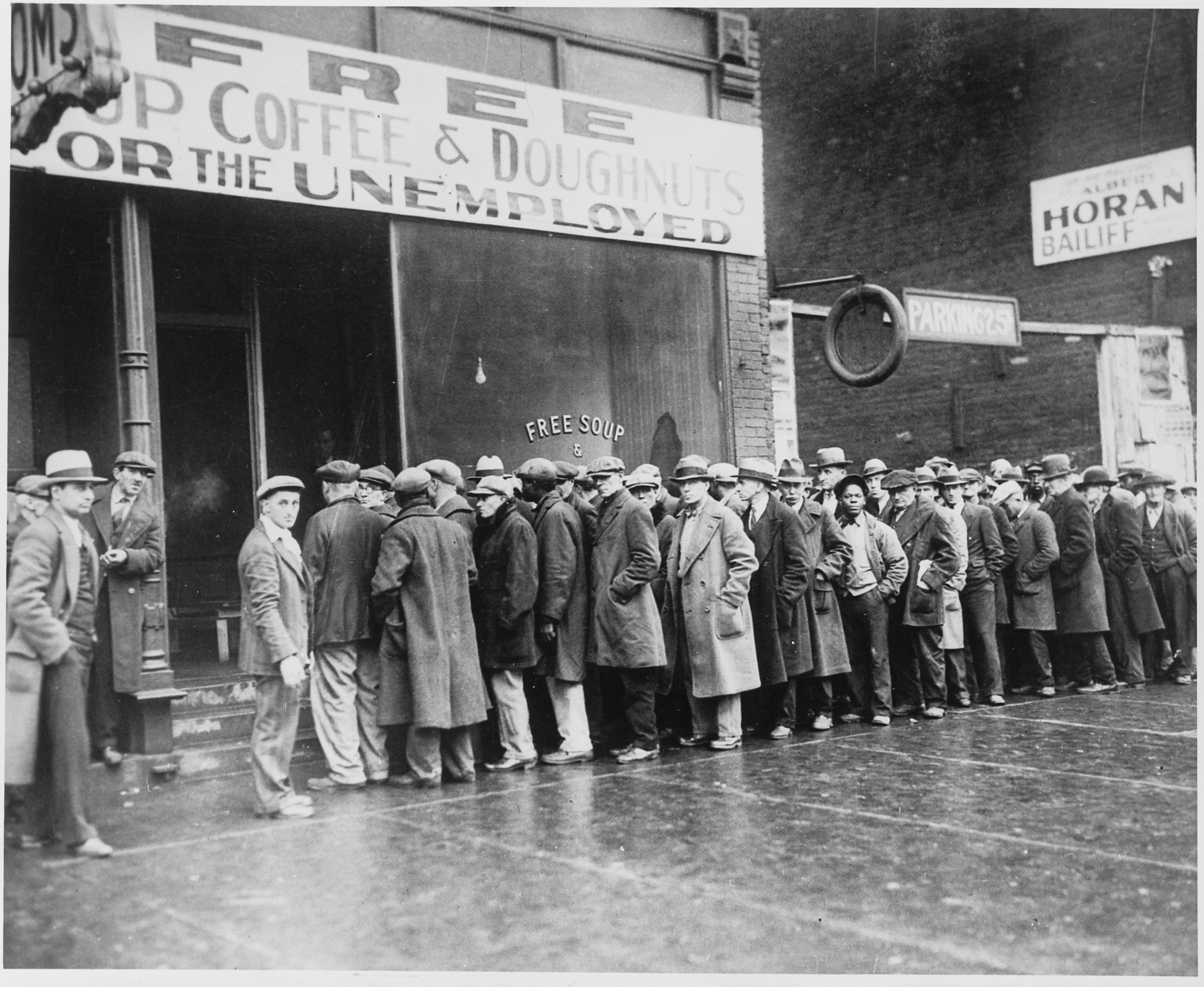
In severe cases of deflation there can be no money available at all not — even at the banks. This nightmare actually occurred during the Great Depression of the 1930s, when there were places in the United States where there was no cash available at all. More recently, it has happened in Greece, where ATMs ran out of cash and where banks placed limits on the amount of money that could be withdrawn.


People had no money to pay bills or buy food for their families. Employers had no money to pay employees, customers had no money to buy goods, and many people were reduced to bartering to survive. During the Great Depression, farmers would pay professionals such as mechanics and doctors with food because they had no money and no credit.


The situation got so bad that in some areas of the country, local governments, chambers of commerce and businesses issued their own currencies — the so-called depression scrip. (See a picture of one here.) The scrip often took the form of pieces of paper that people used as money because there was no government currency available. The scrip was used to pay workers or buy goods.


At one point during the Great Depression, the money shortage got so severe that the US government considered issuing a national scrip as an alternative to the dollar. That plan was eventually dropped and the government solved the crisis by simply printing more dollars.[2]


Many people have known survivors of the Great Depression who liked to keep large amounts of cash on hand. Others would hoard food and other items. Those people developed that habit because they remembered what life without money was like. The fear of the deflation that occurred in the 1930s haunted them all of their lives.


Ready For Deflation? This New Solar Backup Generator Delivers 4 Times More Power Than Other Models


The frightening reality is that the threat of deflation is still real. Some knowledgeable individuals, such as wealth preservation experts Will and Bill Bonner,[3] believe that a sudden deflation leading to a national or international money shortage is still possible today.


The Bonners, who have studied some of the world’s knowledgeable investors such as George Soros, believe that the next financial crisis will begin with a “violent monetary shock” similar to the one that occurred during the Great Depression. They predict that money could suddenly disappear overnight, causing the economy to come to a grinding halt.


What Happens When Money Vanishes


Historical accounts of the Great Depression show us some of the possible effects of such a violent monetary shock. The damage caused by such a violent deflation can include:


The sudden collapse of prices. The Great Depression began with the collapse of stock market prices in 1929. That was preceded by the collapse of agricultural prices in the United States during the 1920s. During that crisis, land prices in rural areas collapsed, causing large numbers of rural banks to fail. When the banks failed, the government liquidated them and their assets, which included lots of foreclosed farmland, an action that further drove prices and made the crisis worse.[4]


soup kitchenEverything you have — your investments, your home and your possessions — could suddenly lose all of its value. We saw this happen during the mortgage bubble of 2007-2008, when many people found themselves “underwater.” That occurs when the amount a home is mortgaged for exceeds the property’s value.


The collapse in prices during the Great Depression particularly hurt farmers who relied on commodity prices. Newsreels from the early 1930s show farmers dumping grain on the ground and pouring out milk because they could not sell them.


Bank runs and the collapse of financial institutions. A bank run or banking panic occurs when all of a bank’s depositors try to take their money out at once. Bank runs often trigger the collapse of financial institutions, which prompts even more bank runs. Between 1930 and 1933 nearly 10,000 banks failed or were suspended.[5] The panic got so bad that President Franklin D. Roosevelt actually suspended all bank transactions in the US between March 6 and March 10, 1933 to prevent further runs in his so-called “bank holiday.”[6]


New Survival Seed Bank™ Lets You Plant A Full Acre Crisis Garden!


During the banking crisis of the 1930s, many Americans lost their life savings simply because they were not able to get to the bank fast enough and withdraw their money. Even some wealthy individuals ended up on the streets and in bread lines because they could not get money from the bank.


Massive unemployment. It is a simple and obvious fact that when there is no money, there are no jobs. At the height of the Great Depression in 1933, 24.75 percent of the nation’s labor force, or one in four workers, were unemployed. Around 12.83 million people were out of work at a time when America’s total population was only around 93 million people. That unemployment persisted for years, with 8.1 million Americans still out of work in 1940 in the 11th year of the Great Depression.[7] The unemployment created by the Depression only ended when World War II created “jobs” in the form of the draft and war production.


Hunger and Starvation. Not surprisingly, hunger and in some cases death from starvation can become a problem after deflation. Historians disagree on the number of people who died during the Great Depression.


depression -- storing food -- pinterestDOTcomMassive expansion of government and its power. In his first 100 days in office in 1933, Roosevelt signed 15 major pieces of legislation, several of which established massive new bureaucracies.[8] During the 1920s there were 553,000 civilian employees of the federal government, but by 1940 the federal government had more than 1 million civilian employees.[9] For the first time in American history, the federal government even tried to set prices for products under the National Recovery Act. The government also told farmers what to grow under the Agricultural Adjustment Act. Those laws were so blatantly unconstitutional that the US Supreme Court struck them down in 1935 and 1936.[10]


Increased taxation. When money disappears government gets desperate and imposes more and taxes in an attempt to squeeze more money out of the economy. During the Depression, the maximum income tax rate was raised from 20 percent to 55 percent, gift taxes were increased from .75 percent to 33.5 percent, and new taxes were levied on automobiles, gasoline, telegrams, telephone calls and even checks. By 1934, the United States had the highest tax rates in the world. In 1935 taxes were raised again. Historian Murray Rothbard estimates that the effective tax rate in the United States increased from 16 percent to 29 percent during the Depression.[11]


Why it Could Be Worse Today


If such an event were to occur in today’s world, it could be far worse than the Great Depression.


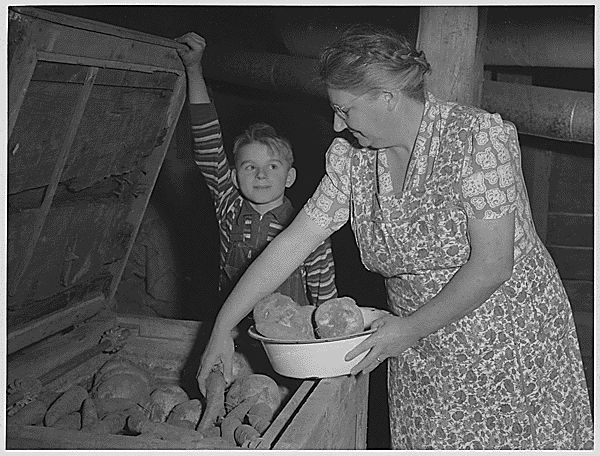
People were far more self-sufficient in the 1930s, as large numbers of families lived on farms and grew their own food. Even many Americans who lived in town maintained gardens and chicken coops. In those days people also hunted for meat, canned and preserved their own food and baked their own bread. People also sewed their own clothes and fixed their own cars, which gave them a high level of self-sufficiency.


Today, most Americans rely solely on supermarkets for food, and many families no longer even cook. Few people bother to sew, and most of us do not even change the oil in our cars. If our money were to disappear, we would be as helpless as children.


It’s time that we learn the lessons of the Americans who survived the Great Depression. That lesson was to be as self-sufficient as possible so you can survive, no matter what.


Do you believe that what happened during the Great Depression could take place again? Share your thoughts in the section below:


[1] http://www.investopedia.com/terms/d/deflation.asp


[2] http://www.depressionscrip.com/


[3] http://bonnerandpartners.com/about/


[4] http://www.chicagobooth.edu/capideas/magazine/spring-2014/what-a-1920s-farm-bust-reveals-about-financial-crises


[5] http://econproph.com/2009/10/26/fdic-managing-the-crisis-the-fdic-and-rtc-experience/


[6] http://www.ushistory.org/us/49a.asp


[7] http://www.u-s-history.com/pages/h1528.html


[8] http://dp.la/exhibitions/exhibits/show/new-deal/recovery-programs


[9] http://www.econlib.org/library/Enc/GreatDepression.html


[10] http://www.econlib.org/library/Enc/GreatDepression.html


[11] http://fee.org/freeman/detail/the-great-depression


Are You Ready For Blackouts When A Crisis Arrives? Read More Here.

Tuesday, March 13, 2018

How Will Gold Prices Behave During The Next Economic Crisis?

This report was originally published by Brandon Smith at Alt-Market.com


It is generally well known in economic circles and in the general public that precious metals, including gold, tend to be the go-to investment during times of fiscal uncertainty. There is a good reason for this. Precious metals have foundation qualities that provide trade stability; these include inherent rarity (rather than artificially engineered rarity such as that associated with cryptocurrencies), tangibility (you can hold gold in your hand, and it is relatively difficult to destroy accidentally), and precious metals are easy to trade. Unless you are attempting to make transactions overseas, or in denominations of billions of dollars, precious metals are the most versatile, tangible trading platform in existence.


There are some limitations to metals, but the most commonly parroted criticisms of gold are in most cases incorrect. For example, consider the argument that the limited quantities of gold and silver stifle liquidity and create a trade environment where almost no one has currency to trade because so few people can get their hands on precious metals. This is a naive notion built upon a logical fallacy.


Gold backed paper currencies existed for centuries in tandem with the metals trade. Liquidity was rarely an issue, and when such events did occur, they were short lived. In fact, the last great liquidity crisis occurred in 1914, the same year the Federal Reserve began operations and the same year that WWI started. This crisis was, as always, practically fabricated by central banks around the globe. Benjamin Strong, the head of the New York Fed in 1914 and an agent of the JP Morgan syndicate, had interfered with the normal operations of gold flows into the U.S. and thus sabotaged the natural functions of the gold standard.


Central banks in Germany, France and England also applied influence to disrupt currency and gold flows, causing a global panic. This engineered disruption seemed to take place through conscious co-operation between central banks. Does any of this sound familiar?


For those who are interested, the history of the 1914 liquidity crisis is outlined in detail in the book ‘Lords Of Finance: The Bankers Who Broke The World’, by Liaquat Ahamed.


When gold and currency are tied together, gold prices tend to remain rather stable, as they are often set by the national treasury. In 1914, the price of gold was $20 per ounce and had maintained that approximate value for decades. To give some perspective on value, in 1914 the average house cost $3,500, or 175 ounces of gold.


But what happens when gold and national currencies become disjointed from each other? Take a look at the hyperinflationary crisis in Weimar Germany. The price of gold per ounce went from 170 marks to 87 trillion marks within five years! Over that same five year period, gold value in Germany had increased at almost TWICE the rate of inflation, indicating that gold not only kept up with the devaluing mark, but made anyone holding gold rather rich in the process.


This is a very important fact. The common argument against gold is that the metal is not really a wealth creating investment, but merely protects your buying power. As the Weimar crisis shows, this is not always the case. In some circumstances, often during times of economic disaster, precious metals can in fact generate more wealth than what you put into them.


Then there is the issue of government interference in gold markets and trade during crisis. As the Great Depression in the U.S. began to take hold, investors turned aggressively to gold and silver as a means to offset the crashing values of most other assets. In a highly controversial move in 1933, President Roosevelt outlawed the private ownership of gold bullion and set the price of gold at $35 per ounce.


Keynesian economists like Ben Bernanke often try to assert that the gold standard was the reason why interest rates had to be hiked as the depression was escalating, and that this was the cause of a greater crash. They are only half correct. Increased rates did indeed cause a larger and more prolonged crisis, but this had little to do with the gold standard.


Clearly, in 2008 the U.S. and most of the world was NOT on a gold standard, yet we suffered a very similar collapse in credit and equities as happened in the Great Depression. Also, there is no gold standard forcing the Federal Reserve to raise interest rates today, yet they are doing so despite escalating negative indicators in the real economy.


Whether or not this will cause an even more violent economic catastrophe remains to be seen, but Jerome Powell, the new Fed Chairman himself, warned in 2012 that this is exactly what could happen. Jerome Powell has stated in no uncertain terms that rate hikes will continue under his watch in 2018.


Central banks were the core institutions to blame for the Great Depression, not the gold standard, considering the fact that central banks did NOT follow a true classical gold standard exchange internationally, and instead tried to establish a global basket exchange system of multiple currencies and gold in what they called the “gold exchange standard”.


Add to this the unnecessary interest rate hikes as deflation was pummeling assets, and you have a perfect recipe for calamity. Even Ben Bernanke, in a 2002 speech to honor Milton Friedman, openly admitted that the Fed was the root cause of the prolonged economic carnage during the Great Depression:


“In short, according to Friedman and Schwartz, because of institutional changes and misguided doctrines, the banking panics of the Great Contraction were much more severe and widespread than would have normally occurred during a downturn.


Let me end my talk by abusing slightly my status as an official representative of the Federal Reserve. I would like to say to Milton and Anna: Regarding the Great Depression. You’re right, we did it. We’re very sorry. But thanks to you, we won’t do it again.”


The use of gold prohibition had mixed results. Obviously, it did not stop the freight train of the Great Depression. In fact it probably exacerbated difficulties in trade and savings. Black markets took over and precious metals were still highly sought after.


As far as the crash of 2008 is concerned (a crash which is still ongoing today), we all know what happened with gold markets. In the lead up to the crash, from 2004 to 2008, gold doubled in value. Then, after the initial crash from 2008 to 2012, it doubled again.


Despite predictions by mainstream economic naysayers, gold has not collapsed back down to pre-crash levels. In fact, gold has remained one of the most effective investment performers for years.


The question is, what happens next? Setting aside gold confiscation as a factor (a factor which I believe would be impossible to enforce in today’s markets), we can see that massive fiat stimulus as a means to artificially support a deflationary fiscal system, as well as central bank intervention in general, leads to collapse and a flight to hard assets like gold. Even with rising interest rates and the potential for a spike in the dollar index, if the rest of the economy is in steep decline, investors and others will still turn towards precious metals.


As I have mentioned in previous articles, the initial reaction of gold prices to faster interest rate hikes may be negative. That said, I do not believe gold will drop as dramatically as mainstream economists expect. Once higher interest rates kill the stock market bubble as well as the renewed housing and credit bubble, gold will skyrocket as one of the only asset classes with tangible real world value.


If you would like to support the publishing of articles like the one you have just read, visit our donations page here. We greatly appreciate your patronage.


You can contact Brandon Smith at: brandon@alt-market.com


After 8 long years of ultra-loose monetary policy from the Federal Reserve, it’s no secret that inflation is primed to soar. If your IRA or 401(k) is exposed to this threat, it’s critical to act now! That’s why thousands of Americans are moving their retirement into a Gold IRA. Learn how you can too with a free info kit on gold from Birch Gold Group. It reveals the little-known IRS Tax Law to move your IRA or 401(k) into gold. Click here to get your free Info Kit on Gold.

Tuesday, December 26, 2017

41 Million Americans Are Living In Poverty This Christmas

Authored by Michael Snyder via The Economic Collapse blog,


Even though the stock market continues to set new record high after new record high, poverty is exploding all over America. 


It is being reported that 41 million people are living in poverty at this moment, and 9 million of them do not receive a single penny of income from anyone.  Once you have been unemployed for long enough, you don’t qualify for unemployment payments any longer, and once you are on the street there is nowhere for other governments programs to send a check to.  I have previously discussed the rising epidemic of homelessness in our nation, but most people don’t want to think about that sort of a thing these days.  Even though New York City has the most homeless since the Great Depression, and even though homelessness in Los Angeles is at an all-time record high, most people want to pretend that everything is just fine.


Well, the truth is that everything is not just fine.


A reporter from the Guardian recently traveled with a special UN envoy to some of the most impoverished areas of the United States.  His report is extremely eye-opening, and I wanted to share a short excerpt from his story.  This portion of his article is about a 41-year-old woman named Ressy Finley who is desperately trying to stay alive on the mean streets of Skid Row in Los Angeles…


Ressy Finley, 41, was busy sterilizing the white bucket she uses to slop out in her tent in which she has lived on and off for more than a decade. She keeps her living area, a mass of worn mattresses and blankets and a few motley possessions, as clean as she can in a losing battle against rats and cockroaches. She also endures waves of bed bugs, and has large welts on her shoulder to prove it.


She receives no formal income, and what she makes on recycling bottles and cans is no way enough to afford the average rents of $1,400 a month for a tiny one-bedroom. A friend brings her food every couple of days, the rest of the time she relies on nearby missions.


She cried twice in the course of our short conversation, once when she recalled how her infant son was taken from her arms by social workers because of her drug habit (he is now 14; she has never seen him again). The second time was when she alluded to the sexual abuse that set her as a child on the path towards drugs and homelessness.


Los Angeles has declared a state of emergency because the number of homeless is rising so rapidly, and so have nine other cities along the west coast.  For much more on this, please see my previous article entitled “As America Gives Thanks, Homelessness Continues To Set New Records In Major Cities All Over The Nation”.


The sad thing is that there are more than a million homes sitting empty in America right now.  As economic opportunities have dried up, many communities in the middle part of the nation are becoming “ghost towns”, and it is getting worse with each passing day


There are nearly 1.4 million vacant residential properties across the country — abandoned, not for sale, mostly unoccupied homes. With vacant properties comprising as much as 30% of residential properties, some neighborhoods are starting to feel like ghost towns.


Many believe that the answer to the decline of the middle class and the growth of poverty is even more socialism.


But if you want to see where that road leads, just look at what is happening in Venezuela.  People are eating cats and dogs, and just today there were a whole bunch of mainstream news articles about how children are literally starving to death.


No, the real answer is to do what made our economy so great in the first place.  Between 1872 and 1913, we didn’t have an income tax or a central bank, and it was the greatest period of economic growth in U.S. history.


What we have today is not free market capitalism.  We have gone very far down the road toward government-controlled socialism, and it has created a giant mess.


If we want to have a healthy middle class again, we need to have a society that promotes entrepreneurs and the creation of small businesses.  Today we are literally choking the financial life out of entrepreneurs and small businesses, and when I am elected to Congress I am going to fight as hard as I can to change that.


*  *  *


Michael Snyder is a Republican candidate for Congress in Idaho’s First Congressional District, and you can learn how you can get involved in the campaign on his official website. His new book entitled “Living A Life That Really Matters” is available in paperback and for the Kindle on Amazon.com.


Sunday, December 24, 2017

How To Survive Today"s Bubbly Market

Authored by James Rickards via Bonner & Partners,


To paraphrase one of the great gems of Wall Street wisdom, “Nothing infuriates a man more than the sight of other people making money.”


That’s a pretty good description of what happens during the late stage of a stock market bubble. The bubble participants are making money (at least on a mark-to-market basis) every day.


Meanwhile, the more patient, prudent investor is stuck on the sidelines – allocated to cash or low-risk investments while watching everyone else have fun. This is especially true today when the bubble is not confined to the stock market but includes exotic sideshows like cryptocurrencies and Chinese real estate.


It gets even worse when investors are taunted by headlines like the one in a recent article, “Investors Can Either Buy Bubbles or Be Left Far Behind.” The article is a case study in the “Bubblicious Portfolio.” Infuriating indeed. Actually, it should not be.


On a risk-adjusted basis, the prudent investor is not missing much.


When markets go up 10%, 20%, or more in short periods, market participants think of their gains as money in the bank. Yet, that’s not true unless you sell and cash out of the market. Few do this because they’re afraid to “miss out” on continued gains.


The problem comes when the bubble bursts and losses of 30%, 40%, or more pile up quickly. Investors tell themselves they’ll be smart enough to get out in time, but that’s not true, either.


Typically, investors don’t believe the tape. They “buy the dips,” (which keep dipping lower), then they refuse to sell until they “get back to even,” which can take ten years. These are predictable behaviors of real investors caught up in real bubbles.


It’s better just to diversify, build up a cash reserve, have some gold for catastrophe insurance, and then wait out the bubble crowd. When the crash comes, which it always does, you’ll be well positioned to shop for high-quality bargains amid the rubble. Then you’ll participate in the next long upswing without today’s risks of a sudden meltdown.


OK, so I just argued that the stock market (and other markets) are in bubbles. But where’s the actual proof of this?


Actually, it’s everywhere.


The Shiller Cyclically Adjusted Price-to-Earnings (CAPE) ratio – a good indicator of how expensive stocks are – is at levels only seen at the 1929 crash that started the Great Depression and the 2000 dot-com bubble. Likewise, the market capitalization-to-GDP ratio is above the level of the 2008 panic and comparable to the 1929 crash.


The list goes on, including historically low volatility and unprecedented complacency on the part of investors.


For almost a year, one of the most profitable trading strategies has been to sell volatility. That’s about to change...


Since the election of Donald Trump, stocks have been a one-way bet. They almost always go up, and have hit record highs day after day. The strategy of selling volatility has been so profitable that promoters tout it to investors as a source of “steady, low-risk income.”


Nothing could be further from the truth.


Yes, sellers of volatility have made steady profits the past year. But the strategy is extremely risky and you could lose all of your profits in a single bad day.


Think of this strategy as betting your life savings on red at a roulette table. If the wheel comes up red, you double your money. But if you keep playing, eventually, the wheel will come up black and you’ll lose everything.


That’s what it’s like to sell volatility. It feels good for a while, but eventually, a black swan appears like the black number on the roulette wheel, and the sellers get wiped out. I focus on the shocks and unexpected events that others don’t see.


In short, we have been on a volatility holiday. Volatility is historically low and has remained so for an unusually long period of time. The sellers of volatility have been collecting “steady income,” yet this is really just a winning streak at the volatility casino.


I expect the wheel of fortune to turn and luck to run out for the sellers.


But it’s time to add another warning sign to the list. Certain high-yield (or “junk bond”) indices have fallen below their 200-day moving averages. This can be indicative of a stock market correction.


Junk bonds are riskier than equity. When they get in trouble, it’s a sign that the corporate issuers are having trouble meeting their obligations. That, in turn, is indicative of reduced revenues or profits, tight financial conditions, and lower earnings.


Panics in October 1987 and December 1994 were preceded by distress in bonds about six months earlier. While there is no deterministic relationship, bonds are a good leading indicator of stocks because they are higher in the capital table and feel distress sooner. The October 1987 one-day 22% decline in stocks and the December 1994 Tequila Crisis in Mexican debt were ugly for investors. The bond market gave a six-month early warning both times.


It may be doing so again.


But what the Fed? Is it setting markets up for a fall?


It’s true that the Fed has been raising interest rates since 2015 and had engaged in tapering for two years before that. Yet these actions hardly constitute tight money. The tightness or ease of monetary policy needs to be judged relative to financial and economic conditions.


You can have “easy money” at a 10% interest rate if inflation is running at 15% (something like the conditions of the late 1970s). In that world, the real interest rate is negative 5%, (10% – 15% = -5%).


In effect, the bank pays you to borrow. That’s easy money.


By most models, including the famous Taylor Rule, rates in the U.S. today should be about 2.5% instead of 1%. We have easy money today and have had it since 2006. This comes on top of the “too low for too long” policy of Alan Greenspan from 2002–2004, which led directly to the housing bubble and collapse in 2007.


The U.S. really has not had a hard money period since the mid-1990s. That’s true of most of the developed economies also.


What’s going to happen when central banks start to normalize interest rates and balance sheets and return to a true tight money policy in preparation for the next recession?


We’re about to find out.


Central banks all over the world including the Fed, ECB, and the People’s Bank of China are in the early stages of ending their decade-long (or longer) easy money policies. This tightening trend has little to do with inflation (there isn’t any) and more to do with deflating asset bubbles and getting ready for a new downturn.


But, in following this policy, central bankers may actually pop the bubbles and cause the downturn they are getting ready to cure. This is one more reason, in addition to those described above, why the stock market bubble is about to implode.


It’s important to realize that market crashes often happen not when everyone is worried about them, but when no one is worried about them.


Complacency and overconfidence are good leading indicators of an overvalued market set for a correction or worse.


Wednesday, December 20, 2017

How Government Inaction Ended The Depression Of 1921

Authored by Lew Rockwell via Mises Canada,


As the financial crisis of 2008 took shape, the policy recommendations were not slow in coming: why, economic stability and American prosperity demand fiscal and monetary stimulus to jump-start the sick economy back to life. And so we got fiscal stimulus, as well as a program of monetary expansion without precedent in US history.


David Stockman recently noted that we have in effect had fifteen solid years of stimulus — not just the high-profile programs like the $700 billion TARP and the $800 billion in fiscal stimulus, but also $4 trillion of money printing and 165 out of 180 months in which interest rates were either falling or held at rock-bottom levels.


The results have been underwhelming: the number of breadwinner jobs in the US is still two million lower than it was under Bill Clinton.


Economists of the Austrian school warned that this would happen. While other economists disagreed about whether fiscal or monetary stimulus would do the trick, the Austrians looked past this superficial debate and rejected intervention in all its forms.


The Austrians have very good theoretical reasons for opposing government stimulus programs, but those reasons are liable to remain unknown to the average person, who seldom studies economics and who even more seldom gives non-establishment opinion a fair hearing. That’s why it helps to be able to point to historical examples, which are more readily accessible to the non-specialist than is economic theory. If we can point to an economy correcting itself, this alone overturns the claim that government intervention is indispensable.


Possibly the most arresting (and overlooked) example of precisely this phenomenon is the case of the depression of 1920–21, which was characterized by a collapse in production and GDP and a spike in unemployment to double-digit levels. But by the time the federal government even began considering intervention, the crisis had ended. What Commerce Secretary Herbert Hoover deferentially called “The President’s Conference on Unemployment,” an idea he himself had cooked up to smooth out the business cycle, convened during what turned out to be the second month of the recovery, according to the National Bureau of Economic Research (NBER).


Indeed, according to the NBER, which announces the beginnings and ends of recessions, the depression began in January 1920 and ended in July 1921.


James Grant tells the story in his important and captivating new book The Forgotten Depression — 1921: The Crash That Cured Itself. A word about the author: Grant ranks among the most brilliant of financial experts. In addition to publishing his highly regarded newsletter, Grant’s Interest Rate Observer, for more than thirty years, Grant is a frequent (and anti-Fed) commentator on television and radio, the author of numerous other books, and a captivating speaker. We’ve been honored and delighted to feature him as a speaker at Mises Institute events.


What exactly were the Federal Reserve and the federal government doing during these eighteen months? The numbers don’t lie: monetary policy was contractionary during the period in question. Allan Meltzer, who is not an Austrian, wrote in A History of the Federal Reserve that “principal monetary aggregates fell throughout the recession.” He calculates a decline in M1 by 10.9 percent from March 1920 to January 1922, and in the monetary base by 6.4 percent from October 1920 to January 1922. “Quarterly average growth of the base,” he continues, “did not become positive until second quarter 1922, nine months after the NBER trough.”


The Fed raised its discount rate from 4 percent in 1919 to 7 percent in 1920 and 6 percent in 1921. By 1922, after the recovery was long since under way, it was reduced to 4 percent once again. Meanwhile, government spending also fell dramatically; as the economy emerged from the 1920–21 downturn, the budget was in the process of being reduced from $6.3 billion in 1920 to $3.2 billion in 1922. So the budget was being cut and the money supply was falling. “By the lights of Keynesian and monetarist doctrine alike,” writes Grant, “no more primitive or counterproductive policies could be imagined.” In addition, price deflation was more severe during 1920–21 than during any point in the Great Depression; from mid-1920 to mid-1921, the Consumer Price Index fell by 15.8 percent. We can only imagine the panic and the cries for intervention were we to observe such price movements today.


The episode fell down the proverbial memory hole, and Grant notes that he cannot find an example of a public figure ever having held up the 1920–21 example as a data point worth considering today. But although Keynesians today, now that the episode is being discussed once again, assure everyone that they are perfectly prepared to explain the episode away, in fact Keynesian economic historians in the past readily admitted that the swiftness of the recovery was something of a mystery to them, and that recovery had not been long in coming despite the absence of stimulus measures.


The policy of official inaction during the 1920–21 depression came about as a combination of circumstance and ideology. Woodrow Wilson had favored a more pronounced role for the federal government, but by the end of his term two factors made any such effort impossible. First, he was obsessed with the ratification of the Treaty of Versailles, and securing US membership in the League of Nations he had inspired. This concern eclipsed everything else. Second, a series of debilitating strokes left him unable to do much of anything by the fall of 1919, so any major domestic initiatives were out of the question. Because of the way fiscal years are dated, Wilson was in fact responsible for much of the postwar budget cutting, a substantial chunk of which occurred during the 1920–21 depression.


Warren Harding, meanwhile, was philosophically inclined to oppose government intervention and believed a downturn of this kind would work itself out if no obstacles were placed in its path. He declared in his acceptance speech at the 1920 Republican convention:


We will attempt intelligent and courageous deflation, and strike at government borrowing which enlarges the evil, and we will attack high cost of government with every energy and facility which attend Republican capacity. We promise that relief which will attend the halting of waste and extravagance, and the renewal of the practice of public economy, not alone because it will relieve tax burdens but because it will be an example to stimulate thrift and economy in private life.


Let us call to all the people for thrift and economy, for denial and sacrifice if need be, for a nationwide drive against extravagance and luxury, to a recommittal to simplicity of living, to that prudent and normal plan of life which is the health of the republic. There hasn’t been a recovery from the waste and abnormalities of war since the story of mankind was first written, except through work and saving, through industry and denial, while needless spending and heedless extravagance have marked every decay in the history of nations.


Harding, that least fashionable of American presidents, was likewise able to look at falling prices soberly and without today’s hysteria. He insisted that the commodity price deflation was unavoidable, and perhaps even salutary. “We hold that the shrinkage which has taken place is somewhat analogous to that which occurs when a balloon is punctured and the air escapes.” Moreover, said Harding, depressions followed inflation “just as surely as the tides ebb and flow,” but spending taxpayer money was no way to deal with the situation. “The excess of stimulation from that source is to be reckoned a cause of trouble rather than a source of cure.”


Even John Skelton Williams, comptroller of the currency under Woodrow Wilson and no friend of Harding, observed that the price deflation was “inevitable,” and that in any case “the country is now [1921] in many respects on a sounder basis, economically, than it has been for years.” And we should look forward to the day when “the private citizen is able to acquire, at the expenditure of $1 of his hard-earned money, something approximating the quantity and quality which that dollar commanded in prewar times.”


Thankfully for the reader, not only is Grant right on the history and the economics, but he also writes with a literary flair one scarcely expects from the world of financial commentary. And although he has all the facts and figures a reader could ask for, Grant is also a storyteller. This is no dry sheaf of statistics. It is full of personalities — businessmen, union bosses, presidents, economists — and relates so much more than the bare outline of the depression. Grant gives us an expert’s insight into the stock market’s fortunes, and those of American agriculture, industry, and more. He writes so engagingly that the reader almost doesn’t realize how difficult it is to make a book about a single economic episode utterly absorbing.


The example of 1920–21 was largely overlooked, except in specialized treatments of American economic history, for many decades. The cynic may be forgiven for suspecting that its incompatibility with today’s conventional wisdom, which urges demand management by experts and an ever-expanding mandate for the Fed, might have had something to do with that. Whatever the reason, it’s back now, as a rebuke to the planners with their equations and the cronies with their bailouts.


The Forgotten Depression has taken its rightful place within the corpus of Austro-libertarian revisionist history, that library of works that will lead you from the dead end of conventional opinion to the fresh air of economic and historical truth.


Tuesday, December 12, 2017

"Statists Don"t Share" - A Race To The Potential For Bitcoin

Authored by Jeffrey Snider via Alhambra Investment Partners,


The timing just never seems to fall in our favor. If we had had this conversation ten years ago as would have been appropriate, then this evolution might have fell perfectly in our collective laps. Just as the global financial system, really the international, interbank monetary system of the eurodollar, was crashing all around us, the genesis block of the Bitcoin blockchain was hard coded.


Within it contained very insightful if superfluous (from a technical standpoint) text, a truly elegant starting point for a competing monetary idea:


The Times 03/Jan/2009 Chancellor on brink of second bailout for banks


Officials, particularly Western central bankers, were at that time in no mood for thinking about alternative global arrangements. Even those other monetary officials (Zhou Xiaochua) who happened to know what was really wrong were still willing to give the Ben Bernanke’s a second chance to fix it. It was our lost opportunity because central bankers didn’t then, and still don’t now, know what’s actually broken.


The world is far too focused today on Bitcoin, not without legitimate reasons. It has in 2017 taken it by storm, rising parabolically for quite a remarkably sustained period. People who have no idea what it really is are rushing toward it, some buying it without first appreciating the whole complexity and texture of the technology behind it.


As such, it forces unwanted political attention that might have been better served understanding the motivations behind the message contained within the genesis block. Now, they can simply claim it’s in a destructive bubble and lump every form of crypto, both what’s already in existence and what is yet to come (the really exciting part), into the same negative category.


Economists, even those who still bother trying to resemble free market thinkers, rush to ban it.


As I wrote last week on the topic of what’s really, in my view, motivating Bitcoin mania:


Statists don’t share power. Economists in the realm of money are thorough statists, however they might describe themselves as some range of capitalist.


Bitcoin is not, to me, the part to focus on. It is in many important ways, as President Obama was often fond of saying, a distraction. The potential lies not in it being a competing currency but upgrading as to what the eurodollar has been for half a century already. If you understand that the eurodollar system isn’t really a currency system but a set of network standards and protocols, then blockchain seems like it was made to be if not the perfect solution than still perhaps the right one given where we are (to really make sense of this, you really should read the whole thing).


That’s what the acceptance market essentially became – a way for banks to conduct their thousands of individual transactions across time and geography with only having to ship, or wait to receive, money once the net sum of all those trades would come due. It was a ledger system (poker chips) that was backed by deposits of gold and cash (with the dealer), as well as central banks (the house).


The eurodollar which supplanted the acceptance market even while the Bretton Woods gold exchange system remained nominally the official reserve standard was merely the next step for international monetary evolution along these lines. How much more elegant might the whole operation become if we just eliminate the need for cash deposits altogether? To a true money adherent, such an idea was and is today abhorrent. To a bank merely trying to operate as efficiently as possible, this was a dream scenario.


The primary problem with the eurodollar system is that it is a decentralized ledger, where much of what goes on with them doesn’t ever see the light of day (the shadows). It was an attempt at a pure medium of exchange, and for a very long time it seemed to work that way as if nobody really needed to know what was on all those darkly hidden registers. From August 9, 2007, forward, it was proven that even a decentralized ledger system really needs full private scrutiny.


This is where blockchain may hold an answer. The technology behind Bitcoin (don’t get hung up on specifically Bitcoin) is nothing more than a network ledger. It is instead centralized, but it could in theory (with a bit more work, pun intended) take the place of the decentralized eurodollar ledger. In the latter, the credit-based money system, the banks are what matter for creation of money supply (the dealers create all the chips, and even control what kind of chips may be played). In the former, that weakness is removed as is the foolish dependency on incompetent, ideologically stunted central bank statisticians.


In other words, it’s not so much ridding ourselves of dollars or even “dollars”, but changing the way they are accounted for while still allowing for some positive attributes (there are some) of the eurodollar system to be maintained. A pure medium of exchange is a truly tantalizing idea, a dedicated payment system alone, but it needs to be far more robust in a way the dispersed and spread out eurodollar format just never could be.


More than that, I think it offers the shortest distance between A and B; A being where we are now stuck in chronic monetary instability and thus the worst economic case; B being the very happy day when that problem is solved and the great global recovery, real not imagined, takes off.


We are going to get to B at some point in the future, and the journey we take to that point will determine what that means. If we arrive at B in the same way as the Great Depression era (Bretton Woods taking place toward the end of another world war), meaning doing nothing but the same thing that Economists tell us to do over and over, it will have been the worst of the worst cases. The idea is to get started as soon as possible so that we can work out the solution and the way to implement it as painlessly and with as little disruption as possible so as to arrive at B long before the political and social sh#& hits the fan.


That’s where the timing may have us unlucky. Maybe our fate was sealed the minute Ben Bernanke started acting courageously and we let him off the hook for why he felt that way in the first place (he’s never answered for “subprime is contained”, and nobody has ever made him). It’s too late now, and with Bitcoin off like a rocket there is a very real, dispiriting chance blockchain may never get enough work and then its real trial run.


Nobel Prize-winning economist Joseph Stiglitz said “bitcoin is successful only because of its potential for circumvention, lack of oversight.”


“So it seems to me it ought to be outlawed,” Stiglitz said Wednesday in a Bloomberg Television interview with Francine Lacqua and Tom Keene. “It doesn’t serve any socially useful function.”


Stiglitz is a buffoon and a thorough statist, but he is influential because Economics still dominates the political end of things. From China to Europe there are official and unofficial voices expressing grave doubts and discomfort over Bitcoin without really considering blockchain. It may end up where Bitcoin sinks the blockchain given that its greatest risks are all political (an outright ban).


The only way to thwart those intentions is for enough people to take a determined interest in cryptos as a class rather that solely as speculation in the one; to see the great potential in the real stuff of its evolution, and not get hung up on something like price. We have to step ourselves outside of currency and appreciate the currency system, and do it with enough of a broad basis of appreciation that it overcomes and survives what will surely be an effort to kill it. 


It may be that our future depends upon how successful we can become in this way, accepting blockchain no matter what ancient Economist decries it, or whichever political figure who clearly doesn’t get it or our real monetary problem seeks its official exile. As if we needed any more of them, it’s another race or countdown. The primary issue after losing one decade is always really going to be time.


We are going to go from A to B one way or another; willingly by design, in a messy, uncontrolled reset, or some ways in between . There are today even after ten years still some positive outcomes possible. I worry that timing (Bernanke’s real legacy) may be conspiring to take one of those few away before it ever really gets started.


Monday, December 11, 2017

No Risk Of Recession?

Authored by Lance Roberts via RealInvestmentAdvice.com,


Review


I have been traveling a lot the last couple of weeks, so a big “Thank You” goes to Michael Lebowitz for “pinch hitting” for me. This week, I just want to review a couple of things as we begin to wrap up 2017.


Earlier this week, I wrote a piece called This Is Nuts.”   If you haven’t got a chance to read it, I suggest you do. It outlines my view on the current market extension in the short-term and the potential for a mean-reverting correction at some point in the future. To wit:


“More importantly, a decline of such magnitude will threaten to trigger ‘margin calls’ which, as discussed previously, is the ‘time bomb’ waiting to happen.


Here is the point. The ‘excuses’ driving the rally are just that. The election of President Trump has had no material effect on the market outside of the liquidity injections which have exceeded $2 Trillion.


Importantly, on a weekly basis, the market has pushed into the highest level of overbought conditions on record since 2005. I have marked on the chart below each previous peak above 80 which has correlated to a subsequent decline in the near future.”


As I noted, the problem for investors is not being able to tell whether the next correction will be just a “correction” within an ongoing bull market advance, or something materially worse. Unfortunately, by the time most investors figure it out – it is generally far too late to do anything meaningful about it. 


“As shown below, price deviations from the 50-week moving average has been important markers for the sustainability of an advance historically. Prices can only deviate so far from their underlying moving average before a reversion will eventually occur. (You can’t have an ‘average’ unless price trades above and below the average during a given time frame.)”


“Notice that price deviations became much more augmented heading into 2000 as electronic trading came online and Wall Street turned the markets into a ‘casino’ for Main Street. At each major deviation of price from the 50-week moving average, there has either been a significant correction, or something materially worse.”


However, in the short-term, the market trends are CLEARLY bullish, very overbought, but nonetheless bullish.


As such, our portfolios remain “long” on the equity side of the ledger…for now. 


I am still somewhat suspicious of the markets going into 2018. As I laid out over the last couple of weeks, I believe the risk of “tax-related” selling is a strong possibility at the beginning of the year as portfolios lock in gains without having to pay taxes until 2019. While the risk to the overall market trend remains small, a correction of 3-5% is possible. I am still looking for the right “setup” by the end of the month to add a small “short S&P 500” position to portfolios and increase longer-duration bond exposure to hedge off some of the potential risks. I will keep you apprised.


Importantly, while the short-term backdrop is clearly bullish, and as noted above, the longer-term overbought condition remains worrisome. The monthly chart below shows the current market extension is at levels rarely seen in market history. With the market trading into 3-standard deviations above the 3-year moving average, RSI pushing well above 70, and the MACD line hitting the highest level since 2000, the risk of a market reversion has risen.


While there is plenty of discussion of the support of Central Banks keeping markets afloat indefinitely into the future, it should be remembered that at the peak of every major market throughout history, it was always believed to be “different this time.”


But in the end, it wasn’t, and this time is unlikely to be different as well.


No Risk Of A Recession?


I have discussed, along with Doug Kass, several different “meme’s” running around as of late trying to justify the current market extension. To wit:


“The advance has had two main storylines to support the bullish narrative.


  • It’s an earnings recovery story, and;

  • It’s all about tax cuts.”


We can add to that list “economic growth” given the strength of the rebound over the last two-quarters which followed two quarters of exceptionally weak growth in Q4 of 2016 and Q1 of 2017. While the growth has certainly gotten everyone excited as of late, it is quite possible we have seen the peak of the “restocking cycle” for now.


Under the guise of these “meme’s” it is currently believed that a “recession” is nowhere to be found and therefore it should be “clear sailing” for investors as we head into 2018 and beyond.


But, is that necessarily the case?


A Funny Thing Happened On The Way To The Recession


The majority of the analysis of economic data is short-term focused with prognostications based on single data points. For example, let’s take a look at the data below of real economic growth rates:


  • January 1980:        1.43%

  • July 1981:                 4.39%

  • July 1990:                1.73%

  • March 2001:           2.30%

  • December 2007:    1.87%

Each of the dates above shows the growth rate of the economy immediately prior to the onset of a recession.


You will remember that during the entirety of 2007, the majority of the media, analyst, and economic community were proclaiming continued economic growth into the foreseeable future as there was “no sign of recession.”


I myself was rather brutally chastised in December of 2007 when I wrote that:


“We are now either in, or about to be in, the worst recession since the ‘Great Depression.’”


Of course, a full year later, after the annual data revisions had been released by the Bureau of Economic Analysis was the recession officially revealed. Unfortunately, by then it was far too late to matter.


However, it is here the mainstream media should have learned their lesson.


The chart below shows the S&P 500 index with recessions and when the National Bureau of Economic Research dated the start of the recession.


There are three lessons that should be learned from this:


  1. The economic “number” reported today will not be the same when it is revised in the future.

  2. The trend and deviation of the data are far more important than the number itself.

  3. “Record” highs and lows are records for a reason as they denote historical turning points in the data.

For example, the level of jobless claims is one data series currently being touted as a clear example of why there is “no recession” in sight. As shown below, there is little argument that the data currently appears extremely “bullish” for the economy.


However, if we step back to a longer picture we find that such levels of jobless claims have historically noted the peak of economic growth and warned of a pending recession.


This makes complete sense as “jobless claims” fall to low levels when companies “hoard existing labor” to meet current levels of demand. In other words, companies reach a point of efficiency where they are no longer terminating individuals to align production to aggregate demand. Therefore, jobless claims naturally fall. 


But there is more to this story.


Less Than Meets The Eye


The last two-quarters of economic growth have stronger than the last two, but not breaking any records by any measure. However, these two stronger quarters of growth come at a time when oil prices are recovering modestly from their crash boosting activity and earnings. 


Furthermore, this widely touted economic and earnings “recovery,” as witnessed by surging asset prices, should have certainly been met by stronger activity from the majority of Americans, right?


What’s going on here?


Economic cycles are only sustainable for as long as excesses are being built. The natural law of reversions, while they can be suspended by artificial interventions, cannot be repealed. 


More importantly, while there is currently “no sign of recession,” what is going on with the main driver of economic growth – the consumer?


The chart below shows the real problem. Since the financial crisis, the average American has not seen much of a recovery. Wages have remained stagnant, real employment has been subdued and the actual cost of living (when accounting for insurance, college, and taxes) has risen rather sharply. The net effect has been a struggle to maintain the current standard of living which can be seen by the surge in credit as a percentage of the economy. 


To put this into perspective, we can look back throughout history and see that substantial increases in consumer debt to GDP have occurred coincident with recessionary drags in the economy. No sign of recession? Are you sure about that?


There has been a shift caused by the financial crisis, aging demographics, massive monetary interventions and the structural change in employment which has skewed the seasonal-adjustments in economic data. This makes every report from employment, retail sales, and manufacturing appear more robust than they would be otherwise. This is a problem mainstream analysis continues to overlook but will be used as an excuse when it reverses.


Here is my point. While the call of a “recession” may seem far-fetched based on today’s economic data points, no one was calling for a recession in early 2000 or 2007 either. By the time the data is adjusted, and the eventual recession is revealed, it won’t matter as the damage will have already been done.


As Howard Marks once quipped:


“Being right, but early in the call, is the same as being wrong.” 


While being optimistic about the economy and the markets currently is far more entertaining than doom and gloom, it is the honest assessment of the data and the underlying trends that are useful in protecting one’s wealth longer term.


Is there a recession currently? No.


Will there be a recession in the not so distant future? Absolutely.


Whether it is a mild, or “massive,” recession will make little difference to individuals as the net destruction of personal wealth will be just as damaging. Such is the nature of recessions on the financial markets.


Of course, I am sure to be chastised for penning such thoughts just as I was in 2000 and again in 2007. That is the cost of heresy against the financial establishment, unexperienced investors consumed by complacent optimism and emotionally-driven willful blindness. I am okay with that, it is a price I will gladly pay to keep my clients, and loyal readers, from being burned at the stake, not if, but when the next recession begins.


Tuesday, December 5, 2017

Visualizing The 4,000 Year History Of Global Power

Imagine creating a timeline of your country’s whole history stretching back to its inception.


It would be no small task, as VisualCapitalist"s Nick Routley explains, simply weighing the relative importance of so many great people, technological achievements, and pivotal events would be a tiny miracle in itself.


While that seems like a challenge, imagine going a few steps further. Instead of a timeline for just one country, what about creating a graphical timeline showing the history of the entire world over a 4,000 year time period, all while having no access to computers or the internet?


AN ALL-ENCOMPASSING TIMELINE?


Today’s infographic, created all the way back in 1931 by a man named John B. Sparks, maps the ebb and flow of global power going all the way back to 2,000 B.C. on one coherent timeline...


View a high resolution version of this graphic


Courtesy of: Visual Capitalist

Histomap, published by Rand McNally in 1931, is an ambitious attempt at fitting a mountain of historical information onto a five-foot-long poster. Although the distribution of power is not quantitively defined on the x-axis, it does provide a rare example of looking at historic civilizations in relative terms. While the Roman Empire takes up a lot of real estate during its Golden Age, for example, we still get a decent look at what was happening in other parts of the world during that period.


The visualization is also effective at showing the ascent and decline of various states, nations, and empires.


TIMELINE CAVEATS


Since this chart was created at the beginning of the Great Depression, one does have to consider to what extent Sparks saw history as a zero-sum exercise; a collection of nations battling one another for control over scarce territory and resources.


Crowning a world leader at certain points in history is relatively easy, but divvying up influence or power to everyone across 4,000 years requires some creativity, and likely some guesswork, as well. Some would argue that the lack of hard data makes it impossible to draw these types of conclusions (though there have been other more quantitative approaches.)


Another obvious criticism is that the measures of influence are skewed in favor of Western powers. China’s “seam”, for example, is suspiciously thin throughout the length of the timeline.


Lastly, the histomap refers to various cultural and racial groups using terms that may seem rather dated to today’s viewers.


THE LEGACY OF HISTOMAP


John Spark’s creation is an admirable attempt at making history more approachable and entertaining. Today, we have seemingly limitless access to information, but in the 1930s an all encompassing timeline of history would have been incredibly useful and groundbreaking.


Critiques aside, work like this paved the way for the production of modern data visualizations and charts that help people better understand the world around them today.