Showing posts with label Hurricane Katrina. Show all posts

Wednesday, October 11, 2017

The Disaster Myth Narrative: No One Panics, No One Loots, No One Goes Hungry

Authored by Daisy Luther via The Organic Prepper blog,


The most effective way to destroy people is to deny and obliterate their own understanding of their history.  ~ George Orwell


A few years back, I was doing some research about the aftermath of some natural disasters that took place here in America. I was shocked to find that the articles I was looking for – ones that I had read in the past – were pretty hard to find, but articles refuting the sought-for pieces were rampant.  Not just one event, but every single crisis aftermath that I looked up, had articles that were written after the fact stating in no uncertain terms that the hunger, chaos, and unrest never happened.


Apparently we, the preparedness community, are all wrong when it comes to the belief that after a disaster, chaos erupts and civic disorder is the rule of the day. That is only a disaster myth, and the public narrative belies it all.


Listen to the “experts” and they will confirm, it never happens.


looters2


Panic?  What panic?


According to newspaper articles written after Superstorm Sandy devastated the East Coast and after Hurricane Katrina caused countless billions in damage in New Orleans, people were calm, benevolent and peaceful.  Heck, they were all standing around singing Kumbayah around a campfire, sharing their canned goods, calming frightened puppies, and helping the elderly.


Apparently, studies prove that the fear of anarchy, lawlessness, and chaos is nothing but the “disaster myth”.  Reams of examples exist of the goodness and warmth of society as a whole after disaster strikes. All the stories you read at the time were just that – stories, according to the mainstream media:


Yet there are a few examples stubbornly fixed in the popular imagination of people reacting to a natural disaster by becoming primal and vicious. Remember the gangs “marauding” through New Orleans, raping and even cannibalizing people in the Super-Dome after Hurricane Katrina? It turns out they didn’t exist. Years of journalistic investigations showed them to be racist fantasies. They didn’t happen. Yes, there was some “looting” — which consisted of starving people breaking into closed and abandoned shops for food. Of course human beings can behave atrociously – but the aftermath of a disaster seems to be the time when it is least likely. (source)


Looting?  Only hungry people getting food from unmanned stores. Who wouldn’t do that?


Beatings and assaults?  Didn’t happen. Disturbed people made these stories up for attention.


Gang rapes?  No way. You watch too much Law and Order: SVU.


Murder, mayhem, and gangs of youth on the streets?  Silly readers – we just made that up.
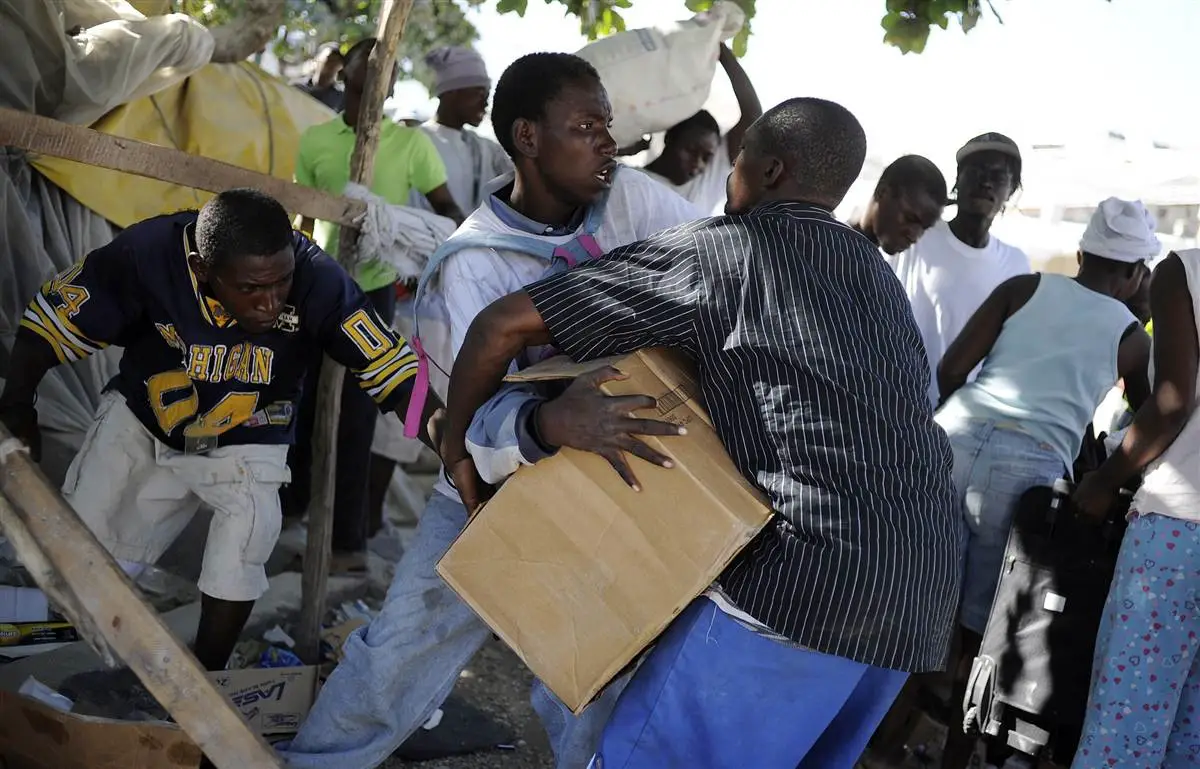

loot


The Disaster Myth is a narrative created by the establishment and delivered by their stoolies in the mainstream media.  The Disaster Myth points fingers at many of the things that are commonly believed to be true by the preparedness community.  Included in this narrative:


  1. People do not panic after a disaster – instead, they pull together.

  2. The official government response is always speedy and appropriate – unless you are a person of color, in which case you will be denied assistance based on your race, because racism is the current agenda

  3. You will be taken care of if you simply comply peacefully with authorities.

  4. There is little increase in post-disaster crime.

These statements all stand in direct opposition to the stories we hear from news sources during the crisis.  We heard terrible stories from eyewitnesses who suffered from hunger, thirst, and unsanitary condition in the Superdome after Katrina.  We heard about citizens being robbed of their 2nd Amendment rights by police after the crisis, and we heard about gang rapes, looting, and mayhem.  Fast forward to Sandy where people were defecating in the hallways of their high rise apartments and digging through garbage to find food just a few days after the storm.  As for the official response, who can forget the FEMA shelter that closed because of inclement weather?  Of course, the weather was inclement – it was a freaking weather-related disaster!


Mac Slavo of SHTFplan wrote of the unrest, discomfort, and mayhem after Superstorm Sandy ransacked the East Coast:


For tens of thousands of east coast residents that worst case scenario is now playing out in real-time. No longer are images of starving people waiting for government handouts restricted to just the third-world.


In the midst of crisis, once civilized societies will very rapidly descend into chaos when essential infrastructure systems collapse.


Though the National Guard was deployed before the storm even hit, there is simply no way for the government to coordinate a response requiring millions of servings of food, water and medical supplies


Many east coast residents who failed to evacuate or prepare reserve supplies ahead of the storm are being forced to fend for themselves.


Frustration and anger have taken hold, as residents have no means of acquiring food or gas and thousands of trucks across the region remain stuck in limbo.


Limited electricity has made it possible for some to share their experiences:


Via Twitter:


  • I was in chaos tonite tryin to get groceries…lines for shuttle buses, only to get to the no food left & closing early (link)

  • I’m not sure what has shocked me more, all the communities around me destroyed, or the 5 hour lines for gas and food. (link)

  • Haven’t slept or ate well in a few days. Hope things start getting better around here soon (link)

  • These days a lot of people are impatient because they’re used to fast things. Fast food, fast internet, fast lines and fast shipping etc. (link)

  • Glad Obama is off to Vegas after his 90 minute visit. Gas lines are miles long.. Running out of food and water. Great Job (link)

  • Went to the Grocery store and lines were crazy but nail salon was empty so I’ve got a new gel manicure and some Korean junk food (link)

  • So f*cking devastated right now. Smell burning houses. People fighting for food. Pitch darkness. I may spend the night in rockaway to help (link)


garbage food


At the time of the event, even the mainstream reported on the affluent East Side residents dumpster diving in search of food. Was this NBC report, complete with video, a work of salacious fiction?


dumpster-diving-sandy


As far as civil unrest is concerned, the Twittersphere was jammed with people planning looting sprees in the aftermath of Superstorm Sandy.  Those who were already of criminal leanings saw the disaster as a great opportunity. In the great North American Edit, however, these tweets are said to be part of the myth – apparently, they were just kids playing around.  Some reports pooh-poohed the very idea that looters had run amok.


looters_tweet


This article from Prison Planet refutes all of the refuting and says that the civil unrest DID occur and that it generally does, given evidence from past events.


Legends from the past? Every single extreme weather event in recent years in the United States has been followed by looting.


As MSNBC reported at the time, looting during Hurricane Katrina was so prevalent that it “took place in full view of police and National Guard troops.”


Residents described the scenes as being like “downtown Baghdad” as looters filled garbage cans full of stolen goods and floated them down flooded streets.


As Forbes’ Erik Kain points out, “looting and rioting…occur after most natural disasters,” including after Hurricane Irene as well as Hurricane Isaac.


Looters also targeted victims of the Colorado wildfires earlier this year.


Does this sound familiar?


This revision of inconvenient history will sound quite familiar to anyone who has read George Orwell’s masterpiece 1984 (which was not meant to be an instruction manual, by the way.)  In the novel, the main character, Winston Smith, worked for the Ministry of Truth, which was actually a department of propaganda whose job it was to rewrite any faction of history that did not make the government look omniscient.


In George Orwell’s novel Nineteen Eighty-Four, the Ministry of Truth is Oceania’s propaganda ministry. It is responsible for any necessary falsification of historical events. The word truth in the title Ministry of Truth should warn, by definition, that the “minister” will self-serve its own “truth”; the title implies the willful fooling of posterity using “historical” archives to show “in fact” what “really” happened. As well as administering truth, the ministry spreads a new language amongst the populace called Newspeak, in which, for example, truth is understood to mean statements like 2 + 2 = 5 when the situation warrants.


The Ministry of Truth is involved with news media, entertainment, the fine arts and educational books. Its purpose is to rewrite history to change the facts to fit Party doctrine for propaganda effect. For example, if Big Brother makes a prediction that turns out to be wrong, the employees of the Ministry of Truth go back and rewrite the prediction so that any prediction Big Brother previously made is accurate. This is the “how” of the Ministry of Truth’s existence. Within the novel, Orwell elaborates that the deeper reason for its existence is to maintain the illusion that the Party is absolute. It cannot ever seem to change its mind (if, for instance, they perform one of their constant changes regarding enemies during war) or make a mistake (firing an official or making a grossly misjudged supply prediction), for that would imply weakness and to maintain power the Party must seem eternally right and strong. (source)


We are watching narratives being created in front of our very eyes with the Vegas massacre. Every time something terrible happens, there’s a spin and that spin a) keeps us in the dark. b) encourages us to be dependent, and c) benefits someone.


But….WHY????


So why the vast effort to expunge tales of mayhem and to make it seem like our own national disasters really weren’t that bad? There are a few reasons, like pandering to an audience that wants to be blissfully unaware, but primarily, it’s about control.


Those who live a self-sufficient lifestyle are a threat to the status quo that those in power would like to see.  If you don’t NEED them, then there is no leverage to force you into compliance.  You don’t NEED to go to Camp FEMA in order to have 3 squares a day.  You don’t NEED to give up your guns in order to have a roof over your head and government supplied security.  You don’t NEED to get some kind of chip implanted in your arm to be scanned in order to receive “benefits” like medical care, food, and even money.


Self-sufficiency means freedom.  When you can feed yourself, clothe yourself, shelter yourself, and protect yourself, you are far less likely to need to cede your freedoms in order to stay alive. And in a police state that is frantically trying to withdraw our constitutional rights, this just won’t do.  They need leverage.


So the establishment has created a narrative that tells us what we are doing is silly and unnecessary.  They are rewriting history even though we only lived that history in the past decade.  Even though we know the truth of the matter because we watched it live, they are changing the facts to make us doubt our own perceptions. They are catering to the people who have no interest whatsoever in taking care of themselves.


This narrative was created to make a society of anti-preppers – of people who believe that all will be right with the world, the government is kind and benevolent, potential disasters aren’t really that big of a deal, and those crazy preppers are stark raving lunatics.  They want us to be perceived as extremists so that others are less likely to follow our examples. If they need a crazy bad guy at whom to point the finger, all they have to do is call someone a “Doomsday Prepper”. (Remember how poor Nancy Lanza was vilified after the Sandy Hook shooting?)


But…


If this civil unrest is not occurring, why is the National Guard called to keep the peace?  Why are state police riding around on tanks wearing body armor? Why were the guns of law-abiding citizens taken away in the aftermath of Katrina?


SWAT TEAM


Which version of reality are you going to believe?  The one that you actually witnessed or the perverted rewrite that the mainstream media is trying to push upon you?


Remember the things happening right now.


We have recently been hit with disaster after disaster in the United States. The aftermath of Hurricanes Harvey and Irma hit the mainland amidst stories of looters and people standing armed to protect homes and businesses. In the Carribean, lawlessness was rampant, and after Hurricane Maria devastated Puerto Rico, the danger from armed people robbing those who still had some supplies was constant. As I write this, there are uncontrolled wildfires tearing through California wine country, and looters are striking the homes of evacuees.


Of course, we are seeing reports of this now, but later will these stories be “debunked” by “experts” like the stories from Katrina and Sandy?


It’s entirely likely because most people would prefer to live smug in the belief that the police are only seconds away, their neighborhoods are immune to looters and vandals, and that America is a place of exceptional order and civilization. It comforts them to believe these things.  They use it as ammunition so they can scoff at “doomsday” preppers and call them “conspiracy theorists.”


But we know differently, and today, bloggers and alternative media are also documenting these stories before history is erased. I have watched for years as supplemental links in stories I have written have disappeared. I have witnessed the changing narratives, and if you’re reading this, you probably have too.


So, don’t be discouraged in your efforts when you read all the “good news” stories that inevitably show up after a disaster. To be sure, there are some wonderful people out there helping their neighbors, but there is also a dark side that the media prefers to ignore.


You saw it when it was happening. You know the truth, even if the disaster myth narrative would have you believe otherwise.

Monday, September 11, 2017

"They Dodged A Bullet": Why Insurer Stocks Are Soaring

After tumbling last week on concerns that between damage from Harvey and Irma, losses for the P&C space would be devastating, today the broader insurer space is breathing a sigh of relief after the Hurricane"s damage reportedly underwhelmed, especially following some especially dire observations over the weekend from the likes of Torsten Jeworrek, member of the board of the German reinsurance giant Munich Re, who on Sunday said that Hurricane Irma is proving to be a “major event” for Florida and the insurance industry.


As Reuters reported yesterday, Jeworrek and other insurance executives gathered in Monaco for an annual conference to haggle over reinsurance prices and strike underwriting deals. And even though Irma eventually skirted densely populated Miami, the Munich Re board member said that “Irma is still a major event for Florida and also a major event for the insurance industry.”  When asked by journalists, Jeworrek also hazarded a rough guess for the insured losses for the global industry of Hurricane Harvey: he said that losses were estimated at between $20 billion and $30 billion, which would put the storm on a scale of Sandy.


That number will likely prove to be overly optimistic, because as Goldman showed yesterday, many estimates of Harvey damages rose sharply during the first week after landfall; however, most have now settled in the $70-100bn range (Goldman itself assumes $85bn). While the uncertainty around these figures remains high, it seems clear that Harvey’s aftermath will be particularly severe. 


So with Harvey more or less quantified, the question then is what will Irma"s damage be? And it is here that some initial commentary from Credit Suisse explains (and may have sparked) a broad rally across the insurer sector.


In an overnight note from CS" Ryan Tunis, the Swiss bank analyst writes that even as Hurricane Irma barrels up Florida’s Gulf coast, "insured losses are now expected to be less than many feared with modeling agencies in general agreement of a sub $60b number."


As a result, Credit Suisse"s takeaway is that while Irma may be costly to reinsurer book values, the hurricane alone should not trigger the need for additional capital, and further expects tangible book value hits below 15% from Irma and Harvey combined. Of course, Tunis concedes that the capital raise conversation would likely be more pertinent should there be a "next catastrophe this year" or even another bad wind season in 2018. While projections for Hurricane Jose aren’t showing anywhere close to the amount of landfall risk that Irma had, but there are still a few projections of a potential threat to the US Northeast.


The key thing that saved insurers, however, and which resulted in lower insured losses is the last minute western shift in Irma’s FL path:


As destructive as Irma"s path continues to be, we think that the path up the west coast of Florida is better from an insured loss standpoint than projections from mid last week and even Friday that involved a more direct hit of Miami. As of 5pm today (Sunday), the storm seems to have weakened to a cat 2 as it has moved over Fort Myers, FL. AIR Worldwide estimates that there is $1 trillion of coastal exposure along west coast up to Tampa, 30% less than the $1.5 trillion of coastal exposure in the Miami Tri-County area. A west coast landfall should also bring more of the insured loss burden onto the personal lines companies. For a Miami-Dade hit, Lloyds industry losses assume 49% are from residential property and 49% from commercial property (rest auto and marine). For the Pinellas county (next to Tampa), residential property losses make up 70% of losses, while commercial property are 29% of losses.


Another question: how much flood is privately insured? According to Credit Suisse, it"s unclear at this point what portion of the damage will be caused by storm surge flooding versus wind, but Tunis believes that it"s a higher percentage than what the market was expecting on Friday.


"The private insurance industry should be far less exposed to flood damage than wind, especially on the commercial side where we understand that private flood insurance is either rarely offered or heavily sublimited, which we would think would be even more true in flood prone spots. The vulnerability to storm surge to Fort Myers, Tampa and St. Petersberg has also been very well understood by the cat modeling services (Karen Clark cited Tampa as #1 most vulnerable city to storm surge in 2005).


In this context, one of the debates in the coming weeks will center around how much of the homeowners flood damage is privately insured, especially since private flood insurance losses from Irma are likely to exceed that of Harvey.


We understand that though standard home policies do not include flood insurance, high net worth home policies are often inclusive of flood protection. Because of the high insured values of homes in FL (see Figure 1), there are more homes with high net worth home policies which could include private flood insurance.


Once the policyholder goes to the higher net insured value policy market – and we fear that many may in this case given high average property values of affected areas – we understand that policyholders have the option to purchase flood insurance. We have heard estimates that 50% of high net worth policy homes buy private flood insurance. Companies that may be exposed to this include AIG, CB, and Pure.


What about reinsurers? It is here that much of the hit will likely be, as Barclays warned two weeks ago:


[T]he reinsurers will be on the hook for the vast majority of privately insured losses. The most recent RMS report (Sunday afternoon) indicated that there is a 90% chance that the insured wind loss will be less than $60b which is down from the figure estimated Friday of 90% chance of sub $75b losses. That number does not include insured loss damage from flooding, the $10-15b of Irma damage in the Caribbean, business interruption losses in commercial insurance, or post event loss amplification issues such as demand surge. Offsetting this is our understanding that the Florida hurricane catastrophe fund (FHCF) may pay out around $15b of the total in a $40-60b loss scenario.


Putting these revised estimates in context, Credit Suisse writes that at this point, this does not appear to be a 1-in-100 Atlantic Hurricane event.


As a result, we are comfortable using company disclosed 1-in-100 year average loss disclosures as a worst case ceiling for individual company loss estimates. This number for the reinsurers (1-in-100 year US wind PMLs) appears to be 5-10% of tangible equity. If we assume 2-3% book value hits from Harvey, then this implies 7-13% hits to book value from both hurricanes. Reinsurers are believed to be relatively unscathed from Harvey, but one other incremental negative data point from this weekend was a new RMS estimate for Harvey losses which implies $18-25b of privately insured losses Harvey, which may be 30% higher than preliminary estimates perhaps leaving reinsurers more vulnerable.


What this means for insurers is basically good news, as today"s stock price reaction confirms:


As we have noted, net exposures should be relatively limited for PGR, ALL, TRV and HIG either through avoidance of Florida property or heavy reinsurance purchase, which is still the case. The path of the storm and expected storm surge does bring a higher level auto losses into play, though likely not at the scope of Harvey with plenty of advanced warning for all Florida residents and businesses. Katrina may be the best comparison at this point, which resulted in $2.8b of industry auto losses in today"s dollars and around $328mm for PGR. PGR reported $258.5mm ($328mm in today"s dollar) of personal auto from Katrina, Rita, and Wilma. ALL reported $283mm ($359mm in today"s dollars) of personal auto losses from Katrina, Rita, and Wilma. For ALL, the auto losses were about 8% of total Katrina losses. We note that PGR and ALL have 14%/10% market share of Florida auto physical damage (See Figure 4). PGR also has 16% of the commercial auto market in Florida.


* * *


Finally, adding fuel to the P&C surge was a similar analysis by Citi, according to which the cost of Hurricane Irma-related total estimated losses has been slashed to $50BN from $150BN.


"While the hurricane season is only half way through, so that number could increase but, for now, P&C insurers and reinsurers have dodged a bullet" Citi analyst James Naklicki wrote. As a result, Citi projects U.S. insured loses of $20 billion. Furthermore, citi also expects less selling pressure on reinsurers as the risk of capital raising eases, and remains overweight Travelers and Chubb; underweight Axis, RenRe and XL, while upgrading Axis Capital Holdings to Neutral from Sell.


End result: a surge in insurer stocks, more than undoing all of last week"s Irma-related losses.


Sunday, September 10, 2017

After The Storms Are Over: America Can't Afford To Rebuild

Authored by Raul Ilargi Meijer via The Automatic Earth blog,


A number of people have argued over the past few days that Hurricane Harvey will NOT boost the US housing market. As if any such argument would or should be required. Hurricane Irma will not provide any such boost either. News about the ‘resurrection’ of New Orleans post-Katrina has pretty much dried up, but we know scores of people there never returned, in most cases because they couldn’t afford to.


And Katrina took place 12 years ago, well before the financial crisis. How do you think this will play out today? Houston is a rich city, but that doesn’t mean it’s full of rich people only. Most homeowners in the city and its surroundings have no flood insurance; they can’t afford it. But they still lost everything. So how will they rebuild?


Sure, the US has a National Flood Insurance Program, but who’s covered by it? Besides, the Program was already $24 billion in debt by 2014 largely due to hurricanes Katrina and Sandy. With total costs of Harvey estimated at $200 billion or more, and Irma threating to cause far more damage than that, where’s the money going to come from?


It took an actual fight just to push the first few billion dollars in emergency aid for Houston through Congress, with four Texan senators voting against of all people. Who then will vote for half a trillion or so in aid? And even if they do, where would it come from?


Trump’s plans for an infrastructure fund were never going to be an easy sell in Washington, and every single penny he might have gotten for it would now have to go towards repairing existing roads and bridges, not updating them -necessary as that may be-, let alone new construction.


Towns, cities, states, they’re all maxed out as things are, with hugely underfunded pension obligations and crumbling infrastructure of their own. They’re going to come calling on the feds, but Washington is hitting its debt ceiling. All the numbers are stacked against any serious efforts at rebuilding whatever Harvey and Irma have blown to pieces or drowned.


As for individual Americans, two-thirds of them don’t have enough money to pay for a $500 emergency, let alone to rebuild a home.


Most will have a very hard time lending from banks as well, because A) they’re already neck-deep in debt, and B) because the banks will get whacked too by Harvey and Irma. For one thing, people won’t pay the mortgage on a home they can’t afford to repair. Companies will go under. You get the picture.


There are thousands of graphs that tell the story of how American debt, government, financial and non-financial, household, has gutted the country. Let’s stick with some recent ones provided by Lance Roberts. Here’s how Americans have maintained the illusion of their standard of living. Lance’s comment:


This is why during the 80’s and 90’s, as the ease of credit permeated its way through the system, the standard of living seemingly rose in America even while economic growth rate slowed along with incomes.


Therefore, as the gap between the “desired” living standard and disposable income expanded it led to a decrease in the personal savings rates and increase in leverage. It is a simple function of math.


But the following chart shows why this has likely come to the inevitable conclusion, and why tax cuts and reforms are unlikely to spur higher rates of economic growth.


There’s no meat left on that bone. There isn’t even a bone left. There’s only a debt-ridden mirage of a bone. If you’re looking to define the country in bumper-sticker terms, that’s it. A debt-ridden mirage. Which can only wait until it’s relieved of its suffering. Irma may well do that.


A second graph shows the relentless and pitiless consequences of building your society, your lives, your nation, on debt.


It may not look all that dramatic, but look again. Those are long-term trendlines, and they can’t just simply be reversed. And as debt grows, the economy deteriorates. It’s a double trendline, it’s as self-reinforcing as the way a hurricane forms.


Back to Harvey and Irma.


Even with so many people uninsured, the insurance industry will still take a major hit on what actually is insured. The re-insurance field, Munich RE, Swiss RE et al, is also in deep trouble. Expect premiums to go through the ceiling. As your roof blows off.


We can go on listing all the reasons why, but fact is America is in no position to rebuild. Which is a direct consequence of the fact that the entire nation has been built on credit for decades now. Which in turn makes it extremely vulnerable and fragile. Please do understand that mechanism. Every single inch of the country is in debt. America has been able to build on debt, but it can’t rebuild on it too, precisely because of that.


There is no resilience and no redundancy left, there is no way to shift sufficient funds from one place to the other (the funds don’t exist). And the grand credit experiment is on its last legs, even with ultra low rates. Washington either can’t or won’t -depending on what affiliation representatives have- add another trillion+ dollars to its tally, state capitals are already reeling from their debt levels, and individuals, since they have much less access to creative accounting than politicians, can just forget about it all.


Not that all of this is necessarily bad: why would people be encouraged to build or buy homes in flood- and hurricane prone areas in the first place? Why is that government policy? Why is it accepted? Yes, developers and banks love it, because it makes them a quick buck, and then some, and the Fed loves it because it keeps adding to the money supply, but it has turned America into a de facto debt colony.


If you want to know what will happen to Houston and whatever part of Florida gets hit worst, think New Orleans/Katrina, but squared or cubed -thanks to the 2007/8 crisis.

Friday, September 8, 2017

Not Just Florida: Georgia And South Carolina Face "Catastrophic Storm Surge"

As Hurricane Irma looks to be hurdling straight for a direct hit on Southern Florida, meteorologists from Weather Underground are warning that the most devastating impacts of the storm could be felt much further north in towns along the coast of Georgia and South Carolina where the storm surge could be a catastrophic 20-28 feet high in certain areas.  To put that in perspective, Hurricane Katrina in 2005 set a record for the largest storm surge ever recorded along the U.S. coast at 27.8 feet.


If Irma makes a trek up the East Coast from Miami to southern South Carolina as a Category 3 or 4 hurricane, as the models currently suggest, the portions of the coast that the eyewall touches will potentially see a massive and catastrophic storm surge, breaking all-time storm surge records and causing many billions of dollars in damage. Even areas up to a hundred miles to the north of where the center makes landfall could potentially see record storm surges. The area of most concern is the northern coast of Florida, the coast of Georgia, and the southern coast of South Carolina, due to the concave shape of the coast, which will act to funnel and concentrate the storm surge to ridiculous heights. If we look at wunderground’s storm surge maps for the U.S. East Coast, we see that in a worst-case Category 3 hurricane hitting at high tide, the storm tide (the combined effect of the storm surge and the tide) ranges from 17 – 20’ above ground along the northern coast of Florida, and 18 – 23 feet above ground along the Georgia coast. If Irma is a Cat 4, these numbers increase to 22 – 28 feet for the coast of Georgia. This is a Katrina-level storm surge, the kind that causes incredible destruction and mass casualties among those foolish enough to refuse to evacuate.


So, which coastal towns are most at risk?  As Weather Underground notes, Savannah in Southern Georgia could see a surge of up to 23 feet if Irma strikes as a Category 3 storm.  Obviously, the surge would be even larger if Irma manages to maintain Cat-4 winds.


Maximum of the "Maximum Envelope of Waters" (MOM) storm tide image for a composite maximum surge for a large suite of possible mid-strength Category 3 hurricanes (sustained winds of 120 mph) hitting at high tide (a tide level of 3.5’) along the coast of Georgia. What’s plotted here is the storm tide--the height above ground of the storm surge, plus an additional rise in case the storm hits at high tide. Empty brownish grid cells with no coloration show where no inundation is computed to occur. Inundation of 19 – 23’ will occur in a worst-case scenario along most of the coast.


Meanwhile, further north in Charleston, SC the surge could also exceed 20 feet and flood areas many miles inland from the shore.


Maximum of the "Maximum Envelope of Waters" (MOM) water depth image for a composite maximum surge for a large suite of possible mid-strength Category 3 hurricanes (sustained winds of 120 mph) hitting at high tide (a tide level of 2.5’) along the coast of South Carolina near Charleston. If Irma is a Cat 3 in South Carolina, a worst-case 17 – 21’ storm tide can occur.


Of course, as we noted earlier, this data has already prompted the governors of Georgia and South Carolina to declare a state of emergency and to call for citizens of coastal areas to begin evacuations immediately.


Ironically, even though Irma will be her strongest when washing ashore in Southern Florida, Weather Underground notes that deep water just offshore helps to subdue the storm surge from Miami to Fort Lauderdale...


South Florida is not at as great of a risk of a high storm surge, since there is deep water offshore, and the mound of water the hurricane piles up can flow downward into the deep ocean instead of getting piled up on land. The worst-case storm tide from a Category 4 hurricane for the coast from Miami Beach to West Palm Beach is 7 – 9 feet. However, that deep water allows much larger waves to build up, and Irma will create big waves that will pound the coast and cause heavy damage. There is a region of the coast from downtown Miami southwards, including Biscayne Bay, where the water is shallow, and the storm tide can be up to 15 feet in a Category 4 hurricane. The Great Miami Hurricane of 1926, a Category 4 storm, brought a 10 – 15’ storm surge to the coast of Miami along Biscayne Bay.


...which also should help to somewhat protect the coast on the western shores of Florida.


The Atlantic (Florida Straits) side of the Florida Keys also has deep water offshore, limiting the maximum storm surge in a Cat 4 to 8 – 10 feet. The risk is higher on the west (Florida Bay) side of the Keys, where the water is shallower; a worst-case storm tide of 12 – 15 feet can occur there. Any storm tide over six feet is extremely dangerous in the Florida Keys, due to the low elevation of the land. The greatest risk in the Keys, if the current NHC forecast verifies, would be on the Florida Bay (west) side of the Upper Keys, after the center of Irma moves just to the north. The counter-clockwise flow of air around the hurricane will then bring winds out of the southwest that will drive a large storm surge into the west side of the Upper Keys.


Be that as it may, with winds in excess of 120 mph expected pretty much across the entire state of Florida, one might be best suited to prepare for the worst no matter how close you are to the shore.


Wednesday, September 6, 2017

FLORIDA BRACES FOR ANNIHILATION: HURRICANE IRMA CLOCKING IN AT 200MPH SURFACE WINDS

Content originally published at iBankCoin.com


The good folks at the NOAA2 just recorded Hurricane Irma"s surface winds at ~200mph, barreling towards the lesser Antilles. The current trajectory of the storm has it wiping out all of Miami, or perhaps swinging west and laying waste to the Florida keys. Either way, insurance stocks (UVE, HCI, HRTG, FNHC) in Florida are positively doomed.


Here is the latest reading on this great storm of death and cataclysm.


The storm is clocking in at 913.1 mb.


To put this in context, Hurricane Katrina clocked in at 902mb and this system hasn"t even reached the coast yet.


An update from Guadalupe.


Tuesday, September 5, 2017

Virgin Islands Governor Orders Gun Seizures in Advance of Hurricane Irma

A monster is coming. The government’s plan of action includes seizing guns. (National Hurricane Center/Twitter)


“U.S. Virgin Islands Gov. Kenneth Mapp signed an emergency order allowing the seizure of private guns, ammunition, explosives and property the National Guard may need to respond to Hurricane Irma,” Michael Bastasch reported Tuesday at The Daily Caller.  “The order allows the Adjutant General of the Virgin Islands to seize private property they believe necessary to protect the islands, subject to approval by the territory’s Justice Department.”


“The Adjutant General is authorized and directed to seize arms, ammunition, explosives, incendiary material and any other property that may be required by the military forces for the performance of this emergency mission, in accordance with the Rules of Force promulgated by the Virgin Islands National Guard and approved by the Virgin Islands Department of Justice,” Mapp declared in his order issued Monday.


This is a setup for the unconstitutional seizure of Hurricane Katrina all over again. Presumably, if a citizen defies the guard, the escalation of force up to and including lethal will be authorized and “legal.”


“More than 4 million U.S. citizens and nationals live in insular areas under the jurisdiction of the United States. The Territorial Clause of the Constitution authorizes the Congress to “make all needful Rules and Regulations respecting the Territory or other Property” of the United States,” a 1997 U.S. General Accounting Office report to Congress acknowledged.


“People born in Puerto Rico, Guam, the CNMI, or the Virgin Islands are American citizens,” the report noted. “The residents of all five of the larger insular areas enjoy many of the rights enjoyed by U.S. citizens in the 50 states. But some rights which, under the Constitution, are reserved for citizens residing in the states have not been extended to residents of the insular areas.”


As for the right that “shall not be infringed”?


Licensing and registration ensure they’ll know just where to look for their seizures.


Portrait of Governor Mapp


As for Governor Mapp, he was an NYPD “Only One” before moving his career to the Virgin Islands. He has taken the oath to the Constitution throughout that career, advancing through the Virgin Islands legislature to the governorship.


It’s fair to wonder about  the competency of an administration of an island in the Caribbean that is so unprepared to experience a hurricane it needs to seize firearms from citizens in order to equip its troops. It’s also fair to wonder about the character of those who would strong-arm that citizenry into defenselessness at the very time they will need protection the most, and at a time when the “authorities” will have their hands more than full and vast areas will be left on their own for an indeterminate period.


You also have to wonder about the level of Constitutional understanding and fidelity of those who would obey such orders, and the character of those who disparage Oath Keepers for refusing to obey them.


If you’re on social media, you can express your opinion to them on Twitter and Facebook.


And it would also be appropriate to pray for the people in the path of Irma, that they survive both the storm and the unconscionable additional risk imposed by their government.


—–


If you believe in the mission of Oath Keepers, to defend the Constitution against all enemies, foreign and domestic, please consider making a donation to support our work.  You can donate HERE.


—–


David Codrea’s opinions are his own. See “Who speaks for Oath Keepers?”


Sunday, August 27, 2017

Houston: The "Surreal" Before And After Photo

Courtesy of Weather Channel weather producer, Matthew Sitkowski, here is a photo of what Houston"s East Loop at Market Street on the I-610 looks like right now. As Sitkowski says, "this image and the forecast of what is still to fall.... This is surreal." He is right: we added a photo of the same location from February 2016 to show the "before and after." Here is the result:


The following time-lapse video shows the Buffalo Bayou next to Houston rising over the past day...


... and its current state:


The rapid raise of the Buffalo Bayou prompted the evacuation of the KHOU 11 TV studio early on Sunday morning:


Unfortunately, there is no relief in sight, as over 20 inches of rain have already fallen on the Lone Star State. With streets flooded and strewn with power lines and debris, authorities warned the storm"s most destructive powers were just beginning. Rainfall that will continue for days could dump more than five feet of water and inundate many communities, including dangerously flood-prone Houston, the nation"s fourth-largest city. The latest summary of rainfall in the past 24 hours can be found here. Another 20 to 30 inches of rain is expected through to Wednesday.


Meanwhile, a just issued bulletin from the NWS Houston warns that "rivers are on the rise and MAJOR to RECORD flooding is forecast."


By the time the storm ends, 40 inches of rain (a number which now appears conservative) is expected to fall and an estimated $40 billion worth of damage left behind. Putting the number in context, Hurricane Katrina cost $108 billion, mostly as a result of flooding to New Orleans.


For locals trapped in their house as floodwaters rise, the NWS Houston had some words of advice: "EMERGENCY MANAGEMENT HAS REQUESTED: IF HIGHEST FLOOR OF YOUR HOME BECOMES DANGEROUS...GET ON THE ROOF."