Showing posts with label Hurricane Maria. Show all posts

Monday, February 12, 2018

Another Massive Blackout Struck Puerto Rico Last Night

This report was originally published by Daisy Luther at The Organic Prepper


no-power-puerto-rico


Last night, an explosion at a San Juan power plant regressed Puerto Rico’s efforts to restore power to the island five months after Hurricane Maria struck a massive blow. Much of Northern Puerto Rico has suffered another blackout, including the capital city.


The island’s Electric Power Authority said several municipalities were without power, including parts of the capital, San Juan, but they were optimistic it could be restored within a day as they worked to repair a substation that controls voltage…


…It was not immediately known what caused Sunday’s fire, which was quickly extinguished. Officials said the explosion knocked two other substations offline and caused a total loss of 400 megawatts worth of generation. (source)


And we aren’t getting the whole story about these outages. A reader named Jennifer from Manati told me:


What the news ain’t saying is that we actually had three power grids down. The first one was the Cambalache power station in Arecibo. This left the whole north area without power. Then Palo Second station went down. This second power station connects power from the north to the capital. Afterwards, we had an explosion in Monacillos. This one effected mayor hospitals, airport and capital. For some reason the government and news want people to believe that everything is well and running that things are almost back to normal when that ain’t the truth. All you have to do is visit cities outside from the metropolitan area to see the reality we are living.


And even worse, before this explosion, more than a million people were still without power from the Category 4 hurricane that struck the island on Sept. 20, 2017. They’ve been thrown back in time by a hundred years, with no power, no running water, and damaged homes.


This is a prime example of how disasters aren’t just one-time occurrences. They’re very often followed by subsequent disasters.


Think about it. Fires are often followed by floods which are followed by mudslides and sinkholes. (See California for reference.) The tsunami in Japan was followed by a nuclear plant disaster. Hurricane Harvey in Texas had storm surges and floods that caused a chemical plant to explode a few days later. Now, this already-stressed infrastructure has crumbled again under it’s increasing demand.


Power has been restored to a few critical locations.


This is one situation in which living in a more populated area can benefit you. After last night’s explosion, workers were quick to restore power to specific locations.


By late Sunday, electricity workers had been able to restore power to key locations, including the Luis Muñoz Marín International Airport in Carolina, as well as the Medical Center. (source)


As well, after Hurricane Maria, the first areas to resume some form of normalcy were the ones with higher population. San Juan saw it’s power restored immediately but people in more remote areas are still waiting. And not just a few people.


Vox estimated that 1.36 million Americans are still without electricity. You’ll see other numbers that say 400,000, but that is counting households, not individuals.


The US Army Corps of Engineers… estimated that Puerto Rico would need 50,000 utility poles and 6,500 miles of cable to restore its power system…


…When an electrical circuit is open or broken, the power doesn’t flow, whether that’s a flashlight or a phone.


It’s a simple concept, but when it happens in the electricity grid — what engineers say is the largestmost complex machine ever built — it quickly becomes a byzantine problem.


With thousands of miles of transmission lines, gigawatts of generation, computers that route power, frequency regulators, and transformers that all serve the constantly fluctuating needs of millions of people, lots of things can go wrong. Generators can shut down. Transformers can explode. Power demand and supply can fall out of balance.


By far the most common cause of blackouts is damage to power lines, which are the most vulnerable part of the electrical grid to storms.


“In a disruption like this, it’s transmission and distribution,” Marsters said. “Damage does occur to generation assets, but those are point specific and you can get those back online in a reasonable time.”


…Puerto Ricans are now desperately trying to connect the main power arteries to individual homes, and some have resorted to their own makeshift repairs, mounting their own utility poles and stringing up low-voltage transmission lines. (source)


But even before Hurricane Maria made landfall, things with the infrastructure were dire.


The power grid in Puerto Rico was in rough shape BEFORE Maria


Even before the hurricane devastated the island, the infrastructure was in terrible shape, a fact underlined by last night’s explosion.


The blast illustrated the challenges of restoring a power grid that was already crumbling before it was devastated by the Category 4 hurricane.


In many cases, power workers are repairing equipment that should have long been replaced but remained online due to the power authority’s yearslong financial crisis. PREPA is worth roughly $4 billion, carries $9 billion in debt and has long been criticized for political patronage and inefficiency. It also struggled with frequent blackouts, including an island-wide outage in September 2016.  (source)


Before Maria made landfall, I wrote an article that predicted a long haul to get power restored.


It’s entirely possible that Hurricane Maria will put the island in the dark for quite some time to come, completely changing their way of life. 70,000 people are still without power from their bout with Irma, and much more damage to the utility system is expected. Gov. Rossello said:


“We will not have sustainable electric infrastructure in the near future. We will be bringing in crews from outside of Puerto Rico to attend to these measures.” (source)


Philipe Schoene Roura, the editor of a San Juan, Puerto Rico-based newspaper, Caribbean Business, wrote:


Prepa Executive Director Ricardo Ramos Rodríguez recently said the powerlines carrying electricity in the public corporation’s system are in such a deteriorated state that a strong storm could leave the island without power for weeks.


“To give you a number, if during Hurricane Georges 100 lines went down in 1998, today the same [kind of ] hurricane would bring down 1,000,” the official candidly told Caribbean Business when asked about the possibility of Prepa’s system effectively withstanding the onslaught of a similar storm.


“The lifespan of most of Prepa’s equipment has expired. There is a risk that in light of this dismal infrastructure situation, a large atmospheric event hitting Puerto Rico could wreak havoc because we are talking about a very vulnerable and fragile system at the moment,” Ramos added…


…Francisco Guerrero (a fictitious name to protect his identity), a Prepa field worker for 23 years, said it would take months for Prepa to bring up Puerto Rico’s power system should a hurricane like Harvey strike the island.


The lack of linemen and other technical personnel, as well as a lack of equipment—including replacement utility poles for powerlines and replacement parts—are the issues of greatest concern among public corporation employees, who say they risk their lives working with equipment in poor condition that provides them with little safety.


Guerrero said that today only 580 linemen remain out of the 1,300 who were part of the workforce in previous years—and that’s not counting the upcoming retirement of another 90 linemen. Likewise, he said there are only 300 electrical line testers to serve the entire island.


The source also said that much of Prepa’s equipment dates back to the 1950s—and the more “modern” equipment that is still functional dates from the 1990s; in other words, it’s from the past century.


“If a hurricane like this one [Harvey] hits us, the system is not going to come online, I’d say, in over six months. Right now, the warehouses don’t even have materials. I’m talking about utility poles and other stuff,” Guerrero explained.


“How can you say that you have equipment that dates back to the 1950s and you are not buying parts to repair them? When it’s time for maintenance work, you don’t have the part and you leave things as they are, but there is an entry in the log saying maintenance was done. And yes, it was done, but the most important thing was not done, which was to replace that part,” he added.


Although he did not assign the debacle to former Prepa Chief Restructuring Officer Lisa Donahue’s order to stop buying supplies as the main cause for the lack of materials, he is certain the order was “the straw that broke the camel’s back.” (source)


Many people thought it was a ridiculous premise and that power would be up and running within a couple of weeks. But it turns out, that was cognitive dissonance. This situation is all the proof you need to see that things can change overnight.


Go watch this video to see what everyday life is like in Puerto Rico for nearly half a million people.


Do you think things will ever be the same in Puerto Rico?


Have the residents of the island been permanently thrown back into Third World status? Will the power ever be fully restored? And considering they’re Americans too, isn’t it rather embarrassing that we aren’t doing more to aid in the recovery?


Share your thoughts in the comments section below.


More information about the Puerto Rican crisis:


The Pantry Primer


Please feel free to share any information from this article in part or in full, giving credit to the author and including a link to The Organic Prepper and the following bio.


Daisy Luther is the author of The Pantry Primer: A Prepper’s Guide To Whole Food on a Half Price Budget.  Her website, The Organic Prepper, offers information on healthy prepping, including premium nutritional choices, general wellness and non-tech solutions. You can follow Daisy on Facebook and Twitter, and you can email her at daisy@theorganicprepper.ca


Monday, October 30, 2017

FBI Is Probing Puerto Rico"s $300 Million Power Contract With Whitefish Energy

Just a day after Puerto Rico"s cash-strapped power authority on Sunday canceled its controversial $300 million contract with Whitefish Energy, a small Montana company tasked with rebuilding the island"s power grid after it was completely destroyed by Hurricanes Maria and Irma, the WSJ is reporting that the FBI is looking into the circumstances surrounding the contract.


The contract was canceled on orders from Puerto Rico Gov. Ricardo Rossello, who pointed to the burgeoning controversy surrounding the company - including its relationship with Secretary of the Interior Ryan Zinke, who is from the same small Montana town where Whitefish is based.


Zinke issued a statement last week denying any involvement in the deal. Zinke is reportedly friends with Whitefish CEO Andy Techmanski.


The company has been criticized for moving too slowly in its efforts to restore power to the island. To date, only 30% of power customers on the island have had electricity restored, more than a month after Maria first made landfall along the island"s southeastern coast.


As WSJ explains, the firm had more than 350 workers and 2,500 tons of heavy equipment on the ground for rebuilding electrical lines destroyed in Hurricane Maria. But the firm’s small size and limited track record, as well as the terms of the contract, ignited concerns around Puerto Rico’s management of the flow of federal disaster-relief dollars to the island.


The Federal Emergency Management Agency, multiple congressional committees and local auditors also have raised concerns and begun requesting documents about the deal. Ricardo Ramos, the executive director of Prepa, had defended the selection of Whitefish and said the contracting process was done according to the utility’s regulations for handling emergency situations.


Thursday, October 26, 2017

FEMA Is Failing America After These Massive Hurricanes — and I Know Why

(ANTIMEDIA Op-ed) Recently, I’ve been reading and hearing a lot about groups like the Cajun Navy, which rescued hundreds of people during Hurricane Harvey. The organization formed spontaneously in the wake of Hurricane Katrina and is stimulating a new and much-needed conversation. When you compare the voluntary provision of important public services by the “Cajun Navies” of the world to those provided by government agencies like FEMA, it’s hard to deny how much better the voluntary organizations perform.


Based on many of the discussions I’ve been having about recent events, it is obvious that many people realize something important is almost “hiding in plain sight.” ‘We the People’ already provide each other with most of the services we rely on, but this fact often goes unnoticed. Whether it’s the production and supply of foodclotheselectrical powerhousessystems and modes of transportationmedical treatments, or most modern forms of communication — all public services on which we depend — We the People are responsible for most of them.


And yet almost half of the country’s resources go to the government.


Common sense says we should send more resources to those who can do the best work with them. Yet when it comes to the public services, that common sense seems lacking.


Whenever we simply increase the amount we are sending to a government program or agency to deliver a public service, we are skipping the critical step of identifying the best way of doing something before we do it – or doing more of it.


In almost every other area of life, when we want to improve outcomes, we look at methods of delivery. If we did this for the services the public relies on, we would all do better.


The provision of public services by the government has some unique and fundamental flaws. For example, the guaranteed supply of potentially unlimited revenue (through taxation) reduces the accountability of those who spend it, creating an imbalance between inputs and outcomes. This contributes to ever-increasing waste and inefficiency over time. FEMA had a $13.9 billion budget in 2016 yet was expected to run out of money even before superstorm Irma hit Florida as this year’s hurricane season was just beginning. And that’s after $6.7 billion was allocated to disaster relief in the 2017 budget.  In contrast, volunteer organizations have been performing many of the same functions of FEMA even more effectively without taking any tax dollars from the public to do so. Amazingly, the Cajun Navy does its life-saving work without taxpayer funds.


The fact that the Cajun Navy arrived on the scene quicker than FEMA and saved more lives on a shoestring budget begs a profoundly important question: How much more good could be done by the “Cajun Navies” of the world if they had even a small fraction of the resources the “FEMAs” have?


The Cajun Navy is just another example of Americans coming together and putting their differences aside to help each other in times of need. It’s truly a beautiful thing to witness. As Charlie Chaplin famously said in the film The Great Dictator, “We all want to help one another; human beings are like that.”


The good news is that we are already spending more than enough to do the good we would like to see done – if only a small fraction of those resources were redirected to those who do better with them so they could give those most in need the best possible assistance.


A model for this has already been implemented with excellent results.


In Arizona, residents are able to redirect some of their tax dollars to organizations that do better in supporting the causes they believe in. Arizona’s “charitable tax credit” allows each taxpayer to redirect up to $400 (recently doubled from $200) of their individual state income tax liability to a nonprofit in their local area that serves the poor more effectively than does the government. Taxpayers receive a dollar-for-dollar credit for donations, so if they have a tax bill of $1,000 from the state of Arizona but have sent $400 to their favorite local charities, they only owe the state $600.


Whether we are responding to catastrophic events such as hurricanes or the basic, everyday needs of our communities, doesn’t it make the most sense to ensure those who do the most good have the resources they need to do even more good? If we do, the sky will be the limit for the “Cajun Navies” out there in both number and effectiveness.  Given the uncertain environment we live in, why would we want to do anything less than put ourselves in the best possible position to meet tomorrow’s needs or to deal with the next emergency — whatever it may be?


There are countless examples of harm done by the wasting of resources by those who have no real incentive to deploy them carefully. How about New York City spending $2 million on a bathroom, the GSA spending more than $800,000 at a conference in Vegas, and the Pentagon fudging its own accounts by $6.5 trillion? The list goes on and on.


Recognizing all of this, the We Do Better project is about finding organizations that do better in each community, ensuring that those who need help know where and how to get it, and empowering communities to send their resources where they will do the most good.


In Arizona, where the charitable credit was implemented, local charities in several communities formed tax credit coalitions to publicize the credit, making it easier for donors to give and for beneficiaries to find them. This increased cooperation among charities has had the wonderful side effect of making them more effective in helping people who were facing multiple challenges at once (such as food insecurity, homelessness, and addiction), hugely improving human outcomes and the strength of the community’s social safety net.


Doing the most good means being morally committed to better human outcomes rather than ideologically committed to a particular method of achieving them.  Let us start measuring our compassion not by our good intentions, the efforts we make, or even the money we spend – but by the good we do for each other.


As Margaret Mead famously said, “Never doubt that a small group of thoughtful, committed citizens can change the world. Indeed, it is the only thing that ever has.


We already do better. We can do more of that.


Op-ed / Creative Commons / Anti-Media / Report a typo


This article was submitted by Jason Casella of We Do Better, a voluntary aid organization.


Tuesday, October 24, 2017

Puerto Rico’s Power Grid Failure Is Causing A Public Health Crisis Of Epic Proportions

Dr. Trivino must use sunlight to examine x-rays since electricity is sporadic in Puerto Rico.

Dr. Trivino must use sunlight to examine x-rays since electricity is sporadic in Puerto Rico.


One month after the devastating Hurricane Maria wreaked havoc on the island of Puerto Rico, the territory is still facing a public health crisis.  And it’s a crisis of epic proportions.


On Friday, former Puerto Rican Governor Alejandro García Padilla tweeted a photo from inside a hospital, in which scrubbed-up doctors leaned over an operating table performing surgery lit only by a flashlight. According to Slate, the image quickly made the rounds on the internet; it currently has almost 9,000 retweets and many speculate that that’s probably because the blurry picture feels like it’s worth a good deal more than 1,000 words.  It illuminates just a small sliver of the public health crisis Puerto Rico is currently facing.


Millions of residents still don’t have access to electricity or proper health care, and bacteria in the water have exposed many people to disease. And calls for help have gone unanswered besides the few willing to travel to the devastated island privately. Senator  Martin Heinrich (D-NM) along with a handful of other lawmakers are calling on the federal government to continue to provide aid to the post-apocalyptic ravaged territory. 


“Even before Hurricanes Irma and Maria hit the U.S. territories, the islands’ health care system was suffering from the ongoing economic crisis. The islands are grappling with physician shortages, Medicaid programs facing an impending funding cliff, and widespread disparities in Federal health programs—and that was before hurricane season,” the lawmakers stated in a letter. “We are grateful for the public health emergency declaration in Puerto Rico and the U.S. Virgin Islands, but more can and should be done to help Americans impacted by these disasters.”


The senators stressed that much of the islands’ power and communication networks are out and, according to the Federal Emergency Management Agency (FEMA), it will take months before power is fully restored. Hospitals have been forced to prioritize patients, ration services, and forgo elective surgeries.  The power grid’s failure has caused more problems than many anticipated, like the stall of relief efforts.  Without electricity, communications are non-existent too.


Some 33 days after Hurricane Maria made landfall on Puerto Rico, only 23 percent of residents have electricity, according to Status.pr, which provides daily updates on basic services on the island. While there are still other problems as well, such as gas stations being slow to reopen, and roads getting badly damaged, the power grid’s utter annihilation in the category 4 winds is not just a temporary inconvenience. The different ways that the lack of electricity can set off a cascade of other crises is becoming increasingly clear.


giant government-owned hospital ship, the USNS Comfort, arrived in Puerto Rico weeks ago to help out, but many people don’t know about the ship. Without electricity, most cell phone towers are down.  But even if communications were working, residents can’t get to the port, as many of the island’s roads are impassable and most are without gasoline to power a car. The ship has extensive space and equipment for trauma care and a large staff, but CNN reported that as of last Tuesday, only 33 of 250 beds were full.


The looming crisis seems to be getting worse, not better, and Puerto Rico is experiencing a medical crisis of epic proportions.

Friday, October 20, 2017

Hurricane Ravaged Dominica: "It"s All Gone" And Fighting For Survival

Authored by Mac Slavo via SHTFplan.com,


In just the blink of an eye, island life on Dominica was turned upside down.  Like Puerto Rico, Dominica was violently ravaged by Hurricane Maria, and residents are still fighting for survival.


The wooden frames and scattered, water-damaged belongings are all that remains of some homes of on Dominica, which was ravaged by Hurricane Maria last month.


Without warning, the storm rapidly accelerated from a Category 3 to a Category 5, and residents said they could do little to prepare.


 “There was lightning, there was heavy rain…[it was like] the hurricane was in the house,”said Dominica’s Prime Minister Roosevelt Skerrit according to ABC News.


“We have lost everything that money can buy, and that is a fact.”


The roof of Roosevelt Skerrit’s house was blown away and its floors flooded. On the night Hurricane Maria hit, Skerrit took to Facebook to post updates including one that said, “I am at the complete mercy of the hurricane. House is flooding” and another that said, “The winds are merciless! We shall survive by the grace of God!” Later he posted, “I have been rescued.”


“You can still see the shock, the anxiety, the fear the trauma in the eyes and the expressions of people every day,” he told ABC’s Nightline.


“Their entire life investments, life’s savings, blown away.”


Another now displaced resident named Emmanuel Peter said he can still remember the roar of the hurricane-force winds.


 “It was just whistling, whistling,” he said. “I thought it would burst my eardrums.”


Puerto Rico was not the only island in Hurricane Maria’s path, and almost a month later, both islands still look like post-apocalyptic zones.  But the island with the highest death toll per capita was Dominica; a close-knit, mostly Christian nation that was left at the mercy of a hurricane that shared a name with the mother of Christ: Maria.  


To date, 26 people are confirmed dead, 31 are still missing, and more than 50,000 people are displaced on the island that has a total population of roughly 74,000.


When  ABC’s Nightline visited Dominica six days after the storm, the only way to reach its interior was with the United States military. Upon arrival, many who had the option to evacuate the island were already in the process of doing so, including 1,300 students at Ross University Medical School, an American college based in Dominica.


“I do feel sadness for the people of Dominica,” said Carey James, the college’s associate dean of operations, analysis, and admissions. “My wife’s family is from Dominica … and it’s hard to see a place that you love go through that kind of a storm.” And nearly four weeks after the storm, people are still fighting to survive.


No one on the island has access to running, drinkable water, and with sewage systems destroyed, residents are contending with fears of diarrhea, dehydration, and dysentery. Much of the island still remains without power. For the vast majority of Dominicans, the choice to leave their home country isn’t financially available. More than 85 percent of houses have been damaged, and of those, more than a quarter simply do not exist anymore, leaving many of the residents homeless.


Thursday, October 19, 2017

Hurricane Ravaged Dominica: ‘It’s All Gone’ And Fighting For Survival


dominica


In just the blink of an eye, island life on Dominica was turned upside down.  Like Puerto Rico, Dominica was violently ravaged by Hurricane Maria, and residents are still fighting for survival.


The wooden frames and scattered, water-damaged belongings are all that remains of some homes of on Dominica, which was ravaged by Hurricane Maria last month. Without warning, the storm rapidly accelerated from a Category 3 to a Category 5, and residents said they could do little to prepare. “There was lightning, there was heavy rain…[it was like] the hurricane was in the house,” said Dominica’s Prime Minister Roosevelt Skerrit according to ABC News. “We have lost everything that money can buy, and that is a fact.”


The roof of Roosevelt Skerrit’s house was blown away and its floors flooded. On the night Hurricane Maria hit, Skerrit took to Facebook to post updates including one that said, “I am at the complete mercy of the hurricane. House is flooding” and another that said, “The winds are merciless! We shall survive by the grace of God!” Later he posted, “I have been rescued.”


“You can still see the shock, the anxiety, the fear the trauma in the eyes and the expressions of people every day,” he told ABC’s Nightline. “Their entire life investments, life’s savings, blown away.” Another now displaced resident named Emmanuel Peter said he can still remember the roar of the hurricane-force winds. “It was just whistling, whistling,” he said. “I thought it would burst my eardrums.”


Puerto Rico was not the only island in Hurricane Maria’s path, and almost a month later, both islands still look like post-apocalyptic zones.  But the island with the highest death toll per capita was Dominica; a close-knit, mostly Christian nation that was left at the mercy of a hurricane that shared a name with the mother of Christ: Maria.  To date, 26 people are confirmed dead, 31 are still missing, and more than 50,000 people are displaced on the island that has a total population of roughly 74,000.


When  ABC’s Nightline visited Dominica six days after the storm, the only way to reach its interior was with the United States military. Upon arrival, many who had the option to evacuate the island were already in the process of doing so, including 1,300 students at Ross University Medical School, an American college based in Dominica.


“I do feel sadness for the people of Dominica,” said Carey James, the college’s associate dean of operations, analysis, and admissions. “My wife’s family is from Dominica … and it’s hard to see a place that you love go through that kind of a storm.” And nearly four weeks after the storm, people are still fighting to survive.


No one on the island has access to running, drinkable water, and with sewage systems destroyed, residents are contending with fears of diarrhea, dehydration, and dysentery. Much of the island still remains without power. For the vast majority of Dominicans, the choice to leave their home country isn’t financially available. More than 85 percent of houses have been damaged, and of those, more than a quarter simply do not exist anymore, leaving many of the residents homeless.


Click here to subscribe: Join over one million monthly readers and receive breaking news, strategies, ideas and commentary.

Gas Masks, Filters, Body Suits, Anti Radiation Pills

Please Spread The Word And Share This Post


Author: Mac Slavo
Views: Read by 203 people
Date: October 19th, 2017
Website: www.SHTFplan.com


Copyright Information: Copyright SHTFplan and Mac Slavo. This content may be freely reproduced in full or in part in digital form with full attribution to the author and a link to www.shtfplan.com. Please contact us for permission to reproduce this content in other media formats.


Wednesday, October 18, 2017

Doctors in Puerto Rico Practice Medicine In ‘Post-Apocalyptic’ Conditions


 (Photo by Joe Raedle/Getty Images)

(Photo by Joe Raedle/Getty Images)


Nearly four weeks after Hurricane Maria devastated the island of Puerto Rico, doctors are experiencing “post-apocalyptic” conditions. The reality doctors in Puerto Rico are facing is similar to that from a dystopian novel.


Doctors are conducting surgical procedures in sweltering 95-degree heat, experience malfunctioning X-ray machines, and have seen medications literally melting. “We’re practicing disaster medicine in real life,” said Dr. William Kotler, a senior resident in emergency medicine at Florida Hospital in Orlando, who spent two weeks volunteering on the island earlier this month. “We improvise if we have to, with very little resources.”


Arriving one week after Hurricane Maria made landfall, Dr. Kotler and four other emergency physicians from Florida Hospital in Orlando, finished up a volunteer mission on the devastated island. They were the first medical relief team the hospital sent to the island. “We went in blind,” said Dr. Julian Trivino, who was among the first team of volunteers.


A second team arrived on October 8th and will stay for two weeks to assist those who need medical attention. When the physicians arrived in the town of Aguadilla on the northwestern tip of the island, the local hospital was in bad shape. The hurricane had almost completely taken down the entire electrical grid and knocked out communications. “I got there and immediately had a patient with serious head injuries from a car accident,” said Trivino, who is the chief resident in emergency medicine.


Access to electricity was so poor that Trivino couldn’t conduct a CT scan, but he was able to do an X-ray. To review the films, he had to go outside and hold the films up to the sunlight to see anything. Afterward, he used one of the team’s two satellite phones to arrange for the patient to go to a trauma center.


Dr. Trivino must use sunlight to examine x-rays since electricity is sporadic in Puerto Rico.

Dr. Trivino must use sunlight to examine x-rays since electricity is sporadic in Puerto Rico.


The physicians are also becoming increasingly concerned that Puerto Rico could be headed toward a full-blown health crisis. “Trauma centers are overwhelmed. Basic surgeries are being postponed. I’ve seen people lose digits because they couldn’t be treated in time,” said Kotler.


And the heat is making conditions even more extreme. At a hospital in Carolina on the northeastern coast, Kotler and Trivino had to perform an emergency surgery; attaching a temporary pacemaker to a patient whose heart rate was abnormally slow. “It was 95 degrees in this ER room. She was sweating profusely and vomiting,” said Kotler. “I held her hand and stroked her head. It’s what I could do to comfort her.”


But there were also several patients who suffered the ultimate fate. In Aguadilla, it was a 42-year-old man in cardiac arrest. “He had a fever of 107 degrees. It was burning hot in the hospital. We scrambled to find ice packs to cool him down,” said Kotler. Nonetheless, he died the next day. “If you have a major heart attack in Puerto Rico, right now, the odds are stacked against you,” said Trivino.


It isn’t just the sweltering heat that’s causing a post-apocalyptic medical crisis either. A lack of clean drinking water is compounding the problems. In one town, the medical team encountered an orphanage where children were on the verge of dehydration. The physicians flew in pallets of fresh drinking water to save the kids’ lives. Because of the lack of water,  Dr. Raul Hernandez, an internist based in San Juan, is bracing for an outbreak and possibly several deaths from waterborne diseases. He said Leptospirosis, a bacterial disease spread through the urine of infected animals such as rodents, is becoming a growing concern. Due to a lack of safe drinking water, people are drinking from whatever water sources they can find just to survive, he said. If that water contains urine from an infected rat, the disease will spread, he said. So far, at least two deaths have been attributed to Leptospirosis in Puerto Rico.


Dr. Miguel Acevedo led the second team of emergency physicians from Florida Hospital. “They say it could take six to nine months for power to be restored fully in Puerto Rico. No hospital can plan to survive on generators for that long,” he said. What doctors are dealing with in Puerto Rico is a “Mad Max kind of situation,” said Acevedo. “The reality here is post-apocalyptic,” he said. “You can’t understand the seriousness of it unless you see it.”


Click here to subscribe: Join over one million monthly readers and receive breaking news, strategies, ideas and commentary.

Gas Masks, Filters, Body Suits, Anti Radiation Pills

Please Spread The Word And Share This Post


Author: Mac Slavo
Views: Read by 1 people
Date: October 18th, 2017
Website: www.SHTFplan.com


Copyright Information: Copyright SHTFplan and Mac Slavo. This content may be freely reproduced in full or in part in digital form with full attribution to the author and a link to www.shtfplan.com. Please contact us for permission to reproduce this content in other media formats.


Wednesday, October 11, 2017

The Disaster Myth Narrative: No One Panics, No One Loots, No One Goes Hungry

Authored by Daisy Luther via The Organic Prepper blog,


The most effective way to destroy people is to deny and obliterate their own understanding of their history.  ~ George Orwell


A few years back, I was doing some research about the aftermath of some natural disasters that took place here in America. I was shocked to find that the articles I was looking for – ones that I had read in the past – were pretty hard to find, but articles refuting the sought-for pieces were rampant.  Not just one event, but every single crisis aftermath that I looked up, had articles that were written after the fact stating in no uncertain terms that the hunger, chaos, and unrest never happened.


Apparently we, the preparedness community, are all wrong when it comes to the belief that after a disaster, chaos erupts and civic disorder is the rule of the day. That is only a disaster myth, and the public narrative belies it all.


Listen to the “experts” and they will confirm, it never happens.


looters2


Panic?  What panic?


According to newspaper articles written after Superstorm Sandy devastated the East Coast and after Hurricane Katrina caused countless billions in damage in New Orleans, people were calm, benevolent and peaceful.  Heck, they were all standing around singing Kumbayah around a campfire, sharing their canned goods, calming frightened puppies, and helping the elderly.


Apparently, studies prove that the fear of anarchy, lawlessness, and chaos is nothing but the “disaster myth”.  Reams of examples exist of the goodness and warmth of society as a whole after disaster strikes. All the stories you read at the time were just that – stories, according to the mainstream media:


Yet there are a few examples stubbornly fixed in the popular imagination of people reacting to a natural disaster by becoming primal and vicious. Remember the gangs “marauding” through New Orleans, raping and even cannibalizing people in the Super-Dome after Hurricane Katrina? It turns out they didn’t exist. Years of journalistic investigations showed them to be racist fantasies. They didn’t happen. Yes, there was some “looting” — which consisted of starving people breaking into closed and abandoned shops for food. Of course human beings can behave atrociously – but the aftermath of a disaster seems to be the time when it is least likely. (source)


Looting?  Only hungry people getting food from unmanned stores. Who wouldn’t do that?


Beatings and assaults?  Didn’t happen. Disturbed people made these stories up for attention.


Gang rapes?  No way. You watch too much Law and Order: SVU.


Murder, mayhem, and gangs of youth on the streets?  Silly readers – we just made that up.


loot


The Disaster Myth is a narrative created by the establishment and delivered by their stoolies in the mainstream media.  The Disaster Myth points fingers at many of the things that are commonly believed to be true by the preparedness community.  Included in this narrative:


  1. People do not panic after a disaster – instead, they pull together.

  2. The official government response is always speedy and appropriate – unless you are a person of color, in which case you will be denied assistance based on your race, because racism is the current agenda

  3. You will be taken care of if you simply comply peacefully with authorities.

  4. There is little increase in post-disaster crime.

These statements all stand in direct opposition to the stories we hear from news sources during the crisis.  We heard terrible stories from eyewitnesses who suffered from hunger, thirst, and unsanitary condition in the Superdome after Katrina.  We heard about citizens being robbed of their 2nd Amendment rights by police after the crisis, and we heard about gang rapes, looting, and mayhem.  Fast forward to Sandy where people were defecating in the hallways of their high rise apartments and digging through garbage to find food just a few days after the storm.  As for the official response, who can forget the FEMA shelter that closed because of inclement weather?  Of course, the weather was inclement – it was a freaking weather-related disaster!


Mac Slavo of SHTFplan wrote of the unrest, discomfort, and mayhem after Superstorm Sandy ransacked the East Coast:


For tens of thousands of east coast residents that worst case scenario is now playing out in real-time. No longer are images of starving people waiting for government handouts restricted to just the third-world.


In the midst of crisis, once civilized societies will very rapidly descend into chaos when essential infrastructure systems collapse.


Though the National Guard was deployed before the storm even hit, there is simply no way for the government to coordinate a response requiring millions of servings of food, water and medical supplies


Many east coast residents who failed to evacuate or prepare reserve supplies ahead of the storm are being forced to fend for themselves.


Frustration and anger have taken hold, as residents have no means of acquiring food or gas and thousands of trucks across the region remain stuck in limbo.


Limited electricity has made it possible for some to share their experiences:


Via Twitter:


  • I was in chaos tonite tryin to get groceries…lines for shuttle buses, only to get to the no food left & closing early (link)

  • I’m not sure what has shocked me more, all the communities around me destroyed, or the 5 hour lines for gas and food. (link)

  • Haven’t slept or ate well in a few days. Hope things start getting better around here soon (link)

  • These days a lot of people are impatient because they’re used to fast things. Fast food, fast internet, fast lines and fast shipping etc. (link)

  • Glad Obama is off to Vegas after his 90 minute visit. Gas lines are miles long.. Running out of food and water. Great Job (link)

  • Went to the Grocery store and lines were crazy but nail salon was empty so I’ve got a new gel manicure and some Korean junk food (link)

  • So f*cking devastated right now. Smell burning houses. People fighting for food. Pitch darkness. I may spend the night in rockaway to help (link)


garbage food


At the time of the event, even the mainstream reported on the affluent East Side residents dumpster diving in search of food. Was this NBC report, complete with video, a work of salacious fiction?


dumpster-diving-sandy


As far as civil unrest is concerned, the Twittersphere was jammed with people planning looting sprees in the aftermath of Superstorm Sandy.  Those who were already of criminal leanings saw the disaster as a great opportunity. In the great North American Edit, however, these tweets are said to be part of the myth – apparently, they were just kids playing around.  Some reports pooh-poohed the very idea that looters had run amok.


looters_tweet


This article from Prison Planet refutes all of the refuting and says that the civil unrest DID occur and that it generally does, given evidence from past events.


Legends from the past? Every single extreme weather event in recent years in the United States has been followed by looting.


As MSNBC reported at the time, looting during Hurricane Katrina was so prevalent that it “took place in full view of police and National Guard troops.”


Residents described the scenes as being like “downtown Baghdad” as looters filled garbage cans full of stolen goods and floated them down flooded streets.


As Forbes’ Erik Kain points out, “looting and rioting…occur after most natural disasters,” including after Hurricane Irene as well as Hurricane Isaac.


Looters also targeted victims of the Colorado wildfires earlier this year.


Does this sound familiar?


This revision of inconvenient history will sound quite familiar to anyone who has read George Orwell’s masterpiece 1984 (which was not meant to be an instruction manual, by the way.)  In the novel, the main character, Winston Smith, worked for the Ministry of Truth, which was actually a department of propaganda whose job it was to rewrite any faction of history that did not make the government look omniscient.


In George Orwell’s novel Nineteen Eighty-Four, the Ministry of Truth is Oceania’s propaganda ministry. It is responsible for any necessary falsification of historical events. The word truth in the title Ministry of Truth should warn, by definition, that the “minister” will self-serve its own “truth”; the title implies the willful fooling of posterity using “historical” archives to show “in fact” what “really” happened. As well as administering truth, the ministry spreads a new language amongst the populace called Newspeak, in which, for example, truth is understood to mean statements like 2 + 2 = 5 when the situation warrants.


The Ministry of Truth is involved with news media, entertainment, the fine arts and educational books. Its purpose is to rewrite history to change the facts to fit Party doctrine for propaganda effect. For example, if Big Brother makes a prediction that turns out to be wrong, the employees of the Ministry of Truth go back and rewrite the prediction so that any prediction Big Brother previously made is accurate. This is the “how” of the Ministry of Truth’s existence. Within the novel, Orwell elaborates that the deeper reason for its existence is to maintain the illusion that the Party is absolute. It cannot ever seem to change its mind (if, for instance, they perform one of their constant changes regarding enemies during war) or make a mistake (firing an official or making a grossly misjudged supply prediction), for that would imply weakness and to maintain power the Party must seem eternally right and strong. (source)


We are watching narratives being created in front of our very eyes with the Vegas massacre. Every time something terrible happens, there’s a spin and that spin a) keeps us in the dark. b) encourages us to be dependent, and c) benefits someone.


But….WHY????


So why the vast effort to expunge tales of mayhem and to make it seem like our own national disasters really weren’t that bad? There are a few reasons, like pandering to an audience that wants to be blissfully unaware, but primarily, it’s about control.


Those who live a self-sufficient lifestyle are a threat to the status quo that those in power would like to see.  If you don’t NEED them, then there is no leverage to force you into compliance.  You don’t NEED to go to Camp FEMA in order to have 3 squares a day.  You don’t NEED to give up your guns in order to have a roof over your head and government supplied security.  You don’t NEED to get some kind of chip implanted in your arm to be scanned in order to receive “benefits” like medical care, food, and even money.


Self-sufficiency means freedom.  When you can feed yourself, clothe yourself, shelter yourself, and protect yourself, you are far less likely to need to cede your freedoms in order to stay alive. And in a police state that is frantically trying to withdraw our constitutional rights, this just won’t do.  They need leverage.


So the establishment has created a narrative that tells us what we are doing is silly and unnecessary.  They are rewriting history even though we only lived that history in the past decade.  Even though we know the truth of the matter because we watched it live, they are changing the facts to make us doubt our own perceptions. They are catering to the people who have no interest whatsoever in taking care of themselves.


This narrative was created to make a society of anti-preppers – of people who believe that all will be right with the world, the government is kind and benevolent, potential disasters aren’t really that big of a deal, and those crazy preppers are stark raving lunatics.  They want us to be perceived as extremists so that others are less likely to follow our examples. If they need a crazy bad guy at whom to point the finger, all they have to do is call someone a “Doomsday Prepper”. (Remember how poor Nancy Lanza was vilified after the Sandy Hook shooting?)


But…


If this civil unrest is not occurring, why is the National Guard called to keep the peace?  Why are state police riding around on tanks wearing body armor? Why were the guns of law-abiding citizens taken away in the aftermath of Katrina?


SWAT TEAM


Which version of reality are you going to believe?  The one that you actually witnessed or the perverted rewrite that the mainstream media is trying to push upon you?


Remember the things happening right now.


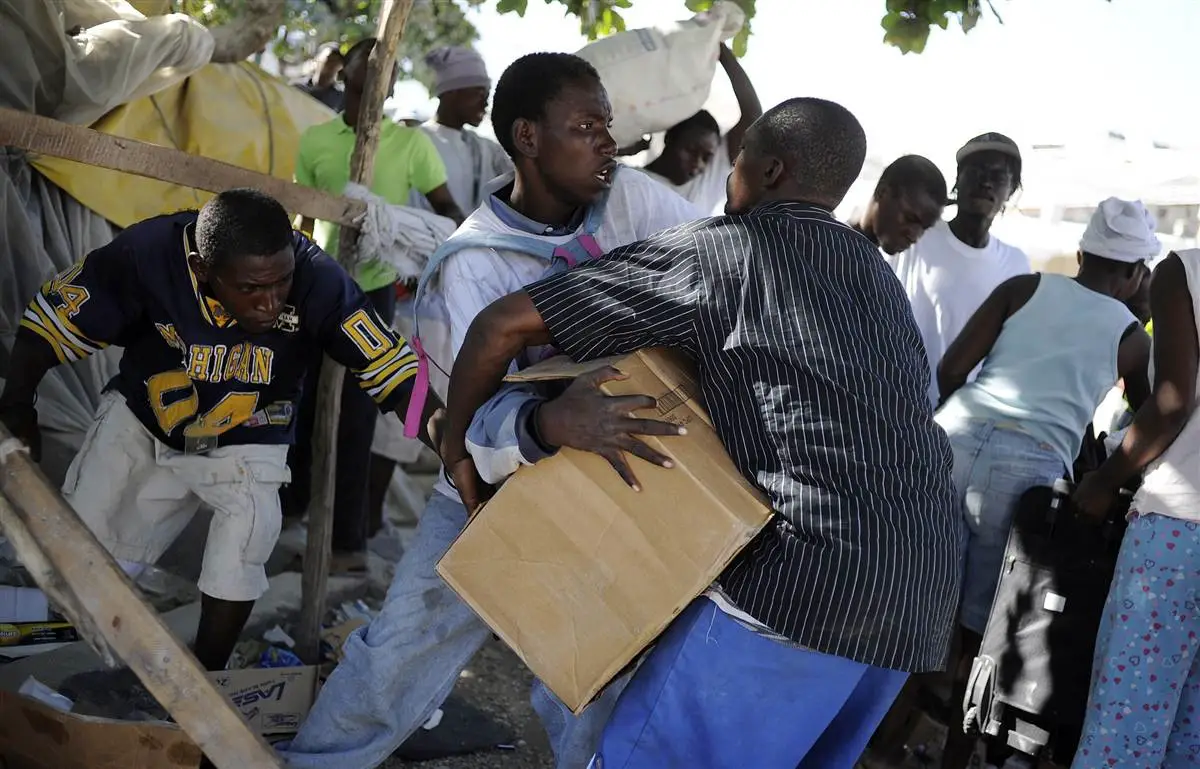
We have recently been hit with disaster after disaster in the United States. The aftermath of Hurricanes Harvey and Irma hit the mainland amidst stories of looters and people standing armed to protect homes and businesses. In the Carribean, lawlessness was rampant, and after Hurricane Maria devastated Puerto Rico, the danger from armed people robbing those who still had some supplies was constant. As I write this, there are uncontrolled wildfires tearing through California wine country, and looters are striking the homes of evacuees.


Of course, we are seeing reports of this now, but later will these stories be “debunked” by “experts” like the stories from Katrina and Sandy?


It’s entirely likely because most people would prefer to live smug in the belief that the police are only seconds away, their neighborhoods are immune to looters and vandals, and that America is a place of exceptional order and civilization. It comforts them to believe these things.  They use it as ammunition so they can scoff at “doomsday” preppers and call them “conspiracy theorists.”


But we know differently, and today, bloggers and alternative media are also documenting these stories before history is erased. I have watched for years as supplemental links in stories I have written have disappeared. I have witnessed the changing narratives, and if you’re reading this, you probably have too.


So, don’t be discouraged in your efforts when you read all the “good news” stories that inevitably show up after a disaster. To be sure, there are some wonderful people out there helping their neighbors, but there is also a dark side that the media prefers to ignore.


You saw it when it was happening. You know the truth, even if the disaster myth narrative would have you believe otherwise.

Friday, October 6, 2017

Musk Is Sending A "Powerwall Team" To Puerto Rico To Restore Electricity

Update: Tesla"s Musk confirms he is sending an "experience powerwall team" to Puerto Rico to investigate reports of price gouging and oversee installations of Tesla"s "Powerwall" home battery - a product that was initially develoepd by Solar City.


*  *  *


As we detailed earlier, Tesla CEO Elon Musk wants you to know that Tesla could rebuild Puerto Rico"s devastated power grid and make it more resilient, and more efficient, than ever before.


In what appears to be another in a series of exaggerated claims made by the Tesla CEO, Elon Musk said he believes his company could rebuild Puerto Rico’s power grid using batteries and solar power technology to make energy on the island less costly. Tesla tweeted his claim in response to a story published by Earther.com about Puerto Rico"s "once in a lifetime" opportunity to build a cutting-edge power grid.


Musk"s claims apparently caught the attention of Puerto Rico Gov. Riccardo Rossello, who tweeted "let"s talk" at Musk following the latter"s claim. Musk, for his part, responded that he"d be more than happy to discuss the possibility with Rossello, adding that Tesla "could be helpful."


Of course, while Tesla has build solar energy grids for smaller islands, the company hasn"t taken on anything even approaching the scale of rebuilding Puerto Rico"s shattered energy infrastructure. Most recently, Tesla biild a solar eergy grid for the Hawaiian island of Kauai. However its population is only around 70,000 people, whereas Puerto Rico’s is 3.4 million. As Newsweek points out, the island"s aging power grid relies on fossil fuels that must be imported by the island, a costly expense. Solar batteries could help alleviate the financial strain on Puerto Rico as it struggles with $74 billion in debt, a large chunk of which is owed by Prepa, the island"s power authority.


Figures provided to Newsweek by the Kauai Island Utility Cooperative showed that it projects fossil fuel usage will be reduced by 1.6 million gallons per year thanks to the new solar gird. If Tesla could scale this proportionally for Puerto Rico, the island could potentially reduce its fossil fuel consumption by 78 million gallons a year.


As Newsweek points out, this isn"t the first time Musk has publicly offered to help a country with its energy crisis. Earlier this year, Musk claimed that it would take Tesla less than 100 days to solve power problems in the Australian state of South Australia by building a giant battery farm.


Puerto Rico’s electrical grid was utterly devastated by Hurricane Maria and Hurricane Irma. Weeks after Maria made landfall on the island as a category four storm, fewer than 10% of Puerto Ricans have access to electricity.

Thursday, October 5, 2017

"It Will Be A Disaster": Puerto Rico To Run Out Of Cash On October 31

While Puerto Rico is way beyond a simple solvency crisis, having already filed for bankruptcy earlier this summer - and courtesy of Donald Trump there is now debate whether or not the island"s $74 billion in debt will be forgiven outright - it is now also on the verge of a full-blown liquidity collapse. According to Treasury Secretary Raul Maldonado, Puerto Rico faces a government shutdown on Oct. 31, at which point it will run out of cash, resulting in a halt to its hurricane recovery, unless of course the US doesn’t provide billions in emergency funds.


Indeed, while the muni bond market freaked out today after Trump said on Tuesday night that Puerto Rico"s debt may need to be "wiped out", focusing attention on the commonwealth’s staggering $74 billion debt, Puerto Rico faces a more immediate crisis in the wake of the storm: it is about to run short of money for fuel, salaries of recovery workers and food aid.


Meanwhile, only 8.6% of customers have electricity, mobile-phone service is sharply curtailed and many mountainous rural areas remain inaccessible.


According to Bloomberg, the U.S. commonwealth’s bankrupt government is burning through the $1.6 billion it had on hand before Hurricane Maria devastated the island. Furthermore, with widespread damage to telecommunications systems and the electricity grid, the Treasurer said he be unable to begin collecting sales tax for at least another month.


“I don’t have any collections, and we are spending a lot of money providing direct assistance for the emergency,” he said in an interview in San Juan. “Without the assistance from Congress, Puerto Rico’s government will not be able to operate next month.”


“You have conservatively over 100,000 homes that are destroyed here,” Governor Ricardo Rossello said an interview Wednesday.


“Essentially you’re looking at zero revenue for the next couple of months,” he said. “While you have zero revenue, you still have expenditures, plus emergency expenditures. That means the money is going to run out very quickly."


Hence the need for Uncle Sam to step in: Maldonado said he has requested between $6 billion and $8 billion in aid from Congress to keep the government running for “a few months.”


And unless Congress does step in, Puerto Rico will go dark in just under a month. Literally.


The treasurer said he has set aside funds to make payroll and pension payments in October. But if Congress fails to act, he said the island is facing a "total shutdown” on Nov. 1 that would curtail essential services and the distribution of aid.


The good news for Puerto Rico is that, at least at first glance, Congress is willing to cooperate:


Senate Majority Leader Mitch McConnell said in a press statement that the Senate stands ready to help. House Speaker Paul Ryan’s office didn’t respond to a request to discuss the Oct. 31 run-dry date. Nancy Pelosi, the Democratic House minority leader, said earlier Wednesday that the Treasury Department should extend a loan to help Puerto Rico in the short term.


That said, Congressional enthusiasm may be dampened once the broke island comes asking for tens of billions more for its long-term recovery efforts.


Destroyed PR homes sit surrounded by debris from Hurricane Maria


Also on Wednesday, the Trump administration was finalizing a $29 billion disaster-aid request covering a series of major storms in the U.S. But Puerto Rico’s control board, created by the law that allowed the commonwealth to enter bankruptcy, has said Maria may have caused as much as $95 billion in damages, more than the island’s annual gross domestic product.


Meanwhile, perhaps sensing that Congressional, and Trumpian generosity, may soon reach its limits, Puerto Rico control board, which has broad oversight over the island’s finances, requested for immediate aid Tuesday. "In a letter the panel sent congressional leaders, the officials asked the federal government to make low-interest loans available to ease the impending liquidity crisis."


And, in a deja vu moments from Hank Paulson"s request for a blank check from Congress ahead of the TARP bailout of US banks, Puerto Rico did its best imitation of requesting the "greatest amount of federal aid", or else:


“Failure to provide the greatest amount of federal aid and the emergency liquidity program will be potentially ruinous," chairman Jose Carrion wrote. "We must do all that we can to help Puerto Rico avert a tragedy of historic proportions."


The panel also asked that the federal government waive cost-sharing limits, disaster spending caps and grants for long-term relief. Then, for his final Hank Paulson rendition, Maldonado said that If Congress doesn’t act, “it will be a disaster.”

Thursday, September 28, 2017

Puerto Rico’s Looming Medical Crisis Is About To Explode

It has been one week since Hurricane Maria devastated the island of Puerto Rico. And inside hospitals and clinics, doctors have limited supplies and will soon run out of diesel to power the buildings.

The looming medical crisis is set to explode at any time. Dr. María Rodríguez is the medical director of Concilio de Salud Integral de Loíza, a community health center in a small town in the northeastern portion of Puerto Rico.  She told CNN that she only has six hours of diesel left. Fuel distribution has been inconsistent and there just isn’t enough. Once Dr. Rodríguez is out of fuel, she will have no choice but to close her doors.

With the fuel and power shortages, she expects the top health concern in the days ahead will be infectious diseases. As people who need medications do not get them, she predicts mental health issues will become a problem as well.  “The desperation that all these people have, they’ve lost everything — on the whole island,” she says.


“What else we can do?” she asks. “I haven’t seen anything like this.” For 24 years, she’s worked at the center, which serves about 15,000 underprivileged patients each year. Despite the possibility of a power outage, she and her co-workers are still trying to provide services to the best of their ability. In normal conditions, the center provides everything from primary care and pharmacy services to X-rays. “We can do some things. I have a stethoscope and the antiseptics and I can prescribe. But the pharmacy can’t work with that, they need the system — they need labs to provide medications to these patients,” Rodríguez says.


“It will get worse before it gets better,” she says. Her feelings are shared by other health care providers on the island as well, who believe a medical crisis is about to unfold. Dr. Robert Fuller, an emergency medicine physician at the University of Connecticut and International Medical Corp. arrived in Puerto Rico to help those whose lives are on the line.


“I didn’t realize it was gonna be corner-to-corner everybody affected by the storm,” says Fuller, squinting into the sunlight. “Every family’s been touched and disturbed in some way or another. And the degree of destruction — the power the storm had — took me by surprise.” Communities are disabled by the storm, he says, yet it’s fuel and electricity that are driving this disruption.


“If we had good logistics and good communications, things could probably settle out a little faster,” Fuller says. However, the lack of those things could lead to a medical problem, since medications might not be delivered where needed. Puerto Rico is a “complicated mess” right now, he says. –CNN


It’s not a matter of human resources, says Dr. Fuller. “It’s a matter of getting the medications and treatments to the people.” It’s also a matter of being able to move around and get services to people, which cannot happen without fuel. Unless medical supplies and fuel to run clinics and hospitals can get to the devastated island, and soon, the looming medical crisis will explode, and it could cost some their lives.