Showing posts with label Geography of the United States. Show all posts

Friday, December 22, 2017

Baltimore Murder Rate Surges Again In 2017 (Now Tied With Venezuela); Here"s How Your City Fared...

Once again this year, the Brennan Center for Justice has analyzed violent crime stats from the 30 largest cities in America to provide some insight on national trends.  Not surprisingly, this year"s report has is full of more bad news for the residents of cities like Baltimore and Chicago that have experienced devastating spikes in homicides over the past two years.


Looking at homicides per capita in 2017, Baltimore is clearly the most dangerous large city in the U.S. with a murder rate that is more than 4x the average of other large cities and some 40% higher than the second most dangerous city of Detroit.  To put things in perspective, the murder rate in Baltimore is now exactly tied with Venezuela at 57.2 murders per 100,000 residents.


Of course, as our readers are undoubtedly aware, high violent crime rates in cities like Baltimore and Chicago are hardly a new phenomenon.  Therefore, we decided to take a look at year-over-year changes in murder rates by city and made some interesting discoveries.  While Charlotte saw the biggest YoY spike, cities like San Francisco and Seattle, both of which are experiencing tech-induced economic booms, were also at the top of the list.


Finally, and not surprisingly, in terms of total homicides, the city of Chicago is still the big "winner" in 2017 with nearly double the number of murders of Baltimore.


Of course, as the Brennan Center notes, it"s not all bad news as aggregate crime in the nation"s top 30 cities declined 2.7%...


The overall crime rate in the 30 largest cities in 2017 is estimated to decline slightly from the previous year, falling by 2.7 percent. If this trend holds, crime rates will remain near historic lows.


The violent crime rate will also decrease slightly, by 1.1 percent, essentially remaining stable. Violent crime remains near the bottom of the nation’s 30-year downward trend.


The 2017 murder rate in the 30 largest cities is estimated to decline by 5.6 percent. Large decreases this year in Chicago and Detroit, as well as small decreases in other cities, contributed to this decline. The murder rate in Chicago — which increased significantly in 2015 and 2016 — is projected to decline by 11.9 percent in 2017. It remains 62.4 percent above 2014 levels. The murder rate in Detroit is estimated to fall by 9.8 percent. New York City’s murder rate will also decline again, to 3.3 killings per 100,000 people.


Conclusion: "What the hell is going on in Chicago"...and Baltimore and Detroit and Memphis and San Francisco and Seattle and....


Here is the full report from the Brennan Center for Justice:


Tuesday, November 21, 2017

Entire Baltimore Neighborhood Under Lockdown: "Police Declared Martial Law"


Five days ago, Det. Sean Suiter, a married father of five and an 18-year veteran with the Baltimore Police, was patrolling the streets of West Baltimore around 5pm last Wednesday when he saw suspicious activity. Suiter approached a man and was shot point blank in the head, in a summary execution. He was rushed to the hospital in critical condition where he later died of his injuries.


In response, Baltimore Police reacted with ‘fire and fury’ turning the neighborhood where Suiter was shot into an “open-air prison”, shutting down city streets and enabling checkpoints for citizens while officers in tactical gear went door to door, according to Baltimore Brew. Residents were prohibited from entering their own neighborhood unless they showed proper identification, these extreme measures have been in place for 4-5 days.


“They’ve been to my house three times asking, ‘Did you hear anything? Do you know anything,’” said Edward Stanley, a local resident, who had to show a yellow slip before entering the neighborhood.


Baltimore Brew said, the neighborhood was tuned into “open-air prison”, as the complete lockdown was in attempt to collect evidence and search for the shooter.


Police initially said they needed to cordon off the area to try to capture the shooter. Police have said Suiter was in the 900 block of Bennett Place, investigating a previous homicide, when he was shot on Wednesday. So far, no arrests have been announced in the case. This morning, homicide detective Mike Newton told The Brew that the lockdown was necessary to collect evidence.


One community group took pictures of a checkpoint in West Baltimore.


Another twitter account describes how ‘the police declared marital law’, as one police officer with an assault rifle guards a corner.


Citizens describe how their day lives have been disrupted as West Baltimore remains under police control, as per Baltimore Brew:


Two women walking down Franklin Street to get to their cars, parked blocks away because of the lockdown, complained that they had been harassed by officers.


“They know I live here. They’ve seen me come and go. But this one had to pat me down. He [the officer] went like this to my jacket, grabbing it,” said Shelly, 25, who asked that her last name not be used.


“They wanted to know where I had been. Why do I have to tell him that? It’s just me in my flip-flops trying to go to my own home.”


“We haven’t been able to get our mail for four days,” said the woman with her, Samantha, 50, who also asked not be identified. “Is the city going to pay the late fees on my bills?”


“It’s so sad what happened to the officer and I hope they catch whoever did it,” another woman said. “But this is really overboard. I’ve never seen anything like it.”


The ACLU of Maryland released a statement yesterday, who are “troubled by reports that some persons entering or leaving the area have been subject to pat down searches, and that non-residents have been barred from entering the area”.


“While the search for a killer is, of course, a high priority for the police, the limits on lawful police behavior do not disappear even when engaged in that pursuit.  And at least one federal appellate court has said that a similar police cordon and checkpoint system was unconstitutional.


“The residents of Baltimore, and, in particular, the residents of the affected community, deserve a clear explanation from the City as to why this unprecedented action has been taken, what rules are being enforced, and why it is lawful.  The need to secure a crime scene from contamination to preserve evidence does not, on its face, explain the wide area to which access has been restricted for days after the incident.”


On-the-ground information is scarce to those outside the cordon because access to residents, including by the media, has also been restricted. For that reason, we encourage anyone who has this kind of information to contact us at curtis@aclu-md.org.


WBALTV11 visited one checkpoint in West Baltimore:


According to one citizen, ‘this is the 3rd time in less than 3 years that West Baltimore has been occupied by police’…


Baltimore Brew concludes by saying the Baltimore Police will “clear the crime scene” on Monday, so in a few hours.


Perhaps in a preview of things to come, the 4-5 day siege of West Baltimore by Police has been described by one resident as ‘Martial Law’. Readers concerned about social tensions in the US are urged to monitor events in Baltimore, which better than Chicago or Detroit now demonstrates just how the United States is marching straight into a new, Orwellian era.


Friday, November 17, 2017

Attendance At Baltimore City Schools Crashes To 13 Year Low Just As Juvenile Crime Spikes

Project Baltimore, an investigative reporting series conducted by a local Fox affiliate in Baltimore City, has sifted through over a decade of high school records and discovered that attendance at city high schools in 2017 suddenly dropped to a 13-year low of just 76%.  Just to state the obvious, the average high school in Maryland has around 1,200 students so that means that, on an average day, nearly 300 of them don"t bother to show up.


Adding insult to injury, Baltimore City Police Spokesman T.J. Smith told Fox 45 that it"s no coincidence that violent crime is spiking in the city just as more and more teenagers are opting to skip class.


From violent attacks on Halloween night, to a terrifying carjacking and a man pushed into the Inner Harbor. Baltimore City is under siege by criminals that, police say, are teenagers.


“Every single one of them involve juveniles, who are all walking the streets today because they are probably not in school, where they belong.”


Meanwhile, Project Baltimore found that 39% of Baltimore City high school students were technically considered "chronically absent," a threshold that should result in fines or even jail time for parents...that is, if school administrators actually fulfilled their reporting requirements.


As we kept digging, we discovered this: In Baltimore City, 39 percent of high school students are considered chronically absent, or truant, by missing more than 20 days. That’s 8,400 teenagers who regularly are not going to school.


“Hearing that number, that’s a lot of young people who could have something to do during those hours that might be on the street doing something they shouldn’t be doing,” said Smith.


If a child between 5 and 18-years-old doesn’t go to school, state truancy laws hold parents accountable with up to $500 in fines or jail time.


Of course, as we noted previously, another Fox 45 investigation found that truant kids are being routinely passed through Baltimore City schools even if they don"t bother to show up for a single day of class during an entire school year (see: "It"s Very Common": Baltimore Teacher Admits To Passing Students That Never Showed For A Single Day Of Class)


But this teacher says grade changing at Calverton goes much further than just taking a failing grade and making it a 60. Some students who pass, according to this educator, don’t even have grades because they’ve never showed up to class.


“There were students on my roster all year that I had never met, had never seen. On paper they passed my class and passed onto the next year.”


“I love my job and I love my students,” concluded the teacher. “I want to see the students at Calverton and other schools across the city, get a fresh start. And it’s going to be hard because the students are used to this now. But the students deserve better and our city deserve better.”


And, lest you think a 76% attendance rate is "normal", surrounding counties were found to be over 90%.


Not surprisingly, when asked about the excessive absences, a local high school in Baltimore City responded with nothing more than a generic sentence, undoubtedly drafted by an expensive, taxpayer-funded attorney, regarding the importance of regular attendance.


With nearly 40 percent of all city high schoolers truant, Fox45 asked North Avenue if it’s enforcing state law by reporting parents to police. We didn’t get an answer. Instead, we got a statement:


“Strong attendance is essential for students’ success, and the district has a longstanding commitment to ensuring that barriers to attendance are removed.” – Baltimore City Public Schools


The statement lists steps the District has taken to get kids to school, which include fostering strong relationships, providing laundry services, on-site childcare and running a re-engagement center to recruit dropped outs.


Of course, despite their poor attendance records, we"re almost certain that Baltimore City students will have unlimited access to $1,000 of dollars worth of student loans to attend whatever institution of higher indoctrination their hearts desire upon graduation in just a few short years...


Friday, November 10, 2017

13 Baltimore High Schools Have Zero Students That Are Proficient In Math

For the past several weeks, one Fox affiliate in Baltimore has been publishing some staggering stories about the Baltimore public school system under an investigative series called "Project Baltimore."  Just a few weeks ago we noted one of those stories in which an undercover teacher admitted that public schools routinely pass kids that never even bother to show up for class a single day during the school year.


Now, a stunning new installment of the Project Baltimore series from Fox 45 reveals that 13 public high schools sprinkled around Baltimore, of the city"s 39 total, had exactly 0 kids that tested proficient in math. 


An alarming discovery coming out of City Schools. Project Baltimore analyzed 2017 state testing data and found one-third of High Schools in Baltimore, last year, had zero students proficient in math.


Project Baltimore analyzed 2017 state test scores released this fall. We paged through 16,000 lines of data and uncovered this: Of Baltimore City’s 39 High Schools, 13 had zero students proficient in math.


  • Achievement Academy

  • Carver Vocational-Technical High

  • Coppin Academy

  • Excel Acadamy @ Francis M. Wood High

  • Forest Park High

  • Frederick Douglass High

  • Independence School Local 1

  • Knowledge and Success Academy

  • New Era Academy

  • New Hope Academy

  • Northwestern High

  • Patterson High

  • The Reach! Partnership School


Meanwhile, digging a bit deeper, Fox 45 also found that of the 3,804 students in Baltimore"s worst 19 high schools, only 14 of them, or less than 1%, were proficient in math.


Digging further, we found another six high schools where one percent tested proficient. Add it up – in half the high schools in Baltimore City, 3804 students took the state test, 14 were proficient in math.


  • Ben Franklin H.S. at Masonville Cove

  • ConneXions: Community Based Arts SchoolDigital Harbor High School

  • Edmondson-Westside High

  • Renaissance Academy

  • Vivien T. Thomas Medical Arts Academy


Not sursprisingly, only one Baltimore school replied to Fox 45 with a generic comment suggesting that improvement is difficult and "will take time."  That said, why do we suspect that "improvement" will also take just a little more taxpayer money despite the fact that Baltimore already spends $16,000 per year per student...which, mind you, is more than many private schools that deliver far better results.


With these eye-opening results, Project Baltimore reached to North Avenue. But no one inside the building would sit down to answer our questions. Instead, we got a statement. Concerning our investigation, it read, “These results underscore the urgency of the work we are now pursuing. We must do more to meet the needs of all our students.”


That work, according to the statement, involves a new math curriculum started this year, enhanced teacher development and expanded partnerships to provide opportunities for students.


The statement concludes, “There is no simple answer that will close the achievement gap for Baltimore’s students. Though we all want to see results quickly, the work is hard and will take time.”


Of course, we"re almost certain that these poor results have absolutely nothing to do with Baltimore"s stellar, unionized teachers and administrators who will undoubtedly get to maintain their jobs and exorbitant public pensions despite the complete failure of their students.


Monday, November 6, 2017

Baltimore"s Weekend "Cease-Fire" Shattered As Off-Duty Cop Gunned Down

Baltimore’s second attempt at a 72-hour ‘cease-fire’ was cut short for the second time this year after an off-duty Washington police officer was killed and a women wounded on Saturday.


According to The Baltimore Sun homicide data base, Sgt. Tony Mason Jr.,40, was shot and killed on the upper west side at 2800 Elgin Avenue. Reports from NBC News, indicate Mason was struck by a fatal bullet inside a parked vehicle, where he was later transported by ambulance to a nearby hospital and died...


Unfortunately, Saturday’s shooting occurred just 26-hours into the 72-hour ‘Nobody Kill Anybody Baltimore Cease-Fire’ campaign empowered by community activist who seek change in Baltimore after 50-years of democratic controlled leadership and de-industrialization compounded with an opioid crisis has left the city in an utter mess. The last ‘cease-fire’ in August failed about 40-hours in, as two killings thwarted efforts by community activist. It appears that ‘cease’fire’ events will become more prevalent as the community attempts to raise awareness. The problem with Baltimore and many other cities across the United States is that democratic controlled leadership did not allow media to cover the complete mess in their inner cities. As consciousness increases across America, Americans are figuring out their empire is dying. People are now demanding change.


On Thursday, just one day before the ‘cease-fire’ started, 3 homicides pushed Baltimore’s murder count above 300 making it the third year in a row. Ever since the Ferguson effect in 2014, death and destruction has taken over the city. Sadly enough, The Economist is forecasting a record year for homicides with their models pointing to over 400.


Visualizing the Ferguson effect in Baltimore shows an increase in gun violence after events in Ferguson, Missouri (2014), Freddie Gray (2015), and Baltimore Riots (2015). These events have contributed to Baltimore’s demise, as the city is spiraling out of control plagued in gun violence and an opioid crisis. Yet, it goes unnoticed, despite Baltimore’s homicide rate is doubled of Chicago’s.


As of November 5th, Baltimore’s homicides for 2017 crested over 300. Notice how the homicides are not limited to a certain area of the city, but are wide spread. Oddly enough, homicides are contained with-in the I-95 corridor.


Last week, we warned “the idea of the second ceasefire failing is a very real possibility”, and as of Saturday morning it has.


The blackmarkets of Baltimore or specifically the opioid trade are simply not going to stop for a community led ‘cease-fire’. Listen to leaders of the ‘cease-fire’ back in August calling-out Baltimore and comparing it to a “warzone“.


Remaining events for Baltimore CeaseFire for Sunday:


Sunday, October 29, 2017

Grade-Rigging Scandal Escalates: Baltimore Schools CEO Issue Memo In Response To Investigations

In recent times, we have covered a grade-rigging scandal in Baltimore, Maryland that is worth paying attention to. Baltimore City Schools could be on the verge of gaining national attention, as the prime example of America’s broken education system.


Project Baltimore, an investigative reporting initiative, by Sinclair Broadcast Group Inc, the largest U.S. broadcaster, has led the charge via lead investigator Chris Papst in uncovering evidence, which suggests Baltimore City school officials are running a grade manipulation scheme in the public school system.


In a report from August, Chris Papst’s team uncovered documents suggesting one school in Baltimore has the highest graduation rate in the area with zero students proficient in math. Throughout 2017, Project Baltimore has made the case with evidence—- grade manipulation is widespread.


Evolution of Project Baltimore’s evidence:


Back in May, Chris Papst’s team found “6 Baltimore schools, no students proficient in state tests”


Project Baltimore uncovers serious grade changing allegations at Baltimore City H.S


Baltimore City Schools panic—> launches internal investigation on grade-rigging


How can a high school with zero students proficient in math have the highest graduation rate?


Balt. City Teacher tells Project Baltimore: “We have graduated kids who can’t read the diploma”


Investigation into grade manipulation expands in city schools


Balt. School Administrator tells Project Baltimore 70% of City Schools change grades.


Baltimore City Schools #1 in America in Admin. costs says Project Baltimore


Project Baltimore: Text Message Instructs City Teachers to Change Grades


Now the Governor of Maryland responds to the grade manipulation scandal in Baltimore


As Project Baltimore’s evidence builds, City Schools CEO Dr. Sonja Santelises finally responds on allegations of grade rigging...


Per Project Baltimore,


In the memo, Dr. Santelises says grade changing does a “deep disservice to our students.”


She then outlined corrective steps the District has taken. In addition to launching internal investigations into two city schools, the central grading system is being analyzed, school leaders were issued grading guidelines and mandatory training has been ordered for those who input grades. Santelises concludes by calling our investigations “disheartening”.


She ends on a positive note saying, “I know that every day there are countless positive stories of learning, leadership, and professionalism unfolding in our schools.”


Full Memo:


Dear Colleagues,


As we finalize first-quarter progress reports for distribution to students and families, many of you are no doubt concerned by recent news reports alleging widespread grade-changing in past reporting periods. I am concerned, too, and I want you to know that we are taking the reports very seriously. In August, we began an analysis of grade data held in our central systems. We have also provided school leaders with detailed guidance on required practices and processes regarding grade-changing and have instituted mandatory training for grade reporters.


Our responsibility to uphold the highest standards of professional integrity includes ensuring the accuracy of reporting on student achievement. Anything less undermines our professionalism and, more important, does a deep disservice to our students. Of course, there are legitimate reasons for changing grades—inadvertent omission of a grade on an assignment, late submission of make-up work, simple typographical errors that need to be corrected. But it is imperative that teachers take the utmost care in entering grades, and that all staff involved in grade reporting follow established procedures for reviewing and finalizing grades.


If you have questions about grading policies, please speak with your school leader or contact the Academics Office at 410-396-8810. I also encourage any staff member with knowledge or suspicion of improper or unethical behavior to report it, so that it can be investigated appropriately. Reports, which can be anonymous, can be submitted online or by calling 1-800-679-0185.


Both the seriousness of this issue and the sensational tone of the news reporting about it are disheartening. But I know that every day there are countless positive stories of learning, leadership, and professionalism unfolding in our schools.


I encourage you to keep those stories in mind and to share them with your colleagues, school communities, and social networks as a daily reminder of the important work that City Schools students, teachers, and staff are accomplishing together.


Sincerely, Sonja Brookins Santelises. Chief Executive Officer


Monday, October 23, 2017

Amazon Has Received 238 Proposals For The Company"s Second Headquarters

Just days after we reported that in the mad dash by virtually every American city to become Amazon"s second headquarters, in which some such as New Jersey offered as much as $7 billion in state and city tax credits, today Amazon announced that that it has received 238 proposals from "cities and regions in 54 states, provinces, districts and territories around North America" who want to host the company"s second headquarters, also known as HQ2.


As CNBC reports, bids for the new headquarters were due to Amazon on Thursday, Oct. 19. Cities big and small from across over America, from Newark to Boston and hundreds inbetween are trying to impress Amazon and the more than $5 billion it plans to spend on its second headquarters. One Georgia town"s mayor went so far as promising he would rename the town "Amazon" if the company agreed to build there.


Amazon didn’t name any of the bidders or say when it would come up with a short list for its potential picks. Cities including New York, Boston, Atlanta, Nashville and Austin, Texas, have said they applied for the new corporate site, which is expected to generate 50,000 high-paying jobs over nearly 20 years.


As noted previously, Amazon had very specific requirements for cities that are interested in placing a bid: it wants a city with an established mass transit system, easy access to international airports, availability of software developers and other tech talent, cultural fit and the ability to move into a

phase-one site as early as 2019. Other items on its wish list: a metro

area of more than one million people and tax incentives.


Still, as the WSJ adds, it is unclear where Amazon might land. “I don’t think any one market fits everything. It’s going to be a balancing act of the various attributes,” says Dave Bragg, a managing director at Green Street Advisors, which conducts real-estate research.


Amazon has increased its workforce from a few thousand to more than 40,000 over the past decade. And it is still planning to add 2 million square feet and 6,000 people in the next 12 months.


But to keep growing, the company needs more space. Amazon has said that it will give its team leaders a choice between staying in Seattle, relocating or being based out of both. It has said that the average pay for the new jobs will be around $100,000, depending on where it locates.


Recently Bloomberg laid out some of the cities that have a good shot at hosting HQ2:


Atlanta: The southern U.S. city, home of Amazon delivery partner United Parcel Service Inc., is a major flight hub, and the greater metro area houses a dynamic population of almost 6 million, as well as the headquarters of major corporations like Coca-Cola Co. and Home Depot Inc. Still, Atlanta is a relatively suburban city, compared with the urban HQ1 of Seattle.


Boston:  Several Amazon executives have already advocated putting HQ2 in Boston, due to its proximity to Harvard University and Massachusetts Institute of Technology; an airport with nonstop flights to Seattle and Washington D.C.; and a lower cost of living than some other large urban areas. Amazon has ties with Boston already, having purchased local robot maker Kiva Systems Inc. for $775 million in 2012. The city also won General Electric Co.’s 2015 new headquarters bid, and has provided more than $100 million in grants, property tax relief and programs for GE – though the city has said it won’t negotiate any incentives with Amazon until Boston makes it past the first round of the selection process.


Chicago:  The Windy City ranks second in Anderson Economic Group’s analysis of 35 cities competing for the precious HQ2, focusing on its talent, diverse ecosystem and access to transportation in its bid. Just last month, Illinois Governor Bruce Rauner reauthorized the Economic Development for a Growing Economy (EDGE) tax-credit program, which provides special tax incentives to companies relocating to Illinois or expanding operations in the state when another state is actively competing, according to BNA. One issue? The city isn’t known as a center of technology.


Denver:  Denver has a busy international airport and is surrounded by a highly educated workforce. It’s also home to a surge of millennials looking for high-tech and energy jobs in Colorado, and boasts an outdoorsy lifestyle that’s an easy fit for Amazon’s quality-of-life considerations. Colorado has also chosen eight sites that meet Amazon’s requirements for HQ2. Still, other cities are offering larger tax breaks than Denver.


Detroit:  Detroit offers low rent and the potential for larger tax breaks, because the city and the state of Michigan are still trying to turn themselves around and diversify from manufacturing. Michigan is also home to three big universities that produce a broad pool of talent. According to Michigan State University, 70 percent of its engineering graduates remained in the state. Even so, Governor Rick Snyder has said he will not ask the state legislature to approve additional incentives just for Amazon, according to Crain"s Detroit Business. The city’s mass transit system also isn’t on par with some other cities in the running, and Detroit has a smaller tech scene.


New York:  In its bid for HQ2, the Big Apple is pitching its diverse workforce, robust university ecosystem and access to advertising, fashion and other industries. Brooklyn is emerging as an attractive component of the bid, with its building boom and throngs of young residents. New York is so serious about HQ2 that Mayor Bill de Blasio had landmarks around the city, including the Empire State Building and One World Trade, lit up in "Amazon orange" on Wednesday night. (Neighboring Newark, New Jersey, is also jumping in to bid, offering practically the same workforce with $7 billion in potential tax credits.) The bid by the biggest U.S. city may be at a disadvantage because of limited space for construction and already-high housing costs.


Amazon is expected to reveal the home of its new headquarters some time in 2018.


Separately, in its quest to consume all possible information about its clients, next month Amazon customers in select US states will be able to order take-out from certain local restaurants directly through the Amazon app. Users will be able to browse participating restaurants, place their order and checkout with stored payment information all through the app, without any additional accounts or logins needed.


The expansion of Amazon Pay integrates Clover point-of-sale systems, sending orders directly to restaurants in select states in the Northeast U.S.  "Clover has the technology and scale we needed to bring this vision to life," Amazon said in a statement. "We"ve had an ongoing partnership with Clover — we used them to great success with our Kindle pop-up stores — and it was only natural to expand on that."


According to CNBC, the restaurant take-out service is already available for orders from T.G.I. Fridays as of July and will expand to include restaurants in New York, Massachusetts, Connecticut, New Jersey, Pennsylvania, Maryland and Washington D.C. — and, of course, the Seattle area.


Wednesday, October 11, 2017

The Disaster Myth Narrative: No One Panics, No One Loots, No One Goes Hungry

Authored by Daisy Luther via The Organic Prepper blog,


“The most effective way to destroy people is to deny and obliterate their own understanding of their history.”  ~ George Orwell


A few years back, I was doing some research about the aftermath of some natural disasters that took place here in America. I was shocked to find that the articles I was looking for – ones that I had read in the past – were pretty hard to find, but articles refuting the sought-for pieces were rampant.  Not just one event, but every single crisis aftermath that I looked up, had articles that were written after the fact stating in no uncertain terms that the hunger, chaos, and unrest never happened.


Apparently we, the preparedness community, are all wrong when it comes to the belief that after a disaster, chaos erupts and civic disorder is the rule of the day. That is only a disaster myth, and the public narrative belies it all.


Listen to the “experts” and they will confirm, it never happens.


looters2


Panic?  What panic?


According to newspaper articles written after Superstorm Sandy devastated the East Coast and after Hurricane Katrina caused countless billions in damage in New Orleans, people were calm, benevolent and peaceful.  Heck, they were all standing around singing Kumbayah around a campfire, sharing their canned goods, calming frightened puppies, and helping the elderly.


Apparently, studies prove that the fear of anarchy, lawlessness, and chaos is nothing but the “disaster myth”.  Reams of examples exist of the goodness and warmth of society as a whole after disaster strikes. All the stories you read at the time were just that – stories, according to the mainstream media:


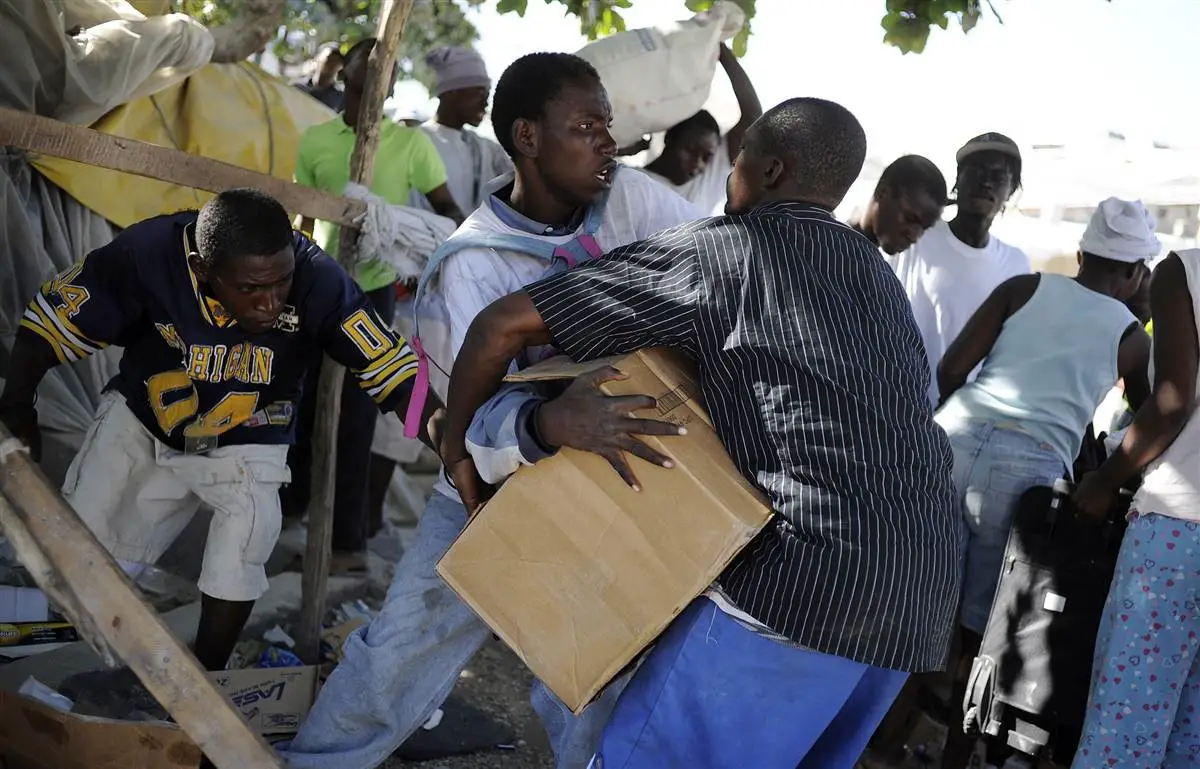
Yet there are a few examples stubbornly fixed in the popular imagination of people reacting to a natural disaster by becoming primal and vicious. Remember the gangs “marauding” through New Orleans, raping and even cannibalizing people in the Super-Dome after Hurricane Katrina? It turns out they didn’t exist. Years of journalistic investigations showed them to be racist fantasies. They didn’t happen. Yes, there was some “looting” — which consisted of starving people breaking into closed and abandoned shops for food. Of course human beings can behave atrociously – but the aftermath of a disaster seems to be the time when it is least likely. (source)


Looting?  Only hungry people getting food from unmanned stores. Who wouldn’t do that?


Beatings and assaults?  Didn’t happen. Disturbed people made these stories up for attention.


Gang rapes?  No way. You watch too much Law and Order: SVU.


Murder, mayhem, and gangs of youth on the streets?  Silly readers – we just made that up.


loot


The Disaster Myth is a narrative created by the establishment and delivered by their stoolies in the mainstream media.  The Disaster Myth points fingers at many of the things that are commonly believed to be true by the preparedness community.  Included in this narrative:


  1. People do not panic after a disaster – instead, they pull together.

  2. The official government response is always speedy and appropriate – unless you are a person of color, in which case you will be denied assistance based on your race, because racism is the current agenda

  3. You will be taken care of if you simply comply peacefully with authorities.

  4. There is little increase in post-disaster crime.

These statements all stand in direct opposition to the stories we hear from news sources during the crisis.  We heard terrible stories from eyewitnesses who suffered from hunger, thirst, and unsanitary condition in the Superdome after Katrina.  We heard about citizens being robbed of their 2nd Amendment rights by police after the crisis, and we heard about gang rapes, looting, and mayhem.  Fast forward to Sandy where people were defecating in the hallways of their high rise apartments and digging through garbage to find food just a few days after the storm.  As for the official response, who can forget the FEMA shelter that closed because of inclement weather?  Of course, the weather was inclement – it was a freaking weather-related disaster!


Mac Slavo of SHTFplan wrote of the unrest, discomfort, and mayhem after Superstorm Sandy ransacked the East Coast:


For tens of thousands of east coast residents that worst case scenario is now playing out in real-time. No longer are images of starving people waiting for government handouts restricted to just the third-world.


In the midst of crisis, once civilized societies will very rapidly descend into chaos when essential infrastructure systems collapse.


Though the National Guard was deployed before the storm even hit, there is simply no way for the government to coordinate a response requiring millions of servings of food, water and medical supplies


Many east coast residents who failed to evacuate or prepare reserve supplies ahead of the storm are being forced to fend for themselves.


Frustration and anger have taken hold, as residents have no means of acquiring food or gas and thousands of trucks across the region remain stuck in limbo.


Limited electricity has made it possible for some to share their experiences:


Via Twitter:


  • I was in chaos tonite tryin to get groceries…lines for shuttle buses, only to get to the no food left & closing early (link)

  • I’m not sure what has shocked me more, all the communities around me destroyed, or the 5 hour lines for gas and food. (link)

  • Haven’t slept or ate well in a few days. Hope things start getting better around here soon (link)

  • These days a lot of people are impatient because they’re used to fast things. Fast food, fast internet, fast lines and fast shipping etc. (link)

  • Glad Obama is off to Vegas after his 90 minute visit. Gas lines are miles long.. Running out of food and water. Great Job (link)

  • Went to the Grocery store and lines were crazy but nail salon was empty so I’ve got a new gel manicure and some Korean junk food (link)

  • So f*cking devastated right now. Smell burning houses. People fighting for food. Pitch darkness. I may spend the night in rockaway to help (link)


garbage food


At the time of the event, even the mainstream reported on the affluent East Side residents dumpster diving in search of food. Was this NBC report, complete with video, a work of salacious fiction?


dumpster-diving-sandy


As far as civil unrest is concerned, the Twittersphere was jammed with people planning looting sprees in the aftermath of Superstorm Sandy.  Those who were already of criminal leanings saw the disaster as a great opportunity. In the great North American Edit, however, these tweets are said to be part of the myth – apparently, they were just kids playing around.  Some reports pooh-poohed the very idea that looters had run amok.


looters_tweet


This article from Prison Planet refutes all of the refuting and says that the civil unrest DID occur and that it generally does, given evidence from past events.


Legends from the past? Every single extreme weather event in recent years in the United States has been followed by looting.


As MSNBC reported at the time, looting during Hurricane Katrina was so prevalent that it “took place in full view of police and National Guard troops.”


Residents described the scenes as being like “downtown Baghdad” as looters filled garbage cans full of stolen goods and floated them down flooded streets.


As Forbes’ Erik Kain points out, “looting and rioting…occur after most natural disasters,” including after Hurricane Irene as well as Hurricane Isaac.


Looters also targeted victims of the Colorado wildfires earlier this year.


Does this sound familiar?


This revision of inconvenient history will sound quite familiar to anyone who has read George Orwell’s masterpiece 1984 (which was not meant to be an instruction manual, by the way.)  In the novel, the main character, Winston Smith, worked for the Ministry of Truth, which was actually a department of propaganda whose job it was to rewrite any faction of history that did not make the government look omniscient.


In George Orwell’s novel Nineteen Eighty-Four, the Ministry of Truth is Oceania’s propaganda ministry. It is responsible for any necessary falsification of historical events. The word truth in the title Ministry of Truth should warn, by definition, that the “minister” will self-serve its own “truth”; the title implies the willful fooling of posterity using “historical” archives to show “in fact” what “really” happened. As well as administering truth, the ministry spreads a new language amongst the populace called Newspeak, in which, for example, truth is understood to mean statements like 2 + 2 = 5 when the situation warrants.


The Ministry of Truth is involved with news media, entertainment, the fine arts and educational books. Its purpose is to rewrite history to change the facts to fit Party doctrine for propaganda effect. For example, if Big Brother makes a prediction that turns out to be wrong, the employees of the Ministry of Truth go back and rewrite the prediction so that any prediction Big Brother previously made is accurate. This is the “how” of the Ministry of Truth’s existence. Within the novel, Orwell elaborates that the deeper reason for its existence is to maintain the illusion that the Party is absolute. It cannot ever seem to change its mind (if, for instance, they perform one of their constant changes regarding enemies during war) or make a mistake (firing an official or making a grossly misjudged supply prediction), for that would imply weakness and to maintain power the Party must seem eternally right and strong. (source)


We are watching narratives being created in front of our very eyes with the Vegas massacre. Every time something terrible happens, there’s a spin and that spin a) keeps us in the dark. b) encourages us to be dependent, and c) benefits someone.


But….WHY????


So why the vast effort to expunge tales of mayhem and to make it seem like our own national disasters really weren’t that bad? There are a few reasons, like pandering to an audience that wants to be blissfully unaware, but primarily, it’s about control.


Those who live a self-sufficient lifestyle are a threat to the status quo that those in power would like to see.  If you don’t NEED them, then there is no leverage to force you into compliance.  You don’t NEED to go to Camp FEMA in order to have 3 squares a day.  You don’t NEED to give up your guns in order to have a roof over your head and government supplied security.  You don’t NEED to get some kind of chip implanted in your arm to be scanned in order to receive “benefits” like medical care, food, and even money.


Self-sufficiency means freedom.  When you can feed yourself, clothe yourself, shelter yourself, and protect yourself, you are far less likely to need to cede your freedoms in order to stay alive. And in a police state that is frantically trying to withdraw our constitutional rights, this just won’t do.  They need leverage.


So the establishment has created a narrative that tells us what we are doing is silly and unnecessary.  They are rewriting history even though we only lived that history in the past decade.  Even though we know the truth of the matter because we watched it live, they are changing the facts to make us doubt our own perceptions. They are catering to the people who have no interest whatsoever in taking care of themselves.


This narrative was created to make a society of anti-preppers – of people who believe that all will be right with the world, the government is kind and benevolent, potential disasters aren’t really that big of a deal, and those crazy preppers are stark raving lunatics.  They want us to be perceived as extremists so that others are less likely to follow our examples. If they need a crazy bad guy at whom to point the finger, all they have to do is call someone a “Doomsday Prepper”. (Remember how poor Nancy Lanza was vilified after the Sandy Hook shooting?)


But…


If this civil unrest is not occurring, why is the National Guard called to keep the peace?  Why are state police riding around on tanks wearing body armor? Why were the guns of law-abiding citizens taken away in the aftermath of Katrina?


SWAT TEAM


Which version of reality are you going to believe?  The one that you actually witnessed or the perverted rewrite that the mainstream media is trying to push upon you?


Remember the things happening right now.


We have recently been hit with disaster after disaster in the United States. The aftermath of Hurricanes Harvey and Irma hit the mainland amidst stories of looters and people standing armed to protect homes and businesses. In the Carribean, lawlessness was rampant, and after Hurricane Maria devastated Puerto Rico, the danger from armed people robbing those who still had some supplies was constant. As I write this, there are uncontrolled wildfires tearing through California wine country, and looters are striking the homes of evacuees.


Of course, we are seeing reports of this now, but later will these stories be “debunked” by “experts” like the stories from Katrina and Sandy?


It’s entirely likely because most people would prefer to live smug in the belief that the police are only seconds away, their neighborhoods are immune to looters and vandals, and that America is a place of exceptional order and civilization. It comforts them to believe these things.  They use it as ammunition so they can scoff at “doomsday” preppers and call them “conspiracy theorists.”


But we know differently, and today, bloggers and alternative media are also documenting these stories before history is erased. I have watched for years as supplemental links in stories I have written have disappeared. I have witnessed the changing narratives, and if you’re reading this, you probably have too.


So, don’t be discouraged in your efforts when you read all the “good news” stories that inevitably show up after a disaster. To be sure, there are some wonderful people out there helping their neighbors, but there is also a dark side that the media prefers to ignore.


You saw it when it was happening. You know the truth, even if the disaster myth narrative would have you believe otherwise.

Tuesday, October 10, 2017

NYC Foreclosures Surge 79%; Most Since 2009

A few weeks ago we noted that New York"s "smart money" at a variety of U.S. banking institutions were tripping over each other to underwrite dividend recaps for owners of expensive commercial real estate projects just as buyers of those properties suddenly dried up completely (see: NYC Commercial Real Estate Sales Plunge Over 50% As Owners Lever Up In The Absence Of Buyers).  But we"re sure it was nothing...the 27-year-old analysts leading those bank deals, fully syndicated deals in which their respective employers will retain no risk by the way, probably just know more about the commercial real estate market than those who count themselves among the list of former prospective buyers.


Still, it does seem odd that the commercial real estate market in NYC is collapsing at the same time that residential foreclosures are surging to levels not seen since the 2009 crisis.  As Property Shark points out today, foreclosures across NYC surged 79% YoY in Q3 2017, to 859, and remain at the highest levels since the "great recession."


All 5 boroughs registered increases in the number of homes scheduled for auction, though Staten Island, the Bronx, and Brooklyn saw numbers skyrocket compared to Q3 2016, up 264%, 145% and 118%, respectively.


Meanwhile, the eastern neighborhoods of Brooklyn and the Bronx seem to be the most impacted as Staten Island foreclosures are rising fairly uniformly.


And here is a more in-depth look at the individual boroughs...


Bronx:


A record-high number of homes were scheduled for auction in Q3 2017, representing a 145% increase compared to Q3 2016. The number of cases in the Bronx kept relatively at the same levels for the past quarters with a spike in Q2 2016 but otherwise hovering around 100 homes per quarter or even lower than that. Back in the second quarter, the Bronx was the only borough that recorded a year-over-year decrease in foreclosure activity. The situation changed drastically in Q3 2017 when 247 homes were scheduled for the first time.


Zip code 10469 had the highest number of new foreclosures: 32 homes were scheduled here in Q3 2017. Not far behind, zip codes 10462, 10473, 10466, and 10465 all had close to 30 new cases each, showing a concentration of foreclosure activity in the eastern half of the borough. The graph below captures the evolution in the number of cases and the spike recorded this previous quarter.


Brooklyn:


While compared to the previous quarter’s count of 264 homes scheduled for auction, Q3 2017 seems to have brought some respite for Brooklyn, the number of homes headed for auction is still high. Q3 2017 brought a 118% year-over-year jump, given that 205 homes were headed for the auction block. When looking at Q3 2016, only 94 new foreclosures were recorded in the borough.


Zip code 11236, covering Canarsie, had the most cases filed – 31 homeowners here saw their homes scheduled to be auctioned in Q3 2017. East NY, Canarsie, and the Flatlands are usually the scene for the highest number of cases in Brooklyn, but this time we noticed increases in Southern Brooklyn zip codes as well. For example, in 11229 there were only 4 first-time foreclosures in Q3 2016, compared to 15 in Q3 2017. Bed-Stuy’s 11233 also recorded a jump in cases from 2 in Q3 2016 to 10 in Q3 2017.


The first three quarters of 2017 were particularly harsh for Brooklyn homeowners, especially compared to the numbers we tracked over the past years. While in 2016 there were a total of 410 homes scheduled for auction in the borough, with only 3 quarters elapsed from 2017, there have already been 637 new foreclosures. Check out the graph below for a detailed, by-quarter evolution of first-time foreclosures in Brooklyn.


Staten Island:


Historically, Staten Island had low numbers of homes heading for the auction block, but the second quarter of 2017 brought a record-high number: 105 first-time foreclosures were scheduled. In Q3 2017, the number went down 24% quarter-over-quarter, but it was up 246% year-over-year. That’s also due to the fact that Q3 2016 only had 22 cases, which was low even for what we’re used to seeing each quarter in Staten Island.


Queens:


Back in Q3 2016, Queens accounted for almost half of new foreclosure cases in NYC, as 227 of the 481 new foreclosures in the city were recorded in Queens . The first two quarters of 2017 brought a high number of cases with a peak in Q2. In the third quarter of 2017, however, foreclosures in Queens dropped 26% quarter-over-quarter and settled in at 288 cases.


Though still up 27% compared to Q3 2016, Queens is now far from having around half of all NYC cases, mainly as a result of the increases recorded in Brooklyn and the Bronx. In Q3 2017, the number of new foreclosures in each of the two boroughs was close to reaching the one recorded in Queens.


Queens also used to be home to the top zip code by number of foreclosures – Jamaica’s 11434 consistently had a high number of cases each quarter. This time, there were 29 first-time foreclosures in 11434, fewer than the numbers recorded in the top zip codes for both Brooklyn and the Bronx.


Not surprisingly, the only folks that haven"t experienced a surge in foreclosures are the bankers and hedgies living in Manhattan who continue to benefit from bubbly markets growing bubblier by the day...at least for now.

Sunday, October 8, 2017

"We Dodged A Bullet": Hurricane Nate Misses New Orleans, Downgraded To Tropical Depression

Residents of coastal towns and cities across the Southeastern US are breathing a sigh of relief as Hurricane Nate is rapidly weakening after twice making landfall in the Southeastern US late Saturday into early Sunday. The NHC has downgraded it to a tropical depression as it moves inland over Alabama; NHC has also discontinued all storm-related warnings for coastal areas, though heavy rains and flooding continue in some areas. The storm"s maximum sustained winds have dropped to 40 mph, and as of late-morning Sunday, the storm was traveling near Birmingham, Alabama.


Many of the Hurricane watches and warnings issued before the storm made landfall have been discontinued.


Meteorologist Jim Cantore shared this video of the storm taken in Orange Beach Alabama shortly before Nate made its first landfall. Viewers can clearly see a water spout forming offshore.


Nate battered coastal cities with storm surges as high as five feet, flooding parts of downtown Biloxi Mississippi. The highest storm surge by this point was 4.7 feet at Shell Beach, about 15 miles east-southeast of New Orleans, according to readings from tide gauges in Louisiana, Mississippi, Alabama, and the Florida Panhandle.


Videos circulating online showed floodwaters rising in the lobby of the Golden Nugget Casino in Biloxi.


Flooding was also documented in Mobile, Alabama.


Though the storm was much more mild than many had feared, it still left tens of thousands of utility customers without power.


Alabama Power reported Sunday morning that about 59,000 customers were without power, 56,000 of which were in Mobile.


In Mississippi, 50,000 customers were without power, according to a spokesman for the Mississippi Emergency Management Agency. More than 10,000 customers were affected by outages in the Florida panhandle, according to Gulf Power.


Officials in New Orleans were particularly relieved after ordering mandatory evacuations and imposing an early curfew to remain in effect until storm conditions subside. Nate moved sharply east after making landfall, sparing New Orleans from a direct hit.


Nate moved east of New Orleans, sparing the city the worst of the storm.


New Orleans had spent most of Saturday under a hurricane warning that was lifted around 7 p.m. It was downgraded to a tropical storm warning and New Orleans Mayor Mitch Landrieu lifted a citywide curfew. "I think we dodged a bullet," said Louisiana Lt. Gov. Billy Nungesser. "I think we got the dry side of the storm."


Nungesser said he had been at Plaquemines Parish, which is at the southeast tip of the state. "We saw no flooding or levees overtopping," he said.


Natural gas production in the Gulf of Mexico plunged to its lowest level in three years ahead of the storm as refiners and energy producers evacuated employees from offshore rigs. Here’s a roundup of the closures and evacuations, courtesy of Bloomberg:  


  • Operators have shut in 1.62m b/d, or 92%, of U.S. Gulf oil production in preparation for Nate, BSEE says in notice 2.48 bcf/d, or 77%, of natgas production offline

  • Natural gas production from Gulf of Mexico plunged to lowest in data going back three years

  • Colonial Pipeline says no impact on operations from Nate

  • Exxon shut its Julia and Hadrian South fields in Gulf of Mexico

  • Shell shutting production at Mars, Ursa, Olympus and Ram Powell hubs in eastern Gulf of Mexico

  • ConocoPhillips plans to evacuate its Magnolia crude and natural gas platform of nonessential staff

  • Murphy Oil removing staff, curtailing output at Gulf of Mexico platforms and fields that are in path of storm

  • BP removing staff from its Atlantis and Mad Dog crude and gas platforms in the Gulf of Mexico in advance of Nate, says person familiar with matter

  • Anadarko planned to remove all staff and shut its Marlin crude and gas production platform Friday

  • Enbridge said all personnel from Ship Shoal 332A and Ship Shoal 207 natural gas platforms in Gulf of Mexico will be evacuated

  • BHP to fully evacuate its Neptune and Shenzi crude and gas platforms in Gulf of Mexico by Fridaymorning

  • Chevron shutting Fourchon, Empire oil terminals; informed shippers deliveries, receipts suspended for duration of storm

  • Transco: Transco gas line has seen losses from offshore producers of ~280 mmcf/d as of Saturdayafternoon: Williams spokesman Keith Isbell

  • Ports in Mobile, Ala. and New Orleans areas remained shuttered.

Ports near New Orleans and Mobile were closed ahead of the storm and remain out of service.


  • Coast Guard shuts ports in Mobile, Ala., New Orleans, La. areas

  • Magellan limits ops at Marrero, La., oil terminal before Nate

  • Port Fourchon, La., to begin mandatory evacuations at noon local time Saturday

  • NuStar shut St. James, La., terminal dock, truck rack

Some refiners were also shut:


  • Chevron Pascagoula refinery in Miss. is shutting ahead of Nate, according to a person familiar with operations

  • Chevron’s 330K b/d Pascagoula refinery shut Oct. 6: Genscape

  • Phillips 66 says Alliance, La., refinery has shut for Hurricane Nate

  • Shell Norco is said to cut rates; others continue normal ops

In one of the more dramatic clips to emerge from coverage of the disaster, one reporter broadcasting by the edge of the water in Biloxi was nearly hit with a flying chair.


Luckily, nobody was hurt.

Friday, October 6, 2017

Hurricane Nate Heads For Gulf Coast: Goldman Projects Dramatic Refining Slowdown

Confirming an earlier projection by Accuweather that showed Hurricane Nate will likely make landfall as a cateogry one storm somewhere between Louisiana and the Florida panhandle on Sunday, the NHC has issued a hurricane warning - the highest-priority of the agency"s alert levels - for a broad swath of the Southern US stretching from Grand Isle Louisiana to the Florida-Alabama border.


As we noted earlier, unlike with Hurricane Irma, most of the models for Hurricane Nate consistently see the storm moving directly north through the Gulf before turning to northeast to follow the eastern U.S. shorline. 


Here are more details about storm-related warnings from the NHC:


SUMMARY OF WATCHES AND WARNINGS IN EFFECT:


A Hurricane Warning is in effect for...
* Grand Isle Louisiana to the Alabama/Florida border


A Storm Surge Warning is in effect for...
* Morgan City Louisiana to the Alabama/Florida border
* Northern and western shores of Lake Pontchartrain


A Tropical Storm Warning is in effect for...
* Punta Herrero to Rio Lagartos Mexico
* Pinar del Rio
* Metropolitan New Orleans
* Lake Pontchartrain and Lake Maurepas
* West of Grand Isle to Morgan City Louisiana


A Hurricane Watch is in effect for...
* Punta Herrero to Rio Lagartos Mexico
* Metropolitan New Orleans
* Lake Pontchartrain and Lake Maurepas
* East of the Alabama/Florida border to the Okaloosa/Walton County
Line
* West of Grand Isle to Morgan City Louisiana


A Storm Surge Watch is in effect for...
* East of the Alabama/Florida border to Indian Pass Florida


A Tropical Storm Watch is in effect for...
* East of the Okaloosa/Walton County Line to Indian Pass Florida
* West of Morgan City to Intracoastal City Louisiana
* Isle of Youth


Like they did with Hurricane Harvey, energy traders will be hyper focused this weekend on how the massive network of Gulf drilling platforms might be impacted by the storm.


As Goldman Sachs explains, a new storm, Nate, is heading for the US Gulf Coast and is expected to land as a category 1 hurricane in Louisiana on Sunday.


While the overall impact on the US oil sector is likely to be more modest than for Harvey (category 4 at landfall), it may have a similar supply impact given the path threatens more US Gulf Coast platforms. The demand impact is likely to be much smaller than Harvey given the lower intensity of the storm, the smaller amount of downstream capacity at risk and finally the smaller population impacted. On the refining side, 2.4 mb/d of refining capacity is at risk (13% of US capacity).


We expect the storm to likely (1) have little or only a slightly bullish aggregate impact on the global oil market in October given the expected similarly modest supply and demand losses, (2) support US and global refining margins, with distillate likely to be most sustainably impacted given the already low inventory levels, and finally (3) reduce US crude export flows, initially weighing on the WTI-Brent spread.


The resiliency of the US oil infrastructure during Harvey and the lesser intensity of the storm suggest however that these impacts should remain overall modest with flooding along the Mississippi River the likely greater threat.


Of course, as Accuweather warned earlier, warm temperatures in the Gulf of Mexico could bolster the storm as it moves northeast from Central America toward the southwestern US.