Showing posts with label crops. Show all posts

Friday, December 15, 2017

One Trader Reflects On A Bad Trade - The Never-Ending Grain Pain (And Whose Fault It Was)

Authored by Kevin Muir via The Macro Tourist blog,


I have had some bad trades in my day. But lately, one call has been especially atrocious.


For the past couple of years, I have taken stabs on the long side of the grain market. At different times, I have held various positions for different lengths of time, but make no mistake - grains have done nothing but cost me money. Sure, I might have a decent sounding argument, The Last Remaining Cheap Asset, but the market is indisputably telling me that I am dead wrong.


And it’s hard to sit and watch the grains go down. Day after day. Week after week. Month after month. Like the slow drip of a leaky faucet that no one can fix, it can drive you insane.


Have a look at the 5-year chart for front month Wheat.


Tough to make money writing any blue tickets with that sort of action. All rallies have been opportunities to sell, not the start of any sustainable uptrend.


This recent grain bear market has pushed the big three contracts (wheat, corn and soybeans) down to near all time lows when measured in real terms.


I don’t want to bother with another forecast about why this time will be different, and how the low will be made in the coming weeks. After a certain number posts, I begin to more closely resemble a degenerate gambler than a cool calculating macro trader (I think that number might be three, which means it’s too late for me, and I do in fact resemble Richard Dreyfuss a whole lot more than George Soros).


And although I poke fun at myself, it’s no laughing matter. The amount of economic pain in farming is downright scary. According to an article in The Guardian, Why are America’s farmers killing themselves in record numbers?, the stress from low grain prices is causing an epidemic amongst the agricultural community.


Once upon a time, I was a vegetable farmer in Arizona. And I, too, called Rosmann. I was depressed, unhappily married, a new mom, overwhelmed by the kind of large debt typical for a farm operation.


We were growing food, but couldn’t afford to buy it. We worked 80 hours a week, but we couldn’t afford to see a dentist, let alone a therapist. I remember panic when a late freeze threatened our crop, the constant fights about money, the way light swept across the walls on the days I could not force myself to get out of bed.


“Farming has always been a stressful occupation because many of the factors that affect agricultural production are largely beyond the control of the producers,” wrote Rosmann in the journal Behavioral Healthcare. “The emotional wellbeing of family farmers and ranchers is intimately intertwined with these changes.”


Last year, a study by the Centers for Disease Control and Prevention (CDC) found that people working in agriculture - including farmers, farm laborers, ranchers, fishers, and lumber harvesters - take their lives at a rate higher than any other occupation. The data suggested that the suicide rate for agricultural workers in 17 states was nearly five times higher compared with that in the general population.


After the study was released, Newsweek reported that the suicide death rate for farmers was more than double that of military veterans. This, however, could be an underestimate, as the data collected skipped several major agricultural states, including Iowa. Rosmann and other experts add that the farmer suicide rate might be higher, because an unknown number of farmers disguise their suicides as farm accidents.


The US farmer suicide crisis echoes a much larger farmer suicide crisis happening globally: an Australian farmer dies by suicide every four days; in the UK, one farmer a week takes his or her own life; in France, one farmer dies by suicide every two days; in India, more than 270,000 farmers have died by suicide since 1995.


The lightbulb


For the longest time, I had no idea why grain prices were so low. It perplexed me. Central Banks around the globe were printing money at an unprecedented pace. All else being equal, you would expect a real asset, like grains, to have rallied in these circumstances. Yeah sure the advances in farming technology might keep the price of grains pressured, but at the same time, demand has also never been higher, so you would expect the debasement of money to eventually win out and send grains prices skyward.


But more importantly, these situations are usually self correcting. Nothing solves the problem of oversupply like low prices. Except this time. Even with the state of farming littered with heartbreaking stories of ruined families, not enough farmers are giving up planting crops to allow the price to rise.


This conundrum would still be a mystery to me, if it wasn’t for one of my sharp readers, who sent me a note last week. It was actually a response to a post I made about Grandma’s Bond Portfolio is in Trouble, but Shaeffer Steward from Nesvick Trading Group, related it back to the grain market in such a unique original way, I felt it was too important not to share.


I suggest that while Kevin’s assessment for the economy in general might be eerily accurate, it is ENTIRELY BACKWARDS for agriculture.


Before you dismiss my hypothesis, hear me out.


I hypothesize that the farm economy is in dire circumstances (recall article I sent you the other day: https://www.dtnpf.com/agriculture/web/ag/news/article/2017/11/20/bankers-gearing-difficult?referrer=twitter#.WhLWFmNMPIE.twitter&DCMP=Todd )


Primarily because commodity prices skyrocketed during the 2004-2008 super-cycle triggered by the ethanol buildout combined with huge demand growth out of China and when the GFC occurred in 2007-2008, many sectors of the economy literally collapsed under their own weight but agriculture actually thrived because the QE provided the accelerant to keep things going. You see, agriculture did exactly what you would’ve expected - lower cost of money & greater availability of credit (greater supply) - commodity prices remained rather high so farmers levered up, borrowed money and banks were glad to loan it to them as many were using land as collateralization on loans and after all, the land values were based off of what people were willing to pay (rent) to farm it or what sort of return they needed to make it a worthwhile investment.


What we’ve seen happen is massive leveraging, steadily increasing cost of production (seed, chemical, fertilizer, equipment, insurance, land rents, etc) and now as prices come under pressure due to massive global oversupplies, margins have quickly collapsed and the cost structure hasn’t responded. Instead, farmers have levered up further by refinancing land and/or selling off some land to keep their bankers going along with them and the cycle has continued.


Why would the banks lend to farmers when they didn’t lend to normal citizens? Why would farmers be willing to borrow money when normal citizens weren’t willing to borrow money? Glad you asked.


CROP INSURANCE


Specifically, federally subsidized crop insurance.


Farmers take extraordinary risks doing what they do BUT they now have access (and have had access) to crop insurance that protects a portion of their historical production and/or projected revenue. When I say “a portion” I mean upwards of 75-85%. When I say “federally subsidized crop insurance” I mean that the federal govt pays upwards of 65% of the premium on behalf of the farmer on some crop insurance policies. WHOA.


Let me put figures to it for you. Imagine that you were a farmer and your history showed that your 5 year avg yield (actual production history) on your farm was 55 bu/ac and at planting time the insurance price for soybeans was $10.19/bu. Let’s say that it was going to cost you $550/ac to grow soybeans, so a breakeven type situation if you make ordinary yields at ordinary prices. Imagine that you could guarantee yourself $420.00/ac in revenue ($10.19/bu x 55 bu/ac = $560 bu/ac revenue x 75% coverage = $420 /ac) and it only cost you $3.70/ac. You’re paying $3.70/ac to guarantee yourself $420.00/ac in revenue. Pretty cheap, right? Yes, but the REAL cost of that insurance is more like $8.23/ac with the govt paying $4.53/ac and the farmer paying $3.70.


Granted, there are some situations in which you can lose more and some causes of loss, such as hail are not covered by basic crop insurance and require a separate policy but in the grand scheme of things, the cost of protecting 75% of revenue is reasonable enough that farmers buy it and banks make loans that they might not otherwise make sans crop insurance policies. There is also increased risks because the loss calculations are based on futures prices at planting and harvest time and do not address the cash markets which might have wide, unfavorable basis so it isn’t anywhere near a complete failsafe but enough to keep the borrowed money flowing.


Now we need to put it all together. The relatively “cheap” cost of subsidized crop insurance encourages the farmer to take risks he wouldn’t take otherwise. The balance sheet equity he has goes a lot further if you consider that he “really” only has $130/ac at risk instead of the full $550/ac so he’s willing to a) stay in the game and b) expand his acreage because if he hits a homerun on larger yields and/or higher prices, then JACKPOT!!. If it goes bad, he’s out $130/ac and it doesn’t completely wipe him out - plus he’s using the bank’s money at very low interest rates.


The farmer not only wants to stay in the game but he wants to grow so he’s bidding up inputs and more importantly land rents because if you don’t have the land, then you’re out of the game. Revenues continue to be good, in general so the farm cash flow has meat on the bone and where there is meat on the bone, the dogs come chewing. Seed costs are higher every year and sometimes much higher. Equipment costs have gone FREAKIN’ PARABOLIC. Land rents have skyrocketed. Since many farmers are self-insured, health insurance prices have… well you know what they’ve done. Much of this expansion has been done with debt financing on equipment meaning that while the interest rates are low, interest costs are accumulating. You see, there HAS been demand for debt from agriculture and the lenders have seen positive cash flows and the revenue safety net of crop insurance as courage to continue to lend to farmers.


Let’s take a detour for a moment here - banks have wanted to lend money but “conservatively” and if the average consumer really hasn’t had the appetite for borrowing money, that makes it a difficult task. If you’re a regional bank or small town bank and you can lend out money on 10-12 month agricultural operating notes to the tune of $500k-2.5 mil each isn’t it much easier to put $10-20 mil to work than if you were dealing with making retail loans for cars, houses, etc particularly since those loans are longer maturity loans? What if you could effectively put $20 mil out in annual operating loans with 12 month or less maturities at 4.5-5.5% via 25-30 loans PLUS the person borrowing it has 75% revenue protection bought via crop insurance as well as land & equipment collateralizing the notes at a time that equipment and land prices are zooming into the stratosphere?!?!?!?!?!


You see, the ag community kept growing and the appetite for debt was there from the start but encouraged by federally subsidized crop insurance. Lenders needed to put money to work and they found it too easy NOT to make large operating notes that renewed annually at decent interest rates to individuals/businesses that were a) looking at positive cash flows, b) partially protected by federally subsidized crop revenue protection in the form of crop insurance and c) collateralized by rapidly appreciating assets (equipment & land). Farmers get to expand, rural America gets a hand, bankers put money to work and everyone lives happily ever after…


Until commodity prices come under pressure because the supply side gets overstimulated, revenue side drops dramatically while the cost side remains sticky and then we get the massive transfer of equity from the farmer to a variety of beneficiaries including a) banks in the form of interest, b) landlords in the form of higher rent and higher asset(land) values, c) equipment companies in the form of inflated revenues due to inflated equipment prices, d) input providers in the form of higher prices for seed, chemical and fertilizer… all being transferred from the farmer’s balance sheet.


Then you add in the intangible side to the equation: what is the farmer going to do if he decides to quit because he doesn’t want to take all of these risks? If he decides NOT to farm because he sees what is happening in terms of greater and greater risks to his equity what is he going to do to put food on his table? If he doesn’t pay the extra $25/ac land rent to keep a neighbor from renting it out from under him he’ll lose the land and then what will he do? There are only so many jobs “in town” to get and rural America is drying up so what will he do? You see, here is the hard part. He made the decision to get in or stay in the rat race even when he knew that the numbers didn’t make sense because he didn’t see a viable “plan B” and there was a banker standing there able and willing to continue to give him more and more rope until he finally hanged himself when the mouse trap flipped on him.


THAT, fine sir, is where we are today in US agriculture.


I apologize that this turned out as lengthy as it did BUT I felt that it was a worthwhile exercise to put these thoughts into email and share them with you because you are a student of the markets and also because you will hopefully be joining us for our Commodity Roundtable in January so a better framing of the situation might help you understand the circumstances they are facing.


As a macroeconomist, how do we work out from under this situation? What is the roadmap for the US farmer? Higher commodity prices are a temporary fix as we’ve seen because as long as the money is available (available credit) and affordable (low interest rates) the inflationary explosion continues on the cost/input side of the equation. Currently we’re shrinking farmer balance sheets until banks won’t be able to lend to them any longer at which time the decisions will be made FOR the farmer not BY the farmer.


Brilliant! I mean, f’ng brilliant. Shaeffer completely nailed it. The government’s subsidies have created a situation where far too much credit has been extended to an industry. This has caused inflation in prices of the inputs that go into farming, but not the output.


Want another example? Have a look at Student Loans versus tuition inflation.


Tuition inflation has greatly outpaced regular CPI, but it has gone hand in hand with the growth of student debt. Over allocations of credit have peculiar effects on the pricing of both the inputs and the outputs of the affected area.


What to do about it?


Now I am not sure what to do about Shaeffer’s deduction. As long as subsidies exist, it seems that too much money will be allocated to agriculture loans, and will therefore, keep grain prices lower.


But here’s a thought. Over the past half dozen years, there has been little demand for loans in the regular economy. This has encouraged bankers to lend to farmers with their government backstop.


Yet what will happen if economic activity picks up? Loan demand across all sectors will increase, decreasing the amount of credit that will be extended to farmers. This will occur at a terrible time as grain prices are near rock bottom levels. Unfortunately, without as much credit, many of these farmers might be forced to quit. However, that will cause the price of the grains to rally. Maybe to a more sustainable level where farmers can once again make a living. Ironically, rising interest rates, might be the best thing for both farmers, and grain prices.


Wait! Did I just make another bullish argument for buying grains?


Yeah, yeah, I did. As Richard Dreyfuss taught me so well, let it ride…


Market On Close in December


What’s that famous Wall Street saying? The dumb money trades in the morning, the smart money trades at the close. Well, astute market watcher Helene Meisler recently highlighted that the Market on Close (MOC) imbalances have consistently been to the sell side lately.


In fact, every single day in December has seen MOC sell imbalances.


Institutions often trade at the close, while the public is more prone to trading closer to the open. There has even been an indicator created to measure this phenomenon.


If we look at the SMART Index, the late day selling shows up clearly with a big retreat from the highs.


So far, the stock market has not followed the SMART Index lower in any meaningful way. But don’t worry, I am sure this distribution by institutions is somehow bullish. After all, don’t you know? Stocks only go higher.


A Perfect Forecast


While I am on the topic of the stock market, earlier in the week Meb Faber noted that Barrons reported:


These strategists are usually bullish, so it’s not terribly surprising. But it does smack of another period when universal optimism also reigned. At the end of 2007, the S&P 500 stood at 1468 and Wall Street’s smartest had the following forecasts:


And where did it close? Down 38.5% to 903. Ooops. Just a little off.


Thanks for reading and have a great weekend,


Monday, November 20, 2017

New bill would allow farmers to sue Monsanto if GMO crops invade their property

Farmer’s in Oregon could finally get a win in their fight against companies like Monsanto. House Bill 2739 is under consideration and, if passed, it would allow farmers and landowners to sue biotech patent holders like Monsanto for essentially trespassing on their property.


The House Bill 2739 summary states that it “Allows cause of action against patent holder for genetically engineered organism present on land without permission of owner or lawful occupant.” Defenders of the bill believe it is a step in the right direction to remedy problems caused by GMOs. Sandra Bishop of the Our Family Farms Coalition, which supports HB 2739, spoke to the East Oregonian website saying, “This is not a wild legal grab. We will not be compensated for our angst. We will only be compensated for provable legal damages.”


Contamination from GMOs can cause farmers to have dramatic economic losses. They run the risk of being rejected by export markets that have banned genetically modified organisms. GMO chemicals can also lead to highly resistant weeds and insects that are nearly impossible for farmers to eradicate, and are too time-consuming for them to manage. Farmers who own organic crops could be subjected to losing their organic certification if their produce becomes contaminated, which would diminish the premium earned on their product. As more markets are looking to carry non-GMO produce, farmers have the opportunity to meet that need and typically get paid a higher price for their product. But the difficulty in preventing contamination is a constant threat that they face. (RELATED: Get more news like this at GMO.news.)


For years Monsanto has bullied farmers when their GMO seeds ended up on the farmers’ land. While contamination can occur many different ways, by no fault of their own, farmers have been sued when unauthorized GMO crops show up in their fields. The companies that own the seed patents typically win these cases, leaving farmers with few options. This bill, if passed, would give power back to landowners who want to continue to have GMO-free farms.


Plaintiffs who decide to sue these companies could receive up to three times the amount of damages caused by the GMOs that harmed their land under the guidelines of HB 2739. Proponents of the bill find this solution to be fair because it now forces Monsanto, and companies like them, to take responsibility since they are the ones who profit from GMO patents. If they believe it will affect their bottom line, they may be more inclined to regulate the contamination. Supporters also note that finding the culprits will be fairly simple by using the genetic tests established when patents are approved.


There are some opponents to the bill of course, including farmers that depend on GMO seeds. They argue that pollination among similar crops go far beyond GMOs. Critics have also tried guilt-tripping supporters, making claims that the passing of this bill could result in seed companies refusing to introduce new innovative products in Oregon. According to the East Oregonian, Scott Dahlman, policy director of the Oregonians for Food and Shelter agribusiness group, stated that if companies face the threat of additional lawsuits, “they will reconsider whether they sell things here.”


This is not the only bill being brought forth in Oregon this year regarding GMO seed patent holders. House Bill 2469, if passed, would allow local governments to restrict their usage altogether.


Via Natural News


Featured Image: Quinn Dombrowski/Flickr

The post New bill would allow farmers to sue Monsanto if GMO crops invade their property appeared first on Intellihub.

Wednesday, September 13, 2017

Florida Farmers Say Irma’s Damage Is The Worst They’ve Ever Seen


 citruscrops


Almost half of Florida’s citrus crops were destroyed during the hurricane and when Florida farmers survey the damage caused by Hurricane Irma, and most are saying it’s the worst destruction to their farms that they’ve ever seen.


When the worst of Irma’s fury had passed, Gene McAvoy hit the road to inspect the citrus groves and vegetable fields in Florida. McAvoy is a specialist on vegetable farming at the University of Florida’s extension office in the town of LaBelle. LaBelle is located in the middle of one of the country’s biggest concentrations of vegetable and citrus farms.


According to NPR, the storm made a direct hit to those fields. “The eyewall came right over our main production area,” McAvoy says. Irma had destroyed almost half of the citrus crops in the central Florida area, meaning prices are likely going to go up sharply.


Many of the destroyed groves of oranges and grapefruit were actually approaching harvest too.  But after Irma blew through, it left “50 or 60 percent of the fruit lying in water [or] on the ground,” says McAvoy. Many trees were standing in water, a mortal danger if their roots stay submerged for longer than three or four days. About a quarter of the country’s sugar production comes from fields of sugar cane near Lake Okeechobee, just east of LaBelle. Harvest season for the sugar cane crop is only a few weeks away, but Irma knocked much of the cane down, making it more difficult to harvest. “We won’t know the exact extent of the loss until it’s harvested,” McAvoy says.


Fortunately for the vegetable farms, most had yet to be planted, so the destruction was minimal.  But that won’t help the destroyed citrus produce. For example, the strawberry crops had not been planted when Irma struck. Some of the plastic laid in anticipation for planting was ruined, however,  growers can repair the damage that was done and plant the strawberries on schedule.


“It’s probably the worst hurricane that we’ve ever seen,” McAvoy says, although he says Wilma, in 2005, was nearly as damaging. “It’s just not a good day in Florida today,” says Lourdes Villanueva, who works with the Redlands Christian Migrant Association, which provides services for farm workers in the state. Villanueva says the storm destroyed many trailers and other houses where workers live. “The ones where the roof didn’t go, trees fell on them,” she says.


Farmers also worry that migrant workers won’t want to come to the farms if there is no housing, and many are just rubble now after the encounter with Irma. The crop damage will affect a large part of the United States and the price paid for citrus fruits at the grocery store is likely to go up.


Click here to subscribe: Join over one million monthly readers and receive breaking news, strategies, ideas and commentary.

Gas Masks, Filters, Body Suits, Anti Radiation Pills

Please Spread The Word And Share This Post


Author: Mac Slavo
Views: Read by 412 people
Date: September 13th, 2017
Website: www.SHTFplan.com


Copyright Information: Copyright SHTFplan and Mac Slavo. This content may be freely reproduced in full or in part in digital form with full attribution to the author and a link to www.shtfplan.com. Please contact us for permission to reproduce this content in other media formats.


Friday, August 4, 2017

Why Robots Won't Cause Mass Unemployment

I made a small note in a previous article about how we shouldn’t worry about technology that displaces human workers:


The lamenters don’t seem to understand that increased productivity in one industry frees up resources and laborers for other industries, and, since increased productivity means increased real wages, demand for goods and services will increase as well.


They seem to have a nonsensical apocalyptic view of a fully automated future with piles and piles of valuable goods everywhere, but nobody can enjoy them because nobody has a job.


I invite the worriers to check out simple supply and demand analysis and Say’s Law.


Say’s Law of markets is a particularly potent antidote to worries about automation, displaced workers, and the so-called “economic singularity.” Jean-Baptiste Say explained how over-production is never a problem for a market economy. This is because all acts of production result in the producer having an increased ability to purchase other goods. In other words, supplying goods on the market allows you to demand goods on the market.


Say’s Law, Rightly Understood


J.B. Say’s Law is often inappropriately summarized as “supply creates its own demand,” a product of Keynes having “badly vulgarized and distorted the law.”


Professor Bylund has recently set the record straight regarding the various summaries and interpretations of Say’s Law.


Bylund lists the proper definitions:


Say’s Law:


  • Production precedes consumption.

  • Demand is constituted by supply.

  • One’s demand for products in the market is limited by one’s supply. 

  • Production is undertaken to facilitate consumption.

  • Your supply to satisfy the wants of others makes up your demand for for others’ production.

  • There can be no general over-production (glut) in the market.

NOT Say’s Law:


  • Production creates its own demand.

  • Aggregate supply is (always) equal to aggregate demand.

  • The economy is always at full employment.

  • Production cannot exceed consumption for any good.


Say’s Law should allay the fears of robots taking everybody’s jobs. Producers will only employ more automated (read: capital-intensive) production techniques if such an arrangement is more productive and profitable than a more labor-intensive technique. As revealed by Say’s Law, this means that the more productive producers have an increased ability to purchase more goods on the market. There will never be “piles and piles of valuable goods” laying around with no one to enjoy them.


Will All the Income Slide to the Top?


The robophobic are also worried about income inequality — all the greedy capitalists will take advantage of the increased productivity of the automated techniques and fire all of their employees. Unemployment will rise as we run out of jobs for humans to do, they say.


This fear is unreasonable for three reasons.


  • First of all, how could these greedy capitalists make all their money without a large mass of consumers to purchase their products? If the majority of people are without incomes because of automation, then the majority of people won’t be able to help line the pockets of the greedy capitalists.

  • Second, there will always be jobs because there will always be scarcity. Human wants are unlimited, diverse, and ever-changing, yet the resources we need to satisfy our desires are limited. The production of any good requires labor and entrepreneurship, so humans will never become unnecessary.

  • Finally, Say’s Law implies that the profitability of producing all other goods will increase after a technological advancement in the production of one good. Real wages can increase because the greedy robot-using capitalists now have increased demands for all other goods. I hope the following scenario makes this clear.

The Case of the Robot Fairy


This simple scenario shows why the increased productivity of a new, more capital-intensive technique makes everybody better off in the end.


Consider an island of three people: Joe, Mark, and Patrick. The three of them produce coconuts and berries. They prefer a varied diet, but they have their own comparative advantages and preferences over the two goods.


Patrick prefers a stable supply of coconuts and berries every week, and so he worked out a deal with Joe such that Joe would pay him a certain wage in coconuts and berries every week in exchange for Patrick helping Joe gather coconuts. If they have a productive week, Joe gets to keep the extra coconuts and perhaps trade some of the extra coconuts for berries with Mark. If they have a less than productive week, then Patrick still receives his certain wage and Joe has to suffer.


On average, Joe and Patrick produce 50 coconuts/week. In exchange for his labor, Patrick gets 10 coconuts and 5 quarts of berries every week from Joe.


Mark produces the berries on his own. He produces about 30 quarts of berries every week. Joe and Mark usually trade 20 coconuts for 15 quarts of berries. Joe needs some of those berries to pay Patrick, but some are for himself because he also likes to consume berries.


In sum, and for an average week, Joe and Patrick produce 50 coconuts and Mark produces 30 quarts of berries. Joe ends up with 20 coconuts and 10 quarts of berries, Patrick ends up with 10 coconuts and 5 quarts of berries, and Mark ends up with 20 coconuts and 15 quarts of berries.


The Robot Fairy Visits


One night, the robot fairy visits the island and endows Joe with a Patrick 9000, a robot that totally displaces Patrick from his job, plus some. With the robot, Joe can now produce 100 coconuts per week without the human Patrick.


What is Patrick to do? Well, he considers two options: (1) Now that the island has plenty of coconuts, he could go work for Mark and pick berries under a similar arrangement he had with Joe; or (2) Patrick could head to the beach and start catching some fish, hoping that Joe and Mark will trade with him.


While these options weren’t Patrick’s top choices before the robot fairy visited, now they are great options precisely because Joe’s productivity has increased. Joe’s increased productivity doesn’t just mean that he is richer in terms of coconuts, but his demands for berries and new goods like fish increase as well (Say’s Law), meaning the profitability of producing all other goods that Joe likes also increases!


Option 1


If Patrick chooses option 1 and goes to work for Mark, then both berry and coconut production totals will increase. Assuming berry production doesn’t increase as much as coconut production, the price of a coconut in terms of berries will decrease (Joe’s marginal utility for coconuts will also be very low), meaning Mark can purchase many more coconuts than before.


Suppose Patrick adds 15 quarts of berries per week to Mark’s production. Joe and Mark could agree to trade 40 coconuts for 20 quarts of berries, so Joe ends up with 60 coconuts and 20 quarts of berries. Mark can pay Patrick up to 19 coconuts and 9 quarts of berries and still be better off compared to before Joe got his Patrick 9000 (though Patrick’s marginal productivity would warrant something like 12 coconuts and 9 quarts of berries or 18 coconuts and 6 quarts of berries or some combination between those — no matter what, everybody is better off).


Option 2


If Mark decides to reject Patrick’s offer to work for him, then Patrick can choose option 2, catching fish. It involves more uncertainty than what Patrick is used to, but he anticipates that the extra food will be worth it.


Suppose that Patrick can produce just 5 fish per week. Joe, who is practically swimming in coconuts pays Patrick 20 coconuts for 1 fish. Mark, who is excited about more diversity in his diet and even prefers fish to his own berries, pays Patrick 10 quarts of berries for 2 fish. Joe and Mark also trade some coconuts and berries.


In the end, Patrick gets 20 coconuts, 10 quarts of berries, and 2 fish per week. Joe gets 50 coconuts, 15 quarts of berries, and 1 fish per week. Mark gets 30 coconuts, 5 quarts of berries, and 2 fish per week. Everybody prefers their new diet.


Conclusion


The new technology forced Patrick to find a new way to sustain himself. These new jobs were necessarily second-best (at most) to working for Joe in the pre-robot days, or else Patrick would have pursued them earlier. But just because they were suboptimal pre-robot does not mean that they are suboptimal post-robot. The island’s economy was dramatically changed by the robot, such that total production (and therefore consumption) could increase for everybody. Joe’s increased productivity translated into better deals for everybody.


Of course, one extremely unrealistic aspect of this robot fairy story is the robot fairy. Robot fairies do not exist, unfortunately. New technologies must be wrangled into existence by human labor and natural resources, with the help of capital goods, which also must be produced using labor and natural resources. Also, new machines have to be maintained, replaced, refueled, and rejiggered, all of which require human labor. Thus, we have made this scenario difficult for ourselves by assuming away all of the labor that would be required to produce and maintain the Patrick 9000. Even so, we see that the whole economy, including the human Patrick, benefits as a result of the new robot.


This scenario highlights three important points:


(1) Production must precede consumption, even for goods you don’t produce (Say’s Law). For Mark to consume coconuts or fish, he has to supply berries on the market. For Joe to consume berries or fish, he has to supply coconuts on the market. Patrick produced fish so that he could also enjoy coconuts and berries.


(2) Isolation wasn’t an option for Patrick. Because of the Law of Association (a topic not discussed here, but important nonetheless), there is always a way for Patrick to participate in a division of labor and benefit as a result, even after being displaced by the robot.


(3) Jobs will never run out because human wants will never run out. Even if our three island inhabitants had all of the coconuts and berries they could eat before the robot fairy visited, Patrick was able to supply additional want satisfaction with a brand new good, the fish. In the real world, new technologies often pave the way for brand new, totally unrelated goods to emerge and for whole economies to flourish. Hans Rosling famously made the case that the advent of the washing machine allowed women and their families to emerge from poverty:


And what’s the magic with them? My mother explained the magic with this machine the very, very first day. She said, “Now Hans, we have loaded the laundry. The machine will make the work. And now we can go to the library.” Because this is the magic: you load the laundry, and what do you get out of the machine? You get books out of the machines, children"s books. And mother got time to read for me. She loved this. I got the “ABC’s” — this is where I started my career as a professor, when my mother had time to read for me. And she also got books for herself. She managed to study English and learn that as a foreign language. And she read so many novels, so many different novels here. And we really, we really loved this machine.


And what we said, my mother and me, “Thank you industrialization. Thank you steel mill. Thank you power station. And thank you chemical processing industry that gave us time to read books.”


Similarly, the Patrick 9000, a coconut-producing robot, made fish production profitable. Indeed, when we look at the industrial revolution and the computer revolution, we do not just see an increase in the production of existing goods. We see existing goods increasing in quantity and quality; we see brand new consumption goods and totally new industries emerging, providing huge opportunities for employment and future advances in everybody’s standard of living.

Friday, July 28, 2017

In Case You Missed It: FDA is Testing Food for Glyphosate Amid Public Concern

The FDA has resumed testing food for glyphosate residues, as questions about the safety of the RoundUp chemical continue to grow.


In 2016, the FDA launched what it refers to as a “special assignment” to analyze certain foods for glyphosate residues. The move was sparked by the U.S. Government Accountability Office’s criticism of the agency for failing to include glyphosate in annual testing programs which analyzes foods ‘less-used’ chemicals in food.


The testing only lasted a few months, however, due to haggling among agency officials over how to establish a standard testing methodology across the FDA’s multiple U.S. laboratories.


Rumors swirled that the halt on testing was politically motivated – the FDA announced that it would cease testing food for glyphosate after an FDA chemist detected glyphosate in U.S. honey and oat products, including baby food.


Glyphosate is one of the world’s most widely-used herbicides, so it’s not difficult to draw parallels between the discovery of the herbicide in honey and oats, and the FDA’s decision to shelve testing for the product. Why test for less-used herbicides but skip RoundUp, when it is obviously so prevalent?


In April 2017, the USDA was set to start testing some food samples for the herbicide, documents obtained through the Freedom of Information Act revealed, but the agency ultimately decided against it.


The FDA quietly resumed it’s testing for glyphosate in early June 2017, as well as for 2,4-D, and other “acid herbicides.” Chemical companies have started to combine 2,4-D and the herbicide dicamba with glyphosate in new weed-killing products. Use of these multi-chemical herbicides is expected to grow, making testing more important than ever.


Source: GMO Awareness

In addition to being one of the most widely-used herbicides in the world, glyphosate is the most controversial. In 2015, the World Health Organization’s International Agency for Research on Cancer (IARC) classified glyphosate as probably carcinogenic to humans.


But U.S. and other world regulatory agencies have said that conclusion lacks the scientific evidence to back it up. This led to biotech giant Monsanto (the maker of glyphosate-containing Roundup) requesting that the link between glyphosate and cancer be retracted.


Meanwhile, Monsanto is facing hundreds of lawsuits filed on behalf of people who allege glyphosate caused their cancers. The biotech giant is also embroiled in a legal battle over allegations the company colluded with a former high-ranking EPA official to downplay – and, in some cases, completely cover up – glyphosate’s health risks.


Source:


The Huffington Post


Storable Food


About Julie Fidler:


Author Image
Julie Fidler is a freelance writer, legal blogger, and the author of Adventures in Holy Matrimony: For Better or the Absolute Worst. She lives in Pennsylvania with her husband and two ridiculously spoiled cats. She occasionally pontificates on her blog.

Sunday, July 23, 2017

In Case You Missed It: EPA Quietly Approved Monsanto’s RNAi Genetic Engineering Technology

The U.S. Environmental Protection Agency (EPA) recently and quietly approved Monsanto’s new genetic engineering technology, known as RNAi. [1]


The insecticide DvSnf7 dsRNA is not sprayed on crops. Instead, instructions for manufacturing it in the DNA of the crop itself must be encoded in crops. The plants’ self-made DvSnf7 dsRNA disrupts a crucial gene in western corn rootworms – a major threat to corn – and kills the pests.


All that’s left after that is RNA interference, or RNAi, and the EPA approved this final step in making corn rootworm-resistant in mid-June 2017. RNAi was the source of both hype and controversy just a few years ago, The Atlantic reports. But the EPA so quietly approved the technology that the media and environmental groups barely noticed.


The first DvSnf7 dsRNA product will be used in SmartStax Pro genetically modified corn seeds made in collaboration between the world’s top agrotech giants, Monsanto and Dow. Monsanto will supply the RNAi technology, and it already has its eye on several RNAi applications. The company expects corn seed with RNAi to be on the market by the end of this decade.


The western corn rootworm is known as the “billion dollar pest” because of the damage it wreaks on cornfields. The insect keeps becoming resistant to the other insecticides that farmers use against it – including the kind you spray on crops and corn genetically modified to product Bt toxin, another technology commercialized by Monsanto.


The SmartStax Pro corn will contain both Bt toxin and DvSnf7 dsRNA.


Read: Monsanto’s GMO Bt Toxins Found in 93% of Pregnant Women


RNAi works by “turning off” 1 specific gene in 1 specific species by leaving other crops unharmed, at least theoretically. In nature, plants and animals use this process to “silence” their own genes. The technology has already been used to create genetically modified apples and potatoes that don’t brown. (The apples, called Arctic Apples, are expected to reach supermarkets in the U.S. by the end of 2017.)


However, with Monsanto and Dow’s GMO corn, the DvSnf7 dsRNA silences a gene in another living organism, in this case the western corn rootworm. It modifies its environment, rather than itself.


Environmental Groups Stunned by Quiet Approval


Groups like the Center for Food Safety, who vocally opposed the RNAi-made apples and potatoes, said they were a bit stunned by the EPA’s approval. The agency only allowed a 15-day comment period, instead of the traditional 30 days, and it did not post its proposed decision in the Federal Register. It’s not the first time the EPA has done that, but Bill Freese, CFS’ science policy analyst, says the unparalleled use of RNAi as insecticide should have warranted more public scrutiny.


Freese – who has received funding from Monsanto to study the western corn rootworm – has reason to be concerned. A scientific paper published in 2011 questions the safety of DvSnf7 dsRNA, after Chinese scientists found that people eating genetically modified rice had naturally occurring RNA molecules in their bloodstream. It should be noted, however, that scientists have struggled to replicate the study’s findings, and the report received much criticism.


Freese told The Atlantic that the real problem goes beyond RNAi itself. He explained:


“There’s faddish interest in the latest technology. It often neglects the basic issues of the unhealthy practices used in planting corn.”


For example, rotating crops versus planting corn multiple years in a row in the same field can make a dent in the western corn rootworm problem.


Freese says planting non-GMO corn is also vitally important, because overplanting of Bt corn led to Bt resistance.


“We need to treat these things carefully because we really can’t just afford to throw them away.”


Sources:


The Atlantic


Storable Food


About Mike Barrett:


Author Image
Mike is the co-founder, editor, and researcher behind Natural Society. Studying the work of top natural health activists, and writing special reports for top 10 alternative health websites, Mike has written hundreds of articles and pages on how to obtain optimum wellness through natural health.

Friday, July 14, 2017

Migrant Workers File Class-Action Against Monsanto over Labor Standards

Agrotech giant Monsanto is facing another class-action lawsuit, but this time it has nothing to do with glyphosate or any of its other products, but rather labor conditions for some of the company’s migrant workers. [1]


The lawsuit was filed on behalf of 2 migrant workers who allege that Monsanto violated the Fair Labor Standards Act and the Agricultural Workers Protection Act while the workers were employed in fields where the company grows its seed-corn. The class-action is believed to be the first lawsuit of its kind.


The plaintiffs in the case allege that Monsanto failed to pay its workers the minimum wage and that it failed to pay its employees when compensation was due. The workers further allege that Monsanto misrepresented the way the employees would be paid, and didn’t bother to keep accurate payroll records.


The lawsuit states that the migrant workers, called farm labor contractors, or FLCs, were hired to detassel and rogue corn in the Midwest, but those contractors failed to pay them a promised wage. [2]


Detasseling involves removing the top “tassel” part of the corn plant, and rogueing refers to removing undesirable plants from the fields so that they do not grow to maturity.


However, the farm labor contractors are not listed as defendants in the lawsuit, which was filed June 29, 2017 in the U.S. Northern District Court of Illinois Western Division.


Read: Busted: Monsanto Abusing Illegal Workers in “Slave-Like” Conditions


Teresa Hendricks, co-counsel for the plaintiffs and director of the Michigan Migrant Legal Assistance Project, said the reason the contractors weren’t named was because they:


” … are not the ones with any real control. They are typically undercapitalized and struggle themselves with Monsanto, some have sued Monsanto even for pay. They will be deposed as witnesses in our case.”


By Hendricks’ estimates, the potential damages could reach $2 million. What’s more, the fact that it’s a class-action suit means that hundreds of workers could be affected.


Two-million is chump change to Monsanto, however, and $2 million divided among hundreds of people doesn’t add up to much compensation.


“I’m not aware of any other multi-state class action against Monsanto over its labor practices in production of seed corn. Potentially, it could be the highest amount of damages of this type of suit.” [1]


According to the lawsuit, the FLCs:


“… did not receive funds from Monsanto for detasseling work until Monsanto approved particular areas for detasseling, which could take several weeks and could require as many as four pass throughs by the workers.”


It further states that because the contractors:


“… were generally very small entities with little capitalization or available funds to pay workers, the Monsanto FLCs, upon information and belief, would not pay workers the full piece rate they should have earned, in accordance with the disclosures, each week after the detasseling workers finished their work. Instead, the FLCs would pay the workers a partial rate, with a promise to make up the missing funds later, even at the end of the season when the detasseling work was completed.”


It goes on to say:


“For example, Plaintiffs Perez and Nieves were promised by Monsanto FLC Benito Vasquez/B&F Detasseling that they would receive additional pay after they completed their work for Monsanto and left the Midwest. However, this pay was never provided, and these Plaintiffs were underpaid by thousands of dollars as a result.”


Agrochemical company DuPont Pioneer has also faced allegations of hiring contractors who mistreat and underpay workers in its seed-corn fields.


Sources:


[1] Mother Jones


[2] Investigate Midwest


Storable Food


About Mike Barrett:


Author Image
Mike is the co-founder, editor, and researcher behind Natural Society. Studying the work of top natural health activists, and writing special reports for top 10 alternative health websites, Mike has written hundreds of articles and pages on how to obtain optimum wellness through natural health.

Think Outside the Box: 2-Acre Shipping-Container Farm Feeds 150

I grew up surrounded by farmland and lived near rural Tennessee for a time, yet I wouldn’t have the foggiest idea how to start a farm. But if I wanted to experience farming on a small scale, Farm From the Box would be the way to go. The tiny house movement has shown us that shipping containers can be turned into stylish homes, and 2-acre farms capable of feeding 150 people come in shipping containers, too.


The really cool part: you can do it off the grid. [1]

Farm From the Box is the brainchild of Brandi DeCarli and Scott Thompson. The company has partnered with irrigation and solar companies, including noted solar product manufacturer SMA America, to help people who live in undeveloped areas and are struggling with food insecurity. The idea is to help communities to grow and sustain their own crops. Poor access to water and electricity? No problem. [2]


Read: Study Proves Sustainable Farms, Organic Farming Beats Factory Farms


Marko Wittich, SMA executive vice president of sales for the Americas region, said:


“SMA is proud to partner with a company whose goal is to bring independence to communities around the globe by providing the tools they need to sustain themselves, both nutritionally and financially. Farm from a Box isn’t charity; it empowers and strengthens communities with sustainable solutions, powered by renewable energy.” [2]


Farm From a Box comes with a training program that teaches ecological farming practices, technology use, maintenance, and basic business and entrepreneurship. The $25,000-$45,000 farms are also fully customizable. [2]


Read: 4 Ways to Heal and Replenish Damaged Soil and the Food Supply


Said DeCarli:


“Farm From a Box is the ‘Swiss-Army knife’ of sustainable farming.


Based on extensive field research, we found that rural communities often lack the resources and infrastructure needed to access nutritious food. We developed a toolkit that contains all of the core components needed to grow your own food, on a two acre plot of land, without the need for an existing grid.


Imagine the good it can do by growing local, organic food for a school, or helping jump-start food production after a disaster. ‘Farm from a Box’ enables and empowers communities to provide for themselves.” [2]


All Farm From the Box kits are solar-powered and include 3 kW of solar energy capacity – enough to power the water pump and WiFi connectivity that allows farm conditions to be monitored remotely. [3]


There is more than enough energy, so there is no need to be connected to the electric grid.


Sources:


[1] Real Pharmacy


[2] Eco Watch


[3] Smithsonian Magazine


Storable Food


It’s Official: California Lists Monsanto’s Glyphosate as a Carcinogen

As of July 7, 2017, glyphosate, a chemical found in Monsanto’s RoundUp herbicide, has officially been listed as a carcinogen in California under the state’s Proposition 65 law. [1]


Under the law, RoundUp, the most widely-used herbicide in the world, must carry a warning about its potential to cause cancer in humans. It is the first time that any governmental authority has created such legislation based on glyphosate’s possible carcinogenicity.


The California Office of Environmental Health Hazard Assessment (OEHHA) must still complete the task of setting a limit for acceptable daily exposure to the weedkiller. Agency scientists have proposed a limit of 1.1 mg a day, which is 127 times less than the U.S. Environmental Protection Agency’s (EPA) legal allowance for the average-sized adult.


Ken Cook, president of the Environmental Working Group (EWG) said:


“With this action today listing glyphosate as a cancer-causing chemical, California continues to lead the nation in implementing laws to protect human health and the environment. This is a significant blow to Monsanto, but a victory on behalf of the public, which could set the stage for similar actions in other states across the nation.”


EWG says the law doesn’t go far enough, and believes the OEHHA should set a daily limit of 0.01 mg of glyphosate, which would protect all Californians, including the state’s most vulnerable population: children. The lower estimate is based on a recent analysis by EWG.


Said Cook:


“While we applaud today’s action, we do believe the state can take additional steps to further protect its most vulnerable populations from this dangerous chemical.”


A Little History


In March of 2015, the World Health Organization’s (WHO) International Agency for Cancer Research (IARC) declared glyphosate “probably carcinogenic” to humans. Monsanto called the decision “junk science.” [2]


Based on the IARC’s classification, California OEHHA decided to add glyphosate to a list of cancer-causing chemicals the agency maintains as required under the state’s Safe Drinking Water and Toxic Enforcement Act of 1986, or Proposition 65. Under the law, businesses must warn California residents about significant exposure to chemicals that can cause cancer, birth defects, or other reproductive harm.


Monsanto reportedly attempted to keep glyphosate off the Proposition 65 list by getting a Reuters reporter to author a misleading article designed to undermine the IARC’s decision. However, it didn’t take long for the article to be debunked.


Lawsuits have been filed on behalf of more than 1,000 people who allege that glyphosate caused them or a loved one to develop a potentially deadly cancer known as non-Hodgkin lymphoma. Nearly 200 of those lawsuits involve Californians. [2] [3]


In addition, a now-retired EPA employee was discovered to have colluded with Monsanto to “kill” an unfavorable glyphosate study. The biotech giant also had ghostwriters author some of its research, but attributed the findings to academics. In March 2017, The New York Times wrote:


“The court documents included Monsanto’s internal emails and email traffic between the company and federal regulators. The records suggested that Monsanto had ghostwritten research that was later attributed to academics and indicated that a senior official at the Environmental Protection Agency had worked to quash a review of Roundup’s main ingredient, glyphosate, that was to have been conducted by the United States Department of Health and Human Services.”


Sources:


[1] Environmental Working Group


[2] Organic Consumers Association


[3] CBS News San Francisco


Storable Food


About Julie Fidler:


Author Image
Julie Fidler is a freelance writer, legal blogger, and the author of Adventures in Holy Matrimony: For Better or the Absolute Worst. She lives in Pennsylvania with her husband and two ridiculously spoiled cats. She occasionally pontificates on her blog.

Complaints About Crop Damage Spur Temporary Ban on Dicamba in 2 States

On July 7, 2017, officials in Arkansas and Missouri enacted a temporary ban on dicamba, the herbicide blamed for vaporizing and damaging crops which have not been genetically engineered to withstand the weedkiller. The Arkansas Plant Board had voted June 23, 2017 to temporarily ban the spraying of dicamba on any crops except pasture land for 120 days. [1]


The newest ban, set to start July 11, 2017, extends the 120-day moratorium.


The bans come as complaints about suspected dicamba drift continue to snowball. More than 130 cases of dicamba drift have already been reported in Missouri this year, eclipsing last year’s totals, which resulted in heavy crop losses for farmers in the Bootheel region of the southeastern part of the state.


Source: Ohio State University

Missouri Director of Agriculture Chris Chinn announced in a July 7 news release that, effective immediately, sales and on-farm use of dicamba products would be suspended. The Missouri Department of Agriculture said the move is being made “with an abundance of caution and is temporary until a more permanent solution is reached.”


Chinn said in the release:


“We want to protect farmers and their livelihoods. At the same time, my commitment to technology and innovation in agriculture is unwavering. That’s why I am asking the makers of these approved post-emergent products, researchers and farmers to work with us to determine how we can allow applications to resume this growing season, under certain agreed upon conditions.”


Read: Monsanto’s Creation of Herbicide-Resistant Superweeds Grows in Several States


In Missouri, dicamba drift damaged nearly 45,000 acres of crops, including soybeans, commercial tomatoes, watermelons, cantaloupes, grapes, pumpkins, and residential trees and gardens. According to the Missouri Soybean Association, that’s too conservative, by far. The group estimates that 200,000 acres of soybean crops have been damaged by dicamba. [1] [2]


In 2016, Missouri’s largest peach grower, Bader Farms, sued Monsanto, one of the manufacturers of dicamba, alleging the herbicide caused extensive damage to the farm’s peach trees over the previous 2 years.


Monsanto released a statement saying the biochemical company is complying with the Missouri order, and encourage “all growers, retailers, and distributors to do the same.” [2]


It goes on to say:


“We spent years developing the XtendMax with VaporGrip Technology to minimize the potential for off-site movement. We want to stress how important it is that growers and applicators who use our product follow the label requirements and any local requirements. Monsanto is committed to remaining actively engaged in this conversation and doing our part to help farmers use the Roundup Ready Xtend Crop System successfully.”


No dicamba products have been approved for use in Arkansas, but some farmers applied the herbicide illegally.


About the Arkansas ban, Monsanto said:


“We sympathize with any farmers experiencing crop injury, but the decision to ban dicamba in Arkansas was premature since the causes of any crop injury have not been fully investigated. While we do not sell dicamba products in Arkansas, we are concerned this abrupt decision in the middle of a growing season will negatively impact many farmers in Arkansas.”


Sources:


[1] St. Louis Post-Dispatch


[2] GMWatch


Ohio State University


Storable Food


About Julie Fidler:


Author Image
Julie Fidler is a freelance writer, legal blogger, and the author of Adventures in Holy Matrimony: For Better or the Absolute Worst. She lives in Pennsylvania with her husband and two ridiculously spoiled cats. She occasionally pontificates on her blog.

Thursday, June 29, 2017

WIN! California to List Glyphosate as a Carcinogen

California will add glyphosate, the main ingredient in Monsanto’s blockbuster herbicide RoundUp, to its list of chemicals known to cause cancer, effective July 7, 2017. [1]


Monsanto promises to fight the listing, required under state law Proposition 65, calling the decision “unwarranted on the basis of science and the law.”


The seeds and chemical company unsuccessfully tried to block the listing in trial court and requests for stay were denied by a state appellate court and the state’s Supreme Court. Monsanto has appealed the trial court decision.


Monsanto is entrenched in legal problems at the moment, including hundreds of lawsuits filed by people who allege glyphosate caused them cancer. The biotech giant and its products have always been controversial, but the company’s problems snowballed after the World Health Organization’s International Agency for Research on Cancer (IARC) declared the chemical “probably carcinogenic” to humans.


Source: Institute for Responsible Technology

Read: RoundUp Chemicals Linked to Cancer of the Lymph System


In addition, the U.S. Environmental Protection Agency’s (EPA) inspector general is currently investigating whether a former staffer colluded with Monsanto to “kill” a study linking glyphosate to cancer.


Scott Partridge, Monsanto’s vice president of global strategy, said:


“This is not the final step in the process, and it has no bearing on the merits of the case. We will continue to aggressively challenge this improper decision.”


Glyphosate’s designation as a carcinogen under Proposition 65 means that companies selling the weed-killing chemical in California would be required to add warning labels to packaging. Additionally, warnings will need to be issued if glyphosate is sprayed at levels deemed harmful by regulators. The majority of glyphosate applicators are landscapers, golf courses, orchards, vineyards, and farms.


Monsanto and other glyphosate manufacturers will have about a year from the listing date to add the warnings to their products or pull them from the market if it is unsuccessful in challenging the decision.


It’s not clear whether RoundUp will receive a warning label. State regulators must still decide if the name brand weed killer contains high enough levels of glyphosate to endanger human health. More than 1,300 public comments have flooded state regulators on the matter. [2]


Sam Delson, a spokesman for California’s Office of Environmental Health Hazard Assessment (OEHHA), said:


“We can’t say for sure. We’re reviewing those comments.”


Glyphosate, an odorless, colorless chemical, was introduced by Monsanto in 1974, and skyrocketed in popularity for its ability to kill weeds without harming other plants. It is sold in 160 countries, and it is applied to 250 types of crops in California alone.


The fight to protect Californians from toxic substances like glyphosate is far from over, says Michael Baum, an attorney who represents more than 300 people who have filed suit against Monsanto, claiming glyphosate caused a loved one to get sick or die due to exposure to RoundUp.


Read: EWG: Monsanto’s Herbicide Chemical Glyphosate Doubles Cancer Risk


Nathan Donley, a former cancer researcher and senior scientist at the Center for Biological Diversity, an environmental group, in an emailed statement, echoed similar sentiments. He said:


“California’s decision makes it the national leader in protecting people from cancer-causing pesticides. The U.S. EPA now needs to step up and acknowledge that the world’s most transparent and science-based assessment has linked glyphosate to cancer.” [3]


Sources:


[1] Reuters


[2] ABC News


[3] Newsweek


Institute for Responsible Technology


Storable Food


About Julie Fidler:


Author Image
Julie Fidler is a freelance writer, legal blogger, and the author of Adventures in Holy Matrimony: For Better or the Absolute Worst. She lives in Pennsylvania with her husband and two ridiculously spoiled cats. She occasionally pontificates on her blog.

Wednesday, June 28, 2017

Arkansas Temporarily Bans the Sale and Use of Dicamba Herbicide

After hundreds of Arkansas farmers claimed their crops had been harmed by the weed-killer dicamba, which was sprayed on neighboring fields, the Arkansas Plant Board voted June 23, 2017, to impose an unprecedented ban on the herbicide.


David Hundley, who manages grain production for Ozark Mountain Poultry in the town of Bay, said:


“It’s fracturing the agricultural community. You either have to choose to be on the side of using the product, or on the side of being damaged by the product.”


Monsanto created dicamba-resistant soy beans and cotton plants several years ago, but the chemical itself wasn’t a practical option for farmers prior to that.


Dicamba killed the weeds threatening the crops, all while leaving the soybeans unharmed, and farmers thought they’d finally found the answer to a devastating weed called pigweed (Palmer amaranth). Out of desperation to beat back the weeds, some farmers started spraying dicamba illegally, before it was approved for use.


But dicamba drifts easily in the wind, and it can land on and damage other crops. Non-GMO soybeans are especially susceptible to it. The herbicide can also damage fruit and vegetable farms, and ornamental trees. Dicamba was great news for farmers of GMO crops, but a nightmare for farmers that plant non-GMO seeds. [1] [2]


Read: Study: Dicamba Herbicide Chemicals DO Harm Non-Targeted Plants and Insects


Bob Scott, a specialist on weeds with the University of Arkansas’ agricultural extension service, said:


“Nobody was quite prepared, despite extensive training, for just how sensitive beans were to dicamba.” [1]


Earlier in 2017, a group of farmers filed a class-action lawsuit against the makers of dicamba – Monsanto and German chemical company BASF – over damage to their crops. The lawsuit seeks unspecified damages for damage to crops, fruits and trees that weren’t dicamba-resistant.


BASF is the only company that makes dicamba approved for use in the United States. [2]


Farmers in Arkansas began registering their displeasure as soon as Spring rolled in. By June 23, some 242 complaints had been sent to state regulators regarding dicamba-damaged crops. [1]


The problem is clearly worsening; in 2016, the state received just over 2 dozen complaints about dicamba-related crop damage. [2]


Plant board member Terry Fuller after the vote:


“We don’t have an emergency. We have a disaster. It’s damage everywhere you look.”


Also in 2016, Missouri’s largest peach grower sued Monsanto alleging that the company was responsible for illegal herbicide use that the group claimed had caused widespread crop damage in the southeast part of Missouri and neighboring states. Other states eventually joined the suit, including Illinois.


Said Scott:


“This has far eclipsed any previous number of complaints that we’ve gotten, and unfortunately, this number seems to just keep growing. Every day we get an update with 8 or 10 more complaints.” [1]


Hundley said that “any soybean that’s not [resistant to dicamba] is exhibiting damage. I can name 15 farmers within 3 or 4 miles who have damage, and I can only name 3-4 farmers who have used the technology.”


So the Arkansas Plant Board gathered on June 20, 2017, to mull over an emergency ban on further spraying of dicamba, and farmers crowded the meeting to make an impassioned plea for their side.


A bit of procedural confusion at the initial meeting prevented the board from holding a vote that day. The meeting reconvened on June 23, however, and voted, 9-5, to ban any spraying of dicamba on any crops except for pasture land for 120 days.


Sources:


[1] NPR


[2] U.S. News & World Report


Storable Food


About Julie Fidler:


Author Image
Julie Fidler is a freelance writer, legal blogger, and the author of Adventures in Holy Matrimony: For Better or the Absolute Worst. She lives in Pennsylvania with her husband and two ridiculously spoiled cats. She occasionally pontificates on her blog.

Wednesday, June 21, 2017

The Crop-Killing, Snow-In-June American Disaster You’ve Never Heard Of

The Crop-Killing, Snow-In-June Natural Disaster You

Image source: new englandhistoricalsociety.com


The Germans called it “The Year of the Beggar.”


The New Englanders called it “Eighteen Hundred and Froze to Death.”


From his home in Monticello, Thomas Jefferson wrote, “Never were such hard times.”


Writer Mary Shelley described a June outing that year to Lake Geneva this way: “An almost perpetual rain confines us principally to the house.” She ended up using some of the descriptions of that dreary summer in her novel Frankenstein.


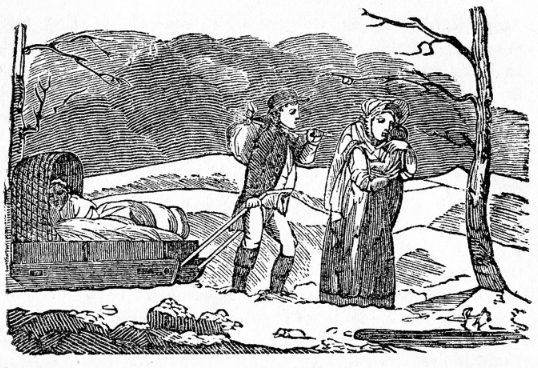
It was the year 1816, often called “The Year Without a Summer,” and it just might be the most important meteorological event you have never heard of. Spring arrived on time, but then the weather went into reverse, with cold temperatures and continually overcast skies. Dim sunlight and frigid temperatures became so severe and widespread that major crop failures were reported across the United States, the rest of North America and Europe for a period of three years. New York state and Maine experienced snow in June.


While some scientists blamed sunspots for the weather problems of 1816, and some theologians blamed the wrath of God, it has only been within the last few decades that modern technology has enabled us to understand what really happened. And the implications are significant for our world today.


Emergency Survival Seed Bank Provides THOUSANDS Of Pounds Of Food


Scientists now believe that this three-year period of severe climate change was set off by a volcanic eruption. On April 15, 1815, Mount Tambora on the island of Sumbawa in what is now Indonesia erupted, spewing lava and dust for a week and then continuing to rumble for three months.


With a plume of gases and ash that extended more than 18 miles into the atmosphere, the massive Mount Tambora eruption is the most explosive volcanic event in recorded history. The 1815 eruption threw millions of tons of sulfur-dioxide gas into the stratosphere, and the gas then formed 100 million tons of sulfuric acid, which became dispersed by wind throughout the planet in the form of tiny droplets, clouding the skies and partially blocking the sun.


The Tambora explosion was far greater than the better-known Mount Krakatoa volcanic eruption in 1883. We know more about that natural disaster because the news was quickly spread by telegraph and then by newspaper. Most Europeans and North Americans did not hear about Mount Tambora for several months or even longer.


The explosion initially killed more than 10,000 people on the island, but it is estimated that another 80,000 people eventually died from starvation and diseases related to the cataclysmic event. In fact, the energy created by Mount Tambora was equivalent to 2.2 million atomic bombs.


The volcanic dust and ash that spread throughout the world blocked sunlight and disrupted natural weather patterns.


The Easiest Way To Store A Month’s Worth Of Emergency Food!


Mount Tambora, today.

Mount Tambora, today.


What are some of the far-reaching results of the ravaged weather of 1816?


  • Many New England farmers, with their crops and their entire livelihood devastated, ventured west with their families. The state of Vermont, for example, experienced a population drop of an estimated 10,000 to 15,000 people.

  • The cold, rainy summer led to a sweeping potato famine in Ireland.

  • In Europe, the wheat crop was ruined, causing widespread bread shortages.

  • Food prices rose sharply across Europe, with riots, arson and looting frequently taking place.

  • In Switzerland, an ice dam formed below part of the Giétro Glacier. Despite efforts to drain the lake that formed, the ice dam collapsed in June 1818, killing an estimated 45 people.

  • In Asia, unseasonably cold temperatures killed rice crops, trees and water buffalo. The eruption disrupted China’s monsoon season, resulting in severe flooding in the Yangtze Valley. In India, the summer monsoon season was delayed, resulting in late torrential rains.

  • Outbreaks of cholera spread from a region near the River Ganges to as far away as Moscow.

  • Because of all the volcanic ash in the atmosphere, brown snow fell in Hungary. Red snow fell throughout the year in Italy’s northern and north-central region.

Floods, drought, disease, famine – all caused by a volcanic eruption half a world away. With the world’s population so much greater than it was in 1816, the effects of another eruption on the scale of Mount Tambora would be unthinkable.


Today, the year 1816 stands as a startling reminder of how one world event — even a volcano in Southeast Asia — can have dire consequences on our food supply.


Poet Eileen Marguet (1918-2012) wrote a poem that sums up the year of 1816 for many Americans.


It didn’t matter whether your farm was large or small.


It didn’t matter if you had a farm at all.


Cause everyone was affected when water didn’t run.


The snow and frost continued without the warming sun.


One day in June it got real hot and leaves began to show.


But after that it snowed again and wind and cold did blow.


The cows and horses had no grass, no grain to feed the chicks.


No hay to put aside that time, just dry and shriveled sticks.


The sheep were cold and hungry and many starved to death,


Still waiting for the warming sun to save their labored breath.


The kids were disappointed, no swimming, such a shame.


It was in 1816 that summer never came.


Do you believe America is ready for another such natural disaster? Share your thoughts in the section below:


Discover The Secret To Saving Thousands At The Grocery Store. Read More Here.