Showing posts with label off the grid. Show all posts

Tuesday, April 24, 2018

Keeping Survival Strategies Simple

Keeping your emergency plans simple could be the single most important thing you do.


I’ve been a survivalist for a long time. Things were different when I started, back in the 1970s. More than anything, there wasn’t the survival industry that we have today. Those of us who thought in those terms had to figure out how to do things ourselves or how to adapt existing tools and equipment (mostly camping equipment) for survival.


There have been many changes since then. Much of that has been due to people coming up with new equipment and new ideas. It is much easier to find the gear to build a survival kit or bug out bag today than it was 40 years ago. There’s also a much more comprehensive range of equipment to choose from, much of it excellent and some of it noticeably superficial.


But one thing has happened in all this which works against our survival. In the desire to keep coming up with new gear and techniques, not everyone has thought through the practicality of their ideas in an actual survival setting. More than anything, this has been manifested in the complexity of some of these survival gadgets. While I have nothing against a sophisticated piece of equipment, I have a lot against it being complicated to use.


As a former engineer, I am fully aware that the more complex a piece of equipment is, the more chance there is of something going wrong with it, especially when you really need it.. Take a look at cars for example.. There are thousands of parts that have to work correctly for a vehicle to run. Then there are several hundred more that have to run for all the accessories and conveniences to run as well.This fact makes the chances of that car running flawlessly for 100 miles considerably slim.


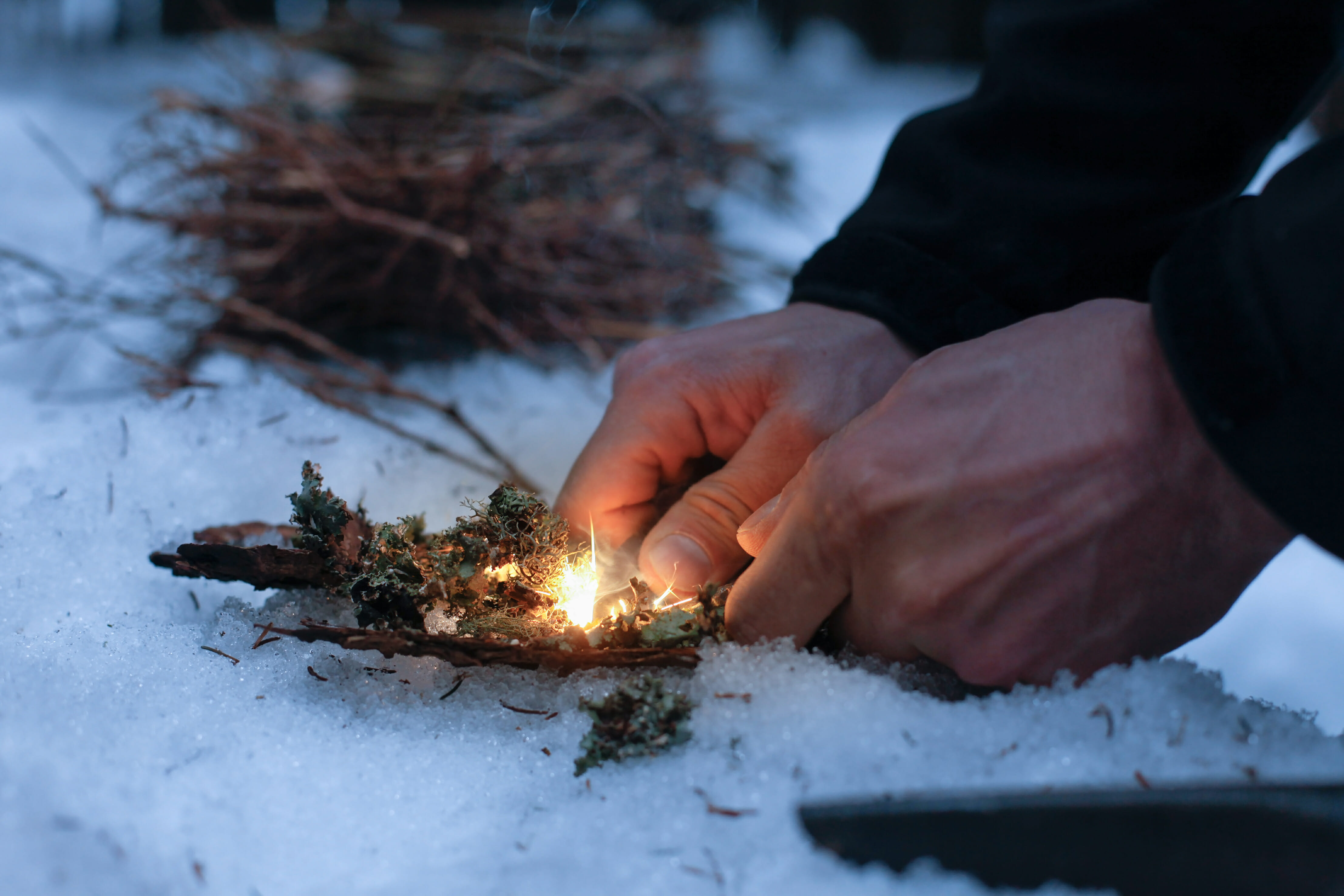
Keeping Fire Starting Simple


For that matter, I have some major issues in using techniques that are difficult to employ. These concerns are especially valid when there are easier things that will do the job. Take fire starting as a case in point. Survival instructors seem to collect fire starting techniques, each trying to outdo the next in the variety and complexity of the methods they know. I suppose that some of the more esoteric and difficult practices of fire starting might be useful in a real emergency where one doesn’t have a survival kit. Nevertheless, I think it makes much more sense to ensure that you have a survival kit with a simple, reliable fire starter in it.


Today, the fire starter that seems to be the most widely promoted is the Ferro Rod. You can find many giveaways where someone is trying to send you one of these. You’ll also see them included as an “extra” with survival knives, survival shovels and just about any other piece of survival gear you can think of.


As far as I’m concerned,the only thing worse than a Ferro Rod for starting a fire is using friction (bow drills, fire plow, pump fire drill, etc.). The Ferro Rod is nothing more than a commercialized version of a flint and steel. While you can start a fire with it, you’d better have some extremely dry, really flammable tinder and you’d better not be suffering from hypothermia, or in a real crisis you could lose your life.


If you need a fire in a survival situation, you usually need one instantly and not in half an hour. That’s why I believe in fire starters that are fast, easy and reliable. Forget about “secondary fire starters” unless they truly fit that description. Make sure you have enough adequate primary fire starters to take care of your needs.


What do I mean by that? I mean fire starters that will work no matter what. Storm proof matches are one of the best fire starters on the market, for that very reason. It doesn’t matter if you’re in the midst of a hurricane and the storm has soaked the matches in water. They work.


Another fire starter as good as Storm proof matches is a Storm proof lighter. This product combines a butane lighter with a piezoelectric igniter. As long as the gas valve is depressed, the piezoelectric igniter is operating. So, even if the wind blows it out, it will reignite immediately. If you’ve ever tried starting a fire in the wind with a disposable butane lighter, you’ll quickly see the value of this lighter.

Keeping Emergency Shelter Simple


Setting up camp consists typically of building a shelter and starting a fire. However, I hear more people talking about building a debris shelter than I hear talking about how to make sure you have a shelter that you can set up in ten minutes or less. The last time I built a debris shelter, it took me a whole lot longer than 10 minutes.


On the other hand, if you have alight weight tarp and some paracord, you can set up roughly the same size and shape shelter in less than 10 minutes, especially if you have some tent stakes to use with it. But even if you don’t, cutting tent stakes from sticks is easy. If you need insulation, you can still pile leaves on the sides of the tarp, just like you would on the framework you make for the debris hut.


If you want to go even more accessible than this, then make a backpacking tent part of your bug out bag. Good backpacking tents weigh less than a lot of other things that we include in our kits, but for some reason,we don’t carry them along. If we want to keep things simple, this only makes sense.

Bottom Line:


Keeping your emergency plans simple could very well be the single most important thing you do.


I could keep going on with example after example. The point is that we should take a look at everything we’re doing for survival with the idea of ensuring that it is the most effortless possible way of doing things. When an actual survival situation presents itself, you’re going to have enough to do without making things harder. The time you save on these routine tasks could be the time you need to accomplish some other critical survival task.


Even more important than the time you save is the ease of accomplishing the task. I wasn’t being facetious before when I was talking about someone with hypothermia dying while trying to start a fire. If you ever get to that point, you won’t be able to accomplish complex tasks; you’ll have to keep things as simple as you possibly can. Your mind won’t be clear, and your agility could very well be out the window.


That’s why I believe in making the “KISS” principle a central part of my own survival strategy. If you’ve never heard that acronym before, it stands for “Keep It Simple Stupid.” No, I’m not insulting you. When you’re cold, and you need to survive, I can guarantee that you’ll feel stupid. So, you’ll need to keep things as simple as possible.

Sunday, August 13, 2017

Is Living Off The Grid Selfish?

Is Living Off The Grid Selfish?

Image source: Pixabay.com


When the managing director of an Australian power company last fall suggested that those who leave the electric grid and rely on solar power exclusively are “greedy and selfish,” a fair amount of off-the-grid enthusiasts balked.


Paul Adams, managing director of the Jemena power company, scolded those who said that they were tired of the company’s policies and charges and would leave the company once and for all. The customers, who already had home solar systems in place, had been relying on power from the company when it was too dark or dreary outside for solar power to be collected and used.


Is Living Off The Grid Selfish?

Image source: Pixabay.com


“Why don’t you want to do something on a community and social basis, why are you so greedy and selfish?” said Adams, according to Australia’s Herald Sun newspaper. “The grid is of so much value here, why don’t you want to share your energy with your neighbors?”


On a bright, sunny day a solar panel system might collect more power from the sun’s rays than the home can use. Adams believes that electricity should be placed back into the grid.


If you are like me, Adams’ statement is indeed upsetting. From my perspective – which is that of someone trying to live a self-sufficient, off-grid lifestyle – disconnecting from the power company is anything but “greedy and selfish.”


Get Free Electricity — That Works Even During Blackouts!


Here’s why: It is our desire not to rely on others for the things we need to live out our daily lives. In so doing, we free resources for those not pursuing this lifestyle. When we become “off-grid,” we no longer drain energy from the system. In an age of rolling brownouts, we do our part — and more — to relieve the strain on the electrical infrastructure. In general, we bear the cost of this transition, further belying the greed motivation. Besides, if we remain tied to the power grid when we have solar power, then when the grid does down, our power won’t work, either. That’s why so many users of solar energy cut ties completely from the power grid.


In a crisis, those of us with self-sufficient lifestyles will be of infinite value to our communities. I truly believe that the ability to lend assistance, to help rebuild, and to be a blessing to our neighbors is almost as important to most homesteaders, survivalists and preppers as being able to care for our own. If this doesn’t motivate you, you might want to dust off your Bible and re-evaluate your stance.


But, even if your only motivation is your own family, does this make you “greedy and selfish”? As is always the case, we can get some perspective on that matter from Scripture.


Is Living Off The Grid Selfish?

Image source: Pixabay.com


“But if any provide not for his own, and specially for those of his own house, he hath denied the faith, and is worse than an infidel” (1 Timothy 5:8).


Can it be said that living off-grid is in keeping with making provision for our households? I certainly think that it passes the test for that. Can anyone suggest that God’s Word encourages us to be “greedy and selfish”? I think the answer is a resounding NO! Making provision for our households is a mandate from our Creator — not just in good times but at all times.


First Timothy 5:8 is essentially the prepared household’s creed, and being off-grid allows us to live up to this mandate come what may. By ensuring the security of our own, we lift that burden from others.


Additionally, living off-grid is anything but easy. It can be downright difficult. It requires hard work to ensure the security of our families – and then of others! And that’s anything but selfish.


What we are really seeing in such statements from power companies and government entities is fear. We are approaching a pivotal point. We are reaching a level of technology that is making individual electrical generation and storage systems practical and affordable, and this is a threat to business as usual. It is a threat to the monopolistic hold that utilities have over profits from supplying electricity.


In fairness to Paul Adams, he retracted the statements rather quickly. What he showed, however, is the knee jerk reactions that independent-minded people are constantly facing. We are told that food storage is “hoarding” and that removing yourself from the grid is greedy. The truth, though, is that living off the grid is not selfish, but selfless. Of course, we already knew that.


Related:


Is Prepping Biblical?


Do you agree or disagree? What would you add to this story? Share your thoughts in the section below:


Discover The Secret To Saving Thousands At The Grocery Store. Read More Here.

Friday, July 14, 2017

Think Outside the Box: 2-Acre Shipping-Container Farm Feeds 150

I grew up surrounded by farmland and lived near rural Tennessee for a time, yet I wouldn’t have the foggiest idea how to start a farm. But if I wanted to experience farming on a small scale, Farm From the Box would be the way to go. The tiny house movement has shown us that shipping containers can be turned into stylish homes, and 2-acre farms capable of feeding 150 people come in shipping containers, too.


The really cool part: you can do it off the grid. [1]

Farm From the Box is the brainchild of Brandi DeCarli and Scott Thompson. The company has partnered with irrigation and solar companies, including noted solar product manufacturer SMA America, to help people who live in undeveloped areas and are struggling with food insecurity. The idea is to help communities to grow and sustain their own crops. Poor access to water and electricity? No problem. [2]


Read: Study Proves Sustainable Farms, Organic Farming Beats Factory Farms


Marko Wittich, SMA executive vice president of sales for the Americas region, said:


“SMA is proud to partner with a company whose goal is to bring independence to communities around the globe by providing the tools they need to sustain themselves, both nutritionally and financially. Farm from a Box isn’t charity; it empowers and strengthens communities with sustainable solutions, powered by renewable energy.” [2]


Farm From a Box comes with a training program that teaches ecological farming practices, technology use, maintenance, and basic business and entrepreneurship. The $25,000-$45,000 farms are also fully customizable. [2]


Read: 4 Ways to Heal and Replenish Damaged Soil and the Food Supply


Said DeCarli:


“Farm From a Box is the ‘Swiss-Army knife’ of sustainable farming.


Based on extensive field research, we found that rural communities often lack the resources and infrastructure needed to access nutritious food. We developed a toolkit that contains all of the core components needed to grow your own food, on a two acre plot of land, without the need for an existing grid.


Imagine the good it can do by growing local, organic food for a school, or helping jump-start food production after a disaster. ‘Farm from a Box’ enables and empowers communities to provide for themselves.” [2]


All Farm From the Box kits are solar-powered and include 3 kW of solar energy capacity – enough to power the water pump and WiFi connectivity that allows farm conditions to be monitored remotely. [3]


There is more than enough energy, so there is no need to be connected to the electric grid.


Sources:


[1] Real Pharmacy


[2] Eco Watch


[3] Smithsonian Magazine


Storable Food


Thursday, November 10, 2016

6 Surprising Luxuries You Didn’t Know You Could Run Off-Grid

6 Surprising Luxuries You Didn’t Know You Could Run Off-Grid

Image source: Pixabay.com


Before moving off-grid, I had a lot of preconceived notions about what “off-grid living” meant. Say goodbye to grandma’s antique 1000-watt waffle iron, put away the power tools and don’t even think about a dishwasher … right? Well, not really.


While “off-grid” can mean living without electricity and hauling water and all of your meals on a wood stove, it doesn’t necessarily have to.


To my surprise, with a small rooftop array on an off-grid cabin in rural Vermont, we’re able to enjoy more luxuries than the average suburban home has available. Even in a cold northern climate, there’s more than enough free solar energy at least 8 to 9 months of the year to power things you might not consider owning with the expense of grid-purchased electricity. Add in a wind turbine to collect energy from winter storms, and you may be set up for quite the life of luxury.


1. Whirlpool bath tub


For off-grid homes, a whirlpool bathtub can be a great way to relax after a long day working in the woods. While it may not be an option most of the winter except on the sunniest days, March through October is whirlpool bath season. Imagine relaxing comfortably, submerged up to your neck with jets flowing all around you after an eight-hour session hauling logs and splitting wood. Some of that wood, once dried, went into your wood-fired boiler to heat the water for your tub, and the surplus electricity generated throughout the day while you were outdoors is powering your evening tub.


2. Dishwasher


Believe it or not, a dishwasher can be a great way to utilize solar electricity during peak hours. Unless you happen to live where a gravity well is an option, a water pump uses a significant amount of electricity.


Get Free Electricity — And Never Be Without Power!


6 Surprising Luxuries You Didn’t Know You Could Run Off-Grid

Image source: Pixabay.com


If doing dishes by hand, the best time to run water is mid-day when production is at its peak. The question is: Do you want to spend the most beautiful part of the day trapped indoors with your hands in a sink, or do you want to be outside enjoying the fruits of your off-grid life? By wiping off your dishes and loading the dishwasher in the evening, all it takes is a second to turn on the dishwasher mid-day when you come in for a lunch-time break.


3. Internet


While a complete off-grid lifestyle is practical for a tradesman, what about those of us who were raised in a city and still need to make a living through a more “on-grid” line of work? While wired broadband is becoming more available in rural areas, the more remote areas still do not have those options. If you happen to be in an area covered by cell service, there are options for cellular-powered wireless adapters for computer use. In a slightly more remote area, there may be radio Internet options that still allow high-speed connection by routing the signal through a series or mountaintop towers, as is commonly available in rural parts of the northeast. For those in true wilderness, satellite Internet is remarkably dependable in all but the stormiest of weather.


4. Radiant floor heat


While an indoor wood stove is an exceptionally practical and dependable way to heat a home without electricity, it requires quality hardwood to burn to avoid chimney fires from softwood creosote buildup. For those living in conifer or hemlock forests, an outdoor boiler might be a better way to use your available resources. Fortunately, with the super-efficient models on the market today, they only require minor retrofits to run directly off battery power. A small inverter placed within your boiler shed to power the boiler fan, and the use of DC electric (directly battery powered) pumps to circulate your water or antifreeze, and you have a low-energy solution and warm radiant floors to boot. Still, make sure you have an electricity-free form of heat to get you through the worst storms, but most days your boiler will keep you toasty on just a small amount of softwood.


5. Dehumidifier or air conditioner


6 Surprising Luxuries You Didn’t Know You Could Run Off-Grid

Image source: Pixabay.com


Really? A compressor on solar power? Yes! Peak summer heat and humidity often coincide with peak solar output. Around the summer solstice, our battery bank will be full by mid-day, meaning that a whole afternoon’s production will be wasted without an outlet.


Get Off-Grid With Wind Power! Click Here.


Once you’ve done all your electricity-using chores, go ahead and switch on the dehumidifier or air conditioner with your free electricity. Obviously you need to monitor closely to make sure it doesn’t stay on past peak solar output, but that’s a small consideration for a free burst of comfort during the heat of the day.


6. Electric cooking appliances


While many homesteaders are building summer kitchens to keep the heat out of the house during hot months, solar-powered homesteaders have the option of setting up an electric-powered kitchen either indoors or outdoors for the summer months. Single burner induction ranges can bring a large canning pot to a boil in no time, and will barely dent our mid-day production at high summer. A small countertop electric oven, like an oversized toaster oven, is great for baking summer pies or a quick meal using free electricity. Just as wood stove cooking accomplishes two tasks, heat and food, a separate set of solar-powered summer appliances means lower bills and quick meals.


What luxuries would you add to our list? Share your off-grid advice in the section below:


Are You Prepared For Extended Blackouts? Read More Here.