Showing posts with label Thomas Jefferson. Show all posts

Thursday, August 24, 2017

"He Said That?!"

Here it is, in cold, hard black-and-white prose, a damning indictment of President John F. Kennedy in his own words...


Satirically authored by Straight Line Logic"s Robert Gore...


From a dinner honoring Nobel Prize Winners April 29, 1962:


I want to tell you how welcome you are to the White House. I think this is the most extraordinary collection of talent, of human knowledge, that has ever been gathered together at the White House, with the possible exception of when Thomas Jefferson dined alone.


Someone once said that Thomas Jefferson was a gentleman of 32 who could calculate an eclipse, survey an estate, tie an artery, plan an edifice, try a cause, break a horse, and dance the minuet. 


Whatever he may have lacked, if he could have had his former colleague, Mr. Franklin, here we all would have been impressed.


Irrefutable proof: John F. Kennedy praised Thomas Jefferson, white slave owner and perhaps the paramour of some of his female slaves.


Kennedy may not have known about the paramour part, but he certainly knew Jefferson was a slave owner.


Kennedy Airport, Kennedy Center, thousands of schools and streets: erase the name of this obvious racist who praised a slave owner.


No historical sin is too small that it should not be rectified after the fact by erasing all memorials to -in a better world all memories of - the sinner. To be replaced, of course, by those many historical figures who were perfect.

Wednesday, August 16, 2017

Tucker Carlson Asks the Question: Will the Left Refute America’s Forefathers Because They Owned Slaves?

Content originally published at iBankCoin.com


I cannot see how the left cannot call for George Washington, Thomas Jefferson, James Madison and others to be removed from the public square, libraries, museums, universities and our currency.


Since the left is out to get all racists, feverishly on the lookout for nazis and alt-right retards, ripping down statues of confederates, why not go to the source of all this racism, eh? America"s forefathers.


41 out of 56 signers of the Declaration of Independence owned slaves. Therefore, and using the same logic we"re applying to the white supremacists in the streets demanding, err, nothing, we must reject the Constitution, the Bill of Rights and America, basically.


The country is over.


Tucker Carlson lays it out perfectly. I"d like to hear from any left wingers who disagree with my train of thought and explain to me why we should revere Thomas Jefferson.


Naturally, Bill Kristol attacked Tucker for his cogent analysis. Brit Hume came to his defense.


NOTE: Earlier today, the President had it out with the media over this very topic. Here is the full showdown.

Saturday, August 12, 2017

State Of Emergency Declared After Clashes Break Out At Far-Right Rally In Virginia: Live Feed

Update: A state of emergency has been declared for Charlottesville due to the fighting, clashes and "chaos" at the rally. Virginia Gov. Terry McAuliffe declared a state of emergency in the city to aid in the local response. He earlier said the Virginia National Guard will be "standing by to respond if needed."


The city and county issued a declaration of local emergency for Charlottesville city and county, when the scene turned violent well before the "Unite the Right" rally, scheduled for noon, officially began. The city said two people were treated for serious but non-life-threatening emergencies from altercations by 10:30 a.m. Counter-protesters also flooded the area to demonstrate their disdain for the protesters" message.


* * *


Fighting has broken out at a ‘Unite the Right’ rally in Charlottesville, Virginia between right-wing protesters demonstrating against the removal of a Confederate-era statue from Emancipation Park, and various groups of counter demonstrators.  The rally also aimed to protest against Charlottesville"s decision to rename downtown Lee Park, now called Emancipation Park, besides the statue removal.


Some 2,000 to 6,000 people are expected to attend the rally, which is expected to be one of the largest far-right gatherings in the U.S. in at least a decade.


The Unite the Right rally aims to “unify the right-wing against a totalitarian Communist crackdown” and “affirm the right of Southerners and white people to organize for their interests just like any other group is able to do.”


Among the protesters were spotted both nazi flags...


... and KKK attire:


The clashes come a day after hundreds of white marchers carrying torches clashed briefly with counterprotesters on the Charlottesville campus of the University of Virginia on Friday, the eve of a rally planned by thousands of "far-right nationalists". The marchers chanted as made their way from Nameless Field through the sprawling campus to the school"s Thomas Jefferson statue, where they were met by counterprotesters, an affiliate of NBC news said.


At least one person was arrested and several on campus were treated for minor injuries, the Daily Progress newspaper said. "I am beyond disgusted by this unsanctioned and despicable display of visual intimidation on a college campus," Mayor Mike Singer said in a statement.


One clip posted on Twitter showed various armed members of an unidentified militia arriving at Emancipation Park carrying guns and rifles.


A separate clip shows another group joining the rally, chanting "bllod and soil" as it arrives:


According to Reuters, the events highlight a persistent debate in the U.S. South over the display of the Confederate battle flag and other symbols of the rebel side in the Civil War, fought over the issue of slavery. Virginia Governor Terry McAuliffe has said extremist groups have threatened to try and attack rally participants, to express opposition to the statue"s removal.


Supporters call such statues racially insensitive, while opponents say Confederate symbols honor Southern heritage, and calls to remove them reflect "empty political correctness."


Lee was a symbol for white people threatened by immigration and "ethnic cleansing," rally organizer and freelance journalist Jason Kessler said in an interview with Pennsylvania"s WHLM radio on Thursday.


Meanwhile, NBC notes that the National Guard is on standby, with Virginia State Police coordinating security in the city of 45,000, the governor said in a statement. "I want to urge my fellow Virginians, who may consider joining, either in support or opposition to the planned rally, to make alternative plans," McAuliffe said.


Live feed from the event below:


Tuesday, July 4, 2017

Gardening Wisdom From Thomas Jefferson: 5 Things You Should Learn

Gardening Wisdom From Thomas Jefferson: 5 Things We Should Learn


When they consider Thomas Jefferson, many Americans first think of him as the author of the Declaration of Independence or as our nation’s third president, who was responsible for the Louisiana Purchase and the Lewis and Clark expedition. However, Jefferson’s contributions go deeper than those accomplishments.


Jefferson was a true Renaissance man with a variety of interests and hobbies. He was an accomplished architect, an inventor and a violinist. He could read more than five languages. Jefferson also was a horticulturist who made important contributions to American gardening.


In a letter to Charles W. Peale in 1811, Jefferson wrote, “No occupation is so delightful to me as the culture of the earth, and no culture comparable to that of the garden. … But though an old man, I am but a young gardener.”


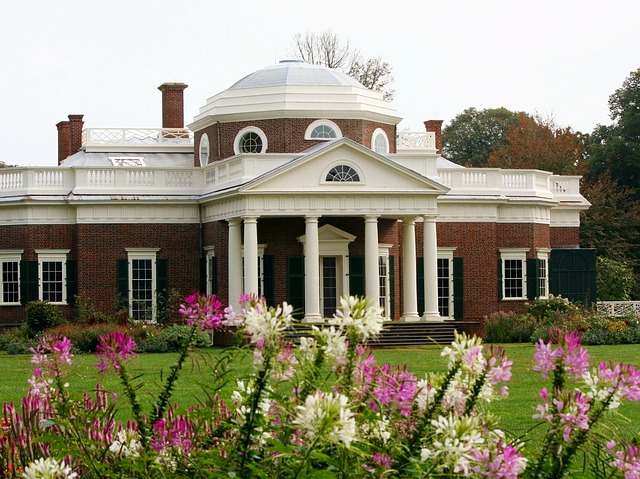
At Monticello, his beloved Virginia estate, Jefferson became a pioneer of gardening practices that are useful for us today. Always passionate about growing things, Jefferson further developed this interest during a diplomatic trip to England in 1786 with his long-time friend John Adams.


Need Non-GMO Seeds? Get Them From A Company You Can Trust!


Gardening Wisdom From Thomas Jefferson: 5 Things We Should Learn

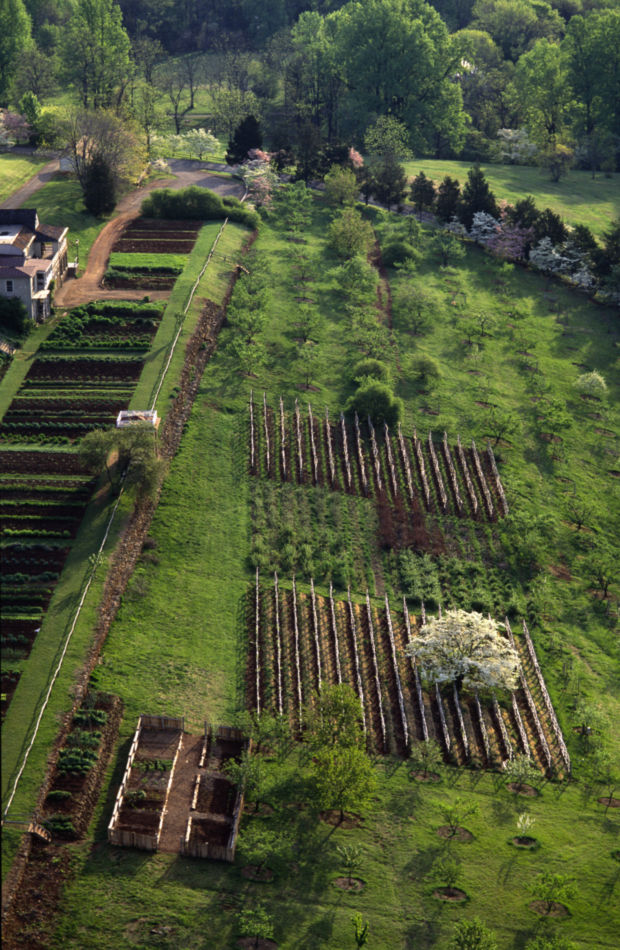
Jefferson’s garden at Monticello


During the two-month trip, he was able to tour and examine many English gardens. Those observations became the basis for his own extensive gardening ideas. Much of what he learned can be applied to any garden of any size.


Here are five examples of Thomas Jefferson’s gardening wisdom.


1. Experiment … extensively


Jefferson once wrote that the “greatest service which can be rendered to any country is to add a useful plant to its culture.” When he traveled throughout our young country and abroad, Jefferson often exchanged seeds and seedlings with other gardeners. He enjoyed cultivating those seeds and young plants in his Monticello garden.


Because he grew a variety of crops, including a mix of tropical species with cool weather crops, he devised a unique terraced landscape for his 1,000-foot-long vegetable garden. By placing the garden on a south-facing slope, he was able to capture abundant sunshine.


Creating this unique form of “hanging garden” involved the removal of about 600,000 cubic feet of red clay and the creation of a 1,000-foot-long rock wall that was 15-feet tall in some places.


2. Grow what you eat


Jefferson loved to eat vegetables. In fact, he wrote that “they constitute my principal diet.” Because of his extensive travels, he was exposed to a wide variety of cuisines. He frequently took recipes back home with him and encouraged his cooks to use Monticello’s homegrown produce in new ways. In this way, he created a new American type of cuisine he described as ‘half-French and half-Virginian.”


His Monticello garden featured 330 different varieties of vegetables and 170 varieties of fruits. According to Monticello gardening expert Peter Hatch, Jefferson’s garden inspired a “revolutionary cuisine.” A Monticello recipe for okra soup, for instance, reflects influences from Native Americans (lima beans), Europe (potatoes and tomatoes) and Africa via the West Indies (okra).


Karen Hess, a noted culinary historian, called Jefferson “our most illustrious epicure, in fact, our only epicurean President.”


3. Go natural


Jefferson would be quite at home with the organic gardening movement of today. When his daughter, Martha, wrote to him while he was in Philadelphia serving as secretary of state, she complained about insects damaging the vegetables at Monticello.


Gardening Wisdom From Thomas Jefferson: 5 Things We Should Learn

Image source: Pixabay.com


He responded, “I suspect that the insects which have harassed you have been encouraged by the feebleness of your plants; and that has been produced by the lean state of the soil.”


He recommended the garden be covered that winter with “a heavy coating of manure. When is rich it bids defiance to droughts, yields in abundance, and of the best quality.”


In 2009, White House chef Sam Kass reserved a section of the White House garden to showcase Jefferson’s Tennis Ball and Brown Dutch lettuce, Prickly-Seeded spinach and Marseilles fig, a few of Jefferson’s favorite plants.


4. Keep notes


Jefferson had a scientist’s mind, and because of that, he kept scrupulous notes about what worked and what did not work in his garden.


Seamazing: The Low-Cost Way To Re-mineralize Your Soil


He recorded his gardening efforts in his Garden Book, a personal journal he maintained from 1766 to 1824. Hatch reports that Jefferson was not afraid to admit defeat in certain gardening circumstances. “On one page in 1809 the word failed is written down 19 times,” Hatch writes.  “He had a holistic view, as we say today, of the gardening process. It is the failure of one thing that is repaired by the success of another.”


Gardening Wisdom From Thomas Jefferson: 5 Things We Should Learn

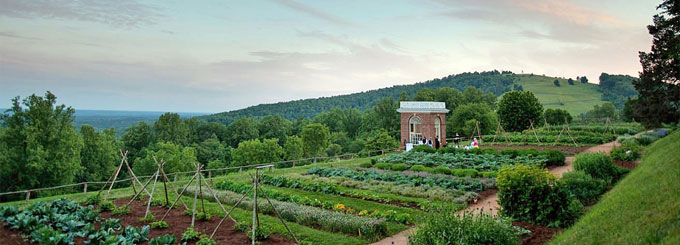
Jefferson’s garden at Monticello


In his “A General Gardening Calendar,” Jefferson’s only published horticultural work, he offered a monthly guide for kitchen gardening. In the calendar, which was first published in 1824 in the American Farmer, a Baltimore periodical, Jefferson instructs gardeners to plant a thimble spool of lettuce seed every Monday morning from February 1 through September 1.


5. Make your garden an area for retreat


Jefferson enjoyed the restorative aspects of being a gardener and believed that gardens should be seen, experienced and enjoyed.


For example, he designed and built an octagonal pavilion in a central garden location at Monticello and used this spot as a location for reading, writing and even entertaining.


“No occupation is so delightful to me as the culture of the earth,” he once wrote, “and no culture comparable to that of the garden.”


Have you been to Monticello? What other “Jefferson advice” would you add? What do you remember about his garden? Share your thoughts in the section below:


Sources:


https://www.monticello.org/site/house-and-gardens/historic-gardens


https://www.monticello.org/site/house-and-gardens/jefferson-scientist-and-gardener


http://www.npr.org/sections/thesalt/2012/05/10/152337154/thomas-jefferson-s-garden-a-thing-of-beauty-and-science


https://www.masshist.org/thomasjeffersonpapers/garden/


A Rich Spot of Earth: Thomas Jefferson’s Revolutionary Garden at Monticello, a book by Peter Hatch


Bust Inflation With A Low-Cost, High-Production Garden. Read More Here.

Wednesday, June 21, 2017

The Crop-Killing, Snow-In-June American Disaster You’ve Never Heard Of

The Crop-Killing, Snow-In-June Natural Disaster You

Image source: new englandhistoricalsociety.com


The Germans called it “The Year of the Beggar.”


The New Englanders called it “Eighteen Hundred and Froze to Death.”


From his home in Monticello, Thomas Jefferson wrote, “Never were such hard times.”


Writer Mary Shelley described a June outing that year to Lake Geneva this way: “An almost perpetual rain confines us principally to the house.” She ended up using some of the descriptions of that dreary summer in her novel Frankenstein.


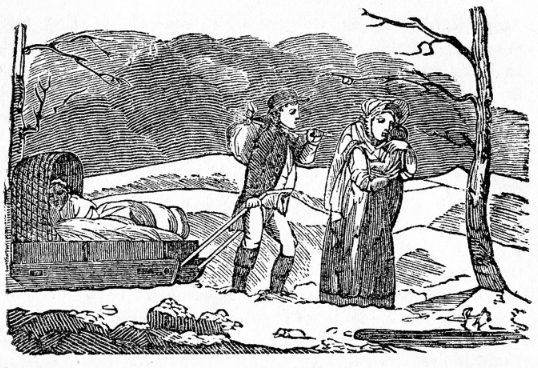
It was the year 1816, often called “The Year Without a Summer,” and it just might be the most important meteorological event you have never heard of. Spring arrived on time, but then the weather went into reverse, with cold temperatures and continually overcast skies. Dim sunlight and frigid temperatures became so severe and widespread that major crop failures were reported across the United States, the rest of North America and Europe for a period of three years. New York state and Maine experienced snow in June.


While some scientists blamed sunspots for the weather problems of 1816, and some theologians blamed the wrath of God, it has only been within the last few decades that modern technology has enabled us to understand what really happened. And the implications are significant for our world today.


Emergency Survival Seed Bank Provides THOUSANDS Of Pounds Of Food


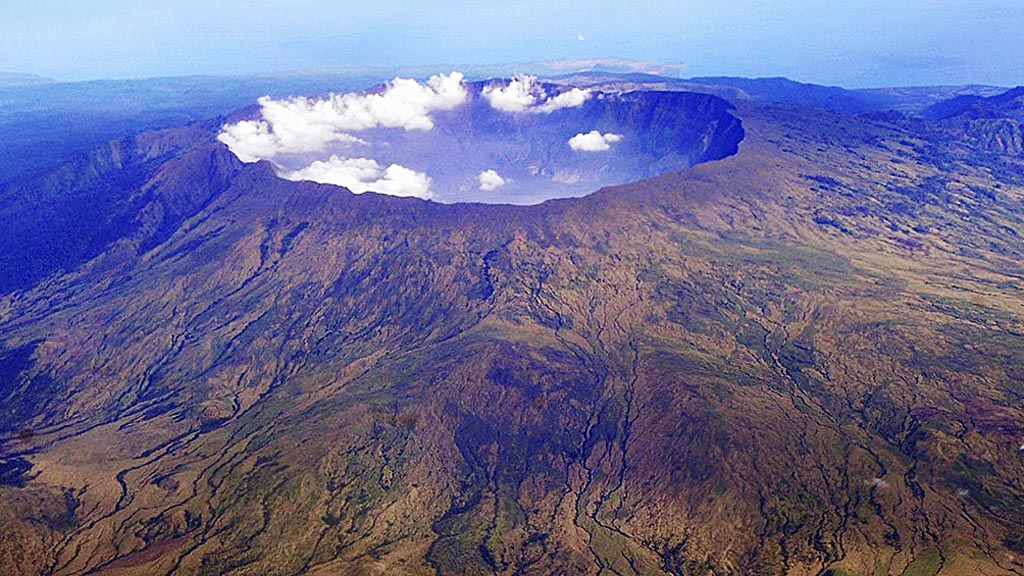
Scientists now believe that this three-year period of severe climate change was set off by a volcanic eruption. On April 15, 1815, Mount Tambora on the island of Sumbawa in what is now Indonesia erupted, spewing lava and dust for a week and then continuing to rumble for three months.


With a plume of gases and ash that extended more than 18 miles into the atmosphere, the massive Mount Tambora eruption is the most explosive volcanic event in recorded history. The 1815 eruption threw millions of tons of sulfur-dioxide gas into the stratosphere, and the gas then formed 100 million tons of sulfuric acid, which became dispersed by wind throughout the planet in the form of tiny droplets, clouding the skies and partially blocking the sun.


The Tambora explosion was far greater than the better-known Mount Krakatoa volcanic eruption in 1883. We know more about that natural disaster because the news was quickly spread by telegraph and then by newspaper. Most Europeans and North Americans did not hear about Mount Tambora for several months or even longer.


The explosion initially killed more than 10,000 people on the island, but it is estimated that another 80,000 people eventually died from starvation and diseases related to the cataclysmic event. In fact, the energy created by Mount Tambora was equivalent to 2.2 million atomic bombs.


The volcanic dust and ash that spread throughout the world blocked sunlight and disrupted natural weather patterns.


The Easiest Way To Store A Month’s Worth Of Emergency Food!


Mount Tambora, today.

Mount Tambora, today.


What are some of the far-reaching results of the ravaged weather of 1816?


  • Many New England farmers, with their crops and their entire livelihood devastated, ventured west with their families. The state of Vermont, for example, experienced a population drop of an estimated 10,000 to 15,000 people.

  • The cold, rainy summer led to a sweeping potato famine in Ireland.

  • In Europe, the wheat crop was ruined, causing widespread bread shortages.

  • Food prices rose sharply across Europe, with riots, arson and looting frequently taking place.

  • In Switzerland, an ice dam formed below part of the Giétro Glacier. Despite efforts to drain the lake that formed, the ice dam collapsed in June 1818, killing an estimated 45 people.

  • In Asia, unseasonably cold temperatures killed rice crops, trees and water buffalo. The eruption disrupted China’s monsoon season, resulting in severe flooding in the Yangtze Valley. In India, the summer monsoon season was delayed, resulting in late torrential rains.

  • Outbreaks of cholera spread from a region near the River Ganges to as far away as Moscow.

  • Because of all the volcanic ash in the atmosphere, brown snow fell in Hungary. Red snow fell throughout the year in Italy’s northern and north-central region.

Floods, drought, disease, famine – all caused by a volcanic eruption half a world away. With the world’s population so much greater than it was in 1816, the effects of another eruption on the scale of Mount Tambora would be unthinkable.


Today, the year 1816 stands as a startling reminder of how one world event — even a volcano in Southeast Asia — can have dire consequences on our food supply.


Poet Eileen Marguet (1918-2012) wrote a poem that sums up the year of 1816 for many Americans.


It didn’t matter whether your farm was large or small.


It didn’t matter if you had a farm at all.


Cause everyone was affected when water didn’t run.


The snow and frost continued without the warming sun.


One day in June it got real hot and leaves began to show.


But after that it snowed again and wind and cold did blow.


The cows and horses had no grass, no grain to feed the chicks.


No hay to put aside that time, just dry and shriveled sticks.


The sheep were cold and hungry and many starved to death,


Still waiting for the warming sun to save their labored breath.


The kids were disappointed, no swimming, such a shame.


It was in 1816 that summer never came.


Do you believe America is ready for another such natural disaster? Share your thoughts in the section below:


Discover The Secret To Saving Thousands At The Grocery Store. Read More Here.