Showing posts with label hurricane. Show all posts

Friday, December 15, 2017

VIDEO: What Everyday Life Is Like in Puerto Rico Now

This report was originally published by Daisy Luther at The Organic Prepper


puerto-rico-hurricane-aftermath


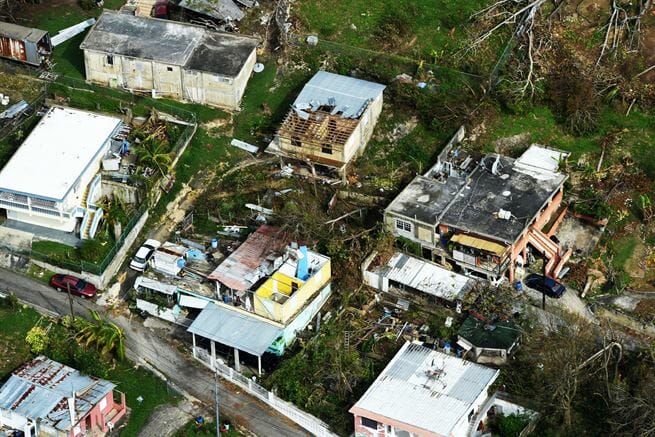
In Puerto Rico, everything has changed since Hurricane Maria struck nearly 3 months ago.


Many people have no running water. And if they do, it can’t be consumed without boiling.


There’s no electricity in many regions.


Supplies are scarce.


I’ve written about the SHTF aftermath in Puerto Rico, both the day after the storm,  a week after, and a couple of months later. But while there is a lot of good information in all those articles, it’s just words on a page.


The video below brings it to life. This is what life looks like for people who have just watched everything be turned upside down by Mother Nature.


The Pantry Primer


Please feel free to share any information from this article in part or in full, giving credit to the author and including a link to The Organic Prepper and the following bio.


Daisy Luther is the author of The Pantry Primer: A Prepper’s Guide To Whole Food on a Half Price Budget.  Her website, The Organic Prepper, offers information on healthy prepping, including premium nutritional choices, general wellness and non-tech solutions. You can follow Daisy on Facebook and Twitter, and you can email her at daisy@theorganicprepper.ca


Friday, October 20, 2017

Texas City Demands Hurricane Harvey Victims Support Israel to Get Relief

(ANTIMEDIA) Dickinson, TX — Government suppression of free speech can take many forms. It’s not always censorship in the media or storm troopers in the streets bashing in the heads of protesters. For proof of this, one need look no further than Dickinson, Texas.


The small coastal town southeast of Houston took some of the worst Hurricane Harvey had to offer, with almost 7,400 homes damaged — many of them beyond repair. In response, the city council decided to set up a relief fund. People can donate to the city, and then a committee distributes the money to residents on a case-by-case basis.


As it clearly states in published minutes of the October 10 meeting of the Dickinson city council — the meeting where the program was discussed — taxpayer funding is not an issue because “no City dollars are being spent or received.” Individuals donate to the city, and the city allots that money to hurricane victims.


The city government appears to be acting as nothing more than a go-between, a means by which to connect people who need help with people willing to give it. But apparently, due to a recent law passed in Texas, the city is requiring people to make a pledge before they can receive any aid — one that cuts straight to the heart of free speech.


Right in the grant application, The Dickinson city council says residents cannot participate in the Boycott, Divestment, Sanctions movement against Israel. From that form:


“By executing this Agreement below, the Applicant verifies that the Applicant: (1) does not boycott Israel; and (2) will not boycott Israel during the term of this Agreement.”


If it sounds to you like a governmental body is requiring citizens to adhere to a particular political ideology before they can receive aid following a natural disaster, then your hearing is just fine. That’s what the American Civil Liberties Union (ACLU) also heard, and they felt obliged to say something about it. From a press release on Thursday:


“The city of Dickinson, Texas, is requiring applicants for Hurricane Harvey rebuilding funds to certify in writing that they will not take part in a boycott of Israel. The American Civil Liberties Union criticized the city’s condition as a violation of free speech rights.”


Andre Segura, legal director for the ACLU of Texas, says the pledge reminds him of another time in America’s past:


“The First Amendment protects Americans’ right to boycott, and the government cannot condition hurricane relief or any other public benefit on a commitment to refrain from protected political expression. Dickinson’s requirement is an egregious violation of the First Amendment, reminiscent of McCarthy-era loyalty oaths requiring Americans to disavow membership in the Communist party and other forms of ‘subversive’ activity.”


As the ACLU points out in its press release, the Dickinson city council appears to be trying to enforce a Texas law passed in May that forbids government agencies from contracting with companies that boycott Israel. Text from Section 1 of House Bill 89 is almost identical to the provision in the Dickinson application form.


Dickinson’s city attorney told local KTRK the council was only following the law, though how exactly a law pertaining to companies contracting with state agencies applies to a city council handing out publicly donated money remains unclear. After all, as the council itself stated, “no City dollars are being spent or received.”


Local attorney Randy Kallinen says the ACLU is right on target.


“The application clearly requires people to have a certain political expression in order to get government benefits,” he told KTRK.


Kallinen also pointed out the obvious fact that people recovering from a natural disaster shouldn’t be required to pledge themselves to anything — let alone stipulations from a government body — other than putting their lives back together.


“Conditioning the much-needed relief from Harvey and other disasters upon adopting a certain political position is really something that is very distracting and slows down the process of rebuilding after Harvey,” he said.


Make no mistake, this is suppression of free speech. The Supreme Court ruled decades ago that people have a constitutionally protected right to boycott under the First Amendment. If restrictions similar to what is happening in Dickinson are allowed to stand, how long will it be before it becomes routine practice for governments — even local ones — try to tell you what you can and can’t think?


Creative Commons / Anti-Media / Report a typo

Wednesday, October 4, 2017

6 Survival Lessons From Puerto Rico’s Crisis

6 Survival Lessons From Puerto Rico’s Crisis

Photo by Sgt. Jose Ahiram Diaz-Ramos


Oct. 4, 2017


The recent one-two punch of Hurricane Irma passing north of Puerto Rico and then Hurricane Maria crossing over the island has given us a rare opportunity to witness about as serious a crisis situation as one can imagine.


While you and I are not on the ground in Puerto Rico to gain first-hand knowledge about what the people are going through, there have been enough reports come out of the island to give us a pretty clear picture of what is happening.


Even the worst-case disaster — an EMP — wouldn’t leave the people any worse off than Hurricane Maria has left them. In fact, they would probably be better off, simply because the EMP wouldn’t flatten buildings or tear their roofs off like the hurricane did.


1. Protect your backup power


Probably the biggest problem the citizens of Puerto Rico are facing is the loss of electrical power. Our modern society is dependent on electricity for pretty much everything. Without it, civilization, as we know it, comes to a standstill.


One hundred percent of the Puerto Rican grid was taken down in the hurricanes. So, while the electrical power plants are still operational, having suffered very little damage, they can’t transmit that electrical power to the end users. The entire grid must be rebuilt, which they are projecting will take up to six months (which probably means longer).


Few people in Puerto Rico have any means of producing their own electricity, such as solar panels or wind turbines.


Here in Texas, there was one point in time when Hurricane Harvey was headed right for my home, before it turned and headed for Corpus Christi, missing us. Because of that, I took down my wind turbine and the solar panels, which were easily moved. While the hurricane ended up missing us entirely, had I not taken them down and the hurricane hit our area, I am certain that they would have been destroyed, too.


Get Free Backup Electricity — That Works Even During Blackouts!


This has caused me to rethink my power production. As I remount my equipment, I am looking for ways to make it easy to take down, should another hurricane come my way. Having emergency power production on hand, which can’t survive the emergency, isn’t going to do me the least bit of good.


2. It’s difficult to prep a home


Many thousands of homes were totally destroyed by Puerto Rico, along with whatever property the people had inside their homes.


American home construction methods are not effective for surviving hurricanes and flooding. We not only see this in Puerto Rico, but in Houston and Florida, as well. Every home that was flooded has major damage, requiring removal of drywall, insulation, carpeting and underlayment. Since many of those homeowners did not have flood insurance, they’re going to have to foot the bill for those repairs themselves. Even government aid won’t be enough.


By comparison, homes built of cement blocks, like they are in much of Latin America (including Puerto Rico), survive flooding and high winds much better. I have friends in southern Mexico who have had their homes flooded. All they had to do was clean them up, dry them out and paint. While that took time and effort, it was much easier than repairing a wood home would be.


3. Don’t forget water purification


6 Survival Lessons From Puerto Rico’s CrisisWater was shut down for more than 98 percent of Puerto Rico, mostly due to the lack of electrical power. During the first few days, the Red Cross delivered more than 5 million liters of water. But considering the population of Puerto Rico, that wasn’t even enough for two liters per person, a minimal daily intake.


This was a situation where rainwater capture would have been highly valuable. The ability to capture some of the water from a hurricane or major storm and make it usable is something that none of us should overlook. I’m not just talking about a few barrels attached to our gutters and downspouts, either, but rather the ability to store large quantities of water, such as in a swimming pool.


The problem wasn’t so much water, as the means to purify it. Puerto Rico has lakes and rivers, just like other places do, over and above the massive amount of rainwater that fell on the island. But few people had any means of purifying that water. Most were resorting to boiling it, which isn’t as effective.


This is one area where we, in the preparedness community, should look at being an asset to our communities. Rather than just thinking of water purification for ourselves and our families, we should consider expanding our ability, so that we can provide water to friends and neighbors. That way, we are seen as good guys, rather than just caring about ourselves.


It would be easy to work out an arrangement in a time of crisis, where we are trading water filtration for labor. Our neighbors could provide the labor, hauling water to our homes, and we could provide them with purified water.


4. You might need to bury your food


As with any other place in the country, few people had food supplies stockpiled to see them through. Stores started running out and many began rationing; only allowing shoppers to buy a certain amount of food on each trip.


But the bigger problem is that all of Puerto Rico’s farms were demolished in the storm. There will be no harvest this year and in some cases, they may not even have a harvest next year. So, all the food for at least the next year must be shipped in, raising prices to the consumer. For those who are on a limited budget, that will be a problem.


The other problem I see here is for those who had food stockpiles which were destroyed when their homes were destroyed. This is not something that most of us are prepared for. Our food supplies are in our homes, often in the basements. But if our homes would ever be destroyed, we would most likely lose our survival stockpile, too.


One solution to this problem is to create caches of food in other locations. However, that really wouldn’t have helped the people of Puerto Rico much. There really weren’t any safe places for them, as the whole island was hit. About the only thing they could have done to ensure that their food was stored safe from the storm was to bury it underground, in waterproof containers.


This really isn’t all that hard to do. Five gallon buckets, of the kind that many of us use to store our food stockpiles, are waterproof, insect proof and rodent proof. So, we could bury them as a way of storing food that will survive such a disaster.


5. Store some cash


We are gradually becoming a cashless society, with credit and debit cards taking the place of cash. While that is very convenient on a day-to-day basis, it assumes that there will be electricity to run the cash registers and ATM machines, as well as communication between all those points and our banks. When that electric supply and those communications are out, so is our money.


Goofy Gadget Can Recharge Your Laptop — And Jump-Start Your Car!


This is a very practical demonstration of why we need to keep cash on hand. I have heard some preppers say that they can’t see any reason to keep cash, but that’s because they are thinking of situations where cash won’t be usable anymore, such as in the wake of an EMP or a financial collapse. But those aren’t the only disasters that might strike us. We could very well find ourselves in a similar situation as in Puerto Rico, where we don’t have access to our electronic funds.


6. Stockpile medicine


As is often the case in the wake of a disaster, medical facilities in Puerto Rico have been stretched to the limit. The large number of injuries from the hurricane, as well as their normal workload, is making it difficult for people to receive the attention they need. On top of that, roads are damaged or blocked, and gas supplies are limited, making it hard for people to get to the hospital.


But this isn’t the biggest problem they face. All hospitals in the U.S. are required to have backup generators, and the hospitals in Puerto Rico are no exception. But the fuel for those generators is limited. So, there have been cases in which the power to the hospital cut out before fuel could be replenished. Without electricity, it is impossible for medical personnel to accomplish many of their tasks.


Two groups hard hit by the aftermath of the hurricane are diabetics and those on kidney dialysis. Insulin must be refrigerated, but without electricity that’s impossible to do. Kidney patients who require dialysis need treatments three times per week. Otherwise, the amount of minerals in their bloodstream can reach a point of becoming toxic. Some medical patients have been flown out of the country, where they can receive the care they need. But that has not been possible in all cases, especially for those who live far from airports.


Should any of us find ourselves in a similar situation, we must have the necessary medical supplies and training to take care of our own families. It is not unreasonable to keep a year’s supply of prescription medications on hand, if you have any family members with chronic conditions that require medication.


We also should be sure to stockpile enough emergency medical supplies to take care of major injuries, as there’s a strong possibility of family members and others that we know being injured. Medical supplies may be one of the slowest items to be resupplied, as any supplies that are shipped in will go to hospitals and clinics long before they become available to the public.


What lessons would you add to our list? Share your thoughts in the section below:

Friday, September 22, 2017

100 Percent Of Puerto Rico Without Electricity; Power May Be Out For MONTHS

100 Perfect Of Puerto Rico Without Electricity; Power May Be Out For MONTHS


The electricity might be off for months in Puerto Rico following the destruction from Hurricane Maria, Governor Ricardo Rossello says.


A full 100 percent of the island – which is home to 3.5 million people — was without electricity on Thursday afternoon, The New York Times reported. The blackout is so widespread because Hurricane Irma already had knocked out 70 percent of the island’s power.


“Irma gave us a break, but Maria destroyed us,” San Juan resident Edwin Serrano told The Times.


Maria was the strongest hurricane to hit Puerto Rico since 1932, and the devastation on the island is far from over.


Finally, A Backup Generator That Doesn’t Require Gasoline!


All of Puerto Rico was under a flood warning Thursday because of storm surges in the sea and up to 35 inches of rain.


Power Grid Destroyed


“It’s a good time for dads to buy a ball and a glove and change the way you entertain your children,” Ricardo Ramos of Puerto Rico Electric Power Authority told CNN.


President Trump said Thursday that Puerto Rico’s power grid is down.


“It wasn’t in good shape to start off with. But their electrical grid is totally destroyed, and so are many other things,” Trump said.


It will take more than a month to restore electricity to the island, said Jenniffer González-Colón, Puerto Rico’s non-voting representative to the U.S. House. Power lines all over the island are on the ground.


Many families will be without running water for months because the pumps that supply the water system are knocked out, González-Colón added.


“The country is paralyzed — it’s like a war zone,” said real-estate marketer Carmen González. “This has been devastating. The whole of Condado is full of obstacles.”


Telephone service also is out on the island, making the situation worse for millions of Americans who have relatives in Puerto Rico.


What is your reaction? Share your thoughts in the section below:

100 Perfect Of Puerto Rico Without Electricity; Power May Be Out For MONTHS

100 Perfect Of Puerto Rico Without Electricity; Power May Be Out For MONTHS


The electricity might be off for months in Puerto Rico following the destruction from Hurricane Maria, Governor Ricardo Rossello says.


A full 100 percent of the island – which is home to 3.5 million people — was without electricity on Thursday afternoon, The New York Times reported. The blackout is so widespread because Hurricane Irma already had knocked out 70 percent of the island’s power.


“Irma gave us a break, but Maria destroyed us,” San Juan resident Edwin Serrano told The Times.


Maria was the strongest hurricane to hit Puerto Rico since 1932, and the devastation on the island is far from over.


Finally, A Backup Generator That Doesn’t Require Gasoline!


All of Puerto Rico was under a flood warning Thursday because of storm surges in the sea and up to 35 inches of rain.


Power Grid Destroyed


“It’s a good time for dads to buy a ball and a glove and change the way you entertain your children,” Ricardo Ramos of Puerto Rico Electric Power Authority told CNN.


President Trump said Thursday that Puerto Rico’s power grid is down.


“It wasn’t in good shape to start off with. But their electrical grid is totally destroyed, and so are many other things,” Trump said.


It will take more than a month to restore electricity to the island, said Jenniffer González-Colón, Puerto Rico’s non-voting representative to the U.S. House. Power lines all over the island are on the ground.


Many families will be without running water for months because the pumps that supply the water system are knocked out, González-Colón added.


“The country is paralyzed — it’s like a war zone,” said real-estate marketer Carmen González. “This has been devastating. The whole of Condado is full of obstacles.”


Telephone service also is out on the island, making the situation worse for millions of Americans who have relatives in Puerto Rico.


What is your reaction? Share your thoughts in the section below:

Thursday, September 21, 2017

Oath Keepers – Boots on the ground in the Florida Keys – Disaster Recovery


Oath Keepers – Boots on the ground in the Florida Keys – Disaster Recovery


Our disaster relief teams in the Florida Keys have a staging area at a local church to receive supplies and give out the necessities to those in need. We are also venturing out into neighborhoods with pickups full of water, ice, food, etc. The videos, taken today, will give you an idea of the condition of the areas our teams visited.


There are wonderful people all over the country who have collected supplies for Texas and Florida. Unfortunately, many of them don’t have the money for the diesel fuel to actually get the collected goods to the disaster areas. Also, our team members are all volunteers and could use some help with their own fuel costs. This new gofundme page is set up for that purpose. If you can donate a little or a lot, please do, and share this with your friends.


https://www.gofundme.com/oathkeepersirma


We need more volunteers in each of our Florida locations. This is the contact information for Florida:


South Central Florida Point of Contact: Scott Dunn   850-693-6166 (voice or text)


Florida Keys Point of Contact: Ivan Chiplinsky   850-209-4019 (voice or text)


Give them your name and brief list of qualifications.    You can also email fl@oathkeepers.org


These are live-stream videos by Joshua James of Lake County Florida Oath Keepers.


.


Monday, September 18, 2017

$700B unpaid mortgage balances in Harvey and Irma disaster areas

Even as the damage from Hurricanes Harvey and Irma is still being tallied, a preliminary assessment released last week by Black Knight Financial Services estimated that as many as 300,000 borrowers in the vicinity of Houston could become delinquent on their loans and 160,000 could become seriously delinquent, or more than 90 days past due.


That number is roughly four times the original prediction because new disaster zones were designated and more homes flooded when officials released water from reservoirs to protect dams, according to CNBC’s Diana Olick. In total, the number of mortgaged properties in Texas disaster zones is 1.18 million, with Black Knight adding that Houston disaster zones contain twice as many mortgaged properties than Katrina zones, with four times the unpaid principal balance.


Putting the Harvey damange in context, after Hurricane Katrina mortgage delinquencies in Louisiana and Mississippi disaster areas spiked by 25%. The same could happen in Houston, as borrowers without flood insurance weigh their options and decide to walk away from the property. While they will get some federal relief, if rebuilding would cost more than the principal in their homes, they could decide to walk away according to Olick.


What about Irma?


According to a preliminary analysis by Black Knight released today, Florida FEMA-designated disaster areas related to Hurricane Irma include a whopping 3.1 million mortgaged properties.  As Black Knight’s EVP Ben Graboske explained, both the number of mortgages and the unpaid principal balances of those mortgages in FEMA-designated Irma disaster areas are significantly larger than in the areas impacted recently by Hurricane Harvey.


Quantifying the damage, Black Knight calculates that Irma-related disaster areas contain nearly three times as many mortgaged properties as those connected to Hurricane Harvey, and nearly seven times as many as those connected to Hurricane Katrina in 2005. In dollar terms, this means that there is some $517 billion in unpaid principal balances in Irma-related disaster areas, nearly three times the amount as in those related to Harvey and more than 11 times of those connected to Katrina.


“While the total extent of the damage from Hurricane Irma is still being determined, it is clear that the size and scope of the disaster is immense,” said Graboske.


“Indeed, in terms of the number of mortgaged properties and their associated unpaid principal balances, Irma significantly outpaces even the number of borrowers impacted by Hurricane Harvey. With FEMA expanding the number of Irma-related designated disaster areas late Wednesday, Sept. 13, to a total of 37 Florida counties, more than 90 percent of all mortgaged properties in the state now fall into such areas. More than 3.1 million properties are now included in FEMA-designated Irma disaster areas, representing approximately $517 billion in unpaid principal balances. In comparison, Harvey-related disaster areas held 1.18 million properties – more than twice as many as with Hurricane Katrina in 2005 – with a combined unpaid principal balance of $179 billion. Irma-related disaster areas now contain nearly seven times as many mortgaged properties as those connected to Katrina, with more than 11 times the principal balances.


Combining the preliminary estimates for both Harvey and Irma suggests that over 3.3 million total mortgaged properties are located in Irma and Harvey-related FEMA Disaster zones, while the dollar amount of total unpaid mortgage balances in these two zones is massive: between Irma’s $517 billion and Harvey’s $179 billion, the total potential damage could impact as much as a $696 billion in notional mortgage values, which banks could be on the hook for if current occupiers decide to simply walk away.


Based on back of the envelope analyses by Black Knight, an extrapolation of the Katrina damage would suggest that Florida could suffer as much as 750,000 mortgage delinquencies as a result of Hurricane Irma.


To be sure, there are mitigating circumstances: Florida borrowers likely have more insurance and less exposure to loss, but for those homes with the most damage, homeowners will be making the same calculation as those that suffered devastating flooding after Harvey. Another issue in Florida according to Olick is that even a decade later, the housing market is still recovering from the foreclosure crisis. Five percent of Florida borrowers still owe more on their mortgages than their homes are worth, and an additional 5 percent have very little equity in their homes. Home prices in Fort Myers, which saw considerable flooding from Irma, are still 29 percent below what they were during the housing boom.


Still, in order to avoid a surge in foreclosures, lenders are more likely to offer borrowers, even seriously delinquent borrowers, options to catch up, although the biggest risk to lenders will be in Houston, where some homeowners may see no good reason to stay.


There was some silver lining: “As Irma forged its path of destruction through the Caribbean, one relatively positive development was that Puerto Rico escaped the direct hit many had predicted. From a mortgage performance perspective, this was particularly good news, as delinquencies, there were already quite high leading up to the storm. At more than 10 percent, Puerto Rico’s delinquency rate is nearly three times that of the U.S. average, as is its 5.8 percent serious delinquency rate. In contrast, the disaster areas declared in Florida have starting delinquency rates below the national average, providing more than a glimmer of optimism as we move forward.”


Unfortunately, Hurricane Maria, now a Category 3, is expected to hit Puerto Rico sometime on Wednesday, adding to the damage already suffered from Irma, and potentially sending the already bankrupt territory reeling even deeper into the financial hole.


Via ZeroHedge


Featured Image: Army Sgt. Jonathan Mazella, a swift water tech, encounters a severely damaged neighborhood in Scout Key. During their maritime rescue and reconnaissance mission many of the Florida National Guard’s Chemical Biological Radiological Nuclear Emergency Response Force-Package teams encountered demolished homes and sunken boats throughout the area. (Photo by Staff Sgt. Carmen Fleischmann) Florida National Guard/Flickr

Wednesday, September 13, 2017

Florida Farmers Say Irma’s Damage Is The Worst They’ve Ever Seen


 citruscrops


Almost half of Florida’s citrus crops were destroyed during the hurricane and when Florida farmers survey the damage caused by Hurricane Irma, and most are saying it’s the worst destruction to their farms that they’ve ever seen.


When the worst of Irma’s fury had passed, Gene McAvoy hit the road to inspect the citrus groves and vegetable fields in Florida. McAvoy is a specialist on vegetable farming at the University of Florida’s extension office in the town of LaBelle. LaBelle is located in the middle of one of the country’s biggest concentrations of vegetable and citrus farms.


According to NPR, the storm made a direct hit to those fields. “The eyewall came right over our main production area,” McAvoy says. Irma had destroyed almost half of the citrus crops in the central Florida area, meaning prices are likely going to go up sharply.


Many of the destroyed groves of oranges and grapefruit were actually approaching harvest too.  But after Irma blew through, it left “50 or 60 percent of the fruit lying in water [or] on the ground,” says McAvoy. Many trees were standing in water, a mortal danger if their roots stay submerged for longer than three or four days. About a quarter of the country’s sugar production comes from fields of sugar cane near Lake Okeechobee, just east of LaBelle. Harvest season for the sugar cane crop is only a few weeks away, but Irma knocked much of the cane down, making it more difficult to harvest. “We won’t know the exact extent of the loss until it’s harvested,” McAvoy says.


Fortunately for the vegetable farms, most had yet to be planted, so the destruction was minimal.  But that won’t help the destroyed citrus produce. For example, the strawberry crops had not been planted when Irma struck. Some of the plastic laid in anticipation for planting was ruined, however,  growers can repair the damage that was done and plant the strawberries on schedule.


“It’s probably the worst hurricane that we’ve ever seen,” McAvoy says, although he says Wilma, in 2005, was nearly as damaging. “It’s just not a good day in Florida today,” says Lourdes Villanueva, who works with the Redlands Christian Migrant Association, which provides services for farm workers in the state. Villanueva says the storm destroyed many trailers and other houses where workers live. “The ones where the roof didn’t go, trees fell on them,” she says.


Farmers also worry that migrant workers won’t want to come to the farms if there is no housing, and many are just rubble now after the encounter with Irma. The crop damage will affect a large part of the United States and the price paid for citrus fruits at the grocery store is likely to go up.


Click here to subscribe: Join over one million monthly readers and receive breaking news, strategies, ideas and commentary.

Gas Masks, Filters, Body Suits, Anti Radiation Pills

Please Spread The Word And Share This Post


Author: Mac Slavo
Views: Read by 412 people
Date: September 13th, 2017
Website: www.SHTFplan.com


Copyright Information: Copyright SHTFplan and Mac Slavo. This content may be freely reproduced in full or in part in digital form with full attribution to the author and a link to www.shtfplan.com. Please contact us for permission to reproduce this content in other media formats.


Claim: Hurricane Irma a “man-made storm” created via “weather weaponization” technology

A new video from WeatherWar101.com claims that Hurricane Irma is a “man-made storm system” that was deliberately created or augmented through weather weaponization technology. The video is shown below in case you’re curious why so many people find this explanation so fascinating.


As we have stated previously, we remain skeptical of such claims. We cover this because of the growing number of people who are curious about weather modification and “geoengineering” technology that really does exist. For example, Geoengineering Watch has published a list of 175 patents that prove beyond any doubt that weather modification / weaponization technology is not only quite real; it’s also recognized and granted patentsby the United States government. Any person who claims that weather weaponization technology does not exist is either ignorant or lying.


While there’s no question that all “official” sources would categorize weather modification claims as being a “hoax” or a “myth,” intelligent readers also know that nearly every official source is constantly lying to the public. All “official sources” on vaccines, for example, are constantly lying about vaccine composition and vaccine safety. All “official sources” on agricultural chemicals are constantly lying about the safety vs. risk of toxic chemical exposure. All “official sources” on the environment are systematically lying to you about global warming and climate change. This doesn’t necessarily mean that the NOAA, for example, is lying about hurricanes, but we do know the NOAA has been caught red-handed faking global warming temperature data. Thus, the credibility of all official sources is practically zero at this point. The NOAA is a scientifically dishonest organization, in other words. They fabricate data to fit their fake science political narratives. (Factually stated, the NOAA is a group of dishonest conspiracy theorists who fabricate data to present a science hoax to the world called “global warming.”)


At the same time, that conclusion doesn’t automatically mean every alternative explanation is factually correct. That’s why we advise readers to think for themselves and learn as much science as you can so that you can participate in the debates and discussions. (Most people literally do not know that there are 1,000 milligrams in a gram, so that’s the level of scientific illiteracy we’re seeing across society these days. When you try to talk to people about the basics of meteorology, such as barometric pressure, air density, condensation, the Coriolis effect, solar radiation and so on, they are completely lost.)


See the new video from WeatherWar101 and decide for yourself


The new video from WeatherWar101 offers a detailed explanation of what its creators claim is the “manmade storm system” known as Hurricane Irma. To delve further into this subject, check out the WeatherWar101 channel on YouTube for more videos.


The video explains that accelerated water evaporation is artificially created in specific sequences to grow the storm into something much more powerful and dangerous than it would have become on its own. Here’s the full video to see for yourself:


And here’s a previous video about Hurricane Irma from about a week ago:


Even “mainstream” scientists acknowledge weather modification technology


As the following video shows, even “mainstream” scientists like Michio Kaku are openly talking about weather modification technology being used to alter storms and augment rainfall.


“By firing trillion-Watt lasers, you rip apart the electrons creating what are called ions, and these ions act like seeds, like dust particles, bringing down rain and even lightning,” Kaku explains in this CBS News interview:


As Kaku explains, weather modification technology exists right now and is well known across the scientific community. Its existence isn’t a “conspiracy theory” or a “hoax.” Any person who isn’t aware of the existence of such technology is simply misinformed and willfully ignorant.


Disagreement across the weather modification / geoengineering community


Since first covering this topic, we’ve come to understand that there are warring factions inside the weather modification / geoengineering community. Some of the key players claim other players are “controlled opposition,” for example, and there’s already been misinformation swirling around about our own interest in this subject.


So for the record, here’s our current position and activity in this realm:


  1. We’ve invited Dane Wigington of Geoengineering Watch for an interview. I don’t yet know if he has agreed to be interviewed, but if he does, we’ll set up a schedule and interview him via video or audio.

  2. We’ve sent a list of interview questions to WeatherWar101 and are waiting for a reply. We hope to be able to publish the text of that interview shortly. We’ve also invited WeatherWar101 for an audio or video interview, but they prefer to answer questions by email.

  3. We are sharing videos with the public in the interest of public curiosity and education. It turns out that a key video we published in a previous article was ripped off from the original creator, and we therefore sent a lot of viewership traffic to the wrong YouTube channel (unknowingly). This was not intended, and we’re working to make sure we give proper credit and links to the original creators of these videos.

We’ve also launched our own news aggregation site where we are covering these investigators and analysts: Geoengineering.news will work to bring you more frequent news from the key players in this space, and we’ll link to their articles and videos in every story. We don’t have a weather expert on staff, so we’ll be primarily just covering other analysts who are experts in this field.


In the mean time, watch the videos above and decide for yourself. As this gets more popular, watch for some official source to “officially” denounce geoengineering analysts as “conspiracy theorists.” That’s when you know the analysts have actually hit the nail on the head. No news story should be fully believed, the saying goes, until it is officially denied by the government.


If only Jim Marrs were still alive, he’d be having a field day with all this…


What do I believe about all this, personally speaking? I believe that I’m not the expert in this area and I haven’t reached a solid conclusion yet. However, I do know that exotic technologies exist which are fully capable of weather modification and augmentation. That is not in doubt. I also know that globalist powers turn every technology into a weapon sooner or later, just as they did with atomic energy. Much like you, I’ll keep watching this topic and see what emerges.


Via Natural News


Featured Image: Visible-wavelength satellite image of Hurricane Irma as of 15Z (11 am EDT) Monday, September 4, 2017. Image credit: RAMMB/CIRA @ CSU.

Tuesday, September 12, 2017

52 Percent Of Florida Without Electricity; It Could Be Weeks Before Fully Restored

52 Percent Of Florida Without Electricity; It Could Be Weeks Before Fully Restored

Image source: FP&L


Hurricane Irma exited Florida Monday, leaving more than 7 million homes and businesses without electricity – including more than 5.5 million customers in Florida who were still without power the next morning.


A full 52 percent of all homes and businesses in Florida were without power Tuesday morning, according to FloridaDisaster.org.


Damage was so widespread that not even the deployment of 19,500 electrical workers was enough to get things working, Florida Power & Light (FP&L) reported. The damage caused by Irma is the most widespread in FPL’s history, with power off in parts of at least 35 counties, including Miami-Dade.


It will take days and possibly weeks to restore electricity to many of the homes and businesses, FP&L CEO Eric Silagy told the Associated Press. Damage was greatest around Naples on Florida’s West Coast.


“We’ve never had that many outages,” Silagy told The Washington Post. “I don’t think any utility in the country has.”


Even homeowners with diesel/gas generators were finding it tough to cope, as gas pumps were dry throughout the state.


Finally, A Backup Generator That Doesn’t Require Gasoline!


Another 1.3 million homes and businesses in Georgia and 161,000 electrical customers in South Carolina also were without power on Monday, CNN reported.


Irma was downgraded to a tropical depressions Monday, but was still doing damage. Large areas of the South are still at risk for flooding.


“Intense rainfall rates of 2 inches or more per hour is leading to flash flooding and rapid rises on creeks, streams, and rivers,” the National Hurricane Center warned. “Significant river flooding is possible … Monday and Tuesday in much of central Georgia and southern South Carolina; where average rainfall of three to six inches and isolated 10 inch amounts are expected. Portions of these states within the southern Appalachians will be especially vulnerable to flash flooding.”


Is your neighborhood prepared for an Irma-type disaster? Share your thoughts in the section below:

Saturday, September 9, 2017

9 million people expected to be without power in Florida following storm


fplAs part of our long-standing tradition of assisting other electric companies during large-scale power outages, FirstEnergy utilities have sent 390 linemen, damage assessors, forestry crews and support personnel to Lake City, Florida, to help Florida Power & Light with restoration efforts following Hurricane Matthew. (FirstEnergy Corp./Flickr)


RIVERA BEACH (INTELLIHUB) — Florida Power & Light expects 9 million people in the State of Florida to be without power, about 4.5 million customers, following Hurricane Irma which is expected to wreak havoc after it makes landfall early Sunday.


A utility spokesperson told CBS Miami that nuclear power plants in the storm’s path would be shut down while gas power plants will continue to operate until they no longer can.


It is rumored that power may be out in areas for weeks or even months.


©2017. INTELLIHUB.COM. All Rights Reserved.


Houston rescue workers: ‘Red Cross and FEMA were virtually nowhere to be seen during Harvey’

red crossA U.S. Soldier with the 20th Engineer Battalion, 36th Engineer Brigade, waits to load supplies that will be distributed the towns effected Hurricane Harvey in a in a reconnaissance mission to asses the damage and combat the affects of the hurricane at an American Red Cross Distribution Center in Sugar Land, Texas Sep. 3, 2017. The Department of Defense is conducting Defense Support of Civil Authorities operations in response to the effects of Hurricane Harvey. DSCA operations are part of the DOD"s response capability to assist civilian responders in saving lives, relieving human suffering and mitigating property damage in response to a catastrophic disaster. (U.S. Army photo by Spc. Hubert D. Delany III)


HOUSTON, Tex. (INTELLIHUB) — Anna Khait, Brian Richmond, and other volunteer rescue workers helped to hand out emergency food and supply kits to hundreds of people who were displaced by Hurricane Harvey’s devastating winds and floodwaters offering the group an opportunity to traverse various parts of the city during their efforts where they claim that both the Red Cross and FEMA were virtually “nowhere to be seen.”


“Red Cross was nowhere to be seen,” Khait explained on a recent Leak Project videocast hosted by Rex Bear. “You didn’t see Red Cross out there [at all].”


Khait and Richmond told Bear that FEMA’s presence was lacking as well which begs the following question: Where in the hell is all of the disaster money going?


To put it all in perspective, the CEO of Red Cross Gale McGovern appeared on CBS News last week where she explained that 91% of the donations that the Red Cross receives goes to “Red Cross services.” What ever that means.


“Like I said, on average ninety-one percent goes to our services,” the CEO said. “I am very proud of the fact that we are good stewards of our donors’ dollars.”


But a little research shows that Red Cross CEO Gail McGovern’s base salary is $500,000. Does that sound like good stewardship to you? Not to mention that over $4 million yearly is paid out to members of the upper echelon of the organization. Again, does this sound like good stewardship?


So what else did Richmond and Khait encounter in Houston after Harvey hit?


Khait told Leak Project that during the crisis their group was “armed up the butt” and was prepared to deal with any situation in which they may have encountered but realized in retrospect just how dangerous and intense those few days really were.


Richmond said at one point they were in a strip mall with a heavy National Guard and State Police presence where they were asked if they would be willing to run private security.


“The police actually inquired with us to be a private citizen security team on the ground there,” he said. “Even with of that police and National Guard presence in that small strip mall they were still wanting more armed security and they were inquiring with me because we had small arms.”


On a good note, Richmond said that their team planned the “citizen” operation so well that in most cases people wouldn’t even have to exit their vehicle to be loaded up with food and other goods they needed.


©2017. INTELLIHUB.COM. All Rights Reserved.


shepardShepard Ambellas is an opinion journalist, analyst, and the founder and editor-in-chief of Intellihub News & Politics (Intellihub.com). Shepard is also known for producing Shade: The Motion Picture (2013) and appearing on Travel Channel’s America Declassified (2013). Shepard is a regular contributor to Infowars. Read more from Shep’s World. Follow Shep on Facebook and Twitter.


Hurricane Center Warns: Power Out For ‘Weeks To Possibly Months’ After Irma

Hurricane Center Warns: Power Out For ‘Weeks To Possibly Months’ After Irma

Damage from Irma in St. Martin.


Hurricane Irma is bringing confusion, hysteria and a dire threat of devastation of epic proportions to Florida.


The superstorm is already much larger than 1992’s Hurricane Andrew and meteorologists predict it will not miss Miami, The Washington Post reported. In fact, the storm is bigger than the entire state.


“Irma is likely to make landfall in Florida as a dangerous major hurricane, and will bring life-threatening wind impacts to much of the state regardless of the exact track of the center,” the National Hurricane Center warned Friday.


If it makes landfall Sunday as a Category 4, the Hurricane Center added, the damage will be significant – especially to the power grid and particularly around the eyewall. Category 4 storms have winds between 130-156 mph.


Finally, A Backup Generator That Doesn’t Require Gasoline!


“Catastrophic damage will occur: Well-built framed homes can sustain severe damage with loss of most of the roof structure and/or some exterior walls,” the Hurricane Center said. “Most trees will be snapped or uprooted and power poles downed. Fallen trees and power poles will isolate residential areas. Power outages will last weeks to possibly months. Most of the area will be uninhabitable for weeks or months.”


Irma is already blamed for one injury in Florida; police on Friday shot a man with a knife on the tarmac at Miami International Airport. The panicked individual was trying to reach a flight at the crowded airport. The suspect was arrested and taken to a hospital, the Associated Press reported.


Biggest Mass Evacuation in U.S. History


Highways and airports were jammed Friday morning as panicked residents and travelers rushed to get out of South Florida.


The exodus might turn into one of the biggest mass evacuations in U.S. history, said CNN meteorologist Dave Hennen. Around 6 million people live in Miami-Dade, Broward and Palm Beach counties, which are right in Irma’s path.


Freeways were so crowded that the Highway Patrol had to escort tankers to filling stations. American Airlines and United waived change fees to speed up boarding at airports to help travelers get out. Air traffic controllers also increased airspace to enable more flights to leave.


“We cannot save you when the storm starts,” Florida Gov. Rick Scott (R) warned the public. “So, if you are in an evacuation zone and you need help, you need to tell us now.”


Devastation of ‘Epic Proportions’


Floridians had good reason to flee, as Irma already has caused loss of life and damage on a near-apocalyptic scale in the Caribbean, National Public Radio (NPR) reported.


Nearly every building on the island of Barbuda has been destroyed and 1,400 people left homeless, AP reported. Around 95 percent of the houses in the French colony of St. Martin were damaged and 60 percent of the homes made uninhabitable.


Severe damage was also reported in the U.S. and British Virgin Islands. Irma missed Puerto Rico, but more than one million people on that island were without electricity on Friday and airports were closed.


“It will be difficult to estimate how long the power outage will last,” Puerto Rico Governor Ricardo Rosselló said.


What is your reaction? Share it in the section below:

Thursday, September 7, 2017

Stockpiling For Hurricanes: 17 Vital Items You’ll Definitely Need

Stockpiling For Hurricanes: 17 Vital Items You’ll Definitely Need

Image source: Pixabay.com


The devastating power of nature is truly amazing. As we just recently saw in Houston, Texas, a single hurricane can cause billions of dollars of damage, undoing in mere days what has taken mankind years to build. The cleanup efforts for the damage that Hurricane Harvey caused will take an estimated three years or more.


Fortunately, the loss of life from Hurricane Harvey was much lighter than from Hurricane Katrina. This was largely due to the simple fact that Houston is 80 feet above sea level, while parts of New Orleans actually sit below sea level.


But as I write this, even more hurricanes are churning in the Atlantic, and a large section of the U.S. is evacuating.


Should You Bug Out?


The first question you must ask yourself in any hurricane situation is whether or not you should bug out. This depends a lot on where you live, the terrain around you, and the strength of the coming hurricane. There were lots of people in Houston who weren’t affected by the hurricane, simply because their homes were just a few feet higher than the water.


If you don’t know how high you are above sea level, and how that compares to the area around you, then you need to get your hands on a topographical map. You can download these for free from the USGS website.


Finally, A Backup Generator That Doesn’t Require Gasoline!


If your home is located in what is known as a “100-year-flood zone,” chances are pretty good that you’ll be flooded out in any major hurricane. This term means that there is a one percent chance that your home will flood in any one year. Other zones are listed as “500-year flood zones” or “1,000-year flood zones.” Anyone who buys their home with a mortgage loan and who lives in a 100-year flood zone will be required to buy flood insurance as part of their contract. Few of the rest of us bother with that.


Just in Case


Stockpiling For Hurricanes: 17 Vital Items You’ll Definitely Need

Image source: Pixabay.com


Even if you are certain that you are living high and dry, where the flooding from the hurricane can’t get to you, you should be prepared to bug out. Hurricanes and tropical storms are unpredictable. Things might end up very different than you expect. Always make sure you leave yourself an avenue of escape.


To be specific, I mean that you should leave yourself an avenue of escape if there are five feet of water in your home. You don’t want to depend on being able to drive your car, unless you happen to have a monster truck parked in the driveway. Nor should you really count on walking. You won’t be able to see what’s under the water, so you might just step into a hole that’s 20-feet deep.


If you don’t happen to own a boat, you should probably invest in an inflatable rubber raft. You can buy these for as little as $100, giving yourself a means of getting to safety, instead of having to wait for someone to rescue you.


Don’t forget your bug-out bags. This is what they are for. If you don’t have one, it’s an ideal time to make one. Wherever you go when you bug out, you’ll need tools, equipment and supplies to help you survive.


What Do You Need to See You Through?


Even if you survive the hurricane in your home, you have to consider that you won’t have any electric power, water, sewage service and that your home may very well have several feet of water in it.


Often, preparing for the hurricane is really preparing to survive its aftermath. That means stockpiling the things you’ll need to have, until power is restored. Specifically, you’ll want:


  1. Bottled water

  2. Non-perishable food (canned food is great)

  3. Fuel (gasoline)

  4. A means of cooking your food

  5. Flashlights and batteries

  6. Battery operated radio

  7. Recharging battery for your phone

  8. Solar phone charger

  9. Good first-aid kit

  10. Toiletries, especially toilet paper

  11. Insect repellant

  12. Baby formula and diapers (if you have a baby)

  13. A complete set of important documents (identification, birth certificates, insurance, marriage license, property deeds, vehicle titles) in a waterproof container

  14. Laminated list of emergency phone numbers

  15. Cleaning supplies (for salvaging your home)

  16. Rain gear (ponchos and boots)

  17. Water purifier

Stockpiling For Hurricanes: 17 Vital Items You’ll Definitely Need

Image source: Pixabay.com


All of this needs to be packed in waterproof containers, such as five-gallon buckets. Most storage bins aren’t waterproof, as the lids aren’t sealed. However, they will usually float, as long as things don’t get to the point where they are underwater.


This Ultra-Efficient Water Filter Fits In Your Pocket — And Removes 100 Percent Of Water-Borne Bacteria!


Keep in mind that this list is just the most basic of supplies. If you are already a prepper, you probably already have much more than this. That’s good, because you’ll need it. Just make sure that if you have your prepping supplies stored in the basement, you move them to a higher point in your home.


Saving Your Home


Trying to save your home from a hurricane is difficult, at best. This boils down to two basic parts: keeping your home from being damaged by the wind and keeping the water out of your home.


There is little you can do to prevent your home from being damaged by high winds. Hopefully your home was already built with that in mind. Homes along the coast should be built with hurricane clips holding the rafters to the walls and other safeguards to protect them. But if you own an older home, it may not have some of these safeguards built in.


Other than direct damage to your home, the biggest risk that high wind creates for your home is breaking tree branches. If you have any tree branches that overhang your home’s roof, you should cut them off. You also should look around your home for loose objects that could become projectiles and store them away.


But, as I already said, flooding is the bigger risk. Keeping water out of your home requires building a dam to stop the water. The most common way of doing this is with sandbags. These work well, because the sand moves, allowing the bags to seal well against one another. A properly built sandbag wall should be at least a few feet away from your home’s walls, so that you can walk around your home to check for leaks. You also will need a pump or two, to send any water that leaks through back over your sandbag wall.


But it takes a lot of sand and a lot of sandbags to make a wall around your home. Typically, a 10-foot-long section of four-foot-high sandbag wall requires about 160 sandbags, plus the sand to fill them. You will need a pretty good crew, working together, to fill all those bags and build the wall.


Stockpiling For Hurricanes: 17 Vital Items You’ll Definitely Need

Image source: Pixabay.com


Another option is to buy water dams. There are a few different brands of these on the market. Basically, they consist of a flexible plastic tube, three or four feet across. Filled with water, they actually work better at creating a barrier than sandbags do, with less of a chance of spaces where water can leak through. They are also easier to set up, as you only need to lay them out and connect a hose. But you’ll need a lot of time for your hose to fill that many tubes.


During the Storm


If you find yourself trapped at home with the waters rising, don’t panic. If your home has a second story, move up there. If not, you can move onto the roof. But whatever you do, don’t go into the attic to escape flood waters. An attic can become a death trap in these situations.


There actually was a home in the Houston area, where the homeowners pitched a couple of tents on their roof and sat the storm out in them. While not a normal method of protecting yourself from a hurricane, that was quite effective.


Chances are, someone will come by with a boat to rescue you if you end up on your home’s roof. But you’re better off being able to rescue yourself. That’s why I recommended buying a rubber raft. While that may not be as nice as having a speedboat to make your getaway in, it will still be effective.


What would you add to our list of hurricane preps? Share your tips in the section below:

Sunday, September 3, 2017

Here’s how you can help the Texas disaster relief efforts!


Here’s how you can help the Texas disaster relief efforts!


URGENT! Oath Keepers members are volunteering their time in Texas, but we still need donations to support our costs, including food, fuel, and necessary supplies for our various operations. With your donations, we can continue and expand our rescue, security and donation delivery efforts. The donate link on our website is here:


Texas Hurricane Relief Fund


If you would prefer to donate by mailing a check, our mailing address is:


Oath Keepers
5130 Fort Apache Rd. Ste. 215
Las Vegas, NV 89148


If you would like to volunteer with us in Texas, please call: Alex Oakes at 228-731-1807


We are in critical need of men to provide security escorts for medical teams, relief teams, and relief supply convoys.   We need well trained and experienced men who are calm, cool, and collected. Please call Alex Oakes at 228-731-1807. 


If you would like to bring supplies to our staging area in Texas, please call: Don Holse at 936-328-7915


If you have supplies that need to be transported to Texas, please call: Don Holse at 936-328-7915


If you would like to send supplies and donation items by mail, UPS, or FEDEX, this is the mailing address:


Oath Keepers
C/O Pak’s Karate
616 Pan American Dr.
Livingston, TX 77351


Some of the supplies we currently need are listed HERE.

Thank you so much to everyone who has come to Texas to help, or has donated supplies, or donated to fund our efforts. You are all very much appreciated. You can also help by forwarding this article to spread the word that caring citizens can be very effective in a disaster situation. We’re helping our neighbors, even if those neighbors happen to be several states away. At least two in this photo came all the way from Montana.


Some of our Oath Keepers volunteers in Texas.


Tuesday, August 29, 2017

Diverse Groups of People Helping Each Other in Houston Shows Mainstream Media Divide FAIL

houston

Just weeks after violent riots in Charlottesville, Virginia, brought fuel to the fire making many believe that Americans are more divided than ever before, the scene in Houston, Texas, is the exact opposite.


The impact of Hurricane Harvey in southeast Texas has been described by officials as “catastrophic” and the National Weather Services released a statement saying, “This event is unprecedented & all impacts are unknown & beyond anything experienced.”


The before and after photos showing the record flooding that has overtaken the city of Houston are both heartbreaking and humbling:


Advertisment


Given the recent media coverage that has dominated headlines, one might think that there would also be reports of white nationalist groups flocking to Houston to help all of the white citizens, and members of AntiFa coming to the rescue of anyone hanging an anti-Trump banner from their front door. But the exact opposite is true.


The true heroes that are emerging in Houston aren’t defined by the color of their skin, or their religious or political affiliations. They are defined by the difference they are making in a community that needs their help.


“I’m going to go try to save some lives,” a man from Texas City told a reporter, as he helped lower a boat into the floodwaters.


The sentiment of unity was shared across social media, and people of all backgrounds and races came together to rescue the elderly, children, and pets from the dangerous flood waters.


Residents of Houston are also receiving help from the Cajun Navy, a grassroots group of volunteers that made its name by rescuing stranded families during a massive flood in Louisiana last year.


READ MORE:  WATCH: Veteran Nearly Killed by Cops for Legal Open Carry, Gets Gun Back


In addition to filling its Facebook page with messages on how people can help the victims of the storm, the group gathered volunteers in Baton Rouge on Monday, with a fleet of trucks and boats, in preparation for its rescue trip to Houston.


One of the most important things about the Cajun Navy is that it is demonstrating the impact everyday Americans can have when they come together and volunteer their time and resources. In many ways, they make a difference faster and on a greater scale than the federal government.


As New Orleans journalist Karen Dalton-Beninato noted, “Private boat owners are rescuing more from Harvey than any agency could. Like Louisiana’s Cajun Navy did last year.”


At the end of the day, while many politicians and mainstream media pundits push the narrative that the United States is filled with division based on race and political affiliation, the fact is that those people who are defined by that narrative are a small segment of the population, and it is only when they receive media attention on a grand scale that people begin to believe the public is more divided than it actually is.


Mother Nature has no discrimination when it comes to wreaking havoc on cities and neighborhoods. The people who give selflessly with their time and resources, and who push through the obstacles to help those who cannot help themselves are the ones who should be recognized and celebrated by the media, because they are the ones living out the example that today’s children need to see.