Showing posts with label Deflation. Show all posts

Wednesday, May 2, 2018

Geopolitical Expert: The Coming Financial Crisis Is ‘Going To Be A BLOODBATH’


Charles Nenner, a geopolitical expert, and financial cycle analyst says the coming financial crisis will see the DOW Jones at 5,000. Nenner went on to say that it’s going to be “very bad,” yet he remains “dollar positive.”


Nenner, who appeared in an interview with USA Watchdog’s Greg Hunter said the coming financial crisis will be “Very bad. I called for Dow Jones 5,000, and I still call for Dow Jones 5,000. . . . It’s going to be a bloodbath, but as I said the last time, in the 1990’s when the Dow was 5,000, the world still looked okay.”


“The mainstream media talking heads are telling you to buy, but never tell you to sell,” Nenner says. He added that the time to sell stocks is getting close and explains, “It’s just a hopeless situation. I feel sorry for people who invest their money. We have had a nice ride, but soon the whole thing will come tumbling down. They listen to all these things and have no clue on how to invest . . . . I think soon . . . this will become the longest expansion in financial history. . . . So, this could be the longest expansion ever, what are you playing with? You are gambling with nonsense. So, it’s over.”


Nenner goes on to say, “Then, you have the inflation story. The inflation story is brought about by people who don’t do their historical homework. They remember for the last 30 years, there was always inflation. So, they continue to talk about inflation. I proved that in most of the financial history that deflation is the norm. . . . They have talked about inflation for two years, and there is still no inflation. . . . Copper is going down. Crude is going down, and we have a deflation problem, not an inflation problem.”


When asked about whether or not a big debt reset is coming, Nenner says, “The last time we were in this situation was when Roosevelt was President. It was very interesting because they paid off only 25% on the dollar because the inflation that came. Now, the problem is if you don’t have inflation, you still owe the whole amount of money. This is why they urgently need this inflation. So, the value of the money goes down, and you have to pay off less. There is no inflation. So, it is a big problem, but they can keep this going forever. I don’t think it’s a problem because countries can keep printing money as long as they want.”


The other huge concern is a big cycle Nenner has been seeing and is the so-called “war cycle.” Nenner says, “The next four or five years in this war cycle is very dangerous.” But on gold and silver, Nenner is bullish, but “not until after this summer.”


Geopolitical Expert: The Coming Financial Crisis Is ‘Going To Be A BLOODBATH’


Charles Nenner, a geopolitical expert, and financial cycle analyst says the coming financial crisis will see the DOW Jones at 5,000. Nenner went on to say that it’s going to be “very bad,” yet he remains “dollar positive.”


Nenner, who appeared in an interview with USA Watchdog’s Greg Hunter said the coming financial crisis will be “Very bad. I called for Dow Jones 5,000, and I still call for Dow Jones 5,000. . . . It’s going to be a bloodbath, but as I said the last time, in the 1990’s when the Dow was 5,000, the world still looked okay.”


“The mainstream media talking heads are telling you to buy, but never tell you to sell,” Nenner says. He added that the time to sell stocks is getting close and explains, “It’s just a hopeless situation. I feel sorry for people who invest their money. We have had a nice ride, but soon the whole thing will come tumbling down. They listen to all these things and have no clue on how to invest . . . . I think soon . . . this will become the longest expansion in financial history. . . . So, this could be the longest expansion ever, what are you playing with? You are gambling with nonsense. So, it’s over.”


Nenner goes on to say, “Then, you have the inflation story. The inflation story is brought about by people who don’t do their historical homework. They remember for the last 30 years, there was always inflation. So, they continue to talk about inflation. I proved that in most of the financial history that deflation is the norm. . . . They have talked about inflation for two years, and there is still no inflation. . . . Copper is going down. Crude is going down, and we have a deflation problem, not an inflation problem.”


When asked about whether or not a big debt reset is coming, Nenner says, “The last time we were in this situation was when Roosevelt was President. It was very interesting because they paid off only 25% on the dollar because the inflation that came. Now, the problem is if you don’t have inflation, you still owe the whole amount of money. This is why they urgently need this inflation. So, the value of the money goes down, and you have to pay off less. There is no inflation. So, it is a big problem, but they can keep this going forever. I don’t think it’s a problem because countries can keep printing money as long as they want.”


The other huge concern is a big cycle Nenner has been seeing and is the so-called “war cycle.” Nenner says, “The next four or five years in this war cycle is very dangerous.” But on gold and silver, Nenner is bullish, but “not until after this summer.”


Thursday, March 15, 2018

The Day All The ATMs Ran Out Of Cash

Image source: telegraph.com

Image source: telegraph.com


Money plays such an important role in our lives that most of us could not imagine surviving without it. Yet that is exactly what you need to do if you want to prepare for an economic condition called deflation.


Deflation is the term economists use to describe a “general decline in prices, often caused by a reduction in the supply of money or credit.”[1] A good way to think of deflation is as the opposite of inflation. Inflation occurs when there is too much money in circulation, which destroys its value and raises prices. When deflation occurs, there is too little money available, which often causes prices to collapse and the economy to shut down.


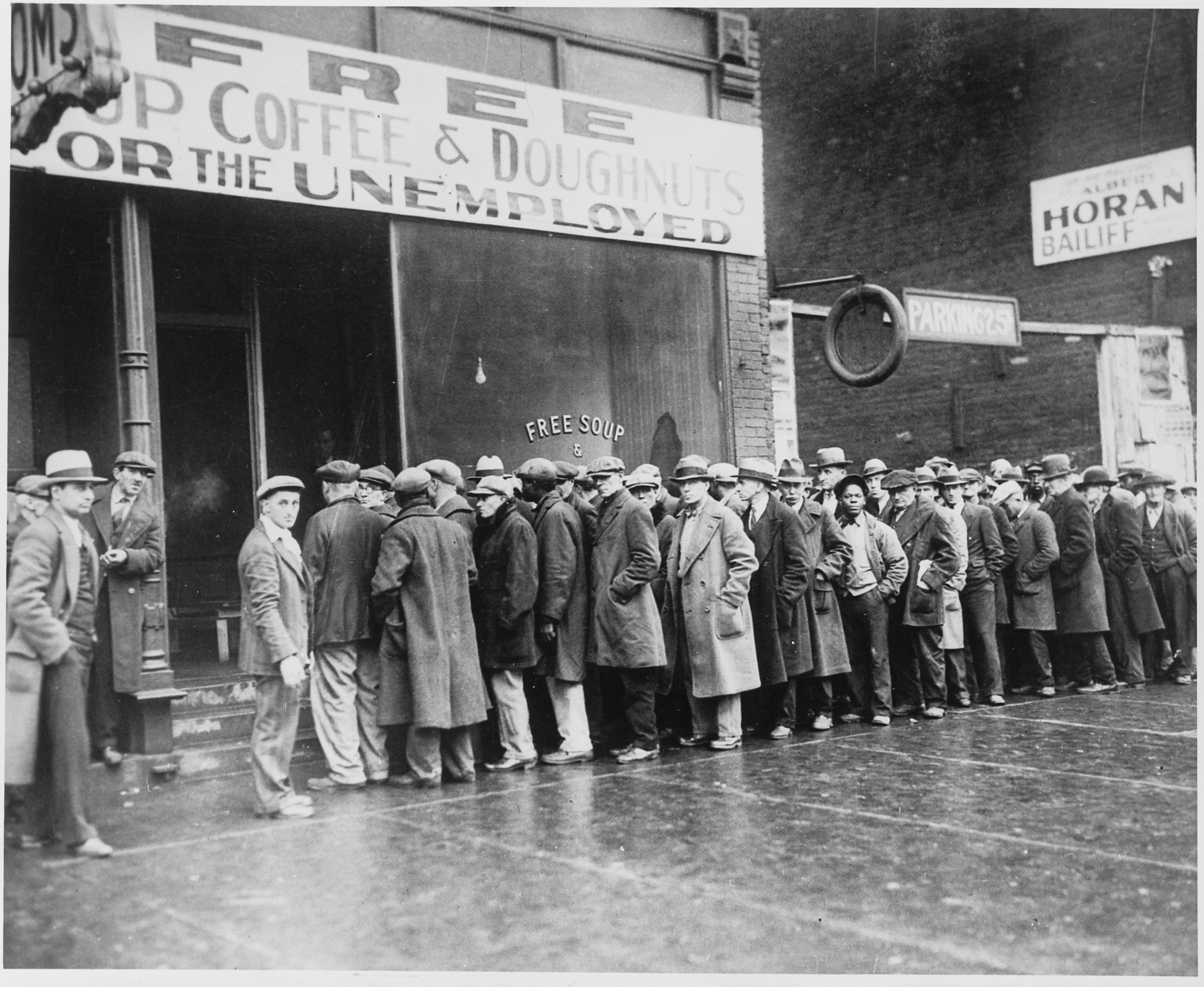
In severe cases of deflation there can be no money available at all not — even at the banks. This nightmare actually occurred during the Great Depression of the 1930s, when there were places in the United States where there was no cash available at all. More recently, it has happened in Greece, where ATMs ran out of cash and where banks placed limits on the amount of money that could be withdrawn.


People had no money to pay bills or buy food for their families. Employers had no money to pay employees, customers had no money to buy goods, and many people were reduced to bartering to survive. During the Great Depression, farmers would pay professionals such as mechanics and doctors with food because they had no money and no credit.


The situation got so bad that in some areas of the country, local governments, chambers of commerce and businesses issued their own currencies — the so-called depression scrip. (See a picture of one here.) The scrip often took the form of pieces of paper that people used as money because there was no government currency available. The scrip was used to pay workers or buy goods.


At one point during the Great Depression, the money shortage got so severe that the US government considered issuing a national scrip as an alternative to the dollar. That plan was eventually dropped and the government solved the crisis by simply printing more dollars.[2]


Many people have known survivors of the Great Depression who liked to keep large amounts of cash on hand. Others would hoard food and other items. Those people developed that habit because they remembered what life without money was like. The fear of the deflation that occurred in the 1930s haunted them all of their lives.


Ready For Deflation? This New Solar Backup Generator Delivers 4 Times More Power Than Other Models


The frightening reality is that the threat of deflation is still real. Some knowledgeable individuals, such as wealth preservation experts Will and Bill Bonner,[3] believe that a sudden deflation leading to a national or international money shortage is still possible today.


The Bonners, who have studied some of the world’s knowledgeable investors such as George Soros, believe that the next financial crisis will begin with a “violent monetary shock” similar to the one that occurred during the Great Depression. They predict that money could suddenly disappear overnight, causing the economy to come to a grinding halt.


What Happens When Money Vanishes


Historical accounts of the Great Depression show us some of the possible effects of such a violent monetary shock. The damage caused by such a violent deflation can include:


The sudden collapse of prices. The Great Depression began with the collapse of stock market prices in 1929. That was preceded by the collapse of agricultural prices in the United States during the 1920s. During that crisis, land prices in rural areas collapsed, causing large numbers of rural banks to fail. When the banks failed, the government liquidated them and their assets, which included lots of foreclosed farmland, an action that further drove prices and made the crisis worse.[4]


soup kitchenEverything you have — your investments, your home and your possessions — could suddenly lose all of its value. We saw this happen during the mortgage bubble of 2007-2008, when many people found themselves “underwater.” That occurs when the amount a home is mortgaged for exceeds the property’s value.


The collapse in prices during the Great Depression particularly hurt farmers who relied on commodity prices. Newsreels from the early 1930s show farmers dumping grain on the ground and pouring out milk because they could not sell them.


Bank runs and the collapse of financial institutions. A bank run or banking panic occurs when all of a bank’s depositors try to take their money out at once. Bank runs often trigger the collapse of financial institutions, which prompts even more bank runs. Between 1930 and 1933 nearly 10,000 banks failed or were suspended.[5] The panic got so bad that President Franklin D. Roosevelt actually suspended all bank transactions in the US between March 6 and March 10, 1933 to prevent further runs in his so-called “bank holiday.”[6]


New Survival Seed Bank™ Lets You Plant A Full Acre Crisis Garden!


During the banking crisis of the 1930s, many Americans lost their life savings simply because they were not able to get to the bank fast enough and withdraw their money. Even some wealthy individuals ended up on the streets and in bread lines because they could not get money from the bank.


Massive unemployment. It is a simple and obvious fact that when there is no money, there are no jobs. At the height of the Great Depression in 1933, 24.75 percent of the nation’s labor force, or one in four workers, were unemployed. Around 12.83 million people were out of work at a time when America’s total population was only around 93 million people. That unemployment persisted for years, with 8.1 million Americans still out of work in 1940 in the 11th year of the Great Depression.[7] The unemployment created by the Depression only ended when World War II created “jobs” in the form of the draft and war production.


Hunger and Starvation. Not surprisingly, hunger and in some cases death from starvation can become a problem after deflation. Historians disagree on the number of people who died during the Great Depression.


depression -- storing food -- pinterestDOTcomMassive expansion of government and its power. In his first 100 days in office in 1933, Roosevelt signed 15 major pieces of legislation, several of which established massive new bureaucracies.[8] During the 1920s there were 553,000 civilian employees of the federal government, but by 1940 the federal government had more than 1 million civilian employees.[9] For the first time in American history, the federal government even tried to set prices for products under the National Recovery Act. The government also told farmers what to grow under the Agricultural Adjustment Act. Those laws were so blatantly unconstitutional that the US Supreme Court struck them down in 1935 and 1936.[10]


Increased taxation. When money disappears government gets desperate and imposes more and taxes in an attempt to squeeze more money out of the economy. During the Depression, the maximum income tax rate was raised from 20 percent to 55 percent, gift taxes were increased from .75 percent to 33.5 percent, and new taxes were levied on automobiles, gasoline, telegrams, telephone calls and even checks. By 1934, the United States had the highest tax rates in the world. In 1935 taxes were raised again. Historian Murray Rothbard estimates that the effective tax rate in the United States increased from 16 percent to 29 percent during the Depression.[11]


Why it Could Be Worse Today


If such an event were to occur in today’s world, it could be far worse than the Great Depression.


People were far more self-sufficient in the 1930s, as large numbers of families lived on farms and grew their own food. Even many Americans who lived in town maintained gardens and chicken coops. In those days people also hunted for meat, canned and preserved their own food and baked their own bread. People also sewed their own clothes and fixed their own cars, which gave them a high level of self-sufficiency.


Today, most Americans rely solely on supermarkets for food, and many families no longer even cook. Few people bother to sew, and most of us do not even change the oil in our cars. If our money were to disappear, we would be as helpless as children.


It’s time that we learn the lessons of the Americans who survived the Great Depression. That lesson was to be as self-sufficient as possible so you can survive, no matter what.


Do you believe that what happened during the Great Depression could take place again? Share your thoughts in the section below:


[1] http://www.investopedia.com/terms/d/deflation.asp


[2] http://www.depressionscrip.com/


[3] http://bonnerandpartners.com/about/


[4] http://www.chicagobooth.edu/capideas/magazine/spring-2014/what-a-1920s-farm-bust-reveals-about-financial-crises


[5] http://econproph.com/2009/10/26/fdic-managing-the-crisis-the-fdic-and-rtc-experience/


[6] http://www.ushistory.org/us/49a.asp


[7] http://www.u-s-history.com/pages/h1528.html


[8] http://dp.la/exhibitions/exhibits/show/new-deal/recovery-programs


[9] http://www.econlib.org/library/Enc/GreatDepression.html


[10] http://www.econlib.org/library/Enc/GreatDepression.html


[11] http://fee.org/freeman/detail/the-great-depression


Are You Ready For Blackouts When A Crisis Arrives? Read More Here.

Thursday, December 21, 2017

Is the Bond Market About to Call the Fed"s Inflationary Bluff?

Perhaps the single biggest development this year, as far as the markets were concerned, was the Fed admitting on the record that it has no idea what is going on with inflation.


This represents a kind of endgame for the Fed. Since the early ‘80s, the Fed has been actively understating inflation via a variety of gimmicks.


It first removed home prices and replaced them with “owner’s equivalent rent.” Doing that removed any sharp rise in home prices from affecting inflation data, thereby downplaying the official inflation rate.


Then in 1998, the Fed started playing around with “hedonics” (think food and energy prices). The Fed claimed that the goal was to somehow balance the deflationary forces of technology vs. the inflationary forces of hedonics items… but the reality was that this was just another gimmick to understate inflation.


Then, finally in 1999, the Fed introduced the idea of “substitutions.” Here again the Fed claimed it was trying to get an accurate read on inflation (the Fed argues here that if a consumer cannot afford steak anymore, the fact he or she can substitute hamburger indicates his or her quality of life is roughly the same as before).


And once again the goal was to understate inflation.


I realize this is getting a bit complicated, so let’s put this in simple terms…


1)   Since the early ‘80s, the Fed has been employing various gimmicks to hide the real rate of inflation.


2)   Doing this allowed the Fed to overstate GDP growth while understating the true decline in incomes/ quality of life for most Americans.


This game worked for a while, but this year the whole scheme crashed into a wall when the various gimmicks resulted in data that made no sense what-so-ever.


At a time when the NY Fed’s UIG inflation measure and the Atlanta Fed’s “sticky inflation” measure, showed inflation at 2.8% and 2.1% respectively, the Fed’s official inflation measures (CPI and trimmed PCE) were clocking in at 1.7% and 1.4%,


The Fed’s Board of Governors had a choice here:


1)   Admit the official inflation numbers were garbage


Or…


2)   Act surprised by the official rate being so low and claim it’s an anomaly.


The Fed went with #2 in what was one of the most insane Fed statements ever. According to the Fed’s July FOMC statement…


  • Most participants expect inflation to pick up over the next couple years.

  • Many Fed participants think inflation will remain below 2% longer than expected.

  • Many Fed participants believe that inflation measures dropped recently due to “idiosyncratic factors.”

  • A few Fed participants believe the Fed’s framework for forecasting inflation is no longer valid.

  • Some Fed participants noted their increase uncertainty about the outlook for inflation.

Put simply: the Fed admitted that it no longer had a clue what was going on with inflation. It has since maintained this “who knows!” shtick (I note that Fed Chair Janet Yellen, in last week’s conference stated that the Fed’s understanding of inflation is “imperfect.”)


Why does this matter?


As I explain in my bestselling book The Everything Bubble: the Endgame For Central Bank Policy, US sovereign bonds (also called Treasuries) trade based on inflation expectations.


Put simply, when inflation spikes higher, so do Treasury bond yields.


When bond yields rise, bond prices fall.


When bond prices fall, the Bond Bubble bursts.


When the Bond Bubble bursts, the EVERYTHING bubble follows.


Well, guess what? The yield on 10-Year US Treasuries is spiking, having broken above its 20-year trendline.


What"s coming will take time for this to unfold, but as I recently told clients, we"re currently in "late 2007" for the coming crisis. The time to prepare for this is NOW before the carnage hits.


On that note, we are putting together an Executive Summary outlining all of these issues as well as what’s to come when The Everything Bubble bursts.


It will be available exclusively to our clients. If you’d like to have a copy delivered to your inbox when it’s completed, you can join the wait-list here:


https://phoenixcapitalmarketing.com/TEB.html


Best Regards


Graham Summers


Chief Market Strategist


Phoenix Capital Research

Wednesday, December 20, 2017

How Government Inaction Ended The Depression Of 1921

Authored by Lew Rockwell via Mises Canada,


As the financial crisis of 2008 took shape, the policy recommendations were not slow in coming: why, economic stability and American prosperity demand fiscal and monetary stimulus to jump-start the sick economy back to life. And so we got fiscal stimulus, as well as a program of monetary expansion without precedent in US history.


David Stockman recently noted that we have in effect had fifteen solid years of stimulus — not just the high-profile programs like the $700 billion TARP and the $800 billion in fiscal stimulus, but also $4 trillion of money printing and 165 out of 180 months in which interest rates were either falling or held at rock-bottom levels.


The results have been underwhelming: the number of breadwinner jobs in the US is still two million lower than it was under Bill Clinton.


Economists of the Austrian school warned that this would happen. While other economists disagreed about whether fiscal or monetary stimulus would do the trick, the Austrians looked past this superficial debate and rejected intervention in all its forms.


The Austrians have very good theoretical reasons for opposing government stimulus programs, but those reasons are liable to remain unknown to the average person, who seldom studies economics and who even more seldom gives non-establishment opinion a fair hearing. That’s why it helps to be able to point to historical examples, which are more readily accessible to the non-specialist than is economic theory. If we can point to an economy correcting itself, this alone overturns the claim that government intervention is indispensable.


Possibly the most arresting (and overlooked) example of precisely this phenomenon is the case of the depression of 1920–21, which was characterized by a collapse in production and GDP and a spike in unemployment to double-digit levels. But by the time the federal government even began considering intervention, the crisis had ended. What Commerce Secretary Herbert Hoover deferentially called “The President’s Conference on Unemployment,” an idea he himself had cooked up to smooth out the business cycle, convened during what turned out to be the second month of the recovery, according to the National Bureau of Economic Research (NBER).


Indeed, according to the NBER, which announces the beginnings and ends of recessions, the depression began in January 1920 and ended in July 1921.


James Grant tells the story in his important and captivating new book The Forgotten Depression — 1921: The Crash That Cured Itself. A word about the author: Grant ranks among the most brilliant of financial experts. In addition to publishing his highly regarded newsletter, Grant’s Interest Rate Observer, for more than thirty years, Grant is a frequent (and anti-Fed) commentator on television and radio, the author of numerous other books, and a captivating speaker. We’ve been honored and delighted to feature him as a speaker at Mises Institute events.


What exactly were the Federal Reserve and the federal government doing during these eighteen months? The numbers don’t lie: monetary policy was contractionary during the period in question. Allan Meltzer, who is not an Austrian, wrote in A History of the Federal Reserve that “principal monetary aggregates fell throughout the recession.” He calculates a decline in M1 by 10.9 percent from March 1920 to January 1922, and in the monetary base by 6.4 percent from October 1920 to January 1922. “Quarterly average growth of the base,” he continues, “did not become positive until second quarter 1922, nine months after the NBER trough.”


The Fed raised its discount rate from 4 percent in 1919 to 7 percent in 1920 and 6 percent in 1921. By 1922, after the recovery was long since under way, it was reduced to 4 percent once again. Meanwhile, government spending also fell dramatically; as the economy emerged from the 1920–21 downturn, the budget was in the process of being reduced from $6.3 billion in 1920 to $3.2 billion in 1922. So the budget was being cut and the money supply was falling. “By the lights of Keynesian and monetarist doctrine alike,” writes Grant, “no more primitive or counterproductive policies could be imagined.” In addition, price deflation was more severe during 1920–21 than during any point in the Great Depression; from mid-1920 to mid-1921, the Consumer Price Index fell by 15.8 percent. We can only imagine the panic and the cries for intervention were we to observe such price movements today.


The episode fell down the proverbial memory hole, and Grant notes that he cannot find an example of a public figure ever having held up the 1920–21 example as a data point worth considering today. But although Keynesians today, now that the episode is being discussed once again, assure everyone that they are perfectly prepared to explain the episode away, in fact Keynesian economic historians in the past readily admitted that the swiftness of the recovery was something of a mystery to them, and that recovery had not been long in coming despite the absence of stimulus measures.


The policy of official inaction during the 1920–21 depression came about as a combination of circumstance and ideology. Woodrow Wilson had favored a more pronounced role for the federal government, but by the end of his term two factors made any such effort impossible. First, he was obsessed with the ratification of the Treaty of Versailles, and securing US membership in the League of Nations he had inspired. This concern eclipsed everything else. Second, a series of debilitating strokes left him unable to do much of anything by the fall of 1919, so any major domestic initiatives were out of the question. Because of the way fiscal years are dated, Wilson was in fact responsible for much of the postwar budget cutting, a substantial chunk of which occurred during the 1920–21 depression.


Warren Harding, meanwhile, was philosophically inclined to oppose government intervention and believed a downturn of this kind would work itself out if no obstacles were placed in its path. He declared in his acceptance speech at the 1920 Republican convention:


We will attempt intelligent and courageous deflation, and strike at government borrowing which enlarges the evil, and we will attack high cost of government with every energy and facility which attend Republican capacity. We promise that relief which will attend the halting of waste and extravagance, and the renewal of the practice of public economy, not alone because it will relieve tax burdens but because it will be an example to stimulate thrift and economy in private life.


Let us call to all the people for thrift and economy, for denial and sacrifice if need be, for a nationwide drive against extravagance and luxury, to a recommittal to simplicity of living, to that prudent and normal plan of life which is the health of the republic. There hasn’t been a recovery from the waste and abnormalities of war since the story of mankind was first written, except through work and saving, through industry and denial, while needless spending and heedless extravagance have marked every decay in the history of nations.


Harding, that least fashionable of American presidents, was likewise able to look at falling prices soberly and without today’s hysteria. He insisted that the commodity price deflation was unavoidable, and perhaps even salutary. “We hold that the shrinkage which has taken place is somewhat analogous to that which occurs when a balloon is punctured and the air escapes.” Moreover, said Harding, depressions followed inflation “just as surely as the tides ebb and flow,” but spending taxpayer money was no way to deal with the situation. “The excess of stimulation from that source is to be reckoned a cause of trouble rather than a source of cure.”


Even John Skelton Williams, comptroller of the currency under Woodrow Wilson and no friend of Harding, observed that the price deflation was “inevitable,” and that in any case “the country is now [1921] in many respects on a sounder basis, economically, than it has been for years.” And we should look forward to the day when “the private citizen is able to acquire, at the expenditure of $1 of his hard-earned money, something approximating the quantity and quality which that dollar commanded in prewar times.”


Thankfully for the reader, not only is Grant right on the history and the economics, but he also writes with a literary flair one scarcely expects from the world of financial commentary. And although he has all the facts and figures a reader could ask for, Grant is also a storyteller. This is no dry sheaf of statistics. It is full of personalities — businessmen, union bosses, presidents, economists — and relates so much more than the bare outline of the depression. Grant gives us an expert’s insight into the stock market’s fortunes, and those of American agriculture, industry, and more. He writes so engagingly that the reader almost doesn’t realize how difficult it is to make a book about a single economic episode utterly absorbing.


The example of 1920–21 was largely overlooked, except in specialized treatments of American economic history, for many decades. The cynic may be forgiven for suspecting that its incompatibility with today’s conventional wisdom, which urges demand management by experts and an ever-expanding mandate for the Fed, might have had something to do with that. Whatever the reason, it’s back now, as a rebuke to the planners with their equations and the cronies with their bailouts.


The Forgotten Depression has taken its rightful place within the corpus of Austro-libertarian revisionist history, that library of works that will lead you from the dead end of conventional opinion to the fresh air of economic and historical truth.


Monday, December 18, 2017

Three Charts That SCREAM "Inflation" In 2018

The financial system is preparing for an inflationary shock.


The single best means of measuring inflation vs deflationary forces in the US financial system is the TIP to Long-Treasury (TLT) ratio. When this ratio rallies the system is predicting inflation. When it falls, the system is fearing deflation.


Running back to 2010, we’ve been in a long-term deflationary downtrend on this ratio.


This deflationary pull has dragged down the entire commodity complex over the same time period.


But this is about to end. In the short- term, the TIP:TLT ratio has MASSIVE support at current levels. And given the clear descending wedge pattern it’s formed, the odds are favoring a sharp breakout to the upside sometime in early 2018.


This is going to ignite a HUGE rally in commodities and other inflation hedges. Our big theme for 2018 is INFLATION. And we"re already producing numerous winners from this trend.


We just published a Special Investment Report concerning FIVE secret investments you can use to make inflation pay you as it rips through the financial system in the months ahead


The report is titled Survive the Inflationary Storm


We are making just 100 copies available to the public.


To pick up yours, swing by:


https://www.phoenixcapitalmarketing.com/inflationstorm.html


Best Regards


Graham Summers


Chief Market Strategist


Phoenix Capital Research

Thursday, December 14, 2017

Asset Prices Are "Prices" Too...

Authored by Thorstein Polleit via The Mises Institute,


We live in inflationary times.


Some people might consider this statement controversial. This is because these days inflation is widely understood as a rise in the consumer price index (CPI) of more than 2 percent per year. However, there are convincing reasons to question this viewpoint. On the one hand, the CPI does not include “assets” such as, for instance, stocks, housing, real estate, etc. As a result, the price developments of these goods are not accounted for by the changes in the CPI.


On the other hand, and even more essential, price changes of goods and services are associated with changes in the quantity of money. This is why economists used to understand a rise in the quantity of money as inflationary (and a decline in the quantity of money as deflationary): Without money sloshing around, there could not be a phenomenon like inflation — that is an ongoing upward trend in all prices of goods and services over time. The truth is that rising prices across the board is inextricably linked to money.


Asset Prices Are Prices


One indicator of an inflationary monetary development is the link between the US money stock M2 and nominal GDP. This ratio can be referred to as a measure of "excess liquidity." Since the outbreak of the crisis 2008/2009, excess liquidity has been growing strongly — as GDP growth lagged behind the increase in the quantity of money. Why? Well, a great deal of the monetary expansion has been driving asset prices upwards — most notably in the stock and housing market.


poll1_0.png


The Federal Reserve (Fed) has created yet another “inflationary boom." The US economy is fueled by extremely low interest rates, accompanied by additional credit and money growth created out of thin air. The monetary expansion leads to an artificial rise in consumption and investment spending, resulting in production and employment gains. Furthermore, the newly created liquidity finds its way into financial (asset) markets, driving up asset prices and even valuation levels.


How To Keep the Boom Going: More Inflation


To keep the inflationary boom going - and prevent the “bust,” - the Fed has to make sure that credit and money supply keep increasing and that, by no means less important, borrowing and capital costs remain at fairly low levels. That said, the ongoing inflationary policy must - and for political reasons most likely will - go on. Higher interest rates and a slowdown of credit and money creation would take away the punch bowl - and the party would come to a shrieking halt. The economic boom would turn into bust.


Inflation only works if it comes unnoticed, if there is “surprise inflation.” However, as soon as people find out that the purchasing power of money goes down more than they had expected, the chickens come home to roost: People factor in higher inflation into their contracts for wages, leases and credit. If this happens, there is no longer surprise inflation, and inflation loses its power to stimulate the economy (through misleading price signals, that is).


A central bank that wants to keep the boom going and prevent the bust is left with just one option: it has to create a higher dose of surprise inflation. The reader may already know what such an “inflation game” is leading to. It puts the economy on a high-inflation road or, in the extreme case, a super-inflation road or even a hyper-inflation road that will ultimately destroy the purchasing power of the currency.


Why There Is No Perceived Crisis


So far, financial markets have remained fairly relaxed. Inflation is not seen as a major problem as proven by, for instance, inflation expectations. How come? There might be two reasons for this. First, the majority of people derive their inflation expectations from experienced CPI inflation (we can speak of “adaptive inflation expectations”). As the latter has been relatively low for many years, people do not expect inflation to edge up in the years to come.


poll2_0.png


Second, many people still do not seem to realize that “asset price inflation” ruins the purchasing power of money in the same way as CPI inflation does: If you want to buy stocks, houses or land with your money, you will get less for your money if prices for these goods go up. However, as long as asset price inflation is not understood as a form of "true inflation," inflation expectations are tamed, and central banks can continue their inflationary scheme. 


Against this backdrop we can draw two conclusions. First, inflation is alive and kicking, it is currently raging in asset price increases. Second, an inflationary boom runs the risk of turning into a bust at some point — a scenario which would hit the economy, the financial system, and asset prices hard. Unfortunately, one cannot forecast (with any scientific precision) when the boom will turn into bust; it really depends on certain conditions.


That said, the current boom may go on for quite a while — with the economies keeping expanding and asset prices rushing from one record level to the next. However, we do know from sound economics that the current inflationary boom — which is presumably welcomed by many as it provides more jobs and additional incomes — is actually sowing the seeds of a bust.


The investor should keep in mind that central banks do not only set into motion an inflationary boom in the first place (which will end in tears), but that they will fight an approaching bust with even more inflation (by increasing the quantity of money even further). That said, investors are well-advised to live up to a rather uncomfortable truth: We"ve had inflation, and there will be more of it. Money will continue to lose its purchasing power.


Wednesday, December 13, 2017

A Question For Every Investor

Authored by 720Global"s Michael Lebowitz via RealInvestmentAdvice.com,


Recently we received the following question from a subscriber:


“If a correction in the stock or bond markets comes, the Central Banks will buy stocks with printed money, like the Japanese Central Bank, etc. Will there ever be a shakeout of the garbage and junk in the system? I am losing all confidence.” –Ron H.


Questions like Ron’s that suggest the decay of capitalism and free markets should raise concerns for anyone’s market thesis, bullish, bearish or agnostic. What stops a central bank from manipulating asset prices? When do they cross a line from marginal manipulation to absolute price control? Unfortunately, there are no concrete answers to these questions, but there are clues.


Global central banks’ post-financial crisis monetary policies have collectively been more aggressive than anything witnessed in modern financial history. Over the last ten years, the six largest central banks have printed unprecedented amounts of money to purchase approximately $14 trillion of financial assets as shown below. Before the financial crisis of 2008, the only central bank printing money of any consequence was the Peoples Bank of China (PBoC).


The central banks’ goals, in general, are threefold:


  • Expand the money supply allowing for the further proliferation of debt, which has sadly become the lifeline of most developed economies.

  • Drive financial asset prices higher to create a wealth effect. This myth is premised on the belief that higher financial asset prices result in greater economic growth as wealth is spread to the masses.
    • “And higher stock prices will boost consumer wealth and help increase confidence, which can also spur spending. Increased spending will lead to higher incomes and profits that, in a virtuous circle, will further support economic expansion.”Ben Bernanke Editorial Washington Post 11/4/2010.


  • Lastly, generate inflation, to help lessen the burden of debt.

QE has forced interest rates downward and lowered interest expenses for all debtors. Simultaneously, it boosted the amount of outstanding debt. The net effect is that the global debt burden has grown on a nominal basis and as a percentage of economic growth since 2008. The debt burden has become even more burdensome.


The wealth effect is putting riches in the hands of a small minority of the population, with negligible benefits, if any, flowing to the majority of the population. Bernanke’s version of the virtuous circle, as highlighted above, is far from virtuous unless you are in the upper five to ten percent of households by wealth.  To understand how a real economic virtuous circle works, we recommend you read our article The Death of the Virtuous Cycle and watch The Animated Virtuous Cycle.


Inflation has been low since 2008 and deflation continues to be a chief concern of most central bankers. Because QE, in all cases, was focused on financial asset prices and not the prices of everyday goods and services, the inflation they aimlessly seek has not occurred.


To summarize our views, largely ineffective monetary policies are providing few economic benefits. They are increasing the debt burden and furthering socially destabilizing trends. Worse, these policies are packed with consequences that lie dormant and have yet to emerge. One of our concerns, which is being heralded as a positive, is the massive distortions in financial asset prices worldwide. Consider a few of these facts below and whether they are sustainable:


  • U.S. yields have been among the lowest ever on record dating back to 1776

  • U.S. equity valuations have risen to levels rarely observed and from this perch have always been followed by massive losses

  • Over $9 trillion in sovereign bonds yields in many European countries and Japan have negative current yields

  • European junk-grade debt now trades at yields lower than U.S. Treasuries

  • Veolia, a French BBB rated company, recently issued a 3-year bond at a yield of -.026%.

  • Italian 3-year government bonds yield -0.337%, despite the 3rd highest debt to GDP ratio of all developed nations (132%)

  • Argentina, which has defaulted 6 times in the past 100 years, issued a $2.75 billion 100-year bond paying a paltry 8% interest

  • The BOJ owns over 75% of all Japanese ETFs

  • The Swiss National Bank owns 19.2 million shares of Apple, or 3% of total shares outstanding, and $84 billion in aggregate of U.S. stocks

Yes, Ron, the central bankers have clearly crossed the line between free markets and government controlled markets. To answer your question about the “shakeout,” we must wait until the inevitable day comes and asset prices are in free-fall. When this occurs, we will learn the full extent of their support and how far they have crossed the line. We like to think the central bankers are willing to endure the short-term pain of such a situation and allow the natural cycle of economies and asset prices to run their course. The reality, however, is that the pattern of their actions in the post-financial crisis era argue that they are unlikely to relinquish their grip. To the extent that authority and power is extended to the Fed through the U.S. Congress, it does not seem likely for career politicians to urge action that may be painful in the short-term but highly beneficial in the long-term.


This premonition was supported by recent statements from the October 2017 Federal Reserve minutes and appointed Fed Chairman Jerome Powell respectively. Fed Minutes:


“In light of elevated asset valuations and low financial market volatility, several participants expressed concerns about a potential buildup of financial imbalances,” further “They worried that a sharp reversal in asset prices could have damaging effects on the economy.” Jerome Powell, in prepared remarks to Congress stated: “(the Fed) will respond with force to threats to the nation’s stability.”


Putting two and two together, one can quickly figure out that falling asset prices and the “damaging effects” they will inflict on the economy will not be tolerated by the Fed. 


Ron, while we cannot answer your question with certainty, we are relatively confident the Fed and other central banks’ influence on markets will only increase in time as they continue to perpetuate the debt and economic problems they helped create. Naturally, the next question for consideration is to what extent markets may be bigger than the Fed? That is an article for another day.


Tuesday, November 28, 2017

Doug Casey On The New Fed Chair

Authored by Doug Casey via CaseyResearch.com,


Ahead of his confirmation hearing tomorrow, a few words are in order about the likely new Chairman of the Federal Reserve, Jerome Powell.


I don’t know the man personally. Not that it would make any difference; denizens of the swamp within the Beltway usually present well, and a brief meeting rarely allows you to penetrate someone’s social veneer. But I’m pretty confident that if we dined together it would be tense and unpleasant. We’d have no common ground, after the obligatory two minutes on the weather and the state of the roads.


He’s a lawyer, has been a Fed Governor for five years, and appears to be a “steady as she goes” so-called moderate Republican. He’s a lifelong Deep State player. But let’s not waste time psychoanalyzing this bureaucrat; he’s just a cog in the machine. And the machine, at this stage, has a life of its own.


Many of my friends in the alternative press deplore Trump’s appointment of yet another conventional money printer. They were hoping for a “hawk,” who would start liquidating the Fed’s $4.5 trillion balance sheet, and raising interest rates. And they’re right. That $4.5 trillion of super money has driven stock, bond, and real estate prices to insane levels. And today’s artificially low interest rates are discouraging saving, and encouraging people to live above their means.


In an ideal world there would be some radical changes. The best thing for the US in the (famous) long run is to go “cold turkey.” To abolish the Federal Reserve, fire its thousands of employees with their worthless PhDs. Return to 100% reserve banking with a strict separation of demand and time deposits. Depoliticize money by using gold, not Federal Reserve Notes. And default on the national debt, which is rewarding crony capitalists, and will turn future generations of Americans into serfs. And massively deregulate. And abolish the income tax, while cutting spending 90%. Etc. Etc.


The chances of that happening are exactly zero. So let’s talk, instead, about what is going to happen.


We’re going to have much higher levels of inflation. The new Fed Chair will open a monetary hydrant, at least if he doesn’t want to be hung from a lamppost by his heels. But I’m quite pleased Trump has appointed the guy. That may sound shocking. Let me explain why.


A sound economist would work to stop money printing and let interest rates find a market level. But that would precipitate a deflationary collapse after decades of monetary debasement. And the powers of darkness would again be able to paint sound policies and the free market as the cause for the problem, when actually it’s the only cure for economic problems.


From an economic point of view an inflationist like Powell is a disaster. It’s too bad he’s nominally a Republican, since for some reason they’re associated with the free market. As is Trump. Wearing our speculator hats, we’d likely be better off under Hillary - even more inflation, even more distortions to capitalize on. Even wearing our economist hats we might be better off under her, because if the whole rotten structure collapsed on her watch, it might discredit her ideas for at least a few years. But, as ever, I suspect I’m being too optimistic.


For decades - at least since I started following these things in the early ‘70s - free market economists have argued whether the Fed’s ever-increasing money printing would result in a deflationary depression, or a hyperinflationary depression.


As to why a catastrophic depression is inevitable - despite the fact most people try to produce more than they consume, and despite the fact science and technology are advancing exponentially - is beyond the scope of this brief article. I refer you to these pieces (here and here) I’ve done in the past on that topic.


It will be a deflationary collapse if the Fed doesn’t continue buying debt and creating new dollars. And a hyperinflation if they do.


If they stop printing, the banks would fail, and the public would lose a good portion of their deposits. The economy would slow down considerably, causing indebted corporations to default, unemploying their workers. Tax revenues would fall off, and governments wouldn’t be able to fund welfare programs. The stock, bond and real estate markets would collapse, wiping out the asset base of rich people.


It would be a huge social upset. But most of the real wealth in the world would still exist, it’s just that a lot of it would change ownership. And the dollar would still exist—there’d just be many fewer of them. Production and commerce could continue. At least until the cries go out for the government to “do something.”


But hyperinflation will be an even bigger disaster. And that’s what we’re going to get. Money will drop radically in value, making production and consumption much, much harder. Foreigners will dump trillions of them, sending them back to the US in exchange for real wealth. There’ll be even more unemployment than with deflation. But the profligate—those who’d borrowed a lot to live above their means—will be rewarded, while prudent savers will be punished. Shaky, overindebted corporations might survive, while productive ones with fat balance sheets will lose. Worse, governments will have their debts erased, and therefore might even grow in power. They’ll definitely “do something,” they always do in time of chaos. Stocks and real estate could first crash, then soar as people try to get out of dollars and into assets. This will benefit the rich, at least in relative terms.


At this late stage either type of depression will result in not just financial and economic, but in social and political chaos. It won’t be fun. In a depression everybody loses. The winners are just those who lose least. And a few speculators that get lucky. Hopefully we’ll be among them.


Given a choice—and they have a choice, based on whether they keep printing or not—the government and the Fed will definitely veer towards more inflation. Everyone in office just hopes to kick the can down the road for at least one more cycle.


Frankly, I was surprised that things didn’t go over a cliff in 2008 when we entered this most recent hurricane. And I’ve been surprised that things have held together as well as they have during the long “eye of the storm.” But governments and central banks around the world have already printed up scores of trillions of new currency units, and reduced interest rates to zero and below. What can they do when we go into the trailing edge of the hurricane?


My guess is that they’ll repeat their actions so far. Print more money and try to take interest rates even lower. The result will be hyperinflation, or close to it. And lots of new government controls of all types.


Why is this - strictly relatively speaking - good news for us? Because more money printing means more bubbles will be created. And while bubbles are the enemies of a sound economy, they’re the friend of the speculator. The current mania in Bitcoin and other cryptocurrencies is an example.


In particular, I’m looking forward to a bubble in commodities in general (most are down 50% from the previous peak in 2011), and precious metals in particular. And not just a bubble, but a hyper bubble in mining stocks.


So, if I’m right, in the next few years we could stand to make a fortune while the world is falling apart. I know - that sounds harsh to be eating caviar while the masses are forced to grub for roots and berries. But, as Ayn Rand said when asked what you should do about the poor: “Just make sure you’re not one of them.”


*  *  *


Every month, Doug shares his unique insights in The Casey Report, our flagship publication. If you sign up today, you’ll get complete access to all of our archived content, including recent essays by Doug on the Greater Depression, the migrant crisis, the crypto mania, technology, and much more. You’ll also receive specific, actionable advice to help you protect and grow your personal financial empire. You can sign up for a risk-free trial of The Casey Report right here.


Monday, November 27, 2017

This Is The "Dilemma From Hell Dacing CBs"

We present some somber reading on this holiday Sunday from Macquarie Capital’s Viktor Shvets, who in this exclusive to ZH readers excerpt from his year-ahead preview, explains why central banks can no longer exit the “doomsday highway” as a result of a “dilemma from hell” which no longer has a practical, real-world resolution, entirely as a result of previous actions by the same central bankers who are now left with no way out from a trap they themselves have created.


* * *


"It has been said that something as small as the flutter of a butterfly’s wing can ultimately cause a typhoon halfway around the world" – Chaos Theory.


There is a good chance that 2018 might fully deserve shrill voices and predictions of dislocations that have filled almost every annual preview since the GFC.


Whether it was fears of a deflationary bust, expectation of an inflationary break-outs, disinflationary waves, central bank policy errors, US$ surges or liquidity crunches, we pretty much had it all. However, for most investors, the last decade actually turned out to be one of the most profitable and the most placid on record. Why then have most investors underperformed and why are passive investment styles now at least one-third (or more likely closer to two-third) of the market and why have value investors been consistently crushed while traditional sector and style rotations failed to work? Our answer remains unchanged. There was nothing conventional or normal over the last decade, and we believe that neither would there be anything conventional over the next decade. We do not view current synchronized global recovery as indicative of a return to traditional business and capital market cycles that investors can ‘read’ and hence make rational judgements on asset allocations and sector rotations, based on conventional mean reversion strategies. It remains an article of faith for us that neither reintroduction of price discovery nor asset price volatilities is any longer possible or even desirable.


However, would 2018, provide a break with the last decade? The answer to this question depends on one key variable. Are we witnessing a broad-based private sector recovery, with productivity and animal spirits coming back after a decade of hibernation, or is the latest reflationary wave due to similar reasons as in other recent episodes, namely (a) excess liquidity pumped by central banks (CBs); (b) improved co-ordination of global monetary policies, aimed at containing exchange rate volatilities; and (c) China’s stimulus that reflated commodity complex and trade?


The answer to this question would determine how 2018 and 2019 are likely to play out. If the current reflation has strong private sector underpinnings, then not only would it be appropriate for CBs to withdraw liquidity and raise cost of capital, but indeed these would bolster confidence, and erode


pricing anomalies without jeopardizing growth or causing excessive asset price displacements. Essentially, the strength of private sector would determine the extent to which incremental financialization and public sector supports would be required. If on the other hand, one were to conclude that most of the improvement has thus far been driven by CBs nailing cost of capital at zero (or below), liquidity injections and China’s debt-fuelled growth, then any meaningful withdrawal of liquidity and attempts to raise cost of capital would be met by potentially violent dislocations of asset prices and rising volatility, in turn, causing contraction of aggregate demand and resurfacing of disinflationary pressures. We remain very much in the latter camp. As the discussion below illustrates, we do not see evidence to support private sector-led recovery concept. Rather, we see support for excess liquidity, distorted rates and China spending driving most of the improvement.


We have in the past extensively written on the core drivers of current anomalies. In a ‘nutshell’, we maintain that over the last three decades, investors have gradually moved from a world of scarcity and scale limitations, to a world of relative abundance and an almost unlimited scalability. The revolution started in early 1970s, but accelerated since mid-1990s. If history is any guide, the crescendo would occur over the next decade. In the meantime, returns on conventional human inputs and conventional capital will continue eroding while return on social and digital capital will continue rising. This promises to further increase disinflationary pressures (as marginal cost of almost everything declines to zero), while keeping productivity rates constrained, and further raising inequalities.


The new world is one of disintegrating pricing signals and where economists would struggle even more than usual, in defining economic rules. As Paul Romer argued in his recent shot at his own profession. a significant chunk of macro-economic theories that were developed since 1930s need to be discarded. Included are concepts such as ‘macro economy as a system in equilibrium’, ‘efficient market hypothesis’, ‘great moderation’ ‘irrelevance of monetary policies’, ‘there are no secular or structural factors, it is all about aggregate demand’, ‘home ownership is good for the economy’, ‘individuals are profit-maximizing rational economic agents’, ‘compensation determines how hard people work’, ‘there are stable preferences for consumption vs saving’ etc. Indeed, the list of challenges is growing ever longer, as technology and Information Age alters importance of relative inputs, and includes questions how to measure ‘commons’ and proliferating non-monetary and non-pricing spheres, such as ‘gig or sharing’ economies and whether the Philips curve has not just flattened by disappeared completely. The same implies to several exogenous concepts beloved by economists (such as demographics).


The above deep secular drivers that were developing for more than three decades, but which have become pronounced in the last 10-15 years, are made worse by the activism of the public sector. It is ironic that CBs are working hard to erode the real value of global and national debt mountains by encouraging higher inflation, when it was the public sector and CBs themselves which since 1980s encouraged accelerated financialization. As we asked in our recent review, how can CBs exit this ‘doomsday highway’?


Investors and CBs are facing a convergence of two hurricane systems (technology and over-financialization), that are largely unstoppable. Unless there is a miracle of robust private sector productivity recovery or unless public sector policies were to undergo a drastic change (such as merger and fiscal and monetary arms, introduction of minimum income guarantees, massive Marshall Plan-style investments in the least developed regions etc), we can’t see how liquidity can be withdrawn; nor can we


see how cost of capital can ever increase. This means that CBs remain slaves of the system that they have built (though it must be emphasized on our behalf and for our benefit).


If the above is the right answer, then investors and CBs have to be incredibly careful as we enter 2018. There is no doubt that having rescued the world from a potentially devastating deflationary bust, CBs would love to return to some form of normality, build up ammunition for next dislocations and play a far less visible role in the local and global economies. Although there are now a number of dissenting voices (such as Larry Summers or Adair Turner) who are questioning the need for CB independence, it remains an article of faith for an overwhelming majority of economists. However, the longer CBs stay in the game, the less likely it is that the independence would survive. Indeed, it would become far more likely that the world gravitates towards China and Japan, where CB independence is largely notional.


Hence, the dilemma from hell facing CBs: If they pull away and remove liquidity and try to raise cost of capital, neither demand for nor supply of capital would be able to endure lower liquidity and flattening yield curves. On the other hand, the longer CBs persist with current policies, the more disinflationary pressures are likely to strengthen and the less likely is private sector to regain its primacy.


We maintain that there are only two ‘tickets’ out of this jail. First (and the best) is a sudden and sustainable surge in private sector productivity and second, a significant shift in public sector policies. Given that neither answer is likely (at least not for a while), a co-ordinated more hawkish CB stance is akin to mixing highly volatile and combustible chemicals, with unpredictable outcomes.


Most economists do not pay much attention to liquidity or cost of capital, focusing almost entirely on aggregate demand and inflation. Hence, the conventional arguments that the overall stock of accommodation is more important than the flow, and thus so long as CBs are very careful in managing liquidity withdrawals and cost of capital raised very slowly, then CBs could achieve the desired objective of reducing more extreme asset anomalies, while buying insurance against future dislocation and getting ahead of the curve. In our view, this is where chaos theory comes in. Given that the global economy is leveraged at least three times GDP and value of financial instruments equals 4x-5x GDP (and potentially as much as ten times), even the smallest withdrawal of liquidity or misalignment of monetary policies could become an equivalent of flapping butterfly wings. Indeed, in our view, this is what flattening of the yield curves tells us; investors correctly interpret any contraction of liquidity or rise in rates, as raising a possibility of more disinflationary outcomes further down the road.


Hence, we maintain that the key risks that investors are currently running are ones to do with policy errors. Given that we believe that recent reflation was mostly caused by central bank liquidity, compressed interest rates and China stimulus, clearly any policy errors by central banks and China could easily cause a similar dislocation to what occurred in 2013 or late 2015/early 2016. When investors argue that both CBs and public authorities have become far more experienced in managing liquidity and markets, and hence, chances of policy errors have declined, we believe that it is the most dangerous form of hubris. One could ask, what prompted China to attempt a proper de-leveraging from late 2014 to early 2016, which was the key contributor to both collapse of commodity prices and global volatility? Similarly, one could ask what prompted the Fed to tighten into China’s deleveraging drive in Dec ’15. There is a serious question over China’s priorities, following completion of the 19th Congress, and whether China fully understands how much of the global reflation was due to its policy reversal to end deleveraging.


What does it mean for investors? We believe that it implies a higher than average risk, as some of the key underpinnings of the investment landscape could shift significantly, and even if macroeconomic outcomes were to be less stressful than feared, it could cause significant relative and absolute price re-adjustments. As highlighted in discussion below, financial markets are completely unprepared for higher volatility. For example, value has for a number of years systematically underperformed both quality and growth. If indeed, CBs managed to withdraw liquidity without dislocating economies and potentially strengthening perception of growth momentum, investors might witness a very strong rotation into value. Although we do not believe that it would be sustainable, expectations could run ahead of themselves. Similarly, any spike in inflation gauges could lift the entire curve up, with massive losses for bondholders, and flowing into some of the more expensive and marginal growth stories.


While it is hard to predict some of these shorter-term moves, if volatilities jump, CBs would need to reset the ‘background picture’. The challenge is that even with the best of intentions, the process is far from automatic, and hence there could be months of extended volatility (a la Dec’15-Feb’16). If one ignores shorter-term aberrations, we maintain that there is no alternative to policies that have been pursued since 1980s of deliberately suppressing and managing business and capital market cycles. As discussed in our recent note, this implies that a relatively pleasant ‘Kondratieff autumn’ (characterized by inability to raise cost of capital against a background of constrained but positive growth and inflation rates) is likely to endure. Indeed, two generations of investors grew up knowing nothing else. They have never experienced either scorching summers or freezing winters, as public sector refused to allow debt repudiation, deleveraging or clearance of excesses. Although this cannot last forever, there is no reason to believe that the end of the road would necessarily occur in 2018 or 2019. It is true that policy risks are more heightened but so is policy recognition of dangers.


We therefore remain constructive on financial assets (as we have been for quite some time), not because we believe in a sustainable and private sector-led recovery but rather because we do not believe in one, and thus we do not see any viable alternatives to an ongoing financialization, which needs to be facilitated through excess liquidity, and avoiding proper price and risk discovery, and thus avoiding asset price volatilities.





Tuesday, November 21, 2017

BofA"s Apocalyptic Forecast: Stocks Flash Crash, Bond Bubble Bursts In H1 2018, War May Follow

Having predicted back in July that the "most dangerous moment for markets will come in 3 or 4 months", i.e., now, BofA"s Michael Hartnett was - in retrospect - wrong (unless of course the S&P plunges in the next few days). However, having stuck to his underlying logic - which was as sound then as it is now - Hartnett has not given up on his "bad cop" forecast (not to be mistaken with the S&P target to be unveiled shortly by BofA"s equity team and which will probably be around 2,800), and in a note released overnight, the Chief Investment Strategist not only once again dares to time his market peak forecast, which he now thinks will take place in the first half of 2018, but goes so far as to predict that there will be a flash crash "a la 1987/1994/1998" in just a few months.


Contrasting his preview of 2018 with the almost concluded 2017, Hartnett sets the sour mood with his very first words, stating that he believes "2018 risk asset catalysts are much less bullish than in 2017" for the simple reason that the bearish positioning going into 2017 has been completely flipped: "positioning now long, not short; profit expectations high, not low; policy close to max stimulus; peak positioning, peak profits, peak policy stimulus means peak asset returns in 2018."  He also goes on to point out that the historical omens are poor:


  • Bull market in S&P500 would become the longest ever on August 22, 2018 (and the second biggest ever at 2863 on S&P500).

  • Equities have only outperformed bonds for seven consecutive years on three occasions in the past 220 years (the last time was 1928 - Chart 1).


Having read Hartnett for many years, we can sense an almost tangible undertone of anger and frustration at central banks for making his bearish forecasts for 2 years in a row go up in a puff of smoke. Which probably explains why one of BofA"s best strategists has decided to double down, and raise the stakes beyond a simple market crash, and to a flash crash, if only for dramatic impact.


But before we get there, here is Hartnett"s explanation why the market will peak in the first half of 2018:


The Big H1 Top


We forecast a H1 top in risk assets as the last vestiges of QE, the passage of US tax reform and robust early year EPS revisions incite full investor capitulation into risk assets. Potential targets are SPX 2863, CCMP 8000, with US government bond yields moving >2.75%.


We start 2018 with a pro-risk asset allocation of equities>bonds, EAFE>US, gold>oil, bullish US dollar.


We believe the air in risk assets is getting thinner and thinner, but the Big Top in price is still ahead of us. We will downgrade risk aggressively once we see excess positioning, profits and policy.


Peak positioning would be signaled by…


  • BofAML Bull & Bear Indicator exceeds “sell signal” of 8 (Chart 2);

  • Active mutual equity funds start to see inflows;

  • BofAML GWIM equity allocation exceeds 63%, an all-time high (currently 61%).


How to know if/when peak profits arrived?


US ISM dips below 55: needs to end 2018 >55 to beat consensus global EPS estimate of 10.5% (Chart 3); Inverted yield curve, which in seven out of seven occasions in the last 50 years has been the prelude to recession.


More to the point, how to know that peak central bank policy has arrived?


  • Q2 peak in G4 central bank liquidity of $15.3tn: net central bank buying of financial assets drops from $1.5tn in 2016 and $2.0tn in 2017 to nearly zero in 2018;

  • US tax reform passed, after which investors must discount tighter, not earlier economic policies.


Which brings us to Bank of America"s "big long" trade: volatility, and the stark prediction that in just a few months, a 1987-type flash crash which will wipe out trillions in market cap, is imminent.


The Big Long: volatility


Second, we believe that peak positioning, profits, and policy in 2018 will engender peak asset price returns and trough volatility. In 2017, stock market volatility fell to 50-year lows, bond volatility fell to 30-year lows, ETFs accounted for 70% of daily average global equity volume, the AUM of quant hedge funds is now $432bn (up $271bn since 2009).


A flash crash (à la ’87/’94/’98) in H1 2018 seems quite likely, in our view, as the major sedative of volatility, the central banks, start to withdraw liquidity.


According to Hartnett, the right way to to trade the upcoming flash cash and the "Big Long is throguh a combination of  long 2yr/short 10yr Treasuries, long TIPS steepener vs flattener in OATei, long SPX put ratio calendar, long Russian equities.


As an added "bonus", in addition to a "big long", the BofA strategist also has a "big short" trade, which perhaps not surprisingly, is in credit.


The Big Short: credit


Third, we believe that higher inflation, higher corporate debt levels, higher bond volatility and the end of the QE era will be most damaging for corporate bonds.


The big 3 consensus assumptions are: Goldilocks, no Fear of Fed/ECB, and no Mean Reversion. The game-changer is wage inflation, which on our forecasts is likely to become more visible. Wage inflation would shatter consensus via higher credit spreads. 3½% US wage growth, 2½% US CPI, and 2% Eurozone CPI are all inflation levels likely to increase volatility and credit spreads.


For those looking to trade in advance of the bursting of the credit bubble, BofA"s advice: go long CDX HY & iTraxx XOVER.


* * *


Finally, if that wasn"t bad enough, in addition to the combined bursting of the short-vol and long credit bubbles, BofA has one final prophecy: "the biggest risk of all is that the structural “Deflationary D’s” (excess Debt, aging Demographics, tech Disruption) cause wage inflation to again surprise to the downside." Here"s why:


The Big Risk: tech bubble


Finally, we believe the biggest risk of all is that the structural “Deflationary D’s” (excess Debt, aging Demographics, tech Disruption) cause wage inflation to again surprise to the downside. The era of excess liquidity, bond yields fall, and the Nasdaq goes exponential. 2018 calls for the big top, big volatility long, big credit short, all once again prove to be way too early. An “Icarus unleashed” bubble nonetheless could end in 2019 with a bear market on hostile Fed hiking, Occupy Silicon Valley and War on Inequality politics.


Translation: the Fed - having created the record wealth, income and class divide that resulted in Brexit, Trump and a wave of nationalism across Europe - is unable to stop, and unleashes civil, and perhaps world war as its final act.


How to hedge against "the biggest risk of all"? Hartnett has two words of advice: buy gold.


Wednesday, November 8, 2017

700 Years Of Data Suggests The Reversal In Rates Will Be Rapid

Have we been lulled into a false sense of security about the future path of rates by ZIRP/NIRP policies? Central banks’ misguided efforts to engineer inflation have undoubtedly been woefully feeble, so far. As the Federal Reserve “valiantly” raises short rates, markets ignore its dot plot and yield curves continue to flatten. And thanks to Larry Summers, the term “secular stagnation” has entered the lexicon.  While it sure doesn"t feel like it, could rates suddenly take off to the upside?


A guest post on the Bank of England’s staff blog, “Bank Underground”, answers the question with an unequivocal yes. Harvard University’s visiting scholar at the Bank, Paul Schmelzing, normally focuses on 20th century financial history. In his guest post (see here), he analyses real interest rates stretching back a further 600 years to 1311. Schmelzing describes his methodology as follows.


We trace the use of the dominant risk-free asset over time, starting with sovereign rates in the Italian city states in the 14th and 15th centuries, later switching to long-term rates in Spain, followed by the Province of Holland, since 1703 the UK, subsequently Germany, and finally the US.


Schmelzing calculates the 700-year average real rate at 4.78% and the average for the last two hundred years at 2.6%. As he notes “the current environment remains severely depressed”, no kidding. Looking back over seven centuries certainly provides plenty of context for our current situation, where rates have been trending downwards since the early 1980s. According to Schmelzing, we are in the ninth “real rate depression” since 1311 as shown in his chart below. We count more than nine, but let’s not be picky.


Furthermore, he believes that we are still locked into a 500-year downward trend.


Upon closer inspection, it can be shown that trend real rates have been following a downward path for close to five hundred years, on a variety of measures. The development since the 1980s does not constitute a fundamental break with these tendencies.


Now to the useful bit, Schmelzing looks at how these "real rates depressions" ended. The chart below shows the path of real interest rates in each reversal period following the trough.


He calculates that the average reversal has been 315 basis points within 24 months.


Most reversals to “real rate stagnation” periods have been rapid, non-linear, and took place on average after 26 years. Within 24-months after hitting their troughs in the rate depression cycle, rates gained on average 315 basis points, with two reversals showing real rate appreciations of more than 600 basis points within 2 years.


While we’d rather he ignored tainted “maestro”, Schmelzing states that there is “solid historical evidence” to support Greenspan’s view that real rates will rise “reasonably fast” once they turn. In Schmelzing’s opinion, and we would broadly agree, the best analogy in “recent” times for today’s situation is the Long Depression that followed the Panic of 1873.


Most of the eight previous cyclical “real rate depressions” were eventually disrupted by geopolitical events or catastrophes, with several – such as the Black Death, the Thirty Years War, or World War Two – combining both demographic, and geopolitical inflections. Most cyclical real rate depressions equally coincided with inflation outperformances. But for a minority of cycles, economic fundamentals were decisive, and exhibited both excess savings and subdued inflation. The prime example – and likely the closest historical analogy to today’s “secular stagnation” – is represented by the global “Long Depression” of the 1880s and 1890s. Following years of a global railroad investment frenzy, and global overcapacity indicators inflecting in the mid-1860s, the infamous “Panic of 1873” heralded the advent of two decades of low productivity growth, deflationary price dynamics, and a rise in global populism and protectionism.


Low rates in the wake of a financial crisis, lack of productivity growth, rising populism, etc, all strike a chord with our current circumstances, obviously. Going into more detail about the exit from the real rates depression of the 1880s-1890s, Schmelzing emphasises a rebound in productivity, stronger wage inflation and monetary expansion.


What ended the Long Depression? Labor productivity bottomed out in 1892-3, prior to the discovery of gold at the Klondike, and the associated monetary expansion. Wage inflation started outstripping productivity increases as early as 1885, leading the recovery in general inflation. And US equities finally bounced back from their 15-year lows with the Presidential election of William McKinley – a Republican pro-business protectionist – in November 1896. In other words, there is strong evidence suggesting that the last “secular stagnation cycle” started fading relatively autonomously after just over two decades following the key financial shock, not requiring the aid of decisive fiscal or monetary stimulus.


We find his conclusion, that a rapid, non-linear recovery in real rates can occur without any “decisive” events or policy, almost counter-intuitive. It doesn"t feel like it"s about to happen, but maybe it didn"t in the 1890s either. Indeed, maybe the best analogy for rates today is the proverbial beach ball held under water.