Showing posts with label livestock. Show all posts

Friday, April 13, 2018

Making a Homestead Evacuation Plan

This article was originally published by Daisy Luther at The Organic Prepper


With wildfire season approaching in California, my thoughts are with my many friends there who have small farms. Even if you don’t live in a wildfire zone, if you raise livestock, you need to have a homestead evacuation plan. Any place can have a barn fire, a chemical spill, or other environmental emergencies.


I’ve written quite a lot about evacuations since my family and I were right on the verge of it during the King Fire. Fires can approach shockingly fast, and being ready before there is ever a hint of smoke in the air is the best way to get out quickly when the time is short.


But things change dramatically when you add a farm or homestead to the mix. Suddenly, you have more living creatures in your charge than you do space in the vehicle. You absolutely must have a plan in place before a disaster occurs, because if you wait for the evacuation order, you’ve waited too long.


Create a homestead evacuation plan.


Here are some of the things that I learned about homestead evacuation. Use this to create your own plan, because disasters can strike anywhere and we all have different resources, livestock, and circumstances.


Be aware of what’s happening nearby. When I lived in California, I haunted the local boards that discussed fires and other events. I had friends who were former firefighters and subscribed to phone notifications from the local sheriff’s department. If there was a fire or mudslide nearby, I knew about it while it was still miles from me. That way, I could assess my plan and see if action needed to be taken immediately, or if I just needed to stay on top of the situation.


Figure out where you’ll take your livestock. Often, local fairgrounds will open their facilities for farmers to bring evacuated livestock. Sometimes veterinarians and kennels will also accept evacuated animals. If you are in contact with other farmers, they may be able to make room for your animals. I belonged to a local homesteading group at the time, and we all made space for animals, trailers, and RVs if we could to help our friends during fire season.


Evacuate livestock early if you can. The last fire that was nearby was called the Trailhead Fire, and it consumed 5,646 acres over the course of 20 days. Toward the end, when it drew closer to our farm, I evacuated all our chickens to a friend’s farm that was out of the danger zone. That gave me the peace of mind to know that if we had to evacuate for real, I only had to grab cats, dogs, and kid, which would have been far faster than chasing a bunch of panicked hens.


Have a way to transport your animals. You will either need a trailer, pens that can go into the back of a truck, or crates that can hold your livestock. You may need help from friends with trailers if you have a lot of animals. Have these things ready so that you aren’t trying to figure out how to move the animals when a fire is approaching.


Have a plan for last-minute homestead evacuation. This is every farmer’s nightmare because if the fire is approaching fast, you may not be able to load up all your animals in time.


  • Have trailers and trucks close to the livestock area for quick evacuation.

  • If you think you may need to evacuate, contain your livestock in the smallest area possible for ease of loading. For example, if your chickens normally free-range, keep them contained in a yard around their coop so you have a better chance of catching them. Close off the gates to the larger pastures and keep other livestock in the area closest to the trailers.

  • Practice loading up. This way, the animals get used to being loaded and are less likely to panic and fight you. Secondly, you know which animals are going to be the most uncooperative and you also have a feel for how long it takes to load them all.

  • Have blinders on hand. This may be nothing more than a piece of cloth or a fabric bag, but if your animals are panicking, it can be easier to lead them out if they can’t see the threat. Most people think only of horses needing blinders but it can be far easier to lead goats and cows this way too.

  • Give every person a job. Even younger children may be able to help round up chickens or gather feed. Be sure that everyone knows what to do beforehand so that you can all work together quickly and efficiently.

  • Remember that if there is a threat like a nearby fire, animals are much more likely to panic due to fear. This means it will probably take longer to load them up.


Know what to do if you can’t evacuate the livestock. If there is no time to load the livestock, at least turn them loose so they have a chance at escaping the flames. If your family is at risk of dying in the fire, you will have to evacuate and leave the animals behind. It’s a horrible choice but could be necessary. Remember the Napa Valley fires last summer? Some people had only moments to flee fast-moving infernos.


Have you ever been through a homestead evacuation?


Have you had the experience of evacuating a homestead? If so, please share your story and tips in the comments section below.


The Pantry Primer


Please feel free to share any information from this article in part or in full, giving credit to the author and including a link to The Organic Prepper and the following bio.


Daisy Luther is the author of The Pantry Primer: A Prepper’s Guide To Whole Food on a Half Price Budget.  Her website, The Organic Prepper, offers information on healthy prepping, including premium nutritional choices, general wellness and non-tech solutions. You can follow Daisy on Facebook and Twitter, and you can email her at daisy@theorganicprepper.ca</e


Tuesday, April 10, 2018

Grow A Week’s Worth Of Livestock Feed For Pennies! (VIDEO)

Grow A Week’s Worth Of Livestock Feed For Pennies! (VIDEO) | wheatgrass-sprouts | Agriculture & Farming Multimedia Off-Grid & Independent Living Organic Market Classifieds PreparednessSurvival


Over the last few years, prices for livestock feed has steadily risen for various reasons, making it more difficult to feed our chickens the organic diet we prefer they have. In order to cut costs, we looked into creating a fodder system that would sprout seeds such as wheat, barley, oats, clover, dandelion, alfalfa, sunflower seeds and corn.


Similar to sprouting seeds for our own nutritional benefit, we wanted to do the same for our livestock. 1 pound of seed can grow up to six or 7 pounds of fodder thus providing you with more nutrient dense food for your livestock. Sprouts provide the highest amount of vitamins, minerals, proteins and enzymes of any food per unit of calorie. Enzymes are essential because they heal the body, cleanse the body, prevent diseases, enhance general functioning of bodily organs, aid in digestion, and remove gas from the stomach. This will help your livestock stay healthier in the long run and give them a natural diet in the process. Of course the increase in these wonderful benefits varies grain to grain.


Fodder Cuts Your Livestock Feed Prices in Half


All livestock animals can benefit from a fodder-rich diet. Creating a fodder system for small livestock such as goats, rabbits and chickens can be maintained on a small scale. They will love this green treat and you will love how economic it is compared to buying large bags of livestock feed on a monthly basis. You can literally cut your feed bill in half by growing fodder!


Before you begin growing fodder, make sure you know how much seed to start in order to properly feed your livestock. Further, transitioning your livestock off its current diet will ensure their stomachs get used to the new diet. According to an article at Mother Earth News, “As any responsible animal or livestock caretaker, you will not only need to transition your animals onto fresh fodder, you will need to monitor their growth and maintenance rates to keep them in a healthy condition while you get used to feeding fodder. Some animals will also require roughage or mineral supplements.” Please only use these amounts as a guide:


  • Horse: 2-3 percent of their body weight in fodder; 1.5% body weight in dry hay

  • Beef Cow: 2-3 percent of their body weight in fodder; barley straw ration

  • Dairy Cow: 3-5 percent of their body weight in fodder; barley straw ration

  • Sheep: 2-3 percent of their body weight in fodder; hay ration

  • Goat: 2-3 percent of their body weight in fodder; mineral and hay rations

  • Dairy Goat: 3-5 percent of their body weight in fodder; mineral and hay rations

  • Alpaca: 2-3 percent of their body weight in fodder; hay ration

  • Pig: 2-3 percent of their body weight in fodder

  • Rabbit: 3-5 percent of their body weight in fodder; hay ration for roughage

  • Chicken: 2-3 percent of their body weight in fodder; grit and calcium supplements


5 Easy Steps to Growing Fodder


Here’s what you need to make a simple fodder system for a small farm:


  • 20 Black seedling trays with plastic domes, plastic containers or disposable aluminum pans

  • Bulk amount of seeds you plan to sprout. Ensure these are untreated, feed grade seeds that are whole grain

  • Water

  • Sunny window

  • Spray bottle or watering can

  • PVC pipe for titling trays


Instructions:


  1. Gather the seeds you want to sprout and soak them in water overnight.

  2. In the morning, drain the seeds and cover with a plastic cover. Place them in the sprouting trays in a sunny location.

  3. Water up to 3 times a day – never allowing the seeds to dry out.

  4. By day 7, the roots of the seeds will have intertwined and you will be able to peel the fodder out of the pan.

  5. Repeat as often as needed.


This video shows a great way of creating a weeks worth of feed for livestock using a shelving unit, plastic bins and cut PVC pipe.


Additional Notes on Growing Fodder:


  • Growing fodder requires certain temperatures in order to grow properly. Plan on fodder growing between 65-75 degrees F.

  • Water up to three times a day.

  • Do not reuse your water as this can pass food borne illnesses to trays.

  • You want to avoid feeding your chickens dry beans as they contain toxins. Here are some other foods to avoid feeding your chickens.

  • Fodder is usually finished growing in 7-8 days.

  • Get seed from local feed store or grain mill or a local co-op

  • When sprouted grains are 6-7 inches high, they are ready to be harvested and fed to livestock.

  • Mold and fungus growth can be a problem. Sterile equipment, a low humidity environment, good temperature regulation, clean water, and good air circulation can all help avoid mold and fungus problems. A one percent bleach solution can be used to wash the grains prior to the initial soaking. This will pre-sterilize the seed.


Creating your own fodder system is an economic solution to ensuring your livestock receives a well-rounded diet. Best of all, the upkeep is minimal at best and you don’t use as much feed using this feeding process. This nutrient dense diet will keep your animals healthier and happier in the process, thus reducing vet bills. Keep these tips in mind and create an ever growing fodder system for your livestock.


Additional Resources:


DIY Sprouted Fodder For Livestock


The post Grow A Week’s Worth Of Livestock Feed For Pennies! (VIDEO) appeared first on The Sleuth Journal.

Saturday, November 18, 2017

The 6 Easiest Ways To Protect Your Chickens From Predators

The 6 Easiest Ways To Protect Your Chickens From Predators

Image source: Pixabay.com


Predator populations in many parts of the country are on the rise. That means the chances of a predator finding and preying on your chickens is high if you don’t take every precaution to keep them at bay.


First, realize that predators are lazy opportunist. Most attacks on your flock will be because something was too tempting to pass up for a hungry critter. Predators that actually work to break in and steal chickens by chewing through the side of the hen house or digging for hours etc., are rogues that must be exterminated.


The best practice for predator control is to never give them an easy opportunity to dine on your chickens. Yet there is no one tactic that is all-encompassing. It’s more like a lot of little things all working together to keep predators away from your chickens. Here are some tips to help keep your flock safe and sound.


1. Inspect daily.


Do visual inspections daily for holes, loose wire and generally anything that looks out of place or in need of repair to keep predators out of your chickens. In addition, keep your eyes out for any signs of animals prowling around, looking for an easy meal. This could be tracks, scat, signs of chewing or digging, feathers scattered about, or anything that looks out of place. With larger flocks, predators can get a chicken a night and you’re none the wiser until you realize your flock is shrinking.


Diatomaceous Earth: The Best All-Natural Wormer For Your Livestock


This could be tracks, scat, signs of chewing or digging, feathers scattered about, or anything that looks out of place. With larger flocks, predators can get a chicken a night and you’re none the wiser until you realize your flock is shrinking.


2. Keep a rooster with your flock.


The 6 Easiest Ways To Protect Your Chickens From Predators

Image source: Pixabay.com


A good rooster is the first line of defense against predators. If a hawk, owl or any other flying menace comes into view on the horizon, my rooster immediately spots it and sounds the alarm that sends everyone running for cover. Over the years, I’ve lost a few good roosters to predators because they typically will sacrifice themselves to allow the hens to get to safety. I’ve even watched roosters discipline hens for not taking cover when the alarm was sounded. If you don’t see this kind of behavior in your rooster, it may be time to replace him with one that takes his job seriously.


3. Teach your chickens to roost in the coop, not outside.


Training your flock to return to the henhouse each night is as simple as keeping them inside the coop for a week or so when you first get them. Be certain to provide plenty of roosting area. This reinforces to the birds that the coop is home and where they should roost. With an older flock that has never been accustomed to roosting inside the coop, you also can establish the habit by keeping them inside for a couple of weeks. It usually takes a bit longer with older birds that have bad habits.


All The Answers To Every Chicken Question And Quandary …


Rogue birds that will not cooperate should be culled. If you allow a few birds to roost outside, it creates temptation for predators that would otherwise leave your birds alone. They eventually get one of the rogue birds and then become a rogue predator that goes out of its way to kill and eat chickens.


4. Don’t tempt unwanted critters.


The 6 Easiest Ways To Protect Your Chickens From Predators

Image source: Pixabay.com


Open feeders, garbage cans, animal carcasses, or any other type of food will draw unwanted attention to your farm. If a chicken dies, dispose of it immediately, preferably where no other animal will find and eat it.


5. Create an environment that discourages predators.


Predators aren’t fond of wide-open spaces. Keep hiding places to a minimum around coops and buildings. Weeds, piles of junk and lumber all give predators a place to hide that makes them feel more secure. Avoid it.


6. Keep a farm dog.


I have never been without a farm dog. Over the years, that has been one reason we have avoided coons, coyotes, foxes and other creatures of the night. Some dogs can be trusted with livestock … but others can’t. I’ve had both. If they can’t be left out with the flock running loose, I keep them contained until the chickens roost and then let them run the property for the night. Even a dog tied to the doghouse at night near the animals is a big deterrent to predators.


Finally, consider controlling the population of predators through ethical hunting and trapping, or invite someone else to do it for you.


Remember: Predator control is something accomplished daily – and not in a day.


What advice would you add to this list? Share your tips in the section below:


If You Like All-Natural Home Remedies, You Need To Read Everything That Hydrogen Peroxide Can Do. Find Out More Here.


hydrogen peroxide report

Thursday, November 16, 2017

Tips & Tricks To Protect Livestock During Winter

Taking care of livestock and poultry during warm weather is hard enough, but when frigid weather hits, it can be downright difficult.


Yet if you know what you’re doing, your livestock can survive and even thrive during winter weather.


This week’s guests on Off The Grid Radio — Shawn and Beth Dougherty — take care of cattle, pigs, sheep, chickens and ducks throughout the year on a large farm in Ohio. They tell us the tricks they use to care for their animals when cold weather hits.


Shawn and Beth – the authors of the book, “The Independent Farmstead” (Storey) – also tell us:


  • What they feed their animals during winter.

  • How they keep the livestock’s water from freezing.

  • What they do to protect their animals when temperatures approach 0 degrees Fahrenheit.

Shawn and Beth also tell about the vegetables they grow in the garden during winter – and how they do it.


If you own livestock or poultry, then this week’s show is for you!

Friday, October 6, 2017

Sheep Logic - This Is The Age Of The High-Functioning Sociopath

These are baby-doll Southdowns, and yes, they’re exactly as cute as they look in this picture. We only have four today on our “farm”, as sheep have a knack for killing themselves in what would almost be comical fashion if it weren’t so sad. We keep them for their so-so wool, which we clean and card and spin and knit. It’s so-so wool because the Southdowns were bred for their meat, not their fleece, and I can’t bring myself to raise an animal for its meat. Well, I could definitely raise birds for meat. Or fish. But not a charismatic mammal like a baby-doll Southdown.


Here’s the thing I’ve learned about sheep over the years. They are never out of sight of each other, and their decision making is entirely driven by what they see happening to others, not to themselves. They are extremely intelligent in this other-regarding way. My sheep roam freely on the farm, and I never worry about them so long as they stay together, which they always do. But if I only count three in the flock, then I immediately go see what’s wrong. Because something is definitely wrong.


That’s the difference between a flock and a pack. A flock is a social structure designed to promote other-awareness. It has no goals, no coordinating purpose other than communication. A flock simply IS. A pack, on the other hand, is a social structure designed to harness self-aware animals in service to some goal requiring joint action — the raising of cubs, the hunting of meat, etc. Both the flock and the pack are extremely effective social structures, but they operate by entirely different logics.


We think we are wolves, living by the logic of the pack.


In truth we are sheep, living by the logic of the flock.


*  *  *


There’s no domesticated animal species that has had more of a reputational fall from grace than the sheep. To call someone a sheep today is just about the worst insult there is. To call someone a sheep is to call them stupid and — more pointedly — stupidly obedient and in thrall to some bad shepherd.


It wasn’t always this way. Jesus isn’t insulting you when He calls you a sheep. The point of all those Biblical allegories isn’t that sheep are stupidly obedient or easily led, but that the healthy life of a willful sheep requires a good shepherd.


Ask anyone who actually keeps sheep. Sheep are weird. Sheep are evolved to have a very different intelligence than humans. But sheep are not stupid. Sheep are not obedient. And sheep are definitely not easily led.


Of course, no one except a dilettante farmer like me keeps sheep today, so all of the Old Stories about sheep and shepherds have lost their punch. They’ve all been diminished through the modern lens of sheep-as-idiot-followers.


Today most people dismiss the notion that good shepherds - i.e., individuals with expertise and wise counsel in some difficult to navigate field like … I dunno … investing — exist at all. And they utterly reject the idea that it’s actually okay not to have a fully formed and forcefully held opinion on anything and everything, that it’s not a sign of personal failure to say “I don’t know” and follow another’s lead.


It’s not just the media careers and media business models that are built on the notion of the Constant Hot Take — an unending stream of contrarian opinions expressed in the most incendiary way possible, solely for the entertainment value of contrarian opinions expressed in the most incendiary way possible — it’s the millions of hours that so many non-media civilians will spend engaged on Twitter or Facebook or whatever to construct their own steady stream of Hot Takes and bon mot responses. All tossed out there like bottles into the vast social media ocean, never to wash up on any inhabited shore, lost in some great Sargasso Sea of impotent and forgotten texts.


Why? Why does @RandoBlueStateLawyer with 45 followers spend the better part of every afternoon thinking about his next brilliant riposte to the latest Republican Hot Take on Obamacare reform? Why does @RandoRedStateRetiree spend every evening working himself into a MAGA apoplexy that can only be sated by retweeting his 19,001st Hannity blurb?


To answer that question, I want to go back to the Old Stories. I want to share with you what sheep are really like.


Sheep are evolved to have a specific type of intelligence which has the following hallmarks.


  1. Enormous capacity for other-regarding behaviors. Sheep are unbelievably sensitive to what other sheep are doing and their emotional states. If another sheep is happy — i.e., it’s found a good source of food, which is the only thing that makes a sheep happy — then every other sheep in the flock is filled with jealousy (there’s really no other word for it) and will move in on that good thing. If another sheep is alarmed — which can be from almost anything, as bravery is not exactly a trait that tends to be naturally selected in a prey species — then every other sheep in the flock is immediately aware of what’s going on. Sometimes that means that they get alarmed, too. As often, though, it’s just an opportunity to keep going with your own grazing without worrying about the alarmed sheep bumping into your happy place.

  2. Zero altruism and overwhelming selfishness. The most popular misconception about sheep is that they are obedient followers. It’s true that they’re not leaders. It’s true that they are incredibly sensitive to other sheep. But it’s also true that they are the most selfish mammal I’ve ever encountered. They don’t lead other sheep or form leadership structures like a pack because they don’t care about other sheep. Every sheep lives in a universe of One, which makes them just about the most non-obedient creature around.

  3. The determination to pursue any behavior that meets Hallmark #1 and #2 to absurd ends, even unto death. My worst sheep suicide story? The first year we kept sheep, we thought it would make sense to set up a hay net in their pen, which keeps the hay off the ground and lets the sheep feed themselves by pulling hay through the very loose loops of the net. Turned out, though, that the loops were so loose that a determined sheep could put her entire head inside the net, and if one sheep could do that, then two sheep could do that. And given how the hay net was hung and how these sheep were sensing each other, they started to move clockwise in unison, each trying to get an advantage over the other, still with their heads stuck in the net. At which point the net starts to tighten. And tighten. And tighten. My daughter found them the next morning, having strangled each other to death, unable to stop gorging themselves or seeking an advantage from the behavior of others. The other sheep were crowded around, stepping around the dead bodies, pulling hay for themselves out of the net. That was a bad day.

In both markets and in politics, our human intelligences are being trained to be sheep intelligences.


That doesn’t make us sheep in the modern vernacular. We are not becoming docile, stupid, and blindly obedient. On the contrary, we are becoming sheep as the Old Stories understood sheep … intensely selfish, intensely intelligent (but only in an other-regarding way) and intensely dogmatic, willing to pursue a myopic behavior even unto death.


Why are we being trained to think like sheep? Because sheep are wonderful prey animals. They pay the rent with their fleece, and when push comes to shove you can eat them, too. Plus they’re not helpless prey animals. Sheep are quite competent and rather self-sufficient prey animals, which from a smart owner’s perspective is really what you want. If sheep were truly docile and stupid, then they’d be way too much trouble to keep. Nope, with sheep you can let them wander around all day and do their thing. Just keep them from killing themselves in some really stupid accident and you can harvest them for years and years and years.


How are we trained to think like sheep? By the rewards we receive from our modern social institutions for other-regarding flock behaviors like jealousy (feeling sad when others are glad) and schadenfreude (feeling glad when others are sad), and by the penalties we receive for self-regarding pack behaviors like honor and shame. If you’ve ever kept a pack animal like a dog, you know how clearly they can experience a sense of shame, that feeling when you believe you’ve let the pack down through your personal failure. Sheep have no shame. Not a bit. Shame requires self-evaluation and self-judgment against some standard of obligation to the pack, concepts which would make sheep laugh if they could. Sheep are enormously other-aware, but never other-obliged. They’re high-functioning sociopaths, shameless creatures of jealousy and schadenfreude, which is exactly the type of human most purely designed to succeed in the modern age.


The mechanism for all this sheep training, particularly in our investment lives, is what game theory calls the Common Knowledge Game. Once you start noticing it, you will see it everywhere.


I’ve written about the Common Knowledge Game a lot in Epsilon Theory, starting in the original “Manifesto” and continuing with notes like “A Game of Sentiment” and “When Does the Story Break”. But let’s review this core game of sheep logic one more time, with feeling. So here’s the classic thought experiment of the Common Knowledge Game — The Island of the Green-Eyed Tribe.


On the Island of the Green-Eyed Tribe, blue eyes are taboo. If you have blue eyes you must get in your canoe and leave the island the next morning. But there are no mirrors or reflective surfaces on the island, so you don’t know the color of your own eyes. It is also taboo to talk with each other about eye color, so when you see a fellow tribesman with blue eyes, you say nothing. As a result, even though everyone knows there are blue-eyed tribesmen, no one has ever left the island for this taboo. A Missionary comes to the island and announces to everyone, “At least one of you has blue eyes.”


What happens?


Let’s take the trivial case of only one tribesman having blue eyes. He has seen everyone else’s eyes, and he knows that everyone else has green eyes. Immediately after the Missionary’s statement, this poor fellow realizes, “Oh, no! I must be the one with blue eyes.” So the next morning he gets in his canoe and leaves the island.


But now let’s take the case of two tribesmen having blue eyes. The two blue-eyed tribesmen have seen each other, so each thinks, “Whew! That guy has blue eyes, so he must be the one that the Missionary is talking about.” But because neither blue-eyed tribesman believes that he has blue eyes himself, neither gets in his canoe the next morning and leaves the island. The next day, then, each is very surprised to see the other fellow still on the island, at which point each thinks, “Wait a second … if he didn’t leave the island, it must mean that he saw someone else with blue eyes. And since I know that everyone else has green eyes, that means … oh, no! I must have blue eyes, too.” So on the morning of the second day, both blue-eyed tribesmen get in their canoes and leave the island.


The generalized answer to the question of “what happens?” is that for any n tribesmen with blue eyes, they all leave simultaneously on the nth morning after the Missionary’s statement. Note that no one forces the blue-eyed tribesmen to leave the island. They leave voluntarily once public knowledge is inserted into the informational structure of the tribal taboo system, which is the hallmark of an equilibrium shift in any game. Given the tribal taboo system (the rules of the game) and its pre-Missionary informational structure, new information from the Missionary causes the players to update their assessments of where they stand within the informational structure and choose to move to a new equilibrium outcome.


Before the Missionary arrives, the island is a pristine example of perfect private information. Everyone knows the eye color of everyone else, but that knowledge is locked up inside each tribesman’s own head, never to be made public. The Missionary does NOT turn private information into public information. He does not say, for example, that Tribesman Jones and Tribesman Smith have blue eyes. But he nonetheless transforms everyone’s private information into common knowledge. Common knowledge is not the same thing as public information. Common knowledge is information, public or private, that everyone believes is shared by everyone else. It’s the crowd of tribesmen looking around and seeing that the entire crowd heard the Missionary that unlocks the private information in their heads and turns it into common knowledge.


The important thing is not that everyone hears the Missionary’s words. The important thing is that everyone believes that everyone else heard the Missionary’s words, because that’s how you update your estimation of everyone else’s estimations (why didn’t that blue-eyed guy leave the island? I know he heard the news, too … hmm … but that must mean that he, too, saw a blue-eyed guy … hmm … oh, snap.). The power source of the Common Knowledge Game is the crowd seeing the crowd, and the dynamic structure of the Common Knowledge Game is the dynamic structure of the flock. There’s no purposeful objective that animates a flock the way it does a pack, which is why you famously have people describing the “madness of crowds.” But it’s not madness, and it’s not chaos, either. A crowd is the communication mechanism for the Common Knowledge Game, with clear rules and strategies for playing and winning.


Understanding the Common Knowledge Game has been the secret of successful shepherds since time immemorial, in business, politics, religion … any aspect of our lives as social animals. The only difference today is that technological innovation provides a media toolkit for modern shepherds that the shepherds of the Old Stories could only dream of.


This is why sitcom laugh tracks exist. This is why performances, whether it’s an NFL game or Dancing with the Stars, are filmed in front of a live audience. This is why the Chinese government still bans any internet pictures of the Tiananmen Square protests, with their massive crowds, more than 20 years after they occurred. This is what John Maynard Keynes called the Newspaper Beauty Contest, which he believed (and demonstrated) was the secret to successful investing through the 1930s. This is how Dick Clark built a massive fortune with American Bandstand. He didn’t tell Middle America what music to like; he got a crowd of attractive young people to announce what music they liked (“it’s got a good beat and you can dance to it, I give it a 94, Dick!”), and Middle America took its cues from that. Not only is that all you need to motivate sheep, it’s far more effective than any efforts at direct influence.


This is why executions used to be held in public and why inaugurations still are. This is why Donald Trump cared so much about the size of his inauguration crowd. This is why he’s always talking about the viewership and ratings of his televised appearances. Trump gets it. He understands what makes the Common Knowledge Game work. It’s not what the crowd believes. It’s what the crowd believes that the crowd believes. The power of a crowd seeing a crowd is one of the most awesome forces in human society. It topples governments. It launches Crusades. It builds cathedrals. And it darn sure moves markets.


How do we “see” a crowd in financial markets? Through the financial media outlets that are ubiquitous throughout every professional investment operation in the world — the Wall Street Journal, the Financial Times, CNBC, and Bloomberg. That’s it. These are the only four signal transmission and mediation channels that matter from a financial market Common Knowledge Game perspective because “everyone knows” that we all subscribe to these four channels. If a signal appears prominently in any one of these media outlets (and if it appears prominently in one, it becomes “news” and will appear in all), then every professional investor in the world automatically assumes that every other professional investor in the world heard the signal. So if Famous Investor X appears on CNBC and says that the latest Fed announcement is a great and wonderful thing for equity markets, then the market will go up. It won’t go up because investors agree with Famous Investor X’s assessment of the merits of the Fed announcement. The market will go up because every investor will believe that every other investor heard what Famous Investor X said, and every investor will be forced to update his or her estimation of what every other investor estimates the market will do. It doesn’t matter what the Truth with a capital T is about the Fed. It doesn’t matter what you think about the Fed. It doesn’t matter what everyone thinks about the Fed. What matters is what everyone thinks that everyone thinks about the Fed. That’s how sheep logic, aka the Common Knowledge Game, works in markets.


So who owns us market sheep? The controllers of any Common Knowledge Game are the Missionaries, and the eternal Missionaries are the political executive and the market sell-side. Politicians and brokers have understood the power of this game for thousands of years, which makes the Street and the White House the constants as you examine the history of American sheepification. But they’re not the most powerful Missionaries of the modern age. No, that honor goes to our central bankers, relative newcomers to the Game, but quick studies all the same.


In his last Jackson Hole address, Ben Bernanke extols the virtues of their “communication tools”, carefully constructed media messages designed to alter investor behavior, messages that he says have been their most effective policy tools to date. Interest rates may hit a lower bound of zero, and asset purchases may lose their punch, but investors can ALWAYS be “guided”. The architect of this new and powerful toolkit? Vice Chair Janet Yellen, natch. Forward guidance and what the Fed calls communication policy are the very definition of Missionary statements, and our utter absorption in what everyone believes that everyone believes about the Fed’s impact on markets IS sheep logic.


Think that the Fed will go back to their old taciturn ways, content to let their actions speak louder than their words? Think again. Here’s Ben Bernanke again, this time in his final speech as Fed Chair:


The crisis has passed, but I think the Fed’s need to educate and explain will only grow. When Paul Volcker first sat in the Chairman’s office in 1979, there were no financial news channel on cable TV, no Bloomberg screens, no blogs, no Twitter. Today, news, ideas, and rumors circulate almost instantaneously. The Fed must continue to find ways to navigate this changing environment while providing clear, objective, and reliable information to the public.


Active central bank Narrative construction in the service of their policy goals is a permanent change in our market dynamics. The introduction of such a powerful new weapon in the Fed’s policy arsenal can no more be removed than mustard gas or tanks could be removed from national arsenals after World War I. Market prices may be mean-reverting, but “innovation” in the service of social control never is.


What do the Missionaries get out of this? What’s our equivalent of wool and mutton? It’s low volatility. It’s the transformation of capital markets into a political utility, which is just about the greatest gift that status quo political interests can imagine. When Donald Trump and Steve Mnuchin talk about the stock market being their “report card”, they’re just saying out loud what every other Administration has known for years. Forget about markets, our entire political system relies on stocks going up. If stocks don’t go up, our public pension funds and social insurance programs are busted, driving our current levels of wealth inequality from ridiculously unbalanced to Louis XVI unbalanced. If stocks don’t go up, we don’t have new collateral for our new debt, and if we can’t keep borrowing and borrowing to fuel today’s consumption with tomorrow’s growth … well, that’s no fun, now is it?


The flip side to all this, of course, is that so long as stocks DO go up, nothing big is ever going to change, You say you want a revolution? You’re a MAGA guy and you want someone to drain the Swamp? You’re a Bernie Bro and you want the rich to “pay their fair share”? Well, good luck with any of that so long as stocks go up. It’s a very stable political equilibrium we have today, full of Sturm und Drang to provide a bit of amusement and distraction, but very stable for the Haves.


And that brings us back to @RandoBlueStateLawyer and @RandoRedStateRetiree, fighting the good fight on Twitter or Facebook or wherever, speaking their Truth to their audience of dozens. They’re smart guys. Politically engaged guys. They’re angry about the mendacity of the Other Side. In another day and age they’d slam the newspaper down on the table and tell the dog what a fool that darn Truman was. Maybe write a strongly worded letter to the editor. But today they are consumed by this modern equivalent of writing a letter to the editor. They are immersed in the world of the Constant Hot Take, morning, noon and night. Why? Because Common Knowledge Game. Because they see a crowd responding to a crowd, and they are hard-wired to join in. Because it makes them feel good about themselves. Because they’ve been turned into other-regarding sheep even as they think they’re being self-regarding wolves.


In the same way that the modern story of what it means to be a sheep — docile, obedient, stupid — is totally wrong, so is the modern story of what it means to be a wolf. We think of a wolf as the epitome of rapacious independence, but wolves, like all pack animals, are far less independent (and far less greedy) than your average sheep. Unlike sheep, wolves can act outside of their group because they’re not consumed by other-regarding behavior, but those actions are ultimately in service to the pack. A sheep always acts within its group, but it’s never in service to the flock, only to its own needs.


Look, I’ll admit that I’m talking to myself as I write these words. I spend WAY too much time on Twitter, justifying it to myself in any number of ways, when in truth it’s the functional equivalent of a meth habit. At least it’s not as tough on the teeth. My wife is hooked on Facebook, my kids on god knows what social media platforms …. I’m not so naïve as to think that the answer to our collective sheepification is just to put the devices down. No, we’ve got to shift the way we use this stuff, not quit it cold turkey.


So what do we do? We stop pretending to be fake wolves and we start acting like real ones. We stop acting like animals of the flock and we start acting like animals of the pack. We reject the other-regarding emotions of jealousy and schadenfreude. Yes, even in our tweets (gulp!). We embrace self-regarding emotions like honor and — here’s where I’m going to lose everyone — shame.


Yes, we need a lot more shame in the world. The loss of our sense of shame is, I think, the greatest loss of our modern world, where — to retweet myselfscale and mass distribution are ends in themselves, where the supercilious State knows what’s best for you and your family, where communication policy and fiat news shout down authenticity, where rapacious, know-nothing narcissism is celebrated as leadership even as civility, expertise, and service are mocked as cuckery. Or to put it in sheep logic terms: the tragedy of the flock is that everything is instrumental, including our relationship to others. Including our relationship to ourselves.


Why do we need shame? Because with no sense of shame there is no sense of honor. There is no mercy. There is no charity. There is no forgiveness. There is no loyalty. There is no courage. There is no service. There is no Code. There are no ties that bind us as citizens, as fellow pack members seeking to achieve something bigger and more important than our ability to graze on as much grass as we can. Something like, you know, liberty and justice for all.


Any coin worth having has two sides. A shameless politics has no honor. A riskless market has no reward. Oh, the Missionaries will tell you that there’s honor in the shameless politics and reward in the riskless markets, and for all the high-functioning sociopaths out there I’m sure that’s true, But if you’re not totally sheepified yet, if your goal is still honorable service to your clients or your partners or your family or your nation or your species — whatever your pack may be — then you know that this is NOT true. You know that shame and risk can be deferred or displaced but never wiped clean, no matter how many Supreme Court Justices you appoint and no matter how many all-time highs the stock market hits. You know that a reputation is like a tea cup; once broken you can glue it back together, but it will always be a broken tea cup. You know that the only game worth playing is the long game.


This is the Age of the High-Functioning Sociopath. This is the Age of Sheep Logic. We have to survive it, but we don’t have to succumb to it. How do we Resist? Not by switching out blue Missionaries for red Missionaries or red Missionaries for blue Missionaries. Not by switching out one bad shepherd for another bad shepherd. We don’t have to play that game! We resist by changing the System from below, by carving out local spheres of action where we are relentlessly honorable and charitable, relentlessly un-sheeplike. We resist by Making America Good Again, one pack at a time, which is a hell of a lot harder than making America great ever was. We resist by doing right by our clients, even if that means getting slapped around by supposedly riskless markets and shameless politics. Even if that means losing clients. Even if that means losing our jobs.


A good shepherd once said that whoever shall smite thee on thy right cheek, turn to him the other also. Of course, I also knew a good Dungeonmaster who said that being lawful good didn’t mean being lawful stupid, and turning the other cheek always seemed to be kinda stupid to me. Kinda sheeplike. But then I started keeping sheep, and my perspective changed. Sheep would never turn the other cheek. But a wolf would. A wolf would take a hit for the pack. It’s the smart play for the long game. As wise as serpents, you might say.


It’s time to be wolves. Not as devourers, but as animals that know honor and shame. It’s time to be wise as serpents and harmless as doves. It’s time to remember the Old Stories. It’s time to find your pack.

Saturday, July 29, 2017

The Empire Strikes Back: Japan Jacks Up US Beef Import Tariffs To 50%

President Donald Trump’s decision to withdraw the US from the 12-nation Trans Pacific Partnership angered the Japanese, provoking fears of a bruising trade showdown between the world’s largest and third-largest economies. On Friday, the Japanese instituted a new policy that will do little to assuage those concerns.


After Japan signed a sweeping trade agreement with the European Union, a move that pundits warned would weaken the US’s position as a dominant player in the global economy, the country has taken another dramatic step clearly aimed at retaliating against the US: Japan said it would impose a temporary 50% tariff on frozen beef from the US and several other countries.


According to the Wall Street Journal, Japan’s decision to crack down on frozen beef imports was mandated by a 1994 global trade deal that would’ve been scrapped under the TPP. US trade groups are already warning about how the decision will negatively impact beef prices stateside.


“The U.S. Meat Export Federation said Japan’s move would have negative implications for both U.S. beef producers and Japanese restaurant chains that rely on frozen American beef. The group “will work with its partners in Japan to mitigate the impact” of the move as much as possible, said Chief Executive Philip Seng.


Under Japanese law, an additional tariff known as a safeguard is triggered when frozen-beef imports from all countries and frozen-beef imports from countries lacking free-trade deals with Japan - or “non-EPA countries” because they lack an economic partnership agreement with Japan - both increase by more than 17% from the same period a year earlier. The import volumes are reviewed each quarter.


US government officials couldn’t be reached immediately for comment.”


According to Japan’s Ministry of Finance, Japan imported 89,253 tons of frozen beef during the second quarter, with 37,823 tons coming from non-EPA countries. Both surpassed the “safeguard volume” initiated by the 1994 trade agreement. In Japan, frozen beef is widely used at restaurants to make hamburger patties and bowls of beef over rice, a popular fast-food item, according to WSJ. The safeguard duty affects around 12% of total beef supply in Japan, said Finance Ministry tariff official Koyu Izumi.


In recent months, frozen beef imports have been rising as merchants have sought to lock in prices before China resumes US beef imports as a part of a trade deal. China cracked down on US beef imports 14 years ago during a mad-cow diseases scare. But as beef grows in popularity among Chinese consumers, while memories of the scare have mostly faded, in the world’s second-largest economy are excited about the return of US beef to store shelves.


"American steak is delicious," said one user on China"s Twitter-like Weibo service. "It doesn"t have the mutton smell of domestic beef,” according to Fortune Magazine.
Japan also temporarily blocked US beef imports in 2003 after the mad-cow scare, but it resumed imports in late 2005, halted them again shortly afterward, then fully restarted them in mid-2006. The US exported $1.5 billion of beef to Japan last year, according to data from the US Meat Export Federation cited by Reuters.


Furthermore, while Trump"s protectionist rhetoric has helped escalate tensions between the US and its partners, the US trade situation is improving. According to the latest reading on the US trade balance, released earlier this month, the US trader deficit shrunk in May. The trade deficit decreased in May 2017 from an unrevised $47.6 billion in April (revised). The most notable declines were seen in China and the European, where deficits declined by $2.6BN and $2.0BN respectively.


Several rival countries do have economic agreements with Japan that has exempted their beef imports from the restrictions, potentially granting them an opening to supplant US suppliers and increase their market share. These countries include as Australia, Mexico and Chile, according to Reuters. The wire service reported that Japan’s Finance Minister Taro Aso is calling foreign leaders of the affected countries to explain the increase in tariffs. But seeing as much of the US beef industry is centered on midwestern states like Nebraska that sided with Trump during the election.


We suspect Trump won’t let this go that easily.
 

Friday, May 12, 2017

9 Smart Ways To Stay Safe Around Livestock

9 Smart Ways To Stay Safe Around Livestock

Image source: Pixabay.com


No matter how long you’ve been around farm animals, and even though you consider many of them as pets, there always will be times when they’ll behave unpredictably. A sudden movement, a loud and strange noise, or even just the scent of a female animal in heat, picked up by a male, can elicit the most erratic behavior – endangering even the seasoned homesteader.


It’s always wise to make safety a priority. Who wants to be accidentally stepped on, knocked over, kicked, bitten, squished, head-butted or thrown off a large animal just because it got spooked, stressed out or over-excited by something? Sprains, bumps, bruises, bites, abrasions and all kinds of injuries can be avoided if precautionary measures are taken when working around livestock.


Every animal tends to have its own temperament above and beyond its breed characteristics, gender, size and training. It also tends to be irritable and aggressive when it’s hurt, isolated from the herd or brought to new surroundings. Mothers are extra protective when with their young, while males are particularly excitable when it’s mating season.


It’s best to approach each animal with care — especially if children, elderly, strangers or inexperienced guests and neighbors are around.


Diatomaceous Earth: The All-Natural Livestock De-Wormer!


Here are a few tips to help you:


1. Always handle animals in a calm, non-threatening way. Approach them deliberately from the side where they can see you, but not directly from the front which they can misinterpret as aggression. Make it a habit to announce your arrival by calling or talking to them. Work calmly and confidently around large animals. They can sense the stress, anger and nervousness of humans, and that could make them uncomfortable, too. When milking, grooming or handling, touch them first on their front or side. Most animals have a wide range of view, but they have a blind spot around the rear. Touching them suddenly in the hindquarters could give them a jolt. This is especially true when dealing with young or spooky horses. Stay close to your fidgety animal, keeping your hand on its body as you move around it, and speak to it so it knows where you are the whole time. When milking or trimming goats’ hooves, keep your face away from its legs. Goats are known to kick in all directions; whereas horses and mules kick out to the back, and cows to the front and sides. In all cases, keep out of their kicking zones.


2. Don’t put your face or head directly over an animal’s head. When petting or handling them, keep your head to the side. Bucks and rams, especially, may head-butt even their owners – usually for play and excitement. And don’t ever trust a bull — even a sitting bull. If you lean over them, you could get a bruised chin or worse, a broken nose. (Be sure to de-horn your goats and cattle.)


3. Always open the gate inwardly, not out, when entering a pen or corral. This would prevent the quick, sly little ones from escaping.


4. Always have an escape path. Many injuries involve livestock being startled and pinning their handlers against a hard surface. When working with large animals, always have a way out, especially in closed quarters.


5. Don’t wrap the lead rope around your hand when walking an animal bigger and stronger than yourself. If it bolts, the noose would tighten around your hand and you’ll get jerked and dragged along. Simply holding the rope firmly so it doesn’t slip from your hand should suffice.


6. Don’t put your fingers inside a goat’s mouth. Even though they don’t have upper teeth and don’t bite on purpose, sticking a finger in there to check the inside of their mouth or steal a cud could hurt you. The teeth on a goat’s lower gums are very sharp, able to snap off tree branches and peel bark off trees easily.


7. Wear protective clothing. Long-sleeved shirts and pants, gloves, boots. When working around cattle and horses, steel-toed boots are recommended. Ordinary leather or worse, running shoes, are no match to heavy horse hooves! Additionally, it won’t hurt to wear a helmet and shin guards when riding horses.


8. Keep facilities and equipment well-maintained. Make sure gates are swinging, hinges are greased, latches are working, and animal restraining gear are available. Keep walkways and work areas dry, tidy and free from tripping, falling and slipping hazards.


9. Wash hands and remove soiled clothing after handling livestock. People can catch diseases, like rabies and ringworm, from animals. If your animals show signs of illness, treat it promptly and monitor it closely. It pays to familiarize yourself with symptoms of common diseases. Remember to wear disposable rubber gloves when working with sick animals. And if they die, be sure to dispose of them properly and to disinfect possible contaminated areas. Always practice good sanitation and hygiene. If you have a cut or a wound, keep it covered while working with animals.


What advice would you add? Share your tips in the section below: 


References:


  • http://nasdonline.org/44/d001612/handling-farm-animals-safely.html

  • https://www.betterhealth.vic.gov.au/health/healthyliving/farm-safety-handling-animals

  • ipmnet.org/tim/Farm_Safety/Farm_Safety_Tip_-_Livestock_Safety.pdf

  • http://www.motherearthnews.com/homesteading-and-livestock/10-simple-ways-to-keep-you-safe-on-your-farm-zbcz1605

Tuesday, May 9, 2017

3 Clever Ways To Save Money On Animal Feed

3 Clever Ways To Save Money On Animal Feed

Image source: Pixabay.com


Having livestock on your homestead or farm can be a wonderful source of meat, eggs and dairy — not to mention that animals are fun to have around!


But livestock love to eat, and if you’re feeding your animals through the winter, or feeding them primarily store-bought grain, their upkeep can get expensive fairly quick. If you want all the benefits of having livestock, but want to save a little money while doing it, there are several things you can incorporate into your feeding system that will help cut down the bill.


Free-Range and Pasture


Perhaps one of the simplest ways to cut down on your feed bill is to make sure your livestock have access to fresh pasture. In addition to your typical grazers like goats, horses and cows, poultry thrive when they have access to the protein-rich bugs and worms found in healthy pasture. If you live in a climate with lots of creepy crawlies like spiders, grasshoppers, etc., you won’t need to purchase as much grain. Not only will it save you money, but the extra protein will keep your birds healthier, too!


In addition to whatever pasture may naturally occur on your property, you can plant specific fodder crops in your field that will cut down on your store-bought feed bill; it also will increase your animals’ nutrition, even during winter when natural pasture is scarce.


Diatomaceous Earth: The All-Natural Livestock De-Wormer!


For the growing season, plant tasty forage species in your pasture like Timothy grass, alfalfa and clover. During the winter when your grain and hay feed bill would be the highest, you can plant cold-tolerant species like cereal rye, winter wheat and rape. If you have pigs, cattle or sheep, then plant the fodder varieties of root crops like beets, turnips or other brassicas for winter grazing. It’s best to have a mixture of annual and perennial, and cool-weather and warm-weather species in your pasture to ensure that there is plenty of variety for your animals year-round.


Grow Your Own


Many farmers feed their animals hay, but hay can be expensive, depending on that year’s prices, and you’ll need to have storage for a fair bit of it. Growing or sprouting your own fodder grains during the winter is a great, fresh alternative to feeding hay. It’s also a great solution if you don’t have access to a significant amount of pasture.


3 Clever Ways To Save Money On Animal Feed

Image source: Pixabay.com


Fodder can be grown from a variety of different grains, including barley, wheat or whole oats, although barley is often cited as one of the easiest to grow. Fodder grains for sprouting are often inexpensive for a 50-pound bag, and that 50-pound bag of grain can turn into almost 300 pounds of sprouted fodder for your animals! Not to mention, it’s a fairly simple process.


Simply soak the grain in water, spread the grains out in a tray, water occasionally and reap the rewards 7-10 days later!


Fodder can be fed to a wide range of livestock, including goats, pigs, chickens, cows, horses, llamas, geese, rabbits and turkeys. Do a little bit of research to see just how much of your particular livestock’s feed you can replace with fodder.


Feed Kitchen Scraps


Rather than composting them, consider feeding your kitchen scraps to your chickens or pigs. Both chickens and pigs love to go through a wide variety of vegetables, including garlic, leafy greens, tomatoes, squash, onions, etc. It is usually safer to stick to only vegetables and avoid dairy and meat products when feeding scraps to your animals, but you’ll be surprised by the wide variety of scraps your animals will appreciate getting.


Just 30 Grams Of This Survival Superfood Provides More Nutrition Than An Entire Meal!


In my experience, pigs are much more likely to chow down on kitchen scraps when they aren’t being fed on free-choice grain, so if you’d like to save on your feed bill by feeding them kitchen scraps, consider putting them on a rationed grain diet.


You also can scale this up beyond your own kitchen. Talk to your local grocery stores and restaurants to see what excess food or scraps they may have available. Not all restaurants and grocery stores allow this, but it’s worth talking to them to see if they do. You may end up with a steady supply of perfectly good food for your animals to enjoy.


In addition to vegetable scraps, contact your local breweries for spent brewer’s grain. This grain is a by-product of the brewing process where brewers soak the grain in hot water and then harvest the sugar that is produced from the enzymatic activity. What is left is a fiber and protein-rich grain mash that is great for chickens, pigs, cows, ducks and more. Many breweries are happy to give this by-product to farmers at little to no cost.


Although I mentioned avoiding dairy products above, it should be said that pigs, in particular, seem to grow well on some milk products. If you have excess milk from your own animals, or know where you can get milk that is still good but maybe just past the sell-by date, feeding it to your pigs can reduce their grain consumption.


Happy growing!


How do you save money on animal feed? Share your tips in the section below:

Friday, May 5, 2017

5 Dual-Purpose Livestock If You Have Limited Space

5 Dual-Purpose Livestock If You Have Limited Space

Nubian Goat. Image source: Flickr / Creative Commons


When you have a large amount of acreage at your disposal, it is easy to find space for lots of animals. Each animal might have a special purpose on your farm. For instance, you might raise two different breeds of sheep: Suffolk for meat and Merinos for wool. But what if you don’t have room for several breeds? Using dual- or even triple-purpose animals can meet the needs of homesteaders with limited space.


Check out some of the most popular choices:


1. American Guinea Hogs


American Guinea Hogs are a great addition to any farm, big or small, because of their versatility. They are a perfect introduction to raising pigs, as their smaller size (boars only get up to about 250 pounds) and docile temperaments make them a joy to work with. They fatten up nicely and convert their feed well. Their ability to till up a garden and keep a yard free from rodents and other pests adds to their charm and desirability.


5 Dual-Purpose Livestock If You Have Limited Space

American Guinea Hogs. Image source: Flickr / Creative Commons


Along with the obvious production of meat, American Guinea Hogs produce large amounts of lard. This, combined with their rooting and foraging abilities, led to their early popularity as a backyard or small farm pig. While their numbers have dwindled, they are experiencing a comeback due to more interest in heritage breeds as well as multi-purpose livestock.


2. American Miniature Brecknock Sheep


These personable little sheep are a favorite addition to backyards and small homesteads. Imported to America from the UK, the breed originated from the Cheviot lineage and is often mistaken for that breed. The American Miniature Brecknock is one of the smallest sheep breeds, producing excellent wool and a nice meaty carcass. Their wool colorations range from the most common white to browns and even black.


Diatomaceous Earth: The All-Natural Livestock De-Wormer!


Brecknock sheep have gained popularity for several reasons, but their liveliness and personality are at the top of the list. They are also known for high productivity, easy lambing, and living long lives. Because of the sturdy lines they descend from, their hardiness is another sought-after attribute. The rams can get up to about 100 pounds, with the ewes being a little smaller.


3. Dexter Cattle


Dexter cattle are one of the best examples of a multi-purpose livestock breed. While they are excellent dairy cattle, they also provide superb cuts of beef. Many farmers use Dexters as oxen, even though they are one of the smallest natural cattle breeds in the world. They train them to the yoke and use them to pull wagons and equipment.


These versatile cattle originated in Ireland as a perfect animal for homesteaders with little to no acreage. Their ability to thrive in harsh climates with poor feed makes for a sturdy and adaptable animal. Dexters are docile cattle that are stout, easy calvers, and have a high feed-to-meat conversion rate. They are desired by those wanting superior grass-fed beef.


It is encouraging that Dexters again have become popular for small holders. This may be due to that even temperament and how easy they are to work with. They were considered a threatened breed at one point, but are making an impressive resurgence as more people discover these wonderful little cattle.


4. Faverolle Chickens


5 Dual-Purpose Livestock If You Have Limited Space

Faverolle Chickens. Image source: Wikipdia


Aside from the fact these fluffy-feathered, five-toed chickens from France happen to be beautiful additions to your yard, they also are a dual-purpose bird for the farm. Known for their longer laying seasons, they are prized for their tasty meat. Faverolles are hardy in cold weather climates while still thriving in warmer temperatures. They tend to be a docile breed and are easy to handle, even for kids.


Faverolles come in standard size as well as bantam — and in several colors. The Salmon Faverolle is the most popular, with the rooster being exceptionally colorful. This attractive breed was created in the early 1800s by crossing several breeds to get the bird of today. The goal was a chicken who would provide hundreds of eggs each year as well as a nice-sized carcass for the dinner table.


5. Nubian Goats


Even though Nubian or Anglo-Nubian goats are famous for their high butterfat milk, they actually are a dual-purpose breed. Due to their large stature and the fact that they carry more weight than most breeds, they are also used for their meat.


Nubians have a very distinctive appearance, with long, floppy ears and their claim to fame – a large Roman nose. They are well-suited for warmer climates due to their Middle-Eastern ancestry but do well in most areas. This breed is now found in most parts of the world because of its adaptability and versatility.


What is your favorite dual-purpose livestock? Share your tips in the section below:

Saturday, April 29, 2017

Comfrey: The Livestock Feeder, Soil Builder & Plant Disease Stopper

Comfrey: The Livestock Feeder, Soil Builder & Plant Disease Stopper

Image source: Pixabay.com


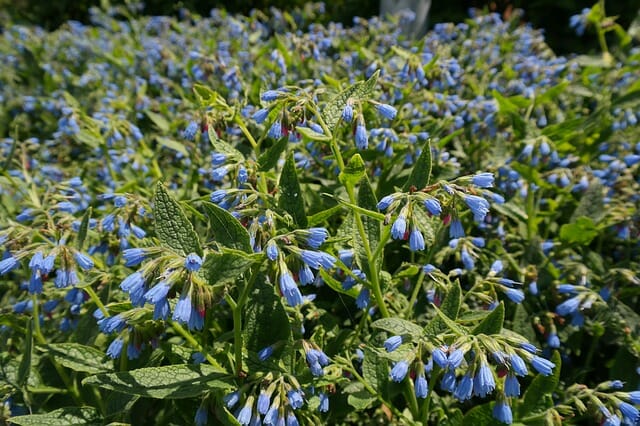
Comfrey (Symphytum spp.) is one of our most distinctive weeds, with its broad hairy leaves, tall flower stalks and deep taproots. It’s also one of the most persistent. Many varieties don’t spread by seed, but they do spread laterally in clumps. Their tough leaves effectively squash out competition. It’s practically impossible to pull their deep roots up in their entirety, and any fragment of root left in the ground is likely to regrow.


Fortunately, comfrey also has many useful properties for the homesteader, including its leaves being used as livestock feed, soil conditioners and preventers of plant disease. All these uses derive from the fact that comfrey’s deep taproots reach down into the subsoil and bring up minerals and nutrients to a level where they’re available to us.


Feeding Comfrey


Comfrey has been used traditionally as a feed for various kinds of livestock, including horses, cows, pigs, sheep, goats and poultry. Comfrey leaves, cut early before the plant flowers, are as protein-rich as clover and alfalfa, and their mineral-rich quality also provides many micronutrients that can improve animal health.


In recent years, studies have come out showing that comfrey contains compounds which may cause cancer or damage the liver. This has understandably left people worried about either taking it as an internal medicine themselves or feeding it to their livestock.


However, the studies that show these results have focused either on feeding comfrey as a very large percentage of the total diet or on taking a concentrated distillation of comfrey. Storey’s Guide to Raising Dairy Goats (2010) also recommends comfrey as goat-safe, according to extensive anecdotal evidence rather than a formal study. I have heard from many homesteaders who offer comfrey to their animals along with a wide variety of other feeds; their animals eat it and show no ill-effects. This mostly matches my experience.


Comfrey: The Livestock Feeder, Soil Builder & Plant Disease Stopper

Image source: Pixabay.com


Some of our pigs have been enthusiastic eaters of comfrey, which is supposed to be an appetite stimulant for them as well as a nutritious feed. So have some of our goats and all of our chickens. We’ve never offered them comfrey only; it’s always been part of a wide range of options. We’ve offered comfrey to our rabbits, but they usually refuse to eat it. I have read that animals are more willing to eat comfrey after it has “wilted” for a day. This seems to work for some farmers; our animals either eat it fresh or don’t eat it at all. I have also read that comfrey can be dried and fed, but none of our animals have been willing to eat dried comfrey, although they’re happy to tear into dried burdock.


Comfrey for Soil-Building and Weed-Stopping


Comfrey’s high nutrient and mineral content also make it an excellent garden or orchard soil-builder, and so far this use remains non-controversial. Incorporated into your compost pile, comfrey leaves will break down quickly and add generous amounts of nitrogen, phosphorus, potassium, calcium and other minerals. (For quicker breakdown, add the leaves under a layer of other wet materials so that they start to decompose quickly instead of air-drying.) Undecomposed comfrey leaves can be buried in planting holes along with seedlings to provide a quick localized nutrient boost.


Comfrey leaves also make good organic mulch. They’re broad, thick and tough, presenting a good barrier to weeds, and their high nutrient profile means they’ll enrich your bed as they break down. As with other green mulches, don’t pile them much more than an inch deep, lest they should rot and turn slimy. A British gardener reports that slugs are drawn to decomposing comfrey leaves, which distracts them from eating actual growing vegetable plants. I don’t have much of a slug problem, so I’ve had no chance to verify this.


Some sources suggest being selective about which plants you use fresh comfrey on. One specific website says that comfrey, because of its high potassium content, is especially beneficial for flowers, fruits and fruiting vegetables like tomatoes and cukes. Other sources recommend planting comfrey in orchards, partly for this reason (also, perhaps, partly because it outcompetes grass so effectively).


Leafy greens or root crops mulched with comfrey may go to seed prematurely. I think this must apply only to true root crops—carrots, parsnips, beets, etc.—and not to tuber crops. Some people bury comfrey leaves along with potatoes to reduce the incidence of scab. I have done this for the last two years and have had much less trouble with scab.


What’s your experience with comfrey—in your garden, your orchard, or the diets of your animals? Share your thoughts in the comment section below:

Thursday, April 27, 2017

Victory: KFC Pledges to Use Antibiotic-Free Chicken by 2018

In another victorious move for the public, KFC has announced that it will stop using chickens that were given antibiotics in the U.S. by the end of 2018. [1]


The fried chicken fast-food establishment, which boasts 4,200 restaurants across the country, says it will nix antibiotics from both its boneless and on-the-bone chicken. KFC joins a growing list of fast-food companies that have made food supply changes in response to consumer concerns about health.


KFC said in a statement:


“By the end of 2018, all chicken purchased by KFC in the U.S. will be raised without antibiotics important to human medicine. This includes our chicken tenders and popcorn chicken; but we’re especially proud to be the first major chicken chain to extend this commitment to our bone-in chicken.” [2]


Matt Wellington, a spokesperson for the activist agency Public Interest Research Group (PIRG), says:


“This commitment is a major step forward for public health and could drastically shift the U.S. chicken industry away from overusing our life-saving medicines.” [3]


In 2016, a report by Chain Reaction II, a group of six nonprofit and activist organizations, gave KFC an “F” grade for its antibiotics policies and practices.


Antibiotics are given to farm animals for a variety of reasons, including treating sick livestock. However, farm animals are routinely given drugs to prevent illness and promote growth in filthy, stressful, and cramped conditions. The practice has given rise to antibiotic-resistant superbugs that could potentially send modern medicine back to the Dark Ages.


Source: CNBC

Despite the threat posed by antibiotic resistance, U.S. sales of medically important antibiotics approved for use in livestock increased by 23% between 2009 and 2014.


In recent years, numerous fast-food chains have either ditched antibiotics or pledged to cease using them in the future, including Wendy’s, Subway, Taco Bell, Chick-fil-A, and McDonald’s.


Sources:


[1] USA Today


[2] Los Angeles Times


[3] CNN Money


CNBC


Storable Food


About Julie Fidler:


Author Image
Julie Fidler is a freelance writer, legal blogger, and the author of Adventures in Holy Matrimony: For Better or the Absolute Worst. She lives in Pennsylvania with her husband and two ridiculously spoiled cats. She occasionally pontificates on her blog.

Monday, March 13, 2017

Dirt-Cheap, Non-GMO Livestock Feed? Yes!

Dirt-Cheap, Non-GMO Livestock Feed? Yes!

Image source: Pixabay.com


According to many recent books on animal husbandry, livestock feeding has become much easier and better with the advent of commercially prepared feed mixes. These mixes are scientifically formulated to provide everything your animal needs, and you don’t have to bother with thinking about them.


I followed this advice for my first few years of farming, and then I began to think and to see some of the disadvantages that come with this convenience.


One is freshness. Commercial mixes have been finely ground, blended and reformulated. They decay faster than whole grains. It can be hard to tell just how long your bag of feed has been sitting around or whether it’s still safe to feed. Back when I gave our goats commercial premix, I occasionally got bags that the goats absolutely refused to eat. I couldn’t see or smell anything wrong, but apparently they could. By the time we started raising rabbits I had stopped using commercial feeds for most of our animals, but I heard from other rabbit growers who lost many animals to bags of spoiled feed.


Another concern is provenance. Some feed bag tags tell you how much fat, protein and fiber are in the feed but aren’t specific about the ingredients. Sometimes when ingredients are listed, they seem inappropriate for the animals in question. For instance, feeds for rabbits and goats, which are naturally vegetarian, sometimes contain animal fats.


The factor which first got my attention was genetic modification. Many experts tell us that there is no health risk in GMO foods, but some of us have doubts. And most commercial feeds are based on soybeans, corn and alfalfa — commercial production of which is dominated by GM varieties.


Diatomaceous Earth: The All-Natural Livestock De-Wormer!


You can buy certified non-GM feed with appropriate ingredients listed. This feed is often prohibitively expensive, and freshness still may be a concern.


There is another option, and it’s more health-conscious than buying standard commercial feed, cheaper than buying certified GMO-free feed, and more shelf-stable, too. This is mixing your own ration from recognizable, whole, non-GMO ingredients. This approach requires more attention and flexibility than buying prepackaged rations, but in the long run it may be better for your health and your pocketbook.


Feed Components: Grain and Seeds


Most of the calories in concentrate rations come from grains and seeds. While corn and soy are likely to be GM unless certified otherwise, many grains have not yet had GM varieties approved for commercial production. You can buy these fairly cheap and be sure that they’re GMO-free.


Non-GMO grains include wheat, oats, barley, millet and triticale. (Rye is also GM-free, but it’s highly susceptible to a fungus called ergot which can sicken or kill animals, so most resources I’ve read recommend avoiding it.) These are a little less energy-dense than corn, but also a little higher in protein. Some studies say that beef cattle fed on these grains instead of corn eat less and gain weight a bit more slowly and show greater feed conversion efficiency. In place of soybeans you can use such non-GMO legumes as peas, lentils and broad beans or fava beans. Sunflower seeds are rich in protein and vitamins and also high in fats; a little fat in your ration is helpful, but too much may not be healthy for your animals.


There are plenty of online information sources that describe the energy, protein and fat content, as well as the palatability and other relevant information about different grains. Feedipedia.org has detailed crop-by-crop information. GMO-Compass.org has information on which crops are genetically modified. Brief introductions to different feed grains are available here and here.


Dirt-Cheap, Non-GMO Livestock Feed? Yes!

Image source: Pixabay.com


You’ll also want to read up on the livestock species you have. Find out what they need in terms of energy, protein, fat and vitamins or minerals. Also find out how readily they can digest whole grains and what their particular food intolerances might be.


Also, learn which seeds are available locally. Our local feed mill only offers wheat, oats and sunflower seeds from the list above, so we feed our chickens, rabbits and goats with those grains. Each type of animal gets a somewhat different mix. The chickens thrive on a higher percentage of fats than the goats, so they get a higher proportion of sunflower seed (and would get even more if it was less expensive.) The rabbits do better on a low-fat diet and only get sunflower seeds when they are lactating. Our mix is lower in protein than I would like, so we supplement protein in other ways. There’s more about that in the next section.


Feed Components: Supplements


Whole grain-based feed rations may need to be supplemented with extra protein, vitamins and minerals. There are several ways to approach this.


Pigs and chickens can thrive on animal-based protein. Ours get extra milk, broken eggs, whey, and cheeses that don’t turn out right. The chickens also get bugs picked from our garden and scraps from our rabbit butchering. (We don’t give raw meat to our pigs, lest it should give them ideas, as they are large and have powerful jaws.)


Herbivores, of course, need plant-based protein. That’s easy during the growing season. Most new green growth is reasonably high in protein, and you can collect and feed them especially high-protein plants. In our area, these include willow, mulberry, clover, dandelions, comfrey, redroot pigweed (Amaranthus retroflexus; some other plants commonly called pigweed have poor feed value), chicory and purslane. Ask your local extension about high-protein weeds in your area. Some of these weeds dry well for winter feeding. You also can increase the protein content of grains by sprouting them. (Read more about that here.)


Vitamins and minerals can be provided through commercial salt-mineral mixes or through feeding a wide variety of foods. Our goats and rabbits have free-choice access to mineral and salt mixes. We also see that they have access to a wide variety of grasses, forbs and woody plants, which tend to concentrate different vitamins and minerals.


Our chickens get oyster shell as a calcium supplement; the rest of their vitamin and mineral intake comes from the wide variety of animal and vegetable foods they eat. We’re still feeding our pigs a commercial ration now, trying to figure out how to transition.


The Ongoing Experiment


Statistics about the nutritional content of weeds or grains can be a useful jumping-off point, but they don’t provide the last word. The nutritional content of plants depends somewhat on the content of the soils in which they grow, the time at which they’re harvested, and many other factors.


You can try to formulate a ration that seems, on paper, to meet the needs of your livestock. The next step is to feed it and see how your animals respond. Do they eat what you offer? Do they keep producing well? Do they lose or gain weight? What do you notice about their overall health? Keep paying attention and making adjustments. You are the expert on what works for your animals, in your circumstances.


How do you keep your animal feed prices low? Share your tips in the section below:


Discover The Secret To Saving Thousands At The Grocery Store. Read More Here.