Image source: Pixabay.com
Comfrey (Symphytum spp.) is one of our most distinctive weeds, with its broad hairy leaves, tall flower stalks and deep taproots. It’s also one of the most persistent. Many varieties don’t spread by seed, but they do spread laterally in clumps. Their tough leaves effectively squash out competition. It’s practically impossible to pull their deep roots up in their entirety, and any fragment of root left in the ground is likely to regrow.
Fortunately, comfrey also has many useful properties for the homesteader, including its leaves being used as livestock feed, soil conditioners and preventers of plant disease. All these uses derive from the fact that comfrey’s deep taproots reach down into the subsoil and bring up minerals and nutrients to a level where they’re available to us.
Feeding Comfrey
Comfrey has been used traditionally as a feed for various kinds of livestock, including horses, cows, pigs, sheep, goats and poultry. Comfrey leaves, cut early before the plant flowers, are as protein-rich as clover and alfalfa, and their mineral-rich quality also provides many micronutrients that can improve animal health.
In recent years, studies have come out showing that comfrey contains compounds which may cause cancer or damage the liver. This has understandably left people worried about either taking it as an internal medicine themselves or feeding it to their livestock.
However, the studies that show these results have focused either on feeding comfrey as a very large percentage of the total diet or on taking a concentrated distillation of comfrey. Storey’s Guide to Raising Dairy Goats (2010) also recommends comfrey as goat-safe, according to extensive anecdotal evidence rather than a formal study. I have heard from many homesteaders who offer comfrey to their animals along with a wide variety of other feeds; their animals eat it and show no ill-effects. This mostly matches my experience.
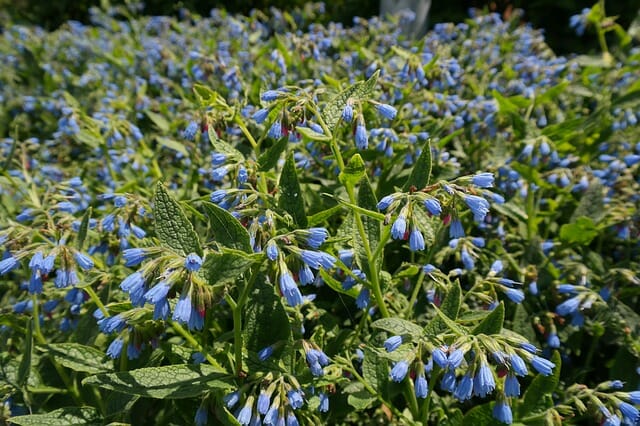
Image source: Pixabay.com
Some of our pigs have been enthusiastic eaters of comfrey, which is supposed to be an appetite stimulant for them as well as a nutritious feed. So have some of our goats and all of our chickens. We’ve never offered them comfrey only; it’s always been part of a wide range of options. We’ve offered comfrey to our rabbits, but they usually refuse to eat it. I have read that animals are more willing to eat comfrey after it has “wilted” for a day. This seems to work for some farmers; our animals either eat it fresh or don’t eat it at all. I have also read that comfrey can be dried and fed, but none of our animals have been willing to eat dried comfrey, although they’re happy to tear into dried burdock.
Comfrey for Soil-Building and Weed-Stopping
Comfrey’s high nutrient and mineral content also make it an excellent garden or orchard soil-builder, and so far this use remains non-controversial. Incorporated into your compost pile, comfrey leaves will break down quickly and add generous amounts of nitrogen, phosphorus, potassium, calcium and other minerals. (For quicker breakdown, add the leaves under a layer of other wet materials so that they start to decompose quickly instead of air-drying.) Undecomposed comfrey leaves can be buried in planting holes along with seedlings to provide a quick localized nutrient boost.
Comfrey leaves also make good organic mulch. They’re broad, thick and tough, presenting a good barrier to weeds, and their high nutrient profile means they’ll enrich your bed as they break down. As with other green mulches, don’t pile them much more than an inch deep, lest they should rot and turn slimy. A British gardener reports that slugs are drawn to decomposing comfrey leaves, which distracts them from eating actual growing vegetable plants. I don’t have much of a slug problem, so I’ve had no chance to verify this.
Some sources suggest being selective about which plants you use fresh comfrey on. One specific website says that comfrey, because of its high potassium content, is especially beneficial for flowers, fruits and fruiting vegetables like tomatoes and cukes. Other sources recommend planting comfrey in orchards, partly for this reason (also, perhaps, partly because it outcompetes grass so effectively).
Leafy greens or root crops mulched with comfrey may go to seed prematurely. I think this must apply only to true root crops—carrots, parsnips, beets, etc.—and not to tuber crops. Some people bury comfrey leaves along with potatoes to reduce the incidence of scab. I have done this for the last two years and have had much less trouble with scab.
What’s your experience with comfrey—in your garden, your orchard, or the diets of your animals? Share your thoughts in the comment section below: