Showing posts with label chicken. Show all posts

Saturday, November 18, 2017

The 6 Easiest Ways To Protect Your Chickens From Predators

The 6 Easiest Ways To Protect Your Chickens From Predators

Image source: Pixabay.com


Predator populations in many parts of the country are on the rise. That means the chances of a predator finding and preying on your chickens is high if you don’t take every precaution to keep them at bay.


First, realize that predators are lazy opportunist. Most attacks on your flock will be because something was too tempting to pass up for a hungry critter. Predators that actually work to break in and steal chickens by chewing through the side of the hen house or digging for hours etc., are rogues that must be exterminated.


The best practice for predator control is to never give them an easy opportunity to dine on your chickens. Yet there is no one tactic that is all-encompassing. It’s more like a lot of little things all working together to keep predators away from your chickens. Here are some tips to help keep your flock safe and sound.


1. Inspect daily.


Do visual inspections daily for holes, loose wire and generally anything that looks out of place or in need of repair to keep predators out of your chickens. In addition, keep your eyes out for any signs of animals prowling around, looking for an easy meal. This could be tracks, scat, signs of chewing or digging, feathers scattered about, or anything that looks out of place. With larger flocks, predators can get a chicken a night and you’re none the wiser until you realize your flock is shrinking.


Diatomaceous Earth: The Best All-Natural Wormer For Your Livestock


This could be tracks, scat, signs of chewing or digging, feathers scattered about, or anything that looks out of place. With larger flocks, predators can get a chicken a night and you’re none the wiser until you realize your flock is shrinking.


2. Keep a rooster with your flock.


The 6 Easiest Ways To Protect Your Chickens From Predators

Image source: Pixabay.com


A good rooster is the first line of defense against predators. If a hawk, owl or any other flying menace comes into view on the horizon, my rooster immediately spots it and sounds the alarm that sends everyone running for cover. Over the years, I’ve lost a few good roosters to predators because they typically will sacrifice themselves to allow the hens to get to safety. I’ve even watched roosters discipline hens for not taking cover when the alarm was sounded. If you don’t see this kind of behavior in your rooster, it may be time to replace him with one that takes his job seriously.


3. Teach your chickens to roost in the coop, not outside.


Training your flock to return to the henhouse each night is as simple as keeping them inside the coop for a week or so when you first get them. Be certain to provide plenty of roosting area. This reinforces to the birds that the coop is home and where they should roost. With an older flock that has never been accustomed to roosting inside the coop, you also can establish the habit by keeping them inside for a couple of weeks. It usually takes a bit longer with older birds that have bad habits.


All The Answers To Every Chicken Question And Quandary …


Rogue birds that will not cooperate should be culled. If you allow a few birds to roost outside, it creates temptation for predators that would otherwise leave your birds alone. They eventually get one of the rogue birds and then become a rogue predator that goes out of its way to kill and eat chickens.


4. Don’t tempt unwanted critters.


The 6 Easiest Ways To Protect Your Chickens From Predators

Image source: Pixabay.com


Open feeders, garbage cans, animal carcasses, or any other type of food will draw unwanted attention to your farm. If a chicken dies, dispose of it immediately, preferably where no other animal will find and eat it.


5. Create an environment that discourages predators.


Predators aren’t fond of wide-open spaces. Keep hiding places to a minimum around coops and buildings. Weeds, piles of junk and lumber all give predators a place to hide that makes them feel more secure. Avoid it.


6. Keep a farm dog.


I have never been without a farm dog. Over the years, that has been one reason we have avoided coons, coyotes, foxes and other creatures of the night. Some dogs can be trusted with livestock … but others can’t. I’ve had both. If they can’t be left out with the flock running loose, I keep them contained until the chickens roost and then let them run the property for the night. Even a dog tied to the doghouse at night near the animals is a big deterrent to predators.


Finally, consider controlling the population of predators through ethical hunting and trapping, or invite someone else to do it for you.


Remember: Predator control is something accomplished daily – and not in a day.


What advice would you add to this list? Share your tips in the section below:


If You Like All-Natural Home Remedies, You Need To Read Everything That Hydrogen Peroxide Can Do. Find Out More Here.


hydrogen peroxide report

Monday, May 29, 2017

Chicken First-Aid: 8 Vital Items You Better Have On Hand

Chicken First-Aid: 8 Vital Items You Better Have On Hand

Image source: Pixabay.com


Standing at the kitchen counter, early on a Saturday morning, I caught a glimpse of a white blur, closely followed by a large black blur. Turning to look closer, I saw a black dog, not belonging to us, attacking my flock. I lost three to that attack, including our rooster.


Thankfully, one wise hen that was attacked did escape by taking refuge with our farm dog. She had a deep wound under her left wing that healed quite nicely after being cleaned and treated with ointment from our first-aid kit.


From frostbite to predator attacks, our flock has experienced a lot in a few short years. Having a basic first-aid kit — and the knowledge to use it — is essential on the homestead. Chickens will be injured from time to time. Sometimes they hurt each other, sometimes it is a predator attack that can leave them wounded, or perhaps it is just a routine illness.


Below you’ll find a list of basic supplies that any first-aid kit for chickens should have. As always, use caution when using any type of antibiotic or other medication and carefully read the instructions.


1. Disposable gloves


Protect your hands while keeping the wound area free from contaminants by having a supply of disposable gloves readily available. They also prevent infection from spreading and make clean up much easier.


2. Rubbing alcohol


A small bottle of rubbing alcohol is perfect for cleaning wounds.


Diatomaceous Earth: The All-Natural Livestock De-Wormer!


Be careful not to get the liquid near the bird’s eyes. Hydrogen peroxide also can be used; however, it also kills healthy cells surrounding the wound, so it is best to use it for the initial cleaning.


3. Cornstarch


Cornstarch, styptic powder and Wonder Dust are all useful for stopping bleeding due to broken nails or minor wounds. A small pair of nail clippers to trim broken nails on the spot also should be included to keep them from being further torn.


4. Triple antibiotic ointment


Chicken First-Aid: 8 Vital Items You Better Have On HandWhen choosing an antibiotic ointment for your first-aid kit, pick one free of pain-relieving ingredients. The ointment is most useful for preventing infection in wounds and abrasions.


5. Petroleum ointment


Useful as a protectant, petroleum ointment is helpful to fend off frostbite on combs and wattles during extreme cold snaps. It also can be used to treat scaly leg mites. To do this, simply coat the leg with ointment once or twice a week until the leg scales once again lay flat.


6. Blu-Kote


An antiseptic spray, Blu-Kote masks the wound to prevent other hens from pecking at it. It also stops infection and can be used in combination with a triple antibiotic ointment for serious wounds. Carefully spray on affected area as needed. It may take multiple applications each day before the wound has healed sufficiently enough to deter pecking.


7. Oral syringe


For dispensing any liquid medications, an oral syringe is a must. Electrolyte solutions can be easily administered to aid ailing chickens with an oral syringe. For crop issues, specifically a compacted crop, a few drops of a vegetable oil can be given with an oral syringe to loosen and soften the mass, allowing it to pass freely from the crop.


8. Gauze wrap


Occasionally, a wing will be broken and need to be secured. Position the broken wing in a natural position on the bird’s side and wrap the body and wing with gauze to secure it in place. Broken legs can be splinted and wrapped with gauze as well. It is best to isolate the chicken to prevent further injury due to pecking.


Along with these specific supplies, general supplies such as cotton balls, small gauze pads and small scissors are all helpful in emergencies. Keeping all first-aid supplies in a portable kit allows you to easily treat injured chickens on the spot.


What items would you add to our chicken first-aid kit? Share your advice in the section below:

Saturday, May 6, 2017

KFC plans to use antibiotic-free chicken by 2018

In another victorious move for the public, KFC has announced that it will stop using chickens that were given antibiotics in the U.S. by the end of 2018. [1]


The fried chicken fast-food establishment, which boasts 4,200 restaurants across the country, says it will nix antibiotics from both its boneless and on-the-bone chicken. KFC joins a growing list of fast-food companies that have made food supply changes in response to consumer concerns about health.


KFC said in a statement:


“By the end of 2018, all chicken purchased by KFC in the U.S. will be raised without antibiotics important to human medicine. This includes our chicken tenders and popcorn chicken; but we’re especially proud to be the first major chicken chain to extend this commitment to our bone-in chicken.” [2]


Matt Wellington, a spokesperson for the activist agency Public Interest Research Group (PIRG), says:


“This commitment is a major step forward for public health and could drastically shift the U.S. chicken industry away from overusing our life-saving medicines.” [3]


In 2016, a report by Chain Reaction II, a group of six nonprofit and activist organizations, gave KFC an “F” grade for its antibiotics policies and practices.


Antibiotics are given to farm animals for a variety of reasons, including treating sick livestock. However, farm animals are routinely given drugs to prevent illness and promote growth in filthy, stressful, and cramped conditions. The practice has given rise to antibiotic-resistant superbugs that could potentially send modern medicine back to the Dark Ages.


Despite the threat posed by antibiotic resistance, U.S. sales of medically important antibiotics approved for use in livestock increased by 23% between 2009 and 2014.


In recent years, numerous fast-food chains have either ditched antibiotics or pledged to cease using them in the future, including Wendy’s, Subway, Taco Bell, Chick-fil-A, and McDonald’s.


Sources:


[1] USA Today


[2] Los Angeles Times


[3] CNN Money


Via Natural Society


Featured Image: Mike Mozart/Flickr

Monday, March 27, 2017

Subway Sues TV Network over Report that its Chicken is 50% Soy

The Canadian Broadcasting Company (CBC) recently reported that a DNA test of Subway’s chicken conducted by Trent University in Ontario revealed that the product was made up of approximately 50% soy filler, and the sandwich chain isn’t taking it lying down. The company has decided to file a huge lawsuit against the news network. [1]


A Subway spokesperson said in a statement:


“We have issued a Notice of Action in Canada against the Canadian Broadcasting Corporation that asks for $210 million in damages over allegations made by its program, ‘Marketplace,’ that are defamatory and absolutely false.


Despite our efforts to share the facts with the CBC about the high quality of our chicken and to express our strong objections to their inaccurate claims, they have not issued a retraction, as we requested.” [1]


Source: Kawartha NOW

The segment that aired on February 24, 2017 reported that the DNA test of Subway’s chicken showed that its oven-roasted chicken contained 53.6% chicken and that its chicken strips contained 42.8% poultry. [2]


Subway said in its statement:


“Test results from laboratories in Canada and the US clearly show that the Canadian chicken products tested had only trace amounts of soy, contradicting the accusations made during the broadcast of ‘CBC Marketplace."” [1]


It went on to say:

“Our chicken is 100% white meat with seasonings, marinated and delivered to our stores as a finished, cooked product. We have advised them [CBC] of our strong objections. We do not know how they produced such unreliable and factually incorrect data, but we are insisting on a full retraction. Producing high quality food for our customers is our highest priority. This report is wrong and it must be corrected.” [1]


Read: Subway Removes Harmful Bread Additive Due to Blogger Petition Pressure


Subway franchisee Bob Grewal, who oversees Subway restaurants in Canada near where the DNA-tested chicken was sold, claims that Trent University told Subway officials that “the CBC twisted all the facts.” [2]


However, the president of Trent University, Leo Groarke, is standing by the results. He said in a statement:


“At Trent we are proud to champion independent research. Defending good science is one of the key roles of universities in society. We are proud of the work of our Wildlife Forensic DNA Laboratory, its faculty and staff. It is important to stand up for sound scientific findings, particularly when they are unpopular.” [3]


The CBC is standing by the findings as well and said:


“We believe our journalism to be sound and there is no evidence that we’ve seen that would lead us to change our position.” [2]


Source: RTT News

Grewal also said that the CBC called Subway 2 weeks before the segment and “asked us a very specific question about the soy content in our food’’ – namely, what the percentage was. However, the CBC failed to inform Subway that it had been conducting DNA tests and taste tests with customers, according to Grewal.


He said:


“The fact is these guys sideswiped us. This was purposely done to drive ratings.” [2]


A week after the February 24 report was broadcast, Subway published a rebuttal, saying that it had two independent labs test its chicken – one in the U.S. and one in Canada – and both found only trace amounts of soy. [1]


Sources:


[1] Business Insider


[2] The New York Post


[3] The Peterborough Examiner


Kawartha Now


RTT News (featured image source)


Storable Food


About Julie Fidler:


Author Image
Julie Fidler is a freelance writer, legal blogger, and the author of Adventures in Holy Matrimony: For Better or the Absolute Worst. She lives in Pennsylvania with her husband and two ridiculously spoiled cats. She occasionally pontificates on her blog.

Tuesday, February 28, 2017

Investigation Reveals Subway Chicken is only About 50% Chicken DNA

As far as fast-food joints go, Subway is considered to be one of the healthier ones. The chain offers many low-calories menu items, and it agreed to ditch a harmful bread additive found in yoga mats after concerned citizens inked a petition demanding the chemical’s removal. But an investigation by the CDC Marketplace reveals what some are calling a disturbing and disgusting secret about Subway’s chicken strips: they’re not 100% chicken. [1]


It might be time for another petition.


A Marketplace DNA analysis of the chicken, found in Subway’s grilled sandwiches and wraps, found that in the case of 2 popular Subway sandwiches, the strips only contained about 50% chicken DNA.


The investigatory team tested 6 popular fast-food sandwiches:


  • McDonald’s Country Chicken (grilled)

  • Wendy’s Grilled Chicken Sandwich

  • A&W Chicken Grill Deluxe

  • Tim Hortons Chipotle Chicken Grilled Wrap

  • Subway Oven Roasted Chicken Sandwich

  • Subway Sweet Onion Chicken Teriyaki (chicken strips)

An unadulterated piece of chicken should come in at 100% chicken DNA. Seasoning, processing, and marinating can drop that number, so fast-food chicken seasoned for taste shouldn’t be expected to reach 100%. But out of all the sandwiches tested, Subway had the lowest percentage of chicken DNA:


  • A&W Chicken Grill Deluxe – 89.4%

  • McDonald’s Country Chicken – 84.9%

  • Tim Hortons Chipotle Chicken Grilled Wrap – 86.5%

  • Wendy’s Grilled Chicken Sandwich – 88.5%

Subway’s oven-roasted chicken scored a mere 53.6% chicken DNA, while the chain’s chicken strips scored only 42.8% chicken DNA. So, what else comprises most of Subway’s chicken?


Soy.


In other words, you’re not just being fooled when you bite into a Subway chicken sandwich or wrap, you’re also consuming a major potential allergen.


Other Unnecessary Ingredients


The Marketplace investigation found that once the other (read: non-chicken) ingredients are factored in, the fast-food chicken contained about 1/4 less protein than you would get in a home-cooked piece of the poultry. Do you like a side of salt with your healthy chicken wrap? I hope so, because the sodium levels tested proved to be 7-10 times what they would be in a piece of unadulterated chicken.


Subway’s chicken is hardly fresh from the farm, as the company’s ads would have you believe.


Read: 4 Huge Reasons why Soy Should be Avoided


Ben Bohrer, a food scientist at the University of Guelph, says the fast-food industry is well-known for its “restructured products” – smaller pieces of meat or ground meat held together by other ingredients to make them last longer and taste better. It’s a way for fast-food restaurants to make money off unknowing peoples.


If you’re a heart patient who eats at Subway thinking it’s a healthier, lower-salt alternative to McDonald’s, Burger King, or Wendy’s, it’s time to start packing your lunch instead.


Not Great for Diabetes, Either


Subway isn’t a great choice for people with diabetes, either. Nutritionist and registered dietitian Christy Brissette says that most of the added ingredients in fast-food meats are variants on salt and sugar, and the added sugar in these products can crank the carbohydrate level of a chicken breast to well above the 0% it should be.


In a statement, Subway said:


“Our recipe calls for one per cent or less of soy protein in our chicken products. We will look into this again with our supplier to ensure that the chicken is meeting the high standard we set for all of our menu items and ingredients.”


Subway Canada said:


“SUBWAY Canada cannot confirm the veracity of the results of the lab testing you had conducted. However, we are concerned by the alleged findings you cite with respect to the proportion of soy content. Our chicken strips and oven roasted chicken contain 1% or less of soy protein. We use this ingredient in these products as a means to help stabilize the texture and moisture. All of our chicken items are made from 100% white meat chicken which is marinated, oven roasted and grilled.”


Additional Sources:


[1] CBC News


[2] IFLScience!


Storable Food


About Julie Fidler:


Author Image
Julie Fidler is a freelance writer, legal blogger, and the author of Adventures in Holy Matrimony: For Better or the Absolute Worst. She lives in Pennsylvania with her husband and two ridiculously spoiled cats. She occasionally pontificates on her blog.

Monday, February 27, 2017

Save time and energy with the fenced chicken coop/garden


Save time and energy with the fenced chicken coop/garden


By John Silveira


Issue #44 • March/April, 1997


My engineer father was not fond of wasting time or energy. He was always searching for a better, more efficient way to perform chores, especially chores that reoccurred often. Two re-occurring chores he enjoyed were gardening and raising chickens, and he decided that he could make both the gardening and the raising of a chicken flock even more enjoyable by making them more efficient.


He realized that both chores were essentially feeding operations. You feed the garden to make it produce food, and you feed the chickens to make them produce eggs and, well, more chickens. So he decided that the best way to make both more efficient was to combine them and let them help feed each other.


To achieve this he built his “self-fertilizing” chicken coop/garden. The idea was so simple that he probably wasn’t the first person ever to have done it, but I’ve never seen another one like it.


What he did was build a chicken coop with two small access doors, one on the east side, and the other on the west side. Each door was for the chickens, and they led to separate fenced-in yards.


On the north side of the coop was a regular sized door for us. On the south side was a wide window with a hinged wooden cover. That window looked directly out onto a compost heap. Each time the coop was cleaned, everything was shoveled out through that window.


That first year the chickens had the run of the yard on the east side of the coop. He kept the access door on the west side closed, and in that yard he planted the family’s vegetable garden.


By putting the yards on the east and west sides, he ensured both yards had maximum exposure to the sun. With the coop on the north side, he later told me, he minimized the shadow the chicken house cast over the garden.


Our access to each fenced yard was through a gate in the fence. With the fences, he not only kept the chickens where he wanted them, he kept predators away from the chickens, pests out of the garden, the neighbors’ dogs out of the compost, and they provided a lattice upon which his beans and other climbing plants could flourish.


In the fall, after that year’s garden had been harvested, he closed the door on the east side of the coop and opened the west side. The chickens now had the run of the old garden with its remnants of the harvested plants as well as the plants that had gone to seed.


My father, in the meantime, set about turning over the chicken dropping-enriched soil in what had been the chicken yard on the east side. With its year of chicken droppings and the compost he tilled in from the compost pile, he was setting the stage for a great garden the following year.


The chickens, now in the west side yard, were happily scrounging in the old garden and preparing the soil for next year’s garden. It was so efficient that he never found the need to improve upon it, and he kept that engineer efficient chicken coop/garden going for years.


From Backwoods Home

Friday, February 10, 2017

The Game (Theory) Of Trump - "Not Every Tweet Is A Constitutional Crisis"

Submitted by Ben Hunt via Salient Partners" Epsilon Theory blog,


Death inspires me
Like a dog inspires a rabbit.
? Twenty One Pilots, “Heavydirtysoul” (2017)


Sometimes a cigar is just a cigar.
? Sigmund Freud, who probably never actually said this (but should have)


Over the past few weeks, I’ve had a fight with my wife, spoiling an otherwise wonderful night out, and email spats with two of my best and oldest friends. It was about Trump, of course. Not directly, but always on some silly tangential issue like “Should Sally Yates have resigned instead of countermanded an executive order on the basis of her personal beliefs?” or, better yet, “Is Lady Gaga authentic?” In each case, I didn’t recognize that we weren’t really talking about what I thought we were talking about, and by the time I did recognize the real issues, I was already too far down the path of combative Ben (think Bruce Banner but without the green skin) to care. Not my finest moments.


I suspect a lot of Epsilon Theory readers have had similar individual experiences of late. Certainly it seems that our collective experience as a nation and political society is breaking down this way.


What I want to write about today is not the specifics of this policy or that policy. It’s not to make an argument of any sort. It’s to write about argumentation itself, and the way in which the GAME of our politics and our society has shifted. Yeah, I know this is all very meta and has zero direct impact on your investing or portfolio decisions. But it’s actually the only thing that I think really matters for our social lives, including our lives as citizens and as investors, because it’s only by recognizing the game that we’re playing that we can survive it. Together. Maybe.


The most widely read Epsilon Theory note ever was “Virtue Signaling: Or Why Clinton is in Trouble”, published last September, where I wrote about why I thought Hillary could lose the election. The argument was that this was a turn-out election for a handful of swing states, and Democrats were all too keen to proclaim their political virtue by being anti-Trump in easy places like the Huffington Post or California metro advertising markets, where lots of like-minded Democrats would see them, rather than to barnstorm FOR Clinton in places where unlike-minded Democrats would see them, like Pennsylvania or Michigan or Wisconsin. Hubris, thy name is Debbie Wasserman Schultz and the rest of the DNC cartel.


But here’s what I wrote about Trump in that note:


Trump, on the other hand … I think he breaks us. Maybe he already has. He breaks us because he transforms every game we play as a country — from our domestic social games to our international security games — from a Coordination Game to a Competition Game.


Blowing up our international trade and security games with Europe, Japan, and China for the sheer hell of it, turning them into full-blown Competition Games … that’s really stupid. But we have a nasty recession and maybe a nasty war. Maybe it would have happened anyway. We get over it. Blowing up our American political game with citizens, institutions, and identities for the sheer hell of it, turning it into a full-blown Competition Game … that’s a historic tragedy. We don’t get over that.


Geez. Like anyone else with a public persona, I loooove being right. But I didn’t expect to be this right, this quickly. The election of Trump IS breaking us, and not because of the specifics of his policies or whether they’re right or wrong or anything like that. It’s breaking us because of the nature of repeated-play competitive games and the shifting meaning of cooperation.


That first bit — the nature of repeated-play competitive games — is a mouthful. All it really means, though, is that our real-life social interactions, whether in politics or markets or everyday life with our family and friends, are never a single, solitary game. We play the same core game over and over and over, each single interaction setting the stage for the next, and what we really should be concerned about is the overall pattern of the entire set of interactions. That’s real life, as opposed to some 2×2 matrix of Cooperate/Defect like you’d see in a game theory textbook.


And famously, repeated plays can help improve competitive games that otherwise end up in a sad equilibrium, like the Prisoner’s Dilemma. A political scientist named Robert Axelrod (not to be confused with David Axelrod of Obama campaign and CNN fame … this is a different guy) wrote a really influential book back in 1984 called The Evolution of Cooperation, where he showed that a cooperative but non-patsy player (i.e., willing to cooperate first and reluctantly forgive an opponent’s occasional defection) would, over time, find enough similarly “nice” players to create an ecosystem of cooperators and dominate, over time, those not-so-nice players who were looking to WIN BIGLY in every single interaction. Axelrod’s book was one of the most popular political science books of the past 40 years, and it spawned a cottage industry of academics looking to expand this insight in theory and practice. It’s a powerful idea because it’s a hopeful idea for nice people. If only us nice people can signal each other and band together, why golly, this proves that there’s nothing we can’t overcome together in this mean old world.


Unfortunately, the evolution of cooperation through adopting “nice” strategies is not a particularly robust finding. Or rather, it’s robust, but only in a particular subset of competitive games and only if the players agree on the meaning of cooperation. For example, if you’re playing a game of Chicken over and over again rather than a game of Prisoner’s Dilemma over and over again, being nice and forgiving doesn’t work very well. At all. Google “Sudetenland 1938” if you don’t believe me. In fact, the entire concept of repeated-play doesn’t fit neatly with the competitive game of Chicken, which is a problem because it’s the dominant competitive game form in the modern world, both internationally and domestically. It wasn’t always this way, particularly in our domestic politics. But it sure is now.


The fundamental reason that a repeated-play cooperative strategy doesn’t work in a game of Chicken is that the meaning of cooperation is different in this class of games. You see it in the title of the game itself. If you cooperate in a game of Chicken — i.e., you’re driving your tractor straight on at Kevin Bacon’s pick-up truck and you veer off from the looming crash, or you and James Dean are racing towards a cliff and you put on your brakes first — you are the LOSER. You are the COWARD. That becomes your identity and your reputation, which means that others will now treat you like a loser and a coward in the games that they play with you in the future. Compare that to the meaning of cooperation in a game of Prisoner’s Dilemma, where cooperation — i.e., you refuse to rat out your partner and cut a deal for yourself at his expense — means that you are STRONG and LOYAL. The words and the examples used to illustrate bloodless, mathematical game theoretic matrices are not accidental! If we believe that our identity is at risk in a repeated-play competitive game, we behave very differently than if it’s not. More to the point, we should behave differently if our identity is at stake. It’s the rational thing to do. If Trump inspires you like a dog inspires a rabbit, then you should never cooperate if it’s a game of Chicken with his tribe and you should always cooperate if it’s a Prisoner’s Dilemma game with your tribe. Maybe you’ll crash the car in this particular game of Chicken and maybe your partner will rat you out in this particular game of Prisoner’s Dilemma. But your identity and reputation will be strengthened, not damaged, for the next game you play with the other tribe or within your own tribe. And there’s always another game.


Okay, Ben, fair enough. We don’t want to be cowards but we still want to think of ourselves as nice. For the big identity-is-at-stake games, we should play nice strategies within our own mob and play mean strategies with the other guys. Got it. But how do we avoid crashing the car in our everyday lives? How do we avoid talking past or yelling at our friends, family, and fellow citizens with whom we share so much common ground on the really big ideas of what it means to be Americans or, more fundamentally still, a good human being?


Well … first off I’m going to suggest that we should all prepare for impact. The evolution of competition and the success of “mean” strategies in games like Chicken is at least as robust as the evolution of cooperation and the success of “nice” strategies in games like Prisoner’s Dilemma. Once you introduce, say, mustard gas into the trench warfare game, it doesn’t just un-introduce itself on its own. These bells are really hard to un-ring, and it typically takes a lot of car crashes on both sides before you get a peace treaty and a chance to rebuild a cooperative game structure. That’s at least four mixed metaphors, but you get what I mean. And unfortunately, all of these metaphors apply just as aptly to a social structure of family and friends as to a social structure of a political party or an entire nation. The evolution of competition is a powerfully contagious virus, and it hops easily from a big tribe like a nation to a small tribe like a family.


But I do have two suggestions to limit the damage that the evolution of competition inevitably spews in its wake.


First, whatever competitive social interaction we’re having, at whatever level we’re having it, the most important thing in that interaction is to figure out the meaning of cooperation for yourself and whoever you’re dealing with. Otherwise you’re going to find yourself playing a different game from the other person, and that never ends well. This is a tough piece of advice to follow (myself included!) because we assume that whatever our “identity weighting” might be for a given issue, the person or group we’re interacting with attaches that same meaning. So, for example, if you voted for Clinton as an affirmation of a personal identity that rejects the racism and sexism you see in Trump, your natural assumption is going to be that anyone who voted for Trump similarly did so as an affirmation of a personal identity, but one that accepts racism and sexism. Or vice versa. Or whatever. We’ve all seen a dozen variations of this theme over the past eight weeks, and we’ve all (yes, every single one of us) engaged in it, as well. This sort of projection is an innate behavioral bias of the human animal. I get it. But it is also entirely wrong-headed when it comes to complex and over-determined social behaviors like voting. Or buying a stock. Believe it or not (and many people reading this note won’t), behaviors like voting or purchasing or speaking or tweeting are not necessarily markers of personal identity. Maybe they are, and when they are they MUST be respected if you care about having a peaceful social interaction. But maybe they aren’t. And that must be respected, too.


Second, it’s crucial to recognize that not all political arguments or competitive games are really existential in nature or fraught with questions of identity. Not every tweet is a constitutional crisis. Sometimes a cigar is just a cigar. This is also a tough piece of advice to follow (also myself included!) because the ringleaders of the various Team Elite cabals, whether it’s the Trump Plutocrats or the Davos Globalists or the Central Bank Mandarins or the NeoCon Spymasters or whoever, are working diligently day in and day out to convince you that it is. That every action or statement by the other ringleaders is an OUTRAGE. That this is how Hitler got started or how liberty is lost.


Of course, the really scary thing is that this IS how Hitler got started and it IS how liberty is lost, it’s just not clear to me which of our contending factions or geographies is supplying the 21st century version. History rhymes roughly; it doesn’t repeat neatly.


Meanwhile the barrage of fiat news and alternative facts continues from all sides unabated. We are caught in the crossfire of the “mean” strategies implemented by the various factions as they quite rationally engage in a massive repeated-play game of Chicken, where winning means mobilizing the hearts and minds of the cannon fodder. And by cannon fodder I mean us.


It’s the oldest saying in poker, and one I can’t repeat often enough. If you’ve been playing poker for 30 minutes and you don’t know who the sucker is … it’s you. We are — all of us, without exception — being played. That doesn’t mean we stop playing the game, whether it’s the game of markets or the game of citizenship. It means, though, that we resolve not to be the sucker. That we turn a clear eye to the stories that others tell us and the stories that we tell ourselves. That we demand to be treated as the rightful, autonomous owners of our identities, and we extend that right to others.


Know thyself.


Treat others as you would have them treat you.  


Pretty good advice 2,000 years ago in some pretty hard times. Pretty good advice today.

Friday, February 3, 2017

The Easier-Than-Chicken, Egg-Laying Bird You Can Raise Indoors

The Easier-Than-Chicken, Egg-Laying Bird You Can Raise Indoors

Image source: Pixabay.com


Keeping backyard chickens is a great way to begin your journey toward self-sufficiency, but the term “backyard chickens” implies that you have a backyard. What if you’re living in a small apartment, hoping perhaps one day to move to land, but wishing you could get experience to try your hand at it before you commit?


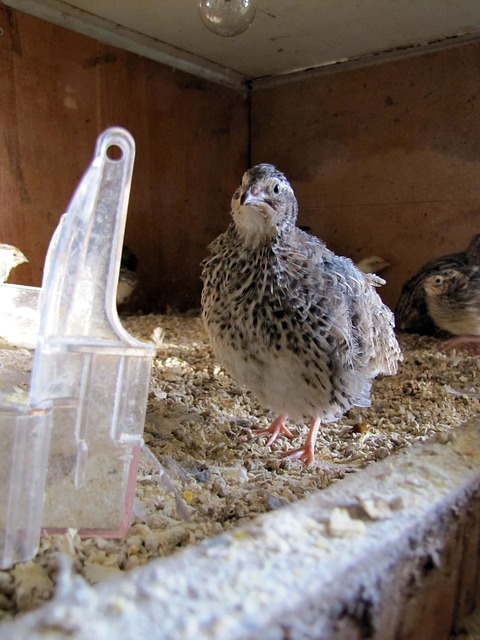
Quail are a great and easy way to get started with poultry and experience the independence of raising your own eggs and meat, without the need for anything more than a small bit of indoor space. Simple rabbit hutches with wire floors and solid trays beneath make excellent quail housing, and can be kept indoors anywhere you could keep either rabbits or a domestic bird such as a parakeet. There’s even the occasional story of a country farm kid keeping quail in their college dorm room because they missed the fresh eggs and company of poultry.


Housing & Space Requirements


Quail are very small animals, and the average bird is only 3.5 to 5.5 ounces (roughly 1/4 pound) and about five inches tall, though some commercial meat breeds can be as heavy as 12 ounces (3/4 pound). They’re mostly a ground foraging bird, and need floor space rather than high ceilings, which makes short but wide floored rabbit hutches an excellent housing choice. Shorter cages are actually preferred, as the low roof keeps them from trying to fly when startled, with may result in injury.


Wire floored cages with removable trays beneath are generally preferred because the droppings fall through the wire, keeping the quail clean and healthy. On solid floors, quail tend to stand in their feces and often eat them, spreading disease and parasites. To keep quail feet healthy, use no more than ¼-inch square wire for the floor. Quail are also often reluctant to use nesting boxes, so wire floors make it easier to find the eggs and keep them clean than with solid floors and bedding.


Diatomaceous Earth: The All-Natural Livestock De-Wormer


The Easier-Than-Chicken, Egg-Laying Bird You Can Raise Indoors

Image source: Pixabay.com


As a general rule, each quail needs 1 square foot of floor space, and should be kept at a ratio of 4-5 females to each male. Some people choose to keep their quail in lower ratios in smaller cages, and will put 3 females with 1 male in a standard 18 x 24-inch rabbit cage without issue. Keep in mind that at least 1 square foot is ideal, and smaller conditions could lead to stress for your birds.


Life Cycle


Quail egg incubation varies based on breed, but the most popular breed, the Coturnix, incubates for 16-18 days. Once hatched, the chicks reach maturity for meat or to begin laying eggs at 6-10 weeks. This compares to 21 incubation days for chicken eggs and no eggs laid until roughly 20 weeks. That means that your female quail will be laying for as many as 12 weeks while a chicken started at the same time is still growing and maturing.


It’s easy to see how they could be quickly reproduced to yield a large flock from just a small number of initial hatching eggs, with only roughly 12 weeks between generations.


Quail tend to live 2-4 years and can produce 200-250 eggs per year.


Feeding Quail


Quail are not common enough to have their own commercial food mix, but their nutritional requirements are similar to turkeys. They’re commonly fed turkey feed based on their life stage. Adult quail only need about 15-20 grams of food per day. Quail keepers commonly supplement their feed with small seeds (flax, etc.) and leafy greens to improve the nutritional quality of the eggs and encourage good health in the flock.


Egg Production


The Easier-Than-Chicken, Egg-Laying Bird You Can Raise Indoors

Image source: Pixabay.com


Quail tend to lay eggs at roughly the same rate as a heritage breed chicken, producing as many as 250 eggs per year starting at 6-10 weeks of age. They require 14-16 hours of daylight per day to lay, which is easy to provide indoors. While the main benefit of quail is the small size, which allows them to be kept indoors, it also means that their eggs are very small. It takes 5 quail eggs to equal 1 chicken egg in volume, although quail eggs are slightly more nutritious. Still, quail eggs peel easy as hard boiled eggs and make adorable deviled eggs or fried eggs on top of hamburger sliders. What they lack in size you’ll have to make up for in culinary creativity.


Meat Production 


Quail dress out at roughly 75 percent of their live weight, and the yield will depend on the size and breed of your original bird. Though they’re more attractive roasted with skin on, plucking is very time-consuming for the amount of meat produced; for small-scale home consumption it’s generally recommended to skin the birds rather than pluck them. Since they’re so small, a single serving is generally considered to be 2 birds per person. This may seem like a lot, but remember that they only take 6-8 weeks to reach harvesting size, meaning that even incubating eggs in small batches you’ll have plenty of meals.


Have you ever owned quail? Share your tips on raising them in the section below:


If You Like All-Natural Home Remedies, You Need To Read Everything That Hydrogen Peroxide Can Do. Find Out More Here.