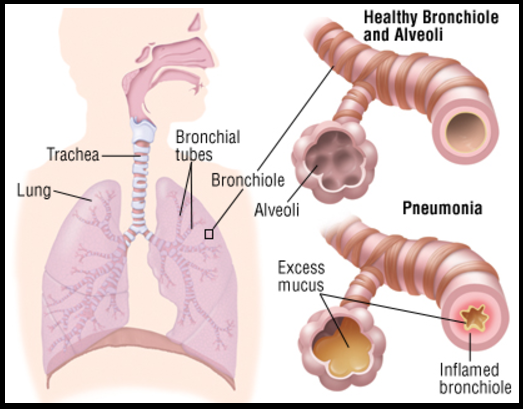
The newest warning about the outbreak of the airborne pneumonic plague, or black death, in Madagascar has been released. Officials warn that it’s inevitable that this bacterial infection that’s infected over 2000 people will become resistant to antibiotics.
The only way to treat a person who has contracted the plague is with antibiotics. But experts now warn that because they are being used so much to treat the infection, antibiotics resistance is inevitable and making this disease much more terrifying. Once the bacteria is resistant, the Madagascar healthcare system will be overwhelmed, and the disease will have control of the nation.
Although the plague is responding well to antibiotics right now, drug resistance is also an increasing concern amongst experts who predict it will vastly accelerate the disease’s death toll. Professor John Joe McFadden from the University of Surrey told MailOnline: “Fortunately in [the] plague, it has not developed much antibiotic resistance. If that kicks in, the plague will be far, far scarier. If you throw more and more antibiotics at patients, antibiotic resistance is more or less inevitable.”
Dr. Derek Gatherer, from Lancaster University’s biomedical and life-sciences department, told MailOnline the country would struggle “to cope” if cases continue to spiral. “Madagascar, typically like many African countries, doesn’t have many doctors. There are around three-and-a-half thousand doctors for 22 million people. They only have around 6,000 hospital beds, so they aren’t particularly well positioned to cope with these kind of events. And if it wasn’t for the international aid coming in things would definitely be much worse for them.”
And experts continue to fear the healthcare system is on the brink of being overwhelmed. Should the disease actually spread to the African mainland, it will be all but impossible to control and the health care system would certainly be unable to handle the outbreak at that point, making a global pandemic much more likely.
To take your mind off nuclear war with North Korea and deadly hurricanes, let’s talk about other ways to cull the herd…
Scientists at the Hong Kong Polytechnic University in Hangzhou, China have discovered a new strain of antibiotic-resistant pneumonia which spreads incredibly fast, after a 2016 outbreak in a hospital ICU led to the deaths of five patients ranging in age from 53 to 73. In findings published in The Lancet,researchers conclude that the new superbug poses a “substantial threat to human health” due to the fact that it is “simultaneously hypervirulent, multidrug resistant, and highly transmissible.”
K. pneumoniae (ST11 CR-HvKP) is a triple threat; a deadly combination of two previously known strains of pneumonia; one which shrugs off all but the toughest antibiotics, and the other which is classified as ‘very severe’ and ‘hypervirulent’ in terms of lethality and how quickly it spreads.
The new report also reveals that samples from other parts of China tested positive for the new superbug, noting that “[f]ailure to control its early spread right now, will make a global epidemic of carbapenem-resistant [CRE], hypervirulent K. pneumoniae hard to avoid,” advising that “Control measures should be implemented to prevent further dissemination of such organisms.”
Epidimiologiests Liang Chen and Barry Kreisworthcall the new strainof pneumoniae an “alarming evolutionary event.”
While Allergan’s FDA-approved antibiotic of last resort ‘Avibactam’ can likely handle ST11 CR-HvKP, it is not available in China, which leaves the country with nothing it its pharmaceutical arsenal to battle the infection.
The microbe can fight off all drugs available in China, Chen says. “We don’t have anything in China to stop it,” he says. “There is a drug available in the U.S. that should be effective against it, but we haven’t tested it yet.”
In the outbreak, the five patients who died were all older than 53. They were all on ventilators after undergoing major surgeries. And they died from severe lung failure, multiorgan failure or septic shock, the researchers found.
“The disease progresses very fast,” Chen says. “It starts in the lungs and then infects other organs, like the liver.”
Until China approves Avibactam or a similarly effective antibiotic of last resort, doctors and health officials can prevent the spread of hypervirulent pneumonia by quickly identifying outbreaks and isolating the infected.
In the fight against antibiotic resistance, it’s all hands on deck. The clock is ticking and superbugs are spreading, but drug companies are reluctant to create new antibiotics because they’re not money-makers. Researchers may have found a way around that problem by modifying already-existing antibiotics to make them “blow up” deadly superbugs.
University College London (UCL) researchers have found that antibiotics can kill drug-resistant bacteria with sheer brute force – by “pushing” hard enough into bacterial cells. They’ve documented their findings in Nature.
Lead author Dr Joseph Ndieyira, of UCL Medicine, says:
“Antibiotics work in different ways, but they all need to bind to bacterial cells in order to kill them.
Antibiotics have ‘keys’ that fit ‘locks’ on bacterial cell surfaces, allowing them to latch on. When a bacterium becomes resistant to a drug, it effectively changes the locks so the key won’t fit any more.
Incredibly, we found that certain antibiotics can still ‘force’ the lock, allowing them to bind to and kill resistant bacteria because they are able to push hard enough. In fact, some of them were so strong they tore the door off its hinges, killing the bacteria instantly!”
Researchers used sensitive equipment to measure mechanical forces that 4 different antibiotics exerted on bacterial cells, according to a news release. They tested bacteria that were particularly susceptible to antibiotics and bacteria that had become resistant to drugs. The forces the antibiotics exerted on susceptible bacteria were all similar, but the forces exerted by the drugs on resistant antibiotics varied greatly.
The team tested vancomycin, a powerful antibiotic used as a last resort treatment for MRSA and other infections, and oritavancin, a modified version of vancomycin used against complex skin infections.
Oritavancin is fast-acting antibiotic compared to vancomycin, killing bacteria in 15 minutes and 6-24 hours, respectively. Vancomycin disrupts vital processes in bacteria, causing them to slowly stop functioning and die. Oritavancin is technically a modified version of vancomycin, but the new study suggests that it kills bacteria in an entirely different way.
Ndieyira explains in the news release:
“We found that oritavancin pressed into resistant bacteria with a force 11,000 times stronger than vancomycin. Even though it has the same ‘key’ as vancomycin, oritavancin was still highly effective at killing resistant bacteria.
Until now it wasn’t clear how oritavancin killed bacteria, but our study suggests that the forces it generates can actually tear holes in the bacteria and rip them apart.
Oritavancin molecules are good at sticking together to form clusters, which fundamentally changes how they kill bacteria. When two clusters dig into a bacterial surface they push apart from each other, tearing the surface and killing the bacteria. Remarkably, we found that conditions at the bacterial surface actually encourage clustering which makes antibiotics even more effective.”
Ndieyira and his colleagues assembled a detailed mathematical code to show how antibiotics act on the surface of bacterial cells. Researchers will be able to use this model to screen promising new antibiotics that can overpower and kill superbugs.
Says Ndieyira:
“Our findings will help us not only to design new antibiotics but also to modify existing ones to overcome resistance. Oritavancin is just a modified version of vancomycin, and now we know how these modifications work we can do similar things with other antibiotics. This will help us to create a new generation of antibiotics to tackle multi-drug resistant bacterial infections, now recognized as one of the greatest global threats in modern healthcare.”
About Mike Barrett:
Mike is the co-founder, editor, and researcher behind Natural Society. Studying the work of top natural health activists, and writing special reports for top 10 alternative health websites, Mike has written hundreds of articles and pages on how to obtain optimum wellness through natural health.
In another victorious move for the public, KFC has announced that it will stop using chickens that were given antibiotics in the U.S. by the end of 2018. [1]
The fried chicken fast-food establishment, which boasts 4,200 restaurants across the country, says it will nix antibiotics from both its boneless and on-the-bone chicken. KFC joins a growing list of fast-food companies that have made food supply changes in response to consumer concerns about health.
KFC said in a statement:
“By the end of 2018, all chicken purchased by KFC in the U.S. will be raised without antibiotics important to human medicine. This includes our chicken tenders and popcorn chicken; but we’re especially proud to be the first major chicken chain to extend this commitment to our bone-in chicken.” [2]
Matt Wellington, a spokesperson for the activist agency Public Interest Research Group (PIRG), says:
“This commitment is a major step forward for public health and could drastically shift the U.S. chicken industry away from overusing our life-saving medicines.” [3]
In 2016, a report by Chain Reaction II, a group of six nonprofit and activist organizations, gave KFC an “F” grade for its antibiotics policies and practices.
Antibiotics are given to farm animals for a variety of reasons, including treating sick livestock. However, farm animals are routinely given drugs to prevent illness and promote growth in filthy, stressful, and cramped conditions. The practice has given rise to antibiotic-resistant superbugs that could potentially send modern medicine back to the Dark Ages.
Source: CNBC
Despite the threat posed by antibiotic resistance, U.S. sales of medically important antibiotics approved for use in livestock increased by 23% between 2009 and 2014.
In recent years, numerous fast-food chains have either ditched antibiotics or pledged to cease using them in the future, including Wendy’s, Subway, Taco Bell, Chick-fil-A, and McDonald’s.
Julie Fidler is a freelance writer, legal blogger, and the author of Adventures in Holy Matrimony: For Better or the Absolute Worst. She lives in Pennsylvania with her husband and two ridiculously spoiled cats. She occasionally pontificates on her blog.
Scientists are working on finding solutions to the growing problem of antibiotic-resistant superbugs. The latest weapon in their arsenal is Tasmanian devil milk.
The Tasmanian devil is a marsupial, which means it’s a mammal that is born very early in its development and spends a few months growing and suckling inside their mothers’ pouches, just like kangaroos and opossums. [1]
Researchers in Australia have suspected for some time that marsupials might carry some potent chemicals in their bodies to help their young grow. It was Tasmanian devils’ pouches that led researchers to study these chemicals.
The furry brown critters are born 3 weeks into their mothers’ pregnancy. These imps, as baby Tasmanian devils are called, must crawl up through their mother’s fur to this pouch, where they will suckle and continue to grow for about 4 months.
Research shows that these pouches contain tons of bacteria, including pathogens that could harm the underdeveloped young. Scientists thought there must be immune system-boosting qualities in the mother’s milk to help the imps develop in such an environment.
Examining Immune System-Boosting Qualities of Marsupial Milk
So, researchers tested Tasmanian devil milk and found several peptides called cathelicidins, a natural kind of antibiotic. The marsupials carry 12 cathelicidins in their systems, while humans only carry 1. Six of the peptides were found to contain superbug-killing qualities. [1] [2]
The Sydney-based team recreated the 6 Tasmanian devil superbug-killing peptides and tested them on 25 types of bacteria and 6 types of fungi. [2]
When exposed to the peptides from Tasmanian devil milk, multidrug-resistant bacteria like vancomycin-resistant enterococcus and methicillin-resistant staphylococcus aureus (or MRSA) died. [1]
About 1 in 3 people carry MRSA in their noses, and most of the time it does them no harm. However, it can become deadly if it enters the bloodstream. [3]
Source: Devils in Danger Foundation Inc.
The Tasmanian Devil Population Could Benefit, Too
Using these peptides to fight superbugs in humans is still a long way off, and more research is needed. But the discovery might also help save the Tasmanian devil population, which is currently an endangered species. There is only an estimated 10,000 to 25,000 left in the wild. [1]
Tasmanian devils used to be found roaming all over the Australian mainland, but these days they are only found on the island state of Tasmania, as the name implies.
Back in the 1800’s, ranchers mistakenly thought Tasmanian devils were killing livestock, so a massive effort to eradicate the marsupials was launched.
These days, the major threat against them is a rare, contagious cancer, called devil facial tumor disease. The illness has killed thousands of Tasmanian devils since the 1990’s.
Other members of the marsupial family are being studied to see whether milk from animals like koalas and wallabies may also fight superbugs. Previous studies on wallabies have shown similar results.
“Tammar wallabies have eight of these peptides and opossums have 12.”
It’s a race against the clock for Tasmanian devils, and also for people.
No Matter How, a Solution is Needed
If something is not done to halt the march of superbugs and the decreasing effectiveness of antibiotics soon, killer bacteria could claim 10 million lives by 2050.
Julie Fidler is a freelance writer, legal blogger, and the author of Adventures in Holy Matrimony: For Better or the Absolute Worst. She lives in Pennsylvania with her husband and two ridiculously spoiled cats. She occasionally pontificates on her blog.
Superbugs kill tens of thousands of Americans each year, but it’s often not reflected on death certificates. This lack of transparency makes it difficult for health officials to accurately track the spread of antibiotic resistance. [1]
Take the case of Josiah Cooper-Pope, a baby born 15 weeks premature, who died from methicillin-resistant Staphylococcus aureus, or MRSA, in the neonatal unit at 17 days old. No one at Chippenham Hospital in Richmond, Virginia, told Josiah’s mother, Shala Bowser, that her son was the 4th newborn to die from MRSA. Records show 8 other babies were sickened by the superbug – nearly every baby in the unit – before the outbreak had run its course.
Yet, Josiah’s birth certificate listed the cause of death as “Sepsis due to (or as a consequence of): Prematurity.”
Sepsis is a complication of the infection, but MRSA was listed nowhere on the certificate.
Bowser said:
“My heart hurts. I saw what this did to him. And then they just threw a bunch of words on the death certificate.”
It’s not just baby deaths that are being covered up. An investigation by Reutersturned up others: Emma Grace Breaux died at age 3 from complications of the flu; Joshua Nahum died at age 27 from complications related to a skydiving accident; and Dan Greulich succumbed to cardiac arrhythmia at age 64 after a combined kidney and liver transplant.
In each case, death was caused by a drug-resistant bacterial infection contracted while the patients were in the hospital, yet none of the death certificates reflect that.
In fact, according to Reuters, thousands upon thousands of people die from drug-resistant superbugs each year, but they go uncounted because federal and state agencies do a terrible job of tracking them. The U.S. Centers for Disease Control (CDC) and state health departments lack the political, legal, and financial capacity to impose strict monitoring.
As an example, carbapenem-resistant enterobacteriaceae, or CRE, is one of the country’s most urgent health threats. For that reason, the CDC recommends that local health officials require hospitals to report cases of the infection. [2]
The outbreak was linked to insufficient sterilization procedures for a certain type of medical device, called an endoscope, which led to a massive recall of the Olympus-made devices last January.
When reporting drug-resistant bugs isn’t possible, agency guidelines suggest that health departments still survey hospitals and nursing homes for the presence of the superbug to ensure facilities are trying to halt its spread.
But these are merely recommendations.
How Can We Beat a Problem We Don’t Report On?
How do you fight such a grave, looming threat if you don’t know the full scope of the problem?
Director of the Center for Disease Dynamics, Economics & Policy, a Washington-based health policy research organization, Ramanan Laxminarayan said:
“You need to know how many people are dying of a disease. For better or worse, that’s an indicator of how serious it is.”
CDC officials warned in October that they’d discovered that some hospitals had attempted to keep their infection-control staff from reporting certain types of hospital-acquired infections to a national database as required.
A survey published in a CDC medical journal in 2010 showed that 49% of New York City medical residents said they had willfully reported an inaccurate cause of death on a certificate.
Why Cover up Superbug Deaths?
There are a number of reasons why drug-resistant infections are not acknowledged on birth certificates. [1]
Insufficient Training. Doctors and other healthcare workers often receive insufficient training on how to fill out the proper forms.
Impatience. Some doctors just want to fill out the forms and be done with it, and opt out of waiting the several days it can take for a laboratory to confirm an infection.
Fear of a Damaged Reputation. Counting deaths is tantamount to documenting your own failures, Reuters points out. Acknowledging these failures puts hospitals and medical professionals at risk of potential malpractice lawsuits, loss of insurance reimbursements, and public-relations nightmares.
And in most states, there is no law requiring that drug-resistant infections be listed as a cause of death. The only exceptions are Washington and Illinois.
Most states use a model law that mandates financial penalties for anyone who deliberately makes a false statement on the document, but those penalties are often negligible and rarely enforced.
Better Surveillance and Accountability
Source: MicroBEnet
Ed Winter, assistant chief in Los Angeles County’s medical examiner-coroner’s office, said that any time a patient dies from a suspected hospital-acquired infection, the individual should be sent to the medical examiner for review to determine whether county officials, rather than hospital doctors, should determine the cause of death. [2]
Additionally, Johns Hopkins Hospital surgeon Dr. Martin Makary urged the CDC in May to add a line to all death certificates where doctors would be asked if the death was the result of a preventable complication from medical care (such as CRE caused by improper sterilization).
He estimates that infections, errors, and other cases of “medical care going wrong” would be at least the third-leading cause of death among Americans if they were properly recorded.
“We need an open and honest conversation about the problem.”
Julie Fidler is a freelance writer, legal blogger, and the author of Adventures in Holy Matrimony: For Better or the Absolute Worst. She lives in Pennsylvania with her husband and two ridiculously spoiled cats. She occasionally pontificates on her blog.