
Image source: Pixabay.com
Predator populations in many parts of the country are on the rise. That means the chances of a predator finding and preying on your chickens is high if you don’t take every precaution to keep them at bay.
First, realize that predators are lazy opportunist. Most attacks on your flock will be because something was too tempting to pass up for a hungry critter. Predators that actually work to break in and steal chickens by chewing through the side of the hen house or digging for hours etc., are rogues that must be exterminated.
The best practice for predator control is to never give them an easy opportunity to dine on your chickens. Yet there is no one tactic that is all-encompassing. It’s more like a lot of little things all working together to keep predators away from your chickens. Here are some tips to help keep your flock safe and sound.
1. Inspect daily.
Do visual inspections daily for holes, loose wire and generally anything that looks out of place or in need of repair to keep predators out of your chickens. In addition, keep your eyes out for any signs of animals prowling around, looking for an easy meal. This could be tracks, scat, signs of chewing or digging, feathers scattered about, or anything that looks out of place. With larger flocks, predators can get a chicken a night and you’re none the wiser until you realize your flock is shrinking.
Diatomaceous Earth: The Best All-Natural Wormer For Your Livestock
This could be tracks, scat, signs of chewing or digging, feathers scattered about, or anything that looks out of place. With larger flocks, predators can get a chicken a night and you’re none the wiser until you realize your flock is shrinking.
2. Keep a rooster with your flock.
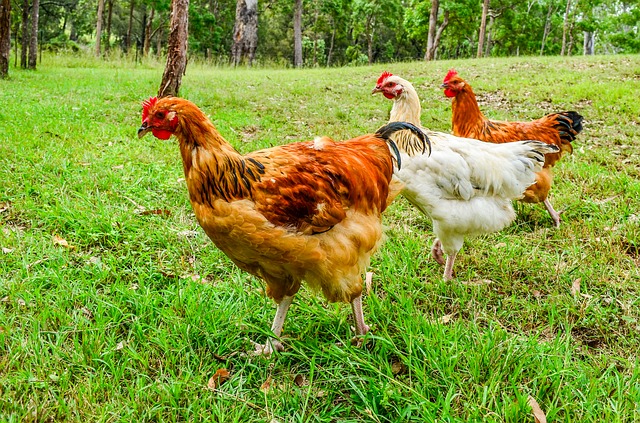
Image source: Pixabay.com
A good rooster is the first line of defense against predators. If a hawk, owl or any other flying menace comes into view on the horizon, my rooster immediately spots it and sounds the alarm that sends everyone running for cover. Over the years, I’ve lost a few good roosters to predators because they typically will sacrifice themselves to allow the hens to get to safety. I’ve even watched roosters discipline hens for not taking cover when the alarm was sounded. If you don’t see this kind of behavior in your rooster, it may be time to replace him with one that takes his job seriously.
3. Teach your chickens to roost in the coop, not outside.
Training your flock to return to the henhouse each night is as simple as keeping them inside the coop for a week or so when you first get them. Be certain to provide plenty of roosting area. This reinforces to the birds that the coop is home and where they should roost. With an older flock that has never been accustomed to roosting inside the coop, you also can establish the habit by keeping them inside for a couple of weeks. It usually takes a bit longer with older birds that have bad habits.
All The Answers To Every Chicken Question And Quandary …
Rogue birds that will not cooperate should be culled. If you allow a few birds to roost outside, it creates temptation for predators that would otherwise leave your birds alone. They eventually get one of the rogue birds and then become a rogue predator that goes out of its way to kill and eat chickens.
4. Don’t tempt unwanted critters.

Image source: Pixabay.com
Open feeders, garbage cans, animal carcasses, or any other type of food will draw unwanted attention to your farm. If a chicken dies, dispose of it immediately, preferably where no other animal will find and eat it.
5. Create an environment that discourages predators.
Predators aren’t fond of wide-open spaces. Keep hiding places to a minimum around coops and buildings. Weeds, piles of junk and lumber all give predators a place to hide that makes them feel more secure. Avoid it.
6. Keep a farm dog.
I have never been without a farm dog. Over the years, that has been one reason we have avoided coons, coyotes, foxes and other creatures of the night. Some dogs can be trusted with livestock … but others can’t. I’ve had both. If they can’t be left out with the flock running loose, I keep them contained until the chickens roost and then let them run the property for the night. Even a dog tied to the doghouse at night near the animals is a big deterrent to predators.
Finally, consider controlling the population of predators through ethical hunting and trapping, or invite someone else to do it for you.
Remember: Predator control is something accomplished daily – and not in a day.
What advice would you add to this list? Share your tips in the section below:


