Showing posts with label deer. Show all posts

Tuesday, May 8, 2018

How To Turn Old Meat Into Survival Jerky That Lasts MONTHS AND MONTHS

How To Turn Old Meat Into Survival Jerky That Lasts MONTHS AND MONTHS

jerky — wikipedia


Have you ever found yourself looking for something in the freezer, and then stumbled upon a couple of packages of venison that somehow lost their way? This happened to me several months ago and I couldn’t have been happier. Why did the notion of being reunited with some venison make me happy? One word: jerky.


Making jerky is one of those time-honored traditions that my family just loves. It is an extremely lean and healthy snack for everyone. I love it because instead of eating processed garbage, my kids are eating a snack high in protein and not simply refined sugar. I love jerky because it is the perfect reason for me to sharpen my favorite knife and fire up the smoker.


Restore Your Old Blades To A Razor’s Edge In Just Seconds!


I have a very simple recipe for making jerky, and it works for both venison and beef. I have never tried it with other meats, although I cannot imagine the process would be dramatically different. What follows is a very basic process for making jerky using an electric smoker. I prefer to use mesquite when smoking meats like venison and beef, but the choice is totally yours.


Ingredients


  • 2 pounds venison

  • ½ cup soy sauce

  • 1/4 cup Worchester sauce

  • ½ teaspoon Morton Tender Quick Cure

  • 1 teaspoon chili powder

  • 1 tablespoon garlic powder

  • 1 tablespoon onion powder

  • 2 tablespoons rough cracked pepper


The Process
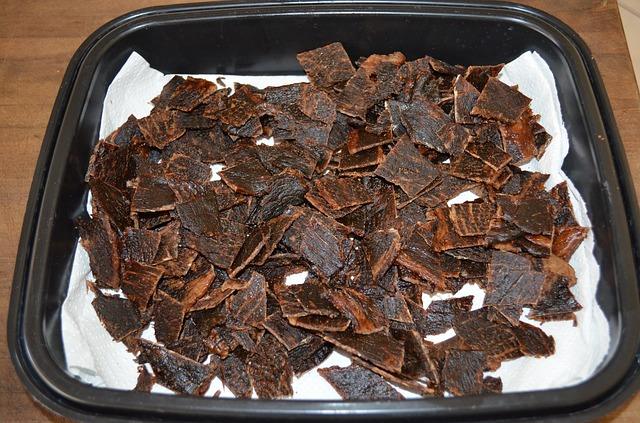

How To Turn Old Meat Into Survival Jerky That Lasts MONTHS AND MONTHS

Image source: Pixabay.com


You want to begin working with this stuff the night before you intend to fire up the smoker. Make sure your venison is trimmed of any fat or sinew and is sliced thin. The thinner the better here, since it will help it to dry out easier and will provide more surface area for the marinade to adhere. Make your goal for strips around ¼-inch thick or so. It might be helpful when cutting the meat to have it be not quite frozen, but a bit stiff. This will give you a little more control as you are slicing it. Also, take a couple of minutes and sharpen your knife before you get going. A sharp knife will make this job a lot easier.


Once you have the meat sliced, just put it aside and focus on the marinade. Put all of the ingredients except the cracked pepper in a plastic storage bag and make sure it is mixed thoroughly. Once this is done, add the venison and place it in the refrigerator overnight.


The next day, you want to get your smoker going low. Try to hit somewhere between 150-175 degrees Fahrenheit. Next, take the marinated venison out of the fridge and drain the marinade. Spray the racks of your smoker with cooking spray and begin laying out the venison strips. The last thing you want at this step is to have the strips touching each other in any way, so space accordingly. Before you place the jerky in the smoker, liberally sprinkle them with the cracked black pepper.


Once the racks are in the smoker, monitor the temperature for the next several hours. Avoid adding any wood at this time and just let the smoker do its thing. After about three hours, check on the jerky. It should feel almost sticky to the touch. If this is where you are at, then add a handful of woodchips to the smoker to add a smoky flavor to the venison. After this, you are going to want to wait on the smoker for another few hours. It is also helpful to rotate the racks from time to time to ensure that the racks are presented with an even amount of heat and smoke.


The time it will take your smoker to successfully turn that wonderful venison into tremendous jerky can vary. Expect it to take anywhere from 5-6 hours depending on the size of the slices and the temperature of the smoker. If you are nervous about the jerky after it comes out of the smoker, you can always finish it in the oven at 200 degrees for an additional 10-15 minutes or so. You will know the jerky is done when you can bend a piece and it begins to splinter. If the jerky snaps when you bend it, it is too far gone, although will still be delicious. Once it is done, put the jerky in a glass jar or vacuum seal it for storage.


If you use the cure, it will last you months and months, making it useful out in the wild or just for storage as a survival food. Without the cure, I would recommend refrigeration and prompt eating to avoid any mold growth. However, if your family is like mine, then you will never be able to find out just how long it can truly last, because it will be gone the second you turn your back.


What jerky-making advice would you add? Share your tips in the section below:


Learn How To ‘Live Off The Land’ With Just Your Gun. Read More Here.



The post How To Turn Old Meat Into Survival Jerky That Lasts MONTHS AND MONTHS appeared first on Off The Grid News.

Monday, January 22, 2018

Scientists Warn: Brain-Wasting ‘Zombie Deer Disease’ Could Spread To Humans

chronicwastingdisease


Deer across North America have been dying from a disease which attacks their nervous system gradually destroying it. And now scientists are concerned that this brain-wasting “zombie disease” could spread to humans.


Chronic wasting disease, or “zombie deer disease,” was first observed in 1967 in Fort Collins, Colorado, and has since infected wild herds in 24 states and Canada, as well as in South Korea and Norway, NPR reported.  “CWD passes from animal to animal through prions, misfolded proteins that cause other proteins to misfold around them,” NPR reported. “Different prion diseases tend to only harm certain species, but can evolve to overcome those limitations.”


In some herds, as many as half of the animals carry prions. But direct contact isn’t the only way prions are transmitted.  According to the New York Times, sick animals and cadavers can spread prions through plants and soil, which could be coated with deformed proteins for years, perhaps even decades.  An animal infected with the disease can live for up to two years before showing any signs of symptoms, such as a vacant stare, thick saliva, exposed ribs, or drooping heads.


There have been no reported human illnesses due to the disease, and scientists don’t have conclusive evidence that the infected meat has ever harmed people, suggesting a “species barrier” between humans and deer.


“While most research shows there’s a robust species barrier, this recent study showed that barrier might not be quite as robust as we once thought,” Matt Dunfee, head of the Chronic Wasting Disease Alliance in Fort Collins, Colorado, told NPR. Researchers led by Mark Zabel, associate director at Colorado State University’s Prion Research Center, found that macaque monkeys who ate infected deer contracted the disease. This is the first time the disease was shown to spread to a primate through the ingestion of infected meat.


Zabel and his team also found that the prions involved in the “zombie disease,” which scientists have only known about for 50 years, are probably still evolving, “which leads us to believe it’s only a matter of time before a prion emerges that can spread to humans,” NPR reported.


Mad Cow disease, for example, is a prion disease that rooted from scrapie, a deadly disease that afflicts sheep. Once the prions were passed to cows, the cows developed a prion disease of their own (mad cow disease). And when humans ate the beef from those sick cows, they developed prions in their own brains. As of 2016, according to the Food and Drug Administration, 231 people had died from the condition. -AJC


In an interview with The New York Times, Zabel said he believes the only way to stop CWD is by utilizing controlled burns. “There’s a lot that we still don’t know and don’t understand about the disease,” Zabel also said.


Dunfee told NPR, “if you are hunting in an area where CWD is found, have your animal tested. If it comes back positive, don’t eat the meat.”

Thursday, September 14, 2017

Would ALL Wildlife Be Wiped Out If Society Collapses? The Answer May Surprise You

hunter-2-publicdomainpicturesdotnet


All hunters complain, at least one, about having to buy a hunting license. For that matter, they’ve probably complained that they were limited to hunting only during a few short weeks a year. But in fact, there is a very good reason why we need hunting licenses and we need a hunting season. That is, that without the restrictions that hunting season and hunting laws place on “We the People,” there wouldn’t be any game.


The History


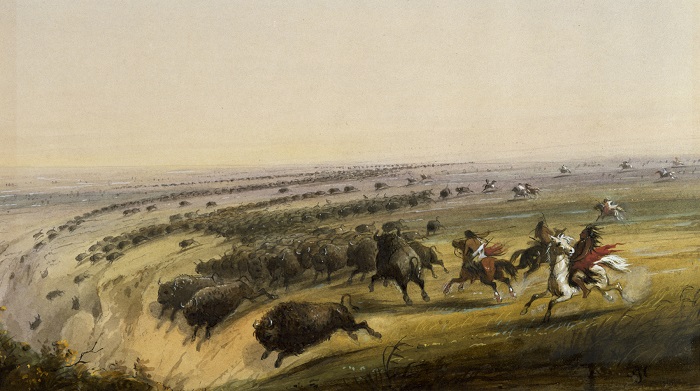
When this country was first settled, it teemed with game. Early explorers were unanimous in their praises for both the quantity and the quality of wild game, ready for harvest by European long guns. Who hasn’t heard the reports of buffalo covering the Great Plains? The herds were so vast that they went on for miles.


Yet where are those vast herds of buffalo today? What has happened to the deer? The truth is that there have been times in our nation’s history where the game were all but extinct due to overhunting. Without proper controls, it could easily happen again.


In the early days of our country, wildlife flourished, especially deer. Reports dating from the early 1800s indicate that there were more deer in Illinois than there were when the nation was founded. Wolves and other predators had been hunted ruthlessly by farmers in order to protect their livestock. This allowed deer populations to grow, as the predators which killed them were nearly hunted to extinction.


Learn The Secrets Of A Veteran Hunter As He Demonstrates How To Quickly Field-Dress Game


But by the late 1800s, the deer population in Illinois had dropped to the point where they were virtually eliminated. Hunters, who were allowed to hunt year-round, without a bag limit, had killed off the deer. [1]


It took a major conservation effort on the part of the state of Illinois to repopulate the deer in their state, including importing white tail deer from other parts of the country. Now, deer are plentiful once again and hunters are once again harvesting deer in the fall. But restrictions are in place to ensure that overhunting doesn’t happen again.


Illinois isn’t the only state where this happened. As settlers moved westwards, they cleared out much of the wild game population in state after state. This was the result of not only hunters harvesting the game, but also of farmers taking much of the game’s natural habitat. Time and time again, animals were killed nearly to extinction, before conservation efforts were put in place.


The Problem Today


Would Wildlife Be Wiped Out If Society Collapses? The Answer May Surprise You

Image source: Wikipedia


Many survivalists and preppers talk about living off the land, following a societal collapse. But the population of the United States is much higher than it was in the 1800s. In 1800, the entire U.S. population was only 5.3 million people. A century later, it had grown to 76.2 million people. But today, we have about 319 million people.


Less than two percent of our population has a stockpile of food in their home. So, it’s reasonable to assume that most people will be looking for whatever food they can find. Without their normal food sources to depend on, people will be looking for everything from stray cats to edible house plants. Many, having heard of our ancestors hunting for food, will naturally assume that they can, too.


Just 30 Grams Of This Survival Superfood Provides More Nutrition Than An Entire Meal!


To even think that the current game population could support the current population of people is somewhere on the far side of foolish. According to the U.S. Fish and Wildlife service, we have more than 13.7 million hunters in the United States (as of the 2013 hunting season). With that number of hunters, it wouldn’t take long at all to lower game levels to a near-extinction point once again; and that’s without everyone else out there trying to hunt for food as well. (This is why it is so important to grow and raise your own food.)


But we have to remember: Not all gun owners are hunters. With somewhere over 300 million privately owned guns in the United States, there are many more people who will be out there trying to hunt, than the “real” hunters in our society. Even if those people are ineffective hunters, their mere presence will make the game go deeper into the woods.


Let me throw one more monkey wrench in the works here. The vast majority of our population is concentrated on the East and West Coasts, especially the Northeast and Southern California. Yet those aren’t the areas of highest game density. In fact, the areas of highest game density are where the population is lowest. So, the people with the greatest need will find that they will have the least possibility of hunting for their food.


This means that if anyone in the country would have a chance of living off the land, it’s the people who live in the lowest density areas of the country, especially Idaho, Montana, Wyoming and the Dakotas. Perhaps those people can depend on game to help them survive, but the rest of us are going to need other sources for our food.


What is your reaction? Do you think there is enough wild game to support America, post-collapse? Share your thoughts in the section below:


[1] http://web.extension.illinois.edu/deer/historyofmanagment.cfm

Learn How To ‘Live Off The Land’ With Just Your Gun. Read More Here.

Monday, June 12, 2017

4 Tricks To Keep Deer Out Of Your Yard (No. 2 Is Gross … But Works)

4 Natural Ways To Keep Deer Out Of Your Yard (No. 2 Is Yukky … But Works)

Image source: Pixabay.com


It’s intriguing to watch a small group of deer prance through the yard, until they decide to stay.


I remember planting a small orchard of mixed fruit trees — apples, pears and peaches. They were saplings with a trunk about an inch in diameter and about five to eight feet tall. There were about 20 of them, and they weren’t cheap. Digging the holes, composting and watering required a lot of effort, but I considered it an investment in the future and I looked forward to the day of the first harvest. That day never came.


Over the winter, a small group of deer stripped the bark from every single tree – girdling all of them. By removing the bark around the circumference of the trunks, they had killed my young orchard.


Deer also can do damage to a garden, as they forage on tender plants and shoots.


But for organic gardeners and homesteaders, there is hope. Here are four ways to keep deer off your garden and property:


1. Simple fencing.


A high fence around any garden will keep a good number of animals out, including deer.  But when you’re planting individual saplings across a large area, a fence can be tough to do.


The solution for saplings is a cylinder of fencing about six inches in diameter buried at the base of the tree up to the leaf line. This will make it difficult, if not impossible, for deer to nibble on the bark. It’s a bit unsightly, but once the tree has matured for three to four years, the bark has hardened and is not as attractive to deer. At this time, the fencing can be cut away, but there’s still a chance they’ll take advantage. That’s where some other solutions become necessary.


2. Coyote urine.


Yes, you can actually buy coyote urine. It’s usually sold through the Internet, but some garden centers even carry it on their shelves. Coyotes are a natural enemy of deer, and their scent will repel them. Like many liquid repellents, it needs to be reapplied after a heavy rain. The urine is usually sprayed onto the bark of the tree from the base to leaf-line, but it’s obviously not recommended for vegetables in the garden. However, you could spray the stuff around the perimeter of a garden to create a barrier.


The All-Natural Fertilizer That Can Double Your Garden Yield!


4 Natural Ways To Keep Deer Out Of Your Yard (No. 2 Is Yukky … But Works)

Image source: Pixabay.com


You should know that coyote urine comes with a catch. While coyote urine will repel deer, it might attract coyotes. Coyotes are wild dogs, and if you’ve ever owned a dog you know how much they love to mark their territory by lifting a leg when they pick up the scent of another dog. But there is an alternative.


3. The plastic coyote.


I’ll admit: I was alarmed the first time I encountered a plastic coyote. My neighbor had it in his backyard, and it was life-sized and painted to look like a real coyote.


My neighbor was a good friend, so I wheeled into his driveway to ask him about the coyote in his backyard.  He laughed and said, “You wanna meet him?”  I was a bit confused and hesitant, but as we approached this “coyote,” it occurred to me the animal was frozen in place. He said he bought it at a local hardware store to repel deer and other varmints. I asked if it worked and he gave me a very definitive, “Yes.” You also can find them on the Internet.


4. The hot sauce cocktail.


The good thing about the hot sauce cocktail is that it’s safe to eat on vegetables after they’ve been well-rinsed. This hot sauce cocktail also works great on tree bark. As you might suspect, it’s made of a mix of hot stuff you probably have in your kitchen. This makes any target for deer highly unattractive. Here’s my recipe and some of my favorite hot stuff.


  • 1 quart of vinegar (white or apple-cider vinegar)

  • ¼ cup of hot sauce. I like “Dave’s Total Insanity Sauce.”

  • 3 tablespoons cayenne pepper

  • 2 tablespoons of black pepper

Combine everything in an empty milk jug and shake. Let the jug sit in the sun for three days and shake again. Add enough to a spray bottle to fill it, and spray liberally on anything you think might tempt a deer to taste. After one taste, they will stop and probably not return for a second sample. Here again, reapply after a heavy rain.


Final Thoughts


These solutions will not only repel deer but other critters and opportunistic varmints, too. Your response to the deer problem is directly related to where you live and the deer population. If deer are abundant, they will — sooner or later — cause you some distress. Pass the stress onto them, and consider these natural approaches to preserve and protect your hard work.


How do you repel deer? Share your tips in the section below:

Monday, January 9, 2017

VIDEO: Officers Declare Family’s Beloved Pet Deer ‘Illegal’ — Promptly Kill it In Front of Them

Ulysses, KS — An infuriating and heart-breaking video was posted to social media recently of a family’s beloved pet deer, Faline, named after the Disney Bambi character, was gunned down in front of them — for being illegal.


In Kansas, keeping wild animals as pets is illegal.


However, it wasn’t like Kim Mcgaughey and her family lived in the city and had some tiger in their apartment. No, the Mcgaugheys live on a farm and the deer wasn’t stolen from the wild and brought to their home. Instead, the family nursed Faline back to health after she showed up at their farm with a broken leg.


Only after Faline refused to leave did the family start feeding her.


After that, the deer quickly became a part of the family. She would often times go inside the home and sleep in Kim’s room.


“She would get on the bed and stand like she owned the place,” said Taryn Mcgaughey, a fashion, fitness and glamour model.


deer(Taryn Mcgaughey)

“But she had free rein to do whatever the heck she wanted.


“There was no way you could keep her in an enclosure.”


According to NBC Los Angeles, authorities got wind of the ‘illegal’ deer after Mcgaughey asked on Facebook whether anyone had seen the deer when it disappeared for several days. She was issued a ticket for “unlawful possession of wildlife without a permit,” said Mark Rankin, law enforcement assistant director for the Kansas Department of Wildlife, Parks and Tourism.


However, only minutes after giving her a ticket, law enforcement officers killed Faline.


“I couldn’t believe it,” said Kim’s daughter Taryn, speaking to The Independent.


“All of our people have a real heart for wildlife,” Rankin said after his officers killed Faline. “I can’t imagine any of our employees enjoying something like this.”


However, it appears that they may have enjoyed it, according to the family.


“One shot to the head would have been enough but then he shot her in the leg and four times in the back.


“He treated her like target practice,” explained Mcgaughey.


“My son broke down to his knees when he found out she was dead,” she said of her 8-year-old boy who’d grown attached to their pet deer.


“My mum, it’s real hard for her to talk about. It was like Faline was part of the family, it’s just hard,” her son said.


According to Taryn Mcgaughey, the officers wrongly killed Faline, as owners were supposed to be given 30 days to contest a penalty notice over an unlicensed pet and a further 10 days to get a license, reports the Independent.


The video below is graphic and hard to watch. Faline, whose been around people for most of her life appears to know that the armed men at her home are there to harm her, so she tries to avoid them.


Eventually, however, they catch up to her and kill her — as the family cries in horror.


This instance is similar to the situation that unfolded in Clackamas County, OR, when police officers killed a family’s miniature pony.


When the Fitzgerald family discovered that their pony was missing last month, they began frantically searching. When they found the pony, however, she had died from a gunshot wound to the head.


The police initially claimed that the family’s 30-year-old American Miniature Horse was hit by a car, so the deputy was kind and put it out of its misery with his police issued shotgun.


However, according to the family and their veterinarian, the horse was in good health when it was killed, and had no broken bones in the autopsy. As the Free Thought Project reported in 2015, the sheriff’s department killed their pony for no reason and then covered it up.