Showing posts with label bug out. Show all posts

Monday, March 12, 2018

Why Mexico May Be The Best ‘Bug-Out Location’ You’ve Never Considered

Why Mexico May Be The Best ‘Bug-Out Location’ You’ve Never Considered

Image source: Pixabay.com


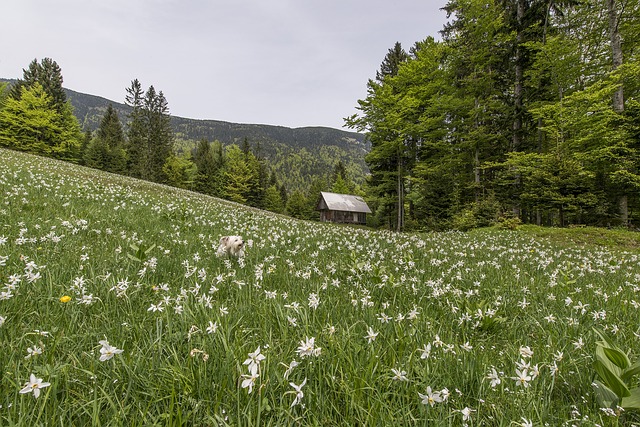
A bug-out plan is something that every seasoned prepper has, but developing a good bug-out plan is another thing entirely. For most of us, the hardest part of that is coming up with a place to go, in the case of an emergency. If you don’t have enough money to build a cabin in the woods, you might have some trouble coming up with a good destination.


This is right where many of us are. We know we need a place to bug out to, but we don’t have the money to “do it right” (however you may define that). So, unless we have family living in the country, we are either left with the idea of bugging out to the woods or having to just move down the road and hope we can find a place good to stop. Neither of those solutions are very good, as they don’t guarantee us a safe refuge where we can wait out the disaster.


What we all need is a place affordable that we can go to, in the event that circumstances demand that we leave our homes. At the same time, it would be nice if that were a place where the government wasn’t likely to be able to find us, just in case that’s an issue. While it won’t work for everyone, Mexico is a good potential destination for many to bug out to.


During the Vietnam War, many draft dodgers headed north to Canada, where they sat out the war. If they could do that, we can head south just as well. While Mexico may not be as much like the United States as Canada is, it is also a considerably cheaper place to live. Besides, who doesn’t like Mexican food?


I’ve spent a fair amount of time in Mexico through the years, including a trip that I just got back from. While Mexico isn’t my only potential bug-out destination, it has been part of our planning for years. For us, it is ideal for a number of reasons, especially considering how close we live to the border.


What’s so Good About Mexico?


Situated directly south of our border, Mexico is a close location to bug out to, for at least part of the country. It is also cheaper to live in Mexico, than it is in the United States. Depending on what level of comfort you want, you can actually live extremely inexpensively in Mexico (like $400 per month), if you are willing to forgo a lot of the comforts and technology that we are accustomed to.


That’s not to say that those aren’t available in Mexico — they are. But unlike things here at home, that level of comfort is not a requirement for life. You can find people living in Mexico in homemade shacks which look much like some of the survival shelters that people talk about making out of pallet wood in a post-apocalyptic world. You also can find the highest forms of luxury, if you can afford it.


What’s Wrong with Bugging Out to Mexico?


On the flip side of the coin, if you’re going to bug out to Mexico, you’d better start learning Spanish now. While Mexican schools teach English as part of their curriculum, most people won’t admit to understanding it, even if they do. That’s not to insult us, but rather to avoid being insulted by us, if they say something wrong. They don’t want to speak English, unless they are sure they can do it right.


Mexico is not perfect. There is a fair amount of drug-related violence and crime in the country. So you need to be cautious about where you choose to go. You’re actually better off going deeper into Mexico than staying near the border. Most of the violence is in the northern part of the country.


The other problem of going to Mexico is the difficulty of buying property. Foreigners are only allowed to buy property that is more than 25 miles from any border, as well as 25 miles from any body of water. You can get around this, by the simple expedient of hiring a Mexican lawyer to establish a trust and have the trust buy the land or buildings. That trust can exist for 99 years, holding that property longer than you’re going to need it.


The other important thing you need to be aware of in Mexico is that it is illegal to import firearms. While people do it all the time, if you get caught, it’s a 20-year jail sentence. So you may want to limit yourself to other weapons, rather than guns.


How to Make Bugging Out to Mexico Practical


Before seriously considering Mexico as a bug-out destination, I’d recommend traveling to Mexico at least once, to see what it is like. Don’t go to the tourist destinations, as that’s not where you’re going to want to bug out to, unless you have a lot of money. Pick a city and visit it, looking around to see where the cheaper places to live are.


You’ll want to establish yourself in Mexico, either buying or renting property there to be used as a bug-out retreat. Just like anywhere you would want to use, you need to establish a location, build a cache and make sure that you have the right equipment and supplies in place.


Make several trips down there, getting to know the people, the area and what resources are available. If you move down to the southern part of the country, you’ll find a lot of fruit trees growing, which can be a source of food. It’s not unusual for people to have avocado, coconut and mango trees growing on their property.


Things left alone and unsecured in Mexico tend to get stolen. So, you’ll need to have someone watching your property down there. This can easily be accomplished by building a relationship with neighbors, who are used to looking out for each other. The Mexican people are warm and friendly and once you know them, ready to do what they can to help.


What advice would you add? Share it in the section below:

Saturday, September 2, 2017

7 Keys To Finding The Perfect ‘Bug-Out Retreat’ (Where No One Will Spot You)

7 Keys To Finding The Perfect ‘Bug-Out Retreat’ (Where No One Will Spot You)

Image source: Pixabay.com


Having a plan for “bugging out” is an option that pretty much every survivalist includes in his or her survival plans.


It’s where you or I would retreat to when we determine it’s time to “get out of Dodge” in the event of a natural or man-made disaster. For those of us who can’t afford such a place, we still need a planned location to get to, even if we don’t have a cabin already built and stocked with everything we need to survive.


While most people will take whatever they can get, there are several things you should consider when you are looking at a bug-out retreat location. Each of these things apply to an even greater extent if you don’t have that cabin in the woods and are going to try and survive in the wild.


1. Distance


You need the retreat far enough from your home so that any weather event that affects your home won’t affect your retreat. That could create a rather lengthy commute to your retreat, if your home is near the coast in a hurricane zone. In such a case, you’d want your retreat to be far enough inland to ensure that the hurricane would have dissipated before it struck your location.


The big problem with a retreat that is far from your home is the problem of getting there. Most people will want to drive, which you should do … if you can. However, you should also ensure that you leave home with enough fuel to get you to your destination. You may not be able to buy fuel along the way. Assume delays in your fuel calculations.


But what if you can’t drive there? If you are going to have to walk, then you’ll need to ensure that you have enough supplies to eat to sustain you through that walk. Of course, there you have the problem of carrying that much food. See my article on “Beyond the Bug-Out Bag” for ideas about this.


2. Proximity to population centers


You truly want to avoid any major population centers. Establishing a retreat that is close to a population center just guarantees that someone is going to find you — most likely, someone you’d rather not have find you.


Bugging Out? Get The Essential Survival Secrets of The Most Savvy Survivalists in the World!


On the other hand, locating within a day’s walk of a small town could end up being useful. Small town communities are more likely to pull together and work to help each other survive during a disaster. Integrating yourself into that community could become useful — if for nothing else, than as a source of resupply.


3. Visibility


As much as possible, you want your survival retreat to be hidden from view. Obviously, that will be easier to accomplish in some types of terrain than in others. But as you are planning, use the terrain to your benefit — especially trees and other foliage to hide your retreat.


7 Keys To Finding The Perfect ‘Bug-Out Retreat’ (Where No One Will Spot You)

Image source: Pixabay.com


At the same time, you need good visibility to see anyone who is approaching your retreat. This can be from an upstairs or rooftop balcony, a lookout built in a tree, or a convenient rock outcropping located close to your shelter. Whatever you do, you don’t want that lookout point to be obviously identifiable as a lookout.


4. Water


Of all the natural resources, water is the one you’ll need the most. Make sure that you have a reliable source of water, within a reasonable distance from your retreat. Remember: You may not be able to drive to water, as you may not have any gas. So, it needs to be a place that you can get to on foot and bring the water back.


As part of that, you need to consider how you would haul the water. Ideally you can use your vehicle for that, but if you don’t have any source of gasoline, you’ll need some other way. A hand truck with a couple of five gallon buckets will work, as well as almost any other type of cart you can come up with.


This Ultra-Efficient Water Filter Fits In Your Pocket — And Removes 100 Percent Of Water-Borne Bacteria!


Don’t overlook the possibility of rainwater catchment there at your survival retreat. Design the roof so that you can collect the water falling on it. In addition, look for places where water would flow during rainfall and what you can do to dam up those areas and collect the water.


5. Fuel


If you are in a moderate to cold climate, you’ll need fuel to keep your cabin or shelter warm. Is there abundant fuel available without having to cut down all the trees? You’ll go through a lot of wood heating a cabin through the winter. Ideally, that will be deadfalls, but if you have to cut trees, you want to be sure that you won’t be thinning them out too much.


6. Food


What sources of food are readily available nearby your retreat? Ideally, you’ll have food stocked there. But if you can hunt or fish, that will help to augment the food you have stored. However, you really don’t want to depend on hunting and fishing, as you may not be able to catch enough to keep you fed. Therefore, what about edible plants or planting a vegetable garden? Is there room for that? Is the ground appropriate for it?


7. Building materials


If you are going to have to build your own retreat, what materials are available that you can use for construction? Is there stone available for a fireplace? Is there wood for a log cabin? Throughout history, mankind has adapted their building style to utilize the materials available. Can you do that with the materials you have on site, or will you need to bring in materials? Once again, like with the fuel, you don’t want to thin out the forest too much, just to build your cabin.


What items would you add to this list? Share your tips in the section below:


Could You ‘Live Off The Land’ Following A Disaster? Read More Here.


Monday, May 15, 2017

Compact & Lightweight Guns Every Bug-Out Bag Needs

Compact & Lightweight Guns Every Bug-Out Bag Needs

Image source: Kel-Tec


The size and content of a bug-out bag or survival kit varies based on the needs and location of the person, but there are some items that always should be included. Among these: firearms that can be used for either hunting or self-defense.


In this article, we will discuss the different types of weapons that you should consider picking up for your bug-out bag. If you are looking into getting a firearm or two for this purpose, these criteria will help you pick the right one:


1. Size. The firearm(s) should fit inside the bag, if possible. This can be a challenge when looking at rifles and shotguns, so find one that can collapse or break down into smaller components for easy storage.


2. Weight. You may be carrying your bug-out bag for an extended period of time, so you’ll want any firearms in it to be as light as possible. You also will need to carry ammunition, cleaning supplies, and accessories for it, as well, which adds even more weight to your pack.


3. Cost. Unlike any other guns you may own, the firearms you get for your bug-out bag should stay in it unless you are shooting or cleaning them. If you can afford to spend a bit extra on a higher-quality firearm, do it; however, you can easily find a firearm for this purpose without breaking the bank. Your firearm just needs to be reliable. It doesn’t have to cost an arm and a leg.


Handguns


A pistol or revolver is a critical tool to have in your bug-out bag. Ideally, it should be one that shoots centerfire ammunition suitable for self-defense, such as 9mm, .40 S&W, or .45 ACP. In addition to your pistol, your bug-out bag also should contain ammunition, spare magazines, a holster and a magazine pouch. Check out our “best pistols under $300” article for some low-cost suggestions.


Break-Action Shotguns


Break-action shotguns are simple to operate, have few moving parts, and are very easy to maintain. They also can be disassembled for storage without using tools. When buying a break-action shotgun for your bag, try to find one with a defense-length (18-inch) barrel.


The Self-Defense Weapon That Doesn’t Require A Firearms License!


If you can’t find one with that barrel length in your budget, you always ban buy one with a longer hunting barrel and have a gunsmith cut it down to defense length. Certain companies are also making inserts for break-action shotguns that allow you to fire other types of ammunition types through it. This is a great addition to any bug-out bag, and not something that you can get for a pump-action or semi-automatic shotgun.


Pump-Action Shotguns


If the thought of having to reload after every one or two shots makes you cringe, then a pump-action shotgun is an excellent alternative to the break-action for your bug-out bag. You can easily find one with a defense-length barrel, and aftermarket parts can be found at relatively low price online. These tend to be a bit larger than a break-action when disassembled, so it would be a good idea to buy an aftermarket folding stock or pistol grip for it.


Pistol-Caliber Carbines


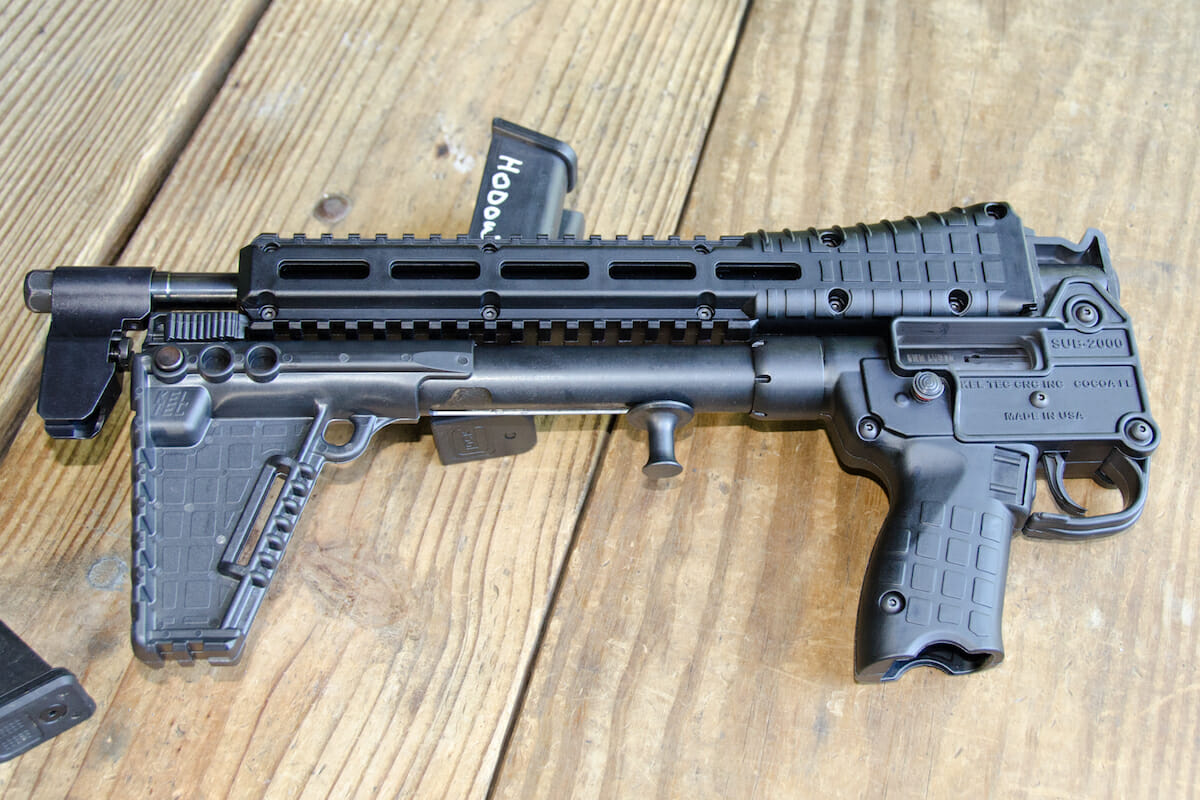
While pistol-caliber carbines may not be the best option for hunting larger game, they definitely will handle small game, and work admirably in a defensive role. Some have the added benefit of accepting pistol magazines, which makes them an excellent companion for a pistol in your bug-out bag. Some models, such as the KelTec Sub2000, can be folded and placed in your bag, while others like the TNW ASR or JR Carbine are designed to be easily disassembled for compact storage.


Depending on your state’s restrictions, you may be able to purchase a “pistol” version of a pistol-caliber carbine, which has a short barrel and no buttstock. Some examples include the Chiappa PAK-9, ATI MilSport, or Angstadt Arms UDP-9. These types of weapons are great for close-quarters defensive scenarios, and their smaller size allows them to fit easily in your bug-out bag.


Semiautomatic Rifles


For both hunting and defensive situations, a semiautomatic rifle chambered in .223 Remington, 7.62x39mm NATO, or .308 Winchester is a great tool to have in your bug-out bag. Unfortunately, most of the AR- and AK-variant rifles in this category are not easy to fit in a backpack. One alternative, the KelTec SU16, is a survival rifle that lets you use high-capacity AR magazines, and folds into a compact 25-inch package.


Another option is to purchase an entry-level AR-15 and install a “takedown” kit, which allows you to quickly remove the barrel for storage. These can be purchased from a number of manufacturers, including Vision Defense, DRD Tactical and Cry Havoc. AR-platform takedown rifles like the Ruger SR556 are another option, although they are a bit more expensive. You also might consider a side- or under-folding AK-platform, which are reasonably compact (roughly 28 inches folded).


Other Rifle Configurations


There are a number of single-shot and lever-action rifles in various calibers that can be disassembled and stored easily. There are many to choose from, including the Rossi W, the Browning BLR-81, the CVA Scout, the Thompson/Center Encore Pro Hunter, and the Chiappa 1892. If you want a combination rifle and shotgun, the Chiappa X-Caliber is an-over-under shotgun/rifle combination in 12- or 20-gauge and .22 LR or .22 WMR. Other rimfire options include the Henry Arms AR-7 and the Ruger 10-22 Takedown.


What are your favorite firearms for bug-out bags or survival kits? Tell us in the section below:

Thursday, April 27, 2017

Build Your Own Home DIY Without a Bank Loan: “Avoid Regulation, Crime and Floods”


homestead


Want to build a hideaway homestead, or establish your dream home?


If you set it up right, you can get everything you want out of the deal.


But there are some practical things you need to know, to make sure you will need be restricted by zoning, utility policies or legal trouble.


If you account for all these factors ahead of time, you can establish your home fortress with the maximum freedom and the best trade-offs for your area.


via the Homestead Prepper:


The best way to be prepared for a natural disaster or national emergency is to live in the manner you would hope to survive in. Self-reliant homesteads, ideally with their own sources of water, energy and food, and other necessary items.


Gardens and livestock pens can keep you sustained, but only if you put years of work into building them up, and improving your skills at managing the vital areas.


The best defense will be distance from major populations, areas carefully screened to avoid high crime areas, neighbors you can trust and rely upon, while maintaining a healthy distance from. Settling into an area with minimal restrictions and zoning laws can give you the freedom you need to build, but if poverty proliferates in the area, your regulation free homestead could quickly become a target.


You must find the healthy balance, do what you can, and plan for everything you don’t want to go wrong.


Read more:


The Prepper’s Blueprint: The Step-By-Step Guide To Help You Through Any Disaster


Strategic Relocation Guide: How To Position Yourself To Survive A Major TEOTWAWKI Event


A Green Beret’s Guide To Low-Budget Home-Defense Techniques 101: “Early-Warning Systems and Fortifications”


Elite Bunker Down in “Secure, Safe Rooms Hidden in Plain Sight”… And You Can, Too


Click here to subscribe: Join over one million monthly readers and receive breaking news, strategies, ideas and commentary.

Advanced Tactical Gas Mask

Please Spread The Word And Share This Post


Author: Mac Slavo
Views: Read by 258 people
Date: April 27th, 2017
Website: www.SHTFplan.com


Copyright Information: Copyright SHTFplan and Mac Slavo. This content may be freely reproduced in full or in part in digital form with full attribution to the author and a link to www.shtfplan.com. Please contact us for permission to reproduce this content in other media formats.


Wednesday, April 12, 2017

Where to Hide When the Global Economy Crashes: “Safe Harbors Are Few and Far Between”


global-crisis


If the world seems like its falling apart, then perhaps it is time to figure out where you could go to avoid the worst of it.


With so many factors building up to global turmoil, and a number of trigger points for civil unrest and economic collapse inside the United States, where would you go?


While every place has its problems, and no place is guaranteed to remain calm, certain pockets of relative safety like Scandinavia, Canada, Costa Rica, Chile or New Zealand could prove to be a bit more prone to stability, than to collapse. Compared to other hot spots, these places could be a harbor.


With that said, the global economic collapse will not spare any region from fallout, and there will be great damage to all countries lined up in the chain of dominoes. Moreover, there are few, if any, places that are immune from natural disasters and other major problems.


The United States, on the other hand, may have simply harbored too many problems as a whole – and thus, stability is anything but guaranteed. Border issues with Mexico; political siege by the permanent war coalition; internal strife between left and right, and conflict between identity politic groups and disenfranchised, angry hoards all make things unstable.


The U.S. has many military targets that could be hit if a major world war should every take place… though, of course, there are many suitable places to lay low and insulate yourself from disaster.


via The Money GPS:


Where ever you go (or remain), keep in mind that safe harbors are few and far between, and there may be many barriers to entry, especially concerning paperwork and financial proof of self-reliance (for immigration purposes). The systemic toxicity is putting off a strong odor, and many places will be hard hit. Any place that has a natural resistance to these destructive tendencies does not want to take on additional burdens, and your family will only be allowed in if it can pay its own way.


And while not every analyst is going to agree on which places are strategically best to run away to, there are some important trends that you should fit to your unique situation, carefully weighing any repatriation or evacuation plans you may have with great caution.


Stategist Joel Skousen has one of the leading reputations on where to go, and how to weigh the options of acceptable risk with locations that are too dangerous to knowingly adopt:


Stay prepared.


Read more:


The Prepper’s Blueprint: Get Seriously Prepped for Any Emergency


This Is The Dawn of Civil Unrest: A Checklist for Preppers To “Ride Out the Storm”


Map: Where You Don’t Want to Be When It Hits the Fan


Survival Strategies For When Something Big Goes Down


Click here to subscribe: Join over one million monthly readers and receive breaking news, strategies, ideas and commentary.

Advanced Tactical Gas Mask

Please Spread The Word And Share This Post


Author: Mac Slavo
Views: Read by 1 people
Date: April 12th, 2017
Website: www.SHTFplan.com


Copyright Information: Copyright SHTFplan and Mac Slavo. This content may be freely reproduced in full or in part in digital form with full attribution to the author and a link to www.shtfplan.com. Please contact us for permission to reproduce this content in other media formats.


Friday, March 31, 2017

How To Avoid These “Rookie Prepper Mistakes” That Could Get You Killed


preparedness-poster


So you’ve been convinced that there are many major threats that humanity faces… and you’ve decided to get prepared. You’ve decided to survive.


That’s great. But there are many pitfalls and potential mistakes that newbies and long-term preppers alike should be wary of.


But getting ready for unrealistic doomsday scenarios means that many preppers are focusing on the wrong problems, and will end up ill prepared.


Too many gadgets, not enough time learning to use them. Too much expensive gear, and not enough essentials, or at least not enough to last when you need it.


Be practical, be thorough, but focus on the scenarios that are most likely to hit your local area – with natural disasters being perhaps the most likely in the real world, but complex conspiracies and apocalyptic mega disasters ranking much further down the line.


You are not prepping to save the world – though you can try in your spare time. You are prepping to keep you and yours alive, safe and prepared to thrive in the aftermath.


What real world crisis are actually likely to strike in your neighborhood and affect you?


And your preps don’t necessarily have to be expensive. Just the bare basics and the right mentality could be more valuable than features and high-end gear.


This guy focused on how many useful or life-saving materials he could easily fit into a survival pill bottle, with the things lying around his house, spending no more than $1.


Which items would you include? And what do you think are the most important detail items for an emergency.


Often times laying low, bugging in, and staying off the radar are more important than heroic, firepower or bold cross-country adventures.


Something to think about anyway.


25 Survival Myths That Could Actually Hurt You


Read more:


A Step-By-Step Guide To Prepare For Any Disaster


Worst Mistakes To Avoid When Going Off Grid: “We Wish We’d Known”


Off Grid Antibiotics: For When There is No Medicine


When the Lights Go Out: Tips and Tricks for Priming Off-Grid Light Sources


Rookie Preppers: 8 Mistakes To Avoid


Click here to subscribe: Join over one million monthly readers and receive breaking news, strategies, ideas and commentary.

Advanced Tactical Gas Mask

Please Spread The Word And Share This Post


Author: Mac Slavo
Views: Read by 3 people
Date: March 31st, 2017
Website: www.SHTFplan.com


Copyright Information: Copyright SHTFplan and Mac Slavo. This content may be freely reproduced in full or in part in digital form with full attribution to the author and a link to www.shtfplan.com. Please contact us for permission to reproduce this content in other media formats.


Wednesday, March 15, 2017

Ultimate Prepping: “How To Survive When The Cities Burn”


Cities Will Collapse


We all know the major scenarios.


But will you know what to do in when the real thing happens?


First and foremost, you need the basics: the ability to bug-out and survive for at least three days with food, water, fire starters, emergency shelter, etc. You also need the necessities to stay in place or in your redoubt for at least two weeks. But that’s just for starters.


There are so many factors at hand, that you have to become a second order prepper.


That means Plan B and so much more. It means thinking ahead to the many pitfalls that could end your survival bid. Take yourself down the path you would go time, and time over again. Think it through until you find the flaws in your thinking. Know before you go, and avoid situations before you even get into them.


Get rid of fantasy and unrealistic notions, and figure out a realistic strategy for long term survival, particularly in case of prolonged collapse.


Check out this fundamental and thoughtful video especially for city preppers – and get ready to get out if necessary.


Brad Harris of Full Spectrum Survival talks with YouTuber City Prepping in a conversation you don’t want to miss:


What will you do when the cities begin to burn? Will a great exodus push millions from the populated regions of the world into the more rural areas where food and greens are plentiful?


Will you stay behind and shelter in place or be one of the first to leave? We talk with City Prepping, who has considered this in great detail and gives his opinion on why it’s better or worse to remain in the city when a disaster strikes!


Expanding your personal experience, and spending time getting ready for all eventualities may be your best tool in the box.


When the world turns to hell, you may feel completely out of your element. But having a prepared mindset can steady any crisis.


Read more:


The Prepper’s Blueprint: A Step-By-Step Guide To Prepare For Any Disaster


Cities – A Prepper’s Nightmare & Solutions


Map: Where You Don’t Want to Be When It Hits the Fan


Elite Are Prepping For a Collapse: “A World That’s Becoming Increasingly Unstable”


The Top 50 Excuses For Not Prepping


Click here to subscribe: Join over one million monthly readers and receive breaking news, strategies, ideas and commentary.

Advanced Tactical Gas Mask

Please Spread The Word And Share This Post


Author: Mac Slavo
Views: Read by 331 people
Date: March 15th, 2017
Website: www.SHTFplan.com


Copyright Information: Copyright SHTFplan and Mac Slavo. This content may be freely reproduced in full or in part in digital form with full attribution to the author and a link to www.shtfplan.com. Please contact us for permission to reproduce this content in other media formats.