Showing posts with label survival lessons. Show all posts

Thursday, November 23, 2017

Unforgettable Survival Lessons … Straight From The Pilgrims


Each and every year, we celebrate a story of survival. But few people, other than schoolchildren, bother to think about it.


The story of Thanksgiving is one of survival. The Pilgrims who landed at Plymouth Rock in 1620 established one of the first permanent settlements in the New World. Yet, they almost didn’t make it.


The biggest problem the Pilgrims had was a severe lack of preparedness. They arrived far into the Northeast, from a grueling sea journey, in November, with winter just around the corner. Originally, they were to travel in two ships, with the Mayflower being their cargo ship. But when the Speedwell was found to be unseaworthy, they had to quickly retrofit the Mayflower for passengers and leave a lot of their cargo behind.


Due to a late start and a longer voyage than expected, the Pilgrims landed in the New World much later in the year than expected. They also made landfall much farther north, which make the encroaching winter a much more serious issue. There was little time to build shelters and prepare for winter before it was on them.


Put God Back Into History And Teach Your Kids What They Won’t Learn Anywhere Else!


Fortunately for them, the Mayflower stayed through the winter, providing them with shelter and food. Even so, about half of their population died off that first winter, through a combination of disease and starvation. It wasn’t until the next year that they established a firm footing on modern U.S. soil, doing what was necessary to ensure their survival.


The Pilgrims who made that journey were not well-suited for wilderness survival. They were city folk who were used to living in established society. While many knew useful skills, they did not know the skills needed for establishing a colony in a new land. Those they were going to have to learn.


So, with all that was stacked against them, how did the Pilgrims manage to survive?


In truth, the things the Pilgrims did to survive don’t look like “survival skills” to us today. That’s because many of the things we call survival skills were things that they took for granted as part of their day-to-day life. Starting a fire wasn’t a specific survival skill, but rather something learned by 10-year-old boys, when they would take over responsibility for keeping the fires going in their homes.


Much of the “skill” that allowed them to survive was more about their attitude, rather than anything we would recognize as a skill. They developed the right mental attitude, then everything else followed. This really is not much different than a modern prepper, except in the fact that they were forced into it by the necessity of their situation.


Nevertheless, there are several key elements to their survival that it would do us good to emulate. That is, unless we want to learn everything the hard way, too.


Learned From the Experts


Much has been said about the Native-American, Squanto, who became their teacher and interpreter. Squanto had recently escaped from captivity in England. Returning to his native land with an explorer, he soon discovered that his tribe had been decimated by plague.


When the Pilgrims landed at Plymouth Rock and began to establish their settlement, Squanto became their friend. Having grown up an American Indian, he knew the forests and the animals that inhabited them. He had extensive knowledge of the ways of the Indians and what they did to survive. This he passed on to the Pilgrims, teaching them the knowledge of his people and giving them the skills they needed to survive.


Squanto was also the Pilgrims ambassador, arranging meetings and alliances with friendly Indian tribes. This strengthened the Pilgrim colony, as well as opening doors for trade, by which they could receive the bounty which the Indians harvested from nature.


Used What They Had Available


While the Pilgrims didn’t come to the New World properly outfitted for survival, they did come with tools, goods and other supplies. These were put to use in helping them to survive and establishing their colony. Their inventiveness in using what they had was demonstrated by the use of a printing press to undergird a beam in the Mayflower, when rough seas caused it to crack.


They also made good use of the Mayflower itself, living aboard as they prepared shelters on shore. Some lived through the winter in the ship, as there were not enough homes available for every family.


The homes themselves were built from whatever was on hand. Fortunately for the Pilgrims, they had landed in an area with abundant forests. So they were able to use the trees they felled in clearing land to farm, in order to build their homes and barns.


Each Man for Himself


Although we typically learn that the Pilgrims struggled through that first winter, with many dying, we don’t learn that they struggled through the next two, as well. In fact, it wasn’t until 1624 that they had an abundant harvest and were able to make it through the winter comfortably.


What made that difference? When the colony was established, it was done so under contract with the Virginia Company of London and the Virginia Company of Plymouth, both “adventurer” companies. As part of their contract, they were to work as a commune. Each would work according to their ability and each would receive according to their need.


While that sounds like a wonderful system, it isn’t. As with all socialist systems, it eliminates reward. Many received more than they worked for and many others earned much more than they received. That bred discontent, which manifested itself in laziness and a general unwillingness to work. Those who worked, didn’t give it their best effort.


This led to two more difficult winters, until the governor, William Bradford, eliminated the socialist system, giving each family a plot of ground and allowing them to keep the fruit of their labor. This was not done in all things, but first done only in the growing of corn.


The result was that triple the amount of corn was planted, as what had been planted the years before. When the crop was threatened by drought, the governor declared a fast, and God answered, giving them rain. Their crop that year was so abundant that they were able to export an entire ship full of corn that same year.


Trusted in God


Finally, the Pilgrims depended on a deep, abiding trust in God. Some may not see that as a survival skill, but history has proven over and over again, not just in Plymouth, but in other places, that God is in control. When we trust in Him, our chances of survival are greatly increased.


Faith is as necessary to human existence as oxygen is. While some might claim that they can survive without faith, what they are really saying is that their faith is in something other than God. They might be trusting in science or knowledge of even their own strength. But they are trusting in something. How much better to follow the example of the Pilgrims and trust in God.


What do you think? Share your thoughts in the section below:

Wednesday, October 4, 2017

6 Survival Lessons From Puerto Rico’s Crisis

6 Survival Lessons From Puerto Rico’s Crisis

Photo by Sgt. Jose Ahiram Diaz-Ramos


Oct. 4, 2017


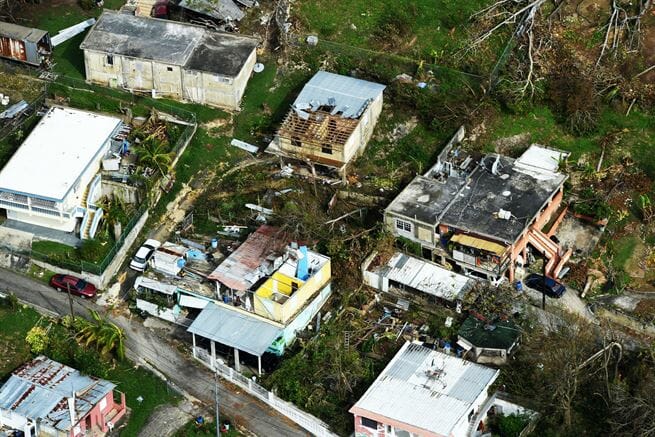
The recent one-two punch of Hurricane Irma passing north of Puerto Rico and then Hurricane Maria crossing over the island has given us a rare opportunity to witness about as serious a crisis situation as one can imagine.


While you and I are not on the ground in Puerto Rico to gain first-hand knowledge about what the people are going through, there have been enough reports come out of the island to give us a pretty clear picture of what is happening.


Even the worst-case disaster — an EMP — wouldn’t leave the people any worse off than Hurricane Maria has left them. In fact, they would probably be better off, simply because the EMP wouldn’t flatten buildings or tear their roofs off like the hurricane did.


1. Protect your backup power


Probably the biggest problem the citizens of Puerto Rico are facing is the loss of electrical power. Our modern society is dependent on electricity for pretty much everything. Without it, civilization, as we know it, comes to a standstill.


One hundred percent of the Puerto Rican grid was taken down in the hurricanes. So, while the electrical power plants are still operational, having suffered very little damage, they can’t transmit that electrical power to the end users. The entire grid must be rebuilt, which they are projecting will take up to six months (which probably means longer).


Few people in Puerto Rico have any means of producing their own electricity, such as solar panels or wind turbines.


Here in Texas, there was one point in time when Hurricane Harvey was headed right for my home, before it turned and headed for Corpus Christi, missing us. Because of that, I took down my wind turbine and the solar panels, which were easily moved. While the hurricane ended up missing us entirely, had I not taken them down and the hurricane hit our area, I am certain that they would have been destroyed, too.


Get Free Backup Electricity — That Works Even During Blackouts!


This has caused me to rethink my power production. As I remount my equipment, I am looking for ways to make it easy to take down, should another hurricane come my way. Having emergency power production on hand, which can’t survive the emergency, isn’t going to do me the least bit of good.


2. It’s difficult to prep a home


Many thousands of homes were totally destroyed by Puerto Rico, along with whatever property the people had inside their homes.


American home construction methods are not effective for surviving hurricanes and flooding. We not only see this in Puerto Rico, but in Houston and Florida, as well. Every home that was flooded has major damage, requiring removal of drywall, insulation, carpeting and underlayment. Since many of those homeowners did not have flood insurance, they’re going to have to foot the bill for those repairs themselves. Even government aid won’t be enough.


By comparison, homes built of cement blocks, like they are in much of Latin America (including Puerto Rico), survive flooding and high winds much better. I have friends in southern Mexico who have had their homes flooded. All they had to do was clean them up, dry them out and paint. While that took time and effort, it was much easier than repairing a wood home would be.


3. Don’t forget water purification


6 Survival Lessons From Puerto Rico’s CrisisWater was shut down for more than 98 percent of Puerto Rico, mostly due to the lack of electrical power. During the first few days, the Red Cross delivered more than 5 million liters of water. But considering the population of Puerto Rico, that wasn’t even enough for two liters per person, a minimal daily intake.


This was a situation where rainwater capture would have been highly valuable. The ability to capture some of the water from a hurricane or major storm and make it usable is something that none of us should overlook. I’m not just talking about a few barrels attached to our gutters and downspouts, either, but rather the ability to store large quantities of water, such as in a swimming pool.


The problem wasn’t so much water, as the means to purify it. Puerto Rico has lakes and rivers, just like other places do, over and above the massive amount of rainwater that fell on the island. But few people had any means of purifying that water. Most were resorting to boiling it, which isn’t as effective.


This is one area where we, in the preparedness community, should look at being an asset to our communities. Rather than just thinking of water purification for ourselves and our families, we should consider expanding our ability, so that we can provide water to friends and neighbors. That way, we are seen as good guys, rather than just caring about ourselves.


It would be easy to work out an arrangement in a time of crisis, where we are trading water filtration for labor. Our neighbors could provide the labor, hauling water to our homes, and we could provide them with purified water.


4. You might need to bury your food


As with any other place in the country, few people had food supplies stockpiled to see them through. Stores started running out and many began rationing; only allowing shoppers to buy a certain amount of food on each trip.


But the bigger problem is that all of Puerto Rico’s farms were demolished in the storm. There will be no harvest this year and in some cases, they may not even have a harvest next year. So, all the food for at least the next year must be shipped in, raising prices to the consumer. For those who are on a limited budget, that will be a problem.


The other problem I see here is for those who had food stockpiles which were destroyed when their homes were destroyed. This is not something that most of us are prepared for. Our food supplies are in our homes, often in the basements. But if our homes would ever be destroyed, we would most likely lose our survival stockpile, too.


One solution to this problem is to create caches of food in other locations. However, that really wouldn’t have helped the people of Puerto Rico much. There really weren’t any safe places for them, as the whole island was hit. About the only thing they could have done to ensure that their food was stored safe from the storm was to bury it underground, in waterproof containers.


This really isn’t all that hard to do. Five gallon buckets, of the kind that many of us use to store our food stockpiles, are waterproof, insect proof and rodent proof. So, we could bury them as a way of storing food that will survive such a disaster.


5. Store some cash


We are gradually becoming a cashless society, with credit and debit cards taking the place of cash. While that is very convenient on a day-to-day basis, it assumes that there will be electricity to run the cash registers and ATM machines, as well as communication between all those points and our banks. When that electric supply and those communications are out, so is our money.


Goofy Gadget Can Recharge Your Laptop — And Jump-Start Your Car!


This is a very practical demonstration of why we need to keep cash on hand. I have heard some preppers say that they can’t see any reason to keep cash, but that’s because they are thinking of situations where cash won’t be usable anymore, such as in the wake of an EMP or a financial collapse. But those aren’t the only disasters that might strike us. We could very well find ourselves in a similar situation as in Puerto Rico, where we don’t have access to our electronic funds.


6. Stockpile medicine


As is often the case in the wake of a disaster, medical facilities in Puerto Rico have been stretched to the limit. The large number of injuries from the hurricane, as well as their normal workload, is making it difficult for people to receive the attention they need. On top of that, roads are damaged or blocked, and gas supplies are limited, making it hard for people to get to the hospital.


But this isn’t the biggest problem they face. All hospitals in the U.S. are required to have backup generators, and the hospitals in Puerto Rico are no exception. But the fuel for those generators is limited. So, there have been cases in which the power to the hospital cut out before fuel could be replenished. Without electricity, it is impossible for medical personnel to accomplish many of their tasks.


Two groups hard hit by the aftermath of the hurricane are diabetics and those on kidney dialysis. Insulin must be refrigerated, but without electricity that’s impossible to do. Kidney patients who require dialysis need treatments three times per week. Otherwise, the amount of minerals in their bloodstream can reach a point of becoming toxic. Some medical patients have been flown out of the country, where they can receive the care they need. But that has not been possible in all cases, especially for those who live far from airports.


Should any of us find ourselves in a similar situation, we must have the necessary medical supplies and training to take care of our own families. It is not unreasonable to keep a year’s supply of prescription medications on hand, if you have any family members with chronic conditions that require medication.


We also should be sure to stockpile enough emergency medical supplies to take care of major injuries, as there’s a strong possibility of family members and others that we know being injured. Medical supplies may be one of the slowest items to be resupplied, as any supplies that are shipped in will go to hospitals and clinics long before they become available to the public.


What lessons would you add to our list? Share your thoughts in the section below: