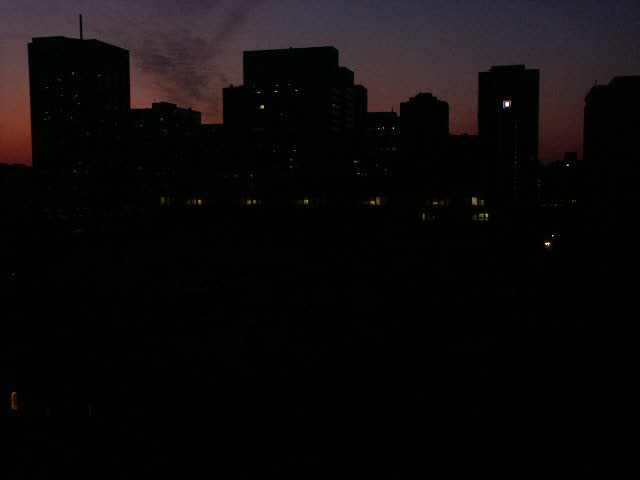
How often do you take electricity for granted? If you are like I once was, it happens quite frequently.
Often, I would shut off lights and unplug things when not in use, but I still never really took the time to think about what it would be like to go without power — that is, until I spent more than two weeks after a hurricane in just that situation.
I didn’t like it at first, but after a while, it was kind of nice to read with a lantern by my bed or work hard while the sun was up and relax once it retired. I figured it must have been kind of like how life had been for my great-grandparents at one time. I eventually did get into a routine, and it was at this time that I realized just how much the availability of electricity set the tone of my life.
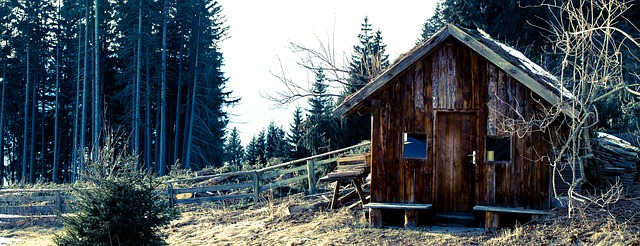
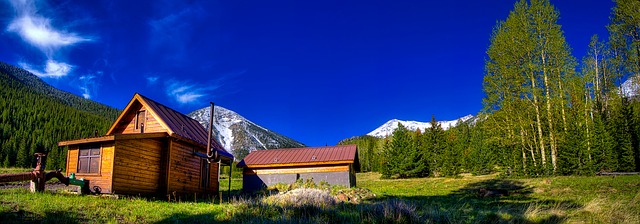
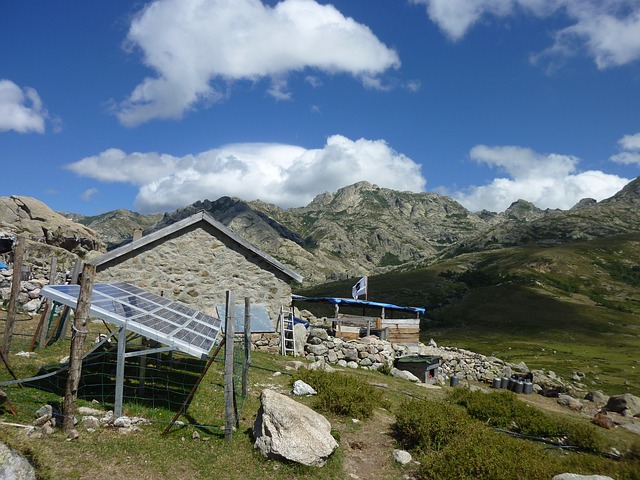
Just last year I had the amazing opportunity to spend several months off the grid in a very remote location. Although the home I rented had a well-appointed solar system and a back-up generator, there were still some things that I had to “get used to.” It took some time to develop a good working relationship with the solar system, and I prided myself on using the generator as infrequently as possible.
Of course, the amazing thing about going solar is that you can make your system as large as you desire. For me, though, there was some adventure to working with the system that was in place and having to adjust to the solar power rather than taking power for granted.
Image source: Pixabay.com
For example, vacuuming was something that was reserved for days when there was ample sun and backup power. We did quite a few things differently while we learned to live on fewer watts, and our off-grid experience was richer for the thought we had to put into preserving the free power from the sun.
Here are just a few of the changes that we made to our off-grid lives that helped us use less watts:
We never took a shower before the sun was up.
We never took a shower when the sun was down.
We only did laundry between 11 a.m. and 2 p.m., and only one load per day.
We went to bed early and got up early (this proved to be most productive).
We used battery-operated lanterns and book lights for evening reading.
We unplugged everything — the coffee pot, the toaster, etc. – when not in use.
We rarely used the microwave.
We never left the TV on, and we used it sparingly.
I think the nicest thing about living on fewer watts is just the lifestyle that it dictates. You become much closer to nature and the rising and setting of the sun and much more aware of your surroundings. The changes that we made did not come naturally, and it did take time to grow accustomed to them. But after a month or so, we were in a pretty good routine and had more than enough power for our day
I am convinced that the time living fully off-grid made me a more resourceful person, and I am anxiously awaiting another opportunity to leave the grid behind again!
How do you use less watts on your solar system? Share your tips in the section below:
I have on many occasions found myself without hot water. Power outages are the usual reason, but when the hot water heater goes out, there’s usually a few days before a new one can be installed. It’s an inconvenience, but little more in that case. But what if we had to go without hot water for weeks or months?
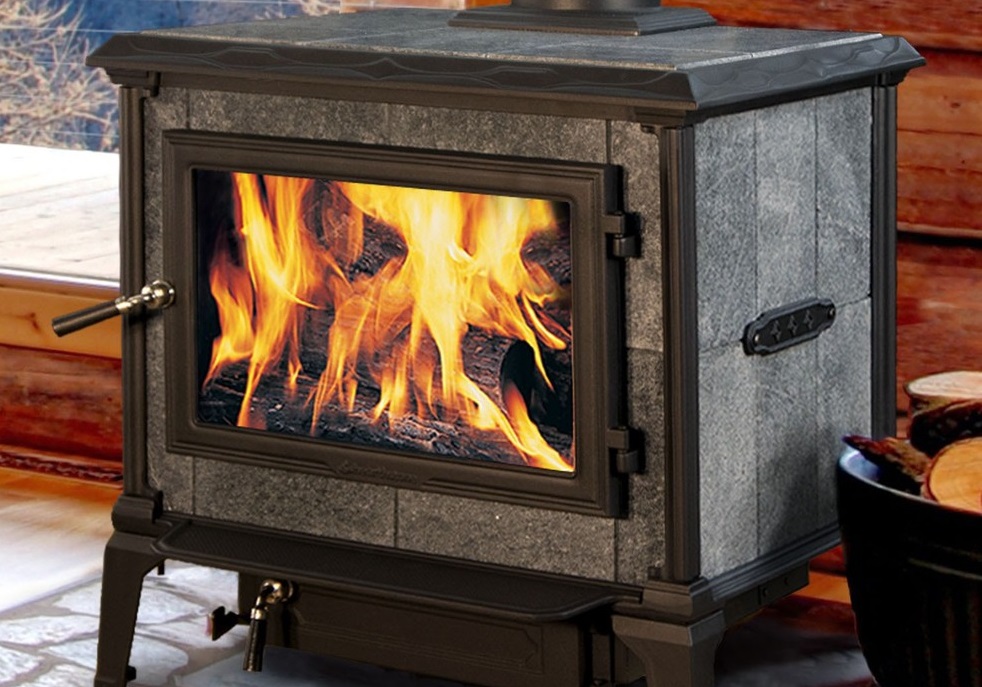
The simplest and perhaps most preliminary solution to producing hot water is to build a fire outside and heat a large pot of water over it. This is quite labor intensive, though, even if it will create hot water. You also can put a large pot of hot water on a wood-burning stove and get the same result. The vapor will add some humidity to the house, which is a good thing since the wood-burning stove is also drying out the air with the heat it produces.
Using a fire or wood stove is a great way to heat a few gallons of water. The issue is when you want 20 to 50 gallons of hot water over the course of a day. That needs some new considerations.
One solution for heating water when you don’t have a traditional hot water tank has been the addition of a 20-gallon water box (reservoir) on the side of a wood-burning cook stove in the kitchen. This is a great multi-purpose solution, as the stove provides heat for the house, heat for cooking and hot water. Unfortunately, it creates a bit of a problem during hot summers.
But all of the options for alternative water heating tend to produce radiant heat within the living space. And if it’s 90 degrees outside, you probably don’t want to produce a lot of extra heat. Here’s one solution: You could wait for the coolness of night to heat your water, and insulate the tank for the morning shower or shower right away.
To keep the heat out of their homes, many homesteaders a century ago had an out-building known as a summer kitchen. The idea was that any wood-burning appliances for cooking would be located outside in the summer kitchen, at least during the hot months.
The summer kitchen was a hot place to work, but it kept the main house cool. It also provided a space for heating water. Often, a galvanized bathtub found its place in the summer kitchen due to its proximity to hot water. Dishes, once dirtied during meals in the main home, would be carried back to the summer kitchen to be washed in the sink. Many people also ate on the porch of the summer kitchen rather than ferrying plates and dishes back and forth for meals.
If you decide to use water that has been heated in a wood-burning cook stove or wood-fired stove, keep in mind it will be hot, hot, hot. In fact, the water is usually very close to the boiling point. There’s a few things you can do to temper the temperature, including adding a cold bucket of water to the top of the tank. But be very careful when tapping this hot water.
A thermometer that measures the water temperature is highly recommended. Some wood-fired cook stoves have this feature. If not, buy one. The recommended safe hot water temperature is 120 degrees Fahrenheit. If you’re above that (and you probably will be), then add cold water or let it cool down a bit.
In addition to stoves, there are water heaters that do not require gas or electricity to work. These also give off radiant heat so the winter/summer dilemma still stands. Most are wood-fired, although alternative burning fuels from peat moss to lower-grade softwoods can be used.
There also is the option on going solar. The best off-grid solution for solar hot water heating is a close-coupled system. This is a roof-top system where the water tank is on the roof above a set of solar panels. The water moves through tubes in the panel and is heated by the sun’s rays.
The benefit of the closed-loop system is that it requires no electric power for pumps. You can hand pump the water into the tank and as the water is heated, it rises into the tank. Gravity provides the water pressure. This system depends on sunlight to function and in extremely cold temperatures, you may find yourself with lukewarm water rather than hot.
There are many options for heating water off-grid. Do your research and ask other off-gridders what they use.
What advice would you add for heating water off-grid? Share it in the section below:
Puerto Rico’s power grid crisis has triggered renewed interest in solar energy. That’s what happens when a hurricane takes down 100 percent of a U.S. territory’s power grid and leaves millions of people in the dark.
And it’s only going to get worse: The hurricane was so devastating that 75 percent of the island likely will be without electricity for months as the power grid is rebuilt, pole by pole, line by line.
The U.S. mainland is not immune to such devastation, either. America’s power grid is the oldest in the developed world – and the most poorly designed, too. While other countries place their power lines below ground, our power grid remains above ground, leaving it susceptible to storms. No wonder we have more blackouts than other nations!
All it takes is a major earthquake – or a cyberattack or terrorist attack – to take out most or all of the grid and send us back to the 1800s.
America’s renewed interest in solar energy, though, has left many people asking a series of questions: Where do I start? Can I afford to go solar? Should I go with a stationary or portable system? Can I maintain my lifestyle with solar? And what’s the difference in AC and DC?
That’s where the book “Solar Energy Breakthroughs” can help. Written by a solar energy expert, this simple book tells you everything you need to know to buy your first solar power system. At 160 pages with 17 short chapters, it proves just enough detail without getting too complex. It’s written for beginners!
Here’s the best news: For the next two weeks, we’re giving away 100 copies of “Solar Energy Breakthroughs” … for free! Normally this book sells for $19.97, but because of the devastating hurricanes, we’re giving away 100 copies to our Off The Grid News readers and their friends.
It’s easy to get one. All you need to do is watch the video and follow the steps listed below.
Here’s What You Need To Do For Your Chance To Win
Please answer the following question in the comments section at the bottom of the page:
Tell us why you think this would be a great off the grid item in a crisis and why you think you should win it?
Sign up using the form below and share this video with three of your friends.
Once you get three friends to signup you’ll be sent a link to claim your Solar Energy Breakthroughs book!
On August 21st, approximately 25,000 U.S. troops will join “tens of thousands” from the South Korean military to conduct a “major military exercise” that is already triggering threats from North Korea. Considering the fact that any sort of provocation could cause a nuclear war to erupt on the Korean peninsula, is this really a wise thing to do? The more research that I do on this upcoming solar eclipse, the stranger things become. When I first started hearing about this eclipse many months ago, I didn’t pay too much attention, but now after looking into it extensively I do believe that it is going to be quite significant.
And I didn’t even know about this major military exercise that will happen during the eclipse until today. The following comes from MSN…
The U.S. military is preparing to launch a major military exercise with South Korea in coming days, and faces a dangerous balancing act: How do you reassure allies in the region that you are ready for a war with North Korea without provoking an actual conflict in the process?
The annual Ulchi-Freedom Guardian exercise is scheduled for 10 days beginning Aug. 21, and will include about 25,000 U.S. troops along with tens of thousands of South Koreans. The exercise focuses on defending South Korea against an attack from the north, and each year triggers threats and rebukes from North Korea. But it comes at an especially sensitive time now, following the exchange of a series of threats between President Trump and North Korea.
Another thing that we just found out is that meteorologists are warning that a major hurricane could potentially start approaching the east coast of the United States during the time of the solar eclipse. It has been almost 12 years since a major hurricane made landfall in this country, and so it is very odd that this would be happening all of a sudden.
As I have discussed previously, many believe that the upcoming solar eclipse and the 40 day period that follows may be some type of “warning” for America. And traditionally, this 40 day period has been a time of repentance for the people of Israel…
On August 21, a total solar eclipse will mark a trail from the Northwest US to the Southeast Atlantic Seaboard. The eclipse will occur on the last day of the Hebrew month Av, a day known as Yom Kippur Katan, the “small day of repentance.” The morning after the eclipse, Jews will begin blowing the shofar every morning for a 40-day period of profound repentance leading up to Yom Kippur. This corresponds to the 40 days Moses was on Mount Sinai atoning for the Jewish people.
It is also very interesting to note that this eclipse comes exactly 33 days before the “Revelation 12 sign” that will appear in the heavens on September 23rd. The first state that the solar eclipse of August 21st will cross will be Oregon, and many have noted that Oregon is our 33rd state. And the solar eclipse will finish crossing the nation on the 33rd parallel in the state of South Carolina.
So is that just a coincidence?
It might be.
Another extremely interesting fact is that the very first large city that the path of the eclipse will cross is Salem, Oregon. Of course Salem is short for Jerusalem, and it turns out that the path of the eclipse will reach Salem at just about the same time that the sun is setting in Jerusalem.
Another coincidence?
Maybe.
Seven years after the eclipse on August 21st, another one will cross our nation in 2024. Together, the paths of those two eclipses will mark a giant “X” directly over the middle part of the country. And amazingly, the combined time of the totality of those two eclipses will be seven minutes.
And this eclipse is just the beginning. Over the subsequent 40 days there are quite a few critical events that people are buzzing about. The following list comes from one of my previous articles…
An exercise sponsored by FEMA and the U.S. Department of Energy set to take place on August 23 called EarthEX2017 will wargame responses to catastrophes such as mega earthquakes, cyber terrorism or high altitude electromagnetic pulse attacks.
The exercise will simulate a “subcontinent-scale, long duration power outage, with cascading failures of all other infrastructures,” according to the official Earth Ex website.
“Black sky events” are defined as, “Catastrophic occurrences caused by man or nature that bring society to its knees.”
September 1 – The U.S. State Department’s ban on U.S. citizens traveling into North Korea goes into effect. Many are concerned that this is yet another sign that we are moving toward war with North Korea.
September 11 – This will be the 16th anniversary of 9/11.
September 23 – This is the date of what has become known as “the Revelation 12 sign”. If you are not familiar with this alignment yet, the following is a very brief summary…
On September 23rd a unique astronomical alignment of the Sun, Moon, constellation Virgo, constellation Leo, and planets Jupiter, Mars, Mercury, and Venus is going to fulfill this passage from the book of Revelation:
And a great sign appeared in heaven: a woman clothed with the sun, with the moon under her feet, and on her head a crown of twelve stars. She was pregnant and was crying out in birth pains and the agony of giving birth.
September 24 – Very important national elections will be held in Germany.
September 29 – Yom Kippur begins at sunset, and it concludes on September 30th. Of course September 30th will be the end of a 40 day period that began back on the day of the Great American Eclipse on August 21st.
September 29 – U.S. Treasury Secretary Steven Mnuchin says that the debt ceiling will be breached on this day if Congress does not raise it by then.
September 30 – If Congress does not pass a budget by the end of this day, there will be a government shutdown just like we witnessed in 2013.
And all of this comes at a time when anger, hatred and racial tension are reaching a fever pitch in this country.
Let us pray for peace both at home and abroad, because at this moment we are rapidly approaching a boiling point.
Monday, we are going to witness one of the strangest events in U.S. history. This will be the first total solar eclipse to ever be seen only in the United States and nowhere else. Millions upon millions of people are going to flock to areas of the country where the full eclipse will be visible, but everyone in the continental United States is going to be able to see at least a partial eclipse. There are lots of very unusual numbers associated with this eclipse, but in this article I want to focus on the number 40, and as this article unfolds you will start to understand why.
Our planet is the only place where you can view a total solar eclipse, and that is because our sun and our moon appear to be the same size in the sky. Of course the sun is much, much larger than the moon, but because the sun is approximately 400 times farther away than the moon they appear to us to be nearly the same size…
The sun and moon appear the same size in Earth’s sky because the sun’s diameter is about 400 times greater – but the sun is also about 400 times farther away.
At this particular moment in Earth’s history – although the sun’s diameter is about 400 times larger than that of the moon – the sun is also about 400 times farther away. So the sun and moon appear nearly the same size as seen from Earth. And that’s why we on Earth can sometimes witness that most amazing of spectacles, a total eclipse of the sun.
I have previously discussed the fact that the solar eclipse on August 21st is the first day in a 40 day period that ends with Yom Kippur. But what I haven’t mentioned is that the month of Elul on the Jewish calendar begins on the very next day after the eclipse.
Elul is traditionally known as “the month of repentance”, and it is a time when people all over the world prepare for the High Holy Days…
In the Jewish tradition, the month of Elul is a time of repentance in preparation for the High Holy Days of Rosh Hashanah and Yom Kippur. The word “Elul” is similar to the root of the verb “search” in Aramaic. The Talmud writes that the Hebrew word “Elul” can be understood to be an acronym for the phrase “Ani L’dodi V’dodi Li” – “I am my beloved’s and my beloved is mine” (Song of Solomon 6:3). Elul is seen as a time to search one’s heart and draw close to God in preparation for the coming Day of Judgement, Rosh Hashanah, and Day of Atonement, Yom Kippur.
It is also believed that the first of Elul was when Moses began a period of 40 days of fasting and prayer on behalf of the people of Israel after they worshipped the golden calf. The following comes from Rachel Baxter…
According to Jewish tradition, the month of Elul is the time that Moses spent on Mount Sinai preparing the second set of tablets after the golden calf incident (Exodus 32; 34:27-28). He ascended on Rosh Chodesh Elul and descended on the 10th of Tishri, at the end of Yom Kippur, when repentance was complete. Elul marked the beginning of a period of 40 days that Moses prayed for God to forgive the people for worshipping the golden calf.
Of course the number 40 comes up time after time throughout the Scriptures. Here are a bunch more examples…
In the Old Testament, when God destroyed the earth with water, He caused it to rain 40 days and 40 nights (Genesis 7:12). After Moses killed the Egyptian, he fled to Midian, where he spent 40 years in the desert tending flocks (Acts 7:30). Moses was on Mount Sinai for 40 days and 40 nights (Exodus 24:18). Moses interceded on Israel’s behalf for 40 days and 40 nights (Deuteronomy 9:18, 25). The Law specified a maximum number of lashes a man could receive for a crime, setting the limit at 40 (Deuteronomy 25:3). The Israelite spies took 40 days to spy out Canaan (Numbers 13:25). The Israelites wandered for 40 years (Deuteronomy 8:2-5). Before Samson’s deliverance, Israel served the Philistines for 40 years (Judges 13:1). Goliath taunted Saul’s army for 40 days before David arrived to slay him (1 Samuel 17:16). When Elijah fled from Jezebel, he traveled 40 days and 40 nights to Mt. Horeb (1 Kings 19:8).
And virtually everyone knows that the Lord Jesus was tempted for 40 days in the wilderness, and that there were 40 days between His resurrection and His ascension.
In addition, I already noted yesterday that the prophet Jonah gave the people of Nineveh 40 days to repent before judgment would strike.
It is interesting to note that there is a town known as “Nineveh” in the United States as well. On Monday, 93 percent of the sun will be blotted out by the moon in that little town, and 7 years later the eclipse of 2024 will blot out 100 percent of the sun in that same town.
Many will dismiss the things that I have been pointing out about these eclipses as “coincidences”, but it is imperative to remember that these sorts of solar eclipses are actually very rare. The following comes from Faithwire…
But, with that said, there are some intriguing and defining elements surrounding the coming Aug. 21 event, including the fact that it is the first time since 1257 that the entirety of the total eclipse is exclusively viewable from inside the U.S.
Parade noted that the 1257 eclipse went over the Hawaiian Islands — a fact that some might say differentiates it from what’s to come this month. With that in mind, to find a comparable eclipse, the outlet said one must go all the way back more than 1,500 years to July 29, 436 (yes, the year 436). And America won’t see another such total solar eclipse that is viewable only in the U.S. until Jan. 25, 2316, when anyone currently reading this story is long gone.
For centuries, many have believed that a solar eclipse is a sign that judgment is coming upon a nation. I don’t know if that is what this solar eclipse means, but Jesus did warn us to watch for signs in the sun, moon and stars just prior to His return.
So does this solar eclipse start a period of “40 days and 40 nights” for America?
I don’t know, but God definitely likes to use the number 40, and throughout history He has repeatedly used His calendar to get our attention.
"Another issue has to do with cell phone usage [...] your cell phones aren"t going to work -- so they are actually bringing in cell phone towers."
(INTELLIHUB) — Now that more and more Americans are receiving their electricity via solar energy, government officials worry that the electrical grid may become overloaded from a surge of energy backfeeding into the U.S. grid directly following the solar eclipse as light from the sun reemerges and hitting solar.
Right now state utilities are planning to deal with the surge which is “capable of crippling the nation,” according to an ABC News report.
“Another issue has to do with cell phone usage […] your cell phones aren’t going to work — so they are actually bringing in cell phone towers,” an ABC News staffer reported.
An imminent period of low activity on the sun might unleash showers of cosmic rays that can knock out the electric grid, shut down the Internet and disrupt mobile phone and GPS service.
That’s because the sun is nearing a “solar minimum” — a period of low sunspot activity that can have profound effects on Earth, astronomers say. Despite the name, a solar minimum can be dangerous, according to Professor Yvonne Elsworth of the University of Birmingham.
The sun has not had any spots for more than 40 days.
During a solar minimum, Earth’s thermosphere – an outer layer – cools and can collapse. That makes Earth more susceptible to cosmic rays, which are “high energy particles accelerated toward the solar system by distant supernova explosions and other violent events in the galaxy,” according to NASA. That may sound like the stuff of science fiction, but it can have a big impact on Earth, Elsworth and NASA say.
A “fundamental change in the nature of the [sun’s magnetic] dynamo may be in progress,” Elsworth told The Sun newspaper.
She told The Express, “We are not quite sure what the consequences of this will be but it’s clear that we are in unusual times.”
Astronomers say some of the effects of a solar minimum could be:
Interfering with satellites, which can disrupt GPS, Internet, television and phone service.
Bringing down power grids.
Endangering astronauts.
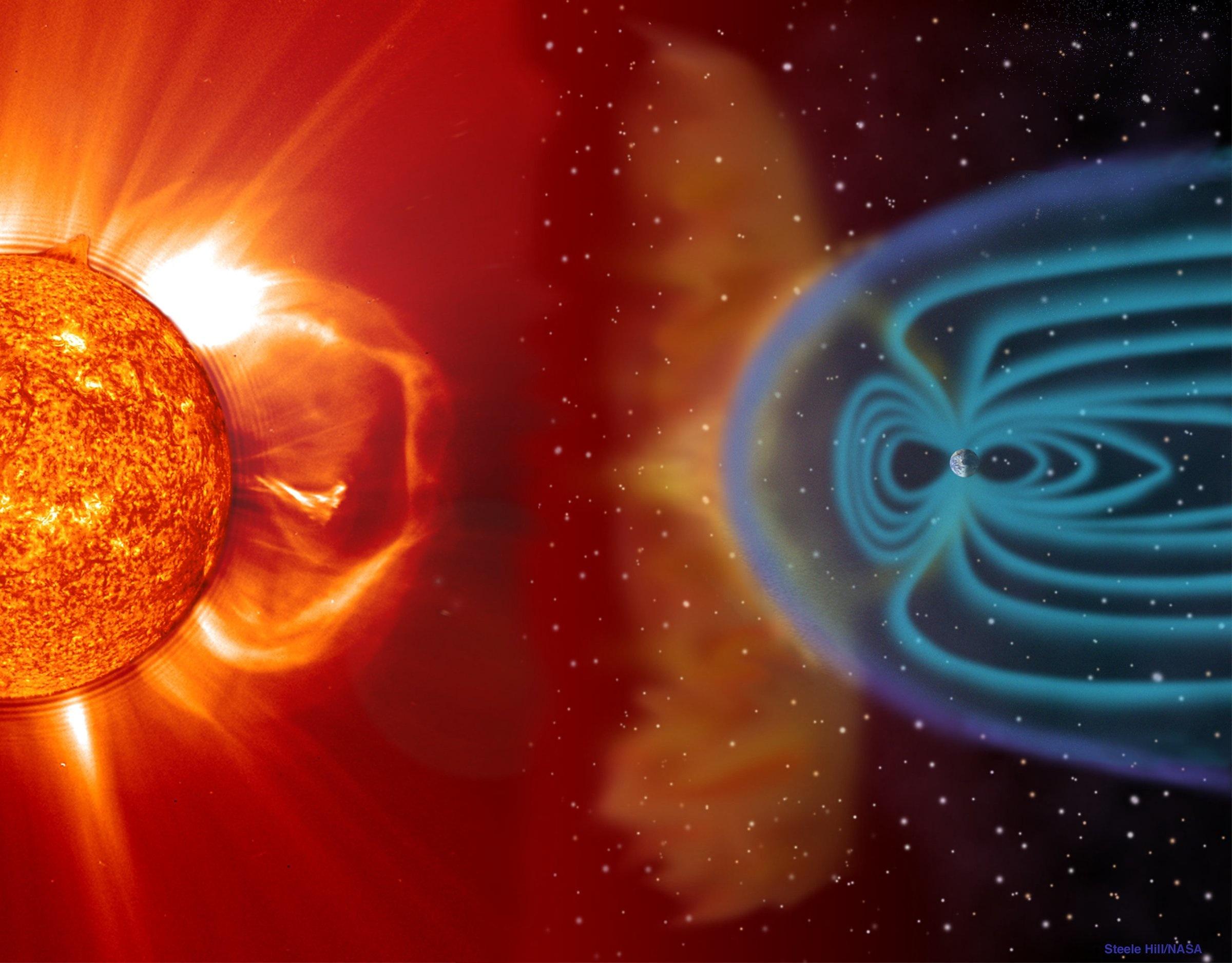
Solar minimums occur every 11 years and can spark coronal holes in the sun. According to NASA, “Streams of solar wind flowing from coronal holes can cause space weather effects near Earth when they hit Earth’s magnetic field. These effects can include temporary disturbances of the Earth’s magnetosphere, called geomagnetic storms, auroras, and disruptions to communications and navigation systems.”
What do you think? Share your thoughts in the section below:
As governments scramble to tax their citizens into a greener world, research in the free market is proving to be the ultimate catalyst in a sustainable future. As governments pass legislation to prop up the fossil fuel industry, renewables are battling back in this epic David and Goliath match. One of the latest and most unique innovations that is showing promise to free humanity from the grip of fossil fuels is solar paint. Yes, solar paint.
Researchers in Australia, from the Royal Melbourne Institute of Technology (RMIT), have developed a solar paint that can absorb water vapor and split the molecule to separate it into hydrogen — the cleanest source of energy.
The research has recently been published as “Surface Water Dependent Properties of Sulfur Rich Molybdenum Sulphides – Electrolyteless Gas Phase Water Splitting” in ACS Nano, a journal of the American Chemical Society.
According to a report on RMIT’s website:
The paint contains a newly developed compound that acts like silica gel, which is used in sachets to absorb moisture and keep food, medicines and electronics fresh and dry.
But unlike silica gel, the new material, synthetic molybdenum-sulphide, also acts as a semi-conductor and catalyses the splitting of water atoms into hydrogen and oxygen.
Lead researcher Dr Torben Daeneke, from RMIT University in Melbourne, Australia, said: “We found that mixing the compound with titanium oxide particles leads to a sunlight-absorbing paint that produces hydrogen fuel from solar energy and moist air.
“Titanium oxide is the white pigment that is already commonly used in wall pain, meaning that the simple addition of the new material can convert a brick wall into energy harvesting and fuel production real estate.
READ MORE:Conspiracy Theory No More, Harvard Reveals Big Oil-Approved "Stratospheric Injection" Geoengineering
“Our new development has a big range of advantages,” Daeneke said. “There’s no need for clean or filtered water to feed the system. Any place that has water vapor in the air, even remote areas far from water, can produce fuel.”
The solar paint is so efficient that it doesn’t need humid climates to function either. This technology can work in arid climates too.
“This system can also be used in very dry but hot climates near oceans. The sea water is evaporated by the hot sunlight and the vapor can then be absorbed to produce fuel,” Daeneke explains.
Professor Kourosh Kalantar-zadeh, Daeneke’s colleague, explained on the university’s website how hydrogen is the cleanest source of energy and could be used in fuel cells. But that is only the beginning. This solar paint could also serve as a replacement for fossil fuels as it can be used in combustion engines.
“The produced hydrogen can then be directly used either in a fuel cell or in a combustion engine,” says Daeneke.
“Ultimately we hope that the solar paint might be used alongside traditional solar cells, potentially coating areas that receive too little light to be viably covered with expensive solar cell modules,” Daeneke said.
As Inverse reports, Although Daeneke thinks it will take at least 5 years to engineer the final product, he expects the paint will be very cheap. Since there are already cars and buses that are hydrogen powered today, Daeneke says, once the collection process is completed this could be a powerful source of clean energy in the future. And because it’s effectively just a white paint, you could put it on your house or fence to create another kind of clean energy with a little humidity and sunlight.
READ MORE:In 2016, Solar Employed More People in Electricity Generation Than Gas, Coal, & Oil COMBINED
The world has been focused on the threat from North Korea in recent weeks, concerned about the reclusive country setting off a traditional nuclear weapon or even an EMP. But there is a more persistent threat out there that we rarely think about – and there’s very little that we can do about it.
It is the sun, and, yes, it can take down the power grid with little warning.
This week’s guest on Off The Grid Radio is Arthur Bradley, a NASA engineer who is an expert on solar storms and disaster preparedness, having authored 15 books on the subject.
The last major solar storm to hit the Earth took place in 1859 – long before the power grid was put in place. If such a storm were to hit us now, Bradley says, it would cause a “global catastrophe,” crippling the grid for a year or more and causing millions of deaths.
Even worse: Bradley says we’re “past due” for such a storm.
Bradley also tells us:
Why the power grid essentially would be “un-repairable” and down for so long.
Whether the grid truly can be hardened to protect it from solar threats.
How Earth barely survived a solar storm just five years ago.
If you’re concerned about the future of your family and want to be prepared, then this is one show you don’t want to miss!
(ANTIMEDIA) Scientists in Germany have opened doors in the realm of renewable energy and solar experimentation. Using a 50-foot structure and 149 industrial-grade spotlights, Kai Wieghardt and his team have created “Synlight,” the “world’s largest artificial sun.”
The $3.8 million structure stands in Juelich, Germany, and can focus its spotlights onto an area as small as 61 square inches, generating up to 10,000 times the amount of normal radiation in a single area and reaching temperatures of up to 5,400 degrees Fahrenheit. But what is its use?
It can be used to test simple things like solar panels and other solar-fueled mechanisms. Synlight can also test the effects of solar radiation on satellites and machines that endure prolonged radiation exposure. However, the most interesting application of Synlight is the potential to use it to separate hydrogen and oxygen from water in mass amounts, creating a consistent source of hydrogen and bringing hydrogen-powered cars, houses, and societies that much closer to the gates of reality.
Still, good news often comes with a catch. While the potential opportunities and progress that can be made with such a concept are plentiful, the fact remains that the energy powering this massive “artificial sun” doesn’t come from thin air. After a mere four hours of use, Synlight consumes the same amount of energy a four-person household consumes in an entire year. As one might imagine, this makes operating Synlight very expensive, though it is arguably a worthwhile price to pay for a future of clean and renewable energy.
Scientists are only just beginning to comprehend the dramatic impact that magnetic fields have on our lives, and indeed all life on earth.
And now, they fear that the poles are rapidly shifting, and could indeed flip in our lifetimes. A state of constant change, and the potential for drastic shifts, has made airline travel, communications, the electric, satellites and other infrastructure incredibly vulnerable.
Some of the effects have already been experienced on a low level, and we should take heed of the warnings they give.
Eerily, the very forces of electromagnetism that are used in communications, physics and other branches of science are also integral to brain function, weather patterns – and importantly, the planet’s exposure to solar radiation. Any major disruptions or alterations in this fabric around earth could undo normalcy and trigger utter chaos and destruction.
The alteration in the magnetic field during a reversal will weaken its shielding effect, allowing heightened levels of radiation on and above the Earth’s surface.
Were this to happen today, the increase in charged particles reaching the Earth would result in increased risks for satellites, aviation, and ground-based electrical infrastructure.
Geomagnetic storms… give us a foretaste of what we can expect with a weakened magnetic shield.
In 2003, the so-called Halloween [solar] storm caused local electricity-grid blackouts in Sweden, required the rerouting of flights to avoid communication blackout and radiation risk, and disrupted satellites and communication systems.
But this storm was minor in comparison […] widespread blackouts could result in economic disruption measuring in tens of billions of dollars a day.
In terms of life on Earth and the direct impact of a reversal on our species we cannot definitively predict what will happen …
[…]
Indeed, our planet’s history includes at least several hundred global magnetic reversals, where north and south magnetic poles swap places.
So when’s the next one happening and how will it affect life on Earth?
No one knows if we will see a “big one” type of solar event in our lifetime, but scientists definitely think it is possible, and the timing doesn’t seem to be fixed at all. Moreover, even lesser events could be making important alterations, and could be driving long term trends – whether detrimental or a complete disaster.
Reports have flooded in over the past decades of shifting poles, and problems for airplanes and navigation, as well as for GPS and satellite based communications.
The cracking of the ice in Antarctica, and the threats of global melt are also tied to this phenomenon – rather than the CO2 usage of mankind – and appear to be accelerating with important and potentially grave consequences.
The importance of the surrounding magnetic field cannot be overstated, but it is certainly far from being fully understood by science or the general public.
But without it, Earth could not sustain life on the planet. However, with its enveloping regulation of solar radiation and the effect of solar and space events, the inhabitants of Earth can enjoy the positive, life-giving benefits of the sun without being scalded and destroyed by its most harmful effects.
The delicate balance between the positive and negative aspects of the sun is thanks to the complicated and ever changing magnetic belts around our planet.
The Earth’s magnetic field surrounds our planet like an invisible force field – protecting life from harmful solar radiation by deflecting charged particles away.
Far from being constant, this field is continuously changing.
During a reversal the magnetic field won’t be zero, but will assume a weaker and more complex form.
It may fall to 10% of the present-day strength and have magnetic poles at the equator or even the simultaneous existence of multiple ‘north’ and ‘south’ magnetic poles.
Geomagnetic reversals occur a few times every million years on average.
However, the interval between reversals is very irregular and can range up to tens of millions of years.
There can also be temporary and incomplete reversals, known as events and excursions, in which the magnetic poles move away from the geographic poles – perhaps even crossing the equator – before returning back to their original locations.
Of course, it has been three-quarters of a million years since the last full pole shift, and tens of thousands of years since the last temporary shift – which lasted some 250 years.
Volcanoes, earthquakes, tsunamis and other seismic disruptions could take place and enact severe destruction upon the earth – and many scientists believe that this has all been tied to past extinction events on earth.
There are clearly some major disruptions taking place, but the question is, will we or could we live through the most dramatic parts of such a time?
More conspiratorial viewpoints additionally believe that the huge levels of electromagnetic energy being produced – and emitted – at the CERN Large Hadron Collider are also making significant contributions to the weakening of the magnetic field.
There may be a correlation between the artificial manipulation of these forces by man’s scientific endeavors that could affect us long before the roll of the dice of solar-magnetic events ever take place:
Science is aware that the global magnetic field is changing. It has weakened and astounding 10% or so since the 1800s, and the trend is continuing, and accelerating. CERN may be contributing to these changes and a depletion of our protective layer.
A weaker magnetic field (and even very weak magnetic fields) can have dramatic effects on human and animal behavior, and of course, weather patterns. Low frequency EMF forces, like those enveloping the planet are very closely associated with altered behavioral affects and brave wave entrainment.
So things could get pretty weird, and pretty ugly, if there is any significant flux in the magnetic grid in our lifetime, and recent scientific findings suggest that it is all too possible, and perhaps imminent.
Of course, this would have a huge bearing on the power grid, which sustains life in modern society.
It is now well understood that grid down sets a very short time clock for total chaos and descent into madness.
Get your preps, and be very careful and calculating about your interactions with and dependence upon the modern grid, delivery and supply system, as well as your relative distance to population centers.
Everything we take for granted today can be undone in a span of time that may as well be nothing more than the blink of an eye.
January offers us a time for reflection and prediction. For centuries, people looked to the stars for signs of what is to come, and winter offers many opportunities for stargazing.
As we begin a new year, perhaps it is wise to consider not only the beauty of the sky but also the destructive power it holds.
Astronomers pay particularly close attention to solar flares, which are sudden, intense and rapid variations in the sun’s brightness. These fairly common occurrences happen when magnetic energy that has built up in the solar atmosphere suddenly releases.
A solar flare contains high-energy photons and particles that are equivalent to millions of 100-megaton hydrogen bombs exploding at once. While regular solar flares are not a danger to Earth, extreme events, or solar storms, could be catastrophic to our way of life.
In fact, according to a study published in the journal Space Weather in 2012, there is a 12 percent chance (or, one in eight chance) that Earth will experience a catastrophic solar event within the next decade. This “megaflare” could disrupt or destroy modern technology, causing trillions of dollars’ worth of damage from which it could take many years to recover.
Space physicist Pete Riley made the prediction in the study by examining historical data and then making comparisons between the sizes and occurrences of solar flares.
Scientists have discovered that the sun goes through 11-year cycles of activity. During the solar maximum phase, the sun is covered with sunspots, and huge magnetic whirlwinds frequently erupt from its surface. Although it is rare, sometimes these flares burst away from the sun, sending massive amounts of charged particles into space.
Image source: Wikipedia
The last recorded megaflare occurred in September 1859. Known as the Carrington Event, this enormous solar flare is named for astronomer Richard Carrington, who recorded his observations of the huge solar storm.
Carrington observed an enormous flare erupt from the sun’s surface that sent a particle stream toward Earth at a rate that exceeded 4 million miles per hour. These highly charged particles created breathtaking lights, or auroras, that were visible as far south as the Caribbean.
The New York Times in 1859 reported that New Yorkers gathered to watch “the heavens … arrayed in a drapery more gorgeous than they have been for years.”
Although the lights were indeed beautiful, the Carrington Event caused all kinds of disruption to 19th century communication systems. Telegraph stations caught on fire, and communication outages occurred on a scale never seen before.
In 1989, a geomagnetic storm – not as powerful as the Carrington Event — caused Canada’s Hydro-Quebec power grid to fail, leaving millions of people without power for up to nine hours. A similar storm today would have much more technology to disrupt, and the results would be catastrophic.
A megastorm on the scale of the Carrington Event could damage or destroy electrical power grids, disrupt GPS satellites and put a stop to Internet and radio communication.
According to a 2008 report from the National Research Council (NRC), a Carrington-like event could cost up to $2 trillion of damage within a year, and full recovery could take up to a decade.
The NRC report stated that, in addition to communication disruption, the event would adversely affect all aspects of modern life, including transportation, financial systems, government services. In turn, the distribution of water, food and medications would be halted.
In the conclusion of his 2012 report, Riley maintained that it is his hope that his prediction would be useful in building an “infrastructure that can withstand such an event.”
“Since the event occurred only 150 years ago, it is a constant reminder that a similar event could reoccur any day,” Riley wrote.
As we begin a New Year, it would be well if we took his advice.
Do you believe America is prepared for a Carrington-type event? Share your thoughts in the section below:
Before moving off-grid, I had a lot of preconceived notions about what “off-grid living” meant. Say goodbye to grandma’s antique 1000-watt waffle iron, put away the power tools and don’t even think about a dishwasher … right? Well, not really.
While “off-grid” can mean living without electricity and hauling water and all of your meals on a wood stove, it doesn’t necessarily have to.
To my surprise, with a small rooftop array on an off-grid cabin in rural Vermont, we’re able to enjoy more luxuries than the average suburban home has available. Even in a cold northern climate, there’s more than enough free solar energy at least 8 to 9 months of the year to power things you might not consider owning with the expense of grid-purchased electricity. Add in a wind turbine to collect energy from winter storms, and you may be set up for quite the life of luxury.
1. Whirlpool bath tub
For off-grid homes, a whirlpool bathtub can be a great way to relax after a long day working in the woods. While it may not be an option most of the winter except on the sunniest days, March through October is whirlpool bath season. Imagine relaxing comfortably, submerged up to your neck with jets flowing all around you after an eight-hour session hauling logs and splitting wood. Some of that wood, once dried, went into your wood-fired boiler to heat the water for your tub, and the surplus electricity generated throughout the day while you were outdoors is powering your evening tub.
2. Dishwasher
Believe it or not, a dishwasher can be a great way to utilize solar electricity during peak hours. Unless you happen to live where a gravity well is an option, a water pump uses a significant amount of electricity.
If doing dishes by hand, the best time to run water is mid-day when production is at its peak. The question is: Do you want to spend the most beautiful part of the day trapped indoors with your hands in a sink, or do you want to be outside enjoying the fruits of your off-grid life? By wiping off your dishes and loading the dishwasher in the evening, all it takes is a second to turn on the dishwasher mid-day when you come in for a lunch-time break.
3. Internet
While a complete off-grid lifestyle is practical for a tradesman, what about those of us who were raised in a city and still need to make a living through a more “on-grid” line of work? While wired broadband is becoming more available in rural areas, the more remote areas still do not have those options. If you happen to be in an area covered by cell service, there are options for cellular-powered wireless adapters for computer use. In a slightly more remote area, there may be radio Internet options that still allow high-speed connection by routing the signal through a series or mountaintop towers, as is commonly available in rural parts of the northeast. For those in true wilderness, satellite Internet is remarkably dependable in all but the stormiest of weather.
4. Radiant floor heat
While an indoor wood stove is an exceptionally practical and dependable way to heat a home without electricity, it requires quality hardwood to burn to avoid chimney fires from softwood creosote buildup. For those living in conifer or hemlock forests, an outdoor boiler might be a better way to use your available resources. Fortunately, with the super-efficient models on the market today, they only require minor retrofits to run directly off battery power. A small inverter placed within your boiler shed to power the boiler fan, and the use of DC electric (directly battery powered) pumps to circulate your water or antifreeze, and you have a low-energy solution and warm radiant floors to boot. Still, make sure you have an electricity-free form of heat to get you through the worst storms, but most days your boiler will keep you toasty on just a small amount of softwood.
5. Dehumidifier or air conditioner
Image source: Pixabay.com
Really? A compressor on solar power? Yes! Peak summer heat and humidity often coincide with peak solar output. Around the summer solstice, our battery bank will be full by mid-day, meaning that a whole afternoon’s production will be wasted without an outlet.
Once you’ve done all your electricity-using chores, go ahead and switch on the dehumidifier or air conditioner with your free electricity. Obviously you need to monitor closely to make sure it doesn’t stay on past peak solar output, but that’s a small consideration for a free burst of comfort during the heat of the day.
6. Electric cooking appliances
While many homesteaders are building summer kitchens to keep the heat out of the house during hot months, solar-powered homesteaders have the option of setting up an electric-powered kitchen either indoors or outdoors for the summer months. Single burner induction ranges can bring a large canning pot to a boil in no time, and will barely dent our mid-day production at high summer. A small countertop electric oven, like an oversized toaster oven, is great for baking summer pies or a quick meal using free electricity. Just as wood stove cooking accomplishes two tasks, heat and food, a separate set of solar-powered summer appliances means lower bills and quick meals.
What luxuries would you add to our list? Share your off-grid advice in the section below:





 Shepard Ambellas