Showing posts with label Grid Threats. Show all posts

Thursday, May 10, 2018

Utilizing Passive Solar Energy

Using passive solar energy can save money on heating and cooling bills.


By utilizing passive solar energy, our ancestors could use temperate differences to heat and cool their homes. The sun rises in the east and sets in the west, right? And it is higher in the summer than in the winter. We know that. Thousands of years ago they knew that. By using the difference in the temperature between day and night, summer and winter, they could trap the sun’s energy to make their homes pleasant to live in—warm in the winter and cool in the summer.  In the temperate parts of the States, houses were built to have southern exposure. In the hot parts in the South, they had deep porches and large overhangs to provide shade during the hottest parts of the day.  What they did was to live in harmony with the cycle of nature – they used the sun’s passive energy, with no technological devices whatsoever.


Solar energy is rapidly gaining popularity among Americans, for various reasons. Of about 116 million homes in America, 200,000 are using some kind of a photovoltaic solar (PV) system, with about 10,000 using solar energy alone as their source of power.  The prices are going down, the technology is becoming more available and affordable, and it is very attractive to people wishing to go off grid. But, PV solar systems mean high-level technology, require a great deal of knowledge for maintenance, and the initial cost is still relatively high.


Passive solar energy uses the knowledge of the local climate, the angle of the sun’s passage across the sky and the nature of materials used to build the home. By making the house the right shape, placing the windows right and positioning walls, windows and roofs in the right direction, one can cut the building’s energy costs by 30 to 40 percent with no additional cost.


The science behind passive solar energy


There are a few scientific facts that enable us to use the sun’s passive energy:


  • Heat naturally travels from a warmer to cooler area until the temperature equalizes.

  • Certain materials retain energy (heat) better than others. This is called thermal mass. Water, earth, rocks and bricks have the highest capacity to retain heat.


How to design a house to use passive solar energy


Although it is easiest to use passive solar energy if you are designing your house from scratch, you can make changes to your existing house in order to decrease your heating or cooling bills. In fact, most of the principles of designing a passive solar house make sense in building any house, as one uses the power of the sun to make living more pleasant and less expensive.


Although designing a house in order to minimize or completely eliminate use of fossil fuels for heating or cooling requires a lot of knowledge and planning, the basic principles behind a passive solar design are simple:


Orientation


If terrain allows, the longer axis of the house should be oriented east/west, so that most rooms face sunny south. Large tilted windows trap a maximum amount of the sun’s energy, which naturally gets transferred to the interior. In the summer, when the sun’s arc is much higher, these same rays will bounce off vertical panes of glass.


Prevailing winds should be allowed to pass through to help air circulation and equalization of the temperature. High ceilings allow hot air to travel upwards and naturally cool the space.


Planting evergreen trees on the north side of the house will protect the house from harsh winter winds, and leafy deciduous trees planted to the south will provide pleasant cooling shade in the summer. Once they shed their leaves in the winter, they allow the sun’s warmth to pass through.


Shading


If you allow full sunlight to come through your large southern facing windows in the summer, you would be living in a boiler. Deep overhangs keep the summer high-passing sun from overheating your living space, but in the winter, when the sun is much lower, the overhang is not in the way. The same seasonal shading can be achieved with trellises covered by seasonal vines, which die down in the winter, or deciduous trees which shed their leaves in the winter.  Shutters and curtains that keep the sun from overheating the living space in the summer can keep the temperature in the room almost 20 degrees lower.


Windows and patio doors


Windows are your solar collectors, so they should be located mostly on the southern side of the house. Limit the number and size of windows on other sides of the house. They should play an important role in air circulation.  Keep in mind that your windows not only collect energy, but lose it too, so do not exaggerate in size. Thick drapes or shutters should keep the rooms from losing heat during the night. Double panes play the same role.


Insulation


A house in which every surface opened to the environment is well-insulated keeps the same pleasant temperature year round. Insulating materials, which do not conduct heat well, prevent heat loss in the winter or heat entrance in the summer. Keeping temperatures even is the key so that you do not have to waste energy by raising or lowering temperatures to be comfortable.


Thermal  mass


Thermal mass is a building material that collects and distributes solar energy. It is a solid or liquid material that absorbs and stores heat or coldness and releases it when it is needed. While other building   principles are just common sense ways of building a house in order to save on heating and cooling costs, use of thermal mass really makes passive solar design unique.


Characteristics of some materials that store and distribute the sun’s energy well were known to our ancestors a long time ago. People were building houses in Mexico of adobe, or were covering roofs with sod in England, or were baking bricks all over the world, or were building castles with large stone cubes.

During the day and in the summer, the sun heats walls, roofs and floors made of a thermal mass, such as concrete, earth, brick or water. At night, or in the winter, when the temperature of the surrounding air drops, they release that stored heat because the inherent nature of the materials try to equalize the temperature with its surrounding.


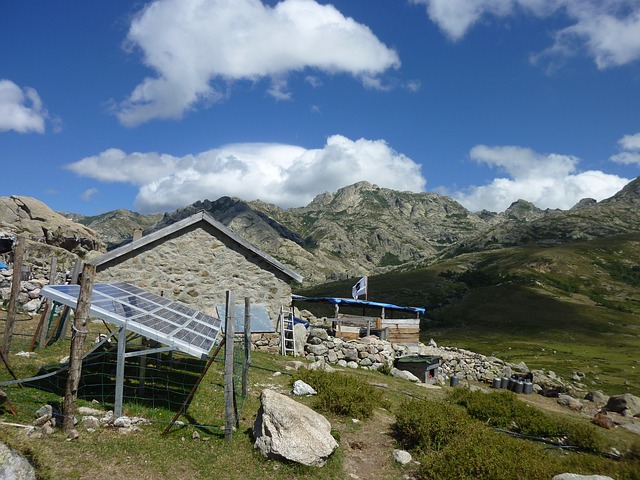
In addition, solar panels can serve not only as photovoltaic collectors of the sun’s energy, but work in a passive way as thermal mass.


The post Utilizing Passive Solar Energy appeared first on Off The Grid News.

Thursday, May 3, 2018

8 Simple Ways To Live Off Grid On Less Watts

8 Simple Ways To Live Off Grid On Less Watts

Image source: Pixabay.com


How often do you take electricity for granted? If you are like I once was, it happens quite frequently.


Often, I would shut off lights and unplug things when not in use, but I still never really took the time to think about what it would be like to go without power — that is, until I spent more than two weeks after a hurricane in just that situation.


I didn’t like it at first, but after a while, it was kind of nice to read with a lantern by my bed or work hard while the sun was up and relax once it retired. I figured it must have been kind of like how life had been for my great-grandparents at one time. I eventually did get into a routine, and it was at this time that I realized just how much the availability of electricity set the tone of my life.


Just last year I had the amazing opportunity to spend several months off the grid in a very remote location. Although the home I rented had a well-appointed solar system and a back-up generator, there were still some things that I had to “get used to.” It took some time to develop a good working relationship with the solar system, and I prided myself on using the generator as infrequently as possible.


Get Free Electricity — That Works Even During Blackouts!


Of course, the amazing thing about going solar is that you can make your system as large as you desire. For me, though, there was some adventure to working with the system that was in place and having to adjust to the solar power rather than taking power for granted.


8 Simple Ways To Live Off Grid On Less Watts

Image source: Pixabay.com


For example, vacuuming was something that was reserved for days when there was ample sun and backup power. We did quite a few things differently while we learned to live on fewer watts, and our off-grid experience was richer for the thought we had to put into preserving the free power from the sun.


Here are just a few of the changes that we made to our off-grid lives that helped us use less watts:


  1. We never took a shower before the sun was up.

  2. We never took a shower when the sun was down.

  3. We only did laundry between 11 a.m. and 2 p.m., and only one load per day.

  4. We went to bed early and got up early (this proved to be most productive).

  5. We used battery-operated lanterns and book lights for evening reading.

  6. We unplugged everything — the coffee pot, the toaster, etc. – when not in use.

  7. We rarely used the microwave.

  8. We never left the TV on, and we used it sparingly.


I think the nicest thing about living on fewer watts is just the lifestyle that it dictates. You become much closer to nature and the rising and setting of the sun and much more aware of your surroundings. The changes that we made did not come naturally, and it did take time to grow accustomed to them. But after a month or so, we were in a pretty good routine and had more than enough power for our day


I am convinced that the time living fully off-grid made me a more resourceful person, and I am anxiously awaiting another opportunity to leave the grid behind again!


How do you use less watts on your solar system? Share your tips in the section below:


Are You Truly Prepared For Blackouts This Year? Read More Here.


The post 8 Simple Ways To Live Off Grid On Less Watts appeared first on Off The Grid News.
Thursday, April 19, 2018

Could The U.S. Rebuild After Major EMP Event?

Surviving an EMP event will present incredible challenges


Of all the potential nightmare scenarios for disaster, an attack by high-altitude EMP (electromagnetic pulse) seems to be the worst in many people’s minds. The potential for destructionof our electric grid is said to have the potential for setting us back, technologically speaking, by over a century; landing us right in the midst of the 1800s. Since we don’t have the knowledge and tools to survive in the 1800s, many of us would die of starvation, if diseasedidn’t get us first.


I won’t argue this position since it originated with the EMP Commission’s report. A report, I might add, which was generated by the country’s top experts in EMP and its effects. These aren’t conspiracy theorists or fear mongers. They are scientists who believe that such an attack could cause the death of between 60 and 90 percent of our population.


The loss of all of our electronics would be a significantloss to society. But that’s nothing compared to the loss of the electric grid that powers all those devices. Electronic devices can be replaced, but losing the electrical generating capability of our nation, as well as the ability to transmit that power to the millions of homes, businesses and other end-use pointsis a much greaterproblem. Even if the power generating stations themselves canbe salvaged, it willtake decades to restore the entire grid.


Of course, this would be a race against time, as the massive numbers of deaths projected by the EMP commission arefor the first year after the EMP. Considering that the lead time to have a substation transformer built is one year, and there are over 55,000 substations in the country, chances are that death would win the race over the restorationof our power.


But I have faith in our country and even more in our countrymen. The people of the United States are known for their innovation, tenacity, “can do” attitude and pioneering spirit. I believe that these are still there, just waiting for the right circumstances to bring them out.


But What About the Grid?


In reality, I don’t believe that the electric grid would be able to be restored in the aftermath of an EMP. Oh, it might be restored 20 or 30 years down the road, but there just isn’t the manufacturing capability available to build all those transformers and everything else that is necessary. At least, not for the whole grid.


On the other hand, I think we’ll see a lot of activity going into restoring electrical service on a local level, for those who are close to power plants that survive. Unsurprisingly, those will be the older plants, which probablyhave control systems that can survive the EMP. There’s also a chance that nuclear power plants will escapemostlyunscathed, as they are built to withstand the effects of an EMP.


The big problem probably won’t be so much producing the power, as it will be delivering it to where it is needed. That’s why I say that restoration of the grid will start out only on a local basis; local power companies areproducing electrical power and providing it to those who are close enough to their operations, that they can use surviving technology to deliver it.


Even this will require some heroic engineering, bypassing existing controls and modifying equipment. But I believe it will be possible. The big question will then be how much fuel those power plants have available to them. Gas-fired plants won’t be able to run, because they won’t have any natural gas. The ones that will be most likely to be made functional will be hydroelectric and coal-fired plants.


So What?


Will that electrical power do any good? That depends once again on the ingenuity of the American people. The consensusis that an EMP will take out all of our electronics, exceptwhat is in Faraday Cages. But what most people forget, is that there are massive Faraday Cages all across the country, filled with electronic equipment.


The Faraday Cages I’m referring to arewarehouses. Most warehouses, except for the really oldones, are metal buildings with metal roofs. As long as the electronics inside them are not in contact with the building itself, which the packaging does an excellentjob of ensuring, they will be protected from the EMP by the building itself.


What won’t be protectedis the inventory control systems, which are all computerized. Since one of the ways that EMP attacks electronics is by passing through electrical wires, we can count on the inventory control computers being fried, along with their electronic records. So people who know what is in those warehouses will have to physically inventory it, and then probably bring the critical equipment down off of warehouse shelving with block and tackle. But it can be done.


With those resources available, engineers and technicians will be able to start restoring technology, opening factories and hospitals and putting people back to work. Again, this won’t be on a nationwide level, but rather on a local level. How much will be able to be restored in any particular area will depend a lot on the resources that are in that area.


From there, the next step will be tobegin trading between neighboring cities. People will have goods to barter and will have things they will need. If the nearbytownshave those things, business will happen.


Of course, the most significantneed will be food. Rural farming communities will be at an advantage, sitting on the most criticalcommodities in the country. The big problem will be in distribution, which will be extremely difficult, without gasoline and diesel to run vehicles.


In Conclusion


While the things I’m saying here don’t diminish the danger of an EMP attack, they do show that there is a possibility of surviving it. Many people will probably still die, especially in the larger cities. Those cities will run out of resources first, causing people to die of dehydration, starvation, anddisease. But smaller communities will have a chance; how much of an opportunitywill depend on the resources they have available to them, and thetechnical knowledge to make use of those resources.


Ultimately, the United States will survive an attack by EMP. Sadly, many of our citizens will die, andthe country that emerges will probably look much different than it does today. If I were to guess, I would say that it would more closely resemble the nationwe were during the westward expansion, with some variation of modern-day technology thrown in. But chaos would become normal, at least for a decade.


In the end, it will be up to those left torebuild this country. You and I, as preppers, are prayerfully planning on being some of those survivors. That said, it might be a good idea for us to plan on being ready to rebuild the country we inherit, when and if that time comes.


Bring your Bible though… we’re going need some rules. A biblical worldview built this country in the Colonial period and gave guidance during the movement West in the 1800s. It will work again. It’s that kind of book.


Monday, December 25, 2017

The Sun Heats His Off-Grid ‘Passive Home’ – Even When It’s 0 Degrees Outside

The Sun Heats His Off-Grid ‘Passive Home’ – Even When It’s 0 Degrees Outside


Although Andrew Michler has been working on his passive house for the past 20 years, he admits it is still very much a work in progress.


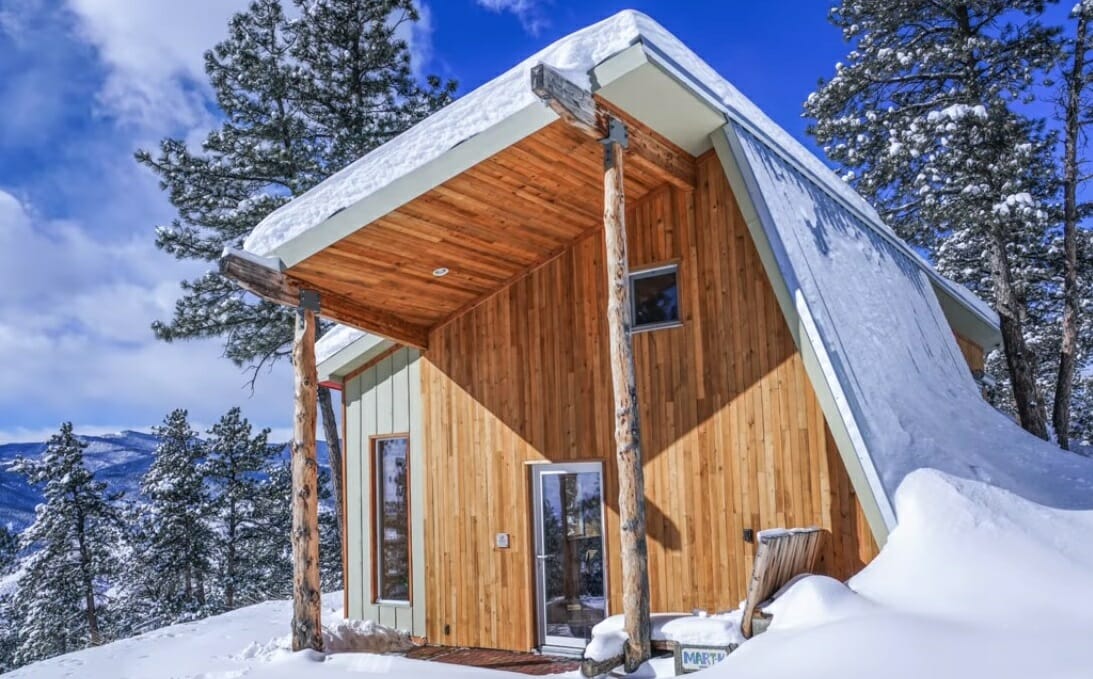
Located one hour north of Denver and offering sweeping mountain views, the off-grid project started 20 years ago when Michler bought what he calls “a solar shack” for $60,000. “It immediately fell apart, and I have been fixing it ever since,” he admits.


Michler is modest; he has rebuilt that shack and a former shed on the property into an impressive Passive House, which is an international term for a building that focuses on reducing energy consumption by as much as 90 percent. The passive heating design allows the house to stay warm – about 62 degrees – when it’s -10 degrees Fahrenheit.


Get Free Backup Electricity — That Works Even During Blackouts!


The idea for the Passive House does not come from builders, Michler explains, but from physicists. “This entire building is designed in a spread sheet,” he says, adding, “This house is essentially a thermal battery bank.”


Bright, inviting and warm enough inside to allow you to stand comfortably in front of a large pane window wearing a t-shirt during a harsh Colorado winter, Michler’s home features a simple wedge shape. Along with a southern exposure and a location nestled on a hillside, the home also is wedged between three trees, which offer it an energy-efficient canopy.


Inside, Michler says he “decided to erase any labels from rooms and make it as much a continuous space” as he could. “The idea of walls is counterproductive,” he explains. “They just make a small space smaller.”


Two children visiting the home during a recent video interview are drawn to a large second level net bed that works as a place to sleep or to play. From the net bed, the kids also climb into a high window ledge that beckons them with a commanding view of the surrounding landscape. “It almost has become a little clubhouse space up there,” Michler says as he watches them.


The home’s doors and windows are designed to be air-tight, and Michler says that when they are shut, the home will hold its temperature for days. “It’s like a big thermos,” he comments.


In the small, tidy kitchen, he has used equipment designed for boats, including the cooktop, the cutting board and the countertops. Flooring throughout the home is 80 percent plywood, a decision he says he was nervous about at first. He says the floor has held up well, however, and he points out how the different grains of the floor boards add character to the bedroom.


When Michler built his outside rainwater catch and filtration system, it was contrary to Colorado building laws. Although those rules have now been modified, Michler laments that restrictions ever existed against harnessing a valuable natural resource in the high desert.


Michler says living off-the-grid as he and his wife do is not for everybody, and he admits that some of his neighbors have given up and moved back to urban areas.


“You have to know yourself to be out here for any length of time,” he says. “But it is not just your relationship with yourself, but also with your landscape.”


“The forest is very dynamic. … There is a rawness in the landscape, and the inside (of the home) contains a certain level of rawness too.”


Would you like to live in this type of house? Share your thoughts in the section below: 

Wednesday, November 1, 2017

4 Alternative & Dependable Power Sources For A Post-EMP Society

4 Alternative & Dependable Power Sources For A Post-EMP Society

Image source: Pixabay.com


The deteriorating situation with North Korea has created a resurgence in interest in the chances of our country’s electrical grid being taken down by an EMP.


Sadly, the EMP Commission, the nation’s only true experts on the effect of such an attack, is being disbanded after 17 years. And this is occurring in the face of North Korea’s official news agency talking for the first time about using a high-altitude EMP against the United States.


Many people have said that if such a thing were to happen and we were to lose the electrical grid, it would put the nation back 150 years – and we’d be living as we did in the1800s. But there’s one major fallacy with that statement: We don’t know how to live like our ancestors lived 150 years ago.


A modern, industrialized society requires power. We get most of that from electricity, but we also depend heavily on internal combustion engines, both gasoline and diesel. While non-computerized internal combustion engines would survive an EMP without problem, the available fuel supply for them will be quickly exhausted and it will probably be years before refineries are running again.


This will leave us with a major problem. I seriously doubt that people will be satisfied with going back to living as if we were in the 1800s or even earlier. We, as a society, are accustomed to our comforts and we will want them back. But to get any of them, we will need some sort of power.


While some of this power will be used to provide for our comforts, the biggest portion of it will be needed to power industry, which will be relegated back to the cottage industry or at least local industry level. Even simple things, like grinding grain and plowing fields, require energy, more than what we can reasonably expect to have with human power. So much of our ability to survive and thrive will depend on our ability to find alternate sources of power.


1. Renewable electric


While the electrical grid will be destroyed by an EMP, that doesn’t mean that all means of electric power production will come to a complete standstill. I imagine that there are some power plants which are shielded from EMP, if for no other reason than they are in metal buildings.


Get Free Backup Electricity — That Works Even During Blackouts!


But that power won’t do us much good, as the distribution network that we need to get that power from the power plants to our homes will be destroyed. Until that can be rebuilt, which will probably take years, it won’t matter if those power plants are working or not.


About the only dependable source of electric power that will survive the EMP will be that which we have in our homes — the solar panels and wind turbines that preppers like you and I have.


2. Animal power


Before internal combustion engines and electrical power took over, animal power was the main motive power used in the world. Horses and oxen were harnessed to wagons and carriages. But they were also harnessed to the windlass in order to provide mechanical power for industry. Grain mills, saw mills and even machine shops were powered by draft animals in this way. It was slower than an electric motor or internal combustion engine, but it worked.


4 Alternative & Dependable Power Sources For A Post-EMP Society

Image source: Pixabay.com


Sadly, the number of draft animals in the United States is extremely low right now, as they are no longer used. The horse population, which was at a high of 25 million a century ago, is currently roughly 9 million, relegated to a few private owners, most of whom use them simply for recreation. That’s actually up about 6 million in the last 30 years.


If you have the land to do so, you might want to consider buying some horses to add to your prepping equipment. Of course, that means more than just having land; you’ll need a barn, feed for the horse, saddles, bridles, harnesses and a host of other horse-related gear, too.


3. Water power


The other major source of power used in the 1700s and 1800s was water power. Waterwheels, which are a quaint historic novelty today, were a major source of industrial power for centuries, right up into the early days of the industrial revolution. Like animal power, water power was used for running a host of different equipment.


The great advantage of water power is that it is free and renewable, assuming you have someplace where you have access to flowing water. That means having property on the edge of a river or stream somewhere — something that most of us don’t have. But if you do, you might want to look into how you could harness that power for your use.


Water wheels don’t work by the speed of the water flowing through them, but rather by the weight of the water in the buckets. This is amplified by leverage, with the wheel itself acting as a giant lever. The larger the wheel and the greater distance the water falls, the more the leverage.


4. Steam power


Other than the waterwheel, one of the earliest means of producing mechanical power was the steam engine. This may very well be one of the best means of power available to us in a post-EMP world. The big advantage that the steam engine has over other forms of power is that any fuel can be used to heat the water and generate the steam.


The U.S. Navy uses nuclear power for this, heating water in a nuclear reactor, which is then used to drive aircraft carriers and submarines through the water. While you and I won’t be able to use nuclear power, we can accomplish the same thing by burning wood. It may not produce as much power as a nuclear reactor can, but it has the distinct advantage of being a power source that doesn’t require a lot of fancy equipment to harvest. Besides, it’s renewable energy, as well.


The trick, of course, will be in building the steam engine in a post-EMP world, with minimal power and equipment to work with. We will probably have to adapt existing equipment to do so. Nevertheless, the steam engine will be one of the best sources of mechanical power available to use in rebuilding industry.


What would you add to our list? Share your thoughts in the section below:  

Wednesday, June 28, 2017

Uncovered FEMA Report Warns: 4-10 Years WITHOUT ELECTRICITY After Major Solar Storm

Uncovered FEMA Report Warns: 4-10 Years WITHOUT ELECTRICITY After Major Solar StormJune 28, 2017


A perfect solar storm similar to one that slammed into Earth in 1859 would knock out the United States electric grid for four to 10 years if it hit today, an unpublished report from the Federal Emergency Management Agency (FEMA) indicates.


The 36-page report was posted this month at GovernmentAttic.org, which uncovers old government documents that often are acquired via Freedom of Information Act requests. The 2010 document was titled, “Mitigation strategies for FEMA command, control, and communications during and after a solar superstorm.”


The storm that hit Earth in 1859 was dubbed the Carrington Event and caught telegraph machines – the most advanced technology of the day – on fire.


Are Your Prepared For A Downed Grid? Get Backup Electricity Today!


Predicting what would happen if that type of solar crashed into Earth in the 21st century, the document says: “Significant power grid collapses may occur in North America and elsewhere; could require 4-10 years to fully restore.”


But even a smaller storm, like the one that hit Earth in 1921, would “could cause large-scale power grid collapse” if it hit today.


The report predicts that Internet, cable TV and telephone service would shut down. Cell phone service also would quickly be lost.


“Approximately 60% of the cellular towers in the U.S. have battery backup only for 2-24 hours,” the report states. “As these towers lose power, large portions of the cellular network will begin to fail. Urban and populated suburban areas are more likely to have cell towers with generator backup with fuel reserves ranging from 1-7 days, depending on location and equipment owner.”


FEMA never published the report, which is dated December 2010. Off The Grid News reached out to an expert on the grid who has frequent contact with government agencies. This person said the report appeared to be legitimate.


“This paper recreates the 1859 event today using the latest research to explain and understand: 1) The nature and effects of radio blackouts, solar radiation storms, and geomagnetic storms; 2) their potential for cascading effects on global power and telecommunications systems; and, 3) the implications for FEMA …in planning for and responding to such an event,” the report reads.


A Carrington-type event would generate massive amounts of energy that would blow out transformers. It is the replacement of these transformers that is of concern to FEMA and other government agencies. Each transformer is custom-made; there are no backup parts. It is not known how many transformers there are in the U.S., but it likely is in the tens of thousands. Each one takes up to two years to build.


“Loss of key infrastructure for extended periods due to the cascading effects from a space weather event (or other disturbance) could lead to a lack of food, given low inventories and reliance on just-in-time delivery, loss of basic transportation, inability to pump fuel, and loss of refrigeration,” is how a 2008 report from the National Academy of Sciences described the aftermath of a major solar storm.


What is your reaction? Do you think America is ready for such a crisis? Share your thoughts in the section below:

Thursday, February 23, 2017

Flashback: The 1998 Ice Storm That Left People Without Power For WEEKS

Flashback: The 1998 Ice Storm That Left People Without Power For WEEKS


When you think of natural disasters that could interrupt the power grid, you probably think of hurricanes, tornadoes and floods. However, it was a massive ice storm that left millions of Canadians and some Americans without electricity and heat for a period of days to weeks in 1998.


Known as the Great Ice Storm of 1998 or the North American Ice Storm of 1998, the huge January weather event was really a combination of five smaller ice storms that struck a narrow geographic band that stretched from eastern Ontario to southern Quebec and Nova Scotia and included a section of northern New York and central Maine. Upwards of three inches of ice fell in some places.


The storm’s wrath killed 35, injured 945 and displaced about 600,000 people. Additionally, the resulting widespread power outage affected 1.4 million people in Québec and nearly 240,000 people in eastern Ontario. The total financial cost of the storm is estimated in excess of $5 billion.


Story continues below video


People were without power for anywhere from several days to several weeks, and, in a few instances, several months, as Canadian workers scrambled to reconstruct the power grid in the wake of the damaging ice. More than 1,000 transmission towers collapsed.


The Weather Channel recently named it the worst ice storm in U.S. history – nearly 80 percent of Maine was without power — although its impact was felt mostly in Canada.


Are You Prepared For A Long-Term Blackout? Get Backup Electricity Today!


To handle the crisis, which included the closing of several main roads, more than 16,000 members of the Canadian military were deployed, the largest peacetime deployment in Canadian history.


Story continues below video


Ice storms are not unusual during the winter in the Lake Ontario and St. Lawrence region, a location where warm low-pressure currents from the Gulf of Mexico encounter cold high-pressure currents from the Arctic. When the two currents collide, warm air tends to rise above the cold air. Then, the resulting precipitation often begins as rain but freezes as it reaches lower altitudes or hits the ground.


Between Jan. 4 and Jan. 10, 1998, however, parts of the St. Lawrence Valley in Quebec received more than twice the amount of icy precipitation they average in an entire year.


Although Kingston and Ottawa received the brunt of the storm, about 2.6 million people — nearly one fifth of all Canadian workers—were either impeded or prevented from getting to their place of employment. Businesses of all sizes in Quebec were severely impacted, and many small communities were completely shut down by the storm.


The storm hit a large location for the Canadian dairy industry. Many dairy cows became ill as the mechanical operations to feed and milk them shut down. To make matters worse, with power out at local milk processing plants, more than 10 million liters (2.6 gallons) of milk had to be thrown away.


Canada’s maple syrup industry also was devastated by the storm, as millions of tree branches were damaged. More than 20 percent of Canada’s syrup-producing tree taps also were disabled or destroyed in the storm, and Québec syrup makers lost most or all of their entire sugar bush. The damage was so severe that it took years for the industry to recover.


As one of the worst natural disasters in Canadian history, the Great Ice Storm of 1998 was the cause of $5 to $7 billion in economic losses, with insured losses from the event reaching $1.6 billion.


Have you ever experienced an ice storm? Share your memories in the section below:


Be Prepared For A Downed Grid. Read More Here.

Wednesday, January 11, 2017

Gov’t Report Warns: Power Grid In ‘Imminent Danger’ Of Cyberattack Impacting ‘Millions’

Gov’t Report Warns: Power Grid In ‘Imminent Danger’ Of Cyberattack Impacting ‘Millions’


Jan. 11, 2017


The U.S. power grid is in constant danger of a cyberattack that could cause widespread blackouts and impact millions of citizens, according to a new 492-page report from the Department of Energy that warns if nothing is done to protect the system, the nation likely will suffer.


“The U.S. grid faces imminent danger from cyberattacks,” the report, released Jan. 6, states. “Widespread disruption of electric service because of a transmission failure initiated by a cyberattack at various points of entry could undermine U.S. lifeline networks, critical defense infrastructure, and much of the economy; it could also endanger the health and safety of millions of citizens.”


The report, titled “Transforming the Nation’s Energy System,” notes that the electric grid in the 48 contiguous states is comprised of 21,500 substations and about 700,000 miles of power lines.


It points to the 2015 cyberattack on the Ukrainian electric grid as an example of what is possible in the U.S. That attack — the “most sophisticated cyber incident on a power system to date” – took out electricity for 225,000 customers “after malicious actors remotely manipulated circuit breakers across multiple facilities.”


Are You Prepared For A Long-Term Blackout? Get Backup Electricity Today!


One problem America faces, the report says, is that while cyberattacks are rapidly evolving, power grid officials are slow to deploy defensive measures.


“This gap is exacerbated by difficulties in addressing vulnerabilities in operational technologies that cannot easily be taken offline for upgrades, and the presence of significant legacy systems, as well as components that lack computing resources to incorporate new security fixes,” the report says.


For a fix to be successful, the report notes, it “must be implemented by the thousands of private companies that own and operate electricity infrastructure.”


“While cyberattacks on the U.S. grid and affiliated systems have had limited consequences to date, attacks elsewhere in the world on energy systems should be seen as an indicator of what is possible,” the report says. “Threats can emerge from a range of highly capable actors with sufficient resources, including individuals, groups, or nation-states under the cloak of anonymity.”


“There’s the weak-link issue for the whole system,” Energy Secretary Ernest Moniz said in an interview, according to The Washington Post. “The reality is, for a lot of rural, smaller utilities, it’s a very difficult job to have the kind of expertise that will be needed in terms of cyber, so we suggest for example, grant programs to help with training, to help with analytical capacity in these situations.”


The economy would “just take an enormous hit” from a successful cyberattack, Moniz added.


Do you believe the power grid is vulnerable to a cyberattack? Do you think President Trump can or will fix it? Share your thoughts in the section below:  


Thursday, January 5, 2017

1 In 8 Chance Of A Grid-Crippling Solar Storm In The Next Decade?

1 In 8 Chance Of A Grid-Crippling Solar Storm In The Next Decade?

Image source: NASA


Jan. 5, 2017


January offers us a time for reflection and prediction. For centuries, people looked to the stars for signs of what is to come, and winter offers many opportunities for stargazing.


As we begin a new year, perhaps it is wise to consider not only the beauty of the sky but also the destructive power it holds.


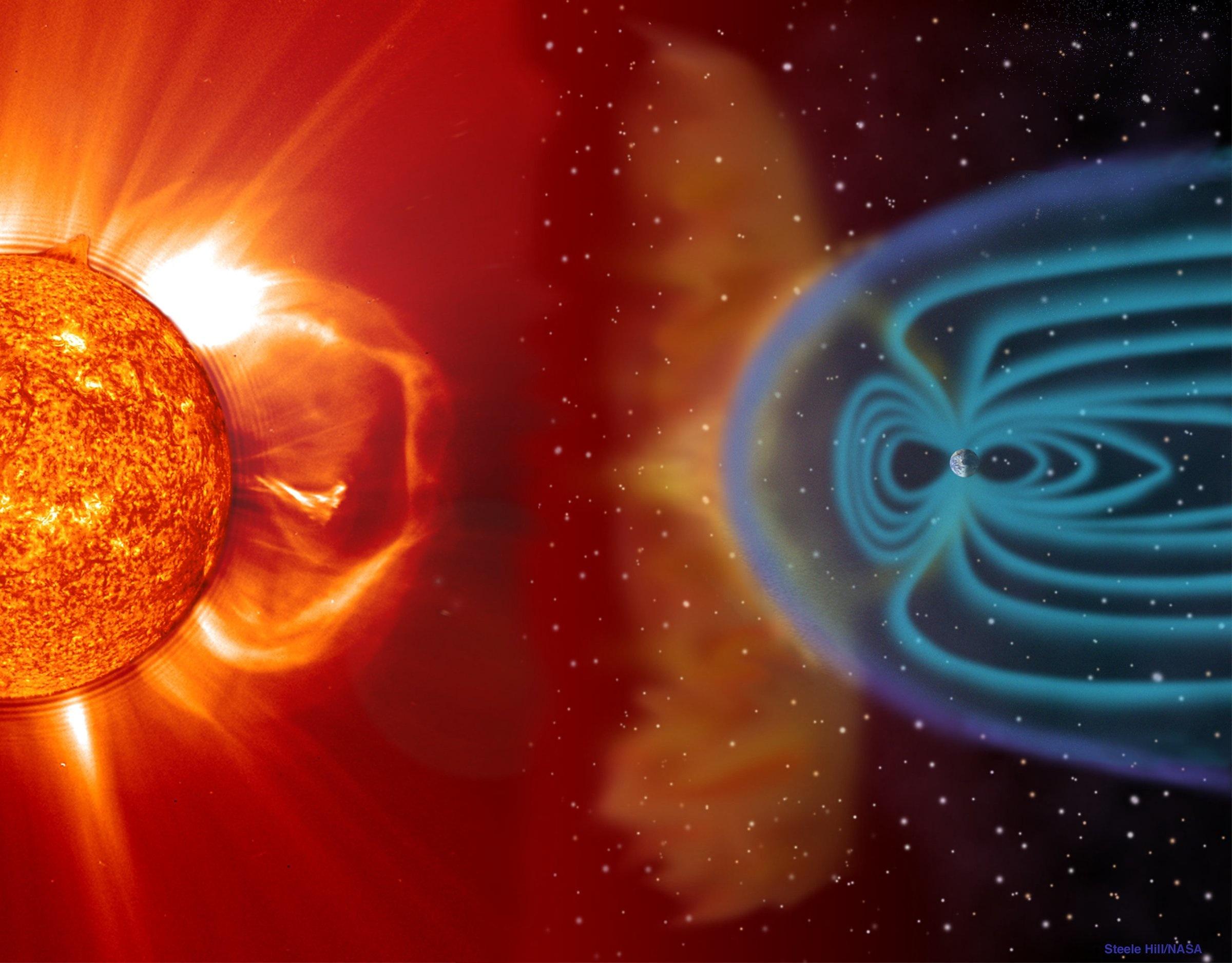
Astronomers pay particularly close attention to solar flares, which are sudden, intense and rapid variations in the sun’s brightness. These fairly common occurrences happen when magnetic energy that has built up in the solar atmosphere suddenly releases.


A solar flare contains high-energy photons and particles that are equivalent to millions of 100-megaton hydrogen bombs exploding at once. While regular solar flares are not a danger to Earth, extreme events, or solar storms, could be catastrophic to our way of life.


Are You Prepared For A Long-Term Blackout? Get Backup Electricity Today!


In fact, according to a study published in the journal Space Weather in 2012, there is a 12 percent chance (or, one in eight chance) that Earth will experience a catastrophic solar event within the next decade. This “megaflare” could disrupt or destroy modern technology, causing trillions of dollars’ worth of damage from which it could take many years to recover.


Space physicist Pete Riley made the prediction in the study by examining historical data and then making comparisons between the sizes and occurrences of solar flares.


Scientists have discovered that the sun goes through 11-year cycles of activity. During the solar maximum phase, the sun is covered with sunspots, and huge magnetic whirlwinds frequently erupt from its surface. Although it is rare, sometimes these flares burst away from the sun, sending massive amounts of charged particles into space.


1 In 8 Chance Of A Grid-Crippling Solar Storm In The Next Decade?

Image source: Wikipedia


The last recorded megaflare occurred in September 1859. Known as the Carrington Event, this enormous solar flare is named for astronomer Richard Carrington, who recorded his observations of the huge solar storm.


Carrington observed an enormous flare erupt from the sun’s surface that sent a particle stream toward Earth at a rate that exceeded 4 million miles per hour. These highly charged particles created breathtaking lights, or auroras, that were visible as far south as the Caribbean.


The New York Times in 1859 reported that New Yorkers gathered to watch “the heavens … arrayed in a drapery more gorgeous than they have been for years.”


Although the lights were indeed beautiful, the Carrington Event caused all kinds of disruption to 19th century communication systems. Telegraph stations caught on fire, and communication outages occurred on a scale never seen before.


In 1989, a geomagnetic storm – not as powerful as the Carrington Event — caused Canada’s Hydro-Quebec power grid to fail, leaving millions of people without power for up to nine hours. A similar storm today would have much more technology to disrupt, and the results would be catastrophic.


Be Prepared: Get The Ultimate In Portable Backup Power!


A megastorm on the scale of the Carrington Event could damage or destroy electrical power grids, disrupt GPS satellites and put a stop to Internet and radio communication.


According to a 2008 report from the National Research Council (NRC), a Carrington-like event could cost up to $2 trillion of damage within a year, and full recovery could take up to a decade.


The NRC report stated that, in addition to communication disruption, the event would adversely affect all aspects of modern life, including transportation, financial systems, government services. In turn, the distribution of water, food and medications would be halted.


In the conclusion of his 2012 report, Riley maintained that it is his hope that his prediction would be useful in building an “infrastructure that can withstand such an event.”


“Since the event occurred only 150 years ago, it is a constant reminder that a similar event could reoccur any day,” Riley wrote.


As we begin a New Year, it would be well if we took his advice.


Do you believe America is prepared for a Carrington-type event? Share your thoughts in the section below:


Are You Prepared For Extended Blackouts? Read More Here.