Showing posts with label native american. Show all posts

Thursday, February 15, 2018

Elizabeth Warren Can’t Stop LYING, Once Again Falsely Claims She Has Native American Ancestry

lizwarren


While many on the right have long claimed that liberalism is a mental disorder, it has, at the very least, been confirmed that at least one prominent Democrat is indeed crazy.


In a literal WTF moment, Sen. Elizabeth Warren (D-MA) has once again directly lied about her supposed Native American ancestry, this time in a speech in Washington, D.C. where she decided to repeat a lie that even President Trump has exposed.


“My mother’s family was part Native American,” Warren falsely claimed in a speech Wednesday to the National Congress of American Indians Tribal Nations Policy Summit in Washington, D.C.


Not content to simply lie to a group of actual Native Americans, Warren went on the laughably lecture them about the “real” Pocahontas, a reference to the nickname given to her by President Trump after it was initially revealed that she had totally made up her claims of Native American ancestry.


“I’ve noticed that every time my name comes up, President Trump likes to talk about Pocahontas. So I figured, let’s talk about Pocahontas. Not Pocahontas, the fictional character most Americans know from the movies, but Pocahontas, the Native woman who really lived, and whose real story has been passed down to so many of you through the generations,” Warren said, apparently unaware of the irony of lecturing actual Native Americans about a topic that she herself is actually lying about.


In May 2012, Breitbart News, along with multiple other, more mainstream outlets, conclusively proved that Senator Warren was directly and purposefully lying about her ancestry.


More than five years ago, in May 2012, Breitbart News reported there is absolutely no credible evidence to support Warren’s false claim of Native American ancestry.


No documents support Warren’s false claim, nor does any DNA genetic evidence back her.


“The New England Historical Genealogical Society, which originally announced they found evidence of Elizabeth Warren’s Native American heritage, said today they have discovered no documentation to back up claims that she is 1/32 Cherokee,” the Boston Herald reported in May 2012.


The Herald reported:


‘NEHGS has not expressed a position on whether Mrs. Warren has Native American ancestry, nor do we possess any primary sources to prove that she is,” said Tom Champoux, spokesman for the NEHGS. “We have no proof that Elizabeth Warren’s great great great grandmother O.C. Sarah Smith [Crawford] either is or is not of Cherokee descent.’”


As Breitbart News reported, Warren does descend from O.C. Sarah Smith Crawford’s husband, Jonathan Crawford, who was a member of the Tennessee Militia that rounded up Cherokee tribe members in the 1830s for the Trail of Tears to Oklahoma.


“You won’t find my family members on any rolls, and I’m not enrolled in a tribe,” Warren conceded, but added, ” I never used my family tree to get a break or get ahead. I never used it to advance my career.”


As Breitbart News reported previously, however, beginning in 1986 and continuing into 1995, Warren claimed that she had minority status in the Association of American Law Schools directory.


Those claims began while she was a faculty member at the University of Pennsylvania Law School and were part of her job application submitted that ended in her hiring on the faculty of Harvard Law School.


Warren also told another false story about her parents, one which Breitbart News debunked more than five years ago.


One has to wonder how on earth Warren expects the American people to believe her about any political topic when she can’t even tell the truth about her own ancestry?

Tuesday, December 5, 2017

Oil Company ‘Man Camps’ in ND Terrorizing & Sex Trafficking Native American Kids and Adults

campsCamps popping up all over North Dakota have been infiltrated by sex traffickers and criminal gangs who are preying on the local native children and adults alike.

Thursday, October 26, 2017

Mother Sues After Video Shows Cop Execute Her Son as He Held a Knife to His Own Throat

castawayA mentally ill Native American man was killed by police as he held a knife to his own throat. The mother of the victim, Paul Castaway is seeking justice.

Tuesday, September 19, 2017

Native American Man Misses Mother’s Last Moments Because Cops Beat Him at Hospital

hospital

Wagner, SD — A family is grieving and an elder Native American man is heartbroken and injured after he was unable to be by his mother’s side as she passed on. The family of Raymond Cournoyer, a 64-year-old Yankton Sioux Tribal Elder, says their father was beaten by police to the point of hospitalization while on his way to see his dying mother and therefore never got to see her. They have the bloody photos to back up their claims.


On Sunday, Philly Cournoyer, the daughter of Raymond was heading to see her dying grandmother with her father when she says they were stopped by police after arriving at the hospital.


“This is what happened to a man that just wanted to say his final goodbyes to his mother,” Philly said.


My father is 64 years old, he has NOT touched alcohol, drugs or even cigarettes in 30+ years. He is an elder and he is respected by so many people in our community. But this was the respect he was shown last night by Wagner Officer Eli Kuhlman.


Philly says her father was rushing to the hospital to see his mother when two officers began following him.


Advertisment


“As he got out of the vehicle he told the officer he was going in to see his mother,” explained Philly. “The officer told him to stop and he said ‘no’.”


Saying ‘no’, according to Philly, led to all hell breaking loose.


Before people condemn the man for saying no to a police officer, put yourself in his shoes for just a moment. Anyone who’s ever had a relative on their deathbed can likely empathize that when you receive that call that he or she is slipping away, your only thought is ‘get there as soon as possible.’


READ MORE:  Good Cops? Slew of Deputies Walk Off the Job After their Sheriff Allegedly Beat Handcuffed Man


Knowing you haven’t hurt anyone and haven’t committed a crime — when two cops try to stop you as you are rushing to see your mom before she stops breathing forever — it is quite easy to let ‘no’ slip out.


So, while saying no was not the best answer to police, their response was far worse, according to the family.


Philly describes what happened next:


The officer pushed him against the car while trying to restrain his arms. The officers proceeded to throw him onto the concrete hitting his face while one officer put his knee in the back of his neck the other officer pulled out his taser and TASED him while he was already being restrained. After handcuffing him they had him sitting on the ground and he couldn’t breath. My father is 64 years old. He was not trying to run, he was simply trying to walk into the hospital and see his mother.


However, Raymond would never see his mother in the hospital before she passed away. To add insult to injury, after they beat him to a pulp, Philly says the officers made them sit there in the parking lot to wait for a chief so they could figure out what they were going charge Raymond with.


After he was handcuffed they made us stand outside for about 45 minutes so they could figure out what to charge him with and even made us wait for the police chief to get there just so he could ask us if we had any questions. They could have at least let him inside to say goodbye and deal with the paperwork afterwards. But they did not.


While they were detained outside, Raymond’s mother, Philly’s grandmother would pass on — never getting that final touch from her son.


READ MORE:  Inform Yourself Ahead of Time: How do I report police misconduct?


The Cournoyer family is now seeking legal representation. Also, the South Dakota Department of Criminal Investigation has confirmed the incident is now under investigation.


Sadly, as TFTP has reported several times, this kind of treatment for people rushing to the hospital is far too common.


What do you think? Were the police justified in their use of force against this 64-year-old man? Sound off in the comments below and let us know.

Friday, September 15, 2017

5 Stealth Native American Skills That No One Else Has Mastered

5 Stealth Native American Skills That NO ONE ELSE Has Mastered

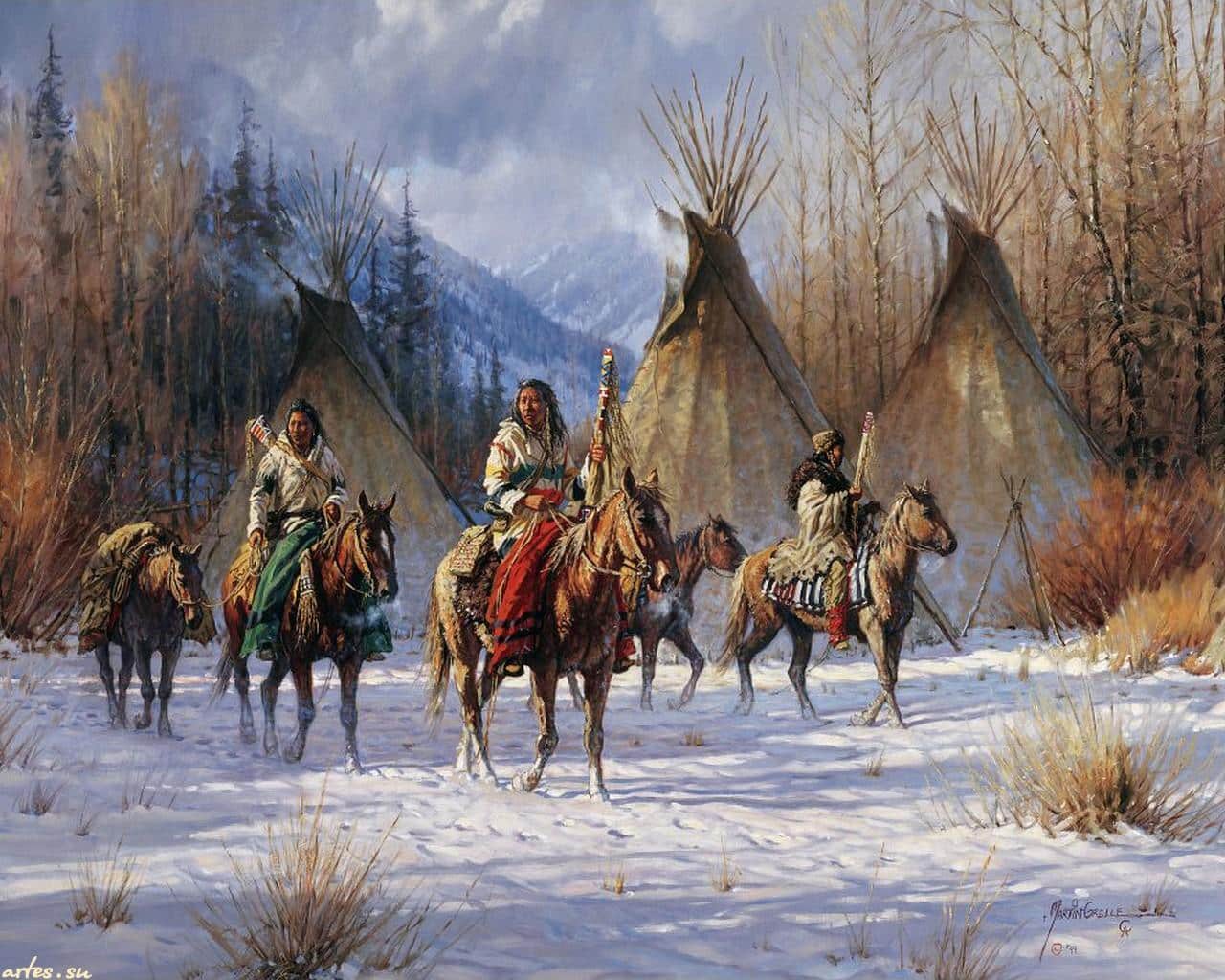
Artist: Martin Grelle


Whether is was a matter of sneaking up on prey to catch their next meal, sniffing out enemies who might be nearby so that they could be avoided, or planning a sneak attack on enemies, one of the most notable skills that native people had was stealth.


When Europeans came to the New World, they were often amazed at how native people seemed to be able to walk through the woods almost without sound. When you consider the amazing hearing of most animals, it makes you wonder just how hunting parties managed to get close enough to their prey to make a kill!


In the times before the white man walked in the New World, there were no telescopes, no long-range rifles, no binoculars. How did native people manage to get so close to game and avoid their enemies?


1. Walk silently


It seems backwards to most of us, but indigenous tribes know that walking silently means walking toe to heel, not heel to toe. The native way of walking was to take smaller steps (no more than three feet or so) and place the toes on the ground first. The weight of the body should rest on the back leg. This allows you to check the noise value of the ground you are about to step on. This way, if there is a twig hidden under leaves, you will feel it with your toes before it makes much of a sound. This enables you to change your footing, if needed.


If the ground under your toes appears (and sounds) like a quiet step, you can now put your heel on the ground and transfer the weight to your front leg. Once your toes are on the ground, roll on the outside of the foot until your heel is firmly in place.


Discover The Secrets Of The Word’s Top Survivalists!


This is the exact opposite to how most of us walk, and it will take some practice if you hope to acquire this valuable skill. Practice on a wide range of surfaces. Once you think you have the hang of it, get a friend to turn their back on you, while you sneak up behind them. See if they can hear you or if they can tell when you are within “attack” range.


2. Be ultra quiet


While walking toe to heel is considered to be the main stealth skill, there are other things that matter. For example, no matter how silent your feet might be, if you are singing, talking, whistling or even breathing loudly, you will be heard! This is one reason why native people learned the songs and whistles of native birds. They could signal one another with natural sounds that few would suspect.


Being aware of noise makers on your person is another factor to consider. Your equipment, shoelace ends tapping on your shoes, nylon pants rubbing against your legs, a clanging water bottle or rifle, all make noise that, while it might not be much, will sound like a trumpet in the quiet of the woods.


3. Watch your posture


Most people walk with their backs hunched forward and their heads up. This will naturally put most of your body weight on your front foot, which you don’t want. Learn to bend at the knees and keep yourself as low as possible while still keeping the upper part of the body erect. Yes, this means leg strength, so you might want to consider doing more squats to increase the strength of your thigh muscles.


5 Stealth Native American Skills That NO ONE ELSE Has Mastered

Artist: Frank Holloway


While you are bending at the knees, keep your hands and arms at waist level. Use your hands (palms down) to balance and further help distribute your weight. In the dark, or even in places where the light level is very low, this can help you avoid smacking low tree branches. Picture the form: knees bent, torso erect, hands spread wide between rocks or trees. This is the perfect position to pounce upon unsuspecting prey or move quickly if you are suddenly ambushed.


4. Breath differently


If you have ever watched a horror film and watched someone find a great hiding space, only to give it away with their labored breathing, you will find that this is a true fact, not just a movie stunt.


Of course, you need to breathe, but be aware of how loudly you are breathing. Many people find that they can breathe more quietly with their mouth open.


Another trick that indigenous people used was not staring directly at the person or animal until they were within range and ready to attack – believing that humans and animals could sense, somehow, that someone is watching them.


If you are not in a position to shoot or if you simply want to avoid being seen and your prey looks at you or even in your general direction, do not assume you have been spotted. Freeze right where you are. Eyes will quickly catch movement, but objects that are stationary, not so much.


Depending on your skin tone and what your purpose is, you might want to consider the lighting. This is why most native people painted their face and upper body (even their horses) with streaks of black and dark red. This helped them appear more like shadows. If you have very light-colored skin and will be in a low-light area, you might want to cover it with some streaks of dirt. While an animal might not recognize a shadow, a person surely will. Be aware of your position in the sunlight to avoid projecting a human shadow. Many native tribes tried to keep the sun on their back as they knew that most animals, and people, will turn their faces away from direct sunlight.


5. Check the wind


While you most likely could not smell a deer or a person (unless that person was using perfume or lacked deodorant) until you were almost upon them,  almost all animals have a better sense of smell than you. If the wind is chasing your scent directly to your prey, even an average deer can smell you coming from half a mile away! All the stealth in the world won’t help if your prey can smell you coming.


What Native American stealth skills would you add? Share your knowledge in the comments below:


Learn How To ‘Live Off The Land’ With Just Your Gun. Read More Here.

Wednesday, August 23, 2017

Yale To Remove 88-Year-Old Carving Of Puritan Pointing Gun At Indian

Yale To Remove 88-Year-Old Carving Of Puritan Pointing Gun At Indian

Image source: Yale


Political pressure has forced authorities at Yale to remove a doorway carving because it depicts a Puritan with a gun.


Temporary stonework will cover a carving of a Puritan colonist pointing a musket at a Native American, the Associated Press reported. The carving itself will eventually be removed because it was labeled “problematic.”


It will be put in an historical display on campus – something Yale’s president emphasized.


“We cannot make alterations to works of art on our campus,” Yale President Peter Salovey said in a statement. “Such alteration represents an erasure of history, which is entirely inappropriate at a university. We are obligated to allow students and others to view such images, even when they are offensive, and to study and learn from them.”


Put God Back Into History And Teach Your Kids What They Won’t Learn Anywhere Else!


The carving has been on display over the entrance to the Sterling Memorial Library at the Ivy League School, in New Haven, Conn., since 1929. Yale’s Committee on Art in Public Spaces chose to cover the carving during renovations last year after faculty and experts concluded it depicted warfare and colonial violence against Native Americans.


Yale maintained it was not censoring history, as some critics claimed.


“Covering over the problematic aspect of this carving is not consistent with the principles subsequently adopted by the university,” a Yale statement said. “Therefore, when the carving is relocated, the covering stonework will be removed.”


What is your reaction? Share your thoughts in the section below:

Wednesday, July 19, 2017

8 Healing Uses For Mullein (The Native American ‘Survival Weed’)

8 Healing Uses For Mullein (The Native American ‘Survival Weed’)

Image source: Pixabay.com


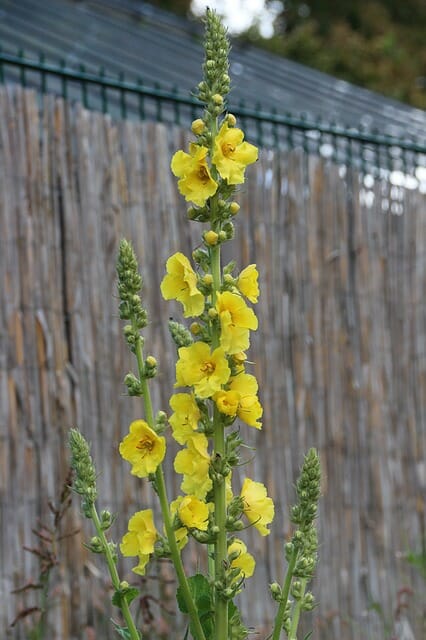
It was native to Europe, northern Africa and Asia, and then was introduced to the Americas and Australia. You might know it by some of its other common names, such as feltwort, blanket leaf, candlewick and velvet dock.


It is Mullein, a common backyard weed the Native Americans used. And it has surprising medicinal properties.


Identifying Mullein


Mullein can grow, when left alone, up to seven feet tall, with large leaves covered in silver and felt-like hairs. Once blossomed, the flowers are yellow and take up half of the stem. The plant flowers from November to March. Most people consider it a nuisance, but there is so much more to the plant!


Medicinal Purposes of Mullein


For a plant that typically shows up in dry, barren places, mullein has impressive medicinal properties. You can use most of the plant, including the root. The leaves and flowers are the most common parts used. Infused oils, tinctures, capsules, lozenges, herbal teas and poultices are all common application methods for mullein.


Make Powerful Herbal Medicines, Right in Your Kitchen!


For centuries, people used mullein in herbal remedies, such as to soothe the respiratory tract. But it can do so much more.


1. Flu. Preliminary research shows that mullein has properties to fight flu-causing viruses. Of course, the flu can be dangerous, so seek medical help if you experience worsening symptoms.


8 Healing Uses For Mullein (The Native American ‘Survival Weed’)

Image source: Pixabay.com


2. Pain. Mullein has analgesic properties that have a numbing effect on your nerves. It is a great choice to stop transmitting pain to the brain. Toothaches and headaches can be relieved with mullein.


3. Inflammation. One of the main benefits of mullein is its anti-inflammatory properties. You can use it to treat nasal or respiratory tract inflammation, inflammation of the digestive system, and inflammation caused by fever or infection. If you experience a burn, try to apply mullein oil directly to the burn or inflamed skin.


4. Ear infections. Do you or your children experience chronic ear infections? Mullein oil can reduce ear pain significantly; make an infused oil, which taps into the antibacterial properties.


5. Coughs. If you have a cold or upper respiratory infection that causes excess secretions of phlegm, then mullein is an excellent expectorant. You can make lozenges that contain mullein or find them in your local health food store. Some Native American tribes believed mullein could cure chest diseases. For example, the Navajos would mix mullein with tobacco and smoke it to help with coughing spasms. I wouldn’t recommend that, but many people still use mullein in an herbal tea for coughing.


6. Relax/sleep aid. Mullein has a relaxing effort on your brain and other bodily systems. You can use it to treat muscle cramps, nervous disorders, stress, anxiety and more. Because of its relaxant properties, mullein also reduces blood pressure. Many people use mullein to help with chronic insomnia. If you need a good night’s rest, then try drinking a warm cup of mullein tea.


7. Hemorrhoids. No one likes hemorrhoids. A poultice created with mullein leaves can be applied to hemorrhoids to help stop the swelling and irritation.


8. Respiratory issues. In general, one of the most common applications of mullein is for respiratory issues. Asthma, bronchitis and allergies can be treated with mullein tea. It also is effective against sore throats, as well as the other listed issues such as coughing and spasms.


Have you ever used mullein for any herbal remedies? Let us know in the comments section below!

Wednesday, May 10, 2017

Arnica: The Secret Native American Pain Reliever

Arnica: The Secret Native American Pain Reliever

Image source: Pixabay.com


There are many herbs in the world that can be useful when used appropriately. Misuse however, can lead to illness and even death. Arnica is such a plant.


When used appropriately, arnica can be a powerful medicinal. However, it also can cause severe liver damage if used under the wrong circumstances. For example, arnica should not be used internally. Ingestion can lead to gastroenteritis or cardiac arrest due to helanin poisoning. When it comes to wild harvesting and the preparation of medicinal plants, it is always a good idea to bring along a high quality guide book for identification and to work under the supervision of a more seasoned guide and mentor.


Now that we discussed that little piece of wisdom, I think it’s safe to move our conversation into all the ways that arnica is special.


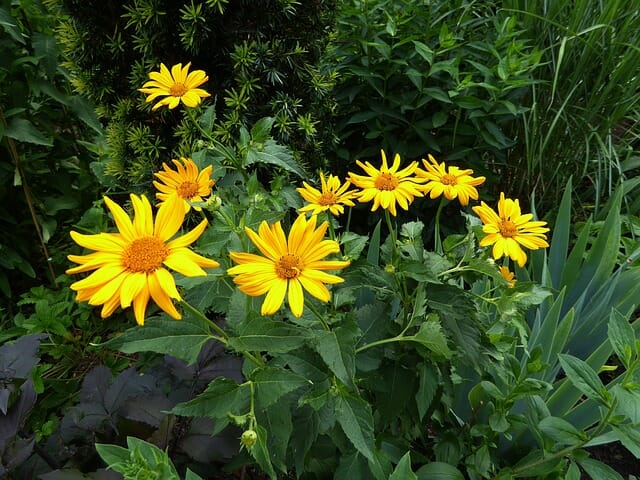
Arnica is a perennial aster that is part of the sunflower family. There are more than 30 species of arnica. Of these 30 known species, two are most commonly discussed for medicinal use — one that is endemic to Europe and another that makes its home along the mountainous regions of the United States and Canada.


Fast, All-Natural Pain Relief With No Nasty Side Effects!


The European arnica is known as Arnica montana, and the North American counterpart is Arnica chamissonis. Arnica cardifolia (heart leaf arnica), another sub-species of North America, can be found as far east as Ontario and Michigan. They are all fairly similar in appearance. Other than its value for medicinal purposes, arnica is also an exceptionally beautiful wildflower. Even if you never use it as a remedy, it is still worth admiring for its brilliant golden hue, delicate bright green leaves and its ability to spread into dense clusters within the dappled sun of a western confer forest.


Arnica’s Uses Throughout History


Arnica: The Secret Native American Pain Reliever

Image source: Pixabay.com


Arnica has been used as a medicinal herb in Europe and North America for hundreds of years. Several Native American tribes used the roots to prepare a tea that would aid in the alleviation of back pain. Some of the first recorded European folk remedies date back to the early 16th century. Arnica was used as a preparation for black eyes, sprains and minor contusions. Although ingestion has been shown to cause severe liver damage, topical applications have proven to be effective at aiding the healing process for strained muscles and minor injuries. When used as a tincture or as a compress, arnica is known for its ability to stimulate blood flow. This helps to reduce pain, alleviate swelling and it aids in the healing of bruises and hematomas. Arnica also increases the rate of tissue regeneration.


The most commonly collected parts of the arnica plant are the flowers. Arnica typically blooms between June and August, depending on the altitude and availability of water. Blossoms should be gathered when fully open and can be used immediately for fresh use or dried for later use. The best temperature for drying arnica blossoms is between 70 and 95 degree Fahrenheit. Once dried, blossoms should be stored in a clean glass container away from direct sunlight. It is best to use the blossoms within 12-18 months of harvest.


Arnica blossoms can be used in the preparation of salves and tinctures. Ingestion of arnica can be fatal, and the overuse of concentrated essential oils is to be avoided. Some homeopathic preparations have been approved for internal use but should not be attempted without proper guidance.


Arnica cannot tolerate trampling or excessive foot traffic. For this reason, it is advised that wild crafters should be mindful of the delicate nature of arnica and not over-harvest it. The good news is that Arnica is relatively easy to propagate.


Arnica thrives in soils with an acidity of 6-7 pH and can tolerate full sun to partial shade. If enough water is available, it also can thrive in poor soils with high acidity. For these reasons, it can be an ideal plant to work into a home garden. The easiest way to propagate arnica is by collecting seed or by dividing the roots. The best time for division is during early spring. Seeds can be started indoors and transplanted out at any time. Some species of arnica are hardy to cold weather, while others are better suited to a milder zone 6 climate. The best place to plant arnica is in your herb garden, but it also can be used as a seasonal bedding plant (although its bloom time is relatively short-lived).


In closing, if you are not familiar with arnica, it is definitely a plant of value worth knowing. By protecting the wild and scenic places in this world, we also protect one of our greatest aesthetic and medicinal resources — our native herbs and flowers.


*This article is for informational purposes only and is not intended to diagnose or cure any particular health condition. Please consult with a qualified health professional first.


Have you ever planted and used arnica? Share your tips in the section below:

Monday, February 6, 2017

Forgotten Skills That Helped The Native Americans Survive Winter

Forgotten Skills That Helped The Native Americans Survive Winter

Artist: Robert Duncan


Most of us head indoors and turn up the furnace when frigid weather hits, stacking in a good supply of wood for the stove or plugging in the old electric throw blanket — and praying that the power doesn’t go out!


For the native people of this land, however, they had none of those luxuries. Have you ever wondered just how the heck they stayed warm when it was dangerously cold? During blizzards and ice storms? Were teepees and other shelters really that warm?


Of course, there could be causalities during severe weather. You can’t help but picture the people who went outside to attend to nature’s call, only to find themselves half frozen within minutes, or lost in a driving snow.


Let’s take a look at how the indigenous people of this land not only survived during the harshest winter weather, but actually looked forward to it as a time to stay indoors, sleep, rest, spend time with family, and get caught up on chores.


An Ounce of Prevention


One way that native people prepared for harsh storms was forecasting them. Generally speaking, there were always one or two elders who seemed to have a knack of understanding that, for example, if the wind was bringing clouds from the north, it meant a blizzard, if from the east, it would bring snow, but nothing too harsh. Thin clouds meant cold weather. No snow and a ring circling the moon meant it would rain within 24 hours.


Get The Essential Secrets Of The Most Savvy Survivalists In The World!


It also helped to observe animal behavior. For example, woodpeckers sharing one tree or one nest meant a harsh winter was coming. It is also said that when muskrats made their holes high up on the banks of rivers, lots of snow was on the way.


In the far north, the elders looked for bright spots that appear on either side of that cold winter sun. An old saying was that those spots were fire, which the sun had made to warm its ears. This was a sign which meant a severe cold snap was coming quickly.


Forgotten Skills That Helped The Native Americans Survive Winter Native people were well aware that being caught without proper provisions during the winter would almost certainly mean death — so they prepared themselves accordingly.


When Caught Unaware


Literature has painted Native Americans as some sort of “magic” people who knew everything about nature, but the truth is that they were humans who made mistakes. This is especially true of young couples sneaking away for a little tryst, or young men trying to prove their bravery.


Sometimes, indigenous people were away from camp when a snowstorm or blizzard struck.  In these cases, stories of survival are almost all the same: People sought shelter quickly, made a small fire, tried to stay warm and wait it out. Shelter was the foremost concern, and it would take the shape of hollowed-out tree trunks, caves, rock outcroppings, even a quick lean-to made from branches, a tree and some snow.


Anything that would burn would be collected as quickly as possible, including horse or cow dung, pine cones, old pine needles, small branches – basically, whatever was dry. By surrounding the fire with rocks, they could radiate heat into the shelter.


If you were with someone else, you could share body heat. Natives would wait out the storm by sleeping as much as possible near the fire. It’s an old wives’ tale that people who fall asleep in the cold will never wake up. When you are cold enough, your body will wake you up to let you know!


Protect the Body


Next to the fire, your most precious asset is your own body heat. Native people considered their body as a natural fire that they never wanted to squander or allow to go out.


For the indigenous people, this meant never sitting directly on the ground, but instead perching themselves on furs or rocks near the fire that were covered with hides and fur. The Eskimo people were known to tie dried loon skins, including the feathers, to a rope, which they wore around their waist, similar to an apron. This was not only an extra layer of warmth, but if they were out and about, they would turn it around so the skins were lying on their buttocks, giving them a natural buffer between their fanny and a cold rock!


Native people kept their body fire protected by layering clothing. Better to remove clothing if you became too warm than to be caught in a snow storm wearing just a breechcloth!


Making the Cold an Ally


Of course, native people had many ways of dealing with the cold over the years that are no longer useful to us in modern times. Many tribes were nomadic and simply moved south along with the migrating birds. Other tribes used longhouses, where almost everyone in the tribe would spend the winters together in close quarters, their combined body heat making the interiors warmer.


Native people were known to cut wood when it was well below freezing. Why? Not only were they kept warm through the effort, but wood at 30 below (Fahrenheit) splits very easily!


Perhaps one of the best secrets of the indigenous people was that they saw the cold as a living thing that deserved respect. They did not try to prove how long they could stay outside in an ice storm. Native people believed that cold was a spirit that had great power worth of respect and attention.


Do you think you could have survived as a Native American in frigid weather? Share your thoughts in the section below:


Learn How To ‘Live Off The Land’ With Just Your Gun. Read More Here.

Thursday, November 10, 2016

How Did Native Americans Keep Time Without A Watch (Or Calendar)?

How Did Native Americans Keep Time Without A Watch (Or Calendar)?

Artist: Patrick Rahming


In today’s modern world, it is easy to tell time. There are clocks on buildings, billboards, cell phones and microwave ovens. Then there’s the old-fashioned grandfather clock in the hallway.


But what if you didn’t have a watch? What would you do then?


And if you didn’t have a calendar, would you know when winter was coming? When it was the appropriate “time” to plant? To harvest? How old you are? How long would it take for you to “forget” to mark down a day or several days, or several weeks, thus obscuring even your age?


Native people had certain signs that they relied on and they actually had a very good sense of “time” — even though it differs from what we would consider time today.


White Man’s Time Clock


For many tribes, the clock – the one the Europeans used and brought to America — was a strange thing that was not easily understood. Some tribes thought that since the clock moved on its own and that it sometimes made sounds, it was a living thing.


Get The Essential Secrets Of The Most Savvy Survivalists In The World!


The simple truth here is that indigenous people considered time to be a part of the natural cycle of life. The belief was that there was a correct time or best time for everything and that nature itself would send the signal to let a person know when that was. A clock, divided into so many tiny fragments, seemed ridiculous and inconceivable to them. What difference could it make if one planted corn on this side of the 12 or that side of the 12?


A popular meme says that when an old native person was told about daylight saving time, he shook his head and said that only a white man would think he could cut off the bottom of a blanket, sew it to the top of a blanket, and then think he had a longer blanket.


Time Signals


Before European contact, indigenous people found that nature imparted a natural order and rhythm to their lives. Sunrise and sunset marked the typical day, with the noon sun being the dividing part between morning and afternoon.


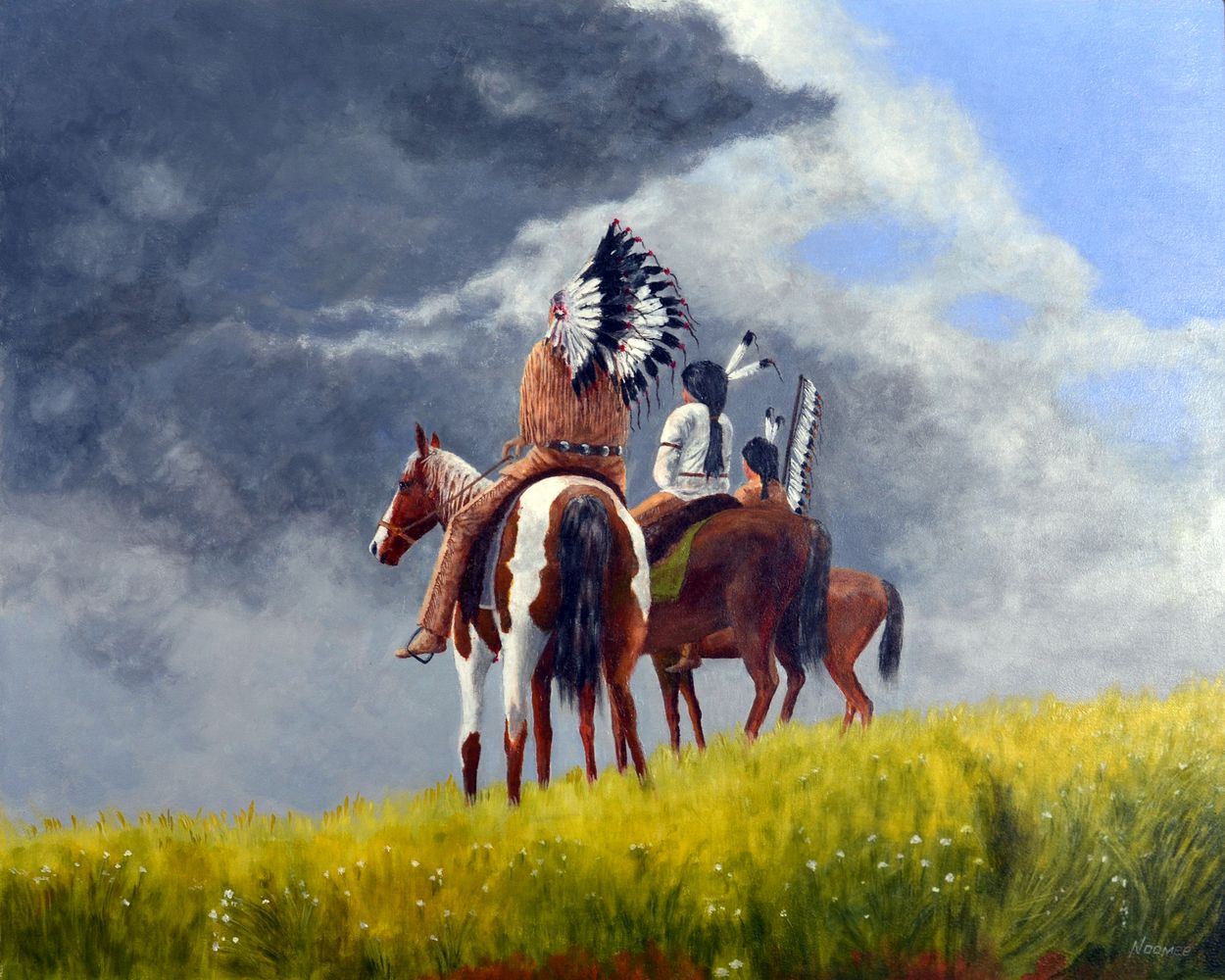
Almost all tribes had some sort of marker for the spring/summer/fall/winter equinox. For the Pawnee, they knew that when the sun rose over a particular crest on Corn Mountain, it was time to hold their Thunder ceremony. The Bighorn medicine wheel told the Lakota when to travel to meet with others for their annual Sun Dance, which is held in and around the summer solstice.


Many tribes simply assigned names to certain seasons or months to keep track of how old a person was. The exact day was of less importance to native people than the time of the year. For example, according to the Lakota, if you were born in the time of trees popping, you were born sometime in late December through January. Native people felt this was distinction enough.


How Did Native Americans Keep Time Without A Watch (Or Calendar)?

Artist: Michael Gentry


Native people also had a tendency to measure by nights, rather than by days. Indigenous people would say they traveled for “x” number of moons rather than by days or suns. Some tribes also used “moons” to indicate months. For example, March would be called the Moon of Sap Running by the Lenape.


Still other tribes marked their time through winter counts. Regardless if you were born in June or December, you were born in the “Winter of Four Crows Killed.” Usually some important event would mark the end of the year, which the entire year was named for. You could be born in May and you would still refer to your birthday as the Winter of Four Crows Killed.


Hunting, Planting and More


The natural cycles of nature also helped to organize task-based plans. For tribes who planted crops, they used signals such as the size of oak leaves to let them know that it was time to plant. The Crow tribes knew that when chokecherry trees blossomed, it was the right time to plant tobacco. Snow deeper than the ankle was a sign to most tribes that long-range hunts were finished for the year.


New Solar Oven Is So Fast It’s Been Dubbed “Mother Nature’s Microwave”


Tribes that planted crops often used that cycle as their means of telling time. For example, they might remember that they were born when the corn was gathered or that they were married with the flower buds of the squash.


Spring equinox compelled West coast people to travel to the sea to catch sardines or to gather shellfish. After a few weeks, they knew it was then time to move back inland to collect acorns, grasses and other nuts or seeds.


Water collection, or knowledge of where one could obtain water, was crucial to many Pueblo tribes. Many tribes stored water in clay pots and then buried them in the ground for later use. How would you know when it was time to collect water from the remaining pools if you did not know what season it was or how long it would be before the rains would come again? Most Pueblo tribes used a calendar stick to mark time. One person would mark off each sunrise on a stick, 30 days per stick. Each stick was saved until there were 13 sticks. Their lunar cycle was one of 13 months to a year. In this method, they knew, almost to the day, when the rains would start and how many sticks they had to make their water last.


Sometimes, it seems as if native people still run on “Indian time.” If you have ever attended a powwow and saw that the Grand Entry was supposed to occur at noon, but didn’t actually happen until 1:30, you have experienced “Indian time.” The hour or minute was, and in some cases still is, of little importance. Did the job get done properly? Then it was a job well-done — and done in perfect time.


Have you ever had to tell time without a watch? Share your tips in the section below:


Learn How To ‘Live Off The Land’ With Just Your Gun. Read More Here.

Monday, October 24, 2016