Showing posts with label native. Show all posts

Saturday, September 23, 2017

24 Little-Known ‘Miracle Plants’ The Navajo Used For Medicine

24 Little-Known

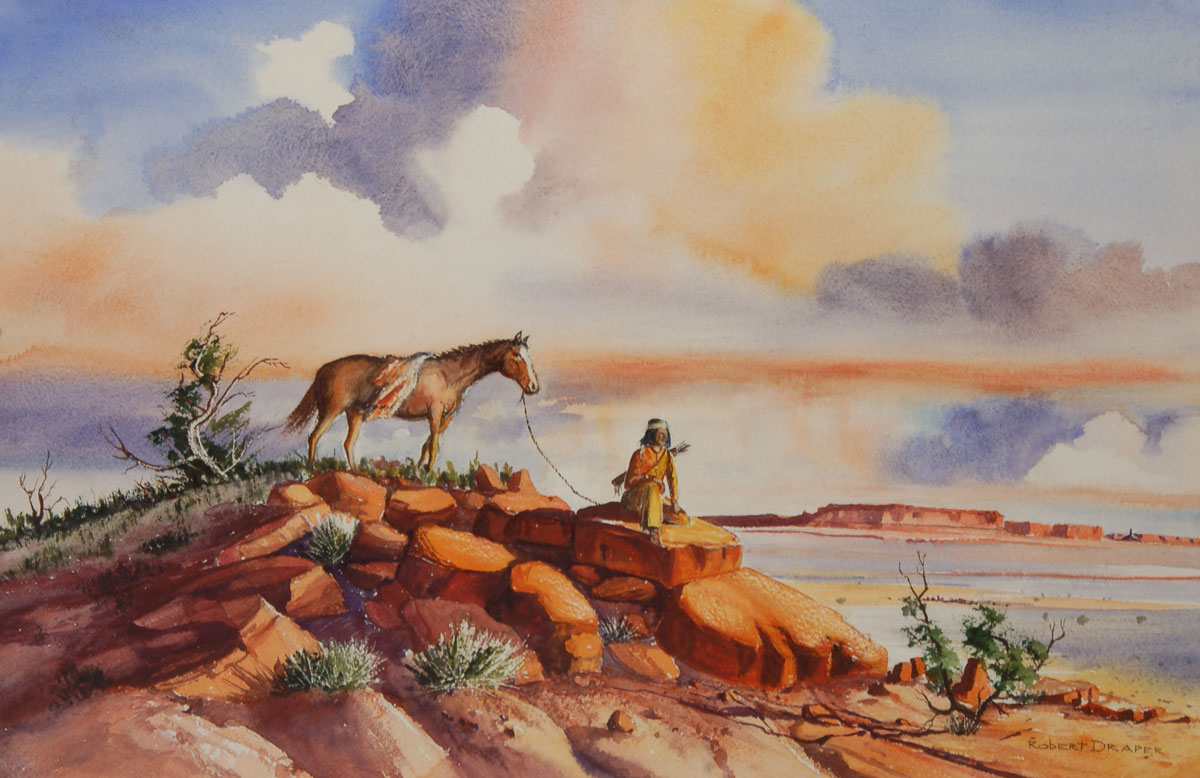
Artist: Robert Draper


Anyone interested in living off the land or wishing to prepare themselves for a crisis would be wise to study some of their local plants.


Native people had an extensive knowledge of which plants, and which parts of the selected plant, were valuable for certain health problems.


In this article, we are going to look at some of the little-known medicinal plants that were used by the Navajo nation. Even though they lived in what we would consider desert or areas filled with nothing but “scrub brush,” the Navajo found some of the best and most powerful medicinal plants in their region.


Remedies for Headaches, Coughs, Fevers, Mouth Problems


1. Lichens – Pulled from rocks or trees, these were chewed to stop mouth pain, canker sores, and sore or swollen gums.


2. Purple loco weed (oxytropis) – The leaves are crushed and boiled, then the steam inhaled to open up airway passages and ease breathing.

24 Little-Known

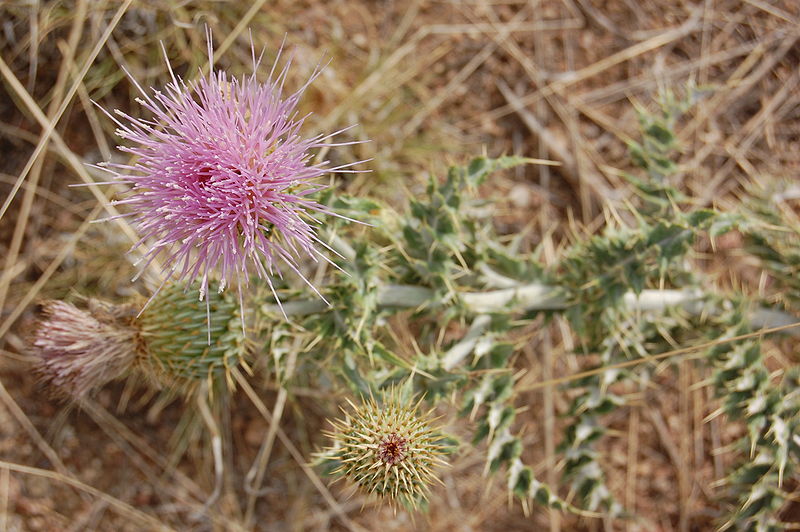
Thistle. Image source: Wikimedia


3. Desert thistle – Used to stop the chills and/or fevers. Commonly given in tea form.


4. White horehound – This was used as a tea for coughs and sore throats.


Fast, All-Natural Pain Relief With No Nasty Side Effects!


5. Snake weed – Despite the name, this was not used for snake bites, but for headaches. Unlike other plants, this one was used externally by placing wet leaves on the forehead. Some people refer to this as broom weed or broom snakeweed.


Remedies for Diarrhea, Stomach, or Digestive Problems


6. Indian paintbrush (castilleja) – Used for most common stomach problems, including stomach aches, cramps and indigestion. Many tribes referred to this as the prairie fire plant. The flowers are very sweet and tasty, although other parts are not edible.


7. Indian hemp (Apocynum cannabinum) – While this relative to cannabis cannot be consumed, the roots were boiled to make a tea to treat intestinal worms and stop dysentery.


8. Antelope sage – The root of this plant was brewed into tea to stop general stomach pain and cramps.


9. Sand verbena – Sometimes called desert verbena, the leaves and flowers were consumed in tea form to stop stomach cramps, as well as to make a general, soothing tonic.


Remedies for Women


10. Greasewood – A tea made from the leaves of this plant was thought to make childbirth quicker and easier for the mother.


24 Little-Known

Silkweed. Image source: Wikimedia


11. Silkweed – Consumed as a tea, this plant is a general tonic used after giving birth.


New ‘Survival Herb Bank’ Gives You Access to God’s Amazing Medicine Chest


12. Bushy bird’s beak – Flowers and leaves were often brewed as tea to stop or shorten the menstrual cycle.


Remedies for Skin Issues and Wounds


13. Artemisia – This plant is used for burns, boils and other types of skin wounds.


14. Spurge – While spurge can be eaten, it was also used as medicine. Spurge was ground into a paste and rubbed on the skin to stop acne or other types of skin problems.


15. Green briar – The leaves of this bush were beaten into a paste, and then applied to sores, burns or open wounds. Fresh leaves were then wrapped over the poultice and used as a type of bandage.


16. Orange agoseris – Leaves and flowers were pounded into a paste and applied to most wounds to stop infection and speed healing. Most common uses were for serious injuries, such as knife or arrow damage.


17. Blue corn – Corn played a vital part in the life of most Navajo. Besides being consumed as food and used in ceremonies, blue corn was used to cleanse and purify the skin. Ground blue corn, which is more coarse than yellow or white corn, was a natural exfoliator, which encourages the growth of new skin by removing dead skin cells.


General Tonics, Antiseptics and Other Remedies


18. Sage or sagebrush – While this plant tends to give many people hay fever, for the Navajo, the leaves and flowers were made into a tea, which served many purposes. This tea was used as a treatment for diarrhea, as an eye wash, as an antiseptic for disinfecting wounds, and as a hair wash. People once said, “Those who drink sage tea never grow old.” This is because rinsing hair with a strong sage tea acts as a dye, keeping the hair black.


Just 30 Grams Of This Survival Superfood Provides More Nutrition Than An Entire Meal!


24 Little-Known

Hawkweed. Image source: Wikimedia


19. Hawkweed – This plant is a close relative of dandelions, so it is no wonder that the Navajo used it as a natural diuretic. All parts of this plant are edible and can be eaten; however, it is most commonly consumed in a tea form.


20. Red juniper – The inner bark of this type of juniper was rubbed onto the hair and scalp, stopping most kinds of dandruff and itchiness.


21. Yucca – Also known as soap weed, the leaves of the yucca plant were pounded into a thick paste, and then rubbed on the hair and scalp. This acts as a natural type of shampoo, removing grease and dirt from the hair.


22. Horseweed – This was a general, all-around good tonic that was used for many ailments, including stopping diarrhea, and as a diuretic and astringent.


23. Yellowtop – The gray green leaves of this plant were the most common remedy given for spider and other insect bites.


24. Green gentian – Commonly given to calm the nerves or for emotional distress.


Many plants were used in combination with one another. It was thought that by mixing plants, it would cure multiples problems at one time, or that if one ingredient was ineffective, another would certainly work.


Most times, there were one or two “specialists” who knew which plants should be used for what, and which combinations could be used. This was generally the Shaman, who oversaw most health problems, and a female elder, who was generally called upon to take care of “female” problems and assist in childbirth.


The Navajo and other native people spent hundreds if not thousands of years researching plants. Please use extreme caution and be certain that you know not only the exact species you are choosing, but how it might affect you.


This article is for informational purposes only and is not intended to diagnose or cure any particular health condition. Please consult with a qualified health professional first.


What is your favorite off-grid medicinal plant? Share your medicinal tips in the section below:


If You Like All-Natural Home Remedies, You Need To Read Everything That Hydrogen Peroxide Can Do. Find Out More Here.

Friday, May 12, 2017

Native America Survival Secrets: How They Cooked Without Metal

No Matches, No Metal, No Problem! How The Native Americans Cooked


If you are anything like me, then you are fascinated with how native people lived before the Europeans came to the “new world.” I find immense satisfaction in doing things on my own, without the benefit of modern technology.


I’m not knocking modern life. It certainly has its appeal! I’ve washed clothes by hand (exhausting), skinned animals and tanned hides (also exhausting), and made huge batches of soap with animal fat and wood ashes (more complicated than it sounds). One thing that has always perplexed me, however, is exactly how did the native people of this land make fire and cook without metal or matches?


In this article, we are going to take a look at how they did it and how you can, too, if the need should ever arise.


Making Fire the Old-Fashioned Way


Perhaps the first thing that comes to your mind is Tom Hanks in the movie Castaway, right? I can relate! When I first tried to rub two sticks together to make a fire, I had huge blisters and no fire. Thank goodness I had brought some matches with me!


So did the native people actually rub two sticks together? You bet they did! This is an old tried-and-true method that really does work, and isn’t that hard, if you have a little practice beforehand. In the same manner that Tom Hanks used, they would find one stick about 12 or 18 inches in length and break off the end, at about a 45-degree angle. Now, taking another stick only a few inches in length and placing it on the ground, they would make a small indentation, using a bone or rock most likely, and put the pointed end of the longer stick into the indentation of the small stick. The longer stick was placed between the palms and whirled back and forth, creating friction. The wood dust created by the friction would start to smoke. A piece of dry, light stuff was applied and then blown on to create fire.


This Cool-To-The-Touch Lantern Provides 100,000 Hours Of Emergency Backup Lighting


This method must have caused plenty of blisters, however, so it was also very common among nomadic tribes to carry hot coals in the hollowed-out horn of a buffalo or moose antler to carry to the next campsite. Fires could then be started again from the hot coal.


Other tribes discovered that by striking two types of stones together, such as pyrites or chert, they would produce sparks. These sparks could ignite dry, light material fairly quickly. Later, Europeans brought flint and steel, which often was carried by native American people, but before that, it was usually stones made of pyrite and/or flint.


No Matches, No Metal, No Problem! How The Native Americans CookedTo avoid blisters, other tribes invented what is typically called a bowdrill. This uses a bow, very much like the kind used for hunting, with the exception being that the sinew was loose. In the same manner as mentioned above, the person would put one stick on top of another stick, but rather than use your hands to manipulate the vertical stick, the “string” of the bow was wrapped around it. One hand is placed on top of the vertical stick, while the other hand pulls the bow back and forth. This creates a great deal of heat and friction and has been known to start a fire in less than two minutes.


If making fire by any of these methods interests you, then I would suggest that you practice beforehand. I made the assumption it would be fairly easy, and it is — but only after a few hours of practice.


No Pot? No Problem!


Well, at least for the native people it was not a problem to cook without metal pots or pans! For modern man, not as easy.


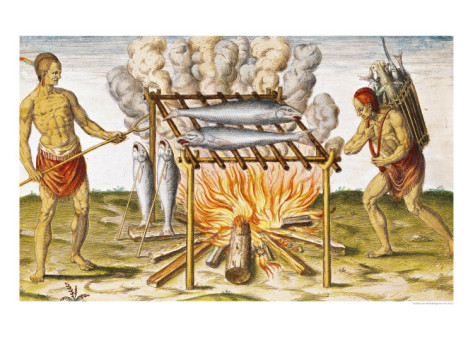
Depending on which tribe we are talking about, there were more ways to cook food than you can shake a stick at — with sticks being the most obvious choice. This is perhaps the easiest and least labor-intensive method that every camper learns pretty quickly. Put your meat on a stick and put it over the fire. However, there were plenty of other ways to cook food sans the ever-ready stick.


Ash cooking is still used in many places, even today. Fish, frog legs, even potatoes, can be wrapped in leaves and placed near or under hot ashes and coals. This is quick and effective, even if it means you might get a bit of ash on your food. Ashes actually don’t taste too bad!


Cooking in pits also was another popular method, especially if you wanted to cook a great deal of food at one time. Pits were dug into the earth, and then lined with an animal hide, fur removed, inside of the hide facing up. The food was placed in the hide, then covered with another hide or leaves. Hot coals were put inside the hole, and then covered again, usually with twigs and leaves.


Get The Essential Secrets Of The Top Survivalists In The World!


No Matches, No Metal, No Problem! How The Native Americans CookedNative people were well-known for their soups. How did they manage this without a metal pot? Similar to the pit method, a hole was dug in the ground and a piece of hide was used to line the hole. Water and food was put into the pit, where a fire was going nearby. Clean rocks were heated in the fire, and then dropped into the water. You would be surprised how quickly the water will reach a boil in this manner!


Tribes that lived near the sea were known to use large conch shells as pots to cook food. Southern tribes, such as the Navajo and Hopi, used clay pots, while others simply put flat rocks right next to a fire and let the food cook directly on the rock.


Last, but certainly not least, is a trick my father taught me. Small game that weighs about 2 pounds (1 kilo) or less can be easily roasted using a leather thong. My father would take the leather lace out of his boots, dunk them in water, and then tie one end of each lace to the meat. He would then make a stake out of a branch that made a “Y.” Putting one stake on each side of the fire, he would tie a lace to one of the stakes, and with the other lace, he would tie it to another small stick, with the stake being used as a support. The loose stick was then twisted around and around, so that the meat was on a manual type of rotisserie. He told me that his father taught him this skill and I must admit that it was pretty spectacular! Our meat was always perfectly done on all sides!


Try some of the above cooking methods on your next camping trip! You just might surprise yourself at all the ways you can make a fire and cook without modern utensils.


What fire-making or cooking tips would you add? Share your advice in the section below:


Learn How To ‘Live Off The Land’ With Just Your Gun. Read More Here.

Thursday, November 10, 2016

How Did Native Americans Keep Time Without A Watch (Or Calendar)?

How Did Native Americans Keep Time Without A Watch (Or Calendar)?

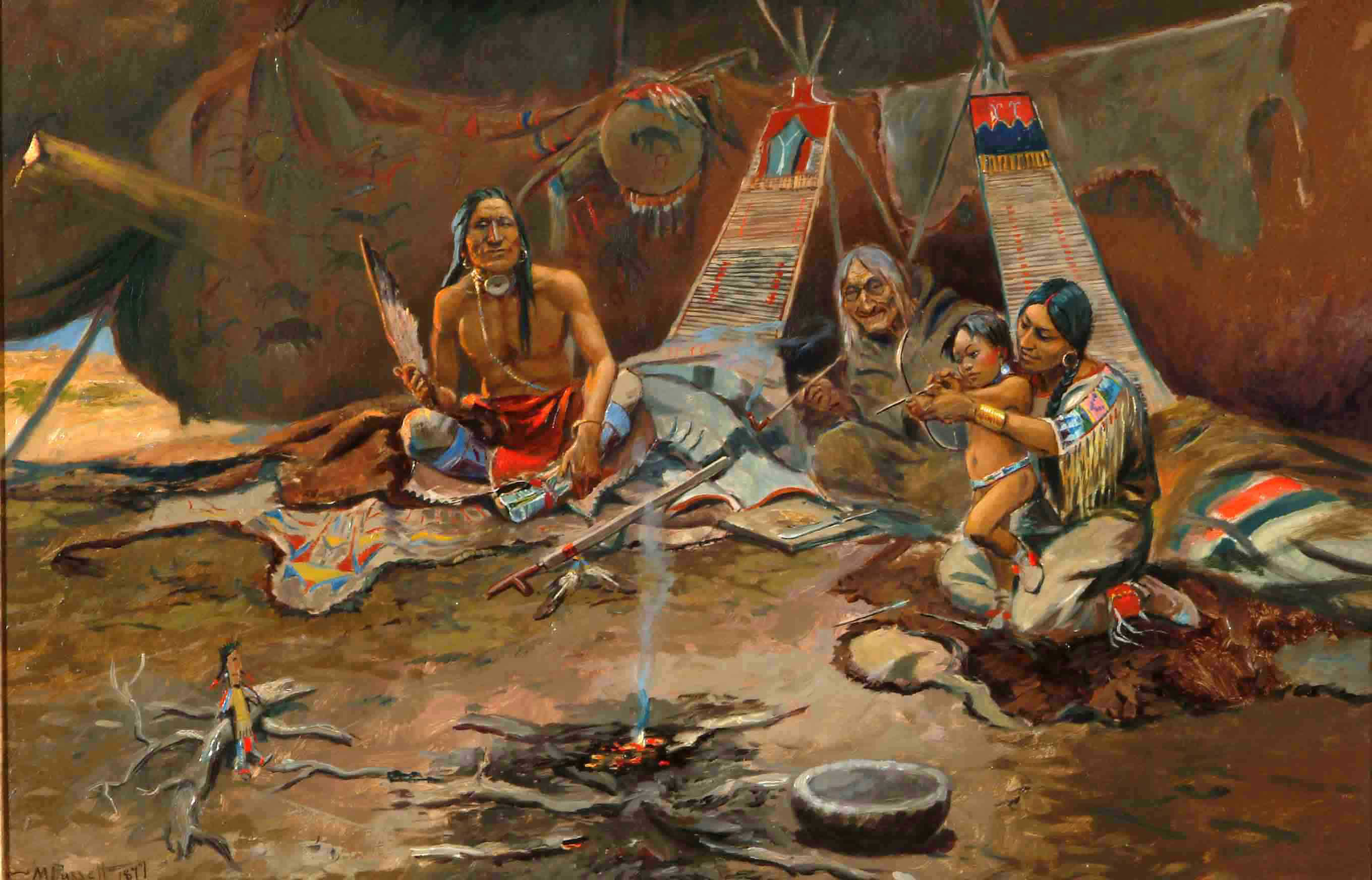
Artist: Patrick Rahming


In today’s modern world, it is easy to tell time. There are clocks on buildings, billboards, cell phones and microwave ovens. Then there’s the old-fashioned grandfather clock in the hallway.


But what if you didn’t have a watch? What would you do then?


And if you didn’t have a calendar, would you know when winter was coming? When it was the appropriate “time” to plant? To harvest? How old you are? How long would it take for you to “forget” to mark down a day or several days, or several weeks, thus obscuring even your age?


Native people had certain signs that they relied on and they actually had a very good sense of “time” — even though it differs from what we would consider time today.


White Man’s Time Clock


For many tribes, the clock – the one the Europeans used and brought to America — was a strange thing that was not easily understood. Some tribes thought that since the clock moved on its own and that it sometimes made sounds, it was a living thing.


Get The Essential Secrets Of The Most Savvy Survivalists In The World!


The simple truth here is that indigenous people considered time to be a part of the natural cycle of life. The belief was that there was a correct time or best time for everything and that nature itself would send the signal to let a person know when that was. A clock, divided into so many tiny fragments, seemed ridiculous and inconceivable to them. What difference could it make if one planted corn on this side of the 12 or that side of the 12?


A popular meme says that when an old native person was told about daylight saving time, he shook his head and said that only a white man would think he could cut off the bottom of a blanket, sew it to the top of a blanket, and then think he had a longer blanket.


Time Signals


Before European contact, indigenous people found that nature imparted a natural order and rhythm to their lives. Sunrise and sunset marked the typical day, with the noon sun being the dividing part between morning and afternoon.


Almost all tribes had some sort of marker for the spring/summer/fall/winter equinox. For the Pawnee, they knew that when the sun rose over a particular crest on Corn Mountain, it was time to hold their Thunder ceremony. The Bighorn medicine wheel told the Lakota when to travel to meet with others for their annual Sun Dance, which is held in and around the summer solstice.


Many tribes simply assigned names to certain seasons or months to keep track of how old a person was. The exact day was of less importance to native people than the time of the year. For example, according to the Lakota, if you were born in the time of trees popping, you were born sometime in late December through January. Native people felt this was distinction enough.


How Did Native Americans Keep Time Without A Watch (Or Calendar)?

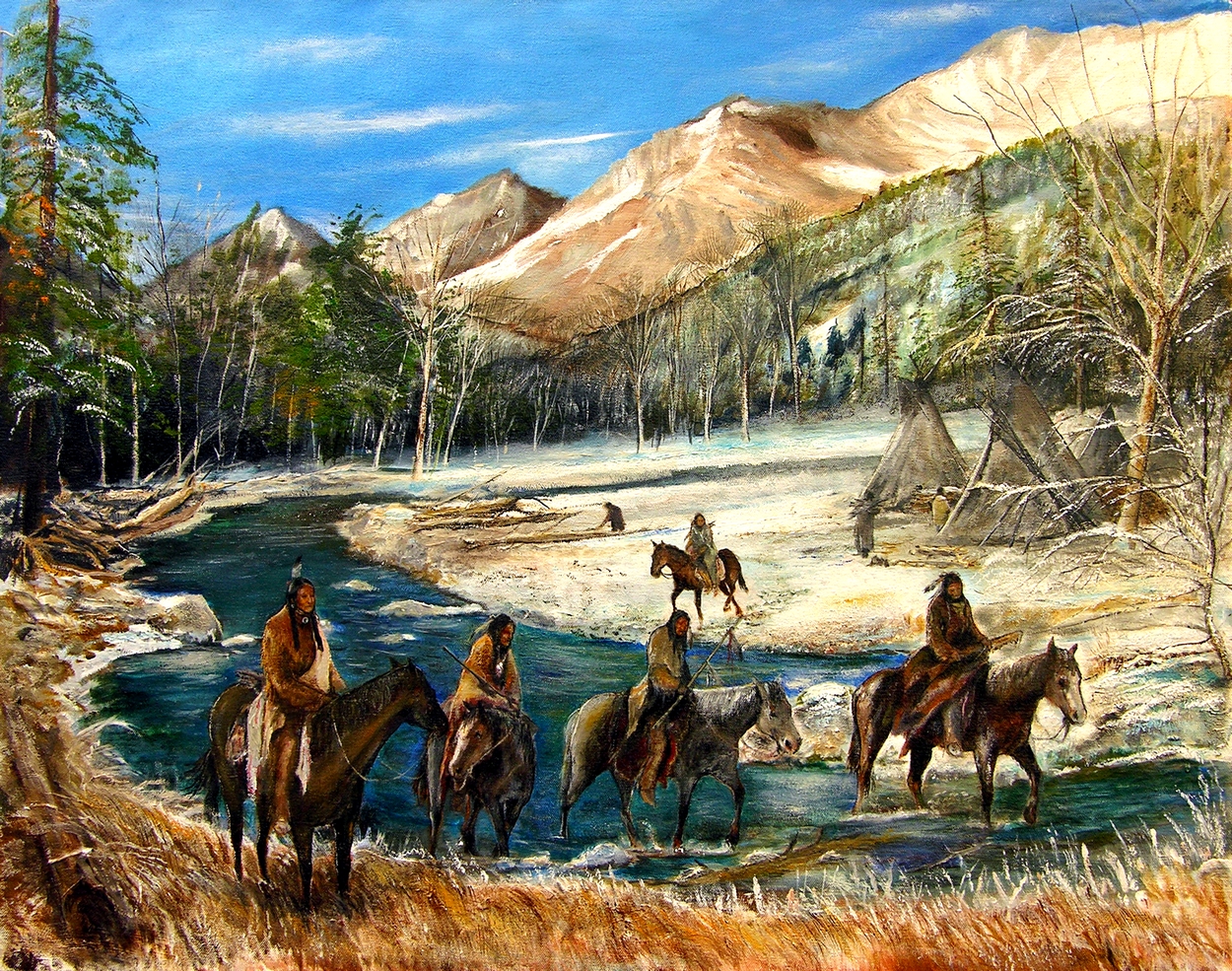
Artist: Michael Gentry


Native people also had a tendency to measure by nights, rather than by days. Indigenous people would say they traveled for “x” number of moons rather than by days or suns. Some tribes also used “moons” to indicate months. For example, March would be called the Moon of Sap Running by the Lenape.


Still other tribes marked their time through winter counts. Regardless if you were born in June or December, you were born in the “Winter of Four Crows Killed.” Usually some important event would mark the end of the year, which the entire year was named for. You could be born in May and you would still refer to your birthday as the Winter of Four Crows Killed.


Hunting, Planting and More


The natural cycles of nature also helped to organize task-based plans. For tribes who planted crops, they used signals such as the size of oak leaves to let them know that it was time to plant. The Crow tribes knew that when chokecherry trees blossomed, it was the right time to plant tobacco. Snow deeper than the ankle was a sign to most tribes that long-range hunts were finished for the year.


New Solar Oven Is So Fast It’s Been Dubbed “Mother Nature’s Microwave”


Tribes that planted crops often used that cycle as their means of telling time. For example, they might remember that they were born when the corn was gathered or that they were married with the flower buds of the squash.


Spring equinox compelled West coast people to travel to the sea to catch sardines or to gather shellfish. After a few weeks, they knew it was then time to move back inland to collect acorns, grasses and other nuts or seeds.


Water collection, or knowledge of where one could obtain water, was crucial to many Pueblo tribes. Many tribes stored water in clay pots and then buried them in the ground for later use. How would you know when it was time to collect water from the remaining pools if you did not know what season it was or how long it would be before the rains would come again? Most Pueblo tribes used a calendar stick to mark time. One person would mark off each sunrise on a stick, 30 days per stick. Each stick was saved until there were 13 sticks. Their lunar cycle was one of 13 months to a year. In this method, they knew, almost to the day, when the rains would start and how many sticks they had to make their water last.


Sometimes, it seems as if native people still run on “Indian time.” If you have ever attended a powwow and saw that the Grand Entry was supposed to occur at noon, but didn’t actually happen until 1:30, you have experienced “Indian time.” The hour or minute was, and in some cases still is, of little importance. Did the job get done properly? Then it was a job well-done — and done in perfect time.


Have you ever had to tell time without a watch? Share your tips in the section below:


Learn How To ‘Live Off The Land’ With Just Your Gun. Read More Here.