Showing posts with label survival skills. Show all posts

Friday, January 26, 2018

Selco: What an “Average Day” Is REALLY Like When the SHTF

This article was originally published by Daisy Luther at The Organic Prepper


apocalyptic


Did you ever think about how different your day to day life would be after an SHTF event? The little things we take for granted now, like making a meal, staying warm, or having water to drink and bathe in would suddenly become a whole lot more complicated.


Who better to tell us what that is like than Selco? For those who don’t know, Selco spent a year in a city in Bosnia that was blockaded. During that year, he and the other residents lived without our normal amenities like heat, running water, electricity, and supplies that could be purchased at the stores.


I asked him some questions about daily life after the SHTF. I think you’ll agree that his answers are eye-opening.


(Note: Selco’s interviews are lightly edited for clarity, but I want to use his own words. The authenticity of his stories remains intact. For those of you who don’t know of Selco, please note that English is his 4th language. Whiny grammar Nazi comments will be deleted. Comments complaining about my use of the word “Nazi” will be posted, however, so we can publicly mock them, and then the commenter will be banned forever for being a whiner.)


What time did you usually get up? What woke you?


A few weeks after the collapse came, all aspects of our normal life changed based on the new reality around us.


One aspect was “sleep cycle“- the time when we sleep and when we were awake and active.


One of the most basic rules that jumped in was that most of the activities got done during the night.


Some reasons for that were obvious, like danger from snipers. But also the other reason (maybe even more important) was that over time it becomes very important to hide your activities connected to gathering resources.


To explain it more, when you have a lot of people in a small area (city) and you have less resources that are needed for that number of people, the fact that you HAVE something (food, water medicines…) needs to be hidden from people who do not have that.


The system (law, police, etc.) was out, and it was important not to give reasons for people to attack you because you have something interesting.


So, anything connected with gathering resources (wood, food, trade…) was finished mostly during the night.


Of course, violence mostly happened during the night too (violence that included “close fighting.“)


Activities in your home and yard were possible to be done in the daytime. For example, we would spend the day fixing our water gutter that goes from the roof so it can go in a big barrel, but if we needed to climb on the roof and fix holes with tarps or to “funnel“ it to the gutter, that needed to be done in the night time.


There was no “usual“ time to get up, at least not in hardest period. Even if we did not have anything particular to do we would be alert during the night time, simply because night time was full of different activities in the city, and you needed to be ready.


In our case (because we had more than 10 people most of the time in the house) we could do a schedule that meant not all of us needed to be alert all the night.


During 24 hour periods of time, someone was always sleeping, others were doing some job, but as a general rule nights were much more active then days.


Messing up with normal sleep cycle was a problem alone, and it contributed to the stress, feeling tired and stressed because you did not have enough sleep or enough quality sleep was a normal thing.


Sometimes close detonation of shells would wake me up, sometimes my relatives woke me up because it was my guard shift, sometimes we would all be awake the whole night because of close shootings, and possible danger.


Sometimes I would wake up by myself because that day I did not have any particular duty to do, so I would stay home, checking things in the house, maybe trying to fix some things.


What did you eat for breakfast, if you had breakfast?


Traditionally here (in Balkan region) we ate a lot of bread, and we eat it with almost all food.


It is actually strange not to have bread on the table, no matter what kind of food you eat, or what time of day it is (breakfast, dinner…)


It is a Slavic tradition from ancient times to greet dear guests with bread and salt (and right after that comes alcohol).


I am trying to portray the importance of bread here, and then when the collapse came, suddenly it became scarce (just like everything else).


I believe it was the biggest problem when it came to meals, the lack of bread, simply because we used to eat it a lot.


It was kinda a psychological problem for us too, not to have enough bread.


That was first biggest change.


Note: do not underestimate the power that food has not only in calorie terms but also in psychological terms. Having and eating food that you love makes things much easier. Store food in your prepper storage that you LIKE to eat.


Second thing was that the usual “schedule“ of meals was lost.


It was very rare when we could all sit together to have dinner or breakfast, simply because someone was sleeping or someone else was busy with something.


For breakfast, we ate whatever was there in the moment. If the day was good and we managed to find something like an MRE or canned meat it was good breakfast.


On bad days we usually ate “pancakes“. “Pancakes“ were locally picked greens, mixed with water and very small amounts of flour (just to keep greens connected). It looked awful and tasted awful too.


The greens that people picked from nearest hills were supposed to be edible, based on rumors, or older people who had some knowledge about edible plants.


Another favorite at that time was “tea“. It was a big pot that stood on the stove, with water and local herbs inside, we called that tea or soup.


It was something like substituted for one of the traditionally favorite meals in this region – soup. Just like bread, here it is a tradition to have hot soup with your meal.


Just like with sleep cycles, times of meals were messed up. Also, the food that we ate for particular meals was messed up. We ate when we had the chance, and we ate what was available in the moment. For example, in normal times for breakfast here, we ate sandwiches or eggs. It was something to dream about during the collapse.


And yes, sometimes I simply did not have breakfast or dinner, or anything for a whole day or night.


Note: very soon people (when they had all ingredients) started to make bread in small pots right on the stove, it required not too much fuel and time, it was easy to make it (with flipping bread in the pot).


Did you have a job aside from survival? Did people go to work each day like they do now? 


No, in my case no jobs because in that hardest period system was out completely.  There was nothing like regular jobs in places that you worked prior to the collapse.


You could find a use for your skills if you had any, for example being nurse meant I had some knowledge and skills, and it was pretty valuable actually because I could trade it for food or other usable items.


When the system is out, any knowledge in some particular field is important. For example being able to recognize a broken rib or infection, and being able to help with whatever is available in that moment meant a real value that you could sell.


An important thing to mention is that in some other cities in the region where war was at the same time, some kind of system and government was still there. In those regions, the government imposed something like”obligatory working“.


It worked in a way that, for example, if you were an electrician in a city company, the government could give you an order to work for free for some other company, military unit, or whatever.


In reality, it meant that some armed group or fraction could simply mobilize you and take you from your home.


My biggest skill in that time was my medical knowledge. Even when the whole system was out, even when there was no medication, there was use for my knowledge.


Did children still have school during this time?


No, there were no schools in that hardest period in my place. The system was out completely.


There were some attempts from family members to try to keep up some level of homeschooling, but pretty soon it was clear that we all had much bigger and more serious problems than homeschooling.


Kids simply lost that period when it came to school.


How much of your day was filled with chores like acquiring food, water, and firewood? Can you tell us about that?


A lot.


People do not understand how much hard work is needed to get done things like water, food, heat, security because the system is here for us to take care of those things, so we do not have to.


We were ordinary city folks who did not have a lot of knowledge about stuff like how to go find a tree, take it down, chop it into small pieces, and bring it home somehow. Or how to collect water from rain, or bring enough water from the river when that is impossible.


So we learned that, but it took us time to learn. We were not preppers in any meaning of that word.


If you wanted to go to a hill close to your home and take down a tree for firewood it was all night job for a few people.


The first problem was that we did it in pitch darkness. After that, the next problem was to either to carry it in bigger pieces (and be slow and vulnerable) or to chop it down into small pieces (and spend more time in that place, which also was not desirable), or to leave someone to guard it while others took down pieces, or to go all together and risk that someone else took the rest before we get back.


As a carrying system, people often used homemade carts, very rudimentary setups made from an old baby cart or a wooden box with wheels from a baby cart, or similar. Or we simply would carry it on our back in bigger pieces and chop it later in our yard where it was much safer to be.


It was a heavy job.


Finding firewood was a constant job, so often while we were doing other jobs, we would collect it on our way, things like wooden windows and door frames from destroyed buildings.


Yes, there were days when we were good, we would have enough water, food, and wood. We were good.


But usually, we were always missing something.


When the system is out, way too much time is needed to take care of everyday needs.


If we had enough food, we did not have enough rain for water so we took trips to the river. If we had enough water then someone had a serious case of diarrhea and we were worried about that.


Not to downplay the physical threat, but preppers today usually focus only on the physical threat, on fighting, weapons, and similar, while there is much more to everyday survival. 


One good example of the effort needed to get something done is trade.


In order to do trade, first you would look for information about someone who had some goods, then you’d check and recheck that information, then you’d take into consideration the risk of going there, then you’d make a plan how many of us were going and what we are carrying there, and then you’d go and do that trade.


It was a complicated and dangerous process.


Where did you use the bathroom?


Close to our house, between a destroyed apartment building (we used that building sometimes as a guarding outpost or up-front layer of defensive ring of our house) and our house was something like a small park.


It was boxed (hidden) from 4 sides and pretty safe to use as a toilet by simply digging a hole in the ground.


After few months we built something like primitive latrine there. It worked for us during that time.


Toilet paper after some time become unknown, so we used what was available, clean rags and water and similar.


What did you do for personal hygiene?


If you look at it from today’s perspective, we did not do too much.


Personal hygiene was a matter of taking quick sponge baths when we had time and means for that and rare real bucket showers. But those were really rare.


When it came to our home, we did try to keep it as clean as possible. For example, we used one room for sick folks, we did try to clean ourselves in the yard and to take dirty clothes there.


Soap was possible to get in that time through trade, and in some periods things like alcohol pads were traded, but again the biggest problem was not having enough water for all our needs.


When you live for a prolonged period of time in those circumstances you kinda get used to the lack of hygiene. You do not like it but you live with it, and even make fun out of it. Psychologically people tend to get used to the lack of hygiene, especially when everybody around you is in the same state like you.


It was again a matter of having bigger problems on our mind.


For the minor problems, there were things like fungus infections, very common simply because in some periods we did not have enough time to keep ourselves dry and clean. Small cuts were usually solved with alcohol (alcohol for drinking was more or less available).


Real problems were connected with bad food and water treatment.


There were days during the summer when it was almost unbearable because of the stench that was in the city. A lot of bodies were not buried.


How many family members lived in one home?


It depends, but the tendency was that when the collapse came, relatives got together in the better house (between two families of relatives). So, for example, your uncle and aunt would come and live with you if their house was destroyed, or if your home was safer and better, or if you simply agreed that it was better to have more manpower together.


In my case, through that period, not less than 10 people were in our one house.


Usually, prior to the SHTF, living conditions and the number of occupants per house or apartment were the same as in any other European country.


One difference was that traditionally (prior the war) we did bring to our home parents when they got old, or too old to live by themselves.


For example, if you were living with your wife and two kids, and your parents are 85 years old, and one of them dies it was common to bring other parent to live with your family, to arrange room for him and to take care for him untill his death, if you had a house big enough for that.


It was not the rule, but it was common as a part of the tradition. Yes, we did had homes and pension centers for old folks where the state takes care of them, but it was kinda shameful to leave your elders there.


I am pointing out this as an explanation why when the collapse happened, people from the same family tended to quickly go together and form group. Suddenly you were in the same house with your grand uncle.


It was like that because strong blood tradition was present. It is not like that anymore. That tradition has faded away.


As a general thought, at first look more people meant more mouths to feed. But more people also meant more firepower, more working power, more support… It is about the skills, will, and mindset of those people.


How were responsibilities divided up?


Through the socialistic-communist society doctrine (in society before the war)  it was strongly pushed that females and males were equal in any field of life, and people had that kind of mentality built.


But when the SHTF,  pretty soon a traditional way of life jumped in. Women were staying home, taking care of kids and food, and men were going out more actively.


It was not rule, but it was usual.


Usually, women were the ones who knew how to make food from something that did not look like real food or to make it edible, or to comfort sick or frightened kid.


Women were the pillar of everything.


I would say that we simply did things that each one of us was best in. It was not democraty. The person (not necessary the oldest) who had most organizational skills was in charge, simply because it make sense like that. Duties were divided between other members based on skills, strength, and sense of fairness.


But things had to be done if you wanted to be part of everything.


As I said, we were family, so we were closely connected from before, so we did not have any big surprises. We were not preppers but we had that bond from before.


People of younger age would do the guard job, but a man of 85 years would not do that because we would do it much better then him. He would stay home that day and maybe take care of fixing the tarp that needed to be used for roof hole.


Note: There is a reason why I always advocate building your group way before SHTF, because in that way you get to know folks that your life my depend when SHTF. 


What were some tasks that you had to do on a regular basis that we may not have considered?


You could call it scavenging.


When SHTF in a serious way, you were simply always missing something. Of course, you also missed important things, like food, water etc.


But you also missed (especially if you are not prepper) a whole bunch of small things that could make your life easier.


Some of those seem ridiculous. Like shoelaces, not only for shoes but also for oil lamps. But then you need shoelaces of a specific kind because the “bad kind“ kinda melted and turned off the lamp.


You were looking for a simple crowbar because it is a great tool for taking down wooden door frames or similar. You needed small pot with lid on it because you want to take fuel from an abandoned car by making hole in the tank.


You were looking for spare batteries in abandoned houses, candles, wires, ropes, soaps… anything that would make your life easier.


And it is a process because you need to be sure… Is that house empty? Is it safe so it will not collapse on you (roof looked partialy collapsed maybe)? Are you suspicious about booby traps because you do not know?


Simple things like a multitool (Gerber or Leatherman style) would make life so much easier in those days.


Any other stories you’d like to share?


In that time, for a light people usually used homemade lamps. A simple glass with small amount of cooking oil, shoelace, and a tin bottle cap and you have lamp.


It burned with a “dirty“ flame, with a lot of thick black smoke, but the real problem was that it smelled bad. But at the same time, it smelled like doughnuts.


At least it smelled like that to us in that time. We had a lot of hard times sitting in the room, discussing something in very bad light, hungry,v but feeling like doughnuts are almost ready for eating.


Then I was imagining doughnuts because of that smell. Now, whenever I eat doughnuts I always remember those survival lamps.


More from Selco 


More information about Selco


Selco survived the Balkan war of the 90s in a city under siege, without electricity, running water, or food distribution.


In his online works, he gives an inside view of the reality of survival under the harshest conditions. He reviews what works and what doesn’t, tells you the hard lessons he learned, and shares how he prepares today.


He never stopped learning about survival and preparedness since the war. Regardless what happens, chances are you will never experience extreme situations like Selco did. But you have the chance to learn from him and how he faced death for months.


Real survival is not romantic or idealistic. It is brutal, hard and unfair. Let Selco take you into that world.


Read more of Selco’s articles here: SHTF School


And take advantage of a deep and profound insight into his knowledge and advice by signing up for the outstanding and unrivaled online course. More details here: SHTF School Survival Boot Camp


The Pantry Primer


Please feel free to share any information from this article in part or in full, giving credit to the author and including a link to The Organic Prepper and the following bio.


Daisy Luther is the author of The Pantry Primer: A Prepper’s Guide To Whole Food on a Half Price Budget.  Her website, The Organic Prepper, offers information on healthy prepping, including premium nutritional choices, general wellness and non-tech solutions. You can follow Daisy on Facebook and Twitter, and you can email her at daisy@theorganicprepper.ca


Tuesday, October 3, 2017

How to Survive a Sniper Attack

This article was originally published by Daisy Luther at The Organic Prepper


windows


Of a tragic necessity, we’ve all read articles and watched videos about surviving an active shooter terror situation. But an entirely different set of rules apply when it comes to surviving a sniper attack.


The thing with an event like the one in Las Vegas is that a great deal of your survival depends on nothing but luck. If you happen to be in the wrong place at the wrong time, skills won’t necessarily save you.


The Las Vegas shooting was different than many previous mass shootings because the culprit was not right down there in the thick of things, as in the Pulse nightclub shooting. He was a sniper, 400 yards away from his target of 22,000 people attending a concert.


This situation was different from other mass shootings due to the distance. The standard advice of run, hide, or fight was completely useless. People had no idea where the shots were coming from, which meant they didn’t know where to run. Hiding is not easy in a wide open space that is similar to a giant parking lot without the cars. And finally, you can’t fight an enemy that far away – even if you were a concealed carry holder, your carry firearm won’t shoot far enough, and identifying the threat from that distance while everyone is panicking would be all but impossible.


As well, because of this distance, none of the evasion techniques like running in a zig-zag pattern or getting down were likely to make a huge difference to a person so far away whose apparent goal was only to hurt or kill as many people as possible. He was not aiming at specific people from that distance. He was firing at a general area. Here is a photo of the shooter’s view, from the window of his room to the concert area.


As you can see, the target was a general area, not specific individuals.


Firsthand Stories


This is a report from the Washington Post that quotes people who were there. You’ll see how this information is applicable when you read the tips below.


The typical advice for reacting to an active shooter — ‘run, hide or fight’ — was rendered moot, as many in the packed crowd could not easily run or hide, nor were they able to fight back at someone firing from so far away.”


In video footage, concertgoers can be seen screaming and running for cover — though they did not immediately know from what. “We thought it was fireworks at first or trouble with the speakers,” said Kayla Ritchie, 21. “[Then] everything went dark.”


It wasn’t until [singer Jason] Aldean fled the stage and the lights came on that 21-year-old Taylor Benge said herealized that “about five feet to the left of me, there was a man with a bullet wound to his chin.” “He was just lifeless on the ground,” Benge said.


— “Outside, The Strip, always a blizzard of dazzling lights and honking horns, almost instantly turned into a frenzied hive of pulsing police lights and sirens,”Michael Lyle, Heather Long and Marc Fisher report. “People fled every which way, many taking cellphone video of their run to safety. [Former minor league baseball player Todd Blyleven, who traveled from Dallas for the concert with his wife and friends], helped carry out the lifeless body of a young woman. He saw a police officer who looked like he had taken a bullet in the neck. ‘Young girls and guys, older folks, just people walking out of a country concert with bullet holes,’ Blyleven said.”


— “Aldean was barely five measures into ‘When She Says Baby,’ when the shots started,”Avi Selk and Amy B Wang report. “’Is that gunfire?’ [Singer Jason] Owen remembered thinking[.] The gunfire continued, steady against the beat of the song … Shot after shot, faster and faster. Aldean sprinted off the stage. Owen ran, too. So did other singers, workers and all the thousands of spectators — fleeing and screaming, falling and dying.”


— A fire alarm triggered by gun smoke let first responders zero in on the shooter’s location. SWAT team members then used explosives to get inside, where they found [Paddock] dead from a self-inflicted gunshot wound. “We believe the individual killed himself prior to our entry,” the sheriff said. (Cleve R. Wootson Jr.)


— “I realized people were dying”: Photographer David Becker spoke to The Post’s photo editor MaryAnne Golon about witnessing the attack and capturing some of the most haunting images from the night: “ It had been so dark outside I couldn’t see the details. I just saw a lot of people laying on the ground thinking they were playing possum, but now I could see people covered in blood and I thought, this is real. When I saw the image of the woman lying on the ground covered in blood, that was when the impact of what I was experiencing hit — when I realized people were dying.”


How do you survive a sniper attack?


A sniper attack is very different from any other kind of mass shooting, so the rules for surviving those attacks don’t apply here. This is what I learned when researching a horror scenario like the Las Vegas massacre.


Know what gunfire sounds like.


A lot of people who were interviewed said that when they first heard the shots, they didn’t realize what it was. They thought it was fireworks. There were precious seconds when people were frozen targets while they tried to wrap their brains around what was actually happening. During an event like this, a pause of a few seconds could mean the difference between life and death. The faster you take action the more likely you are to survive.


Always have a plan.


We can’t foresee all eventualities, like this one, for example, but it helps to always have a survival mindset. It has long been a game with my kids (yeah, we’re a strange family) to identify exits and potential weapons if we sit down to eat at a restaurant or go to the movies. Knowing where to go without having to look for it in the heat of the moment will save time that could be spent acting.  After this incident, I’m adding to that the search for places we could take cover in an emergency.


Understand the difference between cover vs. concealment.


Every NRA course I’ve ever taken discusses the difference between cover and concealment, because in many cases when you are forced to use your own firearm, there’s another person who is ready and willing to shoot back. Concealment is enough to hide you but not enough to protect you from bullets. Cover is something sturdy enough to stop a bullet – a concrete structure like a road divider, the engine block of a car, a refrigerator, a steel door, a brick wall.


When watching the video playback of the Las Vegas shooting, many people were seeking concealment behind flimsy barriers, and that is not enough to protect yourself in a situation with a high-powered gun and a shooter spraying an area.


Separate from the crowd.


In a situation like this one, the shooter was trying to take down as many people as possible, so it was most likely he was aiming at the crowd instead of picking off people who moved away from the bulk of the group. One possible strategy would be, then, to get away from the crowd. You and the person/people you are with would be less alluring than a group of a hundred panicked people all huddled together where maximum harm could be achieved.


Don’t get down or play dead.


Lots of people crouched down and got as low as they could. In many situations, this would be the best bet, but not this one. The person was shooting from up high, aiming downward. Being still and crouching down wouldn’t do much to protect you from a person firing from this angle, nor would playing dead. Action is nearly always a better choice than inaction. As well, getting down would make it more likely that you’d be trampled by a panicked crowd of people trying to get away. Clark County Fire Chief Greg Cassell said that some of a “wide range” of injuries included people who were trampled by the panicked crowds.


Listen for reload.


In a situation like this, there will be pauses in the shooting when the person stops to either reload or change firearms. That is your opportunity to make a dash for the exits. Don’t wait too long to make your move, because it only takes an experienced gunman a few seconds to reload a familiar gun and then your chance is gone.


Do you have other suggestions?


I’m not an expert. I don’t have law enforcement experience or military experience. So, I spoke to someone far more experienced in this type of thing than I am. Scott Kelley is a former Counterintelligence Special Agent, US Army Chief Warrant Officer, and combat veteran, as well as the author of Graywolf Survival,  and was kind enough to answer all my questions while I was researching this article. I incorporated many of his suggestions, but any mistakes are purely my own.


What about you? Do you have experience to add that might help people survive a sniper attack? Please comment with your suggestions and if you don’t mind, let us know a little bit about yourself.

Thursday, July 20, 2017

Teaching Your Kids Survival Skills, Just Like They Did In The Old West

Teaching Your Kids Survival Skills, Just Like They Did In The Old West


Those of us who have kids must take them into consideration in our survival planning. As parents, we want to protect our children from harm, which could very well cause us to do everything for them. But in doing so, we can inadvertently create a more dangerous situation for them.


Granted, all children need to be protected, especially small children. But as they grow, they need to learn the skills which allow them to become more independent. Please note that this is different than just being granted independence; it’s not about authority, but rather skills and knowledge.


In the Old West, children were given as much responsibility as they could bear. This required parents knowing their children and what their limits were. It also required the parents to train their children, giving them the skills and knowledge to be able to effectively fulfill those responsibilities. This also meant having the character to do the chores, without mom and dad having to get after them.


When Mom and Dad Are Gone …


But the real test of a child’s responsibility was when they were left alone. While this did not happen very often, there were times when it did, especially in the case of a single parent (where the other parent had died). But what would happen to the children if the single parent died while away from home? There were countless dangers in the Old West, ranging from marauding Native Americans to wild animals. Death could happen at any time, and when it did, the children were left alone.


Turn Drive Time Into Fun-Filled, History Time With Your Kids!


How long they would be left alone would depend a lot on the circumstances. If something happened to someone who lived in town, it would be noticed immediately. But for those who lived on isolated homesteads, it could be days or even weeks before anyone was aware that children were being forced to live on their own and care for themselves. Only then would the community rally around to help them.


Parents wanted to avoid such a situation. They wanted to train their children so that if something happened to them, their children would be able to care for themselves and survive. This caused children to grow up fast on the frontier, learning skills that we would normally avoid teaching our children until they were much older.


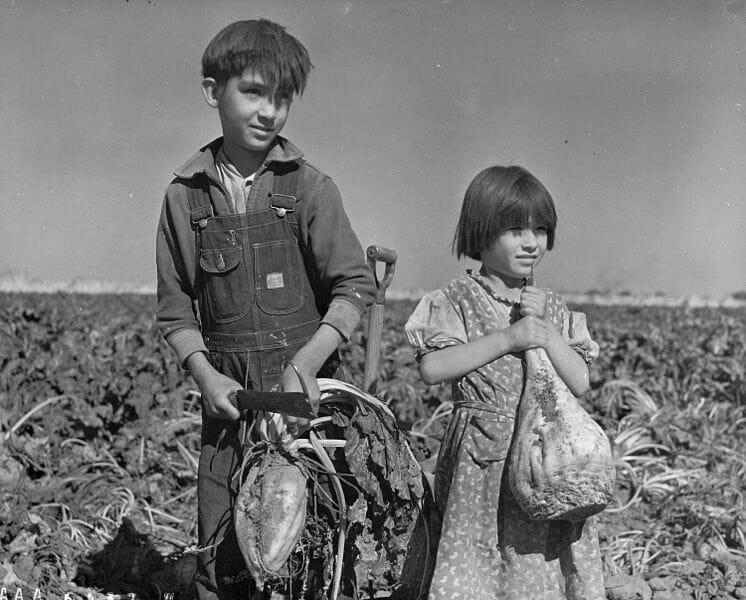
At 10 years of age, most children knew how to start and tend a fire, care for the livestock, work the farm, and shoot a gun accurately. Some would have the responsibility of hunting for the family’s food. Others would be working alongside their parents, tilling and harvesting the fields. There were no idle hands on the frontier.


But Not Just the Old West


Teaching Your Kids Survival Skills, Just Like They Did In The Old WestA survival situation would probably be much like the life they had on the frontier. As such, the same need to train our children would be imperative.


To a child, many of the things we would consider survival skills are exciting and fun to learn, giving them the motivation to learn, without having to know why they are learning them. Let’s use the example of teaching them gardening and animal husbandry, important skills for long-term survival. So, you start gardening and get some animals to raise, having your children work right along beside you. With the animals, that will be no problem, as most children naturally gravitate toward animals anyway, especially small ones. With gardening, most kids love to get their hands dirty.


Crazy Gadget Makes Every Window A Cell Phone Solar Charger


Shooting is probably the easiest skill of all to teach your children, as they usually have a fascination with guns, anyway. Besides, if you’re going to have guns in the home, you should start teaching them about gun safety at an early age. That’s the only real way of protecting them from accidents. If they are too young for real guns, start them with Nerf guns or Airsoft. Then you can move them up to pellet guns, before taking the big step up to the real thing.


Most other survival skills can be taught on camping trips. If you make camping a normal part of your family’s recreation early on, your children will grow to love it. Each trip can be planned around one lesson: teaching them a new survival skill, but talking about it as a “camping skill” rather than as a survival skill.


Tap into the natural curiosity and sense of adventure that your children have. Use their questions about life and things that they learn in school as a springboard for teaching them new survival skills, whenever you can. In other words, make survival training a part of your day-to-day life and your children will see it as normal — not something with ominous potential.


What advice would you add on teaching kids survival skills? Share your thoughts in the section below:

Tuesday, June 27, 2017

5 Outdoor Survival Skills Every Child Should Know

5 Outdoor Survival Skills Every Child Should Know

Image source: Pixabay.com


Knowing how to survive without basic amenities is a skill everyone – even children – should know.


Children are like sponges, and can quickly pick up things we want them to know (and don’t want to know!). Simply make it fun.


1. Foraging skills


There are thousands of native, edible plants. In a survival scenario, a child may not be able to hunt or fish, but he can learn to identify plants that are edible.


Teaching your child what NOT to eat is just as important. Of course, you can learn these things through books, but it is best if done by hand. Take them out in the woods and find edibles together. Add your finds to dishes and dinners throughout your daily life. Soon, it will become normal!


2. Creating shelter


Our hope is that our children will be with us during any dangerous scenarios. That isn’t always the case. It is important that we teach our children how to create a small shelter with the items they can find in nature.


The Life-Saving Water Filter That Purifies River Water!


Most kids would think building a shelter is a great game! Teach them that “roughing it” is enjoyable. Take your kids out in the dark to create a shelter or just to explore nature at night. It is a different world.


3. Making a fire


Warmth is essential for survival in the wild. It is also a great source of safety to protect predators from approaching a campground.


Teaching your child how to start and control a fire will take time. You can start by teaching him or her how to find kindling for bonfires, and then showing them how to structure a fire properly. There are plenty of ways to make this fun, especially if there are marshmallows at the end.


As your child gets older, you can move on to teaching them how to start a fire without matches. It is never too early to teach fire safety around a fire. Instilling a healthy fear and understanding of the dangers it can pose is important, especially if your child will be on his own with fire.


4. Water purification


In an ideal scenario, your child would have purification tablets or a purifying straw in a bug-out bag. Life doesn’t always work how we want it to work, though, and there may be a time when your kid needs to know a different method.


This skill is easy to make fun. It is like a real-life science experiment!


Use a two-liter bottle to create a small filtering system. Children can create their own and drink the water at the end of the process. It may seem like a small skill, but it can come in handy later.


Story continues below video


5. Gardening


Gardening is one of the most important skills you can teach your child. If your children can garden, they can survive anywhere.


Teach your children how to start plants from seeds. It takes practice and knowledge. After that, you can work on teaching proper upkeep and preservation techniques. Most kids love to garden. It is a great excuse for getting dirty!


As a family, we work toward teaching our children survival skills on a regular basis. From butchering deer with their father to starting vegetable plants with me, our kids learn skills immediately. To them, it is just a way of life. Our goal is to release them as adults with the skills to survive, no matter what comes their way.


Do you introduce survival skills to your kids? If so, let us know what you teach them in the section below:

Monday, February 6, 2017

Forgotten Skills That Helped The Native Americans Survive Winter

Forgotten Skills That Helped The Native Americans Survive Winter

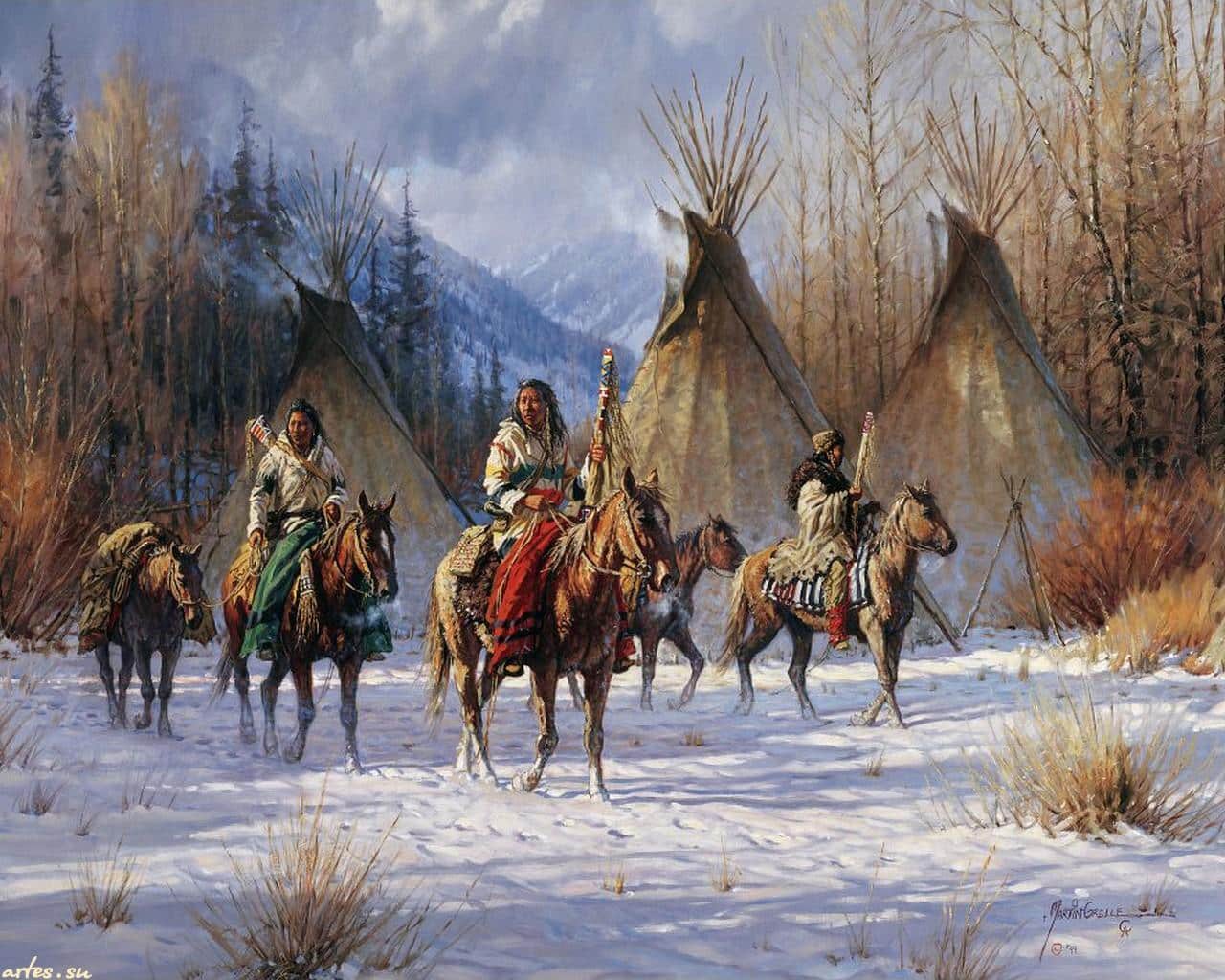
Artist: Robert Duncan


Most of us head indoors and turn up the furnace when frigid weather hits, stacking in a good supply of wood for the stove or plugging in the old electric throw blanket — and praying that the power doesn’t go out!


For the native people of this land, however, they had none of those luxuries. Have you ever wondered just how the heck they stayed warm when it was dangerously cold? During blizzards and ice storms? Were teepees and other shelters really that warm?


Of course, there could be causalities during severe weather. You can’t help but picture the people who went outside to attend to nature’s call, only to find themselves half frozen within minutes, or lost in a driving snow.


Let’s take a look at how the indigenous people of this land not only survived during the harshest winter weather, but actually looked forward to it as a time to stay indoors, sleep, rest, spend time with family, and get caught up on chores.


An Ounce of Prevention


One way that native people prepared for harsh storms was forecasting them. Generally speaking, there were always one or two elders who seemed to have a knack of understanding that, for example, if the wind was bringing clouds from the north, it meant a blizzard, if from the east, it would bring snow, but nothing too harsh. Thin clouds meant cold weather. No snow and a ring circling the moon meant it would rain within 24 hours.


Get The Essential Secrets Of The Most Savvy Survivalists In The World!


It also helped to observe animal behavior. For example, woodpeckers sharing one tree or one nest meant a harsh winter was coming. It is also said that when muskrats made their holes high up on the banks of rivers, lots of snow was on the way.


In the far north, the elders looked for bright spots that appear on either side of that cold winter sun. An old saying was that those spots were fire, which the sun had made to warm its ears. This was a sign which meant a severe cold snap was coming quickly.


Forgotten Skills That Helped The Native Americans Survive Winter Native people were well aware that being caught without proper provisions during the winter would almost certainly mean death — so they prepared themselves accordingly.


When Caught Unaware


Literature has painted Native Americans as some sort of “magic” people who knew everything about nature, but the truth is that they were humans who made mistakes. This is especially true of young couples sneaking away for a little tryst, or young men trying to prove their bravery.


Sometimes, indigenous people were away from camp when a snowstorm or blizzard struck.  In these cases, stories of survival are almost all the same: People sought shelter quickly, made a small fire, tried to stay warm and wait it out. Shelter was the foremost concern, and it would take the shape of hollowed-out tree trunks, caves, rock outcroppings, even a quick lean-to made from branches, a tree and some snow.


Anything that would burn would be collected as quickly as possible, including horse or cow dung, pine cones, old pine needles, small branches – basically, whatever was dry. By surrounding the fire with rocks, they could radiate heat into the shelter.


If you were with someone else, you could share body heat. Natives would wait out the storm by sleeping as much as possible near the fire. It’s an old wives’ tale that people who fall asleep in the cold will never wake up. When you are cold enough, your body will wake you up to let you know!


Protect the Body


Next to the fire, your most precious asset is your own body heat. Native people considered their body as a natural fire that they never wanted to squander or allow to go out.


For the indigenous people, this meant never sitting directly on the ground, but instead perching themselves on furs or rocks near the fire that were covered with hides and fur. The Eskimo people were known to tie dried loon skins, including the feathers, to a rope, which they wore around their waist, similar to an apron. This was not only an extra layer of warmth, but if they were out and about, they would turn it around so the skins were lying on their buttocks, giving them a natural buffer between their fanny and a cold rock!


Native people kept their body fire protected by layering clothing. Better to remove clothing if you became too warm than to be caught in a snow storm wearing just a breechcloth!


Making the Cold an Ally


Of course, native people had many ways of dealing with the cold over the years that are no longer useful to us in modern times. Many tribes were nomadic and simply moved south along with the migrating birds. Other tribes used longhouses, where almost everyone in the tribe would spend the winters together in close quarters, their combined body heat making the interiors warmer.


Native people were known to cut wood when it was well below freezing. Why? Not only were they kept warm through the effort, but wood at 30 below (Fahrenheit) splits very easily!


Perhaps one of the best secrets of the indigenous people was that they saw the cold as a living thing that deserved respect. They did not try to prove how long they could stay outside in an ice storm. Native people believed that cold was a spirit that had great power worth of respect and attention.


Do you think you could have survived as a Native American in frigid weather? Share your thoughts in the section below:


Learn How To ‘Live Off The Land’ With Just Your Gun. Read More Here.

Monday, December 26, 2016

Winter Survival Skills That Kept The Pioneers Alive

Winter Survival Skills That Kept The Pioneers Alive


If you live in certain parts of North America, then you know all too well how cold and long a winter can be. In bad years, they can last from November through April. When ice is several inches thick on ground that hasn’t been salted, when the wind whips so hard it pulls young trees out of the ground, and when you finally have to venture outside to go to the grocery store a few blocks away, it can seem like a dangerous trip.


Have you ever stopped and wondered how the pioneers survived? There was no central heating, no supermarkets, no water heaters to help warm up frozen fingers.


Our ancestors were certainly tough, no doubt about it, but we would be wise to pay attention and learn a few of their survival skills. Here are a few:


Food Preparation And Storage


Knowing that winters could be long and harsh, pioneers spent a great deal of the summer months preparing. A lack of preparation usually meant death by starvation, so they took these chores seriously.


Almost all pioneers had what we call a cellar or a root cellar. This was a room dug underground that would protect their stored food from freezing and guard it from marauding animals.


Root vegetables were a favorite because they keep for a long period of time without spoiling and without any special preparation beforehand. This made things like carrots, beets, sweet potatoes,  parsnips, radishes, rutabagas, regular old potatoes and turnips valuable crops.


Other crops that keep well without canning are corn, onions, garlic, squash, cabbage, cauliflower, pears, oranges, cucumbers, pumpkins and apples. Some fruits and berries were dried, but others, like apples, keep remarkably well when placed in a cool, dark place.


Canning was an invaluable tool to store food for winter consumption. This was the common method of storing foods that went bad fairly quickly, such as berries, peaches, nectarines, tomatoes and artichokes.


Meat also was dried and salted to preserve it for the winter. A family could slaughter one of their livestock animals, eat what they could for a day, and then pack the remainder in large barrels, stacking it in layers and then covering them with salt and brown sugar, before sealing the barrel.


Are You Prepared For A Downed Grid? Get Backup Electricity Today!


Of course, meat killed during the winter simply could be kept frozen outside, as long as one was careful to keep it out of reach from the local wildlife.


Staying Warm


A full belly is great, but if you are stuck outside in subzero temps, it won’t be enough to keep you alive!


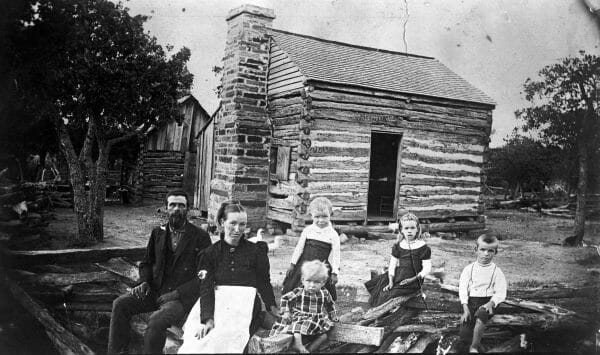
Winter Survival Skills That Kept The Pioneers Alive Most pioneers lived in cabins made from logs. These can be quite insulating when the holes and cracks are properly filled with mud, grass or cloth, but in sub-zero (Fahrenheit) weather, one will still need a good fire.


This means lots of back-breaking hours cutting and storing firewood. Imagine trying to guess how much wood you are going to need for one winter season? Of course, if you saw you were running low, you always could head out to the woods and start cutting, but in freezing temperatures, it would be hard and exhausting work! Better to stock up when the weather was good and the wood softer


During the winter months, fires were rarely allowed to die. However, if a warm spell was followed by a super cold snap, chances are you better be able to find your flint and steel to start another fire. Since matches were not even common until about 1900, if you were without flint and steel, you would have to hoof it to a neighbor’s house to “borrow” some hot coals.


Last, but not least, clothing. The early Americans wore clothes they had made themselves, usually from cotton they had raised or wool off of their sheep. A few men wore pants made of buckskin, but most wore outer clothes made from cotton. However, winter months required a bit of extra warmth, usually in the way of woolen (and scratchy) “long Johns.”


Trapping and hunting skills provided meat, so rifles or shotguns were very common. Some pioneers used simple traps to capture smaller game (rabbits or game birds).


However, for those who could manage it, livestock was invaluable. Pigs could be sold, traded or simply killed for meat. Cows also could provide both meat and milk. Goats were not as common, but in a pinch a goat will eat almost anything and it, too, provides milk and meat. Chickens have been kept for ages as a means of eggs and meat. Of course, these animals needed to be fed and protected, so during harsh winter months, if you couldn’t feed them, you ended up eating them.


First-Aid And Folk Remedies


Doctors also were few and far between. Many people learned common first-aid remedies and folk remedies, and they kept a variety of healing herbs on hand. Women, especially, shared this information with each other and often helped each other out during the difficulties of childbirth. If your child had a fever in a blizzard, you couldn’t call the doctor and you couldn’t just pop down to the local drug store. Pioneers relied on their own herbal remedies.


Since log cabins had few windows, lanterns and candles were the main source of light on dark days and long winter nights. Candles were commonly made from beeswax, with cotton wicks during the summer. Although kerosene could be bought for lamp fuel, its smoky blackness — and expense — made it unpopular. Many pioneers used fat from their animals for soap and for lamps.


How did pioneers prevent cabin fever after living for months in a 12X16 log cabin with who-knows-how-many people? Families would read out loud, make up stories, or recount family history. The sewing of clothes and the repair of farm tools would have taken some time, and games such as checkers helped to pass the time. With a bit of fortune, a family member even would have had a musical instrument to help fill the hours with a bit of song.


Although I really enjoy learning the old-fashioned ways of doing things, I’m not at all certain I could have survived during pioneer times. What about you? Do you think you could have survived during those times?


Share your thoughts and tips in the section below:


If You Like All-Natural Home Remedies, You Need To Read Everything That Hydrogen Peroxide Can Do. Find Out More Here.