 (ANTIMEDIA) — 4/20 is an international day to celebrate a little green plant that, despite its increasingly evident medicinal properties, continues to remain illegal in countless countries. But that hasn’t stopped the annual festivities from commencing around the world as an increasing number of people accept that cannabis is not the “a burning weed with its […]
Showing posts with label weed. Show all posts
Showing posts with label weed. Show all posts
Friday, April 20, 2018
Forget What You Heard: Here’s the Real Story Behind 4/20
(ANTIMEDIA) — 4/20 is an international day to celebrate a little green plant that, despite its increasingly evident medicinal properties, continues to remain illegal in countless countries. But that hasn’t stopped the annual festivities from commencing around the world as an increasing number of people accept that cannabis is not the “a burning weed with its […]

Wednesday, March 28, 2018
Trump to lose support of many Americans over Jeff Sessions pointless battle with a plant that has major medical benefits
President Trump could lose the support of 51% of his voter base who have used the highly beneficial plant known as marijuana and liked it
WASHINGTON (INTELLIHUB) Well, it’s official, President Donald J. Trump has gone from being my favorite president to being essentially a laughing stock of the country after his boy, Attorney General Jeff Sessions suddenly declared war on the highly beneficial plant known as marijuana, and that, my friends, is where I draw the line.
Attorney General Jeff Sessions managed to secretly rally the Republicans behind the scenes to rescind an Obama era policy that discouraged prosecutors from bringing charges against those who use or sell marijuana in states that the all natural plant has already been legalized for medical or recreational use.
Sessions botched move was likely financed by Big Pharma and lobbyists who seek to go against the word of God altogether.
Behold, Genisis 1:28-1:30 (The New American Standard Bible) states the following:
The Sixth Day: Creatures on Land
…28God blessed them; and God said to them, “Be fruitful and multiply, and fill the earth, and subdue it; and rule over the fish of the sea and over the birds of the sky and over every living thing that moves on the earth.” 29Then God said, “Behold, I have given you every plantyielding seed that is on the surface of all the earth, and every tree which has fruit yielding seed; it shall be foodfor you; 30and to every beast of the earth and to every bird of the sky and to every thing that moves on the earth which has life, I have given every green plant for food”; and it was so.…
You see, so no one, not even the Attorney General can tell Americans that a plant (marijuana) is equal to a Schedule I substance like heroin, LSD, ecstasy, methaqualone, and peyote because of the fact that it’s simply just a plant, nothing more.
Not to mention, a poll was taken in April of 2017 which shows that 51% of Americans over the age of 18 have smoked marijuana.
The bottom line is that the plant was put here by God for the people of the Earth to use and if some politician in Washington thinks he can defy God than Trump has lost all of my support and possibly the support of 51% of the countrymen and women who have partaken.
Should President Donald Trump fire Attorney General Jeff Sessions over his pointless battle with a plant known as marijuana?
Should President Donald Trump fire @jeffsessions over his pointless battle with a plant known as #marijuana?
— Intellihub (@intellihubnews) January 5, 2018
©2018. INTELLIHUB.COM. All Rights Reserved.
 Shepard Ambellas is an opinion journalist, analyst, and the founder and editor-in-chief of Intellihub News & Politics (Intellihub.com). Shepard is also known for producing Shade: The Motion Picture (2013) and appearing on Travel Channel’s America Declassified (2013). Shepard is a regular contributor to Infowars. Read more from Shep’s World. Follow Shep on Facebook. Subscribe to Shep’s YouTube channel.
The post Trump to lose support of many Americans over Jeff Sessions pointless battle with a plant that has major medical benefits appeared first on Intellihub.
Friday, December 1, 2017
Meet the Assholes Responsible for Keeping Marijuana Illegal
Americans overwhelmingly agree that marijuana should be legal, so why isn’t it? So glad you asked…
(FEE) In this era of political polarization, when Americans seem to agree on absolutely nothing, let me reassure you. We overwhelmingly agree that cannabis should be legal.
1 in 5 Americans have (state) legal access, 1 in 2 have experimented with it, and more than 1 in 10 smoke regularly. Southern California yuppies are publicly winning prizes for growing the same plant that landed Georgia teenagers in prison.
Half of states allow at least limited use, and a few attract elite cannabis tourism. Federally, the drug remains fiercely criminalized, despite irrefutable evidence of its medical value.
So what’s the hold-up?
Being in the anti-marijuana business is astonishingly lucrative for bureaucrats and campaign donors. Here are just a few of the heavy hitters addicted to federal prohibition:
Big Booze:
National Beer Wholesalers Association
Wine & Spirits Wholesalers of America
The makers and distributors of America’s top-selling beers, wines, and liquors are already facing stiff competition from newly deregulated microbrewers and craft distilleries.
Cannabis prohibition shuts out a zero-calorie competitor with far fewer short- and long-term health risks. The industry donated (read: invested) $19 million to re-election campaigns in 2016, and another $4 million to soft money groups like “Public Safety First” which specifically oppose cannabis legalization efforts.
Cannabis legalization does reduce alcohol sales, and its regular use reduces alcoholism and alcohol-related deaths. Each year 37,000 deaths in the US are attributed to alcohol, compared to zero deaths from cannabis use, ever. Brewers and distillers are eager to point “public health and safety” attention in another direction.
The Boys in Blue:
National Fraternal Order of Police
National Association of Police Organizations
American Federation of State, County and Municipal Employees
Local law enforcement has become highly dependent on federal and state money devoted to the War on Drugs. Civil asset forfeiture – a legacy of the 1984 drug war omnibus crime bill – allows local police departments to keep 80 percent of property seized in suspected (not proven) drug activity. Local cops regularly auction off homes and cars connected with small marijuana sales, pocketing the proceeds without convicting anyone of any crime. Drug raids “were no longer just about putting on a good show and terrorizing the counterculture. Now the raids could generate revenue for all of the police agencies involved.” (Randy Balko, Rise Of The Warrior Cop). Property stolen from innocent Americans (the Washington Post found 80 percent of victims of asset forfeiture were never even charged) has paid for military-grade equipment and SWAT teams used in still-more-terrifying drug raids for profit.
National Fraternal Order of Police, National Association of Police Organizations, Federal Law Enforcement Officers Association, and literally dozens of smaller interest groups and political action committees represent the interests of law enforcement officers. Drug testing laboratories, prosecutors, drug court lawyers and judges, rehab centers, counselors, and other unionized social services also depend on marijuana arrests to keep numbers up.
For them, the nation’s outdated marijuana policy means guaranteed revenue, low-risk, peaceful “offenders” to fill arrest quotas, and easy excuses to search or detain citizens.
Big Brother: The Prison Industrial Complex
Association Of Administrative Law Judges
American Federation of State, County and Municipal Employees
CoreCivic (formerly Corrections Corporation of America)
Private prison companies and state institutions alike lobby for longer mandatory sentences; stricter enforcement; younger, healthier, and less violent prisoners. Corrections jobs are a major source of rural employment.
Prisons contract for an occupancy rate, charging taxpayers for unmet quotas. More Americans are arrested for marijuana annually than for all violent crimes combined. More Americans are in prison than ever before, and since 1985 at least half the increase is drug offenders alone.
Increasingly, lobbyists for drug testing centers and addiction treatment providers have sought to have marijuana dependence (for which there is limited medical evidence) perceived – and insured – as a medical condition. Compulsory and court-ordered treatment for this “addiction” is a reliable source of revenue for unscrupulous operators.
What violent crime remains is largely a product of drugs prohibition. Cash-oriented transactions between known lawbreakers (drug deals) don’t make for peaceful business practices.
All smuggled goods and illegal sales share the same vulnerability to violence. Now, Budweiser and Coors might sue to resolve a contract dispute; in 1929, criminal rum runners settled scores with Molotov cocktails and Tommy guns. Violent deaths of police officers peaked during prohibition and fell rapidly after its repeal; the number of officers wouldn’t approach that level again until the year Nixon declared the War on Drugs.
The violence of black markets still unnecessarily mars American neighborhoods, and unprecedented mass incarceration plagues the conscience of the Land of the Free.
Big Pharma:
Pharmaceutical Research and Manufacturers of America (PhRMA)
Pharmaceutical industry products are expensive, and many have life-altering side effects. Cannabis can be grown by the patient and has far fewer and less severe side effects.
Before President Ford shut down cannabis research at universities, scientists had noticed cannabis’s effectiveness in reducing seizures, relieving pain, even shrinking tumors. Specialized strains are bred to treat depression, anxiety, nausea, Parkinson’s, and dozens of other common conditions for which patients currently take patented pills.
Despite continued denials by the federal government that marijuana has any accepted medical uses, the government’s own researchers have patented a synthetic cannabinoid called Marinol. Patent No. 6,630,507 credits “The United States of America as represented by the Department of Health and Human Services” and lists federal researcher as “inventors” of “cannabinoids as antioxidants and neuroprotectants.” The patent reads “cannabinoids are found to have particular application as neuroprotectants, for example in limiting neurological damage following ischemic insults, such as stroke and trauma, or in the treatment of neurodegenerative diseases, such as Alzheimer’s disease, Parkinson’s disease and HIV dementia.” A dozen other derived chemicals are in development to treat nerve pain, memory loss, traumatic brain injury, arthritis, hypertension, and obesity.
Since this patent was granted in 1999, The Drug Enforcement Administration has twice renewed its stance that cannabis has “no currently accepted medical use.”
Big Government:
American Federation of Government Employees
National Active & Retired Federal Employees Assn
American Federation of Government Employees
Marijuana prohibition is a $20 Billion annual federal jobs project. Departments and agencies will not give up power or budgets voluntarily. The DEA seized $27 Billion in assets in 2014 through its cannabis enforcement program, in excess of its $3 Billion annual budget. 10,000 DEA employees, 63,000 Federal Prison System employees, border guards, and thousands more “interagency” positions funded by the expansive, failed War on Drugs don’t want to see their budget downsized or authority curtailed.
Similarly, the CIA, NSA, State Department, and Department of Defense also rely heavily on public acceptance of the War on Drugs as a pretense for overriding national sovereignty around the world. In their bullying of Latin American leaders and control of opiate fields in the Levant, drug suppression money is often both carrot and stick.
Liberty vs. Lobbyists
Doing battle against big government and corporate cronies like the criminals above is more satisfying than punching Nazis and more practical than protesting. The American people are fed up with prohibition and the failed War on Drugs.
Ending prohibition has something for everyone:
- Cut the budget deficit
- Prevent opiate overdoses
- Restore respect for the Bill of Rights
- Reduce police violence against minorities
- Attack income inequality
- Improve public health
- Lower unemployment
- Improve survival and reduce violence in developing countries
- Position the US as a leader of humane policy abroad
What can possibly unite an impossibly divided America? A serious push to end prohibition.
By Laura Williams / Creative Commons / FEE.org / Report a typo
This article was chosen for republication based on the interest of our readers. Anti-Media republishes stories from a number of other independent news sources. The views expressed in this article are the author’s own and do not reflect Anti-Media editorial policy.
Wednesday, November 22, 2017
America’s First Legal Weed Drive-Thru Is Here — and It’s Everything You Imagined
(ANTIMEDIA) Las Vegas, NV — A few months after recreational cannabis became legal in Nevada, Las Vegas now has its very own weed drive-thru.
The NuWu Cannabis Marketplace is a cannabis “megastore” recently opened by the Paiute tribe. It is located on tribal lands and takes up 16,000 square feet, making it the largest dispensary in the area. The massive store employs over 100 people and offers a wide variety of cannabis products, including concentrates, edibles, vape pens and cartridges, pre-roll joints, and topical treatments.
NuWu recently took a former bank window and converted it to a drive-thru, hoping to get each customer in and out in under 90 seconds. They launched the new service earlier this month and apparently found immediate success. The Las Vegas Review-Journal reported:
“The converted, $30,000 bank vault window outfitted with bulletproof glass had seen about 60 customers by 3 p.m., according to Kevin Clock, who represents the tribal investing partner Cascade Strategic Investments.”
Clock says nearly 300 cars pass through the drive-thru on any given day, served by former employees of fast-food chains.
It is lined with security cameras and, pursuant to the state’s strict laws, still requires customers to be over 21 and show identification.
“We want all customers to have that same experience of being able to get in and get out,” said Benny Tso, chairman of the Las Vegas Paiute Tribe. “It’s about speed and convenience.”
The drive-thru came largely in response to demands from disabled and elderly people who have trouble getting in and out of their cars. According to the Las Vegas Sun, the drive-thru offers 15 varieties of “flower, edible, and concentrate products.”
NuWu opened in October after enduring the lengthy process to obtain a license. The recreational cannabis program received criticism earlier this year for prioritizing liquor vendors in its issuance of licenses to sell cannabis.
Nevertheless, NuWu appears to be thriving.
“We just wanted to be able to play with the big dogs up here,” said Benny Tso, chairman of the Las Vegas Paiute Tribe.
Clock says their drive-thru is the first of its kind in the country with regard to recreational cannabis. There is also a garage-style drive-thru in Colorado and a medical marijuana drive-thru in Arizona.
Wednesday, September 20, 2017
‘Wow!’: Dr. Oz Makes FOX News Anchors’ Heads Explode as He Drops Cannabis Truth on LIVE TV

For years now, we at TFTP have been praising the benefits of cannabis and it’s ability to heal. We’ve even brought you stories of medical doctors using cannabis to help opiate addicts kick their addiction to powerful narcotics. But now, a world renowned doctor, “Doctor Oz” (Mehmet Oz) has joined us and has officially come out in favor of medical marijuana, debunking it as a “gateway drug” and claiming it may be the “exit drug” to help our nation’s addicted get off heroin and opiates.
Dr. Oz was a guest on Fox News’ Fox and Friends on Tuesday. As the segment with the physician and television host was coming to a close, Oz seized the opportunity to say a few things about medical marijuana. He said:
The real story is the hypocrisy around medical marijuana. People think it’s a gateway drug to narcotics. It may be the exit drug to get us out of the narcotic epidemic.
Oz criticized the government’s long-standing position on marijuana and said it should no longer be classified as a Schedule I narcotic, precisely the stance TFTP has taken for so many years. Oz stated:
Advertisment
We’re not allowed to study it because it’s a Schedule I drug, and I personally believe it could help.
Fox and Friends anchor Steve Doocy could only respond by saying, “Wow, I haven’t heard that one before” and cut to a commercial break. But the public announcement was quickly noticed by several media outlets who ran the story. Forbes was one such publication which ran a similar story to ours.
For many years, marijuana advocates have been stereotyped as hippies like Willie Nelson, dreadlock wearing rappers like Snoop Dog, and shamed athletes such as swimmer Michael Phelps. But now, one of the world’s most recognizable doctors has taken his stand with cannabis, and it’s no longer the fringe elements of society saying the same thing. It’s mainstream, it’s medical, it’s Dr. Oz.
READ MORE: Legal Weed is Killing Cartels and Corporate Media Is Trying to Say that"s a Bad Thing
However, Oz is not the first, to come out in support of not only cannabis research, declassification as a Schedule I narcotic by the DEA, and an herb to be used to help people overcome addiction.
In 2015, U.S. Surgeon General Dr. Vivek Murthy made an appearance on CBS News and was asked about his own personal feelings about medical marijuana. In the interview he declared marijuana “can be helpful.”
Also, in 2013, CNN’s Chief Medical Correspondent Dr. Sanjay Gupta had to apologize to his viewers for critical comments he’d made about cannabis. In what appeared to be a very sincere apology, Gupta declared he was wrong about cannabis.
I apologize because I didn’t look hard enough, until now. I didn’t look far enough. I didn’t review papers from smaller labs in other countries doing some remarkable research, and I was too dismissive of the loud chorus of legitimate patients whose symptoms improved on cannabis.
Instead, I lumped them with the high-visibility malingerers, just looking to get high. I mistakenly believed the Drug Enforcement Agency listed marijuana as a schedule 1 substance because of sound scientific proof. Surely, they must have quality reasoning as to why marijuana is in the category of the most dangerous drugs that have ‘no accepted medicinal use and a high potential for abuse.’
Gupta declared that the U.S. government and other entities have been systematically lying to the American people about cannabis and as a result, the people, including himself at one time, had been duped.
What about you? Are you still holding on the the propaganda that weed is somehow bad for you as if your brain is frying like an egg? Please share your comments below. What does it mean for Dr. Oz to come out in favor of cannabis?

READ MORE: Canada"s Pot Legalization Comes With a Hefty Dose of Police State - 10 Years in Prison for Driving High
Wednesday, September 6, 2017
Govt’s Own Study Shows Legal Weed Reducing Teen Pot Use, Convictions, & Addiction

It has been just over three years since the State of Washington approved marijuana sales for recreational use. And despite the naysayers’ cries the sky would fall after Washington decriminalized weed, according to a new report, not only has cannabis use among teenagers and kids fallen, but so have admissions to treatment centers and misdemeanor pot convictions.
The Washington State Institute for Public Policy commissioned the study. It found that pot use among teens fell from 20 percent in 2010, to just 17 percent in 2016. The survey asked nearly 11,000 high school sophomores if they’d consumed cannabis within the last month. The results indicate not only are fewer teens using cannabis on a monthly basis, but the fears that teens would become pot addicted were unfounded.
According to the Seattle Times, legalizing cannabis use and decriminalizing it also helped drive down the number of admissions into marijuana abuse treatment centers. The Times writes:
Advertisment
On cannabis abuse, researchers found that admissions for publicly funded treatment fell in the three years after I-502 [decriminalization of cannabis in WA] was enacted. Admissions dropped from 7,843 in 2012 to 6,142 in 2015.
As for misdemeanor convictions for marijuana use, they also fell significantly.
misdemeanor convictions for pot possession by adults dropped sharply after legalization… Prohibitions for minors did not change under I-502; possession remained illegal for them. But convictions began to decline in 2012, dropping from 1,015 at the start of the year to 722 in early 2013.
Resulting from Washington State’s decriminalization of marijuana use for adults, not only did pot use among teens fall, but admissions to treatment facilities, and misdemeanor convictions for pot use also dropped. The results, if they can be duplicated nationwide, hold promise for the rest of the country.
READ MORE: Declassified Report Claims Putin "Ordered" Campaign to Erode Faith in US Election — By Telling the Truth
Indeed, the country as a whole is wrestling with a burgeoning opiate and heroin crisis. As TFTP reported more Americans died in 2016 from opiate and heroin overdose than died in the entire Vietnam War. Cannabis holds out effective hope to treat opiate and heroin addicted individuals by substituting addictive opiates with cannabis. In light of those facts, the legalization of cannabis across the United States cannot come fast enough for opiate addicts and their families.
Working against Americans’ freedom to choose a natural plant-based medicine, as TFTP reported, is Insys, an Arizona-based pharmaceutical company, and manufacturer of Subsys, a controversial fentanyl-based opiate. Insys actually paid $500,000 to sway voters against making recreational marijuana legal in Arizona. The money was given to Arizonans for Responsible Drug Policy (ARDP) which quickly launched an effective television and radio advertisement campaign declaring that marijuana is an “addictive product” that ensnares children leading to skyrocketing rates of pot use among teens.
As TFTP’s Matt Agorist wrote, the hypocrisy was glaring:
Insys Therapeutics, the company who makes insane profits from a drug behind one of the worst overdose epidemics in the nation’s history, fentanyl, has donated $500,000 to a campaign opposing marijuana legalization in the US state of Arizona. In a glaring display of hypocrisy, the maker of the drug Subsys, a sublingual fentanyl spray, claims that marijuana is dangerous because it could hurt children.
What’s really hurting children are the nearly 60,000 deaths by opiates and heroin overdose which has taken countless parents away from children, addicted possibly millions of teens and young adults, and taken away grown children from elderly parents.
READ MORE: Pharma Company Funding Anti-Pot Campaign, Admits to Govt that Legal Weed Kills Their Profit
The ARDP mission statement (which can be read on their Youtube channel) indicated that ARDP was dedicated to “fighting back against the for-profit marijuana industry that makes money from an addictive product”. Critics such as Agorist contend that not only did ARDP accept donations from one of the country’s most unethical pharmaceutical companies allegedly, to promote fallacies about cannabis, but ultimately ARDP helped enable Insys to keep marijuana illegal in Arizona. The ballot-initiative failed in late 2016.
Almost immediately following the failure to decriminalize cannabis in Arizona, Insys convinced the Drug Enforcement Agency (DEA) to allow Insys to introduce a synthetic marijuana product, Syndros, to the market. Yes, that’s right. At the same time Insys was paying to keep safe and natural weed illegal, it was partnering the DEA to profit off of synthetic weed.
The latest facts from Washington State suggest Americans have nothing to fear from weed becoming legal in all 50 states and provinces. But the entire nation has much to fear from an increasingly unethical pharmaceutical industry which will stop at nothing to addict Americans to its powerful, deadly, and dangerous opiates.
Saturday, September 2, 2017
The 3-Ingredient Natural Herbicide That Will Kill ANYTHING

Image source: Pixabay
I have a certain detest for poison ivy. Years of attempting to “work it out” with this plant have only left me feeling itchy and ill at ease whenever I see a plant with three leaves. So imagine to my chagrin when I came across a three-leafed plant on my property with all the nasty characteristics of poison ivy! Well, it had to go.
In my own garden and on my own property, I tend to shy away from chemicals due to my own hesitance to introduce something like this to the place that delivers my drinking water (well water).
I wanted to use a spray so as to avoid getting close to it and having any accidental contact with this dastardly plant.
Here is what I used:
- 1 gallon of white vinegar
- 2 cups salt
- 2 tablespoons dishwashing liquid
The basic recipe is to mix the vinegar with the salt. Then, put this mixture into a pump sprayer and add a couple tablespoons of dishwashing liquid.
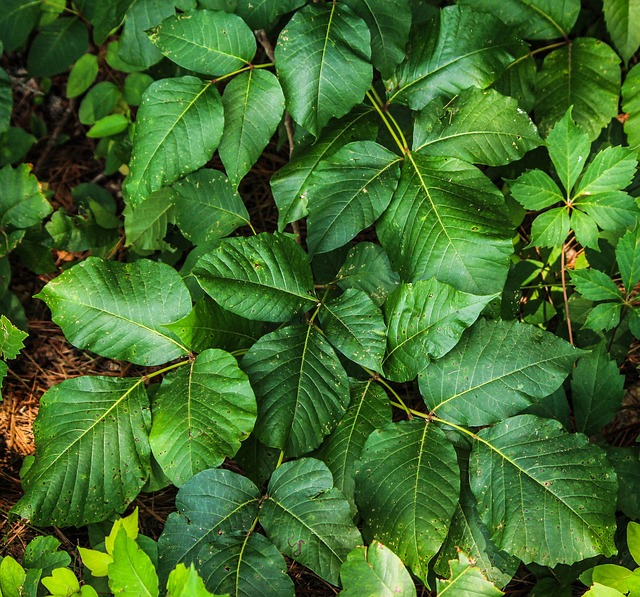
Image source: Pixabay
Find the offending plants you want to remove from existence and spray away. It is best to do this on a bright sunny day when there is little chance of rain. You may need to apply this several times in order to get the full effect of an all-natural herbicide, but it really does work. A word of warning, though: Only plan to use this method if you do not intend on having any plants in this area for the foreseeable future.
This New All-Natural Fertilizer Doubles Garden Production!
The reason I picked these three ingredients is for their potential to do just what I want them to do. The soap will help whatever spray you are applying to adhere to the plants. The vinegar will kill all living material above ground, but won’t do anything to the material below the surface. The salt will penetrate the soil and will raise the salinity too high for it to support plant life.
If you want to kill off a ground cover while leaving the soil able to grow life, then just leave the salt out.
I have only used this mixture on the poison ivy I have on my property, although I do intend on using it on a larger scale around my driveway and in the other areas where I want to limit the growth of weeds and other plant matter.
Some claim that a mixture of vinegar and dishwashing liquid is a good way to remove weeds from a garden bed prior to working with the soil. The great draw is that it will kill all the offending material without harming the soil itself. I am personally a fan of weed-retardant paper when it comes to gardening, although I would be willing to try this mixture in a small quantity on a new space next year.
If you are like me and consider poison ivy (or any other plant) to be among your enemies, then consider eradicating it with these household ingredients. They are easy to get and readily affordable.
What all-natural herbicide have you used? Share your tips in the section below:
Bust Inflation With A Low-Cost, High-Production Garden. Read More Here.

Friday, August 4, 2017
Welcome to Weedville: Pot Grower Buys Entire US Town to Create ‘Cannabis-Friendly’ Off-Grid City

Nipton, CA — In an unprecedented and highly unusual move, American Green Inc., a cannabis grower and product maker, plans on attracting new customers in California — by buying an entire town.
The tiny desert town of Nipton, California was acquired by the company for $5 million. According to the company, they plan on investing an additional $2.5 million in the town to turn it into a pot-friendly tourist destination. Among other smaller buildings, the town includes 120 acres of land, a general store, a hotel, a school, and mineral baths.
According to a report out of Bloomberg:
American Green, based in Tempe, Arizona, will use the existing structures and build new ones — powered by renewable energy — to revitalize the town, said project manager Stephen Shearin. Ideally, the outpost will spawn imitators, he said.
“We thought that showing that there was a viable means of having a cannabis-friendly municipality and further making it energy independent could be a way of really inspiring folks to say, ‘Why can’t we do that here?’” he said.
The move shows how far marijuana has moved out of the shadows despite an uncertain federal policy outlook. With pot now legalized for recreational and medical use in California, Nevada and six other states, one in five American adults can consume the formerly taboo plant as they please. That’s created an opportunity for companies to try to make cannabis a more mainstream product.
The notion of pot growers and the cannabis industry helping the environment and creating and fostering sustainable products is nothing new. However, the idea of turning entire towns into off-grid marijuana-friendly communities is certainly revolutionary.
Advertisment
READ MORE: Report Shows DEA Deliberately Blocked Beneficial Science to Perpetuate War on Cannabis
Pamela Johnston, senior vice president at Electrum Partners, a cannabis industry advising and consulting firm, said restrictions on pot use and availability have limited tourism-related activities, but predicted it will be on par with other types of travel, according to Bloomberg.
However, with legal weed expanding throughout the country, marijuana tourist destinations will likely flourish.
“But before we blink, it will soon outpace other niche affinity travel” like wine, Johnston said.
Unlike, wine, however, cannabis has other uses outside of recreation. Some of the 120 acres of the town’s property could be used to farm hemp which could then be used to create sustainable products like hempcrete and hemp plastics.
Given the amount of petroleum based plastics currently wreaking havoc on the environment, the idea of off-grid, self-sustainable towns popping up to produce environmentally friendly products with no footprint is inspiring, to say the least.
“We are excited to lead the charge for a true green rush,” American Green’s president David Gwyther said in a statement to Time.
“The cannabis revolution that’s going on here in the US has the power to completely revitalize communities in the same way gold did during the 19th Century.”
Nipton — which boasts a population of around 20 people — sits on the edge of California on its Nevada border. It was founded and built during the gold rush.
“The gold rush built this city,” he adds. “The green rush can keep it moving the way people envisioned it years ago.”
However, just like all peaceful and sustainable movements to move off-grid and function outside of the federal government’s grip on society, there is a very real risk of the drug warriors moving in to stomp it out.
READ MORE: Media Praises Wrongful Death Suit Against Pot, Says Weed Made Loving Husband a Homicidal Maniac
Even though Obama promised that the federal government would stop the crackdown on states with legal pot, it still happened. Now, with Jeff Sessions, tyrant extraordinaire, as the Attorney General, things appear to be even more bleak, as this insane pot nazi is attempting to blow new air into the already dead and deflated war on drugs.
However, American Green is not going to take it lying down and plans to move forward while hoping for the best.
As the Free Thought Project reported today, Americans are on their side and Jeff Sessions is a dinosaur. A paradigm shift, according to a new Harvard-Harris Poll, is taking place in the country. For the first time, 86 percent of Americans approve of some form of legal cannabis.
Soon enough — as long as good people continue to break bad laws — we could be making that weekend drive to Weedville in our cars made out of cannabis.
Wednesday, August 2, 2017
NFL Extends Offer to Work With Union to Study Medical Marijuana
In a letter to the NFL Players Association (NFLPA), the NFL offered to team up to study the potential of marijuana as a pain management tool for players. Marijuana use, for any purpose, is currently prohibited by the league. [1]
The NFLPA is in the midst of conducting its own marijuana study, and reportedly has yet to respond to the NFL’s offer.
Joe Lockhart, the NFL’s executive vice president of communications, said:
“We look forward to working with the Players Association on all issues involving the health and safety of our players.”
Someone with knowledge of the matter said the NFL wrote to the NFLPA to ask if, considering the union’s public comments in 2017, it would be interested in cooperating on research. Potential topics for study in the letter include pain management for both chronic and acute pain.
In addition to launching its own study, the NFLPA said it is interested in further loosening the sport’s rules concerning recreational pot use by athletes.
In January 2017, DeMaurice Smith, the NFLPA’s executive director, told The Washington Post it would propose to the league a “less punitive” approach to recreational use by players. At the moment, players are tested for marijuana, and those caught using it face potential discipline, including fines. [1]
Smith said at the time:
“I do think that issues of addressing it more in a treatment and less punitive measure is appropriate. I think it’s important to look at whether there are addiction issues. And I think it’s important to not simply assume recreation is the reason it’s being used.”
Individually, the union formed a pain management committee to research marijuana as a pain management tool for players and other potential uses. Technically speaking, the committee is actually a subcommittee of the NFLPA’s Mackey-White traumatic brain injury committee.
Smith stated earlier in January:
“How do you make sure that you address any potential addiction issue? Because I’ve read the literature on both side.
How do you deal with the fact that some people are using it purely recreationally and pivoting it to … people who are using it medicinally either as a pain eradicator or a stress-coping mechanism? So what we’ve decided to do is, to the best we can, look at it as related but nonetheless separate issues. Do I expect in the near future we are going to be presenting something to our board on the first issue? Yes.”
A former NFL player is currently suing U.S. Attorney General Jeff Sessions, the Department of Justice, and the DEA. Marvin Washington, a defensive lineman known mostly for his time with the New York Jets, and 4 other plaintiffs want cannabis to be legalized at the federal level. [2]
Washington is the co-founder of a company that sells hemp-based sports-performance products that contain no THC, the psychoactive component of marijuana which produces a high.
The retired athlete alleges in the lawsuit that the federal government’s classification of marijuana as a Schedule I drug is keeping him from receiving federal grants to open a business “that would allow pro football players to use medical marijuana for pain management in lieu of more addictive opioids.”
Read: In States That Legalize Medical Marijuana, Opioid Use Decreases
Washington said in June of 2017 that NFL players “are fed opiates and pharmaceuticals throughout the week, from training camp until the end of season. That can be June to January. It’s not normal.”
“I think the Players Association should demand that [players] have an alternative to opiates. This is scientific-based. This is not hocus pocus. That’s where I want to see this in the very near future, players that have an alternative to opiates.”
Washington’s co-plaintiffs include an 11-year-old girl who requires medical marijuana to treat her epilepsy, and a disabled military veteran who uses cannabis to treat his post-traumatic stress disorder (PTSD).
Sources:

 | Julie Fidler is a freelance writer, legal blogger, and the author of Adventures in Holy Matrimony: For Better or the Absolute Worst. She lives in Pennsylvania with her husband and two ridiculously spoiled cats. She occasionally pontificates on her blog. |
Tuesday, August 1, 2017
Mom: Cannabis Oil Treated my Daughter’s Life-Threatening Seizures
A woman from Tucson, Arizona, says cannabidiol oil (CBD oil) treated her 12-year-old daughter of life-threatening seizures. The young girl suffers from a rare brain disorder and slipped into a coma after she vomited and had a seizure following a gymnastics competition. [1]
Annalise Lujan’s parents rejoiced after only 3 CBD oil treatments brought their daughter out of her coma and halted her crippling seizures.
Her mom, Maryann, said the speed at which their daughter’s illness forever changed her life was stunning.
“One day, she was just a healthy young lady, going to school, participating in her community and her gymnastics, and the next day – fighting for her life.” [2]
Dad Paul said:
“We had no idea that our whole world would be 180-degrees turned around in such devastation, such heartache, such confusion.”
A Young Life Almost Cut Short
On April 2, 2017, Annalise had been competing in a Tucson gymnastics competition. By the child’s fourth event, Maryann said, “she just couldn’t move. She couldn’t walk. She was just exhausted, tired, not feeling well.”
Maryann and Paul took Annalise to Banner UMC, where doctors believed Annalise had a stomach virus, and sent her home. The next night, Annalise had her first seizure, and her parents took her back to the medical center. Once again, doctors sent her home. She was finally admitted to intensive care the following morning, but only after suffering more seizures.
Read: Cannabidiol-Based Medication Reduces Intense Seizures by 50%
Maryann said Annalise was placed on a ventilator, and she and Paul had no communication with the girl for weeks.

Eighteen days later, Annalise was airlifted to Phoenix Children’s Hospital, where she was quickly diagnosed with an extremely rare disorder known as FIRES – Febrile Infection-Related Epilepsy Syndrome.
Paul said:
“They say 1 in 1 million children will get this syndrome, and that’s how rare it is.”
The charity Rare Diseases says on its website that FIRES causes children to unexpectedly suffer up to hundreds of seizures a day within 2 weeks after contracting a mild febrile illness, such as a cold or cough. Not much is known about the disease, but experts believe it is caused by inflammation in the body or autoimmune disorders. [3]
Desperate to bring Annalise out of her coma, Annalise’s doctor began treating her with cannabis oil, which Maryann said saved the youngster’s life.
Less than 48 hours after her first treatment, Annalise’s seizures had nearly stopped. [1]
Read: Marijuana Helps 6-Year-Old Beat Severe Seizures, Places Pharmaceuticals
Maryann recalled the moment her Annalise emerged from her coma:
“She opened her eyes, and she was scared. She was afraid. She cried. And, I whispered to her that she was very strong, she’s beautiful, and she’s strong, and she needed to keep breathing, and she did.” [2]
Annalise’s doctor had to seek rapid approval from the FDA and DEA. Maryann and Paul hope their daughter’s case-study can help other children living with FIRES.
Maryann said:
“We have a long recovery ahead of us. But, we’re definitely on the right track now.”
Sources:
[1] The Sun
[2] NBC News Tucson
[3] Deccan Chronicle

 | Julie Fidler is a freelance writer, legal blogger, and the author of Adventures in Holy Matrimony: For Better or the Absolute Worst. She lives in Pennsylvania with her husband and two ridiculously spoiled cats. She occasionally pontificates on her blog. |
Friday, July 28, 2017
The Delicious Edible Weed That Doesn’t Get Bitter, Is Packed With Vitamins, And Grows EVERYWHERE

Image source: Pixabay.com
We tend to take weeds for granted. We spray them, pull them out and either compost them or simply toss them in a field. Unfortunately, we’re often tossing away nature’s bounty.
We’ll pay a premium for spinach or kale but lose sight of the fact that many plants like dandelions, plantain and purslane have equal nutritional value.
In fact, purslane not only equals the nutritional value of spinach and kale, but it also has a semi-sweet, salty and succulent flavor. Dandelion leaves and plantain leaves can acquire a bit of bitterness once they begin to flower or go to seed. Purslane is different.
That’s because purslane is a succulent plant. It is related to the cactus and absorbs water, which gives it a refreshing taste and flavor. Unlike the cactus it has no needles and when chilled makes a great addition to a tossed, green salad and will stand up to the boil of a soup or broth.
Just 30 Grams Of This Survival Superfood Provides More Nutrition Than An Entire Meal!
Purslane is high in omega-3 fatty acids and contains vitamins A, B, and C, and magnesium, calcium, potassium and iron. It’s also an excellent source of fiber.
Here are the official nutrition facts on a serving of purslane:
| Principle | Nutrient Value | Percentage of RDA |
| Energy | 16 Kcal | 1.5% |
| Carbohydrates | 3.4 g | 3% |
| Protein | 1.30 g | 2% |
| Total Fat | 0.1 g | 0.5% |
| Cholesterol | 0 mg | 0% |
| Vitamins | ||
| Folates | 12 µg | 3% |
| Niacin | 0.480 mg | 3% |
| Pantothenic acid | 0.036 mg | 1% |
| Pyridoxine | 0.073 mg | 5.5% |
| Riboflavin | 0.112 mg | 8.5% |
| Thiamin | 0.047 mg | 4% |
| Vitamin A | 1320 IU | 44% |
| Vitamin C | 21 mg | 35% |
| Electrolytes | ||
| Sodium | 45 mg | 3% |
| Potassium | 494 mg | 10.5% |
| Minerals | ||
| Calcium | 65 mg | 6.5% |
| Copper | 0.113 mg | 12.5% |
| Iron | 1.99 mg | 25% |
| Magnesium | 68 mg | 17% |
| Manganese | 0.303 mg | 13% |
| Phosphorus | 44 mg | 6% |
| Selenium | 0.9 µg | 2% |
| Zinc | 0.17 mg | 1.5% |
Both the leaves and stems are edible, which also sets it apart from other “wild” weeds. I’ve even incorporated purslane leaves into deli salads like potato salad, egg salad and tuna salad to give a burst of freshness and flavor. You also can eat purslane on its own. It has a burst of flavor when chilled.
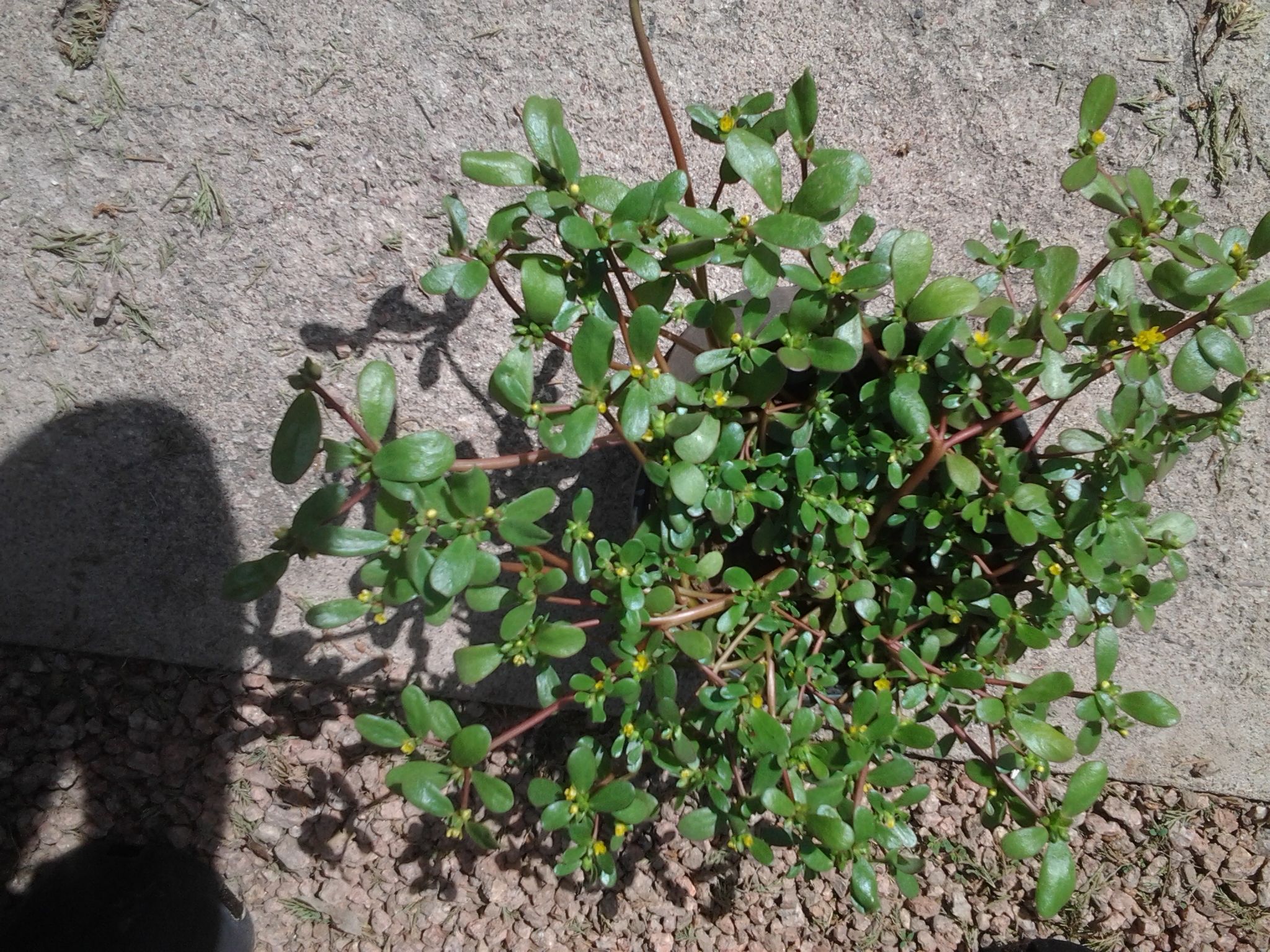
Image source: Wikipedia
Purslane grows close to the ground and needs to be washed and rinsed a couple of times. As a low-growing plant it tends to pick up a lot of dirt, dust and those ever-present bugs. Once you’ve washed and rinsed your purslane harvest, you can easily store it in the crisper in your refrigerator. It keeps fairly well in a plastic bag or tied into a bunch with a rubber band.
If you’ve never tried purslane, here are a few easy ways to enjoy it and some ideas about how to add it to many of the things you eat.
Purslane Salad
I usually toss a cup of chopped purslane into a chopped green salad and top it with an apple-cider vinaigrette of a ½-cup of oil, a cup of apple-cider vinegar and a tablespoon of water with about a half-teaspoon of salt and a half-teaspoon of pepper. You also can eat the purslane salad on its own if you can harvest enough of it.
Purslane Soup
Bring 4 cups of chicken broth to a boil and add a cup of noodles and when the noodles are done add a cup of chopped purslane leaves and stems for 2 minutes.
Bacon Fried Purslane
Fry 6 strips of bacon until crisp and then drain on paper towels. In the reserved drippings toss chopped purslane leaves and stems. Chop the bacon and top the purslane with the bacon bits.
Growing Purslane
Growing purslane is surprisingly easy. The seeds are simply cast on the top of dry soil, and they germinate quickly. Purslane cuttings of the stems also will develop roots when watered. It’s a tough plant and grows in the worst conditions, which is why it’s considered to be a weed by so many gardeners. But once you get to know purslane, your view of it surely will change.
What advice would you add on eating purslane? Share your tips in the section below:
Harness The Power Of Nature’s Most Remarkable Healer: Vinegar
Wednesday, July 19, 2017
8 Healing Uses For Mullein (The Native American ‘Survival Weed’)

Image source: Pixabay.com
It was native to Europe, northern Africa and Asia, and then was introduced to the Americas and Australia. You might know it by some of its other common names, such as feltwort, blanket leaf, candlewick and velvet dock.
It is Mullein, a common backyard weed the Native Americans used. And it has surprising medicinal properties.
Identifying Mullein
Mullein can grow, when left alone, up to seven feet tall, with large leaves covered in silver and felt-like hairs. Once blossomed, the flowers are yellow and take up half of the stem. The plant flowers from November to March. Most people consider it a nuisance, but there is so much more to the plant!
Medicinal Purposes of Mullein
For a plant that typically shows up in dry, barren places, mullein has impressive medicinal properties. You can use most of the plant, including the root. The leaves and flowers are the most common parts used. Infused oils, tinctures, capsules, lozenges, herbal teas and poultices are all common application methods for mullein.
Make Powerful Herbal Medicines, Right in Your Kitchen!
For centuries, people used mullein in herbal remedies, such as to soothe the respiratory tract. But it can do so much more.
1. Flu. Preliminary research shows that mullein has properties to fight flu-causing viruses. Of course, the flu can be dangerous, so seek medical help if you experience worsening symptoms.
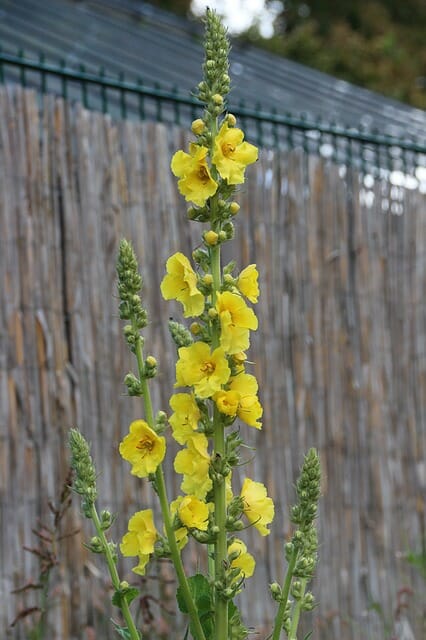
Image source: Pixabay.com
2. Pain. Mullein has analgesic properties that have a numbing effect on your nerves. It is a great choice to stop transmitting pain to the brain. Toothaches and headaches can be relieved with mullein.
3. Inflammation. One of the main benefits of mullein is its anti-inflammatory properties. You can use it to treat nasal or respiratory tract inflammation, inflammation of the digestive system, and inflammation caused by fever or infection. If you experience a burn, try to apply mullein oil directly to the burn or inflamed skin.
4. Ear infections. Do you or your children experience chronic ear infections? Mullein oil can reduce ear pain significantly; make an infused oil, which taps into the antibacterial properties.
5. Coughs. If you have a cold or upper respiratory infection that causes excess secretions of phlegm, then mullein is an excellent expectorant. You can make lozenges that contain mullein or find them in your local health food store. Some Native American tribes believed mullein could cure chest diseases. For example, the Navajos would mix mullein with tobacco and smoke it to help with coughing spasms. I wouldn’t recommend that, but many people still use mullein in an herbal tea for coughing.
6. Relax/sleep aid. Mullein has a relaxing effort on your brain and other bodily systems. You can use it to treat muscle cramps, nervous disorders, stress, anxiety and more. Because of its relaxant properties, mullein also reduces blood pressure. Many people use mullein to help with chronic insomnia. If you need a good night’s rest, then try drinking a warm cup of mullein tea.
7. Hemorrhoids. No one likes hemorrhoids. A poultice created with mullein leaves can be applied to hemorrhoids to help stop the swelling and irritation.
8. Respiratory issues. In general, one of the most common applications of mullein is for respiratory issues. Asthma, bronchitis and allergies can be treated with mullein tea. It also is effective against sore throats, as well as the other listed issues such as coughing and spasms.
Have you ever used mullein for any herbal remedies? Let us know in the comments section below!
Friday, July 14, 2017
Nevada has Declared a Weed State of Emergency


Nevada Gov. Brian Sandoval declared a weed state of emergency Friday: The state’s pot dispensaries are running out of product.
Nevada began the legal sale of recreational pot on July 1 amid major questions over whether there would be enough supply to meet consumer demand. The initiative authorizing the sales, passed in November, gave liquor distributors exclusive rights to transport product to dispensaries for the first 18 months of business.
Read full article at Vice News.
Create your own review
Average rating:
0 reviews
0 reviews
Wednesday, June 28, 2017
VIDEO: Cop Lies About Smelling Weed, Slams Innocent Student’s Head Into the Pavement

Albany, GA — Llewellyn Glover Jr. became the victim of Albany’s finest last month when an officer claimed to smell weed and then unleashed his fury. After weeks of the department fighting its release, the family has finally obtained dashcam footage of the incident showing the horrid brutality.
“We’re not even allowed to see the tape,” Glover’s father Llewellyn Glover Sr. said of the dashcam earlier this month. “See what transpired, what he actually did to my son. We keep getting pushed off. I’m really upset about that. I really want to know what’s going on.”
Well, we now know why they were hiding it. It shows, without a doubt, that this officer was excessive and outright predatory in every way.
After the incident, Glover’s family filed an excessive force complaint with the department and an investigation was launched. The investigation found that the family was truthful in their accusations.
According to an internal Albany Police report, the investigation found that a deadly force chokehold was also used against Glover — after the cop slammed him on his head.
“When I saw it, I just, I don’t even want to talk about it,” Glover’s father said of the video.
As the video begins, we can hear Officer Jamie Sutton fishing, trying to come up with a reason for the harassment. A few moments into the stop, Sutton then claims to smell weed on the Albany State University student which prompted a search of the vehicle and subsequent assault.
Glover is heard in the video telling the officer that he does not have marijuana in his possession, nor has he ever smoked weed in his vehicle. However, this only served to further anger the tyrant officer.
READ MORE: Library Worker Beaten and Arrested for Peacefully Defending Free Speech of Patron
The more Glover denied having the weed, the more violent Sutton became. Within seconds, he had the young man in a bear hug and on the ground. He began choking him and accusing Glover of putting the non-existent weed in his mouth.
As the 20-year-old college student continued denying he’d done anything wrong, Sutton then picked him up and slammed him on his head — a move that could’ve killed the young man.
Even after brutally assaulting him, the violent cop continues his attack, choking his innocent victim in a futile pursuit of weed that did not exist.
The video goes on for several more moments as the crazed cops continue to assault the young man. It becomes disturbing to watch as Glover is now crying and begging the cops not to continue hurting him.
“You can’t help em. There’s nothing you can do,” Attorney Julius Collins said. “You just have to watch and feel hopeless, as far as watching your child go through this.”
We now know that that marijuana never existed as the internal affairs investigation found that Sutton was being untruthful when he claimed that he smelled marijuana and saw it in his mouth.
Even if this young man would’ve had this plant, the officer is in no way morally justified in using violence on a man for possessing a plant.
“There’s nothing I can do to ease that for him and it hurts, it hurts a whole lot,” Glover’s mother Arpeja Shorts said.
“He wanted to be a police officer coming out of high school,” Shorts said. However, after being treated like this, it is highly unlikely that he’ll want to join the ranks of a group who assaults people over suspicion of being in possession of a plant.
READ MORE: VIDEO: Man Dragged from Car by Cops, Assaulted, Tasered, Pepper Sprayed--for Loud Music
To add insult to Glover’s assault and kidnapping, prior to the investigation coming to an end, Sutton was allowed to quietly resign — a move that is typical of cops facing accountability. Once they resign, they become gypsy cops and can move to another town where they could be rehired.
“It truly is shameful that he was allowed to resign and could possibly go somewhere else,” Glover’s mother said. “But, know, because anywhere he goes, if I find out, I will be forwarding that video to that police department, personally if I have to.”
Wednesday, April 26, 2017
The Cholesterol-Lowering ‘Weed’ Hidden In Your Yard

Image source: Pixabay.com
It grows everywhere, and it’s persistent in its growing. But many homeowners rip the plant out of their gardens, yards and walkways without a second thought.
It is purslane. You may not even know its name, yet you certainly have seen it growing.
This little weed, though, actually is a beneficial herb. It is native to Asia, popular in the Mediterranean, and is a typical hot-weather herb. It does not like frost, and will not grow until the soil is warm, usually in May. It is drought-resistant, probably because it retains water in its tube-like stems.
When examining the leaves of purslane, you will notice they are fleshy and green, with red stems and bright yellow flowers. The leaves are thick and smooth, with a paddle shape, and are about one and a half to two inches long.
Purslane is remarkably high in omega-3 fatty acids – which can help lower bad cholesterol — and contains more of it than any other leafy green. It also has calcium, iron, potassium and magnesium. Additionally, it is high in vitamins A and C and pectin, the latter of which can lower bad cholesterol, too.
Just 30 Grams Of This Survival Superfood Provides More Nutrition Than An Entire Meal!
Not bad for something you usually yank out of the garden!
Planting Your Own Purslane
If you don’t have purslane in your yard, you can grow it. You will have to find it first! In its wild state, purslane grows in a flat, circular, horizontal position of up to 16 inches across. You also can simply buy seeds from a garden center.
If you are harvesting wild purslane, stay away from plants growing by the road or where chemicals have been sprayed. You will want to find the most organic and healthy plants possible.
When you find a plant, you can collect some seeds. If you would rather deal with seedlings, then cut a couple of stems. Sowing the seeds is quite easy. Simply scatter the seeds over the prepared soil. You don’t need to cover them; let them sit on the surface, as they need sunlight to germinate. If it makes you feel better, spread a thin layer of soil over the seeds.
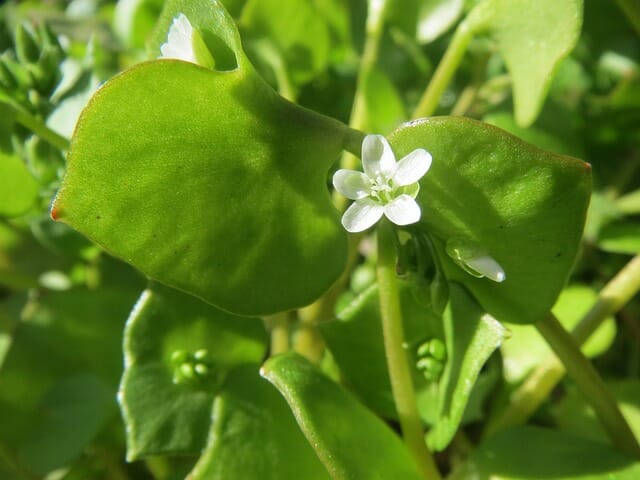
Image source: Pixabay.com
Purslane cuttings can be laid on the soil, after which you can water the stems. They should take root after a few days. It is a care-free plant once it starts growing.
Purslane is an annual and takes four to six weeks to fully mature. It usually reseed itself, but you can gather seeds just to be safe. It likes partly sunny, to full sun areas.
The soil type doesn’t seem to matter too much to this plant, but the ground needs to be clear and recently turned. Purslane likes the combination of moisture and heat, and it does well during wet summers.
Harvest it regularly or it can become invasive in your garden. (Harvest before it flowers to control its spreading.)
Using Purslane
It has a crunchy and lemon or citrus-like taste. The last inch or two of the plant is the most delicious, so when you gather it to eat, make sure you get the whole plant — the stems and the leaves. If you are trying to thin out a patch, simply pull it out by the roots. Keep it cool until you can wash and trim it.
Purslane goes well in salads and can be used as garnishes or in sandwiches (preferably by using the tender, young leaves).
You can use it to substitute for spinach or watercress, as well as to thicken stews or soups.
Make your own pesto by combining these ingredients:
- Purslane, with stems and all.
- Olive oil.
- Garlic.
- Pine nuts.
- Hot watercress.
Blend thoroughly.
Whether you want to call purslane a weed or an herb, there is no denying the healthy benefits of this often-overlooked plant.
Do you eat purslane? What advice would you add? Share your thoughts in the section below:
Thursday, April 20, 2017
Ex-DEA Spokeswoman: ‘Marijuana Is Safe,’ Kept Illegal Because It’s a ‘Cash Cow’
(ANTIMEDIA) Before the heroin epidemic became a nationwide problem, claiming thousands of lives, Plano, Texas, was already entrenched. And like many of the places caught in the crosshairs of the continuing heroin crisis, Plano is the last place that one would expect to be swept into the opioid tidal wave.
Anti-Media recently interviewed Texas-native Belita Nelson, who has had an interesting few decades. For six years she termed herself the “chief propagandist” — or spokeswoman — for the Drug Enforcement Agency (DEA). Before that, as a Plano mother and teacher, Belita noticed what was happening in her community. She described Plano as an area rivaling Newtown, Connecticut, or Cape Cod — tight-knit regions where tragedy strikes hard and deep.
She explained that “[Plano] has the best school districts in the state of Texas…it’s a gated community. And in 1998, for heroin to be that prevalent in the community was stunning. Stunning. We got all the media attention because we were this upscale Texas neighborhood that nobody thought would be inundated with heroin.”
Nelson decided to take action, saying, “I decided I’d had it. I was going to organize my community and fight this thing at the grassroots level. But we were never grassroots because the first thing I did was go on the Oprah show for the DEA.”
Belita stresses that she was never officially employed by the DEA but traveled for six years as a sort of unofficial spokeswoman for the agency. The group recruited her because their goals aligned, and in many ways, she was perfect for the role. She was a mother who had witnessed the toll of heroin first-hand. She was passionate and knew what she was talking about. Belita spoke to schools and parent groups and appeared on television networks.
With the help of a former Dallas Cowboy, she founded the Starfish Foundation to tackle heroin addiction. That organization ran until 2004 when one of the employees pocketed the donation money and left the foundation scrambling in the dark.
In our interview, Belita was hesitant to speak too openly but mentioned that when she first went to work with the DEA (she was contacted and became familiar with agency’s goals), she was told “‘Marijuana is safe, we know it’s safe, but it’s our cash cow and we will never, ever, give it up.’” When the DEA seizes a car or makes a drug bust, it’s likely they’ll find wads of money. They turn in the pot (or other drugs) — and keep the cash. Civil asset forfeiture law essentially gives the police and feds free reign, and they have confiscated billions of dollars from Americans, a majority of whom have not been charged with a crime.
Belita, like many people, posits that the DEA is not willing to give up the long disproven idea that marijuana is a “gateway drug.” Unlike heroin, most people are open to trying marijuana. At high school or college parties, it’s much more likely that a joint is being passed around than a needle. While a joint conjures up images of Bob Weir or SOJA on stage, a needle brings to mind a lifeless Philip Seymour Hoffman or Basquiat.
Belita cut ties with the DEA in 2004 after becoming frustrated with the system and the government’s need to keep marijuana criminalized, despite knowledge that the drug was safe.
While at the Starfish Foundation, Belita heard time and time again the tale of pot-smoking teenagers who were pushed into heroin simply because marijuana carries harsh penalties. And it’s a story that’s been told repeatedly. Today Belita works for the Gridiron Cannabis Foundation, a nonprofit dedicated to fighting CTE, concussions, Alzheimer’s disease, Parkinson’s disease, Multiple Sclerosis, neuropathy, dementia, chronic inflammation, Leukemia, and brain and other cancers. But the group’s pockets that only stretch so far.
In contrast, her opposition — and the opposition of anyone fighting the heroin epidemic and hoping to legalize marijuana — are big pharma companies.
Recently, we’ve seen pharma companies hit the grassroots to secure influence. Anti-Media and a number of other news outlets recently reported on an opioid company pumping half a million dollars into Arizona anti-marijuana groups in an effort to keep the plant illegal. These sorts of campaigns do not serve the dead in Plano and the hundreds of thousands around the nation suffering from opioid addiction. Rather, they benefit CEOs and pharmaceutical groups who have invested millions in developing drugs that minimize pain. Unfortunately, they come with a dangerously high likelihood of addiction.
Big pharma corporations see dollar signs in every painkiller that moves across a counter, but some of which could easily be replaced by marijuana, which is increasingly proven to help decrease pain. So the American consumer, from Plano, Texas, to Portland, Maine, is faced with the dilemma — is it better to be a living Bob Weir or a dead Basquiat?
Creative Commons / Anti-Media / Report a typo
Subscribe to:
Comments (Atom)