Showing posts with label fuel. Show all posts

Monday, April 16, 2018

Syrian Conflict: Australia Could Run Out Of Fuel In 43 Days, Would Be ‘MAD MAX World’


Australia is at risk of running out of fuel in the next few weeks due to the ongoing conflict in Syria. The escalating situation in the war-torn country threatens to cripple the supply chains that keep Australia going.


While the International Energy Agency mandates that countries hold a stock reserve “equivalent to 90 days of net imports,” Australia only has 43 days worth of supply, the Australian reports. And that could be cut down even further if a global crisis threatens supply channels from places like the Middle East.


Low oil reserves and an over-dependence on imports is what’s driving Austrailia’s fuel concerns.  Defense Strategy and Capability at the Australian Strategic Policy Institute senior analyst Dr. Malcolm Davis says Australia’s fuel reserves would last “20 days at best” if supplies were cut off, News.com.au reports. “[Australia is] one of the few countries in the world that does not take our energy security seriously,” said Dr. Davis. “It would be a Mad Max world. Our society and our economy would begin to fall apart very quickly… [because] everything depends on fuel to make an economy run. It is very serious.”


The rather ominous forecast comes in the wake of major US-led strikes on the Syrian government. As tensions escalate and threaten to compromise international trade, this could prove dire for Australia: a nation that outsources its oil refining to such international locations as Singapore. “Instead of investing in refinement facilities here for refining fuel, the government has decided it’s cheaper to do it overseas,” said Dr. Davis. “The price they pay for that in a crisis is that China can interrupt flow to Australia [from Singapore] relatively easy and our economy falls apart.”


According to The Daily Mail UK, liberal Senator and former major general in the Australian Army Jim Molan agrees that “we [Australia] stand[s] in real trouble.” Speaking to 2GB on Monday Morning, Molan criticized the government’s passive approach to issues of fuel supply and energy security, calling it “a single point of failure for Australia.”


“The way that we seem to get around this is that we buy credits overseas which ignores the entire problem,” Nolan said. “Those credits say that if things go wrong we can buy from overseas, but hang on: our supply lines of communication by ship are likely to be either threatened or because of insurers nothing will come to us at all.”


Moreover, a chronic shortage of petrol, diesel, and aviation fuel could render the Australian military immobile, and in these times where rhetoric and tensions over a war are high, that could prove disastrous for the country.

Thursday, September 28, 2017

Puerto Rico’s Looming Medical Crisis Is About To Explode

It has been one week since Hurricane Maria devastated the island of Puerto Rico. And inside hospitals and clinics, doctors have limited supplies and will soon run out of diesel to power the buildings.

The looming medical crisis is set to explode at any time. Dr. María Rodríguez is the medical director of Concilio de Salud Integral de Loíza, a community health center in a small town in the northeastern portion of Puerto Rico.  She told CNN that she only has six hours of diesel left. Fuel distribution has been inconsistent and there just isn’t enough. Once Dr. Rodríguez is out of fuel, she will have no choice but to close her doors.

With the fuel and power shortages, she expects the top health concern in the days ahead will be infectious diseases. As people who need medications do not get them, she predicts mental health issues will become a problem as well.  “The desperation that all these people have, they’ve lost everything — on the whole island,” she says.


“What else we can do?” she asks. “I haven’t seen anything like this.” For 24 years, she’s worked at the center, which serves about 15,000 underprivileged patients each year. Despite the possibility of a power outage, she and her co-workers are still trying to provide services to the best of their ability. In normal conditions, the center provides everything from primary care and pharmacy services to X-rays. “We can do some things. I have a stethoscope and the antiseptics and I can prescribe. But the pharmacy can’t work with that, they need the system — they need labs to provide medications to these patients,” Rodríguez says.


“It will get worse before it gets better,” she says. Her feelings are shared by other health care providers on the island as well, who believe a medical crisis is about to unfold. Dr. Robert Fuller, an emergency medicine physician at the University of Connecticut and International Medical Corp. arrived in Puerto Rico to help those whose lives are on the line.


“I didn’t realize it was gonna be corner-to-corner everybody affected by the storm,” says Fuller, squinting into the sunlight. “Every family’s been touched and disturbed in some way or another. And the degree of destruction — the power the storm had — took me by surprise.” Communities are disabled by the storm, he says, yet it’s fuel and electricity that are driving this disruption.


“If we had good logistics and good communications, things could probably settle out a little faster,” Fuller says. However, the lack of those things could lead to a medical problem, since medications might not be delivered where needed. Puerto Rico is a “complicated mess” right now, he says. –CNN


It’s not a matter of human resources, says Dr. Fuller. “It’s a matter of getting the medications and treatments to the people.” It’s also a matter of being able to move around and get services to people, which cannot happen without fuel. Unless medical supplies and fuel to run clinics and hospitals can get to the devastated island, and soon, the looming medical crisis will explode, and it could cost some their lives.


Thursday, August 31, 2017

‘Gas shortage’ plagues Texas cities as stations run dry

(INTELLIHUB) — Texas cities like Austin and Dallas are now starting to experience what people are dubbing a ‘gas shortage’ with long lines and in some cases dry pumps.


Although the shortages are most-likely being caused from the storm’s crippling of critical oil refineries, some are not so sure and feel that the crisis may be orchestrated. Either way the result is the same — long lines at the pumps and no gas at some stations altogether.


In Austin today there were long lines at Riverside Chevron on S. Congress Ave. where gas is expected to run out completely by nightfall.


Intellihub’s Shepard Ambellas tweeted: #Gasshortage in #Austin.”


North of Austin, in Dallas, there were long lines at the pumps as well.


Tom Fougerousse tweeted: “Pretty epic line for gas today in Dallas at the Costco #Gasshortage.”


And 40-minute waits!


One station in “Garland” is allegedly charging over $8 a gallon!


A little humor…


Laura Giles jokingly predicts the near future for “North Texas.”


https://twitter.com/lgiles/status/903235285126967296


However, some say that the so-called “gas shortage” may be engineered.


Hannah Lee tweeted: “Is there a legitimate gas shortage, or have we just made a gas shortage because everyone panicked? #dallas #Gasshortage.”


We will keep you updated. Always visit Intellihub. Bookmark us.


©2017. INTELLIHUB.COM. All Rights Reserved.


Shepard Ambellas is an opinion journalist, analyst, and the founder and editor-in-chief of Intellihub News & Politics (Intellihub.com). Shepard is also known for producing Shade: The Motion Picture (2013) and appearing on Travel Channel’s America Declassified (2013). Shepard is a regular contributor to Infowars. Read more from Shep’s World. Follow Shep on Facebook and Twitter.


Wednesday, July 26, 2017

Visualizing What Energy Sources Power The World?

There are many types of maps out there, but one of the most telling ones is a simple satellite image of the Earth at night. As "s Jeff Desjardins writes, on these powerful images, the darkness is a blank canvas for the bright city lights that represent the vast extent of human geography. The bright spots help us understand the distribution of population, as well as what areas of the world are generally wealthier and more urban. Meanwhile, the big dark spots – such as over the wilderness in northern Canada, the Amazon basin, or in Niger – show areas that are not densely populated or more rural.


Here’s one image based on this principle. It comes from NASA, and is a composite made from 400 separate satellite images from 2012:


Satellite composite image of Earth


Source: Visual Capitalist


How Are These Lights Powered?


But what if we could differentiate, by “shutting off” lights that are powered by certain electricity sources?


Today’s visualizations come from a nifty interactive website put together by GoCompare.com, and they breakdown the world’s electricity by source: fossil fuels, renewables, or nuclear fission.


Fossil Fuels


To start, here are the places on Earth that are powered by fossil fuels.


(Click image to see larger version)
Fossil Fuels only


Source: Visual Capitalist


Globally, fossil fuels represent about two-thirds of electricity usage. It’s also worth noting that fossil fuels also make up the majority of non-electrical sources needed for things like automobiles, aircraft, and ships, which are not shown on the map.


For further interest, we have previously shown the evolution over time of total U.S. energy usage, as well as a detailed breakdown of current U.S. usage – both which are still dominated by fossil fuels such as oil, natural gas, and coal.


Nuclear Only


Here are the places on Earth powered by nuclear fission.


(Click image to see larger version)
Nuclear only


Source: Visual Capitalist


Nuclear makes up about 10% of all global electricity usage – and France is the world’s most reliant country, getting about 74% of its power mix from nuclear. Also noteworthy is Japan, which has switched its major electrical source from nuclear to fossil fuels since the Fukushima incident in 2011.


Nuclear is a major source of energy in the rest of Europe as well.


Belgium (51%), Sweden (43%), Hungary (51%), Slovakia (55%), Czech Republic (35%), Slovenia (33%), Ukraine (43%), and Finland (33%) all draw significant amounts of their electricity from nuclear reactors.


Renewables


Last, but not least, are renewables.


(Click image to see larger version)
Renewables only


Source: Visual Capitalist


It’s important to remember here that hydroelectricity is the largest renewable energy source by far, and that countries like Canada and Brazil rely on hydro extensively.


Outside of hydro, Italy is a leader in solar generation (6% of all electricity). Meanwhile, just eight countries host over 80% of all installed wind power: France, Canada, United Kingdom, Spain, India, Germany, USA, and China.


Finally, it’s worth noting that there are four smaller countries that get all, or nearly all, of their electricity from renewable sources. Those include Iceland (72% hydro, 28% geothermal), Albania (100% hydro), Paraguay (100% hydro), and Norway (97% hydro, 2% fossil fuels, and 1% other).

Wednesday, May 10, 2017

Visualizing The Global Black Market For Oil

The value of the crude oil production alone is worth a staggering $1.7 trillion each year. Add downstream fuels and other services to that, and oil is a money-making machine. As VisualCapitalist"s Jeff Desjardins notes, both companies and governments take advantage of this resource wealth. More of the world’s largest companies work in the oil patch than any other industry. At the same, entire government regimes are kept intact thanks to oil revenues.


The only problem when an industry becomes this lucrative? Eventually, everybody wants a piece of the pie – and they’ll do anything to get their share.


THE BLACK MARKET IN FUEL THEFT


Today’s infographic comes from Eurocontrol Technics Group, and it highlights the global problem of fuel theft.


While pipeline theft in places like Nigeria and Mexico are the most famous images associated with the theft of hydrocarbons, the problem is actually far more broad and systematic in nature.


Fuel theft impacts operations at the upstream, midstream, and downstream levels, and it is so entrenched that even politicians, military personnel, and police are complicit in illegal activities. Sometimes, involvement can be traced all the way up to top government officials.


E&Y estimates this to be a $133 billion issue, but it’s also likely that numbers around fuel theft are understated due to deep-rooted corruption and government involvement.


HOW FUEL THEFT ACTUALLY HAPPENS


Billions of dollars per year of government and corporate revenues are lost due to the following activities:


Tapping Pipelines: By installing illicit taps, thieves can divert oil or other refined products from pipelines. Mexican drug gangs, for example, can earn $90,000 in just seven minutes from illegal pipeline tapping.


Illegal Bunkering: Oil acquired by thieves is pumped to small barges, which are then sent to sea to deliver the product to tankers. In Nigeria, for example, the Niger Delta’s infamous labyrinth of creeks is the perfect place for bunkering to go undetected.


Ship-to-Ship Transfers: This involves the transfer of illegal fuel to a more reputable ship, which can be passed off as legitimate imports. For example, refined crude from Libya gets transferred from ship-to-ship in the middle of the Mediterranean, to be illegally imported into the EU.


Armed Theft (Piracy): This involves using the threat of violence to command a truck or ship and steal its cargo. Even though Hollywood has made Somalia famous for its pirates, it is the Gulf of Guinea near Nigeria that ships need to be worried about. In the last few years, there have been hundreds of attacks.


Bribing Corrupt Officials: In some countries – as long as the right person gets a cut of profits, authorities will turn a blind eye to hydrocarbon theft. In fact, E&Y says an astonishing 57.1% of all fraud in the oil an gas sector relates to corruption schemes.


Smuggling and Laundering: Smuggling oil products into another jurisdiction can help to enable a profitable and less traceable sale. ISIS is famous for this – they can’t sell oil to international markets directly, so they smuggle oil to Turkey, where it sells it at a discount.


Adulteration: Adulteration is a sneaky process in which unwanted additives are put in oil or refined products, but sold at full price. In Tanzania, for example, adding cheap kerosene and lubricants to gasoline or diesel is an easy way to increase profit margins, while remaining undetected.


THE IMPLICATIONS OF FUEL THEFT


The impact of fuel theft on people and the economy is significant and wide-ranging:


Loss of corporate profits: Companies in oil and gas can lose billions of dollars from fuel theft. Case in point: Mexico’s national oil company (Pemex) is estimated to lose $1.3 billion per year as a result of illegal pipeline tapping by gangs.


Loss of government revenues: Governments receive royalties from oil production, as well as tax money from finished products like gasoline. In Ireland, the government claims it loses €150 to €250 million in revenues per year from fuel adulteration. Meanwhile, one World Bank official pegged the Nigerian government’s total losses from oil revenues stolen (or misspent) at $400 billion since 1960.


Funds terrorism: ISIS and other terrorist groups have used hydrocarbon theft and sales as a means to sustain operations. At one point, ISIS was making $50 million per month from selling oil.


Funds cartels and organized crime: The Zetas cartel in Mexico controls nearly 40% of the fuel theft market, raking in millions each year.


Environmental damage: Not only does fuel theft cost corporations and governments severely, but there is also an environmental impact to be considered. Fuel spills, blown pipelines, and engine damage (from adulterated fuel) are all huge issues.


Leads to higher gas prices: Unfortunately, all of the above losses eventually translate into higher prices for end-customers.


HOW TO STOP FUEL THEFT?


There are two methods that authorities have been using to slow down and eventually eliminate fuel theft.


Fuel dyes are used to color petroleum products a specific tint, so as to allow for easy identification and prevent fraud. However, some dyes can be replicated by criminals – such as those in Ireland who “launder” the fuel.


Molecular markers, which are used in tiny concentrations of just a few parts per million, are invisible and can also be used to identify fuels.


In Tanzania, the initiation of a fuel marking program using molecular markers led to significant increases of imported petrol and diesel for the local market, and a decrease of kerosene.


At the retail level, product meeting quality standards increased from 19% in 2007 to 91% in 2013. Ultimately, this resulted in an increase of tax revenue of $300 million between 2010 and 2014.

Friday, January 13, 2017

How To Pick The Cheapest, Most Efficient Heat For Your Home (Hint: It’s Not Always Wood)

How To Pick The Cheapest, Most Efficient Heat For Your Home (Hint: It


Heating your home is a critical, but what is the most effective fuel source to do it – and what should you use as a backup?


Electric heat? Stove oil? Propane? Wood? Choosing a fuel source can seem overwhelming when trying to balance both cost efficiency and heating efficiency.


Whether you live urban or rural, in the prairie or in the forest, your average seasonal temps are all variables that weigh heavily on choosing the most efficient heating source. In this article, I’ll detail five different common ways of heating your home and the pros and cons of each.


Electric Heat


Let’s start with one of the most common types of home heating in urban areas: electric heat. In many areas of the country, electric heat is popular because it is a relatively cheap source of heat. If you live in the Midwest this is especially true, where electricity prices average about 10 cents per kilowatt hour. If you live on the coasts or where I am (Alaska), however, you can pay upwards of 17 cents per kilowatt hour. This can make electric heat quite a bit more expensive than some other heat sources. Electric heat also can be problematic if you are living off-grid and have other fuel sources readily available that might be better put toward the use of heating your home.


Firewood


If you have an easily accessible source of wood in your area and don’t want to be dependent on other infrastructure systems for your source of fuel, heating with firewood may be your best option. Modern-day woodstoves have become much more efficient in recent years, with many models burning at upwards of 80 percent heating efficiency.


Are You Prepared For A Long-Term Blackout? Get Backup Electricity Today!


If you can cut the wood yourself, your fuel source also can be virtually free, leaving you with only the initial cost outlay for the woodstove itself. If you don’t have the means to cut your own firewood, the average cost for a cord (4 x 4 x 8 stack) of firewood is between $150 and $250, although this cost is heavily dependent on your area. You can expect to go through about 4-7 cords per winter season with a modern-day wood stove.


Stove Oil


Stove oil is also commonly used for heating homes. Stove oil is available in most areas of the country and is especially popular in the Northeast and my area of Alaska. Stove oil prices fluctuate just like gasoline prices, but current prices for stove oil are right around $3 per gallon. Although not ridiculously expensive, stove oil has a higher cost than both propane and natural gas, with the average household spending about $2,500 per household per winter season. Stove oil can be more efficient than heating with wood, however, and has efficiencies ranging from 80 to 90 percent.


Propane


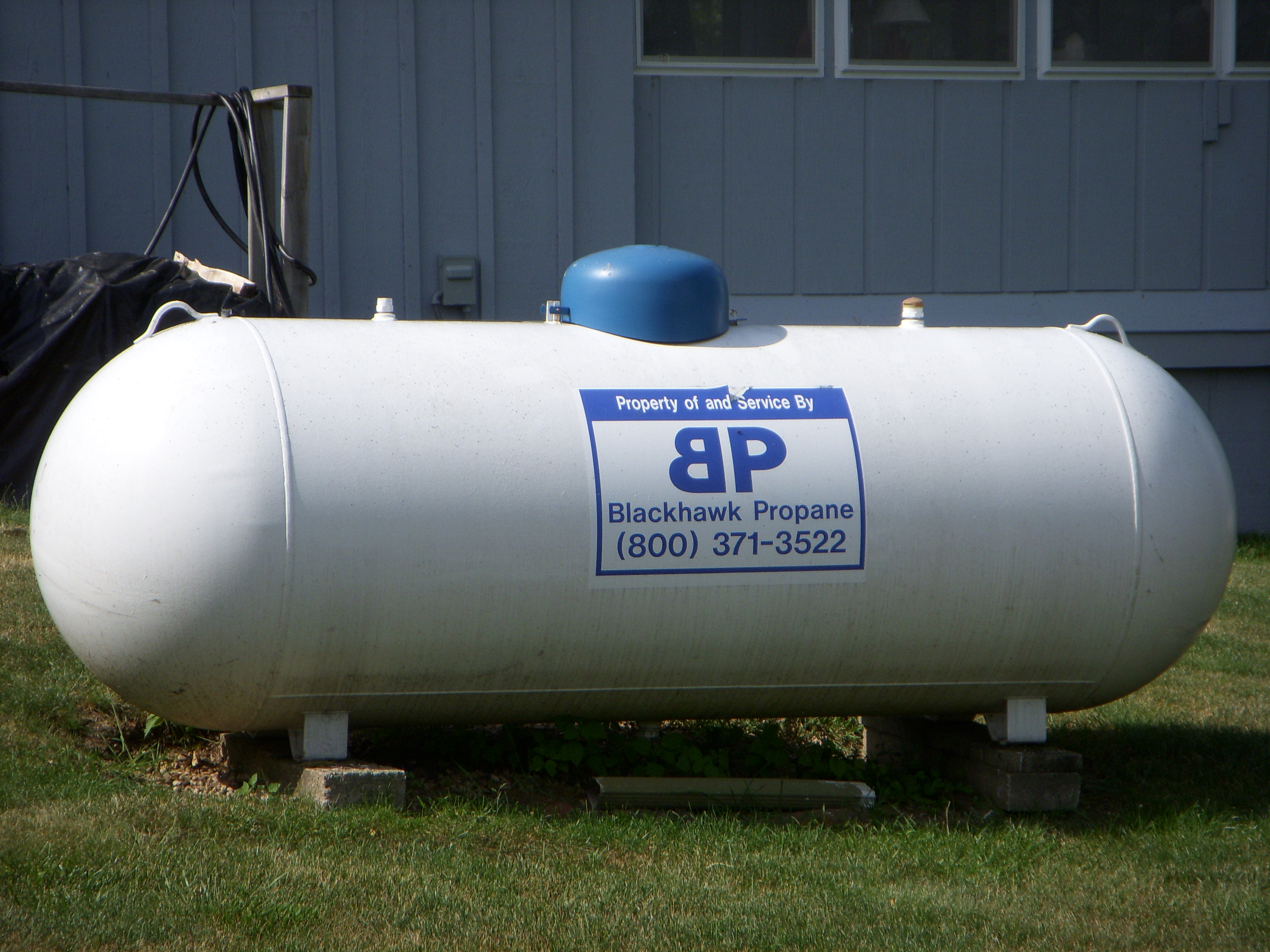
How To Pick The Cheapest, Most Efficient Heat For Your Home (Hint: ItAlthough still fairly common, propane has been losing popularity in recent years as a heating fuel. Current average household propane costs for the country are right around $2 per gallon, but that price varies significantly region to region. In some areas, propane may be cost-prohibitive. In others, it may be vastly cheaper than electricity. Propane stove efficiency is not the highest, averaging 75 to 85 percent, but propane is a readily available source of heat in most areas.


Natural Gas


If you have access to it in your area, natural gas often can be an economical and efficient choice for heating. It is one of the most popular choices in the country, with as many as 56 million households using it for space heating (as of 2009). Using natural gas, you will be dependent on the infrastructure necessary to bring it to your home, but the cost savings may be worth it. While natural gas heaters often have standard efficiency comparable to propane stoves, your heating costs will be drastically lower. This cost also varies by area. The state of Massachusetts reported a winter home heating cost of over $3,000 for propane users in 2014, while that number for natural gas users was closer to $1,200.


Choosing which primary and backup fuel source is right for you requires a close look at a wide range of variables. Compare different fuel costs for your specific region of the country and be sure to take into account your budget for the initial cost of a stove and availability of chosen fuel source.


Aryn Young lives in Homer, Alaska, running a small farm and sustainable land-clearing operation. 


What are your primary and backup sources of heat? Share your tips in the section below: