Showing posts with label drought. Show all posts

Tuesday, January 23, 2018

WW3 Preparations: Amidst Drought North Korean Officials Raid Homes And Farms To Feed Army

north-korea-soldiers


North Korean officials are ransacking homes and raiding farms in order to feed their starving army.  Not only has the drought taken its toll on the nation, but this newest harsh seizure of food is causing internal clashes between the civilians and the army.


Soldiers for the communist regime had already been given long periods of leave in order to try to find food and make money to purchase food. However, it hasn’t been enough. Collective farms are suffering due to drought and poor harvests, leading officials to ransack farms and homes in order to find any stored food or money that might benefit the army, Daily NK reports.


While North Korean citizens are used to officials searching for food and asking for bribes, their use of increasingly brutal tactics to feed a starving army has led to reported clashes between troops and citizens. Farms in the country have not been able to meet quotas, and in response, officials are giving them new assignments.


“We are suffering because collective farms in our region did not have a good harvest last year and so we were unable to fulfill the mandatory quota for military provisions. All individuals who weren’t able to meet the demands have been receiving additional assignments since the very beginning of January,” a source in South Hamgyong Province reported to Daily NK. “This year, we have to postpone our farm work due to this ‘extremely urgent’ task of gathering food for the military,” the source said.


In the past, individuals were allowed to take leave from farm work to obtain money for fertilizer or farm equipment.  But this year, any money is being used to procure food and other items for military use.


“Last year, most of this region, including the Taehongdan, Pochon, Samjiyon, and Paekam areas, were not able to meet their military provision quotas. These demands are pushing people to their wits’ end,” said a separate source in the Ryanggang Province. “Sometime in spring, the collective farms that are behind on their quotas will have some of their constituents provide frozen potatoes, which are processed by peeling and drying before presentation to the authorities. But many also call the season the ‘time when thieves (in this case, the farm authorities) rear their ugly heads,‘” he added.


Famine is believed to have previously killed millions of people in the hermit kingdom. The communist regime prioritizes sending food and resources to the military and high ranking government officials over its general population.


Thursday, January 18, 2018

Hell On Earth: Major City Will RUN OUT Of Water In Less Than 95 Days

earthquake drought natural disaster


If you’ve ever needed a reason to store extra food and water, this just might be it.  Cape Town, South Africa is on schedule to run out of water in less than 95 days, and when they do, the government will turn off the taps.


“There are only 95 days left before we reach Day Zero,” the City of Cape Town announced on January 15 in a statement. “Day Zero has moved a day closer this week to April 21, 2018. Day Zero is when the City will be forced to turn off most of the taps.”


The coastal South African city has been battling droughts for nearly three years, amounting to the worst one in their history. With little rain on the horizon, the city has now ordered its 3.7 million residents to drastically cut their water consumption, take short stop-start showers, not wash their cars, and flush toilets as little as possible. If they don’t, all of their taps could be shut off by the government in April.


The city doesn’t appear to have any plan in place for such a SHTF event. But if the government cannot find a solution to the problem, Capetonians will be forced into “bread lines” for water. As if that isn’t scary enough, city residents will have a limit of 5.5 gallons of water a day that will only be given to them at specific government outposts around the city.


Cape Town’s mayor Patricia de Lille‏ tweeted: “I cannot stress it enough: all residents must save water and use less than 87 liters [19 gallons] per day… We must avoid Day Zero and saving water is the only way we can do this.” Not missing the opportunity to levy extra taxes on the populace, the city mayor has also impeded a “drought charge” in order to fund new water projects, such as constructing desalination plants.


The climate alarmists are out in full force too, quickly blaming the drought (natural occurrences throughout Earth’s history) on the junk science of “climate change.”


The earlier part of the drought in 2015 was largely blamed on the El Niño weather pattern, however, as the situation continues to worsen, experts are now pointing towards poor city management [government incompetence], a growing urban population, and – you guessed it – climate change. –IFLScience


Climate alarmists act like raising taxes in the name of global warming will somehow make the rain start falling. But preparing yourself for a situation such as this one requires storing your own water, and knowing how to properly filter water discovered.  More and more, humans are having to prepare themselves for the government incompetence that makes horrible situations like this so much worse.


Off-grid living expert Scott Hunt said:


The key to beating a drought has always been storage. Water storage can make the difference between a harvest or crop failure, life or death. There are many methods to storing water. Digging reservoirs or ponds to collect the water when it does rain.  Having buried cisterns will beat the effects of evaporation that accompany drought conditions. Using 55-gallon drums of treated water in your home can be a huge blessing when the tap runs dry or the source has been contaminated.


All of this can be done without the government, so you aren’t left waiting in line for your government rationed water.

Tuesday, September 26, 2017

Watch This Video Compilation of Epic Disasters from the Past Few Months


This article was originally published by Daisy Luther at The Organic Prepper


Tornado Super Cell Storm on the American Plains. Scenic Stormy Weather.


Over just the past few months, we’ve seen unprecedented disasters, not just in the United States, but all over the world.


Wildfires.


Floods.


Hurricanes.


Drought.


Earthquakes.


Volcanoes.


Everyone is quick to theorize about the cause of such a season of catastrophe. Some blame manmade climate change. There are groups who suspect a rogue planet is wreaking havoc. Others point the finger at geoengineering and weather manipulation. Still others believe we are watching the fulfillment of biblical prophecy.


Personally, I have no pet theory except one.


These events are growing more and more frequent. Your life can change and you can lose everything in the blink of an eye. There has never been more evidence that we need to prepare than what we’re seeing happening right now. And preparing isn’t just stocking up, although that is extremely important. It’s learning the skills you need to survive when the material things have been washed away, burned up, or otherwise destroyed.


The video below blames manmade climate change for our catastrophic circumstances, and I am skeptical of that, so for the love of all things cute and fluffy, please don’t email me and tell me I’ve gone to the dark side of climate change activists. But… I believe in the value of watching the things that have happened on our planet over the past few months all in one video. I believe in the importance of paying attention to current events.


If this does not convince you that you need to be prepared and that you need to have a survival mindset, nothing will.


Resources:


Click here to subscribe: Join over one million monthly readers and receive breaking news, strategies, ideas and commentary.

Gas Masks, Filters, Body Suits, Anti Radiation Pills

Please Spread The Word And Share This Post


Author: Daisy Luther
Views: Read by 1 people
Date: September 26th, 2017
Website: http://www.theorganicprepper.ca/


Copyright Information: This content has been contributed to SHTFplan by a third-party or has been republished with permission from the author. Please contact the author directly for republishing information.


Saturday, July 22, 2017

5 Tricks To Help Your Garden Thrive During A Drought

5 Tricks To Help Your Garden Thrive During A Drought

Image source: Pixabay.com


While some of us are used to dealing with drought, nature keeps the rest of us guessing. My gardening zone has a short, hot growing season with extremely variable amounts of annual precipitation. Some years, we have drought; other years, it’s so wet that root vegetables rot in the ground. It’s not possible to plan for all contingencies. Instead, we try to roll with the punches and manage weather conditions as they happen.


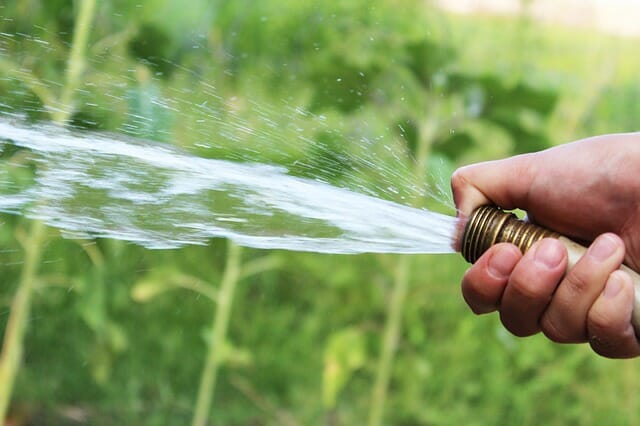
Drought — for all its difficulties — is actually one of the easier weather conditions to address. For city slickers with small gardens, it may be as simple as turning on an outdoor faucet. But, for those with larger gardens, those in rural areas, or those who just don’t want to see their water bills balloon, there are several tricks to help your garden flourish with minimal water during hot, dry weather.


1. Apply mulch


Applying a 3-4 inch layer of mulch around your plants is one of the best things you can do during a drought. Deep mulching can reduce water requirements by up to 50 percent. Mulch has several benefits, including:


  • It keeps the soil cool, providing a barrier to evaporation and helping soil retain moisture better.

  • Plants rooted in cool soil will be less affected by the heat above ground and will perform more vigorously.

  • Mulch inhibits weed growth; weeds are major competitors for available moisture.

As an added benefit, organic mulch provides nutrients for the soil as it breaks down. Many mulches are free or low cost and can be collected in your own yard or your neighbor’s yard (with permission!). Try using straw, pine needles, tree bark, grass clippings, leaves, wood chips or newspaper.


2. Apply compost


The rich, spongey nature of compost makes it a natural for retaining water. How much water it can hold depends both on the type of compost and on the soil. Michigan State University reports that “a 3-inch layer of leaf compost rototilled to a 6-inch depth increased the water holding capacity 2.5 times that of a native sandy soil.”


Looking For Non-GMO Herb Seeds? Get Them From A Company You Can Trust!


In other words, leaf compost holds onto water 2.5 times longer than sandy soil does, keeping moisture available to plants for a longer period of time. In ideal, temperate conditions, vegetable plants need one inch of water per week. But with compost-amended soil, watering could be decreased to every second week, or even a bit less.


3. Stay on top of weeding


5 Tricks To Help Your Garden Thrive During A Drought

Image source: Pixabay.com


I know some people enjoy weeding, but I’m not one of them. Still, it needs to get done. Weeds soak up moisture and nutrients from the soil — moisture and nutrients that your vegetable plants need. The application of deep mulch, as suggested above, will help control weeds; but if you can’t mulch your vegetables, make sure to remove the weeds one way or another.


4. Create windbreaks and shade


Temporary structures can provide your vegetable plants and soil with shade and relief from hot winds, which will help the soil retain moisture. Consider creating and/or installing things such as:


  • A vertical fabric screen, made by stapling burlap or shade cloth to stakes driven into the ground.

  • A temporary fence-like structure of securely propped pallets.

  • An overhead canopy, made from shade cloth and any improvised side supports.

  • Row cover hoops refitted with burlap or shade cloth.

  • Prefab lattice sheets installed vertically.

Shade fabric comes in different grades. Those that have about 50 percent coverage will provide shade while also letting needed sunlight through.


5. Be water smart


Use available water wisely. Here are some tips:


  • There’s no need to water your garden on a regular basis. Instead, keep an eye on your plants; they will tell you when they need water. All plants wilt in excessive heat, but if your big-leaved plants (like melons and squash) are drooping during cool morning or evening hours, it’s time to water your entire garden.

  • Collect and reuse greywater, rainwater and/or wastewater (such as from kiddie pools).

  • Water your garden in the early morning (preferable) or late afternoon.

  • Use a drip irrigation system (ideally) or soaker hoses instead of a sprinkler.

  • Water deeply and irregularly so that your plants grow long, strong roots to seek water deep beneath the surface.

  • Make trenches or reservoirs around the base of plants or at the edge of beds to collect runoff water in an area where roots can reach it.

It’s easy to feel helpless when faced with drought conditions, particularly if water reserves are scarce and/or rationed. But you can help your plants survive — and even thrive — by using some of the ideas above.


Do you have any other tips to help vegetable plants manage drought? If so, please tell us in the comments below.

Monday, July 17, 2017

The Very Best Vegetables To Grow In Drought Conditions

The Very Best Vegetables To Grow In Drought Conditions

Image source: Pixabay.com


Whether you live in an area susceptible to drought (hello American Southwest!) or not, chances are your garden at some point will experience dry conditions.


If you’re fortunate, you can just hook up a hose and let your irrigation system run. But in some cases, water may be rationed or it might not be feasible or possible to water a garden by turning on a tap.


Since droughts will happen, it’s smart to plan ahead. There are several things you can do to prepare, such as choosing your garden location wisely. Ensure your vegetables are shaded during the hottest parts of the day and keep them far from ornamental plants, shrubs, trees and lawn so that they don’t have to compete for precious water. Once you have the best possible location chosen, the next step is choosing drought-tolerant vegetables and seed varieties.


The one vegetable to avoid planting if you anticipate drought is corn. Corn grows quickly, passing rapidly through several different stages. It requires a lot of water to support that growth. If corn is stressed from a lack of water during an early stage, all of its subsequent stages will be negatively affected.


Looking For Non-GMO Seeds? Get Them From A Company You Can Trust!


Other crops that perform poorly during droughts can still be planted, with some planning. Cool-weather crops, for instance, will not do well in hot, dry conditions. However, if they are planted in early spring or early fall (as they should be), they will avoid the worst of drought season. Cool-weather crops include most leafy greens (such as lettuce, mustard, arugula, collards, kale, spinach, and Swiss chard), turnips, radishes, peas, carrots and cabbage.


Most other vegetables will do at least moderately well during extended periods of high temperatures and limited water. However, for best results, seek out varieties that are known for their drought tolerance.


Tomatoes, for example, develop extensive roots to seek water deep beneath the surface. While they have access to more water than other vegetables, their flowers will suffer during periods of extended heat. Those flowers will not set fruit, and production will be lowered. However, by choosing a variety that’s drought-tolerant, you can mitigate some of these issues. Cherokee Purple, Mortgage Lifter, Arkansas Traveler, Valencia and Neptune are some tomato varieties that handle drought relatively well. Additionally, by planting early-producing varieties, like Early Girl and Roma, you can bypass the effect of deep summer drought on tomato flowers.


In fact, any short-season vegetable, including both bush and pole beans, are ideal for your drought-resistant garden because their fruit will set, and possibly even be harvested, before the worst of the summer heat hits.


The Very Best Vegetables To Grow In Drought Conditions

Image source: Pixabay.com


But for vegetables that will flourish in drought conditions, look to those that are native to hot, dry regions. Tepary beans, black-eyed peas, and lima beans all perform well in drought conditions. Tomatillos and jicamas, both native to Mexico, are other star performers during droughts.


Other vegetables that can perform well in a hot, dry garden include:


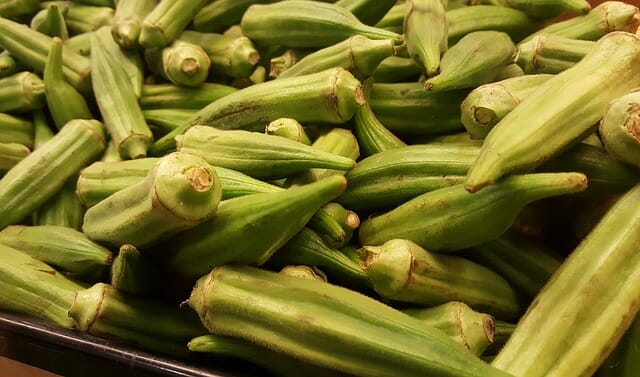
  • Okra, especially Gold Coast, Stewart Zeebest and Beck’s Big Buck varieties.

  • Eggplant, especially Listada de Fandia, Black Beauty and Ping Tung Long varieties.

  • Peppers, especially Carolina Wonder, Charleston Belle and Aji Dulce varieties.

  • Cucumbers, especially Little Leaf H-19, Ashley and Suyou Long varieties.

  • Both winter and summer squash, especially Moschata, Tromboncino, Waltham Butternut and Dark Star varieties.

  • Melons of all types, including cantaloupe and watermelon.

  • Asparagus and rhubarb, which are both perennials that can handle drought once established.

While doing research for this piece, I read a few articles that suggested Jerusalem artichokes (aka sunchokes) would work well in a drought-resistant garden. However, a word of caution: Sunchokes are highly invasive, and although they are good for you, they aren’t considered delicious by everyone, and they do tend to give people gas due to their large amounts of inulin. I don’t know about you, but I’m going to pass on the sunchokes.


What vegetables would you add to our list? Share your tips in the section below:

Tuesday, July 11, 2017

6 Clever Ways To Save Money When Watering Your Garden

6 Clever Ways To Save Money When Watering Your Garden

Image source: Pixabay.com


There’s no way around it. We just can’t control nature. If the forecast calls for an extended hot, dry period, our gardens may end up experiencing drought conditions. If we’re fortunate, we can just turn on our irrigation systems. But there may be limited water for irrigation, water conservation may be important to you, or perhaps you just don’t want to see your water bill balloon. If you want to minimize your garden’s water consumption — either by necessity or choice — check out these tips.


1. Water only when needed


There’s a lot of different advice out there about how often to water your garden. How do you know which advice to follow?


Your plants will let you know when they need water. All plants tend to wilt during extreme heat, regardless of how much moisture they have. However, if your plants are drooping during the cooler morning or evening hours, they need water. Big-leaved plants (like melons and squash) are the ones to watch, since they are more susceptible to wilting. If you spot a wilter in the morning or evening, it’s time to water the entire garden.


You also can test your soil, and you don’t need complicated equipment to do so. Just stick your finger into the soil. It’s normal for the top 2-3 inches to be dry; but if that dryness goes deeper than 3 inches, break out the watering cans.


2. Use greywater, wastewater and/or rainwater


Greywater can be difficult and costly to gather unless you already have a greywater recycling system installed. If you do, you’re good to go. I don’t; however, I do re-use the water from my family’s kiddie pools in my garden.


The All-Natural Fertilizer That Can Double Your Garden Yield!


I also collect rainwater, and I’m hoping that most committed gardeners do, too. Rainwater always should be your first choice for watering. It doesn’t have the salt, minerals or chemicals that treated city water, groundwater and surface water all have. Rainwater is slightly acidic, which can help neutralize the alkalinity of municipal water and greywater, if you use those on occasion. Also, it has nitrates (aka nitrogen, which is crucial to plant growth) and some organic matter for extra nutrients. Don’t just collect rainwater in case of drought; collect and use it throughout your growing season.


3. Water in the early morning or late afternoon


6 Clever Ways To Save Money When Watering Your Garden

Image source: Pixabay.com


Cool early morning hours are best for watering because soil — and plants — will have a chance to absorb the moisture before it evaporates in the heat. If you’re not up with the birds (I’m a night owl myself), then invest in a timer for your outdoor faucet, or water in the late afternoon instead. It will start to cool down by then, minimizing evaporation, but it also will give the foliage a chance to dry before night falls, which is important for disease management.


4. Avoid sprinklers


Sprinklers are fairly inefficient devices, spraying water indiscriminately within their reaches. That said, hand-watering can be a chore in a large garden. An easier option is a soaker hose; even better is a drip irrigation line. Since soaker hoses spray water over a smaller area than sprinklers, there’s less waste. However, unless you can find a hose that is the exact length of your row or bed, there will be some inefficiency, since water is emitted from the entire length of the hose. Drip irrigation systems are more expensive to buy and more complicated to set up, but their emitters can be directed over plant roots for the highest efficiency.


5. Water deeply and infrequently


Watering deeply will help your plants develop a large, strong root system as the roots seek water deep beneath the surface. Deep roots have access to more moisture, meaning you won’t need to water as frequently.


How much water does your garden need? Start with a guideline of 1 inch of water per week, but you will need more in hotter temperatures. For every 10-degree increment over 60 degrees Fahrenheit, add an extra ½ inch of water. For example, today’s daily average temperature in my part of the world was 72 degrees (a high of 86 + a low of 58 divided by 2 to get the average). Since this is representative of the week, I should assume my garden needs 1 ½ inches of moisture this week.


It’s best to get watering done in one go so that it soaks deeply into the soil. You may even want to water right after a rain. Using the above example, if I got half an inch of rain overnight, it would be best to give my garden an additional inch of rain in the morning. Then I wouldn’t need to water again until my big-leaved plants droop or my soil feels dry at a depth greater than 3 inches.


6. Make trenches or reservoirs


Shallow trenches between rows or reservoirs around the bases of plants can help collect runoff water. Trenches also can serve much the same purpose as soaker hoses. If water is slowly trickled into a trench, and let run until the trench is saturated, roots near the trench will have access to that water.


Do you have any other tips for minimizing the amount of water used in your garden? If so, let us know in the comments below.

Saturday, July 8, 2017

14 Drought-Resistant Vegetables To Plant If You Rarely Get Rain

14 Drought-Resistant Vegetables To Plant If You Rarely Get Rain

Image source: Pixabay.com


In many parts of the country, a drought-resistant garden is more than just a neat idea; it’s a necessity. Choosing the right combination of vegetables, paying attention to planting dates, and modifying your approach to irrigation and planning can help you grow food despite less hospitable conditions. Don’t depend on nature to come through for you this year; plant a drought-resistant vegetable garden and be prepared if the rains don’t fall.


First Step: Planning


In drought-prone regions, the middle of summer is likely the worst time to attempt to grow vegetables. Capitalize on a warm climate by planting early in spring to harvest before the summer heat, or in early fall to harvest before winter sets in. Even if your region suffers from year-round lack of precipitation, planting in the more temperate seasons will prevent your garden from attempting to combat the heat and greater evaporation.


Seamazing: The Low-Cost Way To Re-mineralize Your Soil


In summer and winter, or any other times you choose not to plant, plan on amending your soil. Soil rich in compost will trap more moisture for your plants. You might consider a layer of charcoal beneath the soil, as well, to hold even more water and provide nutrients. Appropriate pH levels and soil nutrients help your plants grow more efficiently so they will be able to grow with less need for water.


Moisture Loss and Watering


Protect your improved soil from water runoff and moisture loss. Mulching is an excellent technique to help the area around your plantings catch rain; your mulch will also catch evaporating water from the soil below and condense it, keeping it available to your plants. If you have cuttings from other plants, mulching with them allows some of the moisture from those cuttings to go into the soil. Plastic sheets that cover the soil can also be an option, although you should be aware they raise the temperature of the soil.


Drip irrigation is particularly beneficial in dry areas, since the flow of water is fairly constant and extremely slow. If you plan a drip system, consider building it with water filters (to prevent clogging) and a valve or stop (to prevent water from dripping when the soil is already moist). If you choose another method of watering, pay attention to your soil and let it tell you when to water, rather than watering daily. Test a patch about 6 inches deep and control your irrigation, so you will have water when you need it. Pinch a bit of soil between your fingers. If it holds together, don’t water, but if it falls apart easily, it’s time to water.


When planning the drought-resistant garden, resist planting in rows. Clustering plants together leaves them less exposed to evaporation, and allows taller plants to provide shade to smaller plants. Grouping plants together by watering requirement can help you accurately prevent overwatering of those that don’t need much. Some vegetables do extremely well in companion planting, a technique that uses the growth habits of one type of plant to assist that of another; the most famous combination is the “three sisters” (beans, corn, and squash) but there are other combinations that work well. Regardless of what you choose to plant, growing vegetables closer together conserves water.


14 Drought-Resistant Vegetables To Plant If You Rarely Get Rain

Okra. Image source: Pixabay.com


Enclosed areas and raised beds are more moisture rich than seeding into open ground. Even a simple retaining wall built at a depth of about 10 inches can keep groundwater from leaving your garden. This technique works better in small spaces, or it can be used to break up a large space.


Best Vegetables for the Drought Resistant Garden


Some plants just do better with less water. Below you can find a partial list of what to grow for high yield in low-moisture environments. Generally speaking, plants native to the Southwest –such as black-eyed peas – will be easiest to grow, followed by plants with a deep root structure like squash, melon and some tomato varieties.


Get The Best Deals On Non-GMO Seeds For Your Garden Right Here!


Cool season plants with short root systems, like lettuce, will not thrive without water.


Best drought-resistant vegetables for hot climates


  1. Beans (all varieties, pole and dry beans)

  2. Cantaloupe

  3. Okra

  4. Cucumber

  5. Eggplant

  6. Melon

  7. Pepper (all varieties)

  8. Sweet Potato

  9. Tomatillo

  10. Jicama

  11. Sweet and Seed Corn

  12. Squash (Winter and Summer)

  13. Watermelon

  14. Tomato (try early producing or heat-resistant varieties like Early Girl, Roma, Marvel Striped)

14 Drought-Resistant Vegetables To Plant If You Rarely Get Rain

Image source: Pixabay.com


Meanwhile, here is a list of vegetables you might have success with in dry climates:


  1. Rhubarb

  2. Arugula

  3. Chard

  4. Turnips

  5. Potatoes

  6. Endive

  7. Garlic

  8. Leeks

  9. Cabbage

  10. Onions

  11. Spinach

  12. Asparagus

  13. Woody Herbs (Rosemary, Thyme, Sage, Oregano)

  14. Beets

  15. Broccoli

If you live in a drought-prone area, the most important steps you can take to protect your garden and ensure it will yield the vegetables you need are steps to conserve and save water. Rain barrels, storage of grey water used around the homestead, and careful conservation measures to limit wastage all can contribute to helping your garden grow. If you want a reliable source of food in a dry climate, awareness of where the water is coming from – and where it is going – will be your most effective tool.


What advice would you add for planting a drought-resistant garden? Share your ideas in the section below:


Every Spring, Gardeners Make This Avoidable Mistake — But You Don’t Have To. Read More Here.

Thursday, June 15, 2017

Greywater & Gardening: Everything You’ve Wanted To Know

sinkDroughts can turn any summer into a battle for survival, but for those who live off-grid – and who depend on the land for their food – droughts can be particularly dangerous.


Thankfully, though, there are solutions … such as greywater.


Greywater allows homesteaders and gardeners to use upwards of 40 percent less water from the main source while providing vegetables and other plants the water they need.


This week we talk to Laura Allen, the author of “Greywater, Green Landscape: How to Install Simple Water-Saving Irrigation Systems in Your Yard”


Laura, the cofounder of Greywater Action, tells us:


  • How much a greywater system costs. (Hint: There are low-cost options.)

  • Why homeowners who own septic tanks should consider a greywater system.

  • How homeowners in colder climates, where water easily freezes, can incorporate a greywater system.

  • Why some types of soap should not be used with a greywater system.

Finally, Laura gives us gardening tips for those who are growing vegetables with greywater.


We learned a lot from Laura, and we know you will, too!


Monday, March 27, 2017

California Desert “Superbloom” is Rare and Beautiful

The California desert landscape is usually barren, but right now it’s bursting with color thanks to a “superbloom” of wildflowers. [1]


Source: SFGate

The superbloom – a term used to describe an explosion of wildflowers that exceeds normal spring blooms – has transformed the Anza-Borrego Desert State Park in southeastern California into a rainbow of greenery, poppies, primroses, and lilies.


Kathy DeMunck, an assistant manager at the desert’s nature center, explained earlier this month:


“What’s happened in the last four or five days is extraordinary. We really haven’t had this kind of a bloom since 2005. The desert has really come alive.” [1]


The blast of color is the result of an uncharacteristically rainy fall and winter season that may have brought California’s drought to an end. Seven inches fell in Anza-Borrego, the largest state park in California. Cold winter temps sealed more moisture in the ground.


The annuals in the desert burst to life every spring, but their colorful presence is short-lived. It’s difficult for annuals to survive in harsh desert conditions, so the seeds lie dormant and only sprout when water strips them of their protective coating.


If you want to see the desert superbloom for yourself, visit the park early in the morning, before the warmth of the day causes the flowers to close. You’ll also beat the massive crowds.


Briana Puzzo, education manager for the Anza-Borrego Foundation, a nonprofit partner and fundraiser for the park, says:


“There’s going to be a lot of visitors coming to the same area, so we would recommend coming midweek if possible.”


Better hurry; superblooms typically only last until late March.


Sources:


[1] National Geographic


[2] Inquisitr


SFGate


Fox 5 San Diego


Storable Food


About Julie Fidler:


Author Image
Julie Fidler is a freelance writer, legal blogger, and the author of Adventures in Holy Matrimony: For Better or the Absolute Worst. She lives in Pennsylvania with her husband and two ridiculously spoiled cats. She occasionally pontificates on her blog.

Monday, March 6, 2017

Why ‘More Than a Million Traders’ Are Boycotting Coca-Cola and Pepsi in India

(ANTIMEDIA) Trade organizations in the Indian state of Tamil Nadu are boycotting Coca-Cola and Pepsi amid concerns the two companies are using excessive amounts of water to produce their products. The Guardian reports that “[m]ore than a million traders in India” are now boycotting the drinks.


“These foreign companies are using up scarce water resources of the state,” said K Mohan, secretary of the Vanigar Sangam, one of the associations supporting the boycott, the Guardian reported. These concerns are particularly relevant amid low rainfall rates during the region’s last monsoon. In January “the state’s interim chief minister O Panneerselvam declared the state ‘drought-hit’ and asked the central government for funds to help farmers.”


We"re revolutionizing the news industry, but we need your help! Click here to get started.


As the English-language Indian outlet, Daily News and Analysis, reported, “The state has been facing its worst-ever drought in recent decades with over 200 farmers reportedly committing suicide due to multiple crop failure.”


Vikrama Raja, president of Vanigar Sangam, echoed a similar sentiment, singling out Pepsi and Coca-Cola for their role in the dilemma. “[Foreign companies] are exploiting the state’s water bodies to manufacture aerated drinks while farmers were facing severe drought,” he said.


Amit Srivastava, director of the India Resource Center, a non-government organization, further elaborated on these concerns. According to the Guardian, the India Resource Center “estimates that it takes 1.9 litres of water to make one small bottle of Coca-Cola.”


Srivastava “says demand for sugar from fizzy drinks companies is also hugely problematic in India.”


“Sugarcane is a water-guzzling crop. It is the wrong crop for India,” he said, adding that “According to our research Coca-Cola is the number one buyer of sugarcane in India and Pepsi is number three. If you take into account the water used for sugarcane, then we’re using 400 litres of water to make a bottle of Cola.”


Additionally, Vikrama Raja expressed disapproval not only of the environmental impacts of Pepsi and Coca-Cola, but also its health effects. “[Soft drinks] cause more harm than good to the body. Only recently, one of the brands had admitted to the fact that it was not suitable for children and that it contained certain harmful chemicals,” he reportedly said.


According to the Business Standard, “A M Vikrama Raja, president, Tamil Nadu Vanigar Sangham and Tamil Nadu Traders Federation said all retailers and shopkeepers in the state have begun to boycott Pepsi and Coca-Cola, though “many of the restaurants and super markets are continuing to sell and they have sought time.” Some retailers have vowed to ignore the boycott and continue selling the products.


Nevertheless, if the boycott is successful, it stands to funnel revenue to local soft drink companies. “We are expecting a 100 percent increase in our sales if the boycott is implemented,” said S. Karthigaikani, General Manager of the 118-year-old Sri Mappillai Vinayagar Soda Company,” Daily News and Analysis reported.


Currently, as Quartz points out:


Foreign companies such as PepsiCo and the Coca-Cola Company, together, account for nearly 90% of the Rs1,400-crore beverage market in the state. Such diktats, if followed by the retailers, could severely affect the two cola majors which have five bottling plants in the state.


The Indian Beverage Association, which represents both Pepsi and Coca-Cola, unsurprisingly expressed disappointment with the boycott.


Coca-Cola and PepsiCo India together provide direct employment to 2,000 families in Tamil Nadu and more than 5,000 families indirectly … IBA hopes that good sense will prevail and that consumers will continue to have the right to exercise their choice in Tamil Nadu,” they said.


Coca-Cola and Pepsi are not the only companies to receive pushback over their water usage and the health risks their products present. Nestle, for example, has been under fire for its bottling of public water resources in drought-stricken California, as well as unsavory ingredients in some of its products in India. As trade organizations and local governments push back against these practices around the world, it’s doubtful the tug-of-war over resources and commercial access will cease anytime soon.


Creative Commons / Anti-Media / Report a typo / Image: Sean Loyless

Tuesday, February 14, 2017

“This Is Not a Drill”: Collapsing Dam Forces 200,000 to Evacuate With Floods Still Coming


oroville dam flood

via Sean Bennett @tvseanb on Twitter


The overflow of a faulty dam and emergency spillway has created an ongoing emergency in Oroville, while is about an hour and half north of Sacramento.


Flood waters have already breached the spillway from the tallest dam in the entire United States. Ironically, the flooding dam comes after an intense five-year drought that nearly wiped out California, only for heavy rains to bring many of California’s water reservoirs back to – and over – capacity.


Now, emergency officials are doubling down on the need to evacuate people from the area, and prepare to mitigate extensive flooding damage if the situation should erupt into a larger problem. Good reason to stay prepared, and ready to bug out or survive without food, water or


In the worst case scenario, officials predict that within a matter of hours, the entire town of Oroville could be covered in waters as high as 100 feet, while the floods would traverse towards Yuba City, some 30 miles south where they could see flood waters as high as 10 feet. Several other towns in between could also be heavily flooded.


via the Daily Mail:


A gaping 250-foot chasm was expected to collapse and unleash a 30ft ‘tsunami’ tidal wave that could have killed thousands and left nearby towns under 100ft of flood water.Tens of thousands of panicked residents took to the freeways, causing total gridlock on the roads and sending anxiety levels soaring as they wondered if the dam would burst while they were sat in their cars.


‘Everyone was running around; it was pure chaos,’ Oroville resident Maggie Cabral told CNN affiliate KFSN on Sunday.


‘All of the streets were immediately packed with cars, people in my neighborhood grabbing what they could and running out the door and leaving. I mean, even here in Chico, there’s just traffic everywhere.’


Assuming that this area dodges a bullet, and avoids total disaster, it still a part of California which seems to be facing the worst of luck.


With extensive drought comes risk of water rationing, skyrocketing prices and a threat to agricultural production; with extensive rains, come dangerous flooding which obvious California is not prepared to handle.


It seems that all extremes have impacted California harshly, and it continues to be a risky area, particularly for those dependent upon large metropolitan areas. Regardless, heavy taxation, dense population, thick traffic and a vengeance from Mother Nature have not made for appealing circumstances.


Read more:


The Prepper’s Blueprint: Solidly prepared for any emergency, natural or manmade


NASA Warns California Drought Could Threaten U.S. Food Supply: “There will be some definite changes”


Water Wars: What It Will Be Like When Your Tap Runs Dry


FedGov Moves To Seize Water Rights From 100,000 Montanans: “All Surface Water And Wells”


Video: The Coming Global Water Crisis


Click here to subscribe: Join over one million monthly readers and receive breaking news, strategies, ideas and commentary.

Advanced Tactical Gas Mask

Please Spread The Word And Share This Post


Author: Mac Slavo
Views: Read by 415 people
Date: February 13th, 2017
Website: www.SHTFplan.com


Copyright Information: Copyright SHTFplan and Mac Slavo. This content may be freely reproduced in full or in part in digital form with full attribution to the author and a link to www.shtfplan.com. Please contact us for permission to reproduce this content in other media formats.


Saturday, January 14, 2017

Stunning Before And After Pictures Of The California Drought And Devastating Rain Storms

Just as California"s liberal elites had convinced everyone that climate change had permanently altered global weather patterns such that the entire state was doomed to be stuck in a perpetual drought which would inevitably render it about as inhabitable as the surface of Mars within years, an unrelenting series of storms has struck and in a matter of days filled lakes, overflowed rivers and buried mountains in snow.  And just like that, 40% of California was lifted from a drought that had plagued the state for a decade.


Of course, that much rain, in such a short period of time, can have devastating consequences as this video from Big Sur illustrates.


As does this dashcam video of a flash flood in norther California. 


In all, the rainfall totals from around Northern California over the past 14 days are staggering with certain areas receiving nearly 2 feet of rain according to SFGate.


Downtown San Francisco has received 5.53 inches of rain since Jan. 1. The last time the city has seen a number higher than this was 1982 when 7.53 inches fell between Jan. 1 and Jan. 11. During last year"s El Niño year, S.F. had received close to three inches by this date.


More impressive numbers: The coastal range mountains outside Guerneville, where roads and homes went underwater when the Russian River flooded, has received some 21 inches of rain since Jan. 4.


In Downieville, where the Yuba River gushed with a heavy flow all week, some 23 inches of rain were recorded in the past seven days.


And as bad as the flooding has been in parts of Northern California, it would have undoubtedly been even worse but for the the ability to divert some of the excess water into previously depleted reservoirs scattered throughout the state.


The super soakings have filled reservoirs that were mere mud puddles, their cracked lake beds once exposed at the height of the drought that plagued the state for five-plus years and still persists in many regions, especially in Southern California.


The reservoirs in Northern California have gained some million acres of storage in the past seven days, Michael Anderson, a climatologist with the California Department of Water Resources estimates. And total surface storage for the state is roughly 97 percent of average, with the the total storage for the largest reservoirs being at 111 percent of normal.


Lake Oroville, the state"s second-largest reservoir, gained a bit more than 620,000 acre-feet in the first 10 days of January alone.


"That is almost 18 percent of its capacity," Anderson said. "Since Oroville was about 750,000 acre-feet below its storage limits during flood season (a consequence of the drought), they can keep all that water for future use and largely offset storage impacts from the drought."


Meanwhile, the transformation of the state"s reservoirs, in just a matter of weeks, is astonishing.


Cali Drought


Cal


Cali Drought


Yuba River


Cali Drought


Cali Drought


What a difference a year makes with most reservoirs now near capacity....


Cali Drought


...versus ~30% of capacity last year.


Cali Drought


But we"re sure this abundance of rain is ever bit as much due to global warming as the lack of rain was last year...but we"re still waiting for official confirmation on that from our respected political leaders in Sacramento.