Showing posts with label pistols. Show all posts

Monday, August 21, 2017

I Store My Home-Defense Guns In 5 Different Rooms. Here’s Why.

I Store My Home-Defense Guns In 5 Different Rooms. Here’s Why.

Image source: Pixabay.com


While I may be a bit over the top with my home defense preparation, I would rather be way overprepared than underprepared.


I’ve put a lot of thought into where weapons should be placed throughout my house. Each one is in a very specific location, and serves its own distinct purpose. The way that I have placed my weapons was based on a few different threat levels that I assessed. All total, I store weapons in five rooms.


The first threat level that I considered was an immediate threat. To me, an immediate threat constitutes someone actively breaking into my house. In this situation, I would like a firearm easily accessible and ready to rock. The most important weapon that I consider to be used against an immediate threat is a shotgun in the bedroom. My reasoning: I view the most dangerous situation to be someone breaking into my house in the middle of the night. I generally still have my daily carry weapon in my nightstand, so it’s easy to grab on the way out the door, but a shotgun permanently lives on the wall above my nightstand in a custom concealed weapon case. The reason that I decided to go with a shotgun in the bedroom is that I’m a pretty heavy sleeper, and in the event that someone is actively breaking into my house, I like the point-and-shoot ease-of-use of a shotgun.


Vicious Hand-Held Self-Defense Tool Doesn’t Require A License!


The next weapons that I considered for use against an immediate threat are handguns in the rooms that I am most frequently in. For this reason, I’ve got a revolver tucked away in my living room and in my kitchen. Similar to my shotgun, these are all concealed in some type of box or case that is easy to open.


To me, a secondary threat constitutes someone lingering suspiciously around my house or poking around my vehicles too much. It’s a situation where I’m not planning on immediately engaging a threat, but I’m getting the feeling that something is wrong and I want to be ready in the event the unpredictable happens. For a secondary threat, I want a handgun with a higher ammunition capacity near the back door and the garage door of my house, so that I can easily grab it and throw it in a sweatshirt pocket or the waist of my pants to see what’s going on. These are concealed in boxes on shelves.


The last threat level that I considered is the extremely unlikely chance that I’m engaged in some type of firefight or a gunfight that moves out of the house. To me, these are the kind of weapons that can be tucked away in a closet or in a safe, because it’s unnecessary for me to have them immediately accessible. In my situation, I have my AR-15 with three loaded magazines in my closet.


Lastly, I will touch on safety. A headline we see all too frequently involves young children getting a parent’s weapon and accidentally harming or killing someone – perhaps themselves. Since I don’t have any children, I have absolutely no qualms leaving my weapons completely ready to go. Every single weapon in my house has a round in the chamber, with the exception of the AR, as I don’t classify that threat level as requiring immediate action. However, as soon as I do have kids, things will be different. I’ll still keep the magazines loaded, but I will refrain from keeping a round in the chamber. A habit that I will have to break is simply leaving my daily carry weapon on my nightstand. I also will have to make sure all of my weapons are up high and even locked away where a young child can’t reach.


Like I said, I am probably over the top on home defense, but I feel that being overprepared is far superior to being underprepared. My biggest concern when it comes to home defense is being adequately prepared to engage any threat that may face me or my family.


Where do you keep your guns in your home? And if you have children, how do you keep your weapons out of reach? Share your home-defense tips in the section below:  

Monday, June 5, 2017

4 Pistol Modifications Every Concealed Carrier Needs

4 Pistol Modifications Every Concealed Carrier Needs

Image source: Shield


I’ve been shooting for quite a few years, although I really don’t consider myself a competitive shooter. As with anything else that one does repetitively, I’ve noticed a few things – particularly things about my fellow shooters.


Key among those things is that few shooters ever modify their guns, especially their handguns. Most will stick with the way they came out of the factory. Those who do modify their guns tend to go for cosmetic modifications, rather than anything functional. The one exception to this is serious competitive shooters, who go to great lengths to make their guns as accurate and easy to shoot as possible.


But, for the most part, competitive shooting isn’t the same as shooting to defend yourself. This means that most competitive pistols aren’t really useful as defensive weapons — with the exception of one category: pistols that are used in tactical shooting competition.


Tactical shooting is different from other forms of competitive shooting in that it is built around creating realistic scenarios where you would be expected to use a pistol in self-defense or the defense of others. As such, many of the modifications that would help a tactical shooter also will help anyone who needs to use their pistol in a defensive role.


Even though I’m not a competitive shooter, I’ve learned that it’s worthwhile taking a page from their book and customizing my guns. In fact, I’ve customized all the guns that I use regularly, including my daily carry gun. These customizations aren’t cosmetic, but functional, and each of them make it easier for me to use my guns if I ever draw one in a live-fire situation.


1. Trigger


The first and most important thing to consider modifying on your gun is the trigger. Most pistol triggers are set for a five- to six-pound pull. That’s okay, but there’s a reason why competitive pistols have light trigger pulls. That’s because a lighter trigger is less likely to cause you to jerk or pull your gun off target.


Not all guns give you the capability of changing out the trigger or of lightening the trigger pull. But if you can, it’s well worth it. Glock has a replacement bar, which drops the trigger pull down to 3.5 pounds. That’s enough to make quite a difference. On a 1911, you can change the trigger pull by adjusting the mainspring. Some other pistols, like the Springfield XD and XDS series. have replacement springs to lighten the trigger pull.


The Self-Defense Weapon That Doesn’t Require A Firearms License!


Trigger control is the single most important part of accurate shooting — even more so than sight picture. Aftermarket triggers not only adjust the trigger pull, but are usually of finer quality fit and finish. This lowers friction, which reduces the chance of the trigger sticking while pulling it.


2. Controls


Your two other main controls on any semi-automatic pistol are the slide lock and the magazine lock. Typically, these are designed to be as non-obtrusive as possible so that they don’t hang up when drawing the pistol. But those minimalist designs also may be harder to find and operate when you need to do a quick magazine change.


Extended slide and magazine release controls can speed up your mag changes, shaving as much as a second off your time. That second is critical in competition, but it’s even more critical in the only competition that really counts — when someone is shooting at you.


Speaking of easing magazine changes, adding a flared magazine well also can speed your mag changes. There are several manufacturers who supply these, in both polymer and aluminum. They help eliminate any fumbling that can happen while trying to find the mag well with your magazine.


The only other real control that most pistols have is the safety. Once again, this can be worth changing out to make the gun easier to use. A larger safety control lever will make it easier to find the safety and operate it when you’re drawing your gun out to use it. If you happen to be left-handed or have someone in your family who is, you also might want to consider an ambidextrous safety lever.


3. Sights


One of the most customizable areas of any firearm is the sights. The plain iron sights that come on most handguns are fine for short-range shooting in the daylight. The ones with white dots on them are a bit better. But neither will do you much good in a low-light situation. For that, you need something else. Besides, iron sights become harder to use the farther you’re trying to shoot.


While most defensive shooting is done at a range of five yards or less, there is a small percentage that happens at about 50 feet. Shooting with iron sights at that range is difficult at best. Doing so if you don’t have perfect vision is even worse.


Tritium Night Sights


Pretty much every handgun I own, with the exception of ones that don’t have removable sights or are only used on the shooting range, has tritium sights installed. Tritium is a radioactive gas which glows in the dark. So, instead of just having three white dots painted on the sights, you end up with three white dots that will glow in the dark.


Granted, this really isn’t much help in total darkness, when you can’t see our target. But it’s ideal at twilight, when you might be able to see your target, but really can’t see your sights. This makes the addition of tritium sights a lifesaver in some cases.


Reflex Sight


The reflex sight or red dot sight was originally developed for military use. Rather than having to align two sights with the target, it allows you to align one thing — a dot projected on a small, transparent screen — with the target. This saves considerable time in getting on target.


While originally designed for use on rifles, smaller reflex sights now exist for use on pistols, as well. They provide the same advantage that they do for rifles. However, they are not good in low light. So, if you install this type of sight, you might want to have another gun available to you with tritium sights on it.


Laser Sight


Most firearms instructors will advise you not to use a laser sight. If you become dependent on one and then the battery dies, you’re stuck without any sights. So, if you’re going to install one, practice with your metal sights, too.


The other problem with a laser sight is that it can give your position away to the bad guys, just like a flashlight can. The red or green laser light coming out of the front of your gun is visible for a longer distance than it is usable for.


Nevertheless, I use laser sights for one important reason. My eyes aren’t all that good. Unless I have my computer glasses on, I can’t see the all-important front sight clearly. A laser sight allows me to keep my focus downrange, which I can see just fine, with my normal glasses.


If you’re going to buy a laser sight, only buy one that is triggered by gripping the gun. This is accomplished by a push-button switch, which is located where you will be gripping the gun. So, your normal grip turns the sight on. There are only a couple of brands that do this. The rest require you taking the time to turn them on, which might be time that you don’t have.


4. Tactical light


The last thing you might consider is a tactical light. You’ve probably seen this in movies, where the cops have a tactical light mounted to a short rail under the barrel. Not all guns have this rail, but for those that do, having the light readily available is convenient.


There’s just one problem with a gun-mounted tactical light. That is, your light will be on all the time, which means that it will be advertising your location to the bad guys. Tactical instructors say the way to use a tactical light is to flash it on briefly and immediately change position. Then you can act on what you saw. Moving is necessary, in case the bad guys shoot at you. With the light back off, they won’t see you move.


I have a couple of pistols with mounted tactical lights, but I prefer the idea of using a hand-held tactical light, so that I can flash it on and off, as needed. This gives me the light I need, without making me a target.


What would you add to our list? How have you customized your pistol? Share your tips in the section below:

Thursday, June 1, 2017

4 New Pistols That Turned Heads At The SHOT Show

4 New Pistols That Turned Heads At The SHOT Show

Colt Government Model 32


This year’s SHOT Show featured tons of new guns and products – too man for one person to see. But a few models and manufacturers kept popping up in conversations. Below are a few of those pistols that attracted many admirers all week. I was fortunate to handle most of them and even to shoot a few.


4 New Pistols That Turned Heads At The SHOT Show

S&W M&P M2.0


This pistol comes in 9mm (17 +1), 40 S&W (15+1) and 45 ACP (10+1). Barrel lengths vary, from 4.25 inches in the 9mm and 40, while the 45 sports a 4.6-inch barrel. The barrel, frame, grip and finish all have been upgraded. I especially like the aggressive grip texture (called cat’s tongue) and Armornite corrosion-resistant finish. The M&P M2.0 pistol can be purchased with or without a thumb safety and comes in matte black or flat dark earth. It also comes standard with two magazines and four interchangeable palm swell grip inserts. A low bore axis makes this pistol comfortable to shoot and reduces muzzle rise. MSRP is $599.


KAHR CT9 and CW380 (carbon fiber finish)


Kahr Arms has always been a name worth considering for your pistol needs. A black carbon fiber finish on some of Kahr’s most desirable carry guns is new for this year. I handled this pistol and I like the feel of it. The carbon fiber grip is appealing; the textured weave provides a realistic 3D appearance as well as allowing for more grip stability in your hand.


The Self-Defense Weapon That Doesn’t Require A Firearms License!


4 New Pistols That Turned Heads At The SHOT Show

KAHR CT9


The carbon fiber finish is new for 2017 in the CT9 and the CW380. It was available in 2016 in the CW9. With the Kahr 9mm and 380 being some of the slimmest handguns available, I dare say these three pistols with the carbon fiber finish will be in high demand in the concealed carry market. The carbon fiber Kahr pistols ship with one magazine, a polymer frame, and a drift-adjustable white-bar dot sight configuration. MSRP for the carbon fiber finish pistols range from $419 to $495.


Canik TP9 SF Elite


Canik has been leaving a mark on the striker-fired pistol market in the last couple of years. Now the company has come out with a mid-size carry pistol, the TP9SF Elite. Canik has been known for pistols running tens of thousands of rounds without a hiccup. The Elite has a barrel length of 4.19 inches and a magazine capacity of 15+1. I personally own the TP9 SF and have had zero problems — it runs! The Elite comes standard with two 15-round magazines, Warren Tactical fiber optic sights, a poly holster with paddle attachment and interchangeable backstraps. The Canik Elite will be available in a Tungsten Gray finish in the USA. MSRP is $459.99.


Colt Government Model 32


If you are interested in classic designs from the past, you may want to take a look at the Colt Model 1903 General Officer’s Model in 32 ACP. The gun is part of Colt’s classic remake program and is an exact remake of the classic John Browning design of over 100 years ago. Although this pistol was introduced at SHOT 2015, it was still a hit among visitors to Colt’s booth at the 2017 show. Colt joined forces with US Armament to produce this classic design. The pistol is made in both parkerized and standard blued finish and is marked “U.S. PROPERTY.” If you are a traditionalist and always wanted to own a classic gun, this pistol could be for you. You may want to hurry, however; there is a limited availability on these reproduction models. MSRP is $1,100.


What new pistol would you add to our list? Share your thoughts in the section below:

Wednesday, May 17, 2017

Can Concealed Carry Be Banned? Supreme Court May Decide

Can Concealed Carry Be Banned? Supreme Court May Decide

Image source: Pixabay.com


WASHINGTON — The U.S. Supreme Court may decide in its next term if citizens have a constitutional right to carry a handgun for self-defense outside the home.


Earlier this month, the court “relisted” the case, Peruta v. California, meaning the justices are still considering it


“I suspect they’re going to grant it,” John Eastman, director of the Center for Constitutional Jurisprudence and the former law dean at Chapman University, told Fox News.


The lawsuit was filed by a California man, Edward Peruta, who challenged San Diego County Sheriff William D. Gore’s denial of concealed carry permits to applicants who did not show “good cause.” Gore does not consider self-defense to be good cause for a concealed carry permit.


The Self-Defense Weapon That Doesn’t Require A Firearms License!


Peruta’s attorneys want the justices to overturn a U.S. Ninth Circuit Court of Appeals ruling that the Second Amendment does not grant the right to carry a gun outside the home, Off The Grid News previously reported. The Ninth Circuit ruled against Peruta in a 7-4 decision in June 2016.


“The right of a member of the general public to carry a concealed firearm in public is not, and never has been, protected by the Second Amendment,” the Ninth Circuit’s majority opinion read. “Therefore, because the Second Amendment does not protect in any degree the right to carry concealed firearms in public, any prohibition or restriction a state may choose to impose on concealed carry — including a requirement of ‘good cause,’ however defined — is necessarily allowed by the Amendment.”


Former U.S. Solicitor General Paul Clement challenged that ruling in January 2017, The Union Tribune reported. Second Amendment activists and gun control advocates are watching the case closely, not only because of the issue but because it could be the first major firearms decision heard by new Supreme Court Justice Neil Gorsuch. Although Gorsuch has been a federal judge for years, he’s never ruled on a Second Amendment case.


Peruta could be the most important gun-rights case since the 2008 Heller decision, in which the Supreme Court ruled that the Second Amendment grants Americans the rights to keep guns in their homes, UCLA Law Professor Adam Winkler told The Los Angeles Times. Heller overturned the District of Columbia’s ban on private ownership of handguns.


What do you think? Should concealed carry be a constitutional right? Share your thoughts in the section below:

Monday, May 15, 2017

Compact & Lightweight Guns Every Bug-Out Bag Needs

Compact & Lightweight Guns Every Bug-Out Bag Needs

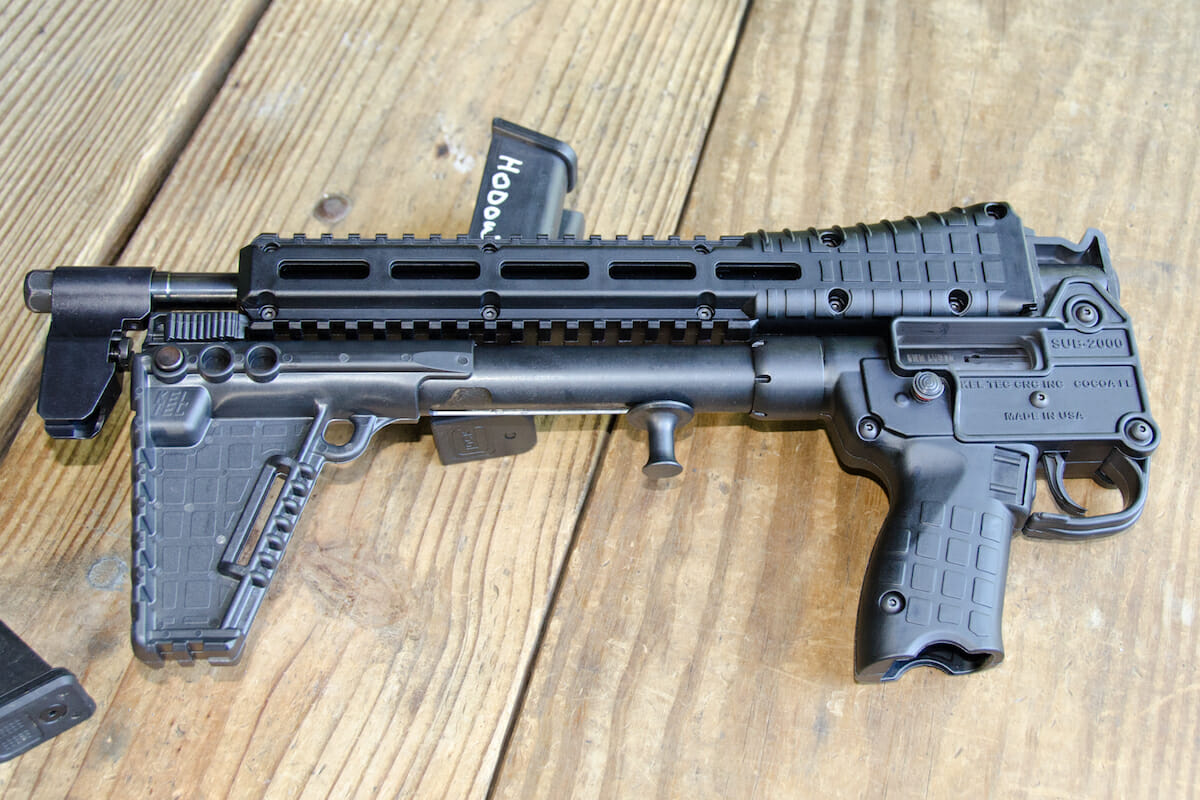
Image source: Kel-Tec


The size and content of a bug-out bag or survival kit varies based on the needs and location of the person, but there are some items that always should be included. Among these: firearms that can be used for either hunting or self-defense.


In this article, we will discuss the different types of weapons that you should consider picking up for your bug-out bag. If you are looking into getting a firearm or two for this purpose, these criteria will help you pick the right one:


1. Size. The firearm(s) should fit inside the bag, if possible. This can be a challenge when looking at rifles and shotguns, so find one that can collapse or break down into smaller components for easy storage.


2. Weight. You may be carrying your bug-out bag for an extended period of time, so you’ll want any firearms in it to be as light as possible. You also will need to carry ammunition, cleaning supplies, and accessories for it, as well, which adds even more weight to your pack.


3. Cost. Unlike any other guns you may own, the firearms you get for your bug-out bag should stay in it unless you are shooting or cleaning them. If you can afford to spend a bit extra on a higher-quality firearm, do it; however, you can easily find a firearm for this purpose without breaking the bank. Your firearm just needs to be reliable. It doesn’t have to cost an arm and a leg.


Handguns


A pistol or revolver is a critical tool to have in your bug-out bag. Ideally, it should be one that shoots centerfire ammunition suitable for self-defense, such as 9mm, .40 S&W, or .45 ACP. In addition to your pistol, your bug-out bag also should contain ammunition, spare magazines, a holster and a magazine pouch. Check out our “best pistols under $300” article for some low-cost suggestions.


Break-Action Shotguns


Break-action shotguns are simple to operate, have few moving parts, and are very easy to maintain. They also can be disassembled for storage without using tools. When buying a break-action shotgun for your bag, try to find one with a defense-length (18-inch) barrel.


The Self-Defense Weapon That Doesn’t Require A Firearms License!


If you can’t find one with that barrel length in your budget, you always ban buy one with a longer hunting barrel and have a gunsmith cut it down to defense length. Certain companies are also making inserts for break-action shotguns that allow you to fire other types of ammunition types through it. This is a great addition to any bug-out bag, and not something that you can get for a pump-action or semi-automatic shotgun.


Pump-Action Shotguns


If the thought of having to reload after every one or two shots makes you cringe, then a pump-action shotgun is an excellent alternative to the break-action for your bug-out bag. You can easily find one with a defense-length barrel, and aftermarket parts can be found at relatively low price online. These tend to be a bit larger than a break-action when disassembled, so it would be a good idea to buy an aftermarket folding stock or pistol grip for it.


Pistol-Caliber Carbines


While pistol-caliber carbines may not be the best option for hunting larger game, they definitely will handle small game, and work admirably in a defensive role. Some have the added benefit of accepting pistol magazines, which makes them an excellent companion for a pistol in your bug-out bag. Some models, such as the KelTec Sub2000, can be folded and placed in your bag, while others like the TNW ASR or JR Carbine are designed to be easily disassembled for compact storage.


Depending on your state’s restrictions, you may be able to purchase a “pistol” version of a pistol-caliber carbine, which has a short barrel and no buttstock. Some examples include the Chiappa PAK-9, ATI MilSport, or Angstadt Arms UDP-9. These types of weapons are great for close-quarters defensive scenarios, and their smaller size allows them to fit easily in your bug-out bag.


Semiautomatic Rifles


For both hunting and defensive situations, a semiautomatic rifle chambered in .223 Remington, 7.62x39mm NATO, or .308 Winchester is a great tool to have in your bug-out bag. Unfortunately, most of the AR- and AK-variant rifles in this category are not easy to fit in a backpack. One alternative, the KelTec SU16, is a survival rifle that lets you use high-capacity AR magazines, and folds into a compact 25-inch package.


Another option is to purchase an entry-level AR-15 and install a “takedown” kit, which allows you to quickly remove the barrel for storage. These can be purchased from a number of manufacturers, including Vision Defense, DRD Tactical and Cry Havoc. AR-platform takedown rifles like the Ruger SR556 are another option, although they are a bit more expensive. You also might consider a side- or under-folding AK-platform, which are reasonably compact (roughly 28 inches folded).


Other Rifle Configurations


There are a number of single-shot and lever-action rifles in various calibers that can be disassembled and stored easily. There are many to choose from, including the Rossi W, the Browning BLR-81, the CVA Scout, the Thompson/Center Encore Pro Hunter, and the Chiappa 1892. If you want a combination rifle and shotgun, the Chiappa X-Caliber is an-over-under shotgun/rifle combination in 12- or 20-gauge and .22 LR or .22 WMR. Other rimfire options include the Henry Arms AR-7 and the Ruger 10-22 Takedown.


What are your favorite firearms for bug-out bags or survival kits? Tell us in the section below:

Thursday, October 27, 2016

4 Steps To Ensure Your Ammo Lasts (Virtually) Forever

4 Ways To Make Sure Your Ammo Lasts (Virtually) Forever

Image source: Pixabay.com


It’s a fact that without ammunition, your guns will be little more than metal and plastic clubs. But it’s also a fact that if your ammunition has been stored in poor conditions, it not only won’t last as long as it should, but it also could potentially become dangerous to shoot if it is corroded or deteriorated.


This is why you need to store your ammo the same way you store your firearms. After all, you store your firearms in a secure and environmentally safe location, so why wouldn’t you do the same with your ammunition in which you may have invested even more money?


All ammo has a definitive shelf life. Eventually, it will go bad. But if you use proper storage techniques, you can make your ammo last on the shelf for year and years. Ammunition that has been taken care of properly and stored in the right conditions should last for 12 to 15 years before you begin to notice signs of discoloration or corrosion.


Let’s learn about some basic and yet effective storage tips you can use to ensure that you get the most out of your ammo:


1. Store in metal ammo cans.


Regardless of whether you like to keep your ammo in the boxes it came in or store it loosely, you will need to place it in metal ammo cans for storage purposes. Green metal ammo cans can be found at virtually any sporting goods store, in the $10-$20 dollar range, depending on the size of the can.


The reason why you should store your ammo in these metal cans is not just for ease of organization, but also because the cans are airtight and waterproof. They are sealed around the edges, which means you could even dunk them underwater and they would keep the water out.


2. Store in a dry place.


Humidity and moisture in general will be the biggest contributor to corrosion and discoloration. Since corroded ammo is not safe to fire, it’s imperative that you select a storage location where the moisture is kept to a minimum.


Be Prepared. Learn The Best Ways To Hide Your Guns.


Yes, storing your ammunition in the green metal ammo cans will do a lot to resist moisture, but it never hurts to be extra careful. Keep in mind that ammunition is not cheap, so you want to take extra good care of your investment. Store it in a dry place with low moisture levels, and you can sleep knowing your ammo should remain in good condition several years down the road.


3. Store at normal room temperature.


Whatever you do, never store your ammunition outdoors, or even in a garage or an outdoor shed, for that matter. This is because the temperature level fluctuates drastically outdoors, between night and day. In the summer, for example, it can be hot and humid during the day and then cool and chilly during the night. Excessively hot temperatures, in particular, will cause your ammunition’s overall shelf life to shorten. This is why you must store your ammunition indoors at all times, and what’s more, you must store it in a place that remains consistent at a normal room temperature.


4. Store it in a secure location.


Last, store your ammunition in a secure location where it will be safe from those who shouldn’t be handling it – whether that is children or thieves. If you can afford it, you could even store your ammunition in a separate safe from the safe where you store your guns.


At the very least, your ammo should be stored locked. This means either putting a small lock on each ammo can, or storing it in a room with a lock on the door.


Remember: Apply the same levels of precaution to storing your ammo as you do your guns. That way your family will be safe – and your ammo will be there when you need it.


What advice would you add? Share your tips in the section below:


If The Grid’s Down And You Don’t Have Ammo, What Would You Do? Read More Here.