Showing posts with label cooking. Show all posts

Wednesday, December 13, 2017

"They Called It "The Rape Room"" - 10 Women Share Chilling Details Of Ken Friedman"s Sexual Abuse

In a bombshell report that has rattled the food world, several former employees of restaurant impresario Ken Friedman shared chilling details of the sexual harassment and abuse they suffered at Friedman’s hands with the New York Times, describing the omerta that existed among staffers at his restaurant, who inevitably accepted the harassment as part of a job that offered many perks, including great pay and bonuses in the form of concert tickets and other in-demand items.


In addition to Friedman, the story also includes many lewd anecdotes of the egregiously inappropriate sexual misconduct perpetrated by renowned chef Mario Batali, who yesterday admitted that salacious depictions of his past behavior were accurate.


Together, the two men are possibly the most high-profile restaurateurs to be tarnished by the national reckoning with sexual harassment in the workplace that has effectively led many famous and powerful men in a range of industries to be expelled from polite society.


Ken Friedman


But of the many reports that have surfaced so far – and there have been many – some of the details from the Times piece almost beggar belief. In anecdotes from former staffers at the Spotted Pig, one of New York City’s hottest restaurants, the depictions of Friedman’s behavior push way past inappropriate: In many cases, he appeared callous and cruel, such as when he fired one of his managers shortly after she informed one of his staff that she was pregnant.


Ten women said that Mr. Friedman, 56, had subjected them to unwanted sexual advances: Groping them in public, demanding sex or making text requests for nude pictures or group sex. Many others also said that working or him required tolerating daily kisses and touches, pulling all-night shifts at private parties that included public sex and nudity, and enduring cat calls and gropes from guests who are Mr. Friedman’s friends.


The Spotted Pig has been a regular late-night stop for Mr. Batali, who this week said he was stepping away from day-to-day operations at his own restaurants and other businesses amid reports of inappropriate sexual behavior.


Employees of the Spotted Pig said they regularly witnessed sexual aggression by Mr. Batali, often with Mr. Friedman’s knowledge.


Like Matt Lauer, Al Franken and many of the other powerful men who’ve been forced to withdraw from polite society following accusations of sexual misconduct, Friedman admitted only that there was some truth to the allegations, but disputed the details. “Some incidents were not as described, but context and content are not today’s discussion."


“I apologize now publicly for my actions."


Interestingly, Friedman’s wife was once a server at the Spotted Pig. Like Batali, Friedman also announced that he has decided to take an indefinite leave of absence from the management of his restaurants.
Carla Betts, who was formerly the wine director at the Spotted Pig, the Breslin and the John Dory - three of the restaurants Freidman runs with partner and chef April Bloomfield - from 2009 to 2013 said she persistent sexual harassment at the hands of Friedman was one of her reasons for leaving her job at his restaurants.


“There is a grab-ass, superfun late-night culture – I love that part of the industry. But there is a difference between fun and sexualized camaraderie and predation. When you are made to feel unsafe or dirty or embarrassed, that is a different thing."


Friedman frequently engaged in consensual sexual relationships with his employees and openly hired based on employees" physical appearance (an incredibly rare practice in the modern food-service industry, we imagine).


Former employees also claimed that Friedman was frequently intoxicated at work, and would pressure staff into taking drugs and drinking with him.


Echoing some of the allegations from the NYT’s takedown of disgraced studio head Harvey Weinstein, staffers said they feared Friedman because of his volatile temper and burly frame. Friedman also had a reputation for openly retaliating against employees who defied or disappointed him. In many cases, they were fired, blacklisted or harassed.


“We had to brace ourselves every time Ken arrived,” one former server said. “When he wasn’t coming on to us, he was screaming at us."


Some of the former employees who spoke with the NYT said they brought their concerns to April Bloomfield, Friedman’s business partner and the head chef at many of his restaurants.


Her response, the women said, was always the same: “That’s just the way he is. If you don’t like it, go work somewhere else."


One manager said she complained to Bloomfield that the sexually charged atmosphere fostered by Friedman was driving the huge turnover among her restaurant’s staff. “She really didn’t want the turnover to continue. But she totally backed off getting involved in the behavior."


Bloomfield denied this, saying she referred the two matters that were brought to her attention to her company’s labor representative.


While the company’s human resources department said that none of the women who spoke with the Times filed complaints about Friedman’s behavior with HR, one reason that many employees might’ve tolerated Friedman’s behavior was the exceptional compensation that servers at his restaurants could earn.


And the rewards of a job at a Friedman-Bloomfield restaurant can be ret. Servers at the top of their game can earn six figures in a year. Working with Ms. Blomfield confers prestige in restaurants around the world. Mr. Friedman has treated favored employees to after-work drinks, field trips to his beach house and top-tier concert tickets.


Ms. Rza Betts, the former wine director, said working at the Breslin while Ms. Bloomfield’s star was rising was so rewarding that she simply shrugged off his hugs that went on too long, and his occasional slaps on her buttocks.


Interestingly, the Times concedes that, in the food-service industry, flirting and playful, sexually charged banter are sometimes a part of the job that employees welcome. But Friedman “turned that formula up several notches."


Industry veterans say restaurants are especially accommodating of behavior that pushes the boundaries of sexuality in a work place. Experienced severs accept that flirting is sometimes a part of securing a good tip. Shifts are filled with sexual banter that many welcome as playful.


The Spotted Pig turned that behavior up several notches. In past interviews, Mr. Friedman – aa former manager of bands, including the Smiths – has said his goal was to ake a restaurant, with exceptional food, that was as sexy as any bar in town.


But perhaps the most startling detail from the New York Times story was the nickname that some of Friedman’s employees had bestowed upon the third floor of the Spotted Pig, a space where celebrities would congregate for exclusive after-hours parties.


They called it “the rape room."


But late night, after the first-floor dining room closed and the party moved upstairs, Mr. Friedman made it clear that normal restaurant rules did not apply, several employees said. In the frequently packed room, guests openly groped female servers, who said Mr. Friedman required them to work until parties ended, often after dawn.


Among employees and industry insiders, the third-floor space has earned a nickname: “the rape room."


Toward the end of the piece, the Times unfurls another stunning anecdote from an employee who was abruptly and inexplicably terminated shortly after becoming pregnant.


In 2015, soon after her marriage, she requested a meeting with Mr. Friedman and another manager ot discuss her compensation. A worried Mr. Friedman asked her if she was pregnant, she said. She told him she wasn’t.  “Could you at least schedule this kind of thing for the slow season?” she quoed him as sayig.


Later that year, Ms. Brown did become pregnant, and told a supervisor in confidence. Just over a week ater, she was terminated; managers told her it was because the organization was downsizing and her position was being eliminated."


The timing is curious – to say the least.


Friedman and Batali are probably the two most high-profile figures in the restaurant industry to be felled by the national reckoning with sexual harassment in the workplace that began with the New York Times November expose about disgraced studio executive Harvey Weinstein’s use of settlements and NDAs to silence his victims. Since then, media reports have asserted that Weinstein cultivated a network of enables by leveraging his influence, money and vicious temper.


Mario Batali


But, if there is humor to be found in situations like these, it certainly lies in the delicious hypocrisy as many men who professed to be “feminist allies” have been exposed for pathologically mistreating women.


Two months ago, Batali humble-bragged to the New York Post about how the kitchen staff at his newest and fanciest restaurant consisted exclusively of women.


“It’s not because they have a vagina,” he said. “It’s because they’re the smartest people for the job."


Whatever you say, Mario.


Saturday, October 28, 2017

Cooking With Non-Stick Pans? You May Want To Read This

Cooking With Non-Stick Pans? You May Want To Read This | frying-pan | General Health Special Interests Toxins


Pans with a non-stick coating are convenient but new research suggests that the chemical used for the coating is extremely toxic and exposure on any level could prove dangerous to brain health, the reproductive system, and immune system.


The Dangers of Non-Stick Coating


DuPont, the chemical engineering giant, is responsible for the perfluorooctanoic acid (PFOA) used to make Teflon coating. Federal regulators linked the chemical to birth defects and cancer, and these regulators also accused DuPont of hiding these hazard reports for decades. This caused an uproar and forced DuPont to phase out production of the chemical in 2006. Regardless, PFOA has already infiltrated millions of homes; resulting in detectable amounts of the compound in the blood of nearly every American. It’s even been found in polar bears in the Arctic.


An Environmental Working Group (EWG) report suggests that there is no safe level of exposure to the chemical in non-stick coatings, categorizing PFOA in the same league as asbestos and lead. This new report is supported by studies from the University of Massachusetts (UMASS) and Harvard University — studies that suggest blood levels of PFOA 400 times lower than the EPA’s current level could still cause adverse effects.


The Solution


There are some natural, safer alternatives to Teflon that you should be aware of. If you currently own a non-stick pan, throw them out immediately. Replace all non-stick bakeware with glass, and choose steel and cast iron for other cooking needs. Rely on healthy fats, like olive oil and coconut oil, to provide a natural non-stick surface for your cookware. Ideally, the majority of your diet should be uncooked and raw, meaning you shouldn’t have to worry too much about whether or not your food is sticking to cookware.


How do you avoid food sticking to your cookware? Please let us know in the comments!


The post Cooking With Non-Stick Pans? You May Want To Read This appeared first on The Sleuth Journal.

Monday, August 28, 2017

Greeks Rejoice - Government Scraps Controversial Wine Consumption Tax

While austerity still reigns supreme over Greek society, amid resurgent refugee arrivals, still near-record high youth unemployment, record-high suicide rates, and a constant brain-drain exodus of young talent, this weekend saw a brief silver lining as the government decided to scrap the controversial special consumption tax on wine.


The measure, which not only did not meet revenue targets, but actually boosted illegal trade in wine and grapes, will be halted by the end of the year.


As KeepTalkingGreece reports, inaugurating the Wine Days of Nemea 2017 in one of wine producing regions of Greece, Minister for Rural Development, Vaggelis Apostolou said that the ministry is working on the legislation to scrap the special consumption tax on wine and it is expected to be ready before the end of the year.“It is a commitment by prime minister Alexis Tsipras that the tax will not exist in the new year,” Apostolou stressed.


Finance Ministry sources told daily Efimerida Ton Syntakton that the special consumption tax on wine caused more damage to the sector of wine producers than it brought revenues to the state.


In November 2015 and in terms of  additional modifications to the third bailout agreement, creditors and the Greek government had agreed to impose an  special consumption tax on wine, as the country’s lenders had decided they needed to collect an extra 300 million euros in indirect taxes per year. As this amount could not come from the grapes juice alone, they also imposed an extra tax on gambling.  Grapes  would bring €100 million, the gambling €200 million, creditors had calculated. Later they had modified their calculations down to 55 million euros per year.


The original proposal was that the extra tax would be 0.20-0.30 euro liter bottle, regardless of whether Greek or foreign wine.


Ultimately, the tax was 0.20 euro, some extra fees were added, a drop of tax here and a drop of fee there, the retail price reached 1 or 2 euros more per bottle for the consumer – although the average bottle has 700ml and not even one liter. In the magic world of Greek commerce, prices for average table wine of not worth mentioning quality ended up to be sold at €6.90 per bottle in the supermarket – from €4.90 before the tax.


The special consumption tax not only did not increase state revenues but literally backfired. It increased illegal trade in wine and grapes for wine making.


In 2016, the state collected less than 24 million euros from the extra consumption tax on wine. Instead of a permanent win from wine, the state in fact suffered a loss, if one takes into consideration the amount of money that did not land in state cash registers due to the illegal trade.


We are yet to hear what Germany thinks of this plan.

Saturday, August 26, 2017

How To Make A $75 Meat Smoker Out Of Wood Pallets

How To Make A $75 Meat Smoker Out Of Wood Pallets

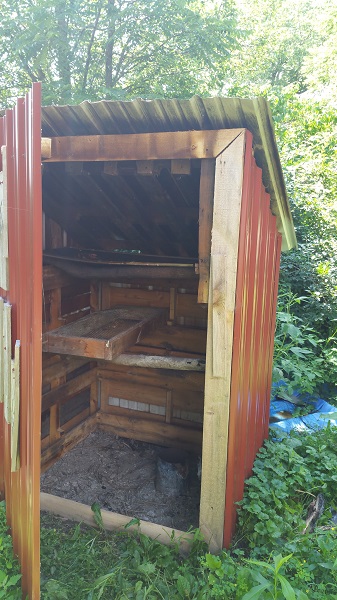
The author’s smoker.


Owning a smoker gives you the ability to preserve and attribute a wonderful flavor to your meat and other foods. Smokers are simple to construct and can be built from a variety of materials. The basic necessities, regardless of your custom set-up, consist of:


  • A way to hang your food.

  • A place to enclose the smoke.

  • A place to burn your wood.

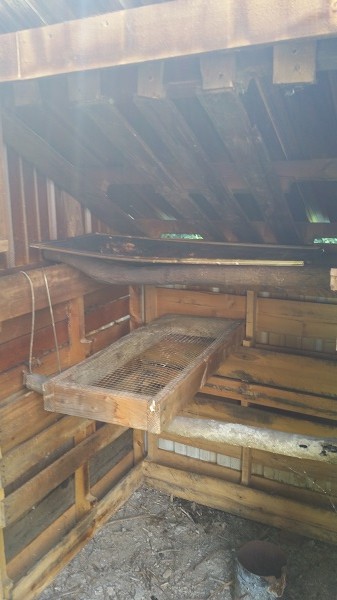
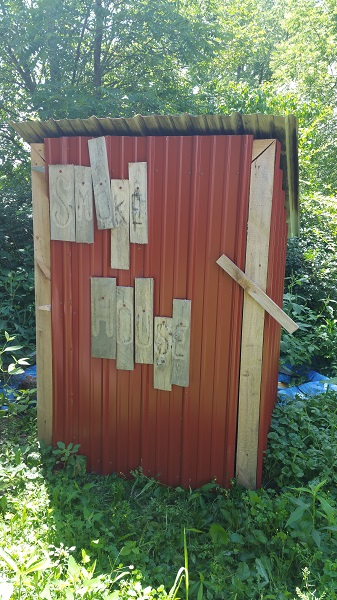
I’ve built many smokers using materials from 55-gallon drums, wood boxes and even tepees. Currently, I use the best smoker I could build under $75. It’s made of corrugated tin roofing for the roof and outside walls. The structure itself is made from 4-feet by 4-feet wood pallets, and I have a firebox attached to the side by using a 4-inch pipe.


I started my build by leveling an area of ground 5 feet by 5 feet. This will provide you the area you need for the smokehouse. Use wood pallets to make a “U” shape on the ground – the top of the “U” is the back of the smokehouse — and use 3-inch deck screws to fasten them together. Fasten the two side pallets on the open area of the bottom with a 1-inch x 4-inch board from the inside of the pallet (any 1-inch board will work). This is the body of the smoker.


The Super-Concentrated Survival Food Your Stockpile Needs!


How To Make A $75 Meat Smoker Out Of Wood PalletsIt’s time to get the roof on. Place another pallet on top of the body. Have someone help hold the front up to a 30-degree angle while you screw in the back. Use a couple of 1-inch x 4-inch boards on each side of the front and screw them in. This will keep the angle of your roof secure.


I bought a couple sheets of corrugated roofing for the walls and roof. Start by cutting the correct angles for the side walls and back. Just get some measurements off your frame to know how to cut the metal. Take care while cutting, and use the proper safety equipment so you don’t get cut up on the sharp metal. Once you cut the sides, screw them on and screw some panels on top for the roof.


Making the door is fairly easy. Get the measurement of the opening of the smoker. Build a rectangular door with 1-inch x 4-inch boards and mount with hinges to the smoker. Then, just fasten some more corrugated roofing to the door. This completes the smokehouse!


The last part is the fire box. This can be done in a few ways. Using a small drum turned into a fireplace is about the easiest way. Connect it to the smokehouse using some 4-inch pipe. I chose to use cinderblocks to make a stove and connect them via the 4-inch pipe.


How To Make A $75 Meat Smoker Out Of Wood PalletsUsing cinderblocks, make a box with four of them. Put a second staggered set on top, but chip out a section so the 4-inch pipe can attach to the smokehouse. Now, we need one last course of block for the firebox. Using a sheet of metal for a baffle on the firebox opening will control the heat.


This is a quick project and fairly inexpensive. Homesteaders and hunters will get tons of use from a smoker — smoking meats, fish and cheese. I know I get really popular with friends and family when I get smoking! It’s also a great way to take things like bland fish (trout) and turn them into a real treat by brining and smoking.


What advice would you add? Share it in the section below:


Discover The Secret To Saving Thousands At The Grocery Store. Read More Here.


Friday, May 12, 2017

Native America Survival Secrets: How They Cooked Without Metal

No Matches, No Metal, No Problem! How The Native Americans Cooked


If you are anything like me, then you are fascinated with how native people lived before the Europeans came to the “new world.” I find immense satisfaction in doing things on my own, without the benefit of modern technology.


I’m not knocking modern life. It certainly has its appeal! I’ve washed clothes by hand (exhausting), skinned animals and tanned hides (also exhausting), and made huge batches of soap with animal fat and wood ashes (more complicated than it sounds). One thing that has always perplexed me, however, is exactly how did the native people of this land make fire and cook without metal or matches?


In this article, we are going to take a look at how they did it and how you can, too, if the need should ever arise.


Making Fire the Old-Fashioned Way


Perhaps the first thing that comes to your mind is Tom Hanks in the movie Castaway, right? I can relate! When I first tried to rub two sticks together to make a fire, I had huge blisters and no fire. Thank goodness I had brought some matches with me!


So did the native people actually rub two sticks together? You bet they did! This is an old tried-and-true method that really does work, and isn’t that hard, if you have a little practice beforehand. In the same manner that Tom Hanks used, they would find one stick about 12 or 18 inches in length and break off the end, at about a 45-degree angle. Now, taking another stick only a few inches in length and placing it on the ground, they would make a small indentation, using a bone or rock most likely, and put the pointed end of the longer stick into the indentation of the small stick. The longer stick was placed between the palms and whirled back and forth, creating friction. The wood dust created by the friction would start to smoke. A piece of dry, light stuff was applied and then blown on to create fire.


This Cool-To-The-Touch Lantern Provides 100,000 Hours Of Emergency Backup Lighting


This method must have caused plenty of blisters, however, so it was also very common among nomadic tribes to carry hot coals in the hollowed-out horn of a buffalo or moose antler to carry to the next campsite. Fires could then be started again from the hot coal.


Other tribes discovered that by striking two types of stones together, such as pyrites or chert, they would produce sparks. These sparks could ignite dry, light material fairly quickly. Later, Europeans brought flint and steel, which often was carried by native American people, but before that, it was usually stones made of pyrite and/or flint.


No Matches, No Metal, No Problem! How The Native Americans CookedTo avoid blisters, other tribes invented what is typically called a bowdrill. This uses a bow, very much like the kind used for hunting, with the exception being that the sinew was loose. In the same manner as mentioned above, the person would put one stick on top of another stick, but rather than use your hands to manipulate the vertical stick, the “string” of the bow was wrapped around it. One hand is placed on top of the vertical stick, while the other hand pulls the bow back and forth. This creates a great deal of heat and friction and has been known to start a fire in less than two minutes.


If making fire by any of these methods interests you, then I would suggest that you practice beforehand. I made the assumption it would be fairly easy, and it is — but only after a few hours of practice.


No Pot? No Problem!


Well, at least for the native people it was not a problem to cook without metal pots or pans! For modern man, not as easy.


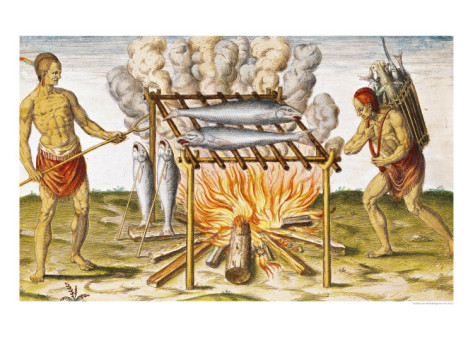
Depending on which tribe we are talking about, there were more ways to cook food than you can shake a stick at — with sticks being the most obvious choice. This is perhaps the easiest and least labor-intensive method that every camper learns pretty quickly. Put your meat on a stick and put it over the fire. However, there were plenty of other ways to cook food sans the ever-ready stick.


Ash cooking is still used in many places, even today. Fish, frog legs, even potatoes, can be wrapped in leaves and placed near or under hot ashes and coals. This is quick and effective, even if it means you might get a bit of ash on your food. Ashes actually don’t taste too bad!


Cooking in pits also was another popular method, especially if you wanted to cook a great deal of food at one time. Pits were dug into the earth, and then lined with an animal hide, fur removed, inside of the hide facing up. The food was placed in the hide, then covered with another hide or leaves. Hot coals were put inside the hole, and then covered again, usually with twigs and leaves.


Get The Essential Secrets Of The Top Survivalists In The World!


No Matches, No Metal, No Problem! How The Native Americans CookedNative people were well-known for their soups. How did they manage this without a metal pot? Similar to the pit method, a hole was dug in the ground and a piece of hide was used to line the hole. Water and food was put into the pit, where a fire was going nearby. Clean rocks were heated in the fire, and then dropped into the water. You would be surprised how quickly the water will reach a boil in this manner!


Tribes that lived near the sea were known to use large conch shells as pots to cook food. Southern tribes, such as the Navajo and Hopi, used clay pots, while others simply put flat rocks right next to a fire and let the food cook directly on the rock.


Last, but certainly not least, is a trick my father taught me. Small game that weighs about 2 pounds (1 kilo) or less can be easily roasted using a leather thong. My father would take the leather lace out of his boots, dunk them in water, and then tie one end of each lace to the meat. He would then make a stake out of a branch that made a “Y.” Putting one stake on each side of the fire, he would tie a lace to one of the stakes, and with the other lace, he would tie it to another small stick, with the stake being used as a support. The loose stick was then twisted around and around, so that the meat was on a manual type of rotisserie. He told me that his father taught him this skill and I must admit that it was pretty spectacular! Our meat was always perfectly done on all sides!


Try some of the above cooking methods on your next camping trip! You just might surprise yourself at all the ways you can make a fire and cook without modern utensils.


What fire-making or cooking tips would you add? Share your advice in the section below:


Learn How To ‘Live Off The Land’ With Just Your Gun. Read More Here.

Monday, May 1, 2017

DIY: A $10 Indestructible Off-Grid Cooking Stove

DIY: A $10 Indestructible Off-Grid Cooking Stove


A rocket cook stove is a super-efficient stove that can use just about anything for fuel — including small twigs, scraps of wood or even dried dung if you’re really in a pinch.


The principle behind the operation of the rocket stove is quite simple: a direct-to-cooking-surface insulated combustion chamber ensures nearly complete combustion of the fuel, giving off more heat, and burning the material quickly and intensely.


Although often used as portable cook stoves, rocket stoves are great alternatives to barbecues and fire pits, using much less fuel. This means you collect less wood. It also means you save money by not having to purchase propane.


Are You Ready For A Downed Grid? The Next Generation In Solar Backup Generators Is Finally Here!


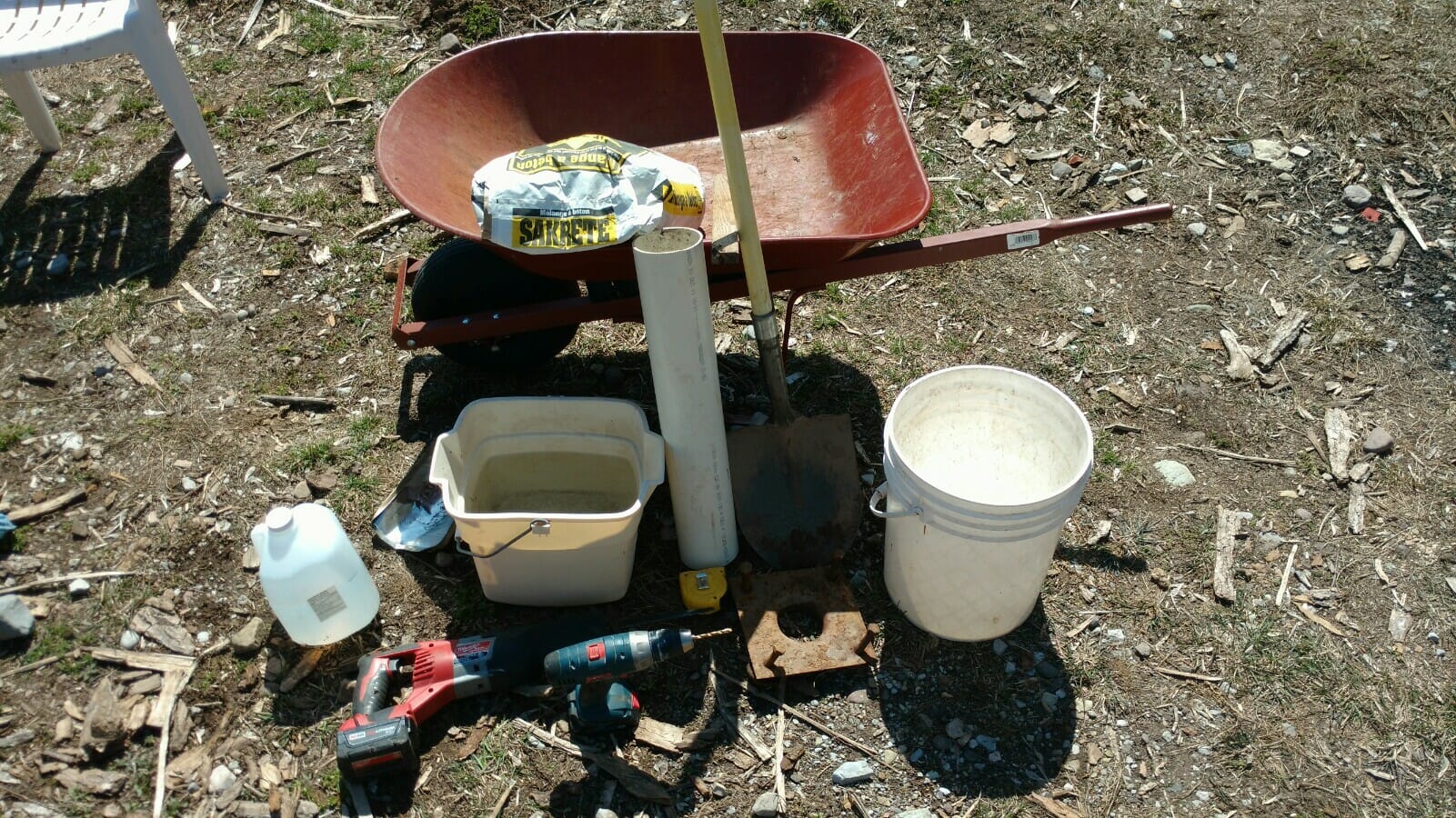
Let’s get right into how you can make your own rocket cook stove with minimal time and money. In fact, you probably have most of what you need to build the stove laying around the house, and if not, you can cheaply buy the materials. Assuming you already have a drill and most of the essential parts (like a wheel barrow), you likely can build this for under $10.


DIY: A $10 Indestructible Off-Grid Cooking Stove


Materials


  • Plastic 5-gallon bucket

  • Reciprocating saw or other cutting tool to cut PVC pipe and bucket

  • 4 feet of 4-inch PVC or similar pipe

  • Drill with bit

  • Concrete mix

  • Shovel or mixing device

  • Concrete mixing container – e.g. wheel barrow

  • Measuring tape

  • Piece of metal for burn chamber fuel tray

  • Refractory sand (optional)

  • A marker to mark cuts on the PVC pipe and bucket

  • Water

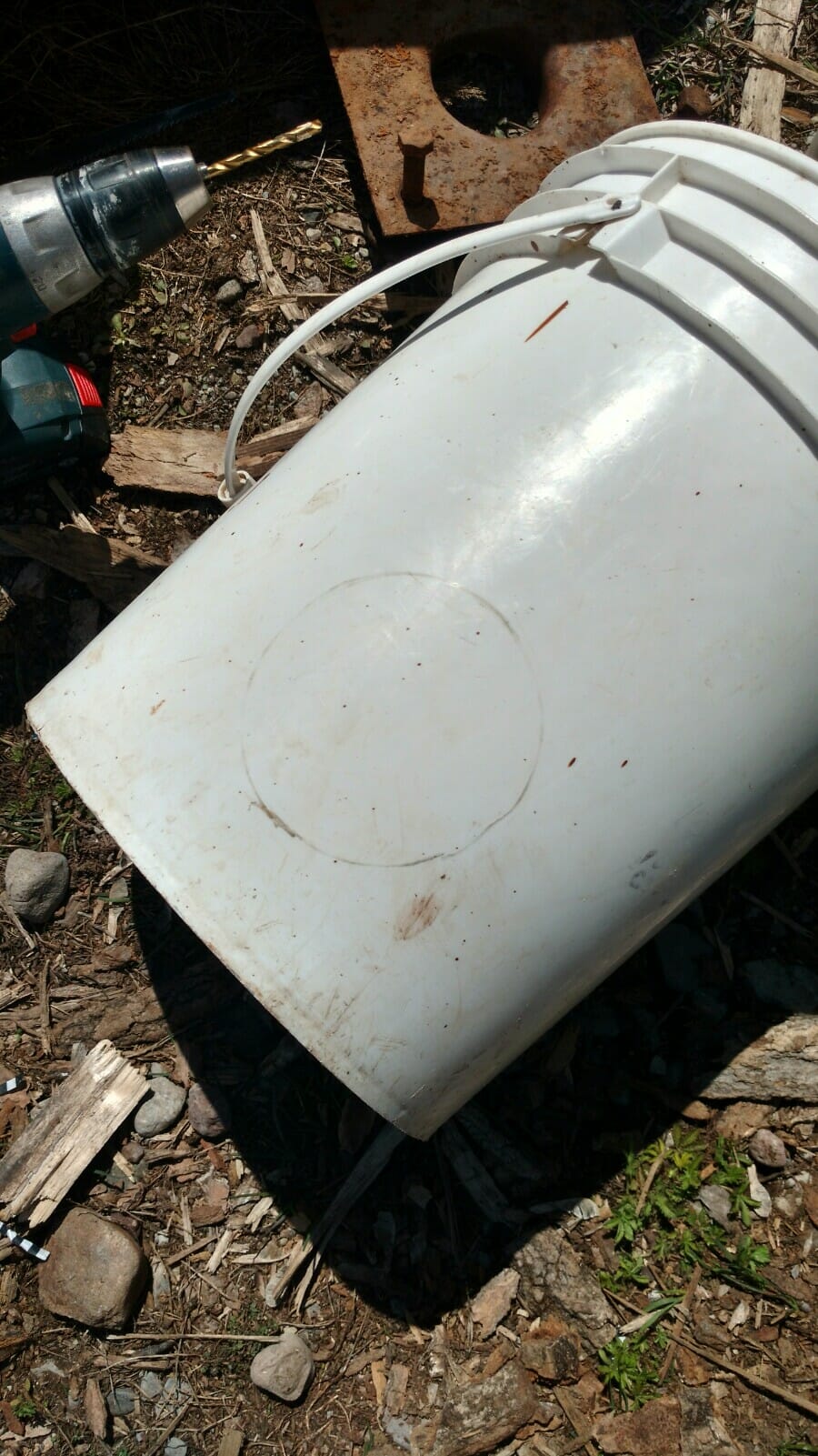
Step 1: Mark the Intake


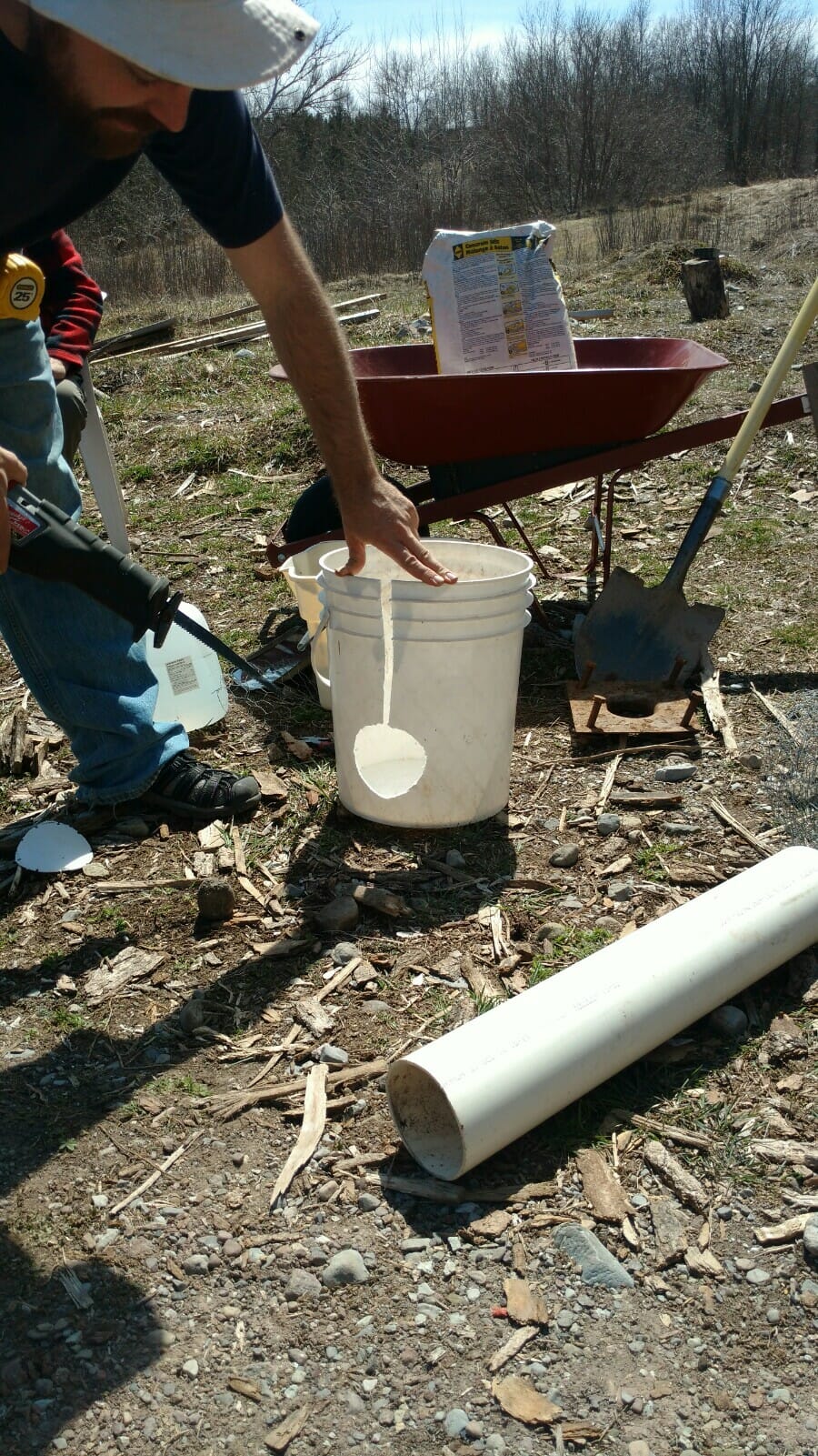
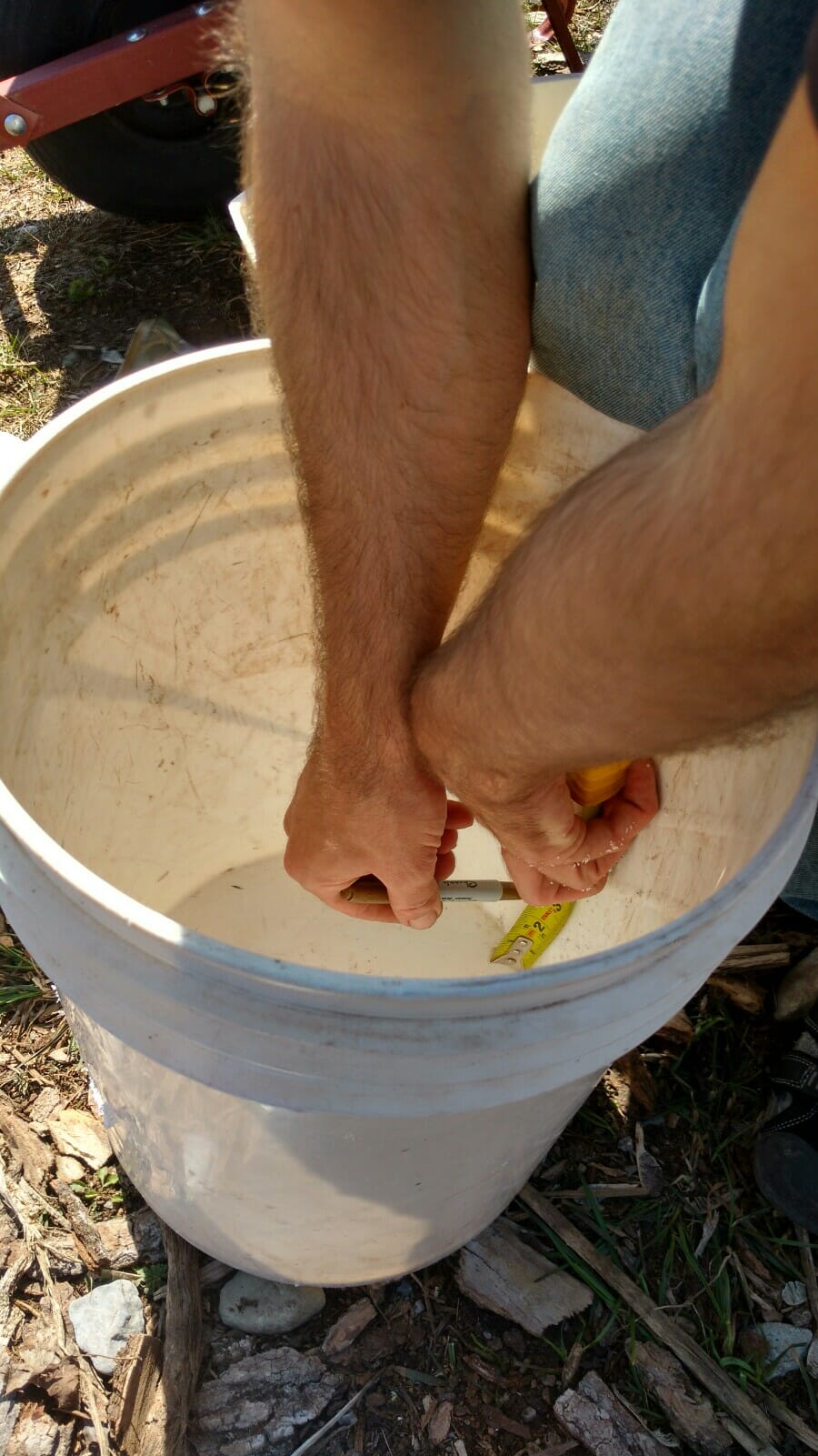
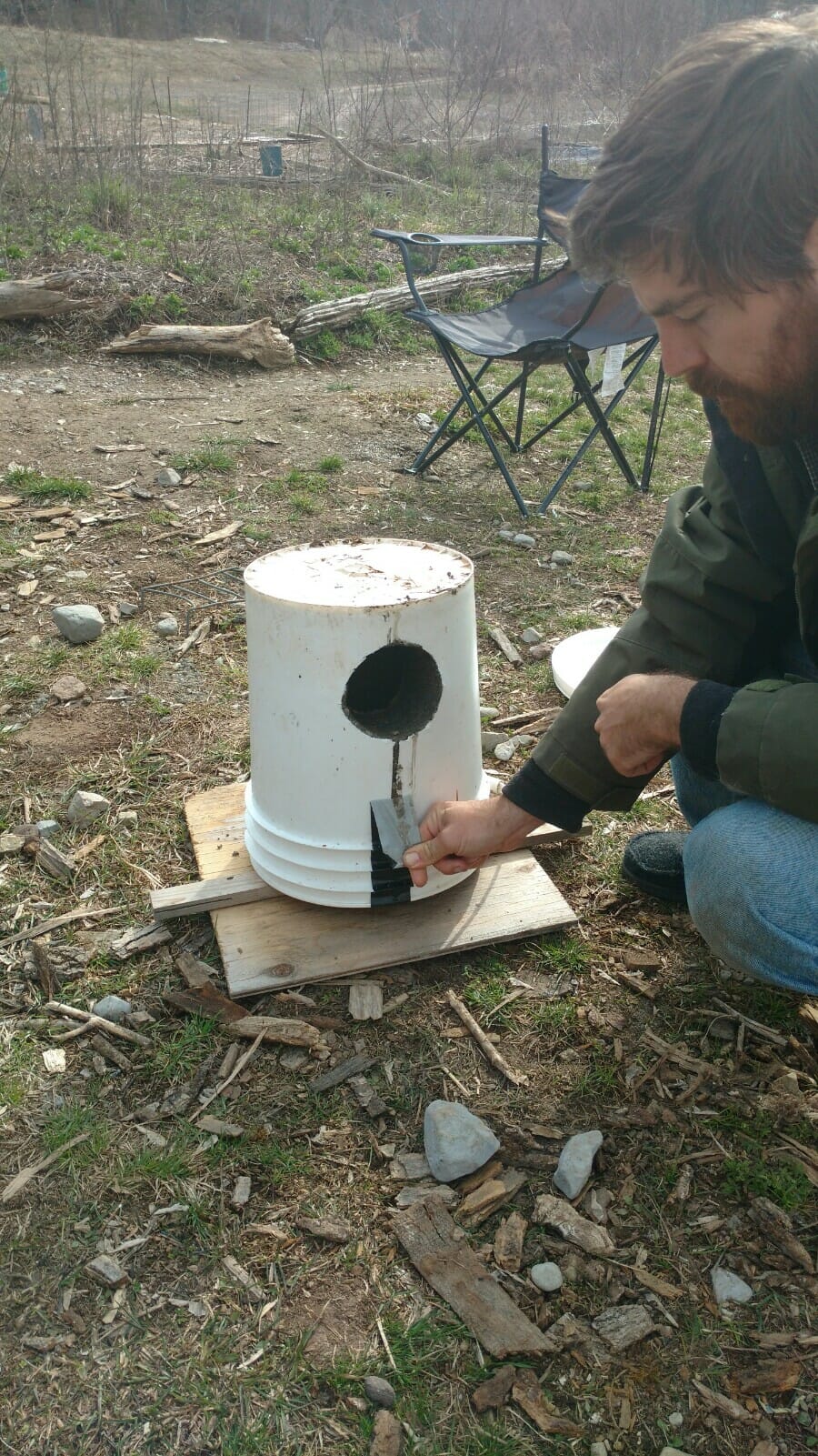
Measure about 2 ½ inches from the bottom of the bucket and make a mark. This is where the bottom of the hole for the intake pipe will go. Place the bottom of the pipe against the mark and trace a circle around the pipe with your marker.

DIY: A $10 Indestructible Off-Grid Cooking Stove


DIY: A $10 Indestructible Off-Grid Cooking Stove


DIY: A $10 Indestructible Off-Grid Cooking Stove


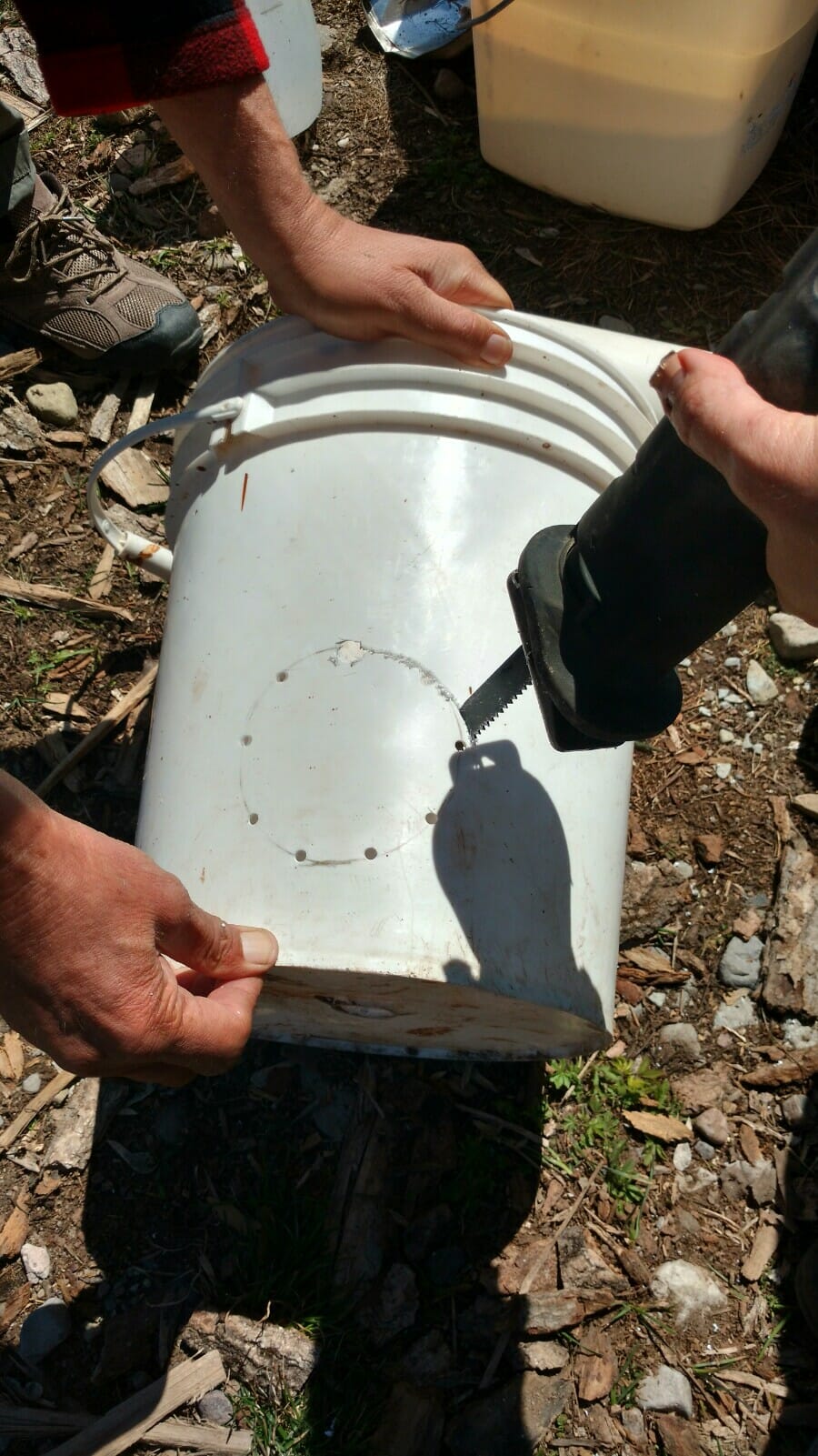
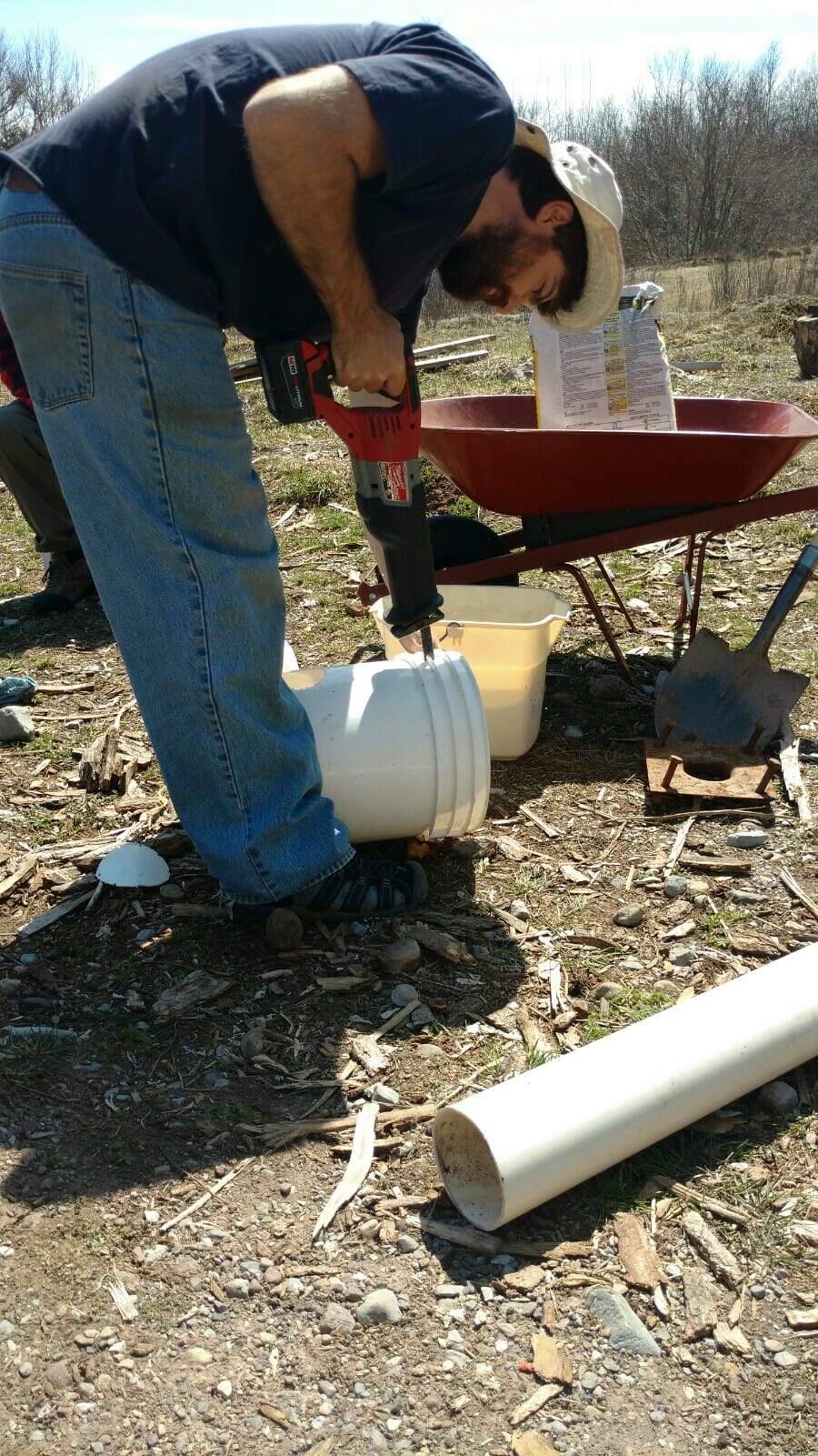
Step 2: Cut the Intake Hole


Drill holes all around the marked intake circle so you can get your reciprocating saw blade in and cut your intake hole.


DIY: A $10 Indestructible Off-Grid Cooking Stove


DIY: A $10 Indestructible Off-Grid Cooking Stove


Step 3: Cut a Concrete Release Line


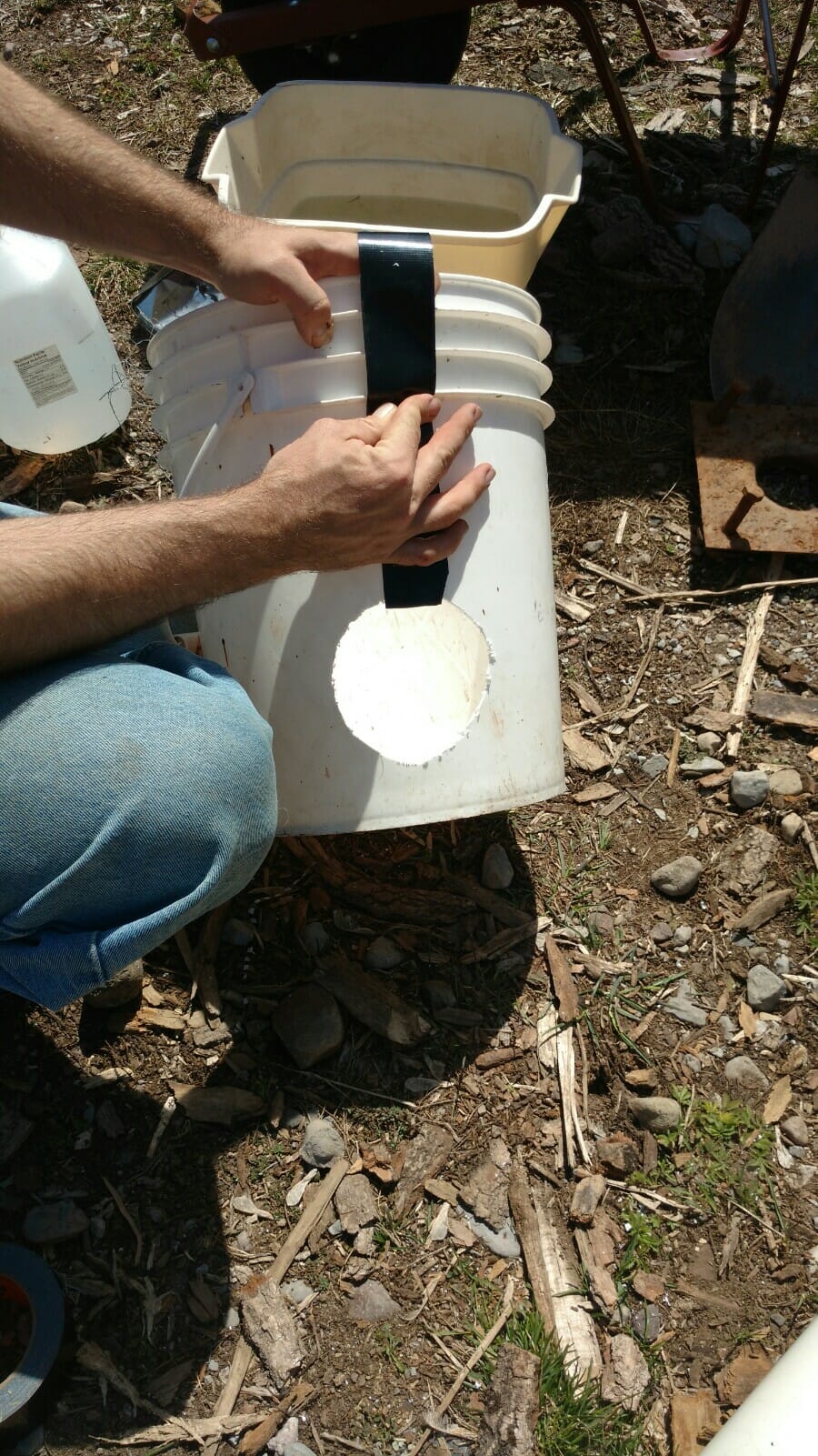
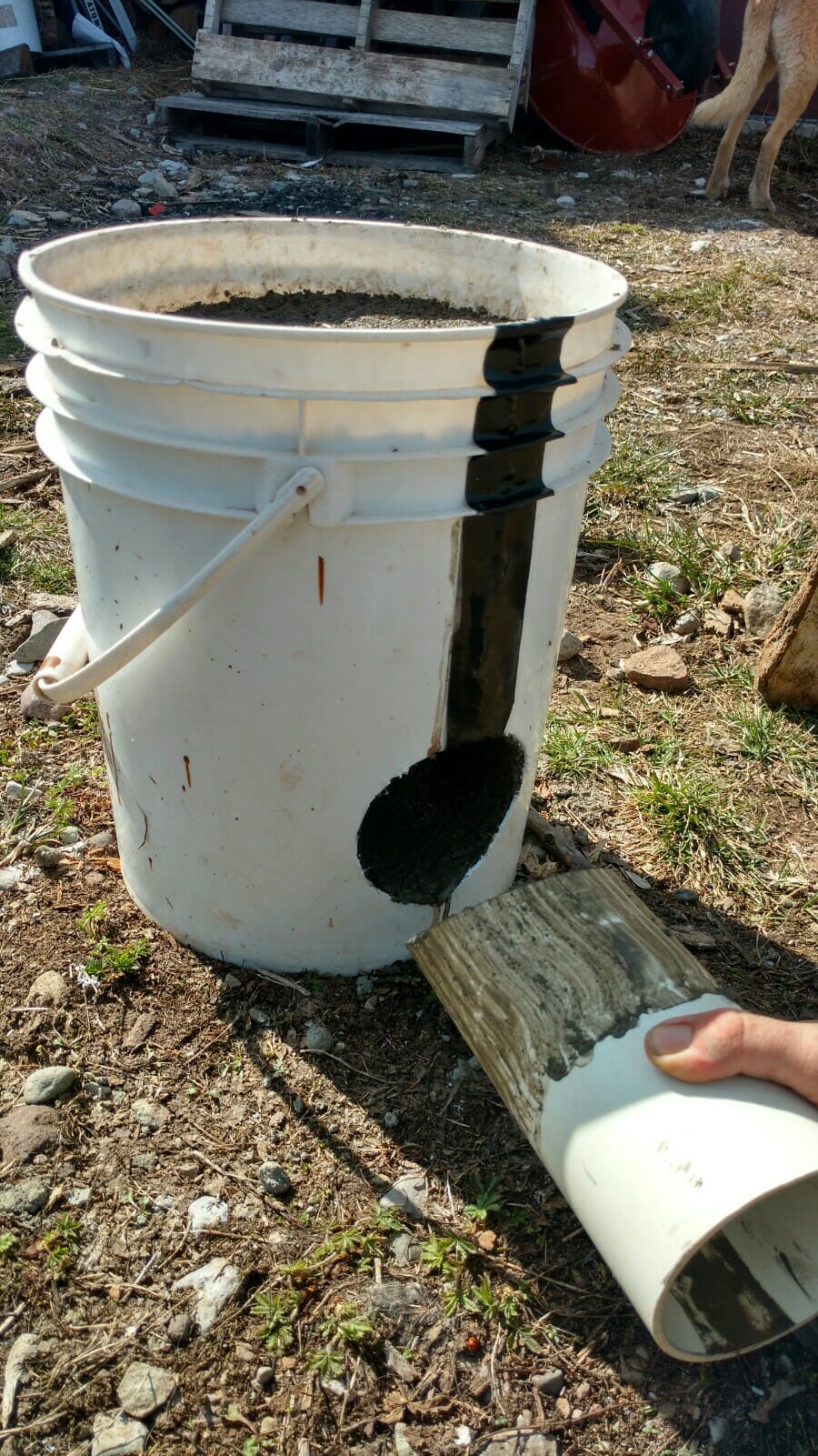
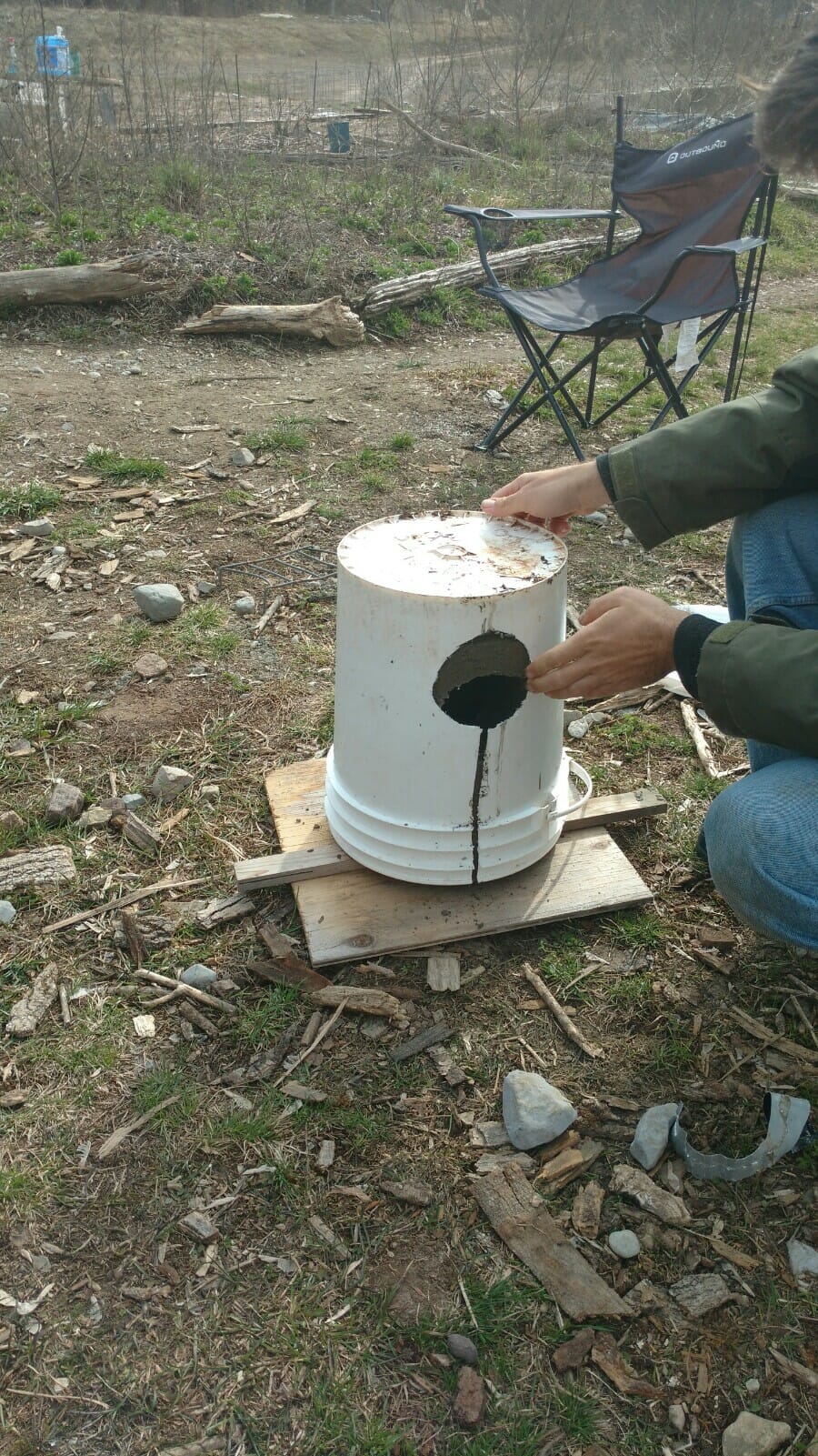
For ease of getting the bucket off once the concrete dries, you can cut a line from the top of the bucket downward toward the middle of the hole. Tape it with duct tape so it stays together when the concrete is added.


DIY: A $10 Indestructible Off-Grid Cooking Stove


DIY: A $10 Indestructible Off-Grid Rocket Stove


DIY: A $10 Indestructible Off-Grid Rocket Stove


Step 4: Cut and Fit the Pipes


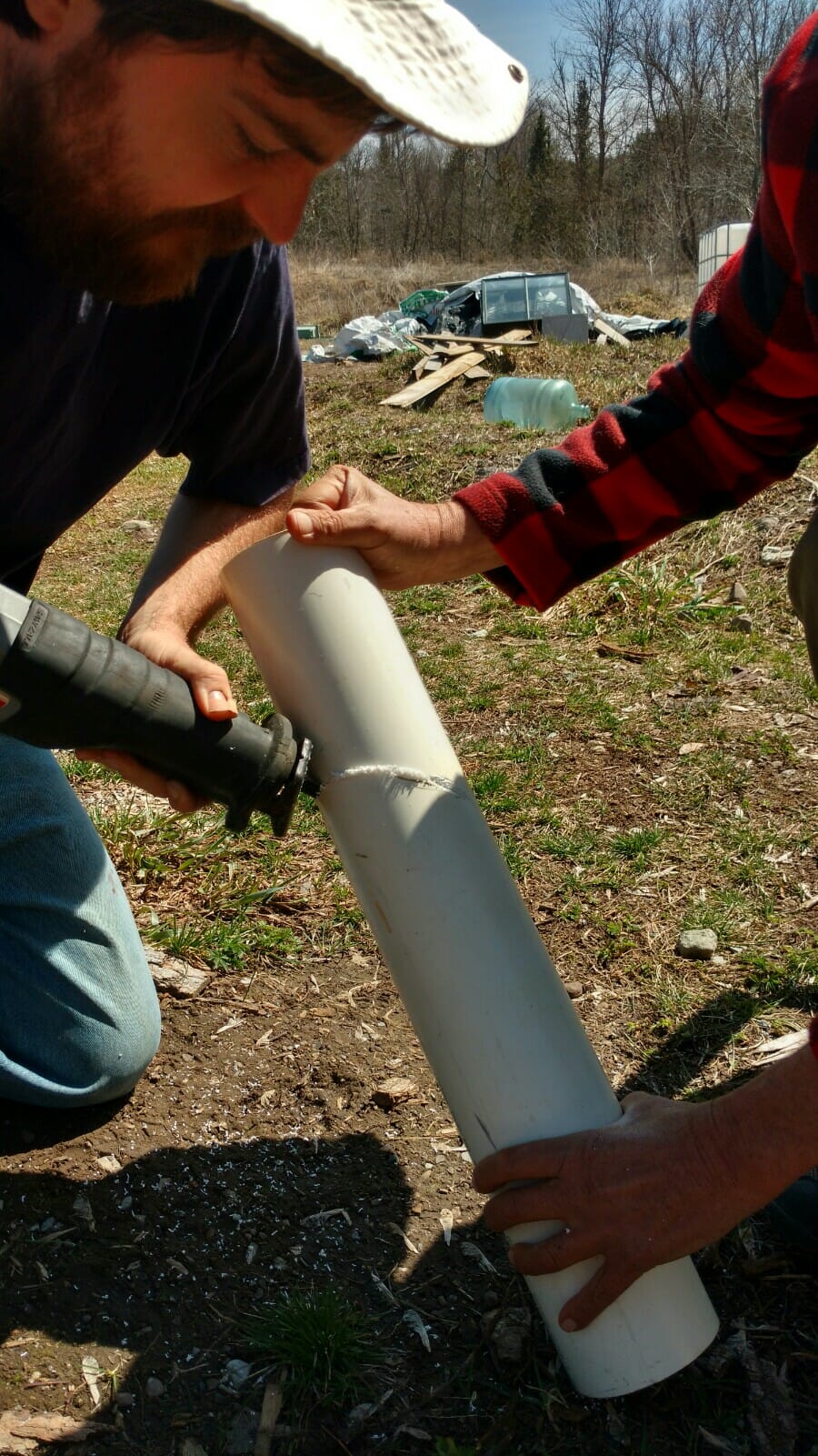
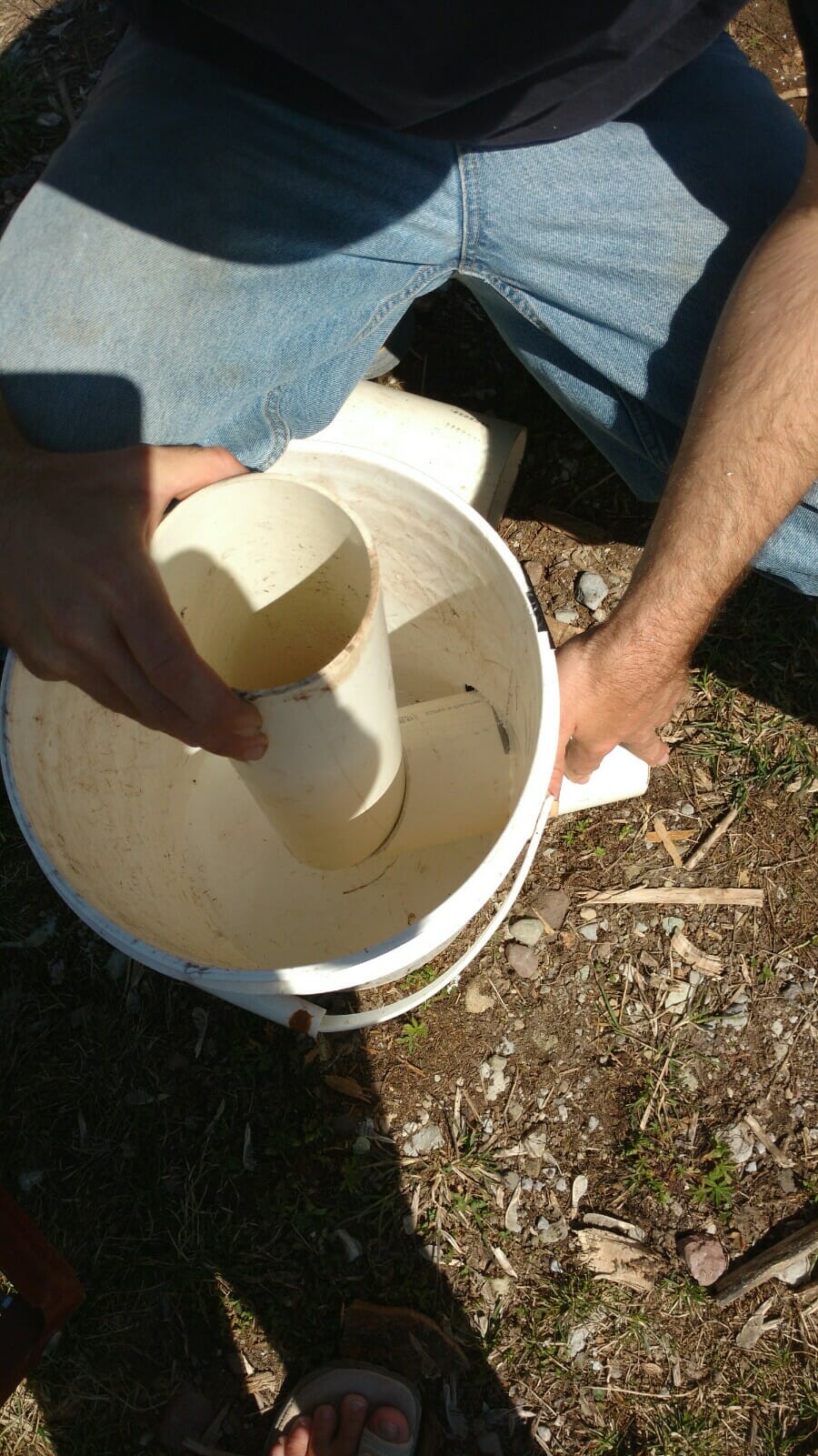
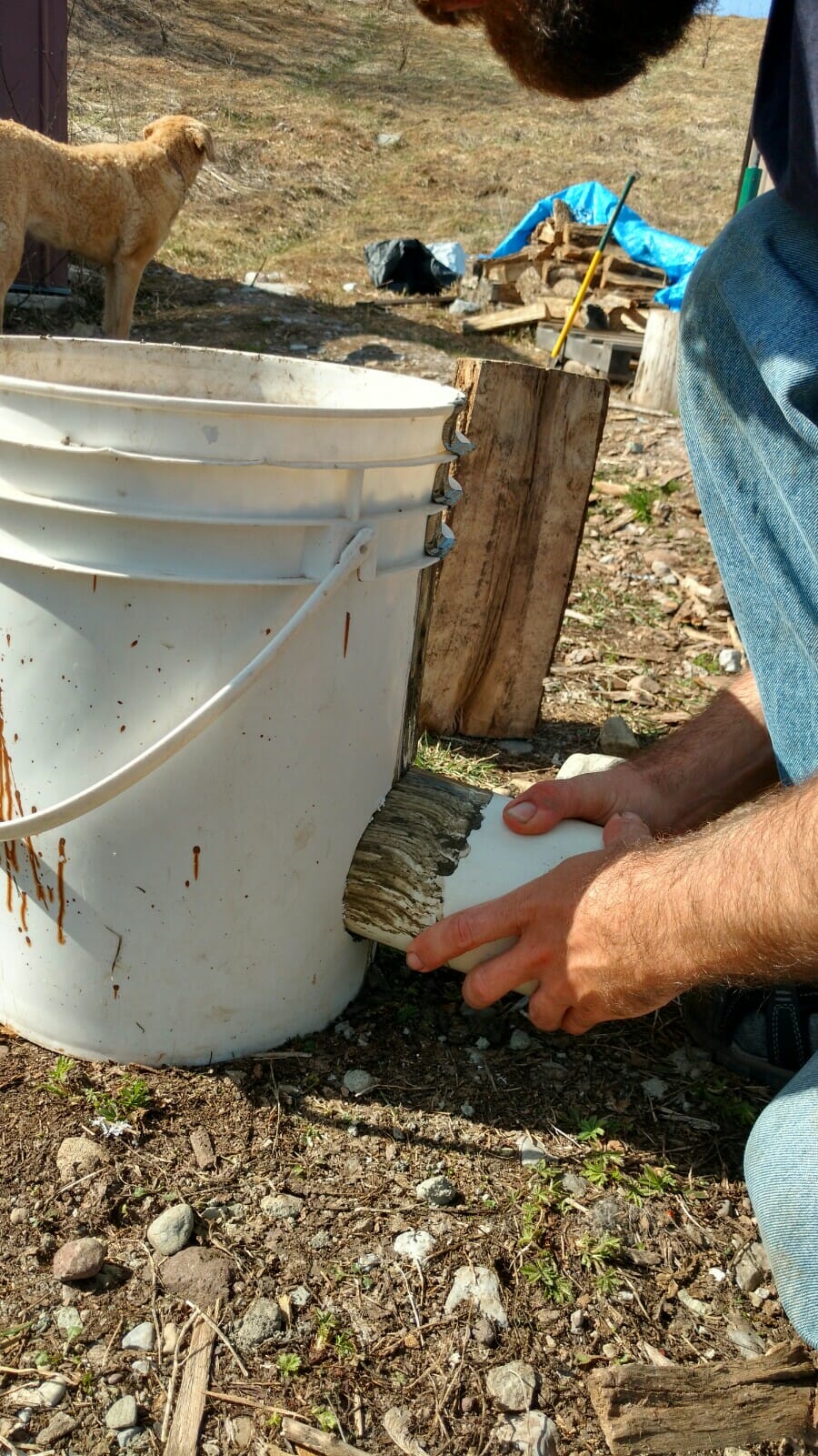
Measure and mark the pipe on a 45-degree angle where you will make a cut, making sure there will be enough pipe to extend beyond the top of the bucket for the combustion chamber outlet pipe, as well as for the intake pipe to extend beyond the intake hole. You can use a simple square to mark the angle.


DIY: A $10 Indestructible Off-Grid Rocket Stove


DIY: A $10 Indestructible Off-Grid Rocket Stove


DIY: A $10 Indestructible Off-Grid Cooking Stove


Step 5: Mix Concrete, and Fill the Bottom


Mark the inside of the bucket with the marker at the height of the bottom of the hole.


DIY: A $10 Indestructible Off-Grid Cooking Stove
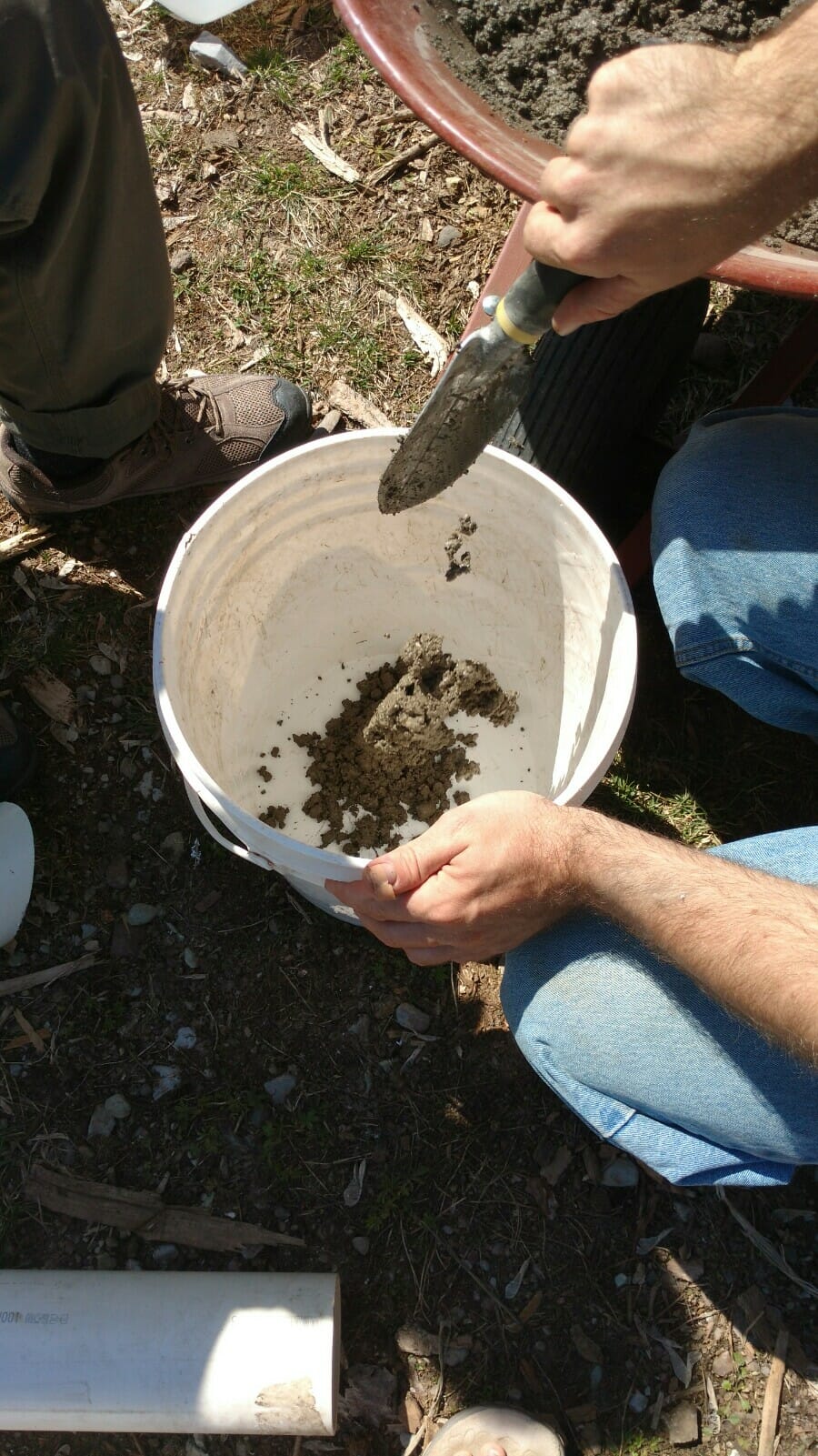
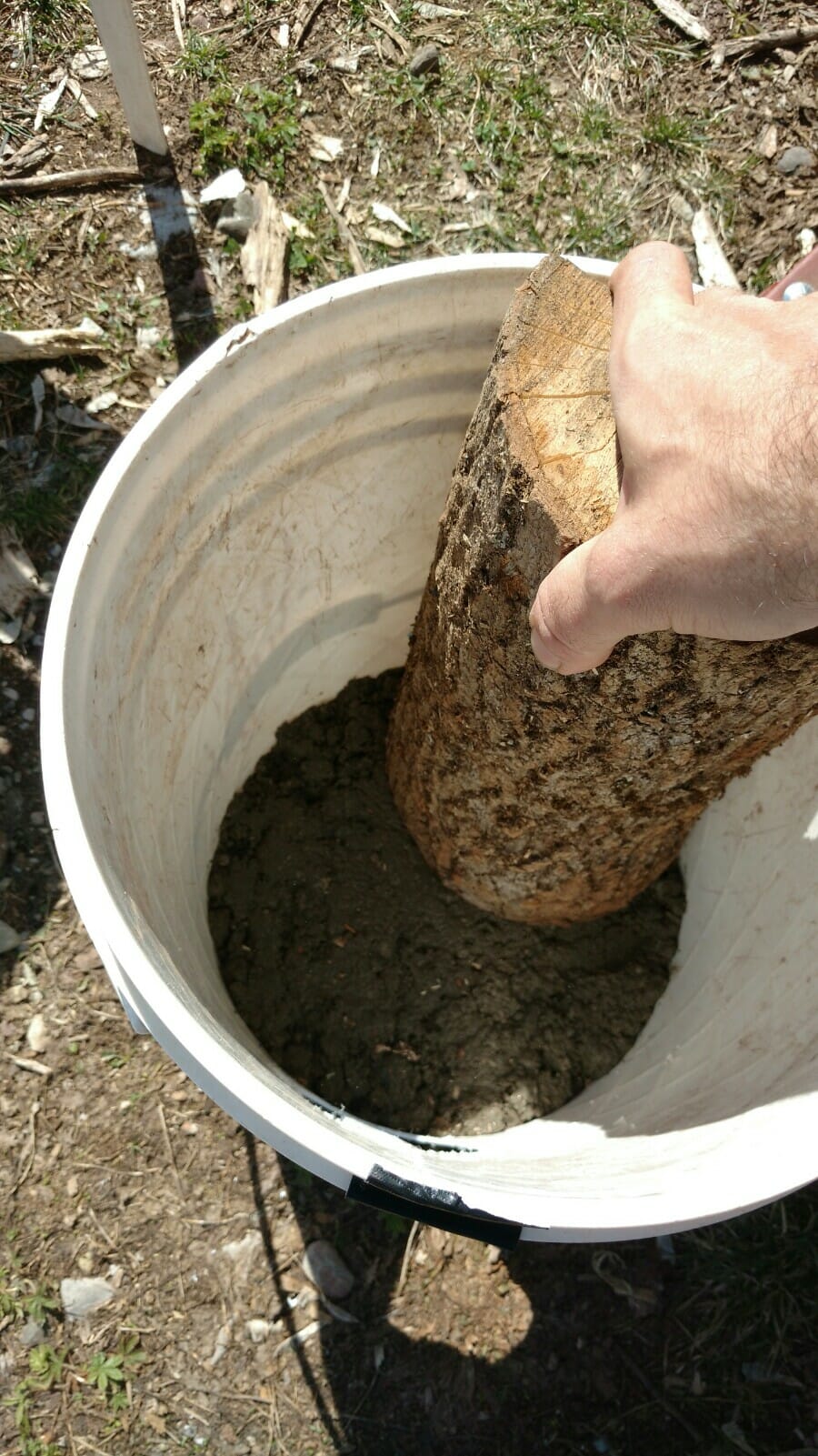
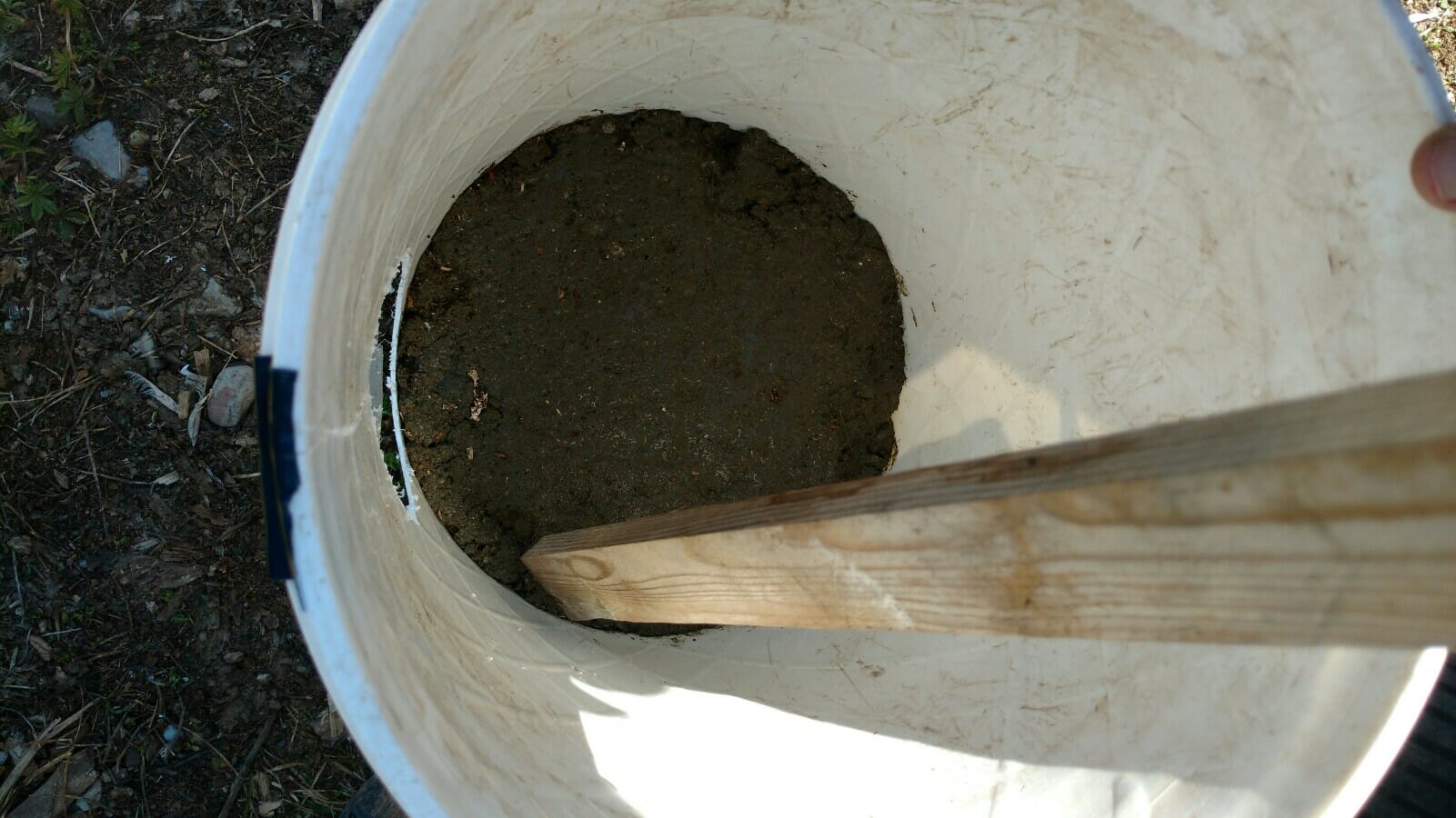
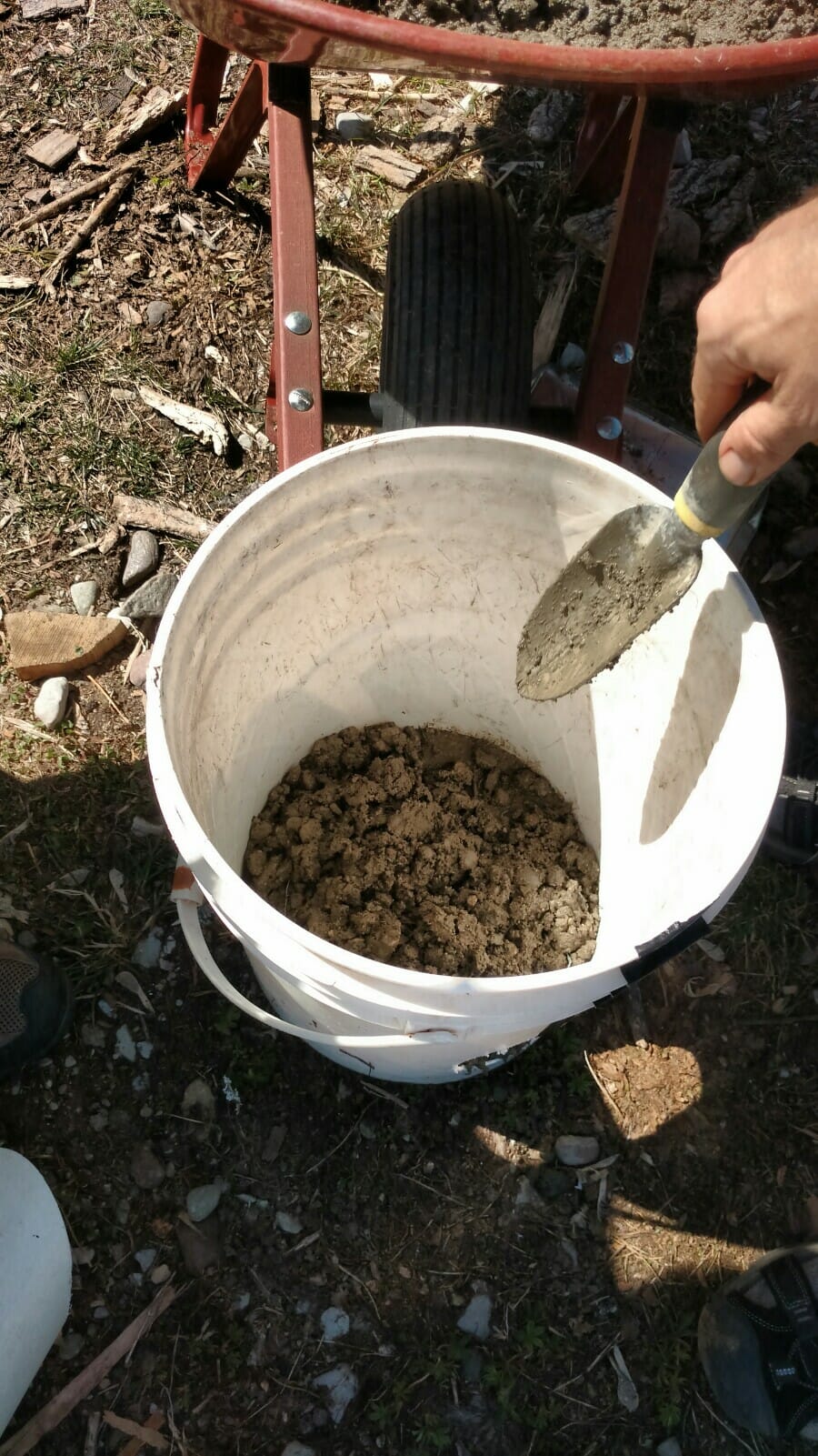
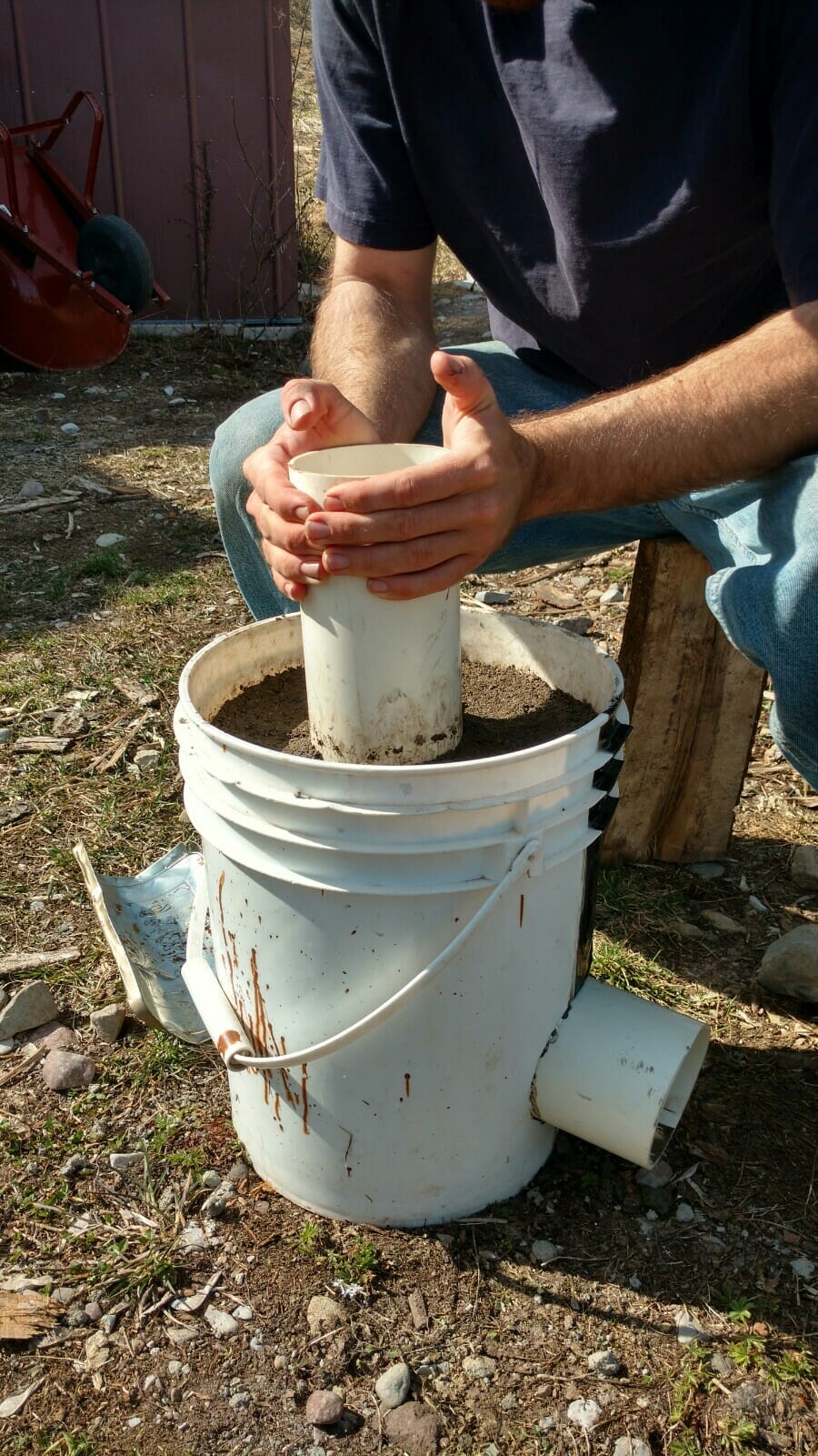
Mix the concrete, adding sand or even refractory sand if you want the stove really to stand up to the heat. The consistency should be fairly thick. As you fill it, continually tamp down the concrete using whatever is around, being careful to use something smaller to tamp it down around the edges to make sure no air pockets are left.


DIY: A $10 Indestructible Off-Grid Rocket Stove


15


16


DIY: A $10 Indestructible Off-Grid Rocket Stove


DIY: A $10 Indestructible Off-Grid Rocket Stove


Step 6: Reinforce Bottom


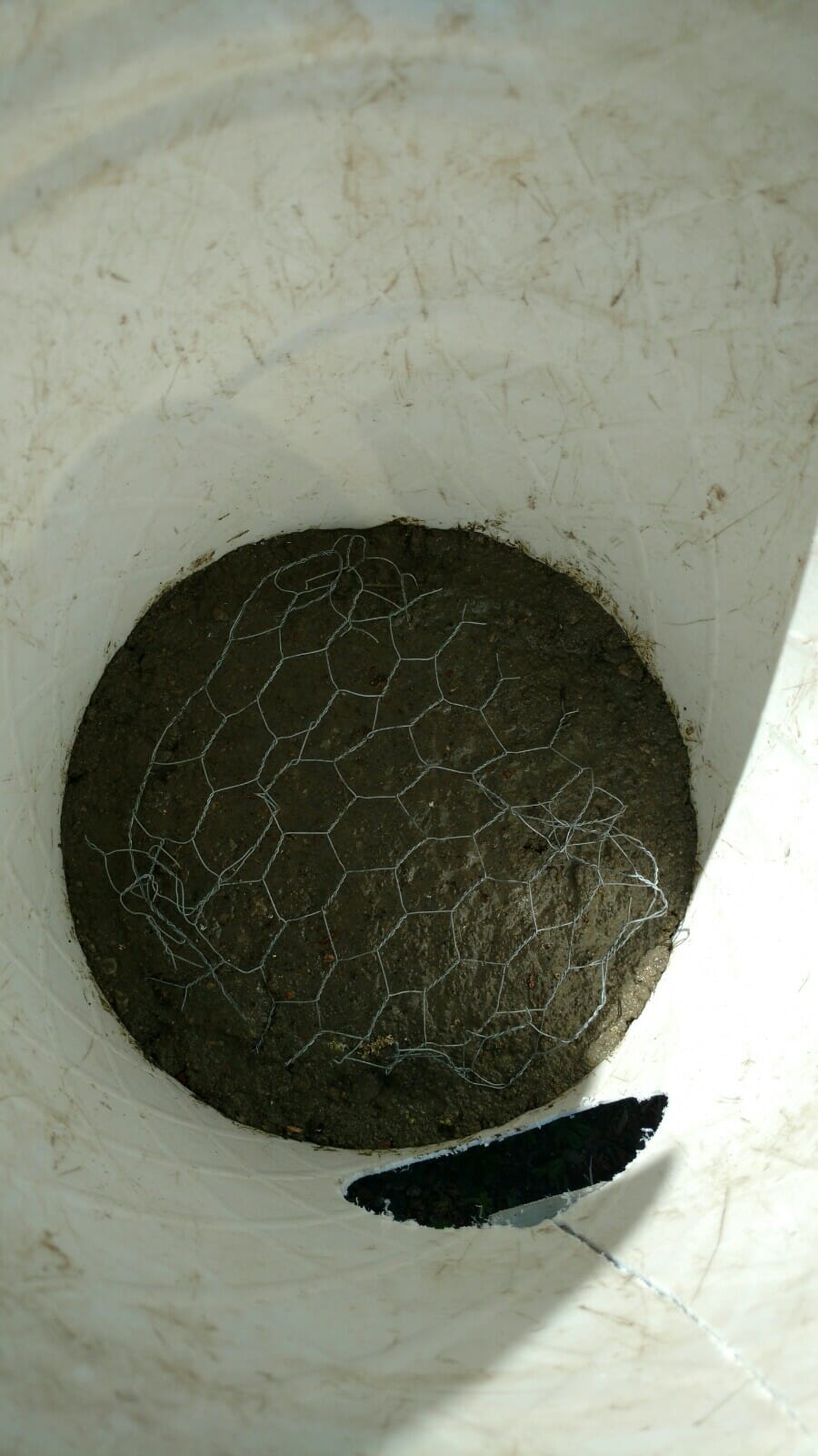
Once you’ve filled the bucket about halfway to the bottom of the hole, you may choose to reinforce this thinner bottom area with something like chicken wire by simply laying it on top and then continuing to fill the concrete up to the hole. 21.jpg, 22.jpg. Continue to tamp as you fill.


DIY: A $10 Indestructible Off-Grid Rocket Stove


DIY: A $10 Indestructible Off-Grid Rocket Stove


Step 7: Fill with Concrete


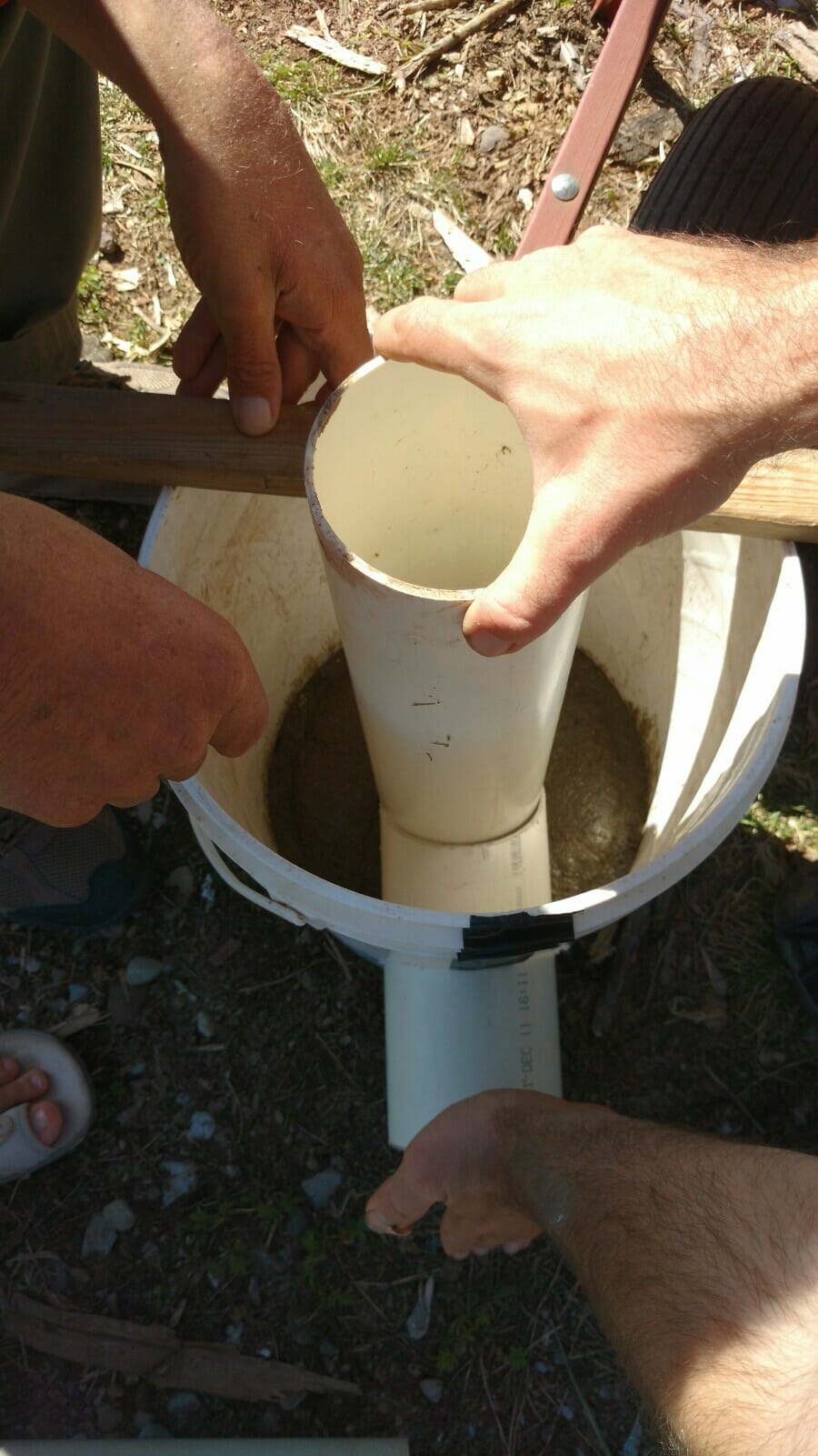
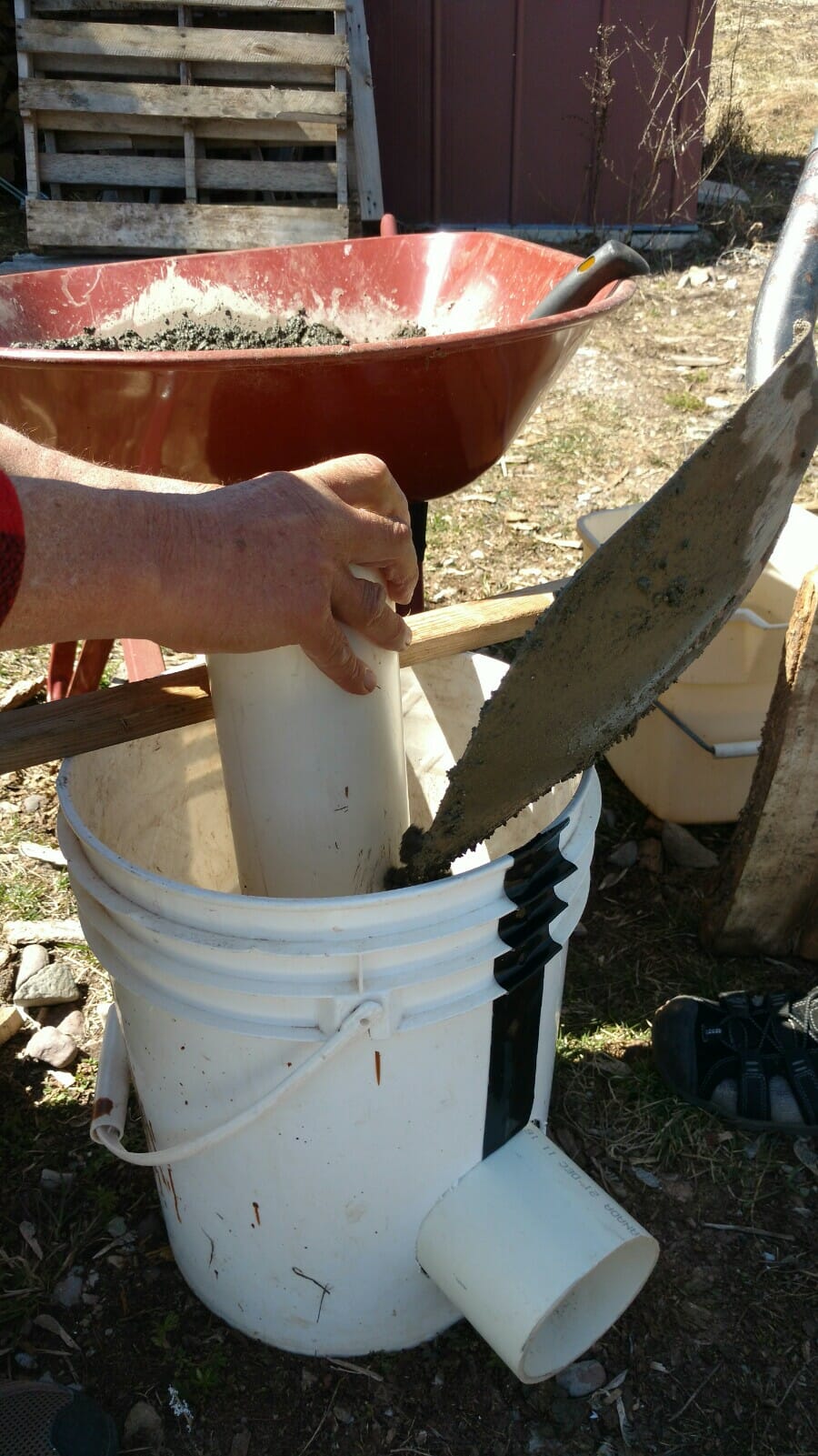
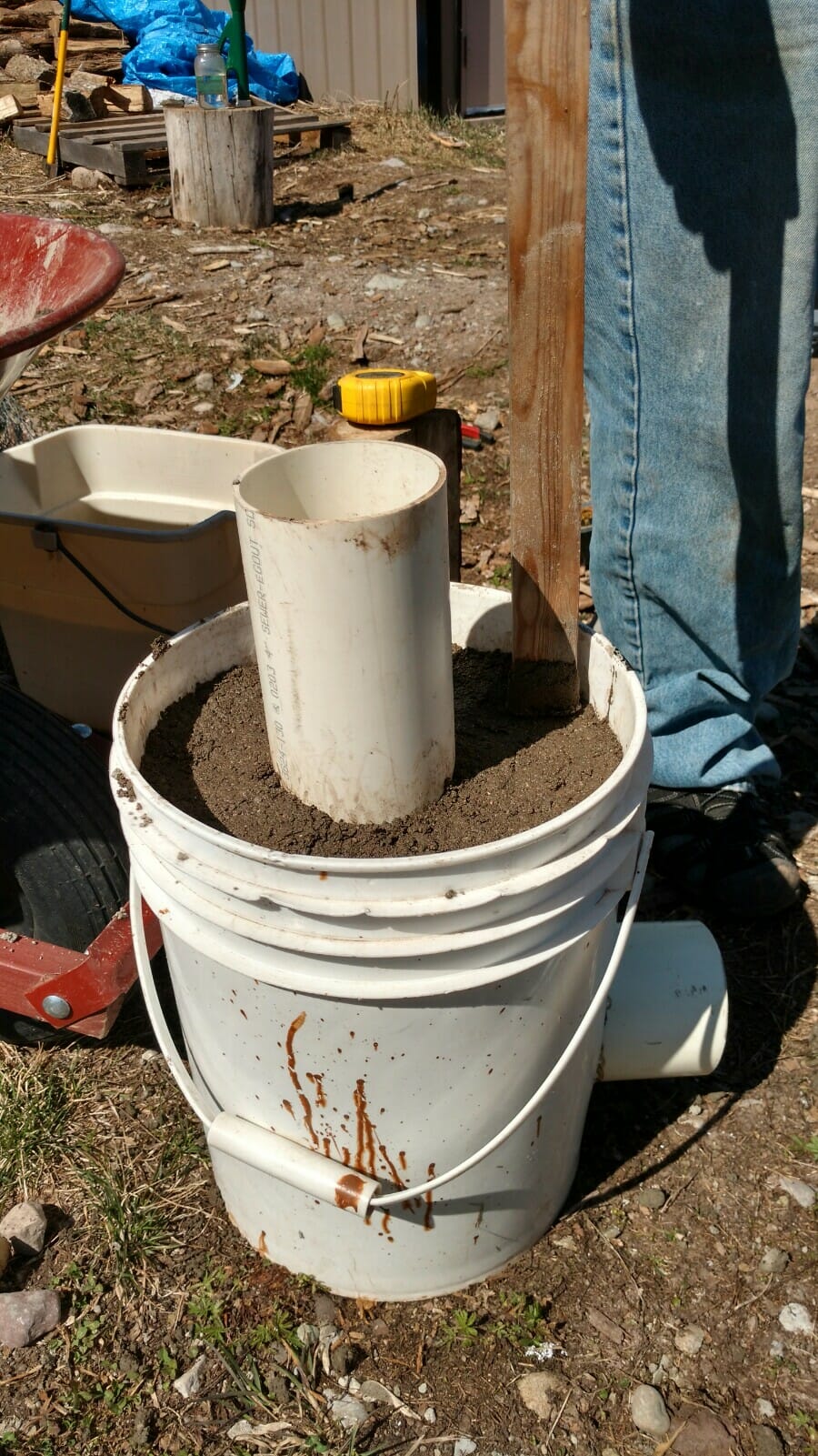
Fit the pipes into the hole, and fill it the rest of the way with concrete, tamping as you go.


DIY: A $10 Indestructible Off-Grid Rocket Stove


DIY: A $10 Indestructible Off-Grid Rocket Stove


DIY: A $10 Indestructible Off-Grid Rocket Stove


DIY: A $10 Indestructible Off-Grid Rocket Stove


Step 8: Partially Set, and Remove Pipes


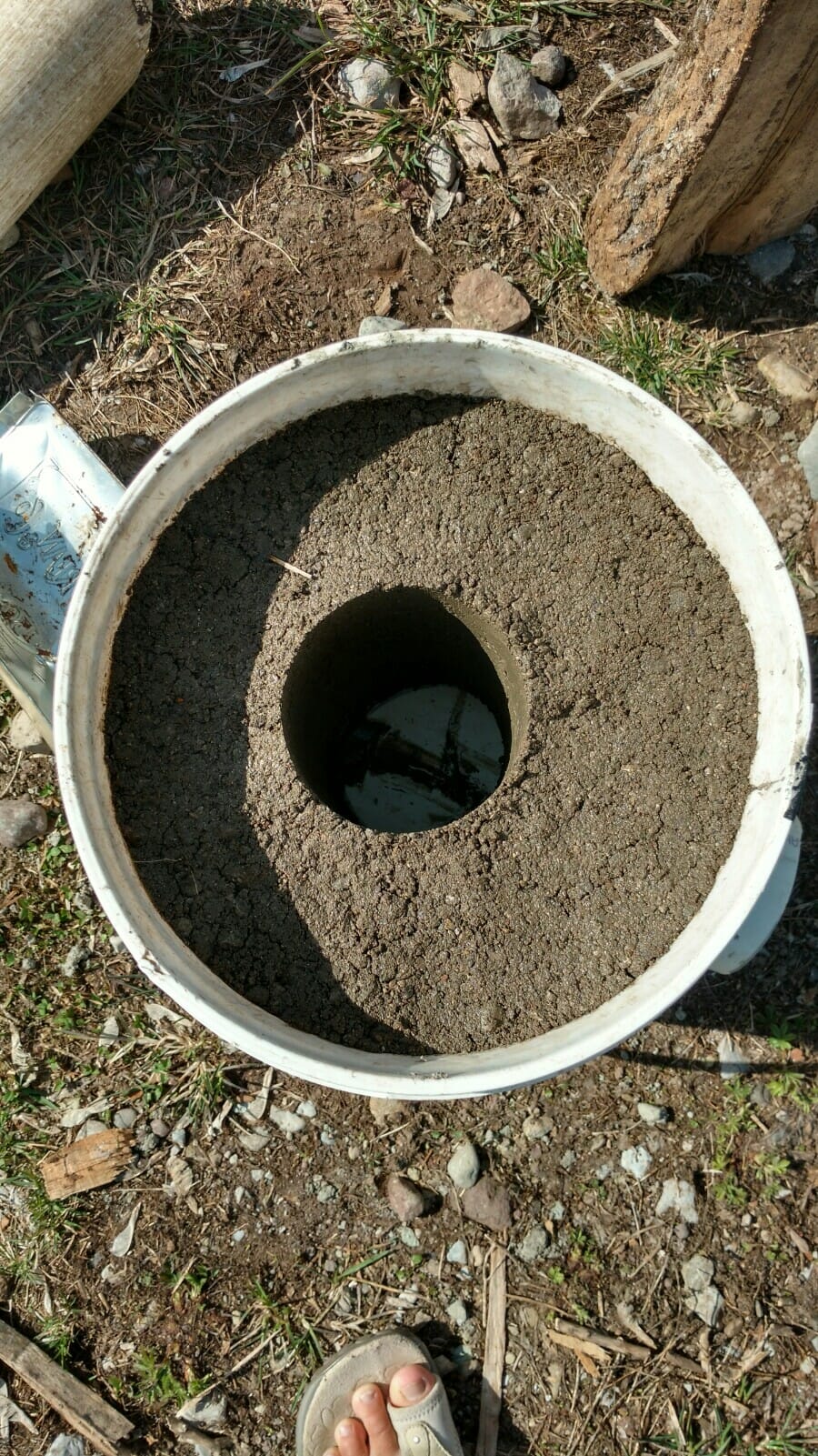
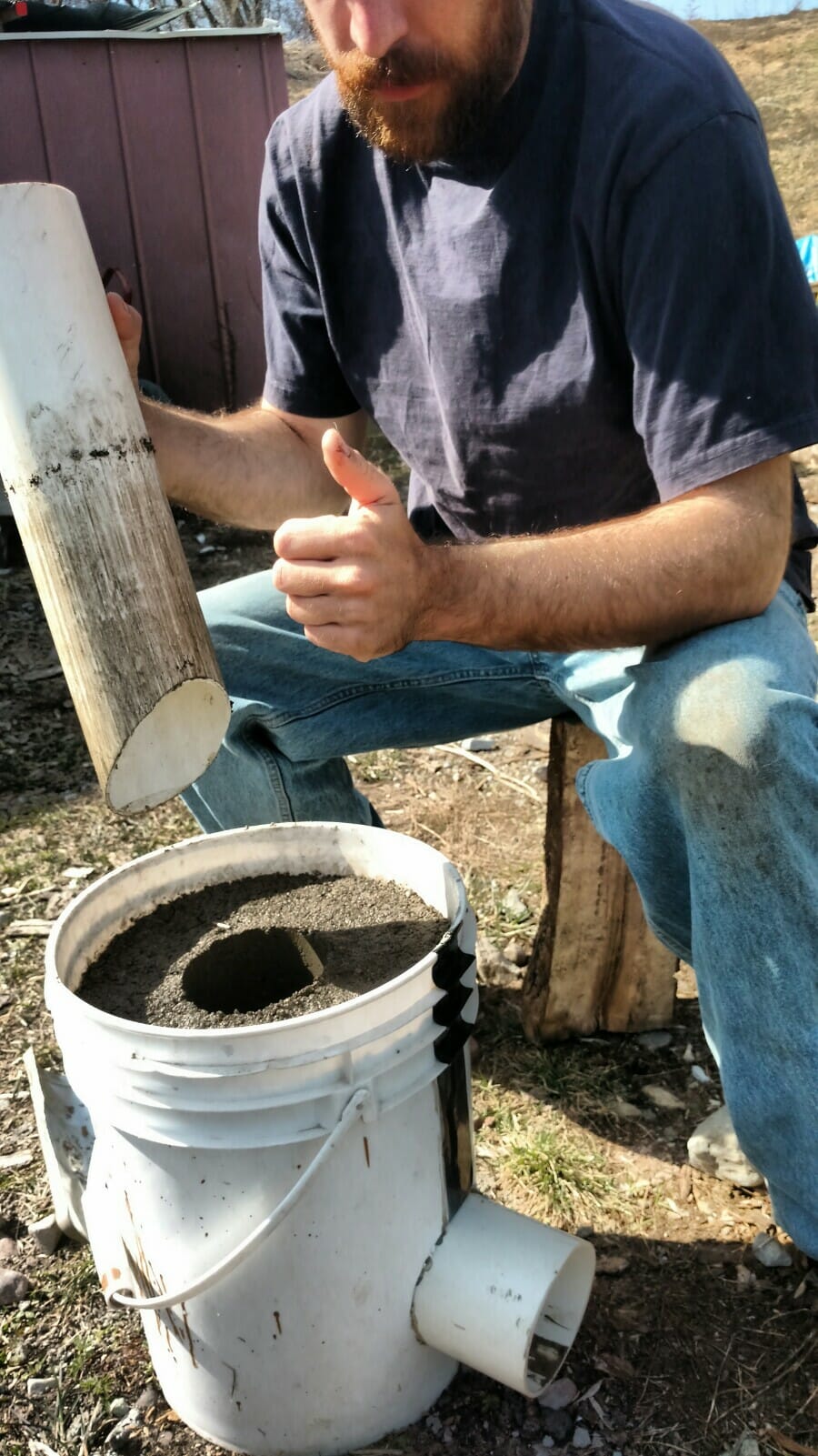
Let it sit for a couple of hours and then carefully remove the pipes by twisting a little and raising slowly.


DIY: A $10 Indestructible Off-Grid Rocket Stove


DIY: A $10 Indestructible Off-Grid Rocket Stove


DIY: A $10 Indestructible Off-Grid Rocket Stove


DIY: A $10 Indestructible Off-Grid Rocket Stove


DIY: A $10 Indestructible Off-Grid Rocket Stove


Step 9 Set Further and Remove Bucket


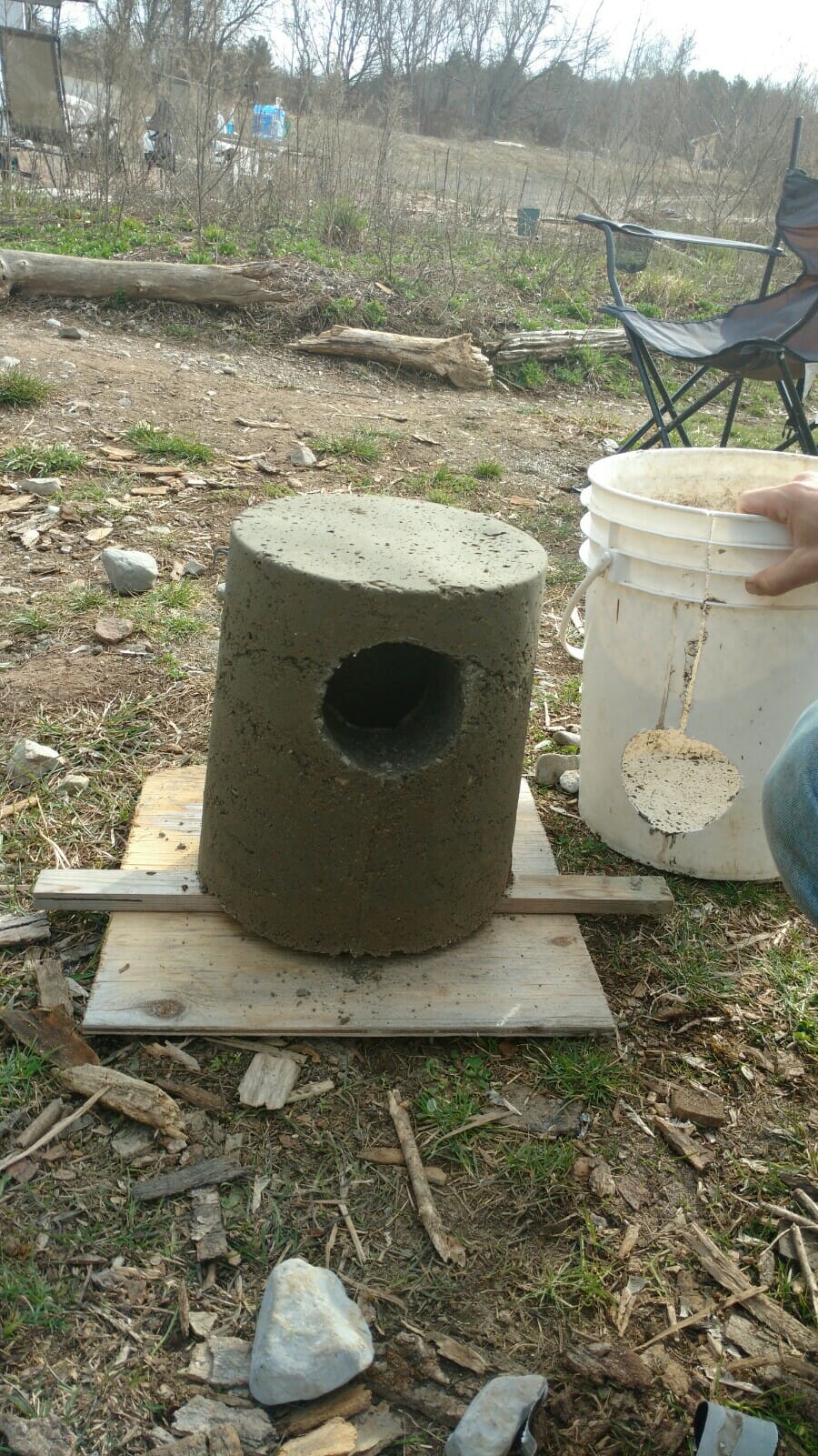
After a day or so you should be able to remove the bucket so the concrete sets faster. First, remove the tape, separate the release line and then carefully pull off the bucket.


DIY: A $10 Indestructible Off-Grid Rocket Stove


DIY: A $10 Indestructible Off-Grid Rocket Stove


DIY: A $10 Indestructible Off-Grid Rocket Stove


Step 10: Set Completely and Put in Fuel Shelf


After another day or two you will notice the concrete turn a lighter grey. You can now add your fuel shelf, making an inch or so of space underneath it. Any piece of metal that you can bend and shape into the hole will do. You also may choose to place a grill on the top that gives some lift off the top of the stove to allow the air to flow out better.


That’s all there is to creating your own simple-yet-highly efficient rocket cook stove on the cheap. Consider keeping your pipes and bucket so you can quickly make more stoves for your friends and family.


If you liked this article or know of a different way of making rocket cook stoves, feel free to share your thoughts in the comments below!

Wednesday, March 1, 2017

6 Clever, Off-Grid Ways To Cook When There’s No Electricity

6 Clever, Off-Grid Ways To Cook When There’s No Electricity

Image source: Pixabay.com


You may not think of it this way, but the vast majority of the food we eat is cooked. Oh, it may not actually be cooked in your kitchen, but it was cooked somewhere. Frozen foods, breakfast cereal, cookies, bread, potato chips, dry-roasted peanuts, candy, spaghetti sauce, lunchmeat and even some canned goods are all cooked somewhere — probably in a factory.


Of course, those factories save us from having to cook all of those things ourselves.


But what if you couldn’t get all of that food anymore? What would you do? Could you come up with enough food to eat if you had to bake your own bread and can your own vegetables? Even worse than that, what if you had to do it without electrical power?


The sad reality is that our infrastructure is very fragile. As long as it works, it’s great. But it doesn’t take a whole lot to take it down.


That’s why it’s important to have alternate ways of cooking your food. Fortunately, there are a wide range of options that we can choose from … if we take the time to be prepared to use them.


1. Wood fire


Mankind’s oldest means of cooking was over an open fire. For much of human history, this was the only way that people could cook. Even today, there are places in the world where cooking over wood is the norm.


I’ve spent a considerable amount of time in Mexico. While the cities can be quite modern, once you get out in the sticks, it’s not surprising to find people doing things much as they have been done for centuries. The country is in transition and because of that, you’ll see the old ways and the new ways in use side by side, even within the same household.


When we talk about cooking with a wood fire, we’re actually talking about several different cooking methods. The common factor is the wood, but how that wood is used and how the food is cooked can vary extensively. Some possibilities include:


  • A fireplace.

  • A wood-burning stove.

  • A fire pit.

  • A clay oven.

  • An open fire.

2. Dutch oven


The Dutch oven is often used in a wood fire, but it still deserves special mention. Originally, Dutch ovens were cast-iron affairs, with feet to hold them level in the coals. The lid looked inverted, with a lip, so that coals could be piled on top, too. This gave the ability to bake foods, long before our modern ovens were invented.


Goofy Gadget Can Jump-Start Your Car — And Charge Your Smartphone!


6 Clever, Off-Grid Ways To Cook When There’s No Electricity

Image source: Pixabay.com


Most of what’s called Dutch ovens today wouldn’t survive use in this manner. They’re typically thin, stamped metal, with an enamel coating on the outside and Teflon on the inside. If you tried to set them down in the coals of a fire, the enamel would burn and the thin metal would probably be weakened.


3. Barbecue grill


One alternate means of cooking that almost everyone has is a barbecue grill. While we normally only use it for cooking steaks and hamburgers, you can cook just about anything on a grill, with a little practice. Pots and pans can be placed on the grill, although once again, you’d be better off with cast-iron ones.


If you have a gas grill, you should keep at least one spare tank of gas on hand at all times. That way, you’ll have a ready means of cooking, when and if the power goes out. For charcoal grills, you can use wood, although you’ll have to allow it to burn down to coals to get the best results.


Learn to start a fire in your charcoal grill without lighter fluid. That way, you can always have the ability to cook your food, as long as you have fuel for the grill.


4. Camping stove


Those who like to go camping probably already have a camping stove. This makes a good alternative when you can’t use your regular stove. However, most camping stoves today work off of those little bottles of propane gas. Unless you’re going to stockpile a whole lot of little bottles, you’re going to be somewhat limited.


6 Clever, Off-Grid Ways To Cook When There’s No Electricity

Coleman


One solution to this problem is getting an adapter which will allow you to refill those little propane bottles from a regular propane tank, such as the ones used for barbecue grilles. That’s also a great way to save money, as the little bottles are quite expensive.


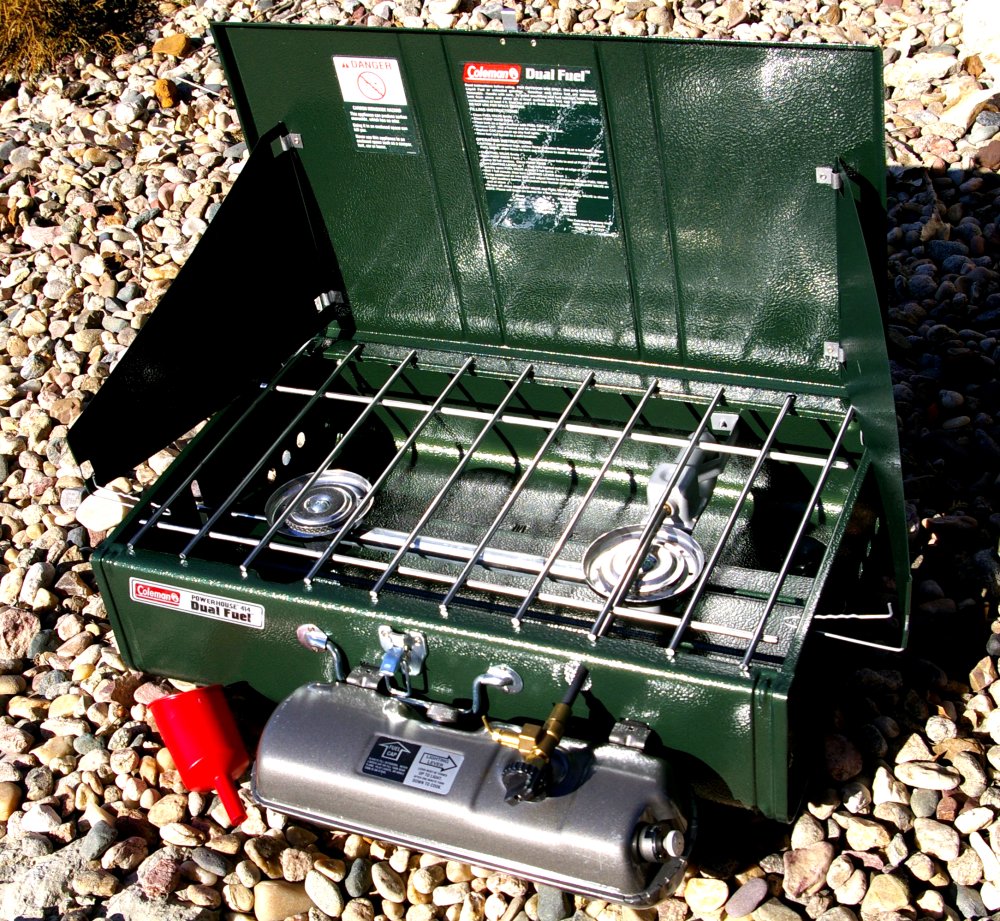
If you can find it, Coleman still makes a camp stove that doesn’t use propane. Called their “dual-fuel stove,” it’s the same model that I remember using as a kid. You put the fuel in a tank and pump it up to pressurize it. They named it “dual-fuel” because you can use it with both the canned Coleman fuel and regular gasoline.


That adds a lot to the utility of the stove, as the one fuel which will be easiest to find during an emergency is gasoline. You might have to siphon it out of a car’s gas tank, but at least you’ll have fuel.


5. Solar oven


If you’ve never used a solar oven, you should try it. But unless you know what you’re doing, I’d really recommend buying one rather than making your own. The commercially manufactured ones are much better than just a box covered with aluminum foil.


A Solar Oven So Fast It’s Called “Mother Nature’s Microwave”


The idea behind a solar oven is that the sunlight is converted to heat by striking a black surface inside the oven. Reflectors increase the amount of sunlight that comes into the solar oven, helping to augment the temperature. Most are covered with a glass or plastic cover, which helps to hold in the heat.


Cooking with a solar oven is much like cooking in a crockpot. It takes a little time. But beware: It is possible to overcook with a solar oven. I’ve burned roasts and potatoes in mine.


6. Solar Fresnel cooker


If you’ve ever used a magnifying lens to torture ants or light a leaf on fire as a kid, you already know how to use a Fresnel cooker. Fresnel lenses are the flat plastic magnifying glasses, which look like they have fine concentric circles molded into the backside. You can find them at dollar stores and other places, usually marketed for reading small type.


The old big screen televisions, prior to the flat screen TVs we now have, all had a Fresnel lens inside, just behind the screen. You can salvage one right out of one of those televisions, or if you can’t find one, try checking eBay. They usually have them.


Your Fresnel lens will need to be mounted in an adjustable frame, both to hold it and to adjust the angle. The food you want to cook is placed at the focal point of the lens, which is usually about two feet below it. So, you’ll need a stand of some sort to hold the frying pan or pot you’re going to put the food in.


I’ve seen Fresnel cookers generate enough heat to fry an egg in one minute or actually melt pennies. If you want to cook something quickly, this will do it. As long as you’ve got clear skies, you can cook just about anything you can think of. Just be careful not to burn your food.


What off-grid cooking methods would you add? Share your tips in the section below:


Learn How To ‘Live Off The Land’ With Just Your Gun. Read More Here.