Showing posts with label smoke. Show all posts

Monday, December 11, 2017

Mount Agung In Bali Erupts SEVEN MORE TIMES Raining Down Ash On Villages

mountagung


Volcanic ash rained down on the villages which are spotting the countryside in Bali. Mount Agung erupted again sending a massive plume of ash into the sky.


The Bali volcano threat level has been raised to the highest possible level, putting it at a level 4, while the aviation ash warning is now orange. The latest Volcano Observatory Notice for Aviation (VONA) was issued after Mount Agung erupted yesterday morning following several days of calm.


The tourist season has been widely interrupted because of Mount Agung’s volatile and unpredictable behavior. This evening Mount Agung was still sending a plume of ash almost 5000 feet (1,500 meters) into the sky in what was a beautiful yet ominous sign of the ongoing threat. The Volcanology and Geological Disaster Mitigation Agency (PVMBG) has said that greyish-white plumes of ash have soared as high as 6500 feet (2000 meters) above the crater. Hot magma produced an eerie red glow just above the crater as cold lava mudflows have poured down the slopes.


As previously reported by SHTFPlan, more than 70,000 evacuees have fled their homes and are staying in more than 230 shelters across Bali, according to the National Agency for Disaster Management (BNPB). BNPB spokesman Sutopo Purwo Nugroho ash rained down on Temakung village at 7:50 am local time today when the volcano erupted and sent out ash once again.


PVMBG volcanologist Gede Suantika said there were seven eruptions of ash between midnight and 10 pm today, according to Indonesian news agency ANTARA News “Sometimes it is hard for the lava and magma to come out, and when there is pressure, it will spew ash,” he told Reuters.  Meanwhile, volcanic earthquakes are continuing to rock Mount Agung, prompting fears that a major eruption could be imminent.


The Indonesians have told about 100,000 people to evacuate from the radius of the danger zone surrounding the volcano.  The Mount Agung volcano, which is capable of very violent eruptions, has shown a marked increase in activity in the last few weeks, stoking fears of a repeat of the 1963 eruption which killed 1,100 people.

Saturday, August 26, 2017

How To Make A $75 Meat Smoker Out Of Wood Pallets

How To Make A $75 Meat Smoker Out Of Wood Pallets

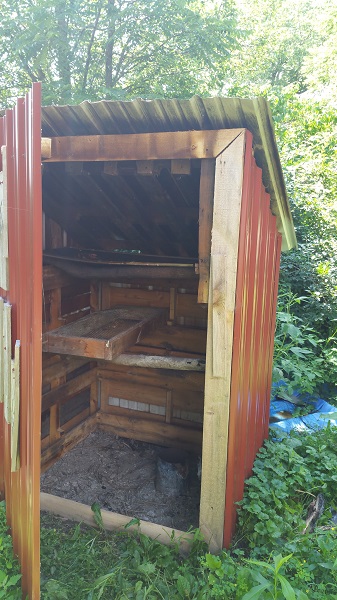
The author’s smoker.


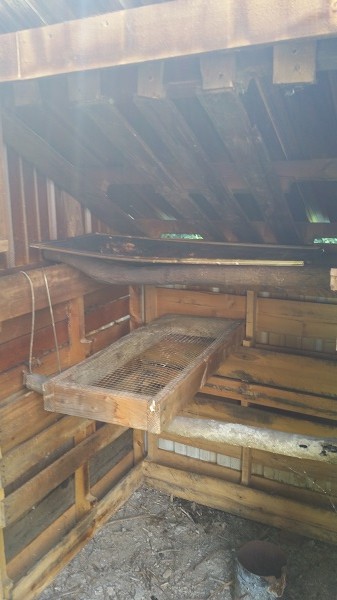
Owning a smoker gives you the ability to preserve and attribute a wonderful flavor to your meat and other foods. Smokers are simple to construct and can be built from a variety of materials. The basic necessities, regardless of your custom set-up, consist of:


  • A way to hang your food.

  • A place to enclose the smoke.

  • A place to burn your wood.

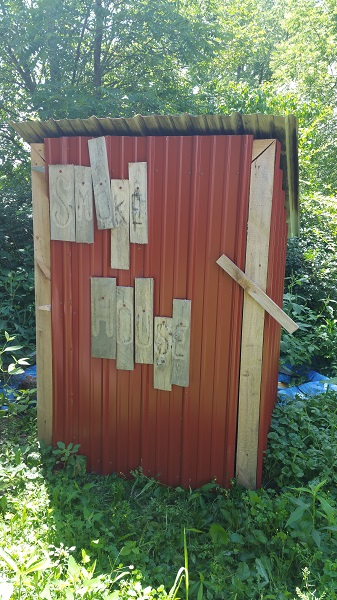
I’ve built many smokers using materials from 55-gallon drums, wood boxes and even tepees. Currently, I use the best smoker I could build under $75. It’s made of corrugated tin roofing for the roof and outside walls. The structure itself is made from 4-feet by 4-feet wood pallets, and I have a firebox attached to the side by using a 4-inch pipe.


I started my build by leveling an area of ground 5 feet by 5 feet. This will provide you the area you need for the smokehouse. Use wood pallets to make a “U” shape on the ground – the top of the “U” is the back of the smokehouse — and use 3-inch deck screws to fasten them together. Fasten the two side pallets on the open area of the bottom with a 1-inch x 4-inch board from the inside of the pallet (any 1-inch board will work). This is the body of the smoker.


The Super-Concentrated Survival Food Your Stockpile Needs!


How To Make A $75 Meat Smoker Out Of Wood PalletsIt’s time to get the roof on. Place another pallet on top of the body. Have someone help hold the front up to a 30-degree angle while you screw in the back. Use a couple of 1-inch x 4-inch boards on each side of the front and screw them in. This will keep the angle of your roof secure.


I bought a couple sheets of corrugated roofing for the walls and roof. Start by cutting the correct angles for the side walls and back. Just get some measurements off your frame to know how to cut the metal. Take care while cutting, and use the proper safety equipment so you don’t get cut up on the sharp metal. Once you cut the sides, screw them on and screw some panels on top for the roof.


Making the door is fairly easy. Get the measurement of the opening of the smoker. Build a rectangular door with 1-inch x 4-inch boards and mount with hinges to the smoker. Then, just fasten some more corrugated roofing to the door. This completes the smokehouse!


The last part is the fire box. This can be done in a few ways. Using a small drum turned into a fireplace is about the easiest way. Connect it to the smokehouse using some 4-inch pipe. I chose to use cinderblocks to make a stove and connect them via the 4-inch pipe.


How To Make A $75 Meat Smoker Out Of Wood PalletsUsing cinderblocks, make a box with four of them. Put a second staggered set on top, but chip out a section so the 4-inch pipe can attach to the smokehouse. Now, we need one last course of block for the firebox. Using a sheet of metal for a baffle on the firebox opening will control the heat.


This is a quick project and fairly inexpensive. Homesteaders and hunters will get tons of use from a smoker — smoking meats, fish and cheese. I know I get really popular with friends and family when I get smoking! It’s also a great way to take things like bland fish (trout) and turn them into a real treat by brining and smoking.


What advice would you add? Share it in the section below:


Discover The Secret To Saving Thousands At The Grocery Store. Read More Here.


Sunday, July 30, 2017

How to Eliminate Tobacco Smoke From Indoor Air


How to Eliminate Tobacco Smoke From Indoor Air | cigarette | Environment Special Interests Toxins


Even before the Surgeon General’s 1964 report, “Smoking and Health,” society has been aware of the terrible effects of tobacco smoke on health. Today, you’d have to be living under a rock or purposely obtuse to not know that tobacco smoke is a very dangerous pollutant. Whether you’re doing the smoking yourself or just enduring exposure to side-stream smoke or second hand smoke, tobacco smoke contributes to lung cancer, emphysema, heart disease and other illnesses. The chemical cocktail of lethal compounds in tobacco smoke cause the oxygen levels in your blood stream to drastically lower, prohibiting normal function of your body.


Side-stream Smoke vs. Second-hand Smoke


While second-hand smoke is released from the exhale of the person smoking, side-stream smoke is released directly from the burning paper and tobacco. Side-stream smoke is more toxic than second hand smoke! The combination of second-hand and side-stream smoke make the “no smoking zone” a pipe dream. The Nevada Clean Indoor Air Act was a non-comprehensive smoke-free law that permitted limited smoking in casinos as long as a “no smoking” area was implemented. Well, a follow-up study sampled the air quality in 15 casino gaming areas, both smoking and non-smoking areas. Results showed that the policy failed to preserve indoor air quality in the no-smoking, children-friendly areas. Analysts concluded that adopting a more comprehensive, 100% smoke-free policy was the only effective remedy. [1]


Tobacco smoke smells bad and is clingy. Gone with the wind? Not quite. When you smoke, it infiltrates your air, clothing, hair and skin with contaminated chemicals and it seems to hang around forever. A study in Singapore found that at least 4-6 hours of purging time was necessary to only minimize environmental tobacco smoke exposure to non-smokers when entering a smoking room. [2] That’s a hard bar to meet when the concentration of cigarette smoke reaches epic proportions and never stops, like in a casino.


Air Quality Considerations


Cigarette facts:


  • A common cigarette contains 4,000+ chemicals including ammonia, butane, arsenic, lead, and benzene.

  • Smoking a pack of smokes a day for a year can put a quart of tar in your lungs.

  • Second-hand and side-stream smoke includes 35+ carcinogenic chemicals.

The Surgeon General’s report in 2006 stated:


  • Second-hand and side-stream tobacco smoke have a negative health effect for everyone exposed.

  • Second-hand or side-stream smoke exposure increases your likelihood of heart disease and lung cancer.

  • Second-hand and side-stream smoke have been related to Sudden Infant Death Syndrome (SIDS) and advanced infections and asthma in babies and children.

  • Over half of all reported disease are caused or worsened by toxic indoor air, including tobacco smoke.

  • Indoor air may be 10 times more toxic than outdoor.

Legislation isn’t the Full Answer


We must be aware that policies don’t always extend to pragmatic realities. The University of California San Francisco School of Nursing found that, despite tobacco-control policies in California, people continue to be exposed to second-hand smoke. They attributed a lack of full compliance to smoke-free work place laws as part of the problem as well as exposure in the home. [3]


The anti-smoking sentiment has also not yet spread across the world. The Department of Health Behavior at the Roswell Park Cancer Institute in Buffalo, NY notes that although smoke-free policies have been an important and high-profile intervention in America, only 11% of the world’s population live in countries with smoke-free laws. [4]


An evaluation of Spain’s anti-smoking legislation found that though eliminating smoking from indoor areas is highly effective, second-hand smoke still has a tendency to drift indoors when smoking happens outside entrances. This is often why smoking bans in the United States include an immediate area around building entrances. Considering outdoor restrictions to ensure complete protection against SHS may be appropriate. [5]


How To Reduce Your Exposure


Serbia’s Public Health Institute found tobacco smoke to have an effect on children that can only be described as an urgent problem with life lasting negative health effects- which are preventable! [6] How? The U.S. Clean Air Council suggests the following tips to help eliminate tobacco pollution from your home and environment:


  • Quit smoking, now.

  • Only visit smoke-free establishments, let them know you support them.

  • Open windows and encourage ventilation.

  • Remove smoke-infused wallpaper.

  • Remove tobacco-infused carpet.

  • Replace all heating and air filters regularly.

  • Get a high-quality, indoor air purification system.

If you smoke, stop. Listen, there are plenty of ways to put a band-aid on the ugly sore of smoking to minimally counteract it, but quitting is the only sure way to promote a healthy future for you and your family. It’s a tough process but can be done. Set a goal and achieve it, then reward yourself. Protect the health of your family and yourself by implementing a “no-tobacco” policy in your own home. Encourage others to do the same.


References (6)
  1. Cochran C, Henriques D, York N, Lee K. Risk of exposure to second hand smoke for adolescents in Las Vegas casinos: an evaluation of the Nevada Clean Indoor Air Act. J Health Hum Serv Adm. 2012 Fall;35(2):231-52.

  2. Wan MP, Wu CL, Chan TT, Chao CY, Yeung LL. Removal and leakage of environmental tobacco smoke from a model smoking room. J Occup Environ Hyg. 2010 Oct;7(10):573-84. doi: 10.1080/15459624.2010.504432.

  3. Max W, Sung HY, Shi Y. Exposure to secondhand smoke at home and at work in California. Public Health Rep. 2012 Jan-Feb;127(1):81-8.

  4. López MJ, Fernández E, Pérez-Rios M, Martínez-Sánchez JM, Schiaffino A, Galán I, Moncada A, Fu M, Montes A, Saltó E, Nebot M. Impact of the 2011 spanish smoking ban in hospitality venues: indoor secondhand smoke exposure and influence of outdoor smoking. Nicotine Tob Res. 2013 May;15(5):992-6. doi: 10.1093/ntr/nts218. Epub 2012 Oct 25.

  5. Hyland A, Barnoya J, Corral JE. Smoke-free air policies: past, present and future. Tob Control. 2012 Mar;21(2):154-61. doi: 10.1136/tobaccocontrol-2011-050389. Review.

  6. Stosić L, Milutinović S, Lazarević K, Blagojević L, Tadić L. Household environmental tobacco smoke and respiratory diseases among children in Nis (Serbia). Cent Eur J Public Health. 2012 Mar;20(1):29-32.

Thursday, July 20, 2017

“Killer Germs” Obliterated By Medicinal Smoke (Smudging), Study Reveals


The ritualistic use of plant smoke stretches back to the prehistorical era and is still used, the world over, as a way of ‘cleansing’ the spirit. Now modern scientific research reveals that the practice may actually have life-saving implications by purifying the air of harmful bacteria. 


The burning of herbs and plant resins for medicinal and spiritual purposes – so-called ‘smudging’ – is an ancient practice among indigenous people around the world; one increasingly adopted by Westerners. Smudging is a technology believed to unlock the ‘spirits’ of various plant allies to restore balance and ease to the individual or group.  Some liken it to taking a ‘spiritual shower,’ enabling you to wash away emotional and spiritual negativity that accumulates in your body and the spaces you live.


That said, skeptics believe attributing health benefits to the burning of sage and incense reflects ‘magical thinking.’ The practice has even been accused of being a New Age form of cultural imperialism where ‘plastic’ or ‘white’ shamans mimic and co-opt the traditions of indigenous people their predecessors essentially conquered.


Burning white sage


Given the polarized view on this increasingly common practice, as well as the well known role that the burning of incense plays in even Western religious traditions, such as Catholicism, we decided to explore the published literature on the topic of smudging’s scientifically validated medical benefits, to see what we could find.


First, we uncovered a 2006 review published in the Journal of Ethnopharmacology titled “Medicinal smokes,” that looked at single and multi-ingredient herbal and non-herbal remedies administered as smoke from 50 countries across 5 continents. The researchers found, with surprising overlap worldwide, medicinal smoke is mostly used to address the following specific organ systems: “pulmonary (23.5%), neurological (21.8%) and dermatological (8.1%).” They also found that “ambient smoke,” which is the type of passively inhaled smoke generated by smudging/incense, is traditionally believed to be an effective “air purifier.” The review argued that modern medicine should investigate medicinal smoke as a drug delivery system, owing to the following advantages: “The advantages of smoke-based remedies are rapid delivery to the brain, more efficient absorption by the body and lower costs of production.”


(click image to enlarge)


Smudging, of course, as a ‘spiritual’ ritual, is not aimed at ‘killing germs,’ or becoming a ‘new drug delivery system.’ But because modern biomedicine only acknowledges what is empirically verifiable – which does not include ‘the soul’ or ‘negative vibes’ – the practice will only attain a modicum of credibility from the perspective of the dominant, scientism-contaminated worldview, if it can be demonstrated that it actually performs a useful function, such as destroying disease-causing germs.


Thanks to a remarkable 2007 study titled, “Medicinal smoke reduces airborne bacteria,” published in the Journal of Ethnopharmacology, we now know that smudging may be one of the most powerful antiseptic technologies ever discovered.


(click image to enlarge)


The researchers reported their amazing findings:


We have observed that 1 hour treatment of medicinal smoke emanated by burning wood and a mixture of odoriferous and medicinal herbs (havan sámagri=material used in oblation to fire all over India), on aerial bacterial population caused over 94% reduction of bacterial counts by 60 min and the ability of the smoke to purify or disinfect the air and to make the environment cleaner was maintained up to 24 hour in the closed room. Absence of pathogenic bacteria Corynebacterium urealyticum, Curtobacterium flaccumfaciens, Enterobacter aerogenes (Klebsiella mobilis), Kocuria rosea, Pseudomonas syringae pv. persicae, Staphylococcus lentus, and Xanthomonas campestris pv. tardicrescens in the open room even after 30 days is indicative of the bactericidal potential of the medicinal smoke treatment. We have demonstrated that using medicinal smoke it is possible to completely eliminate diverse plant and human pathogenic bacteria of the air within confined space.” [email info@greenmedinfo.com to request the full PDF of this study]


Did you catch that?


Not only did the burning of medicinal herbs clear aerial bacterial populations by 94% within one hour, but a full day later, the closed room was still effectively decontaminated. Even more amazing, a full month later, seven other pathogenic bacteria in the open room were still non-detectable.


When one considers that modern urban air has been found to contain at least 1800 diverse bacterial types[1] – including families with pathogenic members – this finding could have profound implications for combating a increasingly deadly array of antibiotic-resistant bacteria against which even the CDC itself has acknowledged its impotence.  Consider also that a recent microbiome of NYC’s subway system found close to 1700 different microbes, including those responsible for Anthrax (Bacillus anthracis)  and Bubonic Plague (yersinia pestis).[2]


Also, considering that conventional methods of air and surface sterilization and odor neutralization use chemical cocktails (e.g. Lysol) that are much less effective than advertised (one study found them up to 10 times less effective than believed), smudging or the use of natural incense products might constitute a far safer and more effective approach.


Given this discovery of medicinal smoke’s potent cleansing properties on aerosol microbes, we might look at Smudging’s traditional use as a cleanser of ‘evil spirits’ or ‘negative energy’ as less like a primitive projection and more like a metaphor for its very real antiseptic properties. This does not, of course, take away from its ‘cleansing’ effects upon the body’s subtler energy systems; nor does it take away from the the effects the medicinal smokes and its various small-molecule aromatic compounds have upon the olfactory system, which are largely responsible for the clinically proven health benefits of aromatherapy-based interventions.


References


[1] Brodie, E.L., DeSantis, T.Z., Moberg Parker, J.P., Zubietta, I.X., Piceno, Y.M., Andersen, G.L., 2006. Urban aerosols harbor diverse and dynamic bacterial. Proceedings of the National Academy of Sciences 104, 299–304.


[2] Ebrahim Afshinnekoo et al,  Geospatial Resolution of Human and Bacterial Diversity with City-Scale Metagenomics, published online Cell Systems, Feb. 2015


© July 20, 2017 GreenMedInfo LLC. This work is reproduced and distributed with the permission of GreenMedInfo LLC. Want to learn more from GreenMedInfo? Sign up for the newsletter here http://www.greenmedinfo.com/greenmed/newsletter.