Showing posts with label Medicinal plants. Show all posts

Saturday, November 25, 2017

Afghan War Intensifies: US Stealth Fighters Target Narcotics Production Facilities

16-years after the Bush administration began military operations in Afghanistan, President Trump has just launched a military campaign of his own using high-tech stealth fighters to bomb drug labs in the country.


The Pentagon’s playbook of nation building in the Middle East has stretched, now, to three Presidents making it the longest war in U.S. history. Ever since the U.S. started occupying the country in the early 2000s, opium production soared. Afghan President Ashraf Ghani said without drugs, the war in Afghanistan “would have been long over.”


In 2017, Afghanistan’s opium crop and production both hit a record high, despite the increased efforts by government to stop the drug trade. For the Taliban and other criminal elements in the region, opium is an important revenue source to fund operations.


On Monday, the Defense Department said it unleashed F-22 Raptor stealth fighters to bomb narcotic production facilities in southern Afghanistan targeting the revenue streams of the Taliban. The air operation started on Sunday and continued through Monday. The F-22s were accompanied by B-52 bombers and Afghan A-29 Super Tucanos for additional support to expand the strike mission.


According to the Washington Post,


This represents the first significant use of new legal authorities granted by the Trump administration in August that enable the Pentagon to target Taliban revenue streams, said Army Gen. John W. Nicholson Jr., the top U.S. commander in Afghanistan.


Previously, the U.S. military conducted strikes only when facing imminent threat or working directly with the Afghans. 


Nicholson said, the F-22 “was used because of its ability to deliver precision munitions — in this case, a 250-pound bomb, small-diameter, that causes the minimal amount of collateral damage.” The objective for more precise munitions comes at a time where civilian deaths in U.S. airstrikes have been heavily scrutinized. Earlier this month, U.S. airstrikes in the region killed ‘at least 13 civilians’ in a bombing raid.


“This target was also a Taliban narcotics production facility in Musa Qala. So I want to draw your attention — as you look at this strike, you’re going to see that inside this compound are multiple structures, and we destroy only two of them, while leaving the third standing, which we do to avoid collateral damage,” Nicholson said.


The Drug Enforcement Administration estimates there are 400 to 500 narcotic production facilities across Afghanistan. In the latest strike about 10 of them were taken out. The concentration of strikes resided in the Helmand province, an area where Taliban hold strong control.


Opium cultivation change in Afghanistan 2015/2016 shown on the chart below indicates a rapid increase in the northern tier of the country.


More details of the operation per The Washington Post,


The strikes Sunday hit seven Taliban drug laboratories and a headquarters in three districts across northern Helmand. Three occurred in Kajaki district, four in Musa Qala and one in Sangin — all areas controlled by the U.S. military at the height of Obama’s troop surge there. The largest, carried out by a B-52, struck a opium-processing facility where 50 barrels of drugs were cooking at the time, Nicholson said. Video released by the Pentagon shows the building being consumed by a massive fireball.


The U.S. government has pursued various anti-drug strategies during its 16-year war in Afghanistan, but it has done little to hamper the steady resurgence of opium poppy cultivation and drug trafficking since the Taliban’s fall in 2001. While in power before the U.S. invasion, the Taliban banned poppy growing as un-Islamic and staged bonfires of confiscated opium and heroin.


Until now, though, those U.S. efforts have not directly involved the military. During the early post-Taliban years, the Pentagon focused exclusively on pursuing al-Qaeda and Taliban insurgents and expressly avoided diverting efforts toward curbing the drug trade. In some cases, this was because of U.S. alliances with warlords or regional strongmen who were involved in drugs.


Later, as both poppy production and drug trading rebounded, the U.S. launched several ambitious programs to counter them. One was a crop substitution campaign that encouraged and paid farmers to grow almonds, apricots, green vegetables and saffron instead of poppy. Another paid farmers cash to destroy their poppy fields and funded interdiction campaigns in which Afghan security forces burned fields under cultivation.


These efforts were fatally hampered by a mix of factors, including the enormous appeal of drug profits, the long-accepted tradition of poppy growing by small farmers, the involvement of powerful Afghans in the trade, local hostility to interdiction, and the hardiness that enabled poppy plants to thrive in harsh and dry conditions.


Meanwhile, the Taliban insurgents, apparently abandoning their previous religious scruples, became increasingly involved in both poppy cultivation and drug trafficking as a means of supporting the war, especially in Helmand province. At first they primarily demanded taxes from growers, but gradually the overlap between Taliban recruits and local agricultural labor became so pronounced that the insurgents essentially suspended military operations during poppy harvest seasons.


In the latest figures from the United Nations, “Afghanistan opium production jumps 87 per cent to record level”… Most of the increase has occurred under the United States occupation of the region.


It seems as Afghan President Ashraf Ghani is bullish on President Trump’s new campaign to bomb the nation’s narcotic facilities...


Perhaps in a preview of things to come, Sunday through Monday’s U.S airstrikes in Afghanistan signal the war is about to intensify.


Stealth fighters and other support aircraft only managed to knockout 10 narcotic facilities and as the report states there are about another 400-500 to go.


Sunday, September 24, 2017

Cops Delete Facebook Post Of Massive "Weed" Bust After The Internet Corrects Them

Authored by Carey Wedler via TheAntiMedia.org,


Last week, officers from Missouri’s Jasper Police Department celebrated a marijuana bust they deemed worth roughly $100,000.


In a now-deleted Facebook post, they disclosed their satisfaction with their operation, which took ten cops and sheriff’s deputies and a National Guard helicopter to conduct.


As the Riverfront Times noted (grabbing screenshots before the post was taken down):


"’What a great team effort today,’ the Jasper department’s now-deleted post read. ‘It was hot and humid and not easy getting these plants. We ALL got in the thick of things and got it done.’


The Times summarized the post’s sentiment:


“In a curious bit of show-your-work math, the department calculated the nearly 290 plants seized would have produced — “on the low side” — 63 pounds of marijuana with a “street value” of roughly $100,000.”


But commenters were quick to point out an apparent flaw in the officers’ bust: it wasn’t cannabis they had seized, but hemp, they said.


You can’t get high from smoking hemp, and the material can be used to create anything from clothing, soap, paper to sails, rope, fuel, and concrete, called “hempcrete.” It is both durable and sustainable.


That’s hemp,” one comment bluntly said, according to the Times, though the rest of the comments are not available to view because the original post has been removed.


One of Missouri’s two entities allowed to grow hemp for certain medicinal purposes, Mitch Meyers of BeLeaf, said, Sure looks like hemp to me.”


These look to me like wild hemp plants, because they are tall and without buds,” Show-Me Cannabis Executive Director John Payne told the Times, which sent images of the confiscated plants to several experts. 


That probably means that no one was actively cultivating them. If that’s the case, the street value of those plants is next to nothing.”


Many comments echoed similar sentiments, “as the post racked up hundreds of comments, among them mocking congratulations to cops for confiscating the raw material of natural fiber rope,” the Times reported.“Jasper Police, who cover an area about twenty miles northeast of Joplin, pulled the post on Wednesday morning.”


However, there is still some doubt as to whether the plants were hemp or cannabis. Dr. Jason Strotheide, founder of licensed hemp grower Noah’s Arc Foundation, said it is “nearly impossible to tell the difference between hemp and marijuana until late in flower.


Rusty Rives, police chief of the Lamar Police Department, which participated in raid stuck by the claim that it was weed. “I’m just looking at the picture,” he said. “but they look like marijuana plants to me.”


It doesn’t matter either way. Both are illegal in the state of Missouri despite nationwide efforts to legalize both marijuana and the hemp plant.


The Times had difficulty obtaining comment other officials involved, but by last Thursday, Jasper police chief Chad Karr responded, defending the Facebook post.


The goal, Karr says, was never to brag about a bunch of pot plants, but rather to serve notice to a suspected meth dealer operating in the area. But the post reached many more people, accruing over 1,000 comments, Karr said, some of which were “abusive.”


As far as the “$100,000” estimation, “Karr says he tried to estimate conservatively. He admits he’s no expert when it comes to marijuana and doesn’t care to be.” However, he suggested the plants were not growing on their own, without human cultivation, because there were trails leading out to the field where they were confiscated.


Nevertheless, he claims cannabis is not an issue for him.


“I think the misconception is we go to work to bust pot heads,” he said. “I personally do not. I know what the problem is — it’s opiates and methamphetamine.”


Hopefully, his sentiment will continue to grow among law enforcement, who are increasingly trolled when they boast of cannabis busts on social media. The Times reports that for now, it doesn’t appear any charges have been filed over the plants.

Saturday, September 23, 2017

24 Little-Known ‘Miracle Plants’ The Navajo Used For Medicine

24 Little-Known

Artist: Robert Draper


Anyone interested in living off the land or wishing to prepare themselves for a crisis would be wise to study some of their local plants.


Native people had an extensive knowledge of which plants, and which parts of the selected plant, were valuable for certain health problems.


In this article, we are going to look at some of the little-known medicinal plants that were used by the Navajo nation. Even though they lived in what we would consider desert or areas filled with nothing but “scrub brush,” the Navajo found some of the best and most powerful medicinal plants in their region.


Remedies for Headaches, Coughs, Fevers, Mouth Problems


1. Lichens – Pulled from rocks or trees, these were chewed to stop mouth pain, canker sores, and sore or swollen gums.


2. Purple loco weed (oxytropis) – The leaves are crushed and boiled, then the steam inhaled to open up airway passages and ease breathing.


24 Little-Known

Thistle. Image source: Wikimedia


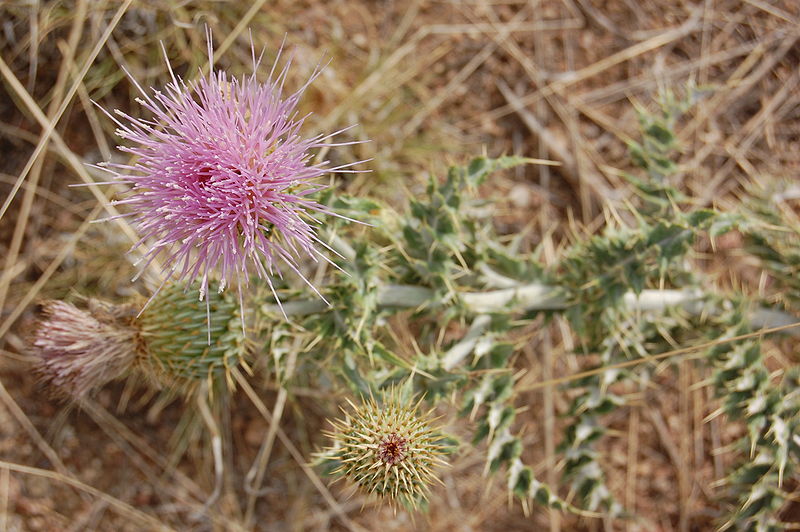
3. Desert thistle – Used to stop the chills and/or fevers. Commonly given in tea form.


4. White horehound – This was used as a tea for coughs and sore throats.


Fast, All-Natural Pain Relief With No Nasty Side Effects!


5. Snake weed – Despite the name, this was not used for snake bites, but for headaches. Unlike other plants, this one was used externally by placing wet leaves on the forehead. Some people refer to this as broom weed or broom snakeweed.


Remedies for Diarrhea, Stomach, or Digestive Problems


6. Indian paintbrush (castilleja) – Used for most common stomach problems, including stomach aches, cramps and indigestion. Many tribes referred to this as the prairie fire plant. The flowers are very sweet and tasty, although other parts are not edible.


7. Indian hemp (Apocynum cannabinum) – While this relative to cannabis cannot be consumed, the roots were boiled to make a tea to treat intestinal worms and stop dysentery.


8. Antelope sage – The root of this plant was brewed into tea to stop general stomach pain and cramps.


9. Sand verbena – Sometimes called desert verbena, the leaves and flowers were consumed in tea form to stop stomach cramps, as well as to make a general, soothing tonic.


Remedies for Women


10. Greasewood – A tea made from the leaves of this plant was thought to make childbirth quicker and easier for the mother.


24 Little-Known

Silkweed. Image source: Wikimedia


11. Silkweed – Consumed as a tea, this plant is a general tonic used after giving birth.


New ‘Survival Herb Bank’ Gives You Access to God’s Amazing Medicine Chest


12. Bushy bird’s beak – Flowers and leaves were often brewed as tea to stop or shorten the menstrual cycle.


Remedies for Skin Issues and Wounds


13. Artemisia – This plant is used for burns, boils and other types of skin wounds.


14. Spurge – While spurge can be eaten, it was also used as medicine. Spurge was ground into a paste and rubbed on the skin to stop acne or other types of skin problems.


15. Green briar – The leaves of this bush were beaten into a paste, and then applied to sores, burns or open wounds. Fresh leaves were then wrapped over the poultice and used as a type of bandage.


16. Orange agoseris – Leaves and flowers were pounded into a paste and applied to most wounds to stop infection and speed healing. Most common uses were for serious injuries, such as knife or arrow damage.


17. Blue corn – Corn played a vital part in the life of most Navajo. Besides being consumed as food and used in ceremonies, blue corn was used to cleanse and purify the skin. Ground blue corn, which is more coarse than yellow or white corn, was a natural exfoliator, which encourages the growth of new skin by removing dead skin cells.


General Tonics, Antiseptics and Other Remedies


18. Sage or sagebrush – While this plant tends to give many people hay fever, for the Navajo, the leaves and flowers were made into a tea, which served many purposes. This tea was used as a treatment for diarrhea, as an eye wash, as an antiseptic for disinfecting wounds, and as a hair wash. People once said, “Those who drink sage tea never grow old.” This is because rinsing hair with a strong sage tea acts as a dye, keeping the hair black.


Just 30 Grams Of This Survival Superfood Provides More Nutrition Than An Entire Meal!


24 Little-Known

Hawkweed. Image source: Wikimedia


19. Hawkweed – This plant is a close relative of dandelions, so it is no wonder that the Navajo used it as a natural diuretic. All parts of this plant are edible and can be eaten; however, it is most commonly consumed in a tea form.


20. Red juniper – The inner bark of this type of juniper was rubbed onto the hair and scalp, stopping most kinds of dandruff and itchiness.


21. Yucca – Also known as soap weed, the leaves of the yucca plant were pounded into a thick paste, and then rubbed on the hair and scalp. This acts as a natural type of shampoo, removing grease and dirt from the hair.


22. Horseweed – This was a general, all-around good tonic that was used for many ailments, including stopping diarrhea, and as a diuretic and astringent.


23. Yellowtop – The gray green leaves of this plant were the most common remedy given for spider and other insect bites.


24. Green gentian – Commonly given to calm the nerves or for emotional distress.


Many plants were used in combination with one another. It was thought that by mixing plants, it would cure multiples problems at one time, or that if one ingredient was ineffective, another would certainly work.


Most times, there were one or two “specialists” who knew which plants should be used for what, and which combinations could be used. This was generally the Shaman, who oversaw most health problems, and a female elder, who was generally called upon to take care of “female” problems and assist in childbirth.


The Navajo and other native people spent hundreds if not thousands of years researching plants. Please use extreme caution and be certain that you know not only the exact species you are choosing, but how it might affect you.


This article is for informational purposes only and is not intended to diagnose or cure any particular health condition. Please consult with a qualified health professional first.


What is your favorite off-grid medicinal plant? Share your medicinal tips in the section below:


If You Like All-Natural Home Remedies, You Need To Read Everything That Hydrogen Peroxide Can Do. Find Out More Here.

Saturday, August 5, 2017

A Cannabis Company Just Bought A Whole California Town

Authored by Carey Wedler via TheAntiMedia.org,


As cannabis grows increasingly acceptable in society and more states legalize it, everything from cannabis churches and resorts to yoga and restaurants are cropping up. And now, there will be an entire cannabis-inspired town.


American Green is a cannabis company based in Arizona, but they just bought the small California town of Nipton, located in San Bernardino County, and plan to convert into a municipality with a cannabis theme.


The company has a “state of the art” cultivation facility in Arizona and also sells hemp-based CBD (cannabidiol) products online and works to develop cannabis apps. They just spent five million dollars to obtain Nipton and plan to spend another $2.5 million creating their cannabis tourist attraction over the next 18 months.


We thought that showing that there was a viable means of having a cannabis-friendly municipality and further making it energy independent could be a way of really inspiring folks to say, ‘Why can’t we do that here?’” says the company’s consultant and project manager for Nipton, Stephen Shearin.


Bloomberg reports:


American Green plans to include a new facility to manufacture water infused with CBD, the cannabis component that is typically associated with reducing pain and inflammation. The new Nipton will also have a production site for edible marijuana products, retail stores, and artist-in-residence programs.”


In doing so, the company hopes to develop Nipton into a tourist attraction and make cannabis approachable and acceptable to a wider audience.They plan to manufacture products with smaller doses and provide a vending machine that ensures customers are of age using a biometric scanner.


American Green wants to make Nipton, which features natural mineral springs, a tourist destination. Shearin told Marijuana Business Daily that they plan to “open cannabis-themed bed and breakfasts, host culinary events, start artists-in-residence programs and more.”


They are in negotiations with edible and extract companies to set up shop in Nipton, as well as ship and distribute their products to other parts of the state.


Though they plan to be up and running by mid-October of this year, they still have to wait for the necessary state and local licenses to be able to cultivate and sell cannabis on the property.


If we have to wait until January and prepare for that and get that in place, and then build out the infrastructure to support it, we can still have a cannabis-friendly destination,” Shearin said.


It’s a master-planned community,” he told Marijuana Business Daily. “It’s designed to be very specific in terms of being legal, being a town and running it correctly. It’s designed to be open-ended in terms of what it can evolve into by partnering with the right company.”


They also want to build out the town’s mineral springs and create several CBD-infused water pools, expand an existing solar farm, and ensure there is enough lodging for future tourists.


And it’s not just Nipton they want to transform. They hope to change the entire region and make cannabis-based towns more acceptable and popular. We want to revitalize the region, not the town,” Shearin said, “and we want to do it in a way that other towns can say, ‘Look at that, they have this regulatory system that allows them to embrace cannabis while not offending people who may not be of that mindset.’”


For now, they are moving forward within California’s legal framework. Though President Trump’s Attorney General Jeff Sessions has threatened to crack down on legal cannabis, his future in the administration is uncertain, and it’s difficult to imagine a state like California giving up its recent voter decision to legalize the plant.


Fittingly, Nipton used to be a gold rush town. As Shearin said, The Gold Rush built this city. The Green Rush can keep it moving the way people envisioned it years ago. And he hopes to do it elsewhere:


“The plan is absolutely to duplicate this model in new cities.”


Friday, May 26, 2017

7 Reasons Why You Should Have a Medicinal Garden

7 Reasons Why You Should Have a Medicinal Garden | herb-garden | Agriculture & Farming Natural Medicine Organics


Growing medicinal plants are a great way to ensure garden sustainability and more notably, have access to natural medicine when you need it most. When I introduced more herbs in my garden, I noticed it had a profound impact on the vegetables and fruits I was growing. It also encouraged beneficial insects and birds to visit my garden and this helped cut down on plants being eaten.


Because of this observation, I changed my focus from solely growing to eat and, instead, worked to create a welcoming growing environment. Not only were my plants healthier, but I had access to natural herbs to use for making extracts and poultices. The following are reasons I feel gardeners should adopt adding medicinal herbs to the garden.


(Sign up for our FREE newsletter to get the latest health advice, gardening secrets, homesteading tips and more delivered straight to your inbox!)


7 Reasons Why You Should Have a Medicinal Garden


  1. Have access to multiple forms of natural medicine for future needs. When you have fresh cut herbs to use for natural medicine, you have access to the freshest forms of their healing properties. For example, what if you cut your hand and did not have a bandage. Did you know that the sage leaf can be wrapped around a wound and used as a natural band-aid? Or, if the bleeding from that cut was so bad that it wouldn’t stop. Did you know that a few shakes of some cayenne pepper can help control the bleed? Or, if you have a severe bruise, make a poultice. It’s one of the easiest and fastest ways to use herbal medicine.

  2. Calm your senses with medicinal teas. Herbs like lavender, lemon balm, chamomile, catnip, and peppermint have a natural sedative quality to them to help calm your spirits or help you sleep better at night. Taking a handful of leaves and adding them to a cup of hot water will create a soothing cup of herbal tea. Here are some great herbal tea remedies to start with.

  3. Many medicinal plants and herbs are perennials and will come back year after year. The more established the plants are, the more they will produce each year. This will save you money in the long run! I bought a small oregano plant three years ago and it is the size of a small shrub. I have so much oregano now that I can use it for culinary uses and experiment with making my own tinctures and astringents. As well, my echinacea has produced so many “baby” plants that I have dug them up and transferred them to another part of my property where I am creating another medicinal garden.

  4. Feed your livestock! Livestock can also benefit from growing herbs in the garden.  Not only can they be added for additional nutrition, but you can use herbs to make natural cleansing shampoos and even clean wounds. Some herbs I feed my animals are oregano, comfrey, lavender, mint, and sage.  Note: not all herbs are healthy for your livestock, so do research to find out which ones are good for your animals.

  5. Another added benefit of having a thriving medicinal garden is that bees love it! This promotes bee sustainability and a healthier garden, as well. The blossoms put out by the flowers and herbs will attract bees that will, in turn, happily pollinate your vegetable and fruits. Consider planting some of these beneficial flowers in addition to herbs:
    • Asters (Aster/Callistephus)

    • Sunflowers (Helianthus/Tithonia)

    • Salvia (Salvia/Farinacea-Strata/Splendens)

    • Bee balm (Monarda)

    • Hyssop (Agastache)

    • Mint (Mentha)

    • Cleome / Spider flower (Cleome)

    • Thyme (Thymus)

    • Poppy (Papaver/Eschscholzia)

    • California poppies (Eschscholzia)

    • Bachelor’s buttons (Centaurea)

    • Lavender (Lavandula)


  6. Regrow from cuttings on your windowsill. Herbs like rosemary, lavender, mint, cilantro, oregano, marjoram, basil, sage, lemon balm, and thyme are perfect for starting in a glass or canning jar. Simply add water and set in indirect sunlight – it’s that simple! Read more here.

  7. Herbs can be great companion plants for the vegetable garden. Don’t feel handcuffed to only growing vegetables, but herbs can be planted nearby to do double duty as companion plants. Companion planting can also help control the insect balance in your garden and repel some of the more unwanted guests like mosquitoes. Some favorite companion herbs are pairing basil with tomatoes, chamomile near cucumbers, garlic planted near apple, pear and peach trees, roses, cucumbers, peas, lettuce or celery. Read more about which herbs are great companions here.

Ready Nutrition writer and herbalist, Jeremiah Johnson has written extensively on how to cultivate a medicinal garden to use in a long-term emergency. His favorite medicinals are what he refers to as the 3 G’s: garlic, ginger, and ginseng. You can read his article on the subject.


To better understand natural medicine and using herbals for health, I strongly recommend you read more on the subject. The following books come highly recommended:


Herbal Antibiotics: Natural Alternatives for Treating Drug-Resistant Bacteria,” by Stephen Harrod Buhner.


Prepper’s Natural Medicine: Life-Saving Herbs, Essential Oils and Natural Remedies for When There is No Doctor, by Cat Ellis (Herbal Prepper)


This is not a new gardening concept, yet is still not widely used. When you are planting your garden, consider adding a few herbs and watch the benefits grow before your eyes.

Thursday, May 11, 2017

North Korea Is A Major Opium Producer (Making It A Prime Target For The CIA)

Authored by Whitney Webb via TheAntiMedia.org,


When the U.S. overthrew the Taliban in the wake of 9/11 as part of its newly launched “war on terror,” it set the stage for the explosive growth of Afghanistan’s dying opium industry. A few short months before the invasion took place, the Taliban made headlines for having “dramatically ended the country’s massive opium trade” after the leader of the fundamentalist group had declared the substance to be un-Islamic. At the time, Afghanistan’s opium was used to produce 75 percent of the world’s heroin.


But despite being squashed by the Taliban, the opium market made a dramatic comeback immediately following the U.S. invasion in October 2001. Not only was the opium trade restored, it surged drastically – rising from a production level of 185 tons under the Taliban (before the production ban) to 3,400 tons in 2002.


Over a decade later, the amount of opium harvested annually continues to rise. Afghanistan’s opium is now used to produce 90 percent of the world’s heroin. This increase has been directly overseen by U.S. forces, who openly guard Afghanistan’s poppy fields. Indeed, during that same time, the U.S. government claims to have spent $8.4 billion on counternarcotic programs within Afghanistan.


The dramatic increase in opium production in post-invasion Afghanistan has sparked speculation regarding the motives behind the aggressive action that the U.S. has recently taken towards North Korea, which is also a major opium producer.


While government-sanctioned opium production took a hit after Kim Jong-un assumed power in 2011, things have changed drastically in recent months, largely due to Chinese sanctions that were announced in mid-February. The sanctions, created in response to a North Korean ballistic missile test, led China to refuse imports of North Korean coal. Coal represents 40 percent of North Korea’s exports to China.


That drastic hit to the North Korean economy has apparently forced Kim Jong-un’s hand, as opium production has once again picked up. Kang Cheol-hwan, a North Korean defector and president of the North Korea Strategy Center, told the Yonhap News Agency that “the North is cultivating poppy fields again for drug smuggling as a way to secure funds to manage its regime.”


While North Korea’s opium production is small compared to that of post-invasion Afghanistan, it is still significant. North Korea, according to the Chosun Ilbo, produces around 40 tons of opium annually — comparable to Pakistan’s opium industry. Most of its opium is smuggled into and sold in China and cannot be targeted by sanctions, since it is hard to trace on the black market.


Some have speculated that North Korea’s return to opium production has caught the attention of the CIA, as the intelligence agency has a history of involving itself in opium trade and drug-running in general, as evidenced by its well-documented habit of managing drug supplies from Latin America to Asia.


In addition, opioid addiction – in the form of both legal opiate painkillers and illegal drugs – is growing out of control in the U.S., with more opium being consumed within America than ever before. The onset of this epidemic coincided with the U.S.’ occupation of Afghanistan as, between 2002 and 2013, U.S. heroin use jumped by 63 percent, reaching a 20-year high. Heroin overdoses quadrupled in the U.S. within that same timeframe.


The U.S. government’s actions also suggest that it seeks to protect opium production, as has been made clear in its occupation of Afghanistan. For instance, the U.S. vehemently opposes opium legalization efforts and the State Department refuses to acknowledge eradicating opium as a primary goal, despite the billions that have been spent on counternarcotic programs.


With tension increasing on the Korean Peninsula, the U.S. has put “all options on the table” in order  to prevent further missile tests and “provocations” from the Kim Jong-un regime, including warnings that the U.S. may soon find itself in a “major, major conflict” with North Korea.


If North Korea finds itself targeted for regime change, history suggests that the U.S. military may end up guarding its poppy fields as well.

Wednesday, February 15, 2017

7 Heal-Anything Medicinal Plants You Can Grow Indoors

7 Heal-Anything Medicinal Plants You Can Grow Indoors

Marigold. Image source: Pixabay.com


There is absolutely nothing like having fresh medicinal plants that you can pick and use right on the spot, when you need them.


Plus, you can dry them, and then use a mortise and pestle to grind them and encapsulate your own medicinal plants. You know they were never sprayed with pesticides. And you know all about the nutrients that were fed to them.


You can grow them in decorative planters in the kitchen if you have the lighting for it.


Many people set up a multi-tiered rack that allows planter pots to be set at a forward-facing angle. This allows you to put the back of it against a wall, and the plants grow at a forward-facing angle.


Other people like to use wire hangers and hang the pots from a wall in rows or a pattern. If you’re going to do this, then test the strength of your wall.


If you have a sunroom or a sunroom-like area, these make great growing spaces, too.


Learn How To Make Powerful Herbal Medicines, Right in Your Kitchen!


Here are seven of the best medicinal plants you can grow indoors:


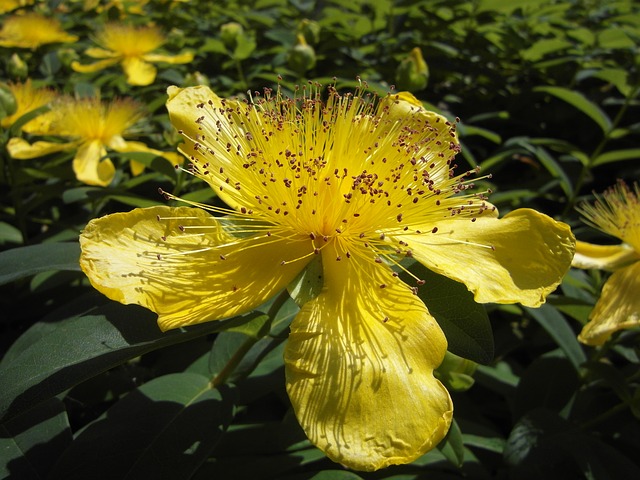
1. St John’s Wort. This plant will grow year-round with a grow light in the morning or evening to extend the growing hours of the day. If you find that it’s not flowering, then it may need longer hours of light.


7 Heal-Anything Medicinal Plants You Can Grow Indoors

St. John’s Wort. Image source: Pixabay.com


It’s a great-looking plant with attractive yellow flowers and can really brighten up a home.


Benefits:


  • May be as effective as some prescription medication for treating depression1.

  • Helps alleviate the symptoms of PMS and menopause2.

  • May help with the symptoms of ADD (attention deficit disorder)2.

2. Thyme. This is a hearty plant that can be used in cooking, as it’s one of the most popular herbs around. It’s hearty, grows pretty easily and doesn’t require much care at all.


Benefits:


  • Thyme has been shown to aid in the relief of chest and respiratory problems, including coughs, bronchitis and chest congestion3.

  • Thyme has been shown to have a strong antimicrobial activity, neutralizing such bacteria and fungi as Staphalococcus aureus, Bacillus subtilis, Escherichia coli and Shigella sonnei4.

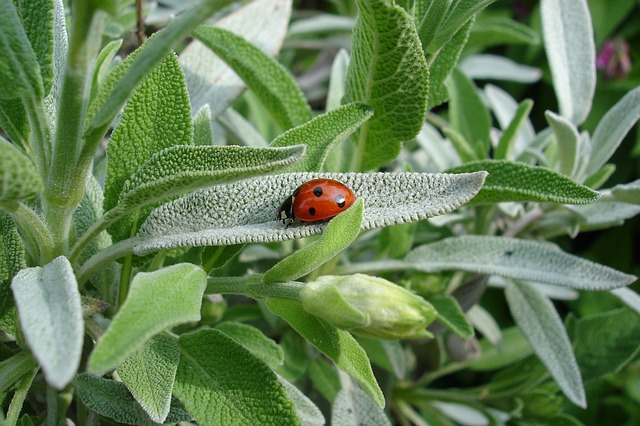
3. Sage. Its genus name, Salvia, means “to heal.” As long as you give it light, adequate water and good soil, you almost can’t kill it. Sage is one of the herbs that makes everyone look like they’ve got a green thumb.


7 Heal-Anything Medicinal Plants You Can Grow Indoors

Sage. Image source: Pixabay.com


Benefits:


  • May lessen the symptoms of Alzheimer’s 5.

  • Has been shown to lower both blood glucose and cholesterol5.

4. Parsley. Too many people think of parsley as a garnish on their plate. But parsley is one of the best green foods around.


It grows rather easily, and you shouldn’t have a problem so long as you keep its soil damp.


Benefits:


  • Can help with bad breath6.

  • Can help detoxify the brain of ammonia, thereby reducing the feelings of a hangover.

  • May be a potent anticancer agent and has been shown to be chemo-protective7.

5. Marigold. A truly unique and beautiful flowing medicinal, marigold will grow with only just a little bit of TLC needed.


Benefits:


  • The flowers have long been touted to posses near legendary anti-inflammatory properties that have shown to fight eczema and allergic reactions.

  • Relieves pain of arthritis.

  • Can be made into tinctures and ointments that have shown to sooth rashes, bed sores, diaper rash, sun burns and other types of burns.

6. Lavender. This is one of the most fragrant medicinal plants you can grow in your home. Lavender is a little more work to grow inside and it needs a little more space.


Benefits:


  • Put lavender in your pillow to have a restful sleep and avoid insomnia8.

  • Helps with nervousness, headache, stomach nerves, restlessness and stress8.

7 Heal-Anything Medicinal Plants You Can Grow Indoors

Image source: Pixabay.com


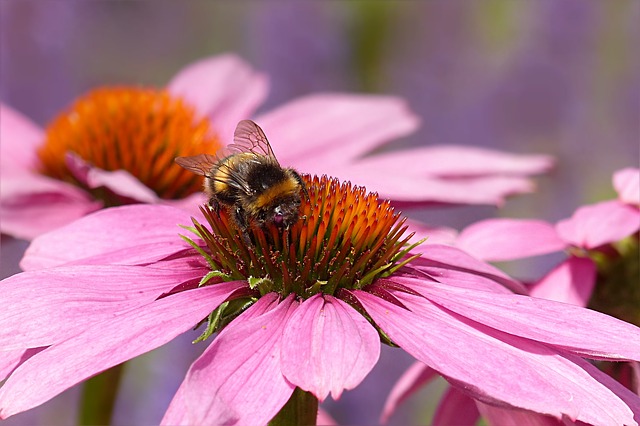
7. Echinacea. Here you have the granddaddy of all medicinal plants. It grows easily, as long as you give it a grow light.


Benefits:


  • Several studies show that Echinacea helps boost the immune10.

  • Echinacea has shown to be very promising in treating most any kind of infection, from sinusitis to vaginal yeast infections to ear infections10.

  • Shows promise in treating colon cancer and athlete’s foot10.

What plants would you add to the list? Share your tips in the section below:


If You Like All-Natural Home Remedies, You Need To Read Everything That Hydrogen Peroxide Can Do. Learn More Here.


hydrogen peroxide report


Sources:


  1. https://nccih.nih.gov/health/stjohnswort/sjw-and-depression.htm

  2. https://draxe.com/st-johns-wort-uses/

  3. Kelm MA, Nair MG, Strasburg GM, DeWitt DL. Antioxidant and cyclooxygenase inhibitory phenolic compounds from Ocimum sanctum Linn. Phytomedicine 2000 Mar;7(1):7-13. 2000. PMID:12240.

  4. Bagamboula CF, Uyttendaeleand M, Debevere J. Inhibitory effect of thyme and basil essential oils, carvacrol, thymol, estragol, linalool and p-cymene towards Shigella sonnei and S. flexneri. Food Microbio 2004 Feb;21 (1):33-42. 2004.

  5. http://www.medicalnewstoday.com/articles/266480.php

  6. https://www.organicfacts.net/health-benefits/herbs-and-spices/health-benefits-of-parsley.html

  7. http://pubs.acs.org/doi/abs/10.1021/jf00013a020

  8. http://umm.edu/health/medical/altmed/herb/lavender

  9. http://umm.edu/health/medical/altmed/herb/echinacea