 A veteran police officer who has criticized arrest quotas and corruption in his own department is now speaking out in support of cannabis legalization.
Showing posts with label Medical cannabis. Show all posts
Showing posts with label Medical cannabis. Show all posts
Monday, October 30, 2017
Good Cop Risks His Career to Openly Advocate for Legalization of Cannabis
A veteran police officer who has criticized arrest quotas and corruption in his own department is now speaking out in support of cannabis legalization.

Sunday, October 15, 2017
Melissa Etheridge Arrested For Having Cannabis Oil She Used to Help With Cancer

It was reported this week that rock musician and cancer survivor Melissa Etheridge was recently arrested in North Dakota after police found cannabis oil on her tour bus.
The arrest took place on August 17 but was not publicized until TMZ broke the story yesterday. Like millions of people with cancer across the world, including myself, Etheridge has discovered that cannabis oil not only treats the after-effects of chemotherapy but also promote apoptosis, which prevents cancer from developing again.
In October 2004, Etheridge was diagnosed with stage two breast cancer and endured a lumpectomy with five rounds of chemotherapy and radiation. It is not clear what her preventative regimen has been this past decade, but it is safe to speculate that cannabis oil has played a role in her continued remission as well as treatment for pain and nausea.
Advertisment
Etheridge looked confident after her arrest and can be seen with a huge grin in her mugshot photo. She pleaded not guilty to the charges against her.
Just weeks after her arrest, fellow rock musician Todd Rundgren was also arrested at the very same spot in North Dakota when police found two small vape pens filled with cannabis oil on his tour bus.
Cannabis oil is legal for medical patients who live in California, as Etheridge does, but the laws are still comparatively harsh in North Dakota, despite the fact that measures were recently passed in the legislature to start a medical marijuana program. As of now, North Dakota exists in a legal gray area because politicians are dragging their feet and bickering about how the program will be implemented.
READ MORE: Landmark Study Confirms Marijuana Extract Obliterates Seizures in Epileptic Children
This situation is sadly common throughout the US. Even in my state of Maryland where I am fighting my cancer, medical cards are available so patients can avoid arrest, but the political process has stalled the establishment of dispensaries for over a year, forcing sick patients into the black market.
In the past several years, the science and strong anecdotal evidence proving the medical value of cannabis has continued to grow, especially in regards to cancer treatment. Just in this past year, we have reported on multiple incidences where studies have confirmed the healing power of cannabis, to the point where organizations tied to big pharma and the US government are now forced to reverse their position on the medicine.
Etheridge said in a recent article that she does not live a party-oriented lifestyle, but found that cannabis is one of the best medicines for a cancer survivor.
“Because I am a musician, people often assume that I must indulge in the fast-paced life that often comes with playing on the road. But they would be wrong. Coming up in the business in the 1980’s, I saw plenty of drugs, but it never really appealed to me. I’m not even much of a drinker,” she wrote in her article at newapproachmissouri.com.
She continued: “But when I was diagnosed with cancer in 2004, I found that there was one substance that helped me through: Cannabis. My doctors gave me what they called ‘dose dense’ chemotherapy, which is stronger than usual. They could prescribe that level of chemo for me because I was able to take time off work to fight my cancer full time. Unfortunately, the dose dense chemo made the side effects even worse. My friends told me that medical cannabis could help me handle chemotherapy, so I gave it a try. It worked even better than they said it would. Not only did it treat my nausea better than anything else I tried, it alleviated both my physical and emotional pain. I continue to use cannabis to treat the lasting gastrointestinal effects of the chemo and to help me get a good night’s sleep.”
Etheridge is scheduled to perform the national anthem at the Chiefs vs. Steelers game this Sunday to raise awareness and funds for the “Crucial Catch” campaign, with the goal of helping unknowing patients catch their cancer early.
Saturday, September 2, 2017
“Your Vote Doesn’t Matter”: Despite Majority Voting for Medical Pot, FL Lawmakers Ban Dispensaries

When the vast majority of voters in Florida came together in 2016 and voted to legalize medical marijuana, they had no idea that even though the measure passed, lawmakers would begin pushing against it and banning marijuana dispensaries without the public’s consent.
The Florida Sun Sentinel Editorial Board rebuked local lawmakers in a recent op-ed, and called them out for working against the 72 percent of voters who supported the legalization of marijuana for medicinal purposes:
“It is hard enough to get people to actually vote, as simple as that task may be. It is even harder when elected officials tell people essentially, that your vote means absolutely nothing. But that’s the message voters are getting in South Florida, after the state voted overwhelmingly to allow dispensaries for medical marijuana. When the medical marijuana amendment was on the ballot last November, 72 percent of Florida voters—an overwhelming majority—supported it. Those voters understood that the use of marijuana for medicinal purposes would be a real source of pain relief for many folks who were suffering with various diseases.”
The board noted that so far, at least six cities in south Florida have banned, or plan to ban, marijuana dispensaries, making it even harder for their sick residents to have access to the natural medicine that can provide treatment.
Dispensaries have now been banned in Sea Ranch Lakes, where 63 percent of voters supported medical marijuana; in Southwest Ranches, where was 70 percent of voters supported it; in Lauderdale-by-the-Sea, where support was at 73 percent; and in Royal Palm Beach, where 74 percent of voters supports medical marijuana. Other cities considering bans on dispensaries are Boca Raton and Coral Springs, both of which saw support for medical marijuana at 76 percent.
Advertisment
READ MORE: 1 Cop Issued 80 Percent of All Marijuana Citations in Seattle
Not only are medical marijuana dispensaries being prohibited in cities where the overwhelming majority of residents supported their existence, but the excuses lawmakers are giving for the bans are questionable at best.
“Some cities say they are concerned because dispensaries are a cash-only business, and there is a great potential for pot shops to be targeted by thieves,” the Sun Sentinel Editorial Board wrote. “If that’s the case, then they should probably ban all ATMs. Last we saw, ATMs were cash-only.”
The city council in Southwest Ranches used safety to justify its ban, claiming that the town’s “fiscal inability to provide additional public safety personnel” made it impossible for the town to properly protect businesses and the public from the terrifying possibility of things that could occur around this new form of a plant shop. It concluded that banning the dispensaries altogether would be in the best interest of the “health, safety and welfare” of the town’s residents.
The reason given for the possibility of a ban in Boca Raton was that residents could simply go to the dispensaries in neighboring cities such as Boynton Beach and Lake Worth. However, the Sun Sentinel Editorial Board questioned why, when Boca Raton residents approved the measure by a 3-1 margin, their city wouldn’t give them what they voted for. “Public officials very rarely get approved by a 3-1 margin, but medical marijuana did,” the board noted.
“These cities are hurting their own citizens and their own economy,” Orlando attorney John Morgan told the Sun Sentinel. “It’s the arrogance of politicians, and it’s why they are universally despised at the local, state and national level. Those [politicians] are placing themselves at risk in the next election. If I was running against those people, I would use that [attempt to ban dispensaries] as a rallying cry.”
The new trend of banning medical marijuana dispensaries is just another example of the ways lawmakers in Florida have pushed for cracking down on the plant. In fact, they have tighter restrictions than most states on who qualifies for medical marijuana.
READ MORE: Powerful New Study Blows the "Smoking Pot Makes You Stupid" Myth Out of the Water
Justin Strekal, political director for the National Organization for the Reform of Marijuana Laws told Sarasota Magazine that he believes Florida lawmakers just “wanted to pat themselves on the back” over how restrictive they could be.

“Florida is near the bottom of giving people what they actually voted for,” Strekal said.
While other lawmakers reportedly pushed for bans on medical marijuana dispensaries based on the fact that they were concerned individuals would abuse the law in order to obtain marijuana for recreational purposes, the fact is that this already occurs on a regular basis.
If the failed War on Drugs has taught us anything, it is that if people want marijuana for recreational use, they will find it, no matter what the law says. At the very least, cities in Florida can choose to honor the wishes of the majority of their residents by allowing the plant to be used for medicinal purposes. Otherwise, they might as well be holding up a large sign that says, “Your vote doesn’t matter.”
Thursday, August 10, 2017
Dr Gets 18 Years for Healing Son With Cannabis as Cop Gets No Time for Raping, Urinating on Woman

The daughter of a doctor who was sentenced to 18 years in prison after he was reported for using cannabis to help his autistic son, is now speaking out about how the state went after her father and ensured that he received the maximum sentence.
To highlight how corrupt the system is, around the same time the doctor was sentenced to 18 years for helping people with a plant, a deputy who admitted to despicable acts against an innocent woman received no time behind bars.
Former deputy Robert Retford, with the Johnson County Sheriff’s Department, was arrested last November on charges of sexual assault. His alleged victim was apparently seeking help from the deputy when she said he beat her, raped her and defecated on her, and then made her drink his urine. This month, Retford pleaded guilty to sexually assaulting the woman and will not spend a single day in jail.
The blue privilege plea deal was negotiated last May, and for admitting to the heinous crimes against his victim, he was only sentenced to six months probation — no jail.
The Free Thought Project first reported on the story of Dr. Gordon Piland III in March. He was arrested after a school social worker reported that he was giving cannabis-infused goat milk to his autistic son. When conducting a follow-up search of Piland’s home, police found marijuana plants growing in the backyard, two bottles of decades-old prescription pills, and a small bag of poppy seeds, which was a gift from a horticulturist.
Advertisment
In an exclusive interview with TFTP, Piland’s daughter Lucy Snow claimed the prosecution used the fact that Piland was in possession of his deceased parents’ prescriptions, and his property’s proximity to an unmarked daycare, as impetus to charge him with trafficking in heroin. As a result, Piland was sentenced to 18-24 years in prison and a $500,000 fine.
As we previously reported:
“Monroe Gordon Piland III (69) has lived an amazing life according to some estimates. In the late 1960s early 70s, Piland served as a naval officer, during the Vietnam war. Upon his return to the states, he earned a degree in nutrition from The University of California – Berkeley, and later a medical degree from the prestigious Wake Forest University, formerly a Southern Baptist university. He completed his medical residency in Elizabeth City, NC, and was a board certified medical doctor from 1979-1984.”
While Piland has managed to keep his love for cannabis under the radar since in the 80s, he going through a tenuous custody battle over his autistic son. His son’s mother was not a cannabis advocate, yet Piland would offer his son goat’s milk infused with cannabis as treatment for his behavioral and cognitive deficits. When the school’s social worker discovered the fact, she sent police to his home to investigate.
READ MORE: Police Chief Stops Arresting Opioid Addicts, Offers Help Instead – Crime & Addiction PLUMMET
As TFTP has reported, many parents—including some politicians—are now giving their children cannabis for autism with astounding results.
 Piland is wearing the green hat
That home visit led to the medical doctor’s arrest and conviction in March. At trial, Piland didn’t stand a chance. Snow said her dad’s first mistake was to represent himself in court and take on Assistant District Attorney Alex Bass head-on.
“He was super content to go to court to share his knowledge of medical cannabis and let the chips fall where they may,” Snow said. “But, unfortunately, he couldn’t find a lawyer that wasn’t intimidated by Bass’s trumped up charges and that was willing to fight for him, so he resorted to representing himself, which had disastrous consequences.”
Snow said that instead of charging Piland with possession of marijuana, a misdemeanor in the State of North Carolina, Bass decided to charge him with trafficking heroin. Here is what Snow said was found by police when they searched Piland’s home:
“What was found: A 2009 half-full bottle of Percocet/Oxycodone in my grandmother, Lillian Piland’s name, that my dad had failed to dispose of/recycle properly. A single full bottle of Duramorph, belonging to my grandfather, but this wasn’t a charge or used in court as the bottle was full. A few poppy seeds were gifted from my uncle, my mom’s brother, who is a landscape architect and gardener.”
According to Snow, Bass used the Percocet belonging to Piland’s deceased mother and the fact that a home daycare was located nearby to throw the full weight of the law against her father. She said the fact that he was in possession of several pounds of marijuana was never presented in court, making the cannabis activist seem like a heroin dealer and not the curative shaman that he was.
READ MORE: Maine Governor Says "Bring The Guillotine Back" & Hold "Public Executions" for Drug Offenders
“I don’t know why my dad kept the old pharmaceutical pills, but he tended to be kind of a pack rat or just not be bothered by the little things,” Snow said, noting that one of the key pieces of evidence used against her father was something he didn’t realize he had. “Dad says he didn’t even remember having them as they were found in the back of a drawer.”
Snow said Dr. Piland was naive when he went to trial thinking, that if he just told the truth about his cannabis activism, no jury would convict him.
“After the search and seizure of his house, I think my dad really thought he had a chance to lay his life’s passion and work all out there. I think similar to say, Caitlyn Jenner, somewhere inside he just didn’t want to hide anymore, knowing what he knows and being the ripe age of 70. He was super content to go to court to share his knowledge of medical cannabis and let the chips fall where they may.”
After the prosecution presented its case, and without his own legal representation, the jury took less than 30 minutes to convict Dr. Piland of trafficking heroin—presumably due in part to his possession of 58 grams of poppy seeds. Here’s what about twice that amount looks like:

Snow told The Free Thought Project that she wishes her father had been given a plea deal, but said the prosecutor knew he could easily get a conviction, due to the fact that the senior citizen was choosing to represent himself. As a result, the physician’s daughter now views her father’s conviction with disdain, and especially resents ADA Bass who she says lied about her father and mischaracterized him.
“DA Alex Bass stated my dad had ‘a large cache of dangerous and highly addictive opioid drugs for sale and distribution’ and he knows this is a lie. The truth is only a SINGLE nearly decade old forgotten pharmaceutical bottle belonging to my deceased grandmother and the happenstance of living near an unmarked daycare was used as evidence for sending my non-violent father to prison for life.”
The teacher and daughter of a marijuana activist now accuses prosecutor Bass of sending an innocent man to prison and says he knew full well Piland was no heroin trafficker.
READ MORE: "My son-in-law was killed by the SWAT team I founded" Former Sheriff turned Activist, Speaks Out
“Bass’s decisions were not only immoral, but go against many standards that Prosecutors are sworn to uphold,” Snow said. “He knows good and well, without a doubt, as does anyone who looks at the evidence, that opium or heroin selling, trafficking, or usage was not occurring.”
Snow said the punishment does not fit the crime, and she pointed to other cases where people were convicted of trafficking in heroin but received much softer sentences.
Piland’s life story might have been written differently had he resided in a state other than North Carolina. To date, there are 29 U.S. states that have legalized medical marijuana in some form. In fact, in some of those other states, Piland may very well have been able to serve as a certifying doctor for medical marijuana, given the fact that he once held board certification as a practicing MD. But he chose to live in the state he loved, and now has to pay a heavy price for dabbling in marijuana.
Looking at the bigger picture, Piland’s case may serve as an indictment of a justice system and a pharmaceutical industry that will go to great lengths to ensure the truth about cannabis is never told. After all, Piland is a medical doctor who gave up his medical practice to pursue a lifetime of research into cannabis. Unfortunately, anyone who may want to glean from what he knows will have to go and visit him in the Marion, NC Correctional Institute.
 Lucy Snow pictures with her family.
Saturday, August 5, 2017
A Cannabis Company Just Bought A Whole California Town
Authored by Carey Wedler via TheAntiMedia.org,
As cannabis grows increasingly acceptable in society and more states legalize it, everything from cannabis churches and resorts to yoga and restaurants are cropping up. And now, there will be an entire cannabis-inspired town.

American Green is a cannabis company based in Arizona, but they just bought the small California town of Nipton, located in San Bernardino County, and plan to convert into a municipality with a cannabis theme.

The company has a “state of the art” cultivation facility in Arizona and also sells hemp-based CBD (cannabidiol) products online and works to develop cannabis apps. They just spent five million dollars to obtain Nipton and plan to spend another $2.5 million creating their cannabis tourist attraction over the next 18 months.
“We thought that showing that there was a viable means of having a cannabis-friendly municipality and further making it energy independent could be a way of really inspiring folks to say, ‘Why can’t we do that here?’” says the company’s consultant and project manager for Nipton, Stephen Shearin.
Bloomberg reports:
“American Green plans to include a new facility to manufacture water infused with CBD, the cannabis component that is typically associated with reducing pain and inflammation. The new Nipton will also have a production site for edible marijuana products, retail stores, and artist-in-residence programs.”
In doing so, the company hopes to develop Nipton into a tourist attraction and make cannabis approachable and acceptable to a wider audience.They plan to manufacture products with smaller doses and provide a vending machine that ensures customers are of age using a biometric scanner.
American Green wants to make Nipton, which features natural mineral springs, a tourist destination. Shearin told Marijuana Business Daily that they plan to “open cannabis-themed bed and breakfasts, host culinary events, start artists-in-residence programs and more.”
They are in negotiations with edible and extract companies to set up shop in Nipton, as well as ship and distribute their products to other parts of the state.
Though they plan to be up and running by mid-October of this year, they still have to wait for the necessary state and local licenses to be able to cultivate and sell cannabis on the property.
“If we have to wait until January and prepare for that and get that in place, and then build out the infrastructure to support it, we can still have a cannabis-friendly destination,” Shearin said.
“It’s a master-planned community,” he told Marijuana Business Daily. “It’s designed to be very specific in terms of being legal, being a town and running it correctly. It’s designed to be open-ended in terms of what it can evolve into by partnering with the right company.”
They also want to build out the town’s mineral springs and create several CBD-infused water pools, expand an existing solar farm, and ensure there is enough lodging for future tourists.
And it’s not just Nipton they want to transform. They hope to change the entire region and make cannabis-based towns more acceptable and popular. “We want to revitalize the region, not the town,” Shearin said, “and we want to do it in a way that other towns can say, ‘Look at that, they have this regulatory system that allows them to embrace cannabis while not offending people who may not be of that mindset.’”
For now, they are moving forward within California’s legal framework. Though President Trump’s Attorney General Jeff Sessions has threatened to crack down on legal cannabis, his future in the administration is uncertain, and it’s difficult to imagine a state like California giving up its recent voter decision to legalize the plant.
Fittingly, Nipton used to be a gold rush town. As Shearin said, “The Gold Rush built this city. The Green Rush can keep it moving the way people envisioned it years ago.” And he hopes to do it elsewhere:
“The plan is absolutely to duplicate this model in new cities.”
Friday, August 4, 2017
PARADIGM SHIFT – New Poll Says 86% of Americans Support Legalization of Cannabis

The latest survey on support for cannabis legalization found that a clear majority of Americans are in favor legalizing the plant that the federal government claims is among one of the deadliest drugs in the country.
According to a survey from Harvard-Harris Poll, 86 percent of Americans now support some form of cannabis legalization—with 49 percent of respondents saying it should be legalized for both recreational and medicinal use, and 37 percent saying it should be legalized for medicinal use only.
Heartening enough is that only 14 percent of Americans are stuck in the dark ages and want to keep it illegal, according to the poll.
The poll, which surveyed 2,051 registered voters online from July 19-24, found that only 14 percent of respondents said that they think cannabis should remain illegal. In contrast, 57 percent of respondents said legalizing cannabis would make society better, and 69 percent said it would not bother them if cannabis was legalized in their state.
Advertisment
In addition to the growing support for legalization, the survey also found that 72 percent of Americans support no jail time for individuals who are found possessing small amounts of cannabis—even if the plant is illegal.
Harvard-Harris Co-Director Mark Penn told The Hill that while the survey showed that voters are concerned about a rise in drug-related crimes, they appear to view cannabis as separate from other drugs that are currently illegal at the federal level.
“Voters point to drugs as the major source of crime and support tough sentences for drug dealers but view marijuana in a wholly different light,” Penn said. “Most think legalization of marijuana would probably be helpful in reducing crime and almost half support legalization.”
In fact, as the Free Thought Project has reported on multiple occasions, legal weed does reduce crime.
READ MORE: Govt"s Own Research Shows Legalization NOT Prohibition Dramatically Reduces Drug Use
In the days following the survey, lawmakers ignored public opinion and adhered to the standard set by federal law, by blocking an amendment from the debate that sought to let Veterans Affairs hospitals prescribe cannabis to patients in need.
As The Free Thought Project has reported, “even though therapeutic cannabis is legal in 29 states, many veterans face significant hurdles to lawfully obtain it, and instead, end up on addictive and deadly opiates and other big pharma solutions.”
Attorney General Jeff Sessions has also ignored growing support for legalization, and he has instead pushed for the federal government punishing states that legalize cannabis. In a memo to the U.S. Attorney’s Offices and Department of Justice component heads, Sessions discussed the mission of President Trump’s Task Force on Crime Reduction and Public Safety.
“Task Force subcommittees will also undertake a review of existing policies in the areas of charging, sentencing, and marijuana to ensure consistency with the Department’s overall strategy on reducing violent crime and with Administration goals and priorities,” Sessions wrote.
While cannabis is listed as a “Schedule I” drug in the United States—which means that it should have no medicinal value—it should be noted that the U.S. government actually holds the patent to cannabis as medicine, affirming its value.
The Free Thought Project has provided in-depth coverage of stories that show the true power of cannabis, such as a groundbreaking study published last month, which found that cannabis can stop HIV from becoming AIDS; a study that confirmed that the majority of cannabis users give up prescription opiate medications; and a study that confirmed that cannabis has a “significant” effect on killing cancer cells.
READ MORE: Absurd Anti-Marijuana Video is Going Viral, Not Because it"s Working - Because it"s Hilarious
It is quite amazing and equally disheartening to see people advocate for kidnaping and caging people for possessing a plant that saves the lives of countless children, helps people recover from serious disease, and is far safer recreationally than alcohol. The good news is, according to this survey, is that we only have a few people left to convince.
Thursday, July 6, 2017
Scientists Warn Chemotherapy Could Spread Cancer, Trigger More Aggressive Tumors

Chemotherapy can increase aggressivity in cancer, causing malignant cells to migrate and triggering more dangerous tumors — thereby also increasing the disease’s fatality — researchers in the United States found.
Patients with breast cancer who opt for chemotherapy as treatment actually face a risk of metastasis, according to a new study, as Science reports,
“The blood vessels of patients receiving chemotherapy drugs have more ‘entry points’ through which cancer cells can get into the blood flow and disperse throughout the body, scientists report today in Science Translational Medicine. In mice with breast cancer, chemotherapy shrinks the primary tumor but boosts the number of cancer cells in the lungs and circulating the body.”
Although it appears chemo effectively shrinks primary tumors, the treatment ultimately triggers the spread of malignant cells, causing cancer to act aggressively and often, leading to the patient’s death.
“It is thought the toxic medication switches on a repair mechanism in the body which ultimately allows tumours to grow back stronger. It also increases the number of ‘doorways’ on blood vessels which allow cancer to spread throughout the body,” the Telegraph reports.
Advertisment
“Dr George Karagiannis, of the Albert Einstein College of Medicine of Yeshiva University, New York, found the number of doorways was increased in 20 patients receiving two common chemotherapy drugs.
“He also discovered that in mice with breast cancer chemotherapy increased the number of cancer cells circulating the body and in the lungs.”
Due to this astonishing risk, Karagiannis recommends breast cancer patients be meticulously monitored upon beginning chemotherapy for signs the dangerous cells have begun circulating elsewhere or indications those ‘doorways’ are opening.
“One approach would be to obtain a small amount of tumour tissue after a few doses of preoperative chemotherapy,” the doctor explained.
“If we observe that the markers scores are increased we would recommend discontinuing chemo and having surgery first, followed by post-operative chemo. We are currently planning more extensive trials to address the issue.”
Karagiannis emphasizes this does not mean patients should abandon chemotherapy outright; rather, medical personnel should closely observe patients to ensure cancer cells aren’t spreading elsewhere.
Although this study focused on breast cancer, Dr. Karagiannis and the other researchers intend to study other cancers to see if chemotherapy acts equivalently.
“In this study we only investigated chemotherapy-induced cancer cell dissemination in breast cancer,” Karagiannis said. “We are currently working on other types of cancer to see if similar effects are elicited.”
Another recent study of chemotherapy found, in the treatment of leukemia, following the traditional treatment with cannabinoids — the active compounds in the federally-banned cannabis plant — significantly improved patients’ success rates.
Published in the International Journal of Oncology, the study found,
“In addition to the well-known palliative effects of cannabinoids on some cancer-associated symptoms, a large body of evidence shows that these molecules can decrease tumour growth in animal models of cancer. They do so by modulating key cell signalling pathways involved in the control of cancer cell proliferation and survival. In addition, cannabinoids inhibit angiogenesis and decrease metastasis in various tumour types in laboratory animals.”
Smoking cannabis, the researchers noted, does not provide similar benefits to the highly-concentrated plant extracts, and cannabinoids showed no increased advantage in treatment unless administered after chemotherapy.
Although researchers studying the deleterious effects of chemotherapy on breast cancer did not examine cannabis or cannabinoids for benefit, it must be emphatically noted the U.S. government — the same government responsible for the continuation of cannabis prohibition which lands countless medical patients behind bars — states plainly on its website for the National Cancer Institute,
“Cannabis has been shown to kill cancer cells in the laboratory.”
Sunday, July 2, 2017
Big Pharma Losing Grip as Study Shows Nearly 100% Cannabis Users Give Up Rx Pain Meds

A landmark study helps explain why Big Pharma is so afraid of the medical benefits of cannabis. The pharmaceutical and alcohol industries, both powerful influences in Washington, have long lobbied against cannabis legalization in order to protect their profits.
The recent study is lending credibility to the idea that medical cannabis can be used as a natural alternative to prescription pain medications, with nearly 100 percent of respondents saying they believe cannabis is helping them decrease their use of prescription opioids to treat the pain.
The study, which was conducted by HelloMD, one of the largest medical cannabis communities in the nation, and University of California Berkley, surveyed nearly 3,000 patients who use both opioid and non-opioid based pain medication.
Advertisment
The results of the study concluded that 97 percent of respondents “strongly agreed/agreed” that they could decrease use of their opioid medications when using cannabis. While 92 percent of respondents said that they “strongly agreed/agreed” that they prefer cannabis to treat their medical condition.
The study also found that 81 percent of respondents said they “strongly agreed/ agreed” that using cannabis alone was more effective than taking cannabis with opioids.
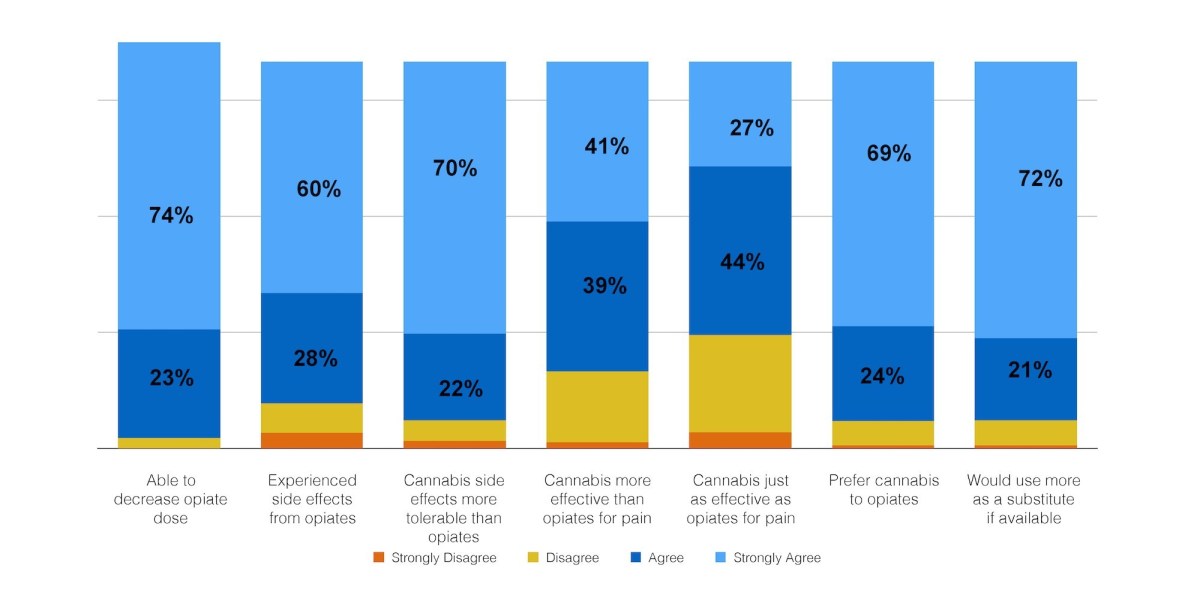 Use of cannabis as a substitute/in conjunction with opioid-based pain medication (PRNewsfoto/HelloMD)
While cannabis is only legalized for medicinal use in 26 states and the District of Columbia, 93 percent of respondents said they “strongly agreed/agreed” that they would use cannabis as a substitute for their current prescription medication if it was available.
Dr. Perry Solomon, Chief Medical Officer of HelloMD, referenced a recent publication from the National Academy of Sciences, Engineering & Medicine on “The Health Effect of Cannabis and Cannabinoids,” and noted that this study serves as a way to support the theory that cannabis is the opposite of a gateway drug.
READ MORE: Mainstream Media Up in Arms About Malia Smoking Pot -- Silent on Her Dad Blowing Up Children
“The latest publication from the National Academy of Sciences clearly refuted the ‘gateway drug’ theory that using marijuana can lead to opioid addiction, instead finding evidence of cannabis having multiple curative benefits,” Dr. Solomon said. “Our study further substantiates this. Hopefully this will awaken the public, medical professionals and legislatures to the fact that cannabis is a safe, non-addictive product, available to help fight the opioid epidemic.”
Amanda Reiman, a professor at UC Berkley who helped lead the study, said the treatment of pain has become a “politicized business” in the United States that has resulted in “the rapidly rising rate of opioid related overdoses and dependence.”
“Cannabis has been used throughout the world for thousands of years to treat pain and other physical and mental health conditions,” Reiman said. “Patients have been telling us for decades that this practice is producing better outcomes than the use of opioid based medications. It’s past time for the medical profession to get over their reefer madness and start working with the medical cannabis movement and industry to slow down the destruction being caused by the over prescribing and overuse of opioids.”
As The Free Thought Project has reported, despite the fact that cannabis has been proven to help with a number of things from killing cancer cells to treating rare and fatal conditions, it is still classified among the deadliest drugs that are supposed to have no medicinal value in the United States.
While studies such as the latest one from HelloMD and UC Berkley serve as a reminder that for many patients, cannabis is the ideal alternative to opioid medications, there is still a clear reason why cannabis has yet to be legalized in the U.S. If medical cannabis was legalized in all 50 states, it would take at least $4.5 billion away from the stranglehold that has been established by big pharma.
Wednesday, June 28, 2017
Medical Marijuana for Treatment of PTSD Gets Green Light in Colorado
Medical marijuana is now a legal treatment for post-traumatic stress disorder (PTSD) in Colorado. Governor John Hickenlooper signed SB17-017 on June 5, 2017, officially giving doctors the green light to prescribe cannabis to patients suffering with post-traumatic stress disorder (PTSD). Colorado joins at least 20 other states in allowing cannabis-based treatments for the disorder. [1]
Before doctors can prescribe cannabis for PTSD, patients must sit for a consultation and receive a medical background check. Patients approved for medical marijuana will be able to possess 2 ounces of cannabis and no more than 6 plants at a time, and only 3 of those plants can be mature and flowering. However, patients will be able to petition their doctor for more.
For patients under the age of 18, medical marijuana must be approved by 2 physicians, one of whom must be a board-certified pediatrician, a board-certified family doctor, or a board-certified child and adolescent psychiatrist. Additionally, the patient’s parents or guardians living in Colorado will have to consent in writing to the state health agency. [2]

The State Board of Health rejected medical marijuana treatment for PTSD in 2015, saying at the time there was not enough scientific research on how marijuana could affect people with the disorder. It was at least the 4th time the board had rejected the measure. [1]
The state department of health has been studying cannabis treatments for PTSD since 2015, setting aside $3.3 million for the research.
Roger Martin, the founder of Grow For Vets, said:
“What it really does, is it doesn’t get rid of the bad memories that you have, but it kind of just allows you to relax to the point that they’re not right up in front of your head.
Thousands of veterans have told me to my face that cannabis is the only thing that’s ever helped them with PTSD and not one drug that the VA has given has ever helped at all.” [3]
Read: VA Head Comes out in Favor of Marijuana for Vets with PTSD
Dr. Larry Wolk, Executive Director of the Colorado Board of Health (which does not support the legislation) said that some doctors have already started recommending medical marijuana for treatment of PTSD.
“At least if a physician is recommending it, and a physician is involved through the medical marijuana program, then that would be presumably better care.”
This is another positive step we’re taking in allowing the population to further utilize a helpful, underrated medicine.
Sources:
[2] Fox 31 Denver
[3] KRDO ABC 13

 | Julie Fidler is a freelance writer, legal blogger, and the author of Adventures in Holy Matrimony: For Better or the Absolute Worst. She lives in Pennsylvania with her husband and two ridiculously spoiled cats. She occasionally pontificates on her blog. |
Tuesday, June 6, 2017
Groundbreaking Study Confirms Cannabis Has ‘Significant’ Effect on Killing Cancer Cells

Leukemia has a new foe — one reviled by the U.S. DEA, loved as a tool for law enforcement profiteering, and purposely maligned by Big Pharma — cannabis.
A new study found that, in combination with traditional chemotherapy, cannabinoids — the active compounds in cannabis — significantly improved treatment of leukemia.
Adding cannabinoid therapy to a traditional cancer treatment regimen meant doctors could lower the dose of chemotherapy while minimizing its oft-debilitating side effects, such as nausea.
Researchers also found the order in which the two medicines were administered proffered different results — more cancer cells die, or experience apoptosis, when cannabinoids follow chemotherapy.
“We have shown for the first time that the order in which cannabinoids and chemotherapy are used is crucial in determining the overall effectiveness of this treatment,” explained Dr. Wai Liu of St. George’s, University of London, and lead author of the study, quoted by the Daily Mail.
Cannabis has long been touted as efficacious in alleviating nausea and vomiting associated with rigorous chemotherapy treatment — but this study marks a groundbreaking foray into the study of the plant as a potentially curative medicine.
Liu deemed cannabinoids a “very exciting prospect in the oncology.”
Researchers sought to analyze the effects of various cannabinoids — specifically THC, the compound known for giving recreational users a ‘high,’ as well as CBD, or cannabidiol — on leukemia cells and whether the order in which the plant compounds and two common chemotherapy drugs, cytarabine and vincristine, are given would impact results.
According to the study, published in the International Journal of Oncology:
“In addition to the well-known palliative effects of cannabinoids on some cancer-associated symptoms, a large body of evidence shows that these molecules can decrease tumour growth in animal models of cancer. They do so by modulating key cell signalling pathways involved in the control of cancer cell proliferation and survival. In addition, cannabinoids inhibit angiogenesis and decrease metastasis in various tumour types in laboratory animals.”
READ MORE: Only Six Days After Starting Cannabis Oil, This Little Girl"s Leukemia Went into Remission
Taken after chemotherapy, cannabinoids “can increase the cancer cell-killing effects of the chemotherapy and decrease the growth of new tumor cells and tumor-feeding blood vessels,” UPROXX reports.
“These extracts are highly concentrated and purified,” Liu elaborates, “so smoking marijuana will not have a similar effect.”
Most momentously for advocates of medical cannabis, the team found phytocannabinoids indeed display significant “anticancer activity” — even when used as sole treatment against the disease.
Further analysis and study must be completed, however,
“Studies such as ours serve to establish the best ways that they should be used to maximise a therapeutic effect,” Liu said.
Leukemia wasn’t the only cancer studied by the researchers — glioblastoma, the most aggressive brain cancer, may also be significantly impacted by the introduction of cannabinoids, should promising animal testing be ultimately translatable for treatment in humans.
This study adds to the evidence as presented by the National Cancer Institute as well. As the Free Thought Project previously reported, the government agency recently acknowledged the power of cannabis to kill cancer cells which is backed up by laboratory tests.
“Cannabis has been shown to kill cancer cells in the laboratory,” states the cancer.gov website.
But, in order for swaths of patients in the United States to even dream of eradicating their leukemia, cannabis prohibition — existent primarily for the highly politicized agenda of criminalizing the antiwar left, African-Americans, and, earlier, jazz musicians — must be lifted.
Perhaps the steepest obstacle to ending cannabis prohibition rests with the lucrative pharmaceutical industry, whose societally-established drugs for treating cancer rake in billions each year.
As long as the astonishingly beneficial plant remains out of reach for many U.S. patients, any future cannabinoid additions to chemotherapy could theoretically find the user fined or locked in a cage.
Dr. Liu and his team conclude the abstract of their promising by imploring immediate further examination of their results, stating,
“Given that cannabinoids show an acceptable safety profile, clinical trials testing them as single drugs or, ideally, in combination therapies in glioblastoma and other types of cancer are both warranted and urgently needed.”
READ MORE: WATCH: Fmr Cop With Severe Parkinson"s Tries Cannabis Treatment for First Time
Now, only the dollar signs blinding the U.S. government and Big Pharma to the indisputable benefits of cannabis stand between cancer sufferers and relief.
Thursday, June 1, 2017
Ohio Sets Major Precedent, Sues Big Pharma for Deliberately ‘Fueling Opioid Epidemic’

Five goliath pharmaceutical companies have been served with a lawsuit from the State of Ohio for their role in the opioid epidemic, because, as state Attorney General Mike DeWine alleges, they “helped unleash a health care crisis that has had far-reaching financial, social, and deadly consequences in the State of Ohio.”
Ohio now joins a number of states in attempting to hold Big Pharma responsible for fueling the crisis of oft-ruinous addiction to legally prescribed opioid medications and their deemed illegal brethren, such as heroin.
Purdue Pharma, Endo Health Solutions, Teva Pharmaceutical Industries and its subsidiary, Cephalon, Johnson & Johnson and subsidiary, Janssen Pharmaceuticals, and Allergan have all been named in the lawsuit.
“This lawsuit is about justice, it’s about fairness, it’s about what is right,” DeWine opined in an announcement from southern Ohio’s Ross County — an area crushed by the epidemic in fatalities from overdoses to legal painkillers and illegal heroin — as quoted by Southwestern Ohio NBC affiliate, WLWT. “These drug companies knew that what they were saying was wrong and they did it anyway and they continue to do so.”
Figures for 2016, which have yet to be released, are expected to handily top the distressing 3,050 fatal overdoses Ohio experienced in 2015 — figures wholly unacceptable to DeWine, and cogent of the nation’s struggle to rein in rampant over-prescribing and other facets of the opioid scourge.
NPR reports the lawsuit “accuses the companies of engaging in a sustained marketing campaign to downplay the addiction risks of the prescription opioid drugs they sell and to exaggerate the benefits of their use for health problems such as chronic pain.”
“We believe the evidence will also show that these companies got thousands and thousands of Ohioans — our friends, our family members, our co-workers, our kids — addicted to opioid pain medications, which has all too often led to use of the cheaper alternatives of heroin and synthetic opioids,” the Ohio attorney general asserted in a press release excoriating the five pharmaceutical companies Wednesday. “These drug manufacturers led prescribers to believe that opioids were not addictive, that addiction was an easy thing to overcome, or that addiction could actually be treated by taking even more opioids.
“They knew they were wrong, but they did it anyway — and they continue to do it. Despite all evidence to the contrary about the addictive nature of these pain medications, they are doing precious little to take responsibility for their actions and to tell the public the truth.”
Explicitly, DeWine notes, the lawsuit contends the medications at the core of the epidemic include OxyContin, MS Contin, Dilaudid, Butrans, Hysingla, and Targiniq from Purdue; Endo’s Percocet, Percodan, Opana, and Zydone; Actiq and Fentora made by Teva and Cephalon; Johnson & Johnson and Janssen’s Duragesic and Nucynta; and Kadian, Norco, and several generic opioids manufactured by Allergan.
DeWine told NPR’s All Things Considered the companies purposely deceived physicians and medical practitioners on the perils of the opioid medications — purely to rake in profits — to the horrific detriment of thousands of families whose loved ones became addicted or lost their lives.
“We believe that the evidence will show that these pharmaceutical companies purposely misled doctors about the dangers connected with pain meds that they produced, and that they did so for the purpose of increasing sales,” he asserted. “And boy, did they increase sales.”
“My daughter’s been gone over a year and it still doesn’t seem real,” Ohio father Roger Winemiller, whose daughter and son died within nine months of each other — both from overdoses on heroin — told WLWT.
Echoing one of the most common paths to illegal heroin, Winemiller described the lost battle with addiction his daughter faced, recalling that, to treat anxiety, she “started using pills and tried stuff that the doctor prescribed but it just didn’t work, then went to pills on the street then graduated to heroin.”
Included in the state’s lawsuit is an injunction demanding the companies cease deceptive practices — inflation of benefit and deflation of risks — surrounding opioid prescriptions.
Rather than pegging doctors equally responsible the opioid plague, DeWine told NPR’s Robert Siegel the weight of blame lies with the mendacious practices consciously undertaken by the five Big Pharma giants and their subsidiaries.
“This was not something that the pharmaceutical companies just woke up some day and just started to do a little bit of it,” the attorney general explained.
“I mean, there was a concerted effort for an extended number of years to really pound this into the heads of doctors. And when you’re told something time and time and time again and there’s a lot of advertising that is being spent, yeah, it takes a while to turn that around.”
Naturally, Big Pharma pushed back against the lawsuit — a spokeswoman for Janssen castigated the premise as “legally and factually unfounded.”
“Janssen has acted appropriately, responsibly and in the best interests of patients regarding our opioid pain medications,” Jessica Castles Smith told the Cleveland Plain Dealer by email, “which are FDA-approved and carry FDA-mandated warnings about the known risks of the medications on every product label.”
Purdue, however, appeared to capitulate somewhat — agreeing the epidemic must be addressed.
“OxyContin accounts for less than 2 percent of the opioid analgesic prescription market nationally,” the company told the Plain Dealer, “but we are an industry leader in the development of abuse-deterrent technology, advocating for the use of prescription drug monitoring programs and supporting access to Naloxone — all important components for combating the opioid crisis.”
NPR noted the state estimates more than 200,000 Ohioans currently battle addiction to opioids.
DeWine elaborated further, telling the Plain Dealer 80 percent of heroin addicts first were prescribed legal opioid medications — and that, although this particular lawsuit aims to hold manufacturers accountable, he refused to rule out future litigation against distributors.
Opioids continue to be doled out with alarming regularity for both acute and chronic pain, while viable alternatives to both treat pain and reduce opioid dependency — such as cannabis and kratom — remain unattainable thanks to the Federal Government’s laughable war on drugs.
In the meantime, a growing number of states and localities — including Everett, Washington, and the states of West Virginia, Mississippi, and Kentucky — as well as the Cherokee Nation, have employed legal means to call Big Pharma to task for recklessly allowing the opioid crisis to fester unhindered.
“It’s not the whole cause, but it’s a big part of the cause,” Winemiller said of the targets of the lawsuit. “I mean, there’s many, many people that’s gone to pain clinics, had surgeries or whatever, and they take this medication and they get hooked on it, and then they get cut off and so they go the cheaper route and end up with the heroin.”
He added, “I’ve lost two [children]. It’s just like a bad dream that won’t quit.”
Wednesday, May 24, 2017
USMC Veteran Facing Life in Prison Over 1 Oz. of Cannabis to Treat His PTSD

Geronimo, OK — After serving three tours in Iraq and Afghanistan, Kristoffer Lewandowski was medically and honorably discharged from the Marine Corps. After fighting the state’s wars for them, however, the state has taken it upon themselves to wage a personal war against him — for naturally treating an illness — he acquired fighting for them.
Lewandowski is now a 100% disabled veteran because of the severity of his PTSD. Since he has gotten out, the VA had him taking up to 18 pills a day to treat his PTSD. This pharmaceutical treatment was literally killing him.
At 180 Percocet per month, for ten consecutive months, along with a prescription for OxyContin, Lewandowski’s liver was failing. Luckily, for this Marine veteran, he found cannabis — and it worked.
Cannabis treats PTSD so effectively — as both clinical and anecdotal evidence has shown — the Drug Enforcement Agency recently approved the first-ever study of its whole-plant medicinal use for vets in April. By allowing the use of the whole cannabis plant, the DEA opened the door for even the smoked variety to be studied for the potential alleviation of PTSD symptoms.
“We are thrilled to see this study overcome the hurdles of approval so we can begin gathering data,” explained Amy Anderson, Executive Director and Director of Clinical Research for the Multidisciplinary Association for Psychedelic Studies (MAPS) Public Benefit Corporation. “The study is a critical step in moving our botanical drug development program forward at the federal level to gather information on the dosing, risks, and benefits of smoked marijuana for PTSD symptoms.”
2. Research on using marijuana to treat PTSD is limited. For many veterans the debate is over, @Ben_Finley reports: https://t.co/Nj91GYsyvd
— AP Eastern U.S. (@APEastRegion) March 22, 2016
Unfortunately indicative of the government’s misplaced, draconian priorities, the continued federal prohibition of cannabis has created tragic and heartbreaking consequences for vets using the plant to treat PTSD — and Lewandowski is a living example of the state’s tyranny.
After realizing that the meds were killing his liver, Lewandowski decided that it would be a good idea try marijuana as a treatment. He began growing 6 plants for his personal use.
READ MORE: Shock Report: If You are Mentally Ill, You Have a 1,600% Higher Chance of Being Killed by Police
In June of 2014, Lewandowski had a PTSD episode. His wife grabbed the kids and took them to the neighbor’s house where she called the police to get her husband some help.
However, as is the case in so many countless other incidents, police did anything but help.
After police showed up, they searched the Lewandowski’s home and found 6 tiny marijuana plants. Police then weighed all of the plant matter together and it did not total to a single ounce. However, because of Oklahoma’s draconian laws against growing a plant, Lewandowski was charged with felony marijuana cultivation.
Meko Haze, with the Daily Haze, recently spoke to Lewandowski, who described the grow as containing “six of the worst plants I have ever seen.” The plants were two days into the flowering cycle, but due to a few mishaps, Lewandowski was sure that they were going to die. Lewandowski said that “it would have been a miracle actually to obtain usable Cannabis from them.”
According to Whitney Lewandowski, Kristoffer’s wife, the police also pulled up their tomato plants and included them in the photo for the media.
“[Police] made it look like he had this huge grow [operation] going,” Whitney said in an interview with Truth in Media.
But that was not the worst of their problems. Police then cuffed Whitney and threw her in the back of a police cruiser and told her their children were being taken by Child Protective Services. They were charging her with a felony too.
In order to make it look like a legitimate arrest, police told Whitney that if she pressed assault charges against her husband, they would not charge her and she could keep their children. She obviously opted to stay out of prison and to not have her children kidnapped by the state.
READ MORE: Trump Threatens to "Destroy" Senator for Bill Making it Harder for Cops to Steal From You
According to Truth in Media:
Whitney Lewandowski said that the domestic violence charge does not reflect the reality of her husband’s behavior, “They’re trying to use me as a victim and to make it look worse on his case. My husband has absolutely never laid his hands on me ever. He is not an abusive man, ever… quite the opposite. He is extremely doting.”
The Lewandowski’s raised enough funds to pay the bondsman and the family then moved, with the approval of the Oklahoma DA, to California, so Kristoffer could get the medicinal marijuana he needed, “legally.”
However, while he was in the care of a Veterans Administration psychiatric hospital, Lewandowski inadvertently missed a court date. With guns drawn, and in front of all the children at his child’s daycare, undercover cops swarmed Lewandowski in a dramatic raid.
This man’s life has been turned upside down. He was taken from his family, unable to see his children, and was facing the idea of spending the rest of his life behind bars — yet, he harmed no one.
Because felony marijuana cultivation in Oklahoma carries a maximum sentence of life in prison, Lewandowski’s options were limited. However, Lewandowski’s legal council arranged for him to take a plea deal and he avoided jail — for the time being.
This plea deal, however, came with a catch. It meant that Lewandowski was going to be a felon — instead of a veteran. His felon status impeded his health and education benefits, and greatly stifled his chances of getting a good job. So, he did something about it.
As Mass Roots reports, after regretting this decision, this stand-up veteran took a big risk to clear his name.
“It is absolute insanity – this situation. Putting a three tour combat Marine veteran who served his country faithfully, in jail for using a medicine, the only medicine that was effective in treating his severe PTSD. This shows the deep and disturbing problems our country faces, ” said Matthew J. Pappas, a California-based attorney who is assisting Lewandowski along with his Oklahoma attorney, Tom Hurley and Florida-based attorney, Michael Minardi.
With new counsel, clearer understanding of the repercussions for the plea and a patriot’s belief in justice, he respectfully stood before Judge Tayloe and prosecutor Jordan Cabelka, and asked to reverse his plea in the crowded courtroom.
Kris won that battle on October 19, with the Judge allowing a plea reversal. So, for the moment, he is a veteran and not a felon. But the state took it personally and added the assault with a deadly weapons charge and a firearms charge thrown in because he had an heirloom, replica firearm in the house at the time of the disturbance. The state gave Lewandowski three options or trial. Two included jail time, the other had no jail but wouldn’t allow for him to consume his medicine, even in a legal state.
On May 30, Lewandowski will face a jury of his peers for the frivolous charges the state is using to punish him. If he is found guilty, he could face life in prison, again.
READ MORE: Watch: Cop Gets Told He Needs a Warrant -- Erupts in Psychotic Fit of Rage in 3.....2.....1
“I am absolutely heartbroken that a medicine that helps me has me fighting for my legal freedom,” Lewandowski said, as reported by the Daily Haze.
However, all the jury has to do is say, ‘Not Guilty,’ and it is all over. This morally innocent man can go back to his family and the state’s tyrannical war on drugs gets exposed for exactly what it is — a war on people.
If you’d like to help the Lewandowski family you can do so in two ways. First, share this article, as it was media coverage that helped him escape the state’s grasp the first time. Secondly, you can go to the You Caring Page set up for his family and donate by clicking here.
Saturday, February 25, 2017
First Of Its Kind Study Shows Cannabis Could Be Used in ER to Treat Stroke and Cardiac Arrest
CBD, a prominent compound found in cannabis, is becoming known across the globe as a substance that can effectively treat a wide range of health issues including but certainly not limited to chronic pain, inflammatory bowel disease, pharmaceutical dependence, painful side effects of terminal illnesses, and epilepsy. A recent study indicates that CBD’s benefits may also be broadened to treat sufferers of strokes and other cardiovascular-related issues.
The study, from Fudan University in Shanghai, has claimed to be “the first to document the neuroprotective effects of CBD against OGD/R insult” and is centered around CBD’s effects on a condition known as cerebral ischemia, which is a deficiency of blood flow to the brain and is related to a host of health problems such as stroke, brain damage, and cardiac arrest.
The study noted that cerebral ischemia often results in additional damage known as “secondary injury” when blood flow resumes.
“Cerebral ischemia is one of the commonest clinical conditions, and is involved in many serious diseases, including stroke, cardiac arrest, and respiratory arrest,” the study stated.
“The treatment for this condition usually involves the restoration of blood flow as quickly as possible. However, this can entail secondary injury to the ischemic area, referred to as ‘ischemia/reperfusion injury’. The restoration of the blood circulation causes inflammation and oxidative-stress-induced damage in the area affected by the absence of oxygen and nutrients during the period of cerebral ischemia.”
“CBD treatments will most certainly exist in emergency rooms for stroke and cardiac patients in the future,” said cardiac specialist Dr. Sean McCormick. “Not only will CBD extracts prevent inflammatory damage but they may also heal existing damage.”
READ MORE: First of Its Kind Study: Pot NOT a Gateway Drug, Can Treat Tobacco & Opioid Addiction
The study’s conclusion noted that “more in-depth studies are required to investigate the precise mechanism underlying the success of CBD treatment and to determine the actual role of CBD in cerebral ischemia.”
The study in its entirety can be read here.
CBD is one of at least 160 cannabinoids found in cannabis. CBD stands notably in stark contrast to another cannabinoid known as THC. CBD is valued by patients for being a form of cannabis that can be consumed as a medicine while receiving very little, or none at all, of the mood-altering effects that one would receive by consuming THC.
While earlier research has already suggested positive findings related to CBD’s effects on the heart and the brain, this study provides more focused insight regarding CBD’s potential to ease, or perhaps even block, the crippling effects that remain following a stroke or similar injury.
Despite the fact that medical uses of cannabis have become quite expansive over recent years and scientists continue to discover various benefits of CBD, the United States federal government still serves as an obstacle to many individuals seeking non-pharmaceutical relief.
In August 2016, the DEA refused to move cannabis from Schedule I and continues to define it as more dangerous than Schedule II drugs like cocaine and meth. And in December, the DEA doubled down on its stronghold by assigning new codes to cannabis extracts including CBD. The codes were described by the DEA as a way to better track cannabinoid research, but has been viewed as a threat to cannabis patients.

However, the DEA did reportedly advise that it would allow additional licensing of cannabis farms for scientific research. Regardless of past interference in the benefits of cannabis, it remains to be seen how the current presidential administration will handle the inevitable growing popularity of medical cannabis stemming largely from vital and continuous scientific research.
Saturday, February 18, 2017
First of Its Kind Study: Pot NOT a Gateway Drug, Can Treat Tobacco & Opioid Addiction
In the latest of dozens of studies proving the healthful benefits of cannabis, researchers in Canada found not only can marijuana be effective in managing pain, but it can reduce a user’s dependency on tobacco, alcohol, and can replace a number of prescription medications — including antidepressants.
Weed, they also found, simply isn’t the “gateway drug” politicians and detractors have claimed it is for decades.
Published in the International Journal of Drug Policy, the study — comprised of 271 participants enrolled in Canada’s Marihuana for Medical Purposes program — is considered one of the first to evince how cannabis can help alleviate substance addiction.
“[T]his study is the first to specify the classes of prescription drugs for which cannabis is used as a substitute, and to match this substitution to specific diagnostic categories,” the study findings state.
Called the first comprehensive study of people enrolled in Canada’s medical marijuana program, researchers pointedly found cannabis does not act as a gateway drug — the primary premise of pot prohibition.
Indeed, weed has been targeted by so-called anti-drug groups for years as the gateway to harder and ostensively dangerous substances, facilely providing the impetus for politicians and officials to keep it pegged as a Schedule 1 drug — alongside heroin, cocaine, and LSD.
For the study to prove not only that isn’t true, but that cannabis can replace opioid painkillers and other pharmaceuticals — as well as alcohol and tobacco — makes it foundational, if not revolutionary.
“Cannabis is perceived to be an effective treatment for diverse conditions,” wrote lead researchers, Philippe Lucas from the University of Victoria and Zach Walsh from the University of British Columbia, “with pain and mental health the most prominent.”
Analyzing the 107 questions study participants answered online, concerning “demographics, patterns of use, and cannabis substitution effect,” researchers found a whopping 63 percent used weed in place of prescription medications — 30 percent of whom replaced pharmaceutical opioids with cannabis.
READ MORE: After Fighting for Freedom, 76-yo Vet Sentenced to Die In Prison for Treating His Illness With Pot
Fully 16 percent turned to weed as an alternative to benzodiazepines — such as Xanax or Valium — for treating anxiety and insomnia, while 12 percent chose cannabis over antidepressants to relieve symptoms of depression.
One-quarter of participants had substituted cannabis for alcohol, and for 12 percent, weed was preferable to tobacco — three percent of respondents even replaced hard drugs with pot.
Essentially, the findings could be viewed by the pharmaceutical industry and prohibition-loving politicians as a threat to the wallet.
However, for-profit prisons, police, and attorneys likely will salivate at the telling detail that 42 percent of participants obtained their cannabis through unregulated or illegal channels.
Of course, that’s by design of the U.S.’ global war on drugs. Maintain cannabis as a Schedule 1 drug without medical benefit — despite mountains of solid scientific evidence to the contrary — and Big Pharma easily maintains a skyrocketing profit margin on opioid and other medications.
Backlogged court systems, overcrowded prisons, and extortive penalties levied through police complete the circle of pot prohibition profiteers.
“The findings that some authorized patients purchase cannabis from unregulated sources and that a significant percentage of patients were charged for medical cannabis recommendations highlight ongoing policy challenges for this federal program,” the study authors conclude.

High Times points out that “[a]s we’ve seen in the United States, keeping medical marijuana in an illegal status not only creates an unsafe scenario for the patients who obviously can benefit from it, but also results with a major revenue loss. Not to mention the health, law enforcement and social costs resulting from the opioid epidemic facing our country.”
Considering the findings from this breakthrough study and others proving the seemingly endless medical and psychological benefits of cannabis, those societal costs prove insignificant in the eyes of those who keep this miraculous plant highly illegal or difficult to obtain.
Subscribe to:
Posts (Atom)