Showing posts with label Bill Gross. Show all posts

Monday, October 23, 2017

This Secretive Japanese Company Is Driving The Global Boom In Industrial Automation

As we’ve reported in the past, skyrocketing wages in mainland China have caused the adoption of robot workers by the country’s manufacturers to accelerate rapidly in recent years, cementing the country’s position as a world leader in industrial automation.


But while that trend has been widely cited and is widely known, particularly as the US plays catch up with one of its most prominent economic rivals despite President Donald Trump’s promises to bring back manufacturing jobs, what many don’t know is the worldwide boom in industrial automation has largely been driven by one press-shy Japanese company called Fanuc.


Fanuc, as Bloomberg Businessweek reports, manufacturers robots that can perform all manner of functions. From constructing complex motors to making injection-molded parts and electrical components. At pharmaceutical companies, Fanuc’s sorting robots categorize and package pills. At food-packaging facilities, they slice, squirt, and wrap edibles.


Sales of industrial robots in the US soared during the first quarter of 2017 as manufacturers spent more than half a billion dollars on new products bound for auto manufacturing centers in Indiana, Michigan and Ohio - and the overwhelming majority of these robots are being manufactured by Fanuc.


In the first quarter of 2017, North American manufacturers spent $516 million on industrial robots, a 32 percent jump from the same period a year earlier. A study published by the Brookings Institution shows many of them are ending up in steel and auto manufacturing centers such as Indiana, Michigan, and Ohio. According to the report, there are about nine industrial robots for every 1,000 workers in Toledo and Detroit—three times the figure for 2010. Many of these robots are Fanuc’s. Its machines are also in Tesla Inc.’s Gigafactory, in Nevada, lifting heavy chassis and delicately assembling battery trays, among other tasks. Its sorting robots, meanwhile, are ubiquitous at Amazon.com Inc.’s massive warehousing and shipping facilities.


But US sales are dwarfed by sales in China—which purchased some 90,000 units, almost a third of the world’s total industrial robot orders last year. Sales to China amounted to about 55 percent of the $5 billion that Fanuc’s automation unit generated in the fiscal year ended March 2017.


The International Federation of Robotics estimates that, by 2019, China’s annual industrial robot orders will rise to 160,000 units, suggesting Fanuc  will be insulated from any slowdown in the world’s second-largest economy. Yoshiharu told investors at his most recent Q&A session in April that the company expects demand in China to outstrip supply even after Fanuc opens a factory next August in Japan’s Ibaraki prefecture. The facility will be dedicated solely to keeping up with Chinese demand.


Fanuc, whose robots are painted in the company’s signature bright yellow, was founded in the 1950s by Seiuemon Inaba, a Japanese engineer. His son, Yoshiharu, now serves as CEO.


But of the many models of machines produced by Fanuc, none are more representative of the company’s dominance than the Robodrill - a machine used by Apple Inc. suppliers to make the metal casings that have been a feature of every iPhone since the iPhone four.


Analysts even cited Robodrill sales to discount rumors that the Apple 8 and Apple X wouldn’t feature the metal casing.


King of them all is the Robodrill, which plays first violin in one of the great symphonies of modern production: machining the metal casing for Apple Inc.’s iPhones. In the fiscal year surrounding the 2010 introduction of the iPhone 4, the first to use an all-metal casing, Robodrill sales more than doubled.


Since then, this relationship has become so chummy that, based solely on strong first-quarter Robodrill sales, analysts discounted early rumors the iPhone 8 would eschew metal casing for front-and-back glass panels. Instead, the recent iPhone 8 release and coming iPhone X launch spurred higher Robodrill sales to Apple’s manufacturers in China, some of which are building new factories to assemble the company’s phones. New iPhones also mean more demand for Robodrills from Chinese smartphone makers such as Xiaomi, Vivo, Oppo Electronics, and Huawei Technologies, which often present their own more affordable models in the wake of each fresh offering from Apple.


Indeed, Fanuc’s machines are directly responsible for the return of offshore manufacturing jobs to North America, as companies realize they can achieve more efficient streamlining and less costly economies of scale with “lights out” factories stocked with robots.


The Robodrill


Of course, this trend, as Bloomberg notes, won’t save American manufacturing jobs - if anything it will only slow the decline. Companies are spending more money than ever before on robots. And as academics and even investors like Bill Gross speak up about the potential for automation to reshape the global labor market in fundamental ways, there’s a strong argument that Fanuc is the most important manufacturing company in the world right now.


That this status is held by a Japanese company is hardly surprising. The country’s looming demographic crisis, driven by the lowest birth rate in the developed world, has bolstered domestic demand for machines that can augment or replace human workers.


And as China goes, so goes the rest of the industrial world. Multinationals that are reshoring operations from East Asia to North America and Europe are doing so in part because automation promises sophisticated production methods and labor savings; they, and companies who stayed out of China in the first place, are spending more than ever on industrial robots. The overarching pattern is less a reversal of the 20th century’s offshore manufacturing boom than an unraveling, with jobs vanishing from developing and developed nations alike.


Amid the tumult, there’s one clear winner: the $50 billion company that controls most of the world’s market for factory automation and industrial robotics. In fact, Fanuc might just be the single most important manufacturing company in the world right now, because everything Fanuc does is designed to make it part of what every other manufacturing company is doing.


Fanuc reached an important milestone in its conquest of the US market in the early 1980s when the CEO of GM purchased the first Fanuc robots to work on GM assembly lines.


The resulting press coverage caught the attention of Roger Smith, who had recently become president and CEO of General Motors Corp. Smith had joined GM’s accounting division 30 years earlier, after spending the final two years of World War II in the U.S. Navy. He’d risen through the corporate ranks slowly, gaining prominence as GM deftly navigated the gasoline crisis of the 1970s to become America’s top automaker.


When Smith took over, GM held 46 percent of the U.S. auto market, but the industry was in decline, and most companies were looking to cut costs and improve efficiency to compete with Japanese automakers. GM was in the enviable position of being flush with cash, and Smith had ideas, most of which sought to restore the company’s focus on technological innovation. Like Fanuc, GM had pioneered early developments in numerical control, including the use of a storage system to record the movements of a human machinist, then mimic them on demand. Such experiments had led Smith to imagine what he called a “lights-out factory of the future,” which would so limit reliance on assembly workers at GM plants that lights and air-conditioning would be unnecessary. The company failed to advance very far in that direction, though, choosing to focus instead on the traditional manufacturing methods that were helping it dominate the U.S. auto market.


Fanuc’s robots were unlike anything Smith had seen outside his own dreams, and he soon decided he’d found the way forward for GM. A year after he became CEO, on a humid June afternoon in Troy, Mich., a yellow robot bowed first to Smith and then Inaba before swinging its arm to cut the ribbon for a joint venture called GMFanuc Robotics Corp.


As advances in automation and machine learning continue to accrue, human workers in all but the most-skilled professions will slowly see their jobs lost to an army of robots. But as Bloomberg points out, while an optimist might hope the consequences of automation might be limited to workers enjoying more meaningful pursuits with their free time, whether automation will lead to a higher standard of living for all - or rather further imbalance already lopsided economic inequality remains to be seen.


Sunday, August 20, 2017

Here Is The WSJ Article That Jeff Gundlach Has Been Raging Against

Well, the "fake news" article that Jeff Gundlach has been quietly - and not so quietly - raging against for weeks on Twitter, is finally out.


Readers will recall that DoubleLine"s Jeff Gundlach has been engaging in an odd subtweeting campaign on Twitter over the past month with what until recently had been an unnamed media outlet that was allegedly being used by a similarly unnamed Doubleline competitor to accuse Gundlach"s fund of doing poorly and suffering outflows, something the "bond king" has said is "false news" to borrow a Trumpism...


... and then last week, Gundlach finally revealed that the "fake news" publication with the imminent hit piece in question was the WSJ:


Meanwhile, Gundlach - having recently turned quite bearish and predicting, accurately, last weeks volatility surge, had done everything in his power to take preemptive damage control and publicize that DoubleLine is in no way in peril, in need of funding, or worried about outflows. In a recent interview with Bloomberg"s Erik Shatzker, Gundlach said that he is content with the size of his fund, which he does not want growing too large, and may soon turn new money away:


“Gundlach is taking a similarly conservative approach to building his eight-year-old firm. While some competitors embrace the mantra “size matters,” he believes there’s a limit to how much DoubleLine can manage well and says the firm may stop marketing altogether once assets reach $150 billion, up from about $110 billion today.


‘I’ve actually been turning money away in our institutional business,’ Gundlach said. ‘I don’t want to manage $500 billion. I don’t really want to manage $200 billion.’... “I don’t want one $150 billion fund, I want 10 $15 billion funds. A diversified business,” Gundlach said in the interview. “We lose business because our fees are too high and I say, ‘Fine, that’s a way of regulating growth.’”


“Bill Gross once managed a single fund with $293 billion in assets, the Pimco Total Return Fund. By comparison, Gundlach, who co-founded DoubleLine in 2009, said he’s debated whether to close the $54 billion DoubleLine Total Return Bond Fund, the firm’s largest, to new money.”


The statement echoed what Gundlach said in a tweet from August 2: "DoubleLine Facts: All time high AUM, revenue, headcount. Returns good-to great across funds. CEO never berates employees. Boycott fake news!"


Then, as we reported two weeks ago, we suggested that the reason for the recent din over DoubleLine - or rather Total Return Bond Fund - AUM is that Gundlach was anticipating the latest Morningstar fund flow data, reported by Reuters, according to which investors pulled another $200 million from Jeffrey. Gundlach"s flagship Total Return Bond Fund in July, extending the outflow streak that began in November to nine consecutive months. So far this year, the fund has posted outflows of $3.6 billion, leaving it with $53.6 billion in AUM as of the end of


As Reuters wrote "the withdrawals are notable given that other bond funds are swimming in new cash from investors and at a time when the DoubleLine fund"s performance has been strong.


Some $203 billion flowed into bond funds in the first half of 2017, and bond funds overall have not recorded a single week of outflows all year, according to the Investment Company Institute, a trade group.


The outflows are odd in the context of TRF"s YTD outperformance: "DoubleLine Total Return Bond Fund"s lower-cost institutional shares were up 3.2 percent this year through Tuesday, beating its benchmark, according to data from Thomson Reuters" Lipper research unit." Preempting the news, Gundlach in a tweet early Wednesday said that DoubleLine is a top-ranked fund company by net cash inflows this year through July.


Sure enough, while TRF is seeing outflows, the broader DoubleLine continues to take in cash: overall, the firm pulled $253 million into its mutual funds and ETFs during July and $2.5 billion this year, ranking 24th of 405 fund families, according to Morningstar data. A recent interview with Reuters may explain this discrepancy: Gundlach said DoubleLine was "trying to focus on our strategy: growing our other funds." He was referring to the SPDR DoubleLine Total Return Tactical ETF, DoubleLine Core Fixed Income Fund, DoubleLine Shiller Enhanced CAPE, DoubleLine Low Duration Bond Fund, DoubleLine Infrastructure Income Fund and DoubleLine Flexible Income Fund. Those six funds have attracted $5.8 billion this year, according to Morningstar.


"We are marketing our other funds and not DBLTX," Gundlach said. "We are accomplishing exactly what we planned."


As we concluded two weeks ago, "it remains to be seen if there is anything more structural within DoubleLine to explain the outflows, or the explanation for Gundlach"s recent odd tweeting behavior."


* * *


And with all that in mind, fast forward to Sunday morning when the long-awaited and much-(pre)publicized WSJ article was finally released. In it, the WSJ"s Greg Zuckerman picks up on what we, Reuters and Morningstar previously noted, namely the 9 consecutive months of outflows from DoubleLine"s flagship bond fund:


Jeffrey Gundlach built one of the most successful new bond funds ever, amassing $61.7 billion of assets at the DoubleLine Total Return Bond Fund over just six years. But during the past year something else happened: Some customers began to leave. Assets under management at the fund dropped 13% from their peak last September to $53.6 billion as of July 31. 


Investors have pulled $8.5 billion from the fund in that period, Morningstar Inc. says, while funds in the same category took in net inflows of 7.2%. The fund has had outflows in each of the past nine months.


Naturally, the WSJ was delighted to take advantage of the massive publicity Gundlach"s own tweeting had generated in recent weeks for the coming piece:


As performance has slipped and the fund has shrunk, Mr. Gundlach, 57 years old, has turned combative, taking on the media and continuing to taunt a rival. Meanwhile, some within the firm are bracing for what could be a more challenging environment.


And here are the "dots" that one can finally connect based on Gundlach"s aggressive subtweeting since the start of August:


Late last year and earlier this year, some at DoubleLine Capital’s offices in downtown Los Angeles say, they were told bonuses might drop in 2017, according to people close to the matter. The firm says the guidance was aimed at creating a “pragmatic assessment” of 2017 after a big year in 2016.


Mr. Gundlach’s fund’s performance has been solid. But some investors say they are leaving because the fund has cooled from its previously white-hot pace.


Total Return Bond Fund topped 90% of peer funds over the past three- and five-year periods. In 2017, though, it is besting 59% of competitors, with a 3.15% gain through Aug. 17, Morningstar says.


That said, in the the article"s weakest link, and rather bizarre argument, one is somehow expected to extrapolate from the behavior of a few investors (in this case a retired orthodontist), what billions in capital will do momentarily.


"Among those bailing are individual investors, who helped fuel the fund’s growth but can be quicker than institutions to pull their funds when performance lags. Barney Rothstein, a retired orthodontist in Tucson, Ariz., withdrew $250,000 from the fund over the past 18 months and shifted the money to individual bonds that carry similar yields but can be held to maturity, unlike a bond fund, potentially giving an investor more cushion if the market turns down.


“The extra return wasn’t there anymore,” he said."


Well, Barney, the only "extra return" these days is if you buy tech stocks on leverage... or Ethereum and Bitcoin, of course. Furthermore, it appears that the WSJ"s entire "outflows" thesis is based on the assumption that once a fund reaches a "normalized return"inflection point, investors will flee. We are hardly convinced, especially in a time when 90% of hedge funds can"t outperform the S&P:


Some investors in Pimco’s once-giant Total Return fund left it in 2013 and 2014 when the fund, led at the time by Bill Gross, stopped trouncing rivals. A spokeswoman for Mr. Gross’s current firm, Janus Henderson Investors, said he outperformed his benchmark during that period.


“This is part of having exceptional returns—at some point there will be less-than-exceptional returns,” said A. Michael Lipper, who advises investors in mutual funds. Mr. Gundlach, he said, “wouldn’t like the comparison, but the same thing happened to Bill Gross.”


Now investors like Castle Financial & Retirement Planning Associates Inc. in Hazlet, N.J., are shifting to Pimco from DoubleLine. “Performance has been waning,” said Al Procaccino II, president of the firm, which pulled money from the DoubleLine fund this year.


Doubleline"s response was well-telegraphed, the bond manager said it isn’t troubled by the outflows or the performance of the fund, which is nearly $45 billion larger than DoubleLine’s next biggest fund.


“Many well-known, actively managed bond funds that have been around long enough go through periods of net outflows, some far more dramatic than Mr. Gundlach’s fund has experienced,” a DoubleLine spokeswoman said. "There are only so many opportunities for actively managed funds. DoubleLine stopped marketing the fund two years ago, and the firm is pleased with where the asset level is.”


Of course, whether DoubleLine"s outflows are "controlled" will become obvious shortly: ultimately the single best predictor of future capital flows is today"s performance, and for now DoubleLine has nothing to worry about. Perhaps the only interesting aspect in the entire WSJ piece is the additional insight into why Gundlach"s twitter account has recently become rather more... colorful:


One former employee says Mr. Gundlach aims to stir debate and focus attention on his fund.


“Even if the inner Jeffrey is truly composed and collected, the outer Jeffrey is the actor—he’s a rational creation who understands how to rattle the cage,” says Claude Erb, a former portfolio manager at DoubleLine and TCW. “He’s seen client enthusiasm ebb and flow. When it’s waning, you have to redouble your efforts to get the message out.”


René Bruer, the co-chief executive at Smith Bruer Advisors, which manages $80 million, withdrew all of his clients’ money from the fund in 2015 partly because of concerns about its reliance on the outspoken manager. “He can create controversy. If that’s what floats his boat, great,” Mr. Bruer says. “But for my clients and for me, I can’t take much of that.”


Quoted by the WSJ, Jordan Edwards of Avier Wealth Advisors in Bellevue, Wash., which keeps about 10% of clients’ bond allocation in the fund, cited Mr. Gundlach’s investing skills and said, “I would prefer that he would not be as provocative as he is.” 


And yet, Jordan - and most other investors- will gladly keep their funds with Gundlach as long as he continues to outperform, which is why the whole point behind this "fake news" article is quite lost on us.

Lord Rothschild: "Share Prices Are At Unprecedented Levels, This Is Not A Time To Add Risk"

One year ago, the financial world was abuzz when the bond manager of what was once the world"s biggest bond fund had a dire prediction about how "all of this" will end (spoiler: not well).


Two months later, it was the turn of another financial icon - if from a vastly different legacy and pedigree - that of Rothschild Investment Trust Chairman himself, Lord Jacob Rothschild, who echoed Bill Gross with an unexpectedly gloomy warning in his 2016 half-year financial report, saying that central bankers are continuing "what is surely the greatest experiment in monetary policy in the history of the world. We are therefore in uncharted waters and it is impossible to predict the unintended consequences of very low interest rates, with some 30% of global government debt at negative yields, combined with quantitative easing on a massive scale."


His outlook was just as gloomy: "the geo-political situation has deteriorated with the UK having voted to leave the European Union, the presidential election in the US  in November is likely to be unusually fraught, while the situation in China remains opaque and the slowing down of economic growth will surely lead to problems. Conflict in the Middle East continues and is unlikely to be resolved for many years. We have already felt the consequences of this in France, Germany and the USA in terrorist attacks."


One year later, the scion of the most (in)famous name in all of finance, is back and in his latest letter to RIT Capital Partners investors,  Lord Jacob Rotschild has released what is perhaps his gloomiest outlook ever; here are the highlights:


We do not believe this is an appropriate time to add to
risk. Share prices have in many cases risen to
unprecedented levels at a time when economic growth is
by no means assured. The S&P is selling at 25 times
trailing 12 months’ earnings, compared to a long-term
average of 15
, while the adjusted Shiller price earnings
ratio, which averages profits over 10 years, is
approximately 30 times.  


The period of monetary
accommodation may well be coming to an end.
Geopolitical problems remain widespread and are proving
increasingly difficult to resolve. We therefore retain a
moderate exposure to equity markets and have
diversified our asset allocation towards equity
investments where value creation is driven by some
identifiable catalyst or which are exposed to longer-term
positive structural trends.


Furthermore, Rothschild continued the shift away from US capital markets exposure announced one year ago, noting that "we have a particular interest in investments which will benefit from the impact of new technologies, and Far Eastern markets, influenced by the growing demand from Asian consumers." What is surprising is how aggressively Rothschild has cut its allocation to US-denominated assets in just the past 6 months.


Not surprisingly, RIT"s investment portfolio continues do quite well, and has now returned over 2,200% since inception


Below is a snapshot of where every hedge fund wants to end up: the Rothschild investment portfolio.


Finally, for all those wondering where the Rothschild family fortune is hiding, here is the answer.


Tuesday, July 25, 2017

"Deeply-Flawed Western Economic Models" Are Undermining The Worst Global Recovery In History

With stocks at record highs, seemingly proving that everything must be awesome in the world, Chris Watling, chief executive of Longview Economics, shocked CNBC on Friday by reminding them that "this is undoubtedly the lowest quality economic recovery we have seen globally... full stop."


The reason is simple, Watling continued,


"the economic model is deeply flawed and the system in the west is deeply flawed, particularly in the English speaking part of the world and it needs to change."


The Longview Economics CEO explained that a debt-laden global economy could be vulnerable to looming interest rate hikes because,


"This is a world that is more indebted than it was before the global financial crisis in 2007, there"s no productivity growth, asset prices are very elevated, a lot of debt that corporates have built up has gone to share buy backs (and) the number of "zombie companies" has doubled since 2007."


Watling"s warnings confirm bond-king Bill Gross" recent warning that the course of global central banks toward tightening policy could be detrimental for the economic recovery. He argued that raising interest rates would increase the cost of short-term debt that corporations and individuals currently hold.


When asked whether an imperfect system constituted a clear and present danger for the financial markets, Watling replied:


"Whatever you want to call it doesn"t really matter but these sorts of things always unwind when you tighten money. The problem is judging what is tight? And that is sort of the million dollar question."


Will that pain begin in October?


Saturday, July 1, 2017

The World Is Now $217,000,000,000,000 In Debt And The Global Elite Like It That Way

Authored by Michael Snyder via The Economic Collapse blog,


The borrower is the servant of the lender, and through the mechanism of government debt virtually the entire planet has become the servants of the global money changers.  Politicians love to borrow money, but over time government debt slowly but surely impoverishes a nation.  As the elite get governments around the globe in increasing amounts of debt, those governments must raise taxes in order to keep servicing those debts.  In the end, it is all about taking money from us and transferring it into government pockets, and then taking money from government pockets and transferring it into the hands of the elite.  It is a game that has been going on for generations, and it is time for humanity to say that enough is enough.


According to the Institute of International Finance, global debt has now reached a new all-time record high of 217 trillion dollars


Global debt levels have surged to a record $217 trillion in the first quarter of the year. This is 327 percent of the world’s annual economic output (GDP), reports the Institute of International Finance (IIF).


The surging debt was driven by emerging economies, which have increased borrowing by $3 trillion to $56 trillion. This amounts to 218 percent of their combined economic output, five percentage points greater year on year.


Never before in human history has our world been so saturated with debt.


And what all of this debt does is that it funnels wealth to the very top of the global wealth pyramid.  In other words, it makes global wealth inequality far worse because this system is designed to make the rich even richer and the poor even poorer.


Every year the gap between the wealthy and the poor grows, and it has gotten to the point that eight men have as much wealth as the poorest 3.6 billion people on this planet combined


Eight men own the same wealth as the 3.6 billion people who make up the poorest half of humanity, according to a new report published by Oxfam today to mark the annual meeting of political and business leaders in Davos.


This didn’t happen by accident.  Sadly, most people don’t even understand that this is literally what our system was designed to do.


Today, more than 99 percent of the population of the planet lives in a country that has a central bank.  And debt-based central banking is designed to get national governments trapped in endless debt spirals from which they can never possibly escape.


For example, just consider the Federal Reserve.  During the four decades before the Federal Reserve was created, our country enjoyed the best period of economic growth in U.S. history.  But since the Fed was established in 1913, the value of the U.S. dollar has fallen by approximately 98 percent and the size of our national debt has gotten more than 5000 times larger.


It isn’t an accident that we are 20 trillion dollars in debt.  The truth is that the debt-based Federal Reserve is doing exactly what it was originally designed to do.  And no matter what politicians will tell you, we will never have a permanent solution to our debt problem until we get rid of the Federal Reserve.


In 2017, interest on the national debt will be nearly half a trillion dollars.


That means that close to 500 billion of our tax dollars will go out the door before our government spends a single penny on the military, on roads, on health care or on anything else.


And we continue to pile up debt at a rate of more than 100 million dollars an hour.  According to the Congressional Budget Office, the federal government will add more than a trillion dollars to the national debt once again in 2018…


Unless current laws are changed, federal individual income tax collections will increase by 9.5 percent in fiscal 2018, which begins on Oct. 1, according to data released today by the Congressional Budget Office.


At the same time, however, the federal debt will increase by more than $1 trillion.


We shouldn’t be doing this, but we just can’t seem to stop.


Let me try to put this into perspective.  If you could somehow borrow a million dollars today and obligate your children to pay it off for you, would you do it?


Maybe if you really hate your children you would, but most loving parents would never do such a thing.


But that is precisely what we are doing on a national level.


Thomas Jefferson was strongly against government debt because he believed that it was a way for one generation to steal from another generation.  And he actually wished that he could have added another amendment to the U.S. Constitution which would have banned government borrowing…


“I wish it were possible to obtain a single amendment to our Constitution. I would be willing to depend on that alone for the reduction of the administration of our government to the genuine principles of its Constitution; I mean an additional article, taking from the federal government the power of borrowing.”


And the really big secret that none of us are supposed to know is that governments don’t actually have to borrow money.


But if we start saying that too loudly the people that are making trillions of dollars from the current system are going to get very, very upset with us.


Today, we are living in the terminal phase of the biggest debt bubble in the history of the planet.  Every debt bubble eventually ends tragically, and this one will too.


Bill Gross recently noted that “our highly levered financial system is like a truckload of nitro glycerin on a bumpy road”.  One wrong move and the whole thing could blow sky high.


When everything comes crashing down and a great crisis happens, we are going to have a choice.


We could try to rebuild the fundamentally flawed old system, or we could scrap it and start over with something much better.


My hope is that we will finally learn our lesson and discard the debt-based central banking model for good.


The reason why I am writing about this so much ahead of time is so that people will actually understand why the coming crisis is happening as it unfolds.


If we can get everyone to understand how we are being systematically robbed and cheated, perhaps people will finally get mad enough to do something about it.

Thursday, June 15, 2017

Reflexivity And Why The Fed Must Sell The Long End

Via Global Macro Monitor,


The yield curve is flattening like a pancake.  


Bond_Yield Curve


Tightening cycles tend to do that.


Curve_June13


Furthermore, the effective float of 10-year and longer U.S. notes and bonds is relatively small and greatly distorts the bond market signal.   We have written about this several times.


…how small the actual float of longer-term marketable U.S. Treasury securities is available to traders and investors. The data show the Fed owns about 35 percent of Treasury securities with maturities 10-years or longer. Note the data only include notes and bonds and excludes T-Bills.


The Fed’s holdings combined with foreign ownership of longer maturities — more than 1-year — exceeds 80 percent of marketable Treasuries outstanding. The Fed combined with just foreign official holdings, mainly, foreign central banks, is 65 percent of maturities longer than 1-year. Thus, almost 2/3rds of tradeable Treasuries longer than 1-year are held by entities with no sensitivity to market forces.  –  GMM, March 2017


Given the small float of tradeable Treasury notes and bonds,  the market is subject to massive short squeezes if it gets too offside and rapid ramps if traders algos try and game duration.


Information Positive Feedback Loop


Many in the market,  we fear, are being hoodwinked by the flattening yield curve, however.  It’s purely the result of technicals and not economic fundamentals.


Nevertheless,  some still look to the badly distorted bond market as a signal of the health of the economy and act accordingly.   Such as delaying capital spending;  becoming more risk averse;  and cutting back on consumption, for example.


A flatter yeld curve also makes bank lending less profitable.


This could thus lead to what George Soros calls “reflexivity” where the negative, but false, signal from the bond market actually causes an economic slowdown or leads to a recession.   So much for efficient markets.


Recall the famous line of one prominent market strategist during the dark days of the great recession,


“ We’re in a depression. That is what the bond market is telling us.”


Or the ubiquitous,  “what is the bond market telling us?”    Come on, man!


The Fed Needs To Start Selling Longer Dated Securities


It would, therefore,  behoove the Fed to sell some of its longer dated Treasury holdings to steepen the yield curve.


The follwing table shows the Federal Reserve’s holdings of U.S. Treasury securites and the total Treasury outstandings for each year.  This table does not include T-Bills.


If the Fed were to just let its balance sheet “run off” — that is not rollover maturing notes and bonds — it would cause additional pressure on short-term interest rates even as policy rates are rising.  It could also  potentially invert or further disort the front-end of the yield curve and destablize the money markets.


Looking at the data in 2018 and 2019  large maturities are coming due.   Rolling a portion of these maturities and selling longer-dated securities would probably cause less disruption in the market and be a more optimal strategy of reducing the Fed balance sheet.


Notes and Bonds_June13


Announcement Effect


Just announcing the fact the Fed was contemplating such a strategy of unloading longer dated Treasuries first would cause the yield curve to steepen.   The market would  begin to front run the Fed.  Bill Gross & Co. would kick into action and “sell what the Fed wants to sell.”


And because there are so relatively few Treasuries outstanding with maturities longer than 10-years,  it is unlikely it would cause a bond market debacle, which many believe is coming.  The total stock of Treasury securities with maturities longer than 10-years is smaller than the combined market capitalization of just Apple, Google, and Amazon, for example.


If bonds become too oversold, the Fed could easily engineer a short squeeze to bring the yield curve back to where it desires.


Recall, the Fed losing control of the yield curve prior to the financial crisis to foreign central banks recyling capital flows back into the U.S. is what Alan Greenspan singles out as the major cause of the housing bubble.   The Fed moved the funds rate up 425 bps and the 10-year and mortgage rates barely budged.


During the 2004-07 tightening cycle, the era of the Greenspan bond market conundrum, for example, the 10-year yield managed to rise only a maximum of 64 bps during the entire cycle from a beginning yield of 4.62 percent to a cycle high yield of 5.26 percent. This as Greenspan raised the fed funds rate by 4.25 percent, from 1.0 percent to 5.25 percent.  – GMM, March 2017


Risks


The risk is that foreigners begin to sell.  But where will they go?


Spanish 10-years at 1.43 percent?  German 10-year bunds at 0.266 percent?  How about a 10-year Japanese JGB at 0.067 percent?    In fact,  low foreign yields and the ensuing portfolio effect is keeping the U.S. 10-year note well anchored below 2.60 percent and another factor distorting the yield curve.


Credit and Equity Markets


That is where there we could have some short-term problems and overshooting.   But our sense, many are waiting to pounce on a sell-off in the spread and equity markets.   Too many pensions are underfunded and too many seniors are yield strarved.


Having some dry powder makes sense.    It’s coming and you will have to act fast.


Conclusion


A sustained spike in inflation?


Tilt!  Game over, comrades.

Monday, March 27, 2017

Bill Gross Awarded $81 Million In PIMCO Lawsuit Settlement

Bill Gross and his former employer PIMCO announced that they have reached an amicable settlement of the breach-of-contract lawsuit filed by Mr. Gross in October 2015, under which Gross would reportedly be awarded $81 million.


In a statement regarding the settlement, Gross repeated that his lawsuit had never been about money. Although the settlement’s terms are confidential, Gross and PIMCO confirmed that any proceeds from the suit will be donated to charity, as Gross had promised since the beginning of the suit. “I’ve always been amazed by my success, and grateful for the opportunity to make a difference in the world. I’m glad that can continue today,” Mr. Gross noted.


As the WSJ adds, Gross intends to donate the proceeds to charity through his Bill and Sue Gross Family Foundation. Gross alleged that Pimco “wrongly and illegally” denied him hundreds of millions of dollars in earned compensation and damaged his reputation.


As a reminder, Gross abruptly left Pimco in September 2014 amid tensions with his colleagues, most notably Mohamed El-Erian, and in 2015 sued the manager for at least $200 million in damages, alleging he was forced out. Gross alleged that Pimco “wrongly and illegally” denied him hundreds of millions of dollars in earned compensation and damaged his reputation. “Driven by a lust for power, greed, and a desire to improve their own financial position and reputation at the expense of investors and decency,” the suit says, “a cabal” of Pimco “managing directors plotted to drive founder Bill Gross out of Pimco.”


Gross intends to seek a dismissal Monday in California Superior Court, the people said.


Regarding the lawsuit itself, Mr. Gross said in a statement that “PIMCO has always been family to me, and, like any family, sometimes there are disagreements. I’m glad that we have had the opportunity to work through those, and see the PIMCO founders receiving the recognition they deserve. I am honored to be included in their ranks and to know that PIMCO is in capable hands.”


Gross left Pimco in September 2014 for Janus Capital Group, where he manages money.


* * *


Full press release below:


NEWPORT BEACH, Calif., March 27, 2017 (GLOBE NEWSWIRE) -- Bill Gross and Pacific Investment Management Company LLC announce that they have reached an amicable settlement of the lawsuit filed by Mr. Gross in October 2015.


In a statement regarding the settlement, Mr. Gross repeated that his lawsuit had never been about money. Although the settlement’s terms are confidential, Mr. Gross and PIMCO confirmed that any proceeds from the suit will be donated to charity, as Mr. Gross had promised since the beginning of the suit. “I’ve always been amazed by my success, and grateful for the opportunity to make a difference in the world. I’m glad that can continue today,” Mr. Gross noted.


Regarding the lawsuit itself, Mr. Gross said in a statement that “PIMCO has always been family to me, and, like any family, sometimes there are disagreements. I’m glad that we have had the opportunity to work through those, and see the PIMCO founders receiving the recognition they deserve. I am honored to be included in their ranks and to know that PIMCO is in capable hands.”


PIMCO recognizes the enormous contribution to its success made by Mr. Gross and its other founders and leaders, such as James Muzzy, William Podlich, Bill Thompson, Walter Gerken, and Chris Dialynas, the visionaries who created a global investment powerhouse, and an entire industry of fixed-income investments. Over the decades of their leadership and that of those following in their footsteps, PIMCO has helped its clients—including individual investors saving for retirement, pension plans, educational institutions, and charitable foundations and endowments—generate billions of dollars of investment returns. Additionally, through the leadership of the PIMCO Foundation, which was created and originally funded by Mr. Gross, PIMCO donates millions of dollars annually to ensure that communities throughout the world are empowered through education, health support, gender equity, and other programs vital for the connected 21(st) century.


PIMCO is also taking steps to ensure that the legacy and contributions of its founders, as both corporate and charitable citizens, are honored and preserved. To that end, PIMCO is dedicating a new  “Founders Room” in their honor at PIMCO’s Newport Beach headquarters. Additionally, the PIMCO Foundation is naming Mr. Gross a “Director Emeritus” and establishing an annual “Bill Gross Award” in recognition of his career-long dedication to the charitable endeavors that are at the heart of the Foundation’s mission.


“Bill Gross has always been larger-than-life,” said Dan Ivascyn, PIMCO’s Group Chief Investment Officer. “He has a well-deserved stellar reputation as an investor and a philanthropist. Bill has had an  enormous influence on PIMCO and the careers of many who have passed through its halls. He built this business from the ground up and we have great respect and admiration for his talents.”


The case was William H. Gross v. Pacific Investment Management Company LLC, et al., Orange County Superior Court Case No. 30-2015-00813636-CU-BC-CJC. Mr. Gross was represented by Patricia L.  Glaser, G. Jill Basinger and Rory S. Miller of Glaser Weil Fink Howard Avchen & Shapiro. PIMCO and Allianz Asset Management of America were represented by David Boies, Christopher E. Duffy, Scott R. Wilson, and Qian A. Gao of Boies Schiller Flexner LLP.


Wednesday, March 15, 2017

Is A Fed Rate Hike Good Or Bad For Treasuries?

Well, it’s probably a stretch to say the next installment in the Fed’s tightening cycle is finally here. After all, as Bloomberg"s Richard Breslow, a former FX trader and fund manager, notes, it was only a couple of weeks ago that this foregone conclusion wasn’t even on the market’s radar.


The abrupt about-face was jarring and out of character in its timing, but I like the lack of overbearing hand-holding.


It’s about time that forward guidance doesn’t have to mean as far as the eye can see. Is the Fed behind the curve? Are they letting the economy run hot? Not to any dangerous extent. But that doesn’t mean it’s not time to start getting on with things and make some faster progress toward the still very-low levels that might approximate the neutral rate.


Unfortunately, the market will still be fixated on the notion of whether it’ll be a dovish or a hawkish hike. We’ll get a hike, most likely more upbeat projections and assurances that if things keep evolving as they have and according to forecast there will be opportunities to do more. The Fed’s thinking three would be nice this year. The market is pricing less than that. Guess what? They’re unlikely to say they were only kidding.


But you’re not going to get some blanket pre-commitment, data-dependency didn’t die. You’ll also hear from a committee that’s a lot less afraid of making a mistake. If that’s not good enough for you, than your spirit may be permanently impaired.


Is the economy firing on all cylinders? No. But it’s doing well enough to justify and handle rates that don’t imply crisis. Yesterday’s release of NFIB Small Business Optimism showed it’s holding at levels not seen since 2005. It doesn’t get a ton of attention but it’s soft data that can translate into hard wage and, yes, productivity increases.


Active traders are short bonds. I’m warned, therefore, to be careful of some massive rally. I’m skeptical. A market of this size will require a change of perceptions to be bullied for more than a very short amount of time by some short- covering. If people begin to think 10-year Treasuries are going north of 3%, do you really think there aren’t enough longs to fill in the bids?


Crowded trades may indeed have structural buffers built in, may even have short-term corrections from panics, but there’s no immutable law that says they can’t work if they’re right.


Interstingly, Bloomberg"s Wes Goodman suggests the opposite might happen with a Fed rate-hike actually sending Treasury yields lower...


The last two Fed hikes marked a peak in Treasury yields, and the same thing will probably happen now, said Toshifumi Sugimoto at Capital Asset Management in Tokyo. Higher borrowing costs keep inflation in check and support demand for U.S. government debt, he said.


Two-year break-even rates and oil prices are plunging, underscoring concern the Fed has yet to end the risk of disinflation.


Benchmark 10-year yields have failed to hold above 2.6 percent, the level bond market guru Bill Gross said will signal the start of a bear market if sustained on a weekly basis. Instead of breaking to higher levels, rising yields are drawing demand.


Treasuries offer a growing premium over their peers. U.S. two-year notes yielded as much as 223 basis points over like-maturity German securities earlier this month, the biggest spread since 2000 and another reason to favor U.S. debt.


There will be many different issues to focus on from this meeting -- the dot plot, the phrasing around the balance of risks, and any mention of balance sheet management -- so the short-term reaction may be volatile. Don’t be scared off by any initial yield spike.


Either way, we will see very soon.

Saturday, March 11, 2017

Gold $10,000 Coming - "Time To Prepare Is Now"

<strong>James Rickards: Long-Term Forecast For $10,000 Gold</strong>


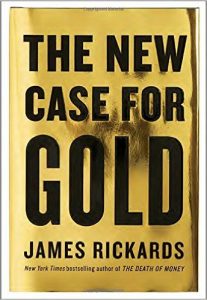
James Rickards, geopolitical and monetary expert and best selling author of the ‘The New Case for Gold’ has written an interesting piece for the Daily Reckoning on why he believes gold will reach $10,000 in the long term.


<img class="alignnone size-large" src="http://www.goldcore.com/ie/wp-content/uploads/sites/19/2017/03/gold-infl..." width="651" height="394" />


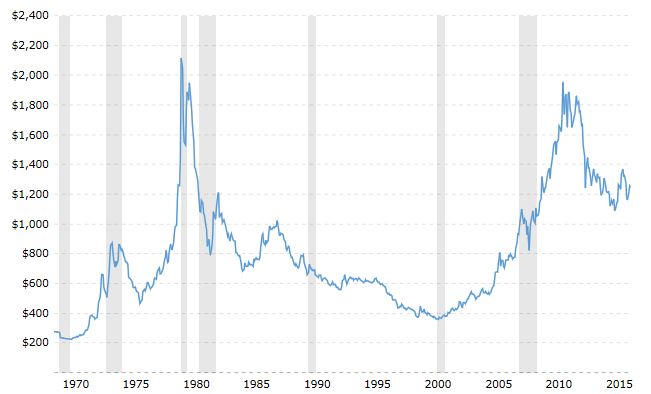
<em><strong>Gold in USD Adjusted for Inflation 1970-2017 – Macrotrends.net</strong></em>


He warns of the many systemic and geopolitical risks including the EU elections, from nuclear North Korea, tensions with Iran and <em>"rapidly rising tensions between the U.S. and increasingly powerful China in the South China Sea."</em>


<a href="http://www.goldcore.com/us/gold-blog/case-gold-wrong-james-rickards/" target="_blank">James Rickards</a> believes that the EU elections <em>"could potentially bring the future of the European Union into grave doubt"</em> and that the <em>"bottom line"</em> is that <em>"there are plenty of potential geopolitical shocks that could threaten the current system, in addition to existing concerns about a stock market collapse or debt crisis."</em>


<em><strong>"The time to prepare is now" </strong></em>advises Rickards.


<strong>From the <a href="https://dailyreckoning.com/path-10000-gold/?utm_source=hs_email&amp;utm_..." target="_blank">Daily Reckoning</a>:</strong>


<em>I believe the Fed is preparing to raise into weakness and will have to reverse course in April or May. What happens to gold then? It’s going to go higher again, because the Fed will cheapen the dollar, and that’s very bullish for gold. So I expect gold to take off in the spring and finish the year very strongly. It could challenge $1,300 or $1,400.</em>


<em>Now, as many of my readers know, my long-term forecast is for $10,000 gold. We’re obviously not there now. So how do I arrive at $10,000?</em>


<em>I want to give the basis for that forecast. I never give any forecast without giving the analysis behind it. Anybody can pull a prediction out if a hat. If you don’t have the analysis to back it up I’m not interested.</em>


<em>So let’s go through the math, because there is a solid mathematical basis for $10,000 gold. It’s actually the implied non deflationary price of gold under a gold standard.</em>


<em>The combined M1 money supply in the world is about 24 trillion dollars. That includes the United States, China, the Eurozone and Japan. Those four entities combine for over 70% of global GDP.</em>


<em>Now, the official gold in the world is about 33,000 tons. That’s not counting private gold, because private gold is not part of the money supply.</em>


<em>So if you wanted to restore a gold standard, how much gold do you need to back up the money supply? My estimate is about 40%.</em>


<em>Historically, central banks have run successful gold standards with less backing. In the 19th century, for example, the Bank of England only had about 20% gold backing. In most of the 20th century, the U.S. had 40% gold backing.</em>


<em><img class="alignnone size-large aligncenter" src="http://www.goldcore.com/us/wp-content/uploads/sites/7/2016/04/rickards_n..." width="207" height="300" />


I use the higher number, 40%, because I think a higher number might be needed to restore confidence in event of a collapse. The point is, 40% is a debatable, but reasonable figure.</em>


<em>Many people say there’s not enough gold to support the money supply. That’s one of the objections to gold standard. But my answer is that’s nonsense. There’s always enough gold to support the money supply. It’s a question of price.</em>


<em>Now, if you back 40% of the $24 trillion of money supply with the amount of official gold, it implies a gold price around $9,000 an ounce. But I predict $10,000.</em>


<em>So how do I arrive at $10,000 an ounce?</em>


<em>That’s because I expect central banks to print a lot more money by the time this issue comes to a head. So, by the time the printing presses stop running around the world, that $9,000 number will likely be in the range of $10,000.</em>


<em>The point is, $10,000 an ounce is not pie in the sky. It’s not a number I pulled out of a hat to get headlines. It’s the actual mathematical implied non deflationary price of gold. If you reintroduced a gold standard at a lower price, it would be deflationary. They’d have to reduce the money supply in order to bring it into alignment with the price of gold.</em>


<em>So I expect $10,000 is where gold will have to be, given the amount of official gold and the projected amount of printed money to give it 40% gold backing.</em>


<em>That’s the basis of my forecast. It’s rooted in history and sound monetary management. It’s rooted in simple mathematics. If anything, the number’s probably going to go higher. A year from now, that $10,000 figure might be even higher.</em>


<em>This is important because gold maintains a prominent place in the international monetary system, despite what elites say.</em>


<em>If gold is not money, if gold is not part of the monetary system, if gold is just a commodity that people trade, my analysis wouldn’t apply. But I believe that gold is money, and it always has been.</em>


<em>Gold has always been at the base of the international monetary system. To a certain extent it still is, whether or not central banks or the elites want to acknowledge it.</em>


<em>If gold was irrelevant, why does the U.S. have 8,000 tons? Why does the IMF have 3,000 tons? Why does Germany have 3,000 tons? Why has Russia tripled its gold supply in the last 10 years? Why has China more than tripled its gold supply in the last 10 years?</em>


<em>Why are they all hoarding and buying gold if it has no role in the monetary system?</em>


<em>The answer of course is that it does, but the monetary elites would just as soon not talk about <a href="http://www.goldcore.com" target="_blank">gold bullion</a>.</em>


<em>If you had the power of a central bank, why would you want gold to be part of the equation? It takes away their freedom to print money. Nobody kind of gives up power voluntarily, but they many not have a choice. A monetary system anchored to gold might be required to restore gold in event of another financial collapse.</em>


<em>The next question is, what’s the catalyst that could send gold soaring from today’s levels to $10,000 an ounce?</em>


<em>There are several potential catalysts.</em>


<em>It goes back to the avalanche metaphor I’ve used many times. Once enough snow builds up on the mountainside, it becomes unstable. At some point one snowflake will be the trigger that creates an avalanche.</em>


<em>Do you blame the snowflake or do you blame the instability of the system? The answer is you blame the instability of the system. One particular snowflake may have caused it, but the instability of the system is the real cause.</em>


<em>The current monetary system is unstable, the snow is piling up, and any number of snowflakes could trigger the avalanche. It’s hard to know exactly which one will be responsible, but it could be a geopolitical shock.</em>


<em>Iran recently deployed its navy to conduct exercises in all the important maritime choke points in the Middle East. President Trump has said if those Iranian speed boats get too close to our ships we’re going to blow them out of the water. We haven’t yet, as the navy’s rules of engagement have not permitted them to.</em>


<em>But now President Trump is apparently giving the green light. And the other day an American ship had to adjust course after an Iranian vessel came within 600 yards of it.</em>


<em>So with the Iranians testing us and the navy on full alert, how long will it be before there’s an incident where one of these boats is blown out of the water and maybe trigger something much larger?</em>


<em>That’s one example, but there are many others.</em>


<em>North Korea just conducted four ballistic missile tests that landed in the Sea of Japan. North Korean nuclear weapons will fairly soon be able to target the U.S, west coast. The U.S. is not going to allow that, and the State Department has said the U.S. is prepared “use the full range of capabilities at our disposal against this growing threat.” So we’ll probably have to attack North Korea if we can’t get China to rein them in.</em>


<em>The South China Sea is also another hotspot with rapidly rising tensions. China is flexing its muscles, pitting it against close American allies and American interests. One incident can easily escalate. There are many other geopolitical flashpoints that could trigger a major international crisis.</em>


<strong><em>Another triggering snowflake could be a natural disaster. Or it could be a political earthquake.</em></strong>


<em>The French elections are coming up over the course of two rounds in April and May. What if Marion Le Pen wins the election? I’m not forecasting that she’s going to win right now, but the market is underestimating her probabilities. We also have Netherland elections this month and German elections in October.</em>


<strong><em>The outcome of these elections could potentially bring the future of the European Union into grave doubt.</em></strong>


<strong><em>The bottom line is, there are plenty of potential geopolitical shocks that could threaten the current system, in addition to existing concerns about a stock market collapse or debt crisis.</em></strong>


<strong><em>The time to prepare is now.</em></strong>


<strong>"The Path to $10,000 Gold" can be <a href="https://dailyreckoning.com/path-10000-gold/?utm_source=hs_email&amp;utm_..." target="_blank">Read Here</a></strong>


<strong>


News and Commentary</strong>


<strong><a href="http://www.cnbc.com/2017/03/09/gold-is-suffering-its-longest-losing-stre...">Gold suffering its longest losing streak since last May—Some smell buying opportunity (CNBC.com)</a></strong>


<strong><a href="http://www.reuters.com/article/us-gold-investment-analysis-idUSKBN16H0I3">Bets on gold hold ground even as Fed rate hike looms large (Reuters.com)</a></strong>


<strong><a href="http://www.reuters.com/article/us-global-forex-idUSKBN16H020?il=0">Dollar on track for winning week as U.S. jobs data awaited, euro firm (Reuters.com)</a></strong>


<strong><a href="http://www.marketwatch.com/story/nikkei-leaps-amid-global-bond-selloff-2...">Nikkei leaps amid global bond selloff (MarketWatch.com)</a></strong>


<strong><a href="http://tucson.com/news/ron-paul-to-az-lawmakers-end-capital-gains-tax-on...">Ron Paul to AZ lawmakers: End capital gains tax on gold coins (Tucson.com)</a></strong>


<img src="http://www.goldcore.com/ie/wp-content/uploads/sites/19/2017/03/goldcore-..." />


<strong><a href="http://uk.businessinsider.com/a-huge-gold-rally-expected-in-spring-2017-...">Huge Gold Rally Expected In Spring 2017 (BusinessInsider.com)</a></strong>


<strong><a href="http://www.gold.org/research/indian-demand-will-recover-from-2016-lows">Indian demand will recover from 2016’s lows (Gold.org)</a></strong>


<strong><a href="http://www.platinuminvestment.com/news">2017 Platinum market deficit forecast increases (PlatinumInvestmnet.com)</a></strong>


<strong><a href="http://usawatchdog.com/noahs-flood-of-cash-coming-hugo-salinas-price/">Noah’s Flood of Cash Coming - Interview with Price (USAWatchDog.com)</a></strong>


<strong><a href="http://www.cnbc.com/2017/03/09/bond-yields-just-hit-the-level-that-bill-...">Bond yields just hit the level that Bill Gross said would signify a bear market (CNBC.com)</a></strong>


<a href="http://info.goldcore.com/7-real-risks-to-your-gold-ownership" rel="attachment wp-att-5047"><img class="alignnone wp-image-5047" src="http://www.goldcore.com/news/wp-content/uploads/sites/16/2016/03/7RealRi..." alt="7RealRisksBlogBanner" width="822" height="430" /></a>


<strong>Gold Prices (LBMA AM)</strong>


10 Mar: USD 1,196.55, GBP 983.56 &amp; EUR 1,127.15 per ounce


09 Mar: USD 1,204.60, GBP 991.39 &amp; EUR 1,140.64 per ounce


08 Mar: USD 1,213.30, GBP 997.70 &amp; EUR 1,149.00 per ounce


07 Mar: USD 1,223.70, GBP 1,003.56 &amp; EUR 1,157.62 per ounce


06 Mar: USD 1,231.15, GBP 1,004.74 &amp; EUR 1,162.82 per ounce


03 Mar: USD 1,228.75, GBP 1,005.12 &amp; EUR 1,168.05 per ounce


02 Mar: USD 1,243.30, GBP 1,013.17 &amp; EUR 1,181.14 per ounce


<strong>Silver Prices (LBMA)</strong>


10 Mar: USD 16.89, GBP 13.91 &amp; EUR 15.92 per ounce


09 Mar: USD 17.14, GBP 14.10 &amp; EUR 16.23 per ounce


08 Mar: USD 17.40, GBP 14.32 &amp; EUR 16.48 per ounce


07 Mar: USD 17.70, GBP 14.52 &amp; EUR 16.74 per ounce


06 Mar: USD 17.81, GBP 14.53 &amp; EUR 16.83 per ounce


03 Mar: USD 17.66, GBP 14.44 &amp; EUR 16.76 per ounce


02 Mar: USD 18.33, GBP 14.93 &amp; EUR 17.42 per ounce


<strong>


Recent Market Updates</strong>


<strong><a href="http://www.goldcore.com/us/gold-blog/silver-undervalued-historical-perpe...">- Silver Very Undervalued from Historical Perpective of Ancient Greece</a></strong>


<strong><a href="http://www.goldcore.com/us/gold-blog/gold-investing-101-beware-unallocat...">- Gold Investing 101 – Beware Unallocated Gold Accounts With Indebted Bullion Banks and Mints (Part II)</a></strong>


<strong><a href="http://www.goldcore.com/us/gold-blog/gold-investing-101-beware-ebay-coll...">- Gold Investing 101 – Beware eBay, Collectibles and “Pure” Gold Coins that are Gold Plated</a></strong>


<strong><a href="http://www.goldcore.com/us/gold-blog/think-prepare-euro-catastrophe/">- “Think About and Prepare For” Euro Catastrophe</a></strong>


<strong><a href="http://www.goldcore.com/us/gold-blog/silver-sale-4-fall-massive-2-billio...">- Silver On Sale – 4% Fall On Massive $2 Billion of Futures Selling</a></strong>


<strong><a href="http://www.goldcore.com/us/gold-blog/trump-avoid-debt-crisis-extremely-u...">- Trump Avoid Debt Crisis ? “Extremely Unlikely” – Rickards</a></strong>


<strong><a href="http://www.goldcore.com/us/gold-blog/art-market-bubble-bursting-gauguin-...">- Art Market Bubble Bursting – Gauguin Priced At $85 Million Collapses 74%</a></strong>


<strong><a href="http://www.goldcore.com/us/gold-blog/golds-value-weight-beauty-rarity-pe...">- Gold’s Value – Weight, Beauty, Rarity, Peak Gold and Secure Storage – Interview</a></strong>


<strong><a href="http://www.goldcore.com/us/gold-blog/oscars-debacle-movies-costly-dollar...">- Oscars Debacle – Movies More Costly As Dollar Devalued</a></strong>


<strong><a href="http://www.goldcore.com/us/gold-blog/gold-9-ytd-4th-higher-weekly-close-...">- Gold Up 9% YTD – 4th Higher Weekly Close and Breaks Resistance At $1,250/oz</a></strong>


<strong><a href="http://www.goldcore.com/us/gold-blog/oscars-worth-weight-gold/">- The Oscars – Worth Their Weight in Gold?</a></strong>


<strong><a href="http://www.goldcore.com/ie/gold-blog/gold-inflation-china-koos-jansen/">- Gold To Benefit from Rising Inflation and Higher Than “Official” China Gold Demand</a></strong>


<strong><a href="http://www.goldcore.com/us/gold-blog/russia-gold-buying-back-buys-one-mi...">- Russia Gold Buying Is Back – Buys One Million Ounces In January</a></strong>

Friday, February 17, 2017

Gold Paradox Recalls Bruce Lee’s Fighting (and Investing) Advice

Interested in precious metals investing? Email us HERE 


Written by Peter Diekmeyer (CLICK HERE FOR ORIGINAL)


World Gold Council data released earlier this month reveal a paradox. Demand hit 4,389 tons during 2016, but mines produced only 3,236 tons. Yet despite differing supply demand fundamentals, gold prices rose by only 9%. A supply squeeze that size, should have produced far bigger price action.


What gives?


As with many of life’s mysteries, a good place to start is with Chinese thinkers. No, not Confucius, Lao Tse, or even Sun Tzu. I am talking about Bruce Lee.


In a competitive investing world, in which price discovery, financial reporting and economic data are systematically distorted, the best parallels are with competitive boxing, which is governed by the Marquis of Queensbury rules, and a street brawl.


“When you talk about fighting with no rules,” said the late martial artist, in the lost Bruce Lee interview, “you had better learn to use every part of your body. Your feet. Your elbows. Thumbs. Everything.”


That sage advice increasingly applies to an investing world, in which supply-demand fundamentals, as measured by official statistics, don’t tell you much.


To avoid being fleeced, gold investors - indeed all investors - need to know a bit about everything. Some examples:


Economics and central bank manipulation


Most seasoned investors have caught on that the US Federal Reserve has been intentionally manipulating housing, bond, equities and other asset prices higher. Ben Bernanke, a former Fed chair, and Richard Fisher, former president of the Dallas Fed, have admitted as much.


Less well-known, as Bill Gross recently pointed out, is that while Fed manipulations have tapered off, European and Japanese central banks continue to buy $150 billion a month in assets.


This has swelled global balance sheets to $12 trillion and distorted prices throughout the system. Ten-year bond rates would be nearly 3.5% (instead of 2.45%) Gross suggests, without the manipulations.


If interest rates were 43% (1.05 percentage points) higher, this would bring down the implied value of stocks (by more than 30%, according to this writer’s back of the envelope calculation).


The question gold investors need to ask themselves is how long the central bank manipulations can continue. And which asset classes would best hold their value if current unconventional monetary policy proves to be a bust?


History: no fiat (printed) currency has ever survived


Good investors also need to know a bit about history, which today is taught by professors who grew up in the 1960s. Today’s crop of politically-correct academics teach that the most interesting thing about the Roman Empire, are its public baths, mosaics and approaches to women’s rights. Greece, for its part, is taught for its poetry, philosophy and rhetoric.


Hints regarding how these empires ruled much of the earth, for nearly 2,000 years, might be in a footnote somewhere.


Few ivy league professors today will explain what happened in both empires, and in 1780s France and 1920s Germany, when governments engaged in precipitous currency debasement, that recalls what we are starting to see in Western countries.


Before investing in gold, investors need to assess whether the yellow metal, which has acted as money for at least 3,000 years (many claim longer), has better staying power than paper and digital currency.


More important, how long will it take for the disparity to show?


Math: the US dollar has lost 98% of its value since 1933


Asking investors to learn math, which is so badly taught in Western schools, that the public is essentially innumerate, may be asking a bit much. But one example demonstrates its importance.


In 1933, just prior to the US government’s confiscation of Americans’ gold holdings, an ounce was worth US $20. Today (Feb 15th EOD) an ounce of gold is worth $1,234. That means a dollar buys less than 1/50th as much gold as it did back then (1.6%), and has lost more than 98% of its value.


Worse, almost all that decline occurred since 1971, when the United States, led by President Richard Nixon, defaulted on its international obligations to back the dollar with gold.


Before investing in gold, investors will need to assess whether US dollar debasement will continue, (in truth this is generally accepted) and calculate what pace that will occur.


******


Complexities surrounding outstanding derivatives contracts, ETFs, and other “paper gold,” complicate things even further. Many investors who have been following markets all their lives remain baffled.


That said, one question seems more straightforward. Does one trust all of one’s assets to a paper and digital-based system, run by politicians, central bankers and ivy-league economists?


Or does one hedge one’s portfolio with real economic assets, of the kind that Lao Tse, Confucius, Sun Tzu and Bruce Lee would understand?


Questions or comments about this article? Leave your thoughts HERE.


Written by Peter Diekmeyer (CLICK HERE FOR ORIGINAL)

Wednesday, February 8, 2017

Outraged Bill Gross Tweets "Incredible" That "Bankers Want Regulation Reduced To Increase Leverage"

With tweets now the most popular means of conducting policy, discussing ideas, or generally conveying outrage, moments ago Bill Gross chimed in on the Dodd-Frank overhauled when he tweeted that "Bankers want regulation reduced to increase leverage, 8 yrs after too-much-leverage almost sunk the country. Incredible!"


Then again, maybe Gross" outrage, whether real or feigned, is premature. As Bloomberg reported yesterday, Trump’s pledge to dismantle the Dodd-Frank financial overhaul is colliding with the same reality as his pledge to gut Obamacare: The Republican majority in Congress can’t decide how to make it happen and Democrats are vowing to fight.


Trump, who last month said Obamacare would be replaced “the same day or the same week,” or perhaps “the same hour,” acknowledged Sunday that the health-care law isn’t going away anytime soon. "We should have something within the year and the following year,” told Fox News’s Bill O’Reilly. The Dodd-Frank directive he signed Friday is hitting the same road block on Capitol Hill and at federal agencies.


The Dodd-Frank directive he signed Friday is hitting the same road block on Capitol Hill and at federal agencies. In both cases, Trump’s team has moved swiftly with a flurry of executive orders that largely promise action in the future. But Republicans in Congress aren’t close yet. On the House side, there’s no agreement on a plan to replace either Obamacare or Dodd-Frank. Even if they reach one soon, it’s almost certain to go beyond what Senate Republicans are likely to accept, and it won’t be able to attract Democratic votes. And putting forward new regulations will take years.


Trump’s executive action on Dodd-Frank has also galvanized Democrats to fight changes to a law enacted in response to the 2008 financial crisis. “This administration has unleashed a ‘Wall Street First’” agenda, House Minority Leader Nancy Pelosi of California told reporters Monday, calling Trump’s campaigning against Wall Street “a hoax -- just a hoax.”


Trump hasn’t said how long it’ll take to eliminate or water down Dodd-Frank, and even the White House is tacitly acknowledging that change will come slowly, allowing for a 120-day review period in the executive order before making changes.


Furthermore, should Trump get bogged down in legal challenges involving his immigration law, it may take a very long time before Bill Gross" nightmare is realized.