Showing posts with label food supply. Show all posts

Tuesday, March 13, 2018

Selco: What We Ate and How We Got Food When the SHTF

This report was originally published by Selco at The Organic Prepper


Editor’s Note: If a disaster is bad enough and lasts long enough, it isn’t going to take long before there is no food to be had. In this interview with Selco, he shares his real-life experiences and explains how people kept from starving to death when there was no food in the stores. ~ Daisy


How do you get food when there are no stores?


At the beginning of everything, most of the people did not have any significant “stash” of food in their homes.


In other words, the majority of common folks had food a or couple of days in their pantry and that was it. There were exceptions to that because the process of collapse did not happen in a few hours (in terms of suddenly there is no food in the stores).


When the chaos started, people looted stores after a short period of everyone buying things in a panic. Still, the majority of folks did not manage to get a decent stash of food from stores. Some did not want to believe that they were gonna need a stash. Others did not want to go out and participate in looting because it was dangerous. But I think the most obvious reason was that all food from stores was taken very fast.


In beginning period of SHTF, events unfold at a very fast pace. Actually, events go one after another so fast that if you find yourself lost in one event at the end of several events, you ask yourself, “Why in the name of God I did not go out and buy a whole bunch of food while I still could do that?”


Was gardening an option? If so, how did people protect their gardens?


Yes, it was an option, but the percentage of food from a garden was low because of a few reasons.


It was a city, without enough land for significant food growing, and the second reason is that even people who had some land (small gardens near houses) needed time to grow food there.


People usually did not grow food there in normal times, flowers, tea, maybe some particular kind of tomato, salad greens, and similar.


I remember going and checking gardens for tomatoes because people had tried some new sort of tomato close to their home, not as a way to have food, but as an attempt so they could see is if it was OK to have it somewhere before they had a bigger piece of land for growing (before SHTF in a peacetime).


So yes, gardening was an option, people used every part of the available land, but that was not enough, and it was like you are checking every day how your tomato is growing and you wait for it, but then you pick it and realize you have food for only a couple of days.


We were not prepared at the time to use every piece of land for food growing. It takes time to establish that.


Still, it was precious, and it was protected of course, just like your home, in the same way.


How often did MREs get dropped?


There was no schedule for food drops, at least no real schedule because it was all based on rumors like, “Tonight they are gonna drop food from airplanes.” If you asked, “Who told you that?” the answer was “a guy who heard it from guy who heard…” So, of course, it was completely based on luck.


Sometimes, it would “fall down” every second night, or you heard it had fallen somewhere, it would be “I heard it from a guy who heard it…”


Sometimes it was 3-4 times per week. Of course, they dropped it, but that does not mean we could find any of the food. Other people would simply grab it before you.


Some folks headed for the hills every night in order to wait. People would choose one guy from family to go up every night and wait.


If those food drops had any schedule there where they loaded planes (as I understand later, the place was in an air base in Italy) it was completely lost on us down in the city in the chaos and empire of rumors.


You need to understand that in that time those planes were not the only ones to fly, so sometimes we were out waiting for food but actually other planes bombarded us.


But very early we learned to recognize the low humming sound of food planes, distant but powerful.


Now when I look back, it is weird how we trusted some of that information. For example, if we heard that food was gonna be dropped that night in some particular part of the city, some small area of some hill, people would go there.


A reasonable man would have thought, “Oh, so some poor ragged guy in the middle of civil war and information blockade suddenly has info on where several huge military airplanes are gonna do some operation?” Not to mention the fact that the whole city together with all the hills looked to those people in the airplanes like small dots.


It was nonsense. But we were hungry, scared, and in the middle of chaos without any real information, so people trusted in a lot of things, especially in good news.


Do not underestimate the power of rumors in hard times.


“Food drops” were performed for many cities in this area during the hardest part of the war. They helped on different levels.


Even today I find one of the happiest sounds to be the sound of MREs raining on a hard surface. I did not know the technical details (and still don’t) of how exactly that worked, but most of the things that were dropped would break apart in the air, so on the ground, it would “rain”.


It was like a lottery to be in the middle of that rain because the MREs were good stuff, and valuable, but some of the bigger stuff coming down could kill people. (It happened with bigger packages).


MREs were meals all in one package: food, sweet stuff, matches, even that hot sauce that was pretty handy when we want to add taste to some weird food that we ate or to mask a bad taste.


What food were you able to forage?


When it comes to foraging for plants, I know it is a popular opinion in some circles that you can survive and live by foraging.


In terms of urban survival, it is, in my opinion, overestimated if you are an average man.


Maybe it would work if you have lots of knowledge about edible plants, and maybe if you have many resources of those plants and are in the wilderness.


We were average urban folks. Our knowledge about edible plants was limited to the one or two usable plants that could be used for homemade tea.


For example yes, we used pine needles for tea. It sounds great today, it is good healthy tea with vitamins and so on, but you can not live on it, it can be in addition to your food, but not your main resource.


Older folks jumped in with their knowledge. They were folks that in those times remembered WW2 and hunger, and people usually listened to them when it came to what plant you could use for food.


Plants like nettle and dandelion were used, and in the worst periods, people simply started to use any available grass mixed with small amount of flour.


Eating plants and herbs in that time was not a case of healthy living. It was a matter of not having anything else to eat. 


Were you able to scavenge for food from deserted buildings?


Yes.


When the SHTF, especially in the beginning, some houses became empty. People left or died inside (for whatever reason, for example, shelling). Then folks would go through the empty houses and scavenge for food.


One memory from that time is the endless stench of rotten food (there was no electricity for the fridges). In the beginning, you could find food on that way.


If you were lucky sometimes you could find a bigger amount of food. Sometimes you came upon a house where the ex-occupant clearly hoarded food in the first days of rioting.


That period of time did not last for long. The stench of rotten food was pretty much substituted with another kind of stench. Soon there were more dead people then spoiled food in the city.


But even later, you would never know what you could find in destroyed and abandoned houses. Maybe few cans of food hidden or forgotten somewhere under the rubble, or in a destroyed fridge.


One thing interesting from that period (when it comes to scavenging) and also very important in prepper terms is that I witnessed and was part of something that I can call the transition of scavenging or maybe resetting the values of goods.


It goes something like this:


First people ran riot on stores and looked for valuables like gold, money, TVs, stereos, cars…then as they realized the situation, they looked for weapons, fuel, then candles, batteries, and food, then they’d dig up some gardens for few potatoes.


People needed some time to realize what was really important. It didn’t take very long but sometimes even a few days or a week is important.


I have seen people running from a mall with items that, in few days, would become most ridiculous items to possess (and to take from a burning mall) in the middle of a collapse, things like a TV or a laundry machine or a music collection of a famous band.


The majority of people could not imagine what was coming, so they could not fathom that a bag full of AA batteries was gonna worth more than 50 laundry machines.


For example, the laundry machine was usable only to plug a hole in the wall from shelling or to reinforce the door.


I am not advocating that you go out rioting and taking stuff from malls and stores when SHTF, but let’s say that if you find yourself there, think about what is useful to take in prepper terms.


Here is one example: if the SHTF again here, there is parking machine in front of my home that gives you an automatic ticket when you sin here insert coins. As soon as I see someone busting it open to take money from inside I will go and take the small solar panel from it (it is solar power operated). While other people think about money inside, I am thinking about solar power on the outside of it.


Where you able to hunt or trap anything for meat?


It was the city, so hunting or trapping anything more complicated than a pigeon was not really an option. The other reason was that it was city in the middle of a war, so real trapping had its own complications like shelling, constant noises, and similar.


If your situation is extreme, hunting or trapping can be about trapping pigeons or shooting a stray dog. 


What are some things you can eat that most people wouldn’t think of as food?


It is a matter of levels. Sometimes I get questions over mail asking if we had cases of cannibalism, and the answer is no. People need to realize that the road to that extreme is very, very long.


There are many bad things to eat before getting to that extreme (even if you are willing to go there) and people do not realize that.


I ate spoiled and old food of different kinds, expired food (cans of cookies from military storages that were expired for decades), food with worms (cooked together with those expired cans), grass that was boiled in water, leaves from trees. We ate different kind of meat, pigeon for sure, and I am quite positive cat meat once, and rat meat once probably.


How did you extend food to make it feed more people?


Over time, it gets important to have some food, or in other words to have your belly “full” of something so easiest solutions were to water food down, or to mix it with plants.


In other words, we ate a lot of “soups.” For example, if we had a small amount of meat and rice, but we have water and some plants, we would make a big pot of soup.


In some cases it looked more like tea (a lot of hot water with a small amount of food inside) but it solved the problem of how to make something big out of small amounts of something.


When a situation is hard – when it is hard and demanding on both psychological and physical way – you cannot really ration yourself. You need to eat something, because of the simple fact that you can not operate if you are not fed. So we ate a lot of very low quality food, and yes we were always more or less hungry.


How did you cook food without power?


We cooked with fire, a stove that used wood, and often an open fire in the yard. It was a constant equation of heating and cooking with low wood resources.


For example if we needed to get a fire for heating it was used at the same time for cooking. (See Selco’s article on staying warm during a long-term SHTF scenario.)


A small open fire on the yard was used in weather when there was no need for heating.


Was there a black market for food?


Of course, and it was matter that changed all the time based what was available in the city at a given moment.


For example if food drops that week were good you could find MREs cheaper. Other times, all you could find was suspicious-looking meat cans without manufacture or expiration dates on them.


Nothing was fixed and for sure on black market, not even fact that you gonna survive the trade not to mention other things. (See Selco’s article on the dangers of barter and trade)


Again, it was a matter of levels, so there were people who “owned” the black market (people with strong organizations, firepower, and connections). Sometimes they dictated the “pricing” of food in the city, and sometimes there were common folks who could offered you few cans of meat or two MREs from their stash.


Sometimes you could run into a man who was offering you “powdered eggs” but in a dark, not secure environment (you are trading with unknown armed people for example), you needed to be sure it is not some useless powder.


There were scams and you needed to be sure who you were trading with, how secure the place was, and what you were actually trading for.


How much of your time was taken up with acquiring and preparing food?


It was a matter of economic thinking. It was not about making it delicious because we had scarce resources like wood for fire. and simply because often it was impossible to make it delicious.


It was brought down to the level of getting your stomach full of something so you can continue to operate one more day.


Things to know about eating when the SHTF


There are options of foraging for edible plants and hunting or trapping some animals in the city when the SHTF, but do not count on that as the main resource for your food, not in the long run.


Acquiring food in urban settings comes down to the idea of taking food from other people – either people that are not there anymore (empty houses) or people that are still there (through the trade or attack).


All of the above options (just like lot of other prepper activities when SHTF) usually are not fancy and romantic/friendly.


When scavenging through deserted places, you can get injured and that injury can get complicated when there is no medical care. During a trade, you can get scammed, ripped off, or simply attacked and injured or killed because of the resources you possess in that moment or due to a lack of careful planning.


By attacking other people to get food (if you find yourself that desperate or if you wish to go that way) you are risking, of course, being killed.


In the end, it comes again to the idea that you need to be prepared very well for SHTF with your stash of food or your small garden where you are gonna choose what to have and how to use it in the most efficient way. You should minimize the need to go out and scavenge, at least until, you figure out some things.


About the Author


Selco survived the Balkan war of the 90s in a city under siege, without electricity, running water, or food distribution. In his online works, he gives an inside view of the reality of survival under the harshest conditions. He reviews what works and what doesn’t, tells you the hard lessons he learned, and shares how he prepares today. He never stopped learning about survival and preparedness since the war. Regardless what happens, chances are you will never experience extreme situations like Selco did. But you have the chance to learn from him and how he faced death for months. Real survival is not romantic or idealistic. It is brutal, hard and unfair. Let Selco take you into that world. Read more of Selco’s articles here: https://shtfschool.com/blog/ And take advantage of a deep and profound insight into his knowledge and advice by signing up for the outstanding and unrivaled online course. More details here: https://shtfschool.com/survival-boot-camp/


The Pantry Primer


Please feel free to share any information from this article in part or in full, giving credit to the author and including a link to The Organic Prepper and the following bio.


Daisy Luther is the author of The Pantry Primer: A Prepper’s Guide To Whole Food on a Half Price Budget.  Her website, The Organic Prepper, offers information on healthy prepping, including premium nutritional choices, general wellness and non-tech solutions. You can follow Daisy on Facebook and Twitter, and you can email her at daisy@theorganicprepper.ca</e


Wednesday, February 14, 2018

How Our Dependence on Global Shipping Will Come Back to Bite Us

This article was originally published by Cat Ellis at The Organic Prepper


global-shipping


If the general public understood how vulnerable our reliance on global shipping made us, they’d all become preppers overnight. Trucks, planes, and cargo ships are responsible for just about everything modern life depends upon. This reliance on global goods and long-distance shipping puts us all at risk.


Our Dependence Upon Global Shipping


Modern shipping keeps us clothed and fed. It brings us necessary medicines, fuel to the pumps, and delivers chemicals necessary to municipal water treatment plants. It is truly amazing how seamless it all appears to the average consumer, especially considering shipping’s global scale.


That is until there is a problem. Problems can be anything from a trucker’s strike to a plane crashing to a cyber attack shutting down the largest global shipping company.


Global shipping is a necessary evil in a world where we rely on global goods. When companies take their manufacturing operations overseas, the first thing we think of is lost jobs. But, we also put access to those goods at risk. Some of these risks include:


  • Relations with China breaking down over North Korea.

  • Hackers taking down software (navigation, customer orders, inventory tracking, systems diagnostics, etc) on ships, planes, trucks, and at ports and command centers.

  • An EMP causing all electronic systems to cease working.

  • Employees of shipping companies across an industry going on an extended strike.

  • Deteriorating domestic infrastructure interfering with the delivery of goods.

  • War/terrorism anywhere in the world causing delays and lost shipments of imports/exports.


Just a 24-Hour Delay Causes Shortages


A perfect example of this is shipping fresh food to Alaska all year long. Alaskan grocery stores do what they can to stock Alaska-grown items on their shelves, but due to the climate, Alaskans rely on imported produce and goods. The Anchorage Daily News reported on the impact of a single ship being delayed by just 24 hours for a repair.


Here’s what one of their agriculture experts had to say about why Alaska imports so much of its food.


Much of Alaska’s food comes up by container ship over the water. Some also arrives via trucks that take the Alaska Highway, or by air freight.


“It’s cheaper to barge or fly it in than it is to grow it here,” said Stephen Brown, a Palmer-based district agriculture agent with the University of Alaska Fairbanks. “The problem with that is that creates a very fragile food supply that’s very easy to be disrupted.” (source)


Further into the above-linked article, a recent disruption came when a ship needed repairs before heading up to Alaska.


A Tote Maritime Alaska ship was the one that was late getting to Anchorage last week, due to a weld that required a repair by divers in Tacoma.


“When there are disruptions to that supply chain, things can become difficult rather quickly. That’s when you can start to see shelves looking a little bit thinner. … Nobody wants to buy 2-week-old strawberries that are half-rotten,” said Grace Greene, vice president at Tote Maritime Alaska. “Having a tight supply chain is really critical.”


Cyberattacks Can Shut Down Global Shipping


This isn’t just an Alaska problem. Disruptions in shipping can happen anywhere and on a much larger scale. Recently, global shipping giant, AP Moller-Maersk, was hit by a major ransomware attack. This left ships sailing off course and ports were unable to accept ships.


According to Reuters:


The cyber attack was among the biggest-ever disruptions to hit global shipping. Several port terminals run by a Maersk division, including in the United States, India, Spain, the Netherlands, were still struggling to revert to normal operations on Thursday after experiencing massive disruptions. (source)


This was a wake up call for many in the industry. The article goes on to say


“The Maersk attack raises our awareness of the vulnerability of shipping and ports to technological failure,” said Professor David Last, a previous president of Britain’s Royal Institute of Navigation.


“When GPS fails, ships’ captains lose their principal means of navigation and much of their communications and computer links. They have to slow down and miss port schedules,” said Last, who is also a strategic advisor to the General Lighthouse Authorities of the UK and Ireland. (source)


There’s a Shortage of Truck Drivers


Add to this that we are experiencing a shortage of truck drivers due to fewer people looking for work, plus increased shipping costs due to increased regulations. The CEO of Tyson foods says:


“These additional costs are included in our outlook,” he told investors and analysts Feb. 8. “However, we’re assuming we’ll recover the majority through” higher prices for consumers.


The tightness in the trucking market probably won’t ease any time soon. Employers can’t find enough drivers — at least at the wages companies want to pay — as low unemployment spurs competition from other industries.


Construction jobs, for example, pay on par or better and allow workers to be home more with their families. Long-distance truckers can be on the road for weeks at a time. (source)


If a kink in the chain develops, there are fewer people capable of stepping in when needed.


Imagine If Truckers Went on Strike


If long-haul truckers were to strike, the store shelves would be bare within days. Everything from food, medicines, toilet paper, to gasoline would disappear from store shelves. Life as we know it would come to a grinding halt.


Back in 2008, diesel fuel prices rose so high that truckers protested and rallied in cities across the US, threatening to go on strike.


Independent U.S. truckers are planning to stop hauling freight Tuesday in protest of record-high diesel prices that drivers say they can no longer afford.


Independent truckers, who constitute 90 percent of the nation’s trucking fleet, are being hit especially hard by soaring diesel prices and compensation lags far behind rising costs, according to the American Trucking Association. (source)


Thankfully, we didn’t experience a nationwide trucker strike that time. The economy was already on shaky ground as it was.


Just 5 days Until Chaos


So, how long would we really have? You need to check out this article with a video on how we only have about five days before things get really bad. Two quotes from the video really stood out to me. First:


“The growth and population in this country, and the need for the movement of goods and services, is literally going to overwhelm the infrastructure as we know it today.”


And the second quote:


“We are now investing a smaller percentage of our Gross Domestic Product in transportation infrastructure than many third world countries.”


This is a recipe for a disaster if I ever saw one. According to the video, here’s what our situation would look like within 5 days:


  • Day One– We lose resupply of food and medicines, mail stops, and hospitals run out of clean linens.

  • Day Two– Gas stations are running out of gas, sanitation systems start to fail, local stores and ATMs run out of cash.

  • Day Three– Pumps are out of gas, stores have no fresh produce, banks run out of cash, and hoarding begins in earnest.

  • Day Four– Emergency vehicles and public transport run out of fuel, airports close, and trash piles up in the streets.

  • Day Five– Chaos


Unless something changes, we will have more people needing more goods and services, and we won’t be able to get them because our infrastructure won’t be able to handle it.


How Would You Have Fared?


Had truckers gone on a nationwide strike, or if the Petya ransomware attack had interfered with Maersk shipping for more than a few weeks, how would you have held out?


Thankfully, most of the scenarios that would impact shipping are temporary, perhaps a few days to a few weeks. Having just a three-month stockpile of food and supplies would cover most emergencies, including shipping delays.


You can easily put three month’s worth of necessities aside by adding by buying an extra food item each trip for your pantry. As for your other supplies, look at the five days detailed above. Use that as a guide for what to stock up on.


Here are a few more things to keep in mind.


And finally, get more toilet paper than you think you need. There are options, like personal cloths, squeeze-bottle bidets, and scrap paper, but none of them are quite like toilet paper.


The more you localize your family’s supply chain, the better off you’ll be during a disruption.


Any other ideas for prepping for an interruption of shipping?


Let me know in the comments.


***


Cat Ellis is an herbalist,  massage therapist, midwifery student, and urban homesteader from New England. She keeps bees, loves gardening and canning, and practice time at the range. She teaches herbal skills on her website, Herbal Prepper. Cat is a member of the American Herbalists Guild, and the author of two books, Prepper’s Natural Medicine and Prepping for a Pandemic.


The Pantry Primer


Please feel free to share any information from this article in part or in full, giving credit to the author and including a link to The Organic Prepper and the following bio.


Daisy Luther is the author of The Pantry Primer: A Prepper’s Guide To Whole Food on a Half Price Budget.  Her website, The Organic Prepper, offers information on healthy prepping, including premium nutritional choices, general wellness and non-tech solutions. You can follow Daisy on Facebook and Twitter, and you can email her at daisy@theorganicprepper.ca


Saturday, September 9, 2017

‘Crapshoot’ — How Sewage Contaminates Our Food Supply

The documentary, “Crapshoot: The Gamble with Our Wastes,” produced by the National Film Board of Canada in 2003, investigates an important aspect of human life you likely give little consideration: sewage.  Do you know what happens to the water and other items after you flush the toilet or run water down the drain?


If you’ve never stopped to consider what happens after you turn off the faucet or put down the lid, this one-hourlong film will edify you. It may surprise you to learn the many negative consequences resulting from our so-called “modern system” of waste management.


The True Face of Sewage


Sewers are used all over the world. Through its miles and miles of underground pipe, sewers collect everything you send down the drain or flush down your sink. While waste management may seem simple from your vantage point as a single user, it is much more complicated and complex than you may imagine.


If you’ve ever toured your local waste treatment plant, you have likely seen the mechanical filter called a bar screen that is used to remove large items such as baby wipes, condoms, diapers, feminine-hygiene items, hairballs, paper towels, plastic wrappers and the like.


Although it is somewhat inconvenient, at least these items can easily be seen, gathered up and disposed of as landfill waste. Of greater concern are the items contained in sewage that cannot be seen with the naked eye, as well as the mixing of all kinds of items. As narrator, the late Ruth DeGraves reminds us of the variety of the wastes that conspire to make sewage a kind of “toxic soup:”


“Down into the sewer they go: factory run-off, thousands of new synthetic chemicals, organic chemicals, pharmaceuticals, storm overflow, food wastes, human excrement, vomit, detergents, industrial solvents, petroleum products, paints, oils, abattoir wastes, cleansers, asbestos, radioactive materials, heavy metals and dental and hospital wastes, to name a few.”


In case you are not familiar with the term “abattoir,” it is the technical term used for slaughterhouse. As such, abattoir wastes include byproducts from livestock operations such as animal blood, fat, feces, stomach contents, trimmings and urine. Not only is sewage an ugly, stinking mess, it also is dangerous due to the intermixing of all those types of waste.


But, most of us seldom think about it. Boston-based Laura Orlando, civil engineer and waste-reform advocate, estimates that up to 75 percent of the U.S. is connected to sewers. As such, she believes Americans have become desensitized to the potential risks involved. In reality, most people both appreciate the sewer system and take it for granted.


As noted by Orlando, “When we think about a drain that carries whatever we dump into the pipe and takes it somewhere else, it helps us forget about all of the dangerous things that can be in that pipe.”


Sewers: An Ancient Development of the Romans


According to DeGraves, the modern sewer system was a brainchild of the ancient Romans. She states: “The sewer was in its glory in ancient Rome. It was about a vision of being civilized, and to have sanitation meant to be civilized, dignified and ennobled. It was in classical Rome that the sewers were first built on a grand scale over 2,500 years ago.”


So enthralled were they with their invention, the Romans paid homage to a sewer goddess named Cloacina. She was so loved that Roman ruler Titus Tatius, a contemporary of Romulus, erected a statue of Cloacina near the famed sewer Cloaca Maxima (“Greatest Drain”).


This masterfully constructed sewer was established in the 6th  century and remains today. Like all sewers, notes DeGraves, the goal of the Cloaca Maxima centered around: “The collection and transport of wastes by the use of water. Quite simply, the idea has always been to use water to move our wastes downstream to where we are not.”


Historian and writer Carlo Pavia suggests the ancient Cloaca Maxima will always reign supreme in both historic and modern-day Rome. This is, in part, due to a famous Latin phrase attached to it, which when translated means: “The Cloaca is the vessel, the bowel of the city, which purges everything.” But, does the modern-day sewer really purge everything? Common sense, and the filmmakers, suggest otherwise.


Spewing Raw Sewage: Trouble in Our Global Waterways


It may surprise you to learn that not all sewage is treated. In cities around the globe, even in these modern times, raw sewage is still dumped into lakes, rivers and other waterways at sickening rates.


In India, raw sewage has been dumped continuously into the famed Ganges River since 1917. Once pristine waters now churn with chunks of animal and human excrement at inconceivable levels of toxicity. Here, pollution levels are estimated to be 340,000 times what is considered safe! Veer Bhadra Mishra, an engineer and Hindu priest who lives in Varanasi, India’s holiest city, notes the river, while not globally polluted, has local stretches that are highly toxic. Says Mishra:


“When we move from Tulsi Ghat towards the end of [Varanasi], more and more sewers join the river and more and more sewage flows into the river. The cumulative effect of all the city’s sewage flowing into the river is felt at the downstream point where the Yemuna meets the Ganges, [in the city of Allahabad]. At that confluence point, the river water is septic — practically no dissolved oxygen, brown-black water and methane bubbles you can see surfacing from the bottom.”


About the Ganges, The Sydney Morning Herald, states:1


Experts estimate that more than 3,000 million litres of untreated sewage from towns along the Ganges are pumped into the river every day. By the time it reaches Varanasi… it becomes a sewer, and the sixth most polluted river in the world. Scientists  … have found the river has a fecal coliform count of more than 1.5 million per 100 milliliters (ml) of water. Water regarded as safe for bathing should not contain more than 500 fecal coliform per 100 ml.”


Similar to the Ganges, the harbor in St. John’s, Newfoundland, Canada, was recipient of some 120 million liters (31.7-million gallons) of raw, untreated waste that was being pumped into it every day. The waste was so prominent, tourists frequently observed large flocks of seagulls scavenging for bits of floating human waste.


With such a large volume of input, local experts estimate at least 16 feet of excrement solids rest on the bottom of the harbor, effectively making it a gigantic toilet bowl. DeGraves estimates 80 percent of Canadian coastal communities dump their sewage raw. Said Bill Stoyles of the Atlantic Coastal Action Program, which focuses on environmental and sustainability issues related to watersheds and adjacent coastal areas:


“There’s a huge mound 20 feet high — a mound of crap just below the outfall that just keeps coming out. The solids, of course, drop to the bottom and pile up there, and the other stuff drifts away … We‘ve come so far, become so civilized, so how can we be … living in our own filth?”


Untold Types and Quantities of Toxic Chemicals Lurk in Sewage


Given the public’s general lack of education about sewage and sewage treatment, you may not realize how many toxic chemicals are lurking therein. Since the 1950s, which marked the introduction of chemicals into mainstream America, “countless new and unpredictable ingredients are being added to the sewage recipe,” DeGraves says. “The sewer has become a super highway for toxic wastes.”


Indeed, the average city generates millions of gallons of wastewater daily, containing many unknown types and untold quantities of hazardous components. The goal of sewage treatment is to attempt to clean the wastewater and then release it back into lakes, rivers and oceans.


While it is called “reclaimed water,” it’s anybody’s guess as to the effectiveness and safety of this practice. In the documentary, waste-reform advocate Abby Rockefeller expresses concern about what she calls “our radical disconnection between us and our waste.” In her opinion, most of us minimize the consequences of mixing our wastes together in the sewer. She notes:


“The fact that the consequences of our actions are not immediately connectable and we don’t see the trouble immediately, makes it extremely easy for people to go on with their behavior and not think about the effects. In fact, our entire culture — the educational system, the industrial system, the government system — all encourage people not to think about waste disposal.”


Sludge Anyone?


As part of the sewage treatment process, liquid waste and solid waste are separated. Liquids go on to become “reclaimed water,” while solids become known as “sludge.” According to the film, sewage treatment plants produce millions of tons of sludge every year, which in North America, depending on its intended application, may be known as:


  • Biosolids

  • Black gold

  • Compost

  • Nutricake

  • Sewage compost

  • Solid waste

As noted by DeGraves, Canada has embraced the notion of repackaging its sludge as fertilizer for application to farm and garden soil:


“We have embraced the idea of co-composting, wherein two big-city waste dilemmas are seemingly solved by mixing municipal garbage and sewage sludge. These waste materials undergo a ‘digestive process,’ and are packaged as ‘Nutriplus,’ a compost promoted for home gardens and agricultural use. Nutrient ingredients are listed on this mixed-waste product, but not the toxins or heavy metals.”


Orlando notes sludge was long considered to be a hazardous waste until “Part 503 rules recast it as a beneficial, nonhazardous substance.” (Part 503 refers to the U.S. Environmental Protection Agency’s laws and regulations pertaining to biosolids.) The reality is sewage treatment was never meant to clean or purify anything. Moreover, it should never have been suggested sewer treatment could or would result in by-products that are chemical-free, beneficial and safe for use by human beings. She emphasizes:


“It never started out that way, nor is it possible to make it that way. We end up in a treatment process with a very dangerous material that, most unfortunately, we are now putting into life cycles and on our land.”


While it is well-known that sludge contains an unknown and extensive array of chemical wastes, there is also intense pressure being felt by all kinds of entities to dispose of it. Within the industrialized world, it seems, the need to dispose of sludge and sewage waste is almost always prioritized above public health and safety.


Sludge Contaminates Soil and Threatens Human Health


According to Mother Jones,2 recycling sewage has become a big business, with trillions of gallons of the wastes Americans flush annually being processed into products that are spread on farms, gardens and lawns. They note:


“In theory, recycling ‘poop’ is the perfect solution to the one truly unavoidable byproduct of human civilization. Turning sewage into a potent, inexpensive fertilizer means cleaner rivers and oceans. But as sludge has spread across the country, so have concerns that it may cause as many environmental problems as it solves. In communities where sludge has been used, residents have reported ailments ranging from migraines to pneumonia, to mysterious deaths.”


Sweden has been called out as one nation that has made a direct link between sewage sludge and public health. One of the big concerns highlighted by Gunnar Lindgren, a chemical engineer from Goteborg, Sweden, centers on the presence of metals, such as copper, found in sludge. According to Lindgren:


“[T]he levels of metals is increasing very rapidly. Authorities know they have to accept the presence of metals because they desperately want to get rid of the sludge … Copper is one metal that is now presenting us with severe problems. It has risen to a level where it is a poison for the soils, as well as the organisms in the soils.”


What Mother’s Milk Reveals About the Negative Effects of Sludge


The turning point for Sweden’s handling of sludge reportedly stemmed from the discovery of flame retardants in it that were linked to Non-Hodgkin lymphoma. Of particular concern was the dramatic increase of flame retardants found in mother’s milk. Says Swedish oncologist Lennart Hardell of Orebro Regional Hospital:


“The concentration of brominated flame retardants in mother’s milk has been increasing. We have historical batches [of mother’s milk] in Sweden from the early 1970s, and at that time there were really low concentrations. Now the curve is going straight up, and the concentration of these flame retardants in mother’s milk is doubling every sixth year.”


Lindgren underscores a common-sense reality that whatever we put into our bodies, our water supplies and our sewer systems eventually comes out in the sludge. He states, “If you have a poison somewhere in an industry, you will have the poison in the sludge. … Sludge is a collection basket of all bad things.” Adds Swedish civil engineer Carl Lindstrom:


“If you say that broccoli is a healthy vegetable, the next question is: What is it grown [in]? Broccoli grown [in] one soil can be very good for you, but if the broccoli contains heavy metals, it can be very bad for you. To focus attention on what you eat, you have to go deeper into the question of what is actually in the food, and especially look at what is in the soil it was grown in.”


Is Your Food Grown in Sludge?


Sadly, nearly half of all sludge is applied to farmland, even though no one knows exactly what may be in the thick, wet mud. To sweeten the interest, sludge is often touted as a soil conditioner and it is routinely offered to farmers at no charge. Various forms of wastes find their way onto productive farmland under the guise of sludge-based fertilizers, including paper and pulp sludges, raw-septic waste and sewage sludge. About this sickening practice, Orlando comments:


“It says a lot about our culture to think we would even take the gamble to ruin our productive agricultural soil by applying a material that we know causes great harm. If we have any doubts at all, why risk putting it on our soil?”


In the U.S., sewage sludge used for fertilizer may contain a cocktail of pharmaceutical drugs due to the fact that many Americans take medications. These drugs are excreted in your waste and find their way into sewage-treatment plants, which typically don’t adequately remove such drugs. When the sludge is applied to farm or garden soil as fertilizer, the plants get exposed to the pharmaceuticals, sending them indiscriminately into the food supply.


After news about the potential dangers of sludge became public in Sweden and other countries in Europe, including Belgium and the Netherlands, authorities banned the spreading of sewage sludge on agricultural land. In the short term, Sweden turned to burying its sludge in the ground, focusing first on areas such as motorways that were perceived to be less-intrusive to human health.


Solar Aquatics: A Unique Approach to Waste Treatment


In Bear River, Nova Scotia, residents resorted to a totally different tactic. They addressed their sludge waste by installing a solar aquatics treatment system. In a bold move, they placed the end of the city’s sewer pipe in the center of town. By doing so, it was hoped sewer waste would remain top of mind for the community.


While this setup has not necessarily resolved all of their sewer and sludge-related issues, it certainly has made residents think more consciously about what is happening to their water and waste. Said Mark Van Zeumeren, former senior engineer with Environmental Design and Management, the company responsible for designing and installing the Bear River system in 1995:


“In the past, it was never in people’s mindset as to what happened to the water, what they were doing with it … Here, everyone’s keen to come down and walk through the system … They identify with their sewage now … This is their sewage and they have to deal with it.”


Solar aquatics is radically unique in that it employs plants and microbes to purify waste. Inside the greenhouse in the city of Weston, Massachusetts, 16 gravity-fed tanks brew sewage with the help of floating flora. Celery, cherry tomatoes, mint, primroses and water lilies, as well as a few fish and snails absorb contaminants. Phil Henderson, chief executive officer of Ecological Engineering Associates, which owns and operates the Weston greenhouse, shares a few of the advantages of solar aquatics:3


  • It produces half or less as much sludge as most industrial plants

  • Local residents much prefer living next to a greenhouse than a traditional waste treatment plant, which is generally thought to be an eyesore

  • It is a great learning tool for students and the community

Change Is Needed: Steps You Can Take to More Responsibly Handle Waste


No matter what kind of sewage treatment methods we may use to clean up after ourselves, certain problems will undoubtedly remain unless we determine to change our ways. Unless we change, most assuredly the habitual, daily use of all sorts of chemicals, medications and other toxic substances in our homes, industries and institutions will continue to burden our sewers.


While the film ended without a clear “call to action,” I would like to draw your attention to a few potential areas that may fuel your thinking about how you can become more engaged with, and responsible toward, waste and waste treatment. If each of us made just one small change, it would go a long way toward helping us to collectively “clean up our act.” Some areas to consider include:


  • Place baby wipes, condoms, diapers, feminine hygiene items, paper towels, plastic wrappers, so-called flushable wipes and the like in your garbage can; do not put them down your drain or toilet

  • Be sure to dispose of hazardous wastes such as motor oil, paints, pesticides, stains and varnishes, which can contaminate soil and water supplies, according to the directives issued by your local regulatory bodies; never flush them down drains or toilets

  • Discontinue or moderate your use of chemicals, fertilizerstoxic household cleaning supplies and pharmaceuticals; avoid disposing of them in drains or toilets

  • Take caution with respect to the amount of water, as well as the cleaning supplies, detergents and personal-care products, you use for car washing, laundry, lawn care and personal hygiene, because they introduce additional areas where contamination may occur

  • Keep leaves, trash and other debris out of storm sewers because those items are often deposited, untreated, directly into natural waterways, which may be a source of your drinking water

– Sources and References

Thursday, August 24, 2017

What Will You Eat When Your Garden Is A Flop?

What Will You Eat When Your Garden Is A Flop? | dead-garden | Agriculture & Farming Off-Grid & Independent Living Organic Market Classifieds PreparednessSurvival


I love growing my own vegetables. I spend many fulfilling hours outside every summer, tending to my plants, nurturing my soil, and babying things along, with the birds for music and a basket full of delicious organic food to show for it each day.


Except this year. This year, my garden is a flop.


Daisy’s 2015 garden catastrophe


It’s pretty embarrassing to admit on my own website that my garden is not doing diddly squat this year. I am normally pretty good at growing food (or just extraordinarily lucky) but this year, circumstances beyond my control have thrown up one challenge after another.  First of all, we moved July 1. I started my garden in containers, earlier in the summer, and then transplanted them into my lovely new fenced garden full of raised beds.


Only, the fences weren’t high enough, and unbeknownst to me, I had set up a deer buffet with a low hurdle. Garden #1, GONE. Decimated. Wiped out. And I didn’t even get venison in retribution.


So, I went and got some new plants and put them in. Better late than never. I deer-proofed and nurtured my soil and paid top dollar for plants that were a bit more advanced, since by now it was the first week of July.


And then a heatwave hit the day after I transplanted them. 107 degrees. Most of the plants withered immediately and no amount of TLC would bring them back.


I was determined that I would have at least SOME vegetables and bought even more plants. I added some shadecloth to protect them from the sun. I fed them some white sugar to help them recover from the transplant shock. They’re growing but not providing me with a whole lot of produce, for numerous reasons, including heat, a late timeline, and slightly low phosphorus in my soil.


Aggravating. I’m a wannabe farmer shopping at the farmer’s market to get my summer veggies. Not cool.


But, like everything in life, there’s a lesson here. It got me thinking about all of the folks whose master plan for survival is a big stockpile of seeds. While this is a very important part of a long-term self-reliance plan, there are some years, no matter how many silver bells and cockleshells you put out, your contrary garden just won’t grow.


It’s going to happen. One year, your gardening season is not going to live up to your expectations. Have you thought about what you’ll eat when your garden flops?


Troubleshooting a garden that is not thriving


I’ve written a lot about adaptability as a survival mechanism and this holds true with your vegetable garden as well.  When a major part of your survival plan is growing your own food, being able to identify and overcome issues with your plan is vital.


Experience. The number one key to troubleshooting your iffy garden is experience. Many people make a survival plan without any practical skills to back it up. Have you gardened before? Have you gardened in the area in which you intend to survive? If you haven’t, you aren’t going to be able to predict the pitfalls, like deer fencing that isn’t high enough, too much direct afternoon sun, not enough direct afternoon sun, etc.  This is the major reason for my gardening failure this year. All of this stuff is learned by (often painful) experience. Keep a gardening journal to help avoid repeating those mistakes and to keep track of trends, like late frosts, etc. So get out there and get dirty. No excuses. If you don’t do it now, you can’t expect to survive doing it.


Soil testing.  A huge part of successful gardening happens before you ever plant a seed. You need to know all about your soil so that you can amend it and provide the right foundation for growing. It’s best if you amend before planting but you can still have some success after the fact.  Every bit as important as your seeds is a soil-testing kit. Get a kit that tests for soil pH, nitrogen, phosphorus and potash content.  I like this kit because it has 10 tests for each substance. The price is very reasonable (it’s geared towards classroom instruction) so get a few for your stockpile. This way, if the S hits the F, you can still have access to the science that you need to troubleshoot  successfully.


Soil Amendments.  Once you’ve done your testing, you will need the supplies to amend your soil to optimum nutrient levels.  Find some books on DIY soil amendments and stock up on supplies that you might need to adjust where your soil is lacking. If your goal is gardening for survival, it’s very important to learn to amend your soil without a trip to the garden store. For example, blossom end rot is caused by a lack of calcium in the soil. This can be improved by adding milk to the roots of your plants, then deeply watering them, or making a tea from crushed eggshells. Learn about the safe management of manure, composting, and the use of cover crops.


Access to information.  Right now, we have the luxury of the internet. With the help of Google and YouTube, we can find the answers to nearly any gardening question we might have. But in a long-term survival situation, it won’t be that easy. It’s almost a guarantee that if you are in a scenario during which your vegetable garden is all that stands between you and malnutrition, you aren’t going to have access to the internet.


My bookcase is loaded with reference books on topics like gardening, herbalism, and other old-fashioned skills. Join me by going old school. Get yourself some well-reviewed gardening books. These are some of my very favorites:


Also, check out the highlighted links in the soil amendment section above for more excellent books. (Some of them are available for free on Amazon’s Kindle Unlimited program, but I strongly recommed hard copies of books that you find useful.)


Make sure you have back-ups for a bad season.


While my plan is to eventually be able to grow much of what we need for survival, I’m also prepared for a bad year. While the items above will help you through many gardening issues, there are some things that are completely beyond human control. Things like:


  • Bad weather, either too hot, too cold, to rainy, or too dry

  • Pests – who remembers that book in the Little House series where Pa’s fields were descended upon by a horde of hungry locusts?

  • Natural disasters – wildfires, terrible storms, tornadoes – all of those can wipe out a garden

There’s absolutely nothing you can do about certain events. And that’s why you must have a Plan B. A stockpile of long-term food is essential for surviving when the deck is stacked against you.


There are numerous different ways to go about building your food supply (which I go over in my book, The Pantry Primer), but the basics are:


For more information, check out this article: 12 Strategies for Creating the Perfect Pantry.


Have you ever had a bad garden year?


This year, I’m very thankful that I have lots of homesteader friends and an excellent farmer’s market, as I navigate my new gardening environment. (You can find a local farmer’s market HERE.) I still have some stuff left over from last year’s harvest, and of course, my stockpile, but this year’s harvest is looking like it’s going to be disappointing.


As with any preparedness scenario, thinking through it ahead of time can help us maneuver through the situation more easily if it happens in the midst of a crisis. Have you ever had a similar bad gardening year? What are some of the causes I may not have covered? Pests? Weather? An act of nature? Were you able to overcome it, and if so, how did you do it?


Please share your answers in the comments below. You just might be resolving someone else’s garden issues!

Monday, July 31, 2017

BPA Continues To Pervade Food Supply

BPA Continues To Pervade Food Supply | bpa-graphic-_Zerbor_-_Fotolia.com_ | Environment Special Interests Toxins


BPA, or bisphenol-A, is an endocrine disruptor you’ve likely heard about a few times on this blog. It’s been shown to mimic hormones in the body–namely estrogen–and contribute to hormone imbalance. According to a new survey of over 250 brands of canned food, nearly 50% of respondents reported using BPA in their products. [1] Around 109 of those surveyed did not respond, so the percentage of those who use the chemical compound may be even higher.


The Troubling Facts about BPA


Because of its numerous uses in products like food packaging, dental sealants, and even paper receipts, BPA is ubiquitous in the environment. Virtually everyone on the planet has trace amounts of BPA in their body at any given time. Research into BPA has found that the chemical compound has links to cardiovascular disease, cancer, and even obesity. [2] Could BPA, along with diet and other factors, be a contributor to these disease epidemics?


Food manufacturers are not required to disclose that they use BPA in the lining of their canned foods, so it can be challenging at times to discern between brands that do contain the compound versus those that don’t. Generally, BPA-free labels will give it away, but be aware that the substitutes used to replace BPA may be just as bad. BPS, or bisphenol-S, is a common replacement that has been shown to promote similar health effects.


What Can I Do?


In order to reduce your BPA and BPS consumption, the best thing would be to eat more whole foods and become less reliant on processed or packaged foods. Make your meals from recipes that only use fresh, whole, living foods, and ditch foods that come in boxes, cans, and jars. If you are going to use a processed food that has the BPA-free label, contact the company to make sure they’re using safer substitutes for BPA. Also, a 9-step body cleanse may be helpful for reducing toxic compounds like BPA.


Were you aware of BPA and its pervasiveness in our world? What do you do to avoid it? Let us hear your thoughts in the comments below!


References:


  1. Brian Bienkowski. Survey of canned-good brands finds hormone-mimicking compound still widely used. Environmental Health News.

  2. Vom Saal FS, Nagel SC, Coe BL, Angle BM, Taylor JA. The estrogenic endocrine disrupting chemical bisphenol A (BPA) and obesity. Mol Cell Endocrinol. 2012 May 6;354(1-2):74-84. doi: 10.1016/j.mce.2012.01.001.

Tuesday, May 30, 2017

The Cheap And Easy Way To Build A 30-Day Food Supply

The Cheap And Easy Way To Build A 30-Day Food Supply

Image source: Flickr / Creative Commons


One of the first steps in prepping your family for an emergency is setting up a 30-day food supply.


This may seem like an expensive task, but it can be affordable – and east — if you do it the right way.


Store What You Eat


One way to get your 30-day supply of food going is to store 30 days worth of the things you already eat. Some people will get around this via the prepackaged route with a prepackaged 30-day supply of food, but this is a mistake. Your first 30 days should be made up of the food from your everyday pantry.


This takes no special ordering or online researching — just your normal shopping trips to the local store. Fresh food, of course, is so much better for you, but we are talking about storing food. Fresh food just doesn’t keep.


One for You and One for a Friend


Another way you can build your 30-day supply is through a “one for you and one for a friend” approach. That is, for each grocery trip, buy your regular groceries and buy a couple of the same things for your emergency food supply. An extra can of tuna, an extra can or two of veggies, and some extra oatmeal only adds a couple dollars to your bill.


Just 30 Grams Of This Superfood Provides More Nutrition Than An Entire Meal!


If you are consistent about it, soon you will have quite a stash of extra food. Then, look at all your extra stuff, figure out where you are short, and concentrate on adding to that area.


Don’t Forget Comfort Food


The Cheap And Easy Way To Build A 30-Day Food Supply

Image source: Flickr / Creative Commons


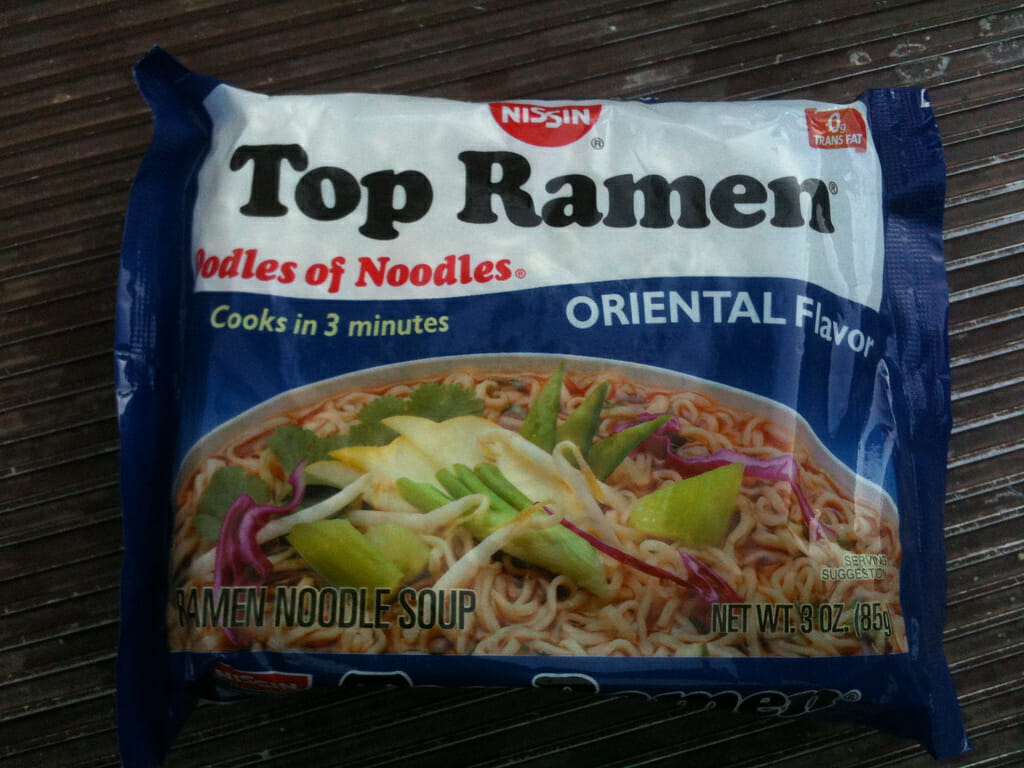
How many of us lived on Ramen noodles when we were first out on our own? Ramen is cheap and stores well, but it has hardly any food value. But it can be used as a base for a large pot of soup with a couple cans of veggies thrown in.


Comfort food does have value in that it will help make things a little more normal in an otherwise stressful situation. Stress can keep people from eating when they need it most, so store up chocolate, candy, chips or other things that usually wouldn’t be on such a list. Just don’t overdo it.


Don’t forget condiments and spices, along with any special foods your family likes to eat.


How Much Water?


Experts tell us we need to store one gallon of water per person per day. I know from personal experience (during an ice storm) that I didn’t use nearly that much in the short term with no power to run the well. In the long-run, though, water usage would have gone up as more cleaning would have been necessary.


Most homes have at least 40 gallons of water stored in the hot water heaters. You can also buy a bladder that fits in your bathtub to fill when you think there will be an outage.


When you want store-bought water, be sure to buy the higher-quality jugs, since the milk-jug type will start degrading and leaking in a short time.


Record Keeping and Rotation


If you are truly storing what you eat, then rotation will be a simple thing. Get a Sharpie and write the month/year on the top of each can as you put it away. Do the same for any boxed dry foods that you use on a regular basis.


When you cook your daily meals, just use the oldest date first. Then your “storage” food will always stay fresh.


A 30-day supply of food can be yours with just a little thought and planning. A small effort now can mean 30 days of food security for you and your family.


What advice would you add on storing 30 days of food? Share your thoughts in the section below:

Saturday, May 13, 2017

America’s Food Supply Chain Is Fragile. I Learned That The Hard Way.

America’s Food Supply Chain Is Fragile. I Learned That The Hard Way.

Stock photo.


I stopped at a supermarket recently to pick up a few items. I live out in the country and stay pretty well stocked up on food and supplies most of the time, but I keep a running list and make a habit of crossing items off it whenever I happen to be in town.


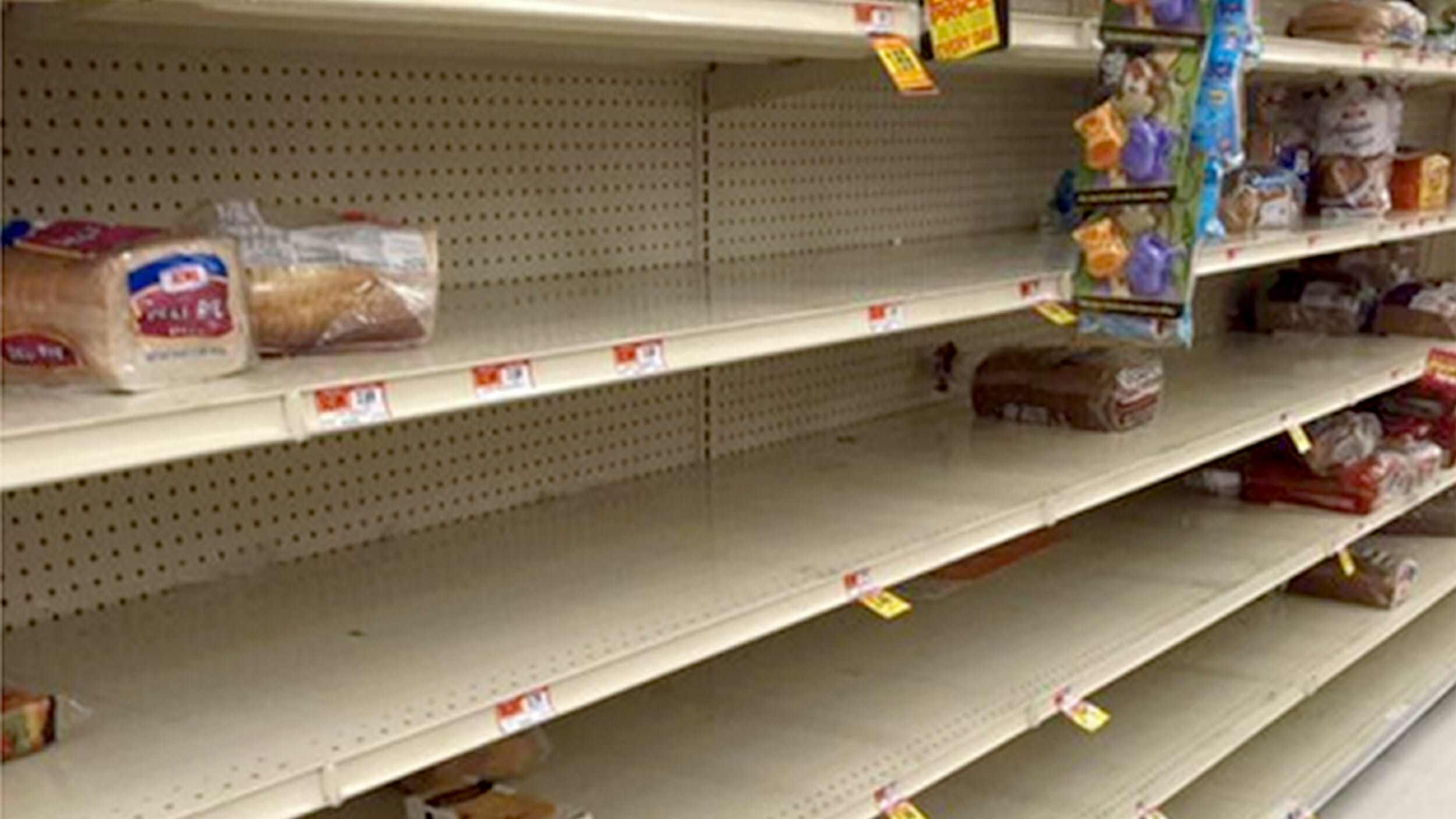
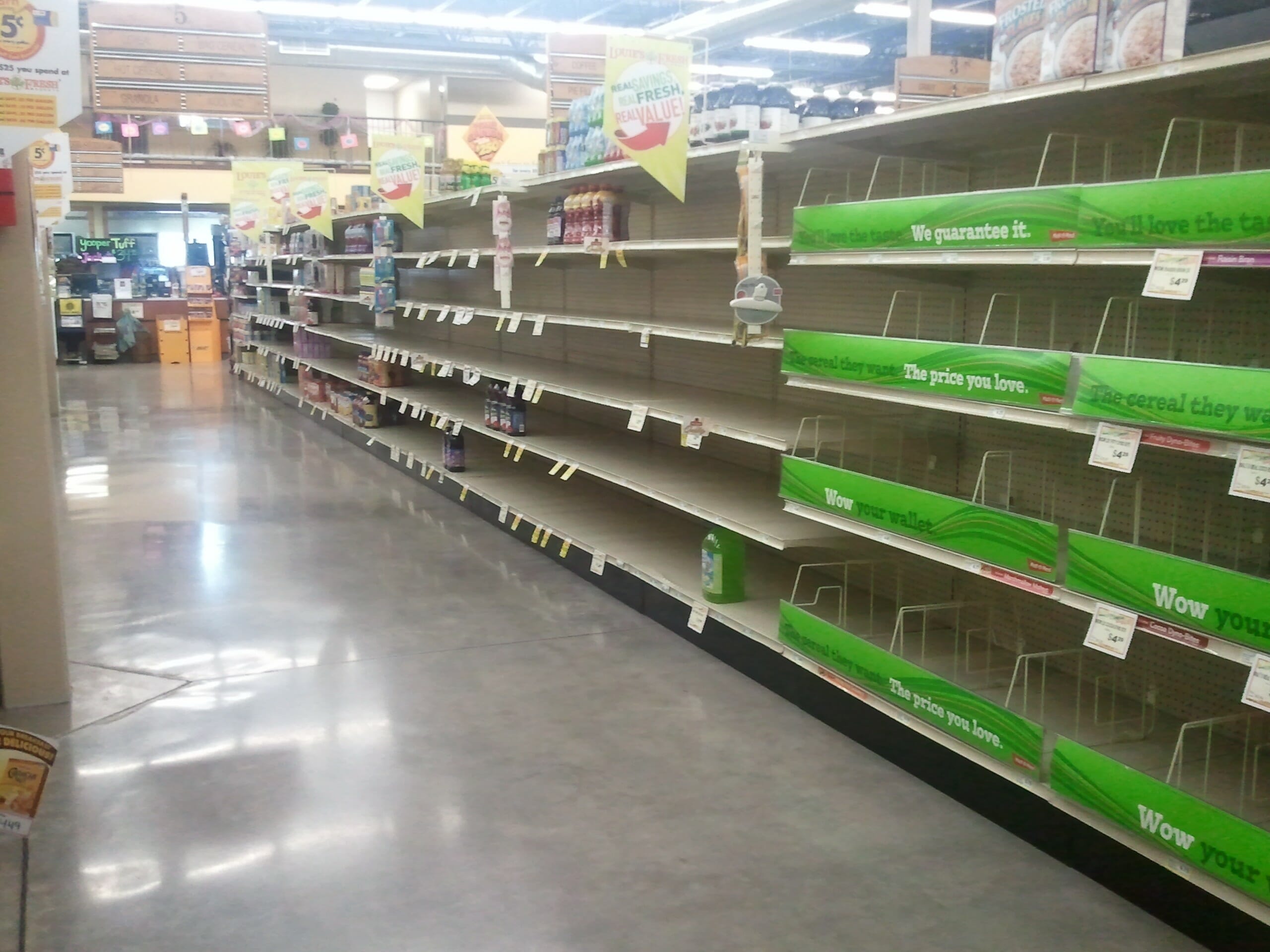
I walked into the produce section and encountered a shocking scene. Instead of the mounds of fresh fruits and vegetables piled high like I’m accustomed to seeing, I instead was met with the sight of bare wooden shelves.


An expanse of empty shelves in a big regional chain store is unnerving. We all realize that it does happen in extenuating circumstances, such as a blizzard or hurricane. And it is not unusual to find very few choices of hams available the day before Easter or the hot dog buns sold out on the Fourth of July weekend. But to find produce suddenly stripped bare on a random Spring day? Americans are not used to that.


I had seen temporary signs posted in the entrance, asking customers to excuse the appearance inside and citing the reason to be a recent warehouse fire further south, but had not paid them any real attention. In a first-world society where goods are easily acquired and food is abundant, we can afford to be dismissive of such notifications.


Just 30 Grams Of This Survival Superfood Provides More Nutrition Than An Entire Meal!


Or can we?


America’s Food Supply Chain Is Fragile. I Learned That The Hard Way.A store worker advised me that it could be another few days before a shipment of fresh produce and other goods arrived. I often joke that where I live, in a rural area of a rural state, is “at the end of the food chain.” Food travels a long way to reach my grocery stores, often the width of the continent, sometimes leaving me with the choice of two-week-old peppers or rock-hard peaches. Even after crossing the state line, deliveries are made to stores in the handful of smaller cities further south before getting to my neck of the woods.


It Was Right Here in America


Suddenly, it was no joking matter. The warehouse fire made me realize what it really means to be at the end of the line.


“Wow,” I exclaimed to my husband after leaving the store. “It felt like I had stepped into Argentina.”


It could have been any food-insecure place on the planet. But it was right here in America, in a place where people expect to have access to anything and everything, all the time.


There was nothing urgent on my list, and I knew there was a full pantry of canned and frozen goods at home. Being unable to purchase the food on my list that day was nothing more than an inconvenience for me.


But it was jarring to be faced with empty shelves, and it led me to ponder what-ifs. What if the fire had been at a major regional hub instead? What if it had been something with an even greater impact, such as a widespread power outage or a couple of major highway bridges washed out by floods or a damaging earthquake?


If I had been scared, I would have run through the produce section and scooped up everything I saw, from rutabaga to endive, whether it was on my list or not. But then again, if I had been scared, chances are other people would have been scared, too. If the situation had been serious, there might have already been a run on the store by the time I arrived, cleaning out not only the fresh foods but the cereal and canned corn and boxed stuffing mix and frozen pineapple and everything else, as well. What then?


America’s Food Supply Chain Is Fragile. I Learned That The Hard Way.It is widely believed that grocery stores stock only three or four days’ worth of food at any given time. Modern transportation and computerized inventory management are generally considered reliable strategies for the 21st century.


If the three-day inventory rule is accurate, it is likely calculated using sales during normal conditions. In case of an emergency, there is no way to know how long the store’s goods would last.


Are Most Americans Prepared?


Another what-if I considered is this: even during the minor interruption of food supply that did occur, what if my cabinets were bare and my refrigerator empty? It was just a few days, and there were still plenty of alternative food choices in the store. And there are other grocery chains—although most towns within an hour’s drive have only the one—so it still would not have been truly life and death. But for those large numbers of people who do not keep at least three days’ worth of food on hand, something as small as a regional warehouse fire could have a significant impact.


The Next Generation In Solar Backup Generators Is Finally Here!


This tiny little glitch in the food supply chain was a powerful wake-up call — even for me, a person already cognizant of possible shortages enough to consider myself something of a prepper. The experience of being surprised by empty shelves on an otherwise normal day made the concept of true disaster feel real somehow, and drove home how very fragile our food supply chain really is.


I wonder if most Americans are truly aware of how very close to the precipice we live our lives. A look around the world at empty store shelves and looting and long lines — waiting for basic food supplies — should prompt us to acknowledge that it really could happen to us. A severe weather event, a worker strike, a drought, a flood, an electronic mishap, a grid-down situation — any number of things could come between us and our ability to attain affordable food, with little or no warning.


Of the many reasons for stocking up and being prepared for the unexpected, people sometimes overlook the simplest and most likely to happen scenarios. But these events can be extremely valuable. They can remind us that emergencies can and do happen when we least expect them and help us remain aware of our own need to keep an adequate household food supply on hand.


Food insecurity on a wide scale may be less likely here in America than in many other corners of the globe, but it is folly to be so complacent as to assure ourselves that it can never happen here. My recent encounter with temporarily bare shelves is an excellent testament to the importance of being prepared for the unexpected, from the tiniest of inconveniences to absolute disaster.


Do you agree or disagree? Have you ever experienced empty shelves? Share your thoughts in the section below: