Showing posts with label Musical Chairs. Show all posts

Wednesday, September 27, 2017

Why Political Correctness Fails (When What We Know "For Sure" Is Wrong)

Authored by Gail Tverberg via Our Finite World blog,


Most of us are familiar with the Politically Correct (PC) World View. William Deresiewicz describes the view, which he calls the “religion of success,” as follows:


There is a right way to think and a right way to talk, and also a right set of things to think and talk about. Secularism is taken for granted. Environmentalism is a sacred cause. Issues of identity - principally the holy trinity of race, gender, and sexuality - occupy the center of concern.


There are other beliefs that go with this religion of success:


  • Wind and solar will save us.

  • Electric cars will make transportation possible indefinitely.

  • Our world leaders are all powerful.

  • Science has all of the answers.

To me, this story is pretty much equivalent to the article, “Earth Is Flat and Infinite, According to Paid Experts,” by Chris Hume in Funny Times. While the story is popular, it is just plain silly.


In this post, I explain why many popular understandings are just plain wrong. I cover many controversial topics, including environmentalism, peer-reviewed literature, climate change models, and religion. I expect that the analysis will surprise almost everyone.


Myth 1: If there is a problem with the lack of any resource, including oil, it will manifest itself with high prices.


As we reach limits of oil or any finite resource, the problem we encounter is an allocation problem. 
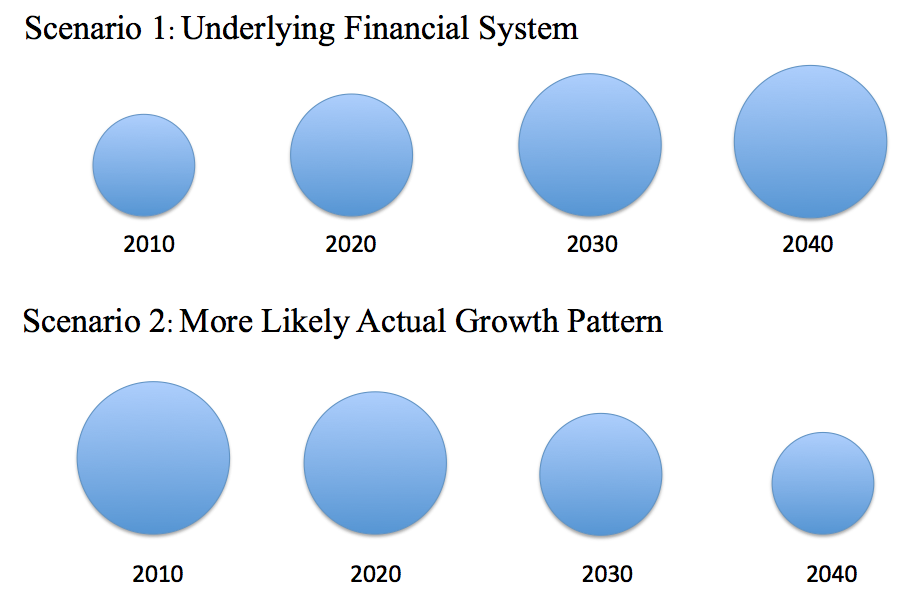

What happens if economy stops growing

Figure 1. Two views of future economic growth. Created by author.


As long as the quantity of resources we can extract from the ground keeps rising faster than population, there is no problem with limits. The tiny wedge that each person might get from these growing resources represents more of that resource, on average. Citizens can reasonably expect that future pension promises will be paid from the growing resources. They can also expect that, in the future, the shares of stock and the bonds that they own can be redeemed for actual goods and services.


If the quantity of resources starts to shrink, the problem we have is almost a “musical chairs” type of problem.


Figure 2. Circle of chairs arranged for game of musical chairs. Source


In each round of a musical chairs game, one chair is removed from the circle. The players in the game must walk around the outside of the circle. When the music stops, all of the players scramble for the remaining chairs. Someone gets left out.


The players in today’s economic system include


  • High paid (or elite) workers

  • Low paid (or non-elite) workers

  • Businesses

  • Governments

  • Owners of assets (such as stocks, bonds, land, buildings) who want to sell them and exchange them for today’s goods and services

If there is a shortage of a resource, the standard belief is that prices will rise and either more of the resource will be found, or substitution will take place. Substitution only works in some cases: it is hard to think of a substitute for fresh water. It is often possible to substitute one energy product for another. Overall, however, there is no substitute for energy. If we want to heat a substance to produce a chemical reaction, we need energy. If we want to move an object from place to place, we need energy. If we want to desalinate water to produce more fresh water, this also takes energy.


The world economy is a self-organized networked system. The networked system includes businesses, governments, and workers, plus many types of energy, including human energy. Workers play a double role because they are also consumers. The way goods and services are allocated is determined by “market forces.” In fact, the way these market forces act is determined by the laws of physics. These market forces determine which of the players will get squeezed out if there is not enough to go around.


Non-elite workers play a pivotal role in this system because their number is so large. These people are the chief customers for goods, such as homes, food, clothing, and transportation services. They also play a major role in paying taxes, and in receiving government services.


History says that if there are not enough resources to go around, we can expect increasing wage and wealth disparity. This happens because increased use of technology and more specialization are workarounds for many kinds of problems. As an economy increasingly relies on technology, the owners and managers of the technology start receiving higher wages, leaving less for the workers without special skills. The owners and managers also tend to receive income from other sources, such as interest, dividends, capital gains, and rents.


When there are not enough resources to go around, the temptation is to use technology to replace workers, because this reduces costs. Of course, a robot does not need to buy food or a car. Such an approach tends to push commodity prices down, rather than up. This happens because fewer workers are employed; in total they can afford fewer goods. A similar downward push on commodity prices occurs if wages of non-elite workers stagnate or fall.


If wages of non-elite workers are lower, governments find themselves in increasing difficulty because they cannot collect enough taxes for all of the services that they are asked to provide. History shows that governments often collapse in such situations. Major defaults on debt are another likely outcome (Figure 3). Pension holders are another category of recipients who are likely to be “left out” when the game of musical chairs stops.


Figure 3 – Created by Author.


The laws of physics strongly suggest that if we are reaching limits of this type, the economy will collapse. We know that this happened to many early economies. More recently, we have witnessed partial collapses, such as the Depression of the 1930s. The Depression occurred when the price of food dropped because mechanization eliminated a significant share of human hand-labor. While this change reduced the price of food, it also had an adverse impact on the buying-power of those whose jobs were eliminated.


The collapse of the Soviet Union is another example of a partial collapse. This collapse occurred as a follow-on to the low oil prices of the 1980s. The Soviet Union was an oil exporter that was affected by low oil prices. It could continue to produce for a while, but eventually (1991) financial problems caught up with it, and the central government collapsed.
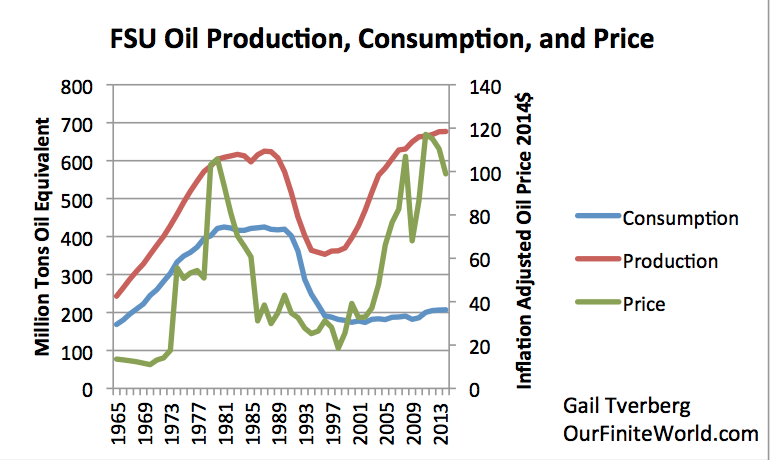

Figure 4. Oil consumption, production, and inflation-adjusted price, all from BP Statistical Review of World Energy, 2015.


Low prices are often a sign of lack of affordability. Today’s oil, coal, and natural gas prices tend to be too low for today’s producers. Low energy prices are deceptive because their initial impact on the economy seems to be favorable. The catch is that after a time, the shortfall in funds for reinvestment catches up, and production collapses. The resulting collapse of the economy may look like a financial collapse or a governmental collapse.


Oil prices have been low since late 2014. We do not know how long low prices can continue before collapse. The length of time since oil prices have collapsed is now three years; we should be concerned.


Myth 2. (Related to Myth 1) If we wait long enough, renewables will become affordable.


The fact that wage disparity grows as we approach limits means that prices can’t be expected to rise as we approach limits. Instead, prices tend to fall as an increasing number of would-be buyers are frozen out of the market. If in fact energy prices could rise much higher, there would be huge amounts of oil, coal and gas that could be extracted.


Figure 5. IEA Figure 1.4 from its World Energy Outlook 2015, showing how much oil can be produced at various price levels, according to IEA models.


There seems to be a maximum affordable price for any commodity. This maximum affordable price depends to a significant extent on the wages of non-elite workers. If the wages of non-elite workers fall (for example, because of mechanization or globalization), the maximum affordable price may even fall.


Myth 3. (Related to Myths 1 and 2) A glut of oil indicates that oil limits are far away. 


A glut of oil means that too many people around the world are being “frozen out” of buying goods and services that depend on oil, because of low wages or a lack of job. It is a physics problem, related to ice being formed when the temperature is too cold. We know that this kind of thing regularly happens in collapses and partial collapses. During the Depression of the 1930s, food was being destroyed for lack of buyers. It is not an indication that limits are far away; it is an indication that limits are close at hand. The system can no longer balance itself correctly.


Myth 4: Wind and solar can save us.


The amount of energy (other than direct food intake) that humans require is vastly higher than most people suppose. Other animals and plants can live on the food that they eat or the energy that they produce using sunlight and water. Humans deviated from this simple pattern long ago–over 1 million years ago.


Unfortunately, our bodies are now adapted to the use of supplemental energy in addition to food. The use of fire allowed humans to develop differently than other primates. Using fire to cook some of our food helped in many ways. It freed up time that would otherwise be spent chewing, providing time that could be used for tool making and other crafts. It allowed teeth, jaws and digestive systems to be smaller. The reduced energy needed for maintaining the digestive system allowed the brain to become bigger. It allowed humans to live in parts of the world where they are not physically adapted to living.


In fact, back at the time of hunter-gatherers, humans already seemed to need three times as much energy total as a correspondingly sized primate, if we count burned biomass in addition to direct food energy.


Figure 6 – Created by author.


“Watts per Capita” is a measure of the rate at which energy is consumed. Even back in hunter-gatherer days, humans behaved differently than similar-sized primates would be expected to behave. Without considering supplemental energy, an animal-like human is like an always-on 100-watt bulb. With the use of supplemental energy from burned biomass and other sources, even in hunter-gatherer times, the energy used was equivalent to that of an always-on 300-watt bulb.


How does the amount of energy produced by today’s wind turbines and solar panels compare to the energy used by hunter-gatherers? Let’s compare today’s wind and solar output to the 200 watts of supplemental energy needed to maintain our human existence back in hunter-gatherer times (difference between 300 watts per hour and 100 watts per hour). This assumes that if we were to go back to hunting and gathering, we could somehow collect food for everyone, to cover the first 100 watts per hour. All we would need to do is provide enough supplemental energy for cooking, heating, and other very basic needs, so we would not have to deforest the land.


Conveniently, BP gives the production of wind and solar in “terawatt hours.” If we take today’s world population of 7.5 billion, and multiply it by 24 hours a day, 365.25 days per year, and 200 watts, we come to needed energy of 13,149 terawatt hours per year. In 2016, the output of wind was 959.5 terawatt hours; the output of solar was 333.1 terawatt hours, or a total of 1,293 terawatt hours. Comparing the actual provided energy (1,293 tWh) to the required energy of 13,149 tWh, today’s wind and solar would provide only 9.8% of the supplemental energy needed to maintain a hunter-gatherer level of existence for today’s population. 


Of course, this is without considering how we would continue to create wind and solar electricity as hunter-gatherers, and how we would distribute such electricity. Needless to say, we would be nowhere near reproducing an agricultural level of existence for any large number of people, using only wind and solar. Even adding water power, the amount comes to only 40.4% of the added energy required for existence as hunter gatherers for today’s population.


Many people believe that wind and solar are ramping up rapidly. Starting from a base of zero, the annual percentage increases do appear to be large. But relative to the end point required to maintain any reasonable level of population, we are very far away. A recent lecture by Energy Professor Vaclav Smil is titled, “The Energy Revolution? More Like a Crawl.”


Myth 5. Evaluation methods such as “Energy Returned on Energy Invested” (EROI) and “Life Cycle Analyses (LCA)” indicate that wind and solar should be acceptable solutions. 


These approaches are concerned about how the energy used in creating a given device compares to the output of the device. The problem with these analyses is that, while we can measure “energy out” fairly well, we have a hard time determining total “energy in.” A large share of energy use comes from indirect sources, such as roads that are shared by many different users.


A particular problem occurs with intermittent resources, such as wind and solar. The EROI analyses available for wind and solar are based on analyses of these devices as stand-alone units (perhaps powering a desalination plant, on an intermittent basis). On this basis, they appear to be reasonably good choices as transition devices away from fossil fuels.


EROI analyses don’t handle the situation well when there is a need to add expensive infrastructure to compensate for the intermittency of wind and solar. This situation tends to happen when electricity is added to the grid in more than small quantities. One workaround for intermittency is adding batteries; another is overbuilding the intermittent devices, and using only the portion of intermittent electricity that comes at the time of day and time of year when it is needed. Another approach involves paying fossil fuel providers for maintaining extra capacity (needed both for rapid ramping and for the times of year when intermittent resources are inadequate).


Any of these workarounds is expensive and becomes more expensive, the larger the percentage of intermittent electricity that is added. Euan Mearns recently estimated that for a particular offshore wind farm, the cost would be six times as high, if battery backup sufficient to even out wind fluctuations in a single month were added. If the goal were to even out longer term fluctuations, the cost would no doubt be higher. It is difficult to model what workarounds would be needed for a truly 100% renewable system. The cost would no doubt be astronomical.


When an analysis such as EROI is prepared, there is a tendency to leave out any cost that varies with the application, because such a cost is difficult to estimate. My background is in actuarial work. In such a setting, the emphasis is always on completeness because after the fact, it will become very clear if the analyst left out any important insurance-related cost. In EROI and similar analyses, there is much less of a tieback to the real world, so an omission may never be noticed. In theory, EROIs are for multiple purposes, including ones where intermittency is not a problem. The EROI modeler is not expected to consider all cases.


Another way of viewing the issue is as a “quality” issue. EROI theory generally treats all types of energy as equivalent (including coal, oil, natural gas, intermittent electricity, and grid-quality electricity). From this perspective, there is no need to correct for differences in types of energy output. Thus, it makes perfect sense to publish EROI and LCA analyses that seem to indicate that wind and solar are great solutions, without any explanation regarding the likely high real-world cost associated with using them on the electric grid.


Myth 6. Peer reviewed articles give correct findings.


The real story is that peer reviewed articles need to be reviewed carefully by those who use them. There is a very significant chance that errors may have crept in. This can happen because of misinterpretation of prior peer reviewed articles, or because prior peer reviewed articles were based on “thinking of the day,” which was not quite correct, given what has been learned since the article was written. Or, as indicated by the example in Myth 5, the results of peer reviewed articles may be confusing to those who read them, in part because they are not written for any particular audience.


The way university research is divided up, researchers usually have a high level of specialized knowledge about one particular subject area. The real world situation with the world economy, as I mentioned in my discussion of Myth 1, is that the economy is a self-organized networked system. Everything affects everything else. The researcher, with his narrow background, doesn’t understand these interconnections. For example, energy researchers don’t generally understand economic feedback loops, so they tend to leave them out. Peer reviewers, who are looking for errors within the paper itself, are likely to miss important feedback loops as well.


To make matters worse, the publication process tends to favor results that suggest that there is no energy problem ahead. This bias can come through the peer review process. One author explained to me that he left out a certain point from a paper because he expected that some of his peer reviewers would come from the Green Community; he didn’t want to say anything that might offend such a reviewer.


This bias can also come directly from the publisher of academic books and articles. The publisher is in the business of selling books and journal articles; it does not want to upset potential buyers of its products. One publisher made it clear to me that its organization did not want any mention of problems that seem to be without a solution. The reader should be left with the impression that while there may be issues ahead, solutions are likely to be found.


In my opinion, any published research needs to be looked at very carefully. It is very difficult for an author to move much beyond the general level of understanding of his audience and of likely reviewers. There are financial incentives for authors to produce PC reports, and for publishers to publish them. In many cases, articles from blogs may be better resources than academic articles because blog authors are under less pressure to write PC reports.


Myth 7. Climate models give a good estimate of what we can expect in the future.


There is no doubt that climate is changing. But is all of the hysteria about climate change really the correct story?


Our economy, and in fact the Earth and all of its ecosystems, are self-organized networked systems. We are reaching limits in many areas at once, including energy, fresh water, the number of fish that can be extracted each year from oceans, and metal ore extraction. Physical limits are likely to lead to financial problems, as indicated in Figure 3. The climate change modelers have chosen to leave all of these issues out of their models, instead assuming that the economy can continue to grow as usual until 2100. Leaving out these other issues clearly can be expected to overstate the impact of climate change.


The International Energy Agency is very influential with respect to which energy issues are considered. Between 1998 and 2000, it did a major flip-flop in the importance of energy limits. The IEA’s 1998 World Energy Outlook devotes many pages to discussing the possibility of inadequate oil supplies in the future. In fact, near the beginning, the report says,


Our analysis of the current evidence suggests that world oil production from conventional sources could peak during the period 2010 to 2020.


The same report also mentions Climate Change considerations, but devotes many fewer pages to these concerns. The Kyoto Conference had taken place in 1997, and the topic was becoming more widely discussed.


In 1999, the IEA did not publish World Energy Outlook. When the IEA published the World Energy Outlook for 2000, the report suddenly focused only on Climate Change, with no mention of Peak Oil. The USGS World Petroleum Assessment 2000 had recently been published. It could be used to justify at least somewhat higher future oil production.


I will be the first to admit that the “Peak Oil” story is not really right. It is a halfway story, based on a partial understanding of the role physics plays in energy limits. Oil supply does not “run out.” Peak Oilers also did not understand that physics governs how markets work–whether prices rise or fall, or oscillate. If there is not enough to go around, some of the would-be buyers will be frozen out. But Climate Change, as our sole problem, or even as our major problem, is not the right story, either. It is another halfway story.


One point that both Peak Oilers and the IEA missed is that the world economy doesn’t really have the ability to cut back on the use of fossil fuels significantly, without the world economy collapsing. Thus, the IEA’s recommendations regarding moving away from fossil fuels cannot work. (Shifting energy use among countries is fairly easy, however, making individual country CO2 reductions appear more beneficial than they really are.) The IEA would be better off talking about non-fuel changes that might reduce CO2, such as eating vegetarian food, eliminating flooded rice paddies, and having smaller families. Of course, these are not really issues that the International Energy Association is concerned about.


The unfortunate truth is that on any difficult, interdisciplinary subject, we really don’t have a way of making a leap from lack of knowledge of a subject, to full knowledge of a subject, without a number of separate, partially wrong, steps. The IPCC climate studies and EROI analyses both fall in this category, as do Peak Oil reports.


The progress I have made on figuring out the energy limits story would not have been possible without the work of many other people, including those doing work on studying Peak Oil and those studying EROI. I have also received a lot of “tips” from readers of OurFiniteWorld.com regarding additional topics I should investigate. Even with all of this help, I am sure that my version of the truth is not quite right. We all keep learning as we go along.


There may indeed be details of this particular climate model that are not correct, although this is out of my area of expertise. For example, the historical temperatures used by researchers seem to need a lot of adjustment to be usable. Some people argue that the historical record has been adjusted to make the historical record fit the particular model used.


There is also the issue of truing up the indications to where we are now. I mentioned the problem earlier of EROI indications not having any real world tie; climate model indications are not quite as bad, but they also seem not to be well tied to what is actually happening.


Myth 8. We don’t need religion; our leaders are all knowing and all powerful.


We are fighting a battle against the laws of physics. Expecting our leaders to win in the battle against the laws of physics is expecting a huge amount. Some of the actions of our leaders seem extraordinarily stupid. For example, if falling interest rates have postponed peak oil, then proposing to raise interest rates, when we have not fixed the underlying oil depletion problem, seems very ill-advised.


Everything I have seen indicates that there is a literal Higher Power governing our world economy. It is the Laws of Physics that govern the world economy. The Laws of Physics affect the world economy in many ways. The economy is a dissipative structure. Energy inputs allow the economy to remain in an “out of equilibrium state” (that is, in a growing state), for a very long period.


Eventually the ability of any economy to grow must come to an end. The problem is that it requires increasing amounts of energy to fight the growing “entropy” (higher energy cost of extraction, need for growing debt, and rising pollution levels) of the system. The economy must come to an end, just as the lives of individual plants and animals (which are also dissipative structures) must come to an end.


People throughout the ages have been in awe of how this system that provides growth works. We get energy from the sun. This solar energy helps grow our food. It allows the physical growth of humans. It allows the growth of ecosystems and of economies. Humans, ecosystems, and economies seem permanent, but eventually they all must collapse. In physics terms, they are all dissipative structures.


Humans have been in awe of the self-organizing property permitted by flows of energy for as long as humans have had the ability to think abstract thoughts. These flows allow a newly created whole to be greater than the sum of their parts. For example, babies start from a small beginning and mature into adults. Musical notes go together to form recognizable melodies. Physical movements go together to form dances. Awe for this phenomenon seems to be one of the origins of religion.


Another reason for religions is a need for hierarchical structure within an economy. We know that animal groups very often have “pecking orders.” Adding a god provides a convenient way of adding a “top level” to the pecking order. Of course, if leaders can convince members of the group that they are all knowing and that science can provide all of the answers, then the top level provided by religion is not needed.


A third reason for religions is to help align the thoughts of members in a particular way. Most of us are aware of the power of magnetized materials.
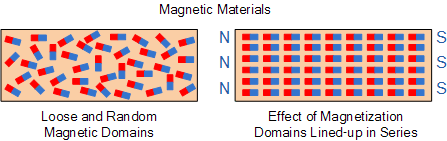

Figure 7. Source.


To some extent, the same power exists when the belief systems of groups of people can be aligned in the same direction. For example, teachers find it much easier to teach large groups of students, if parents have emphasized the importance of school and the need for respect for teachers. A military leader can attack another country, if soldiers follow orders. A group of generally uncivilized people can learn the benefit of working with others, if proper instruction is given.


What has been astounding to me, as I have looked into the situation, is that the scientific evidence seems to point in the direction of a literal Higher Power governing our Universe. It is not clear whether this higher power is the Laws of Physics, or whether it is some outside “God” that created the Laws of Physics.


In the past, many researchers assumed that the Universe was a closed energy system, irreversibly headed toward a cold, dark end. Recent research indicates that the Universe is ever-expanding, and in fact, seems to be expanding at an accelerating rate. While individual dissipative structures are constantly encountering more and more entropy, the universe as a whole is perhaps expanding rapidly enough to “outrun” growing entropy. Thus, it can behave as an always-open system. This always-open energy system allows many types of objects to self-organize and grow, at least for a time. These objects behave as dissipative structures, each having a beginning and an end.


We really don’t know whether the Universe had a beginning. Some research suggests that it did not. Others believe it began with a Big Bang.


Within the Universe, the earth seems extremely unusual. In fact, it is not clear that there is any other planet that has exactly the right conditions for complex life. A recent American Scientist article discusses this issue. The book Rare Earth: Why Complex Life Is Uncommon in the Universe points out the huge number of coincidences that were necessary for complex life to form and flourish.


Within the Earth, and perhaps within the Universe as a whole, human economies are the most energy-dense form of structure found.
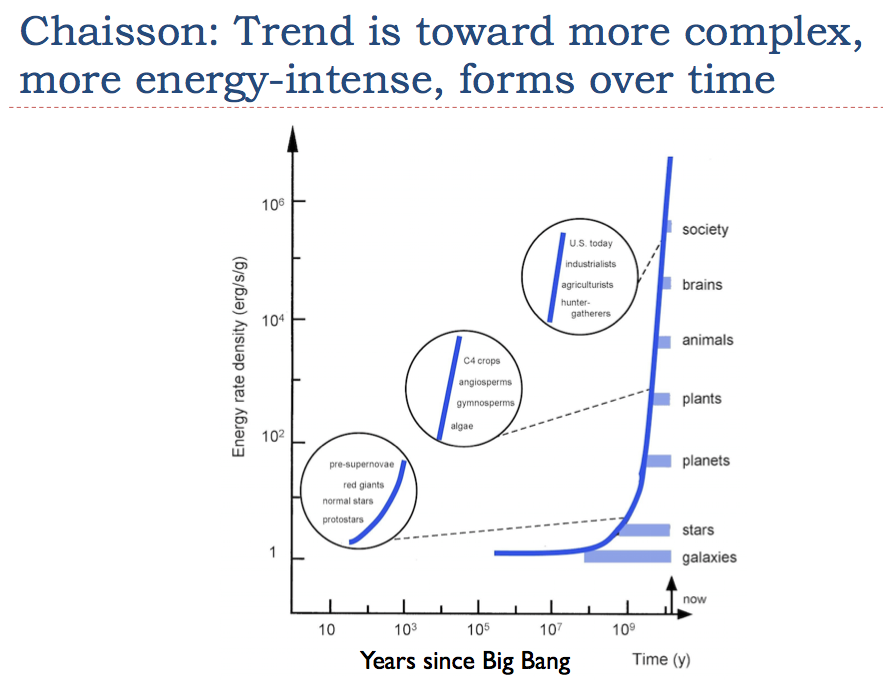

Figure 8. Image similar to ones shown in Eric Chaisson’s 2001 book, Cosmic Evolution: The Rise of Complexity in Nature.


Thus, in some sense, we humans and our economies may, in some sense, represent the current upper bound on development in the Universe.


We humans live on Earth. It is easy for us to think that our primary purpose in life is to care for and protect the Earth. Unfortunately, with our need for supplemental energy, this is not possible. Even at an early date, our need for resources exceeded what was sustainable. Joshua (in Joshua 17:14-18 relating to the period around 1400 BCE) instructs the tribes of Joseph to clear the trees from the hill country to have enough land for his tribe. This practice was clearly unsustainable; it would lead to erosion of the soil on hilltops. Even at that early date, high population and the need for resources to provide for this high population was conflicting with earth’s sustainability.


If our God is either the Laws of Physics, or some force giving rise to the Laws of Physics, then our God is really the God of the Universe. The limitations of the current Earth are no problem. God (or the Laws of Physics) could create a new Earth, or 1 million new Earths, if He chose to. Thus, from God’s point of view, it is not clear that there is any point to today’s environmentalism. There is a need not to poison ourselves, but “saving the earth” for other species after humans, or for a new set of humans who somehow will use much less energy, doesn’t make much sense. Humans can’t use much less energy; even if we could, our energy use would always be on an upward slope, headed to precisely where we are now.


There are many things that we can’t know for certain. Does this God want/expect us to worship him? Does this God plan an afterlife for some or all of the humans on Earth today? Obviously, if God (or the Laws of Physics) could create the Earth, God could also create other structures as well–possibly a “Heaven.” It is not clear to me that any one of today’s religions has a monopoly on insights regarding what is expected. A person might argue that we need not worry about religion at all, except for the fellowship it provides and the insights it offers regarding how early people coped with their difficulties.


Myth 9. The texts of religious groups around the world are literally true.


The texts of religious groups are true in the same sense that peer reviewed scientific literature is true. They represent, more or less, the best thinking of the day on a particular subject. This certainly does not mean that they are literally true.


We need to read religious texts in the context that they were written. In the earliest days, religious texts represented stories that people passed down from one generation to the next. These stories represented insights that these early people had gained. No one at that time was too concerned about authorship. If a story says, “God said,” it could also mean, “We think that this is something that God might have said.”


Literary styles were very different, back in an era before people pretended to have scientific knowledge. People created stories illustrating some aspect of a particular phenomenon. These stories were not supposed to fully describe what happened. This is why Genesis features two different creation stories.


The Bible makes liberal use of hyperbole and exaggeration. It is hard for people who are not familiar with the original language to understand how stories were intended to be interpreted. Is the concept of Hell added, primarily to provide a contrast to Heaven? In the Old Testament, the number of words in the ancient Hebrew language is much smaller than in today’s languages. This, by itself, makes direct translation difficult.


The earliest religious stories explained how God was perceived at that time. As people became more settled, their views changed. People were getting more “civilized.” Population densities were rising. The best beliefs in an early period may not have had relevance for a later period. This is why most religions have had reformers. Sometimes new writings are added. At other times, the way the writings are interpreted changes. This is why there seems to be a bizarre progression of stories from the Old Testament to the New Testament; new stories needed to be added to supplement and replace old ways of thinking.


Some of the things that early people discovered have not been understood by environmentalists. Genesis 1:28 says,


God blessed them and said to them, “Be fruitful and increase in number; fill the earth and subdue it. Rule over the fish in the sea and the birds in the sky and over every living creature that moves on the ground.”


The early people had figured out that humans were indeed different from other animals and plants. Their use of supplemental energy gave them power over other creatures. Their numbers could (and indeed, did) increase. Early authors were documenting how the world really worked. We later humans have been too blind to see the real situation. It is more pleasant for us to think that somehow we are just like other animals, except perhaps smarter and more in control. With our greater knowledge, we could somehow have avoided an increase in our numbers, if we had only planned better. The laws of physics say this cannot happen; our higher energy use dictates who will win the battle for resources.


The early religious stories were not too different from Peak Oil and Climate Change. They were sort of right. They gave partial insight. They were the best the authors could do at the time.


The ancient religious documents could not tell the whole story at once. New groups would gradually add more insights to the developing story, providing a better understanding of what was truly important for people living in a later period.


Conclusion


In practice, people need a religion or a religion-substitute. People need a basic set of beliefs with which to order their lives.


Our leaders today have proposed the Religion of Success, with its belief in Science, and the power of today’s leaders, as the new religion. This religion has appeal, because it denies the limits we are up against. Life will continue, as if we lived on a flat earth with unlimited resources. This story is pleasant, but unfortunately not true.


Donald Trump, with his version of conservatism, presents another religion. This religion seems to be focused on justifying the allocation of wealth away from the poor, toward the rich, through tax breaks for corporations and the wealthy. This is part of the process of “freezing out” the poor people of the world, when there are not enough resources to go around.


It is hard for me to support Trumpism, even though I recognize that in the animal world, the expected outcome when there are not enough resources to go around is “survival of the best-adapted.” If our concern is leaving energy resources in the ground for future generations, transferring buying power from the poor to the rich is a way of collapsing the economy quickly, while considerable resources remain in the ground. The fact that wealthy people are favored ensures that at least some people will survive.


China and Japan both have what are close to state religions, created by their leaders. School children learn stories regarding what is important, based on what state leaders tell them. In Japan, school children visit religious sites, and learn the proper religious observances. They also learn rules about what is expected of them–always be polite; respect those in charge; don’t eat food on the street; never leave any food wrappers on the ground. In many ways, these religions are probably not too different from today’s Religion of Success.


I personally am not in favor of religions that originate from political groups. I would prefer the “old fashioned” religions based on ancient documents from one or another of the world’s religions. We are clearly facing a difficult time ahead. Perhaps early people had insights regarding how to deal with troubled times. Admittedly, we don’t know for certain that heaven can be in our future. But when things look bleak, it is helpful to see the possibility of a reasonable outcome.


Furthermore, religious groups offer the possibility of finding a group of like-minded individuals to make friends with. We need all of the support we can get as we go through troubled times.

Saturday, July 8, 2017

Dead Mall Stalking: One Hedge Fund Manager’s Tour Across Middle-America – Part 2

Via AdventuresInCapitalism.com,


Continued from Part 1...


Malls are bearing the brunt of changes in retail, but they’re only the canary in the coal mine.


Let’s start with a simple premise; commercial real estate (CRE) will change more in the next decade than it has in the past hundred years. Anyone who thinks they can fully foresee how it will evolve is lying to you. The only certainty is that highly leveraged real estate investors and lenders will be obliterated as current models evolve faster than anticipated.


In the past, retail was retail, warehouse was warehouse and office was office—the same for all other CRE classes. There was some cross-over, but the main commercial real estate components stayed segmented for the most part. Now, with big box stores, the lowest hanging fruit for online shopping to knock off, going to dodo-land, there will be hundreds of millions of feet of well-located space suddenly becoming available. People act as if there are enough Ulta Beauty and Dick’s Sporting Goods to go around. However, you cannot fill all of this space with the few big box retail concepts still expanding—especially as many stalwarts are themselves shrinking.


As a result, a huge game of musical chairs is about to take place. Why pay $20/ft for mid-rise office space, if you can now move into an abandoned Sports Authority for $5/ft. Sure, it doesn’t come with windows, but employees like open plan space and there’s plenty of parking. Besides, with the rental savings, you can offer your staff an in-house fitness facility and cafeteria for free. Does your mega-church need a larger space? There’s probably a former Sears or Kmart that perfectly accommodates you at $3/ft. Have an assisted living facility with an expiring lease? Why not move it to an abandoned JC Penney—the geriatrics will feel right at home, as they’re the only ones still shopping there.  


Go onto any real estate website and you will find out that huge plan space is nearly free. No one knows what the hell to do with it and the waves of bankruptcy in big box are just starting. As online evolves, these waves will engulf other segments of retail as well.


Type Macy’s into Loopnet.com and look at how many millions of feet of old Macy’s are available for under $10/ft to purchase. Retail’s problems are about to become everyone’s problems in CRE. When the old Macy’s rents for $2/ft, what happens to everyone else’s rents? EXACTLY!!! What happens if a CRE owner is leveraged at 60% (currently considered conservative) and leasing at $15/ft when the old HHGregg across the street is offered for rent at $3/ft? An office owner can lower his rents a few dollars, but at the new price deck, he cannot cover his interest cost, much less his other operating expenses. What happens to a suddenly emptying mid-rise office building? It has higher operating expenses than the box store due to full-time security and cleaning—maybe it’s a zero—in that future market rents no longer cover the operating expenses of the asset, much less offer a return on investment. I know, crazy—that’s how musical chairs works when demand contracts and the supply stays the same.


What happens to the guys who lent against these assets? Kaplooey!!!


America currently has more feet of retail space per capita than any other country. For that matter, America has more feet of office and other CRE types per capita as well. A decade of low interest rates has made this problem substantially worse. Think of the two malls that I spoke about in the last piece—they weren’t done in by the internet, they were done in by a tripling of retail space in a cities that are barely growing. These cities simply ran out of shoppers for all of this space. Now the mall is empty—heck the strip retail is only partly filled in. The next step is that rents will drop—dramatically. The owners of each asset, the mall and the strip center will go bust. Neither has a cap structure that is designed for dramatically lower rents. Neither has an org structure designed for carving up this space for the sorts of eclectic tenants that will eventually absorb it over the next few decades.


CRE has had it so good for the past 35 years, that most owners have never seen a down cycle. Sure, Dallas had too much supply in the early ‘90’s. Silicon Valley over-expanded in the early ‘00’s. It took a few years for it to be absorbed. Anyone who had capital during the bust made a fortune. This time may really be different. There’s too much supply. Short of blowing it up, it will be with us for years into the future. Without dramatic economic or population growth, some of it may NEVER be absorbed.


As an investor, this is all interesting to understand, but you don’t fully comprehend it until you have visited a few dozen of these facilities and seen how owners are trying to cope with the problem. In Miami, space is constricted. In Texas, there’s more CRE than I’ve ever seen. They keep putting it up—even if there isn’t demand currently. For three decades, they’ve always been able to fill it over time. For the first time ever, they can’t seem to fill it—in fact, demand is now declining. It is now obvious; there will be a whole lot of pain for CRE owners and lenders. Of course, someone’s pain can be someone’s gain.


To be continued…

Monday, July 3, 2017

The Crash Of 1929: "Somewhere, Deep Down, They Knew The Party Was Over"

Via Jesse"s Cafe Americain blog,


History may not repeat... but it sure ryhmes...


"...people believed that everything was going to be great always, always. There was a feeling of optimism in the air that you cannot even describe today."


"There was great hope. America came out of World War I with the economy intact. We were the only strong country in the world. The dollar was king. We had a very popular president in the middle of the decade, Calvin Coolidge, and an even more popular one elected in 1928, Herbert Hoover. So things looked pretty good."


"The economy was changing in this new America. It was the dawn of the consumer revolution. New inventions, mass marketing, factories turning out amazing products like radios, rayon, air conditioners, underarm deodorant...One of the most wondrous inventions of the age was consumer credit. Before 1920, the average worker couldn"t borrow money. By 1929, "buy now, pay later" had become a way of life."


"Wall Street got the credit for this prosperity and Wall Street was dominated by just a small group of wealthy men. Rarely in the history of this nation had so much raw power been concentrated in the hands of a few businessmen..."


"One of the most common tactics was to manipulate the price of a particular stock, a stock like Radio Corporation of America...Wealthy investors would pool their money in a secret agreement to buy a stock, inflate its price and then sell it to an unsuspecting public. Most stocks in the 1920s were regularly manipulated by insiders "


"I would say that practically all the financial journals were on the take. This includes reporters for The Wall Street Journal, The New York Times, The Herald-Tribune, you name it. So if you were a pool operator, you"d call your friend at The Times and say, "Look, Charlie, there"s an envelope waiting for you here and we think that perhaps you should write something nice about RCA." And Charlie would write something nice about RCA. A publicity man called A. Newton Plummer had canceled checks from practically every major journalist in New York City... Then, they would begin to -- what was called "painting the tape" and they would make the stock look exciting. They would trade among themselves and you"d see these big prints on RCA and people will say, "Oh, it looks as though that stock is being accumulated. Now, if they are behind it, you want to join them, so you go out and you buy stock also. Now, what"s happening is the stock goes from 10 to 15 to 20 and now, it"s at 20 and you start buying, other people start buying at 30, 40. The original group, the pool, they"ve stopped buying. They"re selling you the stock. It"s now 50 and they"re out of it. And what happens, of course, is the stock collapses."


"The pools were a little like musical chairs. When the music stopped, somebody owned the stocks and those were the sufferers. If small investors suffered, they would soon be back for more. They knew the game was rigged, but maybe next time, they could beat the system. Wall Street had its critics, among them economist Roger Babson. He questioned the boom and was accused of lack of patriotism, of selling America short."


"Roger Babson warned of the speculation and said, "There"s going to be a crash and the aftermath is going to be quite terrible." And people jumped on Babson from all around for saying such a thing, so that people who were cautious about their personal reputation, who did not want to call down on themselves a lot of calumny, kept quiet."


"Politicians came and went, but in the 20s, the businessman was king."


"With everyone trying to borrow money to cover the falling value of their stocks, there was a credit crunch. Interest rates soared. At 20 percent, few people could afford to borrow more money. The boom was about to collapse like a house of cards."


"...the National City Bank would provide $25 million of credit...immediately, the credit crisis was alleviated. In fact, within the next 24 hours, call money went from 20 percent to eight percent and that stopped the panic, then, in March [1929]"


"Everything was not fine that spring with the American economy. It was showing ominous signs of trouble. Steel production was declining. The construction industry was sluggish. Car sales dropped. Customers were getting harder to find. And because of easy credit, many people were deeply in debt. Large sections of the population were poor and getting poorer."


"Just as Wall Street had reflected a steady growth in the economy throughout most of the 20s, it would seem that now the market should reflect the economic slowdown. Instead, it soared to record heights. Stock prices no longer had anything to do with company profits, the economy or anything else. The speculative boom had acquired a momentum of its own."


"It was this nature of mass illusion. Prices were going up, people bought. That forced prices up further, that brought in more people. And eventually, the process becomes self-perpetuating. Every increase brings in more people convinced of their God-given right to get rich."


"The 20s was a decade of all sorts of fast money schemes. Three years earlier, everyone was buying Florida real estate. As prices of land skyrocketed, more people jumped in, hoping to make a killing. Then, overnight, the boom turned to bust and investors lost everything."


"On September 5th, economist Roger Babson gave a speech to a group of businessmen. "Sooner or later, a crash is coming and it may be terrific." He"d been saying the same thing for two years, but now, for some reason, investors were listening. The market took a severe dip. They called it the "Babson Break." The next day, prices stabilized, but several days later, they began to drift lower. Though investors had no way of knowing it, the collapse had already begun."


"...the market fluctuated wildly up and down. On September 12th, prices dropped ten percent. They dipped sharply again on the 20th. Stock markets around the world were falling, too. Then, on September 25th, the market suddenly rallied."


"Reuben L. Cain, Stock Salesman, 1929: I remember well that I thought, "Why is this doing this?" And then I thought, "Well, I"m new here and these people" -- like every day in the paper, Charlie Mitchell would have something to say, the J.P. Morgan people would have something to say about how good things were -- and I thought, "Well, they know a lot more about this market than I do. I"m fairly new here and I really can"t see why it"s going up." But then, when they say it can"t go down or if it does go down today, it"ll go back tomorrow, you think, "Well, they really are like God. They know it all and it must be the way it"s going because they say so."


"As the market floundered, financial leaders were as optimistic as ever, more so. Just five days before the crash, Thomas Lamont, acting head of the highly conservative Morgan Bank, wrote a letter to President Hoover. "The future appears brilliant. Our securities are the most desirable in the world."


"Practically every business leader in American and banker, right around the time of 1929, was saying how wonderful things were and the economy had only one way to go and that was up."


"There came a Wednesday, October 23rd, when the market was a little shaky, weak. And whether this caused some spread of pessimism, one doesn"t know. It certainly led a lot of people to think they should get out. And so, Thursday, October the 24th -- the first Black Thursday -- the market, beginning in the morning, took a terrific tumble. The market opened in an absolutely free fall and some people couldn"t even get any bids for their shares and it was wild panic. And an ugly crowd gathered outside the stock exchange and it was described as making weird and threatening noises. It was, indeed, one of the worst days that had ever been seen down there."


"There was a glimmer of hope on Black Thursday...About 12:30, there was an announcement that this group of bankers would make available a very substantial sum to ease the credit stringency and support the market. And right after that, Dick Whitney made his famous walk across the floor of the New York Stock Exchange.... At 1:30 in the afternoon, at the height of the panic, he strolled across the floor and in a loud, clear voice, ordered 10,000 shares of U.S. Steel at a price considerably higher than the last bid. He then went from post to post, shouting buy orders for key stocks."


"And sure enough, this seemed to be evidence that the bankers had moved in to end the panic. And they did end it for that day. The market then stabilized and even went up."


"But Monday was not good. Apparently, people had thought about things over the weekend, over Sunday, and decided maybe they might be safer to get out. And then came the real crash, which was on Tuesday, when the market went down and down and down, without seeming limit...Morgan"s bankers could no longer stem the tide. It was like trying to stop Niagara Falls. Everyone wanted to sell."


"In brokers" offices across the country, the small investors -- the tailors, the grocers, the secretaries -- stared at the moving ticker in numb silence. Hope of an easy retirement, the new home, their children"s education, everything was gone."


"At the end of 1929, as they celebrated New Year"s Eve, all that lay in the future. Nobody knew that the Great Depression was coming -- unemployment, bread lines, bank failures -- this was unimaginable. But the bubble had burst. Gone was that innocent optimism, the confidence, the illusion of wealth without work. One era had ended. They toasted the coming of the 30s, but somewhere, deep down, they knew the party was over."

Thursday, March 9, 2017

The Seven Stages to a Bear Market for Bonds - by Michael Carino

We have just lived through the most spectacular global bull
market run for the fixed income markets.  This bull market rallied the bond market to
the lowest yields ever!  Over a third of
all global fixed income was trading with a negative yield.  The most accommodative central bank policies
made heroes out of bond fund managers. Bond investors that stayed fully
invested with fingers crossed, hoping for the greater fool theory to eventually
take them out of their overvalued position were rewarded handsomely.  These bond managers are now managing hundreds
of billions in assets, have attained rock star status in the investment
community and are living the life of Riley.  After such a spectacular run that has spanned
a decade, most fixed income participants have never witnessed losses in their
bond portfolios, never mind a bear market that lasts some time and delivers a
good amount of pain.


This recent back-up in yields has left many bond investors
confused, nervous and unsure what to expect. Well, rest assured, I’m here to
assist. After 25 years managing bond portfolios and trading trillions of
dollars in the bond market, I believe I have perfected my timing model that identifies
when a bond market selloff has run its course.


This proprietary model stands out for being unique,
intuitive and void of the quantitative modeling mistakes and biases.  The model is quite qualitative,
psychologically driven and keys off the 7 stages of a bear market for bonds:


Stage 1: Shock.  You
can’t lose money in the bond market, right? 
Wrong.  Losses from the recent
bond market selloff will be staggering.  What has been significant double digit returns
over the last decade has ended.  Yields
have jumped higher and are still historically low.  Longer duration portfolios can be down over
10% in the past couple of months.  Losses
have materialized in the most liquid sectors and will eventually spread to less
liquid bonds.  Many participants are
dumbfounded, scratching various places but the itch doesn’t subside.  The market is at the end of this stage and
there’s six more stages to travel.


Stage 2: Pain and Remorse.  As bond managers and investors watch their
bond portfolio decline in real time, the losses hurts.  But the real pain starts once these managers
issue their clients statements and the bewildered clients look to the managers
for answers.  This gut wrenching pain of
disappointing investors and having a tangible negative impact on their beings
is a visceral hurt.  These managers and
investors realize they, not the markets, are the source of these losses.  There is an overwhelming feeling of guilt for
these losses and that they were not, somehow, avoided.  Should these managers have told their
investors large potential bond market losses compensated by little to no or
negative yield probably wasn’t the soundest investment? Have you ever heard a
manager say you’d be better off taking your money back? Bond yields continue to
rise with no bounces.


Stage 3: Anger and Bargaining.  Bond managers will get irate and phones will
be broken. Misplaced anger for losses that are accumulating will keep managers
and investors frozen, unwilling to cut their losses.  They start to talk about all the things they
will do if markets reverse to limit their exposures.  Too late.  Everyone is making the same bargains.  This stage sees one last parabolic rise to
higher bond yields impacting less liquid bond markets the most.


Stage 4: Depression and reflection. As losses deepen, the
market comes to the conclusion there is no bounce in bond prices.  The prior low yields reflected a mispricing in
the market brought about by exorbitant enthusiasm.  Another financial bubble to go down in the
history books.  Once confident and
jubilant managers who knew no losses are reclusive, downtrodden and distant.  Being a mortal human as opposed to a bond
managing deity is humbling.  Bond yields
still grind higher and liquidity remains poor. There is a dearth of confidence.


Stage 5: The Beginning of a New Beginning.  Depression starts to lessen and lucky shirts,
ties, socks and rocks start to come out of the drawers and closets.  The flickering thoughts of a better future
inside and outside of the financial markets begin to appear.  Could there be an end to this ugly chapter?  Bond yields are still inching higher and
liquidity remains poor.


Stage 6: Rebuilding & Reflection. New financial conferences
on what went wrong in the bond market and how to avoid it in the future pop up
globally and are fully attended.  Surviving
bond managers, albeit with much smaller assets to manage, talk about the bear
bond market and how obvious and avoidable it was.  Plans are bounced around for new strategies.
Of course, these are strategies that learns from the past.  Volatility in bond yields has now dissipated
and shallow rallies occur.


Stage 7: Acceptance and a New Beginning.  Investors and managers agree that the bond
strategies of the past were wrong and new strategies are implemented. Small
amounts of money trickle in the markets. As profits start to materialize,
confidence gets restored.  The first
managers to show profits becomes known as the new and improved bond guru du
jour.  The market has stabilized to a new
range of yields and a normal amount of volatility.  Slowly, liquidity is returning encouraged by
the beginning of positive reported earnings.  Stage 7 closes the bond market bear cycle and
begins what I am sure will be the beginning of a new (and never to outdone by
prior) bond bull market.


Bond bull market dynamics have ended and bear market
dynamics will be the norm for some time.  The over-subscribed quantitative, backwards
looking models, high volume traders and bond investors that closed their eyes
and played a fool’s game are now feeling pain and guilt.  They invested in the most overvalued market
and were caught when the market turned.  It
was like playing musical chairs and the music just stopped.  Tragically, there is a plethora of players and
only one chair left.  Investors discarded
fundamental value investing and pursued other flawed strategies for too long.
They now must experience these seven stages before they can have closure for
their missteps.


The market is just entering stage 2. The most liquid sectors
have come under intense pressure.  Less
liquid bond managers are holding their breath with their fingers on the sell
button looking for the first crack in their lofty prices.  If that button gets pressed, stage 2 will be
in full swing. So buckle up.  As we
travel down this long and windy bear market road for the bond market, it will
have many bumps and a couple pot holes.


Investment veteran and published author, Michael Carino,
prophetically called the timing and amplitude of the recent move in global bond
markets publishing “Global Bond Markets – Skydiving Without a Parachute.”  Michael has spent the last 25 years managing
fixed-income hedge funds and trading of over a trillion dollars of investments.
 He is the CEO of Greenwich Endeavors, a
financial service firm.  He feels
compelled to get his unique and under-reported views on the markets out to the
public.  It"s time a voice
contrarian to other self-interested, behemoth Investment Managers’
voices are heard.

Sunday, January 15, 2017

2017: Change Can Be A Bitch

Submitted by Raul Ilargi Meijer via The Automatic Earth blog,


2016 brought a lot of changes, or rather, brought them to light. In reality, the world has been changing for many years, but many prominent actors benefitted from the changes remaining hidden. Simply because their wealth and power and worldviews are better served that way.


It’s entirely unclear whether we will ever get a chance to see to what extent the efforts to hide developments have been successful, or even been perpetrated at all, because we don’t know to what extent truth and reality will be accessible in the future.


What we can say at this point in time is that the changes 2016 delivered were urgently needed. There are many people out there who just want to turn back the clock, and change everything back to how it was, but they can’t, and that’s a good thing, because the way things were was hurting too many people.


2016 will go down in history as the year when a big divide between groups of people in the western world became visible, a divide that had until then been papered over by real or imaginary wealth, as well as by ignorance and denial.


When politics and media conspire to paint for the public a picture of their choosing, they can be very successful, especially if that picture is what people very much wish to see, true or not. But as we’ve seen recently, our traditional media have become completely useless when it comes to reporting news; the vast majority have switched to reporting their own opinions and pretending that is news.


On the one hand, there is a segment of society that either has noticed no changes, or is so desperate to hold on to what they have left, that they resist seeing them. On the other hand, there are those who feel left behind by that first group, and by the idea that the world that is still functioning and even doing well.


The first group has been captivated by, and believed in, the incessantly promoted message of recovery from an economic, financial and gradually also political crisis. The second see in their lives and that of their friends and neighbors that this recovery is an illusion.


It’s like the old saying goes: you can’t fool all of the people all of the time. And that’s why you have Brexit and Trump and why you’re going to have much more of that, certainly across Europe. Things are not going well, and there is no recovery, for a large enough percentage of people that their votes and voices now swing the debates and elections.


It’s not even complicated. This week there was a report from Elevate’s Center for the New Middle Class that concluded that half of Americans, 160 million people, can’t afford to have a broken arm treated (at $1,400). And sure, you can say that perhaps that number is a bit too high, but there have been many such reports, that for instance say the majority of Americans have less than $1000 in savings, and can’t even afford a car repair.


In Britain numbers are not much different. Over the past decade, the country has been very busy creating an entire new underclass. If your economy is not doing well, and your answer to that is budget cuts and austerity, it’s inevitable that this happens, that you create some kind of two-tier or three-tier society. And then come election time, you run the risk of losing.


Both Britain and the US boast low unemployment numbers, but as soon as you lift the veil, what you see is low participation rates, low wages and huge numbers of part-time jobs stripped of all the benefits a job used to guarantee. It allows those who still sit pretty to continue doing that, but it’ll come right back to haunt you if you don’t turn it around, and fast enough.


For many people, Obama, Merkel, Cameron and the EU cabal have been disasters. For too many, as we now know. That doesn’t mean that Trump will fix the economic problems, but that’s not the issue. People have voted for anything but more of the same. Which in Britain they’re not even getting either, so expect more mayhem there.


In most places, some variety of right wing alternative is the only option available that is far enough removed from ‘more of the same’. Moreover, many if not most incumbent parties are in a deep identity crisis. Trump did away with the Republicans AND the Democrats, and they had better understand why that is, or they’ll be wholly irrelevant soon.


In Britain, the most important votes in many decades was lost by the Tories, who subsequently performed a musical chairs act and stayed in power. You lost! Losers are not supposed to stay in power! But the other guys are all too busy infighting to notice.


That identity crisis, by the way, is not a new thing. If you look across the western political spectrum, there are all these left wing and right wing parties happily working together, either in coalition governments or through other ‘productive’ forms of cooperation. So who are people going to vote for when they’re unhappy with what they’ve got? Where is that ‘change’ that they want? Not on the traditional left or right.


So you get Podemos and M5S and Trump and UKIP and Le Pen. It’s not their fault, or the voters’ fault, it’s the political establishment that has tricked itself into believing in the same illusion it’s been promoting to voters.


And yes, they have now proven that it’s possible to stave off, for a number of years, a deeper crisis, depression, by borrowing and printing ‘money’. Especially if you can at the same time hit the poorest in your society with impunity.


But in the end no amount of fake or false news on the economic front will allow you to continue the facade for too long, because people know when they can’t afford things anymore. The evidence here is somewhat more direct than with regards to political fake news, though they may well both follow the same pattern of ‘discovery’.


Our societies are still run as if there is no real crisis, as if it’s all just a temporary glitch, as if the incumbent models function just fine, and as if recovery is just around the corner. And we can make it look as if that is true, but only for an ever smaller amount of time, and for an ever smaller amount of people.


The basic issue here is not a political one. It’s economic. Our economic systems have failed, and they can’t be repaired. We should always have realized that no growth is forever, but at least we now know. Or could know, it’ll take a while to sink in.


Next up is a redo and revamp of those economic systems, but that is not going to be easy, and may not get done at all. The resistance may be too strong, warfare -economic or physical- may seem like a way out, there are many unknowns. We could, ironically, get quite far in that redo if we simply cut all the waste for our economic processes, but then again, that would have us find out that much of the system runs entirely on wasting stuff, and wasting less kills the system.


However that may be, and however it may turn out, this is where we find ourselves. Protesting Trump and Brexit is inevitable, but it doesn’t address any core issues. From a purely economic point of view, Obama failed spectacularly, as did David Cameron, as does Angela Merkel. And as do, we will find out in 2017, many other incumbent ‘leaders’.


Their successors, whatever political colors they may come from, will all come to power promising, and subsequently attempting, to restart growth. Which is no longer feasible across an entire country, or even if it were, it would mean squeezing other countries. With corresponding risks.


Trump and Brexit are necessary, perhaps even long overdue, in order to break the illusion that things could go on as they were. But they are not solutions. America needs a big wake-up. Trump looks likely to deliver one. That is needed for the rest of the country to wake from its slumber. Ask yourself: are you going to get weaker from dealing with a Trump presidency? Maybe not the best question, or at least not before having asked: do you know how weak you are right now?


For Britain to leave the EU is a great first step. As I’ve said many times, centralization is not an option without growth. And Brussels has shown us quite a few of the worst consequences of centralization. Nobody should want to be a part of that.


Summarized: for most people, 2017 will be the year of the inability to understand where their favorite worldview flew off the rails. Change can be a bitch. But change is needed to keep life alive.

Friday, January 6, 2017

The Era Of Cheap Money Is Ending: "This Is The Calm Before The Storm"

Submitted by Mac Slavo via SHTFPlan.com,


We’re living in the calm before the storm.


That much everyone can sense.  The stock market highs and holiday spending spree will soon be over, the inauguration will presumably go as planned, but that’s when everything could start to go off course.


The only question is how the storm is going to stir into a frenzy – there will be a pretext of some kind. What seems certain is that it is past time to get ready for a difficult period. This could be the big, slow squeeze and the long winter.


The economy became immune to stimulus and quantitative easing; the market can only be propped up so long, and the realities of raised interest rates a matter of timing for the Fed to decide. Now, President-elect Trump provides the catalyst necessary for a dramatic rise and fall in the economy.


With the force of the economic avalanche that is poised to fall upon us all, the policies and actions of President Trump will do little to stem the tide of what is already coming; for better or worse, there is little that Trump himself can do even though it may fall squarely on his administration.


There are many putting out the talking points now; the warnings are reaching a crescendo.


Jay L. Zagorsky, Economist and Research Scientist at Ohio State University, is predicting a recession for 2017, in spite of glowing outlooks, that could dominate headlines:


My outlook for 2017 and beyond is that the U.S. economy will likely see another recession.


[…]


It could be a sudden trigger like the collapse of Lehman Brothers in late 2008 or just a general loss of confidence.


[…] At the end of very long expansions, banks and finance companies are willing to lend to almost anyone because they become overly optimistic. Some of this willingness to lend carelessly is currently seen in U.S. car loans.


[…] like a game of musical chairs [….] suddenly “the euphoria becomes a panic, the boom becomes a slump.”


Recession, of course, is a euphemism for something much more far reaching… yet the sense of true panic is there. This could be bad.


Regardless, people across the spectrum are warning about the financial blowback that is likely headed our way. Many prominent economists are currently signalling either slow growth, or the onset of a crisis that no Trump could contend with, as RT notes:


Many of the experts said the global trade slowdown, seen during the slight recovery from the financial crisis that started nearly a decade ago, could worsen.


Emerging economies are expected to remain vulnerable… accelerating inflation and a soaring US dollar among the risks to the economic balance.


Dollar strength, weakening other currencies, will influence how emerging markets manage relatively higher inflation, as well as falling business confidence, they said.


[…]


“Mr. Trump and his team have promised growth of 3.5 to 4 percent or more, which we see as ‘magical thinking’ unless accompanied by accelerated productivity growth,” said Michael Carey, US economist at CA-CIB.


If these guys are right, the Trump Administration promises of boosting the economy could end up a no go, nothing more than “magical thinking” and an overly-optimistic sales pitch.


Hopefully they are wrong.


Mike Adams emphasized the gravity of this massive monetary shift – it will rock global events, and likely overshadow almost anything else taking place during 2017 and the years that follow it:


The only prediction that really matters for 2017: The global debt collapse begins, followed by the rise of fascist, totalitarian government


At first, I thought about putting together a list of 25 bold predictions for 2017, but in the end I realized only one prediction really matters. It makes everything else almost irrelevant.


The era of cheap money and free debt is going to come to a catastrophic end


To understand the implications of this one prediction, you need to grasp the reality that we are approaching the end of the era of cheap money, endless debt and fiat currency money creation.


[…] For decades, presidents and central bankers kicked the can down the road, printed new fiat currency and spent the nation into financial oblivion. President Obama, America’s first Muslim President, doubled the federal debt in just eight years…


Now, with Trump getting sworn into office on January 20, 2017, the globalists no longer want to prevent the debt collapse from taking place.


The timing of all this is during Trump’s first four years. The plans will be set into motion in early 2017, and the mechanisms for engineering a crash will be initiated almost immediately after Trump’s inauguration. The effects of those actions, however, will take time […] no one can accurately predict the timing of when those actions will release the avalanche of global debt collapse. […] but what we do know is that once the avalanche begins, it will be unstoppable until it hits bottom.


As the debt collapse unfolds, we’re going to see the freezing of banking transactions, government payments and food stamp debit cards. The stock market will collapse (or be frozen), pensions will collapse, many banks will implode, the FDIC will go bankrupt, real estate will collapse, international banks will save themselves with “bail ins” and so on. It’s going to be financial Armageddon on a scale no living person has ever witnessed before.


Once that happens, there will be a backlash from the federal government and the emergency infrastructure that could swiftly implement a police state, tight cash and monetary controls, violence, looting and unrest in the streets and short supplies everywhere.


If the crisis is widespread enough, almost any level of draconian measures could be justified.


With nearly 50 million people dependent on food stamps in this country, no job growth, stagnant wages and a hungry, desperate and idle population drowning in debt, there will indeed by unrest as no one in this country has ever seen it.


If they are fueling the fire so that it burns with spectacular destruction, it may be wise to get as far back and away as possible.