
With less than 12 hours to go until the Tax Day deadline, The IRS"s E-Filing system and "Direct Pay" systems are unavailable.
The post IRS E-File and Payment Systems Crash Hours Before Tax Day Deadline appeared first on The Free Thought Project.
With less than 12 hours to go until the Tax Day deadline, The IRS"s E-Filing system and "Direct Pay" systems are unavailable.
The post IRS E-File and Payment Systems Crash Hours Before Tax Day Deadline appeared first on The Free Thought Project.
In an effort to meet President Donald Trump’s demand to reduce the regulatory burden, the Internal Revenue Service (IRS) announced on Tuesday that it intends to eliminate 298 tax regulations it has deemed unnecessary.
The action by the IRS follows a pair of executive orders issued by Trump last year. One directed each government agency to conduct a review of existing regulations, while another instructed the IRS to simplify the tax code through deregulation. Some of the laws identified for removal have been outdated for decades. By eliminating these rules, the agency says it can both reduce the number of regulations taxpayers need to review and improve the “clarity” of the new tax law.
According to a recent study by global financial services technology firm Koger, 56% of executives at hedge funds and private equity firms believe regulatory enforcement has decreased under the new administration. Eighty-five percent of respondents viewed the current U.S. regulatory environment as laxer than that of the country’s international counterparts. Fewer regulations boost liberty and make making a living much more simple.
The Trump administration has made good on their promise to remove burdensome and unnecessary regulations meant to stifle businesses, individuals, and economic growth. Hopefully, they will continue cutting regulations until the government is nothing like what it was in 2015.
The bigger question, though, is: is the IRS as an agency necessary? The simple answer: no. If we truly lived in the “land of the free,” as politicians who are vastly more wealthy than the average American tell us we do, we wouldn’t be forced under the thumb of the IRS’s tyranny anyway. And it is possible to eliminate the IRS.
The Fair Tax Act (H.R. 25) was introduced by Congressman Rob Woodall (R-GA). It would abolish the IRS, mainly on the premise that the agency would no longer be needed after restructuring the nation’s tax system as described in the bill. It would eliminate the income tax and replace it with a national sales tax based on consumption rather than income. The bill seems to have generally been unreported because it is introduced in each Congress by Woodall, becoming a tradition of sorts. It has never advanced before and is unlikely to do so this time. –Fedsmith
Abolish the IRS. A lot of Americans problems would be solved immediately.

(image: Getty)
(The Real Agenda News) Trump will personally save up to $15 million. Jared Kushner will save up to $12 million.
David Stockman minced no words, calling the measure “a fiscal, economic and political monster…hands down the worst tax bill enacted in the last half-century.”
On Wednesday, Trump practically admitted it’s no “middle-class miracle,” saying slashing the corporate tax rate from 35 – 21% was “probably the biggest factor in our plan,” exposing GOP Big Lies selling it.
White House press secretary Sarah Sanders said “(p)rimarily, and priority number one, is middle-class Americans.”
Speaker Ryan roared “(t)he entire purpose of this is to lower middle-class taxes.”
GOP Majority Leader McConnell, like other party officials, turned truth on its head, saying “(t)he theme behind this bill is to get middle-class tax relief for most people in the middle class.”
Fact: Tens of millions of middle and lower income households will end up paying more in the out-years, getting little or nothing along the way – except broken promises, the way US duplicitous politicians always operate, scamming the public to benefit the privileged few.
According to the Center for American Progress (CAP), Trump and six members of his inner circle will benefit hugely from the GOP bill.
He stands to save up to $15 million, his heirs to save around $4.5 million in estate taxes.
His son-in-law Jared Kushner will save up to $12 million. Treasury Secretary Mnuchin, Secretary of State Tillerson, Commerce Secretary Ross, Small Business Administration head McMahon, and Education Secretary Devos will save $4.5 million in estate taxes alone, along with a hugely lower annual tax liability on personal income and investments.
According to CAP’s Seth Hanlon, “the American people, whether they receive a tax increase or tax cut from this bill, are outraged that President Trump, his cabinet, and members of Congress stand to receive big payouts from this tax bill.
The extent of the self-dealing became especially apparent when a last-minute provision benefitting the real estate industry was inserted at the last minute.”
“Trump, of course, promised to release his tax returns, like every president since the 1970s, but has brazenly gone back on his word. Congress has the full power to obtain and release Trump’s tax returns, but the Republican majority has buried its head in the sand.”
“Still, there is no doubt that Trump is getting major new tax cuts from this bill – at the same time as it preserves special loopholes, like the deductions Trump reportedly takes on his golf courses. These are illustration(s) of the venality and corruption behind this bill.”
Americans for Tax Fairness communications director TJ Helmstetter called the GOP bill “a money grab by the ultra-wealthy, including the multimillionaires in Congress and Trump’s own cabinet,” who’ll benefit hugely.
In contrast, ordinary Americans got scammed, a reverse Christmas present, courtesy of GOP gangsters running things in Washington.
When in power, undemocratic Dems are just as venal and despicable.
The post Trump Stands to Gain Big Time on Newly Approved Tax Cuts appeared first on The Sleuth Journal.
 Former Texas Congressman Ron Paul is calling out Congress for celebrating ostensible tax cuts—that will hammer middle-class Americans.
A conference committee has been merging the tax bills that were passed by the House of Representatives and the Senate, and even though we could still see some minor changes, it looks like the major parameters of the final bill have now been agreed upon. The final bill will be known as the Tax Cuts and Jobs Act, and we are being told that it will be one of the largest tax cuts in U.S. history. Unfortunately, the impact on our tax bills will be relatively minor, but at least it is a step in the right direction. The following summary of the major provisions in the final bill comes from AOL…
The reduction in the corporate tax rate is probably the most important provision in this tax overhaul package. For decades, the United States has had a much higher corporate tax rate than much of the rest of the world, and this has given large corporations an incentive to locate operations elsewhere. By making the corporate tax rate more competitive with everyone else around the globe, it is hoped that this will mean more good jobs for American workers.
This bill also reduces individual tax rates, but not by that much. So you will notice a reduction in your tax bill, but don’t expect anything “game changing” in nature.
In addition, this bill will eliminate the Obamacare individual mandate. This is something that should have been done back in January, and I am very happy that Congress is finally getting it done.
It is anticipated that both the House and the Senate will vote on the final version of this tax bill next week.
Sadly, it is not a slam dunk that this bill will actually get through the Senate.
Senator Bob Corker voted against the original Senate bill, and he may vote against this version too.
Ron Johnson of Wisconsin and Susan Collins of Maine have also expressed reservations about this bill, and it is unclear how they will vote at this point.
And let us not forget that Senator John McCain’s health is rapidly failing. Hopefully he would be present for any vote, but there is no guarantee that will happen.
In the end, Republicans can only lose two votes in the Senate, and so this is going to come down to the wire.
But President Trump is quite optimistic that this bill will succeed, and he says that it will “breathe new life into the American economy”…
“Our tax cuts will break down — and they’ll break it down fast — all forms of government and all forms of government barriers and breathe new life into the American economy,” Trump said.
“They will unleash the American people, they will tear down the constraints on discovery, innovation and creation, and they will restore the hopes and dreams of the American family. Millions of middle class families will win under our plan.”
Of course even if this bill passes, our tax code will still be a complete and utter nightmare.
The tax code will still be over two million words, and the regulations will still be more than seven million words. Our system will still greatly favor those that can hire accountants and tax attorneys to find every conceivable loophole possible, and it will still be a tremendous burden on the middle class.
If I am elected to Congress, I am going to fight to completely abolish the IRS and the income tax. As I travel around Idaho and speak to groups, many are extremely receptive to these proposals, but they wonder how we would fund the government without an income tax.
Well, the truth is that the individual income tax only accounts for about 46 percent of all federal revenue, so we could definitely eliminate the individual income tax but we would also have to dramatically reduce the size of the federal government at the same time.
And we have a historical precedent for what this would look like.
Between 1872 and 1913 there was no federal income tax, and it was the best period of economic growth in U.S. history.
Of course the Democrats are not just going to roll over and allow us to cut the size of the federal government in half, so in the short-term we can focus on some other solutions. A flat tax or a fair tax would both be far superior to the system that we have today, and there are some very good proposals already out there that just need to be implemented.
I once spent an entire year studying our tax code, and I still shudder when I think about those 12 months. Our tax code is a complete and utter abomination, and while I applaud Congress for trying to “simplify” it, the truth is that this bill that is about to be passed won’t make that much of a difference.
We need to fundamentally change the way that we fund government in this nation, and that is why I want to completely abolish the income tax. The system that we have right now is simply not fixable, and we should not pretend that any “tax reform bill” is going to solve our problems.
The post Do You Know What Is In The Tax Bill That Congress Is About To Pass? appeared first on The Sleuth Journal.
Most could see the writing on the wall: the taxman cometh. The Internal Revenue Service has been upset that Americans are daring to make money that they cannot tax, but not for much longer.
Bitcoin’s initial big draw was that it was unregulated by the government. Most digital currencies exist in a sort of twilight state just beyond the grasp of federal regulators, but the U.S. tax authority is starting to get upset that they cannot steal this money, so they’ve figured out how to do just that.
On Wednesday, a federal judge in San Francisco ruled that Coinbase must supply the IRS with identifying information on users who had more than $20,000 in annual transactions on its platform between 2013 and 2015. After noticing that the number of tax returns claiming gains from virtual currency didn’t line up with the emerging popularity of digital currencies like bitcoin as an investment vehicle, the IRS asked Coinbase to hand over a broad swath of information on its users. Coinbase pushed back, and now the court has landed on a compromise that the company is calling a “partial victory.” –Tech Crucnch
“Coinbase itself admits that the Narrowed Summons requests information regarding 8.9 million Coinbase transactions and 14,355 Coinbase account holders. That only 800 to 900 taxpayers reported gains related to bitcoin in each of the relevant years and that more than 14,000 Coinbase users have either bought, sold, sent or received at least $20,000 worth of bitcoin in a given year suggests that many Coinbase users may not be reporting their bitcoin gains,” the court documents read.
If you are a US citizen and have been speculated /trading Bitcoin you have ordinary income gains that need to be reported…coinbase has to turn over your account records and the IRS is coming for you
— FxMacro (@fxmacro) November 30, 2017
The fact that the government couldn’t tax bitcoin was a big selling point for many. Cryptocurrency users who value the decentralization and privacy afforded by digital currencies won’t be happy, but there is a bit of good news. Coinbase succeeded in limiting the government’s initial request for information on all Coinbase users who made transactions from 2013 to 2015 to the smaller subset of high-value users.
The court narrowed the scope of documents that the IRS can request from Coinbase to taxpayer ID number, name, date of birth, address, transaction logs and account statements, deeming the rest of the documents “not necessary.” Again, these personal data requests will only apply to accounts that have bought, sold, sent or received more than $20,000 in any of those types of transactions between 2013 and 2015.
Make no mistake, the taxman cometh.
This article was originally published by Michael Snyder at The Economic Collapse
Yes, this is a true story. I was completely shocked when I learned about this too, and this just underscores the importance of repealing the individual mandate immediately. Shortly after taking office, President Trump issued an executive order which was intended to move the IRS away from enforcing Obamacare’s individual mandate, but now the IRS has found a way around that executive order. According to the official AARP website, the IRS has announced that it will not process any tax returns from individuals that are not willing to disclose whether they currently have health insurance or not…
The Internal Revenue Service won’t process individual tax returns in 2018 unless taxpayers indicate whether they have health insurance coverage or an exemption.
The move, announced last month, reverses course from this year, when the IRS said it would not require filers to indicate on 1040 tax forms whether they had health insurance. Filers were still required to have medical insurance or pay a penalty, but the IRS accepted and processed returns even if taxpayers didn’t indicate coverage status.
So what this means is that you will not get your refund until you tell the IRS if you have health insurance.
And if you don’t have health insurance and you don’t qualify for an exemption, you could be hit with a very painful financial penalty.
Of course purchasing health insurance in some parts of the country is enough of a penalty as it is. For example, I recently wrote about a family of four in Virginia that is now facing the prospect of paying $3,000 a month for health insurance.
Talk about being between a rock and a hard place.
And it also turns out that the IRS is going back and sending threatening letters to those that didn’t indicate if they were covered or not on previous tax returns. Here is more from the AARP…
IRS spokesman Bruce Friedland said it followed a review of IRS procedures.
“The IRS has determined that it is more burdensome for taxpayers to allow them to file an incomplete tax return and then have to manage follow-up letters and potentially amend their return,’’ Friedland said. “Identifying omissions and requiring taxpayers to provide health coverage information at the point of filing makes it easier for the taxpayer to successfully file a tax return and minimizes related refund delays.”
In September, the IRS started sending letters to about 130,000 taxpayers who didn’t address the health care requirement on 2014 and 2015 tax returns.
So if you left that section of your tax return blank in previous years, you should be expecting a letter in the mail very soon.
At this point, many of you that are reading this article are probably starting to get very angry. After all, didn’t President Trump sign an executive order earlier this year that was going to end enforcement of the individual mandate?
Unfortunately, that was not the case at all. In fact, Politico is reporting that the Trump administration “is still dutifully enforcing Obamacare’s individual mandate”…
The Trump administration is still dutifully enforcing Obamacare’s individual mandate, despite early signals it might undermine the unpopular linchpin of the health care law.
Weeks after the close of tax season, the IRS continues to process penalties from potentially millions of taxpayers who refused to purchase health insurance last year.
That’s even though hours after taking office on Jan. 20, President Donald Trump issued a vaguely worded executive order instructing federal agencies to waive or defer parts of Obamacare that would “impose a fiscal burden” on states, individuals or health care providers.
Enough is enough.
Obamacare should have been repealed on the very first day of the Trump administration, but unfortunately the RINOs in Congress are going to keep blocking any effort to do that. Elections really matter, and in 2018 we need to kick out the RINOs and put in new leaders that are fully committed to a 100% repeal of Obamacare.
We also need to do something about the IRS. They have always been a rogue agency, but now they have gotten completely and totally out of control. I am running for Congress in Idaho’s first congressional district, and I believe that we should completely shut down the IRS.
The status quo is simply not acceptable. Obamacare is financially crippling families all across America, and we should be absolutely disgusted that Congress has not found a solution to this problem even though they have had almost an entire year to get something done.
Michael Snyder is a Republican candidate for Congress in Idaho’s First Congressional District, and you can learn how you can get involved in the campaign on his official website. His new book entitled “Living A Life That Really Matters” is available in paperback and for the Kindle on Amazon.com.

If you want to know what is coming and what you can do to prepare, read his latest book Get Prepared Now!: Why A Great Crisis Is Coming.
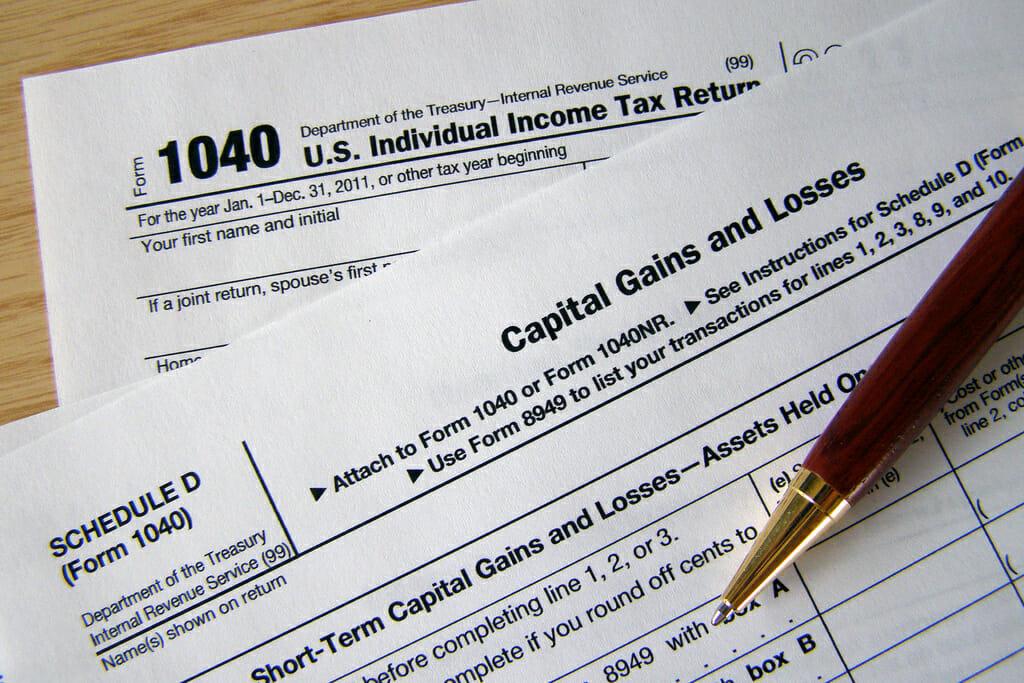
Image source: Flickr / Creative Commons
Nov. 15, 2017
No one’s financial information is safe from hackers at the Internal Revenue Service — not even President Trump’s.
That’s according to fraud investigator John Powers, who suspects Trump’s tax returns have been stolen from the IRS. Powers also believes that expert hackers could take anybody’s data from the agency if they wanted it.
Discover How To Become Invisible In Today’s Surveillance State!
“Considering Trump’s risk profile, the determination of his detractors, and the current state of cybersecurity, it’s almost inconceivable his tax returns haven’t been hacked—successfully—by someone with more experience and expertise,” Powers wrote in Wired on Sunday.
“After all, American taxpayers should assume their personally identifying information is already in the hands of criminals and then act accordingly, as former IRS commissioner John Koskinen recently told reporters.”
Koskinen said: “Our estimate is a significant percent of those taxpayers already had their information in the hands of criminals.”
Powers is a certified fraud investigator who has coordinated investigations with the FBI, U.S. Attorney’s Office, the Department of Homeland Security, and the Securities and Exchange Commission (SEC). He has had 20 years of experience and now heads up Hudson Intelligence in New York.
Powers noted that:
Powers surmises that hackers have seen Trump’s tax returns but haven’t released it because there is nothing there.
“Maybe the tax returns just aren’t that juicy,” he wrote.
What is your reaction? Share it in the section below:
Authored by Charles Hugh Smith via OfTwoMinds blog,
There"s a profound difference between assets that produce no income and those that produce net income.
To those of us nutty enough to pore over dozens of pages of data on wealth and income in the U.S., the Federal Reserve"s quarterly Z.1 reports and annual Survey of Consumer Finances (SCF) are treasure troves, as are I.R.S. tax and income reports.
Allow me to share a few observations on family wealth and income drawn from my review of these documents:
Changes in U.S. Family Finances from 2013 to 2016 (42 pages)
Financial Accounts of the United States (198 pages)
Corporate profits clock in at $2.135 trillion annually, around 11% of the nation"s GDP (gross domestic product). (Page 10 of Z.1) This has changed very little over the past few years; corporate profits totaled $2.140 trillion in 2014.
Most people who follow financial matters closely probably know corporate profits have been around $2 trillion annually for awhile.
But how many know that proprietors" income from small businesses ($1.375 trillion) and rental income of persons--i.e. not corporations--($740 billion) together equal corporate profits? ($2.115 trillion for small biz/rentals, $2.135 trillion for corporate profits.
How many financially savvy people know that proprietors" income and private rental income rose by $189 billion since 2014, while corporate profits flatlined?
Clearly, the families that own the proprietorships and rentals pulling down $2.1 trillion in annual profits are doing a bit better than OK.
As the charts below reveal, most of this profitable business equity is owned by the top 10% of families. There are a few clues that suggest that family-owned business equity is distributed along a power-law curve, i.e. the majority of wealth and income is held by the top and the rest is distributed over the rest of the owners.
On Page 28 of the Survey of Consumer Finances (SCF), we find that the business equity owned by families in the bottom 50% of family incomes has a mean value of $208,000, up marginally from $204,000 in 2010, the business equity held by the top 10% of families rose from $2.265 million in 2010 to $3.3 million in 2016--a gain of over $1 million.
As always, I want to stress the profound difference between assets that produce no income and those that produce net income. This excludes hobby businesses that lose money or tax shelters that are intended to lose money. I"m talking about businesses that generate revenues in excess of all expenses: net profit that is taxable.
Owning a vacation home that is rented out a few weeks a year is one thing, owning a rental property that"s rented out 50 weeks a year is considerably different. The first is an expense, the second generates net income.
Somewhat to my surprise, almost 14% of households own some residential property equity other than their primary residence (page 18 of the SCF). Unfortunately, the Fed lumps second homes and vacation properties in with rental properties of up to 4 units, while rentals with 5 or more units are lumped in with farmland and commercial properties in equity in nonresidential property.
Only 6% of households own any equity in nonresidential property, a category of wealth that gained 72% from 2013 to 2016. Interestingly, the percentage of families owning this form of wealth actually declined from 7.2% in 2013 to 6.2% in 2016, suggesting to me that the corporations and hedge funds snapping up multi-unit residential properties are buying properties from families.
Based on my previous surveys of I.R.S. income tax data, much of this small-business equity and family owned-rental property is owned by the top 4% to 5% of families, with the majority owned by the top 10%, as shown in the chart below.
The number of families with business equity has been declining, eroded by recession and stagnation, despite the recent bounce higher.
Most of the biz-equity is owned by the top 10%:
While the financial media focuses on billionaires and hedge fund managers playing for billions, much of the wealth and income of the nation is firmly in the hands of families that own proprietorships and rental properties.
These assets have risen sharply in value, and they"ve also generated gains in income.
If you want to get rich, you can climb into a time machine, return to 2010 and buy a couple thousand bitcoin for $1 each. Alternatively, you can marry extremely well. If neither of these options is available, then starting a profitable proprietorship that enables the purchase of rental properties is another option.
* * *
If you found value in this content, please join me in seeking solutions by becoming a $1/month patron of my work via patreon.com. Check out both of my new books, Inequality and the Collapse of Privilege ($3.95 Kindle, $8.95 print) and Why Our Status Quo Failed and Is Beyond Reform ($3.95 Kindle, $8.95 print, $5.95 audiobook) For more, please visit the OTM essentials website.

The American Center for Law and Justice (ACLJ) has won a years-long legal battle against the Internal Revenue Service in which the agency admitted that it wrongfully targeted Tea Party conservatives, during the Obama Administration, specifically because of their political viewpoints.
In issuing an “apology” to the clients represented by the ACLJ, the IRS admitted that it was wrong to use the United States tax code simply because of an entity’s name. They also admitted the bombshell fact that this discrimination happened specifically because of the applicants political viewpoints. Keep in mind the fact that the mainstream media has spent years telling the American people that this didn’t happen.
In other words, outlets such as The Washington Post, CNN, and The New York Times directly lied to their readers and viewers to protect a Democratic president whose administration was openly breaking the law.
Surprise. Surprise.
On top of an admission of guilt, the IRS apology also included:
· A declaration by the Court that it is wrong to apply the United States tax code to any tax-exempt applicant or entity based solely on such entity’s name, any lawful positions it espouses on any issues, or its associations or perceived associations with a particular political movement, position or viewpoint;
· A declaration by the Court that any action or inaction taken by the IRS must be applied evenhandedly and not based solely on a tax-exempt applicant or entity’s name, political viewpoint, or associations or perceived associations with a particular political movement, position or viewpoint; and
· A declaration by the Court that discrimination on the basis of political viewpoint in administering the United States tax code violates fundamental First Amendment rights. Disparate treatment of taxpayers based solely on the taxpayers’ names, any lawful positions the taxpayers espouse on any issues, or the taxpayers’ associations or perceived associations with a particular political movement, position or viewpoint is unlawful.
[…]
Finally, and of crucial significance, the IRS admits it targeted conservative and Tea Party groups based on their viewpoints (i.e., “policy positions”) and that such viewpoint discrimination violates fundamental First Amendment rights. This is the first time the IRS has admitted that its targeting scheme was not just “inappropriate” – as TIGTA found – but, as our clients alleged and we have vigorously and persistently argued for years, blatantly unconstitutional.
ACLJ Chief Counsel Jay Sekulow noted the historic victory as well as the terrifying fact that the Obama Administration used the IRS to go after their political enemies, knowing full well that most of their allies in the media would ignore or discredit any reporting that exposed this disgusting and illegal practice.
“Throughout litigation of this case, we have remained committed to protecting the rights of our clients who faced unlawful and discriminatory action by the IRS. Our objective from the very beginning has been to hold the IRS accountable for its corrupt practices. This Consent Order represents a historic victory for our clients and sends the unequivocal message that a government agency’s targeting of conservative organizations, or any organization, on the basis of political viewpoints, will never be tolerated, Sekulow said in a statement.
“This Order will put an end, once and for all, to the abhorrent practices utilized against our clients, as the agreement includes the IRS’s express acknowledgment of – and apology for – its wrongful treatment of our clients. While this agreement is designed to prevent any such practices from occurring again, rest assured that we will remain vigilant to ensure that the IRS does not resort to such tactics in the future.”
So there you have. Former president Barack Obama used a corrupt IRS to go after Tea Party groups that he disagreed with in what should be one of the largest political scandals in decades. This is high-level, “we will take out our enemies, screw the law,” type corruption.
One can imagine that the same liberal journalists that downplayed the initial IRS revelations will either ignore this or laughably try to somehow pretend something that the IRS admitted themselves wasn’t true because… Fox News.
Submitted by Tom Luongo
For weeks now we’ve been getting very mixed signals out of the Russian Government about cryptocurrencies. On the one hand we see it embracing the new technology while at the same time going on the warpath against them. Because of that there is a lot of confusion in people’s minds as to what the endgame for cryptos in Russia looks like. I’ll try to clear this confusion up given what we know.
But, suffice it to say, this is very good news for both Bitcoin and the Russian economy. Give me a few minutes and I’ll explain why.
Putin’s Law
Vladimir Putin is very much a law and order kinda guy. If you watch Putin operate in the public arena he always does so with an eye towards the law. He believes strongly in the law. And cryptocurrencies, despite their obvious benefits to a Russian economy that needs the type of disintermediation cryptos offer, operate in a legal gray area that makes Putin uncomfortable.
So, the goal with Russian official crypto-policy is to stamp out the illegal activities – the money laundering, terrorism-financing, human-trafficking, etc. – while simultaneously using the technology to modernize Russia’s internal capital handling capabilities.
This is what the crypto-ruble is all about. It is a way for Russia and Russians to provide a gateway between the crypto-world and the so-called real one. It ensures that this new form of ruble properly tracks capital flow through the Russian economy.
By taxing crypto-rubles at the capital gains rate for those that cannot provide a paper-trail of ownership, Russia and Putin are incentivizing the development of low-cost crypto-payment systems to exchange rubles for goods only in cryptocurrencies that also track ownership, like Ethereum and others that have transparent blockchain histories.
The Russian Capital Invitation
Putin is openly inviting investment capital into Russia that is legal and above board. Russia wants legitimate businesses to operate in Russia in whatever currency they like as long as that business is transparent.
The crypto-ruble provides the means by which to convert, transaction-cost-free, back into the national ‘fiat’ currency to pay bills, taxes and the like. This is in direct opposition to how the U.S., for example, treats cryptocurrencies.
The 2014 I.R.S. rule that classified Bitcoin as ‘property’ means that every Bitcoin transaction, no matter how minor, creates a potential capital gains event. It means that buying a cup of coffee at Starbucks in Bitcoin is taxable for both the person buying the coffee (capital gains on the sale) and Starbucks when they go to sell those Bitcoins, buy dollars and pay salaries, order supplies, etc.
It’s why the capital that has moved into cryptocurrencies isn’t moving back out. It’s why the ICO market has exploded. Billions in profits actively looking for new investment opportunities without paying taxes.
It’s also the main reason why Amazon, for example, doesn’t take Bitcoin. Who wants that hassle?
Can you imagine Amazon’s Schedule D if it accepted Bitcoin?
The crypto-ruble’s structure dispenses with that for those that can prove ownership via the blockchain. Bitcoin allows for transaction transparency, so does Ethereum, Litecoin and many others.
Now, cryptos can exist side-by-side with rubles without worrying about the threat of double taxation, unless you earned your money in the murk, at which point Russia wants 13% capital gains. This new system won’t bring that capital back into the Russian economy, but it wasn’t coming back anyway.
Russia Embraces its Own Cryptos
By calling Bitcoin as a Ponzi scheme and an avenue for money laundering Putin and the Bank of Russia are simply attacking technologies that are not home-grown. They are, like every other person in the markets, ‘talking their book.’
Putin would prefer people use platforms that are Russian. Remember, he’s also a nationalist trying to bring Russia prestige in this important market going forward.
Ethereum and WAVES are both platforms designed by and built for Russia. So, you’ll notice that Putin has never spoken out against Ethereum. WAVES continues to fly under a lot of people’s radar, but it is just as disruptive as Ethereum.
They both provide a platform to act as Infrastructure as a Service (IaaS) for the next generation of internet-based applications. Ethereum is a kind of operating system for Internet 3.0 while WAVES is next generation forex exchange as well as providing an easy platform for issuing new public/private equity.
WAVES is what will back the Moscow Exchange’s move to trade cryptocurrencies and their derivatives. It will act at the gateway for all of the currency exchanges. So, if you have dollars, Bitcoins, rubles or Ethereum you can buy and sell stocks on the Moscow Exchange eventually.
All nice and legal. All above-board.
Evil Putin is looking for pension-fund investors seeing Russian bonds trading above 7% and he just gave fund managers a way to come in through the crypto-back door.
Don’t think for a second that Putin doesn’t like Bitcoin as a means to attract investor capital. This is what Russian Miner Coin is all about. He just wants it to be regulated so it can ensure the public sphere is maximized.
The Fight for Capital in Flight
Capital will always flow to where it is treated best.
Given the tenuous situation in the global financial and p0litical systems, Russia’s stable government is an asset. What investors need is the confidence of being able to get their money out after putting it back in.
The scheme for the crypto-ruble is part of that confidence-building process.
I know now, as an American investor, I can, for example, invest in a Russian company’s stock or bond offering directly. I can get paid my dividends or coupons in crypto-rubles, immediately exchange them for bitcoins or whatever currency I want to use as I see fit.
Oh, and if I never convert them back to dollars, I can put off paying taxes until I do.
That’s not really possible now, especially with sanctions. If it is possible, it’s expensive and a major hassle. Putin is a smart man with an excellent team around him. Moves like this are made in response to aggressive moves made by the U.S. to starve his country of capital, i.e. John McCain’s sanctions.
He and his team understand that providing a platform by which capital can enter Russia that is barred through normal means now is key to surviving the next couple of years. It’s not his responsibility to monitor what U.S. investors do, only that they comply with Russian law.
First-mover advantage is important here. If Russia continues to develop blockchain technology and embrace it in a relatively tax-free way, it won’t matter that it is ‘regulating’ the beautiful decentralized market of cryptos.
What will matter is that Russia treats its crypto-investors better than everyone else. In the fight for global capital flows, you don’t have to be perfect, you just have to be slightly better than everyone else. Arbitrage will take care of the rest.
And tax-free ruble/crypto exchange is the killer app that the crypto-market has been looking for to take it to the next level.
Russia got there first.
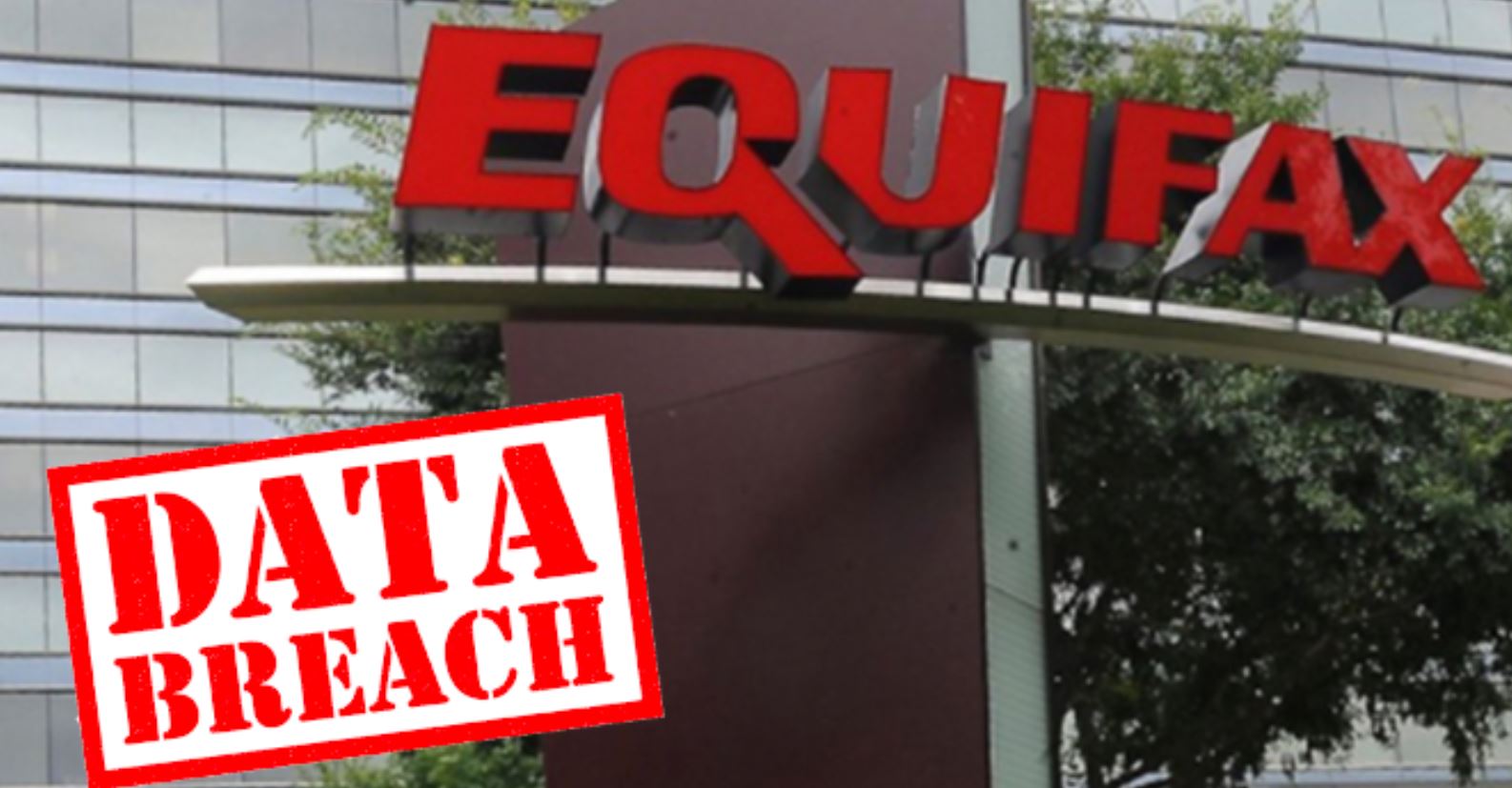
You can’t make this up. The IRS awarded Equifax with a multi-million dollar fraud prevention no-bid contract despite that its own execs committed market fraud when they sold shares before telling the public they were hacked.
The IRS will pay Equifax $7.25 million to help verify taxpayer identities and prevent fraud under a no-bid contract issued last week.
The credit agency will “verify taxpayer identity” and “assist in ongoing identity verification and validations” at the IRS, according to the award.
The award describes the contract as a “sole source order,” which means Equifax is the only company held capable of providing the service. The order was issued to prevent a lapse in identity checks while officials resolve a dispute over a separate contract.
Both Republican and Democrat lawmakers bashed the IRS decision as irresponsible and horrible.
“In the wake of one of the most massive data breaches in a decade, it’s irresponsible for the IRS to turn over millions in taxpayer dollars to a company that has yet to offer a succinct answer on how at least 145 million Americans had personally identifiable information exposed,” Senate Finance Chairman Orrin Hatch (R-Utah) told POLITICO in a statement.
“The Finance Committee will be looking into why Equifax was the only company to apply for and be rewarded with this. I will continue to take every measure possible to prevent taxpayer data from being compromised as this arrangement moves forward,” Sen. Ron Wyden (D-Ore.) said.
Reps. Suzan DelBene (D-Wash.) and Earl Blumenauer (D-Ore.) also expressed their distaste for the deal writing letters to IRS Commissioner John Koskinen demanding he explains why the agency awarded the contract to Equifax as well as provide information on any alternatives they may have considered.
“I was initially under the impression that my staff was sharing a copy of the Onion, until I realized this story was, in fact, true,” Blumenauer wrote.
Are you ready for mass chaos in Washington? There are lobbyists for just about every cause that you can possibly imagine, and they are always working hard to influence members of Congress on their particular issues. But when you are talking about a major tax reform bill, that is something that virtually every single lobbyist in the entire city will want to be involved in. Our tax code is over two million words long, and the regulations are over seven million words long, and any changes to our immensely complex system could have absolutely enormous implications. There will be winners and there will be losers with any piece of legislation, and lobbyists will zealously fight to defend the turf belonging to their particular clients. Often lobbyists from different sides will literally be pitted directly against one another, and it won’t be pretty. In fact, one analyst that works for Cowen Washington Research Group says that we could soon be watching “the corporate hunger games”…
Almost every industry, special interest, and consumer group has an interest in the tax code, especially if the package ends up being as ambitious as Trump and Republican leaders want it to be. Chris Krueger, an analyst at Cowen Washington Research Group, told Business Insider that the battle over which loopholes to keep and which to throw out could get nasty.
“Welcome tribunes to the corporate hunger games!” Kruger said in an email. “Only one-sixth of lobbyists were involved with health care (give or take — assuming it is one-sixth of economy). Six-sixths of lobbyists are involved in taxes.”
There is so much at stake, and if the Republicans are able to get something passed it probably won’t look much like the plan that Trump originally proposed. But it is so important to do something, because today Americans spend more on taxes than they will on food, clothing, and housing combined. That is morally wrong, and we desperately need tax relief.
Trump’s tax plan would nearly double the standard deduction, and that would be a wonderful thing. It would provide instant tax relief to working class Americans, and that is something that I would greatly applaud.
Trump’s tax plan would also great reduce the tax rate for corporations. Our big corporations certainly don’t need the help, but we do want to get our rate more in line with the rest of the planet. Because our corporate tax rate is one of the highest in the world, it actually encourages companies to set up shop some place else. Being more competitive with the rest of the world would likely mean more jobs for the American people.
Trump’s tax plan would also reduce the number of tax brackets for individuals. Instead of seven, now there would just be three tax brackets of 12 percent, 25 percent and 35 percent. To me, those rates are way too high, but of course I would like to eliminate the individual income tax entirely.
Many are criticizing Trump’s plan for proposing to raise at least a trillion dollars over the next decade by getting rid of the deduction for state and local income taxes. For those that live in very high tax states such as California, that deduction is a really big deal…
High-income Californians, for instance, pay as much as 13.3 per cent of their income to the state in addition to their federal taxes. New Yorkers can pay up to 8.82 per cent.
Just seven U.S. states have no personal income taxes, including Texas, Florida and Nevada.
Hopefully the Republicans can pass some sort of tax reform in the short-term, because the status quo is definitely not acceptable.
When the income tax was first introduced in 1913, the vast majority of taxpayers were being taxed at a rate of just one percent. The following comes from Politifact…
The 1913 law imposed a tax of 1 percent on income up to $20,000, for both individual and joint filers. However, exemptions from the tax — the first $3,000 of income for individuals and the first $4,000 for joint filers — meant “virtually all middle-class Americans” were excused from paying, according to W. Elliot Brownlee’s book, Federal Taxation in America. The law also put in place a graduated surtax on incomes above $20,000; the highest rate paid, 7 percent, applied to Americans making more than $500,000 (about $11.4 million in 2011 dollars).
Today, Americans are being taxed into oblivion. It has been reported that we spend more than 6 billion hours a year on our taxes, and I once wrote an article detailing 97 different ways that various levels of government extract revenue from all of us.
Every year government just gets bigger and bigger on the federal, state and local levels. And the bigger government gets, the more oppressive it tends to become.
Personally, I would love to start starving the beast that the left has created, and a great way to do that would be to completely eliminate the federal income tax.
A lot of people could not even imagine a world without a federal income tax. But the truth is that our country once thrived under such a system. In fact, the greatest period of economic growth in U.S. history was between 1872 and 1913 when there was no income tax at all.
And we could do it again. Today, the individual income tax only accounts for about 46 percent of all federal revenue, and if we reduced the federal government to a size that our founders would have wanted, we would be more than okay.
But even if we can’t greatly reduce the size of the federal government in the short-term, we can at least go to a very basic flat tax or a fair tax, and both of those systems would be far superior to what we have today.
If we can’t get a flat tax or a fair tax right now, we should at least try to dramatically reduce tax rates and simplify the tax code as much as humanly possible.
But if we do get a short-term victory, the battle is definitely not over. In the long-term, we need to be very clear that our goal should be to abolish the income tax, the IRS and the Federal Reserve entirely. Anything short of that is not good enough.
Create your own review

(INTELLIHUB) — Another day, another series of revelations relating to deep state operative Robert Mueller’s sham investigation into supposed Russian hacking of the 2016 election, this time with news that he is teaming up with the conservative targeting IRS to further dig for something he can then use to turn a member of Trump’s inner circle.
According to the Daily Beast, the special counsel’s office has “teamed up” with the IRS’s elite Criminal Investigation Unit which will help to ensure that investigators (see deep state operatives specifically looking to take out the elected president) apply the “maximum possible scrutiny” to the finances of Trump associates, despite the fact that Mueller’s entire investigation is supposed to be about Russian election hacking.
As Zerohedge noted, “Of course, the public has long been aware, thanks to Mueller’s collaborators in the media, that his team has no solid evidence to support a charge of election fraud against Trump or members of his circle.”
“And while this latest “partnership” just confirms widely held suspicions that Mueller & Co. are grasping at straws, it could provide Mueller an opening to strike directly at the president, his family and closest advisers – or at least embarass Trump with a fresh batch of leaks.”
The Daily Beast report, which was of course given to the news outlet by people close to Mueller himself, points out that in partnering with the IRS, Mueller’s team will then be able to access Trump’s tax returns.
“This unit—known as CI—is one of the federal government’s most tight-knit, specialized, and secretive investigative entities. Its 2,500 agents focus exclusively on financial crime, including tax evasion and money laundering. A former colleague of Mueller’s said he always liked working with IRS’ special agents, especially when he was a U.S. Attorney.
And it goes without saying that the IRS has access to Trump’s tax returns—documents that the president has long resisted releasing to the public
Potential financial crimes are a central part of Mueller’s probe. One of his top deputies, Andy Weissmann, formerly helmed the Justice Department’s Enron probe and has extensive experience working with investigative agents from the IRS.”
Considering the long history of anti-Trump leaks to establishment media outlets, one can safety assume that the tax returns would then be leaked and plastered across the pages of The New York Times or Washington Post.
“In its report, the Daily Beast shares some fresh insight into the prosecution’s case against Manafort. Naturally, we have a few questions: Can somebody explain what role Paul Manafort’s forgetting to check a box on his tax returned played in the grand conspiracy to rig the 2016 election,” Zerohedge continued.
“It’s been widely reported that the special counsel’s team is trying to “flip” Paul Manafort, the president’s former campaign CEO, in hopes he will provide evidence against his former colleagues. Former federal prosecutors tell The Daily Beast one of Manafort’s biggest legal liabilities could be to what’s called a “check the box” prosecution.
Federal law requires that people who have money in foreign bank accounts check a box on their tax returns disclosing that. And there’s speculation that Manafort may have neglected to check that box, which would be a felony. This is exactly the kind of allegation the IRS would look into.”
As Intellihub News has reported for weeks, Mueller is specifically targeting Manafort for crimes he may or may not have committed literally years before he ever worked with Trump.
In early August I reported that, “FBI agents working for deep state operative Robert Mueller raided the home of former Trump campaign chairman Paul Manafort late last month, seizing materials they claim are related to the investigation into Russian meddling in the 2016 election.”
“Despite claims throughout the mainstream media that the raid is connected to the Russian-“Trump investigation, their own reports conclusively show that the targeting of Manafort has absolutely nothing to do with anything Trump may or may not have done wrong but is in reality about fishing through Manafort’s past until they find wrongdoing which would then allow Mueller and his team to flip him and eventually force him to lie about Trump and or his associates.”
All in all this is just more proof that the entire Mueller investigation is a full on sham designed to take out Donald Trump by any means necessary. The idea that this has anything to do with Russia was long ago thrown out the window.
Now, the deep state assets on Mueller’s team (as well as Mueller himself) are teaming up with the IRS, despite their long history of directly targeting conservatives, to magically find a financial crime that a Trump associate committed years ago.
This will then be used to “turn” (see apply pressure until someone lies) someone like Manafort.
One has to wonder how long the American people are going to allow deep state operatives, with the help of the mainstream media, to openly target a president not because of wrongdoing but because they disagree with him politically?

The x-factor here, of course, is Trump
The tensions between the Trump administration’s populist win and its more traditionally Republican establishment types have been well-documented in recent months. And now, more than two months after Treasury Secretary Steven Mnuchin and National Economic Council chief Gary Cohn unveiled an outline of the administration’s tax-reform ambitions, another battle between the two wings appears to be brewing.
Trump’s chief strategist Steve Bannon is said to be pushing to raise the top tax rate on individuals, with Axios saying the former Breitbart CEO would like the top rate to have “a 4 in front of it” – currently, the highest income-tax bracket in the US is 39.6% for individuals earning more than $414,000 a year.
Some officials – code for Mnuchin, Cohn and the other members of the more traditionally corporatist (or rather Goldmanist) wing of the Trump administration – believe Bannon’s ideas are crazy. But Bannon believes raising taxes on the wealthy could help the administration boost its populist bona fides, an angle which Trump appears to be actively pursuing once again having recently failed with his more traditional fiscal reform push. But as tax reform is shaping up to be a must-win for the Trump administration, it would hardly be a surprise to see Bannon’s plan shelved in favor of across-the-board cuts that would help rally the Republican Party’s conservatives to support whatever reform package Trump ultimately presents.
Cohn and Mnuchin reportedly view tax reform as a top priority for the administration. However, as Axios notes, time to pass comprehensive reform is quickly running out.
Ironically, Cohn and Mnuchin are warming to an idea that Bannon supported in the aftermath of the election, when he claimed that he’s “not a conservative” and said he would support spending packages that blow out the deficit, arguing that the US should rebuild its infrastructure now while interest rates are low. Mnuchin, for his part, has refused to promise that tax reform wouldn’t lead to wider deficits when he and Cohn unveiled the outline for the administration’s reform plan back in April.
Cohn and Mnuchin aren’t bluffing when they say they want to slash the corporate tax rate to 15% from the current 35%. Neither man has any interest in timid tax cuts, and they wager that special interests will relinquish their loopholes if they become convinced their tax rate really will be in the teens.
The last time the US passed comprehensive tax reform, the legislative battle took two years. Thus, a new theme is emerging that applies not just to tax reform, but to Trump’s agenda more broadly: Do it now, or let it go.
Context: The last time Congress passed major tax reform, in 1986, it was a two-year rollercoaster. This time, the White House officials driving the process have concluded there’s no chance of getting Democrats to support what Trump wants to do. So, they believe it must be done before the 2018 midterm elections or not at all.
That’s going to be a heck of a challenge. They need to first pass a budget, which is embroiled in fights over defense spending and welfare reform. And they need to finish with health care. Some top Republicans have come to believe, contrary to conventional wisdom, that tax reform stands a better chance if health care fails — so desperate will Trump and Republican leaders be for a victory.
The x-factor here, of course, is Trump. How does he feel about raising taxes on the wealthy? And, more importantly, is Bannon succeeding in moving the Trump administration in a more populist direction, following Trump’s decision to largely abandon his protectionist rhetoric? A few more tweets from the president should provide the answer.
Via Zero Hedge

(INTELLIHUB) — David Quintieri gives a brief breakdown of President Donald Trump’s tax plan.
According to Quintieri, the top seven elements of the plan are as follows:
As emotions intensify over Trump’s recent immigration ban, the State Department and IRS have quietly used it as a smokescreen to roll out a new policy that targets U.S. citizens for unpaid taxes.
The passports of these individuals can now be revoked and their citizenship status undermined at the behest of one of the government’s most corrupt agencies. By granting the Internal Revenue Service control over passports, due process has been significantly undermined. The shield of protection that U.S. citizenship used to represent has transformed into an inescapable brand of ownership. The desperate financial condition of the federal government will only worsen in the future, forcing it to further consume its own people’s wealth in order to survive.
The new program is set to be implemented over the next few months, and currently only those with ‘seriously delinquent tax debt’ are in the crosshairs. An individual must have $50,000 worth of tax debt to be subject to revocation, but that number can easily be adjusted downward in the future. Once identified by the IRS, a certification is sent to the State Department to begin the process. The taxpayer is then informed of the action taken against them, but any recourse from there is extremely limited. This policy blatantly targets citizens living outside of the country who may not have filed with the IRS while earning an income abroad.
The United States is one of only two countries in the world that entitles itself to tax citizens while they work in other countries. These regulations were bolstered by FATCA legislation, which requires all foreign financial institutions to report account information on Americans. The additional risks that come with having to deal directly with the U.S. government have led many foreign banks to deny American clients altogether.

The ACLU has come out strongly against this kind of control grid being established:
Americans have long had a visceral aversion to building a society in which the authorities could act like totalitarian sentries and demand ‘your papers please!’ And that everyday intrusiveness would be conjoined with the full power of modern computer and database technology. When a police officer or security guard scans your ID card with his pocket bar-code reader, for example, will a permanent record be created of that check, including the time and your location? How long before office buildings, doctors’ offices, gas stations, highway tolls, subways and buses incorporate the ID card into their security or payment systems for greater efficiency? The end result could be a nation where citizens’ movements inside their own country are monitored and recorded through these ‘internal passports.’
Considering all of this, the implications of Trump’s border wall should start to appear more sinister than ever to individual freedom. In the years to come, the wall could just as easily be used to keep people in rather than out.
When a country is no longer able to say who can, and who cannot , come in & out, especially for reasons of safety &.security – big trouble!
— Donald J. Trump (@realDonaldTrump) February 4, 2017
The pride that used to be associated with American citizenship created a country of opportunity for those willing to work hard, but now that pride has been replaced with a ball and chain that drags down the prosperity of those hindered by it. Tax evasion is seen by many as a crime deserving of severe punishment, but the hypocrisy of a nation like the United States claiming the moral high ground is laughable. Those who can distance themselves from the jurisdiction of bureaucrats in Washington should do so as soon as possible. America is starting to resemble the Titanic, and there aren’t enough lifeboats for the passengers. The objective now should be to avoid being pulled under the water when the $20 trillion debt bubble implodes.
This article (The New Travel Ban You Didn’t Hear About Is Against U.S. Citizens) by Shaun Bradley is free and open source. You have permission to republish this article under a Creative Commons license with attribution to Shaun Bradley and theAntiMedia.org. Anti-Media Radio airs weeknights at 11 pm Eastern/8 pm Pacific. Image credit: seantoyler. If you spot a typo, please email the error and name of the article to edits@theantimedia.org.
This article was written by Shaun Bradley and originally published at The Anti-Media.org.
Editor’s Comment: These days, it might not take as much as you think to rack up $50k in back taxes. If you do, forget about legally traveling anywhere outside the country. With a barrage of headlines about the travel ban against Muslims, the IRS has motioned the new administration to quietly give teeth to its travel ban as well. The IRS ban, however, is targeted against American citizens – and with a determination by the agency that you are liable for a large tax debt, your rights to travel can be revoked without due process, official charge or even consideration by a judge.
Frozen, denied, unauthorized and grounded from whatever plane you thought you might catch. The fact is, that while attempts to control immigration are sorely needed, the heavy police state approach is likely to have some severe blowback – starting with even tighter security at airports and transportation centers. Biometrics and fingerprints are being implemented now, and may soon require all persons – including American citizens – exiting or entering the country to submit fingerprint, all ten digits even. This is a drastic violation of civil liberties, and a dangerous atmosphere to take hold. While many cheered on a reform of the system, and a tough approach to the country’s biggest problems, no one wanted a return to the George W. Bush era of security and brainwashing every time 9/11 is mentioned… no one wants anything close to that. People must demand their freedom, and make wise avoidance of the system of monitoring, tracking and enslavement.
The New Travel Ban You Didn’t Hear About Is Against U.S. Citizens
by Shaun Bradley
As emotions intensify over Trump’s recent immigration ban, the State Department and IRS have quietly used it as a smokescreen to roll out a new policy that targets U.S. citizens for unpaid taxes.
The passports of these individuals can now be revoked and their citizenship status undermined at the behest of one of the government’s most corrupt agencies. By granting the Internal Revenue Service control over passports, due process has been significantly undermined. The shield of protection that U.S. citizenship used to represent has transformed into an inescapable brand of ownership. The desperate financial condition of the federal government will only worsen in the future, forcing it to further consume its own people’s wealth in order to survive.
The new program is set to be implemented over the next few months, and currently only those with ‘seriously delinquent tax debt’ are in the crosshairs. An individual must have $50,000 worth of tax debt to be subject to revocation, but that number can easily be adjusted downward in the future. Once identified by the IRS, a certification is sent to the State Department to begin the process. The taxpayer is then informed of the action taken against them, but any recourse from there is extremely limited. This policy blatantly targets citizens living outside of the country who may not have filed with the IRS while earning an income abroad.
The United States is one of only two countries in the world that entitles itself to tax citizens while they work in other countries. These regulations were bolstered by FACTA legislation, which requires all foreign financial institutions to report account information on Americans. The additional risks that come with having to deal directly with the U.S. government have led many foreign banks to deny American clients altogether.
As society progresses into the next age of authoritarianism, it’s clear that control over travel is going to play a key role in the power structure. The National ID is just one sign of the changing tide and will require federal identification instead of a state driver’s license to travel. These new cards would establish a kind of ‘domestic passport’ system that would open the door to serious abuses against law-abiding citizens. The consolidation of authority into agencies like the TSA and IRS should act as a canary in the coal mine to those worried about the suppression of their freedom of movement.
The ACLU has come out strongly against this kind of control grid being established:
“Americans have long had a visceral aversion to building a society in which the authorities could act like totalitarian sentries and demand ‘your papers please!’ And that everyday intrusiveness would be conjoined with the full power of modern computer and database technology. When a police officer or security guard scans your ID card with his pocket bar-code reader, for example, will a permanent record be created of that check, including the time and your location? How long before office buildings, doctors’ offices, gas stations, highway tolls, subways and buses incorporate the ID card into their security or payment systems for greater efficiency? The end result could be a nation where citizens’ movements inside their own country are monitored and recorded through these ‘internal passports.’”
Considering all of this, the implications of Trump’s border wall should start to appear more sinister than ever to individual freedom. In the years to come, the wall could just as easily be used to keep people in rather than out.
When a country is no longer able to say who can, and who cannot , come in & out, especially for reasons of safety &.security – big trouble!
— Donald J. Trump (@realDonaldTrump) February 4, 2017
The pride that used to be associated with American citizenship created a country of opportunity for those willing to work hard, but now that pride has been replaced with a ball and chain that drags down the prosperity of those hindered by it. Tax evasion is seen by many as a crime deserving of severe punishment, but the hypocrisy of a nation like the United States claiming the moral high ground is laughable. Those who can distance themselves from the jurisdiction of bureaucrats in Washington should do so as soon as possible. America is starting to resemble the Titanic, and there aren’t enough lifeboats for the passengers. The objective now should be to avoid being pulled under the water when the $20 trillion debt bubble implodes.
This article was written by Shaun Bradley and originally published at The Anti-Media.org.

Please Spread The Word And Share This Post
Author: Shaun Bradley
Views: Read by 180 people
Date: February 7th, 2017
Website: http://theantimedia.org/irs-travel-ban-us-citizens/
Copyright Information: This content has been contributed to SHTFplan by a third-party or has been republished with permission from the author. Please contact the author directly for republishing information.


